

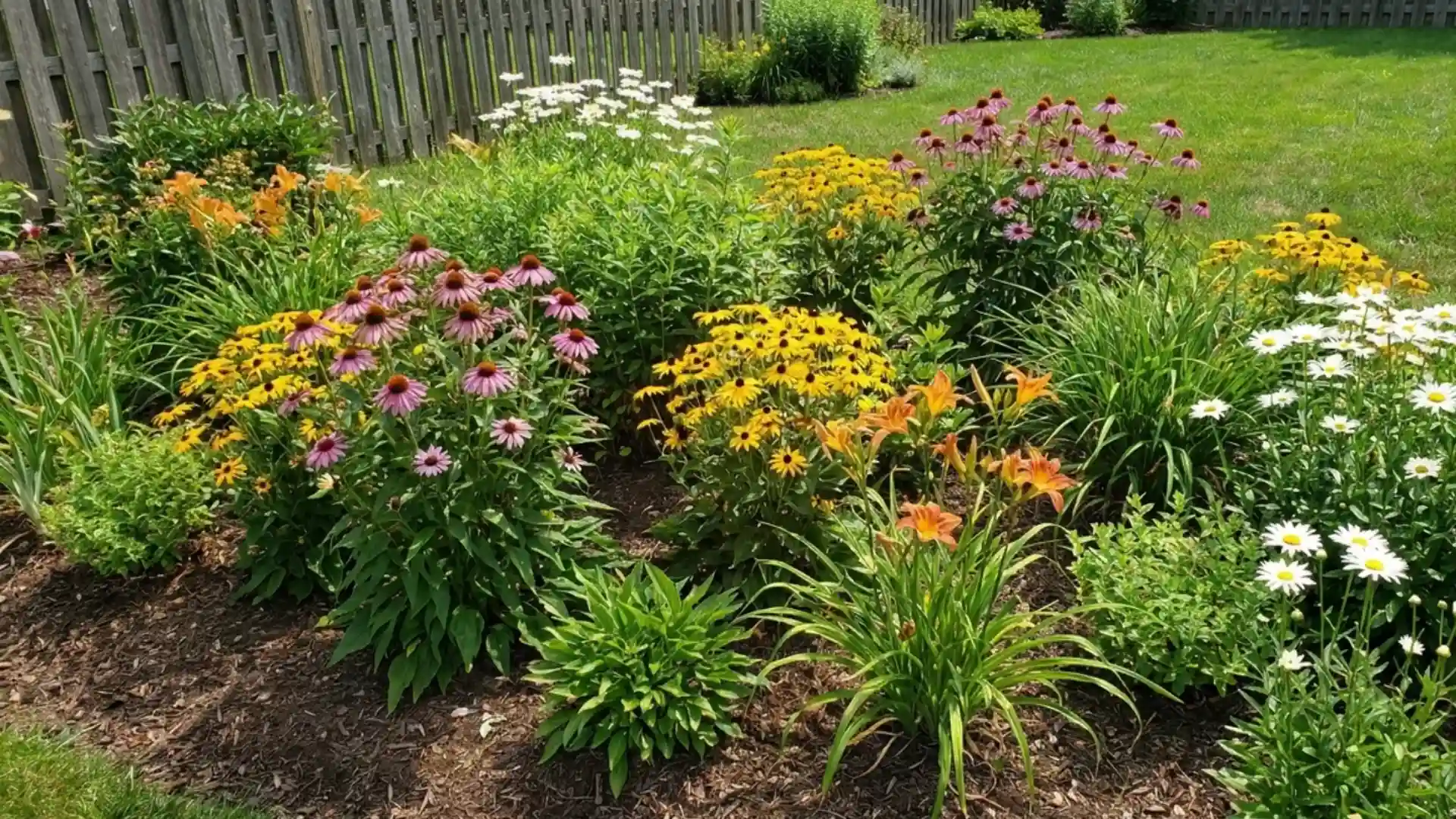
I used to assume every flower labeled “hardy” would return when spring warmed the soil, the same optimism that comes from flipping through early spring flower picks at the nursery. After losing an entire bed, I learned that the label tells only part of the story.
A plant may be perennial in one climate and behave like an annual in another, while some flowers return because they scatter seeds before dying.
If you are asking what flowers come back every year, the real answer depends on your hardiness zone, soil, sunlight, and how much care you want to give them.
Personally, I prefer dependable plants that settle in, handle winter without fuss, and grow stronger each season.
This list covers different choices, grouped by growing conditions and maintenance needs, so you can plant with clear expectations.
What Flowers Come Back Every Year?
Flowers return in two main ways. True perennials survive winter through their roots, crowns, bulbs, or rhizomes, then produce fresh growth when temperatures rise.
Self-seeding annuals die after flowering but drop enough seed to create new plants in the same area the following season. Both can make a garden look established year after year, but they do not behave the same way.
Some people prefer true perennials for dependable structure, then use a few self-seeders to fill open spaces naturally.
Before planting, check each flower’s hardiness zone, sunlight needs, soil drainage, and moisture preferences. A plant that thrives in one region may fail to return in another, even when the nursery label describes it as hardy.
Full-Sun Perennials That Thrive Year After Year
These sun-loving perennials need at least six hours of direct light each day, along with soil and care that suit their growth habits.
1. Black-Eyed Susan
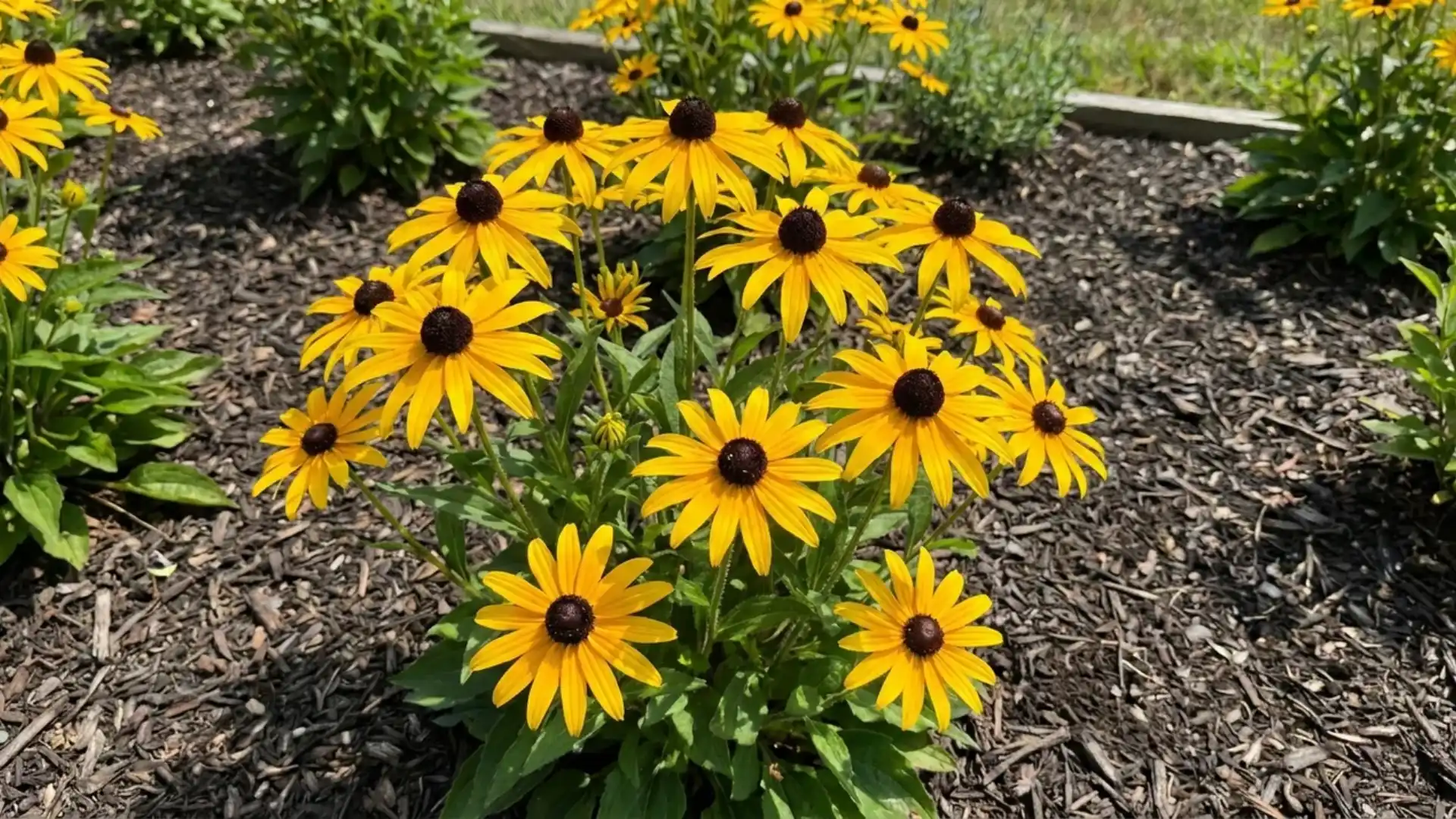
Black-eyed Susan is a dependable full-sun perennial that tolerates heat, drought, and poor soil. Its bright yellow flowers return each summer, while light self-seeding can gradually create a fuller, more natural-looking garden patch.
- Conditions: Plant it in full sun and average, well-drained soil for the strongest flowering.
- Maintenance: Water regularly during its first season, then only during long periods without rain.
- Growth: Mature plants usually reach 2 to 3 feet tall and gradually form wider clumps.
- Blooming: Yellow flowers appear from early summer through fall, especially when faded blooms are removed.
2. Coneflower (Echinacea)
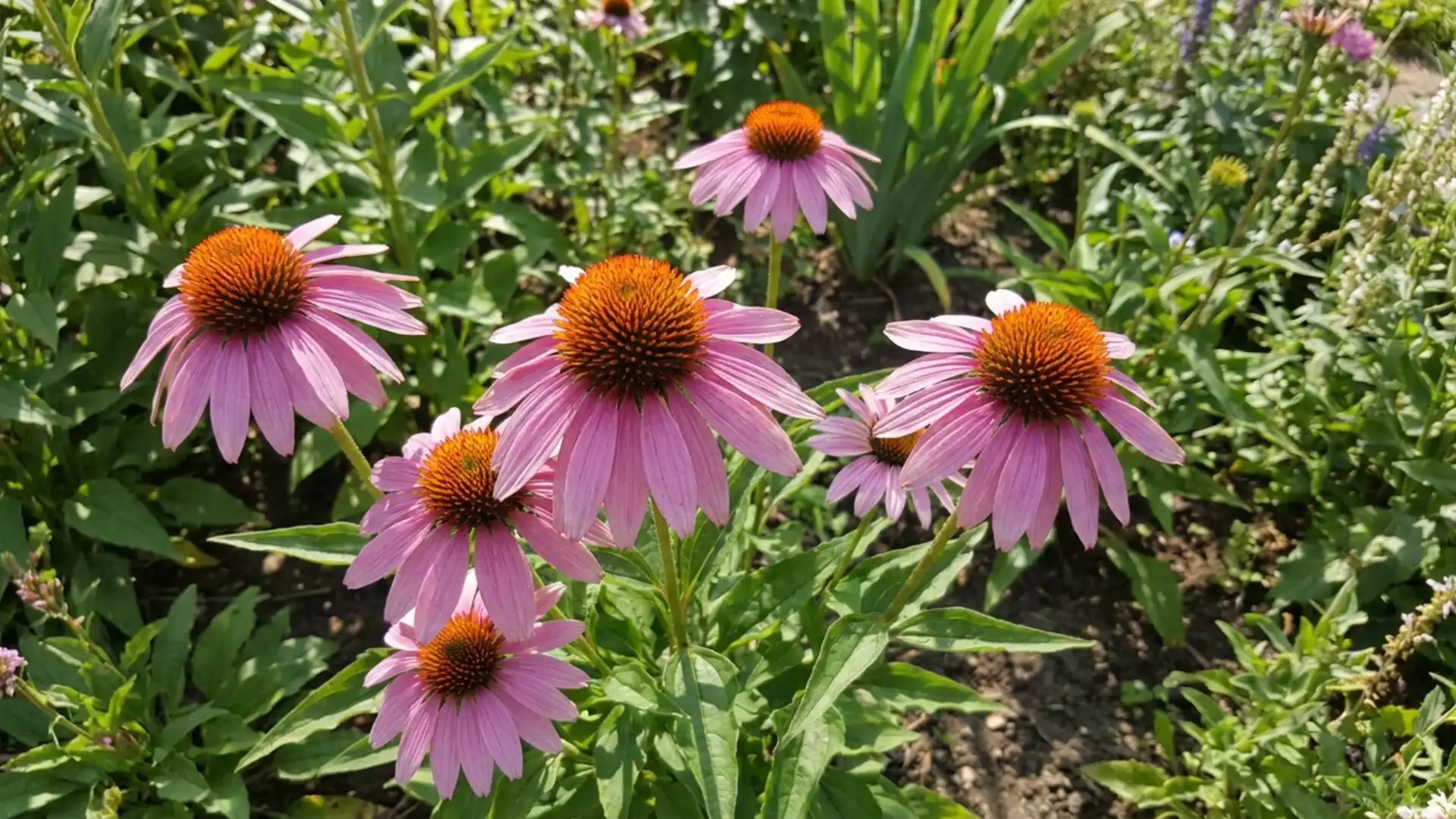
Coneflower is a tough, upright perennial that performs well through hot, dry summers. Its colorful daisy-like blooms attract bees and butterflies, making it a natural fit alongside other garden plants for pollinators, while its low-maintenance growth makes it a reliable choice for sunny beds.
- Conditions: Give it full sun and well-drained soil, though it can tolerate light afternoon shade.
- Maintenance: Established plants need little watering, but removing faded blooms can encourage another flowering period.
- Growth: Most varieties grow 2 to 4 feet tall and develop into upright, manageable clumps.
- Blooming: Pink, purple, yellow, or white flowers usually appear from early summer into fall.
3. Daylily
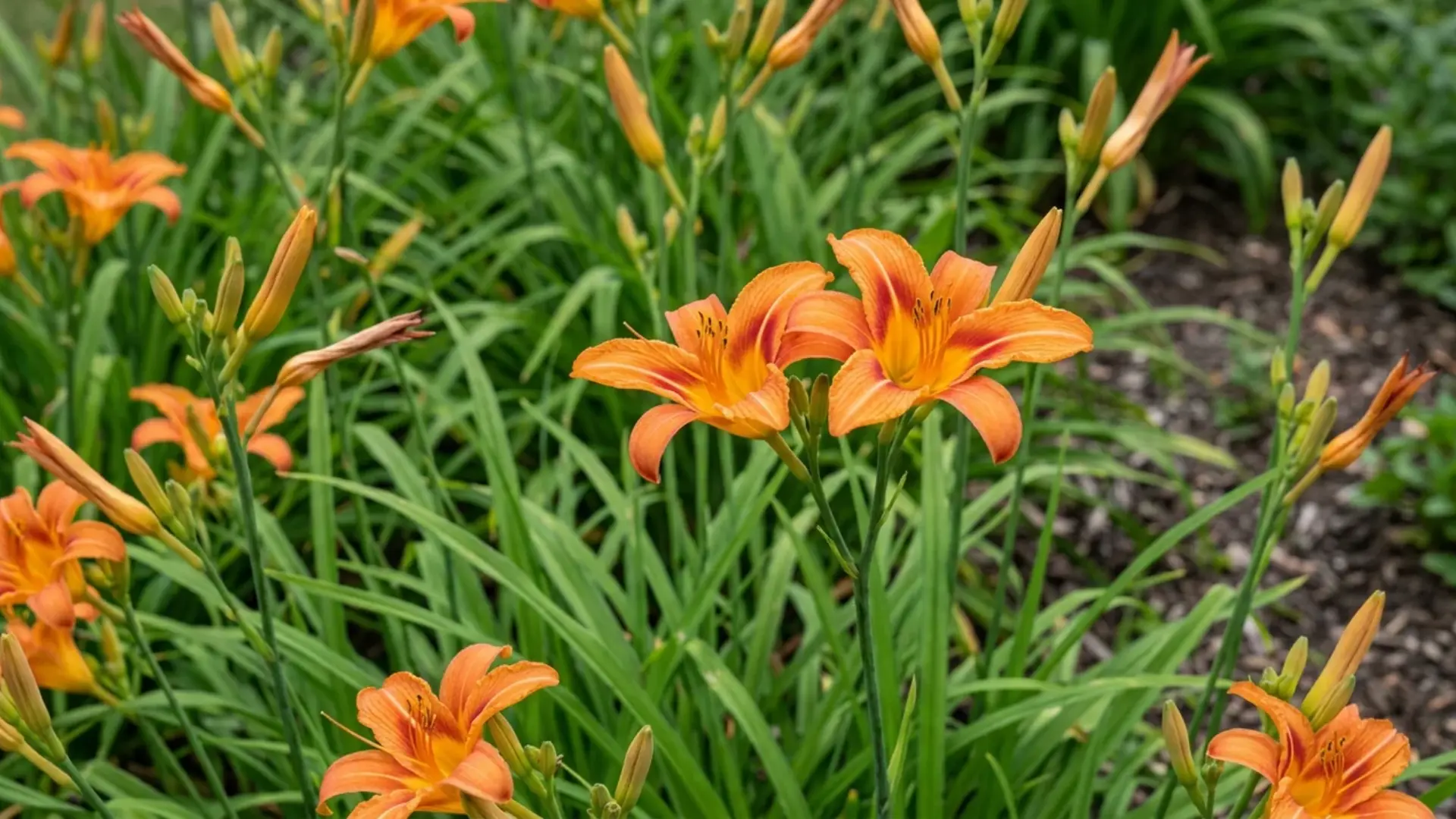
Daylily is one of the easiest perennials to grow in full sun. Although each flower lasts only one day, mature plants produce enough buds to provide steady color across several weeks.
- Conditions: Plant it in full sun for maximum flowering, though it can handle some afternoon shade.
- Maintenance: Water during dry spells and remove old flower stalks once the blooming period ends.
- Growth: Clumps expand steadily and may need dividing every three to five years.
- Blooming: Each flower lasts one day, but numerous buds keep mature plants colorful for several weeks.
4. Russian Sage
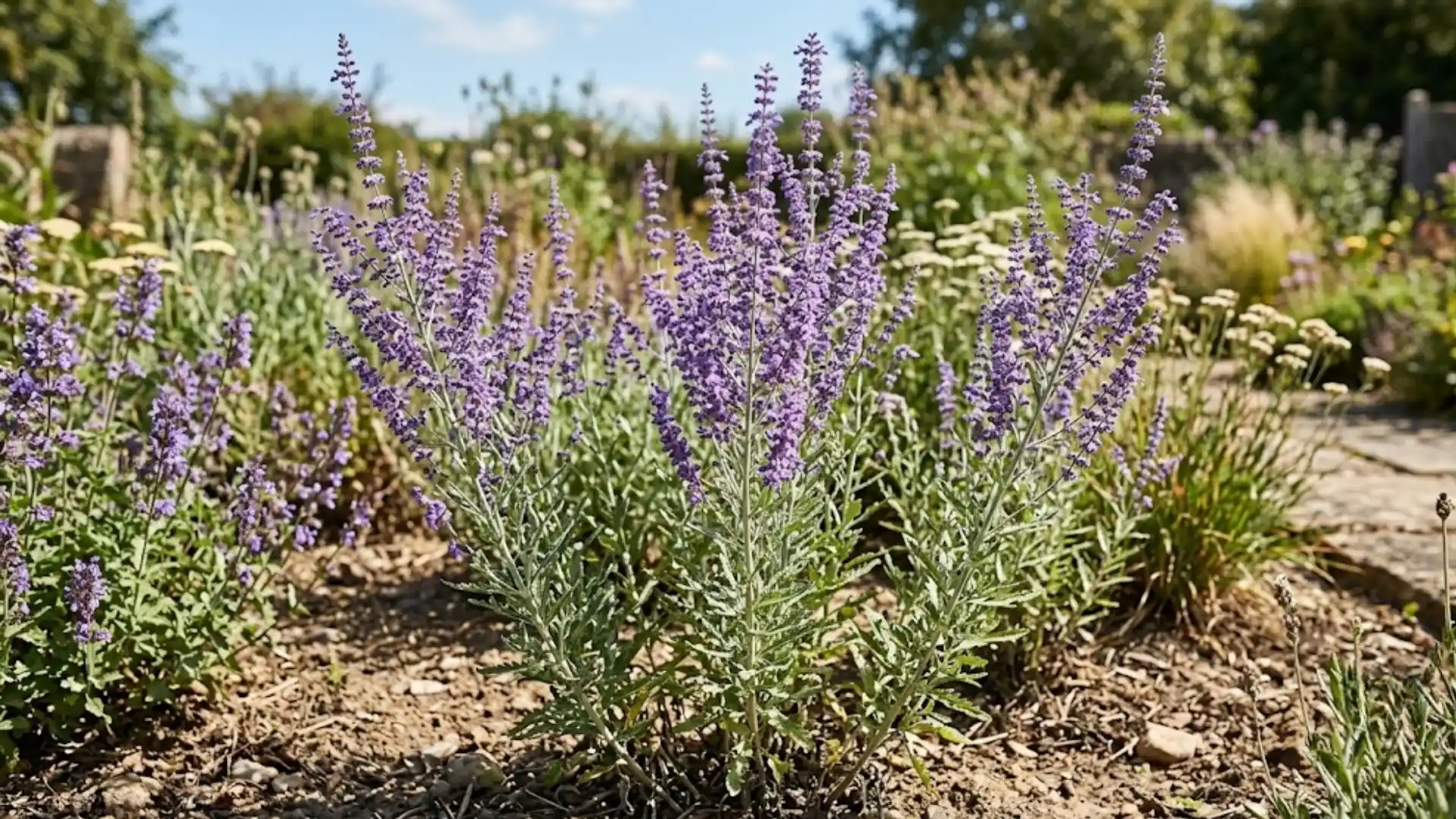
Russian sage adds soft purple flowers and silvery foliage to dry, sunny borders. It performs best in lean soil, handles drought once established, and brings height and airy texture without demanding frequent care.
- Conditions: Place it in full sun where the soil drains quickly after rainfall or watering.
- Maintenance: Cut old stems back in early spring before fresh growth begins.
- Growth: Plants commonly reach 3 to 5 feet tall and spread into broad, airy clumps.
- Blooming: Small purple flowers cover the stems from midsummer into early fall.
5. Red Hot Poker
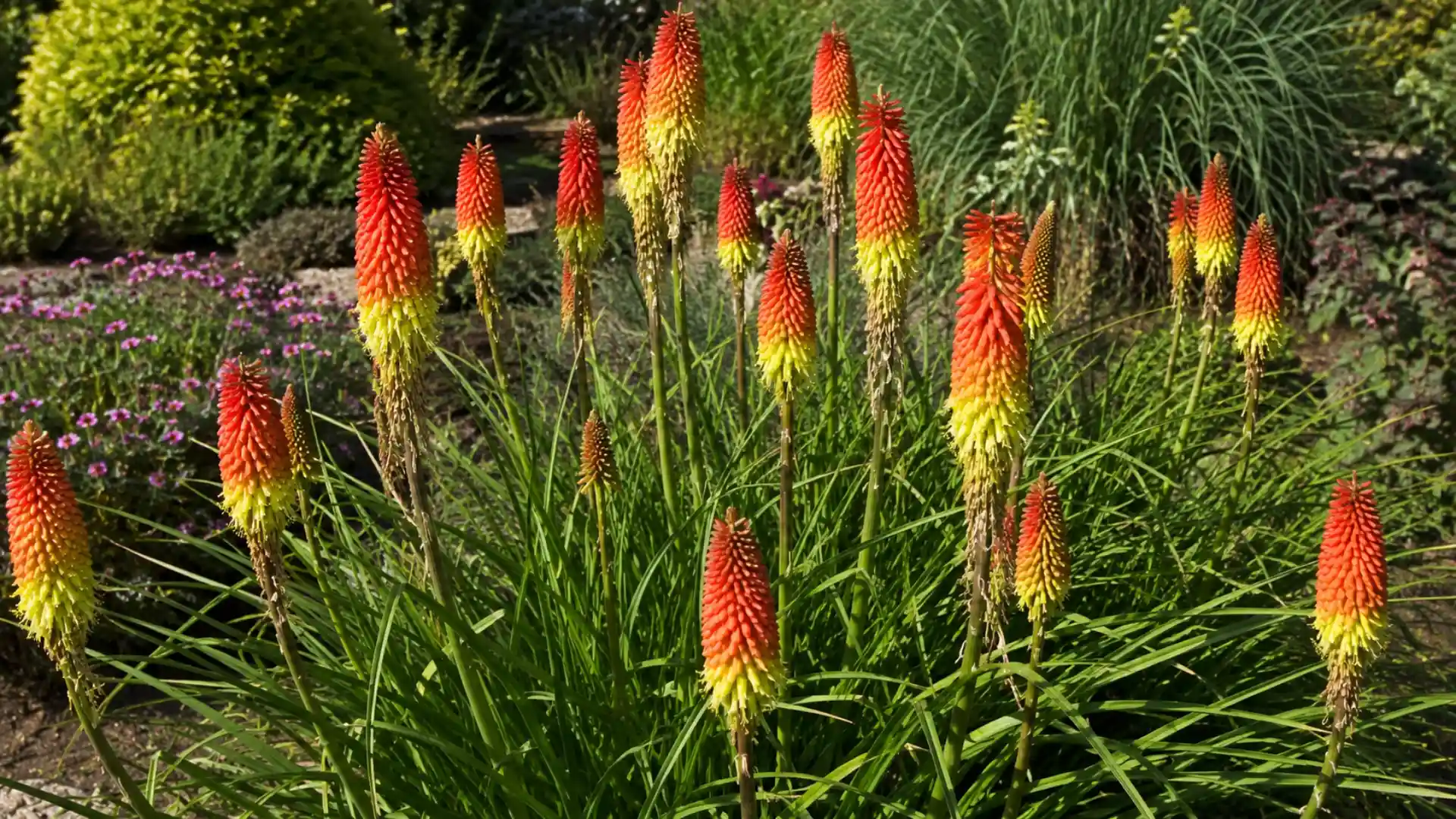
Red hot poker produces tall, torch-shaped flower spikes in bold shades of red, orange, and yellow. It adds strong vertical interest to sunny beds but needs fast-draining soil to prevent root and crown damage.
- Conditions: Grow it in full sun and loose soil that allows excess water to drain quickly.
- Maintenance: Water young plants consistently, but reduce watering once their roots are established.
- Growth: Depending on the variety, flower stalks may reach between 2 and 5 feet tall.
- Blooming: Torch-shaped spikes usually appear from late spring through summer and attract hummingbirds.
6. Blanket Flower
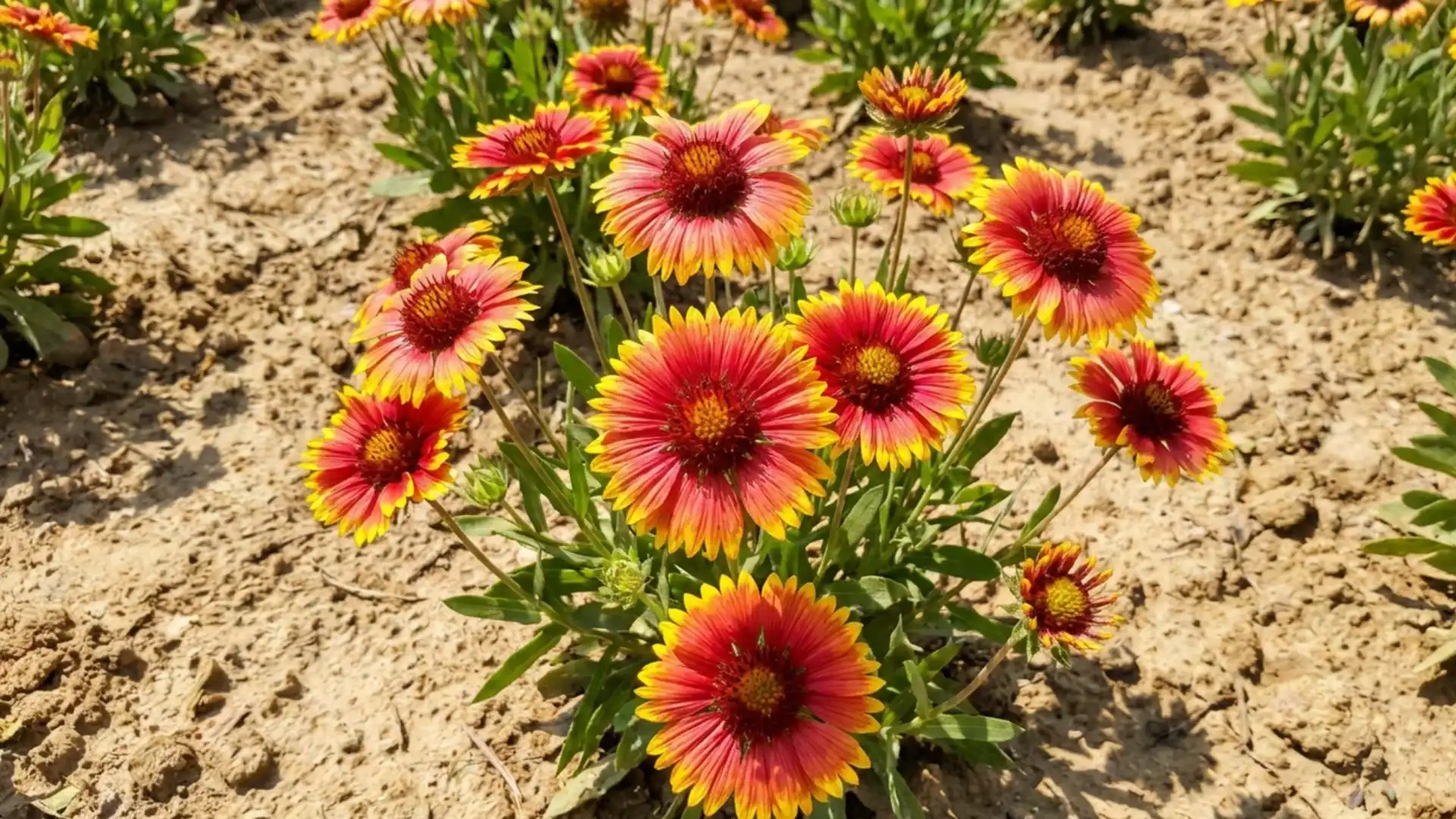
Blanket flower is a heat-tolerant perennial that blooms heavily in dry, sunny conditions. Its red and yellow flowers continue for months when deadheaded, making it a strong choice for sandy or low-fertility soil.
- Conditions: Plant it in full sun and dry, well-drained soil rather than rich or heavily amended ground.
- Maintenance: Remove faded flowers regularly to keep new buds forming throughout the growing season.
- Growth: Most plants stay between 1 and 3 feet tall with a loose, spreading form.
- Blooming: Red and yellow daisy-like flowers can continue from early summer until the first frost.
7. Bee Balm
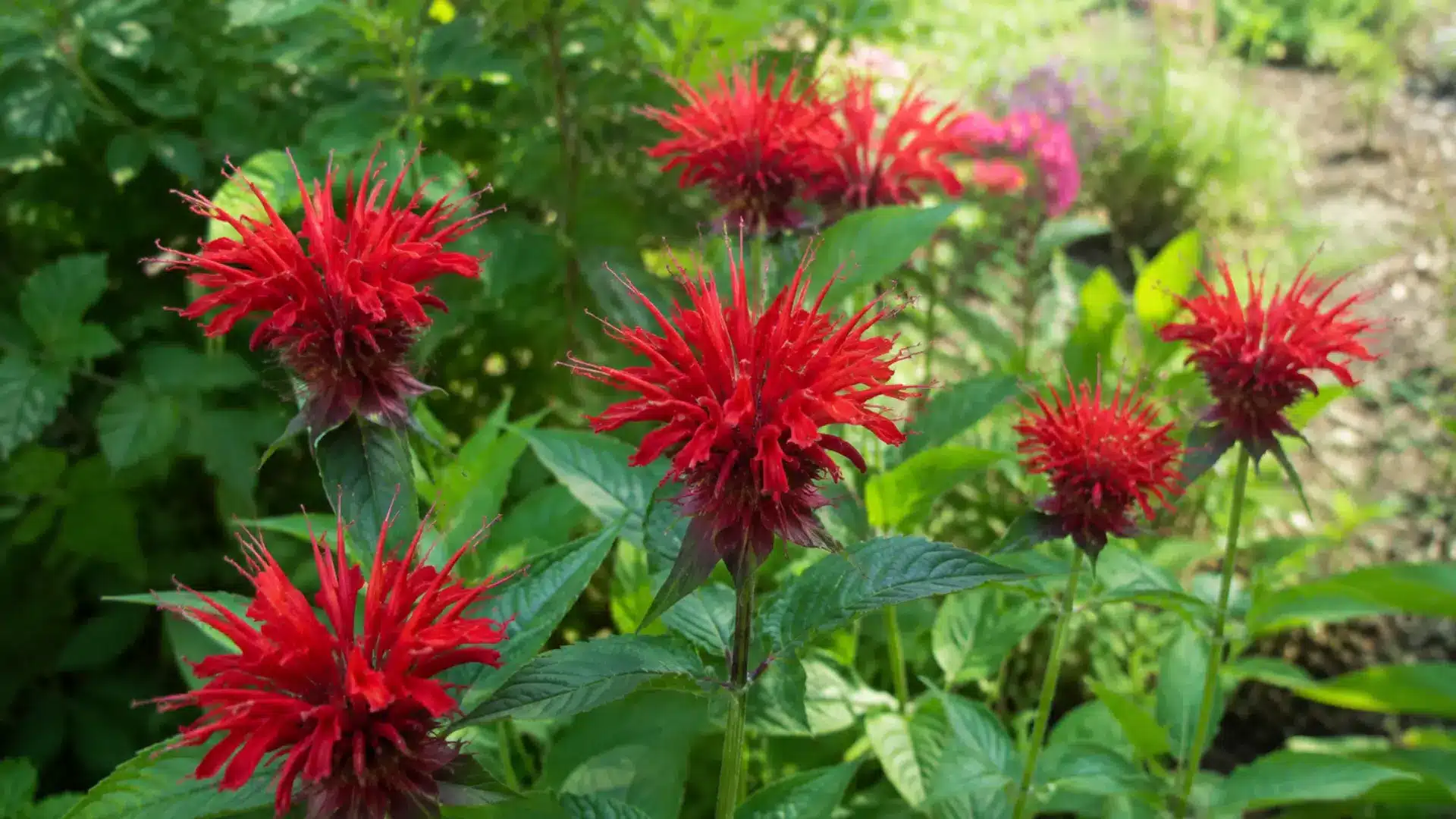
Bee balm produces shaggy flowers that attract hummingbirds, bees, and butterflies throughout summer. It spreads steadily through underground runners, so it works well in larger beds where it has room to expand naturally.
- Conditions: Plant it in full sun with moist, well-drained soil and plenty of space between plants.
- Maintenance: Water during dry periods and remove affected leaves if powdery mildew begins to appear.
- Growth: It spreads through underground runners and may need dividing every two or three years.
- Blooming: Red, pink, purple, or white flowers usually appear from early to late summer.
Choose the plants that match your soil and drainage conditions, since full sun alone does not guarantee healthy growth or reliable blooms.
Shade and Part-Shade Perennials for Year-Round Return
Not every yard gets full sun, and most listicles skip this category almost entirely. These four return reliably in partial or full shade, though they bloom a bit less heavily than sun-loving varieties.
8. Hellebore
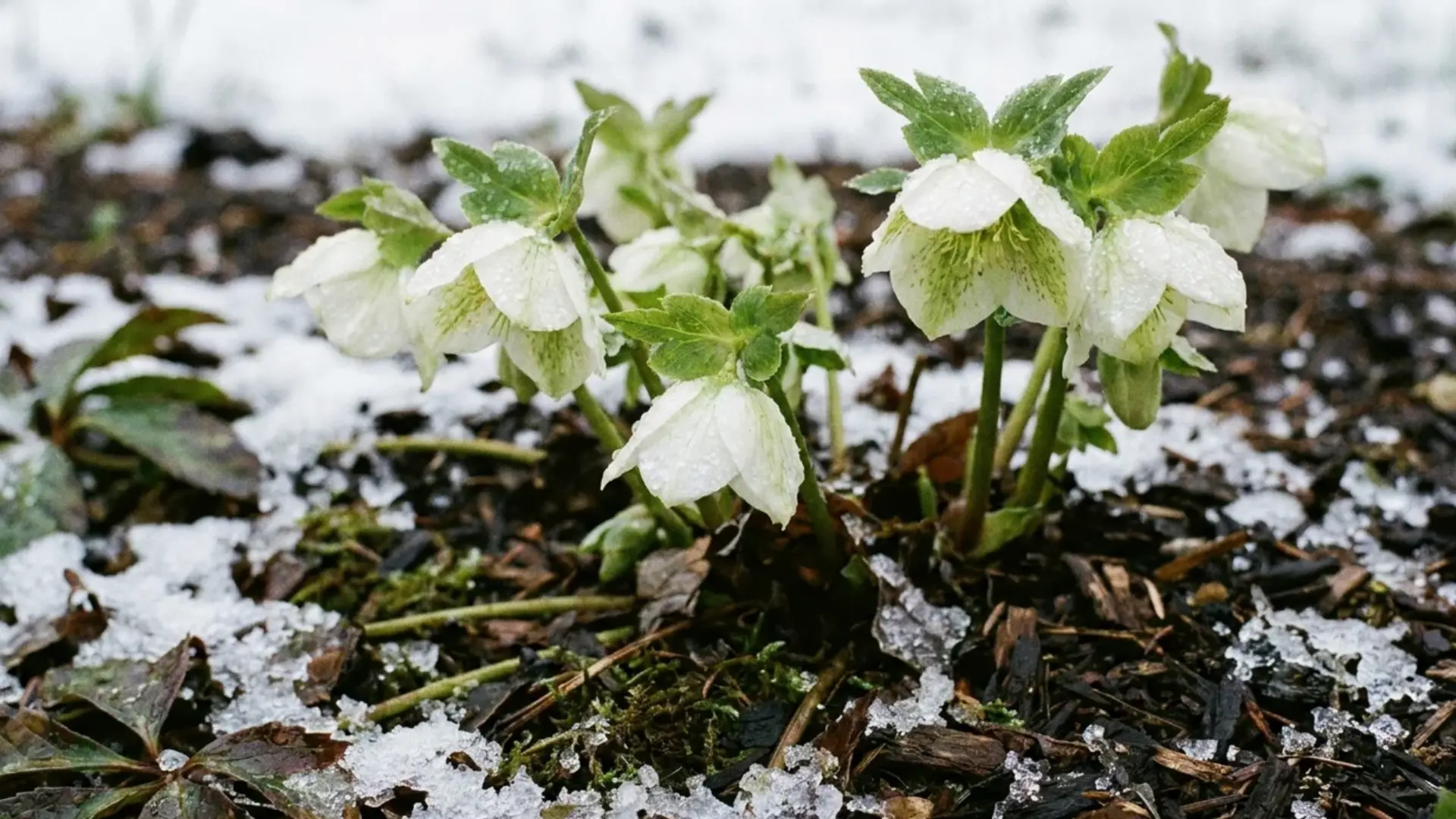
Hellebore is an early-blooming shade perennial that can flower while snow still covers the ground. Its nodding blooms and evergreen foliage bring color and structure to quiet garden beds during late winter and early spring.
- Conditions: Plant hellebore in partial to full shade with rich, well-drained soil.
- Maintenance: Remove damaged leaves in late winter before new flowers begin to appear.
- Growth: Mature plants form tidy clumps that usually reach 1 to 2 feet tall.
- Blooming: White, pink, green, or maroon flowers may appear from winter through early spring.
9. Chinese Astilbe
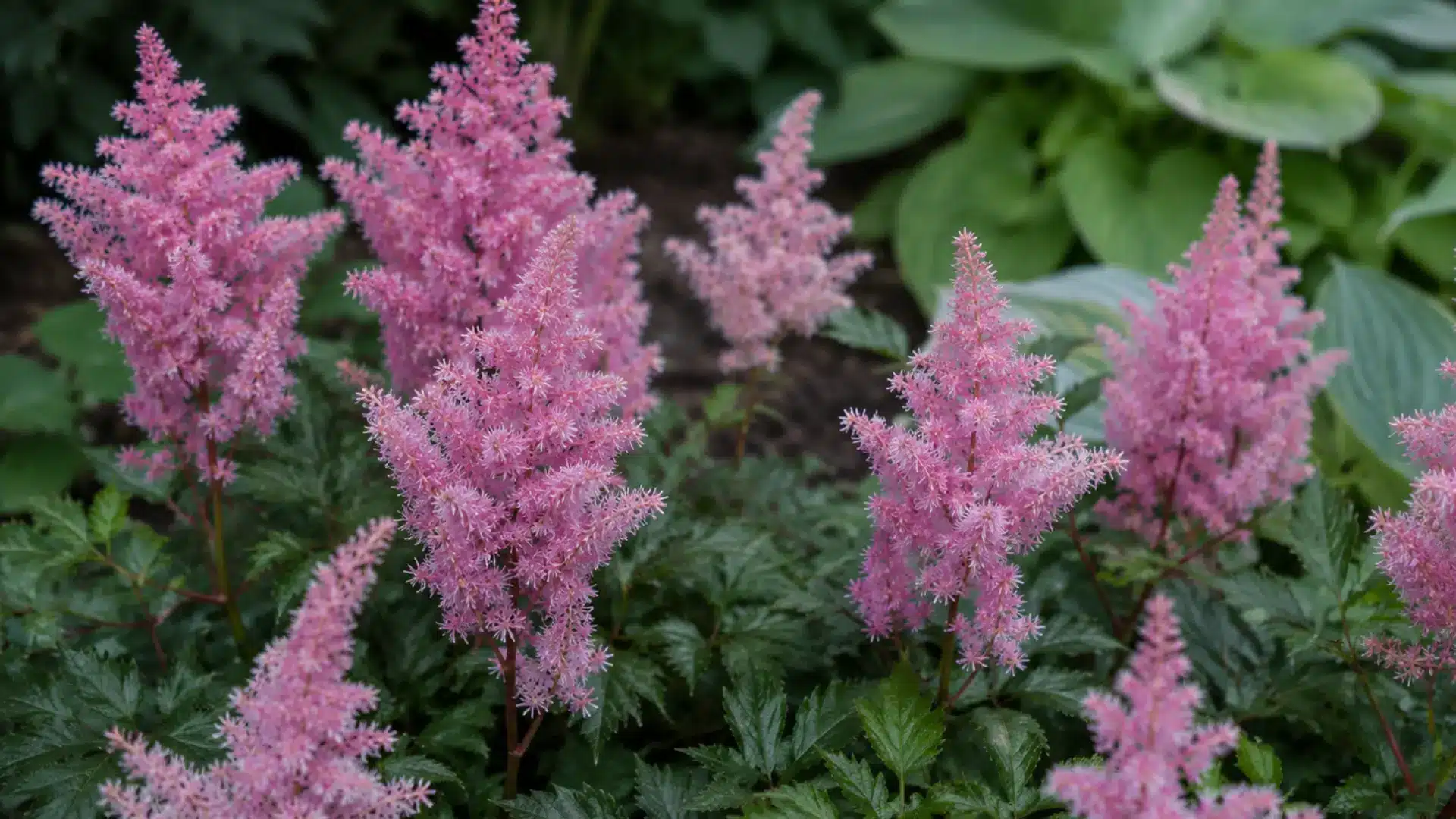
Chinese astilbe produces soft, feathery flower plumes that brighten moist, shaded areas. It is especially useful in low spots or near downspouts where the soil stays damp without holding standing water around the roots.
- Conditions: Grow it in partial shade with consistently moist, fertile, well-drained soil.
- Maintenance: Water regularly and add mulch to prevent the root area from drying out.
- Growth: Most varieties reach 1 to 3 feet tall and slowly form wider clumps.
- Blooming: Pink, lavender, red, or white plumes usually appear from early to midsummer.
10. Hardy Geranium
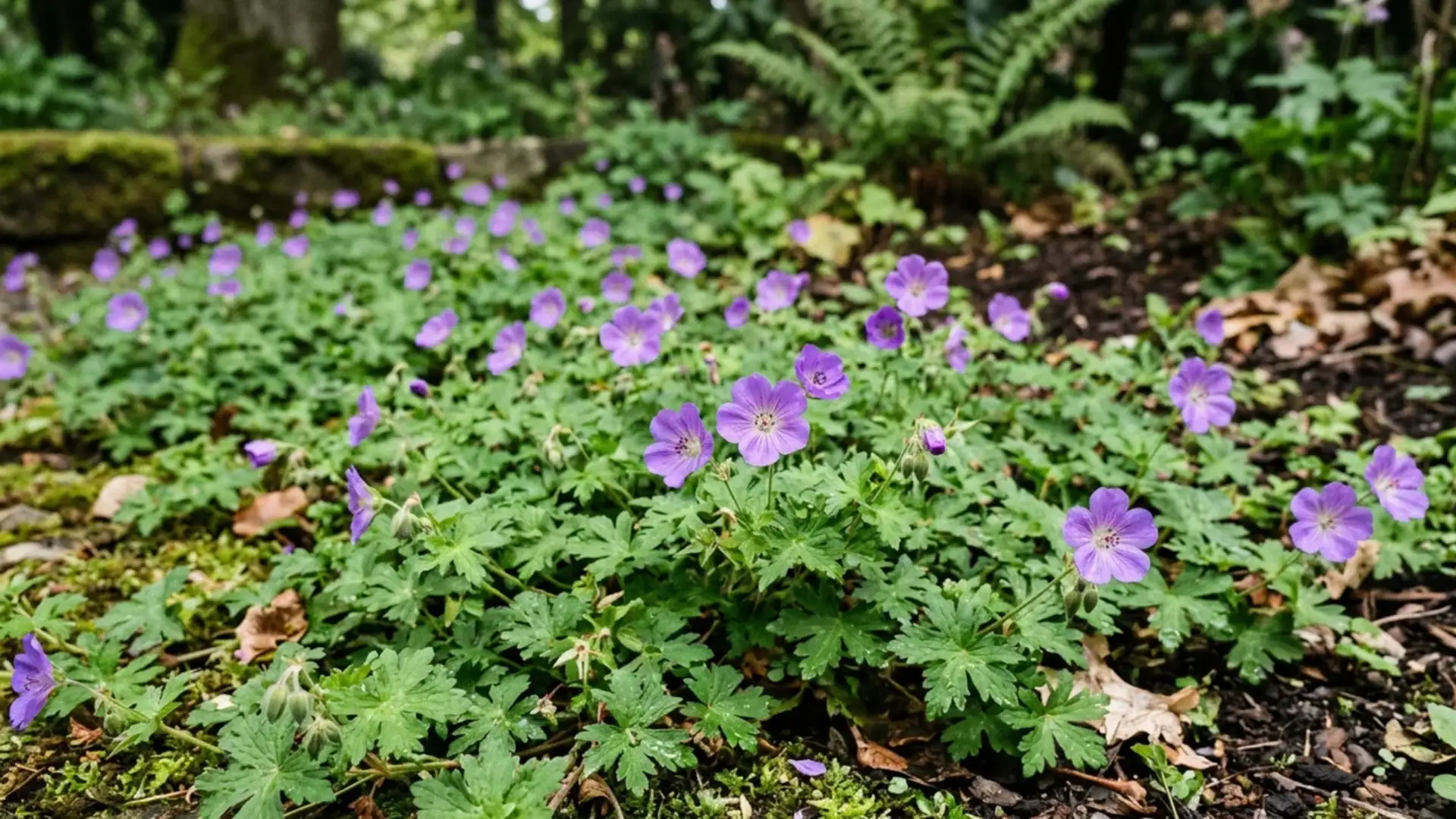
Hardy geranium, also called cranesbill, forms a neat groundcover that works well beneath trees or along shaded borders. Its small flowers appear for months, while the spreading foliage helps cover bare soil with little maintenance.
- Conditions: Plant it in partial shade and moist, well-drained soil for steady growth.
- Maintenance: Trim the foliage after flowering if the plant begins to look untidy.
- Growth: Plants spread into low mats that usually remain between 1 and 2 feet tall.
- Blooming: Blue, pink, purple, or white flowers can appear from spring through summer.
11. Bleeding Heart
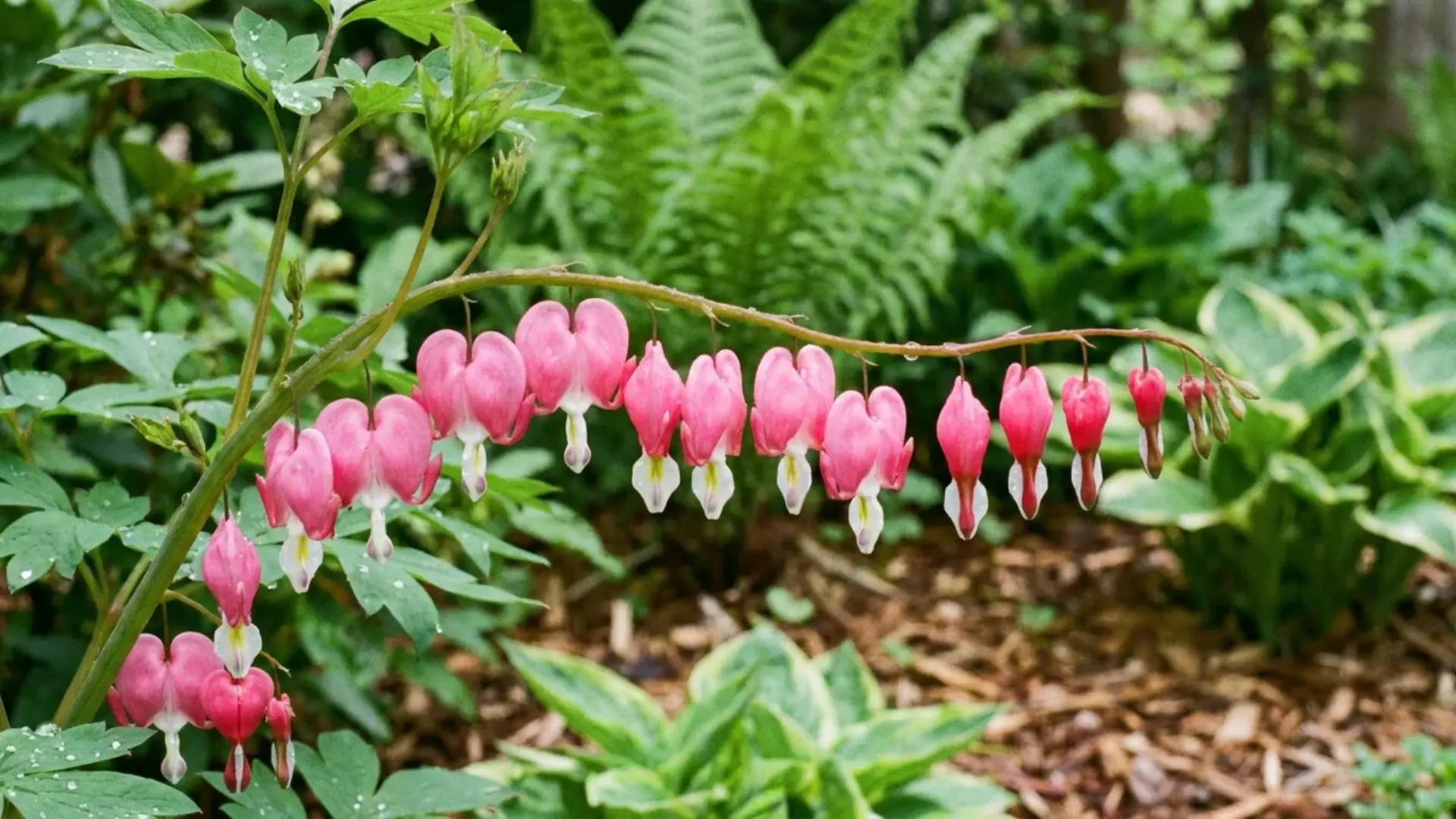
Bleeding heart brings arching stems covered with heart-shaped blooms to shaded spring gardens, not unlike the cottage-garden beauty of the covered foxglove plant care. The plant naturally goes dormant during summer, so nearby hostas, ferns, or groundcovers can conceal the empty space later in the season.
- Conditions: Grow it in partial shade with moist, rich soil that drains well.
- Maintenance: Keep the soil evenly moist during spring, then reduce watering after dormancy begins.
- Growth: Mature plants usually reach 2 to 3 feet tall and form rounded clumps.
- Blooming: Pink or white flowers hang from curved stems during mid to late spring.
12. Coral Bells
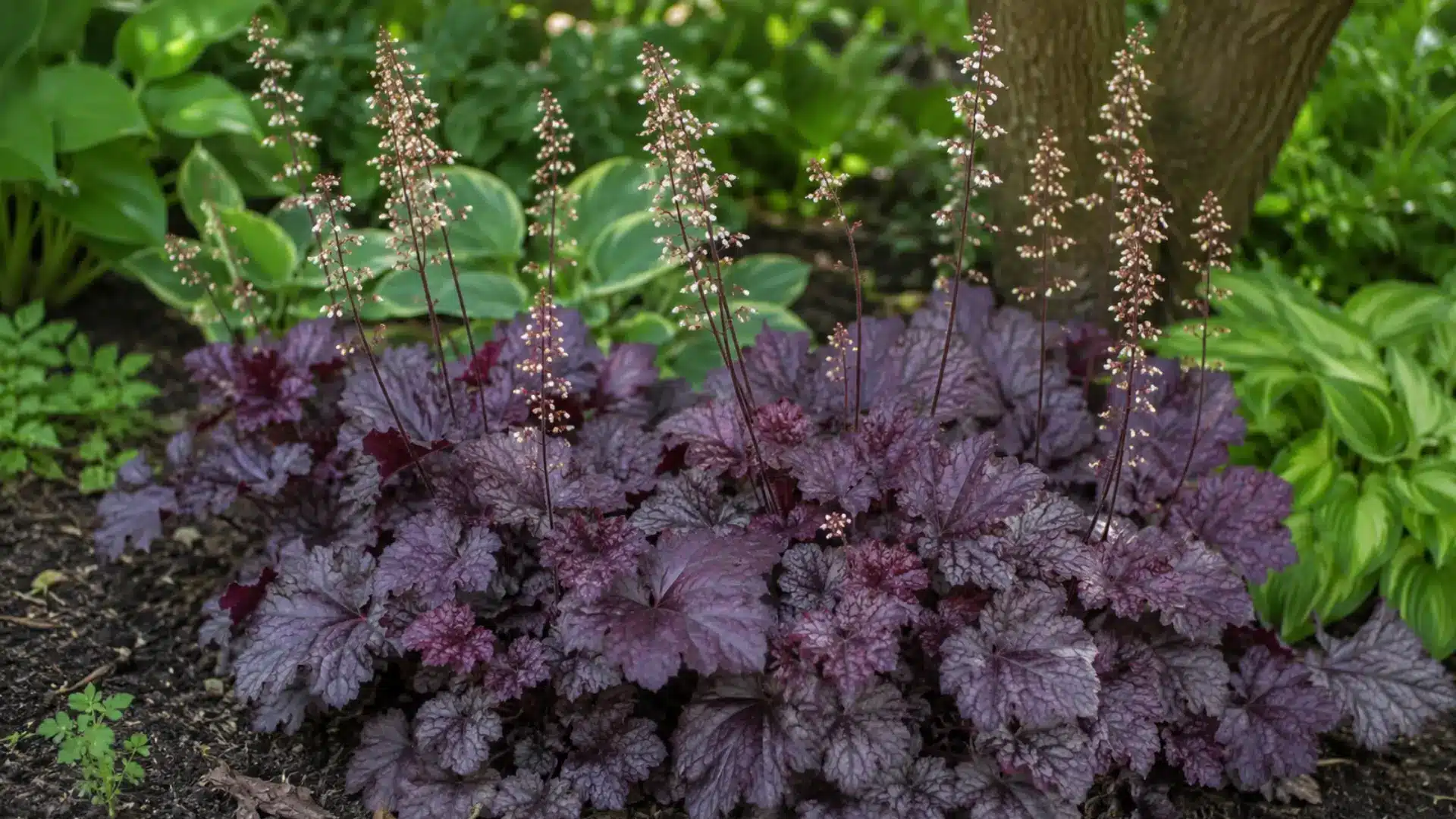
Coral bells add lasting color to shaded beds through foliage that ranges from lime green to burgundy and purple. Delicate flower spikes rise above the leaves, but the colorful mounds remain its strongest garden feature.
- Conditions: Plant it in partial shade with loose, well-drained soil and gentle morning sunlight.
- Maintenance: Remove damaged leaves and avoid allowing wet soil to collect around the crown.
- Growth: Compact clumps generally reach 1 to 2 feet tall and spread gradually.
- Blooming: Slender spikes of small white, pink, or red flowers appear from late spring through summer.
13. Lungwort
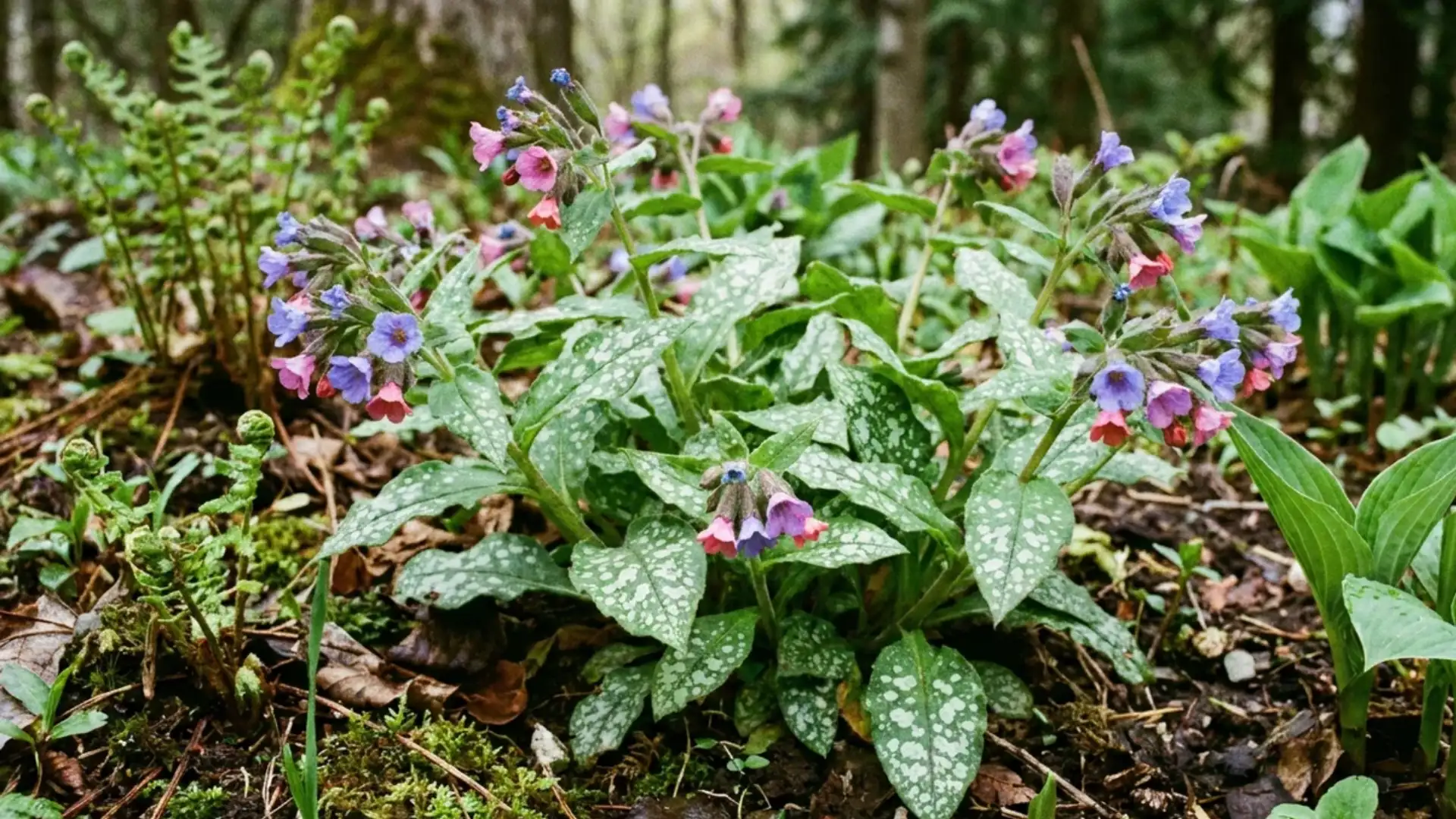
Lungwort is an early-flowering shade perennial with spotted foliage that remains attractive after its blooms fade. Its small flowers often shift from pink to blue, bringing useful color to damp beds during early spring.
- Conditions: Plant it in partial to full shade with moist, well-drained, organic-rich soil.
- Maintenance: Water during dry periods and trim worn foliage after flowering to encourage fresh leaves.
- Growth: Plants form low, spreading clumps that usually stay under 1 foot tall.
- Blooming: Pink, blue, or purple flowers appear in clusters during late winter or early spring.
These shade perennials return most reliably when their moisture needs are met, so check the soil regularly rather than assuming every shaded bed stays naturally damp.
Low-Maintenance, Nearly Unkillable Perennials
If you want a garden that survives inconsistent care, these five come up again and again as the toughest options. They tolerate poor soil, drought, and general neglect better than most perennials.
14. Sedum (Autumn Joy Stonecrop)
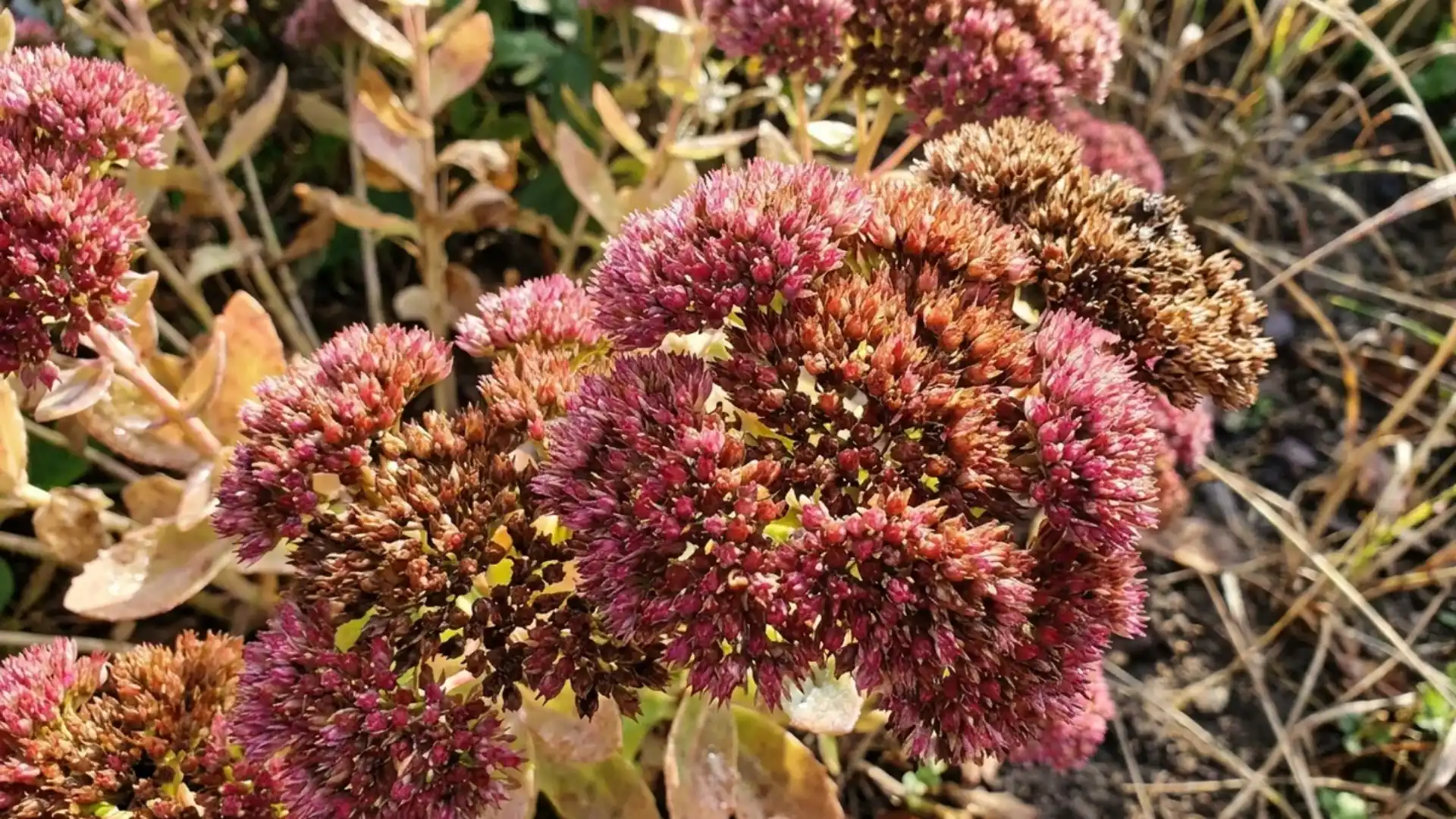
Sedum is a drought-tolerant perennial with thick leaves that store water through dry weather. Its large pink flower heads deepen to rust in fall, bringing late-season color to sunny beds with poor or rocky soil.
- Conditions: Plant sedum in full sun and dry, sharply drained soil.
- Maintenance: Remove old flower stems in early spring before fresh growth appears.
- Growth: Mature clumps usually reach 18 to 24 inches tall and wide.
- Blooming: Pink flower clusters appear in late summer and gradually darken through fall.
15. Catmint
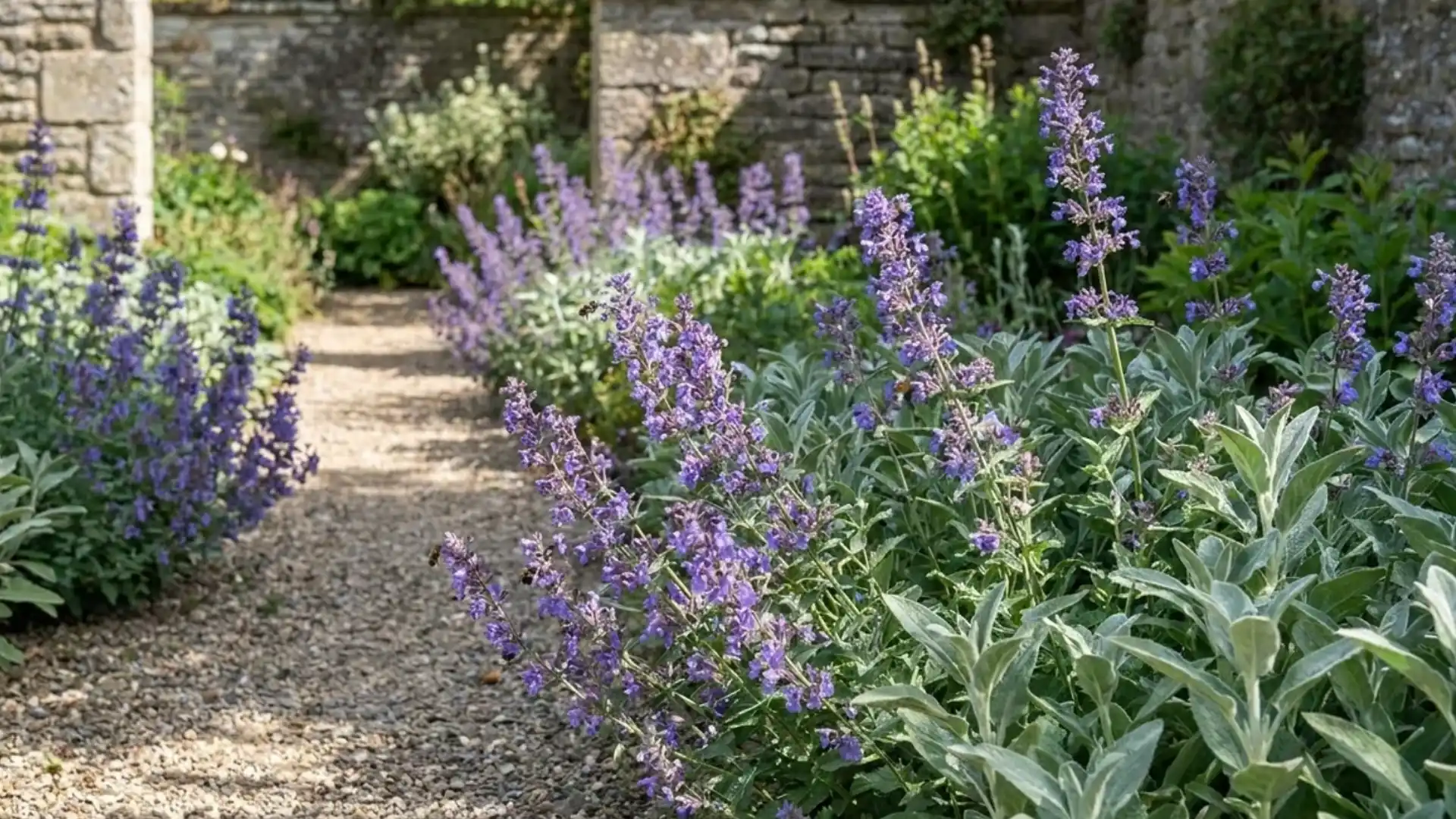
Catmint forms soft mounds of silvery foliage covered with purple-blue flowers for much of summer. It tolerates heat, drought, and poor soil, making it a dependable choice for borders, paths, and low-maintenance sunny beds.
- Conditions: Grow catmint in full sun and average soil that drains quickly.
- Maintenance: Cut the plant back after its first bloom to encourage fresh flowers.
- Growth: Most varieties reach 1 to 3 feet tall and spread into rounded clumps.
- Blooming: Purple-blue flowers usually appear from late spring through early fall.
16. Yarrow
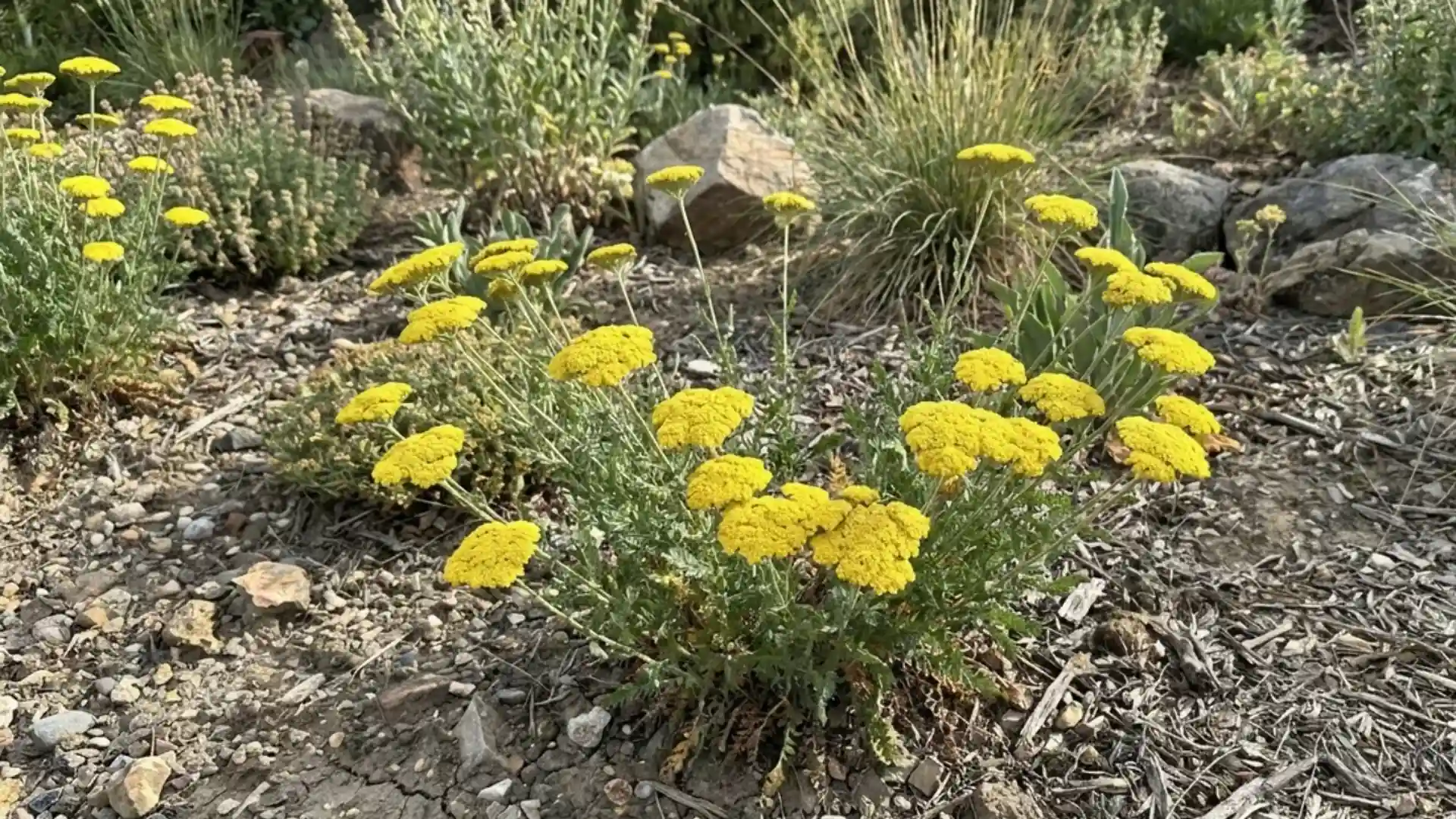
Yarrow is a tough, spreading perennial that performs well in dry, compacted, or low-fertility soil. Its flat flower clusters bring lasting summer color, although the plant may spread quickly when growing conditions suit it.
- Conditions: Plant yarrow in full sun and dry to moderately moist, well-drained soil.
- Maintenance: Remove faded blooms to extend flowering and limit unwanted self-seeding.
- Growth: Plants commonly reach 2 to 4 feet tall and spread through underground stems.
- Blooming: White, yellow, pink, or red flower clusters appear from early through late summer.
17. Hen and Chicks
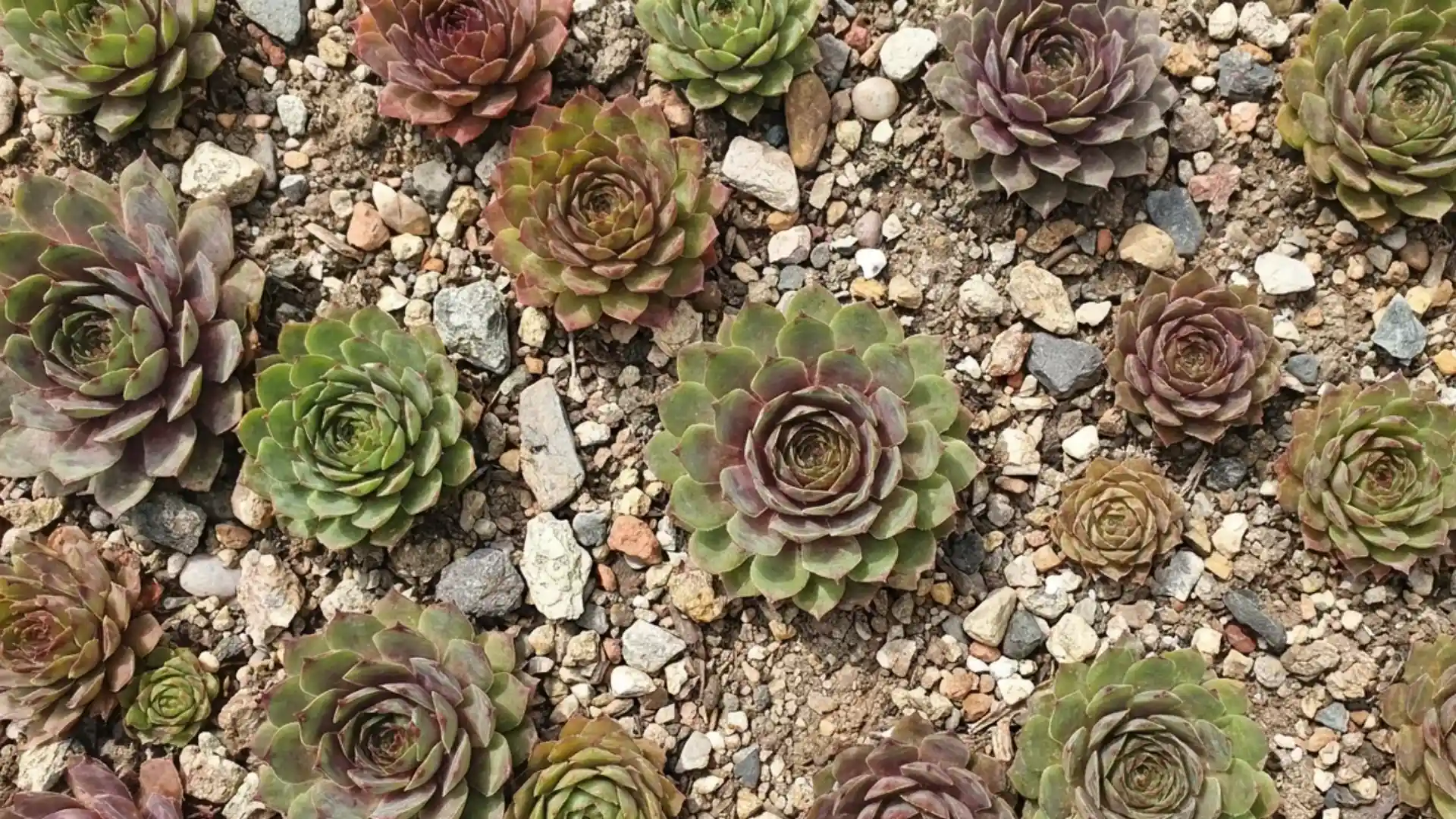
Hen and chicks form tight succulent rosettes that return each year with almost no attention. It thrives in shallow, rocky soil and occasionally produces tall flower stalks, although its colorful foliage remains the main attraction.
- Conditions: Grow it in full sun and gritty soil with excellent drainage.
- Maintenance: Remove dead rosettes after they flower and allow nearby offsets to fill the space.
- Growth: Small rosettes produce surrounding offsets that gradually form a dense spreading mat.
- Blooming: Mature rosettes send up pink, red, or purple flower stalks during summer.
18. Creeping Thyme
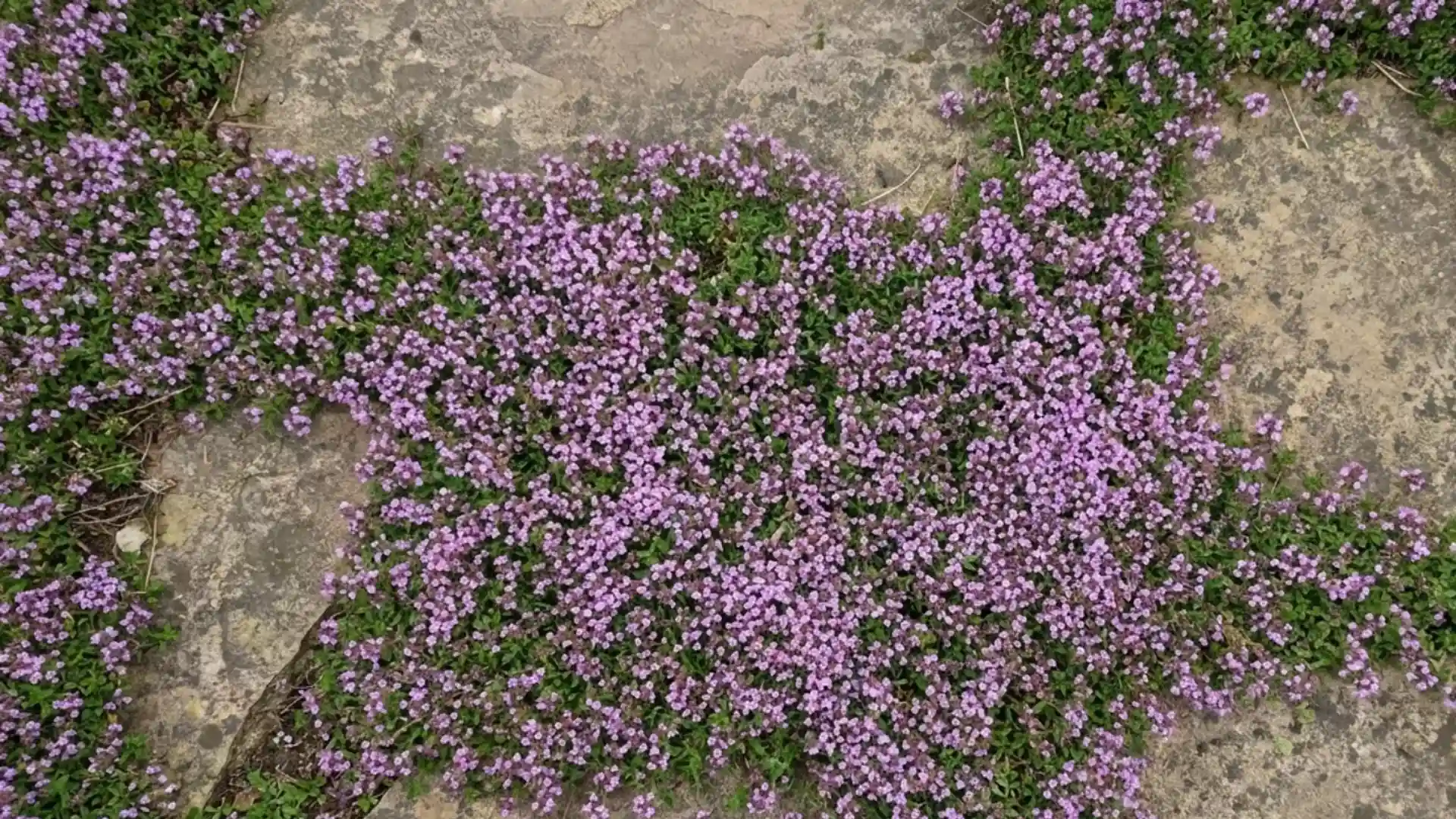
Creeping thyme creates a low, fragrant carpet that fills with tiny purple flowers during summer. It works well between stepping stones, along borders, or as a lawn substitute in sunny areas with light foot traffic.
- Conditions: Plant it in full sun and loose, sandy, or rocky soil that drains well.
- Maintenance: Trim spreading stems after flowering if they begin covering nearby plants or paths.
- Growth: Plants stay only a few inches tall but may spread 12 inches or more.
- Blooming: Tiny pink or purple flowers cover the foliage from late spring through summer.
19. Lamb’s Ear
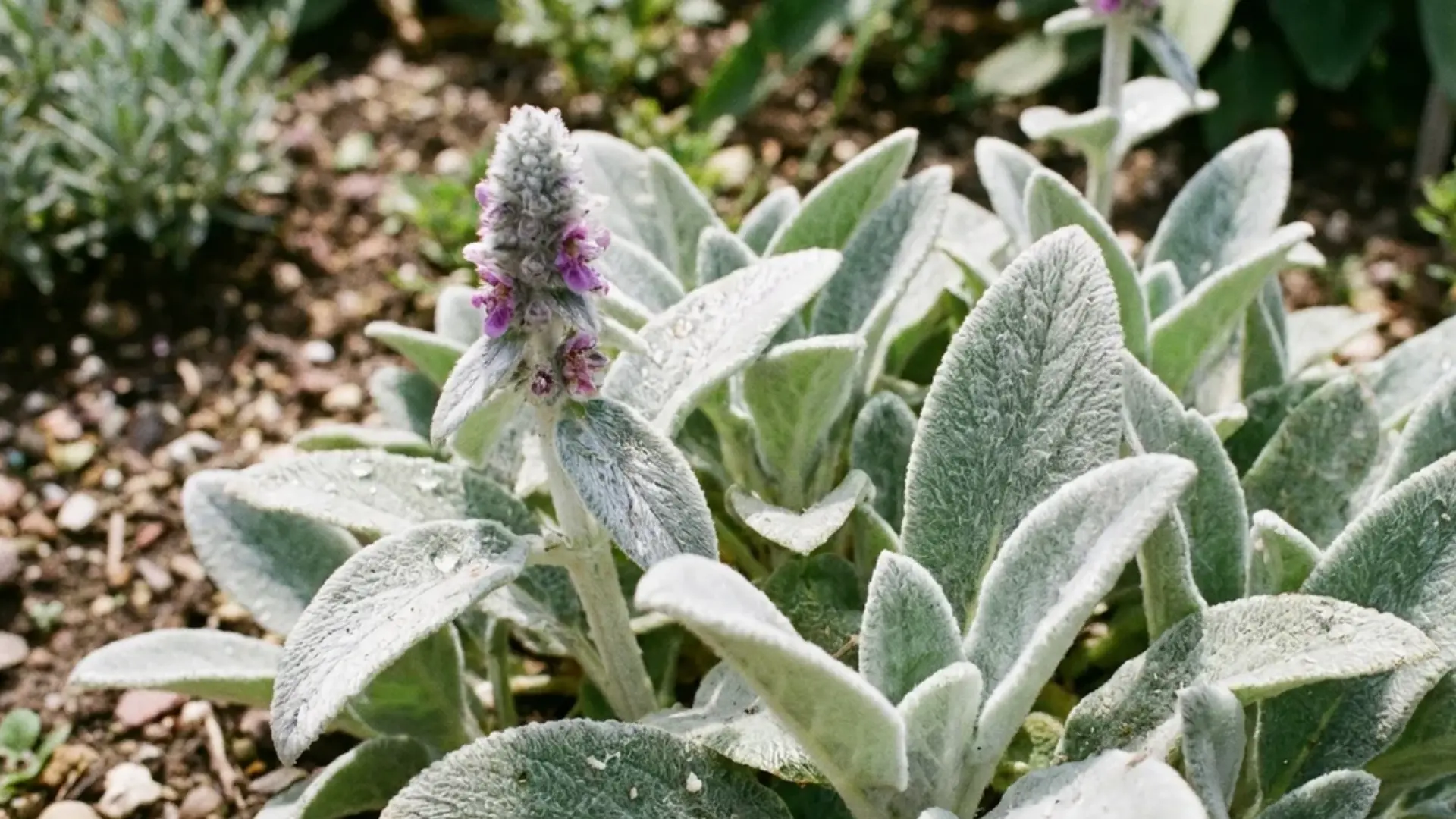
Lamb’s ear forms soft, silver-gray foliage that brightens dry borders and sunny beds. Small purple flowers appear on upright stalks during summer, but many gardeners grow it mainly for its textured, low-maintenance leaves.
- Conditions: Plant lamb’s ear in full sun and dry, well-drained soil.
- Maintenance: Remove damaged leaves and trim flower stalks to keep the plant looking compact.
- Growth: Foliage forms low clumps that gradually spread to 1-2 feet wide.
- Blooming: Purple flower spikes rise above the leaves during late spring or summer.
These drought-tolerant perennials perform best when drainage is strong, watering is limited, and rich fertilizer is kept away from their roots.
Long-Blooming Perennials for Season-Long Color
These five hold their color for weeks or months instead of a single short burst, which makes them worth the extra planning if you want continuous blooms.
20. Shasta Daisy
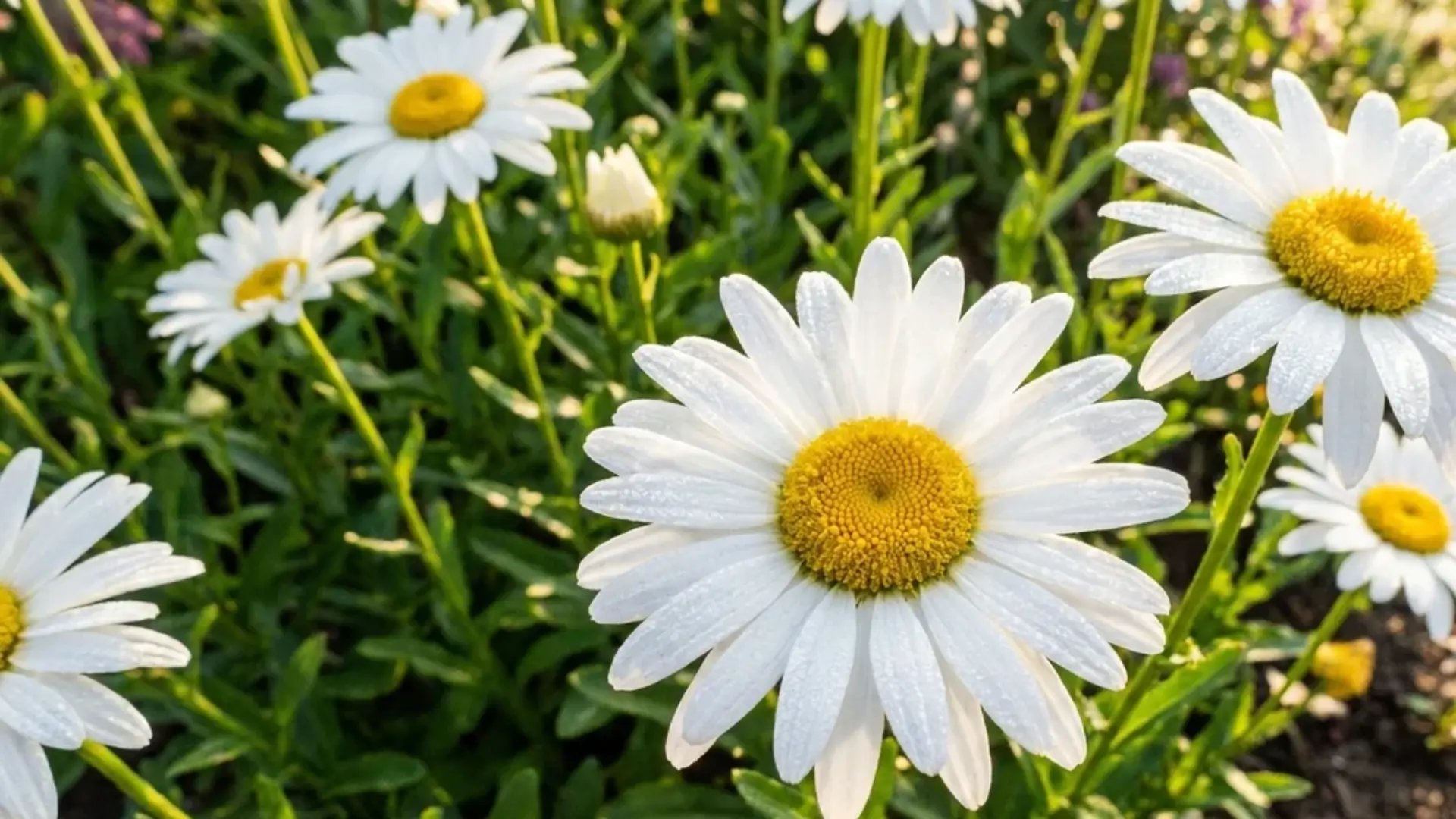
Shasta daisy is a dependable summer perennial with crisp white petals and bright yellow centers. It establishes quickly from nursery plants and continues flowering for months when faded blooms are removed before they produce seed.
- Conditions: Plant it in full sun and fertile, well-drained soil for strong flowering.
- Maintenance: Remove spent blooms regularly and cut old stems down after the growing season.
- Growth: Mature plants usually reach 2 to 4 feet tall and form widening clumps.
- Blooming: White flowers appear from early summer into fall when deadheading continues.
21. Phlox
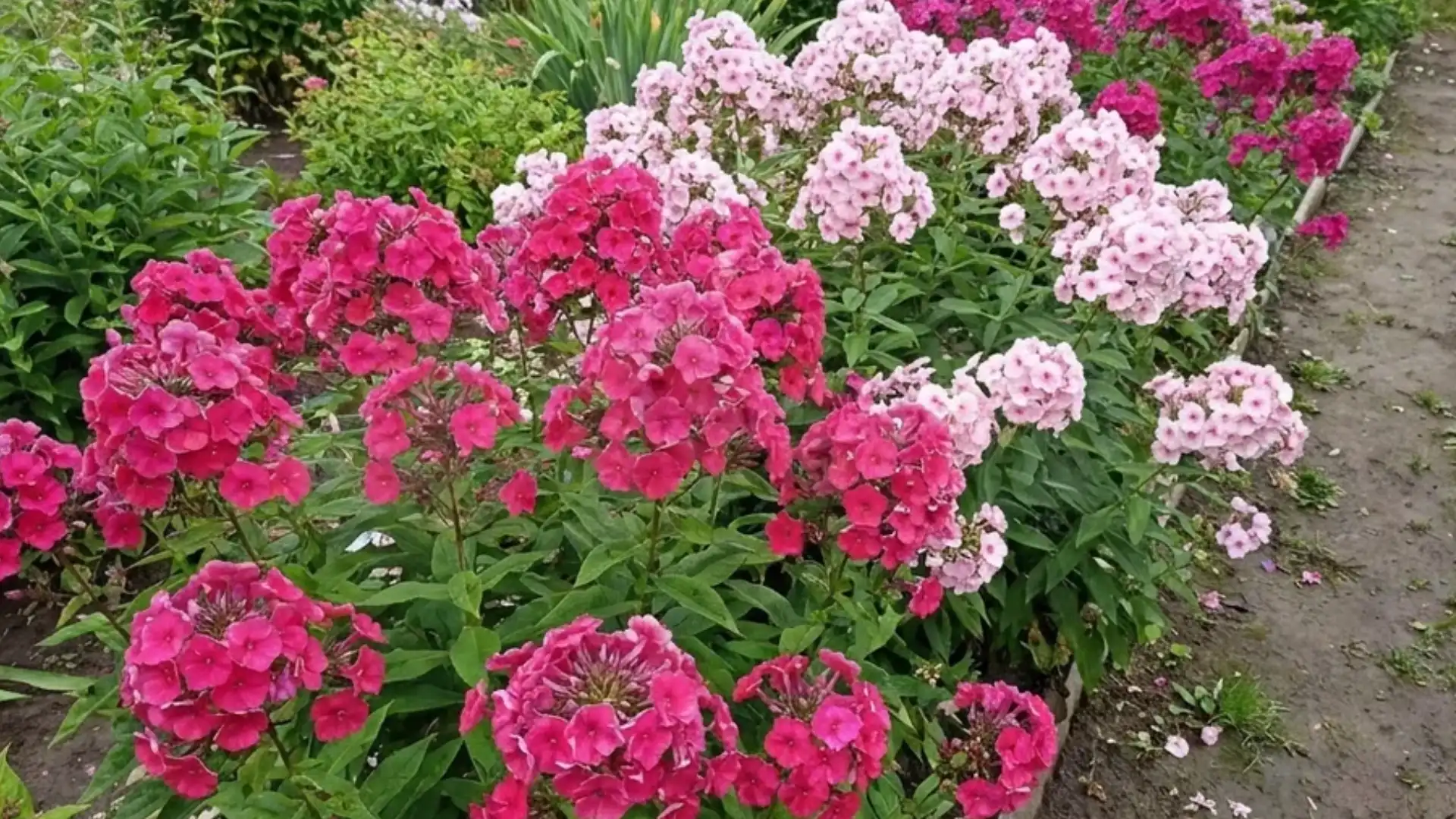
Garden phlox produces large, fragrant flower clusters that bring strong color to borders during midsummer. Proper spacing is important because crowded foliage traps moisture and increases the risk of powdery mildew during humid weather.
- Conditions: Grow it in full sun or light shade with moist, well-drained soil.
- Maintenance: Water near the base and remove affected leaves if mildew begins developing.
- Growth: Upright stems commonly reach 2 to 4 feet tall, depending on the variety.
- Blooming: Pink, purple, red, or white clusters appear from midsummer through early fall.
22. Salvia
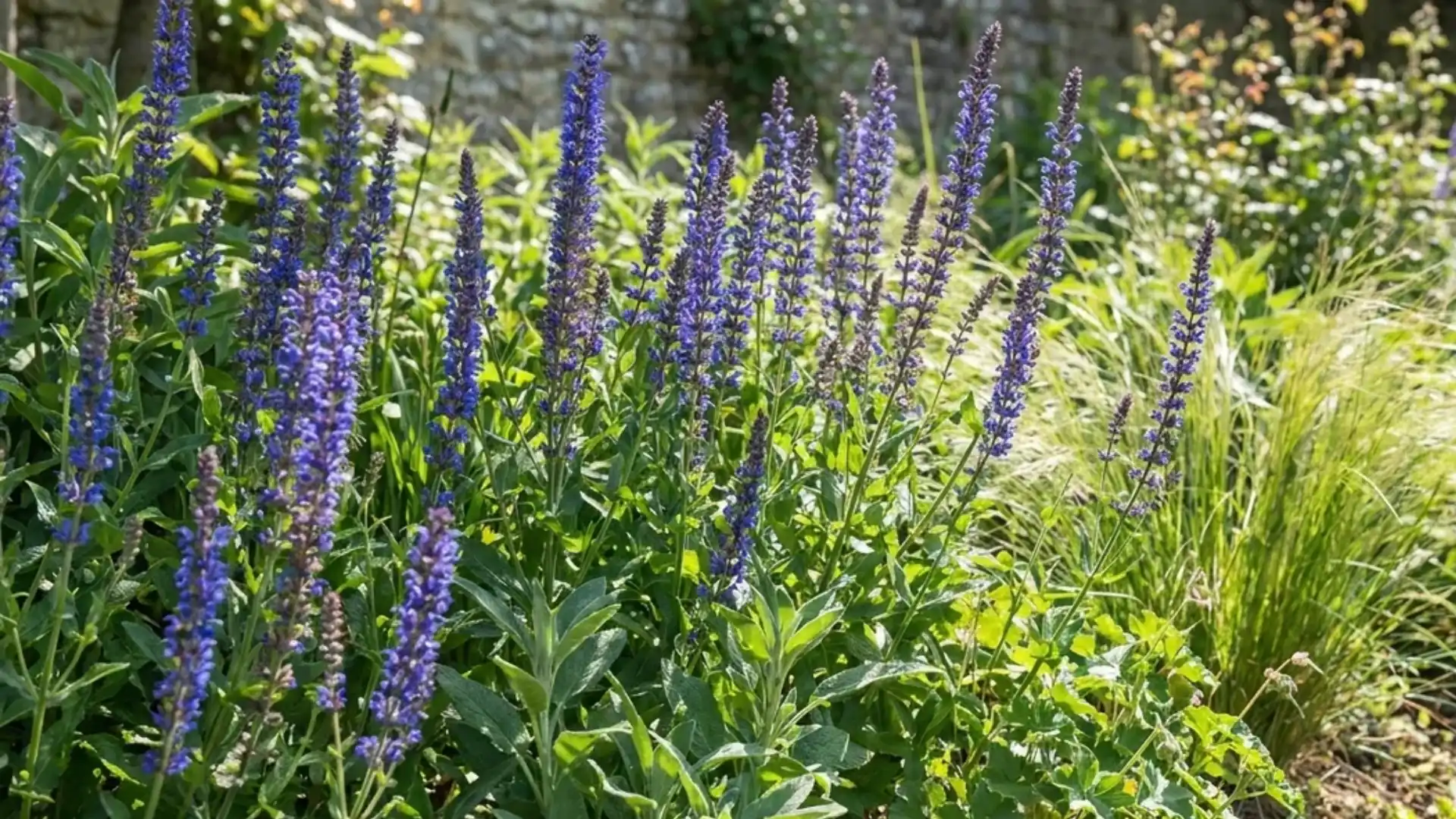
Salvia produces upright flower spikes that add height and steady color to sunny garden beds. Cutting back faded stems after the first flowering period usually encourages another flush later in the growing season.
- Conditions: Plant salvia in full sun and average, well-drained soil.
- Maintenance: Trim spent flower spikes and water during extended periods of dry weather.
- Growth: Most perennial varieties grow between 1 and 3 feet tall and wide.
- Blooming: Blue, purple, pink, or red flowers appear from early summer into fall.
23. Lavender
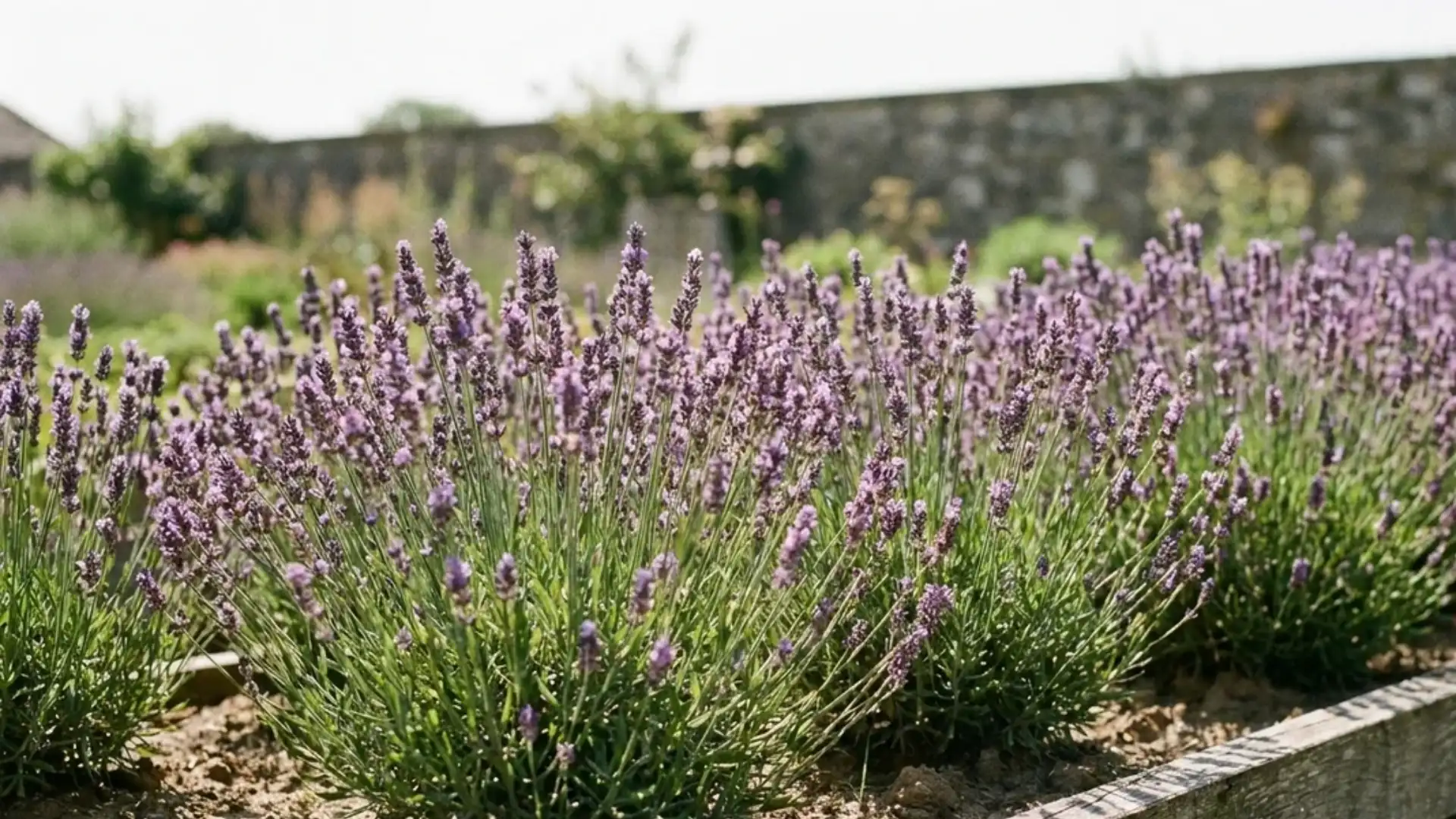
Lavender combines fragrant foliage with purple summer flowers, but it depends heavily on dry soil and strong drainage. It performs well in raised beds, gravel gardens, and sandy ground where moisture does not collect.
- Conditions: Grow lavender in full sun and dry, gritty soil with sharp drainage.
- Maintenance: Prune lightly after flowering without cutting deeply into old, woody stems.
- Growth: Plants generally reach 1 to 3 feet tall and develop rounded, woody forms.
- Blooming: Fragrant purple, blue, pink, or white spikes appear throughout summer.
24. Blazing Star (Liatris)
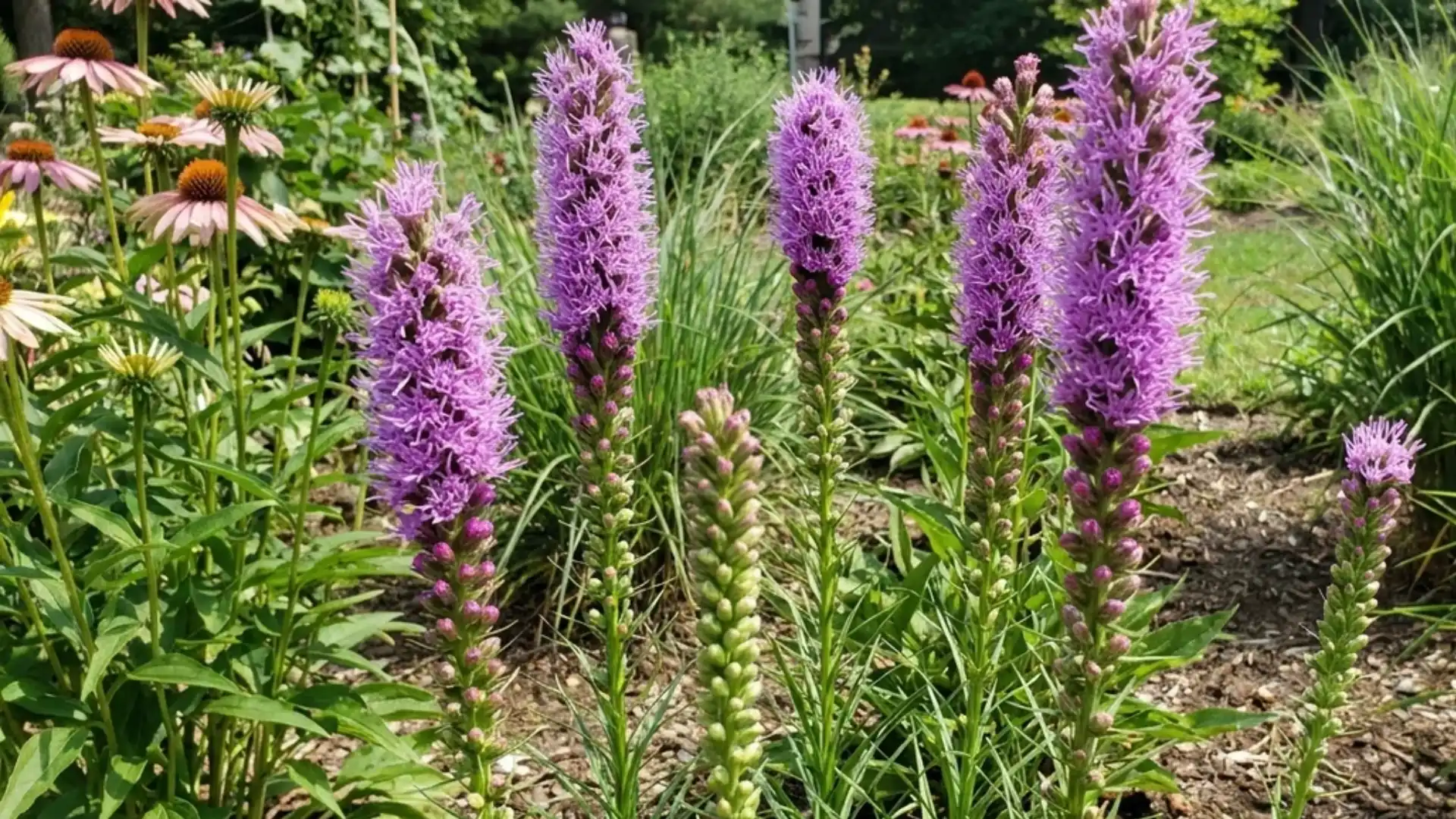
Blazing star creates tall purple flower spikes that open from the top downward, unlike most flowering perennials. Once established, it tolerates heat and dry spells while providing a dependable nectar source for butterflies.
- Conditions: Plant it in full sun and average soil that drains well after rain.
- Maintenance: Water young plants regularly, then reduce watering once roots become established.
- Growth: Upright flower stalks usually reach 2 to 4 feet tall without needing support.
- Blooming: Purple or white bottlebrush-shaped flowers appear from midsummer into early fall.
25. Coreopsis
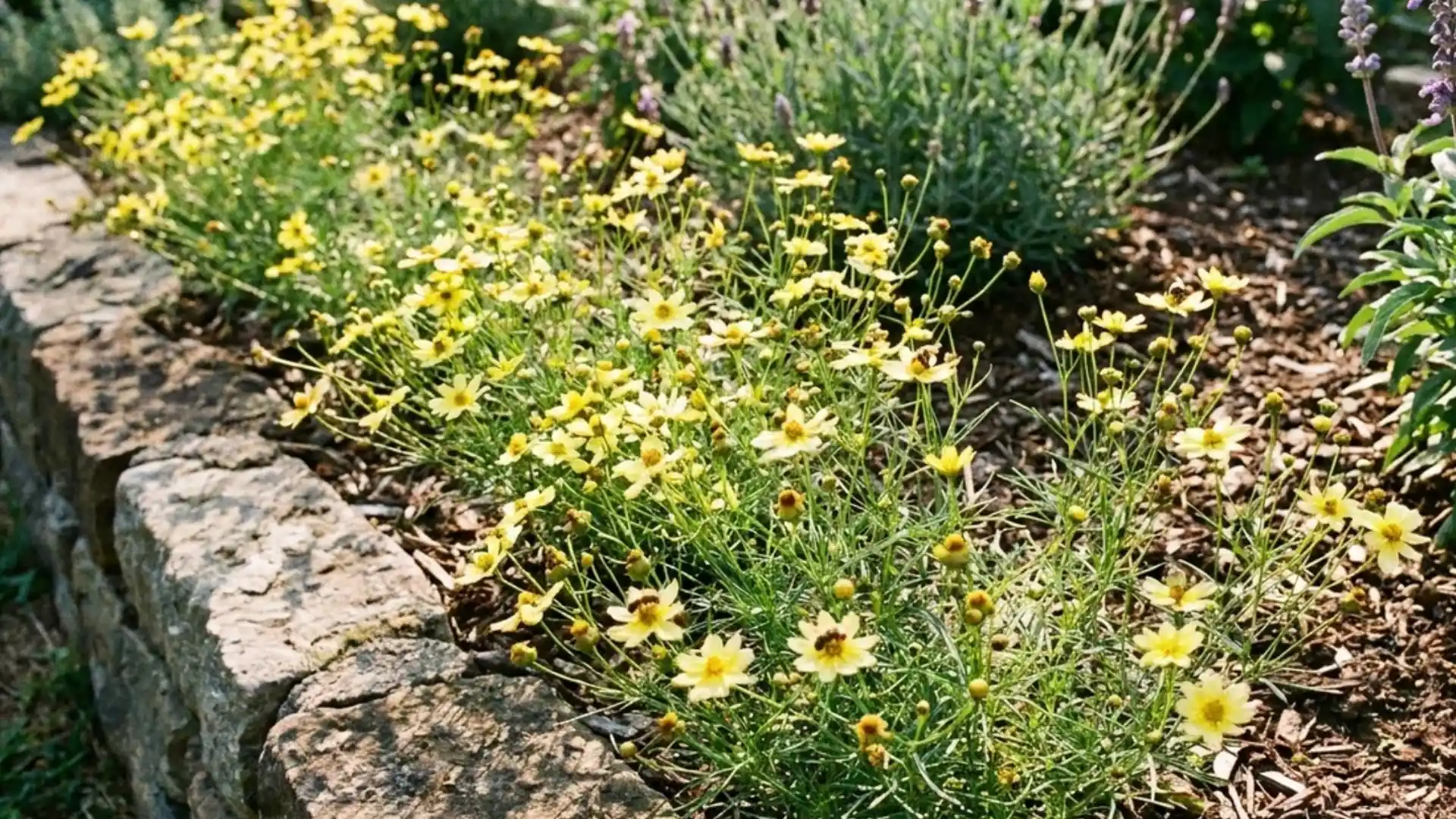
Coreopsis is a long-flowering perennial that handles heat, poor soil, and occasional dry spells. Its cheerful daisy-like blooms keep sunny borders colorful, especially when the plant is trimmed during midsummer to encourage fresh growth.
- Conditions: Plant coreopsis in full sun and average, well-drained soil.
- Maintenance: Deadhead regularly or shear the plant back by half during midsummer.
- Growth: Depending on the variety, plants grow between 1 and 3 feet tall.
- Blooming: Yellow, orange, red, or pink flowers appear from early summer through fall.
These long-blooming perennials provide months of color when they receive enough sunlight, proper spacing, and regular trimming after their first flowers begin to fade.
Fragrant and Statement Perennials
These three are chosen more for visual drama or scent than for low-maintenance care. They work well as focal points rather than filler.
26. Peony
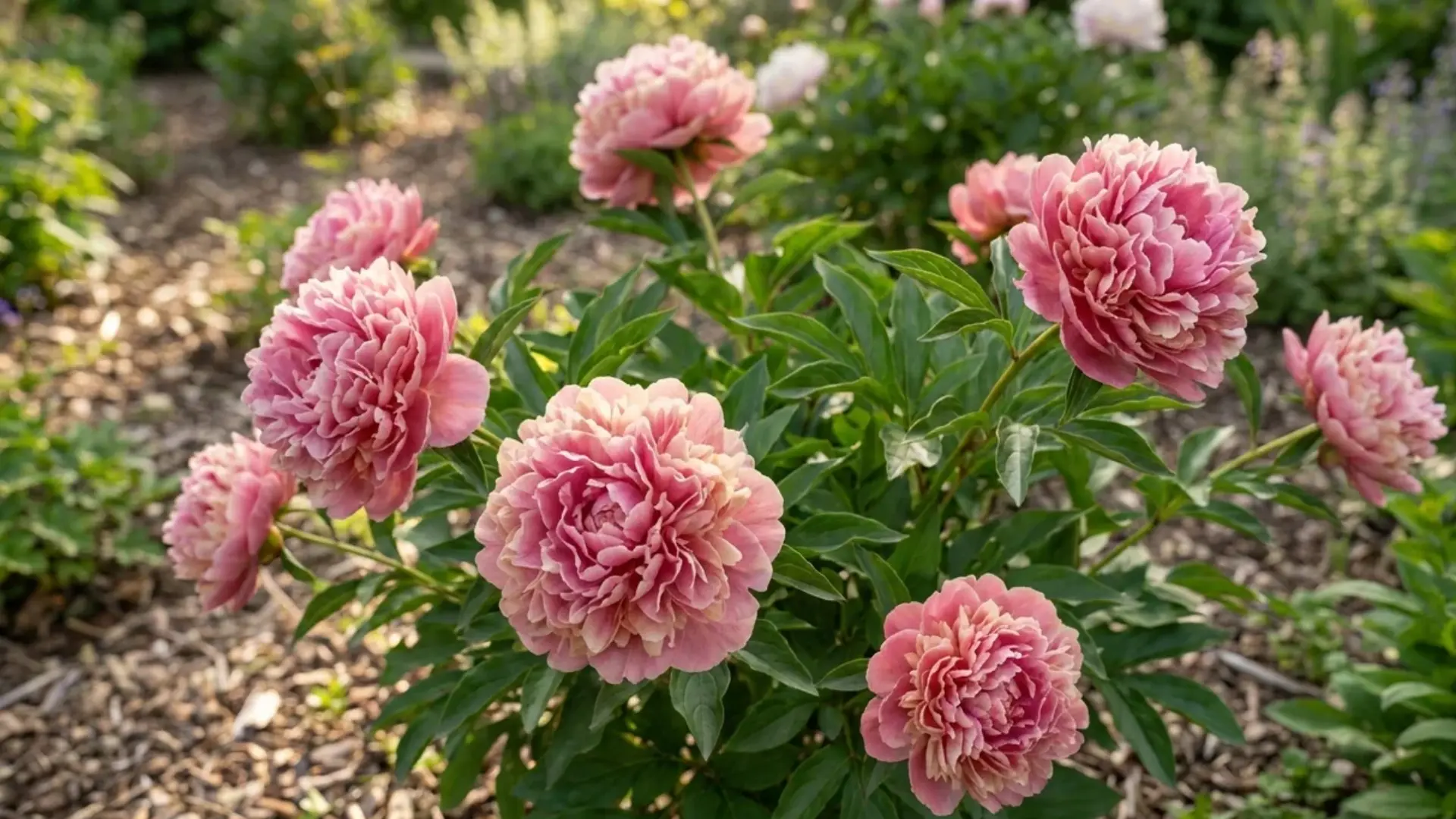
Peony is a long-lived perennial known for large, fragrant flowers that return for decades. It takes time to settle into a new bed, but established plants produce fuller displays each spring with very little ongoing care.
- Conditions: Plant peonies in full sun and fertile, well-drained soil with good airflow.
- Maintenance: Remove faded flowers and cut damaged foliage to the ground after the first hard frost.
- Growth: Mature plants usually reach 2 to 4 feet tall and may live for several decades.
- Blooming: Large pink, white, red, or yellow flowers appear from late spring into early summer.
27. Bearded Iris
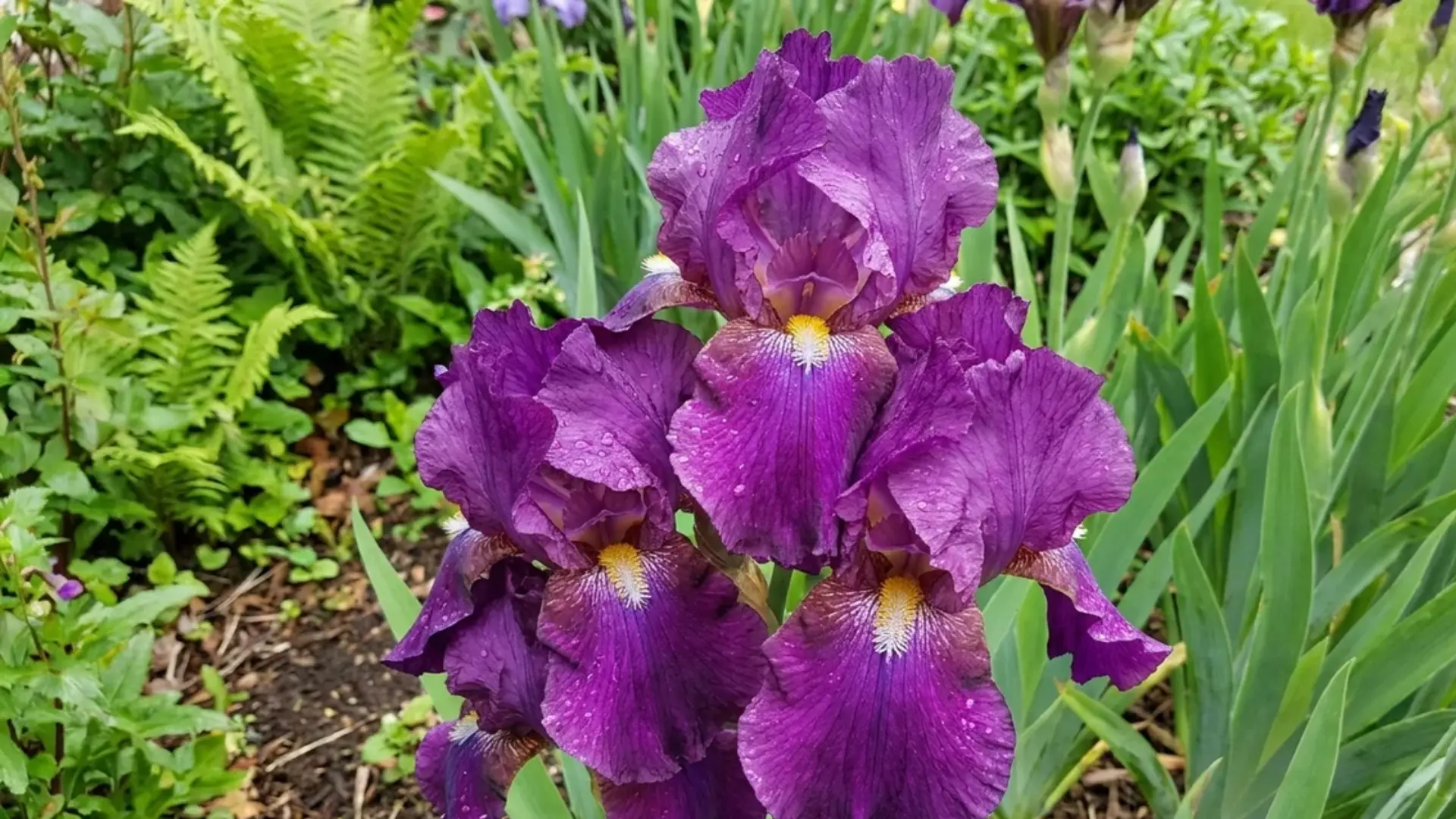
Bearded iris produces bold, ruffled flowers in a broad range of colors during late spring. Its thick rhizomes need sunlight and shallow planting, making correct placement more important than frequent watering or feeding.
- Conditions: Grow bearded iris in full sun and loose soil that drains quickly after rain.
- Maintenance: Remove spent flower stalks and trim damaged leaves without cutting healthy foliage too early.
- Growth: Rhizomes spread outward and gradually form broad clumps between 2 and 3 feet tall.
- Blooming: Ruffled flowers appear in spring, with some varieties producing another display during fall.
28. Baptisia
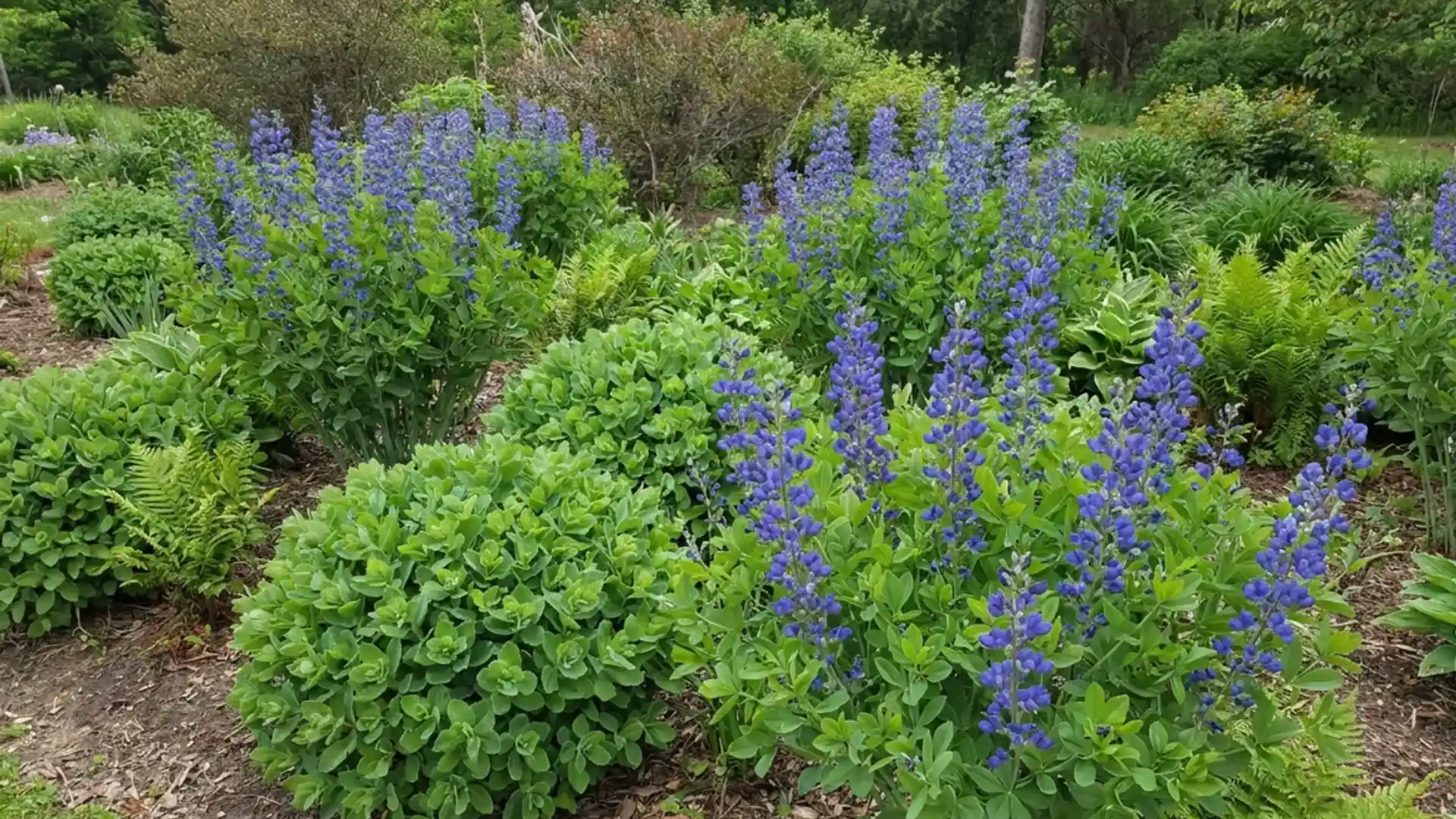
Baptisia, also called false indigo, forms a large, shrub-like perennial with colorful flower spikes in late spring. Its deep taproot supports strong drought tolerance but makes established plants difficult to move successfully.
- Conditions: Plant baptisia in full sun and average, well-drained soil with enough space to expand.
- Maintenance: Leave it undisturbed and remove old stems in late winter or early spring.
- Growth: Mature plants commonly reach 3 to 5 feet tall and develop a wide, rounded form.
- Blooming: Blue, purple, white, or yellow flower spikes appear during late spring and early summer.
29. Hydrangea
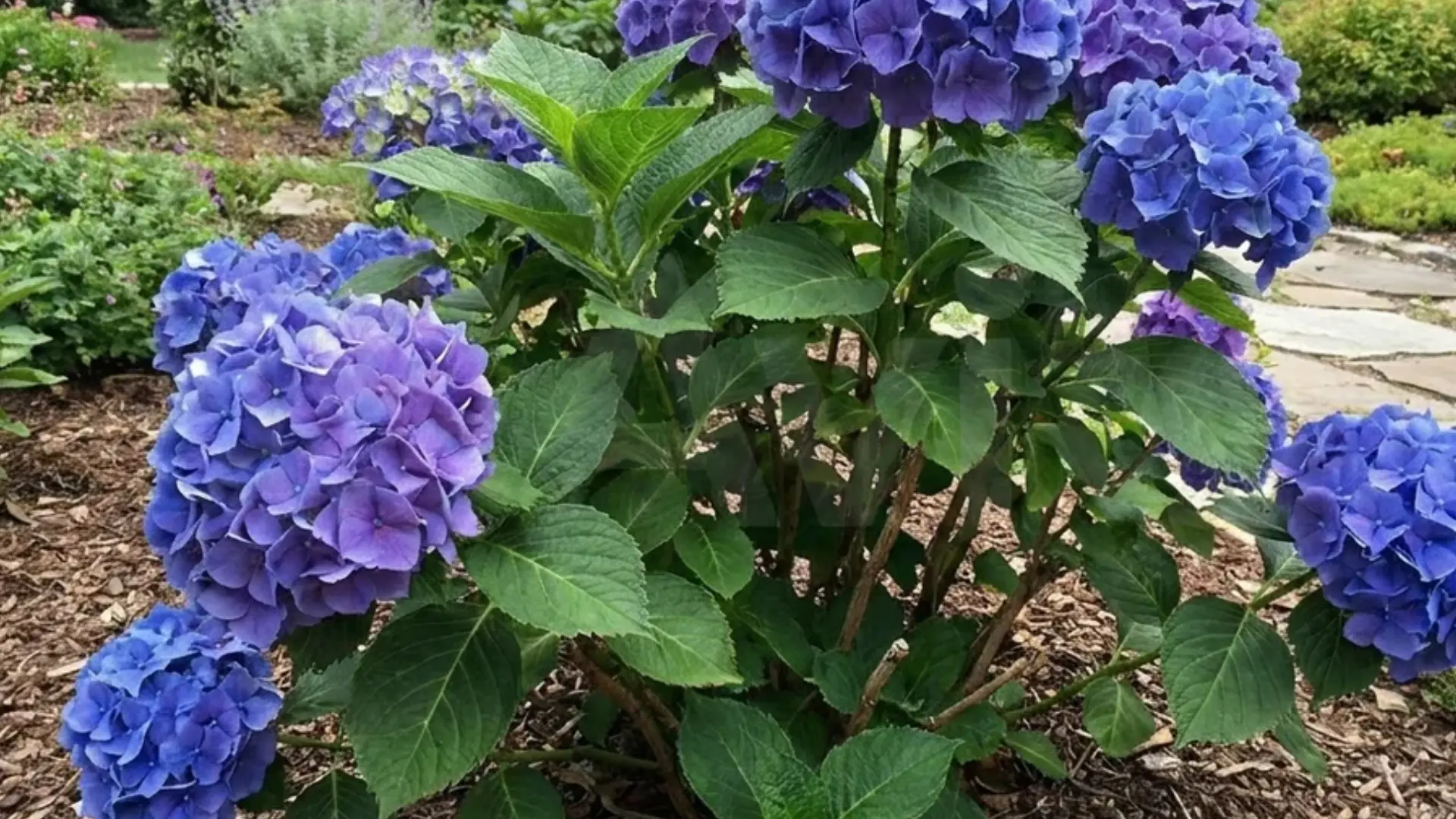
Hydrangea is a flowering shrub that returns each spring from its woody framework or root system. Its large flower clusters bring lasting summer color, although sunlight, pruning method, and variety strongly affect blooming.
- Conditions: Plant hydrangeas in morning sun and afternoon shade with moist, well-drained soil.
- Maintenance: Water deeply during dry periods and mulch around the roots to retain consistent moisture.
- Growth: Depending on the variety, plants may reach between 3 and 8 feet tall and wide.
- Blooming: Rounded or cone-shaped flowers appear in blue, pink, purple, green, or white during summer.
These established garden favorites reward patience, but correct planting depth, careful pruning, and minimal disturbance determine how reliably they return and flower.
Choosing Flowers That Will Keep Returning
A dependable garden starts with flowers that match your local growing conditions and the amount of care you want to provide.
- Check the sunlight: Note how many hours of direct sun the bed receives before choosing full-sun or shade-loving plants.
- Test the soil: Pay attention to whether the ground stays wet, drains quickly, or dries out between watering.
- Know your hardiness zone: Choose flowers rated for your winter temperatures so they have a better chance of returning.
- Start small: I prefer planting two or three proven varieties before filling the entire bed.
- Mix different roles: Combine long-lived plants, long-bloomers, groundcovers, and one or two statement flowers.
Starting with the right conditions makes it easier to create a fuller garden that returns reliably with less work each year.
Conclusion
A garden becomes easier to enjoy when you stop expecting every plant to behave alike. Some return from the same roots, while others reseed and create growth in the same spots.
If you are wondering what flowers come back every year, start with the conditions in your yard before choosing by color alone.
I prefer mixing dependable perennials with long bloomers and one standout plant for structure. That balance keeps the bed interesting without making maintenance feel endless.
Begin with two or three flowers that suit your hardiness zone, sunlight, and soil, then add more once you see what performs well locally.
Which returning flowers have worked best in your garden? Share your favorites and growing tips in the comments.
Frequently Asked Questions
Do all perennials come back every single year without fail?
Most perennials return reliably if planted in the right hardiness zone and given adequate sun, drainage, and occasional dividing. Some perennials are short-lived, lasting only three to five years before declining, while others like peonies can live for decades with minimal care.
What’s the difference between a perennial and a self-seeding annual?
A true perennial’s original root system survives winter and regrows in spring. A self-seeding annual dies completely each year, but drops seed that germinates into new plants the following season, creating the appearance of returning even though it’s a different plant each time.
Which perennial flowers bloom the longest?
Catmint, coneflower, phlox, Russian sage, and Shasta daisy are consistently some of the longest-blooming perennials, often flowering for eight or more weeks per season. Regular deadheading extends the bloom window further by encouraging new flowers instead of seed production.
Do perennials need to be replanted each spring?
No, established perennials shouldn’t be dug up or replanted annually. Most only need occasional dividing every three to five years to stay healthy, along with a spring cleanup of dead foliage from the previous season.