

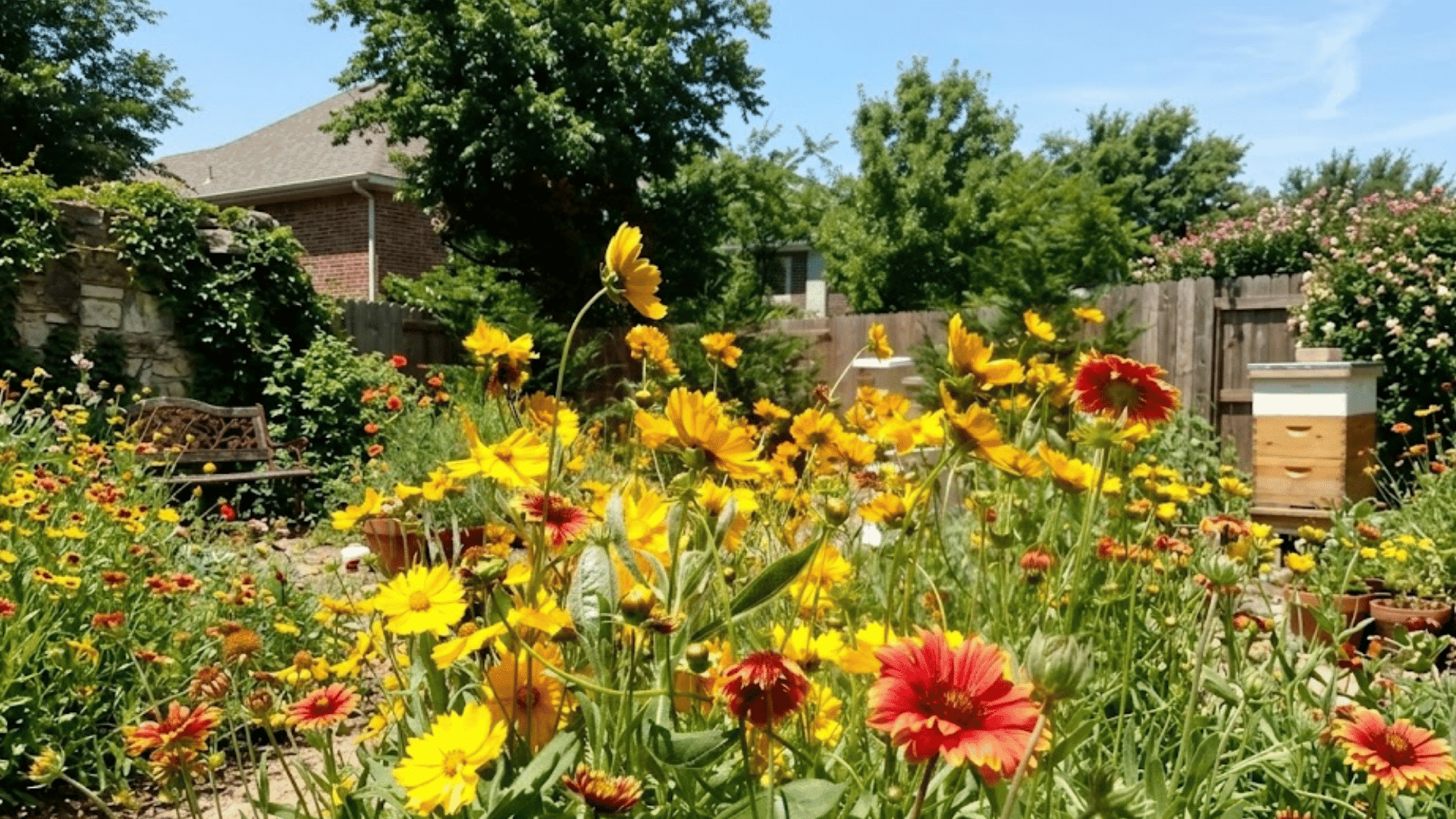
Finding beautiful flowers that thrive with little water can seem challenging, especially if you live in a hot or dry climate.
Drought-tolerant flowers offer an easy way to create a vibrant, colorful garden while reducing water use and maintenance.
Many of these plants produce long-lasting blooms, attract pollinators, and perform well once they are established.
I like adding drought-tolerant flowers because they bring reliable color to the garden without needing frequent watering.
In this guide, you’ll learn about the best varieties, where they grow best, and simple planting and care tips to help you create a thriving, water-wise landscape.
What Makes a Flower Drought-Tolerant?
Certain natural adaptations help drought-tolerant flowers survive with limited water, making them well-suited for hot, sunny, and dry growing conditions.
- Deep Root Systems: Long roots reach moisture stored deep in the soil, allowing plants to stay hydrated even when the surface is dry.
- Silver or Fuzzy Foliage: Hairy or silvery leaves reflect sunlight, reducing water loss by lowering leaf temperature and slowing evaporation.
- Thick or Waxy Leaves: A waxy coating or fleshy leaves help retain moisture by reducing the amount of water that escapes from the plant.
- Small Leaves: Smaller leaves have less surface area, which minimizes water loss through transpiration in hot, dry weather.
- Water Storage in Stems or Leaves: Some flowers store water in their stems or leaves, helping them survive extended periods without rainfall.
- Dormancy During Severe Drought: Certain plants temporarily slow or stop growth during extreme drought, conserving energy and water until conditions improve.
Best Drought-Tolerant Flowers for Sunny Gardens
These drought-tolerant flowers thrive in full sun and need little water once established. They add long-lasting color to borders, containers, pollinator gardens, and other water-wise landscapes.
1. Lavender
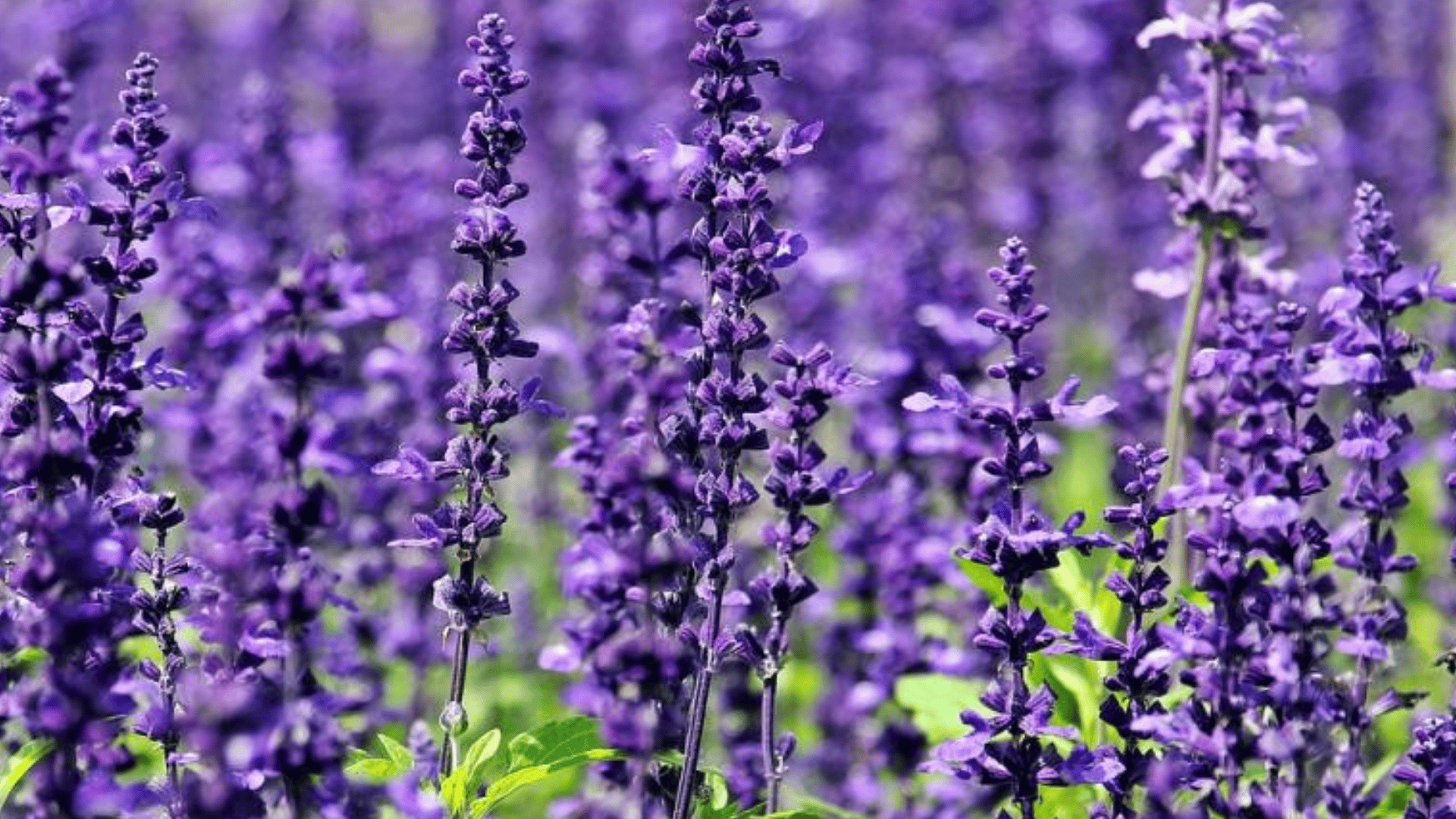
Fragrant flower spikes and silvery-green foliage make lavender a favorite for dry, sunny gardens. It thrives in USDA Zones 5–9 and grows 1–3 feet tall.
Purple, blue, pink, or white flowers bloom from late spring through summer and attract bees and butterflies. Once established, lavender needs very little water.
- Bloom Season: Late spring through summer.
- Best Uses: Borders, pathways, rock gardens, containers, pollinator gardens, and water-wise landscapes.
- Care Tips: Plant in full sun in well-drained soil; avoid areas with poor drainage. Prune lightly after flowering to maintain a compact shape and encourage healthy new growth.
2. Coneflower (Echinacea)
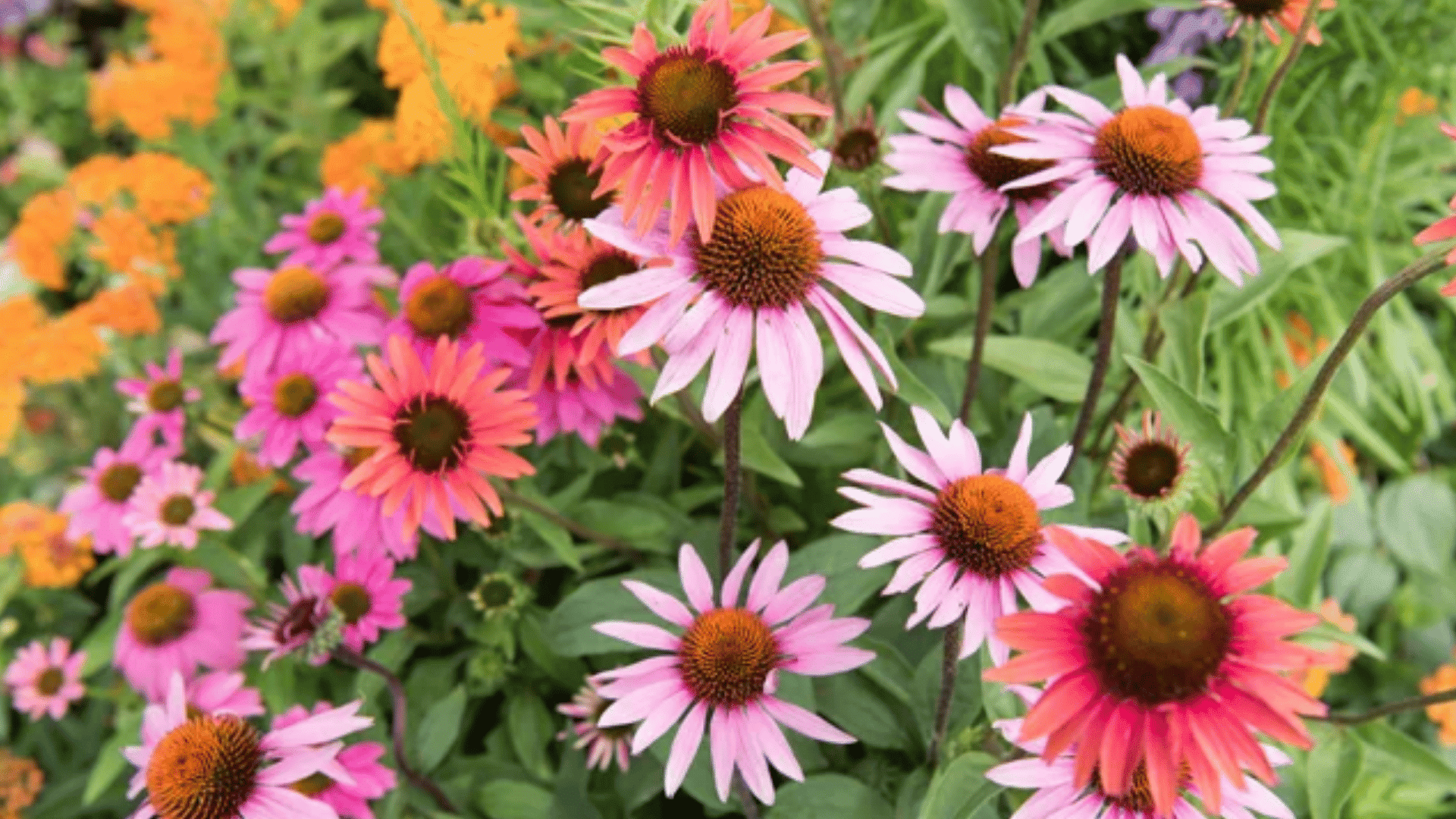
Coneflower adds long-lasting color to dry landscapes with its striking daisy-like blooms and raised centers.
Hardy in USDA Zones 3–9, it reaches 2–5 feet tall and produces purple, pink, white, orange, or yellow flowers that support pollinators throughout summer.
- Bloom Season: Early summer through fall.
- Best Uses: Pollinator gardens, prairie plantings, wildflower meadows, borders, and cut flower arrangements.
- Care Tips: Deadhead spent blooms for continuous flowering, or leave seed heads through fall to provide food for goldfinches and other birds.
3. Blanket Flower (Gaillardia)
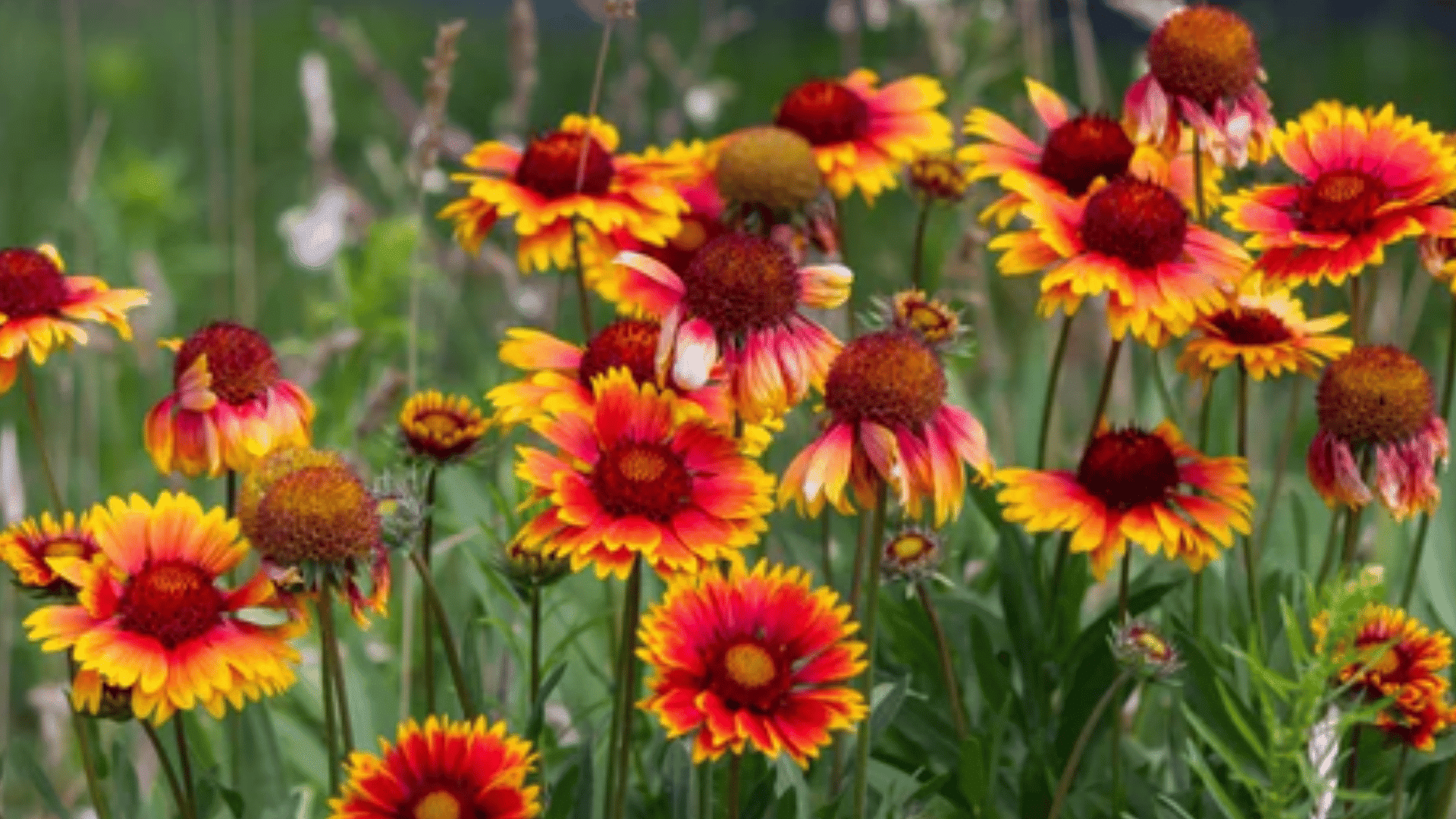
Bright shades of red, orange, and yellow allow blanket flower to stand out even during the hottest months of summer.
Growing 1–3 feet tall in USDA Zones 3–10, this long-blooming perennial thrives in poor, dry soils where many other flowers struggle.
- Bloom Season: Early summer through fall.
- Best Uses: Rock gardens, borders, cottage gardens, pollinator gardens, and mass plantings.
- Care Tips: Avoid rich soil or excessive fertilizer, as it can reduce flowering. Remove faded blooms regularly to extend the blooming season.
4. Black-Eyed Susan
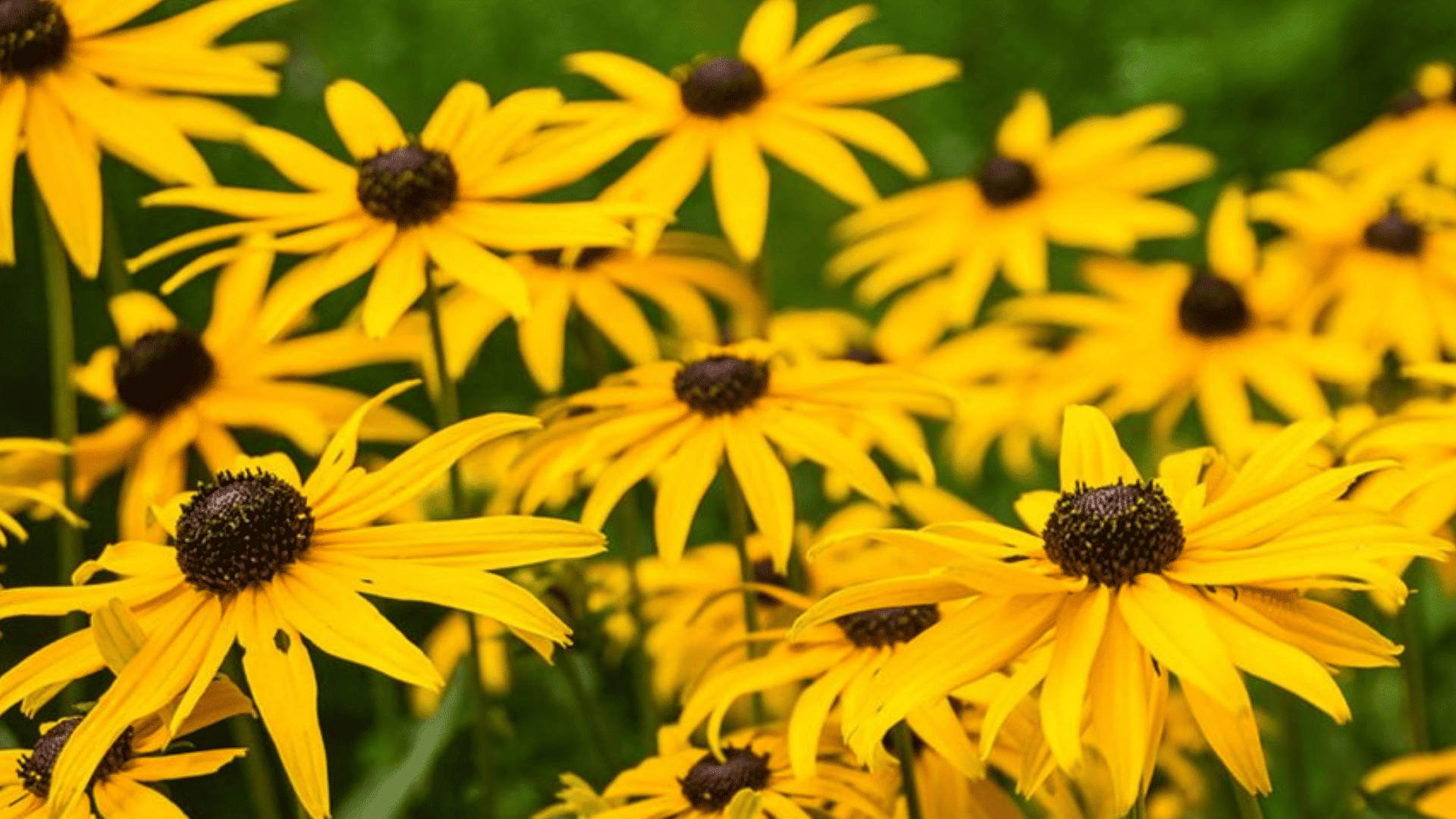
Golden-yellow petals surrounding dark brown centers give black-eyed Susan its unmistakable appearance.
Suitable for USDA Zones 3–9, this hardy perennial grows 2–3 feet tall and performs well in full sun with little supplemental water once established.
- Bloom Season: Mid-summer through fall.
- Best Uses: Native gardens, meadow plantings, borders, pollinator gardens, and cut flower displays.
- Care Tips: Divide mature clumps every three to four years to improve airflow, prevent overcrowding, and encourage vigorous flowering.
5. Yarrow
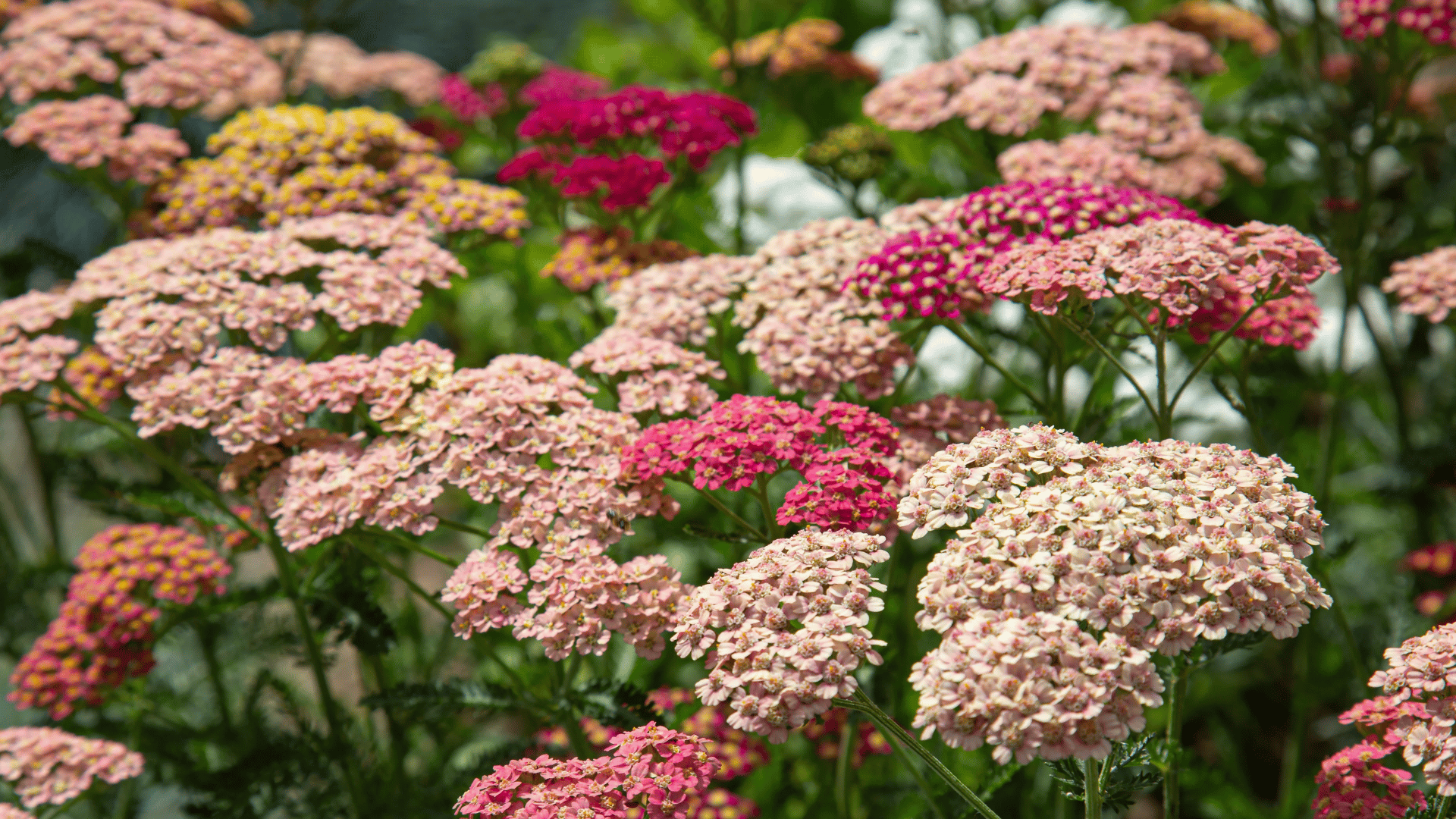
Feathery foliage and flat clusters of tiny flowers give yarrow texture and lasting color in sunny landscapes. Hardy in USDA Zones 3–9, it grows 2–3 feet tall and blooms in shades of white, yellow, pink, red, and peach.
Deep roots help it tolerate extended dry spells, while the flowers attract bees, butterflies, and other beneficial insects.
- Bloom Season: Late spring through summer.
- Best Uses: Cottage gardens, borders, rock gardens, pollinator gardens, and dried flower arrangements.
- Care Tips: Trim flower stalks after blooming to encourage another flush of flowers, and divide established plants every few years to keep them vigorous.
6. Russian Sage
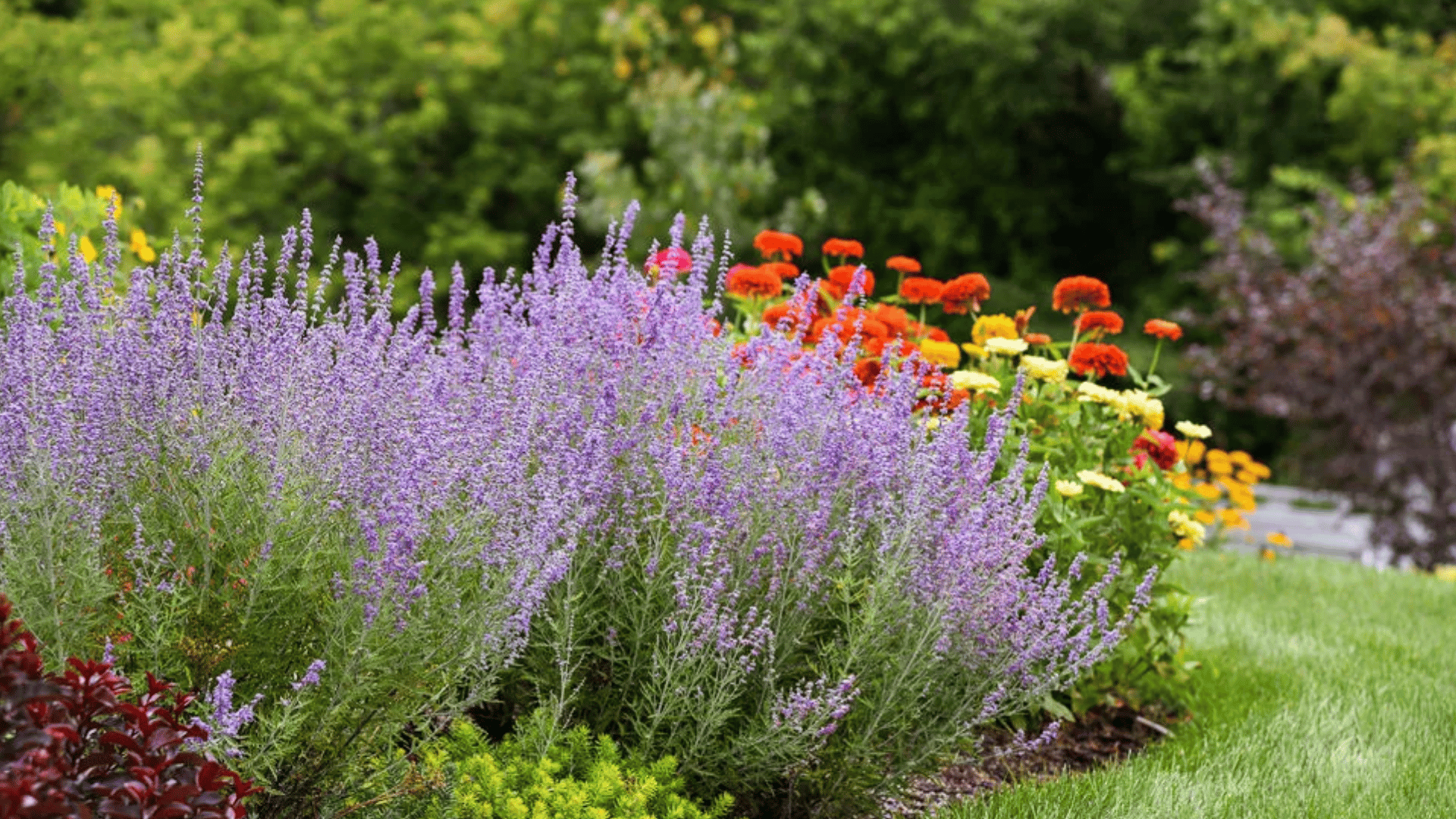
Airy lavender-blue flower spikes rise above silvery stems, creating a soft, cloud-like effect in summer gardens.
Russian sage thrives in USDA Zones 4–9, grows 3–5 feet tall, and handles intense heat, drought, and poor soils with ease. Its long-lasting blooms attract bees and butterflies while adding movement and texture to the landscape.
- Bloom Season: Mid-summer through fall.
- Best Uses: Xeriscapes, foundation plantings, borders, cottage gardens, and pollinator gardens.
- Care Tips: Leave old stems through winter for added protection, then prune them back to about 6–12 inches in early spring before new growth appears.
7. Salvia
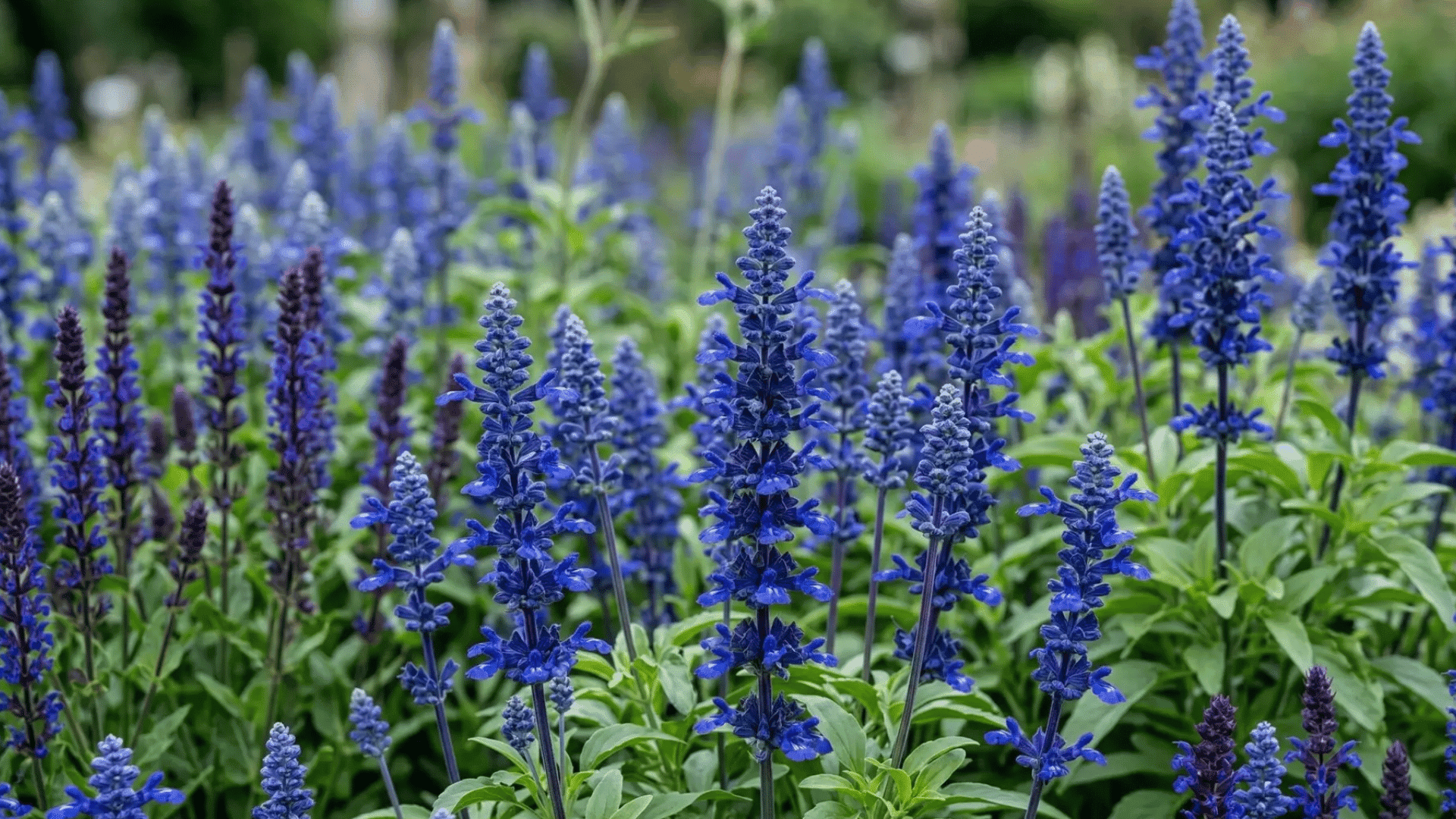
Tall flower spikes and aromatic foliage make salvia one of the longest-blooming plants for sunny gardens.
Depending on the variety, it grows 1–4 feet tall in USDA Zones 4–10, and its nectar-rich blooms attract hummingbirds, bees, and butterflies, while it requires little water after establishment.
- Bloom Season: Late spring through fall.
- Best Uses: Pollinator gardens, mixed borders, cottage gardens, containers, and foundation beds.
- Care Tips: Remove faded flower spikes after each bloom cycle to encourage repeat flowering throughout the growing season.
8. Coreopsis
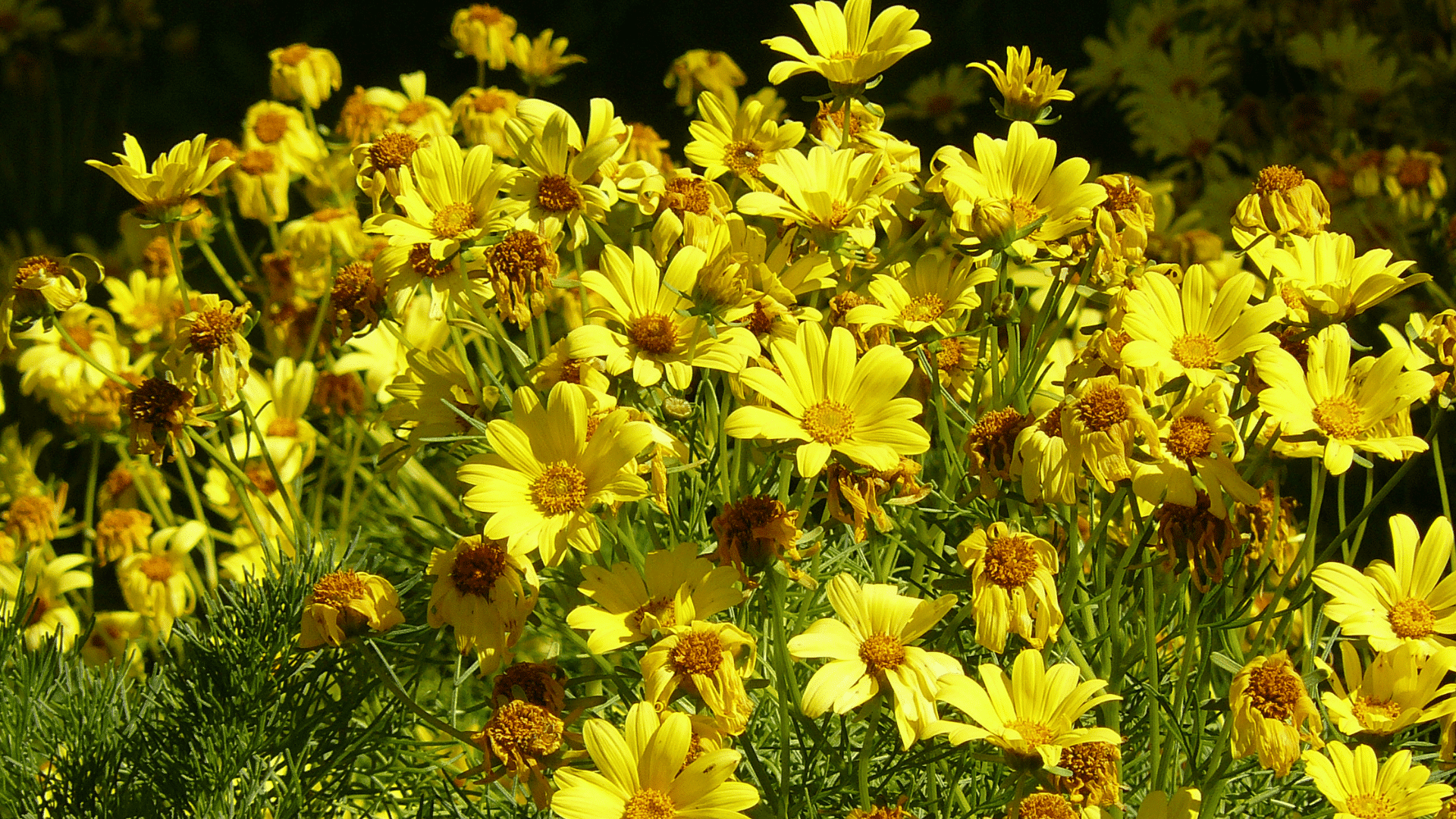
Few perennials bloom as generously as coreopsis while asking for so little in return. Growing 1–3 feet tall in USDA Zones 4–9, it produces cheerful yellow, orange, pink, or red flowers for an extended season.
Its drought tolerance, compact growth, and ability to attract bees and butterflies make it a dependable choice for low-maintenance gardens.
- Bloom Season: Early summer through fall.
- Best Uses: Borders, cottage gardens, wildflower meadows, containers, and pollinator-friendly landscapes.
- Care Tips: Shear the plant lightly after the first heavy flush of blooms to encourage fresh foliage and a second round of flowering later in the season.
9. Catmint (Nepeta)
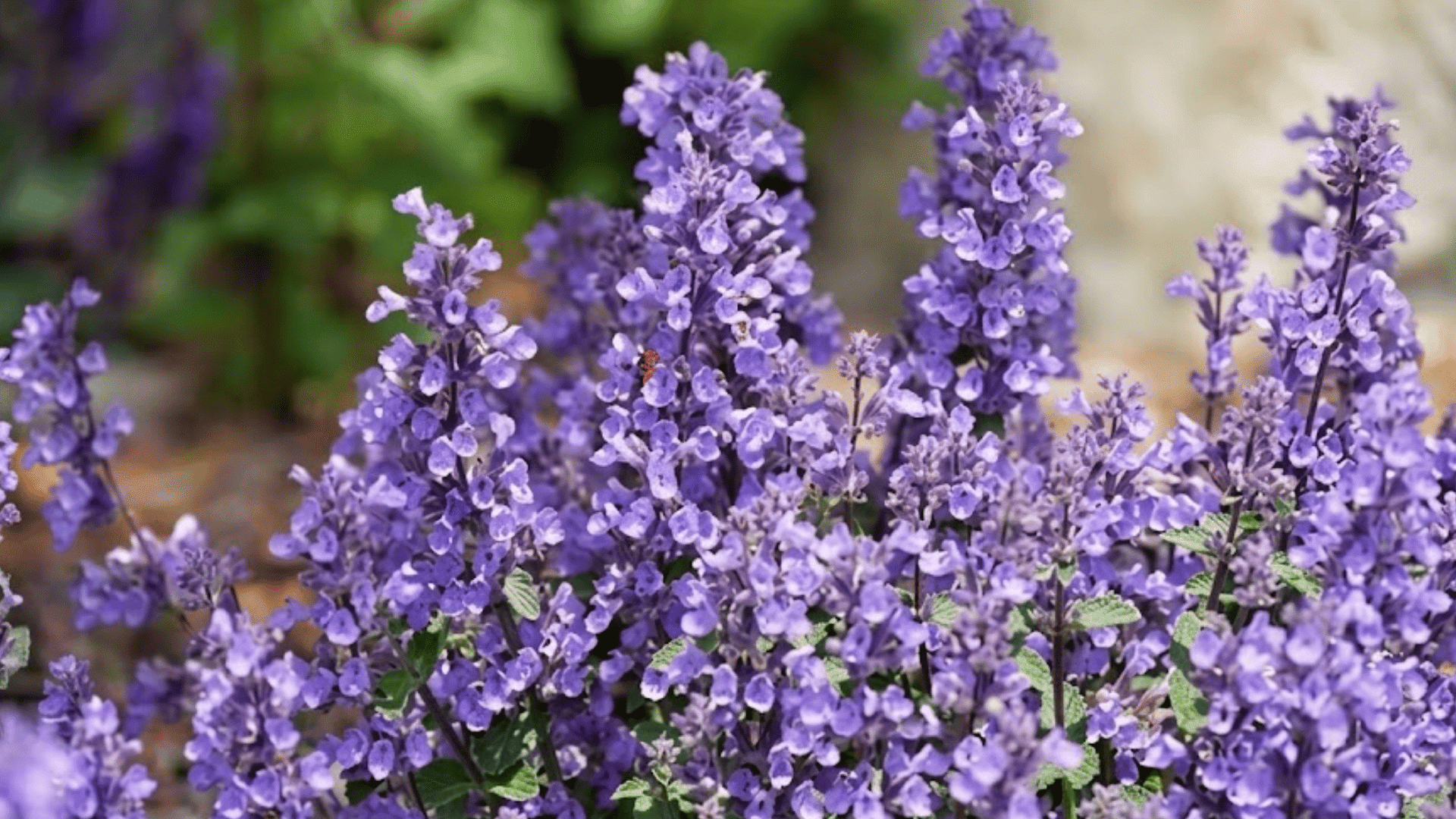
Soft gray-green foliage and lavender-blue flower spikes give catmint a relaxed, cottage garden look while standing up well to heat and drought.
Hardy in USDA Zones 3–8, it grows 1–3 feet tall and spreads gently to form neat mounds. The fragrant leaves naturally discourage deer and rabbits.
- Bloom Season: Late spring through early fall.
- Best Uses: Borders, pathway edging, rock gardens, cottage gardens, and pollinator-friendly landscapes.
- Care Tips: Shear the plant back by about one-third after the first flush of blooms to encourage fresh growth and a second round of blooms.
10. Sedum (Stonecrop)
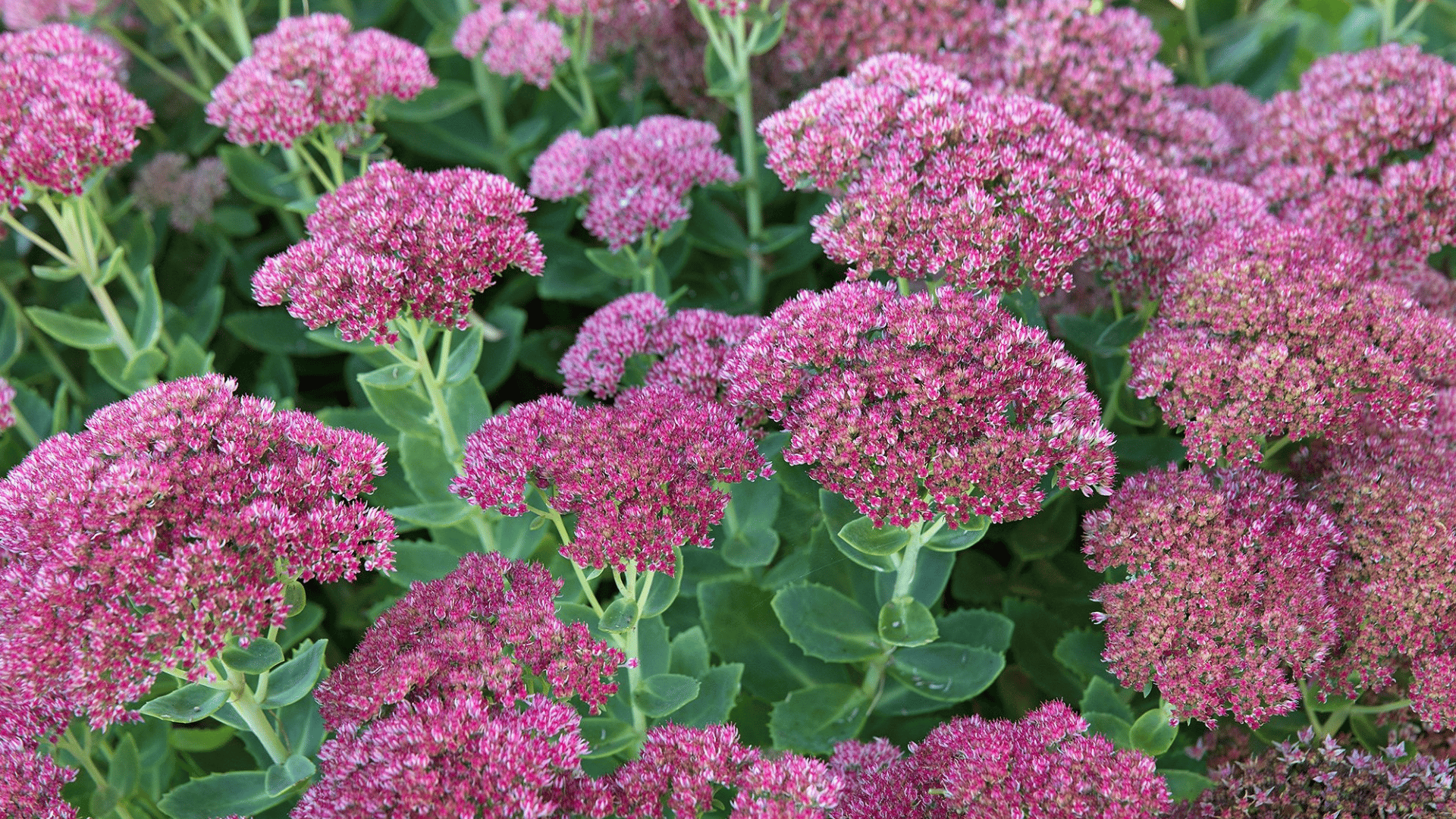
Thick, succulent leaves allow sedum to store water, making it one of the most dependable plants for dry gardens. Suitable for USDA Zones 3–9, varieties range from low-growing ground covers to upright plants reaching 2 feet tall.
Star-shaped flowers bloom in shades of pink, white, yellow, or red, providing a valuable nectar source for late-season pollinators.
- Bloom Season: Late summer through fall.
- Best Uses: Rock gardens, borders, green roofs, containers, ground covers, and xeriscapes.
- Care Tips: Grow sedum in lean, well-drained soil, as overly fertile conditions can cause upright varieties to develop weak, floppy stems.
11. Penstemon
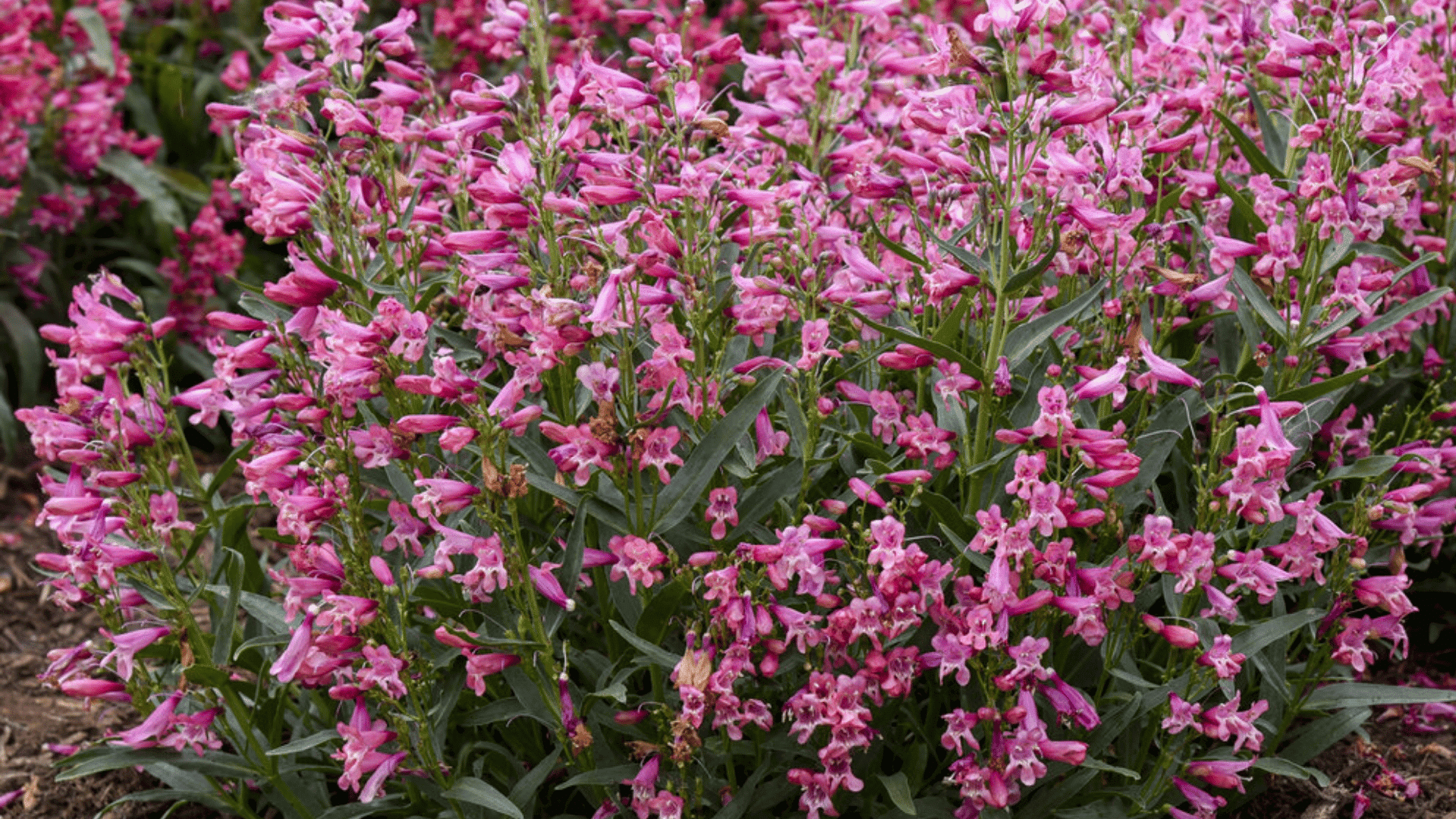
Tubular flowers and upright stems make penstemon a favorite for gardeners who want to attract hummingbirds without frequent watering.
Hardy in USDA Zones 3–9, it grows 1–4 feet tall and blooms in shades of pink, purple, red, blue, or white. Its deep roots help it tolerate dry spells, making it an excellent addition to native and water-wise gardens.
- Bloom Season: Late spring through summer.
- Best Uses: Native gardens, pollinator gardens, borders, cottage gardens, and mixed perennial beds.
- Care Tips: Leave old stems standing through winter to help protect the crown, then trim them back after new growth appears in spring.
12. Verbena
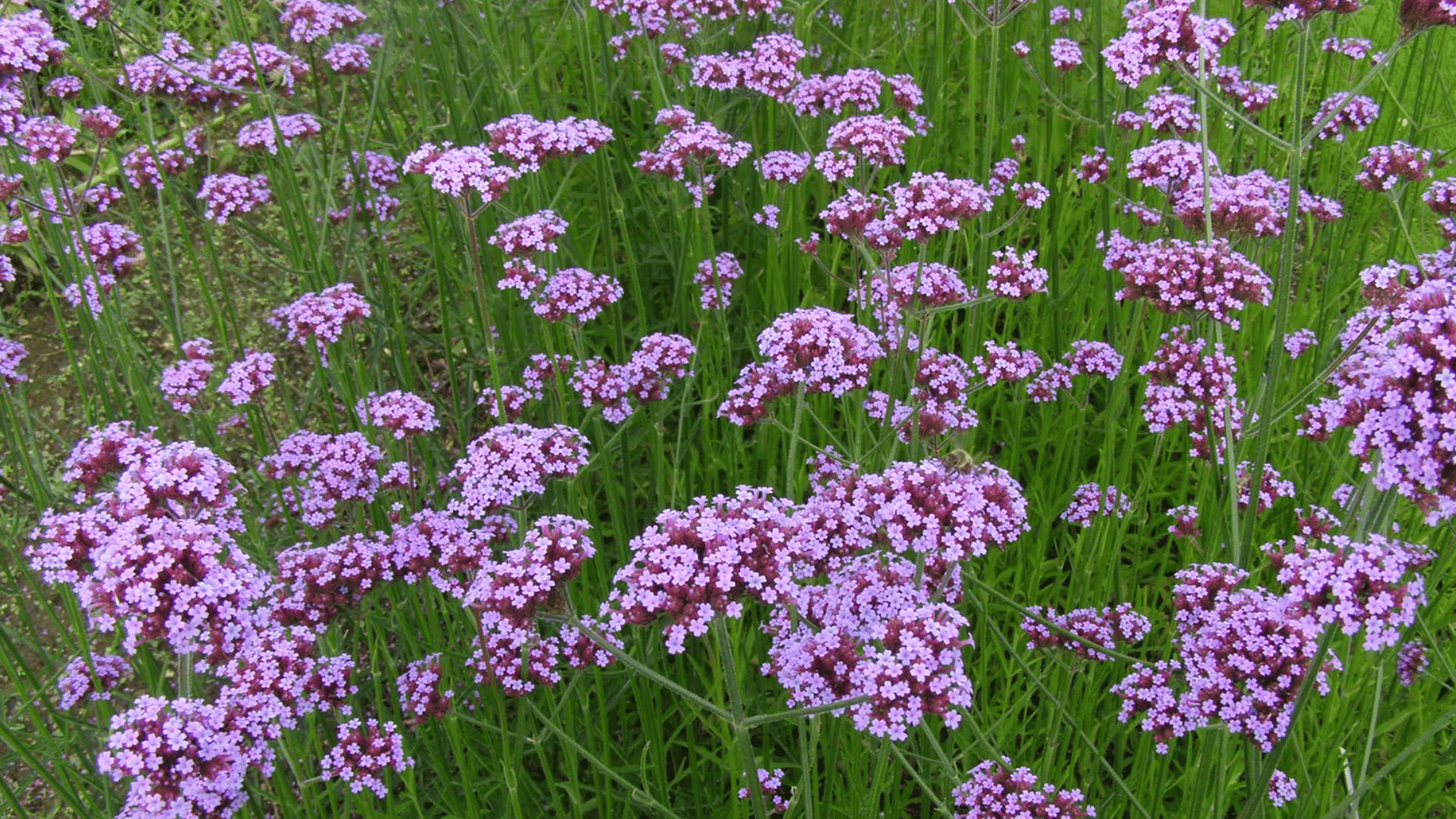
Long-lasting clusters of colorful blooms keep verbena flowering for months in sunny gardens.
It grows 6 inches to 3 feet tall and is perennial in USDA Zones 7–11 or grown as an annual in cooler climates. Its nectar-rich flowers attract butterflies throughout the season.
- Bloom Season: Spring through fall.
- Best Uses: Hanging baskets, containers, borders, ground covers, butterfly gardens, and mixed beds.
- Care Tips: Trim back long or leggy stems every few weeks to encourage bushier growth and maintain continuous flowering throughout the season.
13. Agastache (Anise Hyssop)
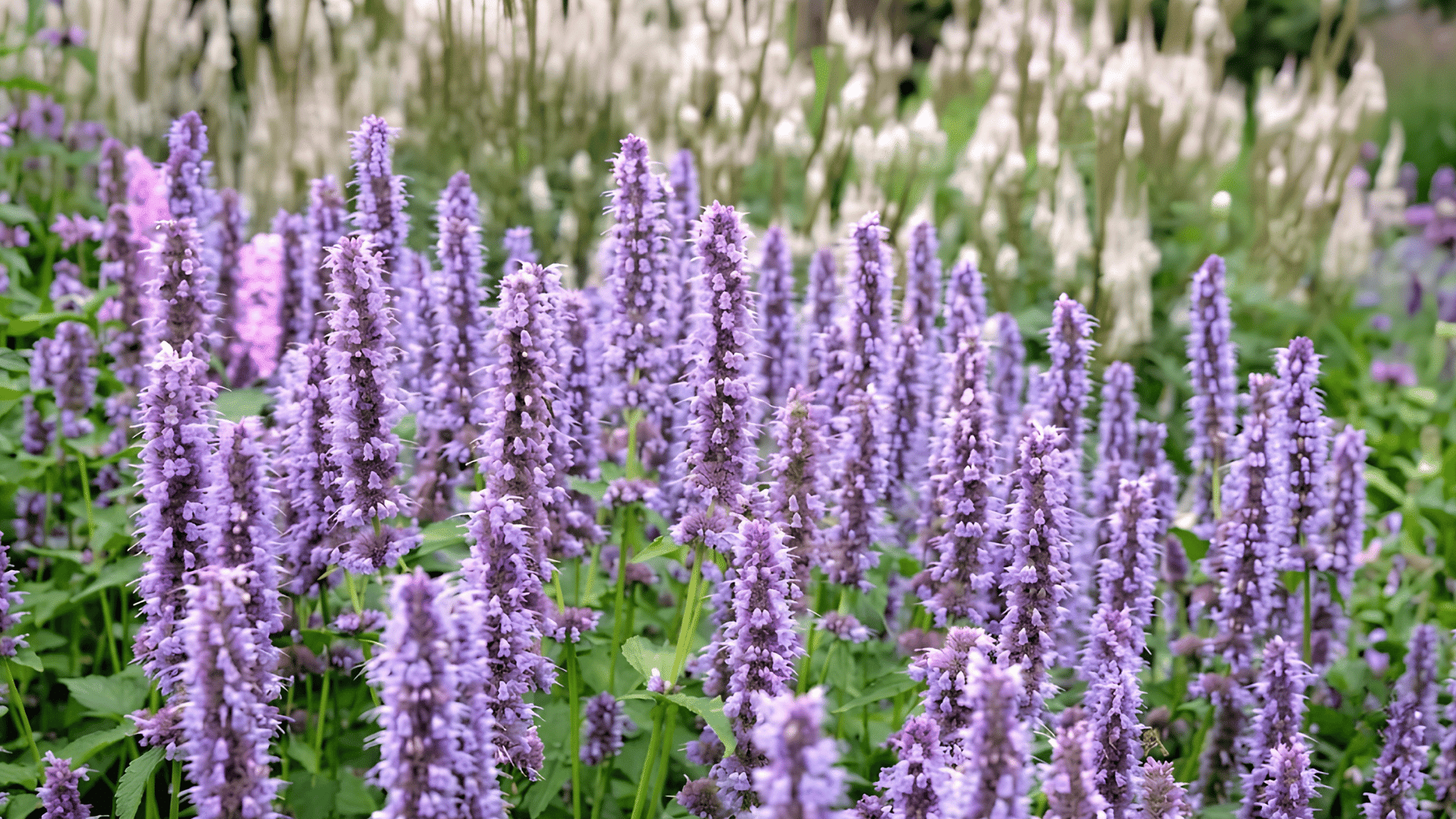
Fragrant foliage and tall flower spikes make agastache a standout in sunny landscapes while providing an excellent nectar source for hummingbirds, butterflies, and bees.
Hardy in USDA Zones 5–10, it grows 2–4 feet tall and blooms in shades of purple, pink, orange, or blue. Once established, it performs exceptionally well in hot, dry conditions.
- Bloom Season: Summer through fall.
- Best Uses: Pollinator gardens, cottage gardens, borders, xeriscapes, and native plantings.
- Care Tips: Avoid covering the crown with heavy mulch, especially in winter, since excess moisture can increase the risk of crown rot.
14. Lantana
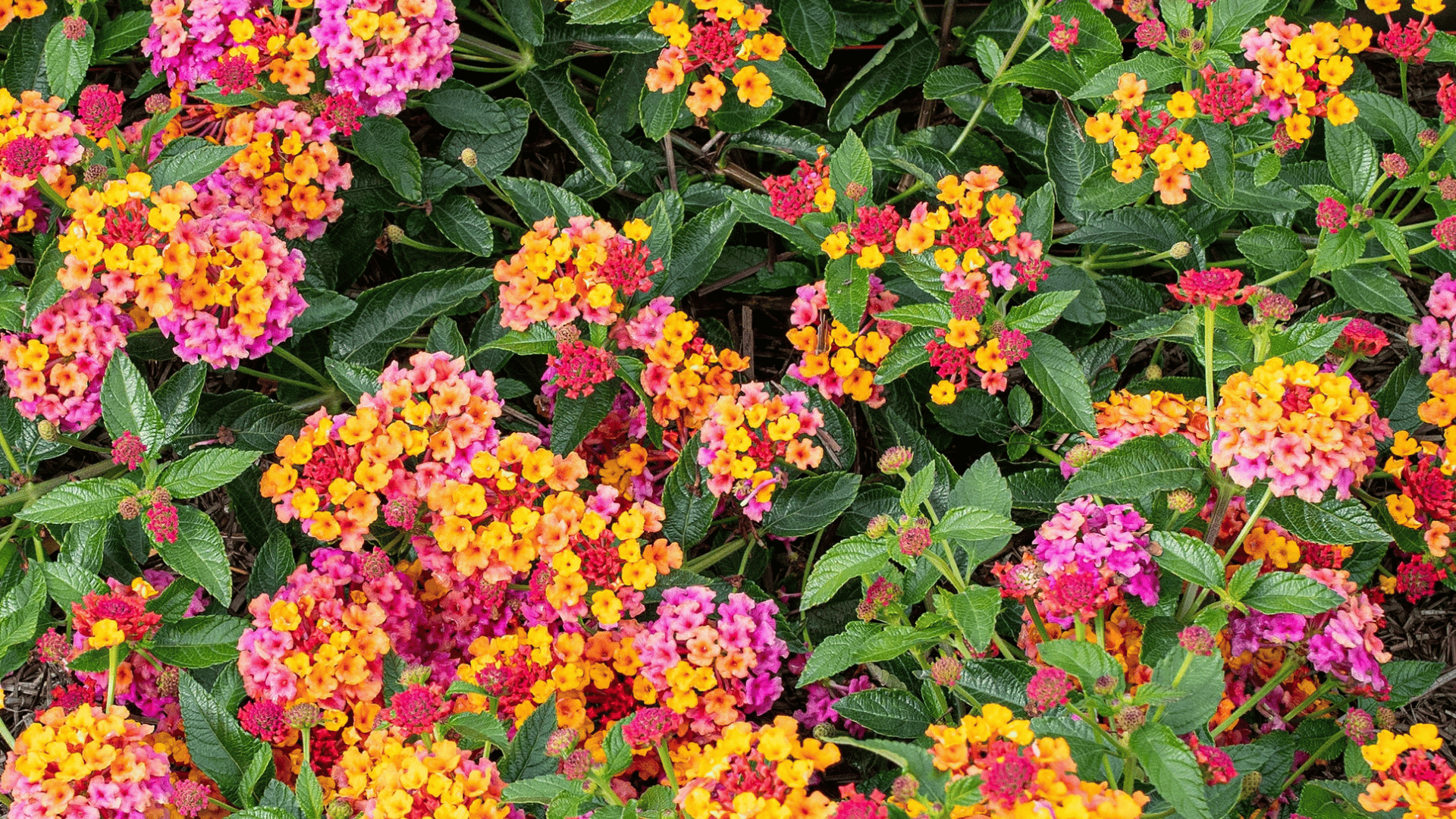
Clusters of small flowers often change color as they mature, giving lantana a vibrant, multicolored appearance throughout the season.
It grows 1–6 feet tall in USDA Zones 8–11 and thrives in intense heat with very little water once established. Butterflies are especially attracted to its continuous blooms, making it a favorite for wildlife-friendly gardens.
- Bloom Season: Late spring through frost.
- Best Uses: Butterfly gardens, containers, borders, slopes, hanging baskets, and mass plantings.
- Care Tips: Prune lightly during the growing season to maintain a compact shape and remove frost-damaged stems after the last spring frost.
15. Moss Rose (Portulaca)
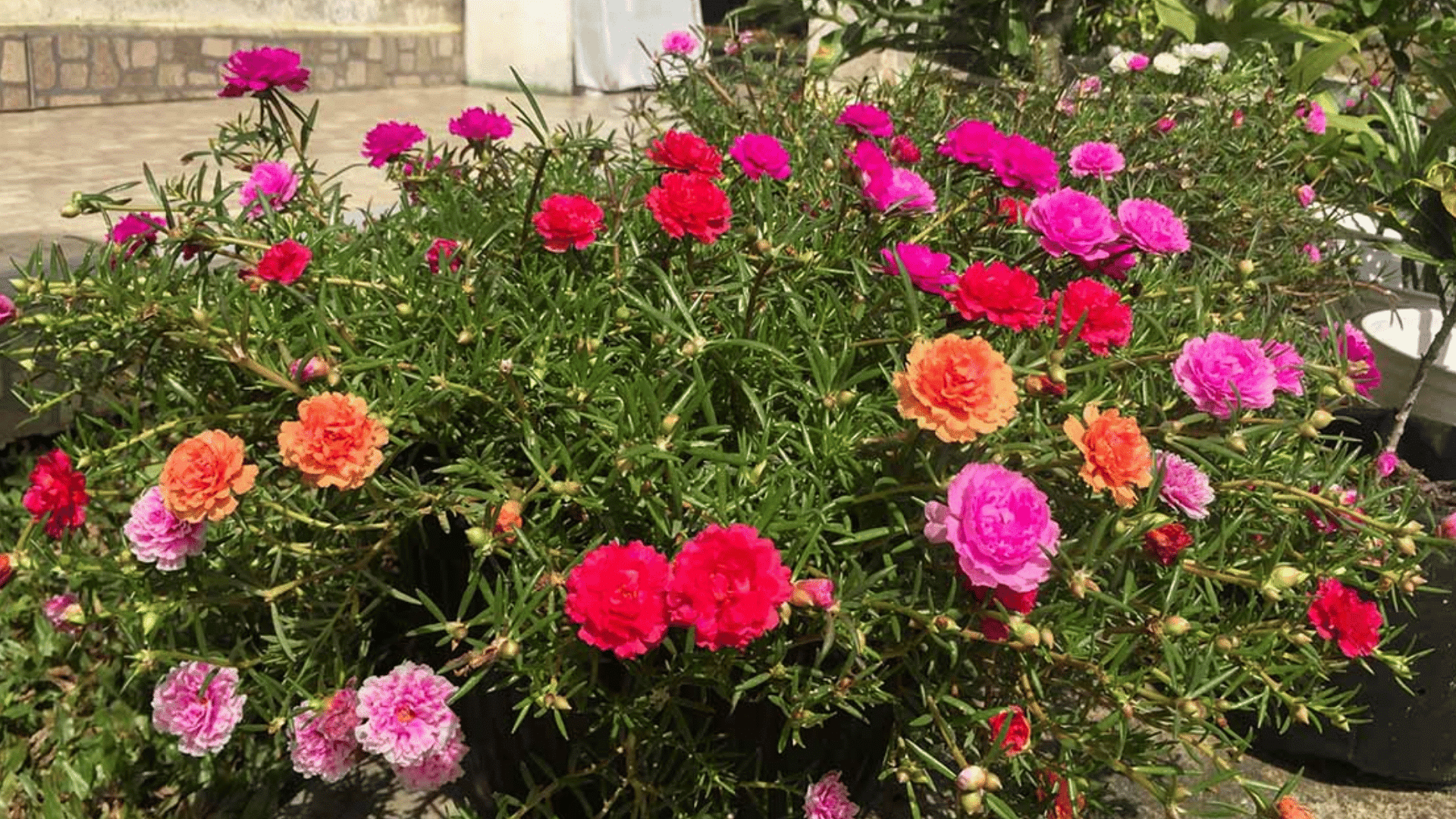
Bright, rose-like flowers cover this low-growing annual throughout the hottest months of the year. Moss rose typically reaches only 4–8 inches tall, making it ideal for filling sunny spaces where other plants struggle.
Its succulent foliage stores moisture efficiently, allowing it to thrive in dry conditions with very little maintenance.
- Bloom Season: Summer through frost.
- Best Uses: Rock gardens, edging, hanging baskets, containers, ground covers, and sunny borders.
- Care Tips: Plant in the brightest location possible, as the flowers open fully only in direct sunlight and close during cloudy weather.
16. Zinnia
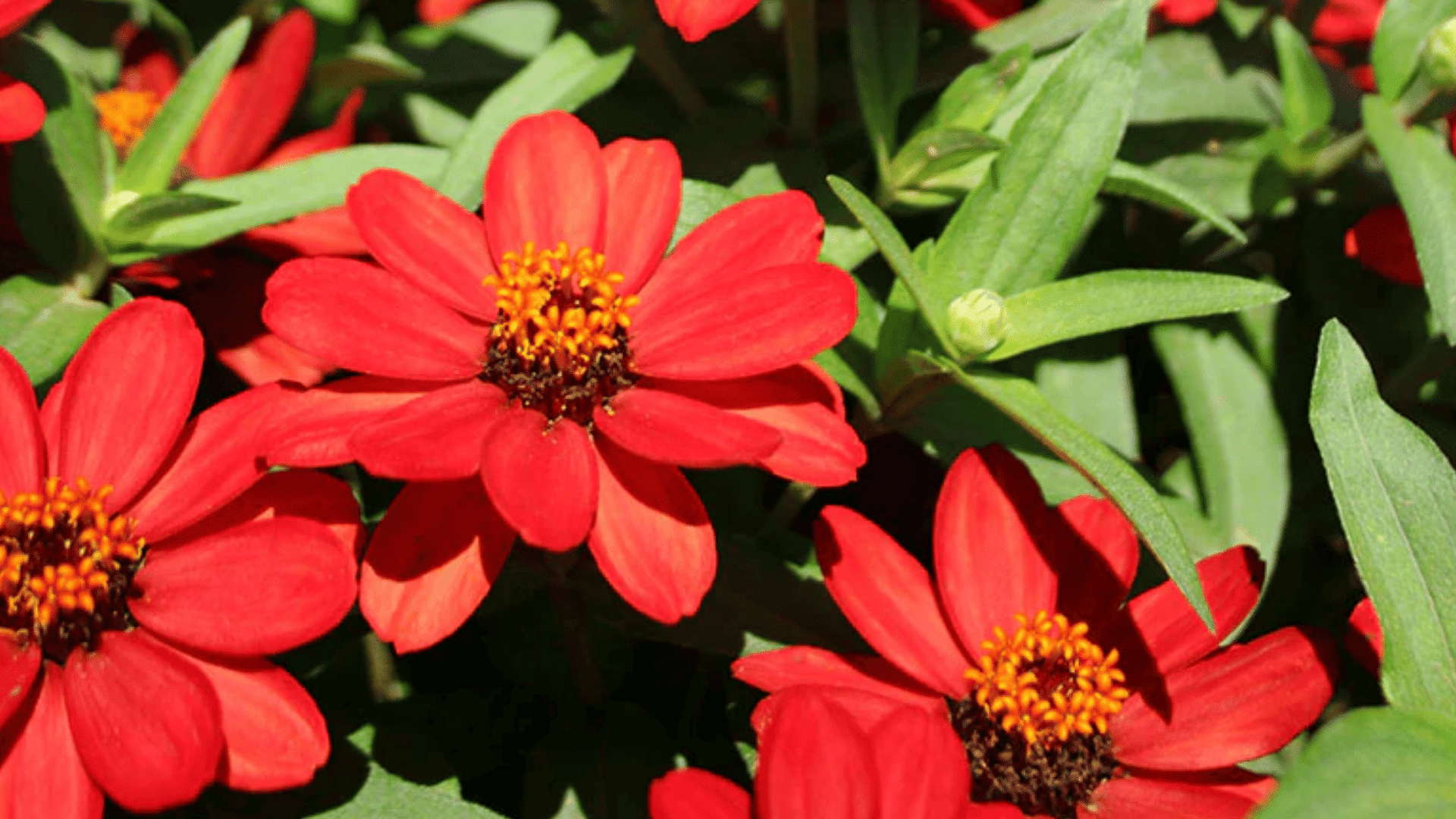
Bright, cheerful blooms and an easy-growing nature make zinnias a favorite for sunny gardens. They grow 1–4 feet tall and produce flowers in nearly every color except true blue.
Once established, they tolerate short dry periods and attract butterflies throughout the blooming season.
- Bloom Season: Early summer through frost.
- Best Uses: Cutting gardens, borders, cottage gardens, containers, and pollinator-friendly landscapes.
- Care Tips: Water at the base instead of overhead to reduce powdery mildew, and pinch young plants to encourage fuller, bushier growth.
17. California Poppy
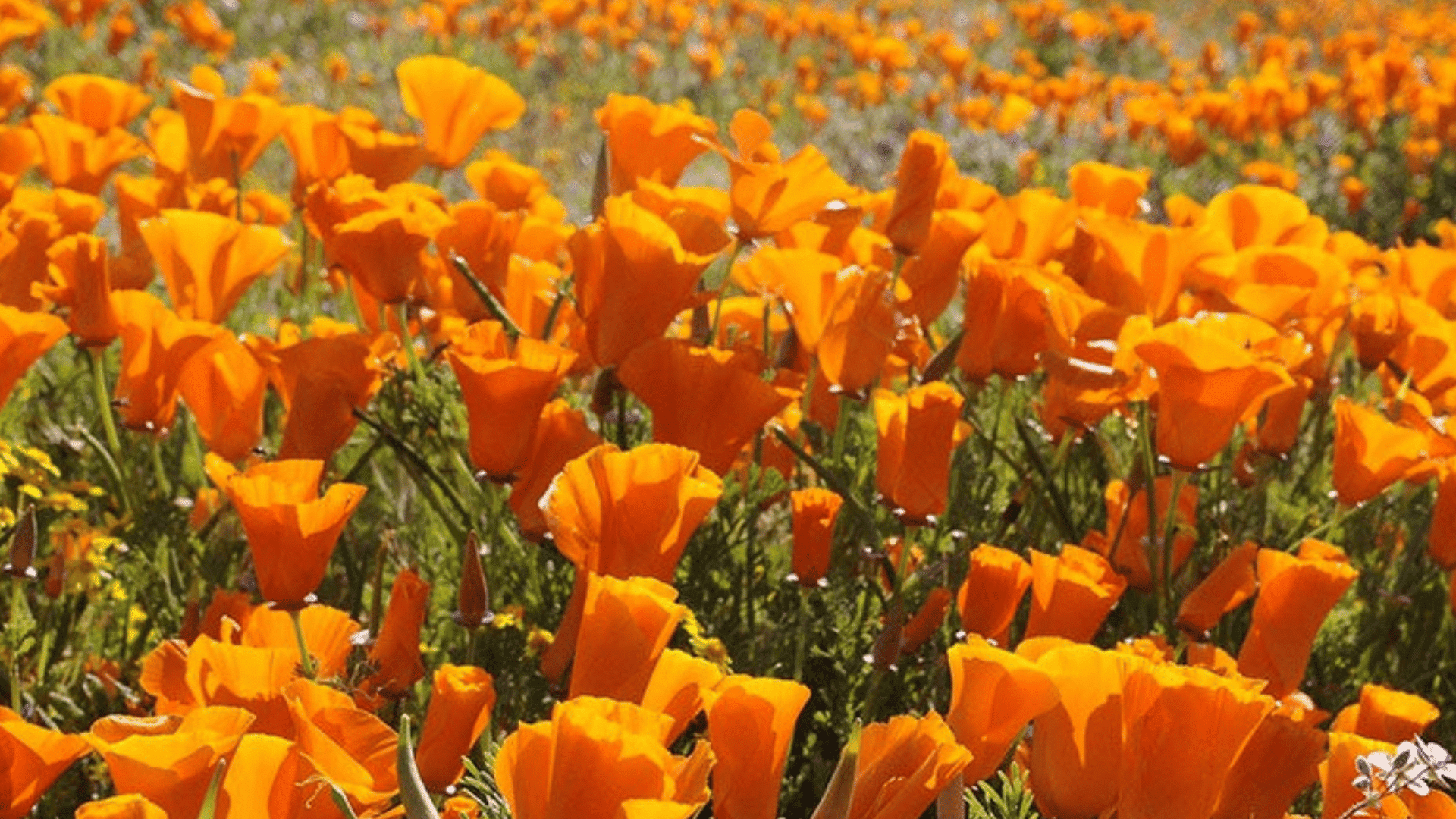
California poppy grows 12–18 inches tall in USDA Zones 6–10 and naturally reseeds in suitable conditions, providing colorful blooms year after year.
Its delicate, fern-like foliage adds texture to rock gardens and wildflower meadows while attracting beneficial pollinators.
- Bloom Season: Spring through early summer.
- Best Uses: Wildflower meadows, rock gardens, borders, naturalized landscapes, and roadside plantings.
- Care Tips: Sow seeds directly where they will grow because the plants develop long taproots and generally do not transplant successfully.
18. Gazania
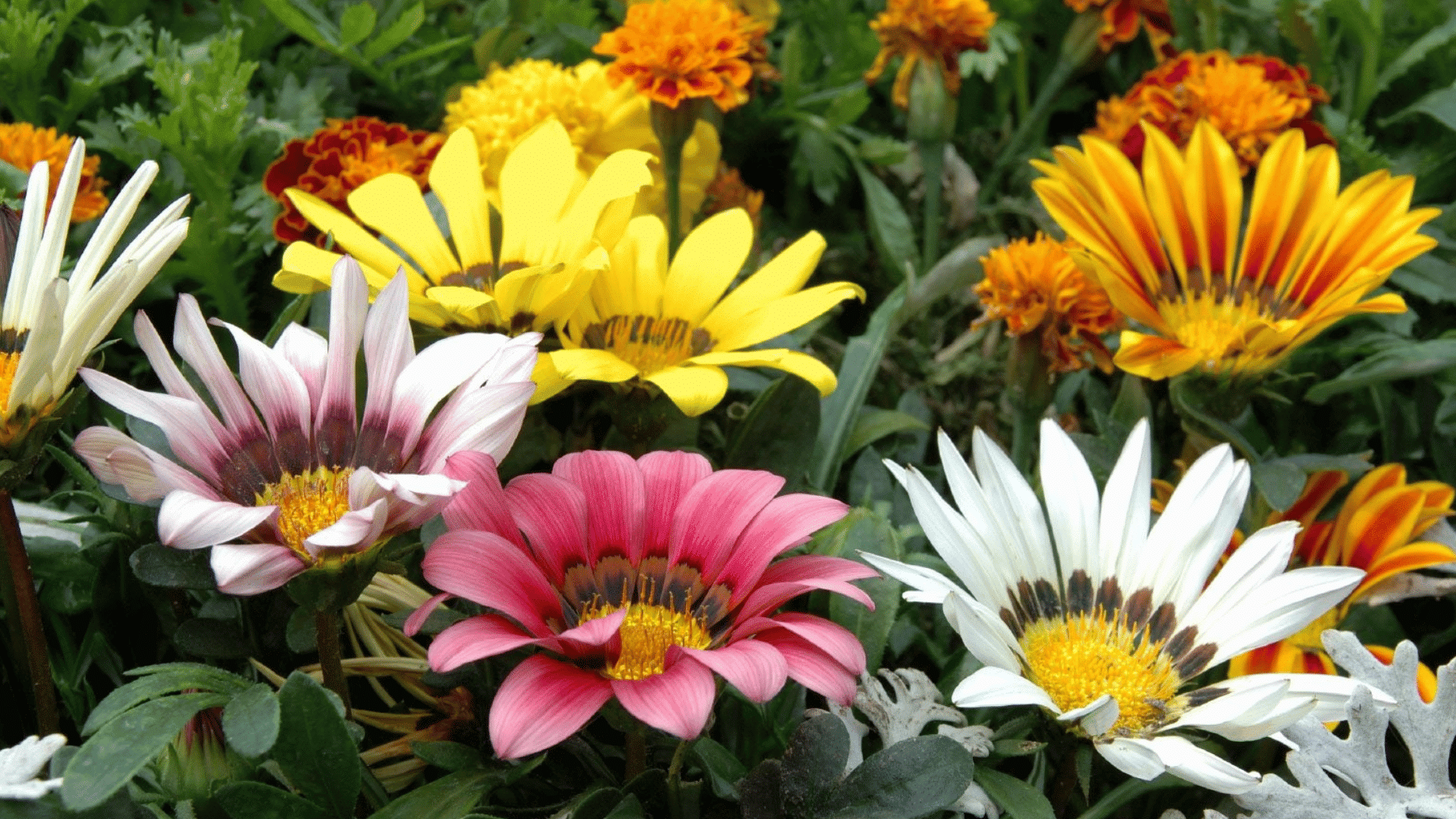
Large, daisy-like flowers in vibrant shades of yellow, orange, pink, red, and bronze brighten sunny landscapes throughout the warmer months.
Gazania grows 6–12 inches tall and thrives in USDA Zones 9–11 as a perennial, although it is commonly grown as an annual elsewhere.
- Bloom Season: Late spring through fall.
- Best Uses: Borders, edging, containers, rock gardens, coastal landscapes, and ground covers.
- Care Tips: Remove faded flowers regularly to encourage continuous blooming, and avoid planting in areas with consistently wet soil.
19. Blazing Star (Liatris)
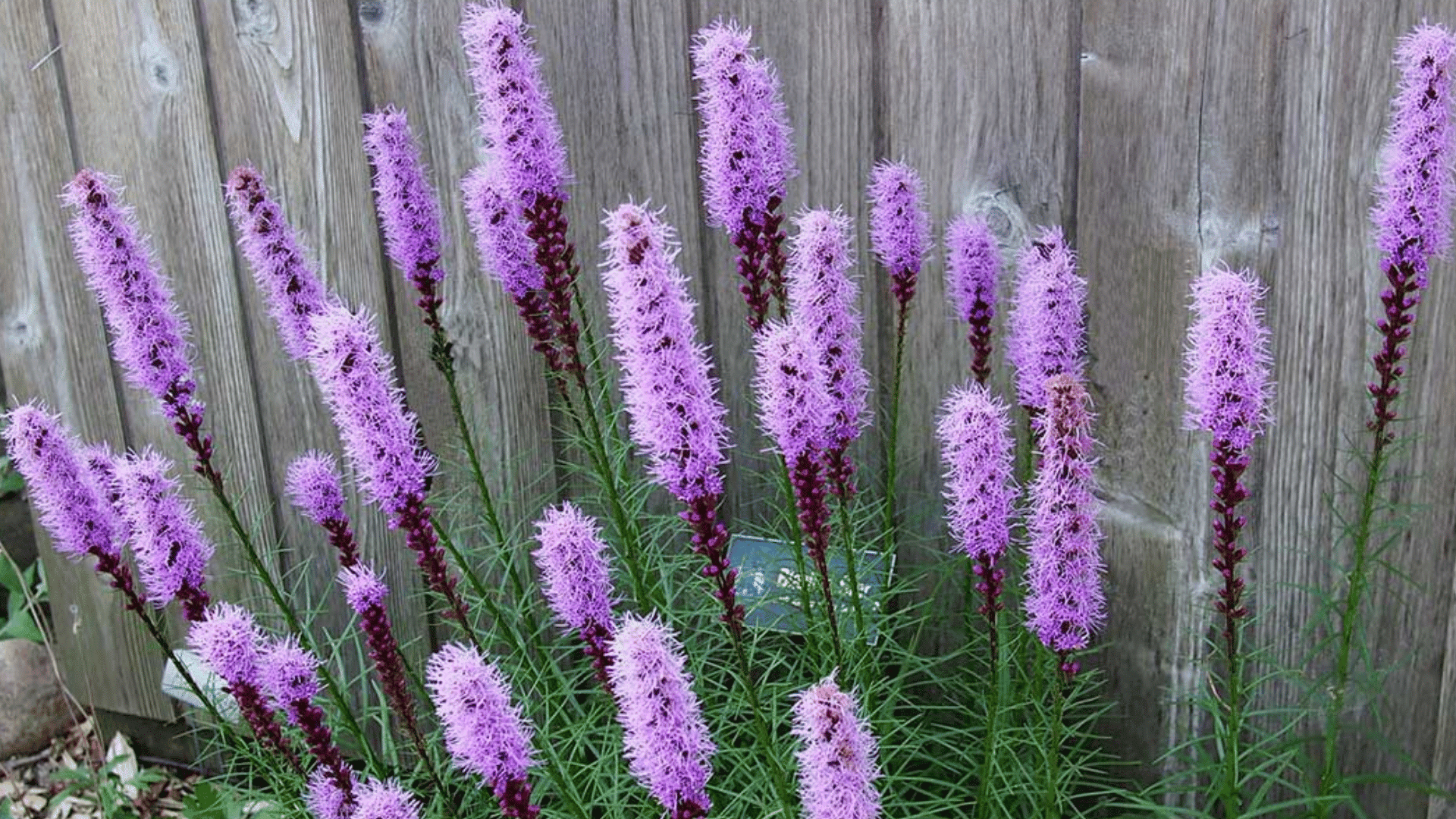
Tall, feathery spikes of purple flowers add strong vertical interest while attracting butterflies, bees, and other beneficial pollinators.
Hardy in USDA Zones 3–9, blazing star grows 2–5 feet tall and tolerates heat and dry conditions once established. It also makes an excellent cut flower thanks to its long-lasting blooms and sturdy stems.
- Bloom Season: Mid to late summer.
- Best Uses: Prairie gardens, pollinator gardens, borders, native landscapes, and cut flower gardens.
- Care Tips: Stake taller varieties in exposed or windy locations to prevent flower spikes from bending or leaning as they mature.
20. Globe Thistle
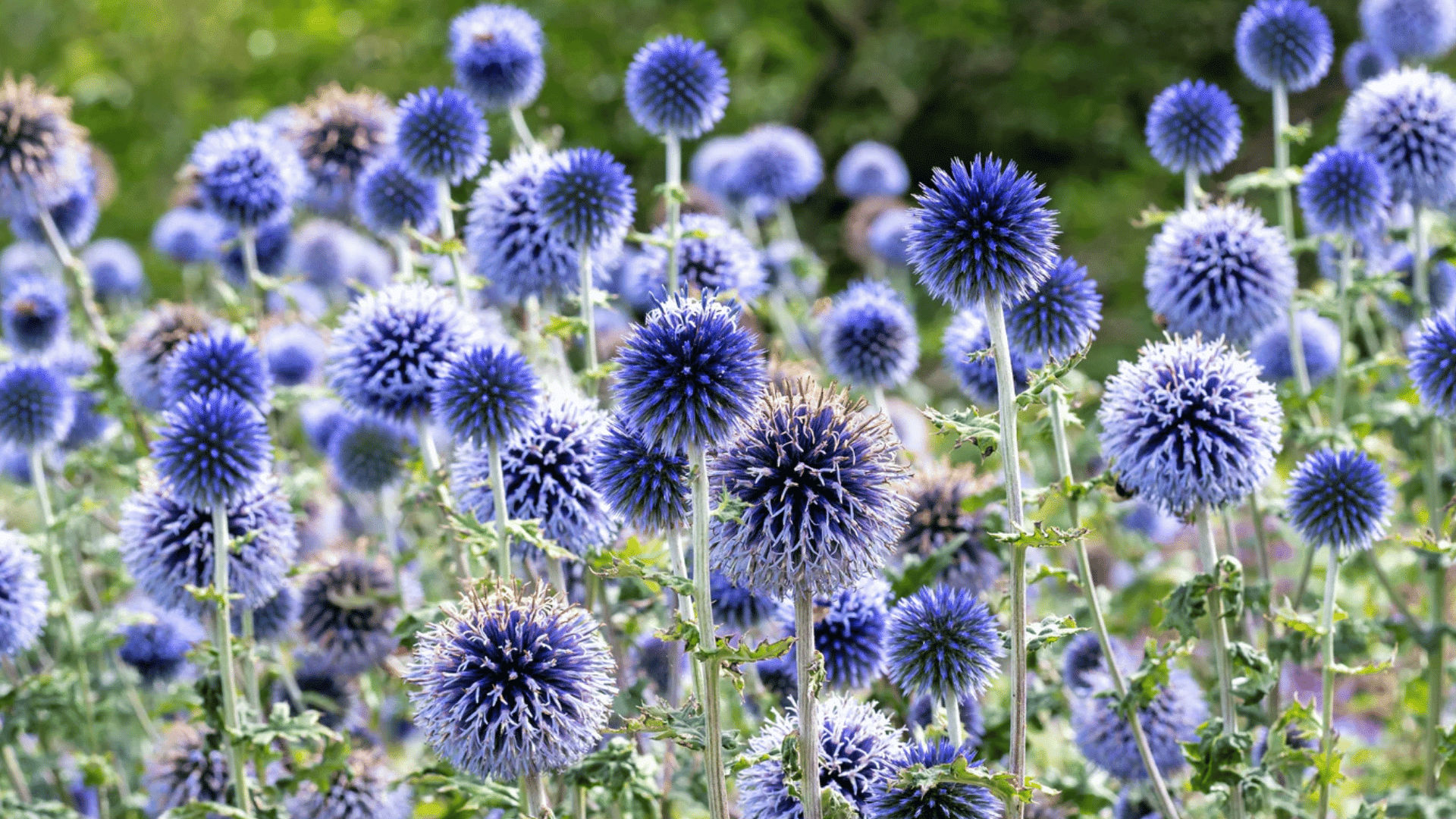
Distinctive round blue flower heads and spiny silver-green foliage give globe thistle a bold architectural appearance in dry gardens.
Suitable for USDA Zones 3–8, it grows 2–4 feet tall and thrives in poor soils where many flowering plants struggle. Its nectar-rich blooms attract bees and butterflies, while the dried seed heads add seasonal interest.
- Bloom Season: Summer.
- Best Uses: Cottage gardens, borders, pollinator gardens, xeriscapes, and dried flower arrangements.
- Care Tips: Wear gardening gloves when handling or pruning the plant because its spiny foliage can be sharp and uncomfortable to touch.
21. Sea Holly
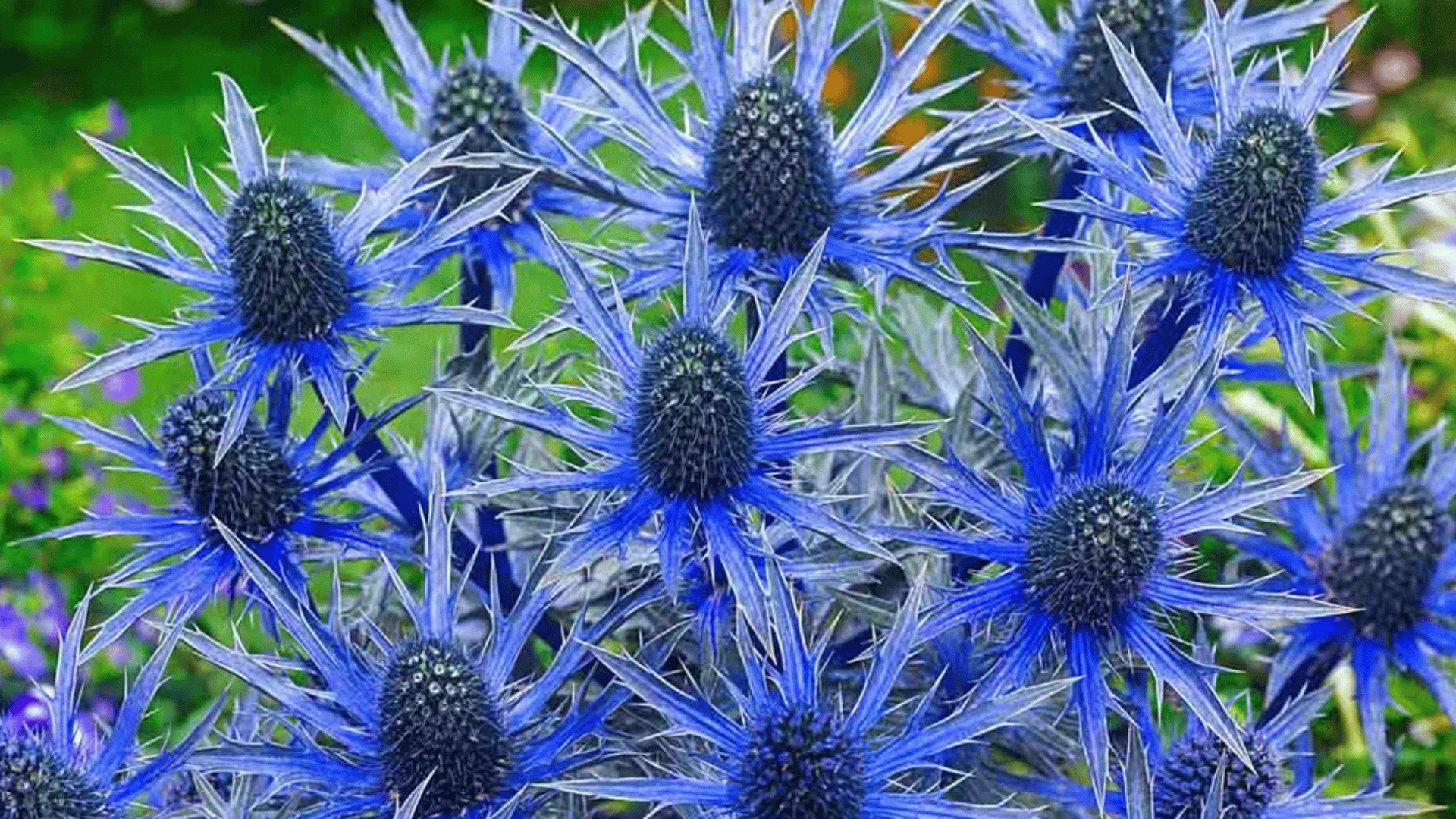
Metallic blue flowers surrounded by spiky, silvery bracts make sea holly one of the most eye-catching plants for drought-tolerant landscapes.
Hardy in USDA Zones 4–9, it grows 2–3 feet tall and performs well in sandy, well-drained soils. Its unusual flowers attract bees and butterflies, and they remain attractive even after they dry on the plant.
- Bloom Season: Mid-summer through early fall.
- Best Uses: Coastal gardens, rock gardens, xeriscapes, borders, and dried flower displays.
- Care Tips: Plant sea holly in its permanent location from the start, as its deep taproot makes established plants difficult to divide or transplant successfully.
How Often Should You Water Drought-Tolerant Flowers?
Most drought-tolerant flowers need regular watering until they become established. After that, they usually only need deep watering during extended dry periods or extreme heat.
Newly planted flowers should be watered consistently for the first few weeks to help develop strong root systems.
Once established, most varieties can go longer between waterings, although the exact schedule depends on soil type and weather.
During the summer heat, deeply water in-ground plants every 1 to 2 weeks.
Container-grown flowers dry out much faster than garden beds and may need watering every few days, especially in full sun.
Water deeply rather than lightly to encourage roots to grow deeper into the soil and improve drought tolerance.
Drought-Tolerant vs. Drought-Resistant Plants
Although the terms are often used interchangeably, they describe different levels of drought adaptation. Understanding the distinction makes it easier to choose plants that suit your local climate and watering conditions.
| Feature | Drought-Tolerant | Drought-Resistant |
|---|---|---|
| Meaning | Survives dry periods after becoming established. | Naturally withstands long periods with very little water. |
| Response to Drought | May wilt during extended drought but usually recovers after watering. | Rarely wilts because it efficiently stores water. |
| Water Needs | Needs occasional deep watering during prolonged dry spells. | Requires very little supplemental watering once established. |
| Common Examples | Lavender, coneflower, yarrow, salvia | Cactus, agave, aloe, many succulents |
| Best Use | Flower beds, borders, pollinator gardens, and landscapes. | Rock gardens, desert gardens, and xeriscapes. |
Why Do Some Drought-Tolerant Flowers Struggle?
Even low-maintenance flowers can struggle if their basic growing needs are not met. Identifying the cause early can help restore healthy growth and improve flowering.
- Poor Drainage: Waterlogged soil can damage roots because most varieties grow best in well-drained conditions.
- Too Much Shade: Many flowering plants need at least 6–8 hours of direct sunlight to bloom well and stay healthy.
- Overwatering: Frequent watering can prevent deep root development and increase the risk of root rot.
- Overcrowding: Plants spaced too closely compete for water, nutrients, and airflow, reducing overall vigor.
- Poor Soil Conditions: Heavy, compacted soil can limit root growth and hold too much moisture around the roots.
- Incorrect Plant Choice: Some varieties may not perform well if the local climate or USDA hardiness zone is outside their preferred growing range.
Drought-Tolerant Flowers by Garden Situation
Different flowers perform better in different parts of the garden. Use this table to choose the best varieties based on your growing conditions and landscaping needs.
| Garden Situation | Recommended Flowers |
|---|---|
| Full Sun | Lavender, Blanket Flower, Russian Sage, Salvia, Gazania, California Poppy, Moss Rose |
| Containers | Lavender, Lantana, Moss Rose, Verbena, Gazania, Zinnia, Salvia |
| Rock Gardens | Sedum, Lavender, Yarrow, Moss Rose, Gazania, Sea Holly, California Poppy |
| Borders | Coneflower, Black-Eyed Susan, Salvia, Coreopsis, Yarrow, Blazing Star, Russian Sage |
| Slopes | Lantana, Yarrow, Sedum, Blanket Flower, Verbena, California Poppy |
| Xeriscaping | Lavender, Russian Sage, Sedum, Yarrow, Sea Holly, Agastache, Blanket Flower |
| Poor Soil | Blanket Flower, Yarrow, Russian Sage, California Poppy, Globe Thistle, Moss Rose, Sea Holly |
What Is the Best Soil for Drought-Tolerant Flowers?
Well-drained soil is the best choice for most drought-tolerant flowers. Sandy, rocky, and loamy soils allow excess water to drain quickly while encouraging deep root growth.
Heavy clay soil can also work if it is improved with compost or coarse sand to increase drainage and reduce compaction.
Avoid planting in areas where water collects after rain, as overly wet conditions may lead to root rot.
Most varieties prefer slightly acidic to neutral soil with a pH between 6.0 and 7.0, although many adapt well to a wider range.
Before planting, loosen the soil and improve drainage if needed to create healthy growing conditions that support long-term growth with less watering.
Conclusion
Choosing flowers that thrive with less water is an easy way to create a colorful, resilient garden while reducing maintenance and conserving resources.
Whether you prefer fragrant lavender, vibrant blanket flowers, or pollinator-friendly coneflowers, there are plenty of options to suit different landscapes and growing conditions.
I think the best gardens are the ones that combine beauty with practical, low-maintenance choices.
Use this guide to select varieties that match your climate, soil, and garden style, then give them the proper start for lasting success.
With thoughtful planning, you can enjoy healthy blooms season after season with less watering and upkeep.
Frequently Asked Questions
Which Plant Blooms for 12 Months?
Lantana is one of the longest-flowering plants in warm climates, often blooming year-round in frost-free regions. In cooler areas, it flowers continuously from late spring until the first frost.
What Flower Requires the Least Amount of Water?
Moss rose (Portulaca), lavender, and sedum are among the most water-efficient flowering plants. Once established, they thrive with minimal watering and perform well in hot, sunny locations.
What Flower Takes 20 Years to Bloom?
The century plant (Agave americana) may take 10–30 years to produce its first flower, depending on growing conditions. After blooming once, the main plant naturally dies while producing offsets.
What Is the Lowest-Maintenance Flower?
Lavender, yarrow, coneflower, and blanket flower are among the lowest-maintenance choices. They require little watering, thrive in full sun, and need only occasional pruning or deadheading.