

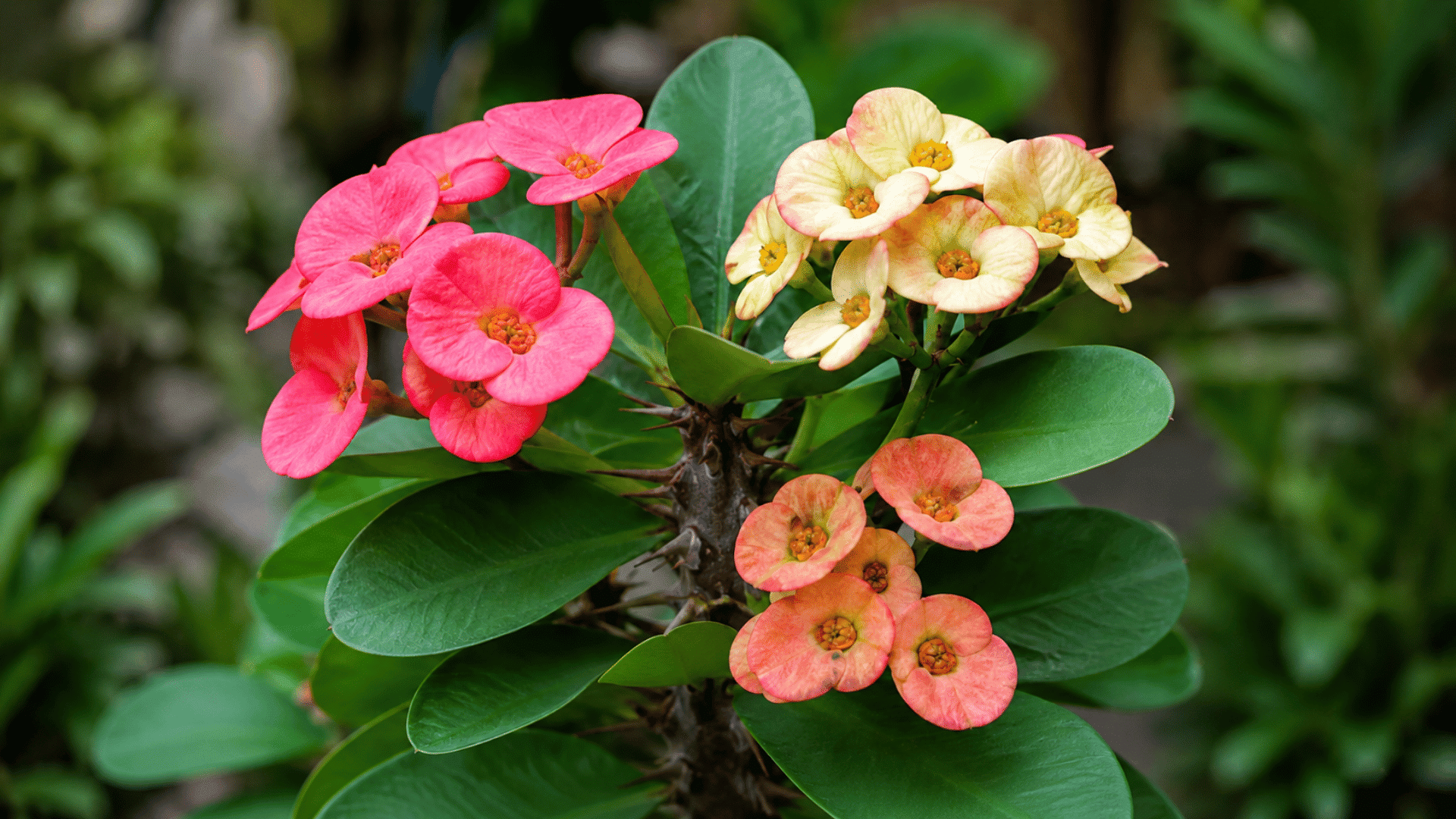
Bringing home a beautiful crown of thorns plant can feel rewarding until leaves begin to drop, stems turn dry, or bright flowers become fewer.
These problems often come from incorrect light, watering, soil, or handling.
Proper crown of thorns plant care helps maintain healthy growth, stronger stems, and steady blooming.
Let’s learn plant identification, light and watering needs, soil requirements, safe handling, propagation methods, and practical solutions for common growth problems.
Origin and Significance of Euphorbia milii
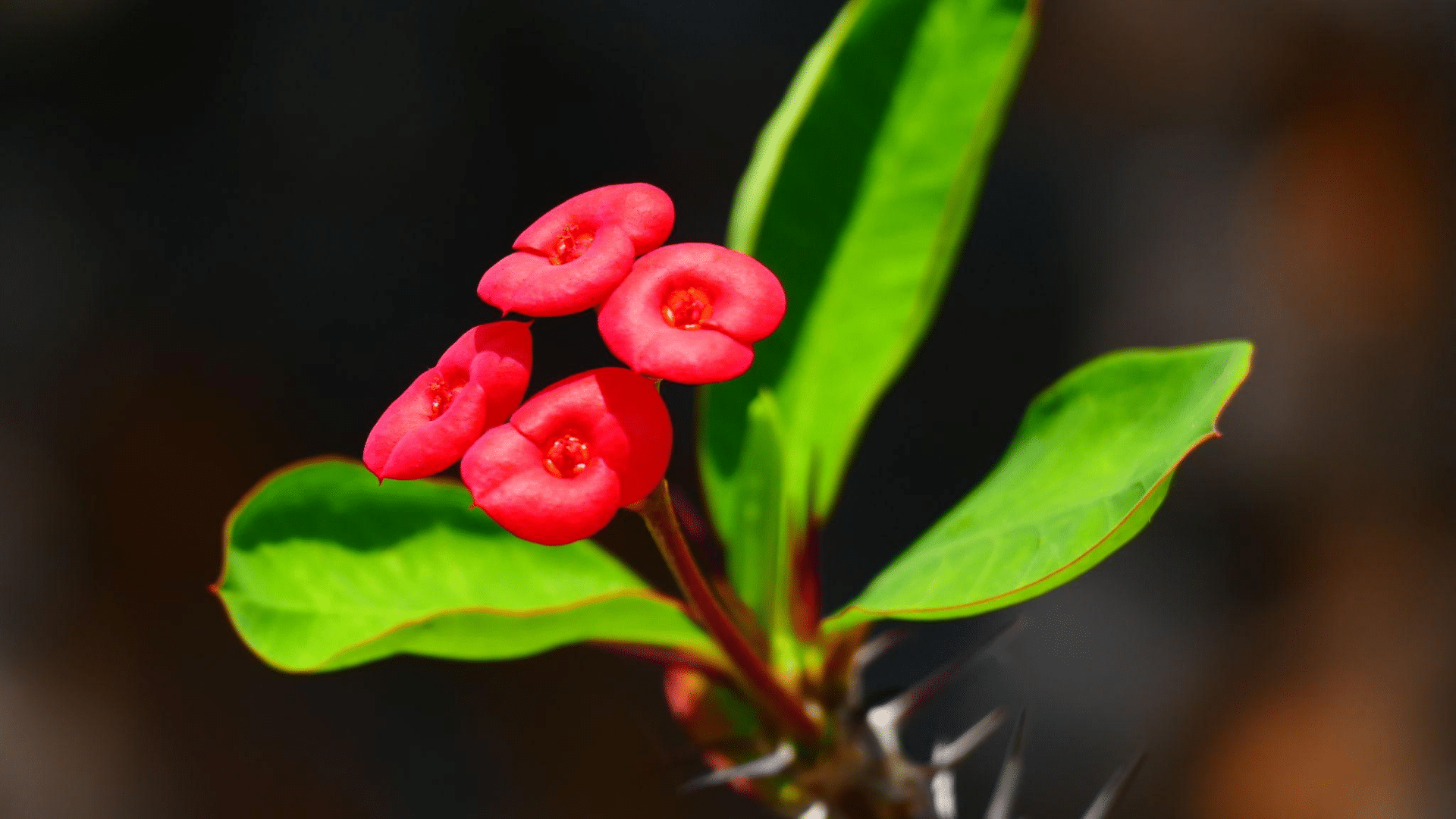
The Crown of Thorns (Euphorbia milii) is a semisucculent shrub native to Madagascar, where it thrives in hot, dry conditions. Its thick stems store water, helping it survive drought.
The genus name Euphorbia is linked to Euphorbus, an ancient Greek physician, not the plant’s sap.
Also called Christ plant or Christ Thorn, it is traditionally associated with the crown of thorns placed on Jesus during the crucifixion.
Though the exact species used is unknown, making this a symbolic rather than historical link, as referenced by the Missouri Botanical Garden.
Because of this tradition, the plant represents sacrifice, endurance, and faith.
Key Features
| Feature | Details |
|---|---|
| Common Name | Christ Thorn, Crown of Thorns |
| Botanical Name | Euphorbia milii |
| Plant Type | Evergreen succulent shrub |
| Native Region | Madagascar |
| Family | Euphorbiaceae |
| Mature Size | 3–6 feet tall and 2–3 feet wide (outdoors) |
| Bloom Time | Can flower year-round in warm, bright conditions |
| Flower Colors | Red, pink, yellow, white, orange, and bi-color varieties |
| USDA Hardiness Zones | 9–11 |
| Growth Rate | Slow to moderate |
| Toxicity | Toxic to pets and humans if ingested; the milky sap may irritate the skin |
| Best Uses | Houseplants, container gardens, rock gardens, and drought-tolerant landscapes |
How to Propagate Crown of Thorns?
Step 1: Take a Healthy Stem Cutting
Choose a healthy, mature stem and cut about 3–5 inches using clean, sharp pruning shears. Remove the lower leaves so part of the stem is exposed for planting.
Step 2: Let the Cutting Callus
Place the cutting in a dry, shaded spot for 1–2 days. This allows the cut end to seal, which can help reduce the risk of rot after planting.
Step 3: Plant in Well-Draining Soil
Fill a small pot with cactus or succulent mix and insert the callused end into the soil. Gently press the soil around the stem to keep it upright.
Step 4: Water Lightly and Provide Bright Light
Water just enough to lightly moisten the soil, then let it dry between waterings. Keep the pot in bright, indirect light while roots begin to form.
Step 5: Wait for Root Growth
Give the cutting a few weeks to establish roots. Once you notice new growth or gentle resistance when tugging the stem, continue normal Crown of Thorns care.
Crown of Thorns Plant Care
1. Sunlight
Provide 6–8 hours of bright sunlight each day for the best growth and flowering.
Place the plant near a sunny window indoors or in a full-sun outdoor location where it receives plenty of direct light.
2. Watering
Avoid watering your garden too often, as constantly wet soil can cause root rot. Water only when the top 1–2 inches of soil are dry.
Give the soil a thorough soak, then allow excess water to drain completely.
3. Soil
Use a well-draining cactus or succulent potting mix to keep excess moisture away from the roots.
Mixing in coarse sand or perlite further improves drainage and creates the ideal growing environment for healthy root development.
4. Temperature
Keep the plant in temperatures between 65°F and 85°F (18°C–29°C).
It thrives in warm conditions but is sensitive to frost, so move it indoors or protect it whenever temperatures drop below 50°F (10°C).
5. Humidity
The plant prefers low to moderate humidity and grows well in normal indoor conditions. It does not require misting or extra humidity, making it an easy-care option for homes and offices.
6. Fertilizer
Feed with a balanced, water-soluble fertilizer every 4–6 weeks during spring and summer. Reduce or stop fertilizing during winter because the plant grows more slowly and requires fewer nutrients.
Recommended fertilizer: Miracle-Gro Water Soluble All Purpose Plant Food (24-8-16) or Schultz Cactus Plus Liquid Plant Food (2-7-7).
7. Pruning
Prune dead, damaged, or leggy stems to maintain a compact shape and encourage fuller growth. Wear protective gloves while pruning because the plant produces a milky sap that can irritate the skin.
8. Repotting
Repot every 2–3 years or whenever the roots outgrow the container. Choose a pot with drainage holes and refresh the soil with a well-draining succulent mix to support continued healthy growth.
9. Pest Control
Inspect the plant regularly for mealybugs, spider mites, and scale insects. If pests appear, remove them early using insecticidal soap, neem oil, or a damp cloth to prevent them from spreading.
Crown of Thorns Plant Care at a Glance
| Care Factor | Best Condition |
|---|---|
| Light | Bright direct light for several hours daily |
| Water | Water after the top 1 to 2 inches of soil dry |
| Soil | Fast-draining cactus or succulent mix |
| Temperature | 65°F to 85°F |
| Fertilizer | Light feeding every 4 to 6 weeks during active growth |
| Drainage | Pot with drainage holes and no standing water |
Benefits of Christ Thorn Plant
The Christ Thorn plant is popular for its colorful flowers, hardy nature, and easy care. It can grow well indoors or outdoors and offers several practical and decorative benefits.
- Easy to Grow: It adapts well to warm, dry, and tropical conditions, making it suitable for different growing environments.
- Beautiful Appearance: Green leaves, thorny stems, and bright flowers make the plant an attractive addition to homes and gardens.
- Low Maintenance: The plant needs little care once established, making it suitable for beginners and experienced gardeners.
- Good Indoor Plant: It grows well in containers and can add greenery and colorful flowers to indoor spaces throughout the year.
- Drought-Tolerant: The Christ Thorn plant can handle dry conditions and does not require frequent watering.
- Long Flowering Period: With proper light and care, the plant can produce colorful flowers for long periods.
- Easy to Propagate: New plants can be grown from stem cuttings, making it easy to expand a collection or share with others.
Common Problems with Crown of Thorns
Crown of Thorns plants are hardy, but watering, light, temperature, and pest issues can affect their growth. Spotting the problem early can help the plant recover and stay healthy.
| Problem | Possible Cause | Suggested Cure |
|---|---|---|
| Yellow leaves | Overwatering or poor drainage | Let the soil dry before watering again and make sure the pot drains properly. |
| Leaf drop | Temperature changes, too much water, or too little water | Keep conditions stable and water only when the upper soil feels dry. |
| Root rot | Constantly wet soil | Remove damaged roots, repot in fresh succulent soil, and reduce watering. |
| Fewer flowers | Low light or excessive fertilizer | Provide several hours of bright light and reduce fertilizer use. |
| Brown leaf edges | Dry soil, heat stress, or excess fertilizer | Adjust watering, protect from excessive heat, and avoid overfeeding. |
| Pest problems | Mealybugs, spider mites, or scale | Remove visible pests and use insecticidal soap when necessary. |
Conclusion
The crown of thorns plant is relatively easy to maintain when it receives strong light, careful watering, warm temperatures, and fast-draining soil.
Most problems, including falling leaves, weak growth, and fewer flowers, begin with low light or excess moisture around the roots.
Before changing the entire care routine, check the plant’s location and soil condition.
A brighter position or longer drying period may be all that is needed. With stable care and safe handling, crown of thorns can remain healthy, compact, and colorful for years.
Frequently Asked Questions
Why Are the Leaves Falling Off My Crown of Thorns Plant?
Leaf loss may result from low light, excessive watering, prolonged dryness, sudden temperature changes, or relocation stress. Check the soil and growing location before adjusting the care routine.
Is Euphorbia Sap Poisonous?
Yes, Euphorbia sap is poisonous and may irritate the skin, eyes, and mouth. Wear gloves when handling the plant, rinse exposed areas with water, and keep it away from children and pets.
How Long Does a Crown of Thorns Plant Live?
A crown of thorns plant can live for many years with suitable light, fast-draining soil, careful watering, warm temperatures, and occasional pruning.
Why Is My Crown of Thorns Plant Not Flowering?
Insufficient light is one of the most common reasons. Excess water, cold temperatures, heavy fertilizing, and an oversized pot may also reduce flowering.
Can Crown of Thorns Grow From Cuttings?
Yes. Allow the cut end of a healthy stem to dry and form a callus. Plant it in fast-draining soil and keep the mixture lightly moist while roots develop.