

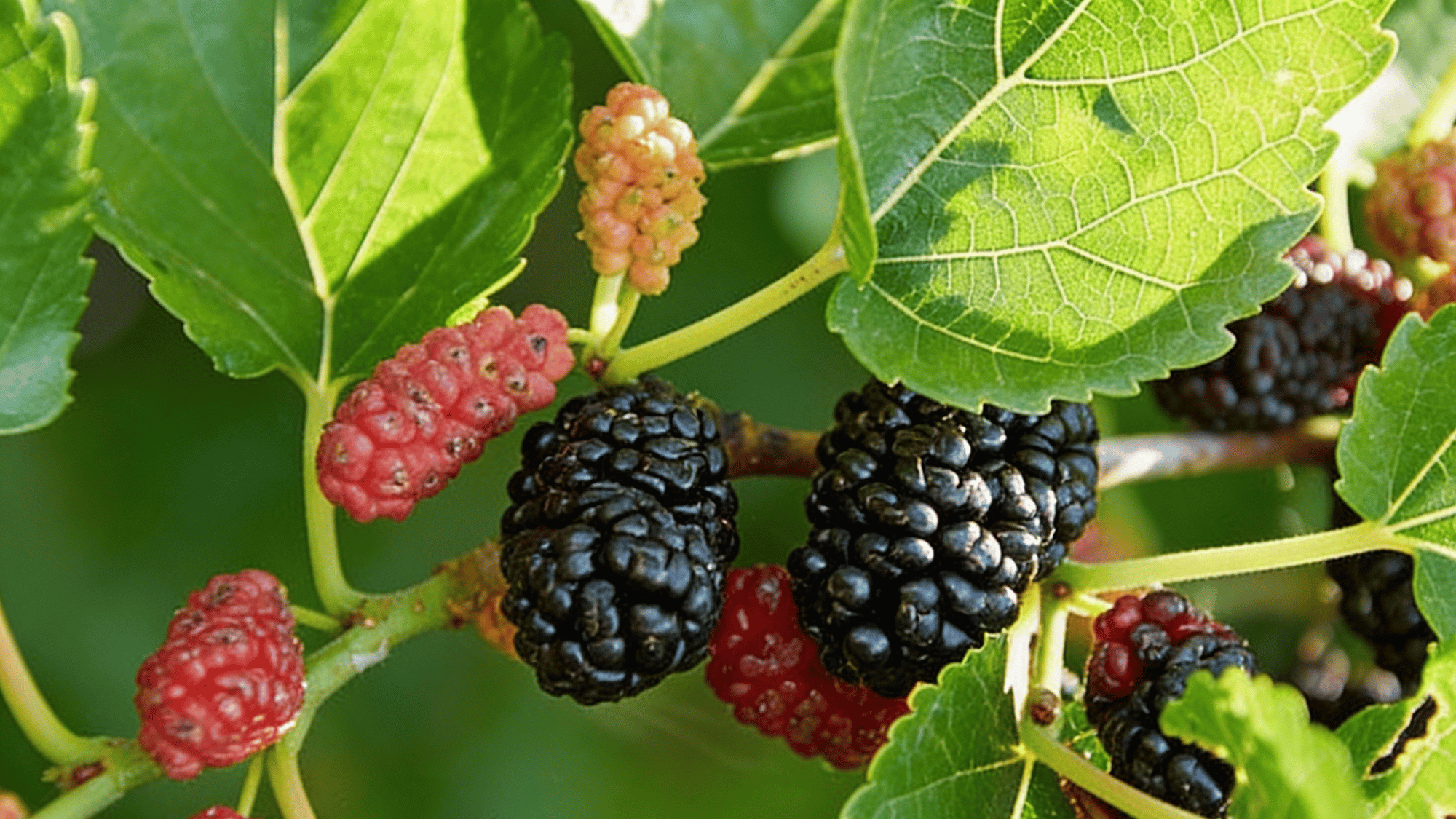
Looking at a mulberry tree brings back memories for many folks. These trees have been around for centuries. They pop up in backyards, parks, and wild spaces across different continents.
The sweet berries are just one part of what makes these trees special. Their leaves feed silkworms. Their wood builds furniture. Their shade cools hot summer days.
From planting to harvesting, from varieties to care tips, understanding these trees can change how someone thinks about backyard gardening.
This blog covers the most important aspects of growing and enjoying mulberry trees.
About Mulberry Tree and Fruits
Mulberry trees belong to the Morus genus and grow in temperate and subtropical regions around the world. These deciduous trees produce berries that look like elongated blackberries.
The fruits change color as they ripen, going from white or green to red, and finally to deep purple or black.
Three main species dominate: white mulberry, red mulberry, and black mulberry. Each type offers different flavors and growing habits. The trees can reach heights of 30 to 50 feet.
Their broad leaves and spreading canopy make them popular landscape choices for homeowners seeking shade and fresh fruit.
Characteristics of a Mulberry Tree
Mulberry trees share common traits that make them easy to identify and distinguish from other fruit-bearing trees in landscapes.
| Characteristic | Description |
|---|---|
| Height | 30 to 50 feet at maturity |
| Canopy Spread | 35 to 45 feet wide |
| Leaf Shape | Heart-shaped with serrated edges |
| Leaf Size | 3 to 6 inches long |
| Growth Rate | Fast-growing, 2 to 3 feet per year |
| Lifespan | 100 to 250 years |
| Root System | Shallow and spreading |
| Bark Texture | Ridged and furrowed with age |
| Fruiting Season | Late spring to early summer |
| Berry Size | 1 to 1.5 inches long |
| Hardiness Zones | 4 to 9, depending on species |
| Drought Tolerance | Moderate once established |
Types of Mulberry Trees You Should Know
Different mulberry species offer unique characteristics, flavors, and growing requirements that suit various climates and gardening needs across regions.
White Mulberry (Morus alba)
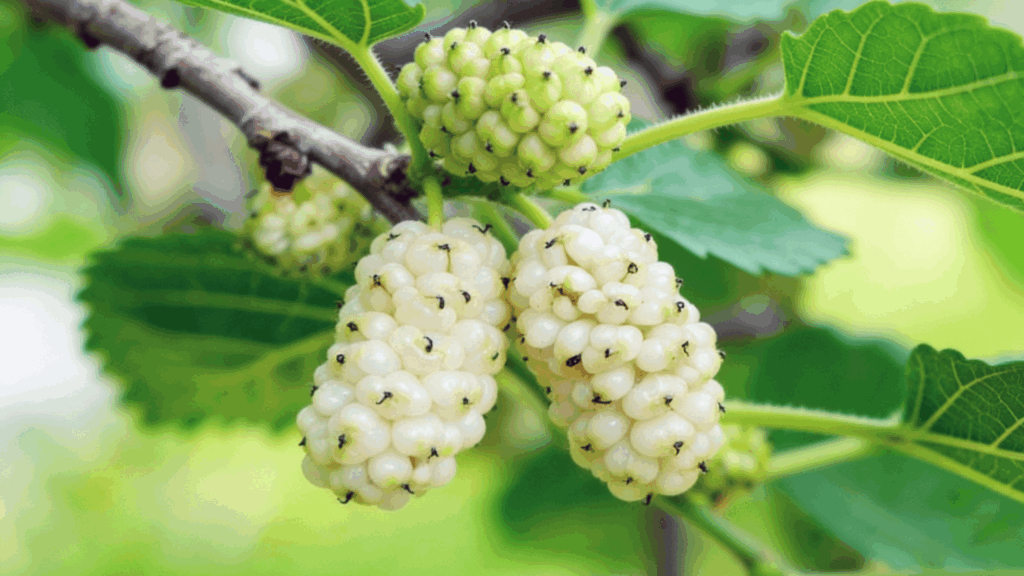
White mulberry originates from China and was brought to other countries for silkworm cultivation. The tree produces sweet, mild-flavored berries that range from white to pink or purple.
It’s the most cold-hardy species, surviving in zones 4 through 8. The tree grows fast and tolerates urban pollution well.
However, it can become invasive in some areas. White mulberries have less flavor intensity than other varieties, making them less popular for eating fresh.
Red Mulberry (Morus rubra)
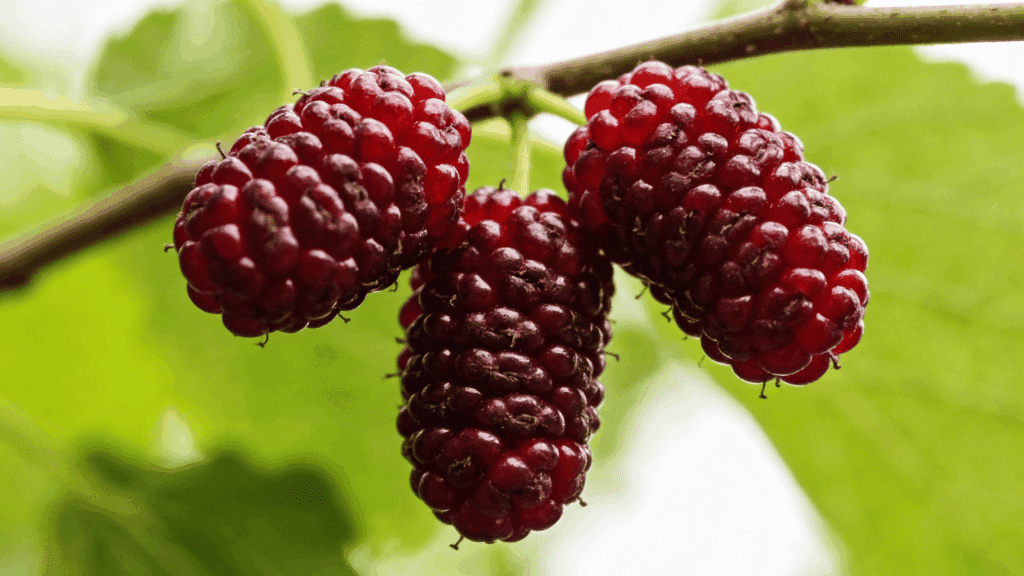
Red mulberry is native to eastern North America and thrives in zones 5 through 9. The berries start red and turn dark purple when fully ripe.
They offer a sweet-tart flavor that many people prefer for fresh eating and for making jam. The tree grows more slowly than the white mulberry and reaches moderate heights.
Red mulberry adapts well to different soil types but prefers moist, well-drained conditions. This species faces threats from hybridization with the invasive white mulberry in wild populations.
Black Mulberry (Morus nigra)
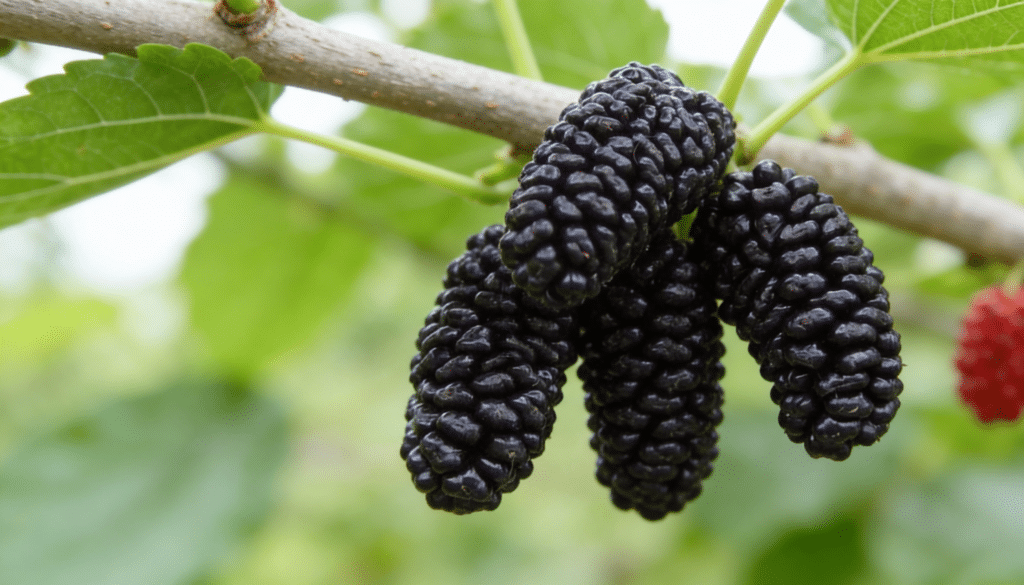
Black mulberry comes from western Asia and produces the most flavorful berries among all species.
The fruits are large, juicy, and intensely sweet with complex flavor notes. This tree prefers warmer climates in zones 7 through 10. It grows shorter and wider than other types, rarely exceeding 30 feet.
Black mulberry takes longer to bear fruit, but rewards patience with superior berry quality. The tree needs well-drained soil and full sun exposure for best production.
Pakistan Mulberry (Morus macroura)
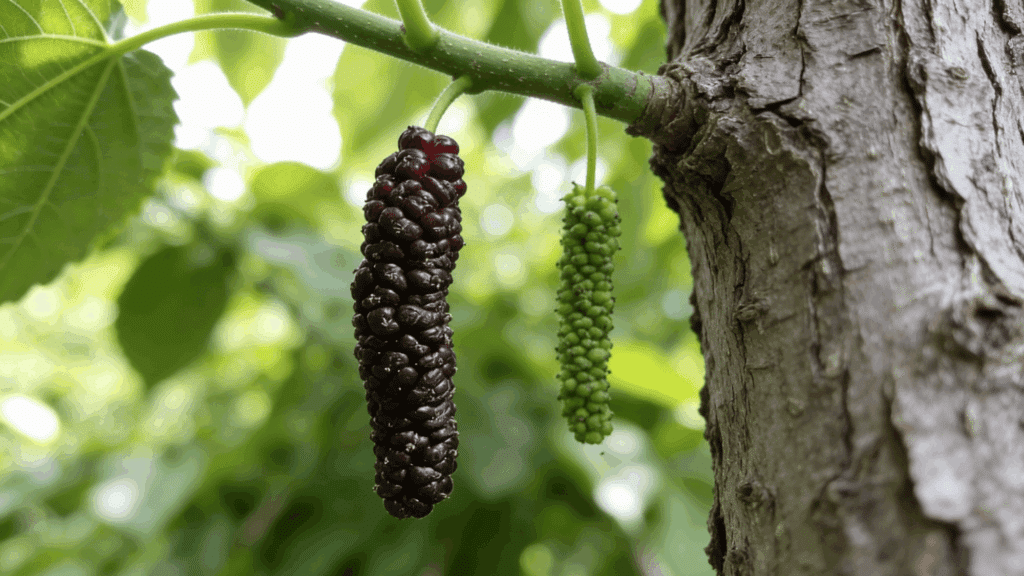
Pakistan mulberry stands out with its exceptionally long berries that can reach 3 to 4 inches.
The fruits taste sweet and mild with a pleasant texture. This variety thrives in hot, dry climates and does best in zones 8 through 11. The tree grows tall and narrow, making it suitable for smaller spaces.
Pakistan mulberry produces fruit for extended periods throughout the summer. It handles drought better than most varieties once the roots establish properly.
Health Benefits of Mulberry Fruit
Mulberry fruits pack impressive nutritional value and offer various health advantages that make them worth adding to any balanced diet.
- Rich in antioxidants: Mulberries contain high levels of anthocyanins and resveratrol that help fight free radicals and reduce oxidative stress in the body.
- Supports blood sugar control: The berries have compounds that may help regulate blood sugar levels and improve insulin response in people managing diabetes.
- Boosts immune system: High vitamin C content strengthens immune function and helps the body fight off infections and illnesses more effectively.
- Promotes heart health: Mulberries contain fiber, potassium, and antioxidants that support cardiovascular health by reducing cholesterol and improving blood pressure.
- Aids digestive health: The fiber in mulberries promotes healthy digestion, prevents constipation, and supports beneficial gut bacteria for better overall wellness.
- Improves vision: Mulberries provide zeaxanthin and other carotenoids that protect eyes from age-related damage and support long-term eye health.
How to Grow and Care for a Mulberry Tree
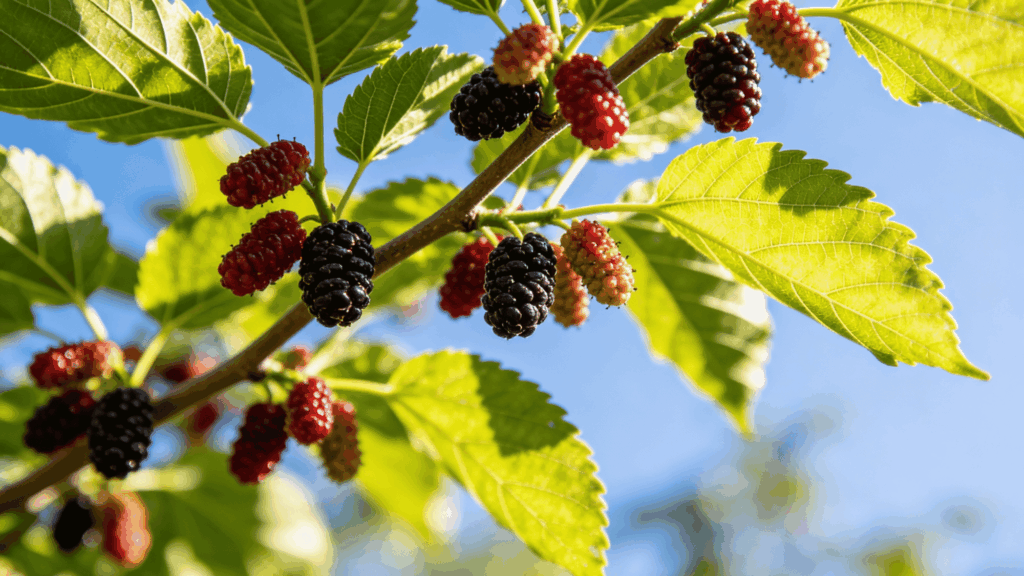
Growing mulberry trees doesn’t require advanced gardening skills or constant attention. These hardy trees adapt to various soil conditions and climates with minimal fuss.
Most varieties establish quickly and start producing fruit within a few years of planting.
Success starts with choosing the right location and providing basic care during the early stages. Mulberry trees need full sun exposure and enough space for their spreading canopy.
The soil doesn’t need to be perfect, but good drainage helps prevent root problems.
Once established, these trees become quite self-sufficient. They tolerate drought, resist most pests, and keep producing fruit year after year. Regular pruning maintains shape and size.
A little attention to watering and fertilizing during the first few seasons sets the foundation for decades of healthy growth and abundant harvests.
Common Problems With Mulberry Trees
Mulberry trees face several challenges that can affect their health, fruit production, and overall appearance in home landscapes and gardens.
- Messy fruit drop: Ripe berries fall constantly and stain sidewalks, driveways, patios, and anything underneath the tree, creating cleanup headaches for property owners.
- Invasive root systems: Shallow, aggressive roots can damage foundations, crack pavement, clog drainage systems, and interfere with nearby plants competing for water and nutrients.
- Pest infestations: Whiteflies, scale insects, and spider mites attack mulberry leaves, causing yellowing, leaf drop, and reduced vigor that weakens the overall tree health.
- Popcorn disease: This fungal infection causes berries to swell, turn pink, and become inedible, significantly reducing the harvest and spreading to healthy fruit clusters.
- Excessive suckering: Mulberry trees produce numerous shoots from the base and roots that require constant removal to maintain a clean appearance and prevent crowding.
Final Thoughts
Mulberry trees offer rewards that go beyond their delicious berries. They provide shade, attract wildlife, and require less maintenance than many other fruit trees. The challenges they present are manageable with proper planning and placement.
Choosing the right species for a specific climate makes all the difference. Understanding their growth habits helps avoid common mistakes.
With basic care during establishment, these trees become reliable producers for generations.
For anyone wanting fresh fruit without complicated upkeep, mulberry trees deserve serious consideration. They transform ordinary yards into productive spaces that deliver year after year.