

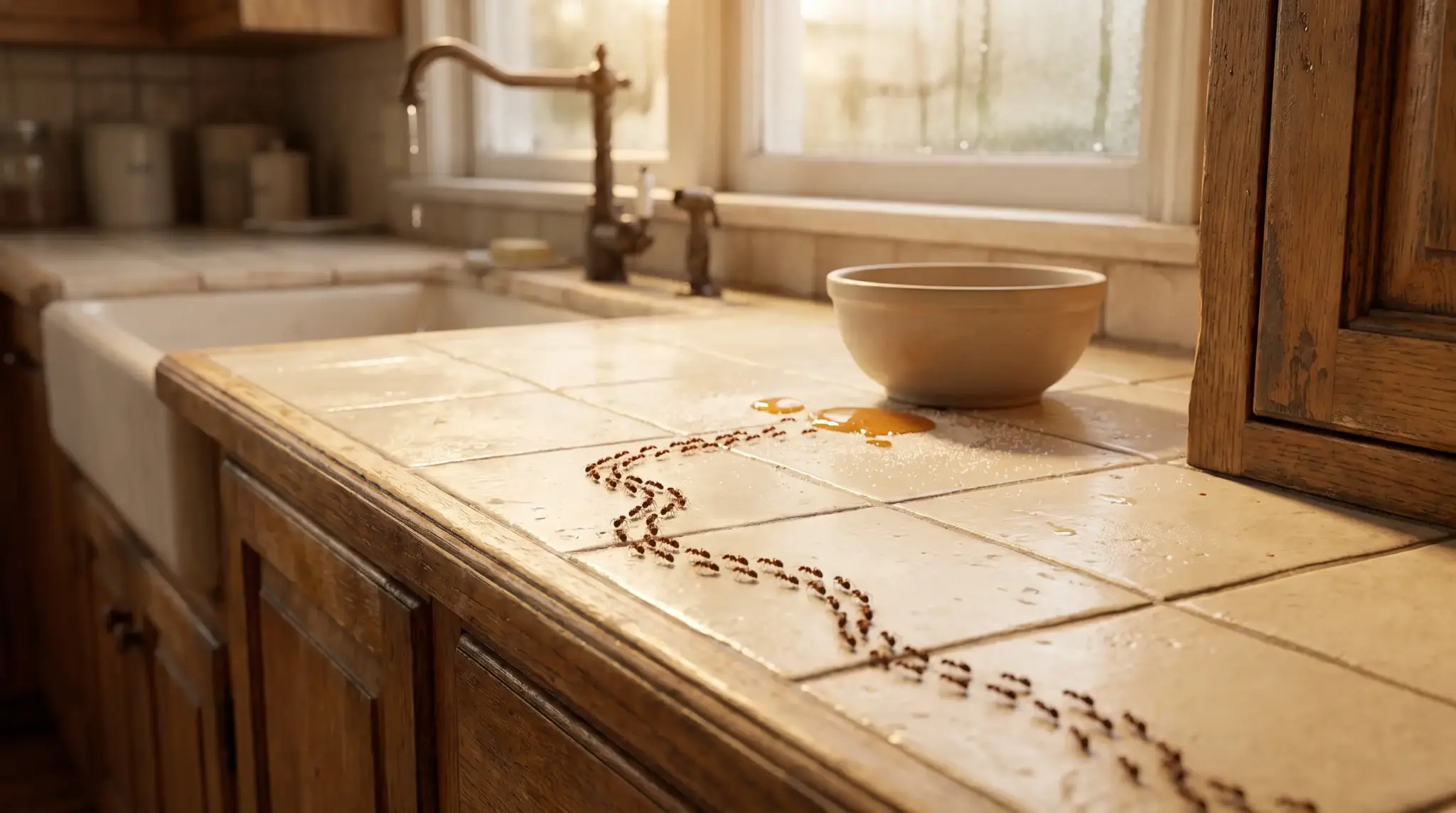
Stepping into a brightly lit kitchen only to discover a line of insects trailing across the countertop is a frustrating scenario for any homeowner.
Food preparation areas naturally act as central gathering hubs for various domestic pests due to the constant presence of organic matter.
In warm, humid environments, indoor spaces offer an ideal microclimate where foraging workers can gather essential supplies year-round.
Resolving these invasions requires understanding the precise elements that turn domestic kitchens into prime foraging grounds.
While a few stray insects might seem like an isolated incident, early scouts leave behind invisible chemical signals that guide entire colonies indoors.
Removing these environmental incentives early stops small foraging runs from escalating into severe indoor infestations.
Primary Attractants That Draw Foraging Insects Indoors
Kitchens contain a diverse array of resources that fulfill the basic survival needs of an expanding colony. Even microscopic food particles can sustain hundreds of foraging workers, making daily food residue a major environmental pull.
Sweet substances, including honey drips, fruit juice spills, syrup drops, and sugar granules, are among the most powerful attractants.
Worker ants quickly transport simple carbohydrates back to the nest to nourish developing larvae and queens. Protein and fat sources, such as bacon grease splatters, meat crumbs, and vegetable oil drops, are equally prized.
Dry food stored in pantries also provides easy access if containers remain unsealed:
- Pet Food Bowls: Kibble left out in open bowls offers a steady supply of rich proteins and fats throughout the day and night.
- Pantry Grains: Opened boxes of cereal, flour, rice, and baking mixes attract insects that chew through thin paper packaging.
- Unwashed Recyclables: Empty soda cans, juice cartons, and condiment jars placed in open recycling bins retain sugary residues.
- Trash Receptacles: Uncovered garbage cans holding vegetable peelings and food scraps emit strong odors that attract scouts.
- Toaster and Appliance Crumbs: Bread crumbs trapped under toaster trays or behind heavy appliances offer undisturbed feeding zones.
When these food reserves are readily available, scouts quickly communicate their location to the rest of the nest, establishing steady pathways directly into the home.
The Role of Moisture and Plumbing in Kitchen Invasions
Food is only one half of the equation; moisture is equally critical to an ant colony’s survival. In warm climates, high ambient temperatures accelerate dehydration among small insects.
Sinks, dishwashers, and indoor plumbing lines create a reliable oasis when natural outdoor water sources dry up.
Leaky supply lines beneath sinks produce damp wooden subfloors where fungal growth and softened wood create optimal nesting conditions.
Dripping faucets and condensation pooling around drainboards supply a continuous water source. Even tiny droplets lingering in an empty sink basin after evening dishes provide ample hydration for foraging workers.
Dishwashers also present unique moisture risks. Steam escaping from door seals leaves damp residues on surrounding cabinetry, while standing water inside the unit draws insects through internal drainage pipes.
Addressing these hidden moisture pockets is essential for breaking the cycle of recurring indoor invasions.
Why Foraging Trails Return Despite Repeated Cleaning
Wiping away a visible line of insects with soapy water often provides only temporary relief. Within hours, a fresh line of workers frequently appears along the exact same route.
This frustrating pattern occurs because foraging ants rely on sophisticated chemical communication rather than visual landmarks.
When a scout discovers a food source, it lays down a chemical trail of pheromones while returning to the nest. Other workers follow this invisible scent trail directly back to the food.
While surface cleaners remove the physical insects and temporarily disrupt the scent on open countertops, they rarely eliminate the trail where it enters through wall voids, baseboard gaps, or subfloor cracks.
Persistent trails indicate that the main colony remains thriving nearby. Understanding why ants in kitchens in Louisiana prove so difficult to manage requires looking beyond the visible counter surface.
When nests reside beneath floorboards, behind drywall, or under exterior foundation slabs, spray treatments on kitchen counters only target a fraction of the total population, allowing the colony to send out replacement workers indefinitely.
Common Nesting Sites Inside Walls and Exterior Perimeter Zones
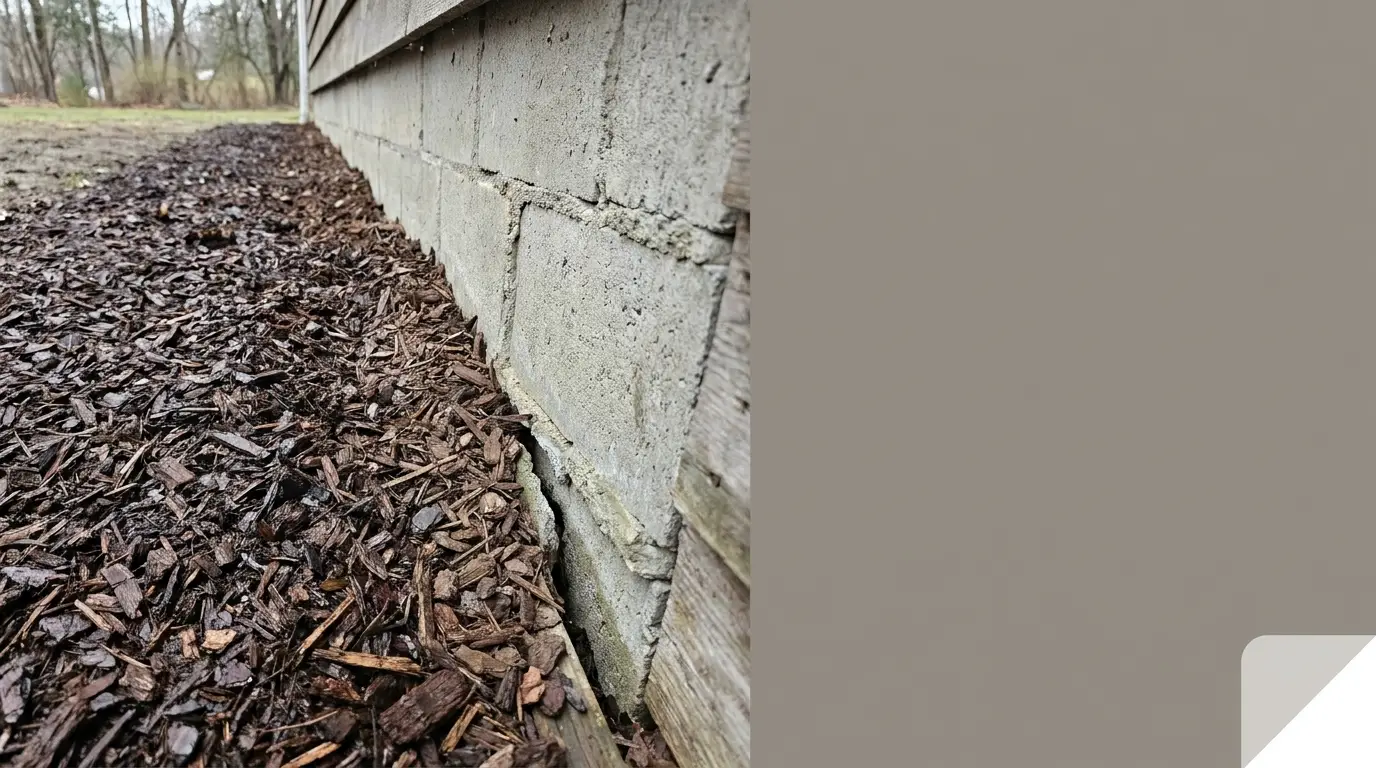
Locating the central nest is critical for resolving an ongoing infestation, as foraging workers represent only a small percentage of the total colony.
Ant species adapt to a wide variety of microhabitats, occupying hidden structural voids that protect them from predators and extreme weather.
Interior nests often establish inside hollow-core doors, behind electrical wall outlets, and within insulation layers near damp plumbing pipes.
Slabs beneath ground-floor kitchens provide warm, protected cavities where subterranean nests can expand undisturbed for months.
Exterior perimeters pose an equal threat. Overgrown garden beds touching foundation walls allow ants to nest in damp mulch before entering through weep holes or expansion joints. \
Stacked firewood, rotting tree stumps, and heavy stone pavers near exterior walls serve as primary incubators.
When outdoor conditions become too hot or dry, these exterior colonies simply migrate inward using utility lines and foundation cracks as direct highways.
Practical Steps to Secure Pantries and Eliminate Attractants
Depriving foraging insects of food and water forces them to search elsewhere, making rigorous sanitation a powerful defense tool.
Systematically removing potential attractants destabilizes established scent trails and reduces the likelihood of new scout visits.
- Repackage Pantry Items: Transfer cereal, flour, sugar, and dried fruits into air-tight glass or hard plastic containers with rubber seals.
- Clean Appliance Sub-Surfaces: Periodically move stoves, refrigerators, and microwaves to sweep away accumulated grease, crumbs, and fallen food bits.
- Establish Scheduled Pet Feeds: Avoid leaving pet kibble out continuously; pick up bowls after feeding times and store food in sealed containers.
- Maintain Evening Basin Sanitation: Wipe down kitchen sinks, dish racks, and counter surfaces to ensure no standing water remains overnight.
- Manage Waste Promptly: Rinse recyclable containers thoroughly before disposal, line trash bins with durable bags, and empty refuse daily.
Consistently executing these basic preventive measures removes the primary incentives that draw hungry scouts into food preparation environments.
Sealing Structural Entry Points and Perimeter Maintenance
Physical exclusion works alongside deep cleaning to form a complete defense against indoor invasions. Preventing entry requires systematically inspecting the building envelope and closing even the smallest structural gaps.
Silicone caulk provides a long-lasting seal around backsplash tiles, window frames, baseboards, and countertop edges.
Expanding foam or steel wool effectively blocks larger voids where drain pipes and electrical conduits enter through drywall under sinks. Inspecting door sweeps and window screens ensures physical barriers remain tight against exterior perimeter walls.
Outside the structure, maintaining a clean perimeter zone limits nest formation near the foundation. Pulling mulch beds back twelve inches from exterior walls and trimming tree branches away from rooflines removes natural bridges.
Keeping gutters clear prevents water overflow along exterior siding, eliminating damp entry points that draw foraging pests indoors.
Key Takeaways
Kitchens naturally attract foraging insects due to the ready availability of food crumbs, sugary liquids, grease, and steady moisture.
Seeing persistent trails across counters indicates that an active colony exists nearby, whether inside wall voids, under subfloors, or around the home’s exterior perimeter.
Because scouts communicate using chemical scent trails, surface cleaning alone rarely stops recurring invasions.
Long-term success relies on combining thorough indoor sanitation with physical exclusion and moisture control.
By securing pantry goods in airtight containers, fixing plumbing leaks, wiping down sinks overnight, and sealing structural cracks, homeowners eliminate the essential resources that attract pests.
Maintaining a dry, well-sealed environment effectively protects living spaces from recurring insect activity.