

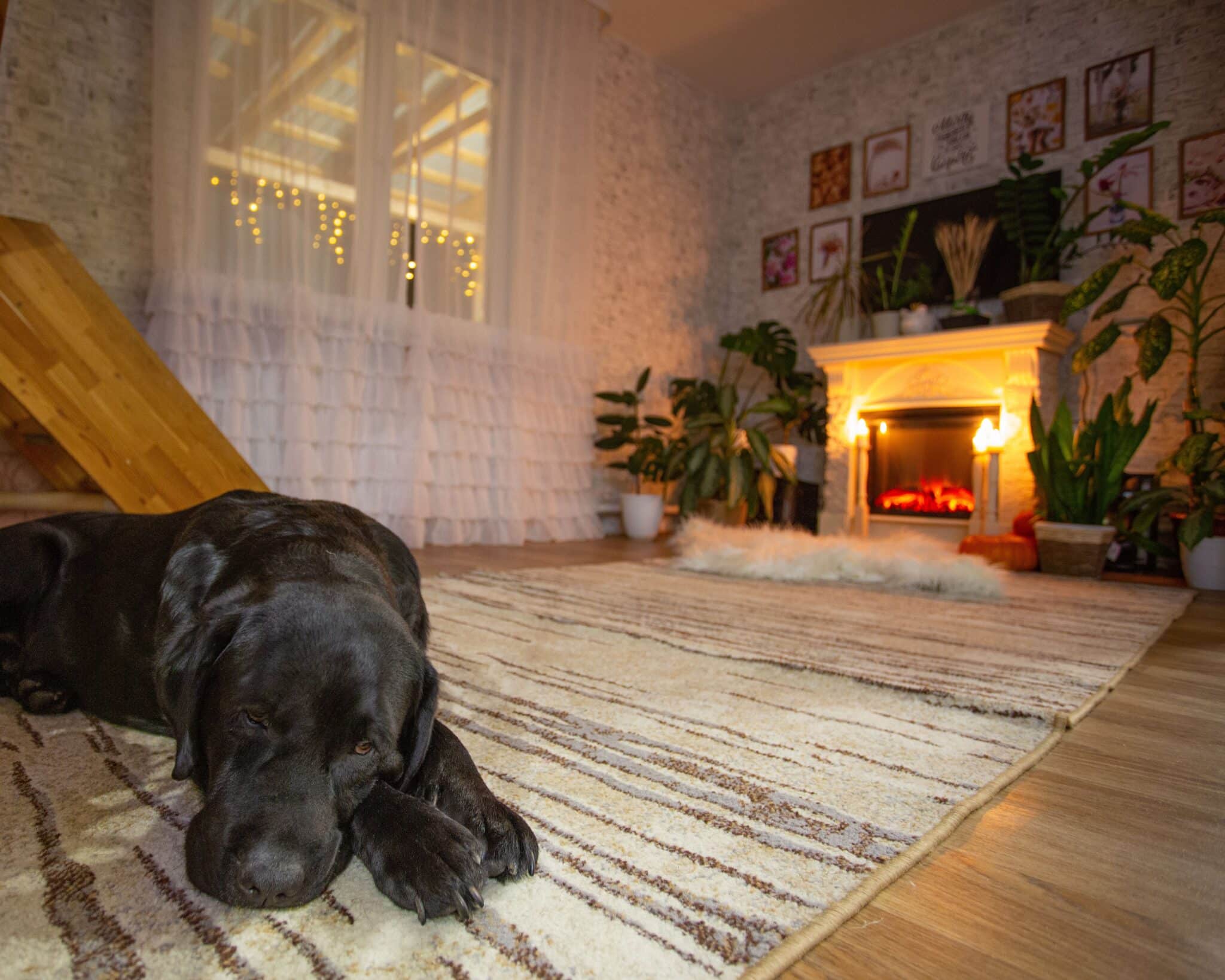
Anyone who has lived with a dog or cat knows that a well-designed home and an active pet don’t always make easy housemates. Scratched floors, fraying upholstery, paw prints tracked across every clean surface, fur worked into every soft material in the room — these aren’t reasons to give up on good design.
They’re reasons to make smarter decisions before committing to materials and layouts that look great in a showroom but won’t survive six months with a Labrador or a pair of cats who treat the sofa like a scratching post.
The gap between stylish and practical has narrowed significantly in recent years. Manufacturers across flooring, upholstery, paint, and built-in design have responded to real demand, and there are now genuinely good-looking options in every category that are built to hold up to daily animal activity.
Getting the outcome right is mostly a matter of knowing which decisions actually matter and which ones are marketing noise dressed up as advice.
The Floor Is Where Everything Starts
Flooring takes the most consistent, unavoidable abuse in any pet household. Claws, accidents, food and water spillage near the feeding area, mud and moisture tracked in from outside — the floor sees it all before anything else does.
Getting this right is the most consequential design decision in the whole process, and the wrong choice is also the most expensive to undo.
Luxury Vinyl Plank: The Most Practical All-Around Option
Luxury vinyl plank — universally abbreviated as LVP — has become the dominant practical choice for pet owners, and the reasons are straightforward. It is fully waterproof, which matters immediately when you’re house-training a puppy or living with an older dog who has occasional nighttime accidents.
The surface is protected by a wear layer that resists everyday claw traffic without developing the visible scratch patterns that softer materials accumulate quickly.
For pet households, look for a wear layer rated at 12 mil minimum — 20 mil if you have large or particularly active dogs. Thinner wear layers will show damage faster than most product descriptions suggest.
LVP can be produced to convincingly mimic hardwood planks, natural stone, or large-format tile. The visual gap between a good LVP and natural materials has closed to the point where the difference isn’t obvious under normal living conditions.
It’s also relatively straightforward to install room by room, which matters if you’re updating the house gradually rather than tackling a full renovation at once.
The one area where it has limits is in spaces with significant temperature swings or prolonged direct sun exposure — lower-quality vinyl can expand, contract, or fade under sustained UV without a rated protective coating, so check product specifications before committing in a sun-heavy room.
Porcelain and Ceramic Tile
 Porcelain is the hardest standard flooring option available, which makes it genuinely scratch-proof under normal pet traffic. Nothing a dog or cat does under everyday circumstances will mark it.
Its non-porous surface means spills and accidents sit on top rather than soaking in, and it can be cleaned with a damp mop, a commercial floor cleaner, or even a diluted bleach solution without any risk to the finish.
That combination of hardness and cleanability is why tile is the default choice for mudrooms, utility areas, laundry rooms, and any high-traffic zone where pets move in and out frequently.
Two things to plan around: grout and underfoot comfort. Unsealed grout lines can absorb urine odor over time, and once that happens it’s genuinely difficult to reverse. Sealing grout at installation — and resealing every couple of years — eliminates this problem entirely before it starts.
Tile is also cold and hard underfoot, which is uncomfortable for older pets with joint issues. Placing washable, non-slip area rugs in rest spots addresses this without compromising the floor underneath.
What to Know About Hardwood With Pets
Hardwood isn’t automatically off the table for pet households, but it requires careful decision-making at the product selection stage rather than after installation.
Species matters — harder options like hickory, white oak, and Brazilian cherry resist surface denting better than softer species like pine or American cherry. But the finish matters even more than the wood species beneath it.
If you’re set on wood, opting for pre-finished hardwood flooring with an aluminum oxide finish gives you one of the toughest surface coatings available, which holds up far better against pet nails than site-finished alternatives.
Site-finished hardwood — sanded and coated after installation — typically relies on oil or water-based polyurethane that simply doesn’t reach the same surface hardness.
The aluminum oxide coating used in factory finishing is applied under controlled conditions and cured to a density that field-applied finishes cannot match.
That said, it’s worth being straightforward about what hardwood will look like over time in a home with larger dogs. A big breed with long nails will leave light surface marks regardless of finish quality. The wood won’t be structurally damaged, but it will develop a visible patina of use.
If that bothers you, LVP or tile is a cleaner long-term answer. If a worn, lived-in character is acceptable — or even the look you want — a properly finished hardwood floor can work well for years without becoming an embarrassment.
Upholstery That Survives Daily Pet Use
Furniture is almost always the second front in the negotiation between pets and home design. Most upholstery simply wasn’t built with claw exposure and regular fur contact in mind, which is why the wrong sofa can look worn-out within a year of a cat claiming it.
The right fabric makes that same daily use manageable — not invisible, but manageable.
Microfiber and Microsuede
Microfiber — sometimes sold as microsuede or ultra-suede — is the most consistent performer in pet households because of the way it’s woven. The fibers are packed tightly enough that claws have very little to catch onto, which means light scratching tends to close back up rather than leave a permanent pulled thread or visible tear.
Pet hair sits on the surface rather than working down into the weave, so vacuuming is actually effective at removing it rather than just redistributing it. The material also resists liquid initially, giving you time to blot a spill before it penetrates.
It’s also one of the more affordable options in the performance upholstery category, which matters when you’re covering a sofa, armchair, and ottoman at the same time.
Performance Fabrics
Performance fabrics — Sunbrella, Crypton, and Revolution are the most established names — represent a step up in engineered protection. These materials are purpose-built to resist stains, moisture, and odors at the fiber level.
Crypton in particular is worth understanding: its moisture barrier is built into the fiber structure itself, which means an accident doesn’t saturate the foam cushioning underneath. Revolution fabrics are similarly treated and specifically marketed for pet households.
Both lines now come in enough design directions — textures, patterns, varied neutrals — that working with them doesn’t require much visual compromise compared to standard upholstery options.
Leather: Good for Dogs, Less So for Cats
Leather performs well in homes with dogs and considerably less consistently in homes with cats. It wipes clean without absorbing odors, and pet hair doesn’t cling to it the way it does to woven fabrics. The problem is that cat claws — and to a lesser extent dog nails — score a leather surface over time. Full-grain leather ages into scratches in a way that some owners find acceptable and even attractive. Corrected-grain and bonded leather fare worse: bonded leather in particular tends to peel at the surface layer within a couple of years, often before pets have done any meaningful damage at all. It’s the worst of both worlds — not as durable as full-grain leather, not as scratch-forgiving as performance fabric.
Fabrics to avoid in pet households, regardless of how they look in the store:
- Velvet and velour — cat claw snags and embedded pet hair are nearly impossible to remove without damaging the pile
- Loose-weave linens and tweeds — the textile structure can’t withstand repeated claw contact without unraveling
- Chenille — pills and snags with almost no provocation from claw activity, even from a small cat
- Thin cotton and silk — offer no resistance to either scratching or liquid penetration
Layout Choices That Make Day-to-Day Life Easier
How a home is arranged — how rooms connect to one another, where traffic naturally flows, what spaces exist between the outdoors and the main living areas — shapes the daily experience of living with animals as much as any individual material choice does.
This is worth thinking through before finalizing a floor plan or a room layout, not after.
Open Plans and Clear Sightlines
Open floor plans work well for pet households for practical reasons that go beyond aesthetics. Clear sightlines across the main living area let you track where a dog is heading before they’ve made it to the sofa or the kitchen counter.
Fewer enclosed corners and tight corridors mean fewer areas where fur and debris accumulate out of sight between cleaning sessions.
Cleaning an open space is also simply faster — there are fewer transitions, tight angles, and awkward edges where a vacuum or mop loses efficiency.
Beyond the plan itself, think about the routes your pets take most consistently — from the back door to the water bowl, from the crate to the living area, from the entry to wherever they prefer to rest.
These are the high-traffic corridors that deserve your best flooring choices, the most washable rugs, and the most considered material decisions.
A home doesn’t need to be comprehensively optimized for animal activity across every square foot. It needs to be optimized along the actual paths pets use, and the rest can follow standard design priorities without concession.
The Entry Zone: The Most Important Space in a Pet Household
The entryway is the single most strategically important design zone for anyone living with dogs. It’s where mud, moisture, outdoor debris, and allergens come in from outside, and if nothing at the door intercepts that transfer, it spreads through the entire house.
Even a minimal version of a pet-conscious entry — a hard-surface floor, a bench for sitting while wiping paws, hooks for leashes at a usable height, a basket of quick-dry towels nearby — changes the cleanliness of the whole home.
Tile is the right material choice here specifically because it tolerates moisture and can be cleaned with anything without damage or discoloration.
If a renovation or new build is involved, a dedicated pet station near the primary entry is worth planning for from the start. It doesn’t need to be elaborate — a utility sink set at the right height for your breed, a tiled floor with proper drainage, and some wall-mounted storage for towels and supplies is enough.
In homes where this exists, the routine of coming in from a muddy walk stops being a problem that spreads across the house and becomes a contained, two-minute step at the door.
Architect Patrick Ahearn, whose firm designs frequently for dog-owning clients, describes these transition spaces as essential to keeping the main living areas of a home functional and clean without requiring constant vigilance.
Wall Finishes That Can Be Cleaned Properly
Paint sheen is a detail that matters considerably more in pet households than most design advice acknowledges. Flat and matte finishes — still commonly specified in living rooms for their soft, light-absorbing quality — cannot be scrubbed without damaging or lifting the paint film.
In rooms where a dog routinely leans against the wall, or where nose prints and muddy marks appear at predictable heights along baseboards and lower sections, that becomes a real and recurring maintenance problem.
Eggshell is the practical minimum for any room pets regularly occupy. Semi-gloss is a better choice for lower wall sections, trim, and any wall surface adjacent to a feeding or water area. Both finishes can be wiped, scrubbed, and cleaned with standard household cleaners repeatedly without losing their surface integrity.
The slight visual sheen that comes with these finishes is a reasonable trade for that cleanability in rooms that genuinely need it. If the appearance of flat paint matters, some higher-end washable paint formulations now achieve a near-matte look while still tolerating scrubbing — these are worth seeking out for main living spaces.
In homes where dogs are rough on lower walls — leaning, scratching at baseboards, or rubbing against corners — a painted or tiled wainscoting covering the bottom two to three feet adds a more durable surface in exactly the zone that takes the most contact.
Beadboard painted in semi-gloss is one common approach. A tile border that transitions to painted wall above is another. Either looks intentional rather than defensive, and both address a genuine problem without drawing attention to the fact that they’re solving one.
Color Choices That Work With Pet Realities
Color choices affect how a home reads day to day — how clean or lived-in it appears between deep cleans, and how much visible maintenance the surfaces seem to require. Mid-tone colors are the practical sweet spot for pet households: warm grays, taupes, muted greens, soft browns.
These shades don’t show light fur or everyday tracking the way stark white surfaces do, and they don’t highlight every smear, paw print, or splash the way dark charcoal or navy does.
A medium-toned LVP floor, a warm gray tile, an upholstered piece in taupe or mushroom — these choices read as clean longer, not because they conceal serious mess, but because normal daily fur and light tracking don’t register against them at a glance.
Pattern plays the same role in rugs and upholstery. A solid-colored sofa shows every hair immediately; a textured or subtly patterned fabric in a similar tone absorbs that visual noise almost entirely.
Low-pile area rugs with geometric or organic patterns do the same thing underfoot, and they are significantly easier to vacuum effectively than high-pile or shag alternatives.
On hardwood and LVP, a wire-brushed or hand-scraped surface texture visually absorbs light scratching in a way that a high-gloss, smooth finish cannot. None of these are compromises to the design — they’re considered choices that happen to be practical at the same time.
Built-In Features Worth Planning From the Start
 If a renovation or new build is part of the picture, a handful of specific design inclusions pay off in daily quality of life in ways that are difficult to replicate after the fact with furniture or aftermarket solutions.
These aren’t pet-specific novelties — they’re features that integrate cleanly into good home design and happen to solve real problems that come with animal ownership.
- A built-in feeding station — sized to your pet’s bowls, with a waterproof surface underneath and enough clearance to clean beneath it — keeps food and water mess contained to a defined area rather than spreading across an adjacent floor section.
- Dedicated storage for pet gear near the point of use, at the entry or in a utility area, keeps leashes, toys, grooming tools, and food bags from accumulating on counters and surfaces throughout the main living spaces.
- A defined rest area near where the family primarily gathers — a built-in bench with a washable cushion, or a recessed floor-level platform in a corner of the living room — gives dogs and cats a space that feels like theirs, which reduces the motivation to claim the furniture instead.
- Tile or sealed concrete in the utility or laundry room, even when the main living areas use a different flooring material, turns that space into a practical secondary cleanup zone for muddy outdoor gear, pet beds after a wash, and the occasional bath.
None of these features need to advertise themselves as pet accommodations. A well-executed feeding nook reads as thoughtful cabinetry. A built-in bench at the entry looks like considered design.
The goal in each case is for the feature to work with daily routines rather than require workarounds, and that changes the feel of the whole home without the effort showing.
Designing a home that works well with dogs and cats isn’t about accepting lower standards for what the space can look like.
It’s about making informed choices at the selection stage — on the floor, the fabric, the paint finish, the entry layout — so that living with animals stops being a daily negotiation between your household’s appearance and its reality. Get those foundational decisions right, and the two stop being in conflict.