

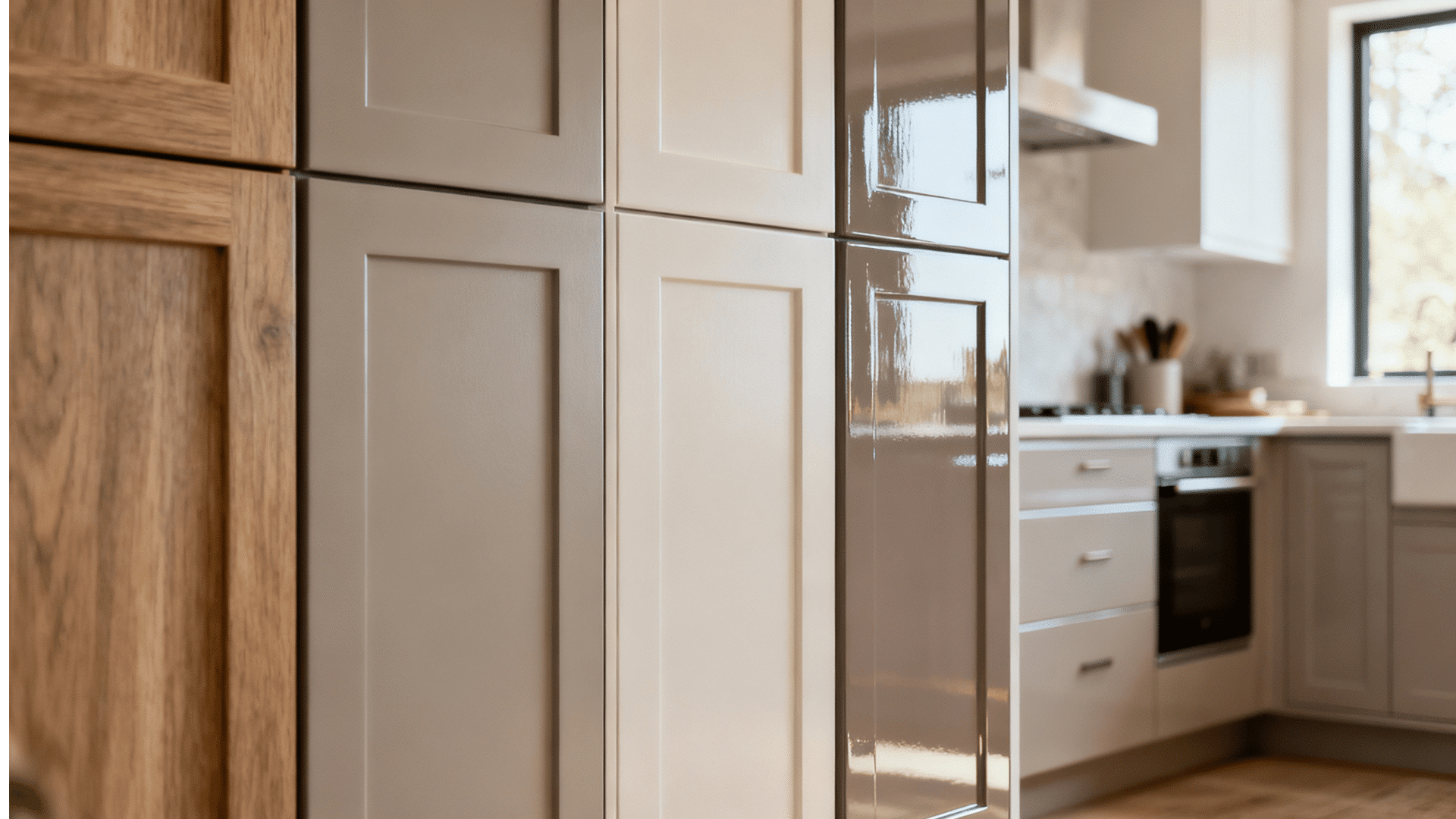
Cabinets play a big role in how a home looks and feels. They take up a lot of space, so even small changes can make a big difference.
One way to update a room without a full remodel is by changing the cabinet finish. The right finish can make a space feel fresh, clean, or more up-to-date.
It can also help tie the whole room together. In today’s homes, style and function often go hand in hand.
People want cabinets that look good and last a long time. That’s why the finish choice matters.
This blog looks at the most popular cabinet finishes being used in modern homes. It offers simple ideas to help any space feel more current and well-put-together.
What are Cabinet Finishes?
Cabinet finishes refer to the protective and decorative coatings applied to cabinet surfaces to enhance their look, durability, and overall performance.
A finish acts as a barrier against moisture, heat, stains, and daily wear, helping cabinets stay attractive and functional for years.
Finishes also determine how the surface feels and looks, from smooth and glossy to soft and matte. They differ from paint and stain in purpose and effect.
Paint covers the surface completely, giving a solid, uniform color, while stain penetrates the wood to highlight natural grain patterns.
They also influence style, maintenance needs, and cleaning ease, making them an essential choice when updating kitchens or bathrooms.
Types of Cabinet Finishes
Understanding the main types of cabinet finishes helps you choose a look that fits your style and holds up well in daily use.
1. Stains
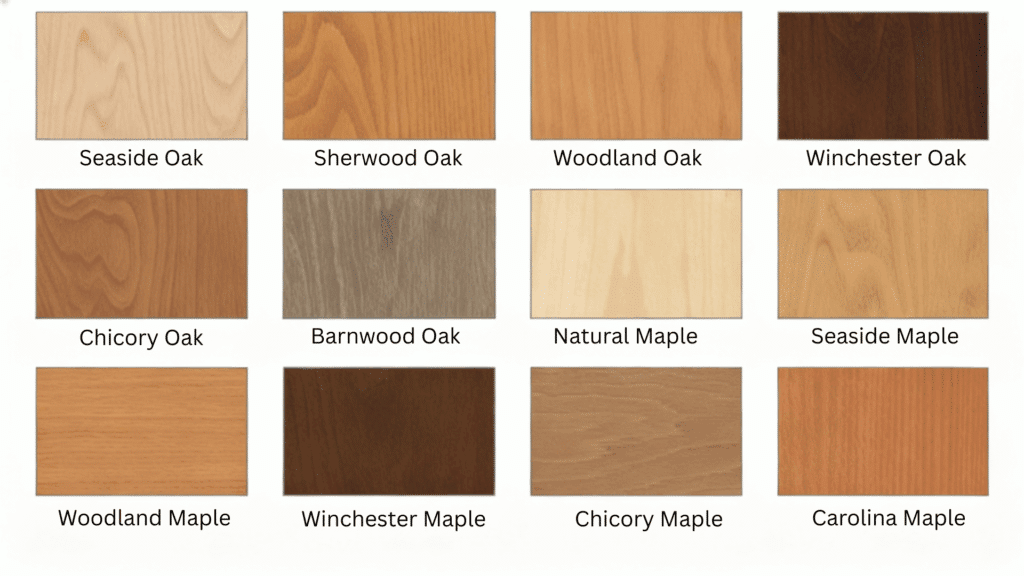
Wood stains penetrate the grain, enhancing natural wood patterns and adding depth of color.
Available in oil-based or water-based formulas ranging from light honey tones to deep espresso shades, stains showcase wood’s inherent beauty.
| Pros | Cons |
|---|---|
| Highlights natural wood grain beautifully | Requires quality wood substrate |
| Easy to repair scratches and damage | Can appear dated or show orange undertones |
| Timeless appeal that ages gracefully | Limited color palette compared to paint |
2. Paints (Opaques)
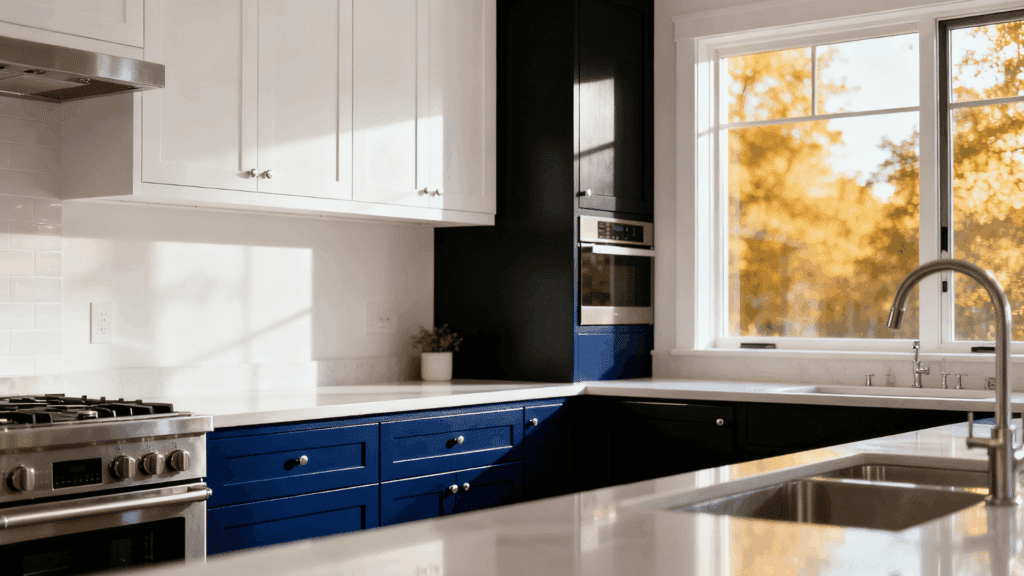
Painted finishes provide complete coverage in unlimited color options, from crisp whites to bold navy or dramatic black.
Modern paint formulations offer durability and smooth application, concealing wood imperfections while creating clean, contemporary aesthetics.
| Pros | Cons |
|---|---|
| Unlimited color choices for personalization | Shows wear, chips, and scratches more visibly |
| Hides wood grain inconsistencies | Requires thorough surface preparation |
| Creates a bright, clean, modern appearance | Difficult to repair without full repainting |
3. Glazes

Glazes are translucent, tinted coatings applied over base finishes (stain or paint), settling into crevices and details to create dimensional depth and aged character.
This layered technique adds through subtle shadowing and highlighting effects.
| Pros | Cons |
|---|---|
| Adds depth and visual interest | More expensive due to a multi-step process |
| Highlights architectural cabinet details | Can darken the overall appearance significantly |
| Creates a custom, high-end appearance | Requires skilled application for best results |
4. Natural
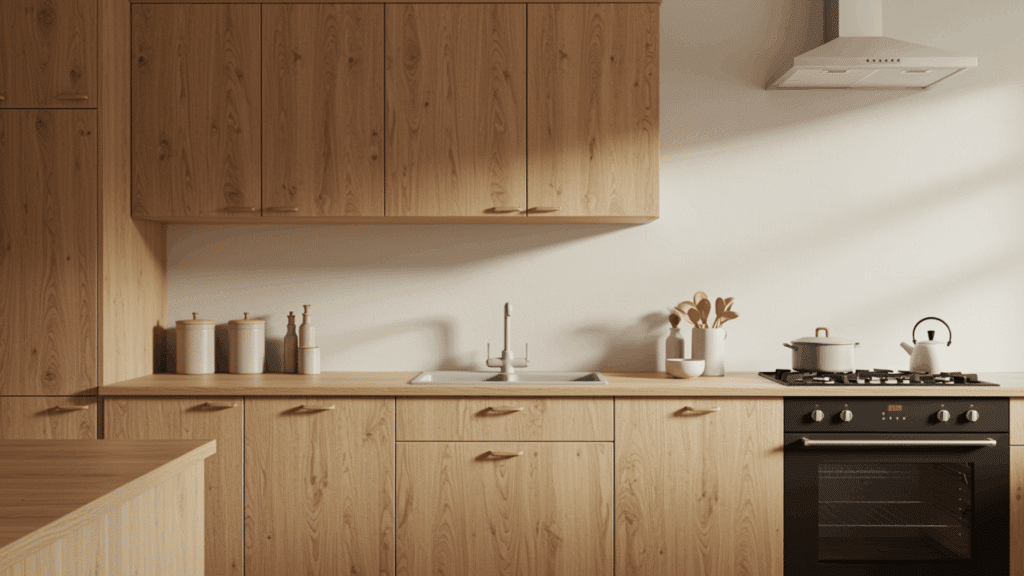
Natural finishes preserve wood’s original color with only clear protective coatings, celebrating authentic grain patterns, knots, and variations.
This minimal approach suits organic, Scandinavian, or Japanese-inspired designs emphasizing material honesty and simplicity.
| Pros | Cons |
|---|---|
| Showcases authentic wood beauty | Wood darkens and changes color over time |
| Easy maintenance with simple cleaning | Shows every imperfection and irregularity |
| Eco-friendly with minimal chemical treatments | Limited protection against stains and moisture |
5. Varnish, Lacquer, and Polyurethane
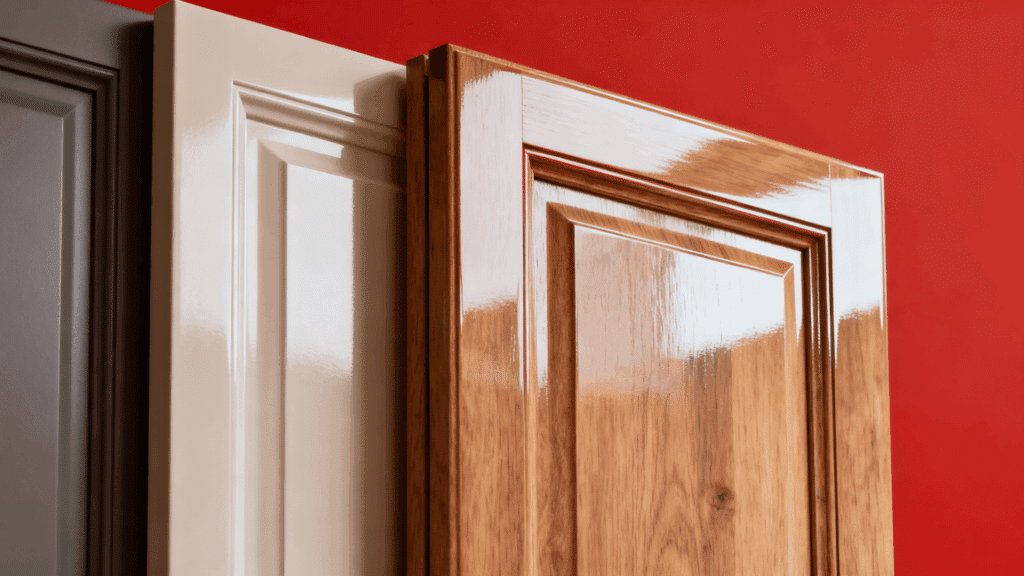
These clear protective topcoats seal and protect underlying finishes (stains, paints, or bare wood) from moisture, scratches, and daily wear.
Each offers varying durability levels, sheen options (matte to high-gloss), and application methods.
| Pros | Cons |
|---|---|
| Provides excellent moisture and scratch protection | Can yellow over time, especially oil-based |
| Available in multiple sheen levels | Requires careful application to avoid drips |
| Extends the life of the underlying finish significantly | Strong odors during application and curing |
6. Distressed/Antiqued

Distressed finishes intentionally create a worn, aged appearance through techniques such as sanding edges, adding dents, or applying crackle agents.
This vintage aesthetic suggests history and character, perfect for farmhouse, shabby chic, or cottage styles.
| Pros | Cons |
|---|---|
| Hides new damage blending with intentional wear | Not suitable for modern or contemporary styles |
| Creates a unique, one-of-a-kind character | It can appear artificial if poorly executed |
| Forgiving finish that masks imperfections | May look cluttered in small spaces |
7. Laminate and Melamine
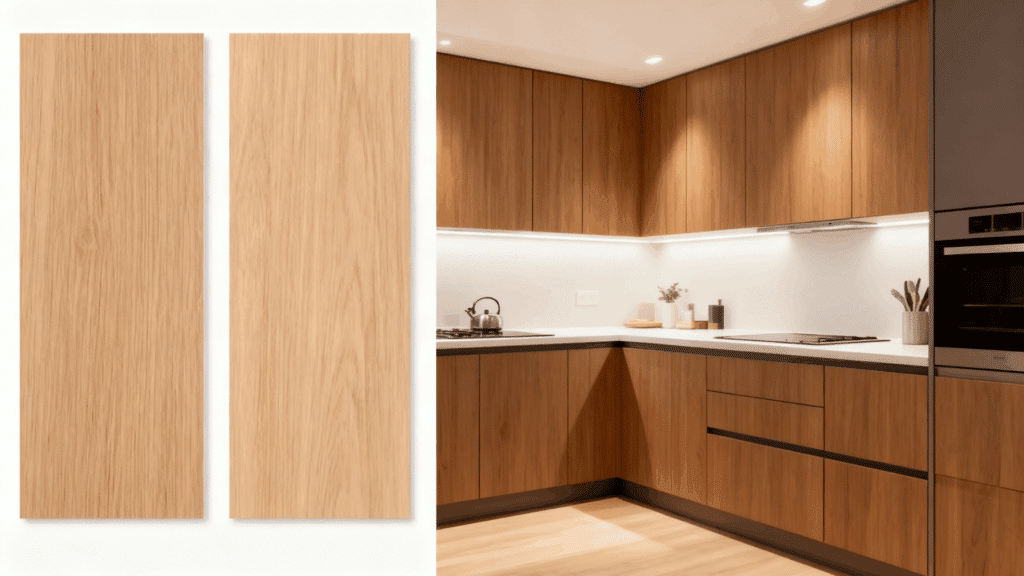
Laminate consists of thin decorative layers bonded to particleboard or MDF substrates, offering budget-friendly alternatives to solid wood.
Available in countless colors, patterns, and wood-look designs, these synthetic surfaces provide consistent, low-maintenance options.
| Pros | Cons |
|---|---|
| Most affordable cabinet finish option | Cannot be refinished or repaired easily |
| Easy to clean and highly moisture-resistant | Edges can peel or chip over time |
| Consistent color without natural variations | Less durable than solid wood alternatives |
8. Thermofoil
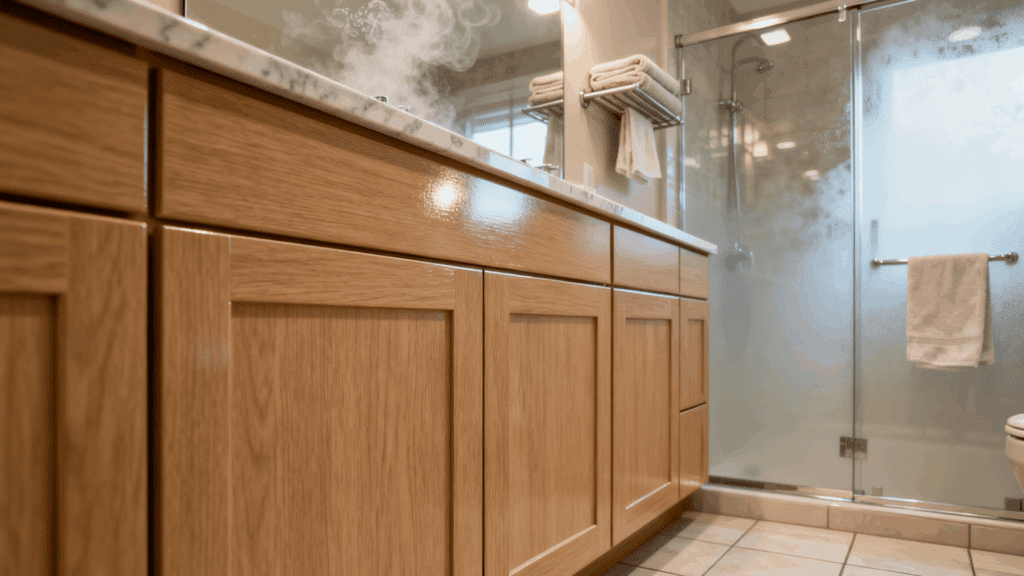
Thermofoil involves heat-bonding vinyl film onto engineered wood surfaces, creating seamless, easy-clean cabinet doors without visible seams.
This moisture-resistant finish suits bathrooms and kitchens and is available in solid colors and simulated wood-grain patterns.
| Pros | Cons |
|---|---|
| Seamless appearance without grout lines | Can peel or delaminate near heat sources |
| Highly moisture-resistant and easy maintenance | Cannot be repainted or refinished |
| Smooth, contemporary look at moderate cost | Limited repair options when damaged |
9. Wood Veneer

Thin slices of real wood adhered to engineered wood cores provide an authentic wood appearance at reduced costs.
Veneers showcase genuine grain patterns and can be stained or finished like solid wood while minimizing warping and expense.
| Pros | Cons |
|---|---|
| Real wood appearance at a lower cost | Veneer can separate or bubble with moisture |
| More stable than solid wood construction | Sanding damage risks exposing the substrate beneath |
| Can be refinished like solid wood | Still more expensive than laminate options |
10. Specialty Finishes
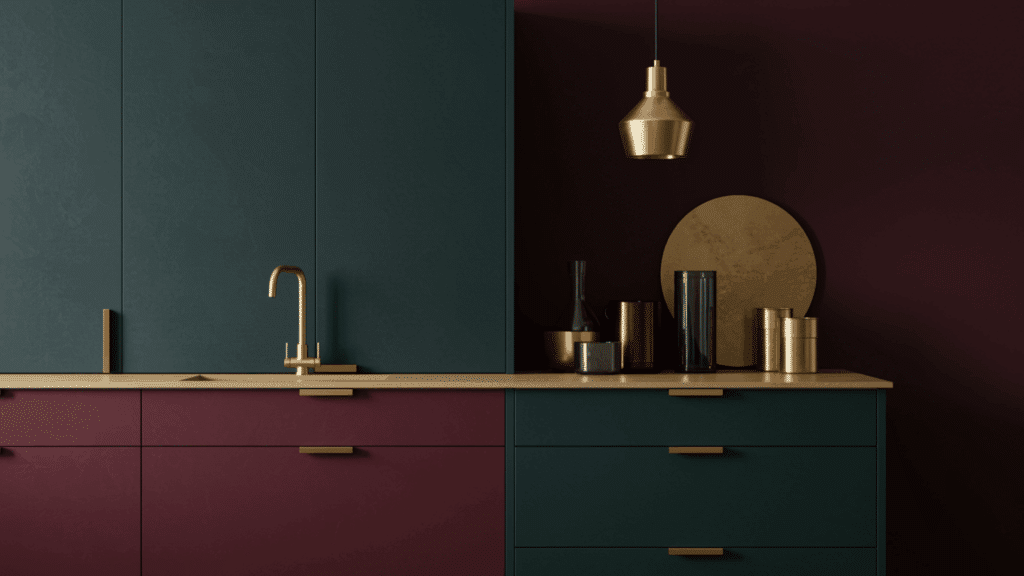
Specialty finishes include metallic paints, high-gloss lacquers, matte textures, two-tone combinations, ombré effects, or hand-painted details.
These unique treatments make bold statements, showcasing personality and creating truly custom, one-of-a-kind cabinetry beyond standard options.
| Pros | Cons |
|---|---|
| Creates unique, personalized statement pieces | Very expensive due to specialized techniques |
| Sets your space apart from standard designs | May limit future buyer appeal when selling |
| Allows artistic expression and creativity | Requires highly skilled craftspeople for quality results |
Finish Durability and Care Overview
Cabinet finishes vary widely in how well they handle daily use, moisture, and cleaning demands. Painted finishes offer a smooth look but can chip or show wear in high-traffic areas.
Stained finishes tend to be more durable because they penetrate the wood and highlight natural patterns while resisting small scratches.
Matte finishes hide fingerprints well but may show smudges and absorb oils more easily, requiring gentle but regular cleaning.
Satin and semi-gloss finishes strike a good balance, offering durability with surfaces that are easy to wipe down.
High-gloss finishes are highly durable and moisture-resistant, but their reflective surface makes scratches and fingerprints more noticeable.
For maximum longevity, proper prep, high-quality topcoats, and routine cleaning with non-abrasive products are essential.
Common Mistakes to Avoid
Choosing a cabinet finish can be tricky, and several common missteps can affect both the look and long-term performance of your cabinets.
- Ignoring Cabinet Material: Some finishes don’t bond well with certain woods or laminates, leading to peeling or uneven coverage.
- Overlooking Lighting Conditions: Finishes can look drastically different under natural light, warm bulbs, or LED lighting.
- Skipping Surface Prep: Poor sanding or cleaning prevents finishes from adhering properly, reducing durability.
- Mismatching Finish With Room Design: A finish that clashes with countertops, flooring, or wall colors disrupts overall cohesion.
- Forgetting About Maintenance Needs: Matte and satin finishes hide smudges well, while glossy finishes need frequent cleaning.
- Not Considering Long-Term Wear: Some finishes age better than others; ignoring longevity can lead to quicker refinishing needs.
Conclusion
The cabinet finishes aren’t permanent; refinishing remains an option if your tastes evolve or trends shift.
Quality application matters as much as finish selection, so investing in professional installation often proves worthwhile for lasting beauty and durability.
Don’t rush this important decision. Order samples, observe them in your space’s lighting, and live with options before committing.
You have seen finished samples, consulted with professionals, and confidently selected the perfect cabinet finish that brings authenticity to life!