

We all know the specific kind of dread that comes with buying new living room furniture. You find a beautiful media console online, it arrives in a heavy, flat-pack cardboard box, and you open it—only to be greeted by a sea of styrofoam, 20 identical-looking wooden panels, and a massive plastic bag filled with hundreds of screws, dowels, and confusing cam-locks.
You sit on the floor with a 30-page, wordless instruction manual, realizing your entire Saturday is about to be consumed by frustration, blistered fingers, and the fear of putting a board on backward.
But what if upgrading your entertainment setup didn’t require a degree in structural engineering?
The furniture industry is experiencing a massive shift. Homeowners and renters are ditching bulky, impossible-to-build particleboard cabinets in favor of sleek, minimalist, and highly engineered solutions. Innovative brands like FITUEYES have completely reimagined the assembly process, proving that setting up your home theater should take minutes, not hours. By utilizing smart structural designs and pre-sorted hardware, they have eliminated the traditional flat-pack nightmare.
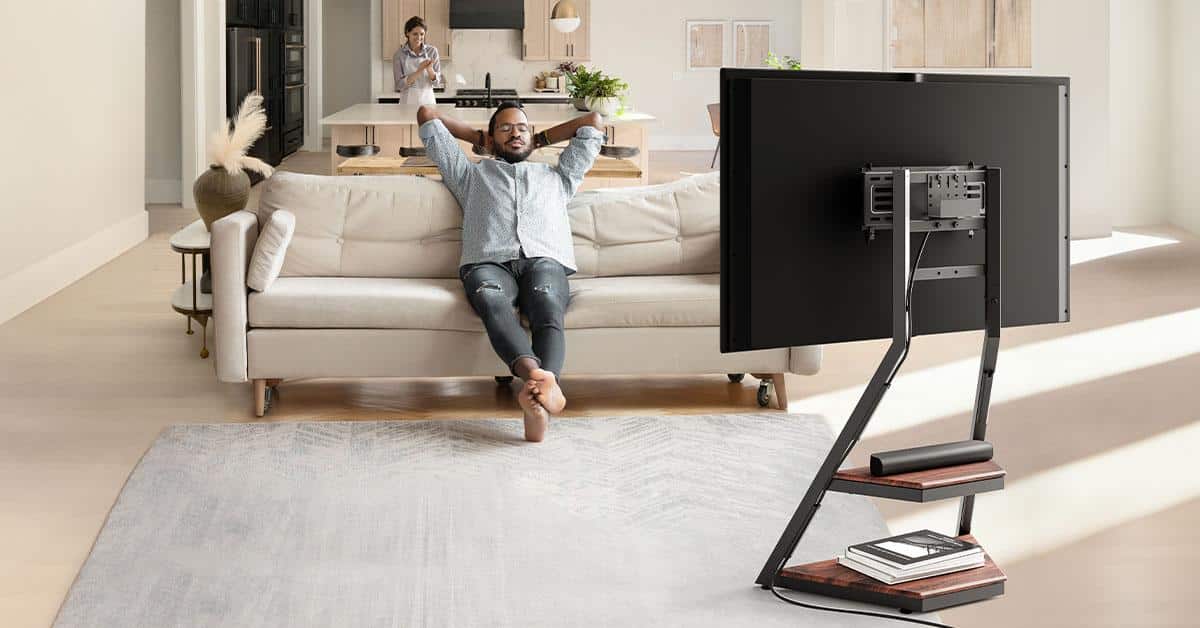
If you choose a modern, smartly designed tv stand—such as a sleek floor stand, a minimalist easel, or a rolling cart—you completely bypass the “woodworking” phase of traditional furniture. Instead of building a cabinet from scratch, you are simply connecting a few heavy-duty, premium parts.
Ready to see how simple it should actually be? Here is the real easy 5-step installation guide for beginners using modern, hassle-free designs.
Step 1: Unbox and Verify (The Stress-Free Way)
With traditional furniture, step one usually involves trying to identify 15 different types of screws dumped into a single bag. Modern, user-friendly brands have solved this.
When you open a premium stand, you won’t find “hardware soup.” Instead, you will find a blister pack where every single bolt, washer, and spacer is individually sealed and clearly labeled with a letter or number that directly corresponds to the manual. Simply lay out your main structural pieces—usually a heavy base, a support pillar, and the mounting brackets. You don’t need a power drill or a toolbox; the only tool you will need is the provided Allen wrench.
Step 2: Assemble the Base and Pillar
Instead of trying to balance four flimsy pieces of engineered wood while awkwardly tightening a screw, modern stands rely on solid geometry.
You will typically start by placing the heavy-duty base flat on the floor. Next, insert the main vertical support pillar into the base. Secure it by tightening a few thick, high-quality steel bolts at the bottom using your Allen wrench. Because these parts are precision-machined steel or solid wood, they align perfectly on the first try. There is no guessing, no cracking wood, and absolutely no wobbly cam-locks. In less than five minutes, the core foundation of your stand is rock-solid and complete.
Step 3: Attach the Brackets to Your Screen
Now, leave the stand for a moment and turn your attention to your television. Lay your flat-screen face down on a soft, flat surface (like a blanket on your sofa or a carpeted floor).
Look at the back of your TV; you will see four threaded holes. This is called the VESA pattern. Take the two vertical metal brackets included in your kit and align them over these holes. Find the correctly sized bolts from your neatly labeled hardware pack and hand-thread them into the TV, then tighten them gently with a manual screwdriver. This step is practically foolproof and takes under three minutes.
Step 4: Mount the TV (The Satisfying “Click”)
This is where the magic happens. Grab a friend or family member—lifting a modern flat-screen should always be a two-person job for safety.
Lift the television and carefully hook the brackets (now attached to the back of your TV) onto the horizontal mounting plate of your fully assembled stand. Most modern, high-quality stands feature a smart locking mechanism. Once the TV is hooked on, you will either hear a satisfying “click” or simply tighten two small safety screws at the bottom of the brackets to lock the screen permanently to the frame. The TV is now securely mounted, perfectly level, and safe from tipping.
Step 5: Route Your Cables and Relax
The final step in traditional assembly is usually trying to shove a rat’s nest of cables behind a wooden cabinet, hoping nobody looks too closely.
A modern stand treats cable management as a core design feature, not an afterthought. Look at the central support pillar you installed in Step 2. It is likely hollow or features integrated clips down the back. Simply drop your power cords and HDMI cables right down the center of the pole or snap them into the rear channels. Your cables disappear instantly, leaving you with a clean, floating-screen aesthetic.
The Takeaway: Setup Made Simple
Upgrading your living room shouldn’t require an entire weekend of frustration, a toolbox full of equipment, or a test of your patience. By ditching outdated, complicated flat-pack cabinets in favor of a smartly engineered, modern stand, you get a secure, stylish, and wobble-free setup in just five simple steps.
Ready to say goodbye to confusing manuals and “hardware soup”? It is time to upgrade your entertainment space the easy way. Explore innovative, hassle-free designs today, and start enjoying your favorite movies and shows in minutes, not hours!