

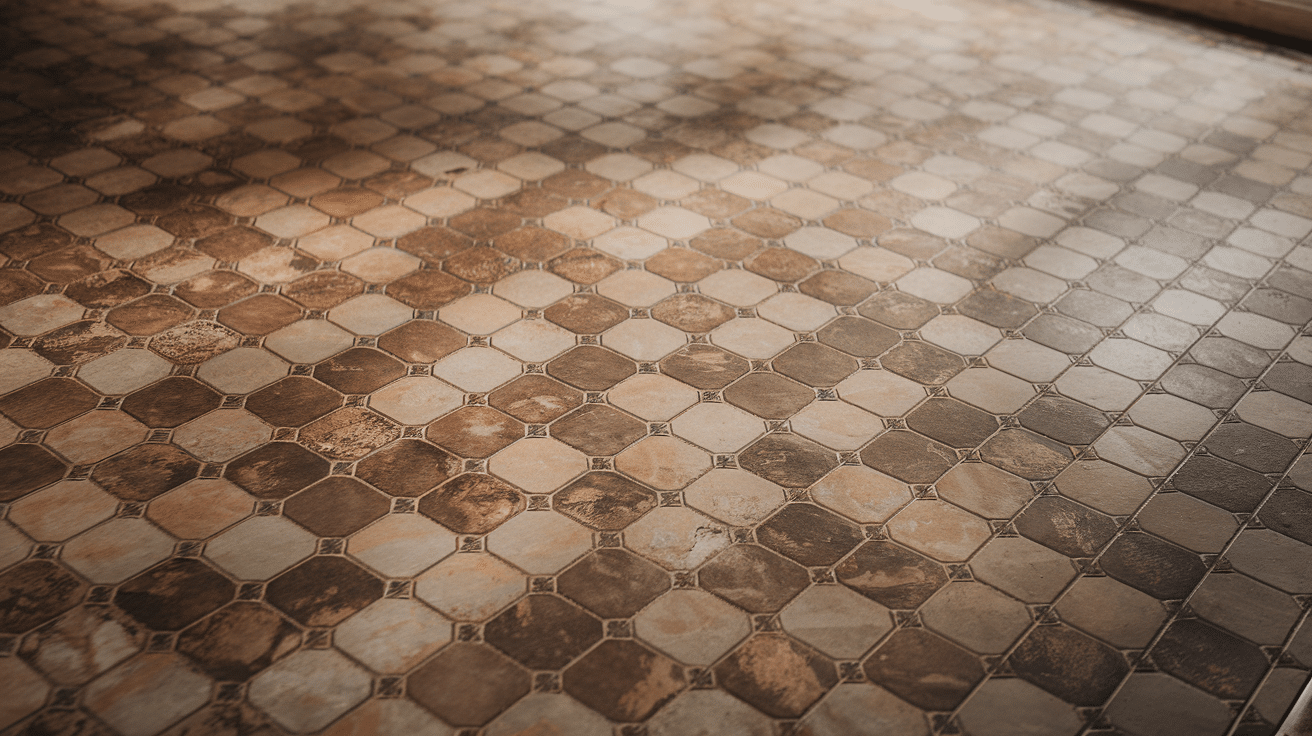
Old floors can hide more than just wear and tear. If your home was built before 1980, there’s a real chance the tiles under your feet contain asbestos.
I’ve seen homeowners start a simple renovation only to discover they were dealing with a hazardous material they had no idea was there.
The problem is that asbestos floor tiles don’t come with a warning label. They look like ordinary tiles, and without knowing what to look for, it’s easy to miss the signs entirely.
In this guide, I will share what asbestos tiles are and how to tell if you have asbestos floor tiles.
From the visual clues and common sizes to where they’re typically found and what steps to take if you suspect a problem.
Knowing what you’re dealing with before you start any work could protect your entire household.
What Are Asbestos Floor Tiles?
Asbestos floor tiles are vinyl- or asphalt-based tiles that were manufactured using asbestos fibers as a binding and strengthening agent.
Asbestos was widely used in the 20th century because it was low-cost, strong, fire-resistant, and easy to use.
In floor tiles, specifically, asbestos fibers were mixed into the tile material during production, making them harder and more heat- and moisture-resistant than tiles made without it.
The asbestos content in these tiles typically ranged from 3 to 5 percent, though some products contained higher concentrations.
When tiles are intact and undisturbed, asbestos fibers stay sealed and pose a low risk.
The danger increases significantly when tiles are cut, drilled, sanded, or broken, releasing microscopic fibers into the air.
How to Identify Asbestos Tiles?
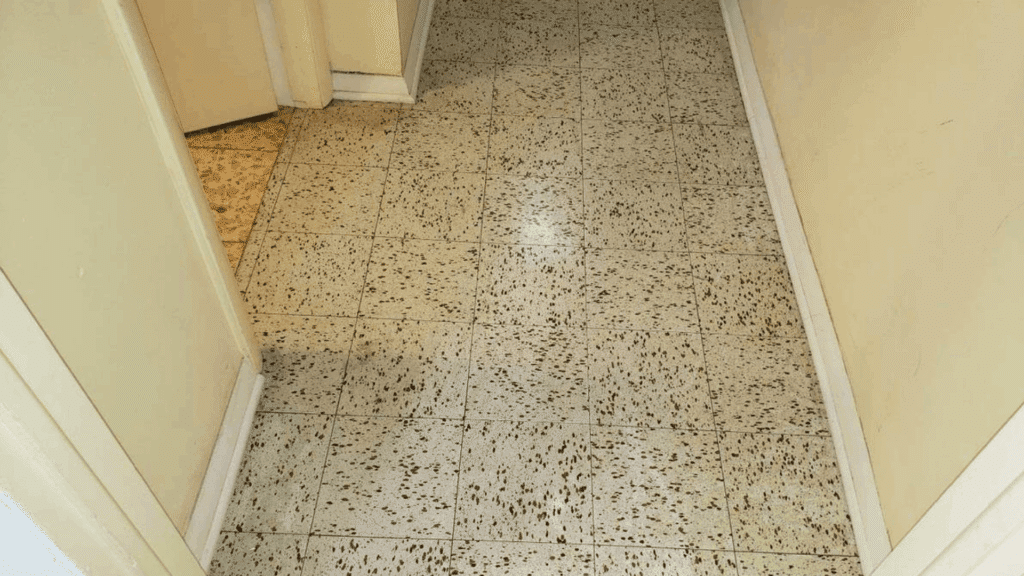
These tips help you check if old tiles may contain asbestos. They are simple signs you can look for before taking any action.
1. Age of the Tiles
If your flooring was installed before the 1980s, there is a higher chance it may contain asbestos. Many builders used asbestos in tiles during that time because it was strong and heat-resistant.
If you are unsure about the installation date, try checking home records or asking previous owners.
Older homes that still have original flooring are more likely to have asbestos tiles, so age is one of the first things you should look at.
2. Tile Size and Shape
One common sign is the size of the tiles. Asbestos tiles were often made in 9×9-inch squares, which is a key clue.
While 12×12 tiles also exist, 9×9 is more closely linked with asbestos flooring. The tiles are usually square and laid in a simple pattern.
If you measure your tiles and find they match this size, it does not confirm asbestos, but it does increase the chance.
3. Color and Pattern
Asbestos tiles usually come in plain, dull colors like gray, brown, black, or dark red. They often have a simple or slightly cloudy pattern rather than bright or clear designs.
Some may look faded or worn over time. These colors were common in older homes and buildings.
If your tiles look basic and aged, without modern prints or finishes, they may be older materials that could contain asbestos.
4. Tile Thickness
These tiles are often thicker and feel more solid compared to newer vinyl tiles. They do not bend easily and may seem heavier when handled.
The surface can feel firm and hard, rather than soft or flexible.
This strong build was one reason asbestos was used in flooring.
If your tiles seem tough and rigid, especially in an older home, this can be another sign worth noting when checking for asbestos.
5. Condition of the Tiles
The current state of the tiles also matters. If the tiles are cracked, chipped, or breaking apart, they may release tiny fibers if asbestos is present.
Intact tiles are less risky, but damaged ones can be a concern.
Worn edges, loose pieces, or powder-like dust around the tiles are signs to watch for. If you notice these issues, it is best not to touch or disturb them until you know more.
6. Black Adhesive Underneath
Older tiles were often fixed to the floor using a black glue called cutback adhesive. This adhesive may also contain asbestos.
If you lift a tile and see a black, sticky layer underneath, it is a strong warning sign.
This glue was widely used in the past for flooring installation. Even if the tiles themselves are safe, the adhesive below could still contain asbestos and should be handled with care.
7. No Clear Label or Brand Info
Modern tiles usually come with labels or brand markings, but older asbestos tiles often do not have any clear identification.
If you cannot find any product name, logo, or packaging details, it becomes harder to trace their origin.
This lack of information is common in older materials.
When tiles have no markings and appear aged, it adds to the uncertainty and increases the need for careful inspection or testing.
8. Professional Testing
The only way to be fully sure is through professional testing. Experts take a small sample and send it to a lab to check for asbestos.
This process is safe and controlled, so it avoids spreading harmful fibers. Home test kits are available, but professional services are more reliable.
If you suspect asbestos, it is always better to confirm through proper testing instead of guessing or taking risks.
Why Asbestos Was Used in Tiles?
Asbestos was widely used in floor tiles because it offered strong and practical benefits for everyday use. It made tiles more durable, so they could handle heavy foot traffic without wearing out quickly.
The material also had high heat resistance, which helped reduce fire risk in homes and buildings. Another reason was cost.
Asbestos was cheap and easy to mix with other materials, making tile production more affordable. It also helped tiles stay stable and less likely to crack over time.
Builders preferred it because it improved the lifespan of flooring while keeping maintenance low.
At the time, people did not fully understand the health risks, so it became a common choice in construction materials across many older homes.
Where Are Asbestos Floor Tiles Commonly Found?
Asbestos floor tiles were used throughout residential and commercial buildings during their peak production years. These are the most common locations where they are found:
- Kitchens: One of the most frequently tiled rooms in homes built before 1980, often featuring 9×9 or 12×12 asbestos tiles
- Bathrooms: Both floor and occasionally wall tiles in bathrooms from this era may contain asbestos
- Basements: Basement floors were frequently covered with asbestos tiles due to their moisture resistance
- Hallways and entryways: High-traffic areas where durable, low-cost flooring was a practical choice
- Laundry rooms: Utility areas in older homes were commonly tiled with asbestos-containing products
- Schools and universities: Public buildings from this era used asbestos floor tiles extensively in corridors and classrooms
- Hospitals and clinics: Medical facilities built before 1980 frequently used asbestos tiles for their durability and ease of cleaning
- Office buildings: Commercial spaces from the mid-20th century commonly featured asbestos tile flooring throughout
- Under existing flooring: New flooring was often installed directly on top of old asbestos tiles, meaning they may be hidden beneath carpet, hardwood, or newer vinyl
Asbestos Floor Tile Sizes at a Glance
Tile size is one of the strongest visual indicators of potential asbestos content. Below is a quick reference for common sizes, the era they were used, and the tile type:
| Tile Size | Common Era | Tile Type |
|---|---|---|
| 9 x 9 inches | 1920s to 1970s | Vinyl asbestos tile, asphalt tile |
| 12 x 12 inches | 1950s to 1980s | Vinyl asbestos tile |
| 18 x 18 inches | 1970s to 1980s | Late-era vinyl tile, lower asbestos risk |
| 6 x 6 inches | 1930s to 1950s | Asphalt asbestos tile |
| 9 x 18 inches | 1950s to 1960s | Vinyl asbestos plank tile |
| 12 x 24 inches | 1970s onward | Transitional vinyl, minimal asbestos risk |
Can You Test for Asbestos Floor Tiles at Home?
Yes, you can test floor tiles at home, but it must be done with care. Home test kits are available and allow you to collect a small sample and send it to a lab.
This can help confirm if asbestos is present. However, the main risk comes from handling the tile.
Cutting or breaking it may release harmful fibers into the air. That is why safety steps are very important.
Always wear a mask, gloves, and avoid creating dust. Still, the safest option is professional testing, since experts know how to handle samples without risk.
If you are unsure, it is better to leave the tiles untouched.
In many cases, people choose expert help for accurate and safe results instead of testing on their own.
What to Do If You Suspect Asbestos Floor Tiles?
These steps help you stay safe and avoid spreading harmful fibers. Follow simple actions before deciding on removal or testing.
- Do not disturb the tiles: Avoid cutting, drilling, or breaking the tiles. This can release harmful fibers into the air. Leaving them untouched is the safest first step.
- Limit foot traffic in the area: Try not to walk over damaged tiles. Less movement helps reduce the chance of fibers spreading around your home.
- Check the tile condition: Look for cracks, chips, or loose pieces. If tiles are in good shape, they are less likely to release fibers and may be safer to leave in place.
- Avoid DIY removal: Removing tiles on your own can be risky. Without proper tools and training, you may expose yourself to harmful dust.
- Contact a professional: Reach out to a licensed asbestos inspector or removal expert. They can assess the situation and guide you on the next steps.
- Consider sealing or covering: In some cases, professionals may suggest sealing the tiles or covering them with new flooring instead of removing them.
- Follow local safety rules: Disposal and handling of asbestos materials are regulated. Always follow local guidelines to stay safe and avoid legal issues.
Asbestos Floor Tiles vs Modern Floor Tiles
Understanding how asbestos tiles differ from modern flooring options helps clarify exactly what to look for during your inspection:
| Feature | Asbestos Tiles | Modern Floor Tiles |
|---|---|---|
| Common Size | 9×9 or 12×12 inches | Varies widely, often larger |
| Thickness | 3 to 4.5 mm, rigid and dense | Thinner and more flexible |
| Material | Vinyl or asphalt with asbestos fibers | PVC, ceramic, porcelain, or wood |
| Color Range | Muted, earthy, marbled tones | Wide range, including bright and bold |
| Adhesive Used | Black mastic, tar-like consistency | Clear or white modern adhesive |
| Flexibility | Stiff, does not bend | Flexible sheets or rigid planks |
| Installation Era | Pre-1980s | Post-1980s |
| Health Risk | High if disturbed or damaged | No asbestos-related health risk |
Health Risks of Asbestos Floor Tiles
Understanding the health risks reinforces why proper identification and handling are so important:
- Mesothelioma: A rare and aggressive cancer affecting the lining of the lungs, directly linked to asbestos fiber inhalation.
- Lung cancer: Long-term asbestos exposure significantly raises the risk of developing lung cancer, particularly in smokers.
- Asbestosis: A chronic and irreversible lung condition caused by scarring from inhaled asbestos fibers over time.
- Pleural thickening: Scarring of the membrane surrounding the lungs that reduces lung function and causes breathlessness.
- No safe level of exposure: Health authorities confirm there is no established safe threshold for asbestos fiber inhalation.
- Risk increases with disturbance: Intact tiles carry lower risk, but any cutting, sanding, or breaking releases dangerous fibers immediately.
- Children are especially vulnerable: Young children spending time on damaged asbestos floors face a higher risk due to their developing respiratory systems.
When to Call a Professional?
You should call a professional when you are not sure if your tiles contain asbestos. If the tiles are damaged, cracked, or breaking, it is safer to get expert help right away. Disturbing them can release harmful fibers.
You should also call a professional before starting any renovation or flooring work in older homes.
Experts have the right tools and training to test and handle materials safely. If you notice black adhesive or very old tiles, do not take risks.
A licensed inspector can confirm the presence of asbestos without causing harm.
Choosing professional help ensures safe handling and accurate results, which protects your health and keeps your home environment secure.
Conclusion
Dealing with old floor tiles can feel confusing, especially when you are not sure what is safe. By now, you have a clear idea of what to look for and what steps to take.
The key is to stay careful and avoid rushing into any work without checking first.
A little attention now can help you avoid bigger problems later.
If you think your tiles may contain asbestos, it is always better to stay safe and get expert advice. Your health and your home both matter.
Have you ever found old tiles during a renovation or faced a similar situation?
Share your experience in the comments below. Your story could help someone else make a safer choice.