

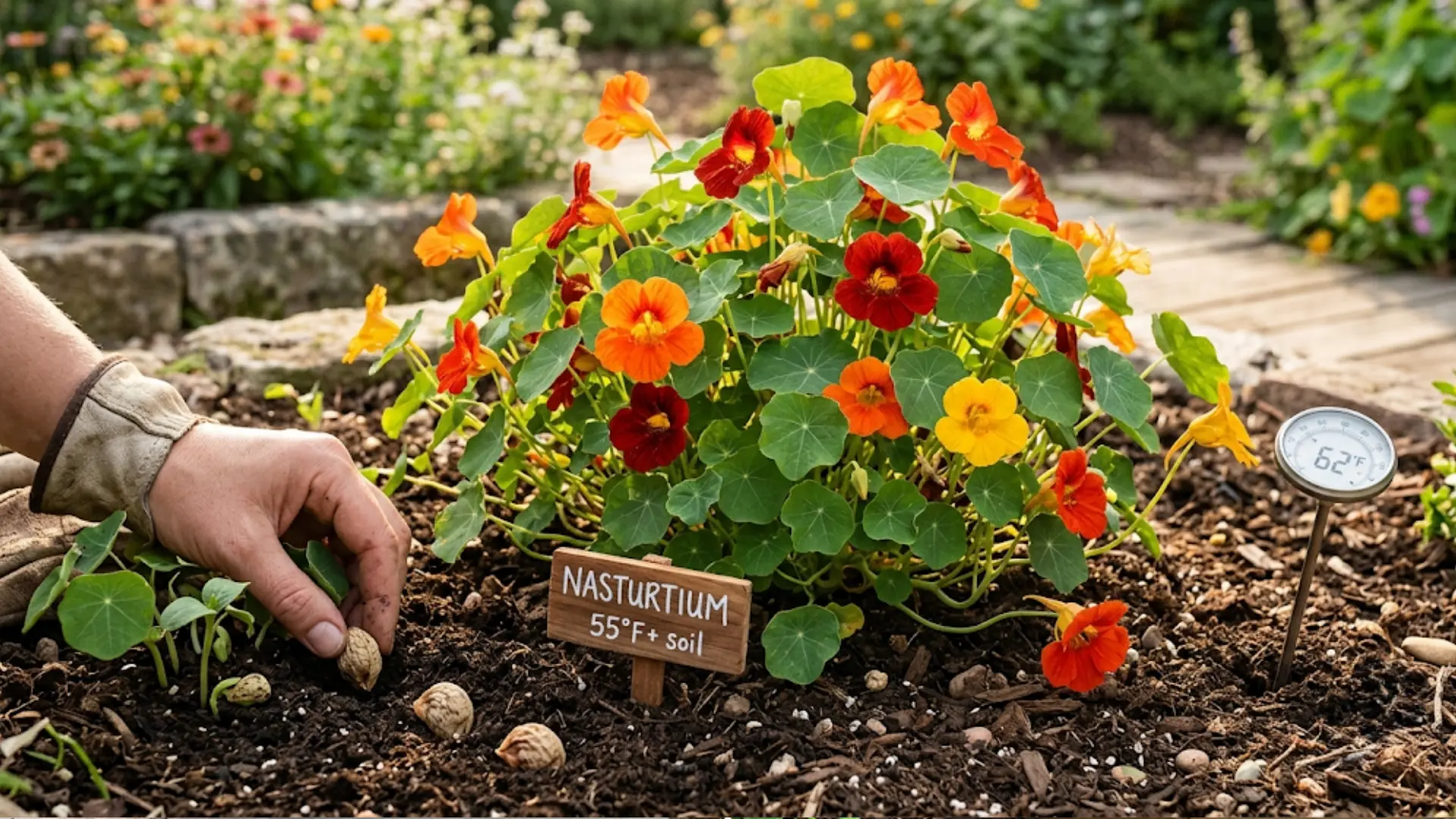
Planting nasturtiums too early can leave you staring at bare soil instead of bright flowers. I learned that a warm afternoon does not always mean the ground is ready.
Knowing when to plant nasturtium seeds starts with checking the final frost date and soil temperature, not choosing a fixed day on the calendar.
Cold, wet soil can delay germination or cause seeds to rot before shoots appear. Your region also affects the best planting window, especially in places with short summers or intense heat.
The details ahead explain regional timing, direct and indoor sowing, soil preparation, container planting, and early care so you can give every seed a stronger start.
Nasturtium Plant Profile at a Glance
Nasturtiums grow quickly when their basic needs are met. This reference table can help you choose a suitable planting date and location.
| Feature | Details |
|---|---|
| Plant type | Fast-growing flowering annual |
| Bloom season | Late spring or summer until frost |
| Sun needs | Full sun or partial afternoon shade |
| Soil type | Average, well-draining soil |
| Minimum soil temperature | 55°F |
| Germination time | Usually 7–14 days |
| Planting depth | ½–1 inch |
| Seed spacing | 8–12 inches |
| Cold tolerance | Frost sensitive |
| Suitable for containers | Yes |
Warm soil supports quick sprouting, while cold or saturated ground increases the chance of seed rot.
When to Plant Nasturtium Seeds by Region
Plant nasturtium seeds outdoors after frost danger has passed and the soil reaches at least 55°F. In many areas, this happens one to two weeks after the average final spring frost.
Cool regions usually have a short planting season. Warm areas allow earlier sowing, but severe summer heat can reduce flowering. Gardeners in very hot climates often get better results from an autumn or winter crop.
Use these regional periods as starting points.
| Region | Typical Planting Period | Main Consideration |
|---|---|---|
| Northern and cold regions | Late May to early June | Allow cold soil to warm |
| Central and moderate regions | April to May | Watch for late spring frost |
| Southern regions | February to April | Sow before summer temperatures rise |
| Low-desert regions | Autumn to late winter | Grow during the cooler months |
| Frost-free coastal regions | Autumn to early spring | Avoid the hottest part of the year |
Local elevation, rainfall, coastal weather, and unusual cold spells may shift these periods. A broader spring flower schedule can add seasonal context, but check the short-term forecast and soil temperature before choosing the final date.
How Soil Temperature Affects Germination
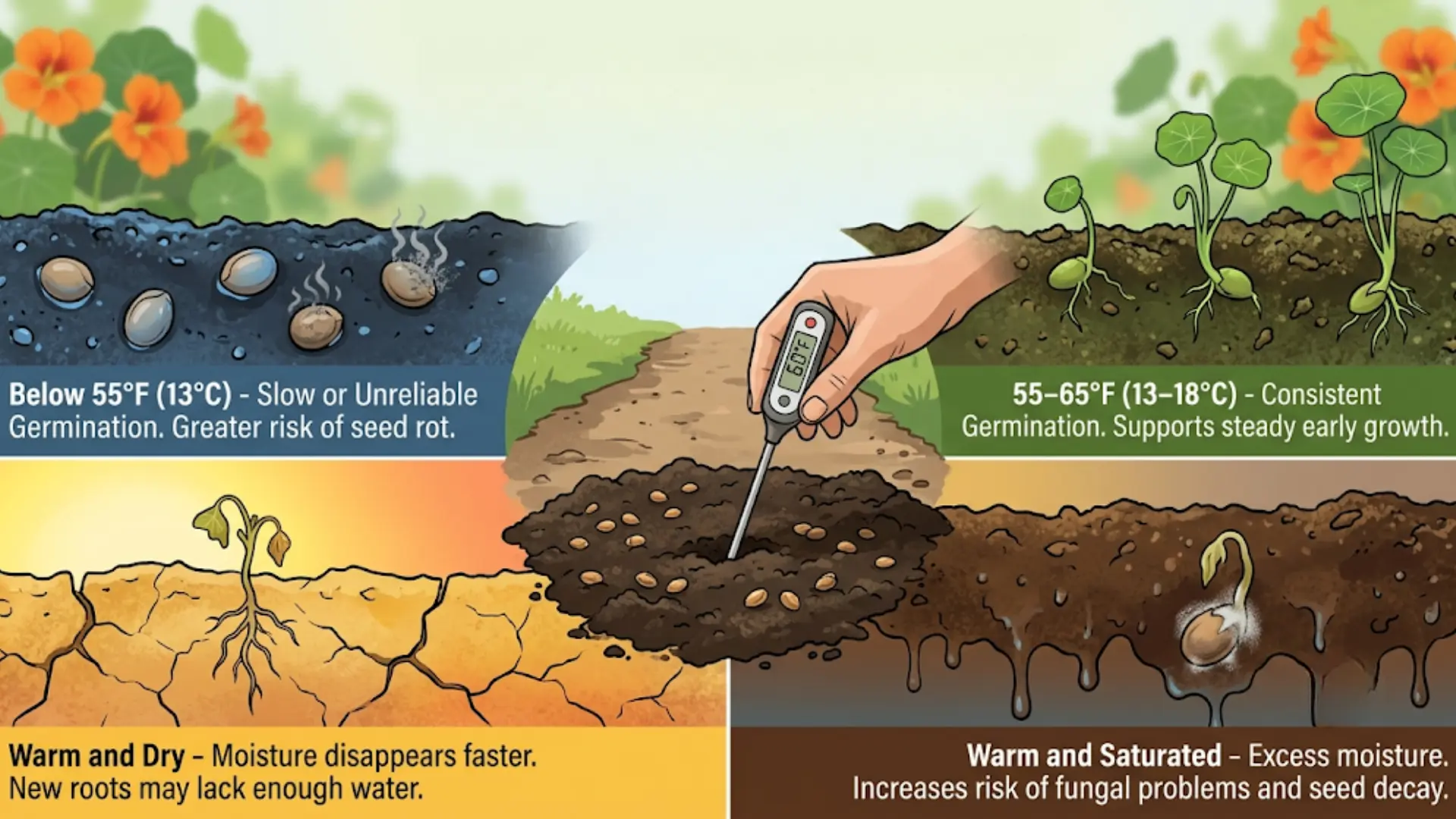
Air can feel warm while the ground remains cold. Soil warms more slowly, especially after a wet winter or several cloudy weeks.
Nasturtium seeds absorb moisture after planting. If the soil is too cold, the germination process slows and the wet seed may begin to decay. Suitable warmth helps roots and shoots form before rot becomes a problem.
The points below shows how different soil conditions affect the seeds.
- Below 55°F: Germination may be slow or unreliable, with a greater risk of seed rot.
- 55–65°F: Seeds germinate more consistently and support steady early growth.
- Warm and Dry: Moisture disappears faster, which can leave new roots without enough water.
- Warm and Saturated: Excess moisture increases the risk of fungal problems and seed decay
Check the ground in the morning with a soil thermometer placed about two inches deep. Take readings for several days instead of relying on one unusually warm afternoon.
Direct Sowing vs. Starting Seeds Indoors
Nasturtiums form sensitive roots early in their growth. Direct sowing allows those roots to develop in place without transplant stress.
Indoor starting can still help gardeners with short summers. A simple indoor seed setup makes warmth, light, and moisture easier to control. Nasturtium seeds should be started only two to four weeks before the last frost and placed in biodegradable pots. The whole pot can then go into the garden without exposing the roots.
This comparison can help you select the better method.
| Factor | Direct Sowing | Starting Indoors |
|---|---|---|
| Planting time | After the final frost | Two to four weeks before the final frost |
| Root disturbance | None | Possible during transplanting |
| Pot needed | No | Biodegradable pot |
| Hardening off | Not required | Required before outdoor planting |
| Best suited to | Most growing regions | Areas with short summers |
| Main benefit | Strong growth without transplant stress | Earlier start in cold climates |
Direct sowing is the simpler option for most gardens. Indoor sowing is useful when the local season does not provide enough warm weeks for strong flowering.
How to Plant Nasturtium Seeds
Correct planting depth, spacing, and moisture help the seeds emerge evenly. Prepare the location before the planting date so the seeds can go into the soil as soon as conditions are suitable.
- Choose a Sunny Location: Select a site that receives at least six hours of direct sunlight. If the surrounding bed is still unplanned, basic flower bed planning can help you account for mature spread and nearby plants. Nasturtiums tolerate partial shade, but deep shade can produce more leaves and fewer flowers. Afternoon shade can be useful in hot southern or desert areas. It protects the plants during the warmest part of the day.
- Prepare the Soil: Loosen compacted ground and remove stones that could block root growth. The soil should drain freely after rain or watering. Nasturtiums perform well in poor to average soil. Large amounts of compost or nitrogen-rich fertilizer encourage leafy growth at the expense of flowers.
- Soak the Seeds if Needed: Nasturtium seeds have a hard outer coating. Soaking them in room-temperature water for 8–24 hours may soften that coating and support even germination. Soaking is optional. Warm soil, proper depth, and steady moisture have a greater effect on success.
- Plant at the Correct Depth: Place each seed ½–1 inch below the surface. Cover it gently with loose soil without pressing the area into a hard crust. Shallow seeds may dry out before their roots form. Seeds buried too deeply can take longer to reach the surface.
- Provide Enough Space: Leave 8–12 inches between seeds. This gives the plants room to spread and improves airflow around the leaves. Compact varieties can grow closer together in containers. Trailing and climbing types need more room or a structure that supports their growth.
- Water Carefully: Water after planting so the soil becomes evenly moist. Keep it lightly damp until seedlings appear, but never leave it saturated. The usual nasturtium germination time is 7–14 days under suitable conditions, while cooler ground may delay emergence.
Planting Nasturtiums in Containers vs. Garden Beds
Nasturtiums grow well in both containers and open ground. The main differences involve soil warmth, drainage, available space, and watering frequency.
Containers often warm earlier in spring. They can also be moved under cover when a late frost is forecast. However, pots lose moisture faster during warm weather.
Use a container at least 8–10 inches deep with several open drainage holes. Large or trailing varieties may need a wider pot that prevents crowding.
Garden beds provide more room for spreading plants and hold moisture longer. Their soil may take additional time to reach a safe planting temperature.
The following comparison shows the main differences.
| Growing Location | Main Benefit | Main Concern |
|---|---|---|
| Container | Easy to move and control | Soil dries quickly |
| Raised bed | Strong drainage and warm soil | May need frequent watering |
| Garden ground | More room for spreading plants | Soil warms slowly in spring |
| Hanging basket | Suitable for trailing growth | Limited soil and fast moisture loss |
Apply the same frost and soil-temperature rules to every location. A pot sitting outside still exposes young seedlings to cold weather.
How to Care for Nasturtiums After Planting
Nasturtiums need only basic care once they become established. Too much attention, especially heavy feeding and watering, can cause more problems than mild neglect.
- Watering: Keep the soil lightly moist during germination. After the plants establish strong roots, water when the upper layer begins to dry. Containers need more frequent checks because heat and wind remove moisture quickly. Reduce watering during rainy periods.
- Feeding: Regular feeding is rarely necessary. High-nitrogen fertilizer produces thick foliage but may limit flower formation. If plants grow in a container for several months, a light application of low-nitrogen fertilizer may support continued flowering.
- Light and Heat Protection: Provide full sun in mild regions. Afternoon shade can reduce stress where summer temperatures become severe. Container plants can be moved to a cooler position during a heat wave. Ground plants may benefit from a thin layer of mulch that reduces moisture loss.
- Support: Climbing nasturtiums need a trellis, fence, or similar support. Guide young stems toward the structure before they begin spreading across nearby plants. Trailing varieties can grow across bed edges or hang from raised containers without support.
Common Nasturtium Planting Mistakes
Several planting errors can delay growth or reduce flower production. Most are easy to prevent once the cause is clear.
| Mistake | Why It Causes Problems | How to Prevent It |
|---|---|---|
| Planting in cold soil | Seeds germinate slowly and may rot | Wait until the soil reaches 55°F |
| Using only a calendar date | Spring conditions change each year | Check frost forecasts and soil warmth |
| Overwatering seeds | Saturated soil encourages decay | Keep the ground lightly moist |
| Starting indoors too early | Roots become crowded before planting | Start no more than four weeks early |
| Disturbing young roots | Transplant stress delays growth | Use biodegradable pots |
| Adding too much fertilizer | Plants form leaves instead of flowers | Use average soil with little feeding |
| Crowding seedlings | Poor airflow increases disease risk | Follow the recommended spacing |
| Ignoring summer heat | Severe heat can reduce flowering | Plant earlier or choose a cooler season |
Proper timing and drainage solve many early problems. Seed treatments cannot compensate for cold, saturated ground.
What to Do After Planting
Watch the planting area for signs of drying while the seeds germinate. Water gently so the soil remains in place rather than washing away from the seeds.
If frost is forecast after seedlings appear, cover them overnight with lightweight garden fabric. Remove the cover the following morning once temperatures rise.
Thin crowded seedlings after they form several true leaves. Keep the strongest plants and leave enough room for their mature spread.
Avoid digging around young plants because their developing roots are easy to damage. Pull nearby weeds carefully by hand.
Conclusion
Successful nasturtium planting depends on reading the conditions rather than trusting a calendar date.
I get better results by waiting for frost danger to pass and checking that the ground has reached at least 55°F. You can direct sow in most regions or start seeds indoors when the warm season is short.
Freely draining soil, careful watering, proper spacing, and limited fertilizer then support steady growth without unnecessary work.
Knowing when to plant nasturtium seeds also helps you avoid cold ground in spring and severe heat in warmer areas.
Use your local forecast as the final check, plant during a suitable window, and share your growing results or questions in the comments.
Frequently Asked Questions
Do You Need to Soak Nasturtium Seeds Before Planting?
Soaking seeds in water for eight to twenty-four hours before planting softens the hard outer coat and can speed up germination by a day or two. It’s not strictly required, but it’s an easy step that improves consistency, especially in cooler or drier soil conditions.
How Deep Should Nasturtium Seeds Be Planted?
Plant nasturtium seeds half an inch to one inch deep. Deeper than one inch slows emergence and can reduce germination rates. Space seeds eight to twelve inches apart to give plants room to spread, as nasturtiums branch outward quickly and will crowd each other if planted too closely.
Can Nasturtiums Be Grown in Pots from Seed?
Yes, nasturtiums grow well in containers as long as the pot is at least eight to ten inches deep to accommodate the taproot. Use well-draining potting mix, avoid over-fertilising, and apply the same frost and soil temperature timing rules as you would for ground planting.
How Long Do Nasturtiums Take to Germinate?
Under good conditions, with soil at 55 to 65°F and consistent moisture, nasturtium seeds typically germinate in seven to fourteen days. Cold soil pushes germination toward the longer end or stalls it entirely. Pre-soaked seeds in warm soil often emerge in seven days or less.