

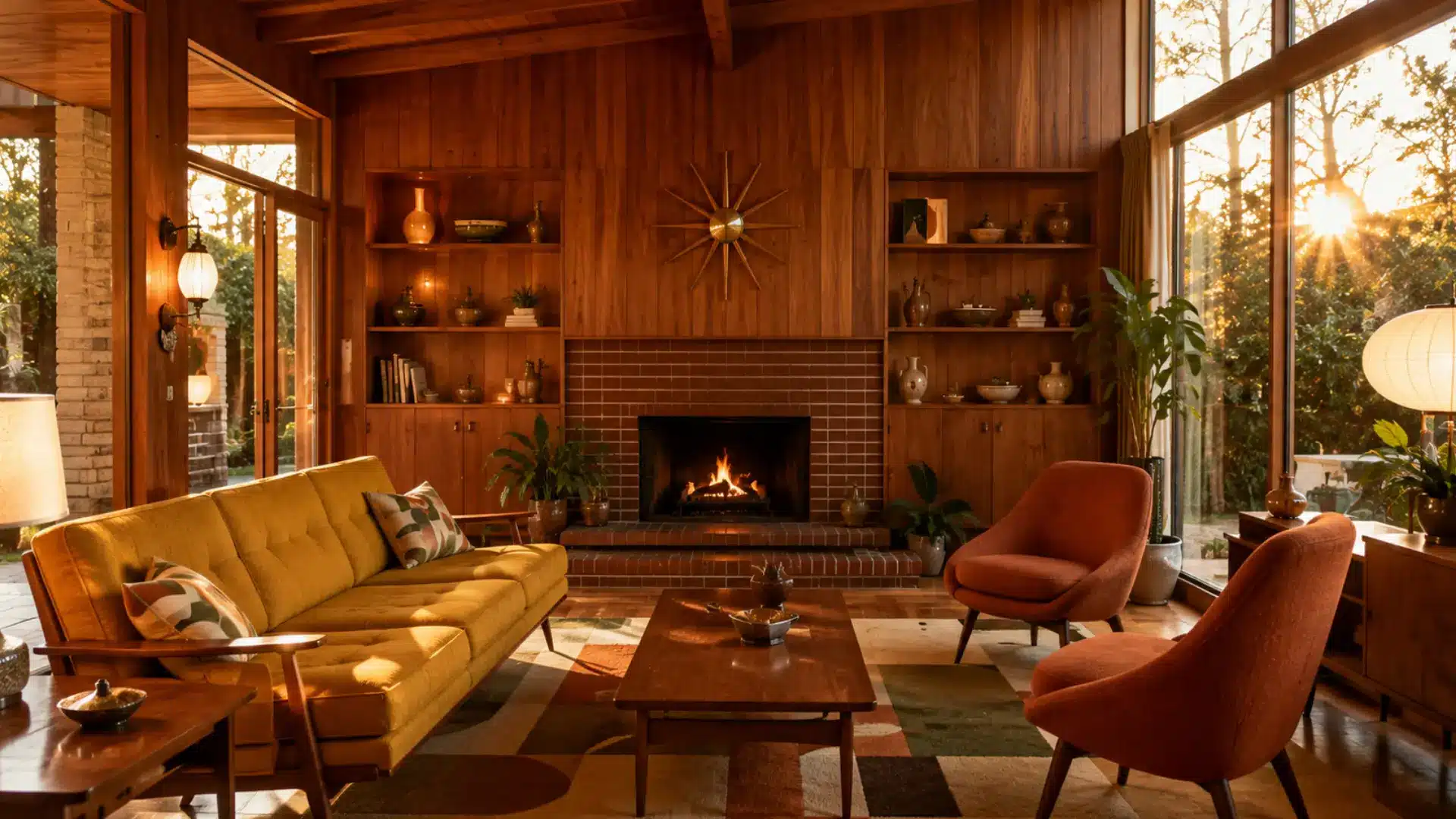
A dated home can feel completely different with the right design choices. I know it can be difficult to bring back the charm of an older space without making it feel outdated.
The 1950’s mid century modern house interior style solves that challenge by combining clean lines, natural materials, and practical layouts.
You’ll find ideas for creating warm, functional rooms with details such as walnut furniture, tapered legs, statement lighting, terrazzo floors, and retro color accents.
I’ll share the key elements that define this era and show how you can use them to create a classic interior that still feels comfortable today.
What Defines a 1950s Mid-Century Modern House Interior
A 1950s mid-century modern house interior is defined by simplicity, comfort, and a strong connection with nature. Furniture often features low profiles, tapered legs, and clean shapes that make rooms feel open and balanced.
Natural materials like walnut, teak, oak, leather, and glass add warmth without making spaces feel heavy. Retro colors such as mustard yellow, burnt orange mint green, and dusty pink bring personality when paired with neutral walls.
Statement lighting, including Sputnik chandeliers and sculptural floor lamps, adds an artistic touch. Large windows, open layouts, and indoor-outdoor connections complete the style, creating homes that feel practical, welcoming, and timeless.
1950’s Inspired Living Room Interior Design Ideas
The living room carries the most weight in a mid-century modern home, since it is usually the first space guests see and the room where the era’s furniture icons get to show off.
1. Low-Profile Teak Sofa with an Eames Lounge Chair
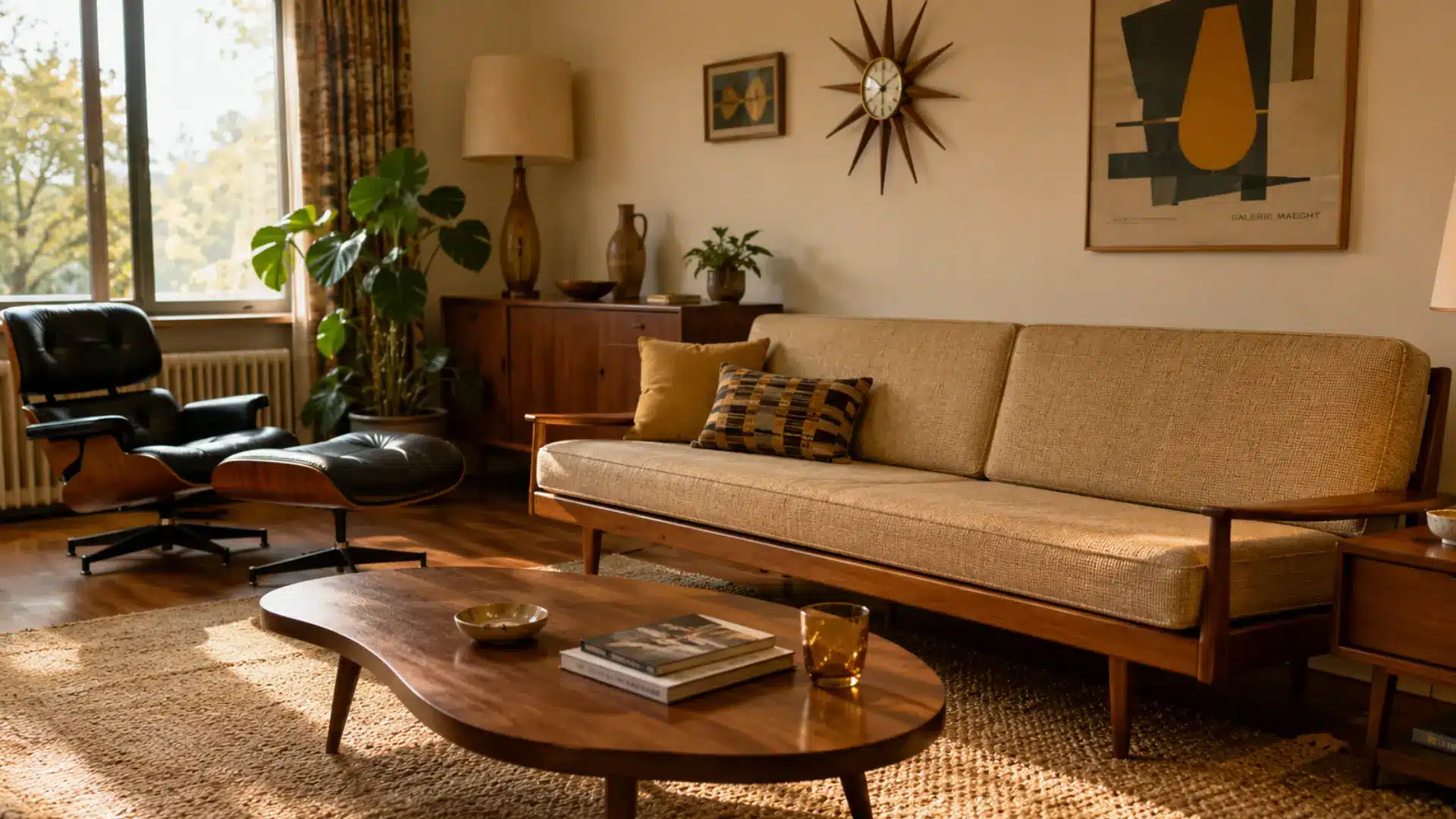
Pair a low teak sofa with tapered legs and an Eames-style lounge chair to create the relaxed seating arrangement common in vintage interiors.
Keep the furniture low and open underneath. This preserves visual space while walnut tones and organic shapes add the warmth that defines the style.
2. Sputnik Chandelier as the Focal Point
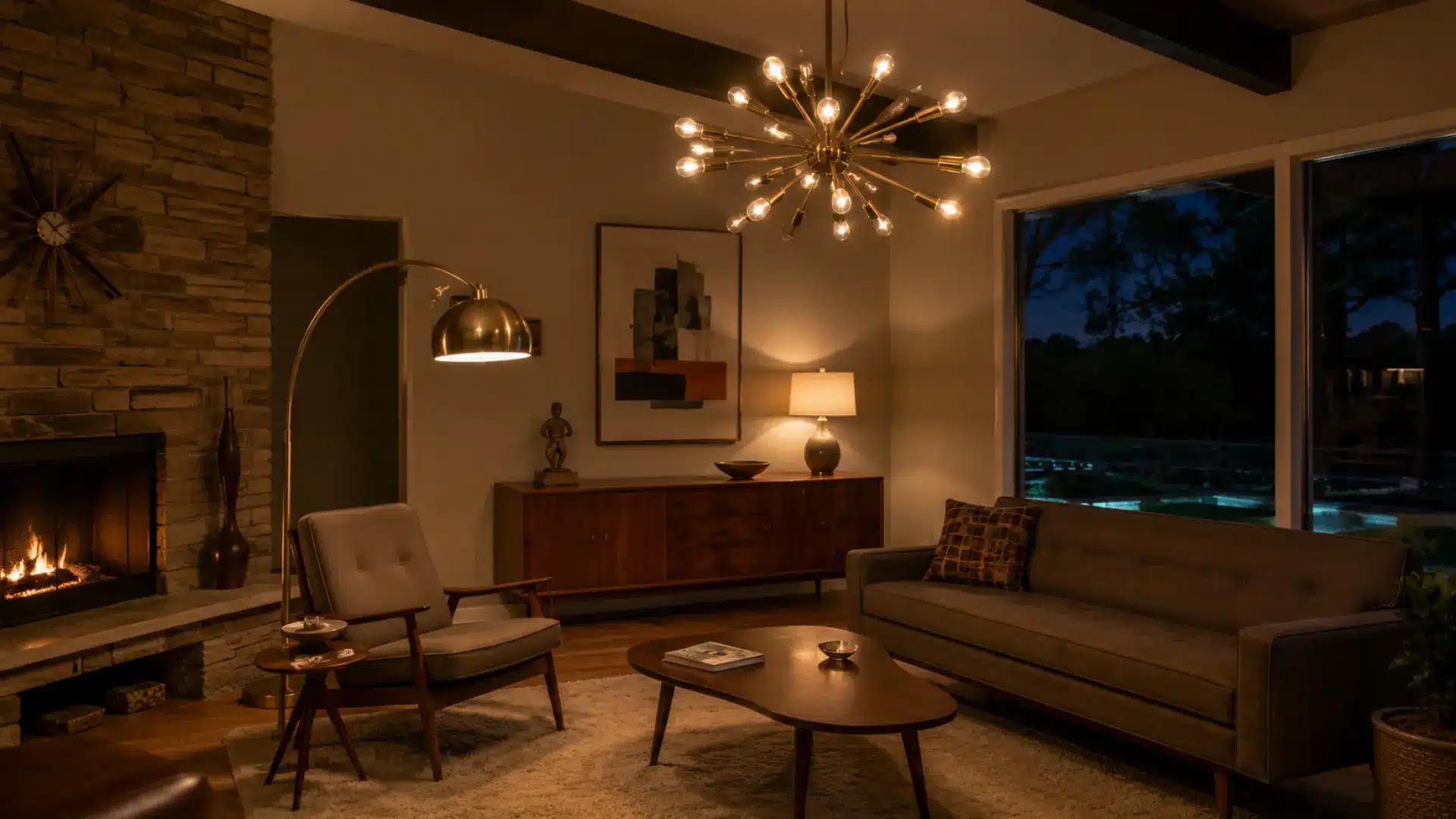
Use a Sputnik chandelier as the room’s statement piece to introduce the sculptural lighting style that became popular in the 1950s.
Install the fixture above a seating area or dining table where it can act as a centerpiece. Keep surrounding lighting simple so the chandelier adds character without competing with other features.
3. Atomic-Print Rug for Zoning
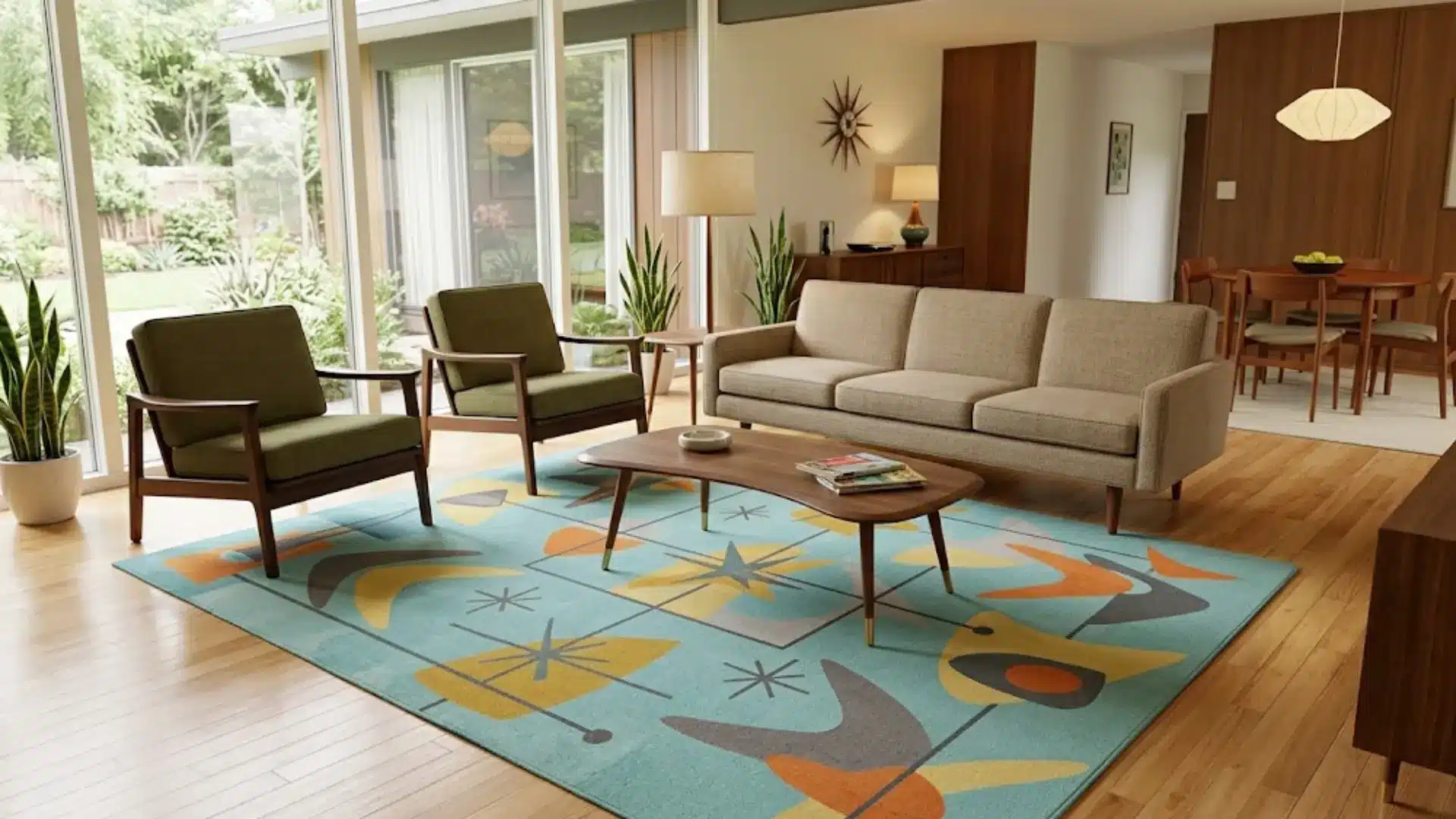
A geometric or atomic-motif rug anchors the seating group and separates the living area from an open dining or entry space, which was a common trick in smaller vintage floor plans.
Use the rug to anchor your seating area by placing the front legs of furniture on top. Choose patterns with muted orange, olive, brown, or cream tones for a more classic look.
Tip: Muted orange, brown, or cream keeps the pattern period-inspired without making the room feel overly themed.
4. Flagstone or Brick Fireplace Wall
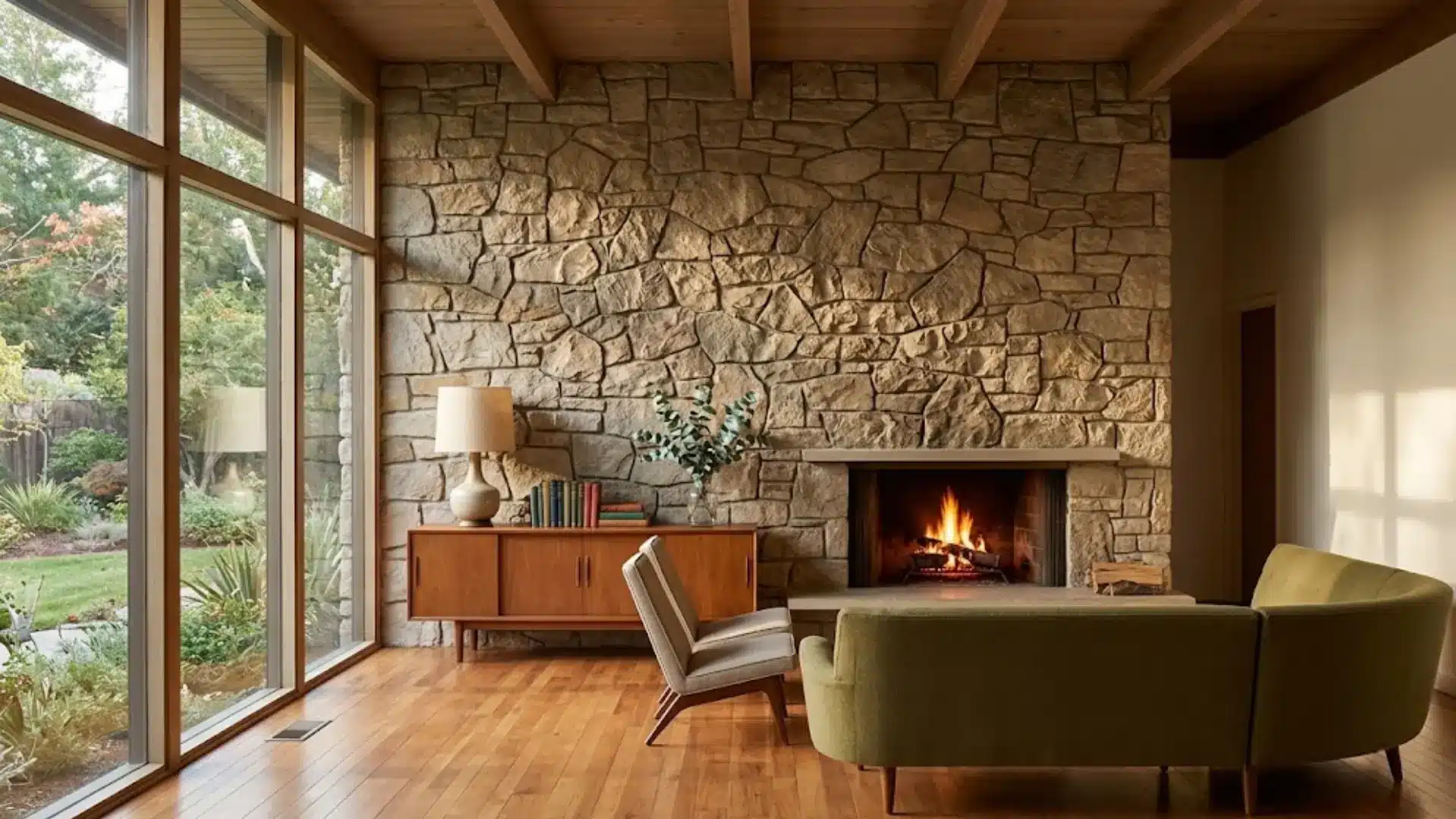
If your living room has an existing brick or stone fireplace, leave it exposed rather than covering it. It was the one rustic texture in an otherwise sleek room, and it still reads as authentic today.
Balance the fireplace with simple furniture and clean lines so the room feels intentional rather than overly rustic.
5. Built-in Wall Shelving
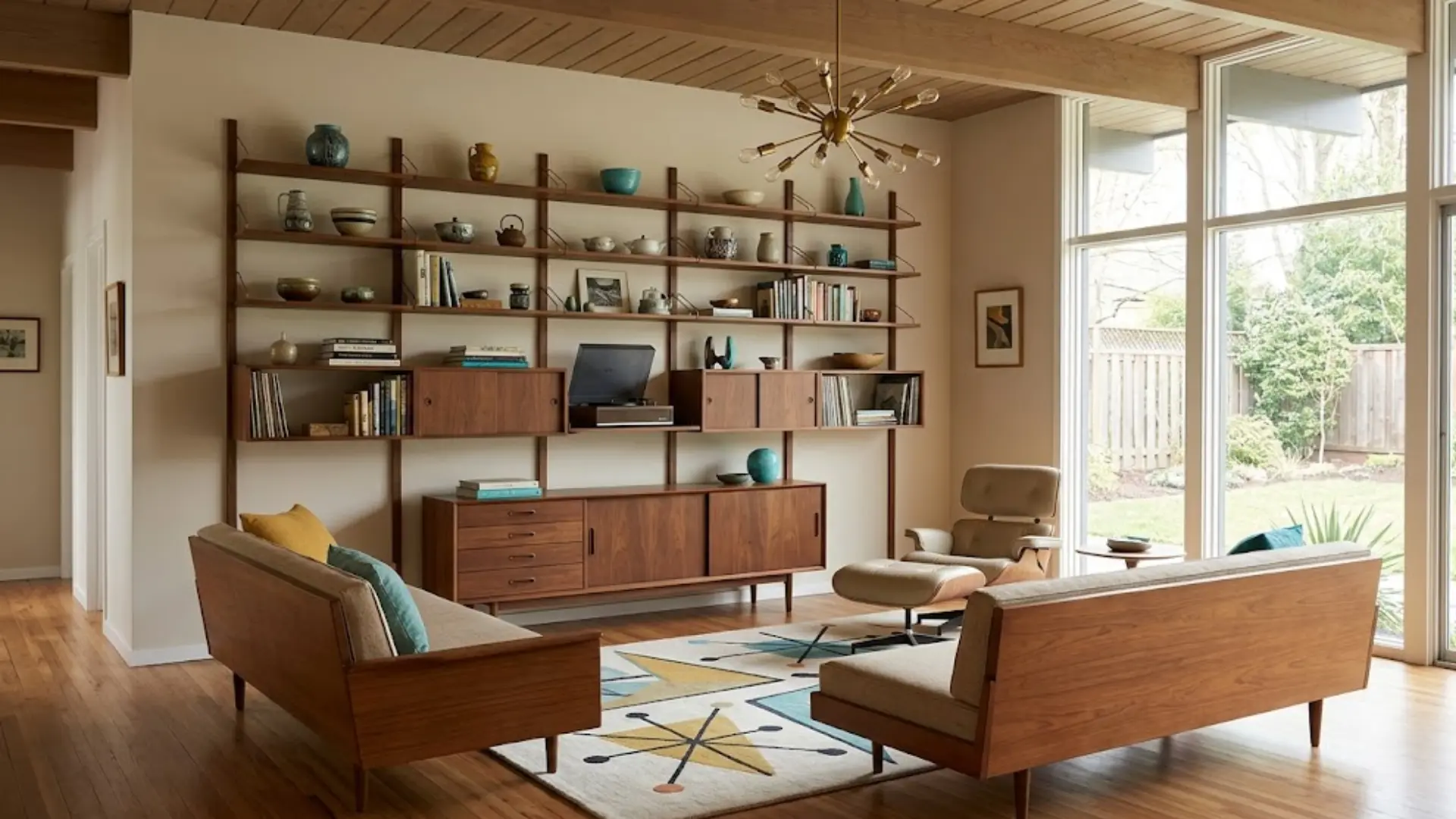
A wall of low, floating shelves in walnut or a similar warm wood holds books, ceramics, and a record player without adding visual clutte. If you are working with what you already have, styling open shelving the right way makes a bigger difference than buying new furniture.
Pair the rugged fireplace with simple furniture and warm woods. The contrast creates balance instead of making the room feel overly rustic.
Mid-Century Kitchen Ideas That Bring Back the Retro Charm
Kitchens in the 1950s were work zones first, but they were also where the color experiments really happened.
6. Pastel or Atomic-Color Cabinetry
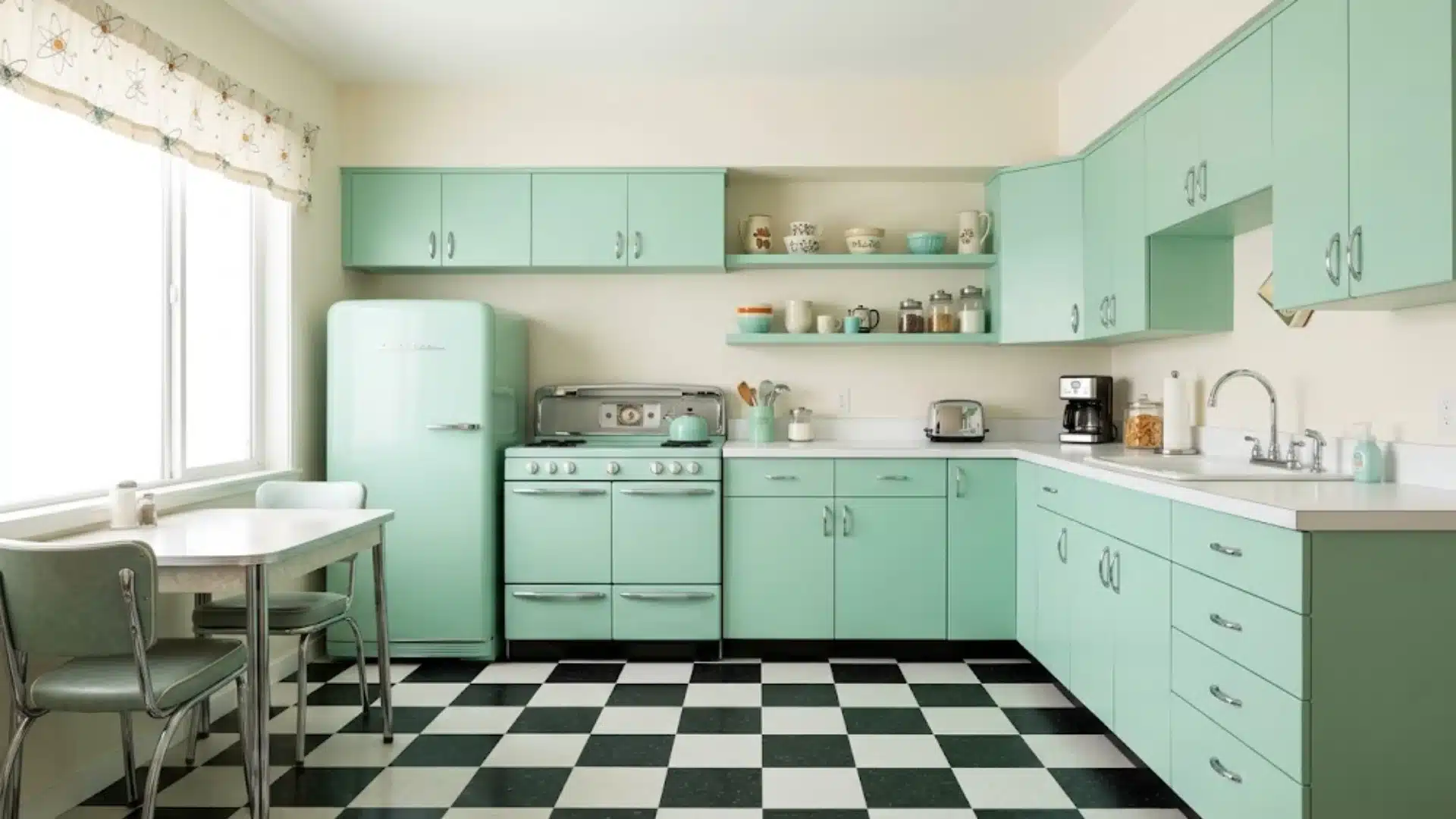
Mint green, buttercup yellow, and turquoise cabinets were common, usually paired with white countertops and chrome hardware to keep the look crisp instead of cartoonish.
Use these colors on lower cabinets or an accent color pairing first if you want the retro look without making the kitchen feel too loud.
Tip: Test buttercup yellow, or turquoise on lower cabinets, an island, or one cabinet section first. Pair the color with white counters and chrome hardware to keep the kitchen bright and balanced.
7. Breakfast Nook Banquette
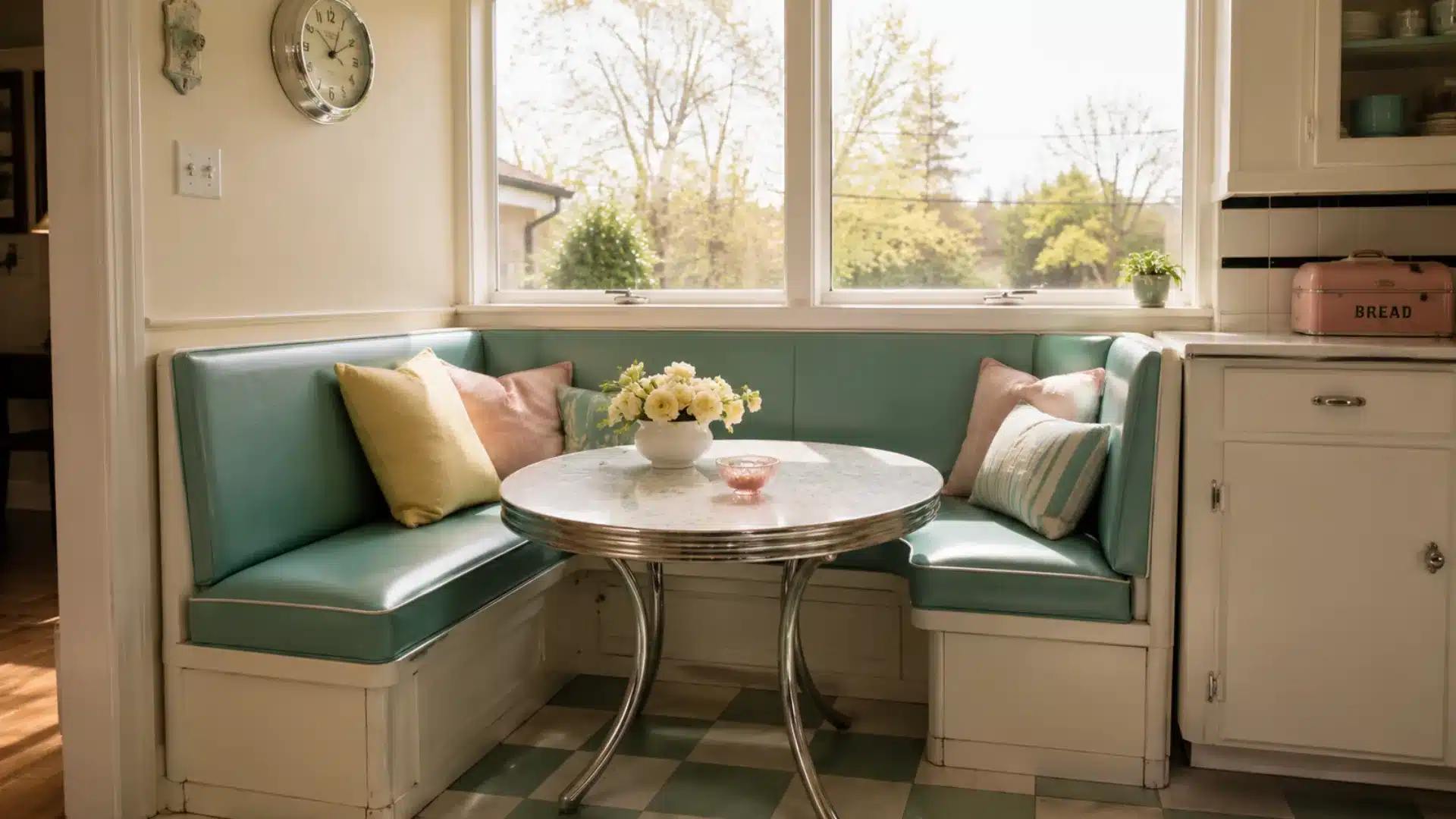
A built-in bench seat with a small round table made even a tight kitchen feel like it had a separate dining zone, and the format still works well in a compact home today.
Add a bench seat along a wall with a small round table in front. Finish the nook with a pendant light and simple cushions to create a comfortable everyday dining spot.
8. Open the Pass-Through to the Living Room
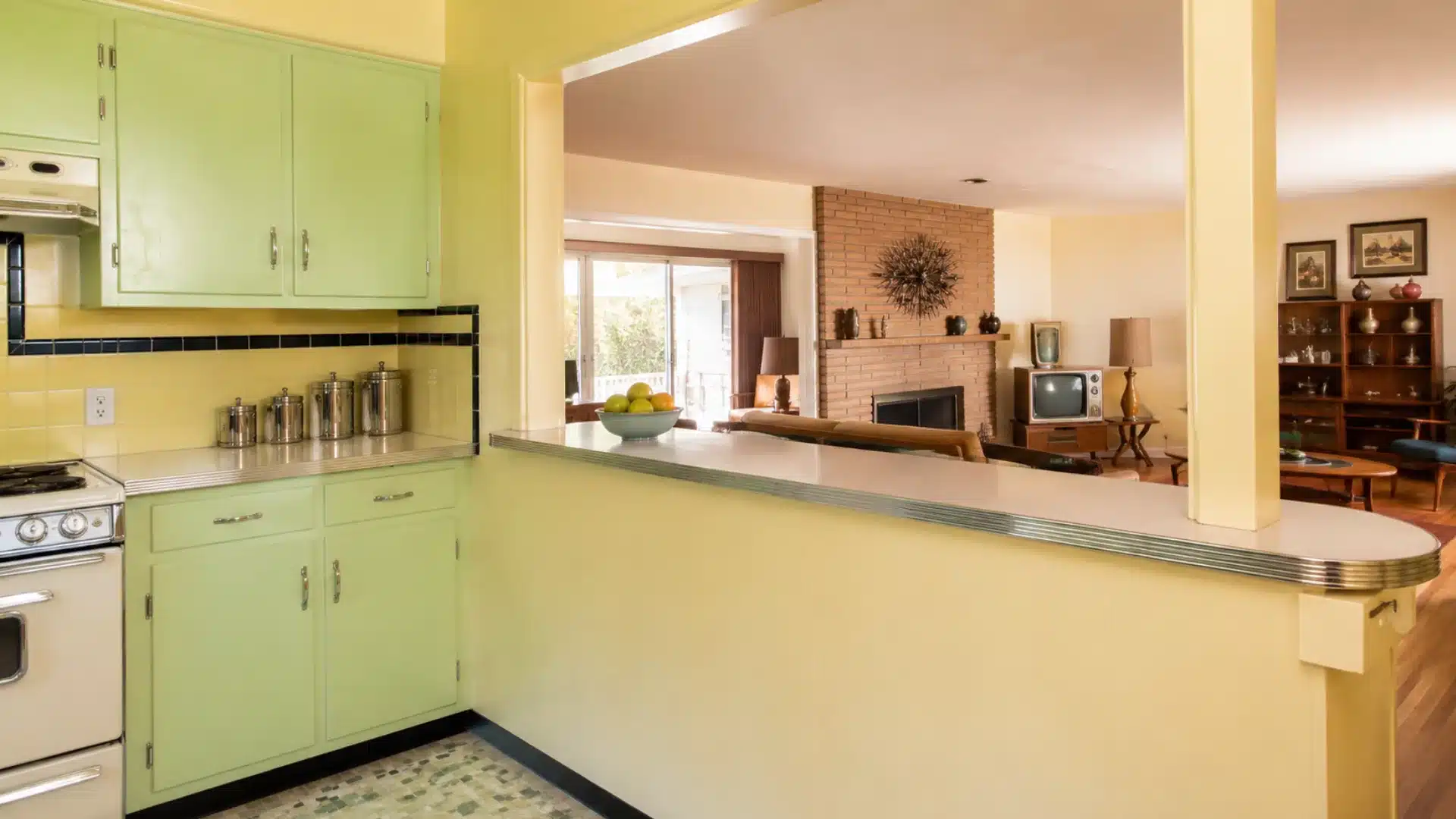
Instead of a full wall between kitchen and living room, a cut-down half-wall or open counter lets parents keep an eye on the rest of the house while cooking.
Keep the counter edge clean and simple, so the opening feels original to the home rather than a rushed remodel.
9. Chrome and Formica Countertop Pairing
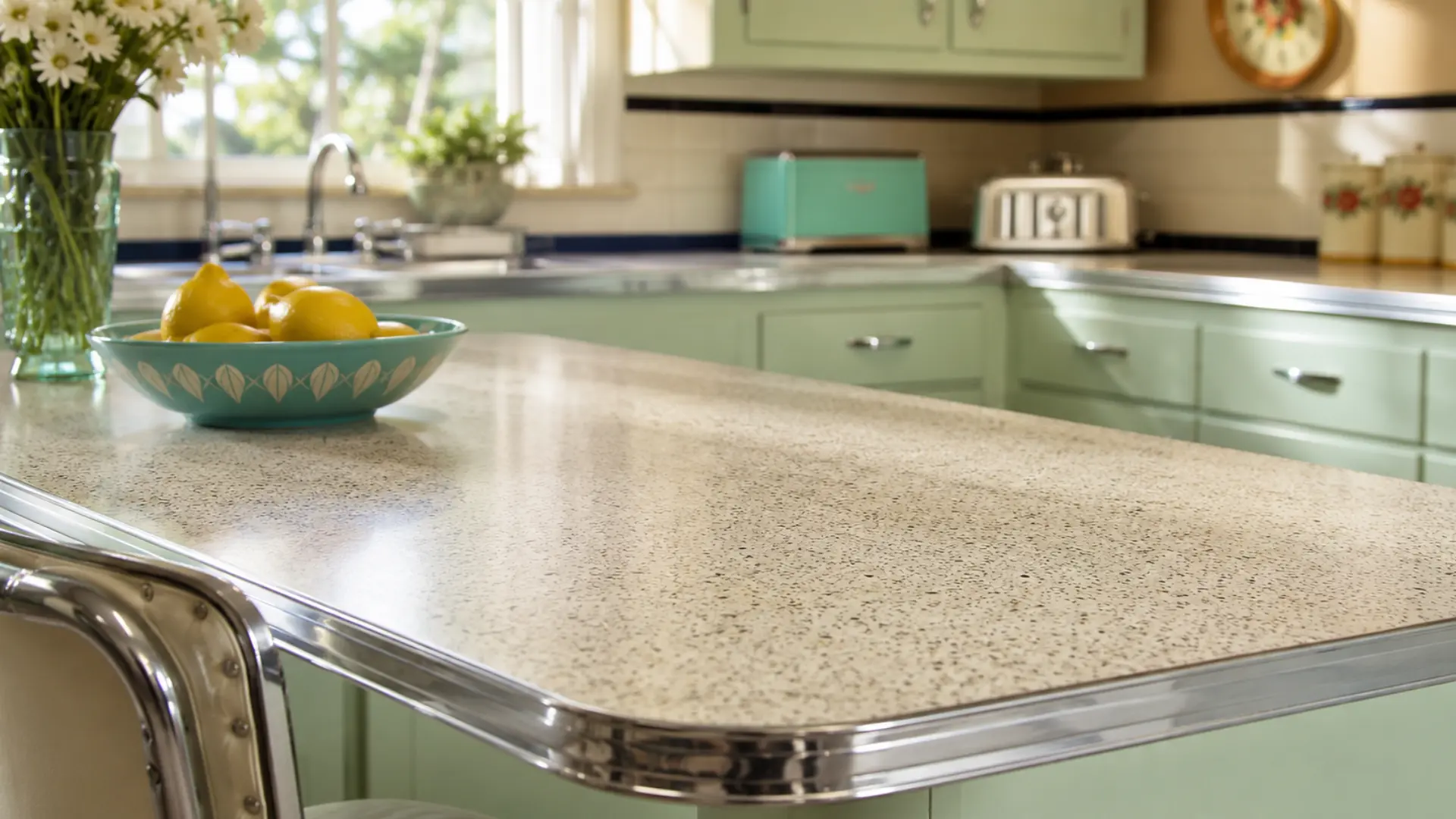
Formica countertops in a boomerang or speckled pattern, trimmed with chrome edging, are among the most recognizable kitchen details of the decade. If you want the full room treatment rather than a few accents, these 1950s retro kitchen ideas go deeper into layout and materials.
Use patterned laminate on countertops or a smaller surface like a breakfast bar. Pair it with simple cabinets and modern appliances so the kitchen feels inspired rather than outdated.
Bedroom Ideas Straight Out of a 1950s Ranch House
Bedrooms were quieter than the rest of the house, built for rest rather than display, and the furniture reflects that.
10. Walnut Low-Profile Bed with Matching Nightstands
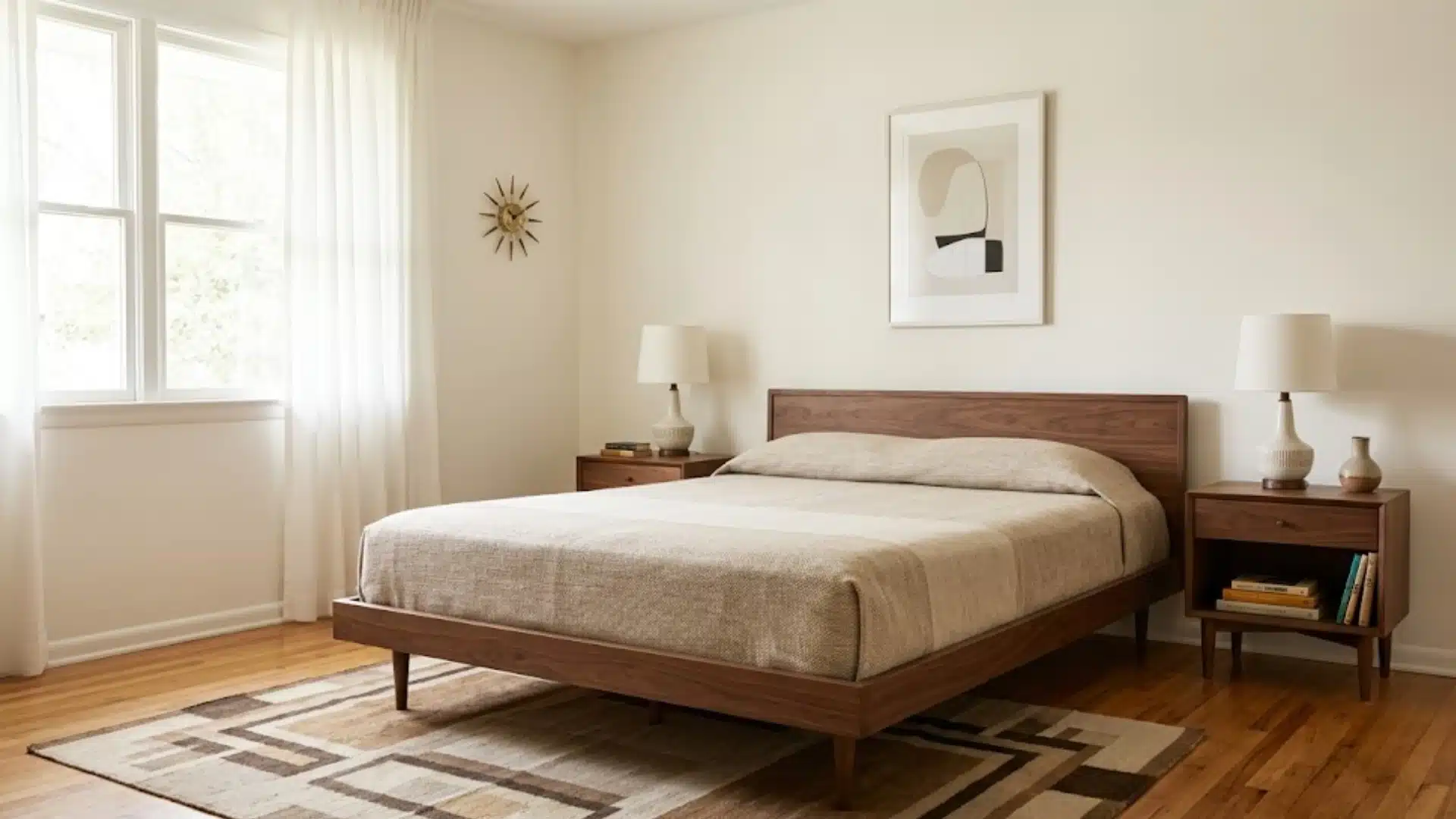
Walnut furniture defined many vintage bedrooms because it brought warmth without adding visual heaviness. Low beds and matching nightstands created a calm, uncluttered atmosphere.
Choose furniture with tapered legs and simple shapes instead of oversized storage pieces. Add bedding in cream, olive, mustard, or rust tones to complement the wood.
11. Color-Blocked Accent Wall
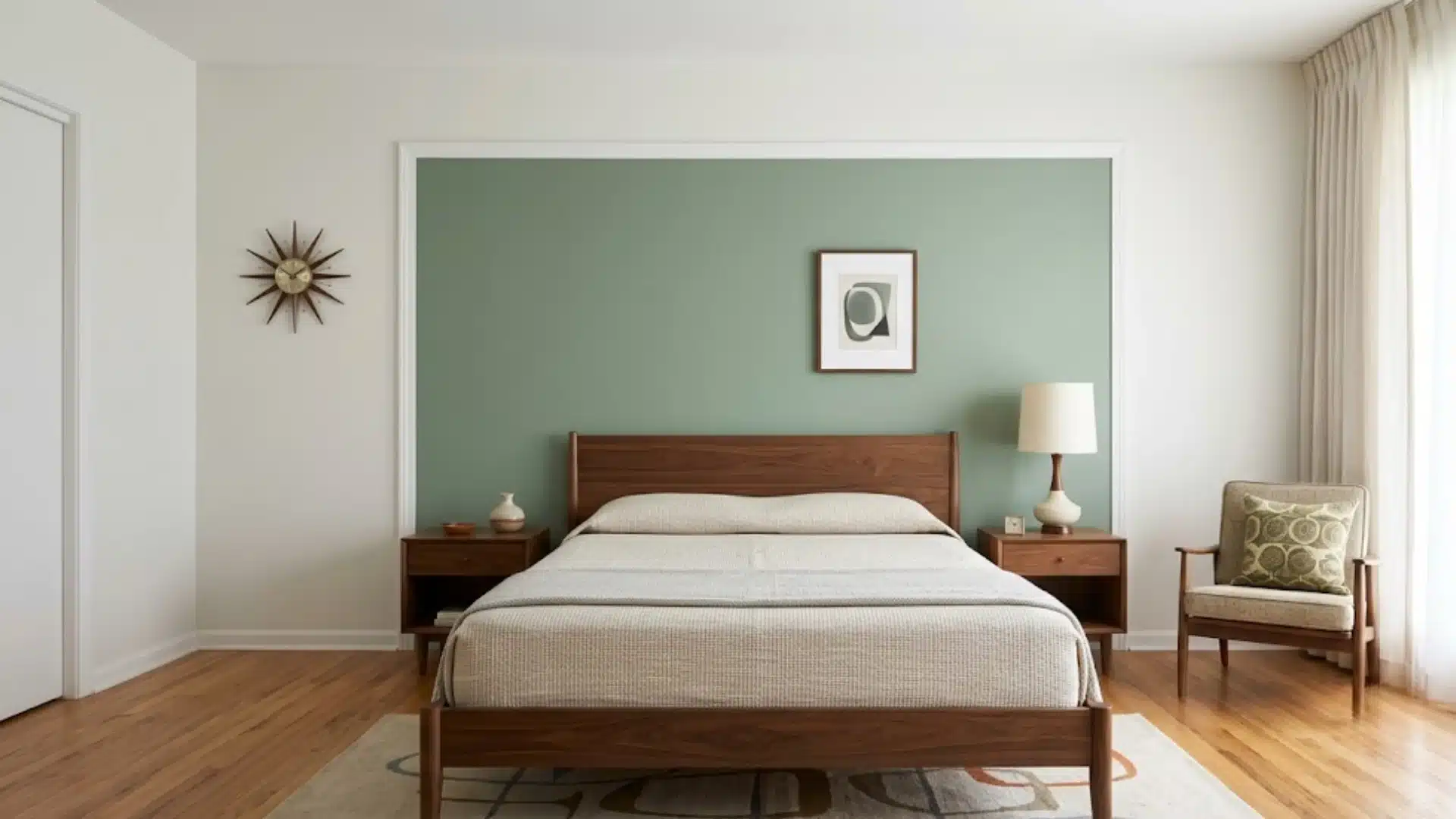
Color blocking added personality to 1950s bedrooms without overwhelming the clean furniture style. A single painted wall often provided the room’s main visual interest.
Choose one muted retro shade, such as sage, dusty rose, or slate blue. Keep the remaining walls neutral and limit wall decor so the color remains the main feature.
Tip: Use one muted retro shade on a single wall and keep the remaining walls neutral. Sage, or slate blue works well with simple furniture.
12. Sheer Curtain Layering for Privacy
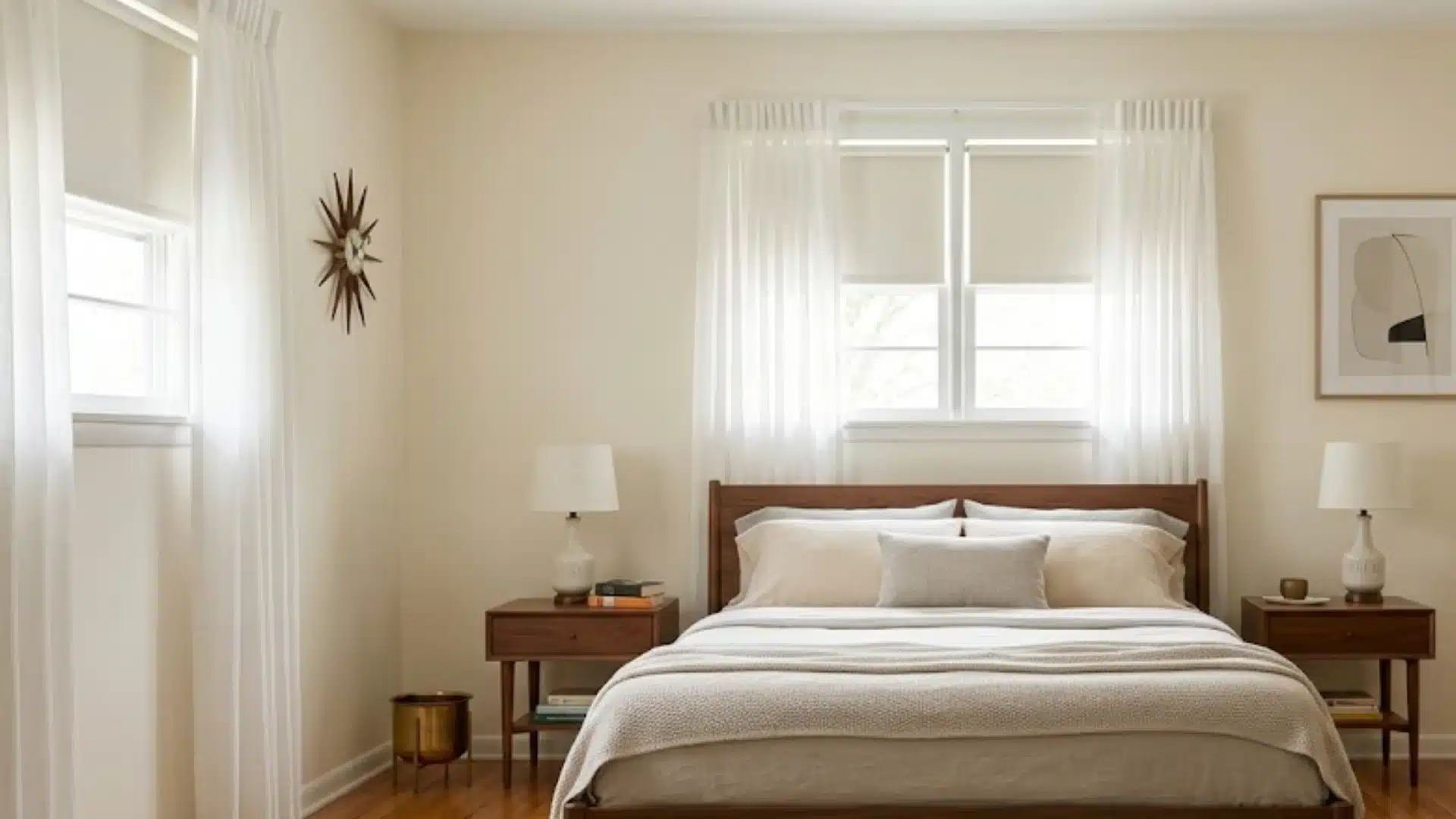
Sheer curtains match the mid-century focus on natural light and indoor-outdoor connections. They softened windows while keeping rooms bright and open.
Layer sheer curtains with simple panels instead of heavy drapes. Choose lightweight fabrics that allow sunlight through while maintaining privacy during the day.
Bathroom Ideas With a Vintage 1950s Touch
Bathrooms may be the boldest rooms in a 1950s house, and the tile choices from this decade are having a real moment again.
13. Pink or Mint Tile with Chrome Fixtures
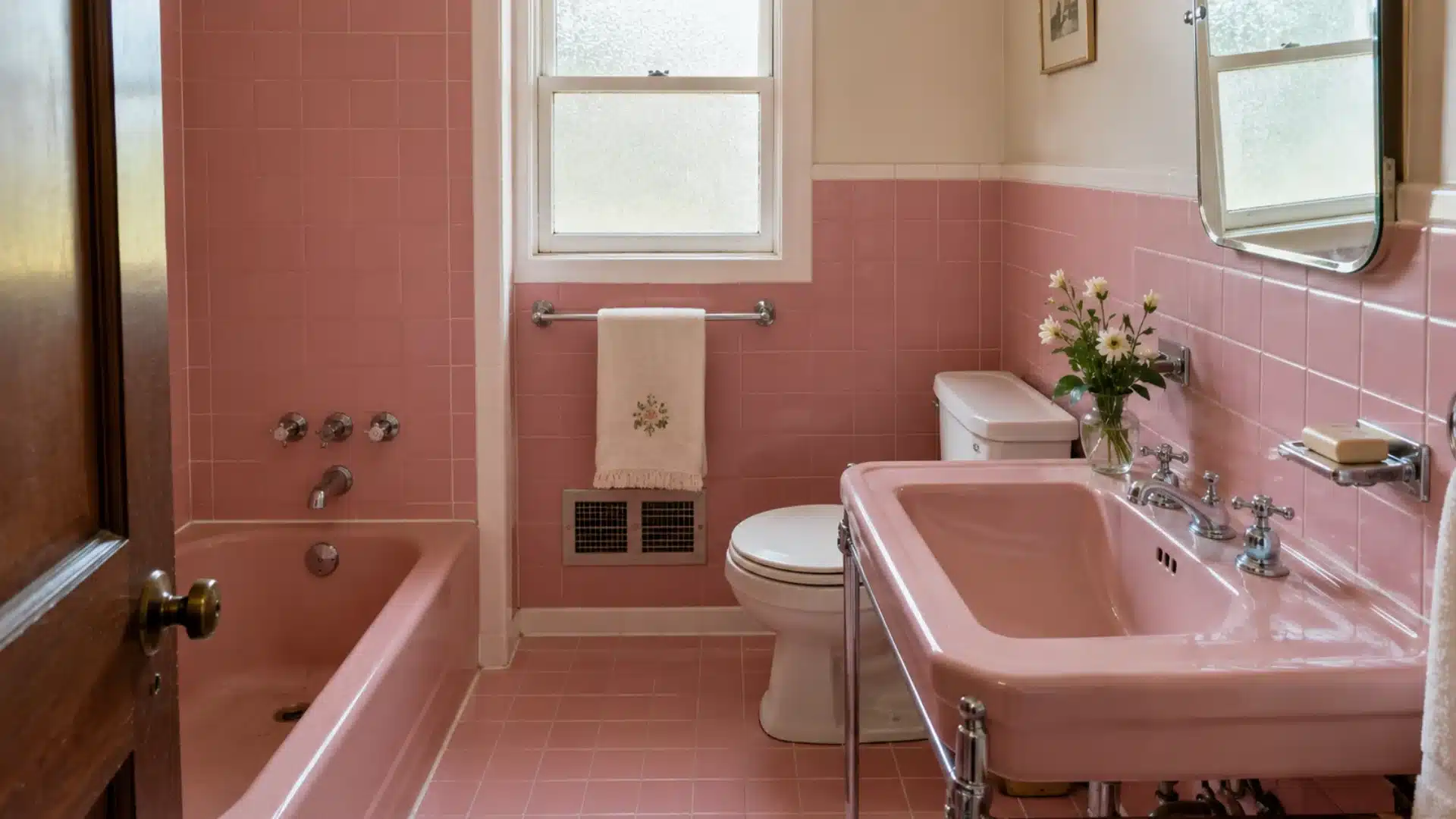
Colorful bathroom tile was one of the boldest expressions of 1950s design. Pink and mint shades, paired with chrome fixtures, created a clean yet memorable look.
Use vintage-inspired tile on walls, floors, or a smaller accent area. Keep fixtures simple and modern so the color feels intentional rather than overwhelming.
14. Pedestal Sink with Globe Sconces
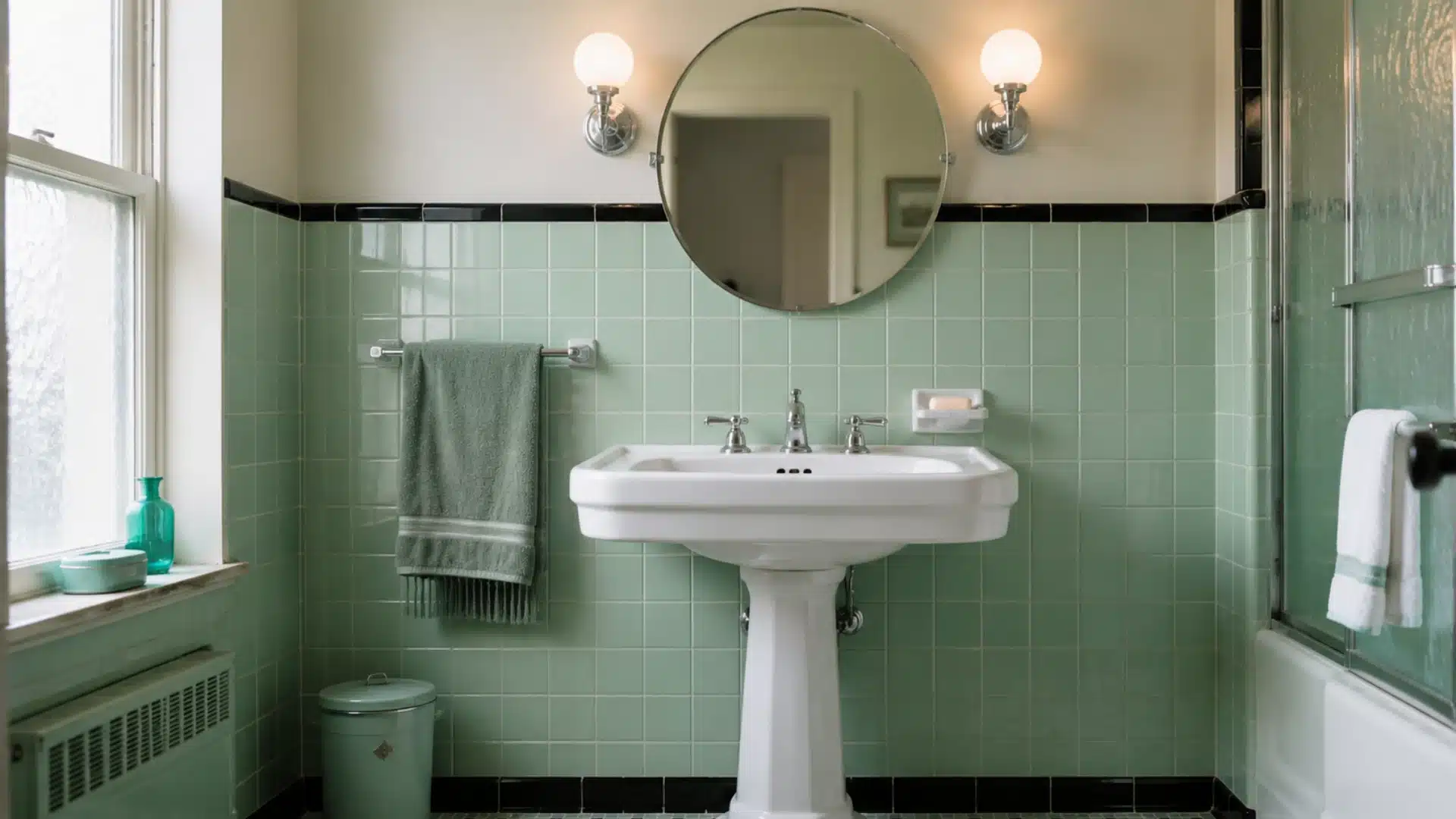
Pedestal sinks and globe lighting reflected the simple, functional approach of mid-century bathrooms. Their curved shapes softened the straight lines found elsewhere in the home.
Install globe sconces beside a mirror and pair them with a streamlined pedestal sink. Keep counters clear to maintain the open feeling of the design.
Tip: Pair a pedestal sink with globe sconces and keep the countertop clutter-free to preserve the clean, open mid-century look.
15. Built-in Vanity with a Formica Top
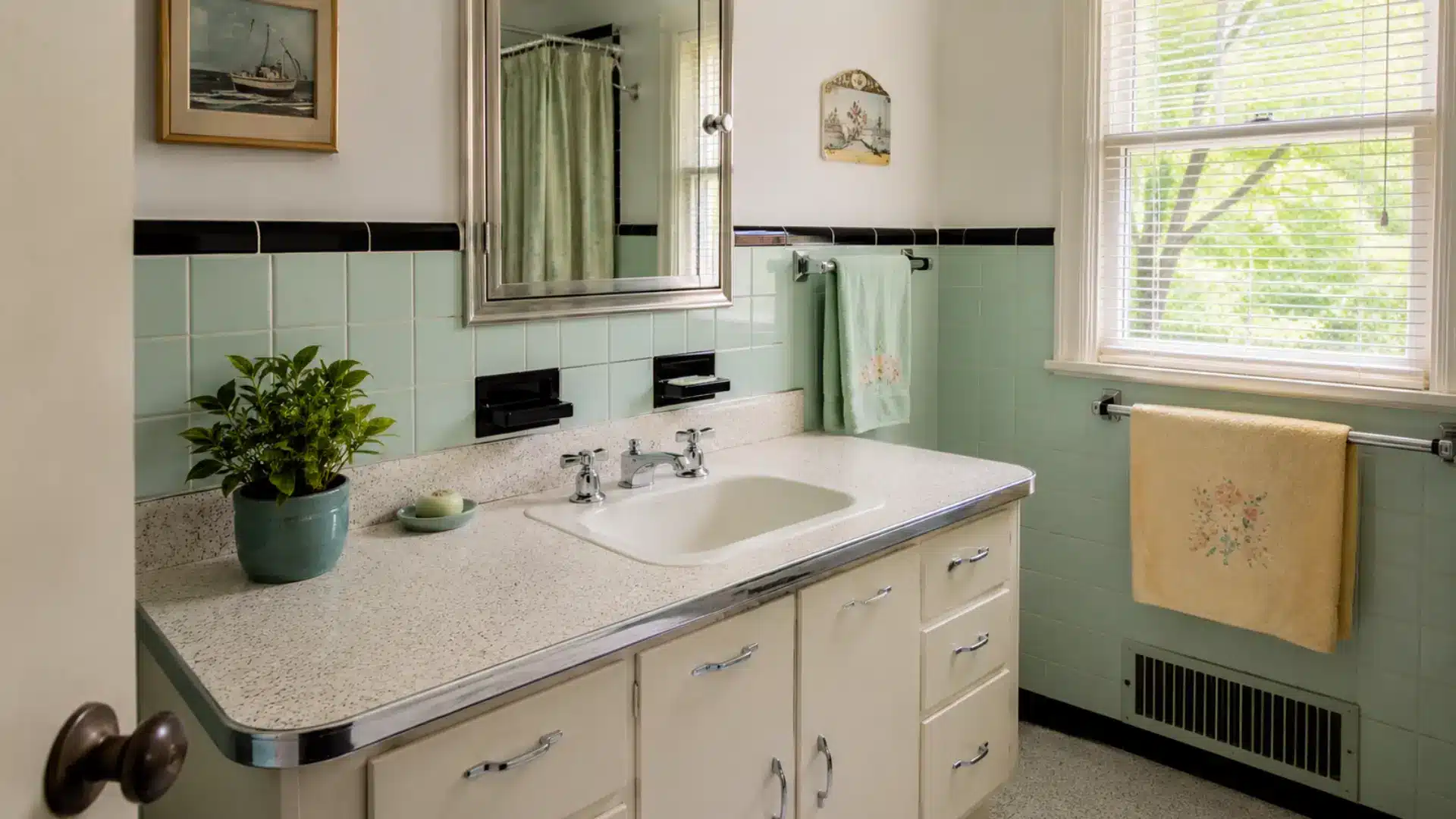
Built-in vanities added practical storage while keeping bathrooms visually clean. Formica surfaces brought durability and the patterned finishes popular during the era.
Choose a compact vanity with integrated storage instead of bulky furniture pieces. Add a recessed mirror or simple hardware to complete the mid-century appearance.
Dining Room Looks That Capture Mid-Century Warmth
Dining rooms leaned more sculptural than the rest of the house, since the table itself was often the centerpiece.
16. Saarinen Tulip Table as the Centerpiece
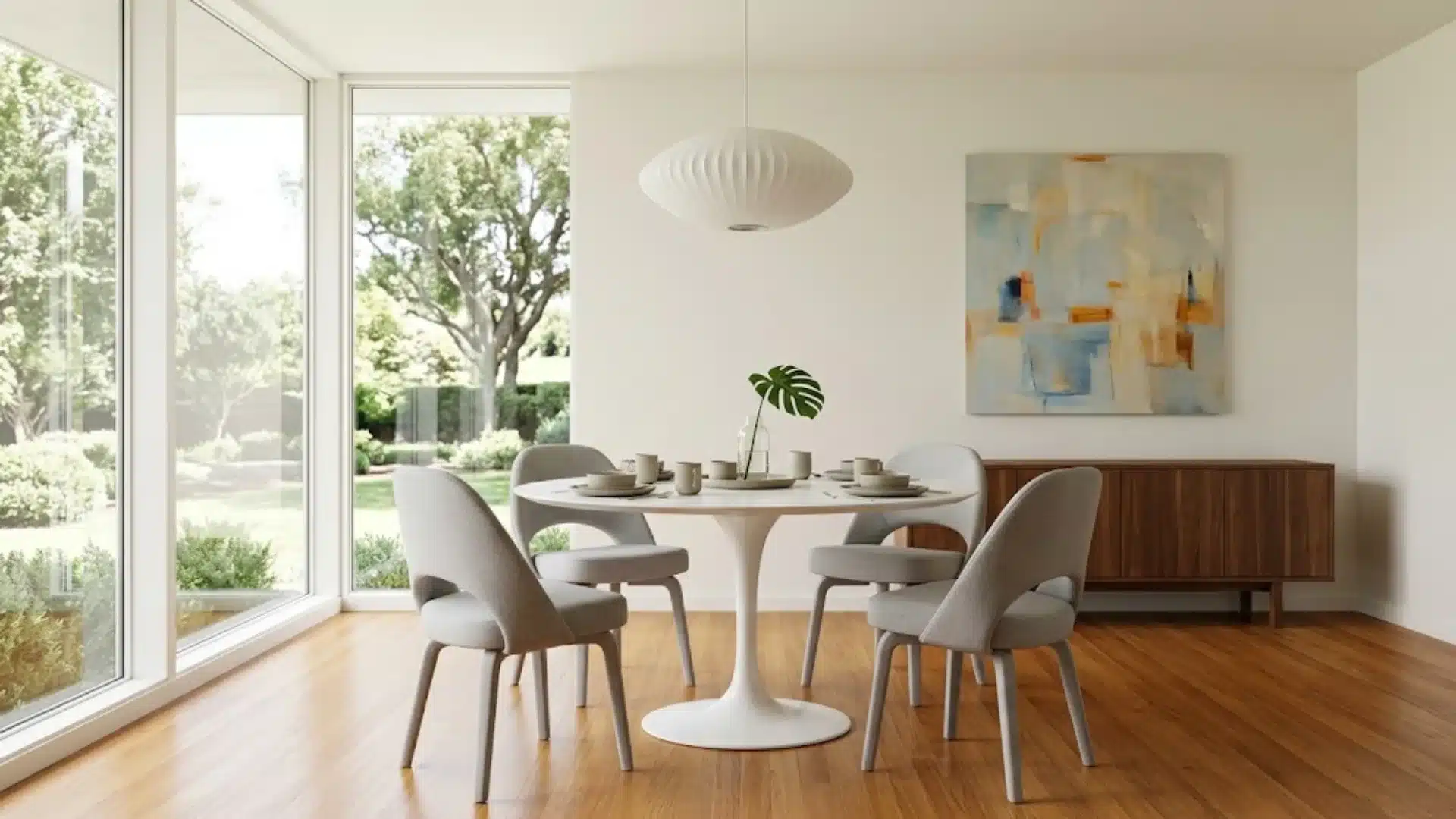
The Saarinen-style tulip table became popular because its single pedestal base created a clean, open silhouette. It removed visual clutter and made smaller dining spaces feel larger.
Place the table where movement remains easy around all sides. Pair it with simple upholstered chairs and keep accessories minimal so the sculptural shape stands out.
Tip: Leave enough space to walk around the table and pair it with simple chairs so the pedestal base remains the focal point.
17. Sideboard with a Sculptural Pendant Above
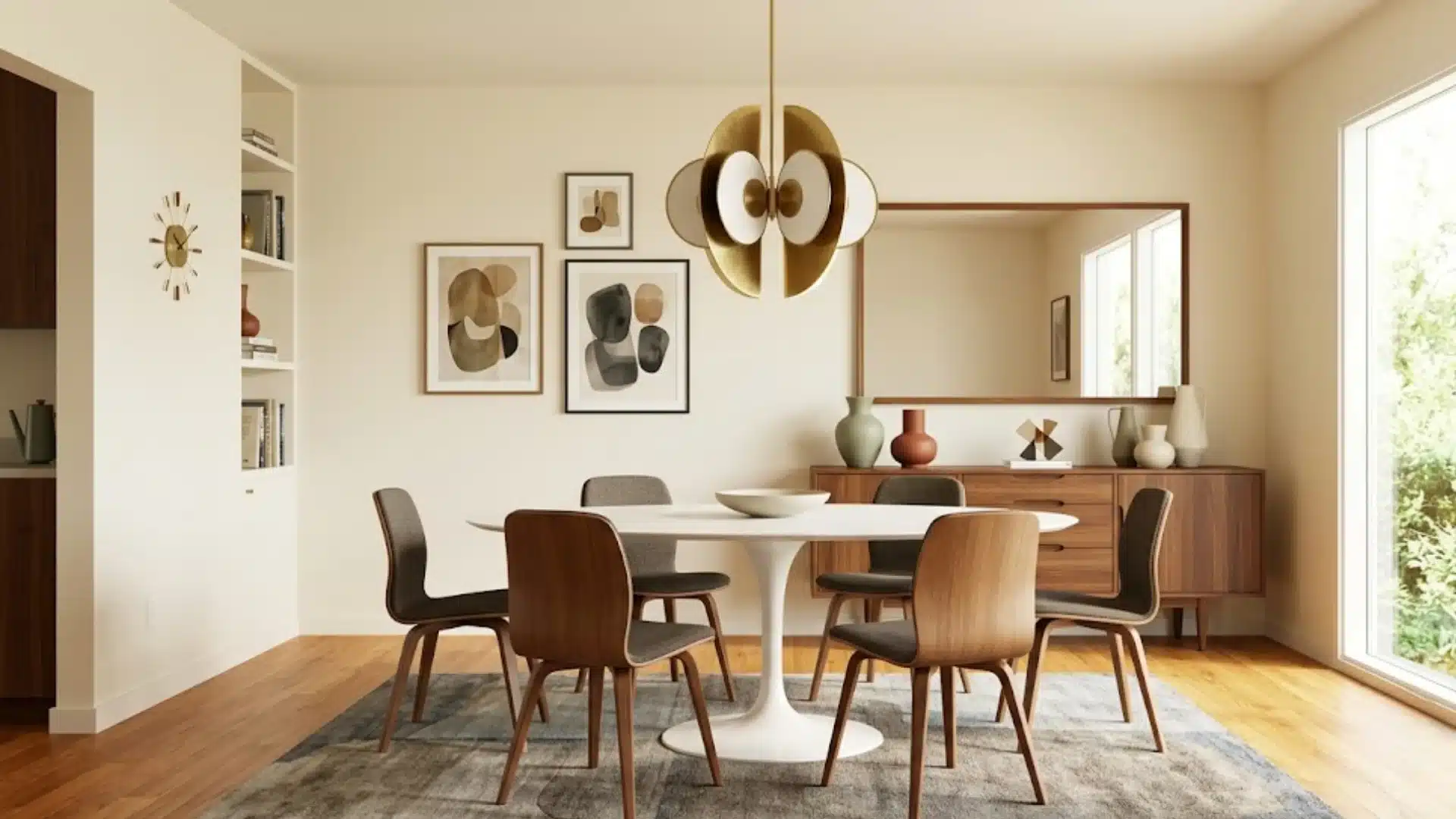
A walnut sideboard paired with statement lighting creates the layered look common in mid-century dining rooms. The combination adds storage while giving the space a strong focal point.
Place artwork or ceramics above the sideboard and hang a sculptural pendant nearby. Keep the surface lightly styled so the wood grain and lighting remain the main features.
Finishing Touches of a 1950s Home
Beyond furniture, smaller details can bring plenty of 1950s character into a room. Houseplants such as fiddle leaf figs, snake plants, and philodendrons work well near large windows and help connect the interior with the outdoors.
Brass cabinet pulls, door handles, and light fixture trim can also create a consistent look across different rooms without making every finish identical.
Geometric wall art, atomic motifs, and starburst mirrors add visual interest to open walls while maintaining a clean layout.
Sliding glass doors were another defining feature, turning patios and backyards into part of the living space.
For a lighter version of that indoor-outdoor style, coastal interior design ideas offer a similar effect with softer colors and materials.
Common Mistakes to Avoid
A few mistakes can make a mid-century-inspired home feel forced instead of comfortable. Avoid these common design choices to keep the space balanced and authentic:
- Buying Everything at Once: Furnishing the entire room from one collection can make it feel like a showroom. Add pieces slowly and mix vintage-inspired items with personal or unexpected finds.
- Going Too Literal With Color: Using bold retro colors everywhere can make the space feel like a themed room. Choose one or two statement shades and balance them with neutral tones.
- Ignoring Scale: Mid-century furniture was often designed for smaller homes. Always check measurements before adding larger pieces that may overwhelm your room.
- Skipping the Right Storage Choice: Choosing between a cabinet and a dresser depends on your needs and available space. The wrong option can waste storage potential and make the room feel crowded.
- Treating It as Strictly Vintage: A room filled only with vintage pieces can feel like a museum. Mixing original designs with modern elements creates a more comfortable, lived-in look.
Conclusion
A well-designed retro home is not about copying the past; it is about bringing back the comfort, warmth, and thoughtful details that made the era special.
I’ve found that the best results come from choosing a few meaningful elements and letting them work naturally with your space.
A 1950s mid-century modern house interior feels inviting when you balance walnut furniture, clean lines, natural materials, bold colors, and functional layouts.
These ideas help you create rooms that look stylish while still fitting everyday life. Start with one feature you love, make it your own, and share which mid-century detail you want to try first.
Frequently Asked Questions
Can I Mix Mid-Century Modern with Other Design Styles?
Yes, combine one or two authentic mid-century pieces with clean modern basics. This balance keeps the room stylish, practical, comfortable, and collected without making it feel overly staged or dated.
What’s the Difference Between Mid-Century Modern and Danish Modern?
Danish modern is a lighter, cleaner branch of Scandinavian design, while mid-century modern is the broader international style that encompasses Danish, American, and other regional interpretations of the era.
Is Mid-Century Modern Furniture Expensive?
Designer originals may be costly, but reproductions, vintage-inspired finds, thrift-store pieces, and estate-sale treasures can deliver the same stylish look without putting too much pressure on your overall decorating budget.
How Do I Know if My Home’s Architecture Supports This Interior Style?
Homes with open floor plans, large windows, and simple rooflines adapt most easily, but the interior style works in almost any house since it’s really about furniture and material choices rather than the building’s structure itself.