

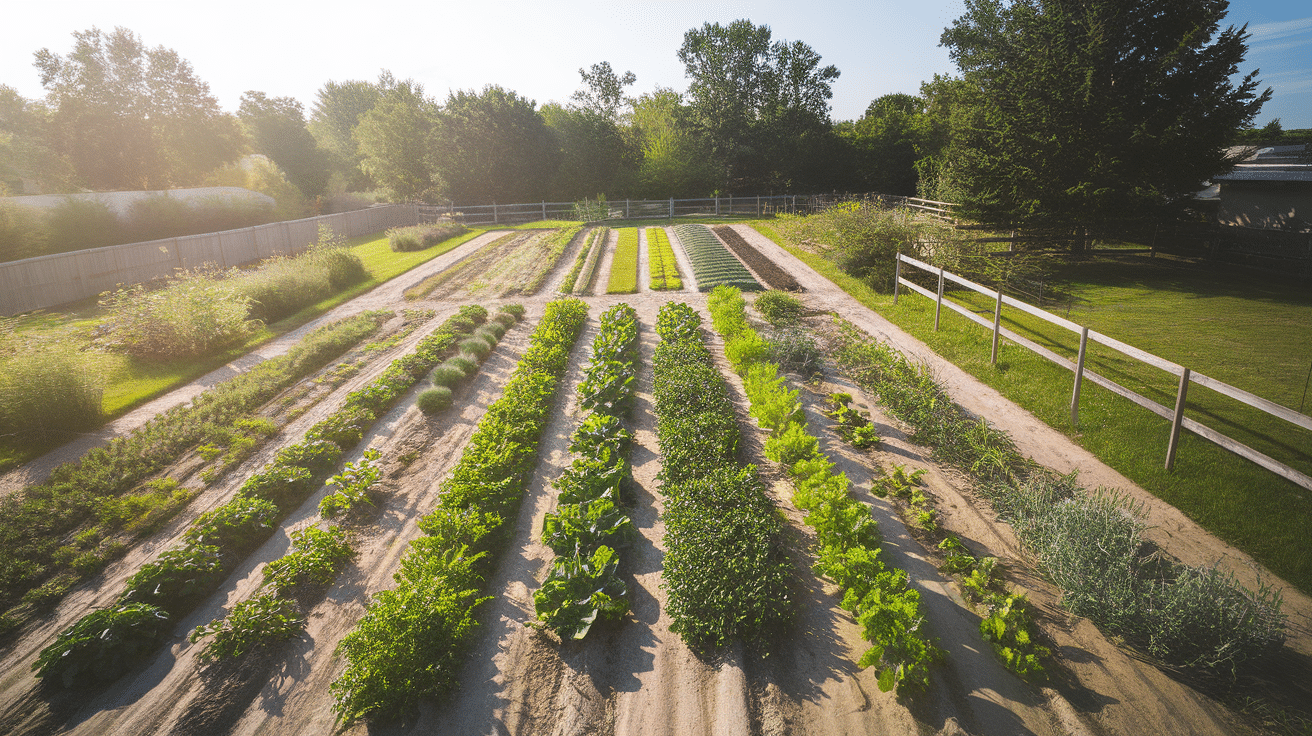
Planning a vegetable garden layout helps make the space easier to use and care for. A clear plan guides where each plant should go and how much room it needs.
Good spacing also supports healthy growth and reduces crowding. With a simple layout, the garden becomes easier to water, weed, and harvest.
Many people enjoy the process of shaping their garden to fit their yard size and goals.
Even small changes can improve how the garden looks and grows. This guide shares easy ideas that help gardeners build a layout that feels organized, balanced, and easy to follow.
How a Simple Layout Supports Healthy Plants
A good layout is the base of a healthy vegetable garden. It guides plant placement, spacing, and flow.
When plants have enough room, they grow strong and produce more food. A layout also makes the garden easier to care for.
Clear paths help with watering, weeding, and harvesting. Good spacing lowers the chance of disease and keeps air moving between plants.
Many gardeners want simple vegetable garden layout plans and spacing guides that fit their yard, time, and skill level. A good plan keeps the work low and the results high.
How to Check Your Garden Space Before You Plan
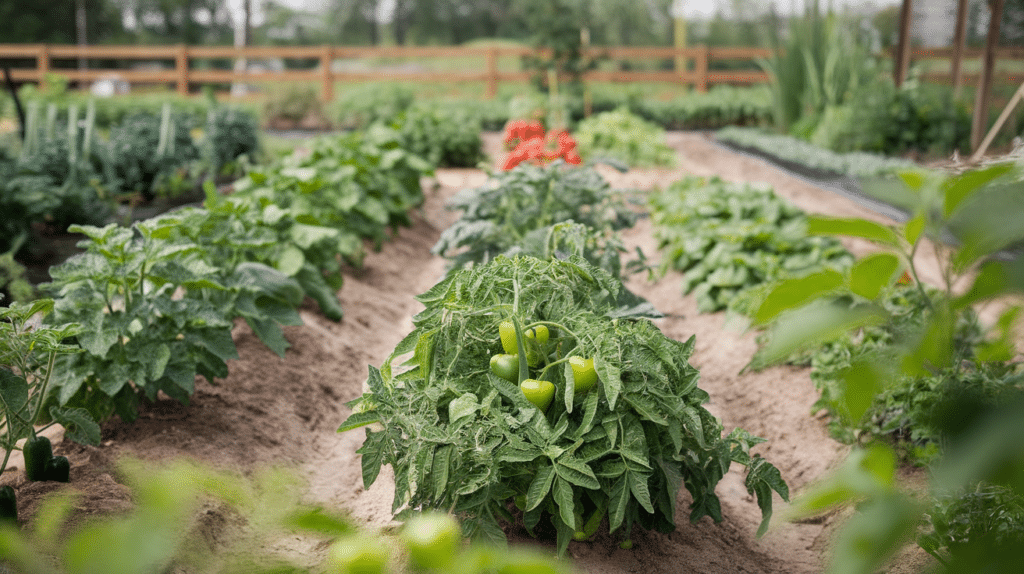
Before planning, it helps to understand the space you have. Each yard is different. Some are long and narrow. Some are wide and open. Some are shaded. Others get full sun all day. A layout works best when it matches the space.
Check the Sunlight
Most vegetables need at least six hours of sun; some, like tomatoes and peppers, need even more. When planning your vegetable garden layout, mark sunny spots and shaded spots. This helps you place the right plants in the right areas.
Look at the Soil
Soil quality affects plant growth. Soft, rich soil is easy for roots to move through. Hard soil needs work before planting. Some gardeners add compost, but even simple soil checks help you plan. If one area has better soil, it may be the best spot for crops that need strong support.
Think About Water
A garden near a water source is easier to manage. If the hose is far away, watering becomes a daily challenge. Pick a layout that makes watering simple and quick. Good spacing also helps water reach each plant evenly.
Make Room to Move
Paths are important. Tight gardens are hard to care for. Leave space to walk between beds or rows. This protects plants from being stepped on and gives you easier access during harvest.
Types of Layouts for Vegetable Gardens
There are many simple vegetable garden layout plans and spacing styles. Each one suits different needs. Selecting the right one depends on your space and your goals.
1. The Row Layout
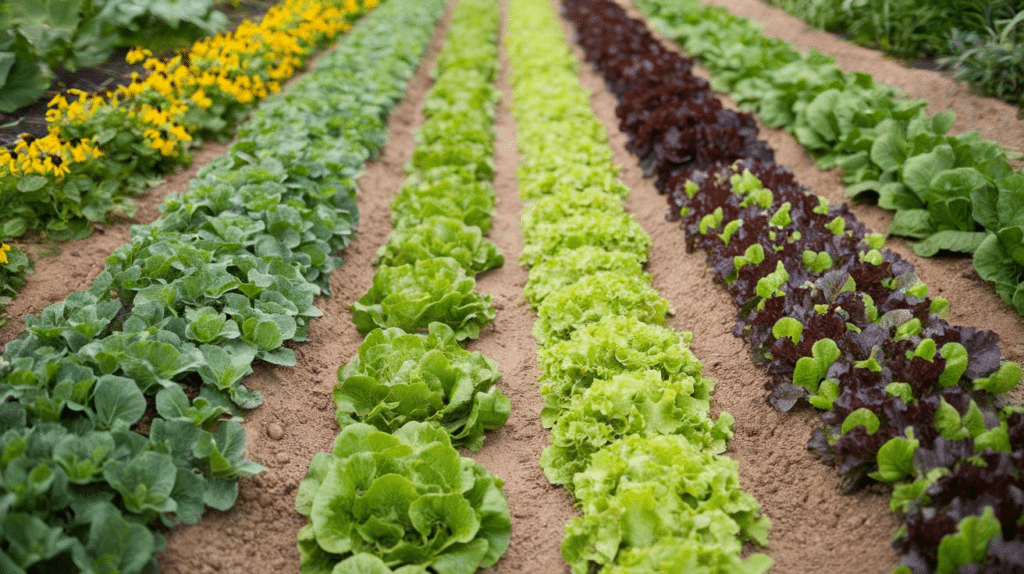
This is the most common layout. Plants grow in long, straight rows.
Good for:
- Larger yards
- Gardeners who like a clean and simple plan
- Easy watering, weeding, and harvesting
Basic spacing:
- Wide plants like squash: 3–4 feet apart
- Medium plants like peppers: 1–2 feet apart
- Small plants like carrots or radishes: a few inches apart
The row layout makes it easy to move along the garden and reach each plant. It also works well with tools like hoes or small tillers.
2. The Raised Bed Layout
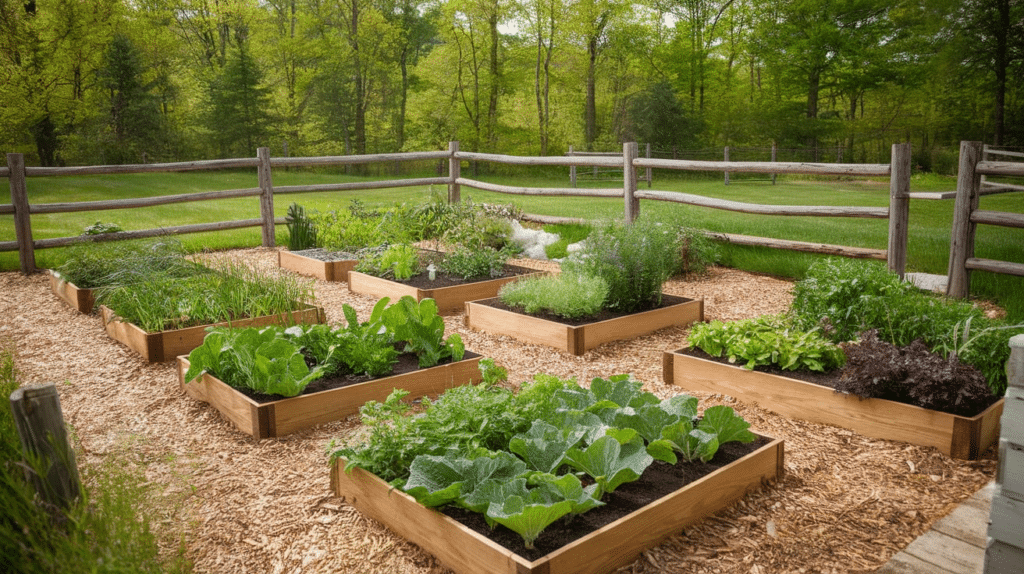
Raised beds are framed boxes filled with soil. They lift the garden above ground level.
Good for:
- Small yards
- Poor soil
- People who want less bending or easier access
Key benefits:
- Soil warms faster in spring
- Beds drain well
- Tight spacing is possible
Raised beds often use closer spacing because the soil is loose and rich. This allows plants to grow with less competition.
3. The Square Foot Layout
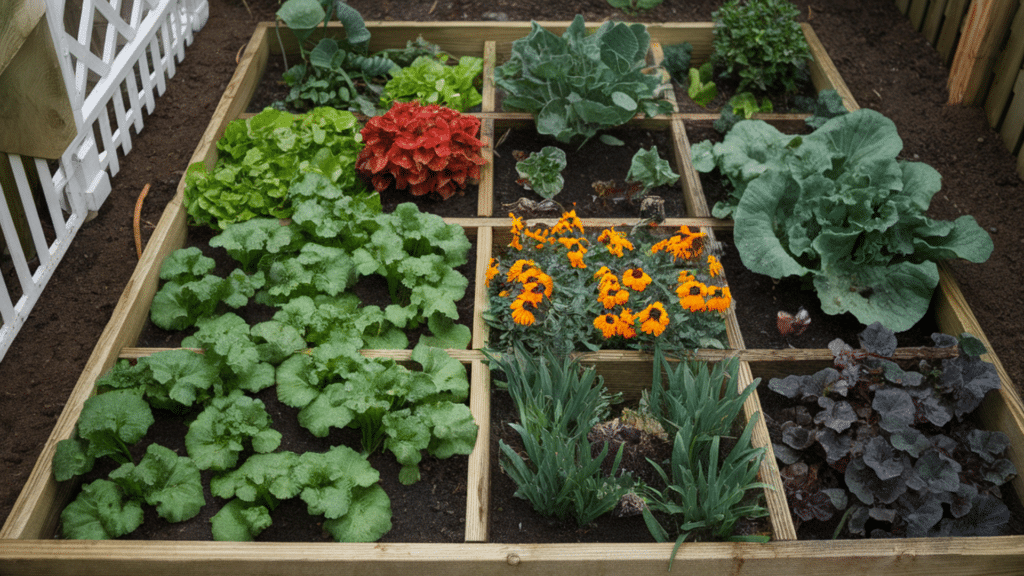
This layout divides the garden into square sections, each one foot by one foot.
Good for:
- Small spaces
- First-time gardeners
- People who like simple rules
Each square gets a set number of plants. For example:
- One tomato per square
- Four lettuce plants per square
- Sixteen radishes per square
It is a clean, simple system that keeps spacing fair and even.
4. The Block Layout
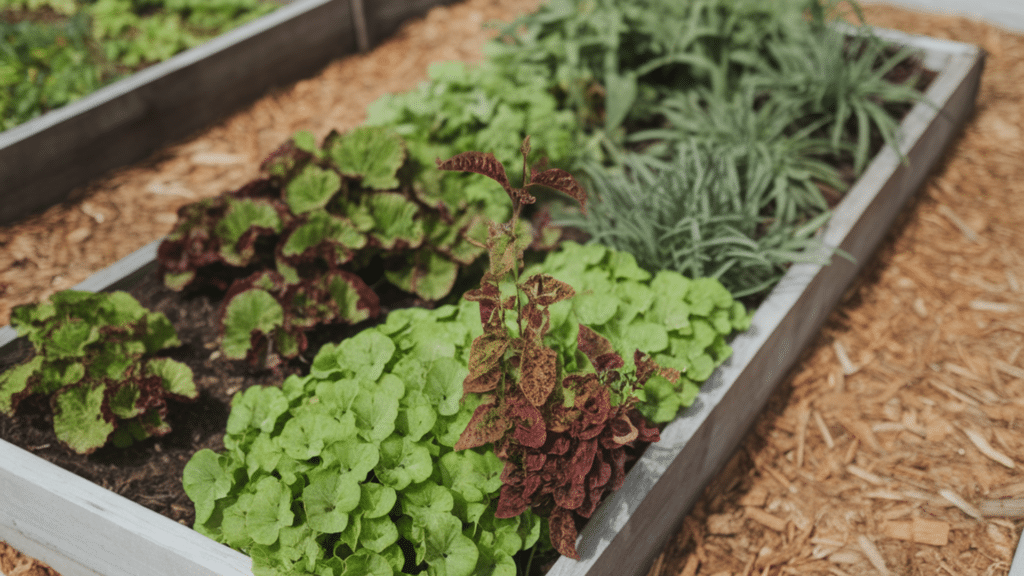
This layout groups plants in blocks instead of rows.
Good for:
- Medium or large gardens
- People who want high yield
- Tight spacing with easy reach
Blocks create more planting room than rows because open pathways are kept to a minimum. Plants grow close together, which reduces weeds.
5. The Container Layout
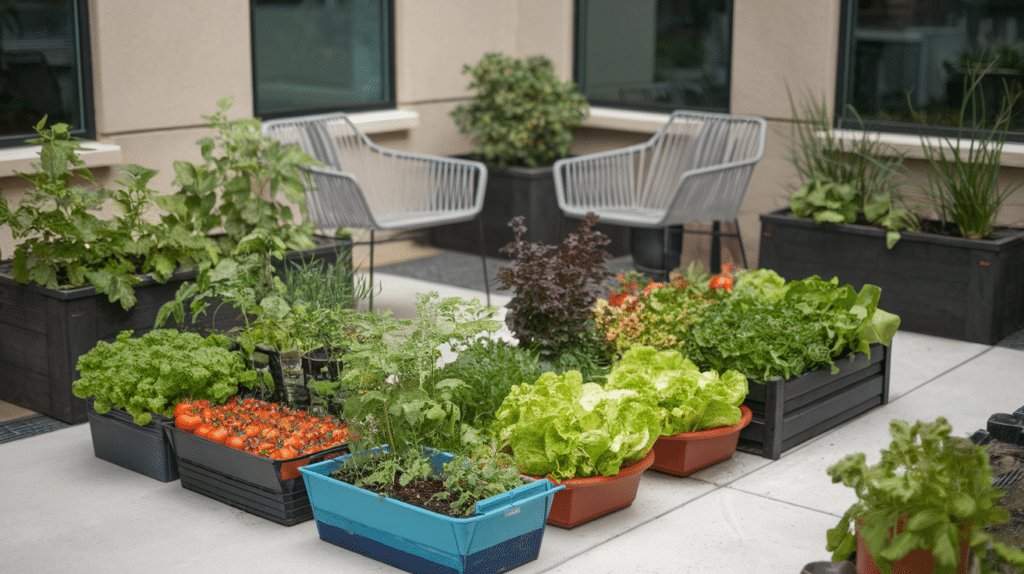
Some gardens do not live in the ground at all. Containers make gardening possible on patios, decks, or balconies.
Good for:
- Very small spaces
- Renting
- Growing only a few plants
Containers still benefit from vegetable garden layout plans and spacing. Each pot needs the right size for its plant. For example:
- Tomatoes need large, deep pots
- Lettuce grows well in wide, shallow containers
- Herbs need small pots
A clean layout keeps containers organized and easy to water.
Garden Shape Ideas for Easy Planning
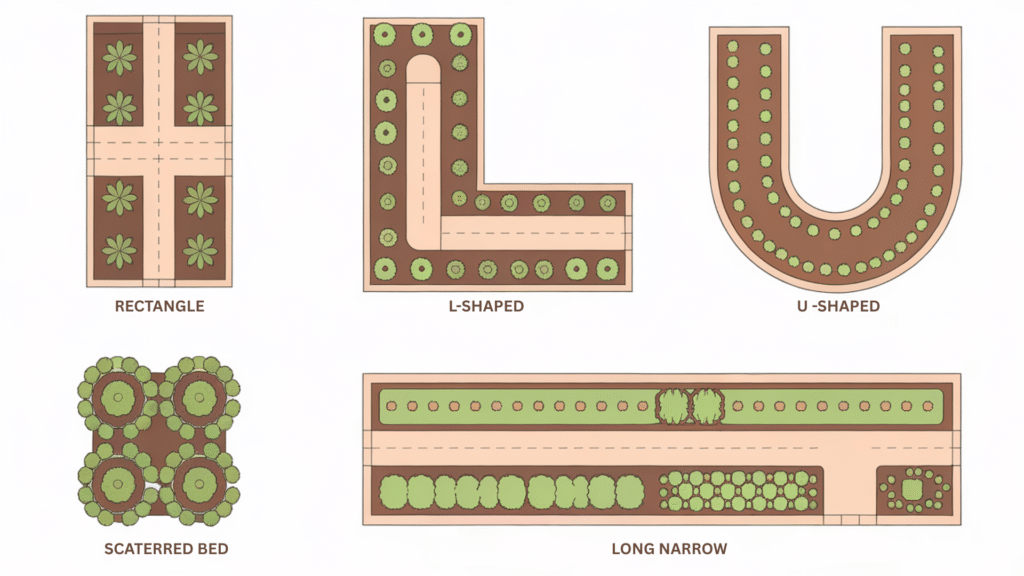
A garden shape helps guide how the space will look and how easy it will be to use. Simple shapes make planning clearer and faster.
| Garden Shape | How It Works | Why It Helps |
|---|---|---|
| Rectangle Garden | Uses straight lines and even beds. | Easiest to plan. Works well with rows, raised beds, and block layouts. Simple paths fit well. |
| L-Shaped Garden | Fits into corners or edges of the yard. | Let’s you split plant groups. Suitable for mixing tall and short crops. |
| U-Shaped Garden | Beds form a “U” with an open center. | Easy to reach all plants from the outside. Great for raised beds. |
| Long Narrow Garden | Uses a slim space with long rows or beds. | Works well in small or tight yards. Keeps the layout organized and straightforward. |
| Scattered Bed Garden | Beds are placed in different sunny spots across the yard. | Suitable for yards with uneven sun. Lets you use sunlight in different areas. |
How to Pick the Right Plant Spacing
Plants need enough room to grow strong, but not so much room that weeds take over.
Good spacing helps roots spread, keeps plants from crowding, and allows air to move between them.
This lowers the chance of disease and makes the garden easier to care for. It also makes harvesting simpler because plants are easier to reach.
Each type of vegetable has its own spacing range, so checking these guidelines before planting helps the garden stay healthy and productive.
Common Vegetable Spacing Guide
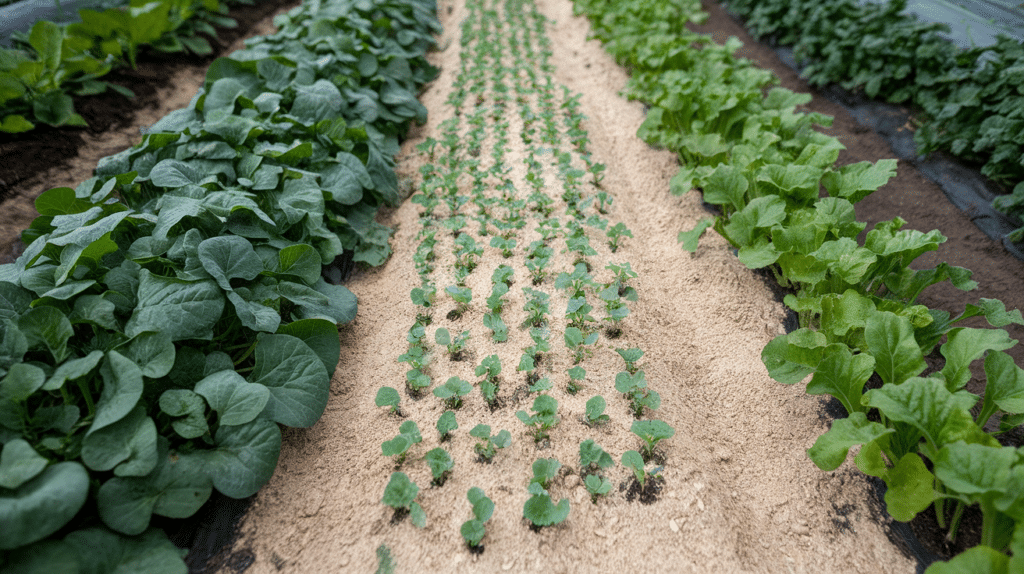
Use this simple chart to see the spacing each vegetable needs for healthy growth.
Leafy Greens
Leafy vegetables grow quickly. They do not need deep soil.
- Lettuce: 10–12 inches
- Spinach: 6 inches
- Kale: 18–24 inches
- Swiss Chard: 12 inches
These plants benefit from partial shade and steady water.
Root Vegetables
These plants grow under the soil. They need soft ground.
- Carrots: 2–3 inches
- Radishes: 1–2 inches
- Beets: 3–4 inches
- Onions: 4 inches
These crops are often grown in rows or square-foot layouts.
Vine and Spreading Vegetables
Some vegetables love to spread. They take up more room.
- Cucumbers: 18–24 inches (or use a trellis)
- Squash: 3–4 feet
- Pumpkins: 4–6 feet
- Melons: 3–4 feet
Vine crops can climb if given support. This reduces space and keeps fruit off the ground.
Fruit Vegetables
These plants grow tall or wide and need strong support.
- Tomatoes: 18–24 inches
- Peppers: 12–18 inches
- Eggplants: 18–24 inches
Please place them in sunny spots to keep plants warm and productive.
Legumes (Beans and Peas)
Beans and peas fix nitrogen in the soil, which helps the garden.
- Bush Beans: 4–6 inches
- Pole Beans: 4–6 inches (with support)
- Peas: 2 inches
These crops grow well in cooler months.
More Ways to Support Your Garden
Here are a few simple planning tips that help your garden stay easy to care for and productive.
- Watering Made Simple: Use drip lines, soaker hoses, or easy hand watering to give plants steady moisture with less effort.
- Planning for Harvest: Keep often-used crops near the front, group plants by harvest time, and leave room for second plantings.
- Planning for Small Spaces: Grow upward with trellises, pick compact plant types, and use containers along edges or walls.
To Conclude
A strong layout helps bring order to the garden and makes each task feel lighter. With clear rows, steady spacing, and easy paths, the garden becomes more enjoyable to care for.
Good spacing supports steady growth and keeps plants easy to reach at harvest time.
Small choices, like using raised beds or grouping plants by height, can guide the garden through each season.
With the right plan, the garden grows with less trouble and more success. Start outlining your layout today and turn your space into a simple, productive garden.