

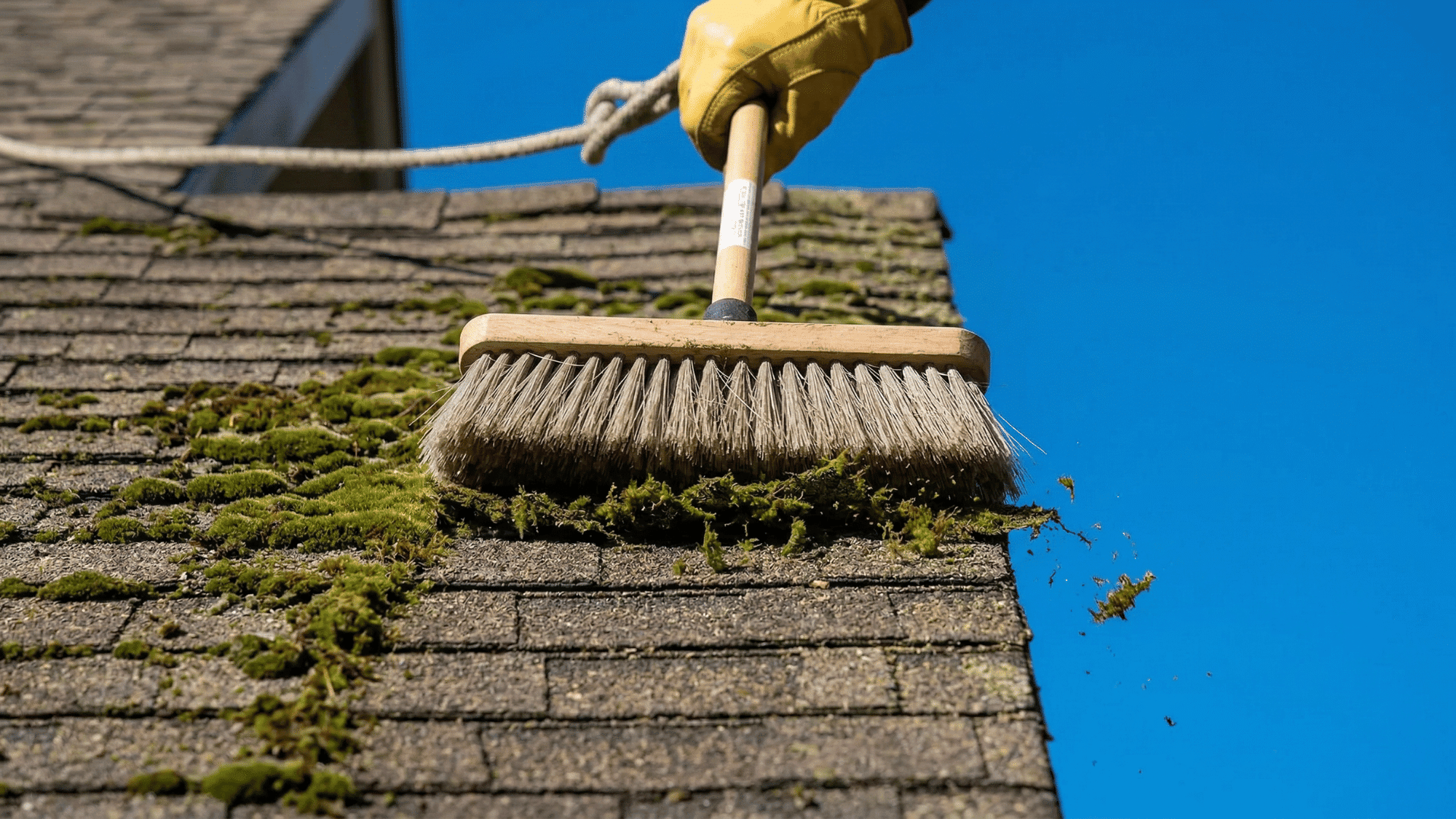
Moss on the roof looks harmless at first. Just a little green patch here and there. But give it a few months, and it starts lifting shingles, trapping moisture, and quietly causing damage that costs a lot to fix.
Most people try to scrub it off or blast it with a pressure washer. That usually makes things worse.
There are ways to get rid of roof moss that actually work without tearing up the shingles in the process. It just takes knowing what to use and what to avoid.
This blog covers the right steps to safely clear moss off a roof, so the damage stops there and does not worsen.
Causes and Risks of Moss on the Roof
Moss does not just appear randomly. Several conditions make a roof the perfect place for it to grow and spread.
Causes of Moss on the Roof:
- Shade and Moisture: Trees hanging over the roof block sunlight and keep the surface damp, giving moss the perfect conditions to grow.
- Debris Buildup: Leaves, dirt, and twigs collect on shingles over time. That trapped debris holds moisture, which speeds up moss growth significantly.
- Poor Roof Drainage: When water does not drain off quickly, it sits on the shingles longer. That standing moisture gives moss exactly what it needs.
- Humid Climate: Homes in wet or humid regions see moss problems more often. The constant dampness in the air keeps the roof surface moist.
Risks of Moss on the Roof:
- Shingle Damage: Moss roots dig into shingles and lift them up. Over time, this breaks down the material and leads to costly repairs.
- Water Leaks: Lifted shingles allow rainwater to seep underneath. That trapped water can work its way into the home and cause leaks.
- Structural Damage: Long-term moisture from moss can rot the wood beneath the shingles. This weakens the roof structure and makes repairs far more expensive.
Tools and Materials Needed to Get Moss Off the Roof
| Tools | Materials |
|---|---|
| Soft-bristle brush (long-handled) | Liquid bleach |
| Leaf blower | Water |
| Garden sprayer (pump sprayer) | Mild dish soap |
| Ladder (with stabilizer) | Protective gloves |
| Safety harness (recommended) | Safety goggles |
| Gutter scoop | Non-slip shoes |
How to Get Moss Off a Roof In Simple Steps
Taking moss off a roof does not have to be complicated. Following the right steps makes the whole process much safer and more effective.
Step 1: Remove Surface Debris and Improve Sun Exposure
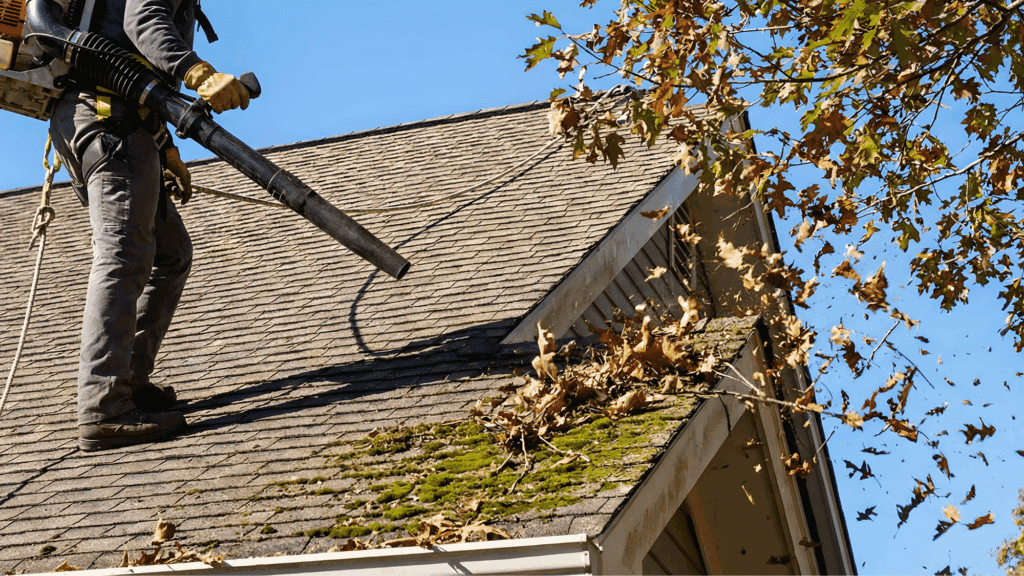
Before directly tackling the moss, start by clearing away loose debris such as leaves, twigs, and dirt. Moss thrives in shaded, damp areas, especially sections near overhanging trees or downspouts.
If possible, trim branches that block sunlight from reaching the roof. Increased sunlight helps dry moisture faster, making it harder for moss to regrow.
Use a leaf blower or gently sweep debris off the roof surface. This first step prepares the area for effective moss removal and prevents debris from interfering with later treatment.
Step 2: Brush Off Thick Moss Growth
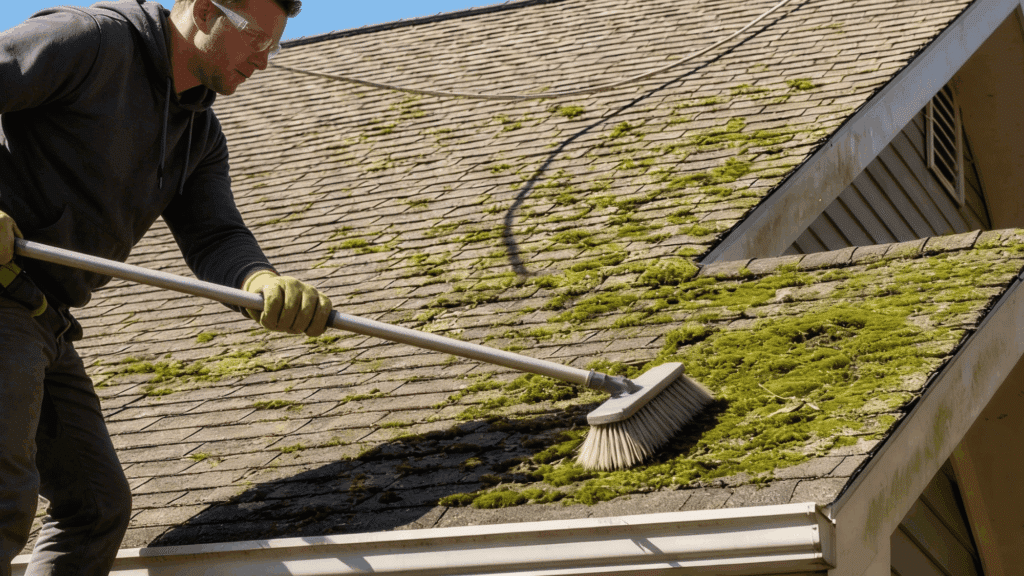
Using a soft-bristle brush, gently scrub the moss off the shingles. Avoid using excessive pressure, as aggressive brushing can damage shingles or dislodge granules.
Moss often looks deeply rooted but usually loosens easily with steady, light strokes. Brush downward in the direction of the shingles to prevent lifting them.
Physically removing as much moss as possible is important because dead moss does not always fall off on its own. Removing the bulk of it ensures better results when applying chemical treatment in the next step.
Step 3: Blow Off Remaining Debris and Clean Gutters
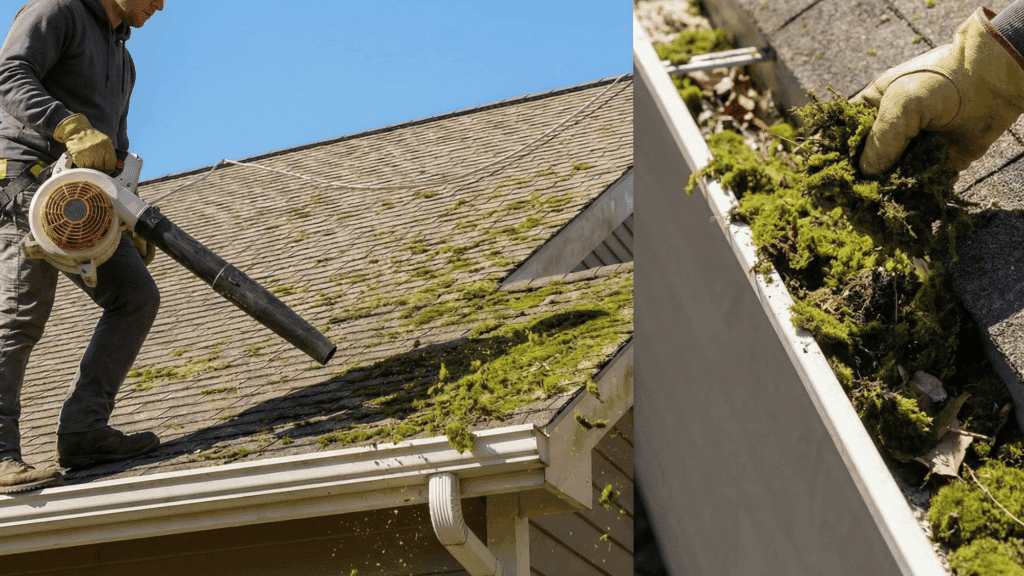
After brushing, use a leaf blower to remove loosened moss and leftover debris from the roof surface. This ensures the cleaning solution can reach the remaining moss directly. Next, clear out the gutters thoroughly.
Moss and debris often accumulate in gutters, blocking water flow and contributing to future moisture buildup.
Use a gutter scoop or gloved hands to remove clumps. Keeping gutters clean improves drainage and reduces the damp conditions that encourage moss growth.
Step 4: Apply a Moss-Killing Cleaning Solution
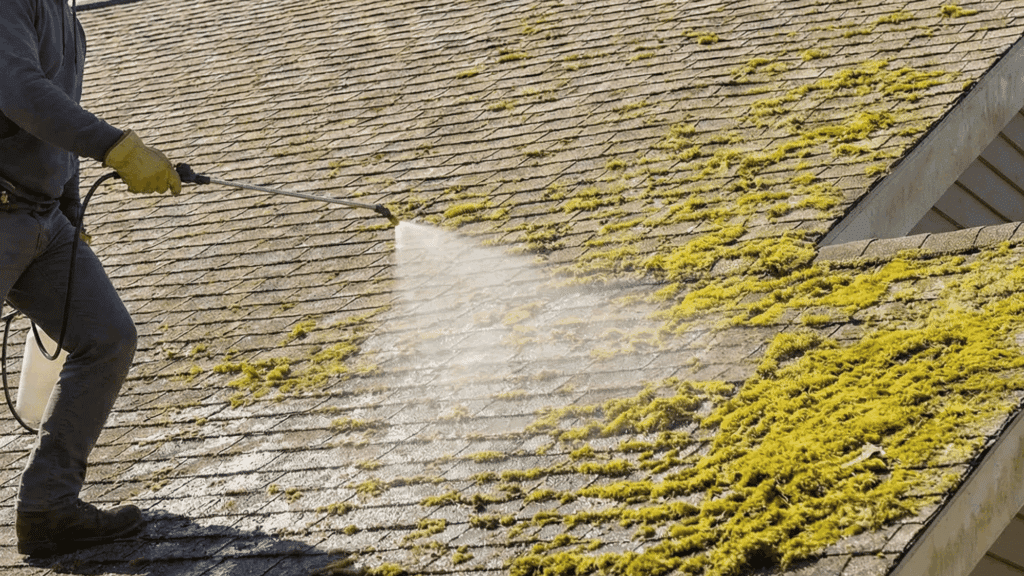
Prepare a solution of bleach, water, and a small amount of mild dish soap in a garden pump sprayer. The bleach kills moss and algae, while soap helps the solution cling to the surface.
Apply a gentle, wide spray pattern; never use a high-pressure stream, as it can force liquid underneath shingles and cause damage.
Spray evenly over affected areas. Within minutes, moss should begin turning yellow or brown, indicating it is dying. Allow the solution to sit and work naturally without rinsing immediately.
Step 5: Inspect and Lightly Re-Brush After Treatment
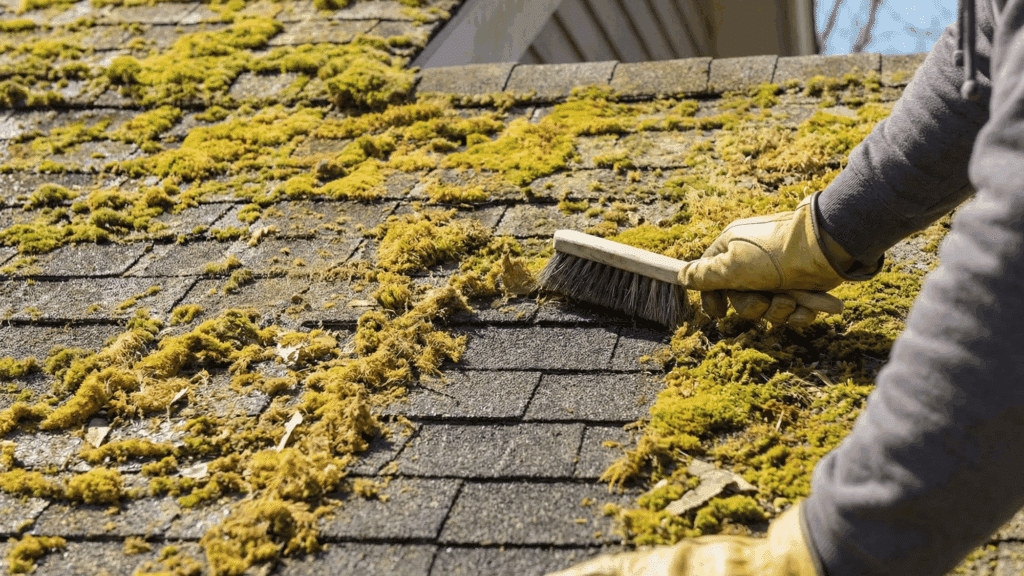
After several weeks, up to two months for stubborn growth, inspect the roof again.
Dead moss will appear dry, yellowed, or brittle. In many cases, it will gradually break down and fall away on its own due to weather exposure. If needed, gently brush off remaining patches using light strokes.
Avoid aggressive scrubbing. This follow-up ensures complete removal and helps restore the roof’s appearance. With proper treatment and improved sunlight exposure, moss growth should significantly decrease over time.
Best DIY Moss Removal Solutions for the Roof
Removing moss does not always need a professional. Several simple solutions work well and can be done right at home.
1. Dish Soap and Water
Dish soap is something most people already have at home. Mix a few tablespoons with water and apply it directly to the mossy areas. Let it sit for 20 to 30 minutes.
The soap breaks down the moss and loosens its grip on the shingles. Scrub gently with a soft brush, then rinse with low-pressure water. It is simple, affordable, and easy on the shingles.
2. White Vinegar Solution
White vinegar is a natural moss killer that works without harsh chemicals.
Mix equal parts vinegar and water in a spray bottle. Spray it onto the moss and let it sit for an hour. The acid in the vinegar kills the moss at the root.
Rinse it off gently afterward. This option is safe for the roof and friendly for the surrounding plants, too.
3. Baking Soda
Baking soda works by raising the pH level on the roof surface, making it hard for moss to survive.
Sprinkle it directly onto the affected areas and leave it overnight. Rain or a gentle rinse will wash the dead moss away. It is one of the gentlest options available and causes no harm to shingles when used correctly.
4. Store-Bought Moss Remover
There are many moss removal sprays available at hardware stores. These products are made specifically for roofs and work faster than homemade solutions.
Follow the instructions on the label carefully. Most require spraying onto the moss, waiting a set amount of time, and rinsing off.
Look for one that clearly states it is safe for use on shingles before buying.
5. Zinc Sulfate Powder
Zinc sulfate is a popular moss treatment that many homeowners swear by. Sprinkle it along the roof ridge or directly on the moss.
When it rains, the zinc washes down the roof and kills existing moss. It also helps stop new moss from coming back.
Use it carefully and keep it away from garden beds, as it can affect nearby plants and soil.
Can You Pressure Wash Moss Off a Roof?
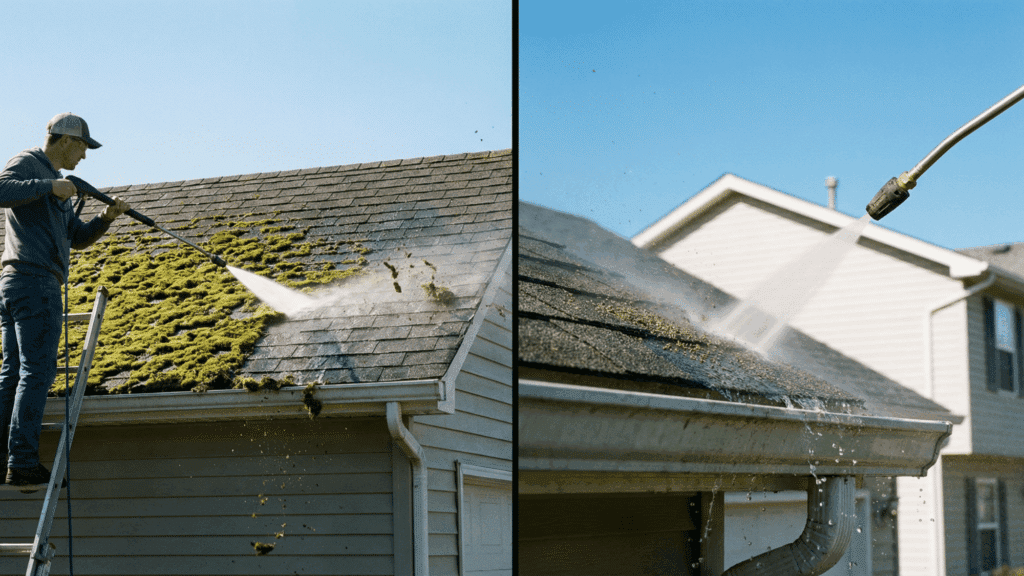
This is one of the most common questions homeowners ask, and the short answer is: it depends.
A pressure washer can remove moss fast, but it can also strip away the protective granules on shingles. Those granules are what keep the roof protected from the sun and rain.
Once they are gone, the shingles age much faster. High pressure can also force water up under the shingles, leading to leaks.
Most roofing experts suggest skipping the pressure washer altogether. A low-pressure rinse or a garden hose works much better. It gets the job done without putting the shingles at risk.
How to Prevent Moss on the Roof from Growing Back
Getting rid of moss is only half the job. Keeping it from coming back is what really protects the roof long-term.
- Trim overhanging tree branches to let more sunlight hit the roof surface and dry out moisture faster.
- Clean gutters regularly to stop debris buildup that traps water and creates the damp conditions moss loves.
- Install zinc or copper strips along the roof ridge so rainwater carries moss-fighting minerals down the shingles.
- Remove leaves and debris from the roof after storms before they sit and hold moisture against the shingles.
- Apply a moss-resistant roof coating every couple of years to create a surface that makes it harder for moss to grip.
- Improve roof ventilation to reduce trapped heat and moisture beneath the shingles, where moss often starts to grow.
- Check the roof twice a year to catch early signs of moss growth before it spreads and becomes a bigger problem.
Conclusion
Moss on the roof is a problem that gets worse the longer it sits there. The right removal method makes all the difference between a clean roof and damaged shingles.
Start with a gentle solution, avoid high pressure, and take small steps to stop moss from coming back. Zinc strips, regular cleanups, and trimming nearby trees go a long way in keeping the roof in good shape.
A little maintenance now saves a lot of money later.
Got a moss removal tip that worked well? Drop it in the comments below; others dealing with the same problem would love to hear it.