

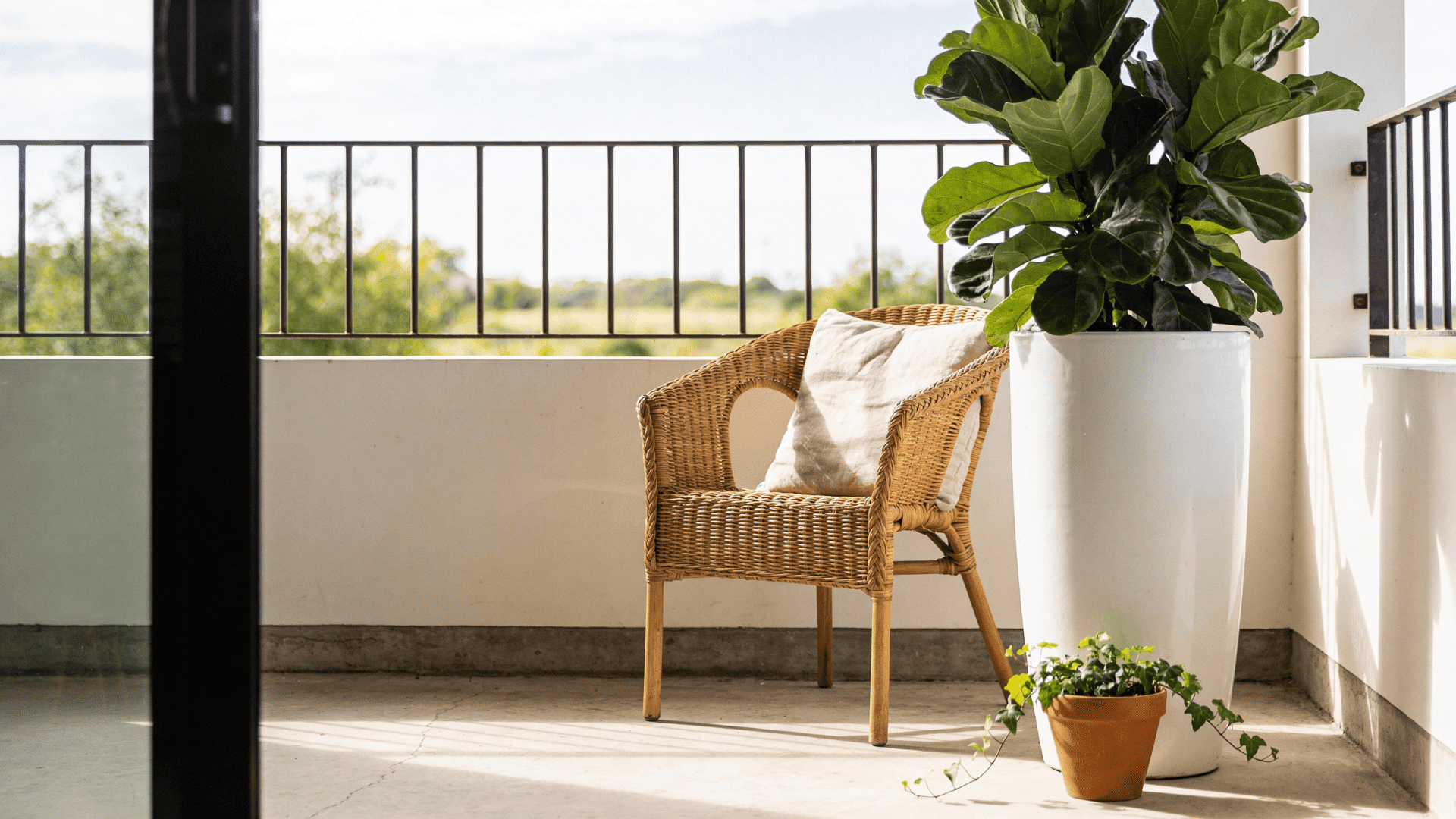
If you have ever looked at your balcony and felt like something is missing, I get it. I have been there too. Sometimes, all it takes is one big plant to completely change how the space feels.
It can make your balcony look fuller, calmer, and more inviting without doing a full makeover.
In this blog, I will walk you through some of the best large indoor plants that work really well on balconies. I will share easy care tips, simple styling ideas, and a few mistakes I have seen people make (so you can avoid them).
You will also find options for different balcony sizes and light conditions.
If you want a bold plant that stands out or something easy to manage, this guide will help you pick what actually works for your space.
Why Large Indoor Plants Are Perfect for Balcony Garden Ideas
Large indoor plants bring height, privacy, and style to balconies, making small outdoor spaces feel balanced, functional, and visually appealing without major design changes needed.
- Tall plants add vertical interest, instantly making balconies look fuller, more structured, and more thoughtfully designed.
- They act as natural privacy screens, reducing visibility from neighbors without the need for walls or blinds.
- Large indoor plants suit compact and spacious balconies, blending well with modern or cozy styles.
- Most are easy to maintain, growing well in containers with simple watering, light, and care.
Adding large indoor plants to your balcony creates a practical, stylish setup that enhances comfort, privacy, and appearance without complicated upgrades or ongoing maintenance.
Best Balcony Garden Ideas Using Large Indoor Plants
Some plants just work better on balconies than others. Here are 16 large indoor plants that grow well in containers, look great in outdoor spaces, and are not hard to care for.
1. Fiddle Leaf Fig for a Bold Balcony Statement
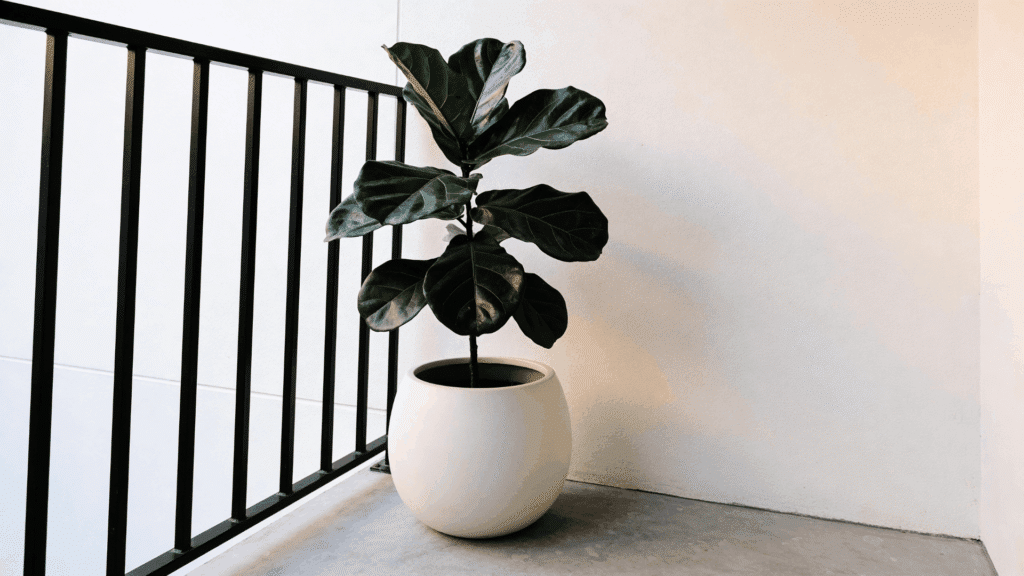
The fiddle leaf fig is one of the most recognizable large indoor plants, and it looks just as good on a balcony as it does inside.
Place it in a corner to create a strong focal point that draws the eye. It grows upright with large, glossy leaves that add real visual weight to any space.
Give it bright indirect light and water only when the top inch of soil feels dry. Avoid moving it too often; this plant settles best when left in one spot.
2. Areca Palm for a Tropical Balcony Look
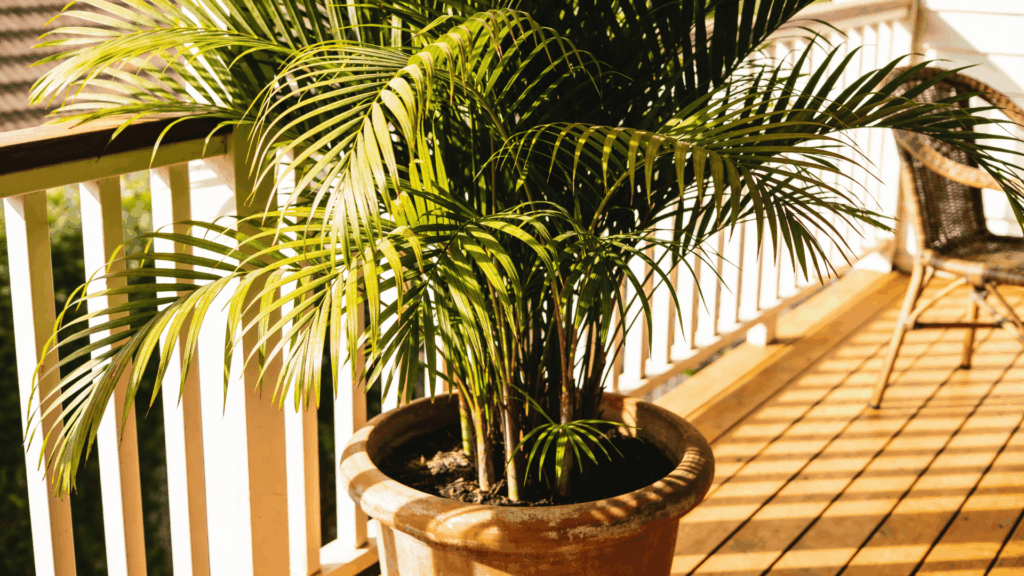
If the goal is a relaxed, tropical feel, the Areca palm delivers it without much effort. Its long, feathery fronds spread outward, creating a natural privacy screen along balcony railings.
It grows best in filtered sunlight and needs regular watering to keep the soil consistently moist, but not waterlogged.
This plant does well in warm conditions, making it a solid choice for balconies that get good airflow and moderate sun throughout the day.
3. Rubber Plant for Minimal Modern Balconies
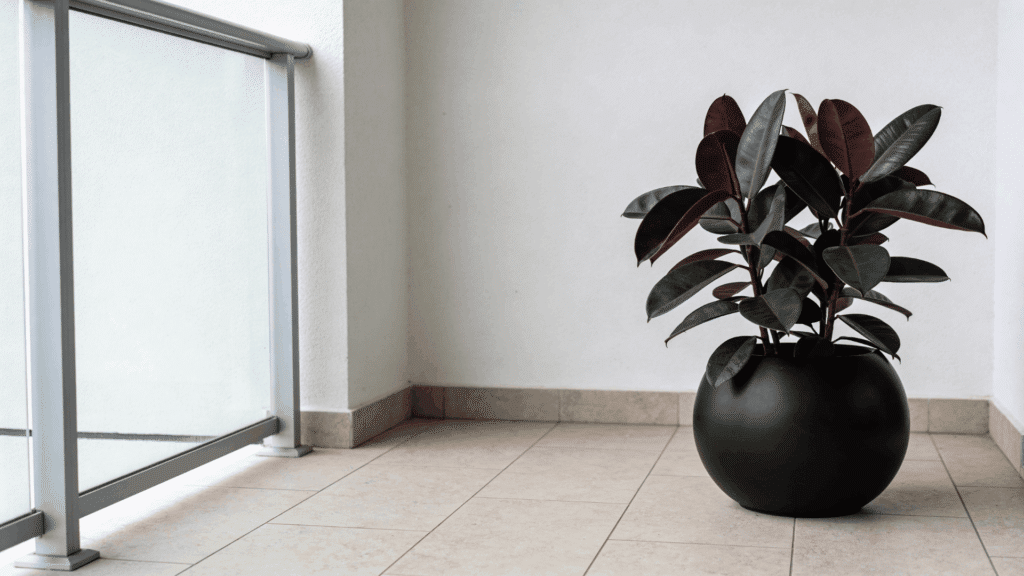
The rubber plant is a great pick for balconies with a clean, minimal look. A single plant in a simple pot makes a strong statement without cluttering the space.
Its thick, dark green leaves, sometimes with a deep burgundy tone, add contrast against light walls or floors.
It handles indirect light well and requires infrequent watering, making it one of the lower-maintenance options on this list. Let the soil dry out between waterings and avoid placing it in direct harsh sun.
4. Bird of Paradise for a Luxe Balcony Feel
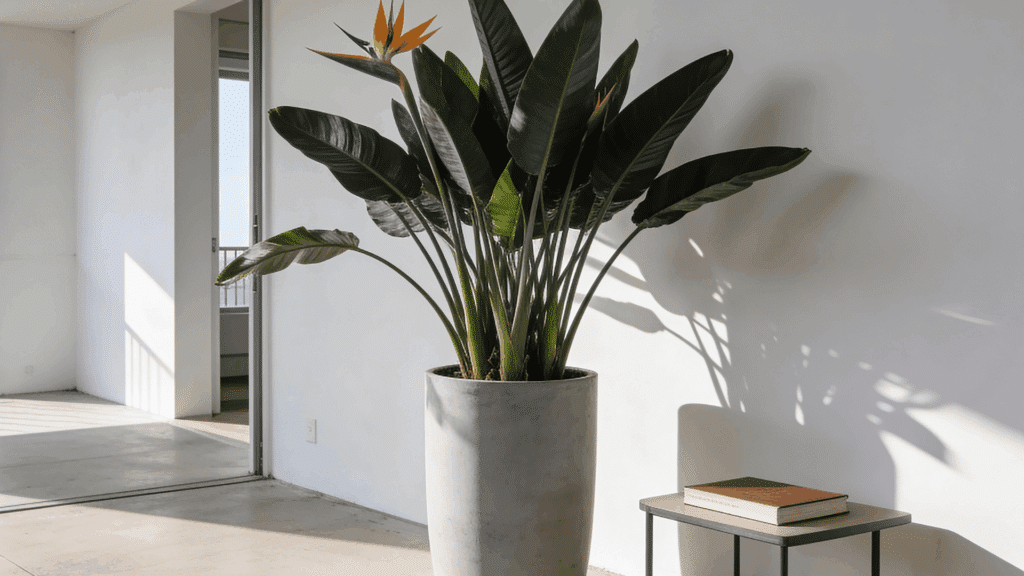
The Bird of Paradise is a showstopper on large, open balconies. Its broad, upright leaves bring a bold, tropical look that fills space without feeling crowded.
This plant loves sunlight, so place it where it gets at least a few hours of direct light each day. Water it regularly during warmer months and cut back slightly in cooler weather.
Occasional misting helps keep the leaves looking fresh, especially in dry or windy conditions on the balcony. It grows slowly but makes a strong visual impact from the start.
5. Monstera Deliciosa for Layered Green Styling
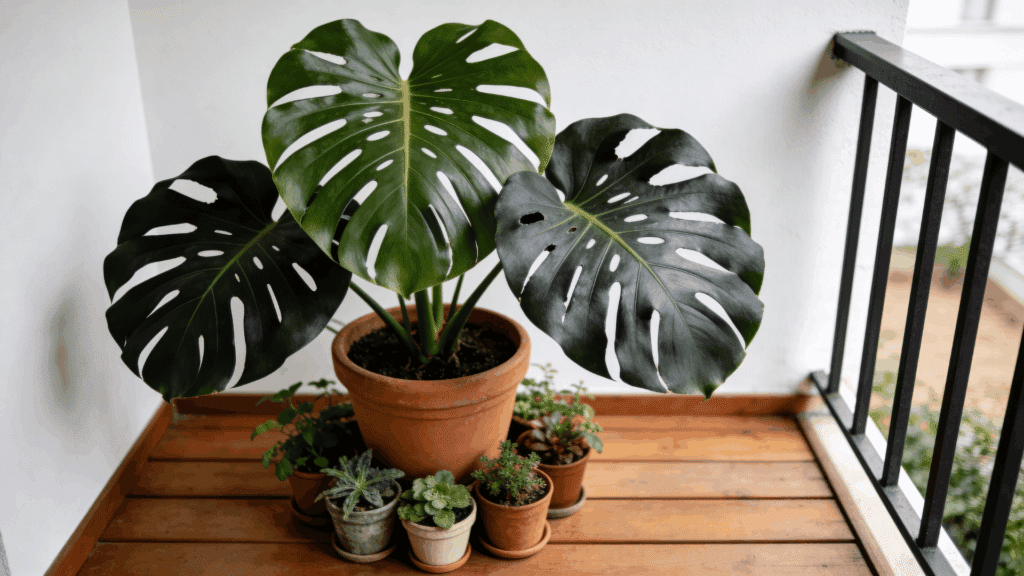
Monstera Deliciosa is a great choice for balconies where layered plant arrangements work well. Its large, split leaves add texture and a tropical feel without taking up too much floor space.
Pair it with smaller plants at its base to build a full, layered look. It grows best in indirect light and needs well-drained soil to stay healthy.
Water it when the top layer of soil feels dry, and make sure the pot has good drainage holes to prevent root issues over time.
6. Dracaena for Narrow Balcony Spaces
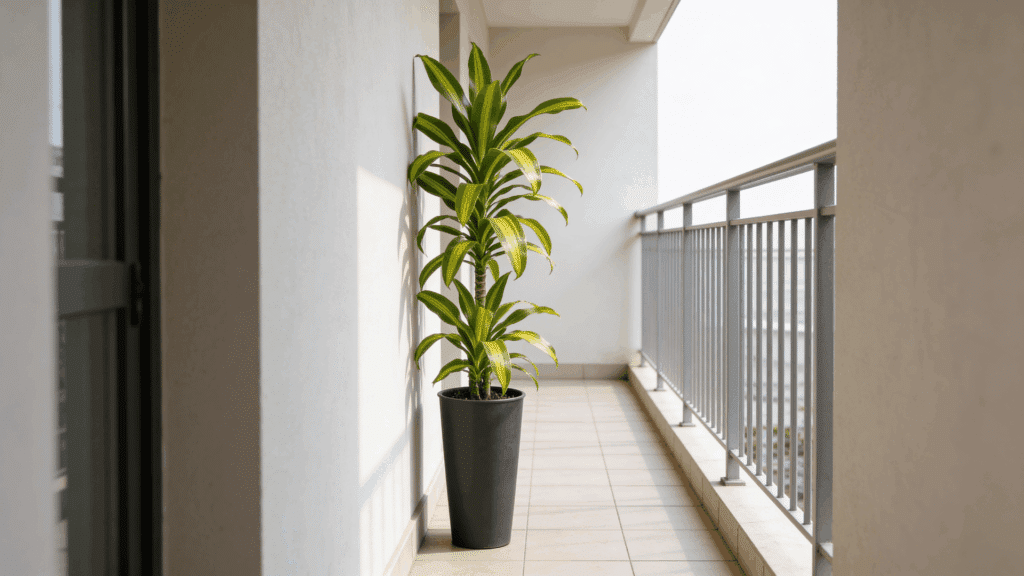
Dracaena is one of the best options for narrow balconies with limited floor space. It grows tall and upright, adding height without spreading outward and crowding the area.
The long, strappy leaves come in several color variations, adding visual interest without requiring extra plants.
It adapts well to different light conditions and requires little watering, making it very low-maintenance. Allow the soil to dry out between waterings, and keep it out of strong, direct afternoon sun to avoid leaf scorch.
7. Kentia Palm for Simple Balcony Decor
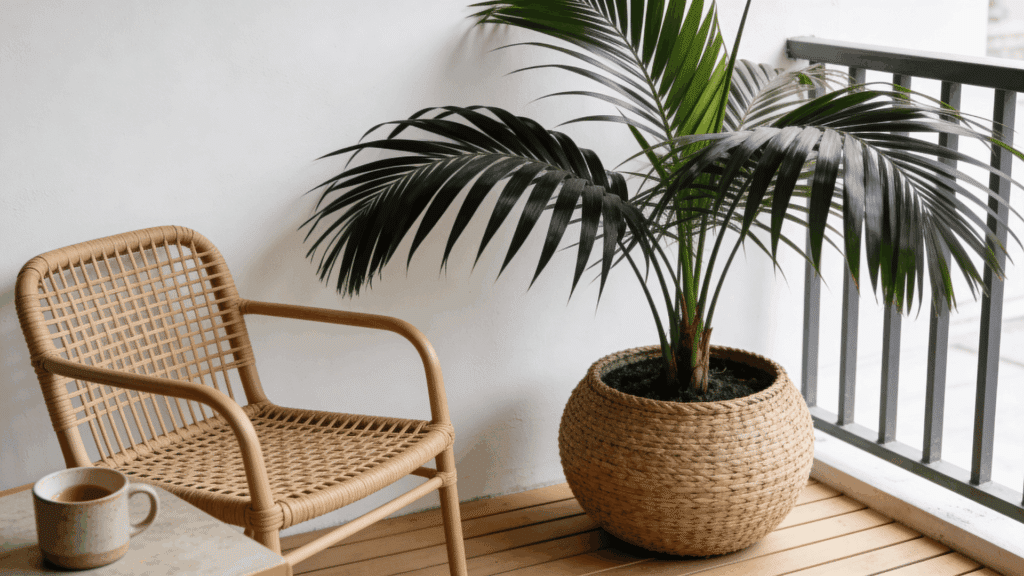
The Kentia Palm is a calm, slow-growing plant that fits well near seating areas on a balcony. Its arching fronds create a soft, relaxed look without overpowering the space.
Unlike many palms, it tolerates shade well, making it a practical choice for balconies that do not get full sun all day.
It is also one of the more forgiving large plants; it tolerates occasional dry spells and does not need constant attention. Water it moderately and keep it in a spot with bright, filtered light for the best results.
8. Snake Plant for Low-Maintenance Corners
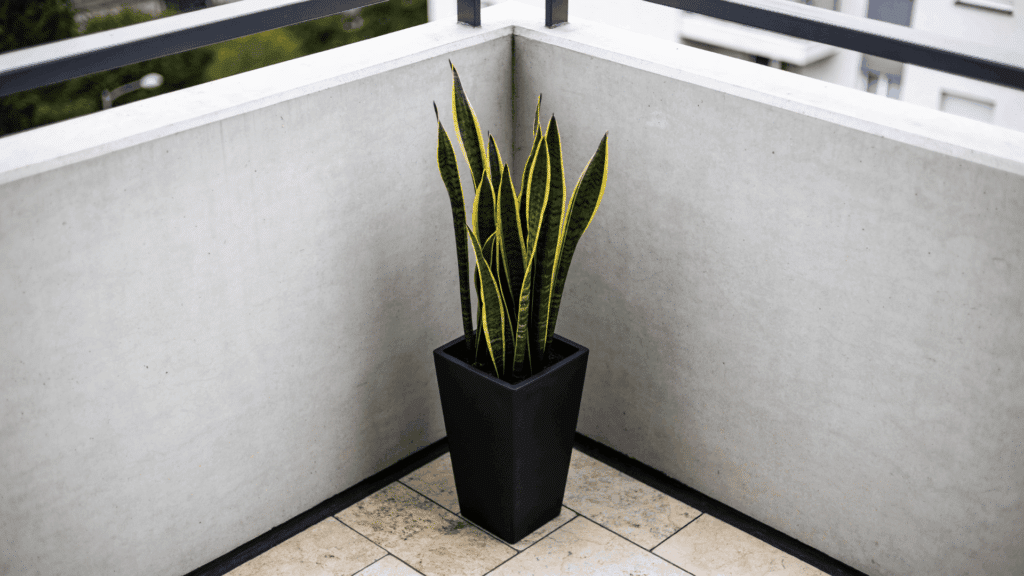
The snake plant is one of the hardiest large indoor plants available. It works well in balcony corners or along edges where other plants might struggle.
Its tall, upright leaves take up very little floor space while still adding a strong visual presence. It handles low light, irregular watering, and fluctuating temperatures better than most plants.
Water it sparingly; once every 1 to 2 weeks is usually enough. If there is a spot on the balcony that gets little attention, the snake plant is the right fit for it.
9. Yucca Plant for Sunny Balcony Spots
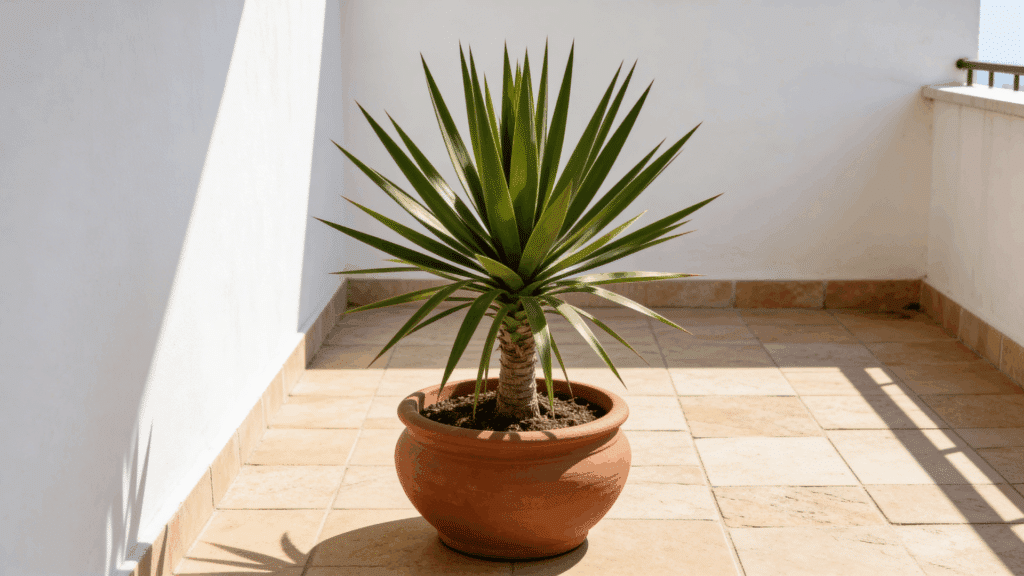
The Yucca plant is a strong choice for balconies that get plenty of direct sunlight. It has a bold, spiky look that complements both rustic and modern setups.
Unlike many large plants, it actually prefers dry conditions, so overwatering is the main thing to avoid. Water it once every two weeks during warmer months and even less in cooler weather.
Plant it in a well-draining pot with sandy or gritty soil to keep the roots healthy. It is one of the most sun-tolerant large plants on this list.
10. Bamboo Palm for Natural Privacy
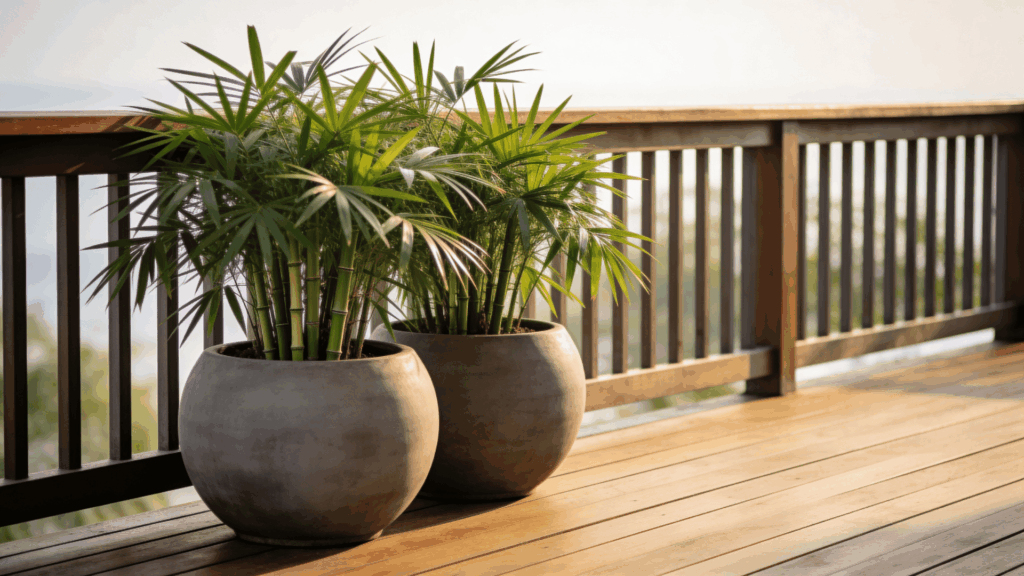
The Bamboo Palm is a practical and good-looking option for balconies that need more privacy. Group two or three together along the railing to create a natural green screen that blocks the view from outside.
It grows best in indirect light and prefers consistently moist soil, so check the soil every few days during warmer months.
It handles humidity well, which makes it a solid pick for balconies in warm or coastal areas. Use a large pot with good drainage to give the roots enough room to grow properly.
11. Schefflera for Balanced Height
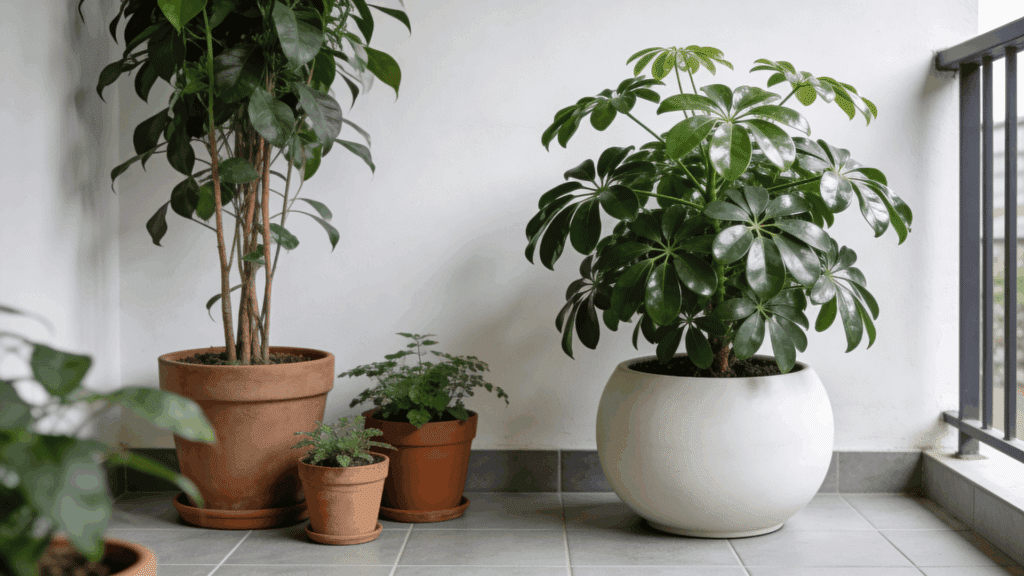
The Schefflera, also called the Umbrella Plant, is a reliable mid-height option for balcony gardens. Its wide, layered canopy of leaves creates a full, rounded shape that fills space without growing too tall.
It works well as a middle layer in a mixed plant arrangement, sitting between taller plants and smaller ground-level ones. It grows best in moderate, indirect light and needs regular but not excessive watering.
Wipe the leaves occasionally to remove dust and keep them looking clean. It is a steady, low-fuss plant that holds its shape well over time.
12. Olive Tree for Mediterranean Style
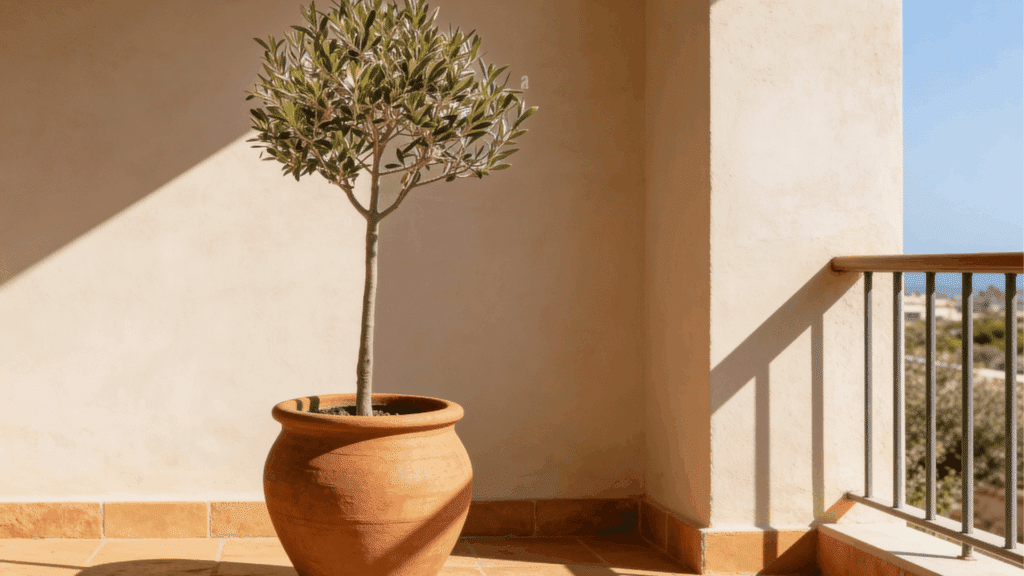
An indoor olive tree brings a simple, natural charm to any balcony. Its slender silver-green leaves and light, open branch structure give it a relaxed, Mediterranean feel that pairs well with terracotta pots and neutral tones.
Place it in the sunniest spot on the balcony since it needs full sun to grow well. Water it lightly and allow the soil to dry out completely between sessions.
It is drought-tolerant and does not like sitting in wet soil. This tree grows slowly, so it stays manageable in a container for many years.
13. Alocasia for Dramatic Leaf Texture
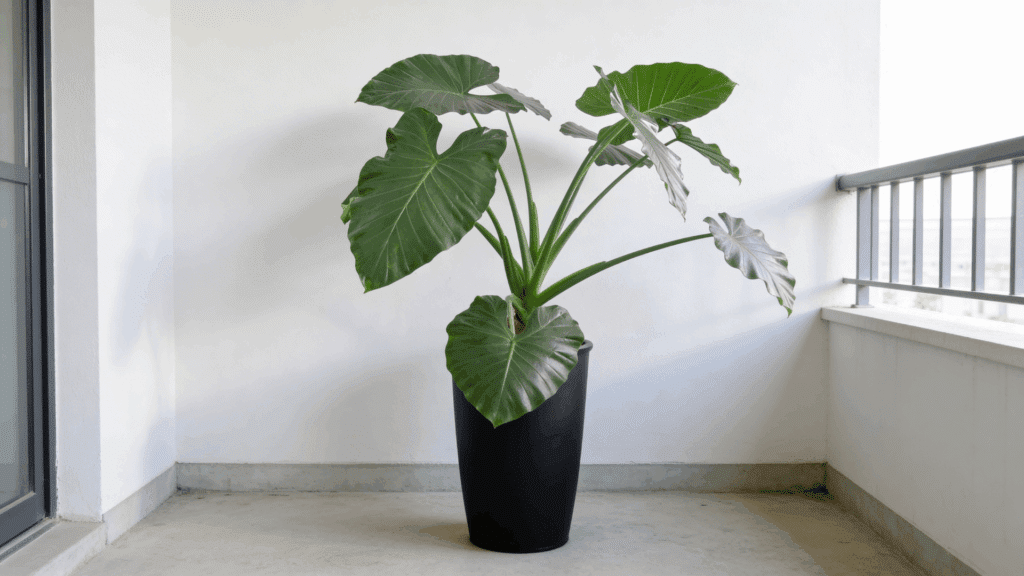
Alocasia is a bold accent plant that works well on balconies where leaf texture and shape matter. Its large, arrow-shaped leaves have strong veining and a glossy surface that stands out against simpler plants or plain walls.
It grows best in indirect light and needs consistent humidity to stay healthy outdoors. Mist the leaves a few times a week or place a water tray nearby to maintain moisture levels.
Keep the soil evenly moist but never soggy. It is best used as a single statement piece rather than grouped with other large plants.
14. Croton for Colorful Balcony Gardens
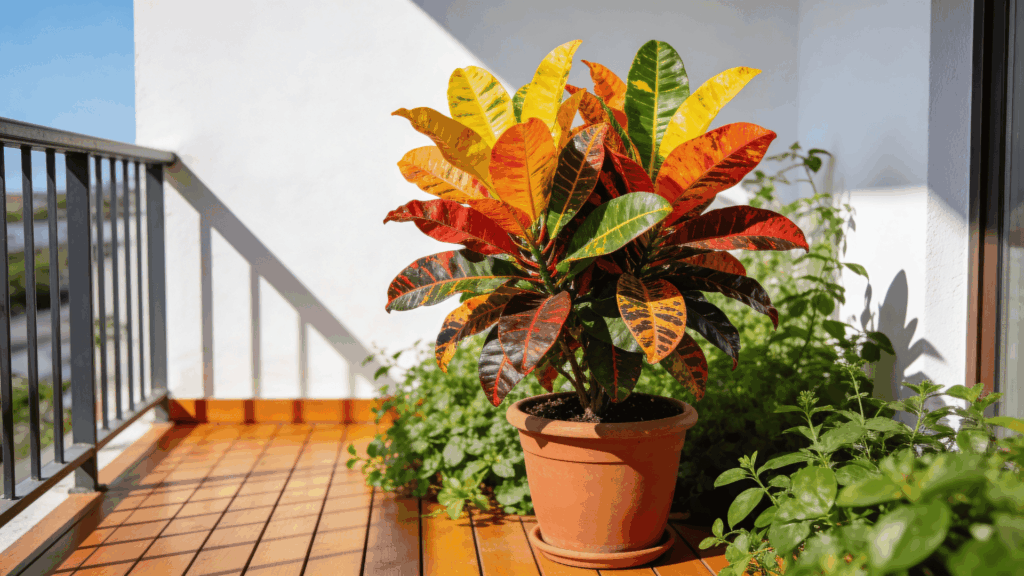
Croton is one of the few large indoor plants that brings real color to a balcony garden. Its leaves come in a mix of yellow, orange, red, and green, which adds contrast when placed next to solid green plants.
It grows best in bright light and needs regular watering to keep the foliage looking its best. The more sunlight it gets, the more vivid the leaf colors become.
Plant it in a well-draining pot and water it consistently without letting the soil dry out completely. It is a simple way to add variety without overcrowding the space.
15. Banana Plant for a Lush Balcony Vibe
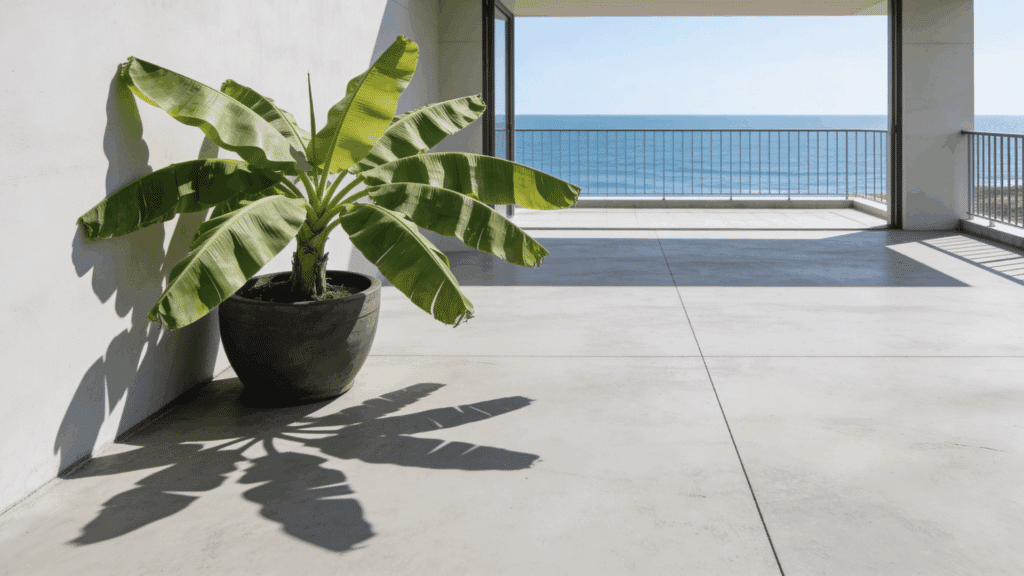
The banana plant is a fast-growing option that adds a full, lush feel to open balconies. Its wide, paddle-shaped leaves spread outward, creating a strong tropical look in a short time.
It needs a good amount of sunlight and regular watering to support its growth. Use a large, deep pot to give the roots enough space and top up with water frequently during hot months.
It is not the best choice for small or shaded balconies, but on a large, sunny one, it grows quickly and fills space effectively.
16. Parlor Palm for Small Balcony Styling
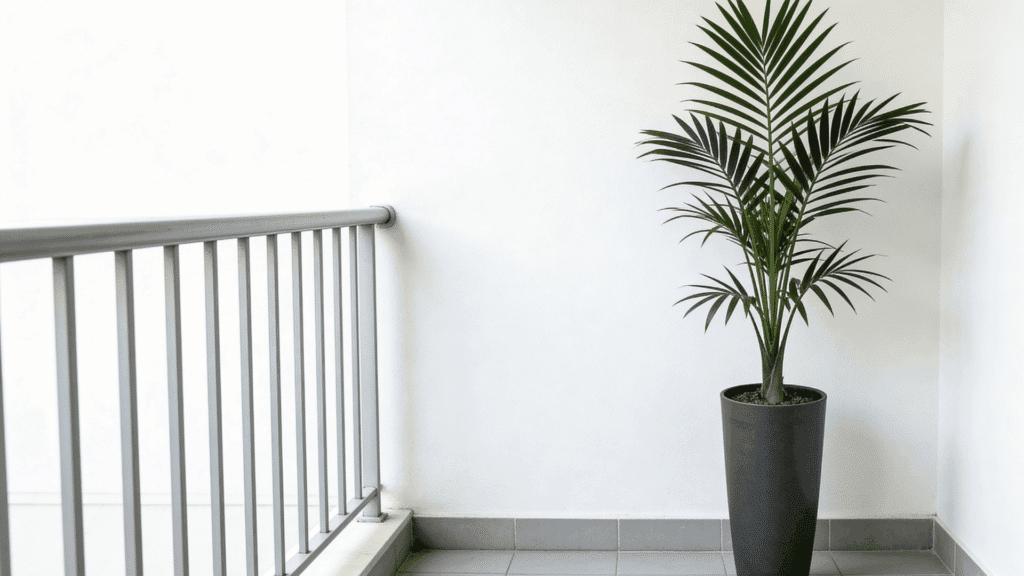
The Parlor Palm is one of the best large plants for smaller balconies. It grows tall without spreading too wide, adding height and a finished look without taking up much floor space.
It is among the most low-light-tolerant palms available, making it a practical choice for balconies facing away from direct sunlight.
Water it moderately and allow the top layer of soil to dry out between waterings. It is slow-growing, easy to manage, and works well in compact spaces where larger, faster-growing plants would quickly outgrow it.
17. Chinese Evergreen for Easy Balcony Greenery
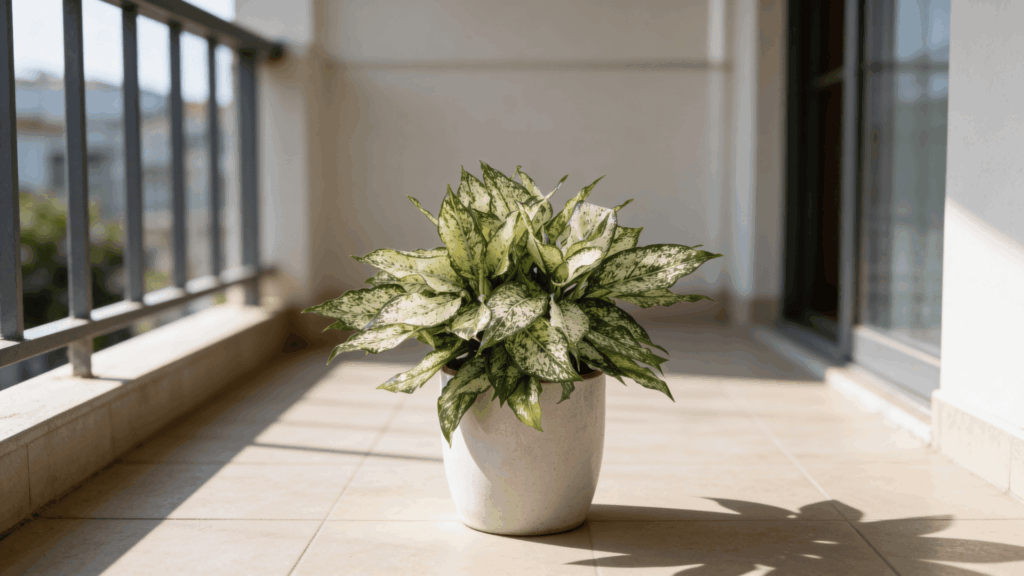
The Chinese Evergreen is one of the easiest large indoor plants to keep on a balcony. It handles low light well, making it a reliable option for shaded corners where other plants struggle.
The leaves come in shades of green, silver, and sometimes red, adding quiet visual interest with little effort.
Water it only when the soil feels dry and avoid placing it in direct sun, which can scorch the leaves. It is a steady, no-fuss plant that works well for anyone who wants greenery without a demanding care routine.
18. Cast Iron Plant for Tough Balcony Conditions
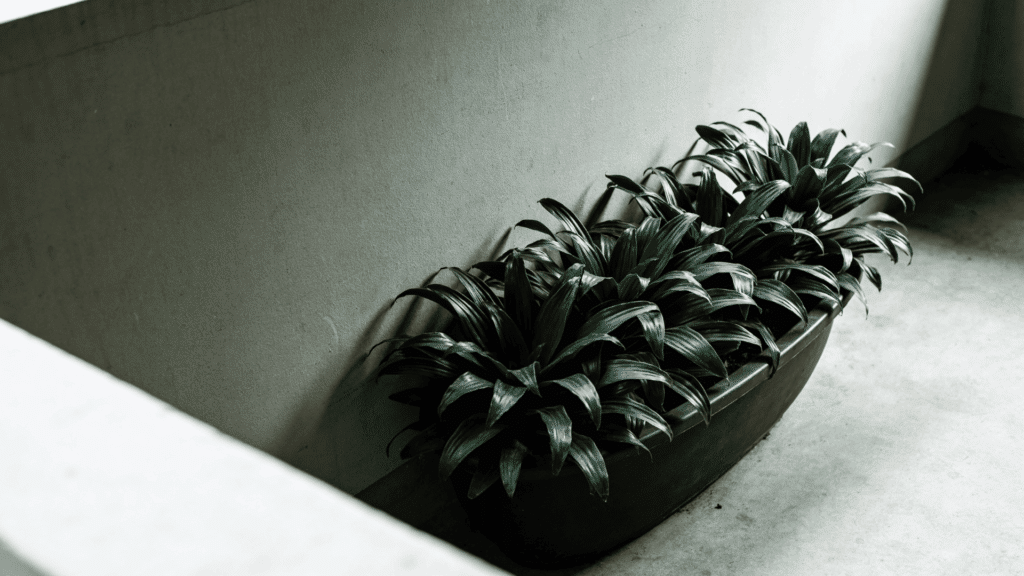
The Cast Iron Plant lives up to its name. It handles low light, irregular watering, and general neglect better than almost any other large indoor plant.
This makes it a strong pick for balconies that are hard to access regularly or do not get much natural light. Its long, dark green leaves grow in dense clusters, giving the space a full, grounded look.
Water it infrequently and avoid over-fertilizing. It grows slowly but stays healthy with very little input, making it one of the most practical options for low-maintenance balcony setups.
19. ZZ Plant for Sleek Modern Balconies
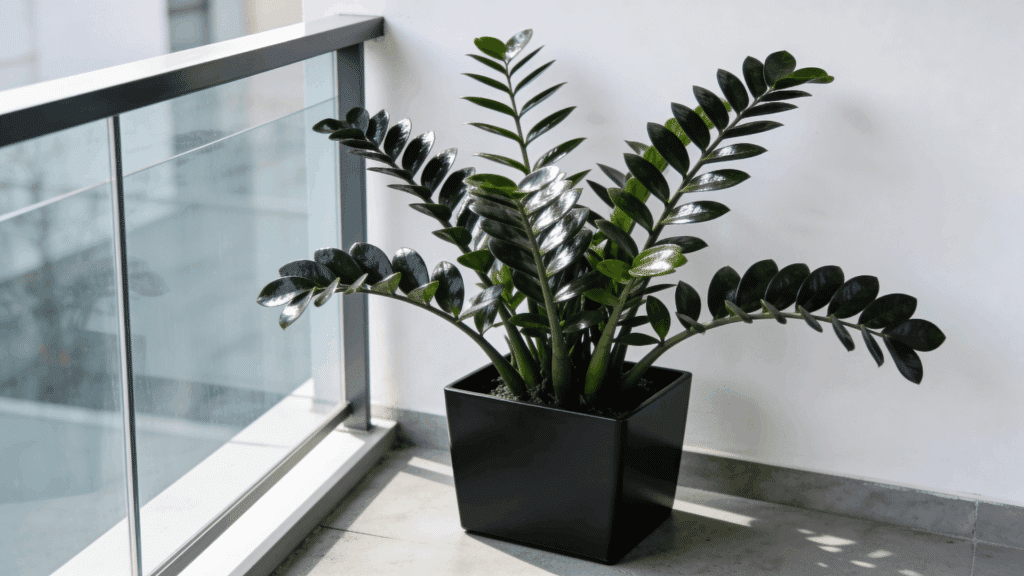
The ZZ Plant is a clean-looking, upright plant that fits well in modern balcony setups with minimal decor. Its glossy, dark green leaves grow in neat rows along arching stems, giving it a polished look that suits simple, structured spaces.
It thrives in indirect light and stores water in its roots, so it needs very little watering; once every two to three weeks is usually enough.
It is a good choice for balconies that do not get direct sun and for people who prefer a plant that stays tidy and compact over time.
20. Peace Lily for Clean and Fresh Balcony Styling
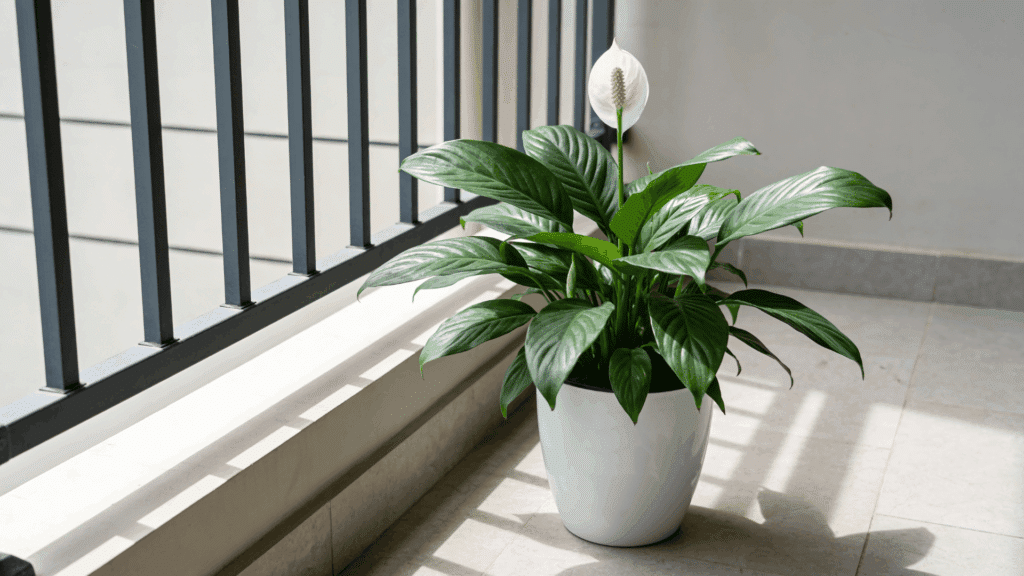
The Peace Lily is a smooth, clean-looking plant that works well in modern or minimal balcony spaces. Its deep green leaves and occasional white blooms add a quiet freshness without clashing with other decor.
It grows best in indirect light and prefers soil that stays slightly moist, not wet, just consistently damp. Avoid placing it in direct sun, as the leaves can yellow quickly.
It is a good fit for balconies with filtered light and pairs well with neutral-colored pots for a simple, put-together look that requires little upkeep.
21. Norfolk Island Pine for a Unique Vertical Accent
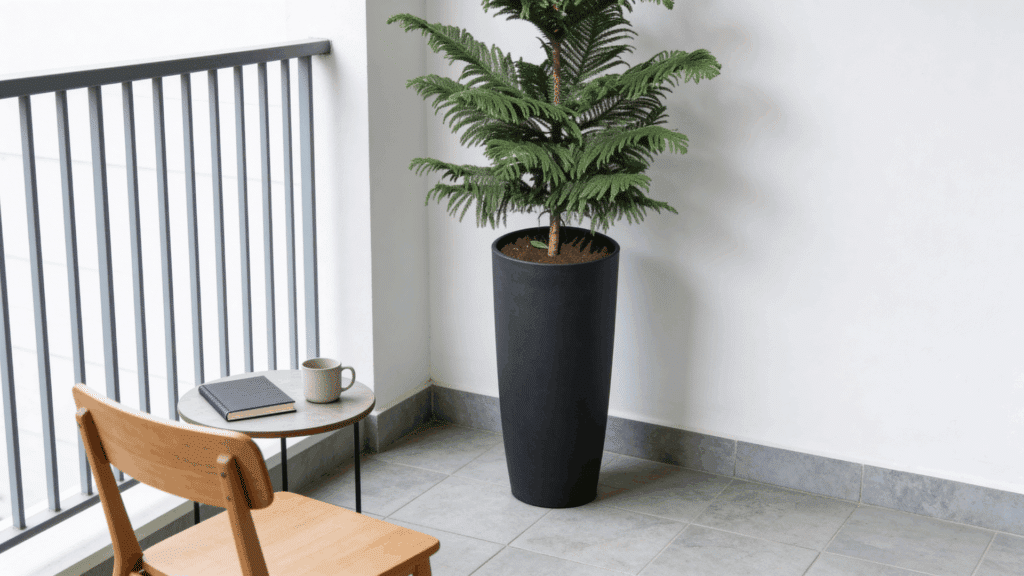
The Norfolk Island Pine adds vertical height to a balcony without taking up much floor space. Its tiered, horizontal branches give it a structured, tree-like shape that stands out among broader-leafed plants.
It grows best in bright indirect light and needs consistent watering to keep the branches looking full and green.
Allow the top layer of soil to dry slightly between waterings, but do not let it dry out completely. It works well as a single accent plant placed against a wall or in a corner where height is needed without adding extra width.
22. Money Tree for Balanced Decor
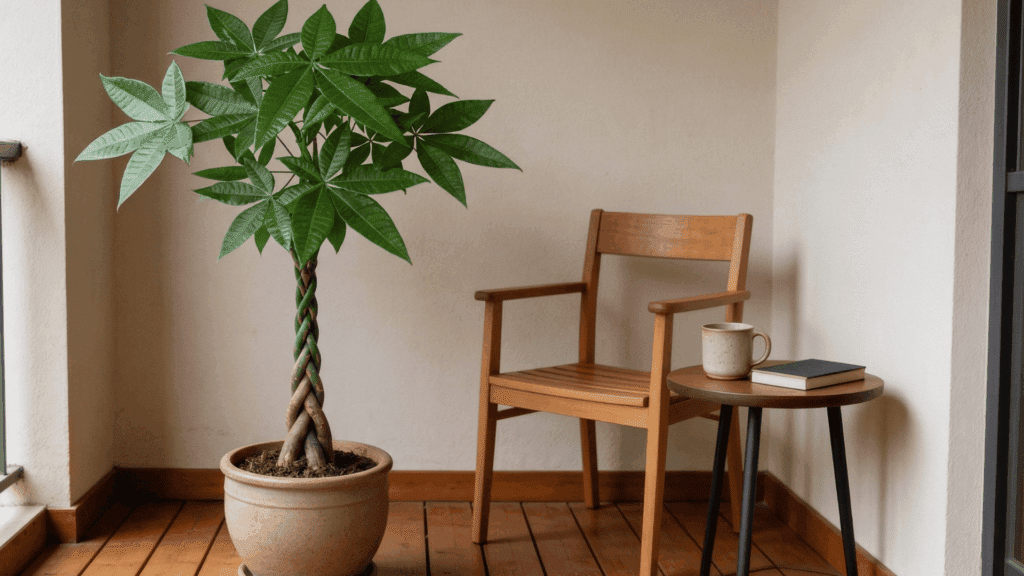
The Money Tree is a well-proportioned plant that works as a centerpiece on smaller balconies. Its braided trunk and layered canopy of bright green leaves give it a neat, balanced shape that looks good from most angles.
It grows best in moderate, indirect light and does not need frequent watering. Allow the soil to dry out between sessions and avoid letting it sit in standing water, as the roots are prone to rot.
It fits well in medium-sized pots and holds its shape without needing much pruning or intervention over time.
23. Cordyline for Bold Color
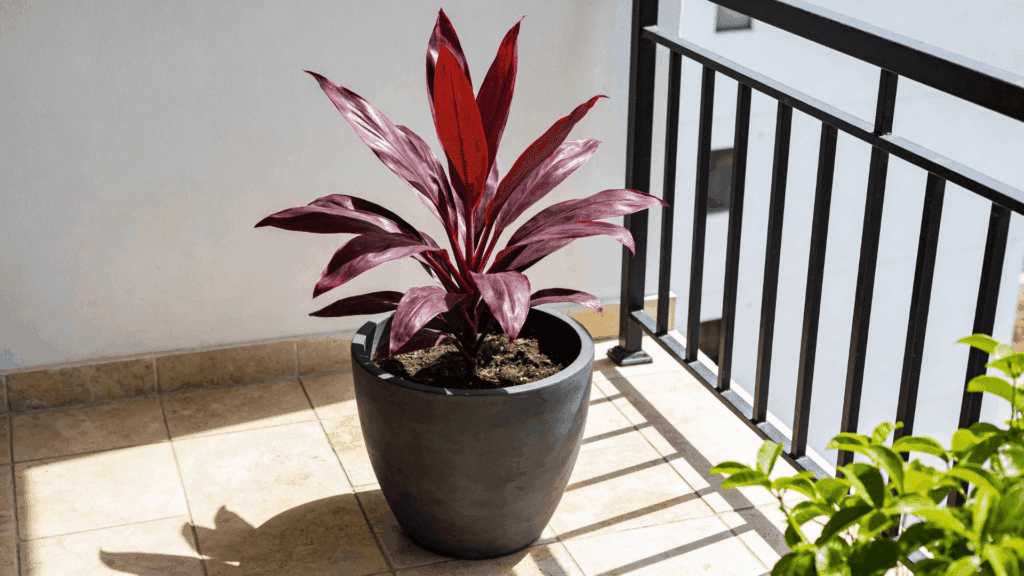
Cordyline is a strong structural plant that adds both height and color to a balcony garden. Its long, sword-shaped leaves come in deep red, purple, green, or a mix of all three, making it useful for adding contrast next to solid green plants.
It grows upright without spreading wide, which keeps the balcony from feeling crowded. Place it in a spot with bright light to keep the leaf colors vivid and water it moderately, allowing the soil to dry slightly between sessions.
It is a reliable option for balconies that need more visual structure and variety.
24. Philodendron for Lush Corners
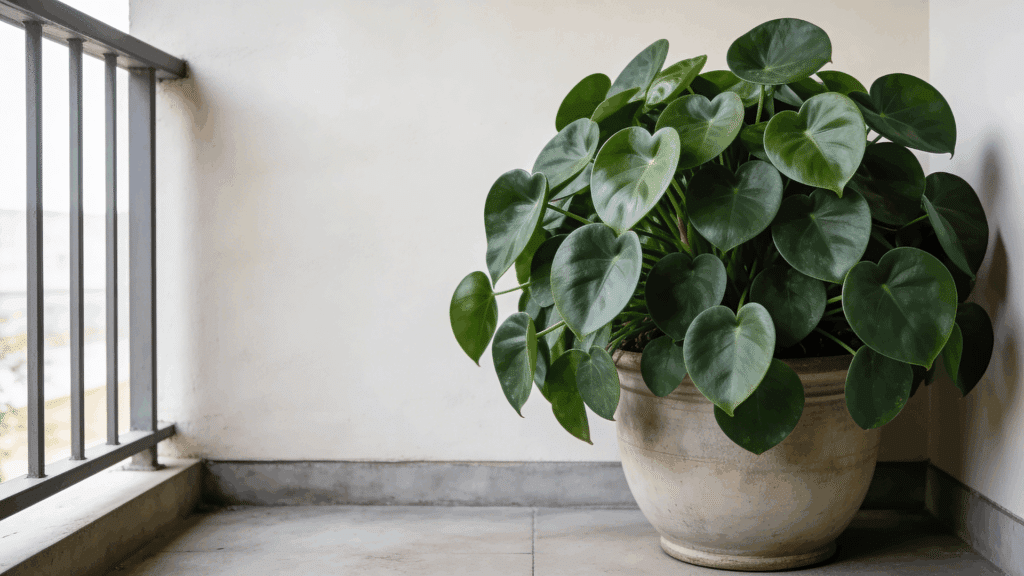
The Philodendron is a full, fast-growing plant that fills balcony corners quickly without requiring much attention. Its large, heart-shaped leaves grow in dense layers, creating a rich green look that complements plain walls or railings.
It grows best in indirect light and prefers soil that stays slightly moist between waterings. Avoid letting it sit in direct afternoon sun, as the leaves can fade or scorch over time.
Use a wide pot to give the roots space to spread, and trim back any overgrown stems to keep the shape looking clean and contained on the balcony.
25. Ponytail Palm for Sculptural Interest
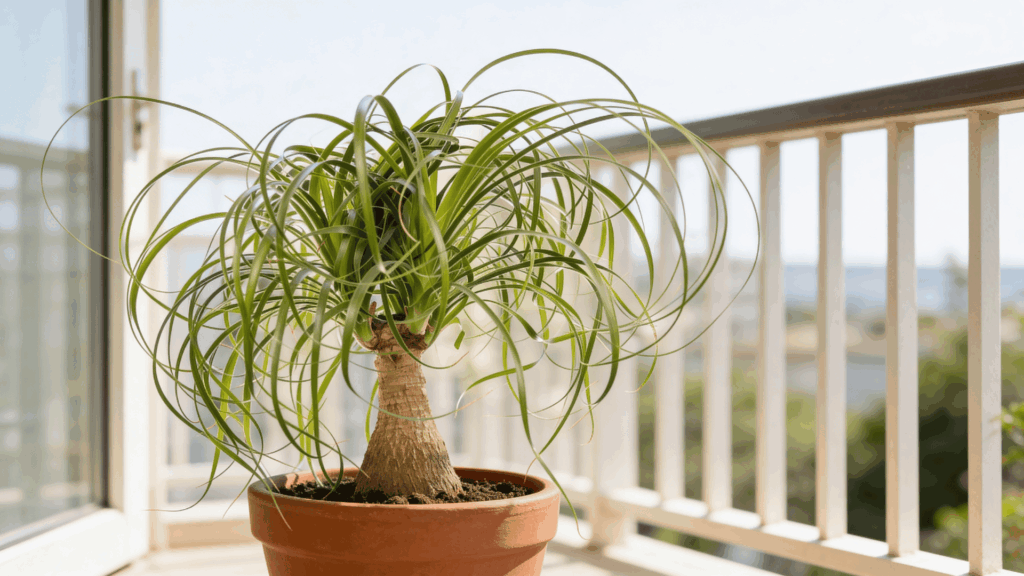
The Ponytail Palm stands out from most balcony plants because of its unusual shape. Its thick, swollen base tapers into a narrow trunk topped with long, curling leaves that spill outward like a fountain.
It thrives in full to partial sun and stores water in its base, making it one of the most drought-tolerant large plants available. Water it once every 2 to 3 weeks, and use a well-draining pot to prevent root rot.
It works best as a standalone accent piece where its shape can be seen clearly, rather than grouped with other large plants.
How to Care for Large Indoor Plants on a Balcony
Caring for large plants on a balcony is not complicated, but a few basics make a big difference.
| Care Aspect | What to Do |
|---|---|
| Light Positioning | Match plants to balcony direction. North-facing suits low-light plants, while south or west-facing balconies support sun-loving plants like Yucca or Bird of Paradise. |
| Watering | Check the soil before watering. Most large plants only need water once or twice a week to stay healthy. |
| Pot Choice | Use pots with drainage holes to prevent water buildup, which can cause root rot and damage the plant. |
| Weather Protection | Shield plants from strong winds and heavy rain. Move delicate plants indoors or place them near a wall for protection. |
Styling Tips for Balcony Garden Ideas with Large Plants
A good-looking balcony garden is not just about the plants. How you arrange and style them makes all the difference.
1. Use Height Layering for a Full, Balanced Look
Height layering is one of the simplest ways to make a balcony garden look well thought out. Place tall plants like Fiddle Leaf Fig or Dracaena at the back or in corners.
Add medium-height plants, such as Schefflera or a Money Tree, in front of them. Finish with low-growing plants or trailing varieties at the front or ground level.
This creates depth and makes the space feel full without cramming too many plants into one area. It works on both small and large balconies.
2. Pick Matching Planters for a Clean Look
The pots matter just as much as the plants. Mixing too many different pot styles, colors, and materials can make a balcony feel cluttered and unorganized.
Sticking to one or two planter styles, such as all terracotta, all white, or all black, keeps things looking consistent and clean. The pot should be the right size for the plant.
Oversized pots with small plants look off, and pots that are too small hold back growth. A consistent planter style ties the whole setup together without much extra effort.
3. Combine Furniture with Plant Placement
Plants and furniture work better when placed with each other in mind. A tall plant next to a chair or small table creates a natural, lived-in feel.
Placing plants behind seating adds a green backdrop that makes the area feel more comfortable and defined. Avoid blocking walkways or pushing furniture into awkward spots just to fit more plants in.
Think of the balcony as a small room; the furniture and plants should complement each other, leaving enough open space to move around comfortably.
Common Mistakes to Avoid
Small oversights can slow plant growth and make a balcony feel off. Knowing what to watch for saves time and keeps plants healthier for longer.
- Overcrowding Large Plants: Placing plants too close together blocks airflow and limits the light each one receives.
- Ignoring Sunlight Direction: Placing the wrong plant in the wrong light spot results in slow growth and damaged leaves.
- Using Wrong Pot Sizes: A pot that is too small or too large affects root health and makes watering much harder to manage.
Final Thoughts
A great balcony garden does not happen all at once, and honestly, I do not think it should. Starting with two or three plants that match your light conditions and fit your space is the smartest move.
Get comfortable with their care routine before adding more. That steady, simple approach works far better than filling the balcony all at once and feeling overwhelmed.
I put together this list because there is genuinely something here for every type of balcony and every kind of plant owner, with different styles, sizes, and care levels all in one place.
The most important step is just getting started.
Pick one plant, find the right spot, and see how it changes the feel of your space. Already growing large plants on your balcony.
I would love to hear about it. Share your experience in the comments below, and let me know which plant is your favorite so far.