

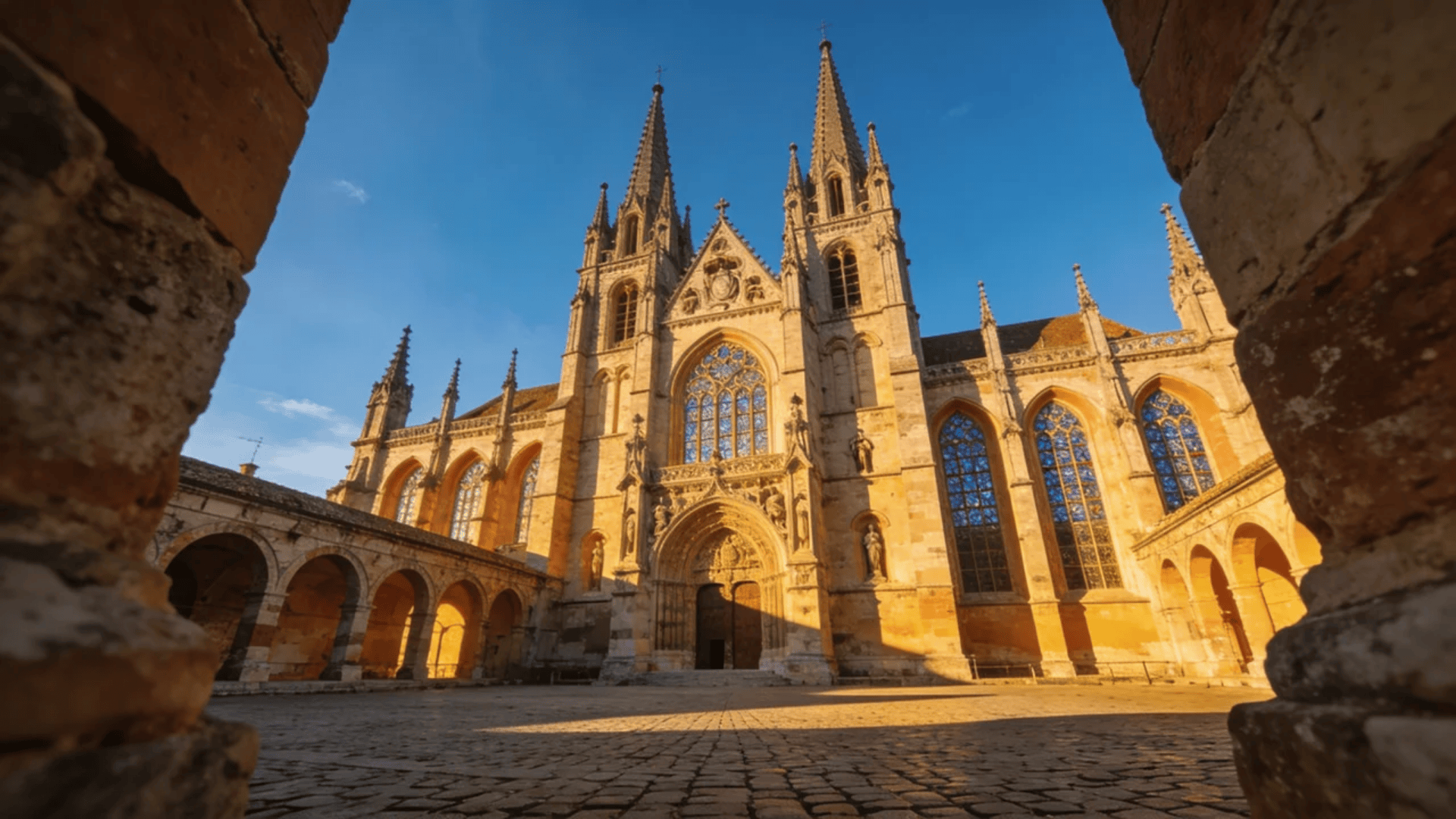
I remember standing in front of a massive stone building in Paris, staring up at its pointed arches and tall spires, with no idea what I was looking at.
European architecture has thousands of years of history behind it, and walking through its cities without knowing the styles is like reading a book in a language you do not speak.
It was beautiful, but I felt like I was missing something. That feeling stuck with me. In this guide, I break down 17 famous European architectural styles in plain, simple terms.
For each one, I cover the key features to look for, the time period it comes from, and the most famous buildings that represent it.
Planning a trip or studying for class, this guide gives you everything you need to recognize and appreciate European architecture at a glance.
What is European Architecture and Why Does it Matter?
European architecture refers to the building styles that developed across Europe from around 900 BC to the present day.
It covers a wide range of designs shaped by religion, politics, trade, and technology, each era leaving behind structures that still stand today.
From the stone columns of Athens to the Gothic cathedrals of France and the Baroque palaces of Central Europe, these styles have influenced construction on every continent.
The reach of European architecture is hard to overstate. According to UNESCO, Europe is home to over 400 World Heritage Sites, many of which are architectural landmarks.
Styles like Neoclassical, Gothic, and Baroque traveled far beyond Europe through colonization and cultural exchange, shaping government buildings, churches, and city layouts across the United States, Latin America, and Asia.
That is why understanding European architecture means understanding how much of the modern built world came to look the way it does.
Key Features That Define European Architecture
European architecture uses strong materials, balanced designs, and detailed elements across many styles.
These shared features help you quickly identify buildings in different countries.
| Feature | Description | Where You See It |
|---|---|---|
| Stone and Brick Construction | Strong materials are used for durability and long life | Churches, castles, old homes |
| Arches | Rounded or pointed openings for doors and windows | Roman and Gothic buildings |
| Columns | Vertical supports are often used for design and structure | Greek, Roman, Neoclassical |
| Ornate Detailing | Carvings, sculptures, and decorative elements | Gothic, Baroque styles |
| Vaulted Ceilings | Curved ceilings that create height and space | Cathedrals, churches |
| Symmetry | Balanced design on both sides of a structure | Renaissance, Neoclassical |
| Regional Materials | Local stone, wood, or brick, based on area | Varies by country |
17 Famous European Architecture Styles
The 17 styles below are arranged in roughly chronological order, starting from ancient Greece and ending with contemporary design. This way, you can see how each style grew out of the one before it.
1. Ancient Greek Architecture (900 BC – 1st Century AD)
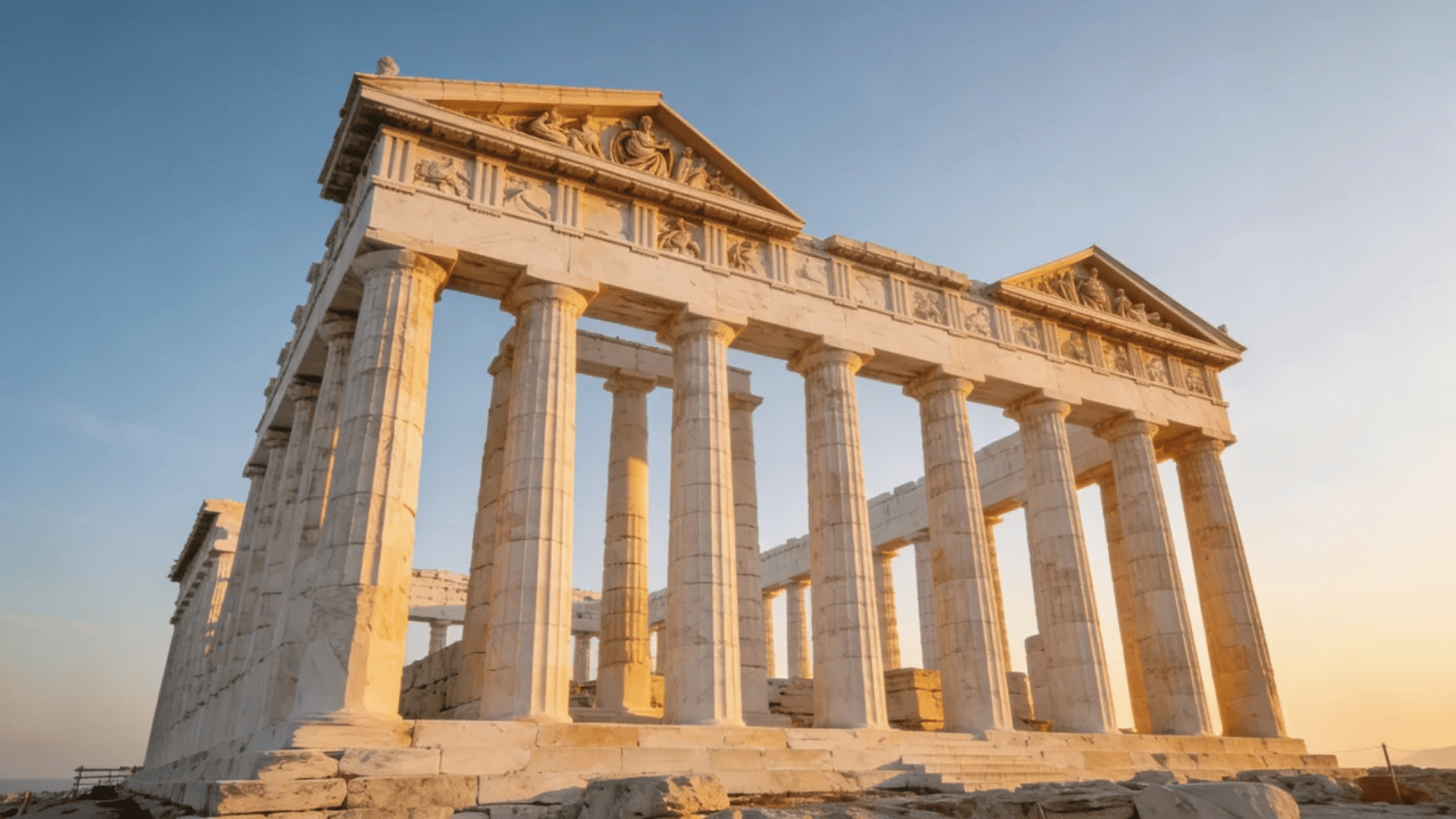
Ancient Greek architecture is where European architecture begins. Greeks used marble and focused on balance, proportion, and simple design. Columns shaped this style and influenced many later buildings.
Key Features:
- Doric, Ionic, and Corinthian columns
- Triangular pediments
- Marble construction
- Symmetry and proportion
Famous Examples: Parthenon, Temple of Hephaestus (Athens)
Where to See It: Athens, southern Italy, Sicily
2. Ancient Roman Architecture (590 BC – 4th Century AD)
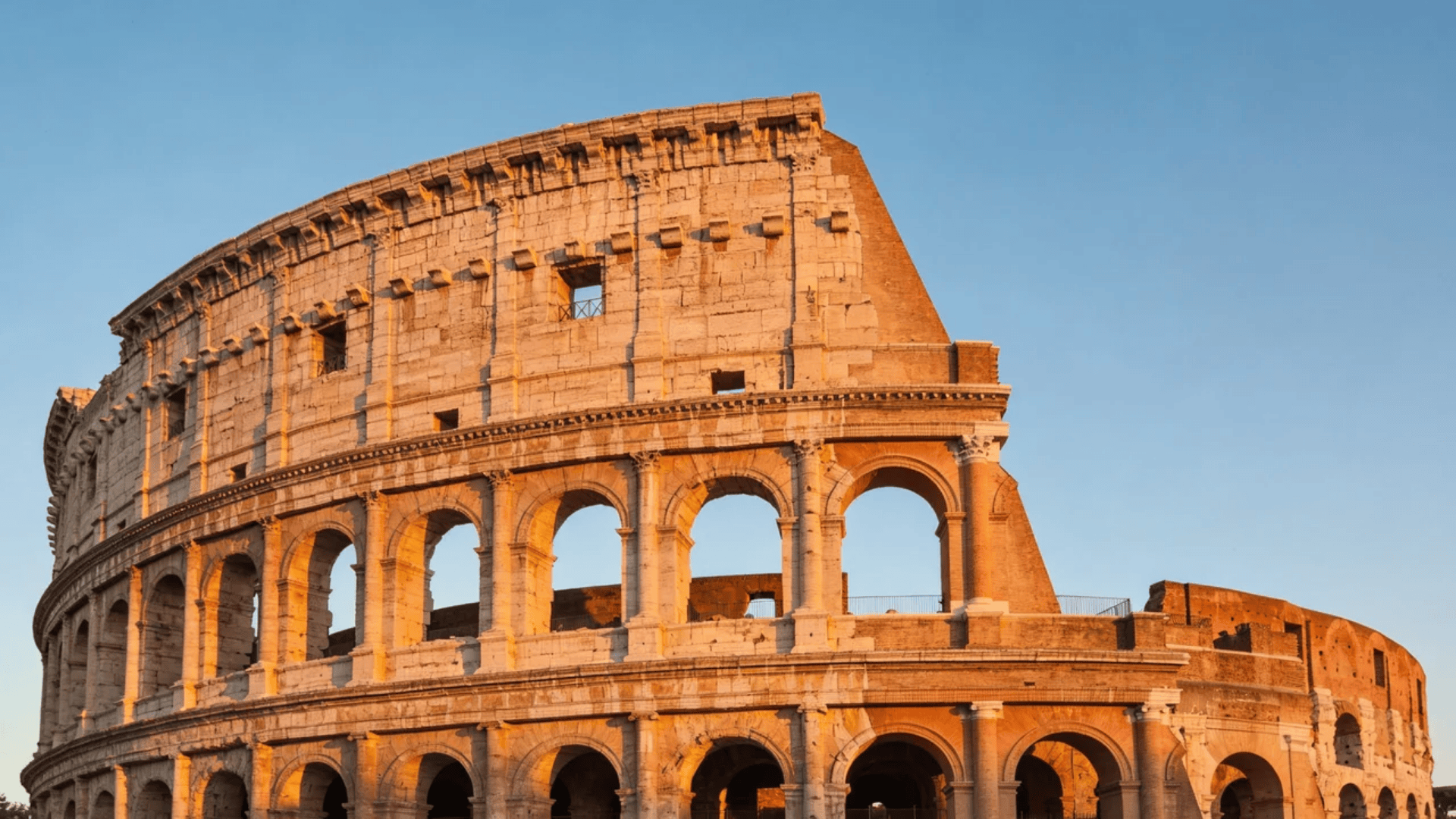
Ancient Roman architecture was built on Greek ideas and made them larger and stronger. Romans used concrete, which helped them create big structures like domes and arches. Their buildings were made to last and show power.
Key Features:
- Round arches
- Vaults and large domes
- Use of concrete with stone and brick
- Decorative columns inspired by Greek styles
Famous Examples: Colosseum, Pantheon (Rome)
Where to See It: Rome, France, Spain, England, North Africa
3. Byzantine Architecture (4th Century – 1453 AD)
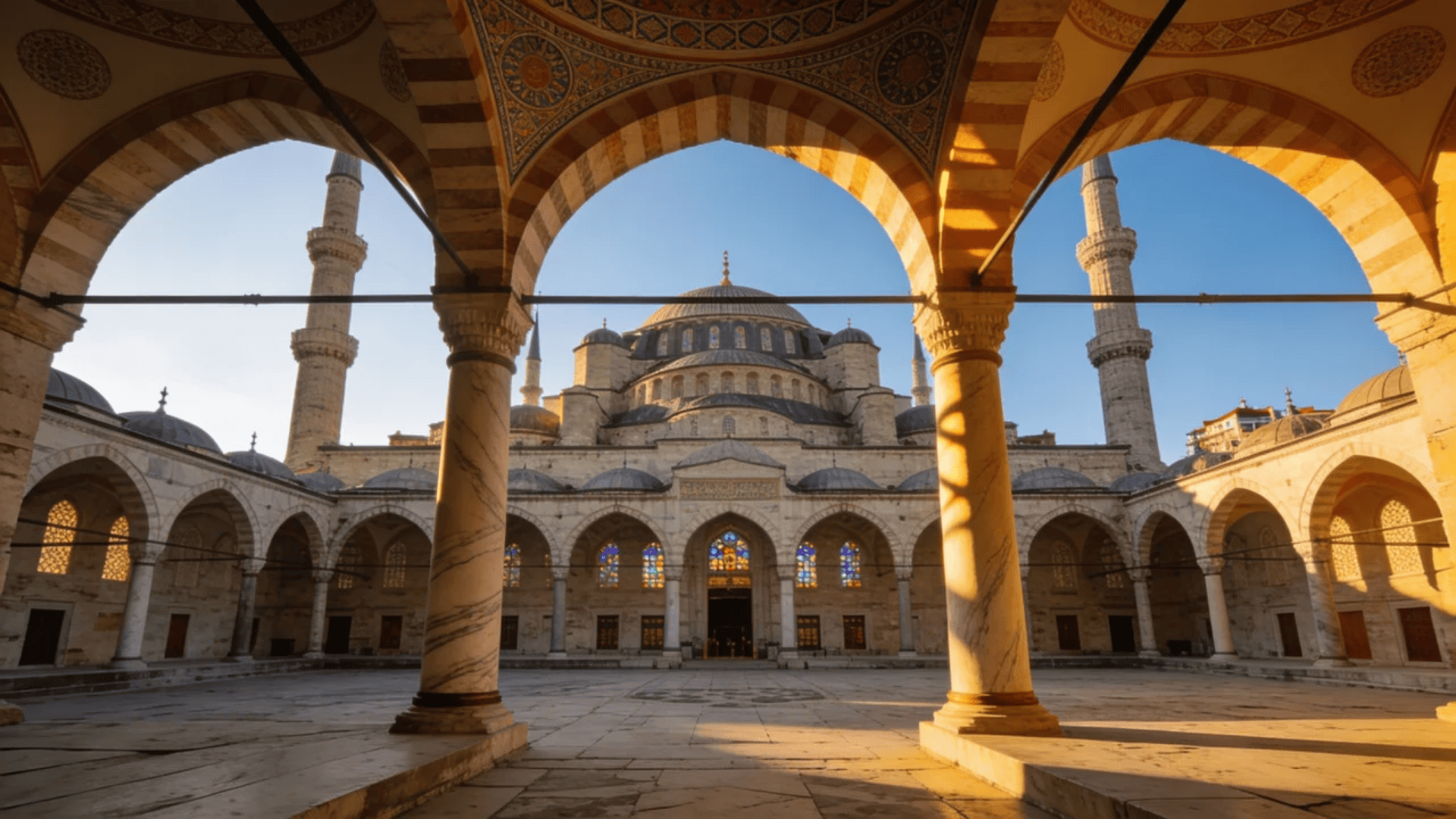
Byzantine architecture developed from Roman design but focused more on rich interiors than size. Buildings were designed to feel spiritual, with gold details and bright colors inside, while the outside stayed simple.
Key Features:
- Large domes on pendentives
- Round arches
- Centralized floor plans
- Simple exteriors with detailed interiors
- Cross-shaped church layouts
Famous Examples: Hagia Sophia (Istanbul), St. Mark’s Basilica (Venice)
Where to See It: Istanbul, Venice
4. Romanesque Architecture (6th – 11th Century)
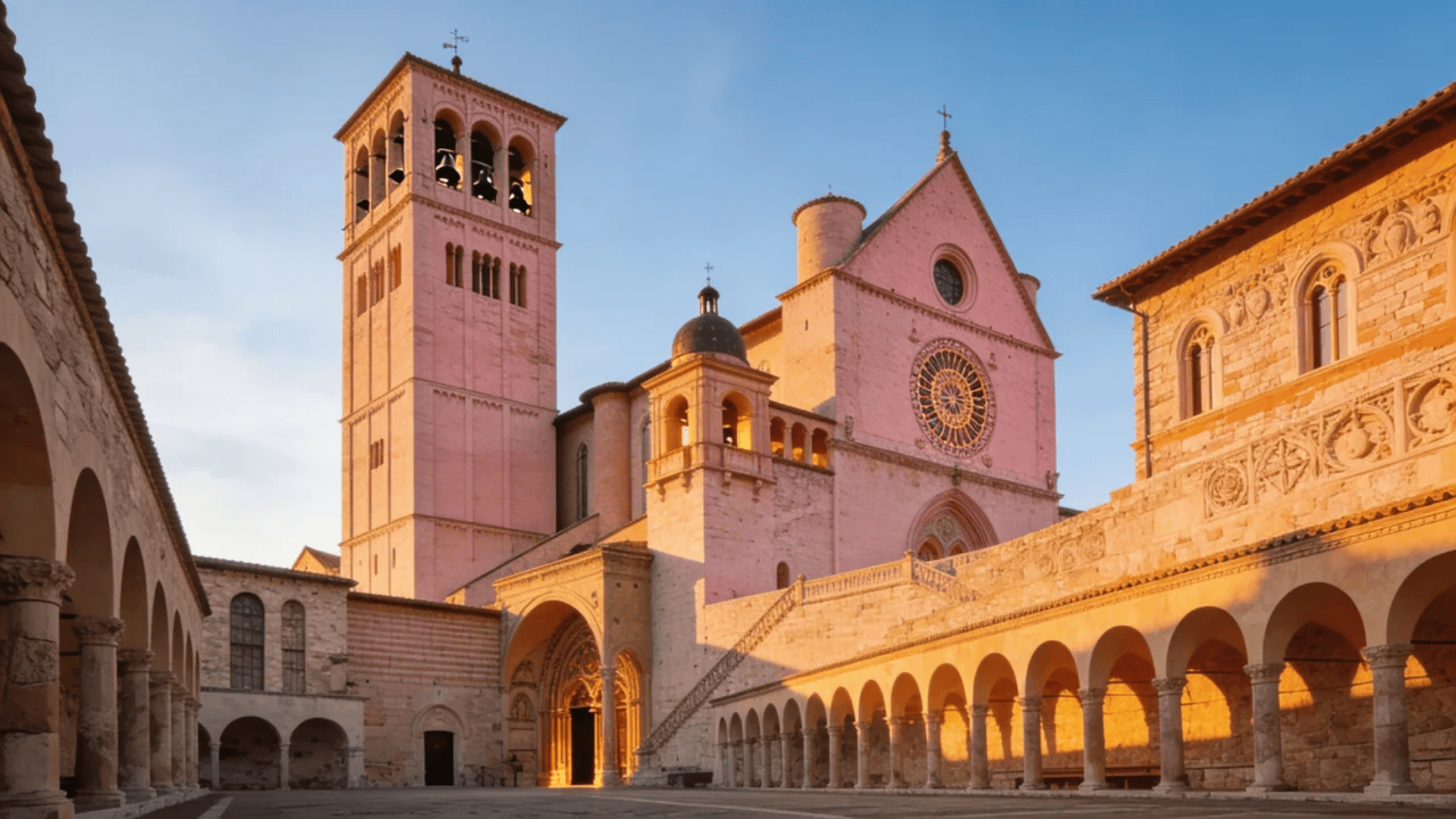
Romanesque architecture was built for strength and safety during a time of conflict. Buildings had a heavy and solid look, often like fortresses, with small windows and a simple design.
Key Features:
- Thick stone walls
- Semicircular arches
- Small windows
- Flat buttresses
- Simple decoration
Famous Examples: Basilica of St. Francis of Assisi, Cluny Abbey
Where to See It: France, Italy, Germany, Spain
5. Gothic Architecture (12th – 16th Century)
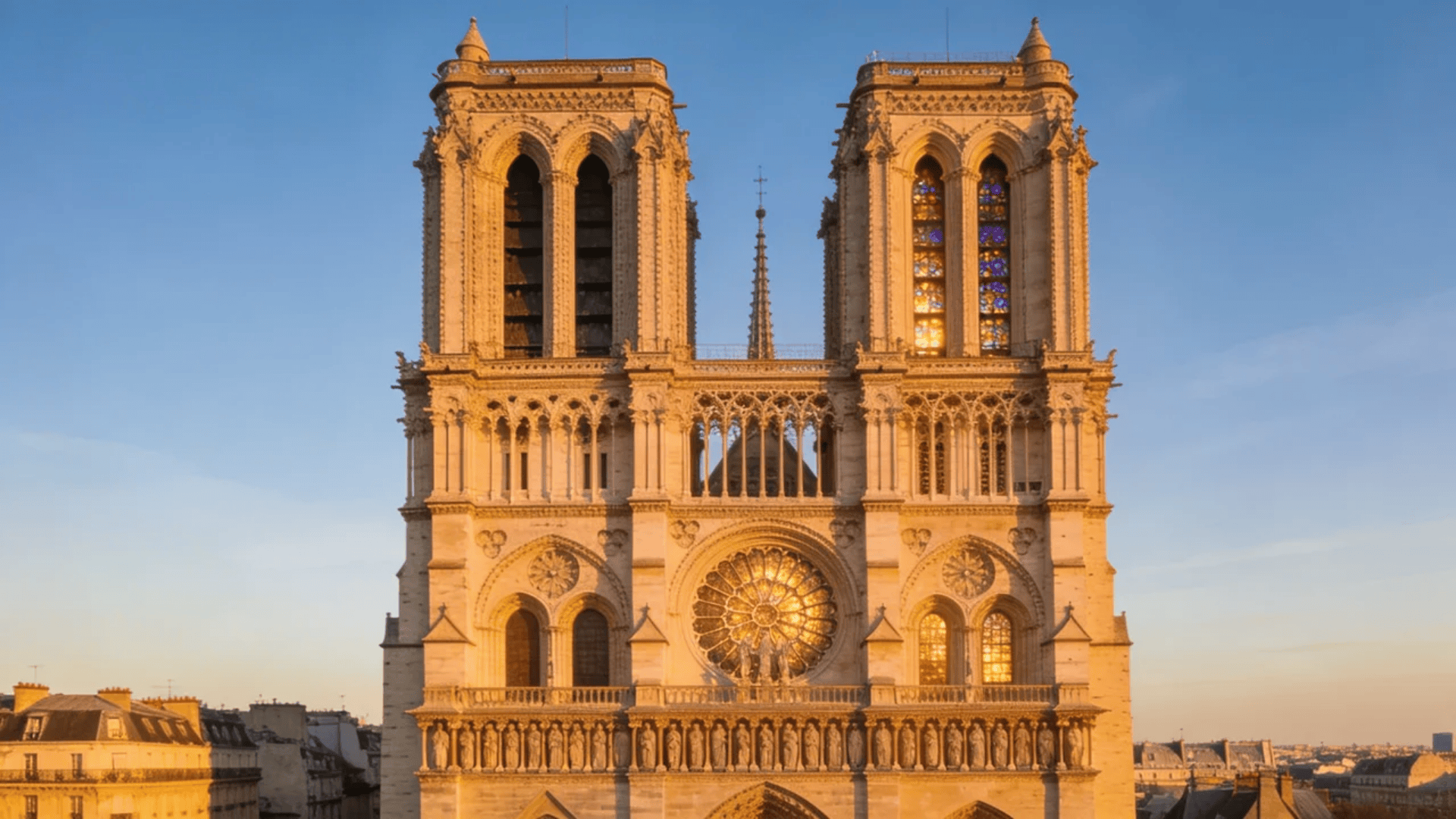
Gothic architecture focused on height, light, and detailed design. Builders used new techniques to create tall structures with large windows, making interiors feel bright and open.
Key Features:
- Pointed arches
- Flying buttresses
- Ribbed vault ceilings
- Large stained glass windows
- Tall spires and carvings
Famous Examples: Notre-Dame de Paris, Cologne Cathedral, Sainte-Chapelle
Where to See It: France, Germany, England, Spain, the Czech Republic
6. Tudor Architecture (Late 15th – Early 17th Century)
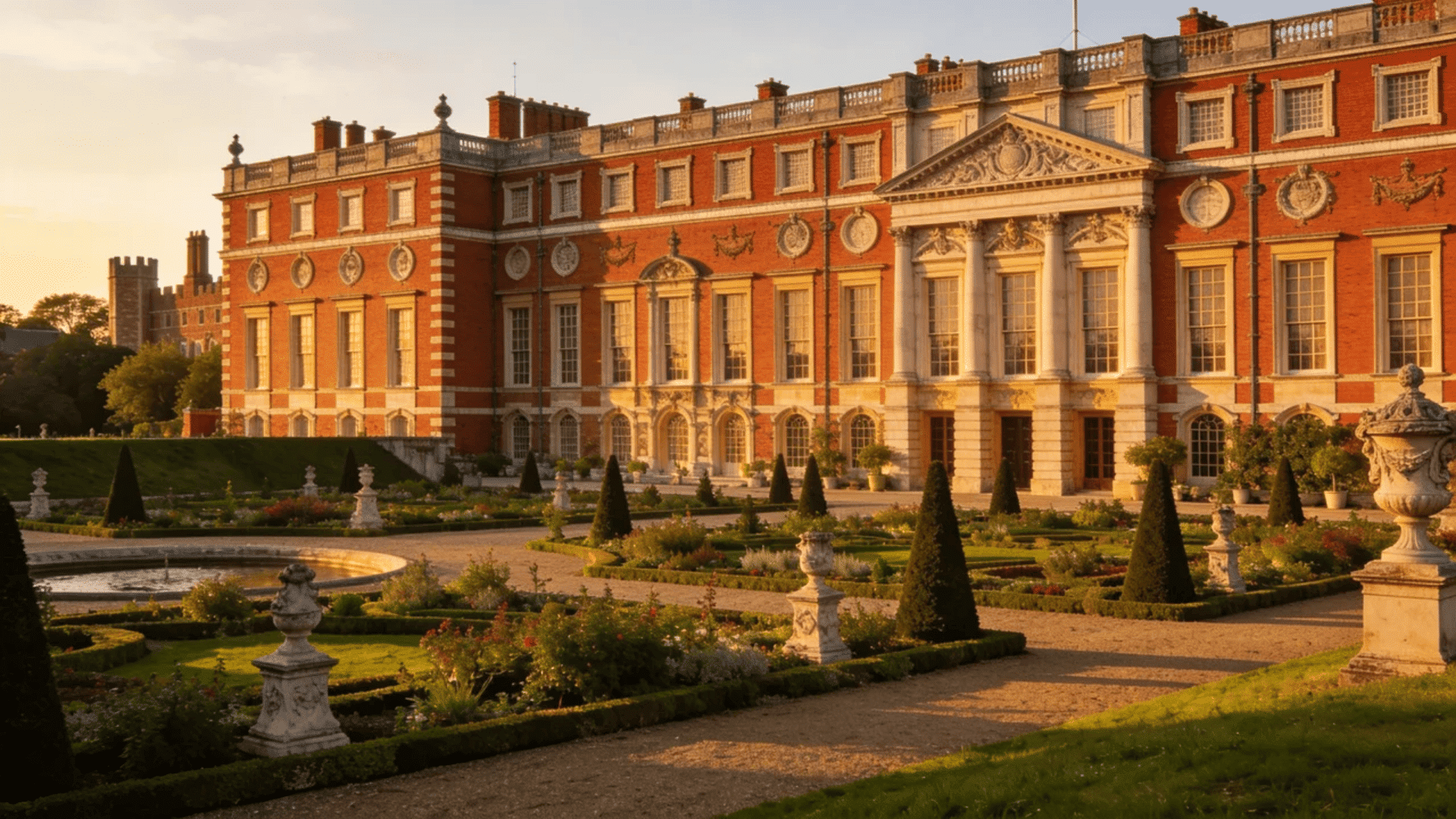
Tudor architecture developed during the reign of the Tudor dynasty in England, reflecting a shift from medieval fortress building toward comfort and display. The contrast between dark timber beams and pale plaster walls is its most recognizable feature.
Key Features:
- Steeply pitched roofs with decorative gabling
- Exposed dark timber beams set against white plaster
- Tall, decorative brick chimneys
- Diamond-shaped leaded glass panes in windows
Famous Examples: Hampton Court Palace, Anne Hathaway’s Cottage (Stratford-upon-Avon).
Where to See It: England, particularly the Cotswolds and London.
7. Renaissance Architecture (15th – 17th Century)
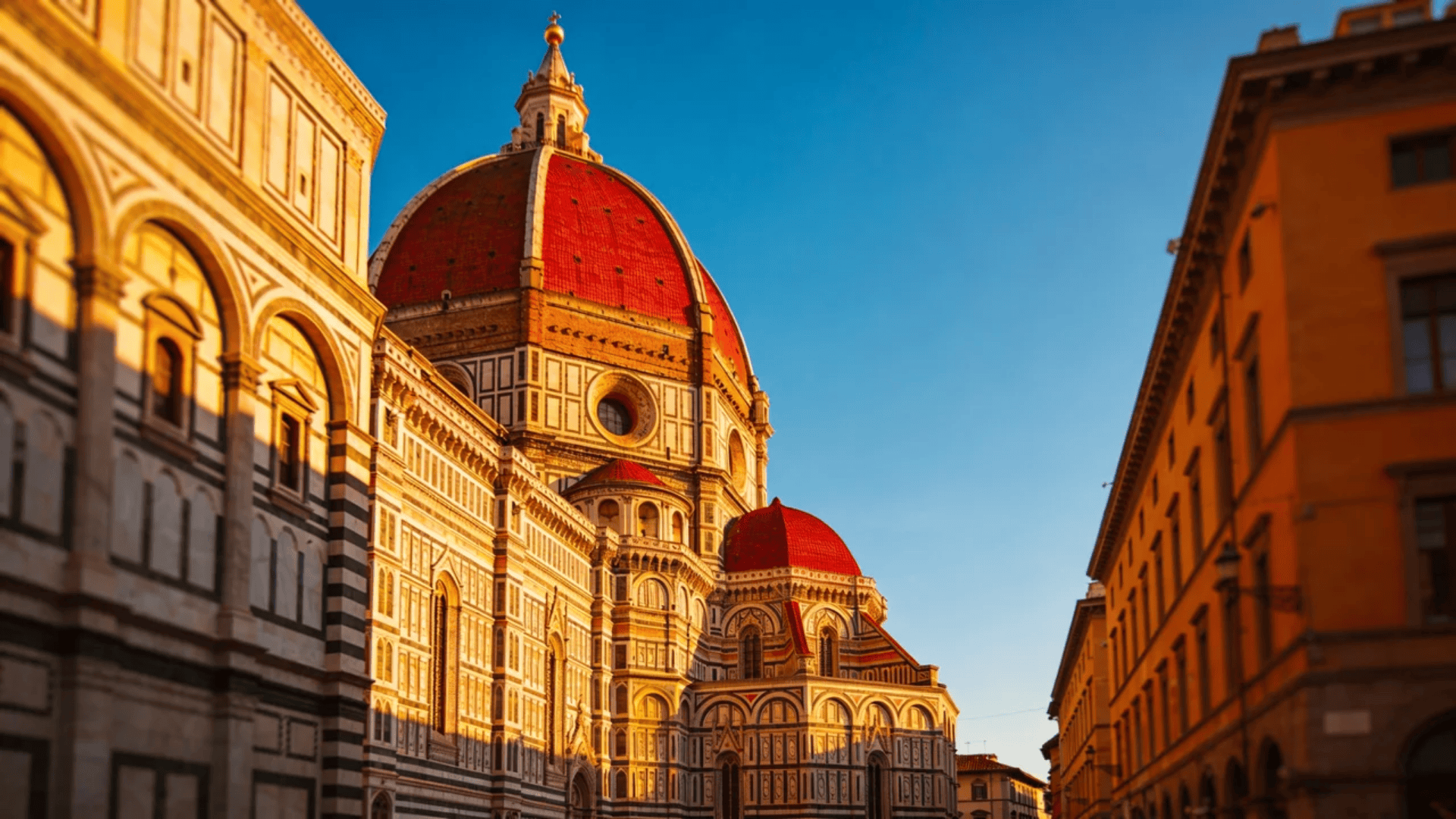
Renaissance architecture moved away from the Gothic style and returned to ideas from ancient Greece and Rome. It focused on balance, symmetry, and clear design based on the human scale.
Key Features:
- Symmetrical layouts
- Semicircular arches
- Large central domes
- Columns and classical details
Famous Examples: Florence Cathedral, St. Peter’s Basilica
Where to See It: Florence, Rome
8. Baroque Architecture (17th – Early 18th Century)
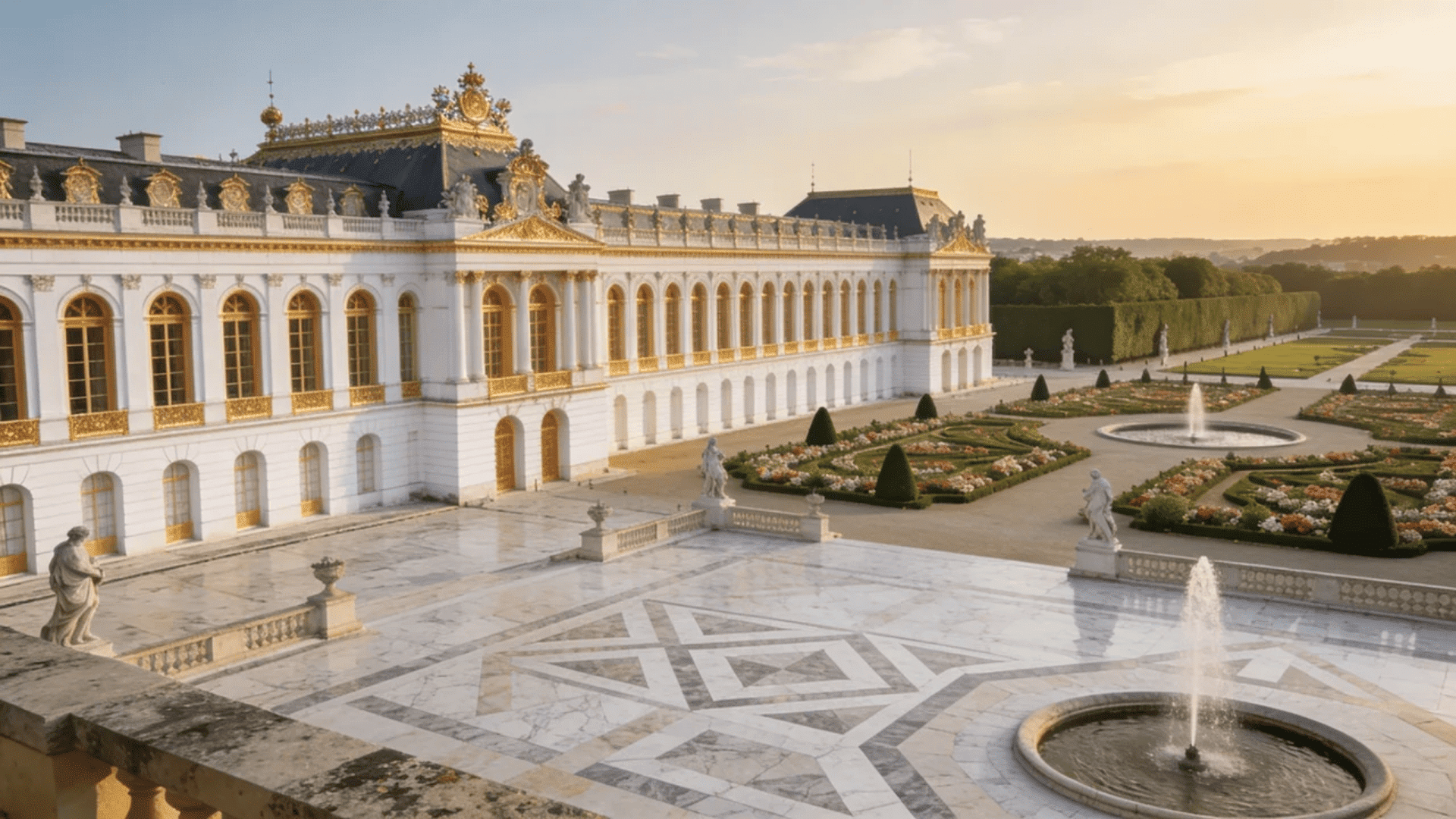
Baroque architecture was designed to create strong emotion and show power. Buildings used bold shapes, rich details, and dramatic effects to impress visitors, especially in churches and palaces.
Key Features:
- Curved facades and interiors
- Heavy decoration and gold details
- Painted ceilings with illusion effects
- Strong light and shadow contrast
Famous Examples: Palace of Versailles, St. Peter’s Square
Where to See It: France, Italy, Austria, Germany
9. Rococo Architecture (1700 – 1790)
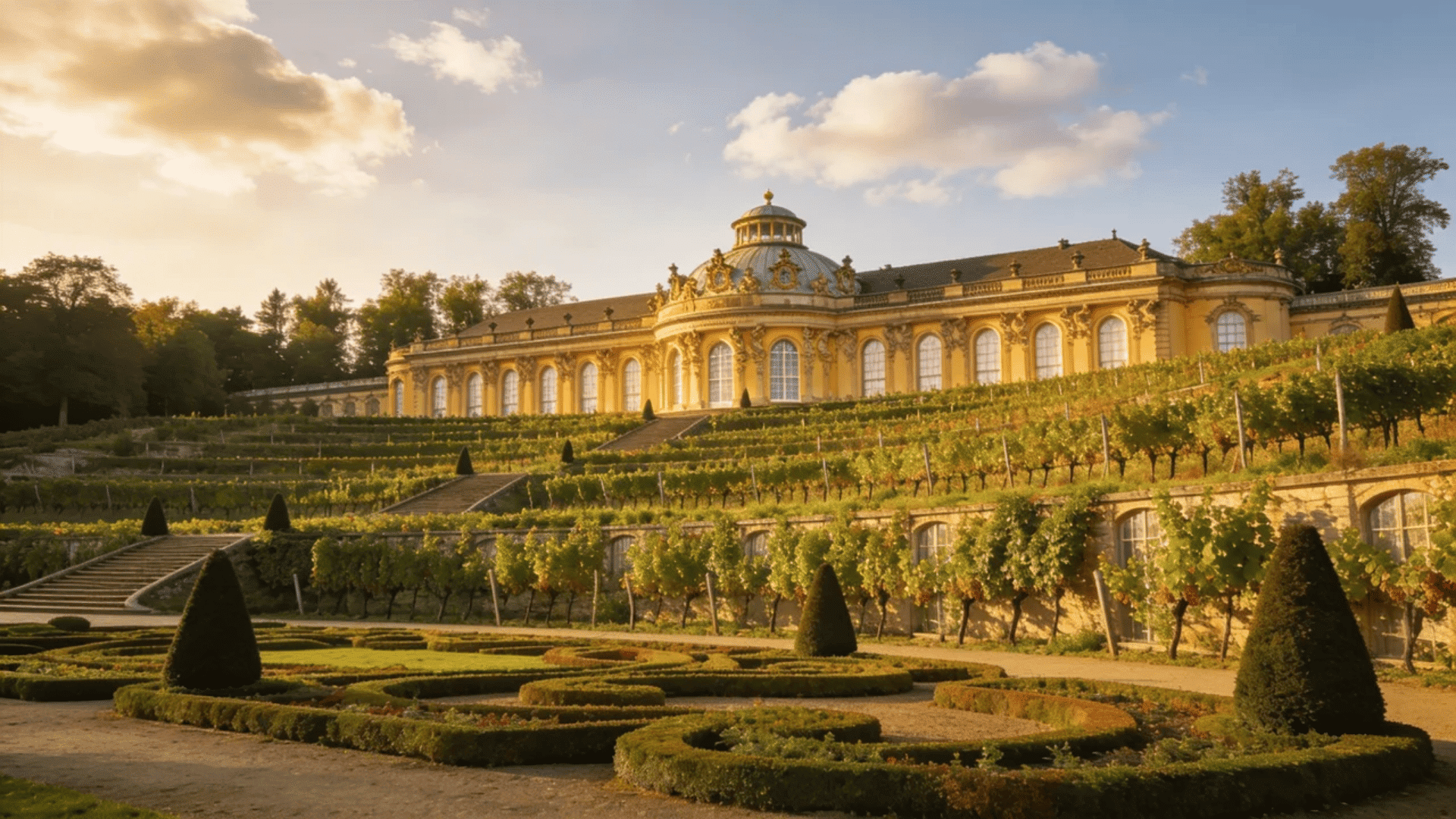
Rococo architecture developed from Baroque but took a lighter and more decorative approach. It focused on soft colors, curved shapes, and detailed interiors that felt playful and artistic.
Key Features:
- Oval and asymmetrical designs
- Floral and shell patterns
- Pastel color tones
- Highly decorated interiors with mirrors
Famous Examples: Palace of Sanssouci, Hôtel de Soubise
Where to See It: Germany, France, Austria
10. Palladian Architecture (16th – 18th Century)
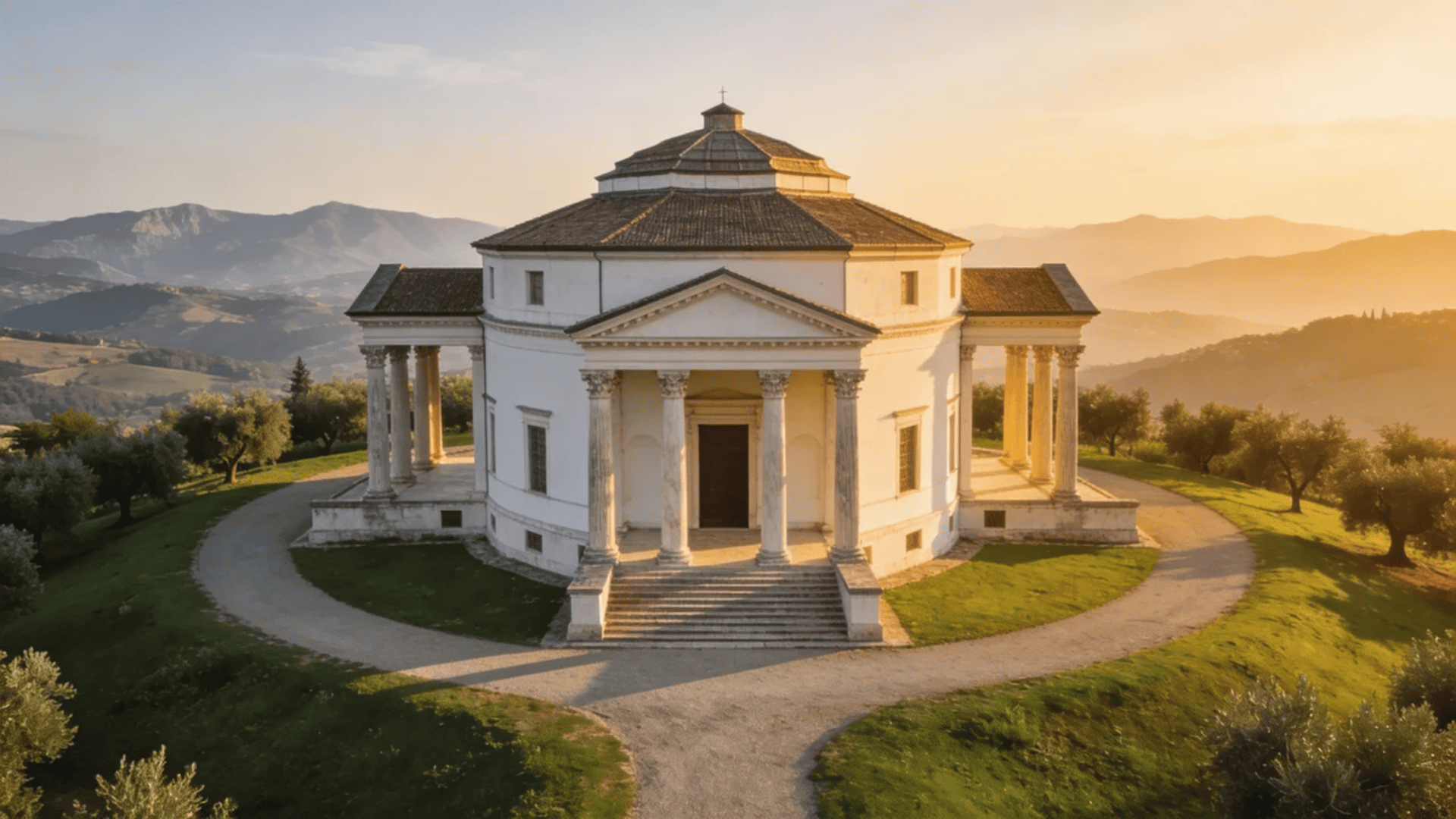
Palladian architecture is named after Andrea Palladio, who based his designs on ancient Roman ideas. This style focuses on strict symmetry, balance, and simple, clean layouts.
Key Features:
- Strong symmetry in design
- Columned porticos
- Triangular pediments
- Simple classical details
Famous Examples: Villa Rotonda, Chiswick House
Where to See It: Northern Italy, England
11. Neoclassical Architecture (Mid-18th – 19th Century)
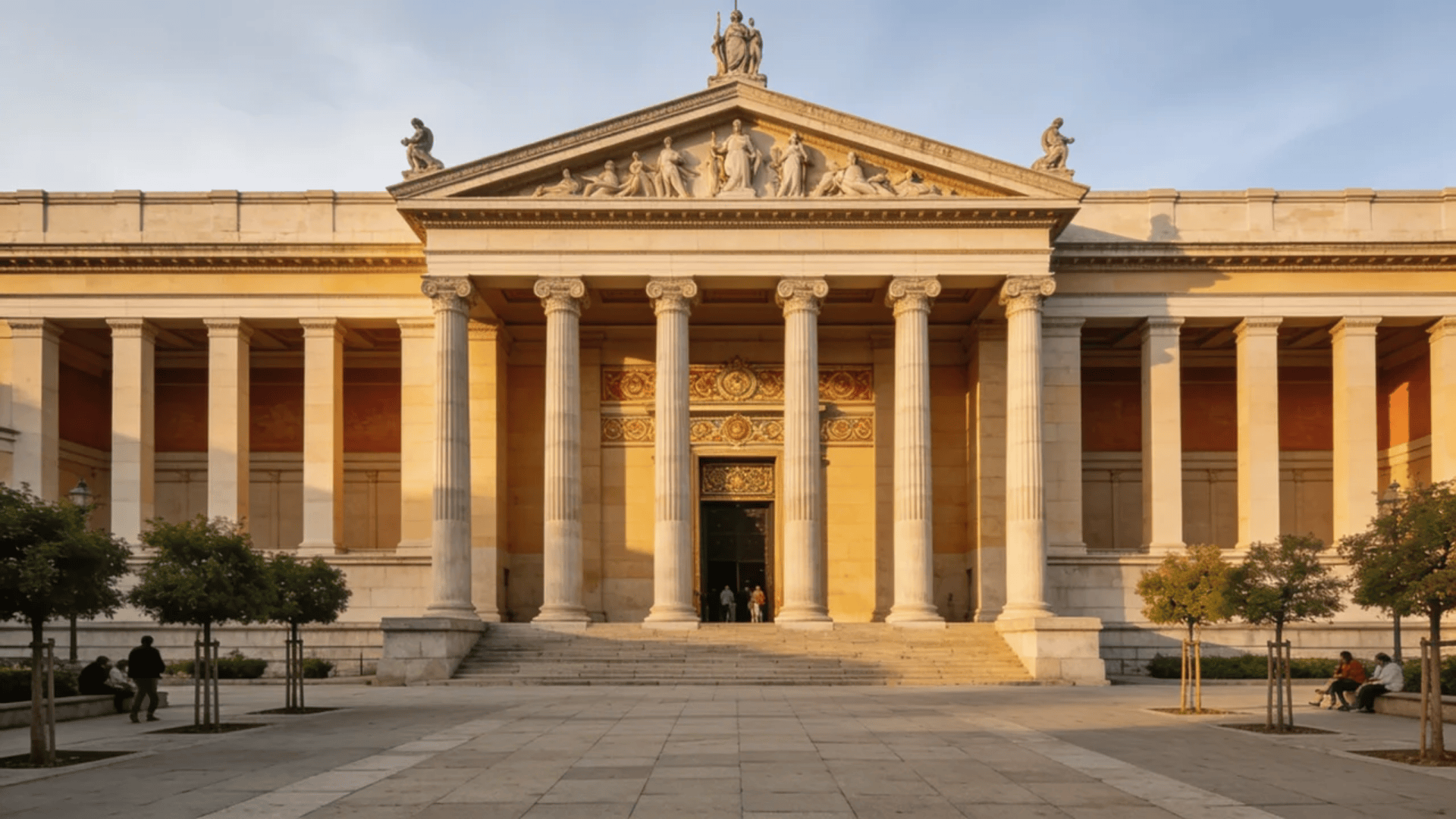
Neoclassical architecture returned to the simple and balanced designs of ancient Greece and Rome. It focused on clean lines and order, moving away from heavy decoration.
Key Features:
- Simple geometric shapes
- Columns and pediments
- Minimal decoration
- Strong symmetry and large scale
Famous Examples: Panthéon, Museo Nacional del Prado
Where to See It: Paris, London, Berlin, Madrid
12. Georgian Architecture (1714 – 1830)
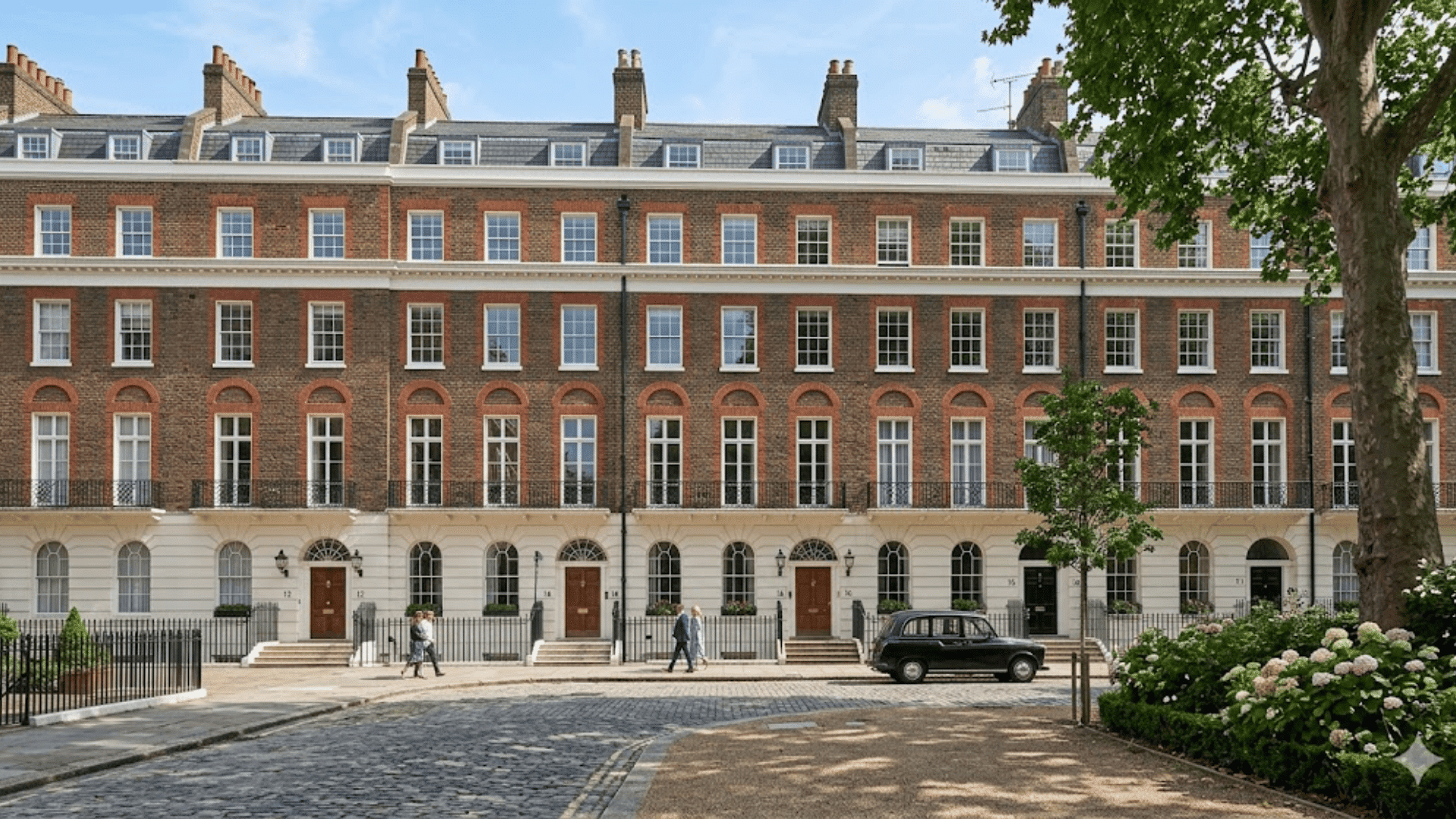
Georgian architecture developed in Britain and focused on balance and uniform design. It brought simple and clean layouts to city homes, especially in rows of townhouses.
Key Features:
- Symmetrical brick facades
- Sash windows in even rows
- Simple door detailing
- Terraced housing layouts
Famous Examples: Royal Crescent, Buckingham Palace (early design)
Where to See It: Bath, London
13. Gothic Revival Architecture (19th Century)
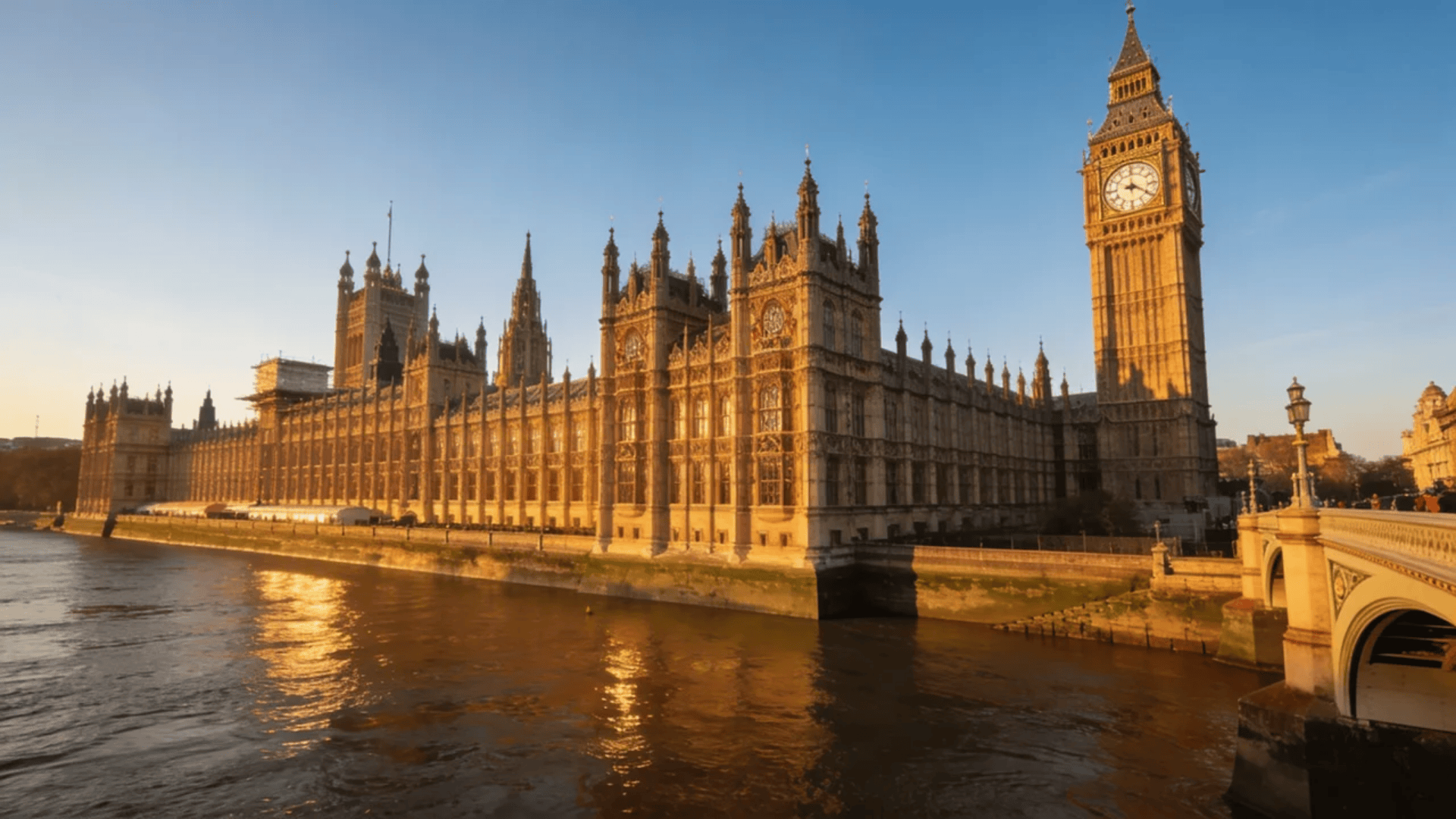
Gothic Revival architecture brought back medieval Gothic design in the 19th century. It focused on detailed craftsmanship and used modern materials to recreate the old style in new buildings.
Key Features:
- Pointed arches
- Decorative carvings and stonework
- Tall towers and vertical design
- Medieval details on modern buildings
Famous Examples: Palace of Westminster, Notre-Dame restoration
Where to See It: London, Oxford, Cambridge
14. Art Nouveau Architecture (1890 – 1910)
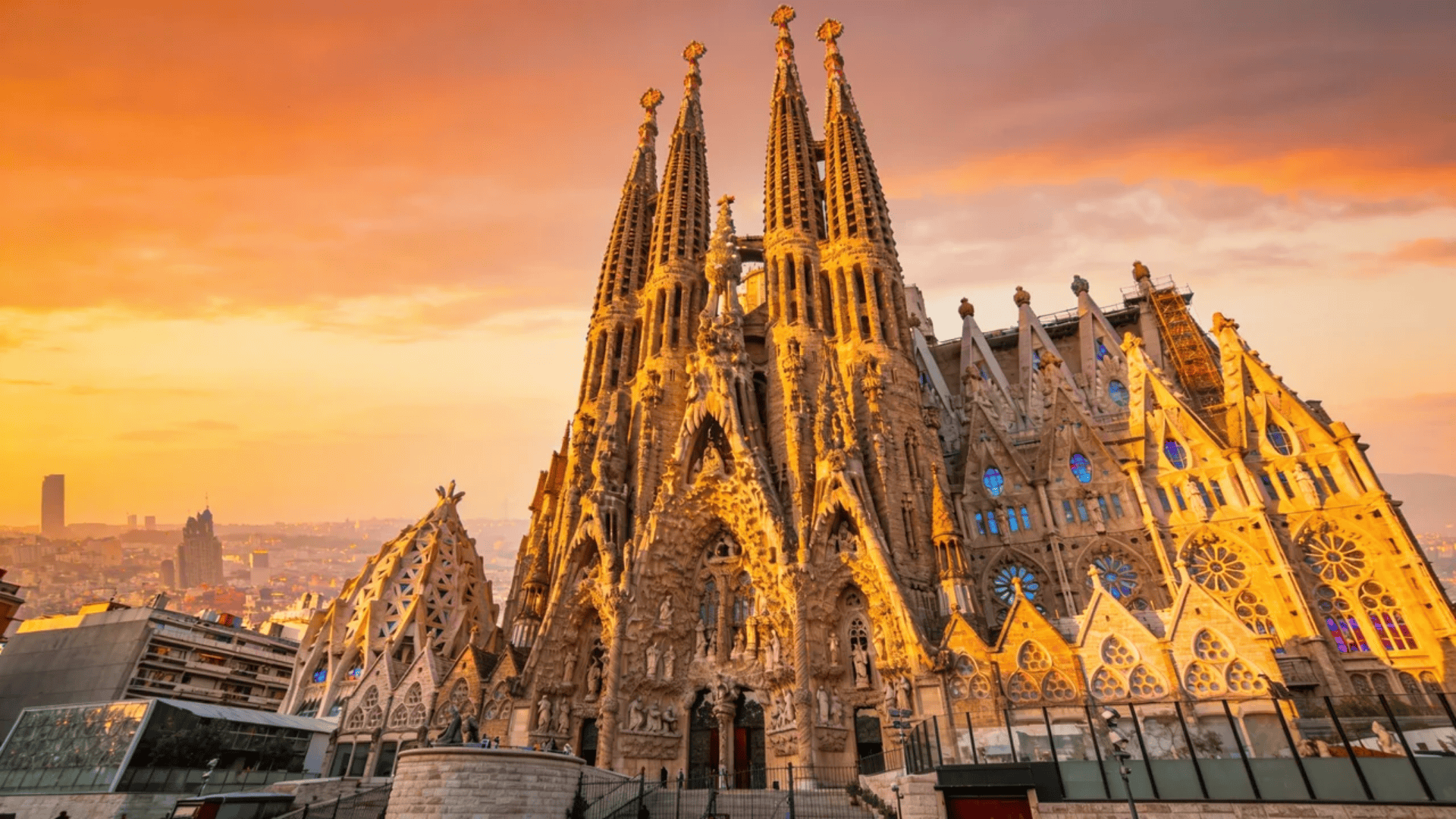
Art Nouveau architecture moved away from old styles and focused on natural shapes. Designers used flowing lines and detailed work to make buildings feel artistic and unique.
Key Features:
- Curved, plant-like designs
- Decorative ironwork
- Mosaic tiles and stained glass
- Asymmetrical layouts
Famous Examples: Sagrada Família, Musée Horta, Lavirotte Building
Where to See It: Barcelona, Brussels, Paris
15. Bauhaus Architecture (1919 – 1933)

Bauhaus architecture focused on simple and practical design. It removed extra decoration and used modern materials to create clean, useful buildings.
Key Features:
- Flat roofs
- Large glass windows
- Open floor plans
- Steel, concrete, and glass materials
Famous Examples: Bauhaus Dessau, Masters’ Houses
Where to See It: Dessau, Weimar
16. Modernist Architecture (1920s – 1970s)
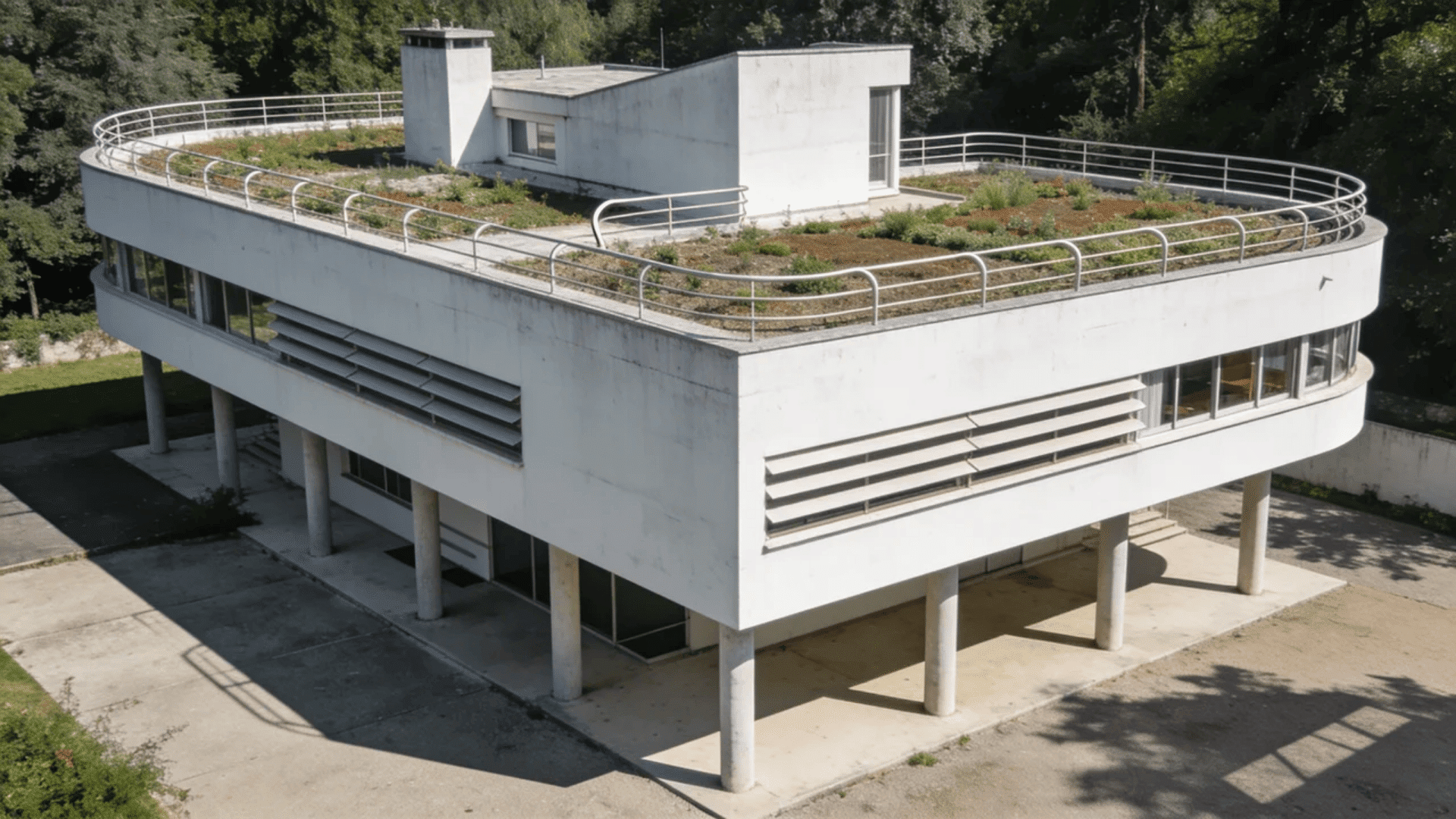
Modernist architecture expanded on Bauhaus ideas and focused on simple, practical design. It used new materials to create clean structures without copying older styles.
Key Features:
- Steel, glass, and concrete
- Simple geometric shapes
- Open interior spaces
- Flat roofs
Famous Examples: Villa Savoye, Unité d’Habitation
Where to See It: France
17. Contemporary European Architecture (1980s – Present)
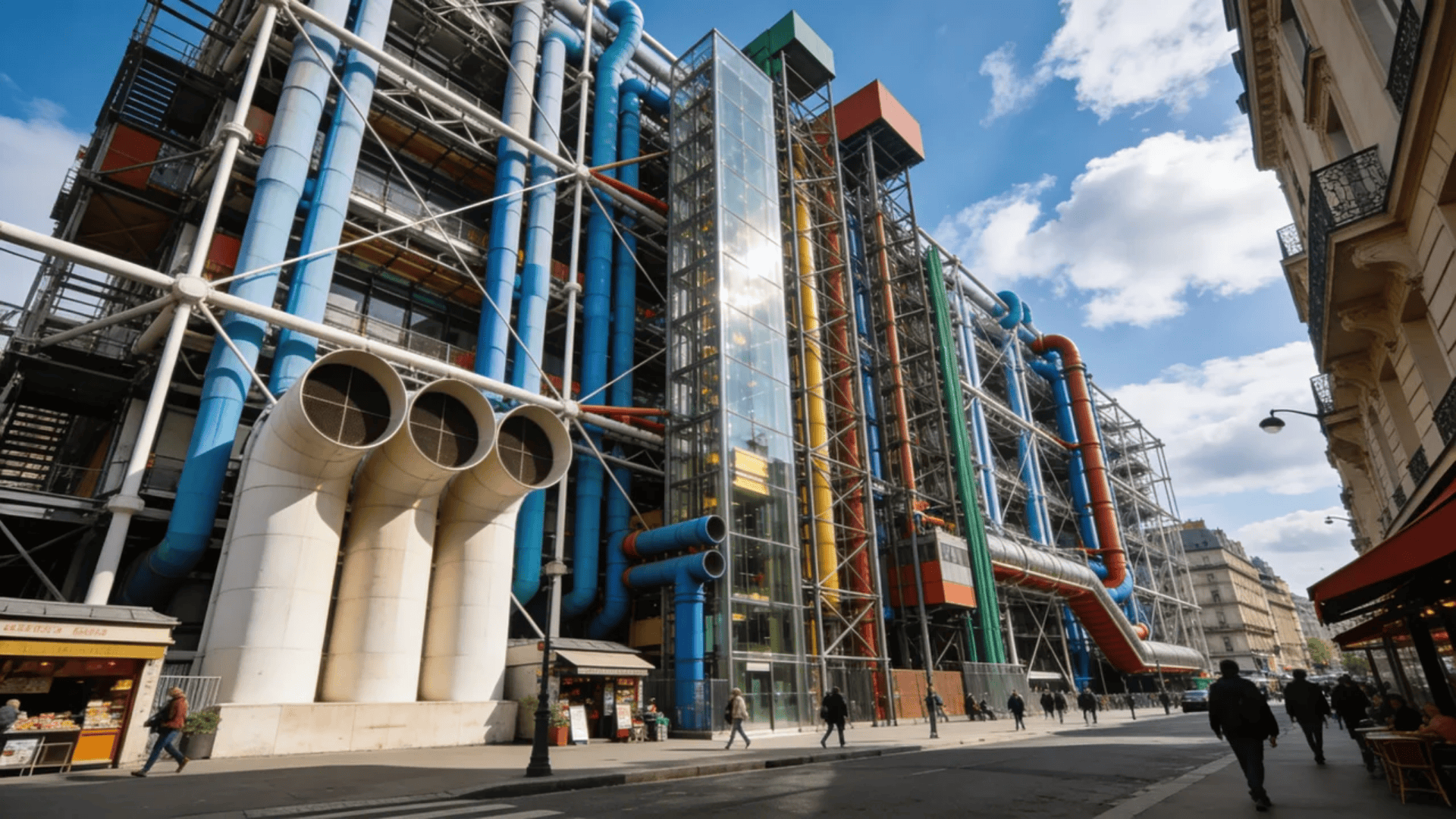
Contemporary European architecture focuses on modern needs like sustainability and innovation. It mixes new materials with bold designs while often combining old and new structures.
Key Features:
- Focus on sustainability
- Use of glass, steel, and recycled materials
- Bold and creative shapes
- Blending old and new buildings
Famous Examples: Centre Pompidou, Louvre Pyramid, Guggenheim Bilbao
Where to See It: Paris, London, Berlin, Bilbao
How to Identify European Architecture on a Trip
You can recognize European architecture by focusing on a few simple visual details as you walk around.
Small clues like shapes and details can quickly help you spot different styles.
- Roof Shape: Steep and pointed roofs often mean Gothic, while flat roofs suggest modern styles
- Arch Type: Rounded arches link to Roman or Romanesque, pointed arches to Gothic
- Window Style: Large stained glass windows show Gothic, simple glass panels show modern styles
- Columns: Thick or tall columns point to Greek, Roman, or Neoclassical buildings
- Ornamentation: Heavy decoration means Baroque or Rococo, simple design means Modernist
- Building Height: Very tall and vertical designs often belong to the Gothic style
- Materials Used: Stone and brick suggest older styles, while glass and steel indicate modern ones
- Facade Design: Symmetrical fronts are common in Renaissance and Neoclassical styles
- Color Tone: Light pastel colors often appear in Rococo, while plain tones show modern styles
- Purpose of Building: Churches often show Gothic or Baroque styles, while offices show Modernist styles
At the End
I put this guide together because European architecture deserves to be understood, not just admired from a distance.
From Romanesque fortress walls and Gothic cathedral spires to Bauhaus glass panels and contemporary sustainable facades, these styles represent over 2,500 years of human creativity, ambition, and cultural change.
Each time you stand in front of a historic building and recognize its style, you are connecting with the era that produced it.
That is a skill that makes travel richer, study more meaningful, and everyday curiosity more rewarding.
Take this guide with you on your next European trip, use it as a study reference, or come back to it any time you need a refresher on a specific style.
If you found this helpful, have a look at our other guides on European architecture styles and historic landmarks across the continent.
Frequently Asked Questions
What Materials are Used in European Architecture?
Stone, brick, marble, and wood are commonly used. These materials help buildings last for a long time.
How is European Architecture Different from Modern Design?
European styles focus on detail and history, while modern design is simple, clean, and uses fewer decorative elements.
What is the Gothic style in European Architecture?
Gothic style includes tall structures, pointed arches, and large stained glass windows, often seen in old churches.
How did Climate Affect European Building Styles?
Cold weather led to thick walls and small windows to keep heat inside, while warmer areas used open spaces and larger windows.
Can European Architecture be Used in Modern Homes?
Yes, many homes use European elements like arches, columns, and classic layouts with modern materials.