

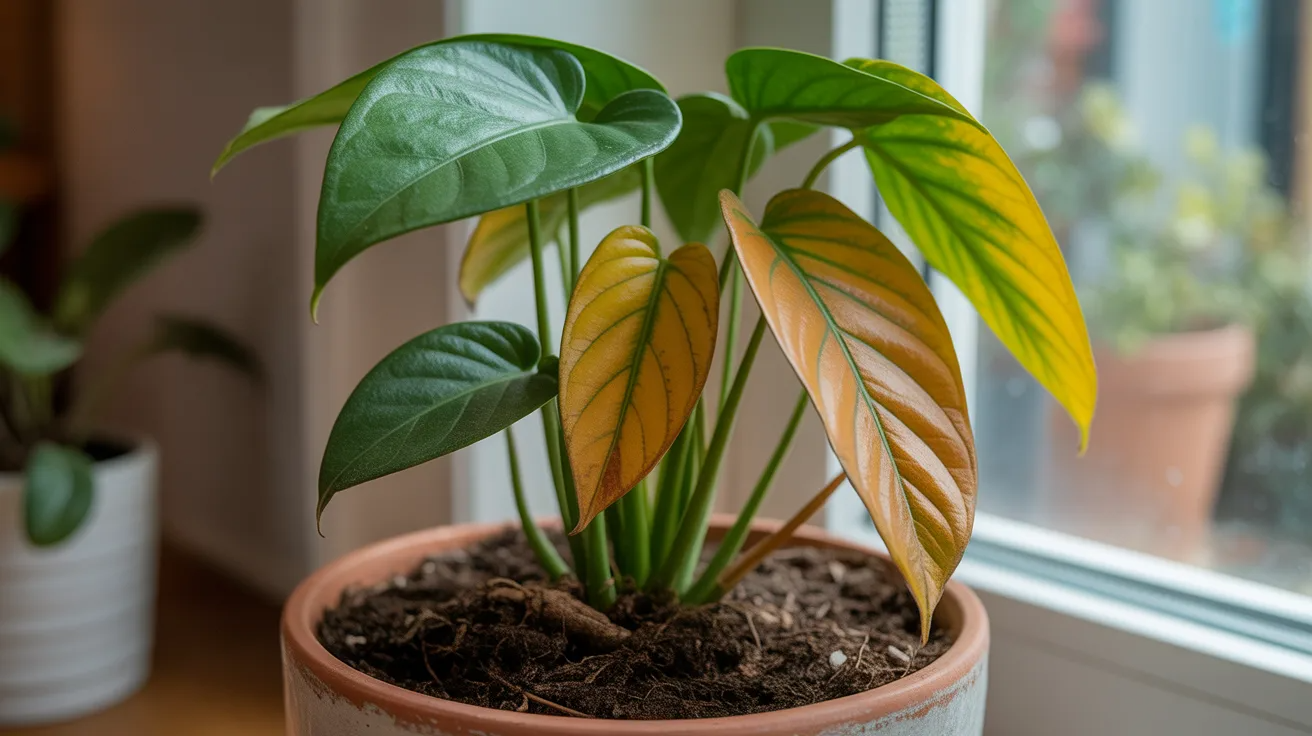
Yellow leaves on your plants can be annoying, especially when you don’t know the cause. It’s a very common problem, and it can feel confusing even when you think you’re caring for your plant the right way.
Writing about plants and gardening for years has taught me one thing: yellow leaves are never random.
There’s always a reason behind them. It is usually a sign that something is off: water, light, nutrients, or pests. But the cause isn’t always obvious. The trick is knowing where to look.
In this guide, I’ll walk you through the most common causes of yellow leaves and simple ways to fix them.
You will also learn how to prevent the problem in the future so your plants can stay green, healthy, and strong. By the end, you’ll have practical tips you can use right away in your own garden or home.
Quick Diagnostic: What Pattern Are You Seeing?
Start by taking a close look at your plant. The way the leaves turn yellow can help you find the cause faster and avoid guessing.
- Yellowing on older, lower leaves first: likely nitrogen deficiency or natural aging
- Yellow leaves with green veins: likely iron or magnesium deficiency (chlorosis)
- All leaves are pale or yellowing uniformly: likely insufficient light or overwatering
- Yellow with brown, crispy edges: likely underwatering, salt buildup, or too much direct sun
- Yellow with spots, streaks, or webbing: likely pests or fungal disease
- Sudden yellowing after repotting or moving: likely transplant stress or temperature shock
Common Causes of Yellow Leaves on Plants
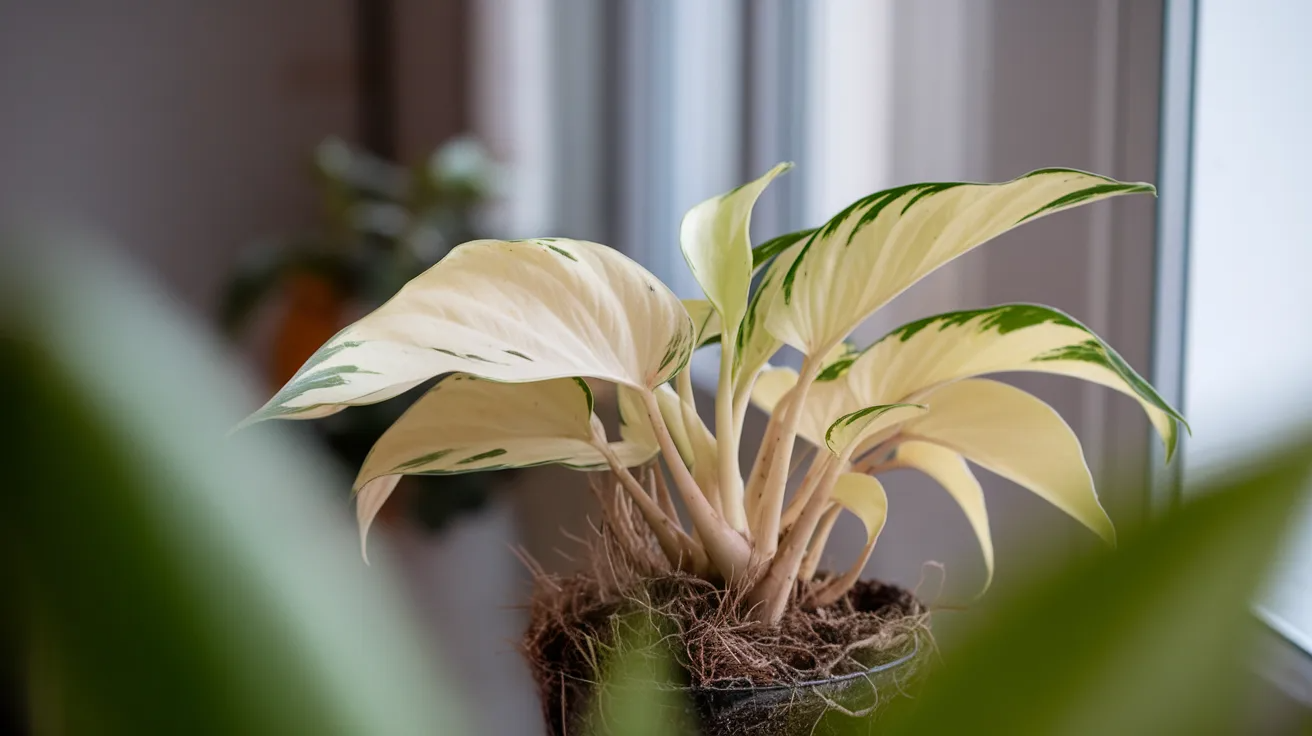
Yellow leaves are often a sign that your plant is dealing with some kind of stress. In most cases, it means something in its care routine or environment is not quite right.
1. Overwatering
Overwatering is one of the most common reasons plant leaves turn yellow. When the soil stays too wet, roots cannot get enough oxygen.
This weakens the roots and stops them from absorbing nutrients properly.
As a result, the leaves begin to lose their green color and turn yellow. Signs of overwatering include soggy soil, drooping leaves, and slow growth.
Let the soil dry between watering and make sure the pot has good drainage to keep the roots healthy.
Symptom checklist:
- Soil stays wet for days
- Leaves turn soft and yellow
- Drooping even with wet soil
- Musty smell from the soil
How to prevent: Water only when the top layer of soil feels dry. I always check with my finger before watering. Use pots with drainage holes and avoid letting water sit in trays. This keeps the roots healthy and prevents rot
2. Underwatering
Underwatering can also cause plant leaves to turn yellow. When a plant does not get enough water, it becomes stressed and cannot properly move nutrients through its system.
The soil may feel very dry, and the leaves can look dull, yellow, or even crispy at the edges.
Plants that stay dry for too long may also drop leaves early. Water your plants regularly and check the soil moisture to help keep them healthy and green.
Symptom checklist:
- Dry, hard soil
- Yellow leaves with crispy edges
- Leaves feel thin or brittle
- The plant looks weak or droopy
How to prevent: Follow a consistent watering routine instead of letting the soil dry out completely. Water deeply so moisture reaches the roots. Regular checks help maintain proper hydration and reduce stress on the plant.
3. Poor Drainage
Poor drainage can cause plant leaves to turn yellow by trapping excess water in the soil. When water cannot flow out properly, the roots sit in soggy conditions, which may cause them to rot.
Damaged roots struggle to absorb oxygen and nutrients, which leads to yellowing leaves and weak growth. Heavy soil or pots without drainage holes often cause this problem.
Using well-draining soil and containers with drainage holes helps keep roots healthy.
Symptom checklist:
- Water sits on top of the soil
- Soil feels heavy and compact
- Roots may smell or rot
- Yellow leaves with slow growth
How to prevent: Use well-draining soil and containers with drainage holes. Adding materials like sand or perlite improves airflow and water movement, helping roots stay healthy and preventing water buildup.
4. Nutrient Deficiency
Nutrient deficiency is another common reason plant leaves turn yellow. Plants need nutrients like nitrogen, iron, and magnesium to stay green and grow well.
When the soil lacks these nutrients, leaves may start to lose color and turn yellow.
Sometimes the veins stay green while the rest of the leaf becomes pale. Using a balanced fertilizer and healthy soil can help restore nutrients and support strong, green plant growth.
| Nutrient | Yellowing Pattern | Which Leaves First | Quick Fix |
|---|---|---|---|
| Nitrogen (N) | Uniform pale yellow across the whole leaf | Older, lower leaves first | Balanced liquid fertilizer or compost top-dress |
| Iron (Fe) | Yellow leaf, green veins remain (interveinal chlorosis) | Young, new leaves first | Chelated iron supplement; check soil pH is below 7.0 |
| Magnesium (Mg) | Yellow between veins, edges may stay green | Older leaves first | Diluted Epsom salt solution (1 tsp per liter) |
| Potassium (K) | Yellowing and browning at leaf edges and tips | Older leaves first | Balanced fertilizer with potassium; avoid over-fertilizing |
| Manganese (Mn) | Similar to iron chlorosis, a finer vein pattern | Young leaves first | Manganese sulfate spray; correct alkaline soil pH |
Symptom checklist:
- Pale or yellow leaves
- Green veins with yellow areas
- Slow or weak growth
- Older or newer leaves are affected
How to prevent: Apply a balanced fertilizer during the growing season. Adding compost improves soil quality and supports nutrient supply, helping plants maintain healthy green leaves.
5. Too Much or Too Little Sunlight
Light plays an important role in plant health. When a plant gets too much direct sunlight, the leaves may become pale or yellow due to stress or burning.
On the other hand, too little sunlight can slow photosynthesis, causing leaves to lose their green color.
Both situations can weaken the plant over time. Placing your plant in the right light conditions helps keep the leaves healthy and vibrant.
Symptom checklist:
- Pale or faded leaves
- Yellow patches or burns
- Slow growth in low light
- Leaves leaning toward the light
How to prevent: Place plants in suitable light conditions based on their needs. Adjust positioning as needed and rotate pots regularly to ensure even light exposure and steady growth.
6. Pests and Diseases
Pests and plant diseases can also cause leaves to turn yellow. Insects such as aphids, spider mites, and whiteflies feed on plant sap, weakening the plant and affecting leaf color.
Fungal or bacterial infections may also damage the leaves and roots. You may notice spots, holes, or sticky residue on the leaves.
Regularly checking plants and treating problems early can help prevent further damage and keep them healthy.
Symptom checklist:
- Yellow leaves with spots or holes
- Sticky residue on leaves
- Webbing or tiny insects
- Leaves curling or dropping
How to prevent: Inspect plants often, especially under leaves. Keep plants clean and remove affected parts early. Using natural treatments like neem oil can help control pests before they spread.
7. Natural Aging
Sometimes, yellow leaves are a normal part of a plant’s life cycle. As plants grow, older leaves at the bottom may turn yellow and fall off. This happens because the plant directs its energy toward new growth.
If only a few older leaves are yellow while the rest of the plant looks healthy, there is usually no need to worry.
Remove the old leaves to keep the plant looking neat and healthy. Regularly checking your plant helps you tell the difference between natural aging and a real problem early on.
Symptom checklist:
- Only the lower leaves are turning yellow
- Few leaves affected
- New growth looks healthy
- Leaves fall off slowly
How to prevent: No major action is needed. Remove old leaves to keep the plant tidy and focus on proper care so new growth stays healthy.
8. Temperature Stress and Cold Drafts
Sudden temperature changes, cold drafts from windows or air conditioning vents, and exposure to temperatures outside a plant’s preferred range can all trigger leaf yellowing.
Plants that are tropical in origin are particularly sensitive to temperatures below 50°F (10°C).
In my experience working with indoor green walls, plants placed near drafty single-pane windows during winter are among the most common cases of unexplained yellowing we see.
Moving the plant to a stable, draft-free spot often resolves the problem within a few weeks without any other intervention.
Symptom checklist:
- Sudden yellowing after temperature change
- Leaves dropping quickly
- Plant near windows or vents
- No other clear issue
How to prevent: Keep plants in a stable environment away from cold drafts and heat sources. Avoid placing them near windows, air vents, or heaters to reduce stress.
9. Root Bound Plants
A root-bound plant is one whose roots have outgrown the container and have no room left to expand.
When roots circle tightly around themselves, they struggle to absorb water and nutrients efficiently, which often results in yellowing leaves, stunted growth, and soil that dries out unusually fast.
Gently tipping the plant out of its pot is the fastest diagnostic.
If roots are circling the bottom or pressing against the drainage holes, it is time to repot into a container one size larger with fresh, well-draining soil.
Symptom checklist:
- Roots circling the pot
- Soil dries very fast
- Slow or stunted growth
- Yellow leaves despite care
How to prevent: Repot plants when roots outgrow the container. Choose a slightly larger pot with fresh, well-draining soil to support healthy growth and nutrient absorption.
Diseases that Cause Yellow Leaves on Plants
Plant diseases can damage leaves, roots, and stems, leading to yellowing leaves. These diseases often spread through contaminated soil, excess moisture, or poor airflow around plants.
| Disease Type | How It Causes Yellow Leaves on Plants | Common Signs |
|---|---|---|
| Fungal Infections | Attack leaf tissue and reduce nutrient flow | Yellow spots, mold, leaf drop |
| Bacterial Leaf Spot | Damages leaf cells, leading to discoloration | Yellow patches with dark edges |
| Root Rot | Affects roots, blocking water and nutrient uptake | Yellowing leaves, soggy roots |
| Powdery Mildew | Weakens leaves and limits photosynthesis | White powder with yellowing leaves |
| Viral Infections | Disrupt normal plant growth and color | Yellow streaks or patterns |
| Blight Diseases | Rapidly damaged leaves and stems | Yellowing followed by browning |
| Wilt Diseases | Block water transport within the plant | Drooping, yellow leaves |
Pests that Cause Yellow Leaves on Plants
Pests can weaken plants by feeding on their sap and damaging leaf tissues. This stress often causes leaves to lose their green color and turn yellow.
1. Aphids
Aphids are small, soft-bodied insects that feed on plant sap. They usually gather on the underside of leaves or on new plant growth.
When aphids suck nutrients from the plant, the leaves may begin to turn yellow, curl, or look weak.
You might also notice a sticky substance called honeydew on the leaves.
If left untreated, aphids can spread quickly and damage the plant. Washing plants with water or using mild insecticidal soap can help control them.
Eco-friendly treatment:
- Spray plants with a strong stream of water to remove them
- Use neem oil spray once a week
- Mix mild soap with water and spray the leaves
- Add ladybugs, which feed on aphids
2. Spider Mites
Spider mites are tiny pests that are difficult to see with the naked eye, but they can cause serious damage to plants.
They feed by sucking sap from the leaves, which often leads to yellow or speckled spots. One common sign of spider mites is fine webbing on the leaves or stems.
As the infestation grows, leaves may turn yellow and drop early.
Regularly checking plants and spraying them with water or neem oil can help control spider mites.
Eco-friendly treatment:
- Spray leaves with water to wash mites off
- Use neem oil to control their spread
- Keep humidity higher, as mites prefer dry air
- Wipe leaves gently with a damp cloth
3. Whiteflies
Whiteflies are small, white flying insects that often gather on the underside of plant leaves. They feed on plant sap, which weakens the plant and can cause leaves to turn yellow.
When disturbed, they usually fly up in small clouds around the plant.
Whiteflies also produce a sticky substance called honeydew that can attract mold. Regularly checking plants and using insecticidal soap or neem oil can help control whitefly infestations.
Eco-friendly treatment:
- Use yellow sticky traps to catch them
- Spray neem oil on leaf undersides
- Wash leaves regularly with water
- Introduce natural predators like lacewings
4. Thrips
Thrips are very small insects that feed on plant leaves by scraping the surface and sucking out plant juices. This damage can cause leaves to turn yellow, develop silvery patches, or show small streaks and spots.
Over time, affected leaves may become dry or distorted.
Thrips often hide in flowers and on the underside of leaves, making them hard to notice at first. Regular inspection and the use of neem oil or insecticidal soap can help control thrips.
Eco-friendly treatment:
- Spray neem oil every few days
- Use insecticidal soap on affected areas
- Remove heavily damaged leaves
- Place blue sticky traps near plants
When to Remove Yellow Leaves and When to Leave Them?
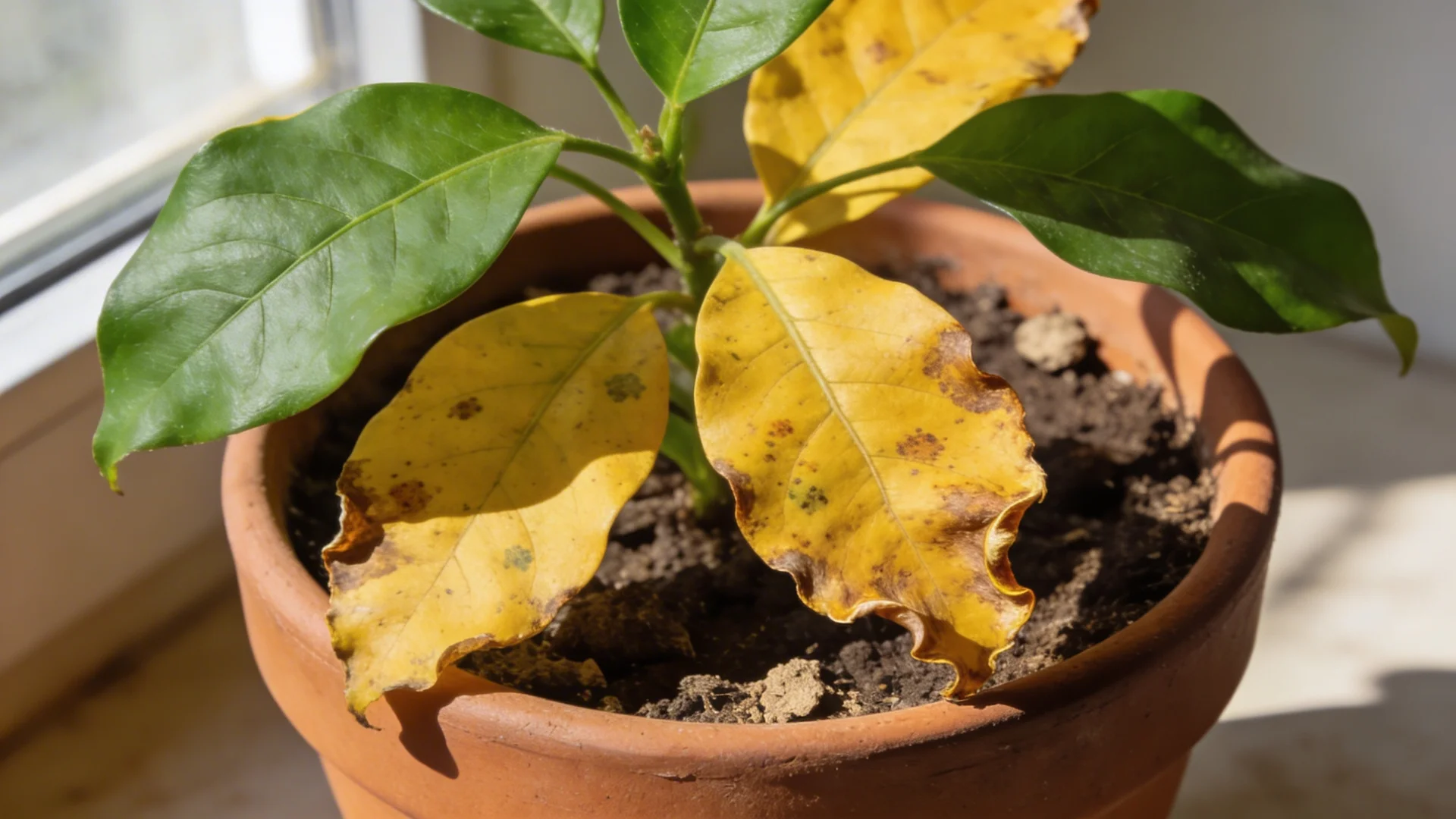
Yellow leaves do not always mean something is wrong, so it helps to know when to act.
Remove yellow leaves when they are fully yellow, dry, or damaged, as they no longer help the plant and may attract pests.
Trimming them also helps the plant focus energy on new growth. Use clean scissors and cut close to the base.
Leave yellow leaves if only part of the leaf is yellow or if the issue is still being fixed. The plant may still use the leaf for energy while it recovers.
Also, if many leaves are turning yellow at once, avoid removing them all quickly, as this can stress the plant more. Wait, fix the cause, and remove leaves slowly as the plant improves.
Conclusion
Yellow leaves can feel worrying at first, but they are often a plant’s way of telling you something needs attention.
Once you start checking simple things like watering, sunlight, soil quality, and pests, the problem usually becomes easier to understand.
Small changes in care can make a big difference, and many plants recover quickly when their needs are met.
The key is to watch your plants closely and learn what works best for them. With a little patience and the right care, those yellow leaves can turn green again.
Have you noticed yellow leaves on your plants before?
What helped you fix the problem? Share your experience in the comments below so others can learn from your tips too.
Frequently Asked Questions
Do Nutrient Deficiencies Cause Yellow Leaves?
Lack of nitrogen, iron, or magnesium commonly results in leaf discoloration.
Do Indoor Conditions Affect Yellow Leaves on Plants?
Low humidity, poor lighting, or inconsistent care indoors may cause leaf discoloration.
Can Too Much Sunlight Cause Yellow Leaves on Plants?
Excessive sunlight exposure may lead to leaf burn, causing yellowing or faded patches.
What Does It Mean When Yellow Leaves Have Green Veins?
Yellow leaves with green veins often mean iron or manganese deficiency. This usually happens when soil pH is too high, making it hard for the plant to absorb these nutrients.