

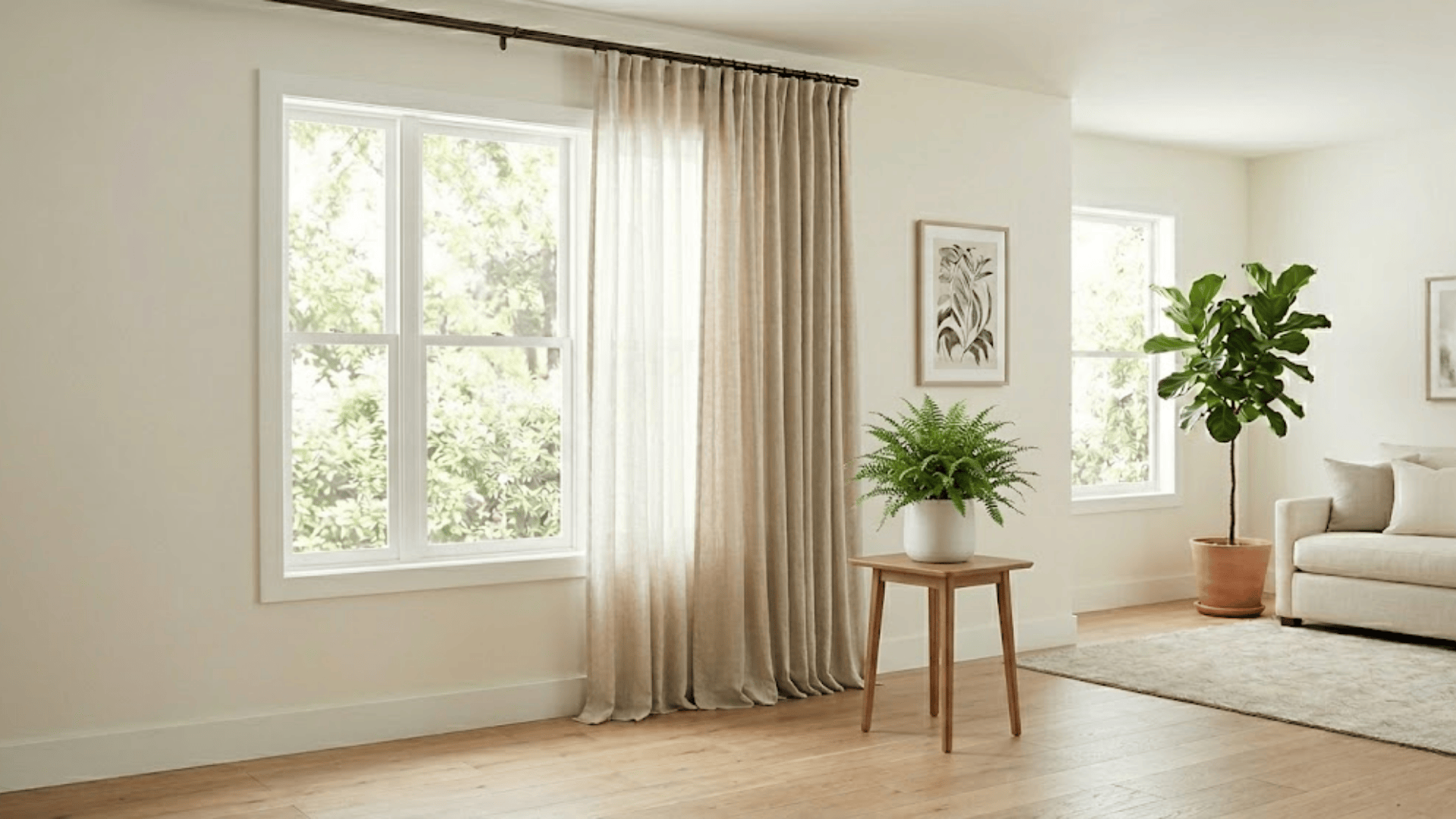
Adding greenery to your home is one of the easiest ways to improve both the look and feel of your space.
Popular house plants not only bring natural beauty indoors but also help create a calm and relaxing environment.
Many of the most popular house plants are chosen not just for looks, but for how easy they are to care for in everyday indoor conditions.
I’ve found that even one or two plants can make a room feel fresher and more welcoming.
If the goal is to brighten a space quickly, low-maintenance plants like Snake Plant, Pothos, and ZZ Plant are often the best starting point.
Even a few simple plants can turn dull corners into lively areas.
With the right choices, you can easily create a space that feels more comfortable, balanced, and full of life.
Benefits of Adding House Plants to Your Home
House plants offer both visual appeal and practical benefits, making any space feel fresher and more comfortable.
- Improves Air Quality: Helps keep indoor air fresh and cleaner
- Adds Natural Beauty: Brings color, texture, and life to any room.
- Creates a Calm Atmosphere: A study published in the Journal of Physiological Anthropology found that indoor plants reduced physical and mental stress by lowering nervous system activity.
- Enhances Home Decor: Complements furniture and overall interior style
- Boosts Mood: Can help reduce stress and improve overall well-being
Most Popular House Plants for Beginners
Beginner-friendly house plants are popular because they require less maintenance and adapt well to indoor conditions.
1. Snake Plant
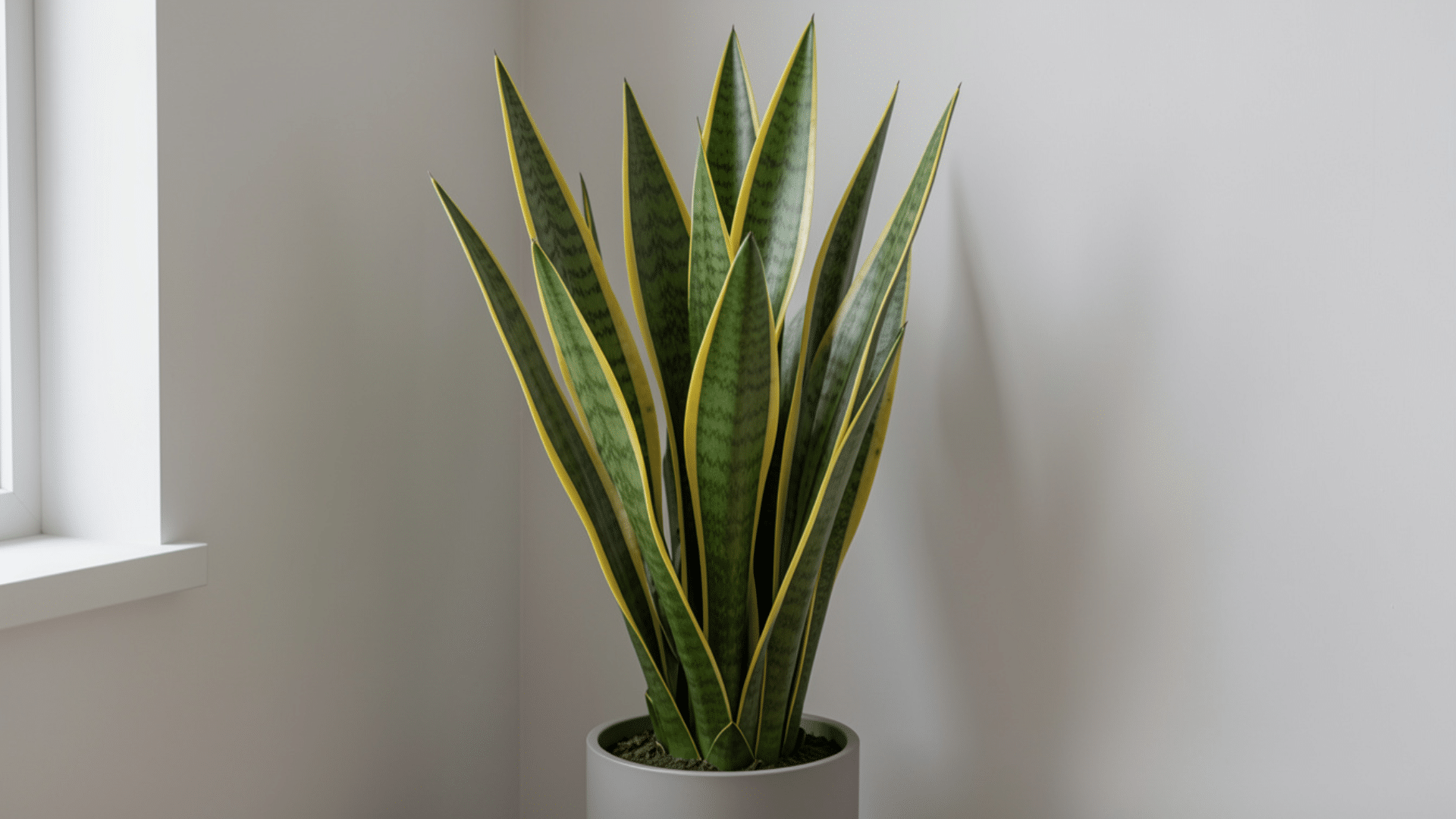
The Snake Plant, also known as Sansevieria or “mother-in-law’s tongue,” is one of the most forgiving houseplants you can own.
Its stiff, upright leaves with striking yellow-edged patterns make it a bold visual statement, yet it demands almost nothing from its caretaker.
It also has a strong and steady growth style, so it keeps its shape without spreading out too much. This makes it a great choice if you want a plant that looks neat and easy to manage.
- Light level: Low to bright indirect, one of the most light-flexible plants on this list.
- Watering: Every 2–6 weeks, depending on the season.
- Best rooms: Bedroom, office, hallway, anywhere with low traffic and inconsistent light.
- Pet safety: Toxic to cats and dogs if ingested.
2. Pothos
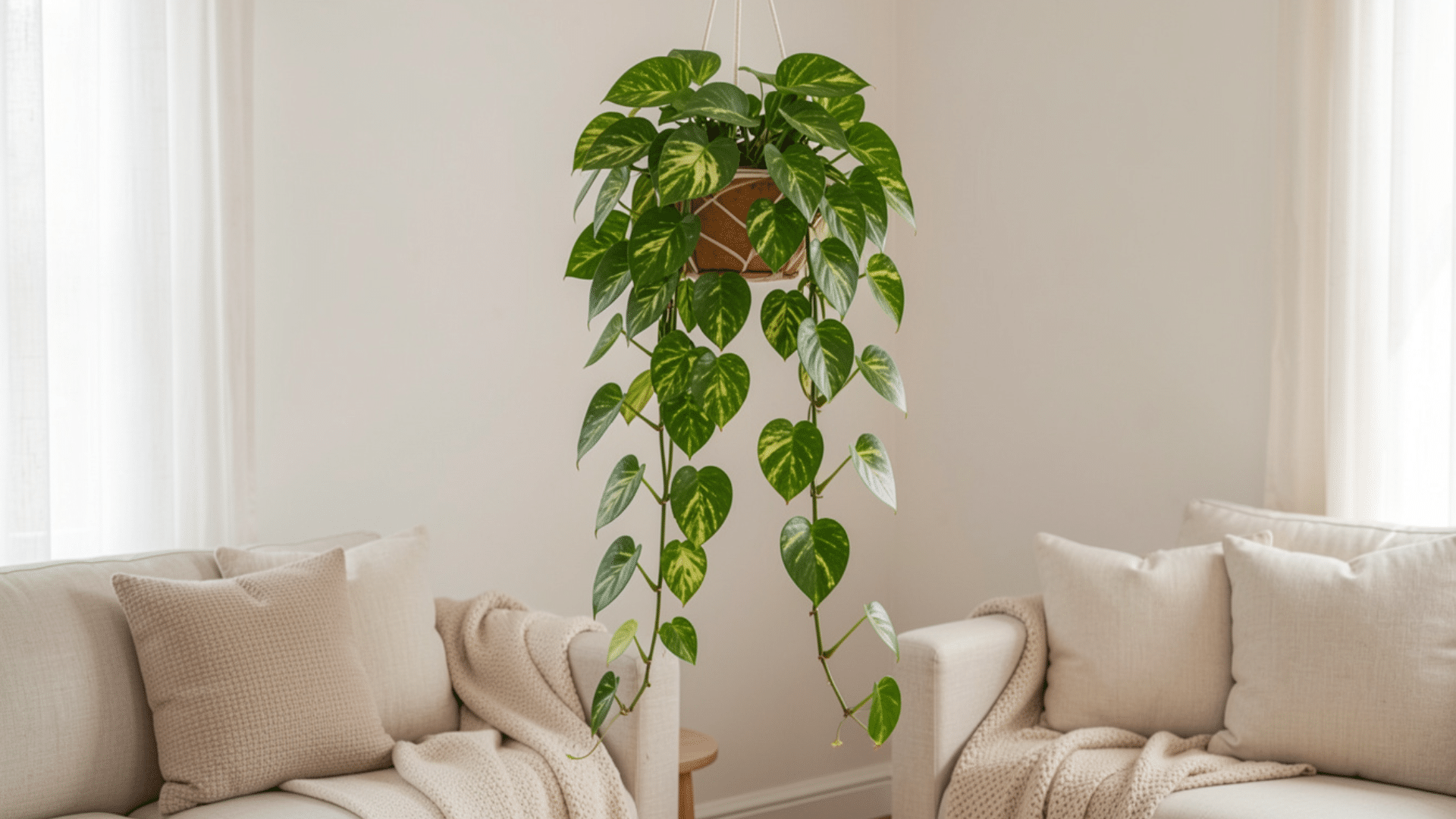
Pothos is the ultimate beginner’s plant; a fast-growing vine that cascades beautifully from shelves and hanging baskets, filling any space with lush green energy.
Its heart-shaped leaves come in a range of varieties, from golden to marble queen and neon green.
It grows fast and spreads nicely, which helps fill empty areas and gives your room a more relaxed and natural feel.
You can train it to climb walls or let it hang down, which gives you flexible styling options without much effort.
- Light level: Low to bright indirect, exceptionally adaptable.
- Watering: Every 1–2 weeks; leaves will start to droop slightly when thirsty.
- Best rooms: Living room, office, bathroom , works almost anywhere.
- Pet safety: Toxic to cats and dogs.
3. Spider Plant
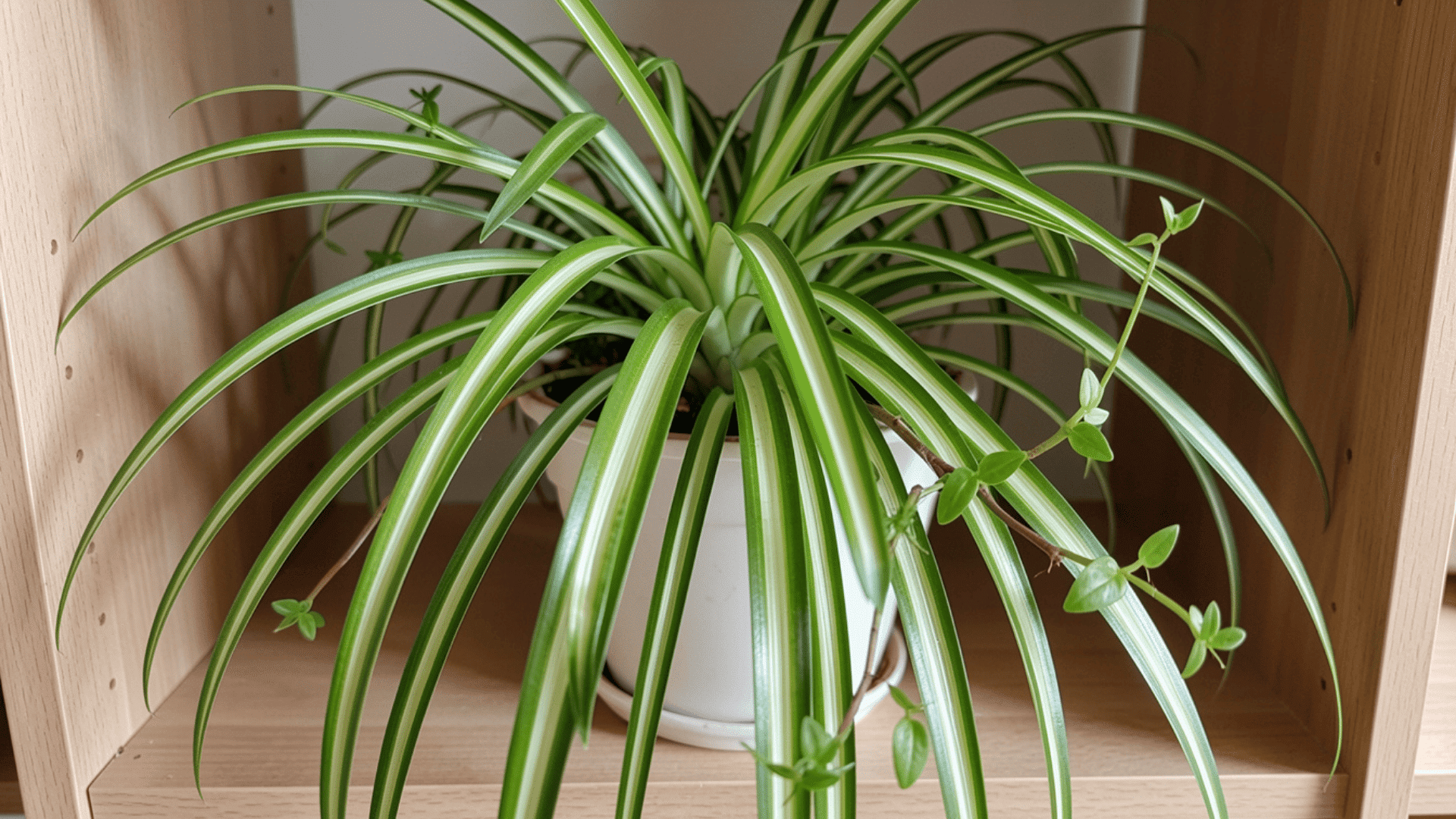
Few plants are as cheerful or as easy to manage as the Spider Plant. Named for its long arching leaves and dangling “spiderettes.”
It produces a constant supply of offshoots you can propagate into new plants, making it one of the most rewarding plants to grow at home.
What makes it fun is how it grows small baby plants that hang down, giving it a full and playful look that stands out in any space.
- Light level: Low to medium indirect light.
- Watering: Every 1–2 weeks; allow the top inch of soil to dry between waterings.
- Best rooms: Living room, children’s bedroom, kitchen.
- Pet safety: Non-toxic to cats and dogs , one of the safest popular house plants for pet owners.
4. Peace Lily
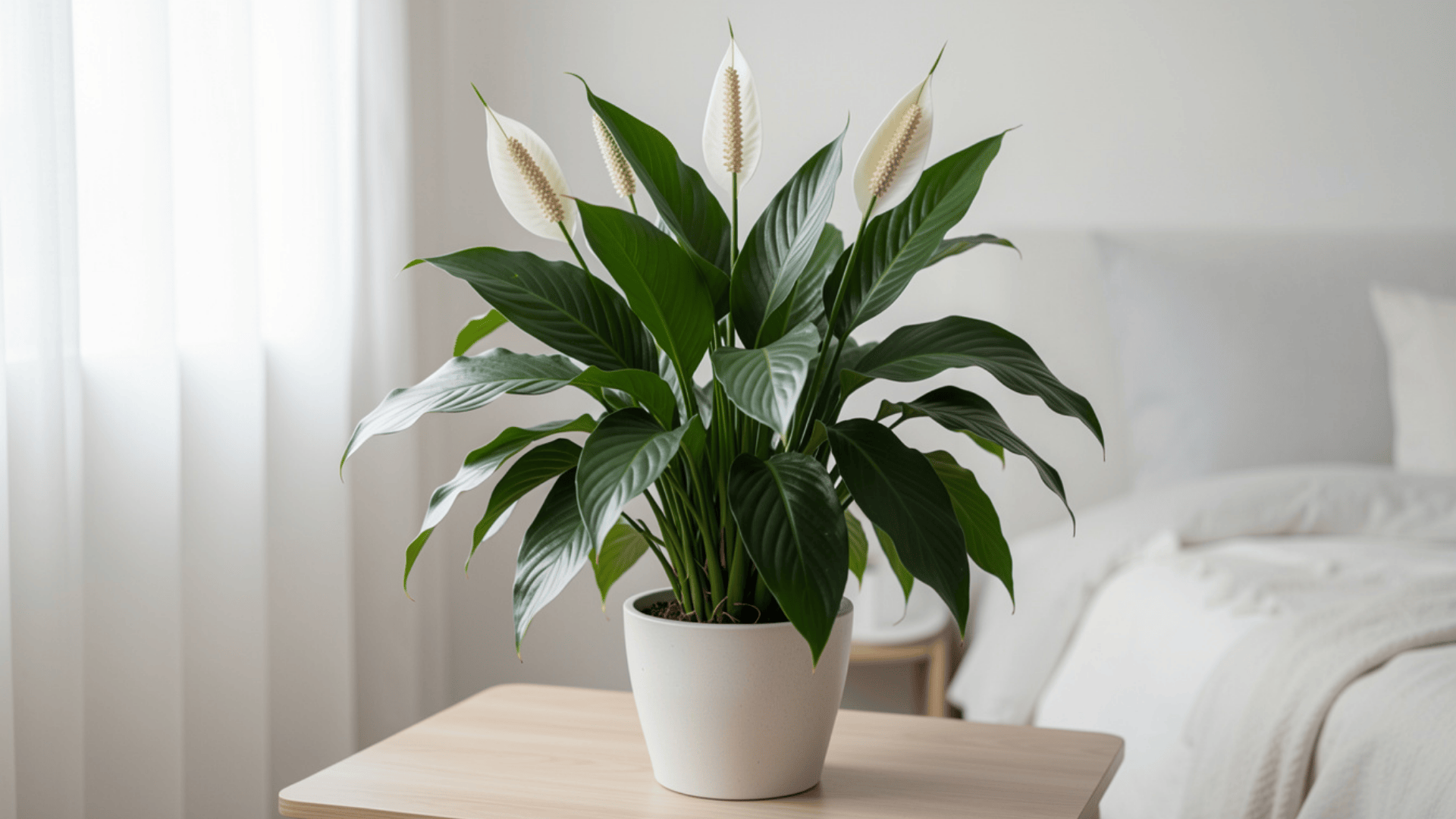
Unlike most foliage houseplants, the Peace Lily blooms indoors, producing elegant white spathes above its glossy leaves.
Peace Lilies are also known for their air-cleaning properties, having been featured in NASA’s Clean Air Study
It also has a natural way of staying neat, so it keeps your space looking fresh without much effort. This makes it a nice choice if you want something simple but still eye-catching.
- Light level: Low to medium indirect light, one of the best true low-light performers on this list.
- Watering: Every 1–2 weeks; the drooping signal makes it easy to gauge without checking the soil.
- Best rooms: Bathroom, bedroom, or any low-light room where a flowering plant is usually hard to maintain.
- Pet safety: Toxic to cats and dogs.
5. ZZ Plant
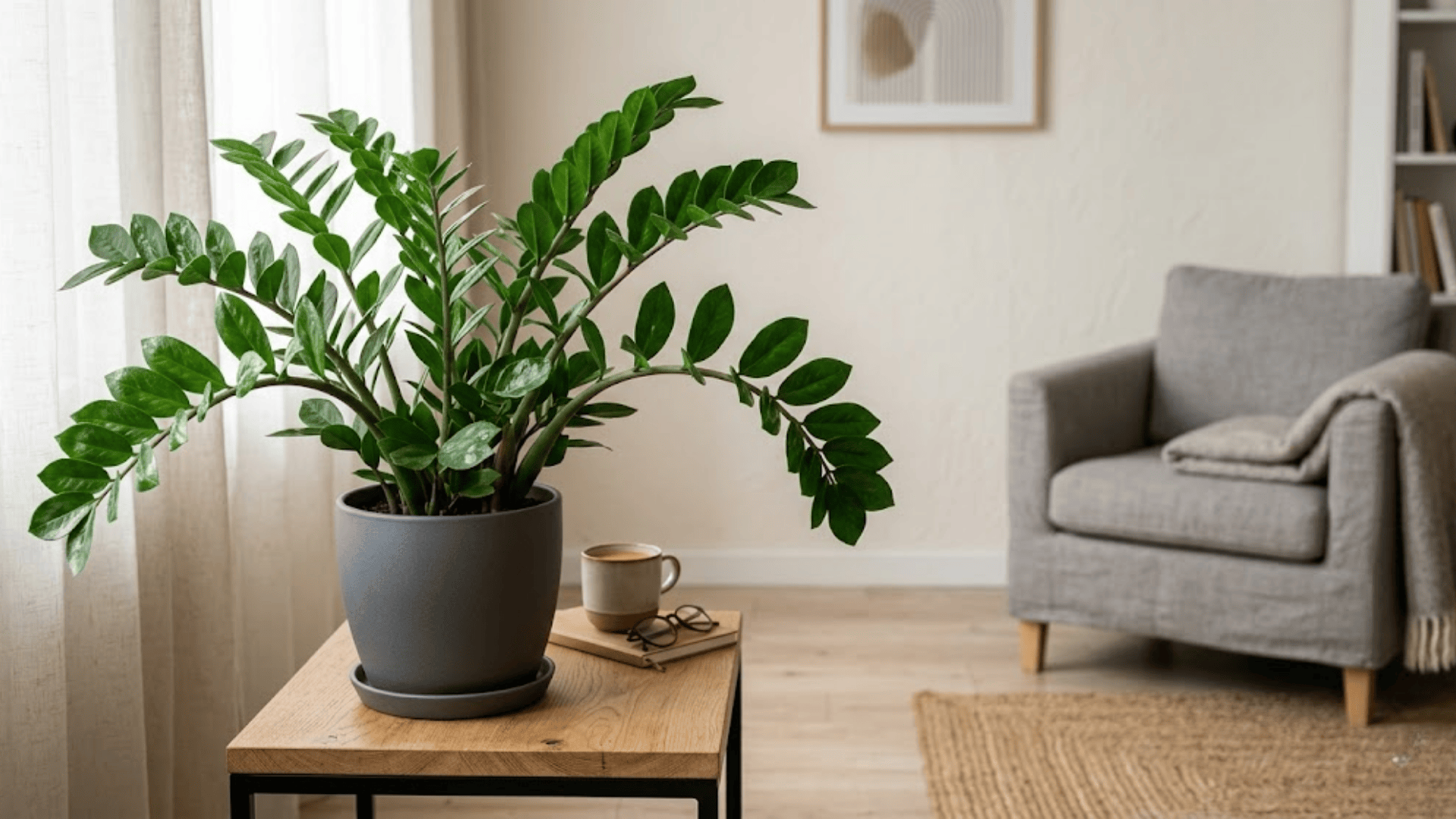
The ZZ Plant, short for Zamioculcas zamiifolia, has earned a devoted following for its near-indestructible nature.
Its waxy, dark green leaflets grow on graceful arching stems and give it a polished, almost artificial look.
It has a naturally polished look that stays fresh for a long time, so you don’t have to worry about it looking messy or dull. This makes it a solid choice for busy homes or workspaces.
- Light level: Low to bright indirect, tolerates darker spots better than almost any plant on this list.
- Watering: Every 2–4 weeks in summer; once a month or less in winter.
- Best rooms: Office, hallway, or any room that lacks consistent natural light.
- Pet safety: Toxic to cats and dogs if ingested.
6. Monstera
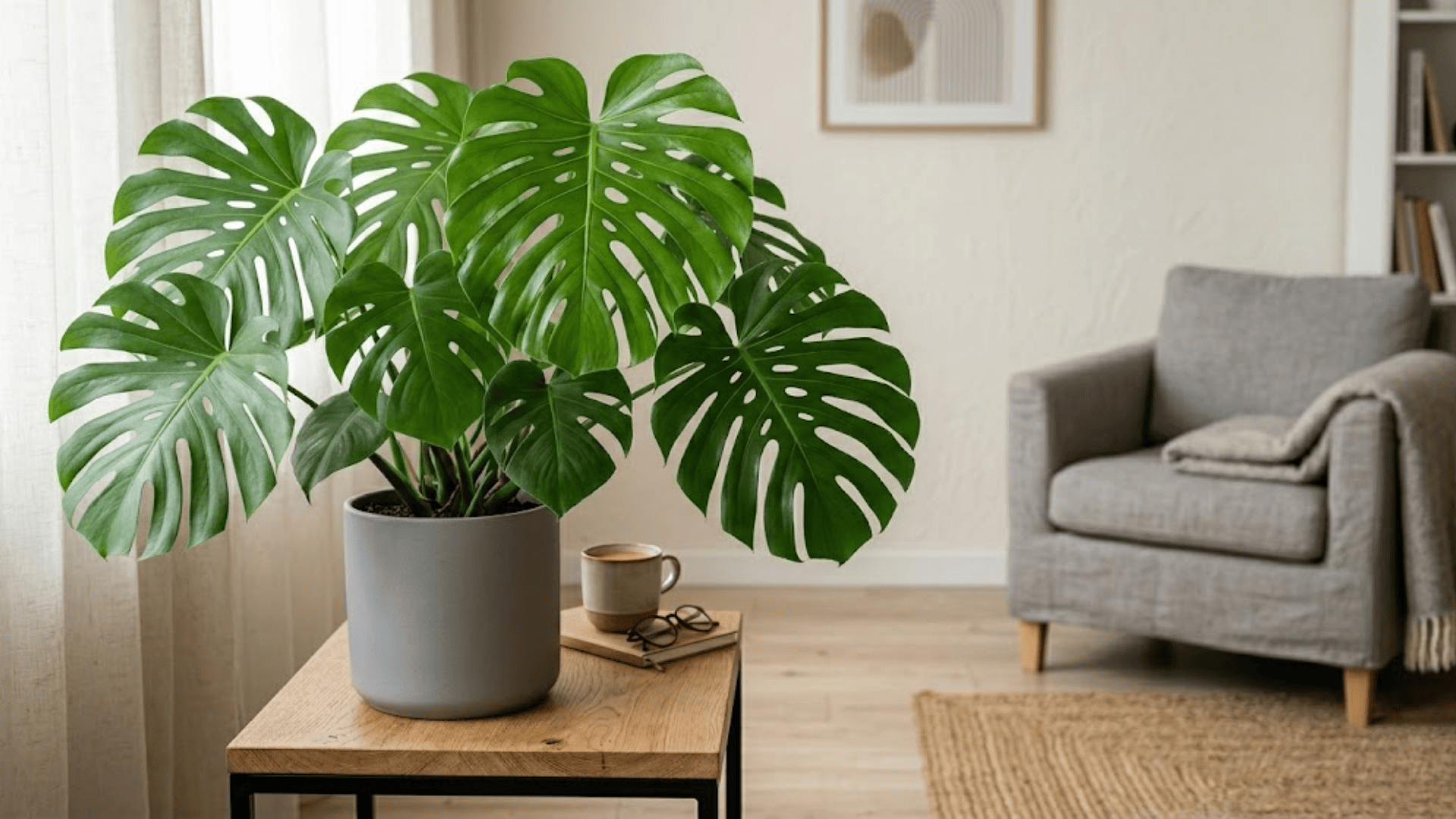
No plant captures the spirit of an indoor jungle style quite like the Monstera deliciosa, commonly known as the Swiss Cheese Plant.
Its large, glossy leaves develop natural splits and holes as it matures, making it one of the most photographed houseplants.
It also grows in a loose, natural shape, which gives your space a calm, easy-going vibe without looking too structured or stiff.
As it grows bigger, it can climb or spread out, which helps fill space and gives your room a fuller, greener look.
- Light level: Medium to bright indirect. Avoid direct sun, which scorches the leaves.
- Watering: Every 1–2 weeks; water thoroughly and allow the top 2 inches of soil to dry before watering again.
- Best rooms: Living room, large open-plan spaces, it needs room to spread.
- Pet safety: Toxic to cats and dogs. Contains calcium oxalate crystals
7. Fiddle Leaf
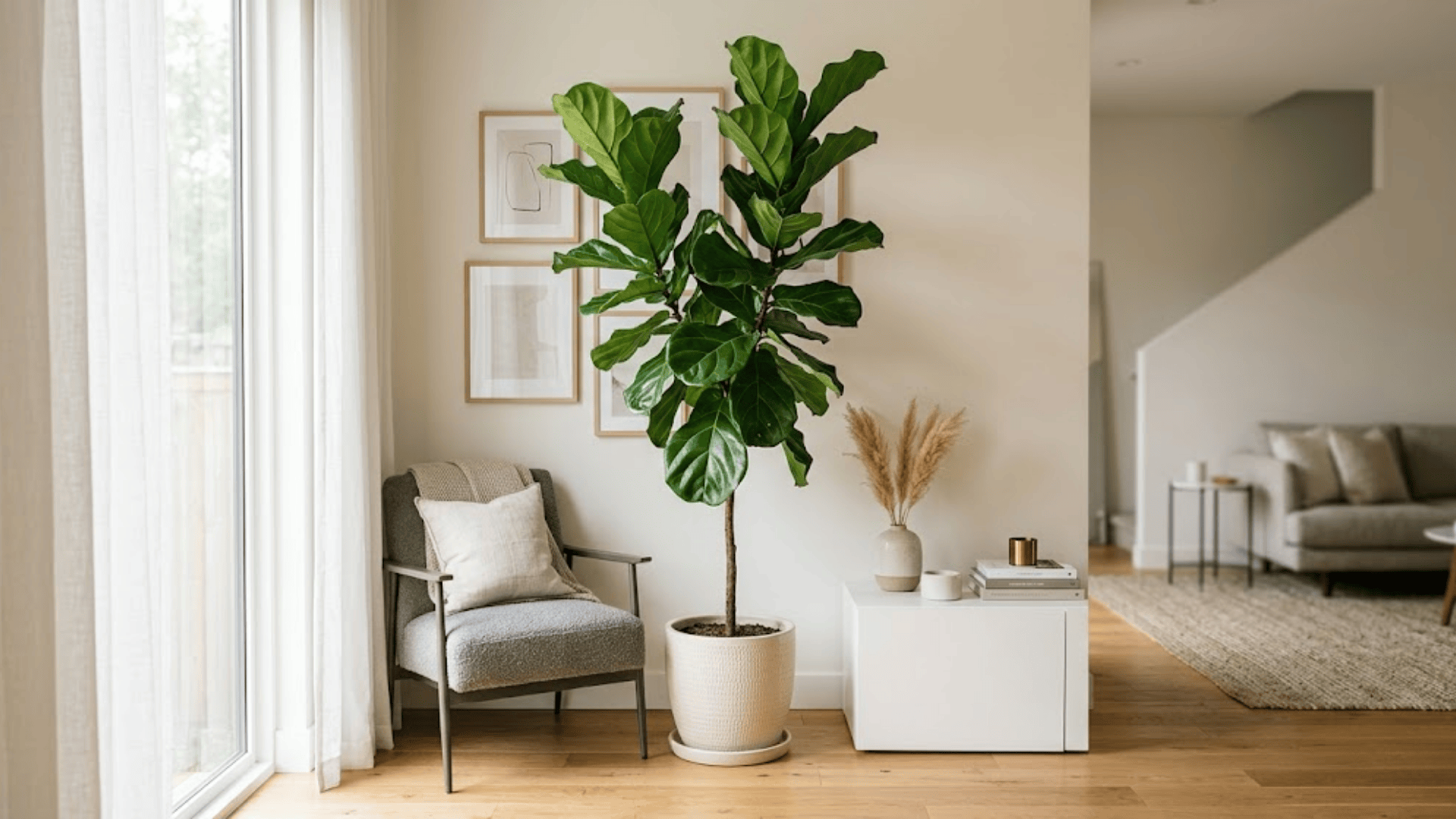
The Fiddle Leaf Fig is a bold indoor plant known for its large, wide leaves that stand out right away.
Its deep green leaves have a smooth, slightly shiny look that adds a strong and modern feel to any room. It works well as a centerpiece near sofas or empty corners.
What makes it stand out is how each leaf grows big and spaced out, giving it a sculpted, almost designer look that feels more like a decor piece than just a plant.
- Light level: Bright indirect, the most light-demanding plant on this list.
- Watering: Every 7–10 days in summer; reduce in winter. Consistent moisture without waterlogging.
- Best rooms: Living room or bedroom with a large, bright window
- Pet safety: Toxic to cats and dogs.
8. Aloe Vera
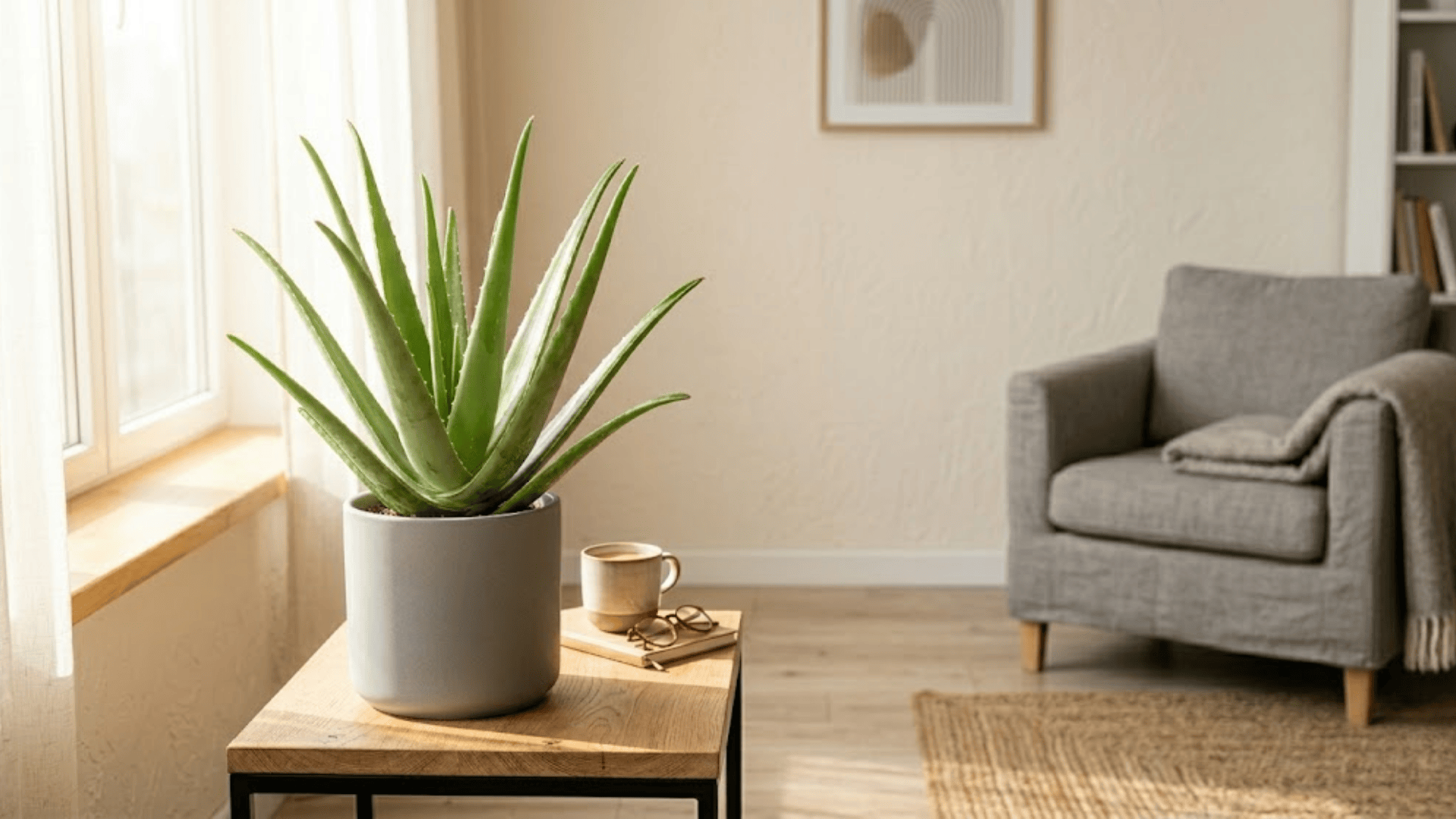
Aloe Vera is a compact indoor plant that looks clean and fresh without taking up much space.
Its thick, pointed leaves hold water, so it stays fine even if you miss a few watering days. The soft green tone also makes any corner feel calm and neat.
It loves sunny spots like windowsills and needs very little care, which makes it a smart pick if you want something simple but still nice to look at.
- Light level: Bright indirect to direct sun, needs more light than most plants on this list.
- Watering: Every 2–3 weeks in summer; monthly in winter.
- Best rooms: Kitchen windowsill or bright bathroom, practical placement for when the gel is needed.
- Pet safety: Mildly toxic to cats and dogs if ingested.
9. Rubber Plant
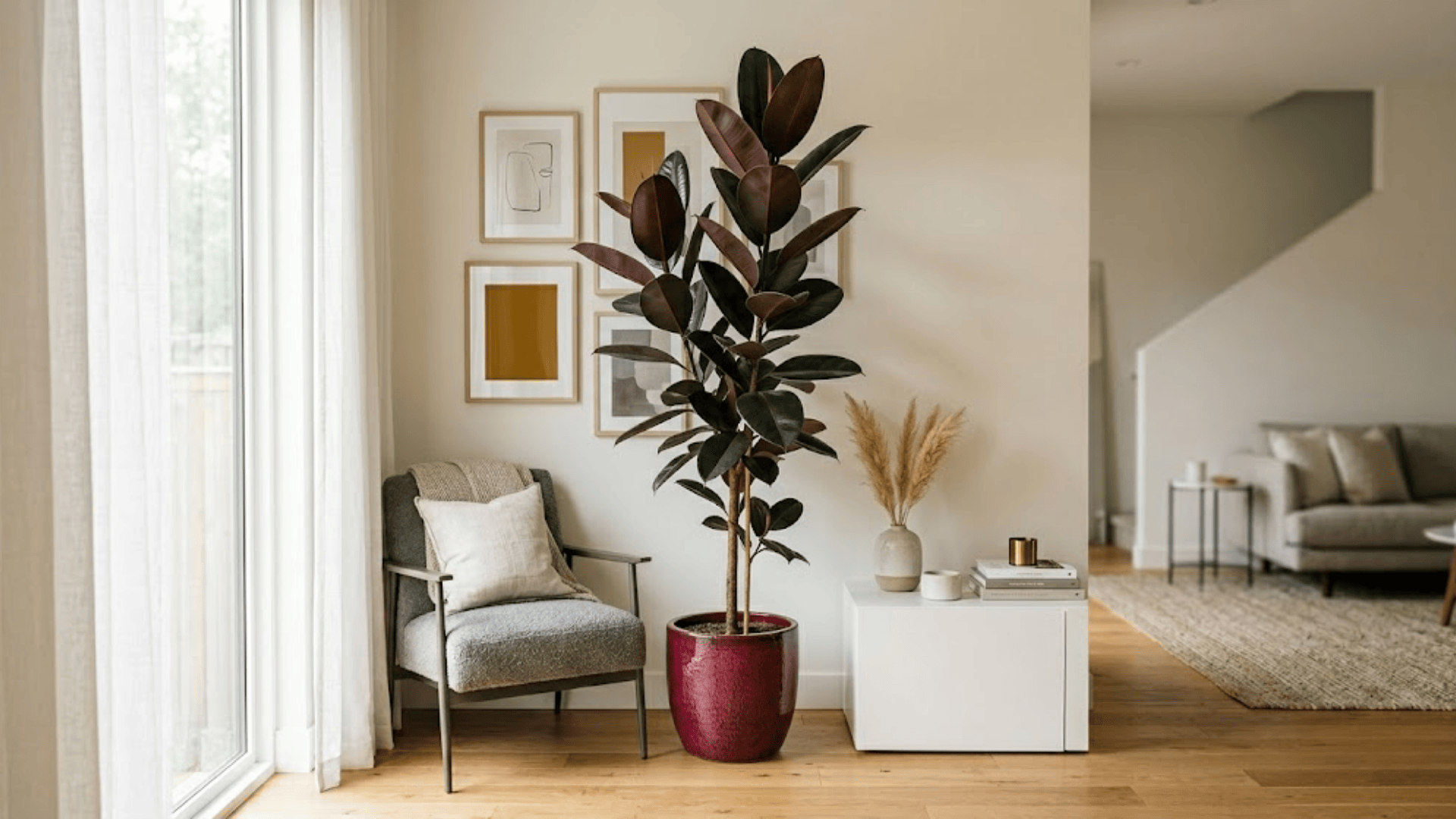
The Rubber Plant, or Ficus elastica, is a bold and beautiful houseplant that brings rich, deep color and a refined, polished feel to any interior
Its deep green leaves, sometimes with burgundy tones, add a rich and clean feel to any space.
It works well as a statement plant in living rooms or corners that need a bit of life.
It also has a strong stem that supports steady growth, helping it keep a tall and balanced shape over time, making it a great pick if you want a plant that looks structured and lasts for years.
- Light level: Medium to bright indirect. Darker varieties (like the ‘Burgundy’ cultivar) hold their deep color best in brighter light.
- Watering: Every 1–2 weeks; Wipe leaves with a damp cloth occasionally , the large surface area attracts dust, blocking light absorption.
- Best rooms: Living room, entryway, or any space where you want a tree-like statement
- Pet safety: Toxic to cats and dogs
10. Areca Palm
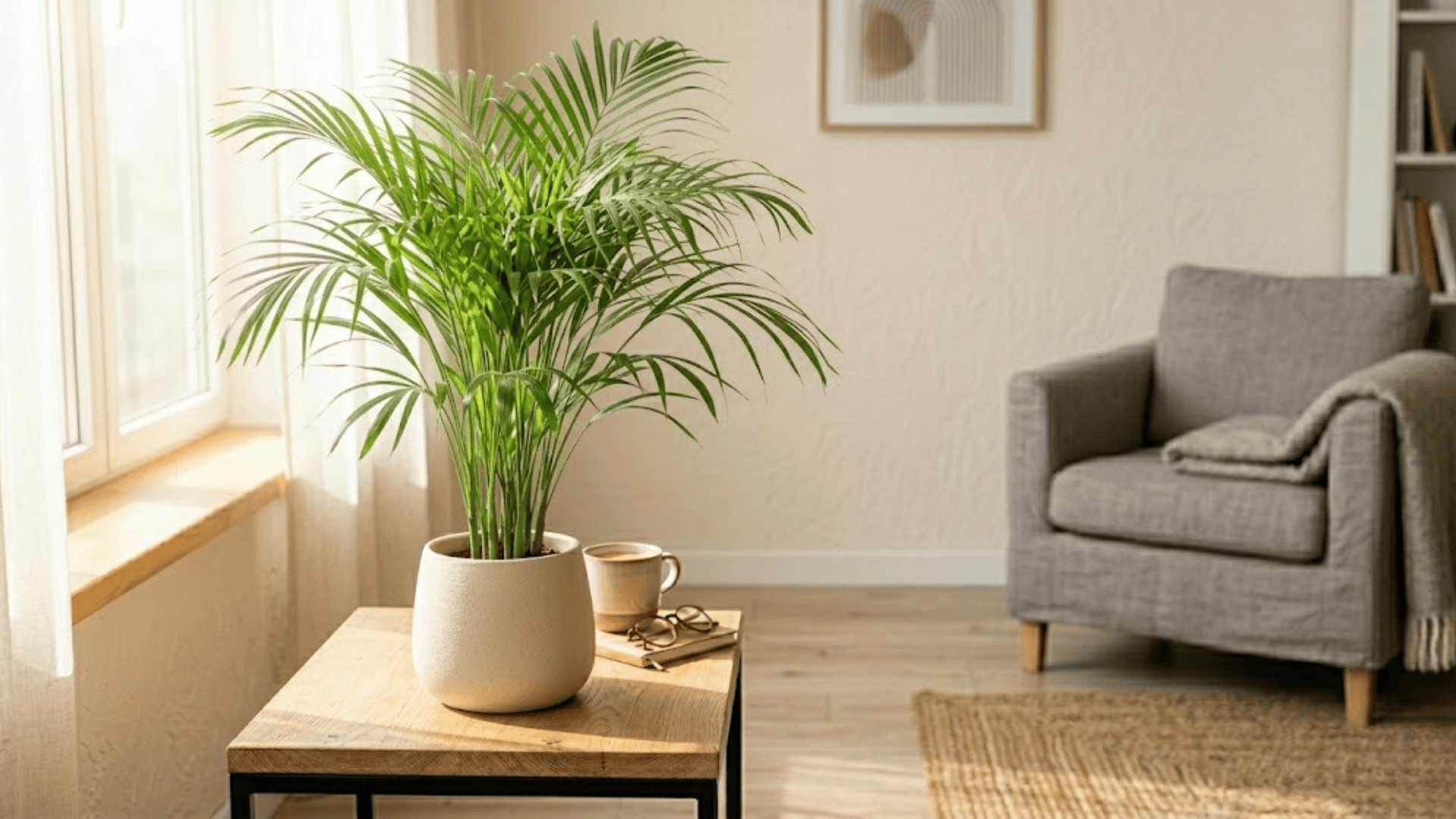
If you want to introduce a genuine tropical atmosphere into your home, the Areca Palm is your best ally.
Its feathery, arching fronds grow in dense clusters, creating a lush canopy that instantly evokes sun-drenched coastlines and resort lobbies.
It also helps fill empty corners and makes the room feel more open and relaxed without much effort.
This plant grows steadily and keeps a full shape, so it stays nice and green with simple care and regular watering.
- Light level: Bright indirect, needs a well-lit spot to maintain its full, lush appearance.
- Watering: Every 1–2 weeks in summer; reduce in winter. Keep soil lightly moist but never waterlogged.
- Best rooms: Living room, sunroom, or large open spaces
- Pet safety: Non-toxic to cats and dogs
11. Chinese Evergreen
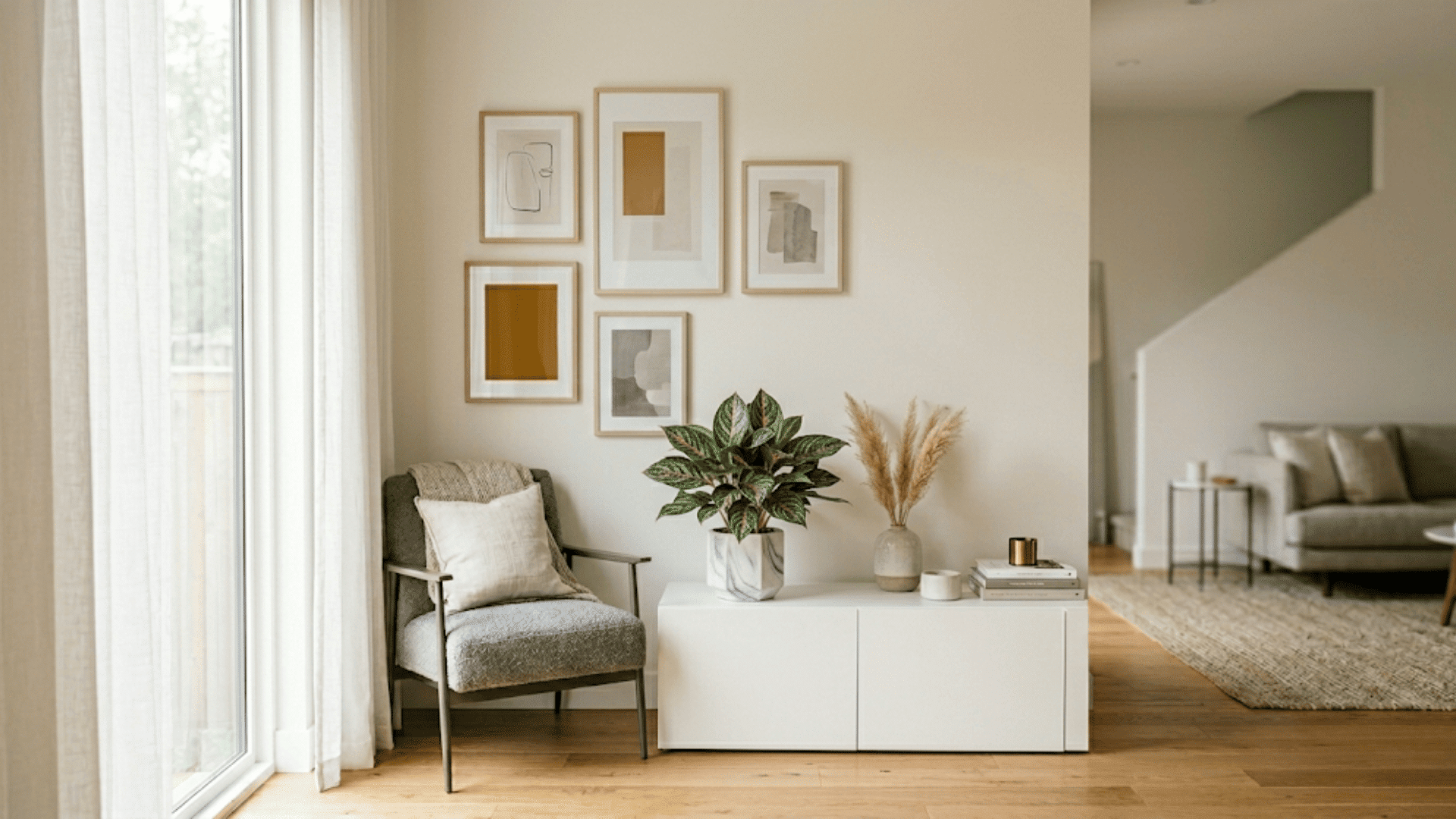
Chinese Evergreen is a low-maintenance houseplant known for its attractive leaves and strong ability to grow in many indoor conditions.
Its leaves often show shades of green, silver, or even red, which adds a nice touch of color without much work.
It grows at a steady pace and keeps its full look over time, so you don’t need to trim it often. This makes it a great pick if you want a plant that stays neat and easy to manage.
- Light level: Low to medium indirect. Darker green varieties tolerate lower light; brightly variegated pink or red varieties need more light.
- Watering: Every 1–2 weeks; allow the top inch of soil to dry between waterings.
- Best rooms: Office, bedroom, or any room with inconsistent light.
- Pet safety: Toxic to cats and dogs. Contains calcium oxalate crystals.
12. Calathea
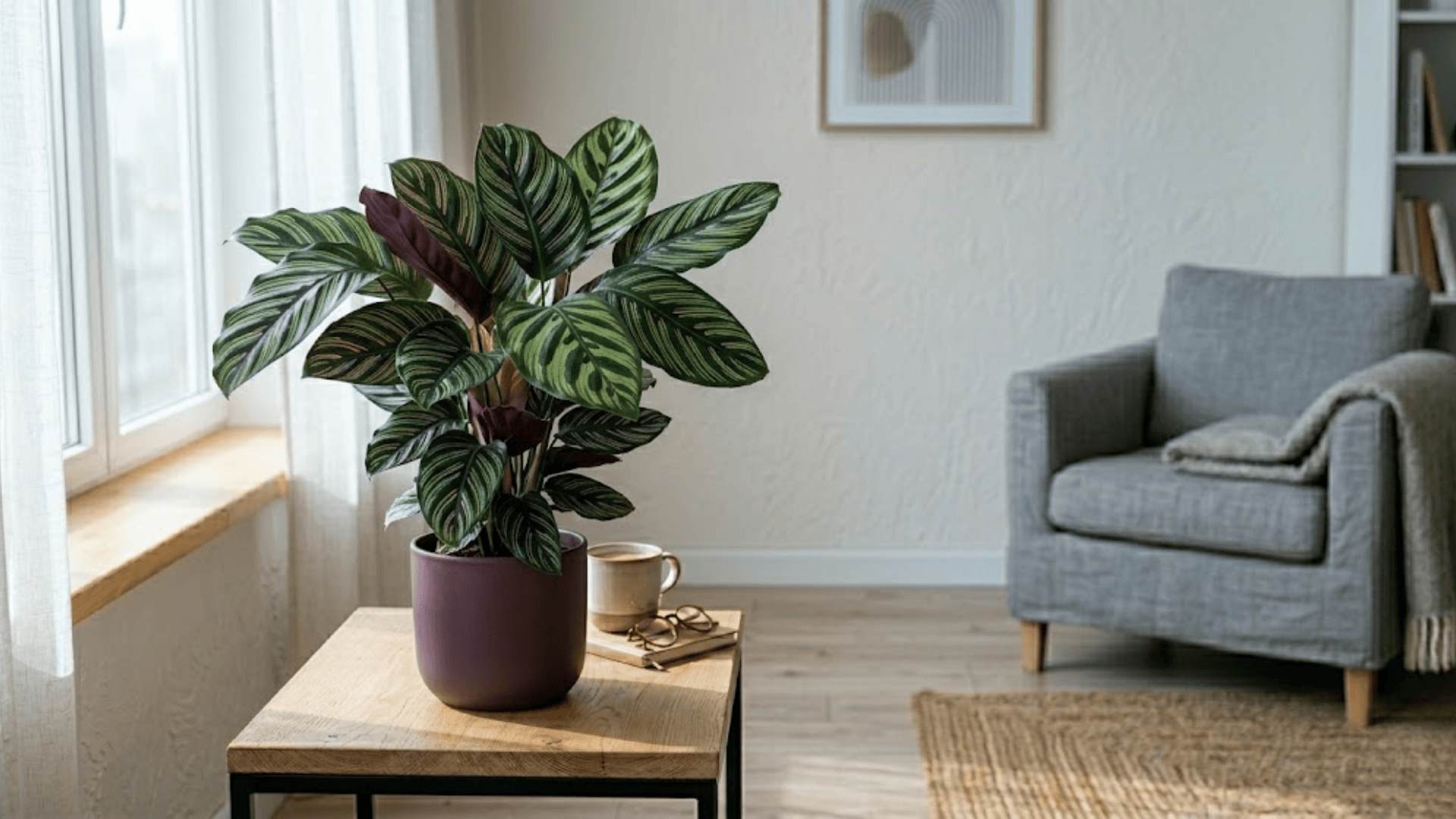
Calathea plants stand out as some of the most eye-catching houseplants, known for their bold and detailed leaf designs.
Their leaves show clear patterns, strong stripes, and deep color mixes that add a rich look to any space.
What makes them special is how their leaves move slightly during the day, opening and closing in response to light, which gives them a more lively feel.
They also bring a soft, calming look to rooms, making them a nice choice for spots where you want a relaxed and peaceful vibe.
- Light level: Medium indirect, avoid direct sun, which fades the leaf patterns.
- Watering: Keep soil consistently moist but never soggy. Use filtered or rainwater where possible.
- Best rooms: Bathroom or kitchen, the naturally higher humidity suits them well.
- Pet safety: Non-toxic to cats and dogs, a beautiful, safe choice for pet households.
13. Dracaena
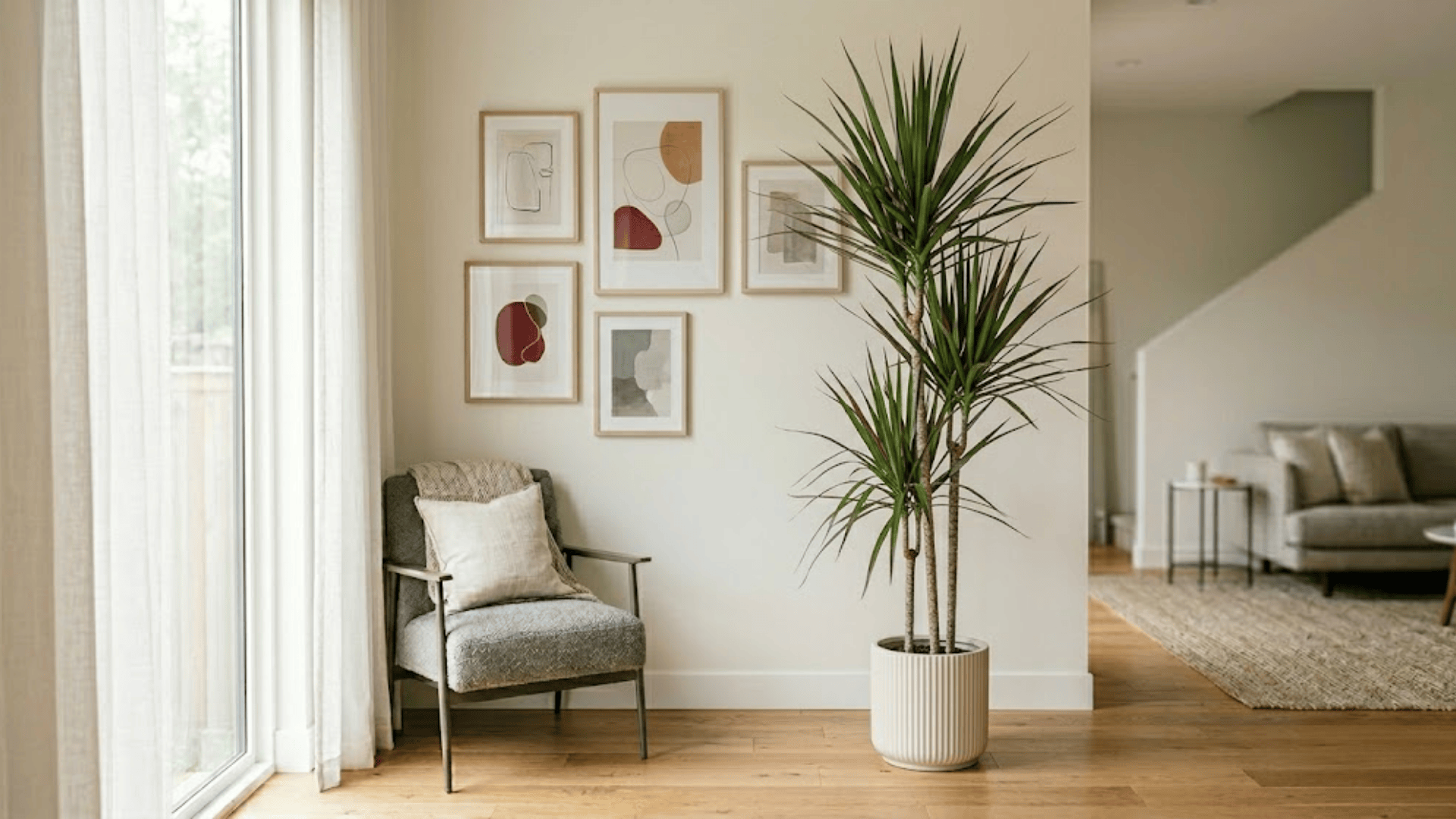
Dracaena plants are not just easy to grow; they are also known for helping clean indoor air, which makes them a smart pick for homes and offices.
Their bold, upright shape adds height and makes a space feel more styled without much effort.
Dracaena plants are easy to grow and help clean indoor air, making them a smart choice for homes and offices.
They also come in different leaf styles and colors, so you can pick one that fits your space without changing your setup much.
- Light level: Low to bright indirect, depending on variety.
- Watering: Every 2–3 weeks; one of the more drought-tolerant plants on this list.
- Best rooms: Living room, bedroom, or office, its upright form takes up floor space efficiently without spreading wide.
- Pet safety: Toxic to cats and dogs. One of the more commonly ingested houseplants by curious pets.
14. Boston Fern
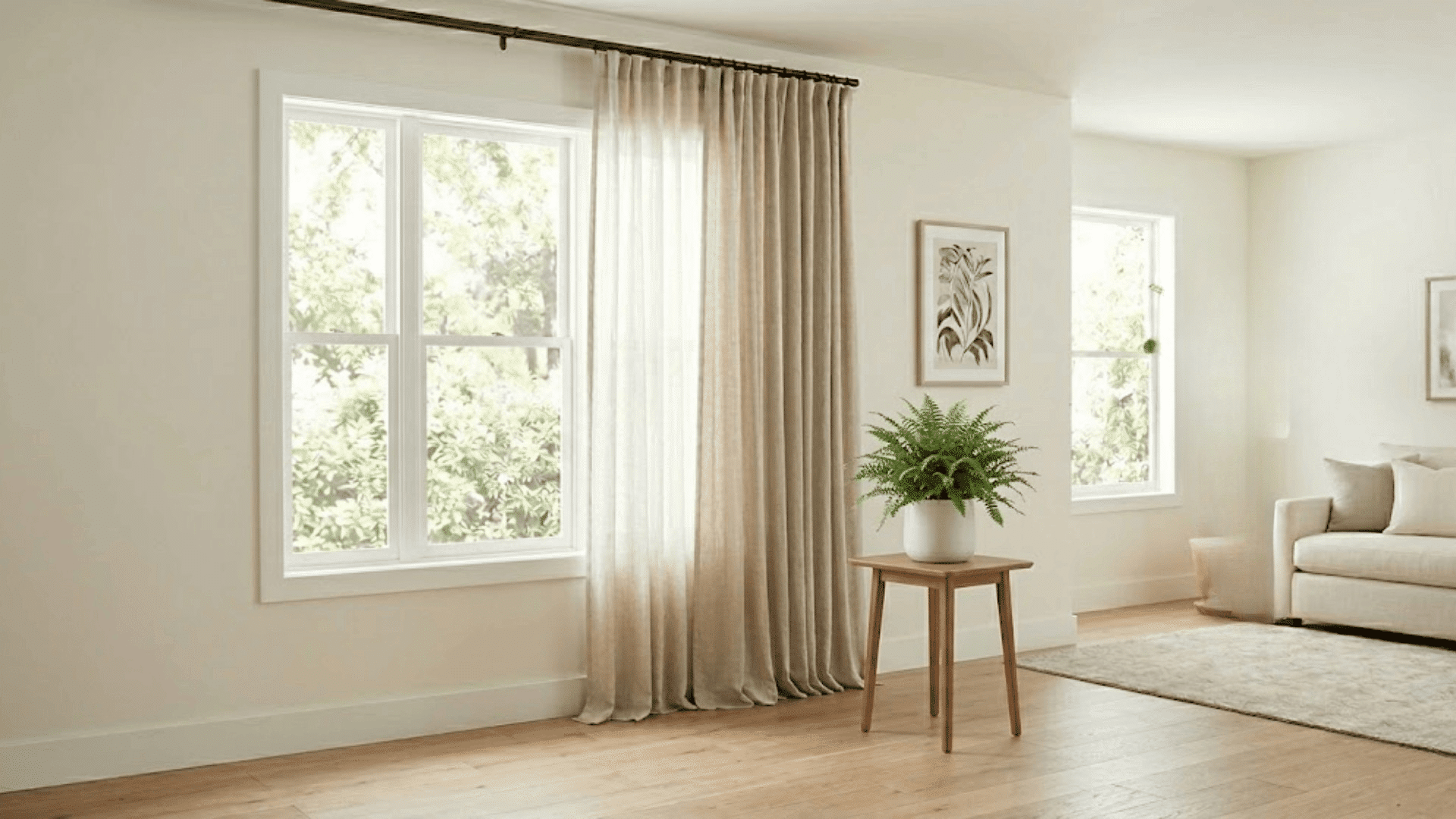
The Boston Fern is an evergreen plant that adds a soft, fresh, and natural feel to any indoor or outdoor space.
Its full, arching fronds create a rich green look that makes rooms feel more relaxed and lively.
Boston Ferns grow best in hanging baskets, where their long, curved leaves can fall down freely and show their full shape.
This setup also helps improve air flow around the plant and keeps it healthy.
- Light level: Medium indirect, bright but without direct sun, which dries and scorches the delicate fronds.
- Watering: Keep soil consistently moist; more frequently in summer.
- Best rooms: Bathroom or kitchen, rooms with naturally higher humidity reduce the effort required to keep them lush.
- Pet safety: Non-toxic to cats and dogs.
Quick Reference: Toxicity and Difficulty at a Glance
Before choosing a plant, it helps to see toxicity and care difficulty side by side. Here is a summary across all 14 plants covered in this guide:
| Plant | Pet Safe? | Beginner Friendly? | Light Needs |
|---|---|---|---|
| Snake Plant | No | Yes | Low to bright indirect |
| Pothos | No | Yes | Low to bright indirect |
| Spider Plant | Yes | Yes | Low to medium indirect |
| Peace Lily | No | Yes | Low to medium indirect |
| ZZ Plant | No | Yes | Low to bright indirect |
| Monstera | No | Moderate | Medium to bright indirect |
| Fiddle Leaf Fig | No | No | Bright indirect |
| Aloe Vera | No (mild) | Yes | Bright indirect to direct |
| Rubber Plant | No | Yes | Medium to bright indirect |
| Areca Palm | Yes | Moderate | Bright indirect |
| Chinese Evergreen | No | Yes | Low to medium indirect |
| Calathea | Yes | No | Medium indirect |
| Dracaena | No | Yes | Low to bright indirect |
| Boston Fern | Yes | Moderate | Medium indirect |
How to Choose the Right House Plant for Your Space?
Choosing the right house plant for your space starts with understanding your home’s conditions. Start by identifying the following:
- Frequently travel or forget to water: Snake Plant, ZZ Plant, Aloe Vera, all store water and tolerate weeks of neglect.
- Low-light apartment: Peace Lily, Pothos, Chinese Evergreen, the strongest true low-light performers.
- Pet household: Spider Plant, Areca Palm, Calathea, Boston Fern, all non-toxic to cats and dogs.
- Want a statement piece: Monstera, Fiddle Leaf Fig, Rubber Plant, for visual impact in brighter rooms.
- Small spaces or desks: ZZ Plant, Chinese Evergreen, Aloe Vera, compact growers that don’t spread aggressively.
- Humid rooms (bathroom, kitchen): Boston Fern, Calathea, Peace Lily, all benefit from naturally higher moisture levels.
I’ve noticed that picking plants based on how much time you realistically have for care makes a bigger difference than picking based on appearance alone.
Easy Care Tips to Keep House Plants Healthy
Following basic care steps helps house plants grow well and stay fresh and healthy over time.
| Tip | Description |
|---|---|
| Water Properly | Water plants based on their specific needs to avoid overwatering or drying out |
| Right Light Placement | Place plants where they receive the correct amount of natural or indirect light |
| Clean Leaves | Wipe leaves regularly to keep them dust-free and healthy |
| Rotate Plants | Turn plants occasionally to ensure even growth on all sides |
| Use Proper Soil & Pots | Choose the right soil and containers for better drainage and growth |
| Feed in Growing Season | Apply a balanced liquid fertilizer monthly from spring through summer; most popular house plants need no feeding in autumn or winter |
Common Mistakes to Avoid with House Plants
Avoiding simple care mistakes helps keep plants healthy and looking fresh.
- Overwatering: Giving too much water can damage roots and cause plant decay
- Wrong Lighting: Placing plants in poor light conditions affects growth and health
- No Drainage: Using pots without holes can lead to water buildup and root rot
- Ignoring Plant Signs: Not noticing yellow leaves or drooping can worsen problems
- Wrong Plant Choice: Choosing plants that don’t suit your space makes care difficult
- Overcrowding Plants: Too many plants in one area can reduce airflow and health
Conclusion
Popular house plants are a simple and effective way to bring life into your home. They improve the look of any room while also creating a more comfortable and relaxing environment.
Choosing the right plant based on light, space, and care level is the key to long-term success.
I’ve found that even adding a small plant to a corner or shelf can make a space feel fresher and more inviting.
Starting with 2–3 easy plants is often the best way to build confidence before adding more.
With the right selection and basic care, indoor plants are easy to maintain and enjoy. Starting with simple, low-maintenance options can help build confidence over time.
Even small changes can have a noticeable impact, making your home feel warmer, calmer, and more connected to nature.
Frequently Asked Questions
Can House Plants Grow without Sunlight?
No plant can live without light, but some can grow well in very low light conditions.
Do House Plants Need Repotting Regularly?
Yes, most need repotting every one to two years or when the roots outgrow the pot.
Can House Plants Improve Sleep Quality?
Some plants release oxygen at night, which can help create a better bedroom environment.
How Often Should You Fertilize Indoor Plants?
Most indoor plants need fertilizer once a month in spring and summer. Avoid feeding in autumn and winter because slow growth can cause salt buildup in the soil.
Why Are Plant Leaves Turning Yellow?
Yellow leaves often mean overwatering, which can cause root rot. They may also result from low light, underwatering, or low nutrients. Check soil moisture before watering again.