

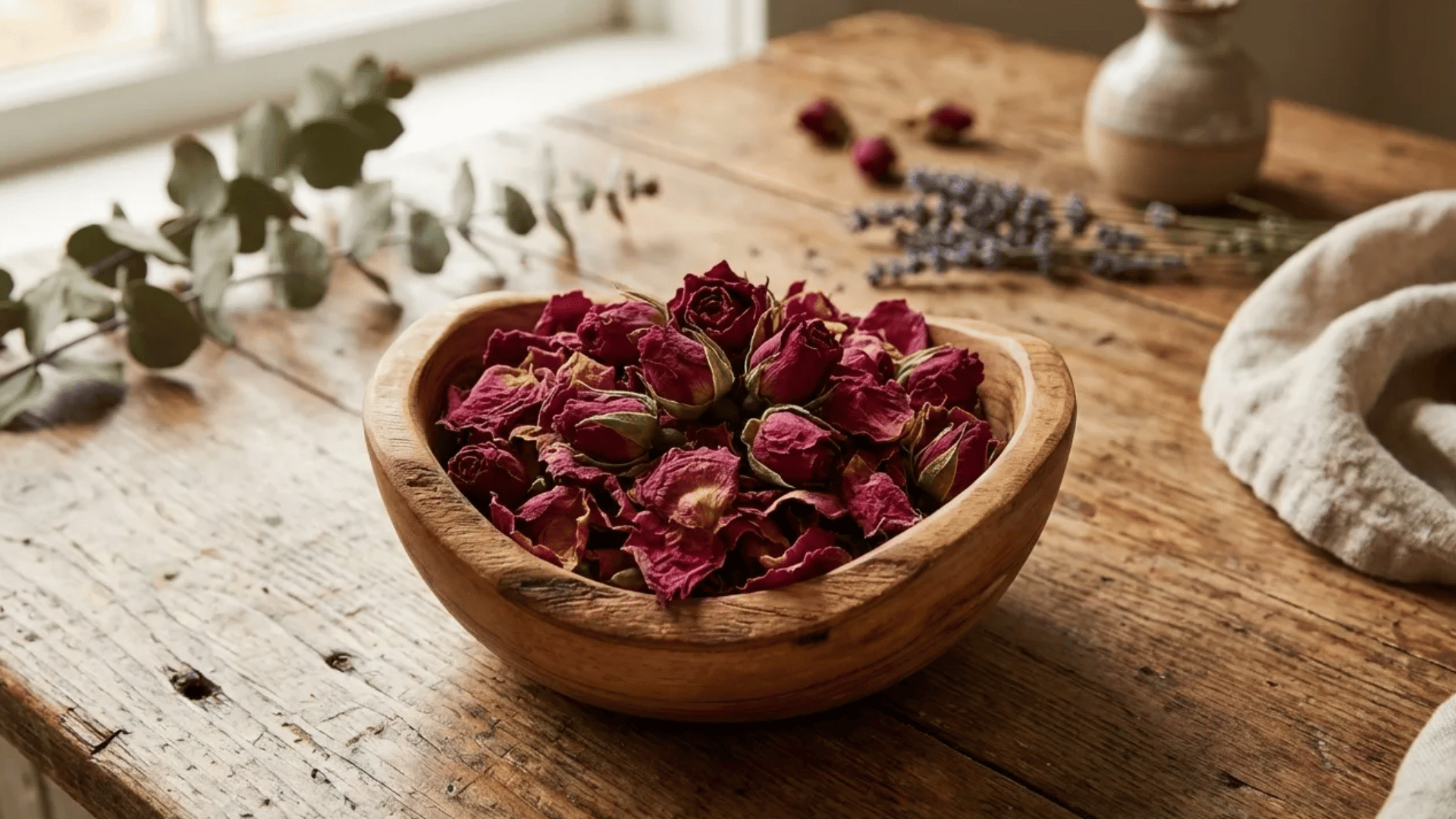
If you want to keep rose petals looking beautiful for longer, drying them is the simplest way to do it.
Whether you’re saving petals for crafts, décor, or a keepsake, the method you choose matters. Different techniques preserve different qualities; some keep the shape full and rounded, others press petals flat for detailed artwork.
This guide covers the most reliable methods and what each one is best for. It also covers how to store petals once they’re dry.
Why Drying Rose Petals is Essential for Preservation
Fresh petals don’t last. Once cut from the stem, they begin losing moisture, and within days they wilt, brown, and break down.
Drying stops that process. It removes moisture before decay sets in, which keeps the colour, shape, and scent intact long-term. A well-dried petal stored correctly can stay usable for a year or more.
It also opens up uses that aren’t possible with fresh petals. Potpourri, pressed art, bath salts, confetti — these all require a stable, dry petal to work with.
The Best Methods for Drying Rose Petals at Home
There are four main methods. The right one depends on how you plan to use the petals and how much time you have.
- Air-Drying: The simplest option. Lay petals flat in a warm, dry spot and leave them for 1–2 weeks. No supplies needed, but it’s the slowest method.
- Silica Gel: Buries petals in moisture-absorbing crystals. Dries them in 2–5 days while keeping their shape full and their colour rich.
- Pressing: Flattens petals between absorbent paper under weight. Takes 7–10 days. Best for crafts where you need a flat, detailed petal.
- Microwave: The fastest method. Place petals between two paper towels sandwiched between two plates. Microwave on high for 30–40 seconds, then check. Continue in 15-second bursts if needed. Done in under 2 minutes — but watch closely, as overheating scorches them instantly.
Each method is covered in full below, with step-by-step instructions and the conditions where it works best.
How to Dry Rose Petals Using the Air-Drying Technique
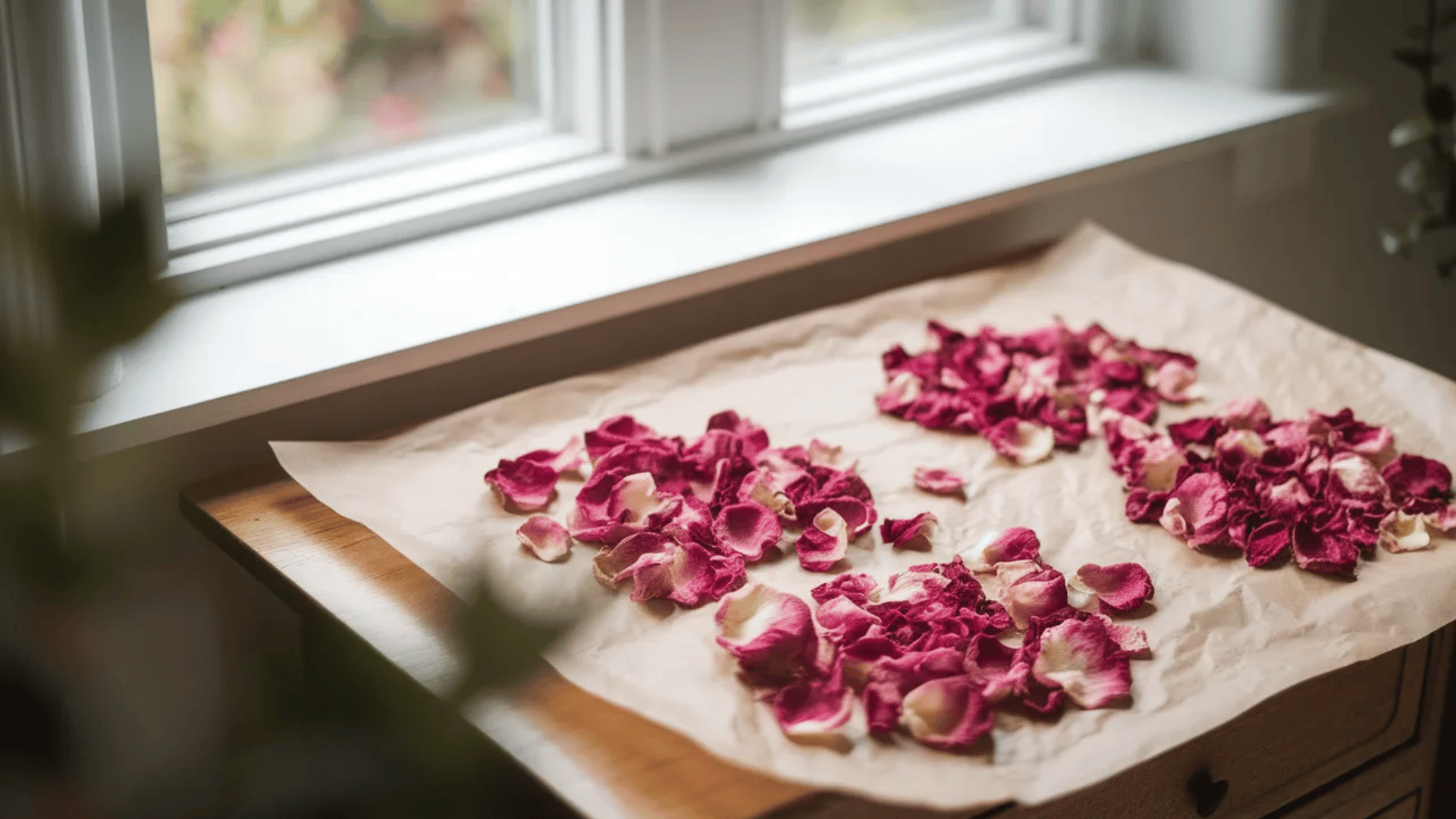
Air-drying is the most forgiving method. It requires no equipment, and the slow process preserves natural color well, as long as the conditions are right.
Steps to Air-Dry Rose Petals
The setup takes five minutes. After that, it’s mostly waiting and checking.
- Start with fully bloomed, fresh roses. They should be clean and completely dry, any surface moisture slows the process and invites mould.
- Remove petals gently, pulling from the base to keep them whole.
- Lay them in a single layer on parchment paper, newspaper, or a clean towel. No overlapping.
- Place somewhere warm and well-ventilated; a closet shelf, spare room, or near (not in front of) a window.
- Leave for 1–2 weeks, turning every few days so both sides dry evenly.
They’re done when they feel papery and crisp with no soft spots remaining.
Tips for Optimal Air-Drying Conditions
The environment does more work than most people realise. Small adjustments here prevent the most common problems: uneven drying, mould, and colour loss.
- Temperature: Aim for 70–80°F (21–27°C). Cooler than this and drying stalls; warmer and petals can turn brittle before they’ve dried through.
- Airflow: Still air traps moisture around the petals. A gently ventilated spot keeps things moving and stops mould before it starts.
- Sunlight: A bright room is fine for the first day or two. But extended direct sun degrades pigment. Red and pink petals turn a flat, dull brown. Shade with airflow is the better long-term setup.
If you’re drying a large batch, rotate the petals on day three and again on day six. The ones at the edges dry faster than those in the centre.
How to Dry Rose Petals in the Oven or Dehydrator
Both methods use controlled heat to speed up what air-drying does slowly. They’re reliable and consistent, and don’t require any specialty supplies beyond what most kitchens already have.
Oven Method
Preheat to 200°F (93°C). Line a baking sheet with parchment and spread petals in a single layer, nothing touching.
Bake for 10 minutes, then check. A ready petal snaps cleanly, like a thin cracker. If it still bends, return for 2-minute intervals until done. Cool completely before storing.
Dehydrator Method
Arrange petals in a single layer on the trays and set the temperature to 95–115°F (35–46°C). Check after an hour.
Dehydrators produce the most consistent results of any method. Even heat and continuous airflow dry petals uniformly with no hot spots. If you dry flowers regularly, it’s worth having one.
For both methods: start with fresh, fully opened petals. Wilted petals dry unevenly and lose colour faster regardless of the heat source.
Step-by-Step Process to Drying Rose Petals with Silica Gel
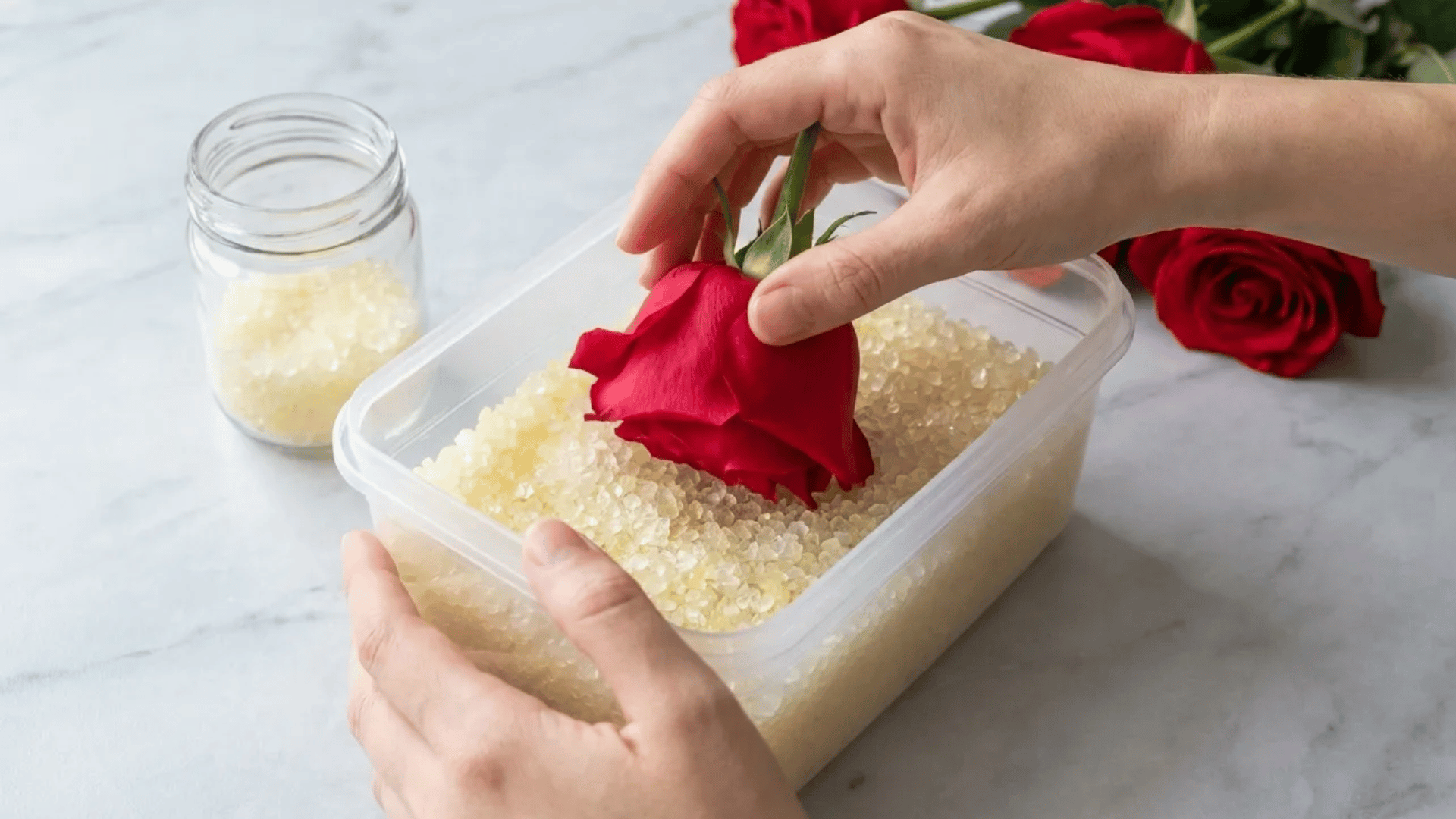
Silica gel pulls moisture directly out of the petals rather than waiting for it to evaporate. That’s what makes it different from air-drying, and why the results look better.
Because moisture is absorbed quickly and evenly, petals don’t have time to shrink or wrinkle. The colour stays richer, the shape stays fuller, and the texture holds up far better than with any passive method.
How to Dry Rose Petals with Silica Gel
You’ll need silica gel crystals (available at craft stores or online), a shallow airtight container, and fresh dry petals.
- Pour a layer of silica gel into the bottom of the container; enough to fully cover the base.
- Lay petals on top in a single layer. Leave a small gap between each one.
- Slowly pour more silica gel over the petals until they’re completely buried. Don’t press or compact it.
- Seal the lid and leave undisturbed for 2–5 days.
- Once dry, lift the petals out carefully and brush off any clinging crystals with a soft brush.
Petals are ready when they feel firm and hold their shape without bending. If any feel soft, reseal and check again the next day.
Tips for Success with Silica Gel
A few things make the difference between petals that last months and ones that go limp within a week.
- Use a wide, shallow container. Deep containers trap moisture in the lower layers. A shallow container lets the gel work evenly from all sides.
- Don’t rush it. Two days can look done but not be done. Five days is safer. Residual moisture inside the petal causes softening in storage, not immediately. Early removal often goes unnoticed until it’s too late.
Once fully dry, transfer to an airtight container away from light. To reuse the silica gel, spread it on a baking sheet. Heat at 250°F for about an hour to drive off moisture.
How to Use Pressing for Perfectly Dried Rose Petals
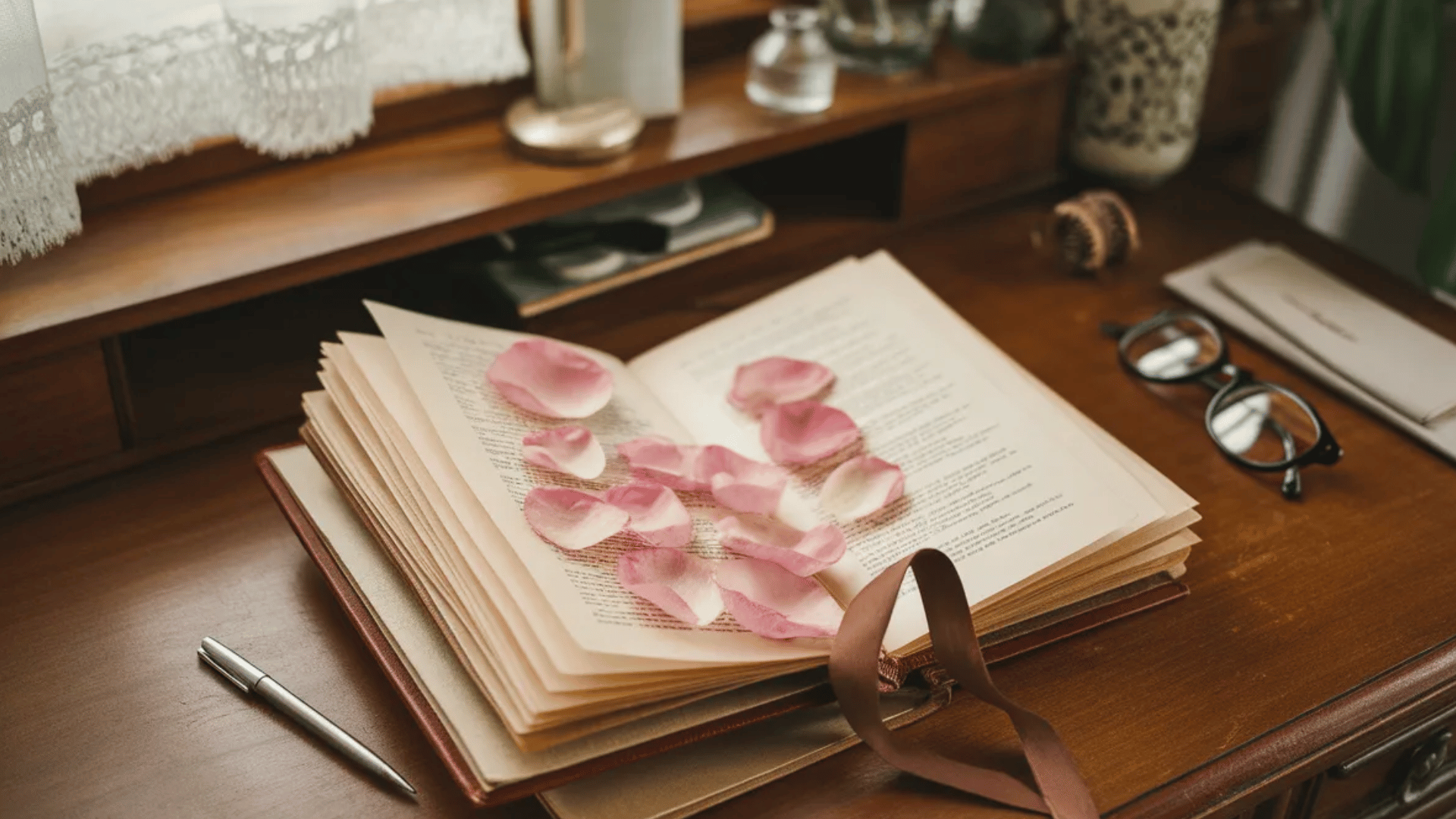
Pressing is the method to use when the finished appearance of the petal matters most. It locks in the fine surface details like veins, edges, and exact shape in a way no other method does.
The trade-off is that pressed petals are flat. That’s intentional and ideal for cards, framed artwork, scrapbooking, and any project where you’re working in two dimensions.
Step-by-Step Process to Pressing Rose Petals
You need absorbent paper (blotting paper, parchment, or paper towels), a few heavy books, and fresh petals. A flower press works too, but it isn’t necessary.
- Lay petals in a single layer on your paper. No overlapping; petals that touch will fuse at the edges as they dry.
- If the petals feel damp, pat them gently dry first. Wet petals stick to the paper.
- Cover with another sheet of paper and stack two or three heavy books on top.
- Leave for 7–10 days. Petals are done when they feel flat, firm, and completely dry to the touch.
- Peel them off the paper carefully. They’ll be fragile.
If the paper feels damp when you check, swap it out for a dry sheet. Damp paper slows the process and causes sticking.
Tips for Achieving Uniform, Flat Petals
Pressing is straightforward, but two things consistently cause problems: uneven weight and petals that were too wet at the start.
- Balance the weight evenly. An unbalanced stack means some parts of the petal dry faster than others, leaving creases where pressure was uneven.
- Use fresh, thinner petals. Thick petals take longer to press flat and are more likely to wrinkle at the centre before the edges dry.
Patience is the main ingredient here. Checking too early and rehandling the petals is one of the most common ways they end up torn.
How Pressing Preserves Petal Details for Artistic Projects
Pressing locks the petal’s surface structure in place as it dries. The veins stay visible. The edge shape is preserved exactly as it was.
For framed artwork, greeting cards, or scrapbook layouts, this level of detail makes a real difference. The petal looks like a petal, not just a dried fragment of one.
What to Do with Dried Rose Petals
Once the petals are dry, the uses go well beyond décor. Here are the most practical ones, with the best drying method for each.
- Bath soaks and salts: Mix dried petals with Epsom salt and a few drops of essential oil. They soften slightly in warm water and release a light natural scent. Any drying method works here.
- Potpourri: Combine with lavender, cinnamon sticks, and a drop of rose or vanilla oil. Silica gel petals hold their shape and colour longest in a bowl display.
- Sachets: Fill small muslin bags and tuck into drawers or closets to keep linens smelling fresh.
- Confetti: Dried petals are a biodegradable alternative to paper confetti. Microwave-dried petals work well; they’re light and hold their shape without crumbling.
- Pressed flower art: Pressed petals go directly onto cards, frames, or scrapbook pages with no additional prep.
The drying method shapes how petals perform in each use. Full-shaped silica gel petals work best for anything displayed in 3D. Pressed petals are for flat applications. Air-dried and oven-dried petals are versatile enough for most everything else.
How to Dry Rose Petals for Craft Projects

The drying method is a craft decision, not just a preservation one. How the petal looks and holds up in your project depends directly on how it was dried.
Best Drying Methods for Craft Projects
Two methods cover most craft applications. The choice comes down to whether your project needs a flat petal or a full one.
Pressing gives you thin, flat, smooth petals with visible surface detail and no curling at the edges. It’s the right choice for greeting cards, scrapbooks, and framed artwork. The petal needs to lie flat and look precise.
Silica gel gives you full, rounded petals that look close to fresh. For potpourri, resin casting, or any 3D arrangement where a flat petal would look wrong, this is the better option.
If you’re unsure which to use, ask whether your project is flat or dimensional. That answer points you to the right method.
How to Maintain Color and Shape for Creative Uses
How petals look in your finished piece depends as much on storage as on drying. A few habits make a real difference.
- Keep petals out of sunlight during drying. UV exposure breaks down pigment quickly. Even a few hours of direct sun daily over several days will dull vibrant reds and pinks noticeably.
- Store in airtight containers. Humidity is the main enemy after drying. Glass jars, plastic boxes, or vacuum bags all block moisture and keep petals stable for months.
If you’re storing petals for a project you haven’t started yet, add a silica gel pack to the container. It absorbs any moisture that gets in during opening and closing.
Tips for Storing Dried Rose Petals for Long-Term Use
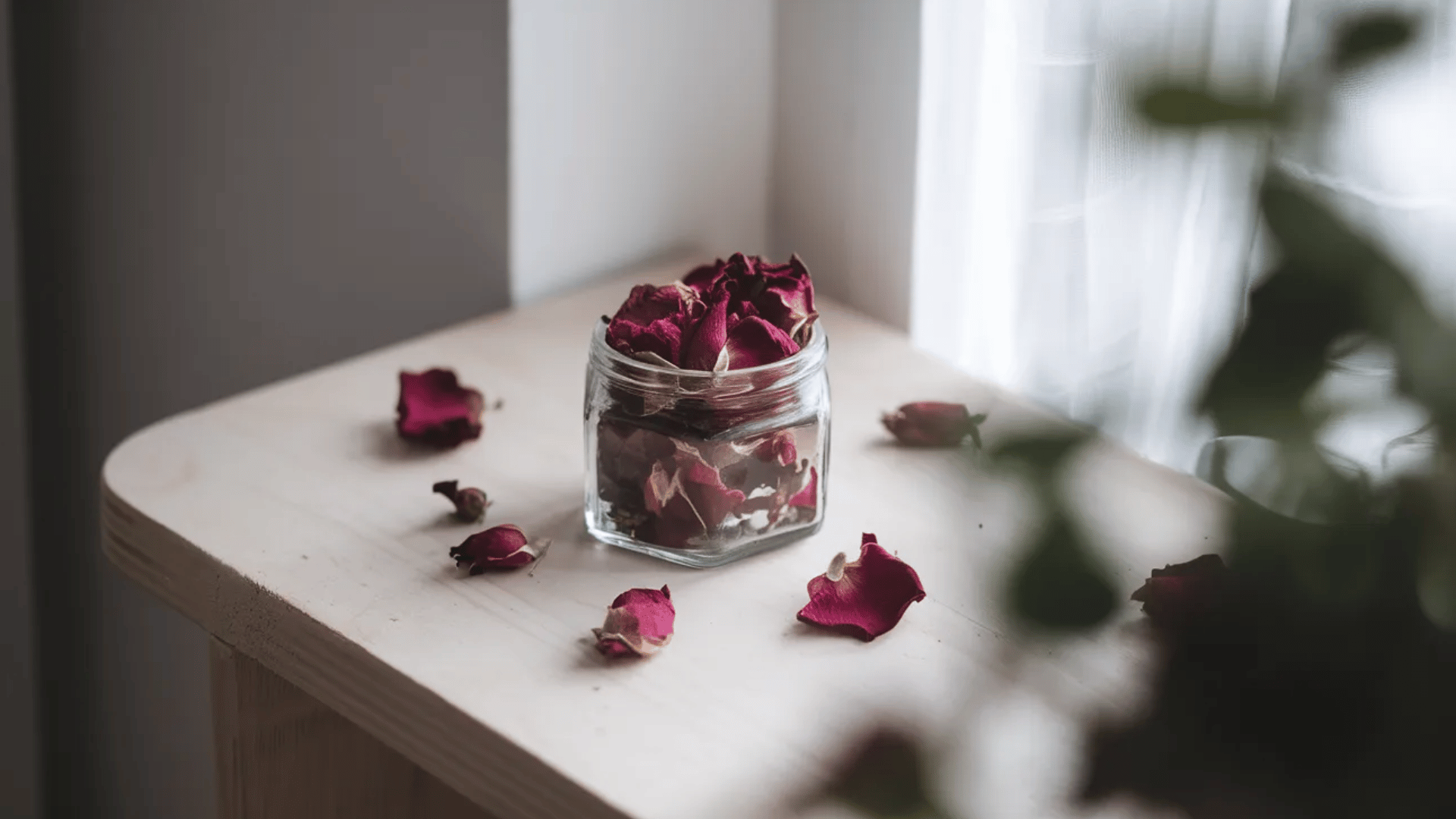
Drying petals is only half the job. How you store them determines how long they actually last.
Moisture is the main problem. Even well-dried petals reabsorb humidity from the air over time. This causes them to soften, discolour, and eventually go mouldy. The right container and location slows that process significantly.
Best Storage Options
Airtight containers are the baseline. Plastic or glass with a tight-fitting lid keeps ambient moisture out and protects petals from being crushed.
Clear glass jars are a practical choice. You can see the petals without opening the container, which reduces air exposure. Store in a cool, dark spot away from windows and kitchen shelves where temperature fluctuates.
For long-term storage (six months or more), vacuum-sealed bags are the most effective option. They remove all air, which eliminates both moisture and the oxidation that causes colour loss.
Tips for Keeping Petals Dry and Free from Moisture
Even with the right container, storage habits separate petals that last a year from ones that degrade within a month.
- Choose the right location. Bathrooms and kitchens have fluctuating humidity — avoid both. A closet or cupboard away from heat sources is better.
- Add a silica gel pack. Drop one into each storage container. It absorbs moisture that enters during normal opening and closing.
- Keep away from light. UV exposure fades colour over time, even through glass. A dark storage spot matters more than most people expect.
When stored correctly, dried petals stay in good condition for 12 months or longer.
Common Mistakes to Avoid When Drying Rose Petals
Most problems with dried petals trace back to one of the same five mistakes. Knowing what to watch for makes them easy to avoid.
| Common Mistake | What Happens | How to Fix It |
|---|---|---|
| Over-Drying | Petals become brittle, lose colour, and crumble when handled. | Check regularly. Petals should feel crisp but not fragile. Remove as soon as they’re fully dry. |
| Improper Storage | Fading, softening, and mould develop over time. | Use airtight containers in a cool, dark place. No humid environments. |
| Too Much Moisture at Start | Petals go mouldy or mushy before they finish drying. | Make sure petals are completely dry to the touch before you begin. Pat down if needed. |
| Rough Handling | Tears and crush marks, especially on pressed or silica-dried petals. | Handle with care at every stage, especially when removing petals from containers or paper. |
| Starting with Poor-Quality Petals | Uneven drying, shape loss, and faster colour fade. | Use fresh, undamaged petals. Any petal with spots or soft patches will not dry well. |
Wrapping It Up
Each method covered here works. The one to use depends on what you’re making and how much time you have.
For speed, use the microwave or oven. For shape and colour, use silica gel. For flat, detailed petals, press them. For no supplies at all, air-dry and wait.
Pick the method that fits your situation and start there.
Frequently Asked Questions
Are Dried Rose Petals Used in Homemade Beauty Products?
Yes. Dried petals are a common ingredient in DIY bath soaks, facial oils, and face masks. They add a mild natural fragrance and a soft, botanical feel to the finished product.
Do Different Rose Types Dry Differently?
They do. Thicker petals from hybrid tea roses, for example, hold their shape better but take longer to dry through. Thinner petals from garden or heirloom varieties dry faster but become more fragile once dry.
Can Dried Rose Petals Be Mixed With Other Flowers?
Yes. Lavender and chamomile are the most common combinations; both dry well and complement rose in scent and colour. Make sure everything in the mix is fully dry before combining, or moisture from one element can affect the others.
Do Dried Rose Petals Still Have Fragrance?
They retain some scent, but it’s lighter than fresh petals. Silica gel preserves fragrance better than air-drying. The faster moisture removal traps more volatile compounds before they escape.
Can Silica Gel Be Reused After Drying Petals?
Yes. Spread the used gel on a baking sheet and heat at 250°F (120°C) for about an hour. This drives off absorbed moisture and recharges it for the next use. Most silica gel can be reused dozens of times before it degrades.