

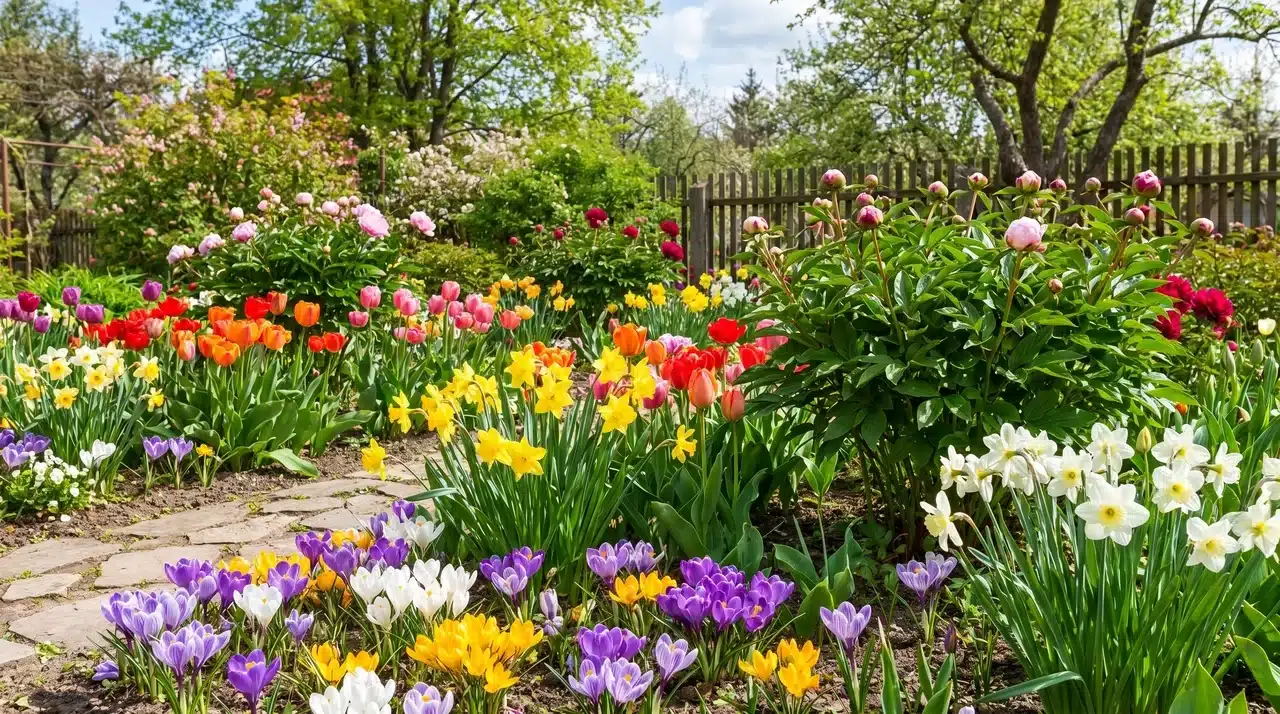
Most gardens peak for two weeks in spring, then go completely quiet. It’s rarely about the flowers chosen; it’s about when they bloom.
The flowers that bloom in spring unfold in three distinct waves. Each one brings different plants, different triggers, and a bloom window most gardeners never think to plan around.
Getting the timing right changes what your garden looks like in March versus May. The gap between a two-week display and a three-month one comes down to a few simple decisions.
Keep reading to find out which flowers belong in each wave and how planning around bloom timing creates color that carries through the whole season.
What are Spring-Blooming Flowers?
Flowers that bloom in spring don’t follow a calendar; they respond to rising temperatures and longer daylight hours after a cold period ends.
That biological trigger is what separates true spring bloomers from plants that simply appear around the same time. The season itself doesn’t cause the bloom; the shift in conditions does.
The category covers more variety than most people expect. It includes annuals, which complete their full cycle in one season, and perennials, which return each year from the same root system.
That difference matters more than most gardeners realize. What you plant, how often you replant, and what your garden looks like three years from now all depend on it.
“Spring blooming” also spans a wider window than a single burst, roughly late February through May, depending on your climate. Early, mid, and late bloomers rarely overlap, which is why timing your choices matters as much as the choices themselves.
Spring Flowers by Blooming Season
Not all spring flowers bloom at the same time. Understanding when different varieties flower helps you plan a garden with continuous color from the first days of spring through early summer.
Early Spring (March- April)
The first flowers of spring emerge while the ground is still cold. They respond to soil temperature, not air warmth, often blooming through frost.
1. Crocus
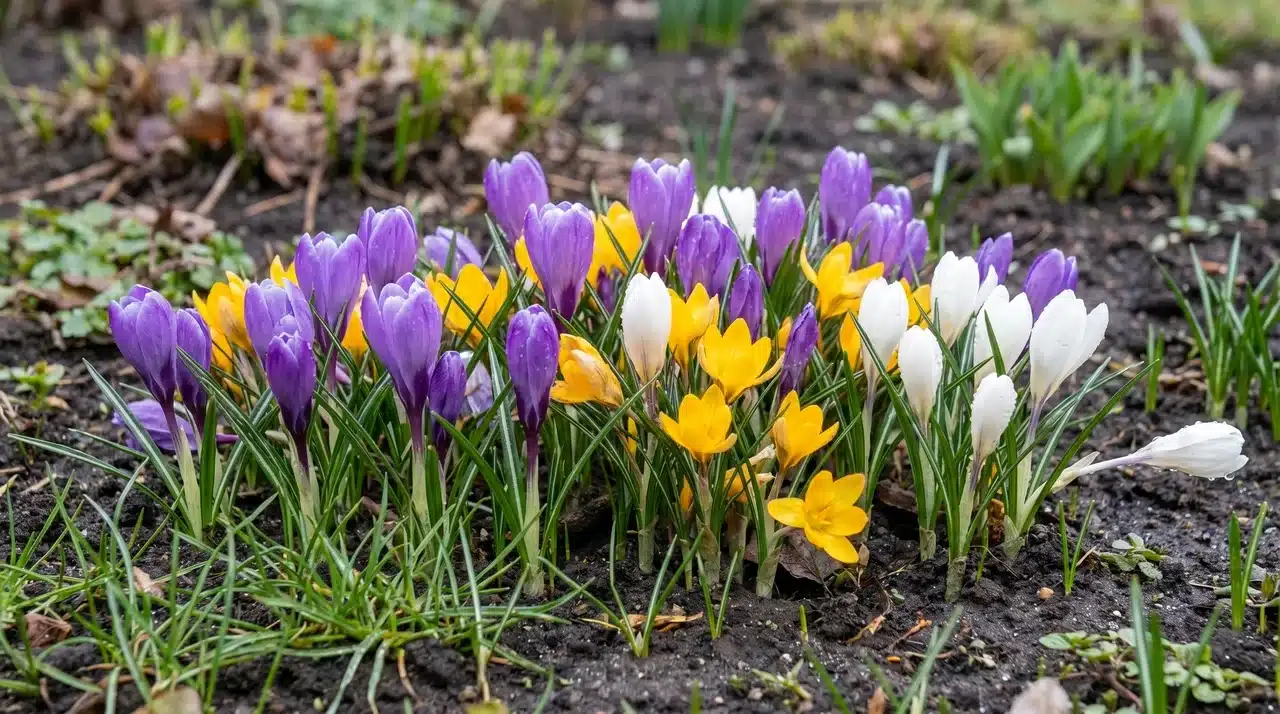
Crocuses are among the earliest spring flowers, often blooming while patches of snow remain. Their cheerful purple, yellow, or white blooms appear in clusters, bringing color to gardens before most plants awaken.
These hardy bulbs thrive in full to partial sun and well-drained soil. Ideal for borders, lawns, and containers, crocuses naturalize easily and return reliably each spring.
2. Daffodil (Narcissus)
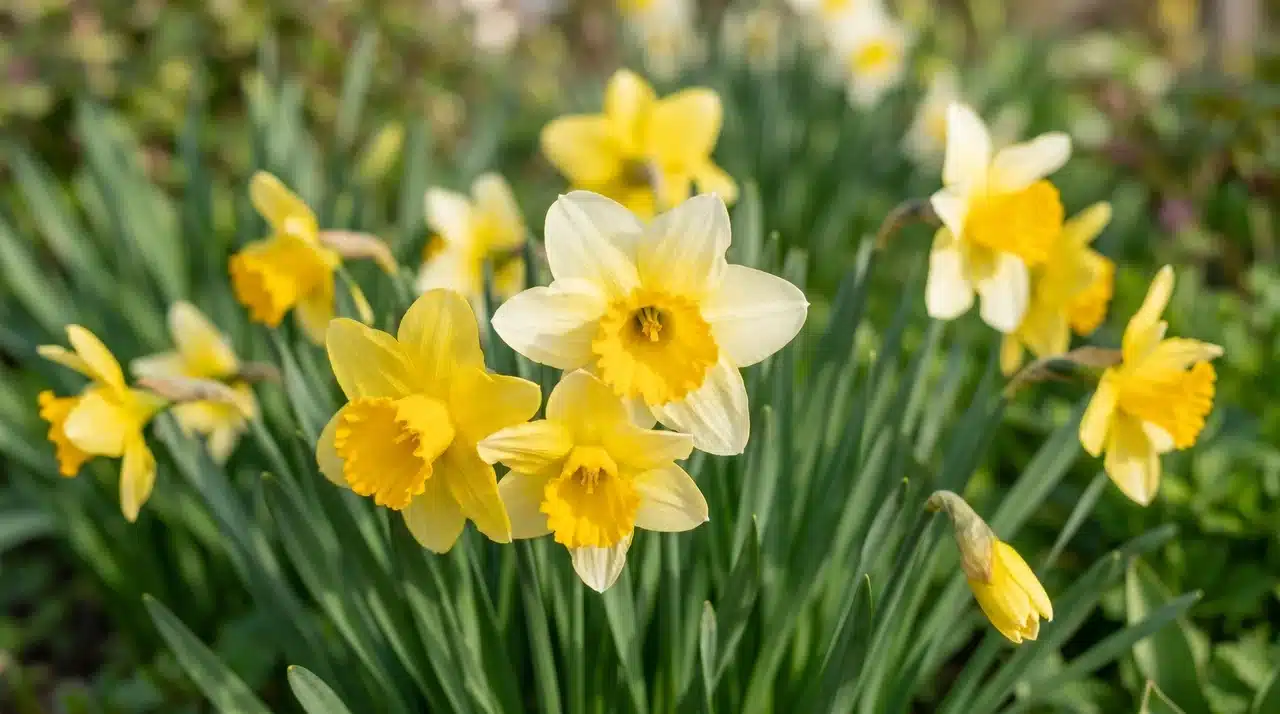
Daffodils brighten early spring with their trumpet-shaped yellow or white flowers. Their dependable blooms and deer-resistant nature make them one of the most popular spring bulbs for gardens.
They grow best in full sun to partial shade and well-drained soil. Planted in groups, daffodils create bold displays and often return year after year with minimal care.
3. Paperwhite Narcissus
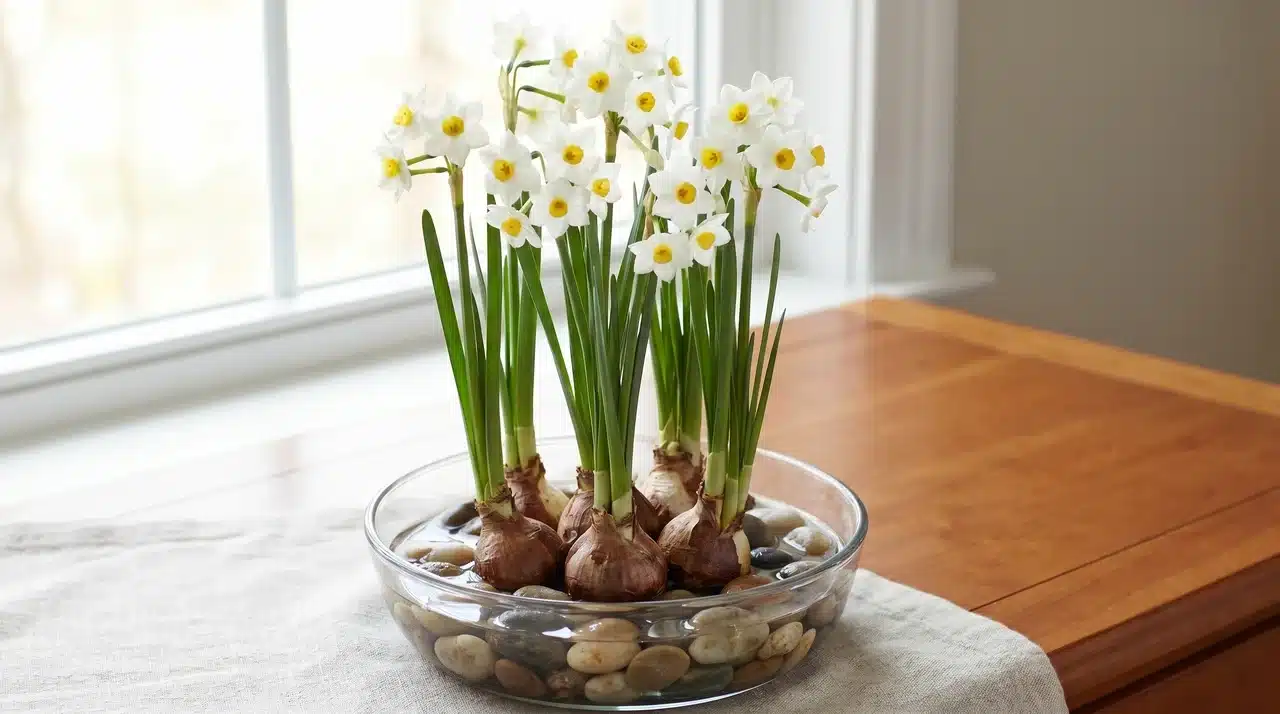
Paperwhite narcissuses are prized for their fragrant white flowers that bloom indoors without a chilling period. They are a favorite choice for adding fresh blooms during late winter and early spring.
Bulbs root quickly in shallow water and pebbles, producing flowers within four to six weeks. Bright light and cool temperatures help maintain sturdy stems and longer-lasting blooms.
4. Amaryllis
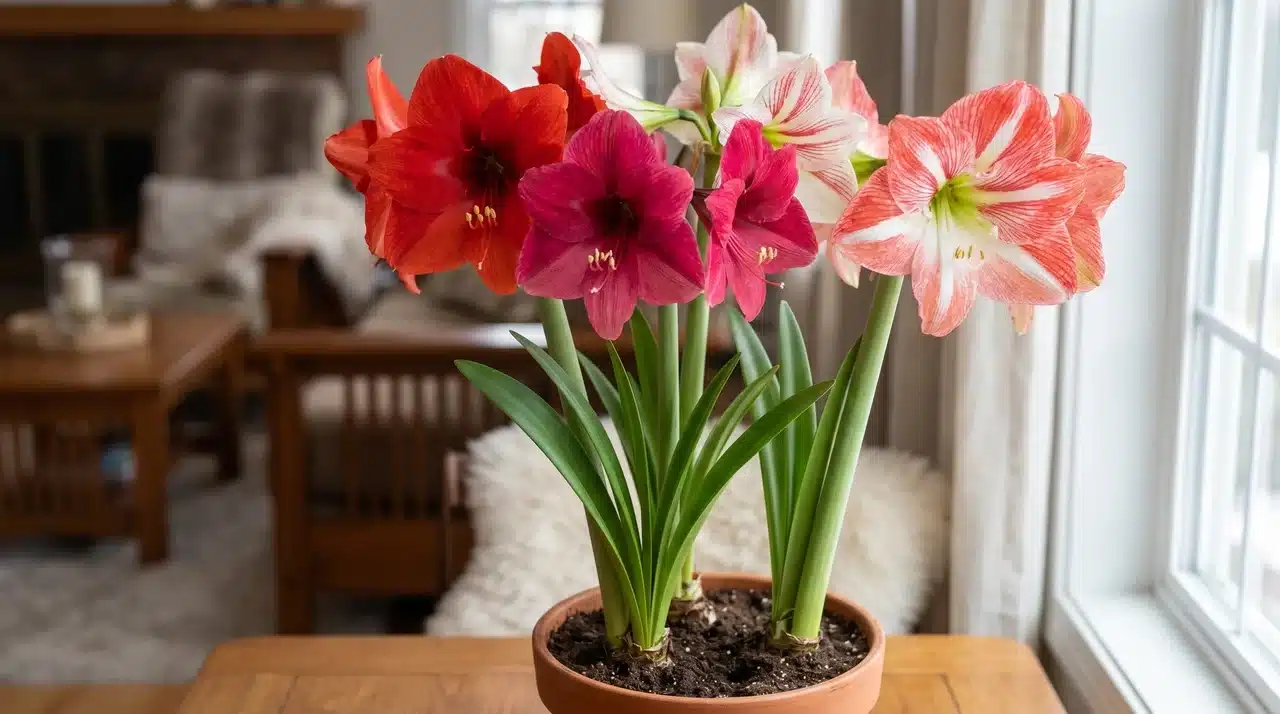
Amaryllis produces large, trumpet-shaped flowers in shades of red, pink, and white. Its dramatic blooms create a striking indoor display and bring vibrant color to early spring spaces.
Unlike many bulbs, amaryllis requires no chilling period. Given warmth and moisture, bulbs flower within six to eight weeks and provide long-lasting blooms with minimal maintenance.
5. Hellebore (Lenten Rose)
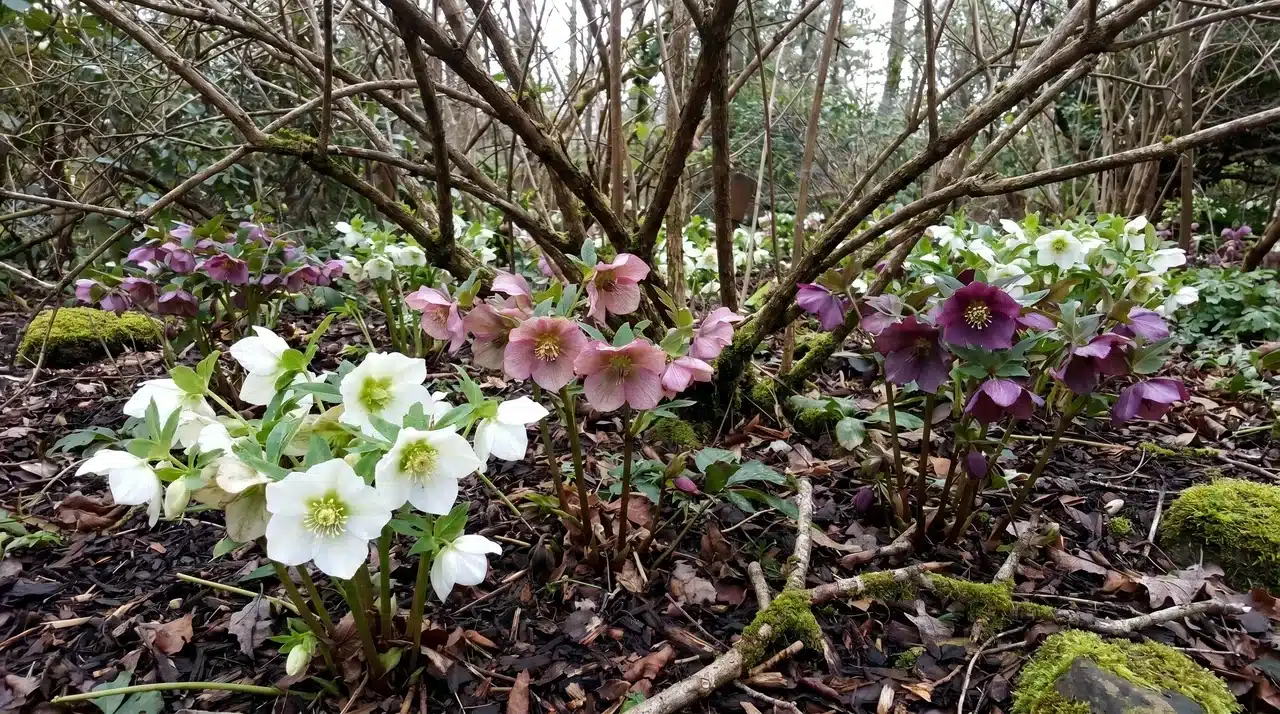
Hellebores bloom from late winter into early spring, producing elegant flowers in white, pink, purple, and green shades. Their blooms often persist for weeks, providing color during a quiet season.
They thrive in shaded areas with rich, well-drained soil. Frost-tolerant and reliable, hellebores work beautifully in woodland gardens, shaded borders, and beneath established shrubs.
6. Forsythia
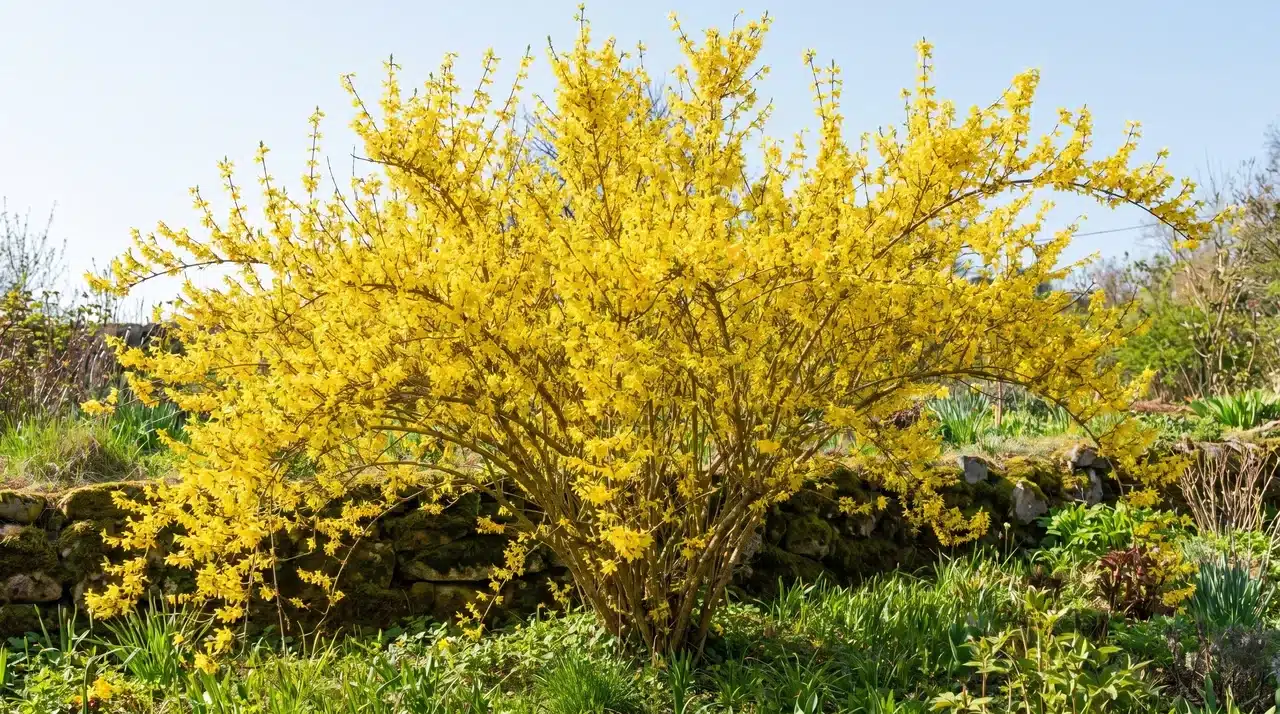
Forsythia is a fast-growing shrub covered in bright yellow flowers before its leaves emerge. Its vivid display is one of the most recognizable signs that spring has arrived.
Best grown in full sun, forsythia performs well as a hedge, specimen plant, or border shrub. Pruning after flowering helps maintain shape and encourages future blooms.
7. Primrose (Primula)
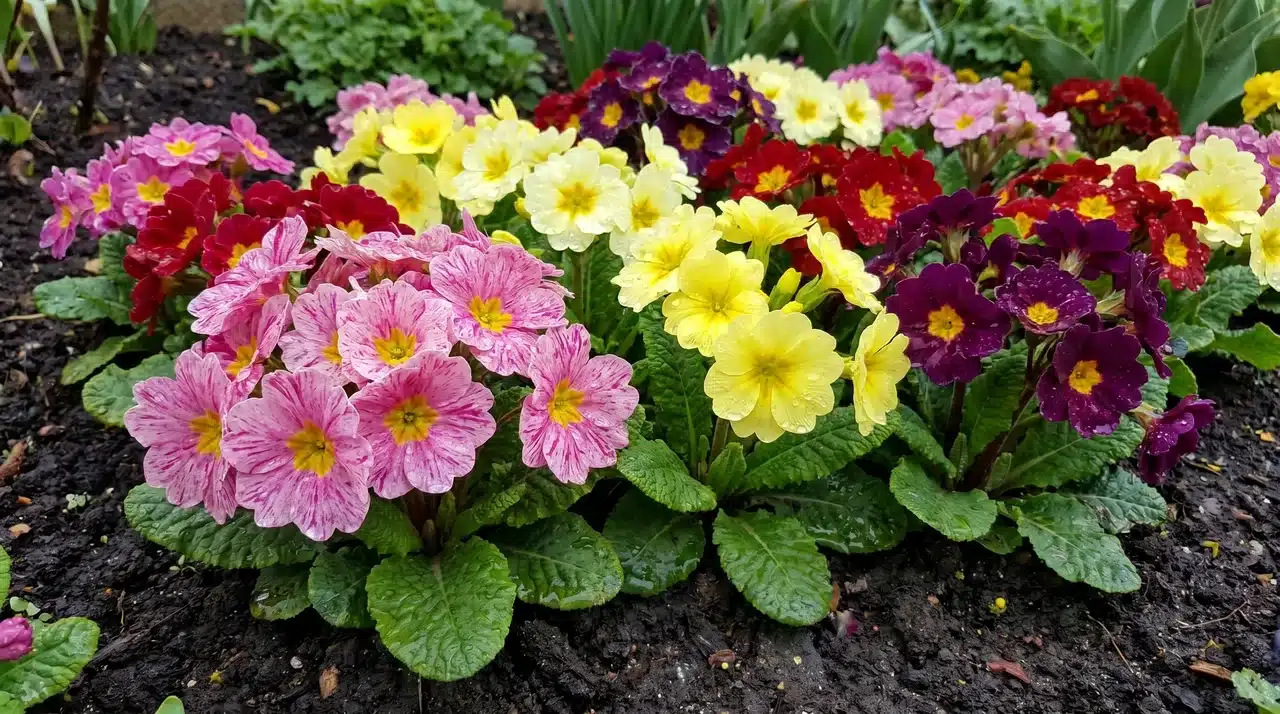
Primroses produce colorful flowers in shades of pink, yellow, red, purple, and white. Their compact size and cheerful blooms make them a standout feature in early spring gardens.
They prefer cool conditions, partial shade, and consistently moist soil. Primroses perform well in borders, rock gardens, and containers, providing weeks of reliable seasonal color.
8. Cyclamen
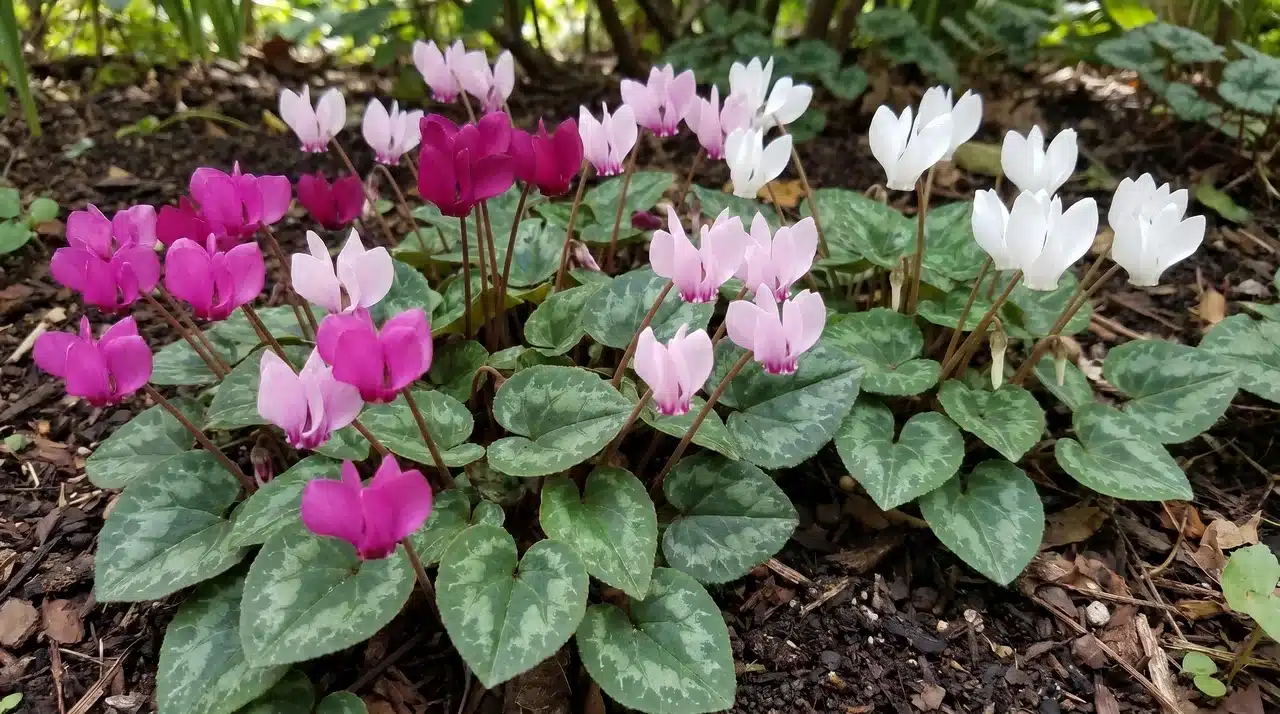
Cyclamen features delicate flowers rising above attractive heart-shaped foliage. Available in pink, red, and white shades, they provide elegant colors during the early spring season.
These perennials thrive in cool, shaded environments with humus-rich, well-drained soil. They also adapt well to containers and indoor displays when given careful watering.
9. Snowdrop (Galanthus)
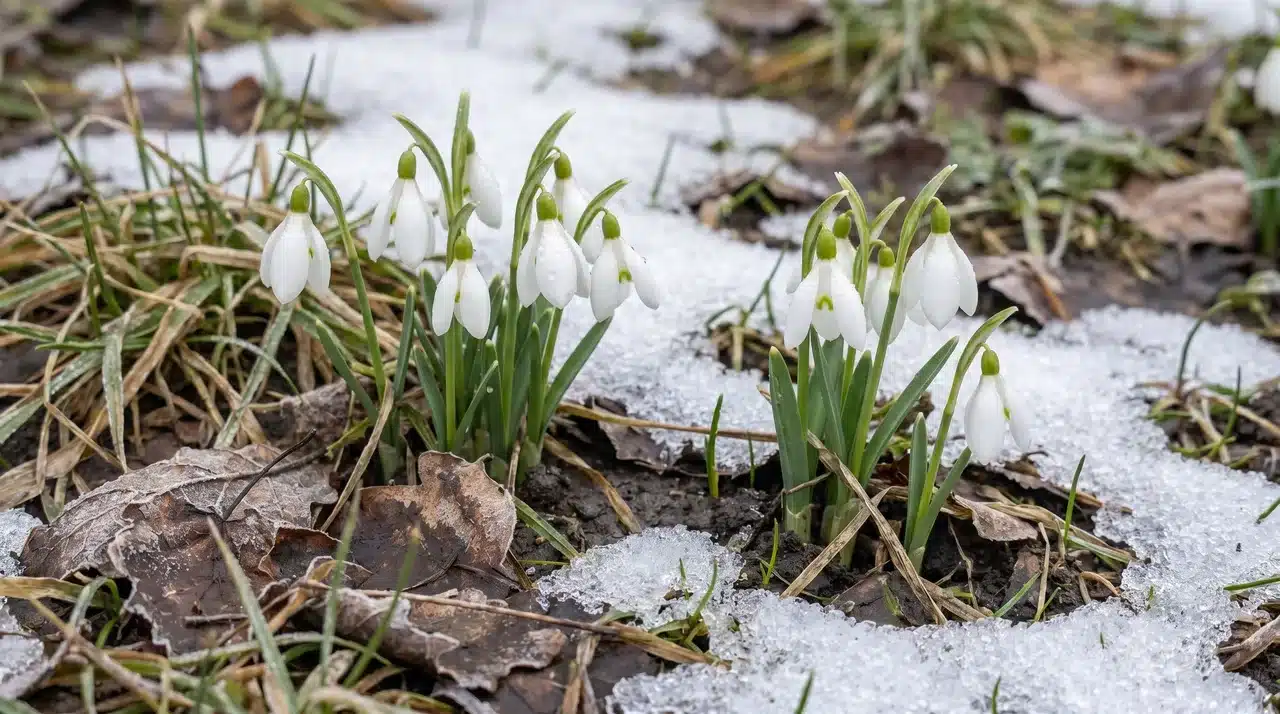
Snowdrops are delicate white flowers that often emerge through snow-covered ground. Their graceful, nodding blooms are among the earliest signs of spring’s arrival.
They grow best in partial shade and moist, well-drained soil. Once established, snowdrops naturalize readily, creating charming drifts beneath trees, along borders, and in woodland gardens.
Mid-Spring (Mid-April – May)
These flowers peak as temperatures rise steadily through April. They need a full cold period behind them before warmth triggers their bloom cycle.
10. Tulip
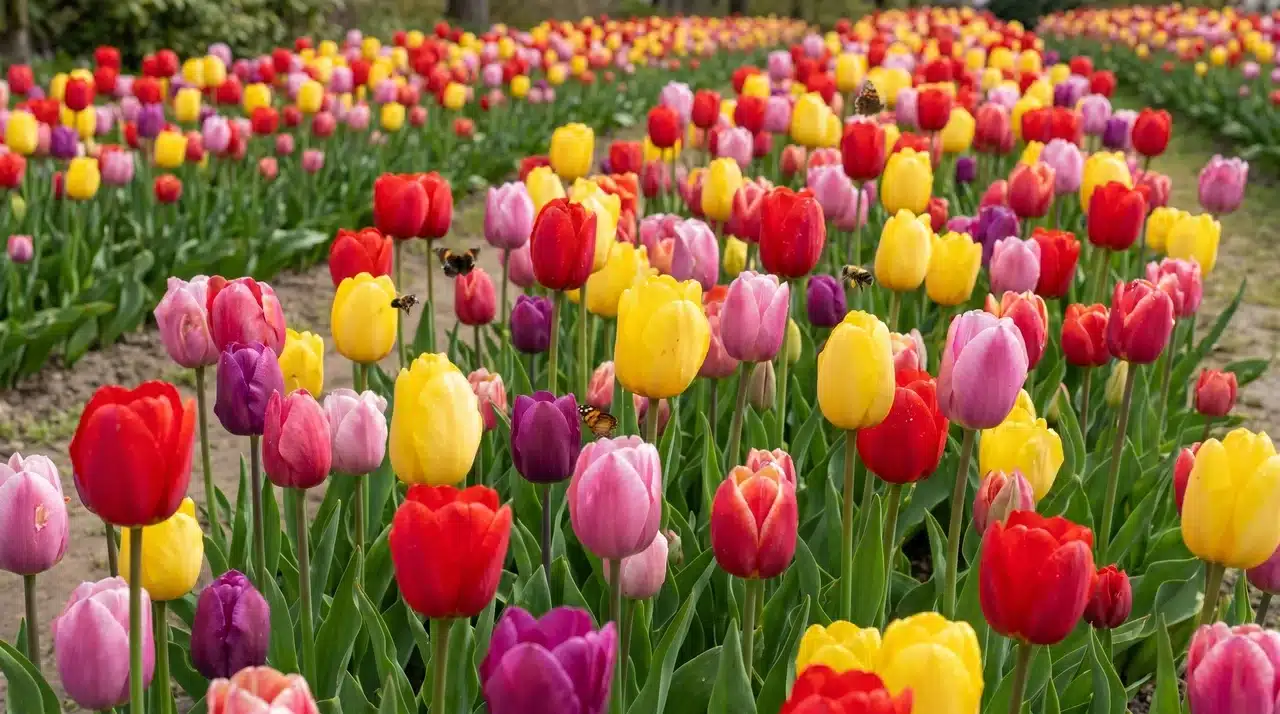
Tulips are classic spring bulbs known for their wide range of vibrant colors and elegant cup-shaped blooms. They create striking displays in borders, containers, and mass plantings.
These bulbs prefer full sun and well-drained soil. After flowering, foliage should remain until it yellows, helping bulbs store energy for the following season.
11. Hyacinth
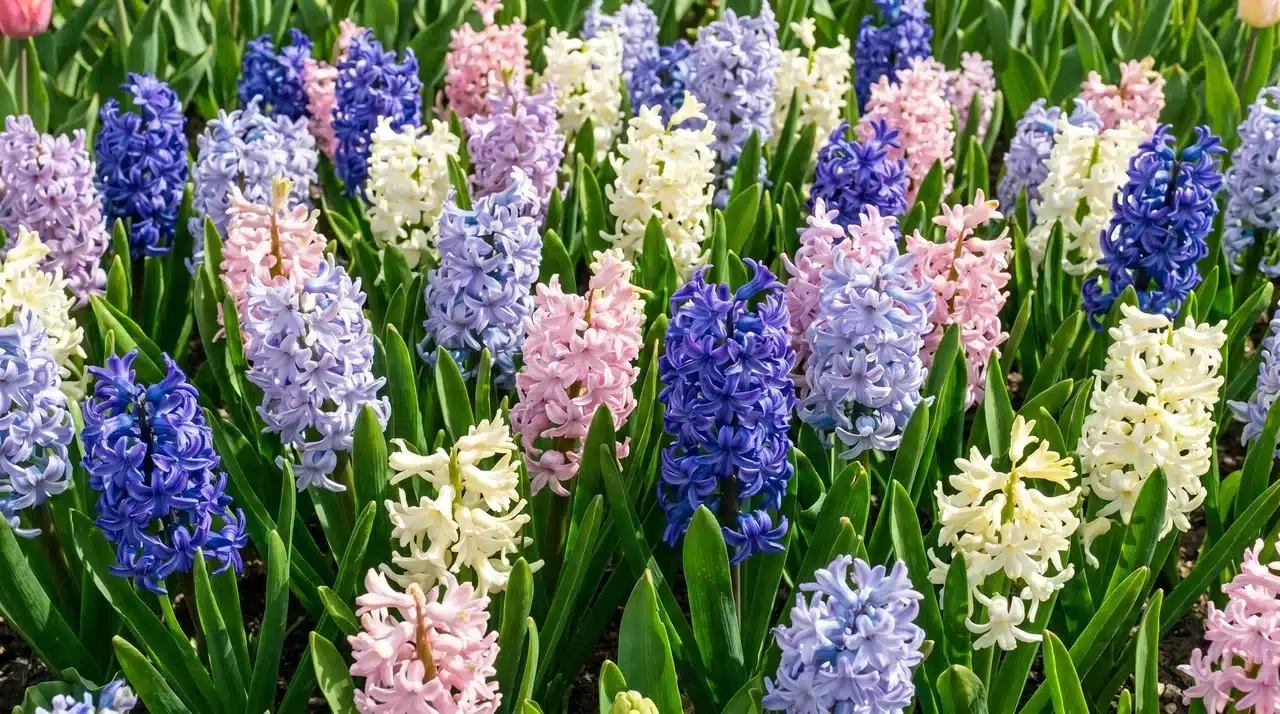
Hyacinths produce dense flower spikes packed with highly fragrant blooms. Available in shades of blue, purple, pink, and white, they add both color and scent to spring gardens.
They thrive in sunny locations with well-drained soil. Hyacinths are equally suited for outdoor beds, containers, and indoor forcing, delivering impressive blooms each season.
12. Bleeding Heart (Dicentra)
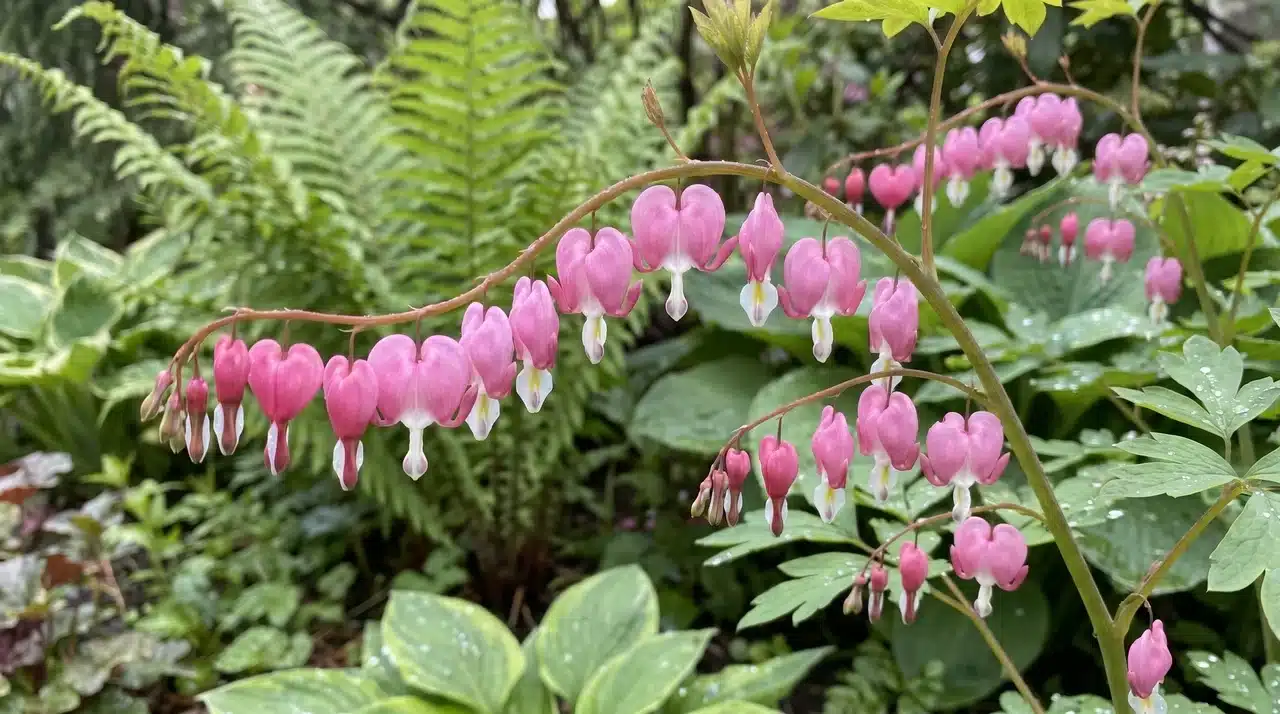
Bleeding hearts are known for their arching stems lined with distinctive heart-shaped flowers. Their graceful pink or white blooms bring charm to shaded spring landscapes.
They prefer partial shade and consistently moist soil. Ideal for woodland gardens and perennial borders, bleeding hearts pair beautifully with other shade-loving plants.
13. Lily of the Valley (Convallaria majalis)
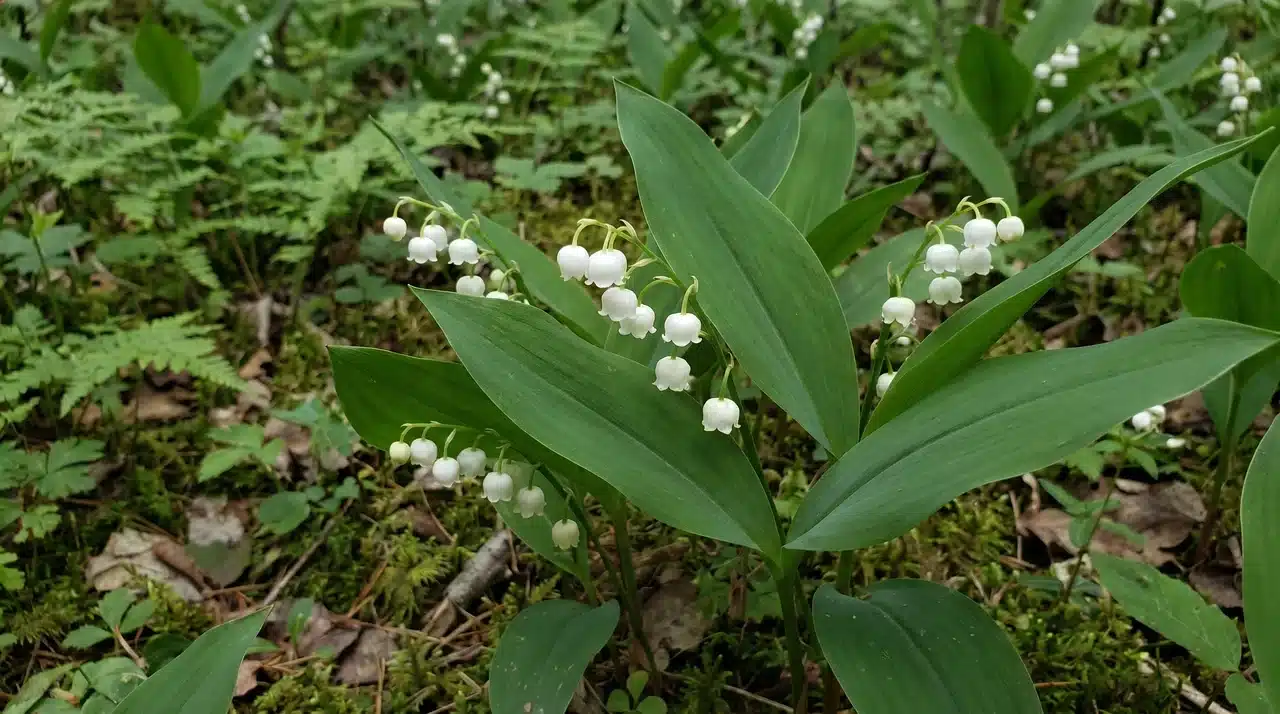
Lily of the valley produces fragrant, bell-shaped white flowers above lush green foliage. Its sweet scent and delicate appearance make it a favorite woodland garden plant.
This shade-loving perennial thrives in moist, well-drained soil. It spreads gradually to form a dense ground cover that provides reliable spring interest year after year.
14. Grape Hyacinth (Muscari)
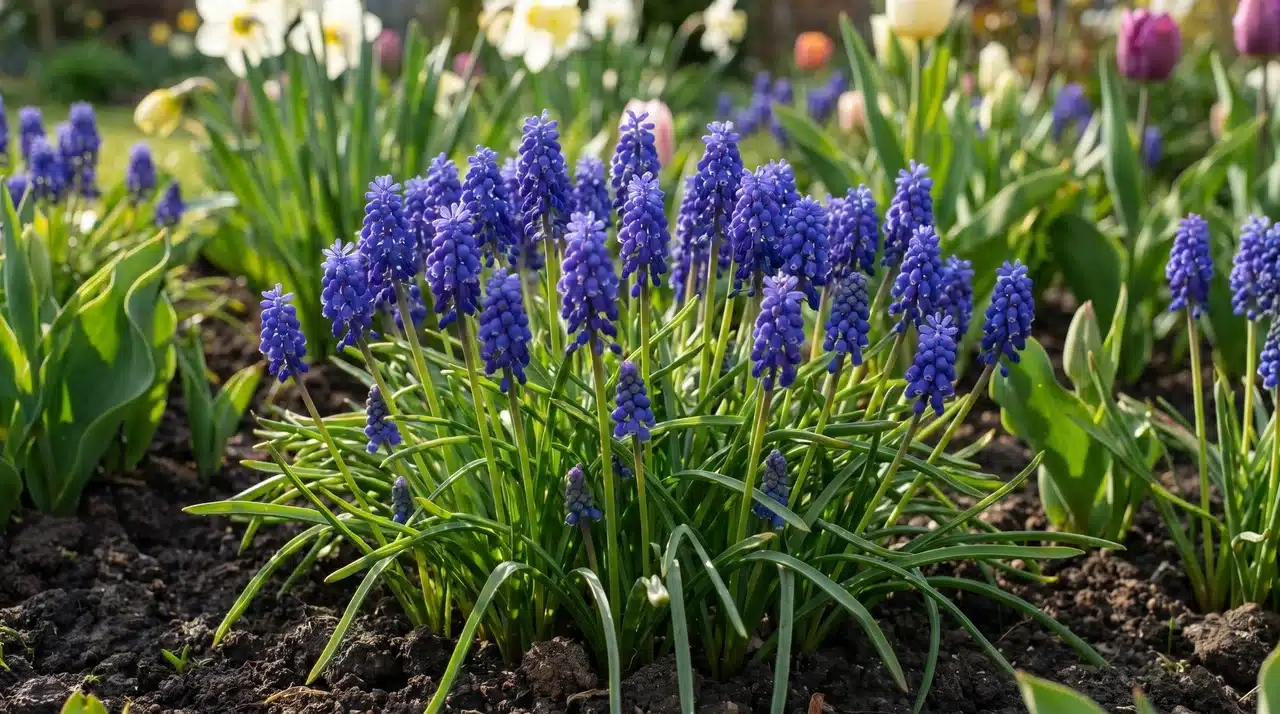
Grape hyacinths produce clusters of tiny blue or purple flowers resembling miniature grape bunches. Their compact size makes them excellent companions for larger spring bulbs.
They thrive in full sun to partial shade and naturalize readily. Planted in groups, grape hyacinths create vibrant carpets of color throughout spring gardens.
15. Primrose Cowslip (Primula veris)
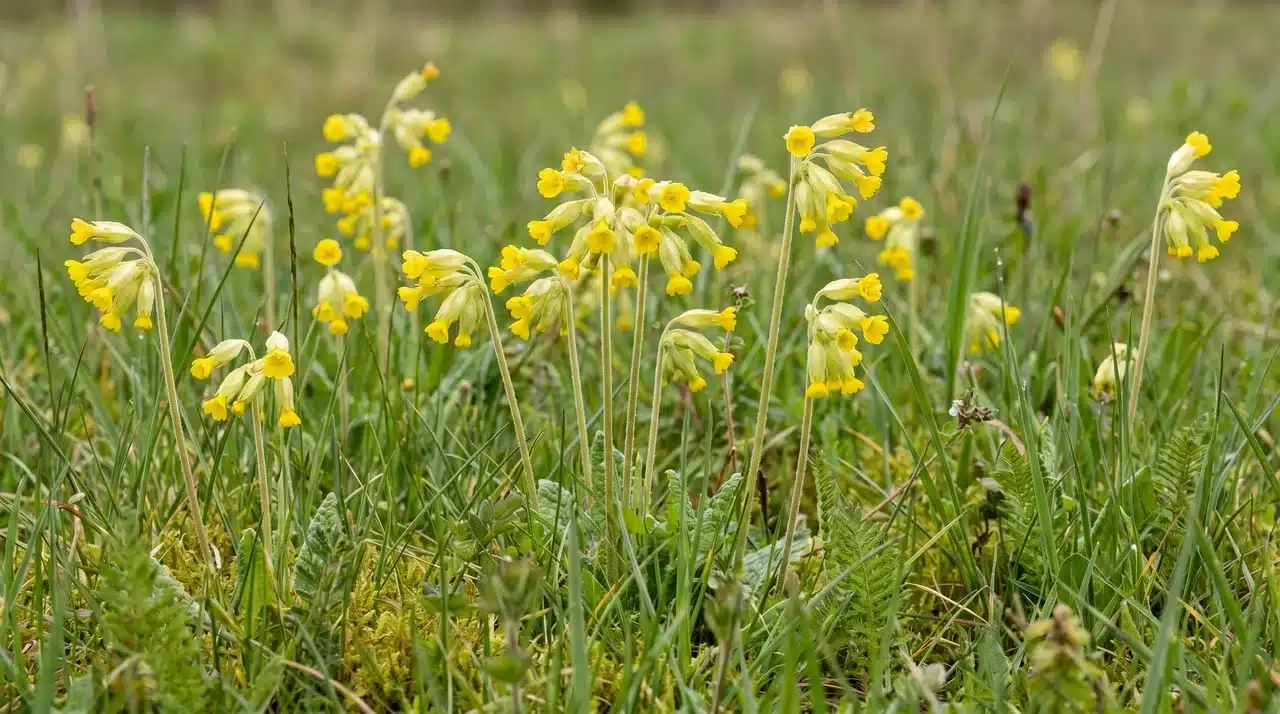
Cowslips produce clusters of small, nodding yellow flowers that brighten meadows and garden borders. Their delicate appearance adds a natural charm to spring landscapes.
They grow well in moist, well-drained soil and tolerate both sun and partial shade. Cowslips naturalize easily and provide dependable seasonal color.
16. Anemone
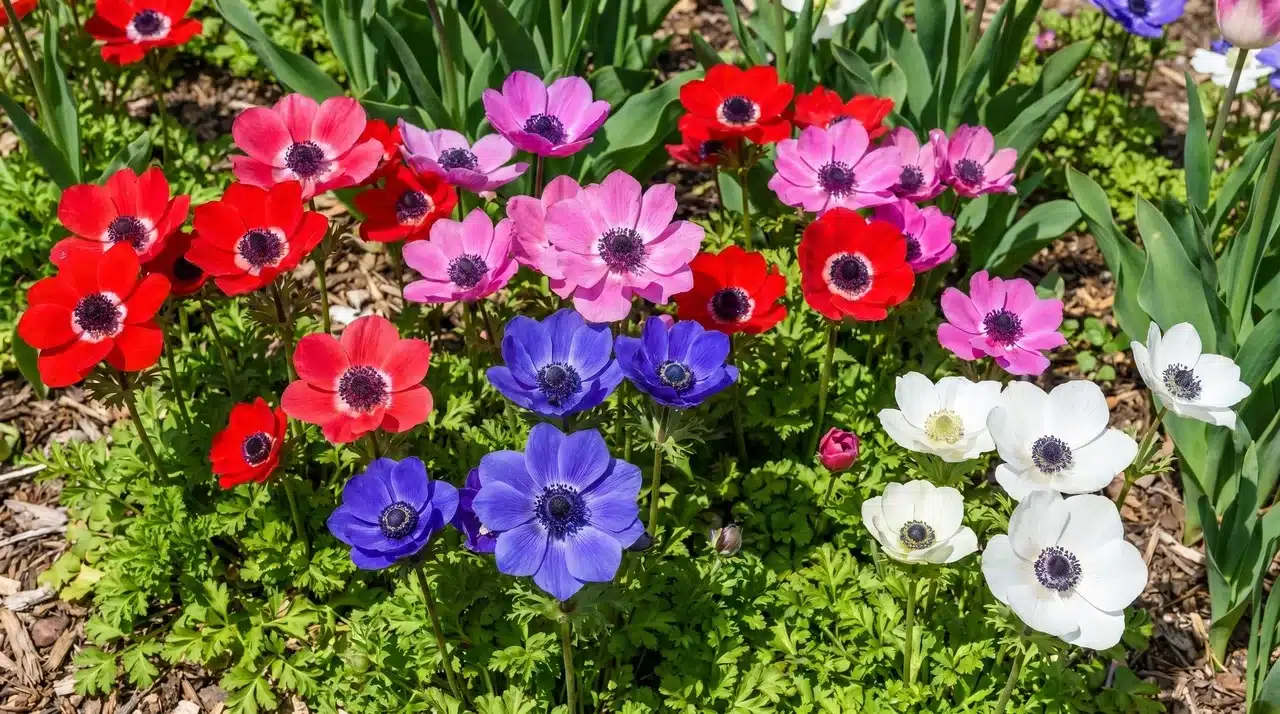
Anemones display bright, cup-shaped flowers in shades of red, pink, blue, and white. Their bold blooms add eye-catching color to gardens during the mid-spring season.
These perennials prefer humus-rich, well-drained soil and full to partial sun. Regular moisture helps support healthy growth and extends the flowering period.
17. English Primrose (Primula vulgaris)
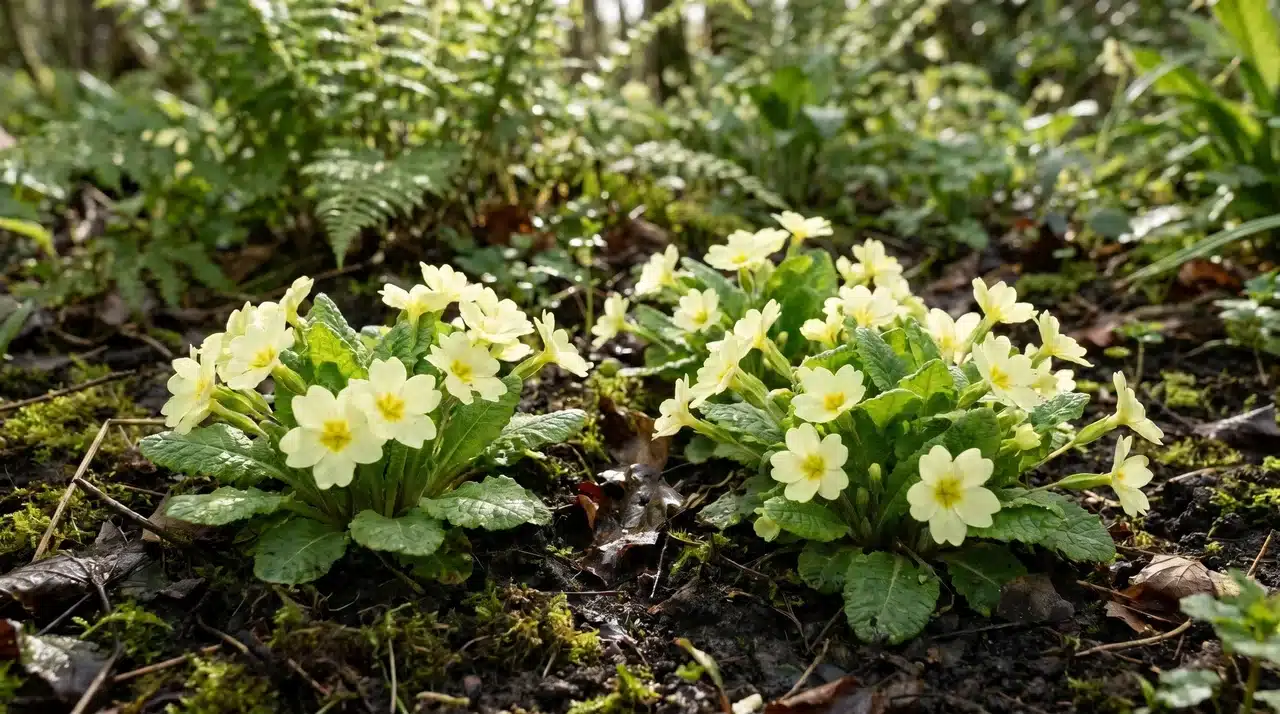
English primroses produce soft yellow flowers that brighten shaded garden spaces. Their compact growth habit and long bloom period make them valuable early-season performers.
They thrive in cool conditions with moist, fertile soil. English primroses are excellent for borders, woodland gardens, and naturalized plantings where they return reliably.
18. Iberis (Candytuft)
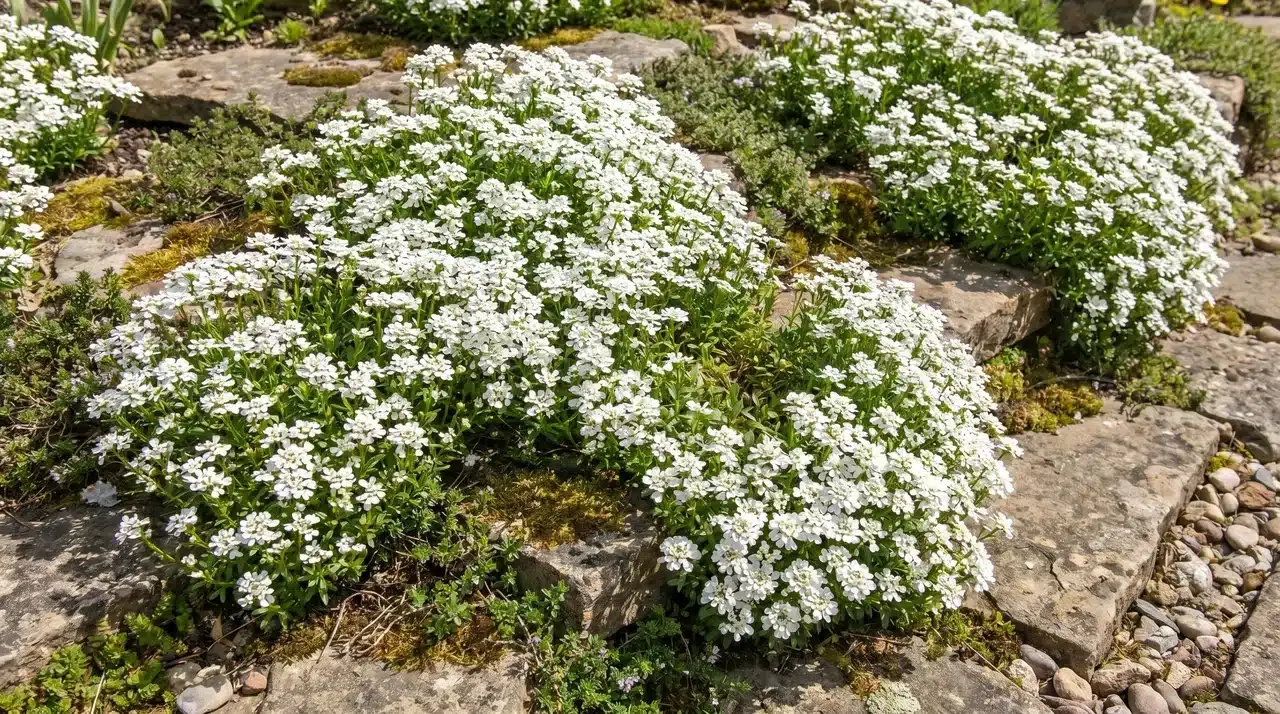
Candytuft forms low mounds covered with clusters of small white flowers. Its neat growth habit makes it an excellent edging plant for spring gardens.
This sun-loving perennial prefers well-drained soil and becomes drought-tolerant once established. Pruning after flowering helps maintain a compact shape and encourages healthy growth.
19. Spring Larkspur (Delphinium ajacis)
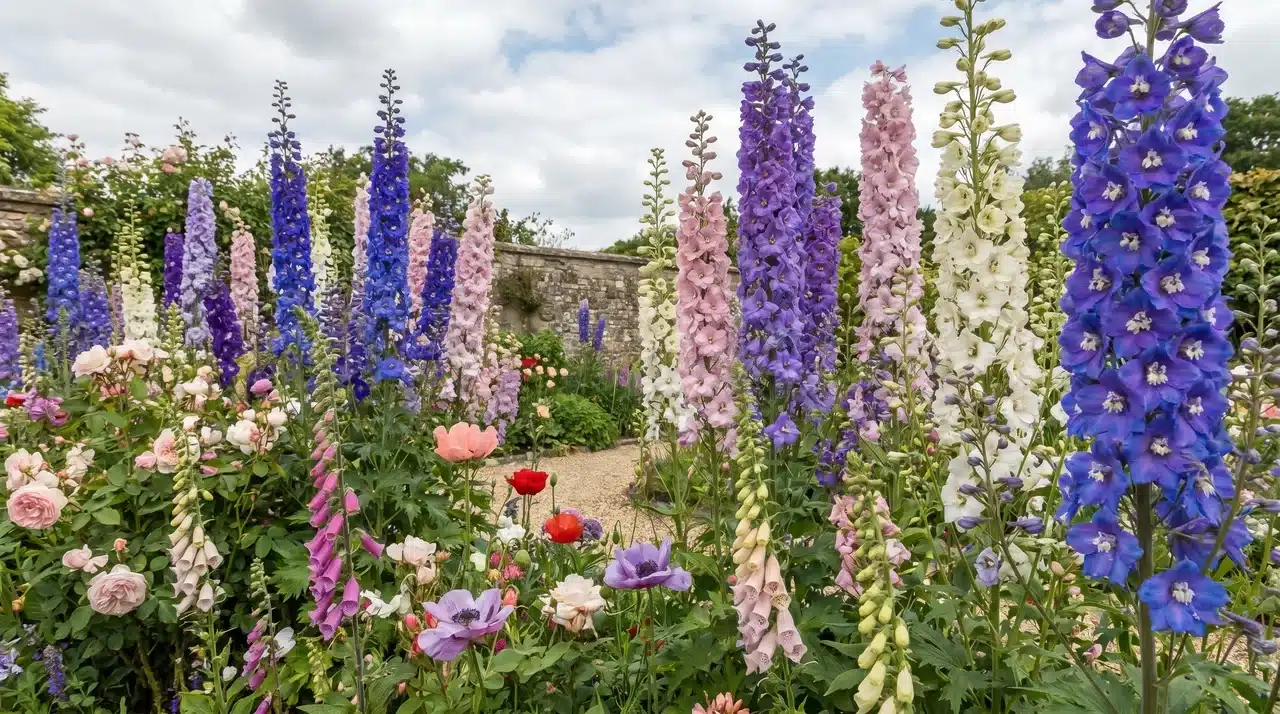
Spring larkspur produces tall flower spikes in shades of blue, purple, pink, and white. Its upright growth adds height and visual interest to seasonal plantings.
Best grown in full sun and well-drained soil, larkspur attracts pollinators throughout its bloom period. It performs especially well in cottage gardens and mixed borders.
Late Spring (Late May – Early June)
The last wave of spring color arrives in May. These plants need the deepest cold dormancy and bridge the gap naturally into early summer.
20. Peony
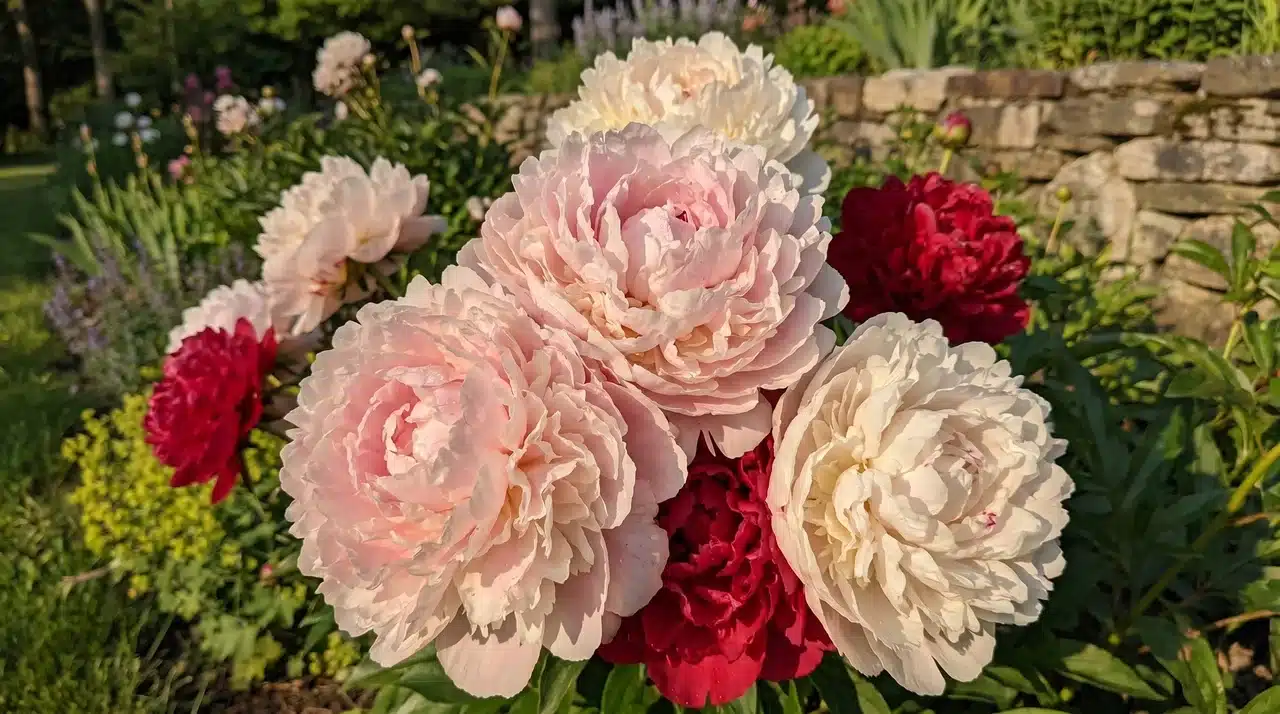
Peonies are prized for their large, fragrant flowers and lush foliage. Their blooms appear in shades of pink, red, white, and coral, creating a dramatic late-spring display.
These long-lived perennials prefer full sun and fertile, well-drained soil. Once established, peonies return for decades and become reliable garden focal points.
21. Iris
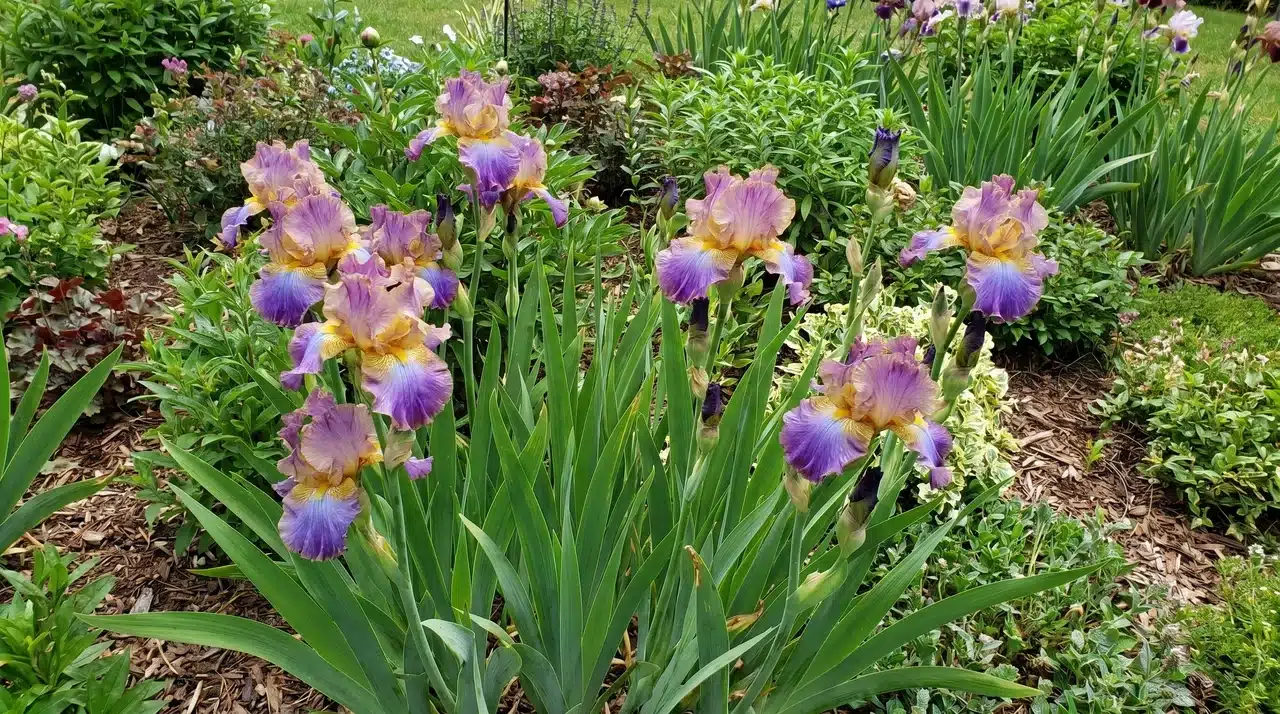
Irises produce elegant, ruffled flowers in a wide range of colors. Their distinctive blooms and sword-like foliage add texture and structure to spring gardens.
They thrive in sunny locations with well-drained soil. Dividing rhizomes every few years helps maintain vigor and encourages abundant flowering.
22. Columbine (Aquilegia)
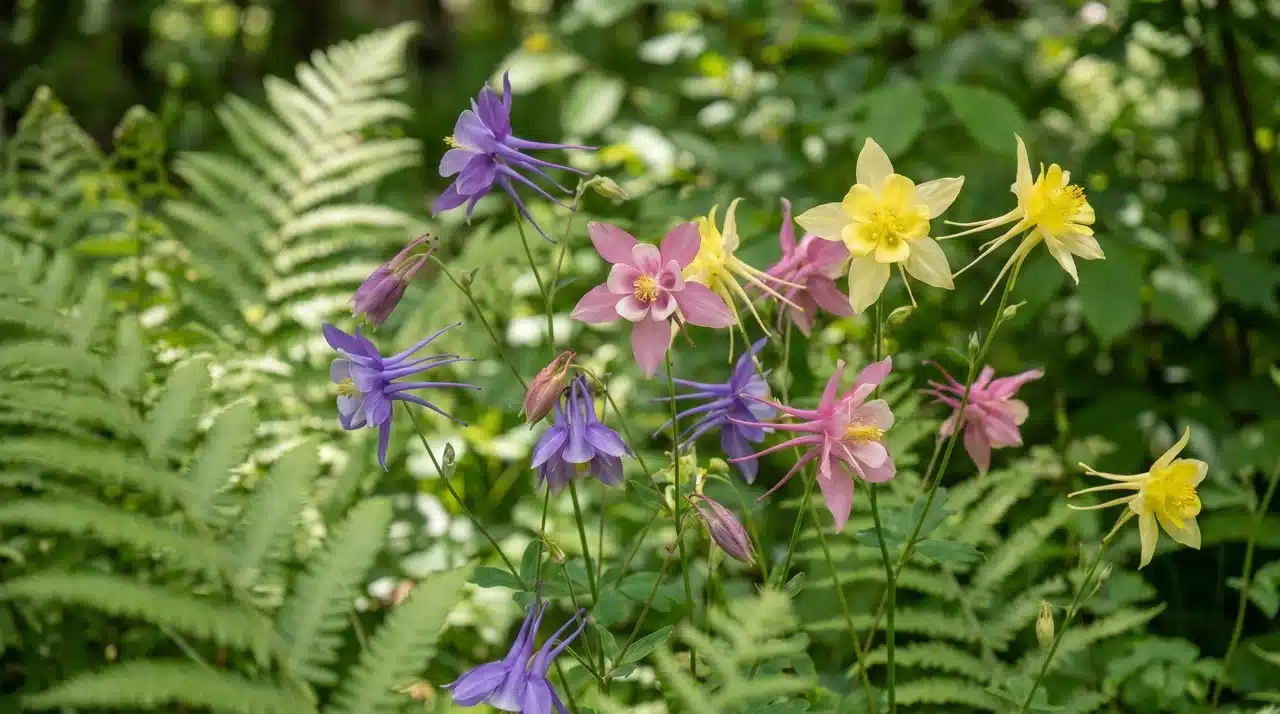
Columbines feature unique bell-shaped flowers with delicate spurs in various colors. Their graceful appearance attracts bees, butterflies, and hummingbirds throughout the bloom season.
They grow well in partial shade and moist, well-drained soil. Columbines are excellent for woodland gardens, borders, and naturalized planting areas.
23. Azalea
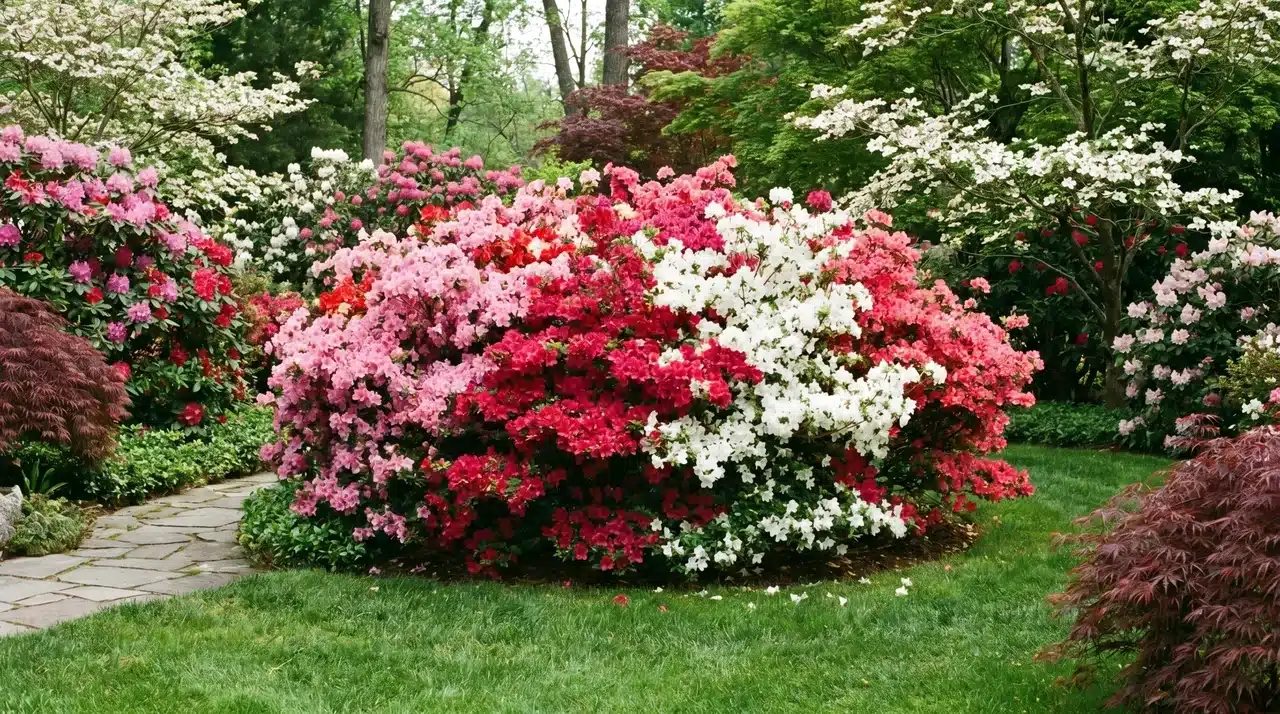
Azaleas are flowering shrubs that produce masses of colorful blooms in spring. Their vibrant flowers create striking displays in shades of pink, red, white, and purple.
They thrive in acidic, well-drained soil and partial shade. Azaleas are commonly used in foundation plantings, woodland gardens, and large landscape groupings.
24. Dwarf Iris
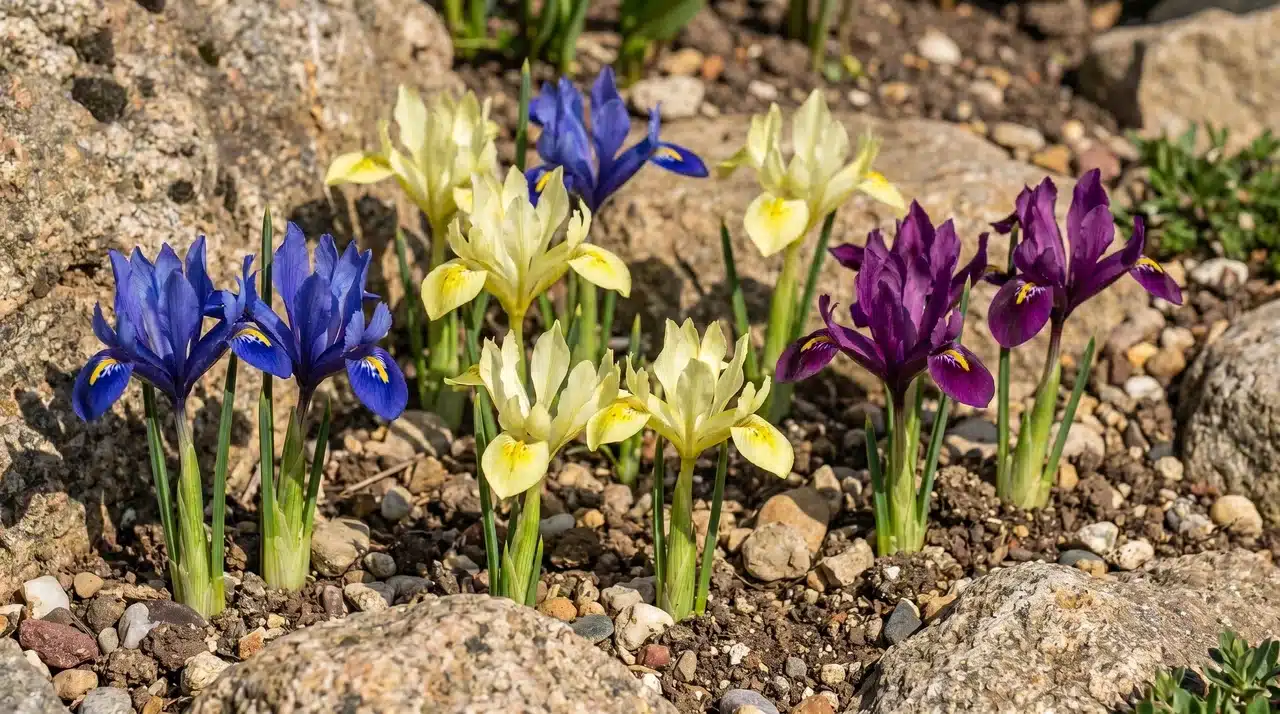
Dwarf irises are compact plants that produce colorful blooms in blue, yellow, and purple shades. Their small size makes them perfect for tight garden spaces.
They prefer full sun to partial shade and well-drained soil. Dwarf irises work well in rock gardens, containers, and along border edges.
25. Muscari Armeniacum
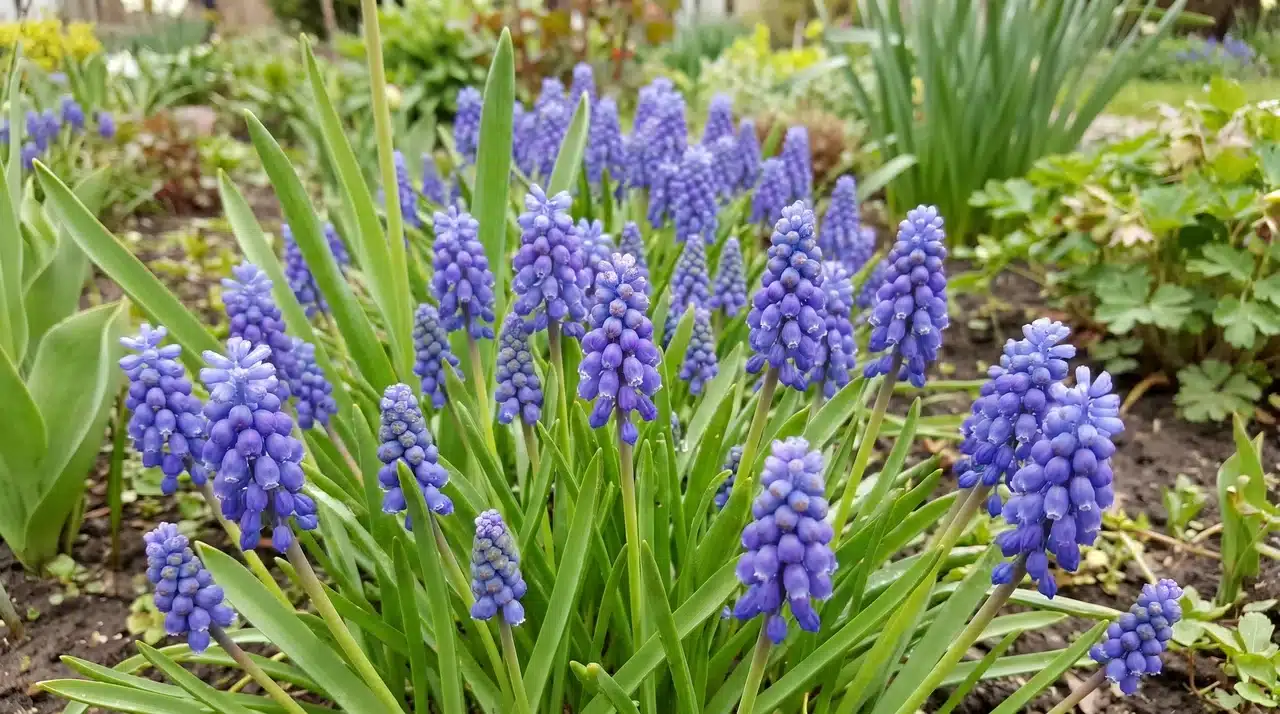
Muscari armeniacum is a popular grape hyacinth variety known for its vivid blue-purple flower spikes. Its compact growth habit makes it easy to combine with other spring bulbs.
This hardy bulb thrives in full sun to partial shade. It naturalizes readily and provides dependable color in borders, lawns, and containers.
26. Muscari Blue Spike
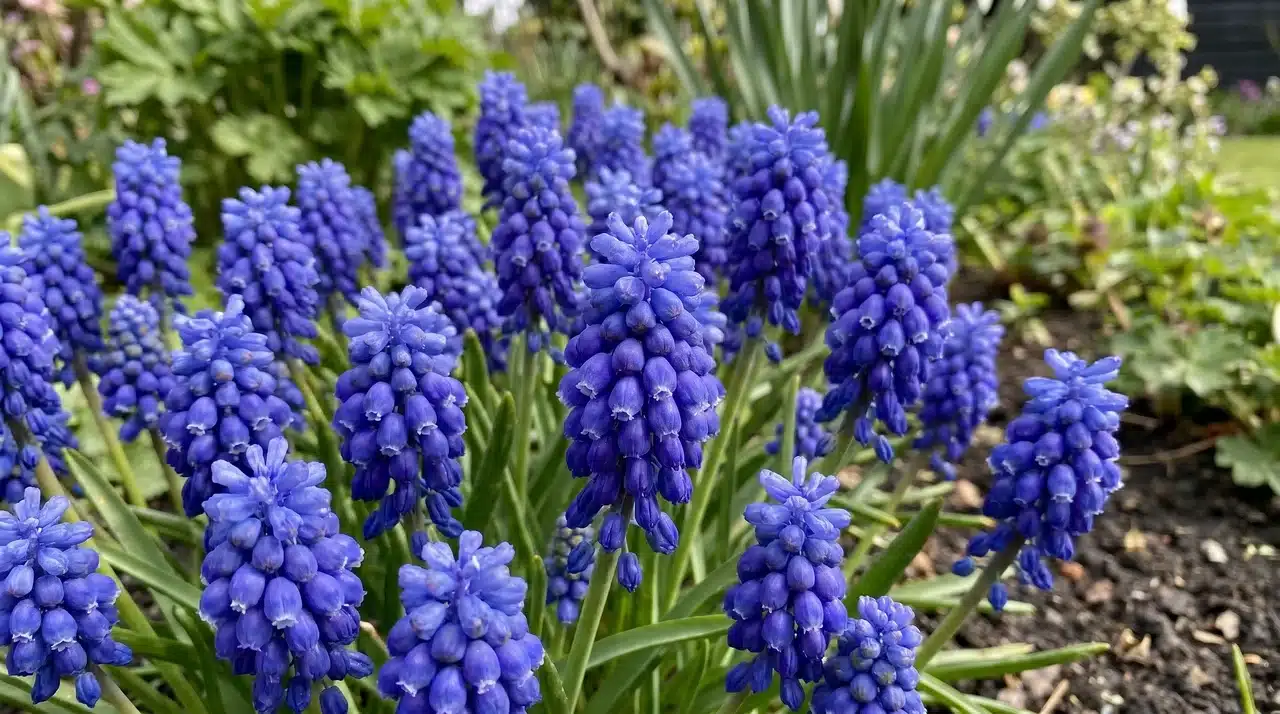
Muscari Blue Spike stands out for its dense clusters of rich blue flowers. The unusual double blooms create extra texture and visual interest in spring displays.
It performs best in sunny locations with well-drained soil. Group plantings create a stronger impact and highlight the variety’s distinctive flower form.
27. Japanese Primrose (Primula japonica)
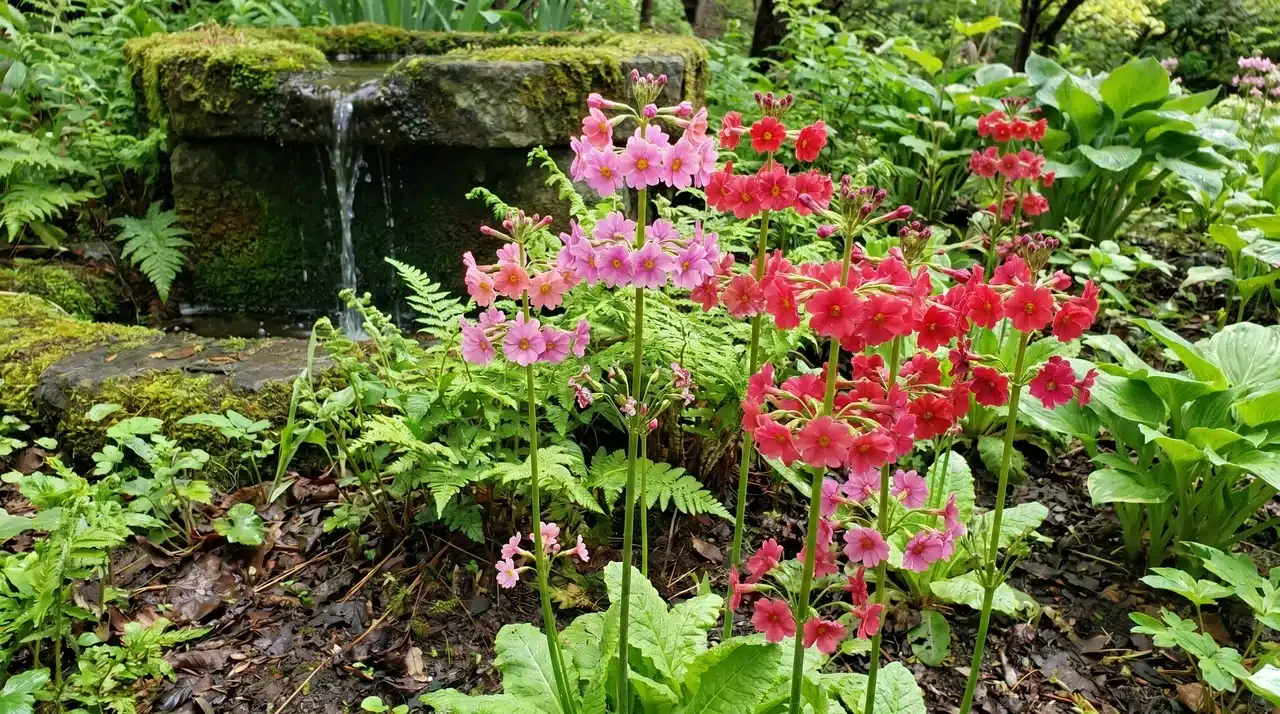
Japanese primrose produces bright flowers arranged in tiers along tall stems. Shades of pink, red, and magenta create striking vertical interest in late spring.
This moisture-loving perennial prefers partial shade and cool conditions. It performs especially well near ponds, streams, and woodland garden settings.
28. Japanese Camellia (Camellia japonica)
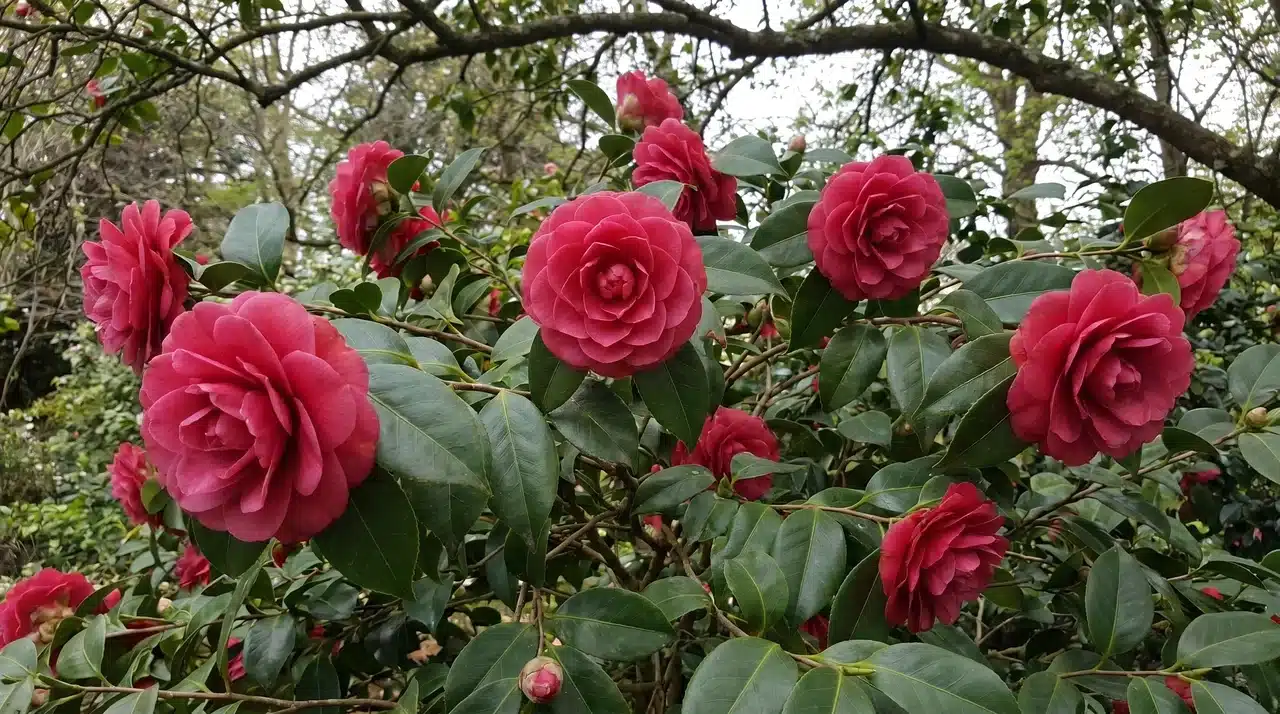
Japanese camellias produce large, rose-like flowers in shades of pink, red, and white. Their glossy evergreen foliage provides year-round ornamental value.
They thrive in acidic, humus-rich soil and partial shade. Camellias are excellent specimen shrubs and offer weeks of reliable spring blooms.
29. Flowering Quince (Chaenomeles)
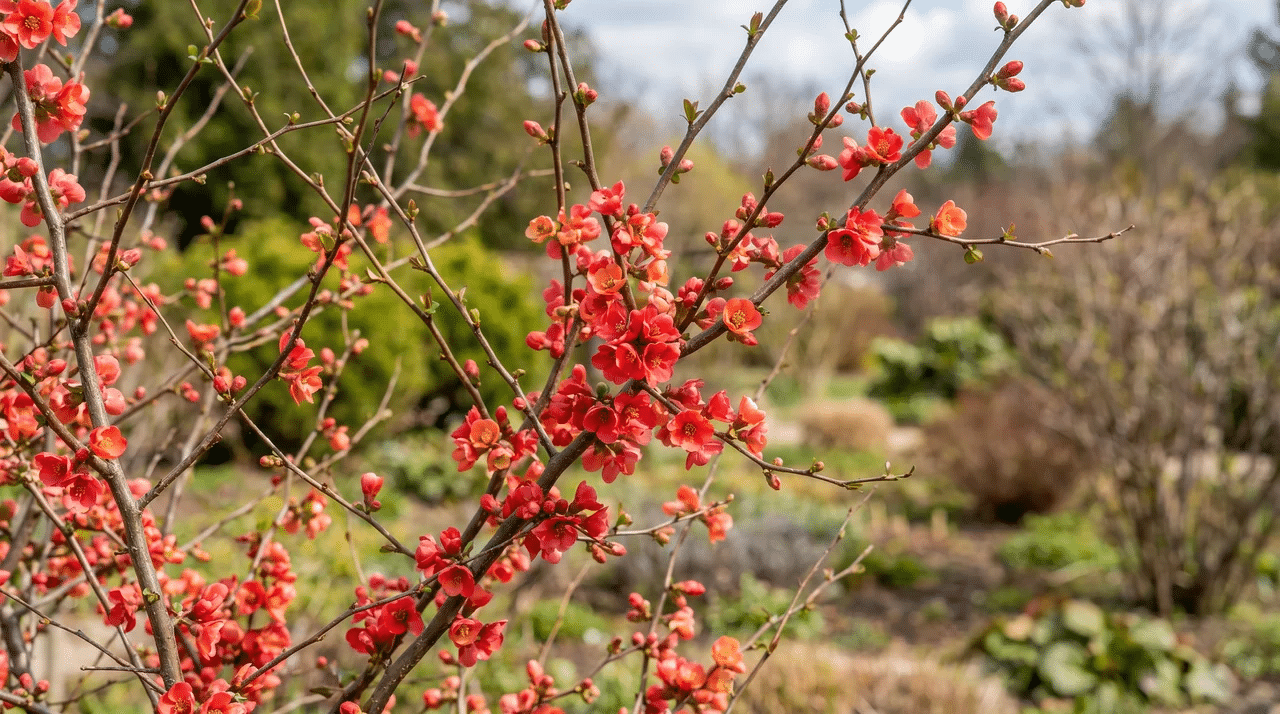
Flowering quince produces vibrant red, pink, or orange blossoms before its leaves appear. The colorful display provides valuable early nectar for pollinators.
This deciduous shrub grows well in full sun and well-drained soil. It works beautifully in hedges, mixed borders, and standalone landscape plantings.
30. Pansy (Viola tricolor var. hortensis)
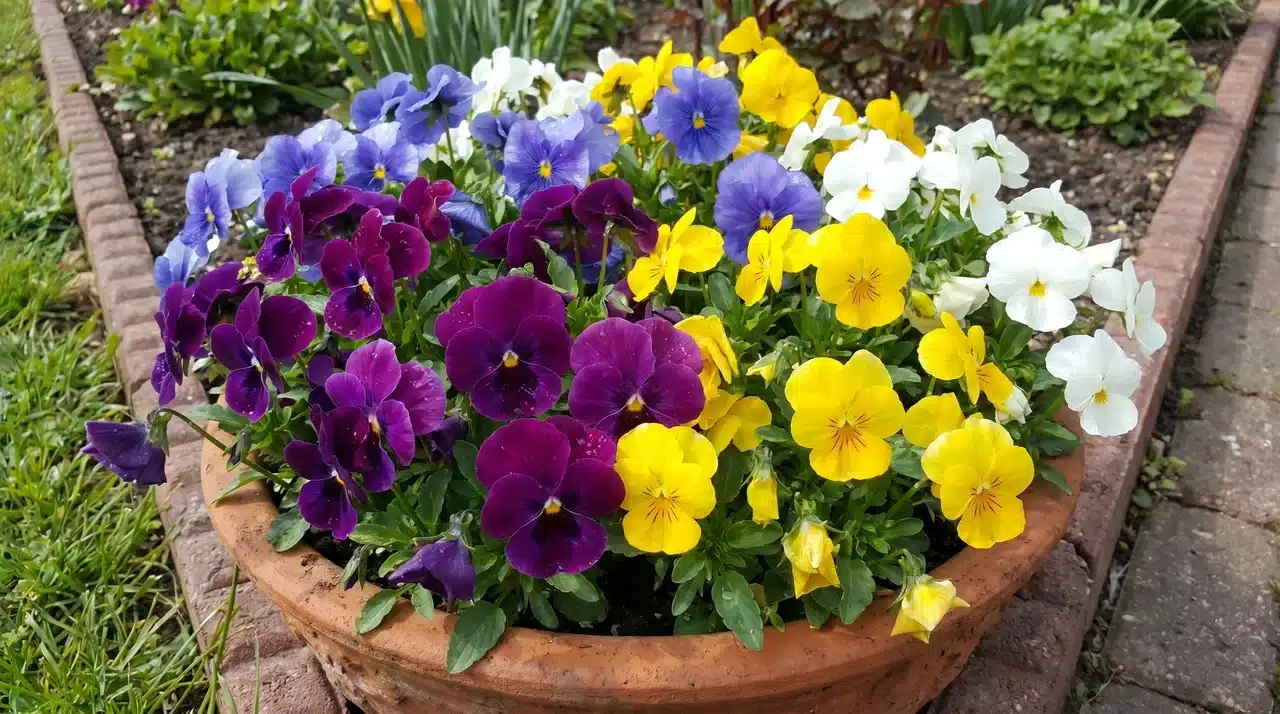
Pansies are cool-season favorites known for their brightly colored, often multi-toned flowers. Their cheerful blooms provide dependable color throughout much of spring.
They thrive in fertile, well-drained soil and full sun to partial shade. Pansies are ideal for containers, borders, garden beds, and seasonal displays.
Growing Tips for Spring Flowers
Spring flowers are relatively easy to grow, but a few simple care practices can make a significant difference in their health, bloom quality, and longevity.
- Plant in the Right Spot: Match flowers to their light needs. Most bulbs prefer full sun, while plants like primroses, hellebores, and cyclamen grow better in partial shade.
- Use Well-Drained Soil: Good drainage prevents root and bulb rot while encouraging healthy growth and stronger blooms throughout the season.
- Water Regularly: Keep soil consistently moist during active growth, but avoid overwatering, which can damage roots and reduce flowering.
- Feed Plants in Early Spring: Apply a balanced fertilizer as new growth appears to support healthy foliage, sturdy stems, and abundant flowers.
- Leave Bulb Foliage After Blooming: Allow leaves to die back naturally so bulbs can store energy and produce flowers again the following year.
- Protect Plants from Late Frosts: Cover vulnerable flowers during unexpected cold snaps to prevent damage to buds and newly opened blooms.
With the right growing conditions and seasonal care, your spring flowers can deliver stronger blooms and return reliably year after year.
Can You Grow Spring Flowers Indoors?
Growing flowers that bloom in spring indoors is more achievable than most people think. The method is called forcing.
Forcing works by mimicking winter artificially. Most bulbs need a cold period before they’ll bloom; skip it, and you get roots, not flowers.
Paperwhite narcissus is the easiest starting point. No chilling needed, just set bulbs on pebbles in shallow water and expect blooms within four to six weeks.
Hyacinths need more patience. Chill them for 10 to 12 weeks first, then transfer to a forcing vase with water just below the base. Blooms follow in three to four weeks.
Tulips require the longest cold period, 12 to 14 weeks. Once moved to a vase, roots develop downward first. Flowers appear within two to three weeks after that.
Crocuses sit in the middle at eight to ten weeks of chilling. They’re compact and fast once that requirement is met, making them simple to manage indoors.
The setup is similar across all varieties. Use pebbles or a forcing vase, keep water levels consistent, and find a bright, cool spot once chilling is done.
Done right, you’ll have blooms indoors weeks before anything appears outside.
Conclusion
Spring doesn’t have to mean one short burst of color followed by bare beds. Planning around the flowers that bloom in spring keeps your garden alive from February through early June.
Bloom timing works biologically, not just seasonally. Understanding that changes how you choose, plant, and prepare for the following year.
The biggest shift is thinking about spring as a sequence, not a single event. Early, mid, and late bloomers each play a different role in keeping that sequence going.
Start with one flower from each wave and build from there. A little planning now creates a garden that rewards you the whole season through.
Frequently Asked Questions
Why do different spring flowers bloom at different times?
Each spring flower has a specific cold requirement called vernalization, a biological clock reset that happens during winter. Once that threshold is met, rising soil temperatures and lengthening daylight trigger the bloom. Flowers with lower cold requirements bloom earlier; those needing longer cold exposure bloom later in the season.
Do all spring flowers need to be planted in the fall?
Bulb-based spring flowers, tulips, daffodils, hyacinths, and crocuses must be planted in the fall because they need 8 to 16 weeks of cold to complete vernalization. Cool-season annuals like pansies and violas are exceptions and can be planted directly in early spring without any prior cold treatment.
Which spring flowers are the easiest to grow for beginners?
Daffodils are the most beginner-friendly spring flower. They’re deer-resistant, require no special soil preparation, naturalize over time, and return each year reliably. Crocuses and grape hyacinths are also low-effort options that establish quickly, spread naturally, and deliver consistent color with minimal intervention season after season.
How do I plan a garden that blooms throughout all of spring?
Select at least one flower from each bloom window, early, mid, and late spring. Pair low-threshold bloomers like crocuses with mid-season tulips and finish with late bloomers like peonies or irises. This sequence creates continuous color from late February through early June without gaps in garden interest.