


When people think about how to save for a house, they picture one number: the down payment. That’s the mistake that wrecks more timelines than anything else.
The real target has three parts: the down payment, closing costs, and the cash you’ll need after the keys are in your hand. Get the number wrong and you’ll either run short at closing or spend years saving toward a goal that was never right.
This guide walks through the full process in order: what to save, where to keep it, which programs can lower your target, and when to call a lender.
How Much Do You Actually Need to Save?
Your savings target has three buckets: the down payment, closing costs, and post-closing reserves. Most buyers only fill the first one, then hit a wall at closing they didn’t see coming.
Down Payment: What the Percentages Mean
Your down payment depends on which loan type you qualify for. The range is wider than most people expect.
- VA and USDA loans: 0% down for eligible veterans and rural buyers.
- FHA loans: 3.5% down, with more flexible credit requirements than conventional loans.
- Conventional loans: Start at 3% down for qualified borrowers.
That 3%-20% spread is where a lot of buyers get tripped up. Each loan type has real trade-offs worth understanding before you pick a target.
That 20% number isn’t a rule you have to follow.
It’s just the point where Private Mortgage Insurance (PMI) drops off. PMI is a monthly fee lenders add when your down payment is under 20%. It doesn’t protect you; it protects the lender.
I’ve watched buyers grind toward 20% when a 5% conventional loan would have gotten them into a home years earlier.
The right target comes from knowing which loan you actually qualify for, not from a number you heard somewhere.
Closing Costs and Post-Closing Reserves
These two buckets trip up even careful planners, because they don’t show up on any savings calculator.
Closing costs run 2–5% of the loan amount. They cover appraisal fees, title insurance, lender fees, and prepaid taxes. On a $350,000 loan at 3.5%, that’s around $12,250 due at signing, all at once.
Post-closing reserves are the cash you keep after the deal is done. Budget at least $5,000. Your water heater doesn’t care that you just wiped out your savings at closing.
Your Total Savings Target
Add all three buckets together. Here’s what that math looks like for a $350,000 home with 10% down:
- Down payment (10%): $35,000
- Closing costs (3.5%): $12,250
- Post-closing reserves: $5,000
Total: $52,250
The number on a savings calculator and the number you actually need at the closing table are not the same. Build your plan around all three buckets from the start.
Where Should You Keep Your Down Payment Savings?
This isn’t a small decision. Use the wrong account, and you’ll either lose months of interest or get hit with penalties when your timeline shifts. One variable controls which option is right: how far out is your purchase?
HYSA vs. CD: Which One Fits Your Timeline
Two account types make real sense for down payment savings. Which one depends entirely on when you plan to buy.
| High-Yield Savings Account (HYSA) | Certificate of Deposit (CD) | |
|---|---|---|
| Key Features | Higher interest than checking, FDIC insured up to $250,000, instant access | Fixed term (3 months–5 years), slightly higher interest rate |
| Pros | Flexible, secure, accessible anytime, earns competitive interest | Higher interest for a locked, short-term |
| Cons | Interest slightly lower than CDs | Early withdrawal penalties can cost several months of interest |
| Best For | Buyers with a 1–3 year timeline who need flexibility | Buyers with a fixed closing date within 6 months, certain the timeline won’t move |
If your purchase is more than 12 months out, a High-Yield Savings Account is the right call. If you have a hard closing date within six months and you’re sure of it, a Certificate of Deposit may earn a bit more.
That word “sure” is doing real work. I’ve seen this go wrong when closing dates slip, and they slip often. The early withdrawal penalty on a CD can eat up the entire interest advantage.
CDs work in a narrow window. For most buyers, a HYSA is simply the better fit.
What to Avoid and Why
Two options show up in advice that sounds reasonable but isn’t right for this job.
A standard savings account at a traditional bank usually earns almost nothing. Sitting on $40,000 for two years while better rates exist elsewhere is a real, quiet cost money you earned the right to but never collected.
Putting down payment money in a brokerage or investment account is the bigger mistake. If the market drops sharply six months before your closing date, you either delay the purchase or show up with less than you planned.
Down payment savings have to be stable. If you might need it within three years, it stays out of the market. Full stop.
How Do You Build a Savings Habit that Actually Sticks?
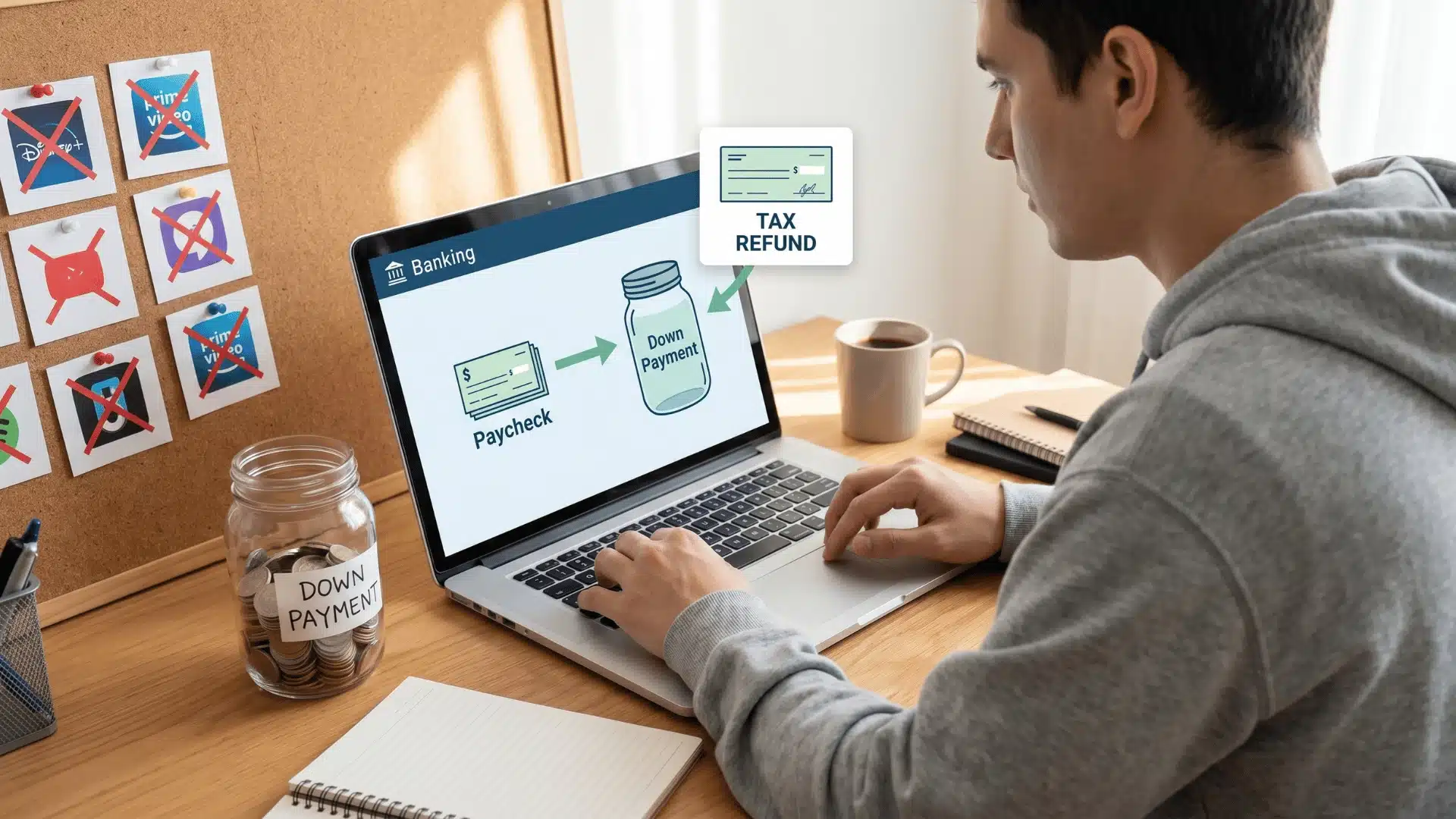
Knowing your target is the easy part. What actually sets your timeline is whether you hit it consistently when life doesn’t slow down to help you. One move separates the people who get there from the ones who stall.
Automate First, Spend What’s Left
Most people save whatever is left at the end of the month. That’s the wrong order, and it’s why most savings plans stall, especially when figuring out how to save money for a house.
Set up an automatic transfer to your down payment account on payday, before bills go out. When money moves before you see it, your spending adjusts to what’s left. No willpower required. The structure does the work.
A steady automated amount, hit every month, beats big one-off deposits made when motivation is high. Consistency wins over size every time.
Find the Money You’re Already Spending
You don’t always need to earn more. Most people already have money walking out the door without a real decision behind it.
Pull up three months of bank and card statements. Look for these things:
- subscriptions you forgot exist
- spending that runs on habit
- convenience buys
- auto-renewals, services you stopped using months ago.
When learning how to save money for a house. The goal isn’t to cut everything fun. It’s to make your spending a choice, not a default
Redirecting $200 a month adds $2,400 a year and $7,200 over three years, enough to cover closing costs on a mid-range home
I do this audit quarterly, not just once. Checking it every few months keeps the plan on track.
Redirect Windfalls Before You Absorb Them
Tax refunds, bonuses, and cash gifts arrive as lump sums. Without a rule in place, they blend into normal spending within weeks and disappear.
Set the rule before the money lands: any windfall goes straight into the down payment account, same day. A $3,000 tax refund moved immediately into a HYSA can shorten your timeline by months.
The point is to decide in advance. A rule you made ahead of time will never be unreliable.
How Can First-Time Buyer Programs Cut Your Savings Target?
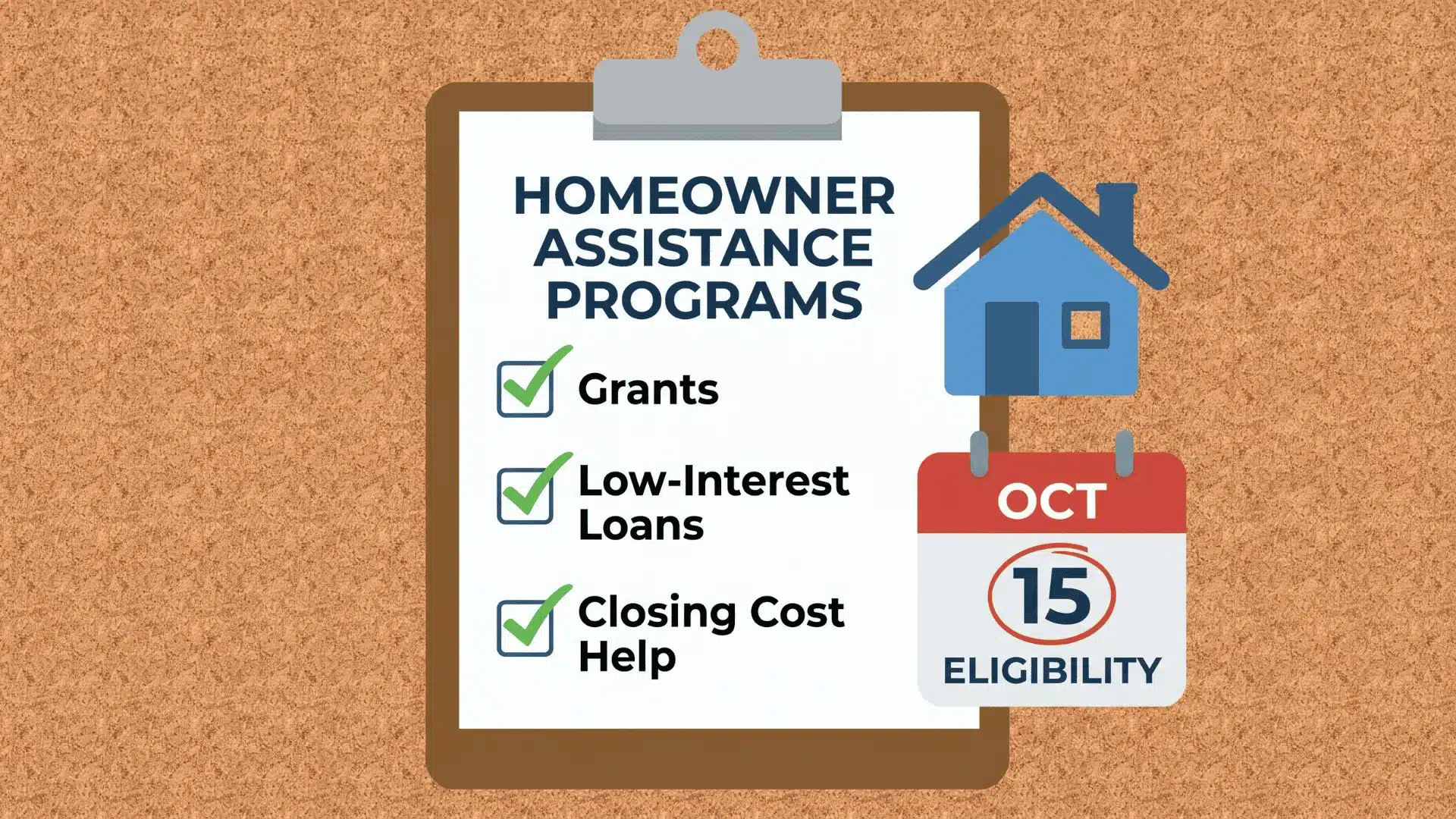
Before you set a savings target, find out if part of it can be covered for you. State, county, and local programs can put money toward your down payment, your closing costs, or both, sometimes with nothing to pay back.
Check what you qualify for before saving toward a number that might already be too high.
What These Programs Actually Offer
Assistance comes in three main forms. Knowing the difference between them changes how you plan.
- Grants: Free money you keep as long as you meet the conditions, usually staying in the home for a set number of years.
- Deferred loans: Down payment loans at low or zero interest that you repay when you sell, refinance, or pay off your mortgage. No monthly payment now, settled later.
- Below-market mortgage rates: Some state programs offer a lower rate on your primary loan, which cuts your monthly payment and changes what you can afford.
Closing cost help is less common but real. Some programs cover a chunk of those costs even when down payment assistance isn’t on the table. Worth checking either way.
I’ve talked with buyers who assumed they didn’t qualify and never looked. That’s almost always the wrong call.
Who Qualifies: Broader Than You Think
If you’re picturing a first-time buyer as someone who has never owned a home, that’s not how most programs define it, and that matters when you’re planning how to save.
- Standard definition: No homeownership in the past three years, not simply never owned before.
- Divorce situations: Someone who no longer holds property following a divorce typically qualifies.
- Investment property owners: Some programs apply even to those who have only ever held investment property.
- Income and price caps: Limits exist but are often higher than buyers expect.
The best reference point is your state housing finance agency directly; not a lender site or a search result. The agency website is usually the most accurate place to see every program available in your area
When Should You Talk to a Lender?

Here’s what most buyers get backward: the lender conversation gives you your savings target. You don’t wait until you’ve hit a target to have it. If you do, you may spend years saving toward the wrong number.
What You Learn From an Early Conversation
A pre-qualification looks at your income, debt, and credit. From that, the lender tells you which loan types you likely qualify for right now.
That matters because the loan type sets your required down payment:
- VA loan: zero down
- Conventional: 3% or more.
Two years of saving toward the wrong target is a real cost you could skip entirely.
The other thing that comes out early is your debt-to-income ratio (DTI). DTI is the share of your gross monthly income that goes toward debt payments.
- Lenders use DTI for approval: Lenders use it to decide what you qualify for. A high DTI can shrink your options or block you altogether.
- Fixing DTI takes time, but it is possible: If you find out your DTI is a problem with eighteen months to go, you have time to fix it. Six to twelve months of paying down balances can shift the number enough to matter.
- Timing matters for savings progress: Find out after your savings account is already full, and that window is closed.
Why Waiting Costs More Than It Saves
You don’t need a full savings account to have this conversation. Pre-qualification isn’t a commitment. It doesn’t hit your credit the same way a full application does.
What it gives you is clarity: is your target right, which programs are open to you, and are there any problems that need fixing while you still have time?
I had a friend who saved carefully for two or three years, then hit the pre-approval stage and found out a DTI issue had been quietly sitting there the whole time. One early conversation would have caught it. It costs nothing to have it at the start.
Conclusion
The process of figuring out how to save for a house has a clear order.
The number comes first, built from all three cost buckets, checked against what a lender tells you, and adjusted for any programs you qualify for.
The right account comes second. The habit comes third, held in place by automation and a standing rule for windfalls.
The right number stops you from saving toward a target that was never accurate. The right account keeps your money safe and growing. The right habit makes the whole thing hold.
You don’t need a perfect financial situation to begin. You need a plan built on real numbers, not guesses.
Frequently Asked Questions
Can I buy a house with only a small amount saved?
Yes. FHA loans require 3.5% down, and conventional loans start at 3%. VA and USDA loans allow zero down for eligible buyers. You still need funds for closing costs, typically 2%–5% of the loan, and post-closing reserves. Speaking to a lender early tells you the actual minimum for your situation.
How long does it typically take to save for a house?
Most first-time buyers take two to five years to reach their savings target, depending on income, local home prices, and monthly savings rate. Automating transfers, redirecting windfalls, and checking eligibility for assistance programs can compress that timeline. A lender pre-qualification gives you a specific number to plan against.
Should I pay off debt before saving for a house?
High-interest debt credit cards, especially, should come down first. Carrying it raises your debt-to-income ratio, which limits your loan options and can push your rate up. Once those balances are under control, saving for the down payment while managing low-interest debt in parallel is the right sequence for most buyers.
What is the fastest way to save money for a house?
Three moves, combined: automate a fixed transfer to a dedicated HYSA every payday, redirect every windfall tax refund and bonuses into the account before it touches spending, and check down payment assistance programs early. A grant or deferred loan can cover costs that would otherwise take years to save.