

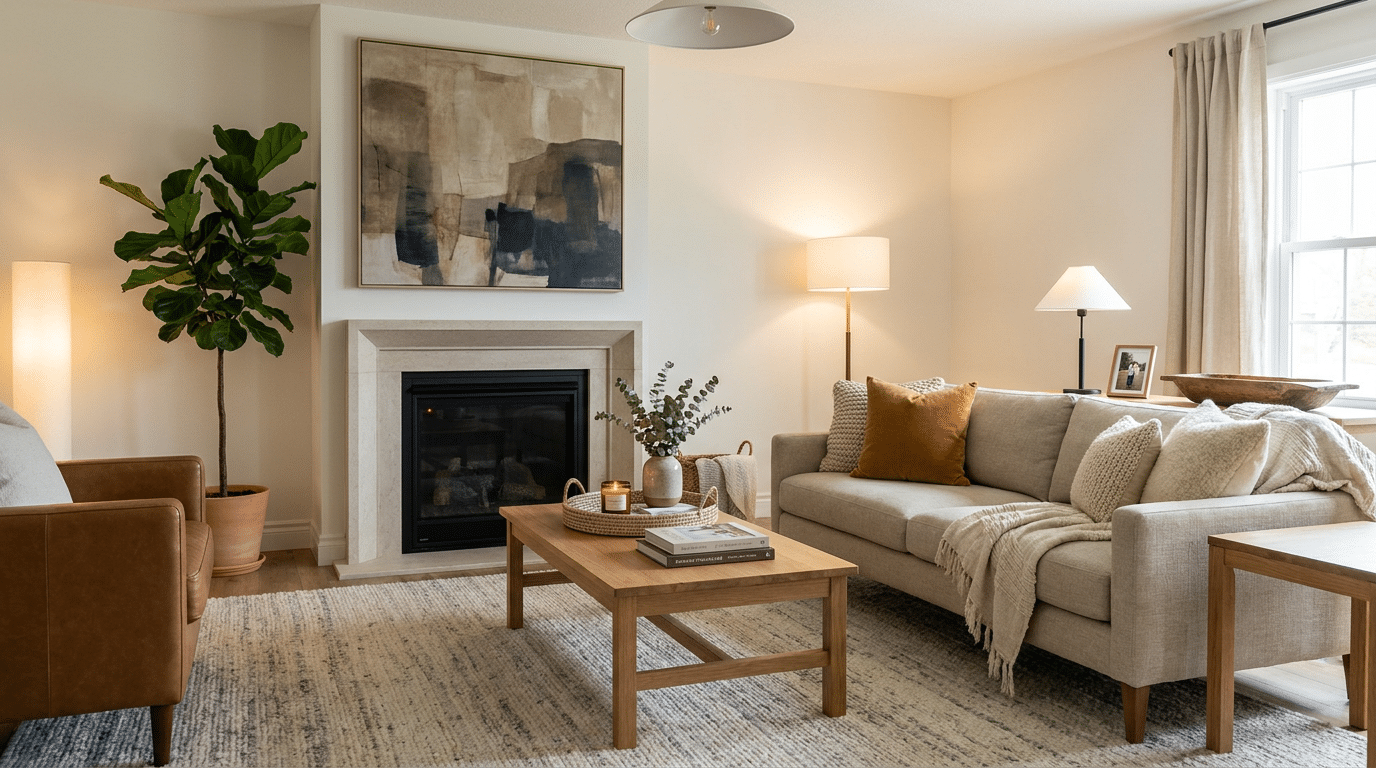
Learning how to decorate a living room can feel hard when every choice seems connected. A sofa changes the rug size, the rug changes the layout, and the lighting changes how every color looks.
I have made the mistake of buying pretty pieces first, only to find they did not work together. The better approach is to decorate in the right order.
Start with the room’s main focus, build the layout around it, then choose the rug, furniture, textures, and lighting with purpose.
Before buying anything new, let’s look at what you need before you start.
What You’ll Need Before You Start
Before you buy a single thing, gather these basics. None of them cost much, but they’ll save you from buying the wrong thing twice.
- Measuring tape
- A notepad or phone for sketching your layout
- Painter’s tape to mark furniture positions on the floor
- Paint or fabric samples for testing colors in your actual light
- A movable lamp or two for testing lighting before you commit
The painter’s tape trick alone is worth its weight in gold. Tape out the footprint of your sofa and coffee table on the floor before either arrives.
How to Decorate a Living Room: A Step-by-Step Guide
Decorating gets easier when you know where to start. These five steps take you from an empty room to a finished one in the right order, without backtracking.
Step 1: Find Your Focal Point and Plan the Layout
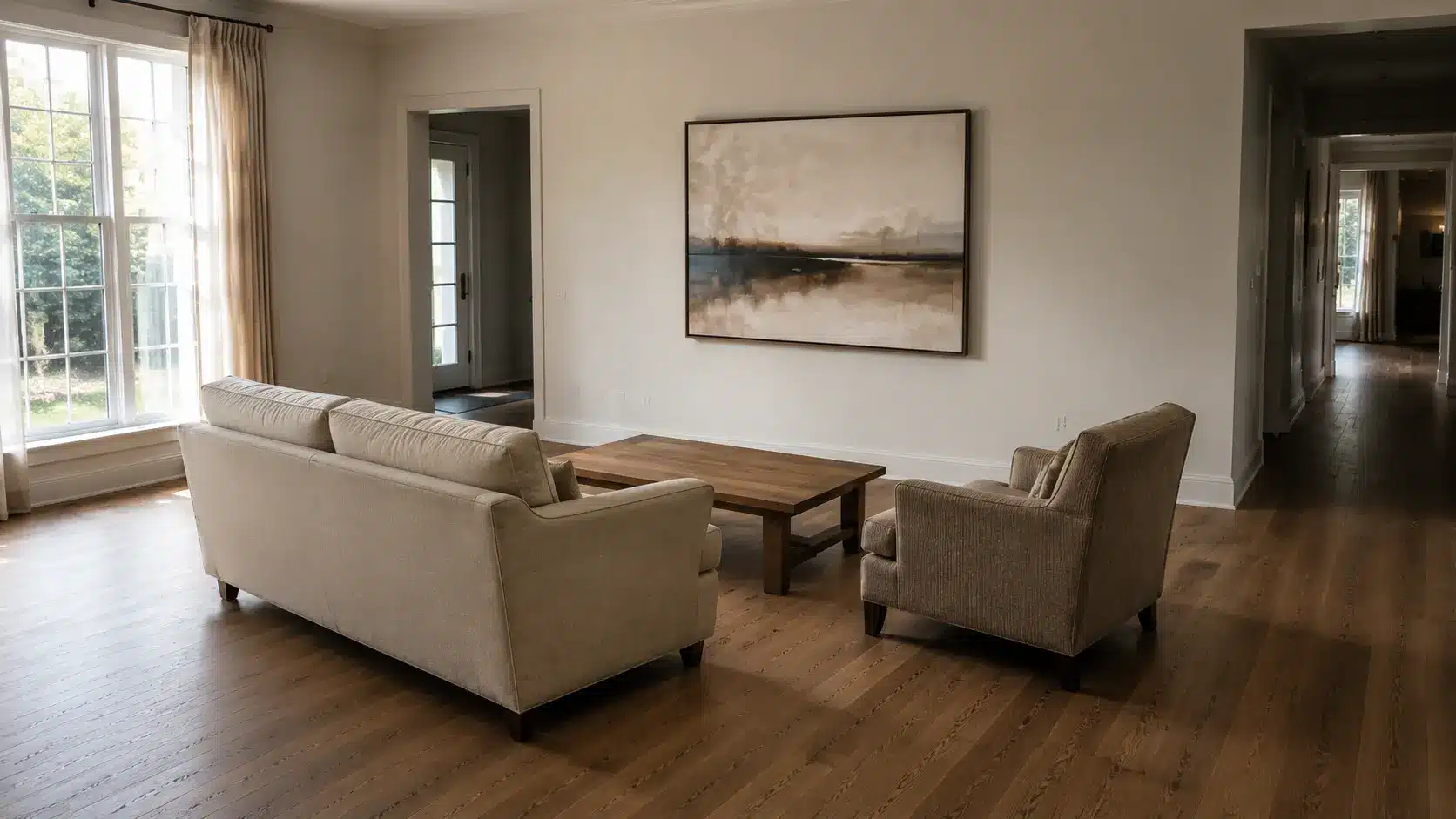
This is the step I skipped the first time I decorated a room. It cost me months of frustration.
Every living room needs a single anchor the seating faces toward. Sometimes it’s already there: a fireplace, a big window, a feature wall.
If not, create one. A large piece of art, a well-framed TV, an oversized mirror all work.
If a media wall is your anchor, these shiplap TV wall ideas show a few ways to make the television itself feel like the intended focal point instead of an afterthought.
Once you know where the anchor lives, arrange your seating toward it.
Then follow these three rules:
- 18 inches minimum between sofa and coffee table that’s a movement rule, not a style one
- 30–36 inches clear on any walkway through the room
- In long narrow rooms, run seating along the long wall and make the opposite wall your focal point it fixes most narrow-room problems instantly
Before you shop for a single piece, settle on a base color palette anchored to your focal point.
If you’d rather see the full arrangement pulled together before committing, browsing how a penthouse living room gets styled is a good way to see these layout rules applied at a larger scale.
Step 2: Anchor the Space With the Right Rug
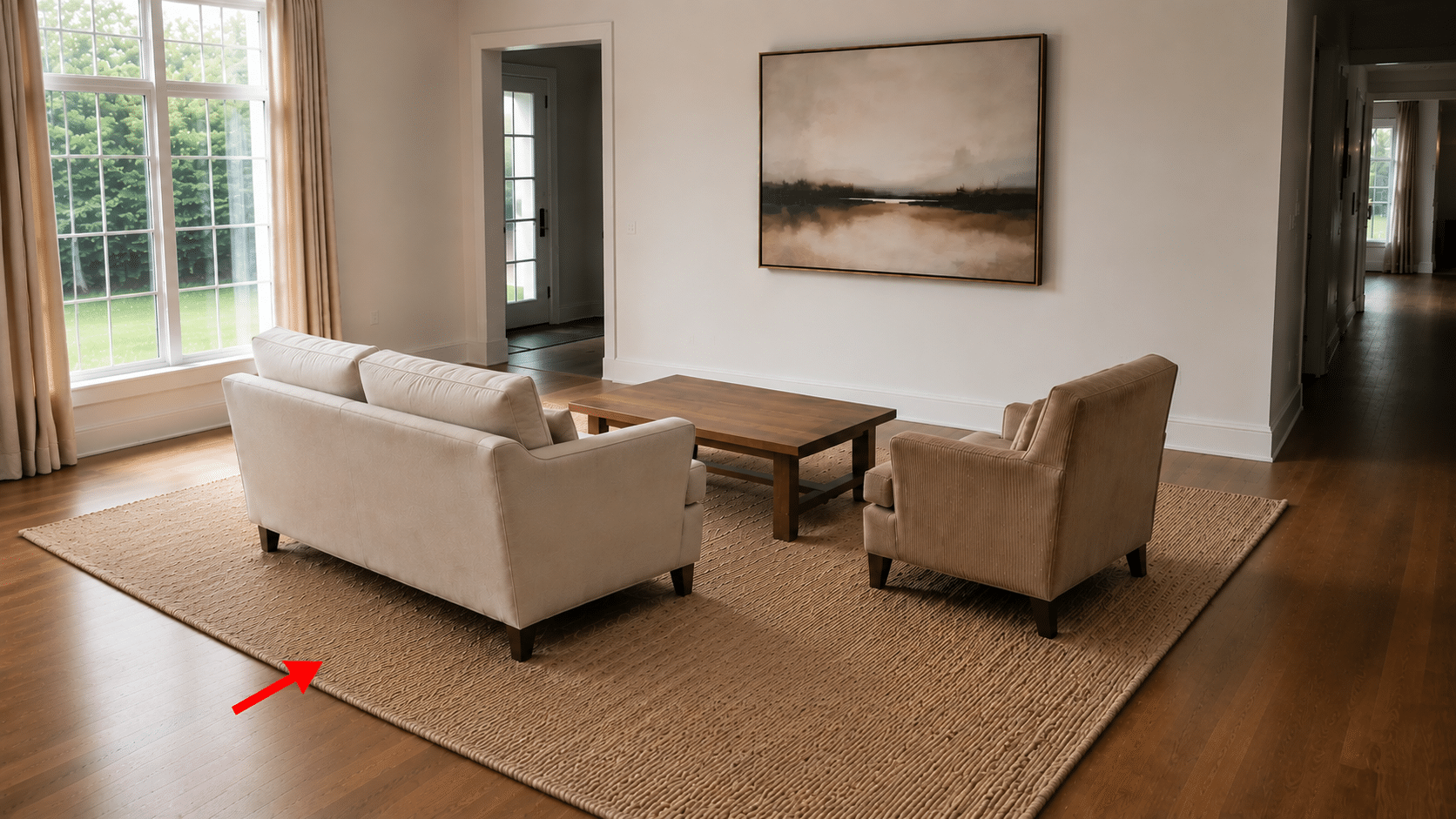
The rug comes before curtains, paint color, and throw pillows. Before all of it.
It’s what groups your furniture into one unified zone. Without it, everything floats. And the most common way a rug fails is by being too small.
The rule: front two legs of every seat on the rug minimum, all four legs is better. For most rooms, that means 8×10 feet at the smallest. Sofa longer than 84 inches?
Go 9×12. When in doubt, always size up; a slightly large rug is forgiving, a small one shrinks the whole room.
If you’re weighing a smaller footprint, this guide to how a 6×9 rug fits different room shapes is a useful gut check before you buy.
Step 3: Choose Furniture That Mixes, Not Matches
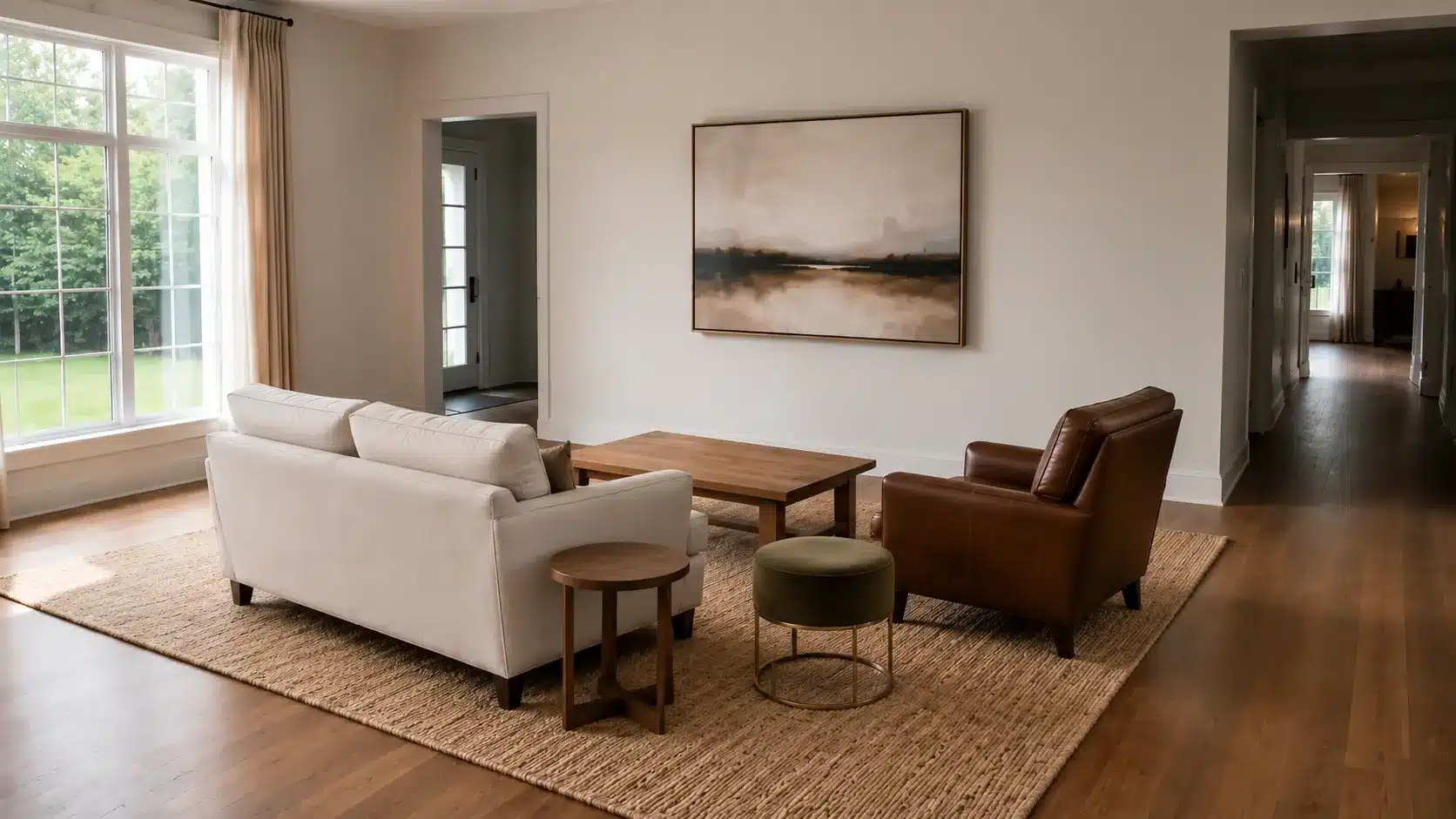
A matching set feels like the safe choice. It isn’t. Matching sets make a room look like a showroom: everything coordinates, nothing has life.
Mixing only needs two rules. Share the scale. Pieces near each other should have roughly the same seat height and visual weight.
A low sectional next to a tall formal armchair will always look wrong. If you’re starting with the sofa itself, these low-profile cloud couch options show how a deep, relaxed silhouette pairs easily with almost any accent chair.
Repeat one element. A wood tone in both the coffee table and side table.
A brass finish echoed from a leg to a lamp. One small thread of repetition makes the whole mix feel curated, not accidental.
Combinations that always work: leather armchair with fabric sofa, velvet ottoman with metal-legged coffee table, linen accent chairs with a deep textured sofa.
The velvet ottoman and metal-legged coffee table pairing is one I’ve reused across three different client living rooms, and it has never once looked dated or overly trendy.
Step 4: Layer Textures and Add Personal Touches
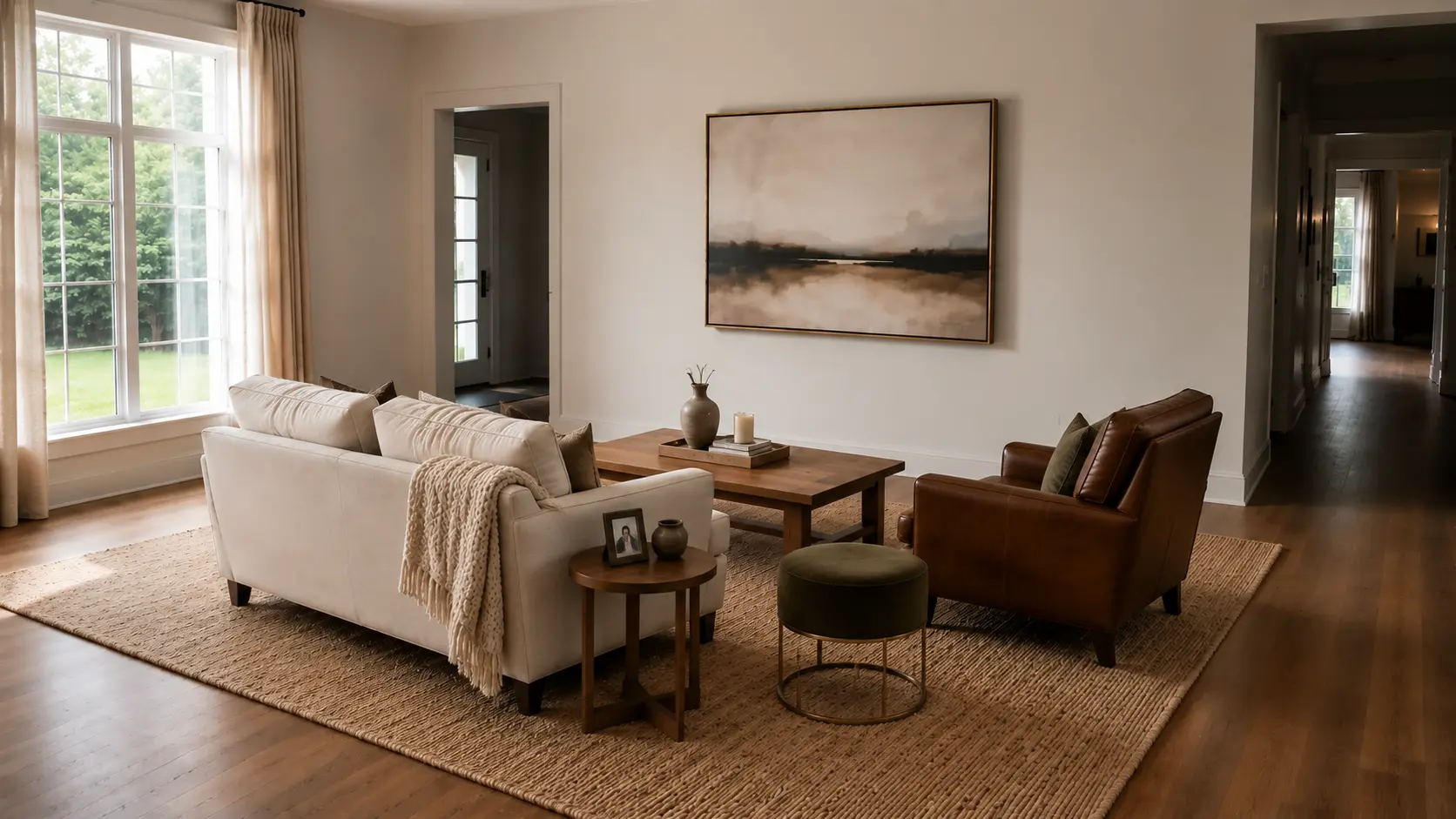
The room is structurally done at this point. But it probably still feels flat. That’s what this step fixes.
The principle is contrast, not quantity. Rough jute underfoot with soft cotton on the sofa. When everything has the same tactile feel, the warmth disappears.
For natural fibers: wool and cotton for throws and heavy cushions, linen for curtains and lighter pillows, jute for trays and baskets. Aim for at least three of these in the room.
Personal items books, photographs, a vintage piece go in last, after the room is already balanced. When they go in first the room feels assembled around memories.
Two or three framed photos and one inherited object are usually enough on a single shelf. More than that and the shelf starts to look cluttered instead of curated.
Step 5: Light the Room in Three Layers
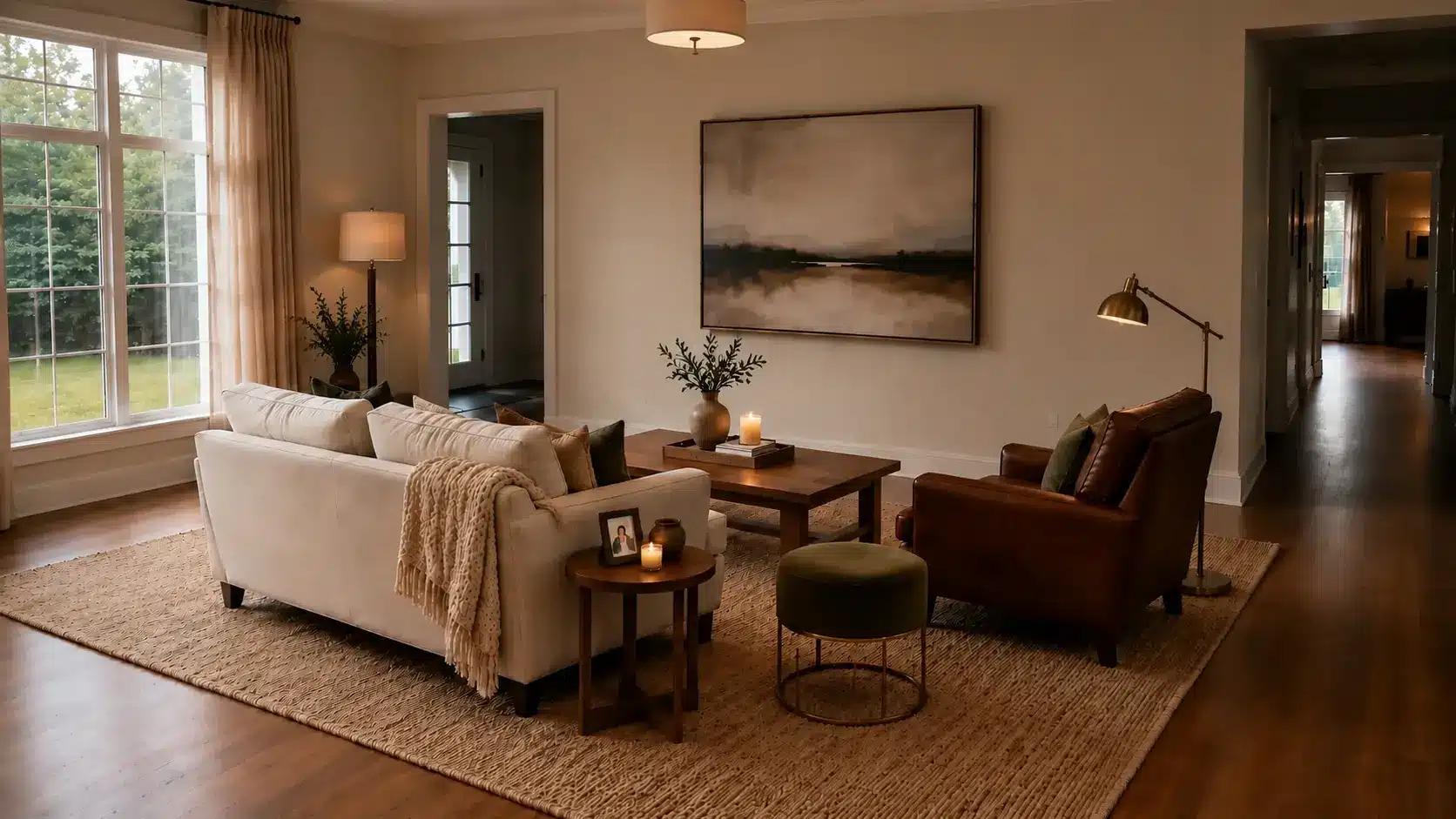
One ceiling light floods the whole room with flat, uniform light. That kills shadow variation, which is exactly what makes a room feel warm and dimensional.
Take it away and even the best-decorated room feels like a waiting room.
The fix is three types of light:
- Ambient: your overhead, turned down low. The base, not the star.
- Task: a reading lamp next to a seat, pointed down. Purely functional.
- Accent: floor lamps and table lamps in corners and along walls. This is the layer that does the actual design work. This is where warmth comes from.
One rule that matters more than people realize: keep all bulbs in the same color temperature. Warm is 2700–3000K. Cool is 4000K and above.
Mix them and the room looks fragmented even if everything else is perfect. Pick warm, stay warm, throughout.
Ideas to Decorate Your Living Room
You don’t need to overhaul your entire room to see a real difference. These ideas are small, practical, and something you can act on right now no furniture store required.
1. Swap Your Bulbs to Warm White Today
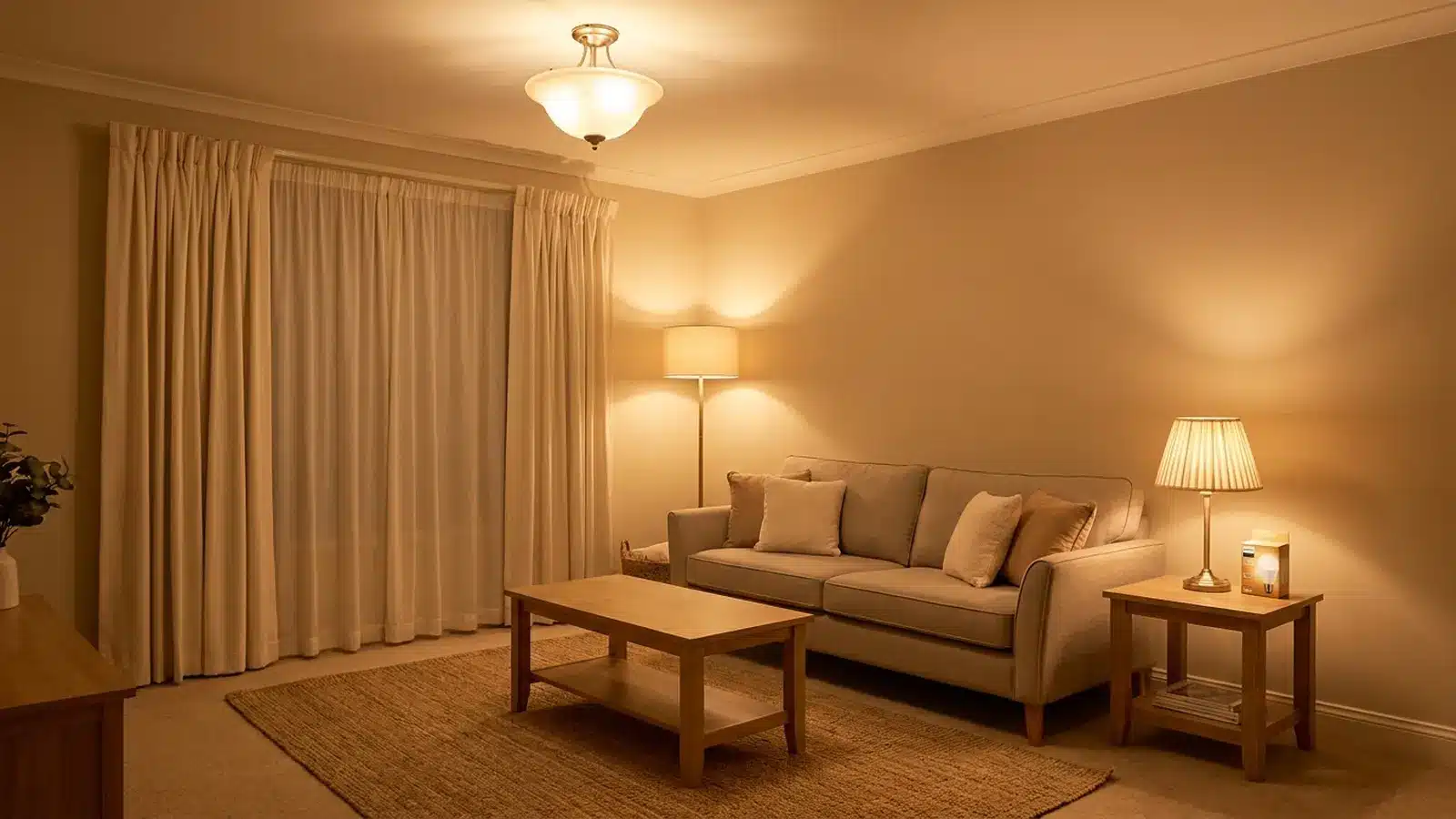
This is the fastest, cheapest upgrade in decorating. Go to any hardware store and replace every bulb in your living room with warm white bulbs in the 2700–3000K range.
If you currently have cool or daylight bulbs in there, the difference will be immediate. The room will feel warmer, softer, and more intentional without moving a single piece of furniture.
2. Put a Floor Plant in Your Deadest Corner
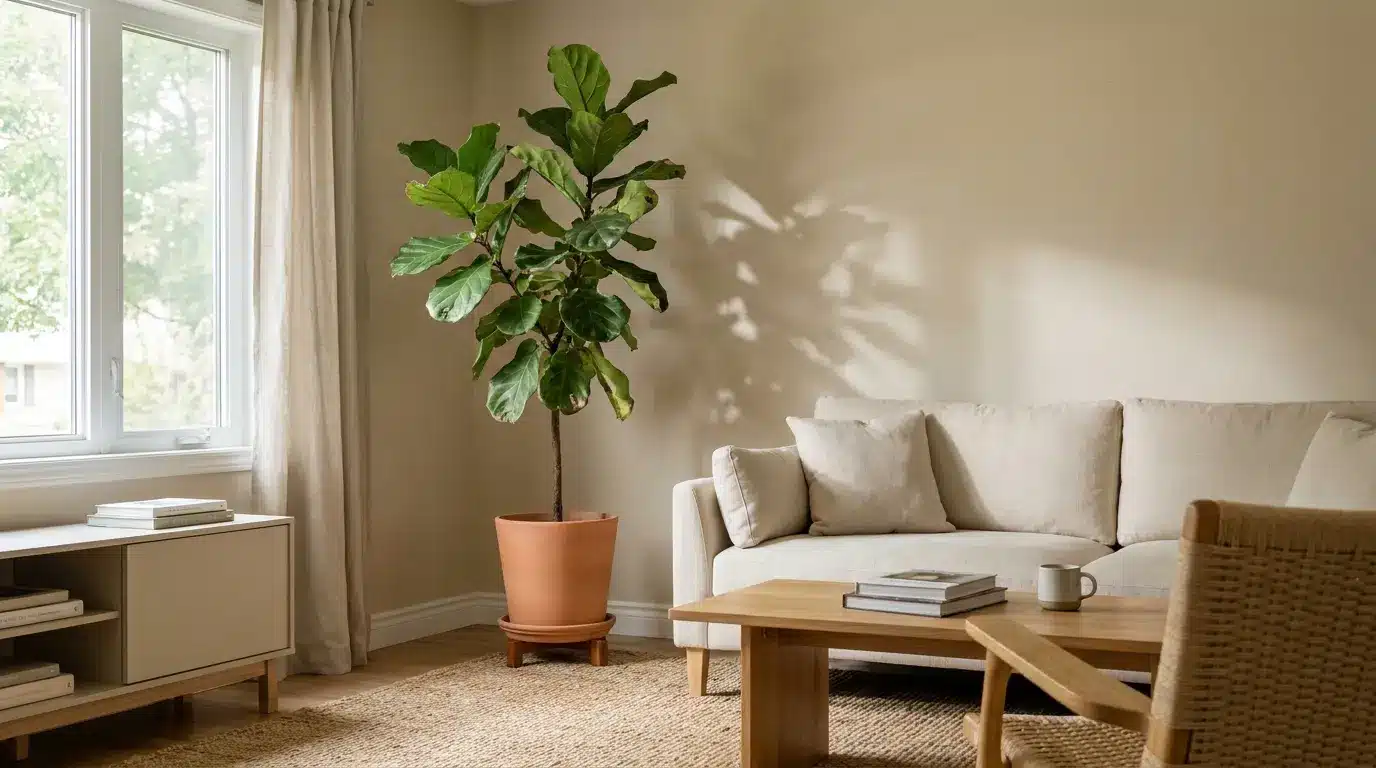
Every living room has one: a corner that feels empty, but you’re not sure what to put there. A tall floor plant- a fiddle-leaf fig, a monstera, a pot of hoya on a stand fills vertical space in a way no furniture or decor item does.
It also brings the room to life in a way that’s hard to fake with anything else.
3. Rearrange Your Furniture Toward a Focal Point
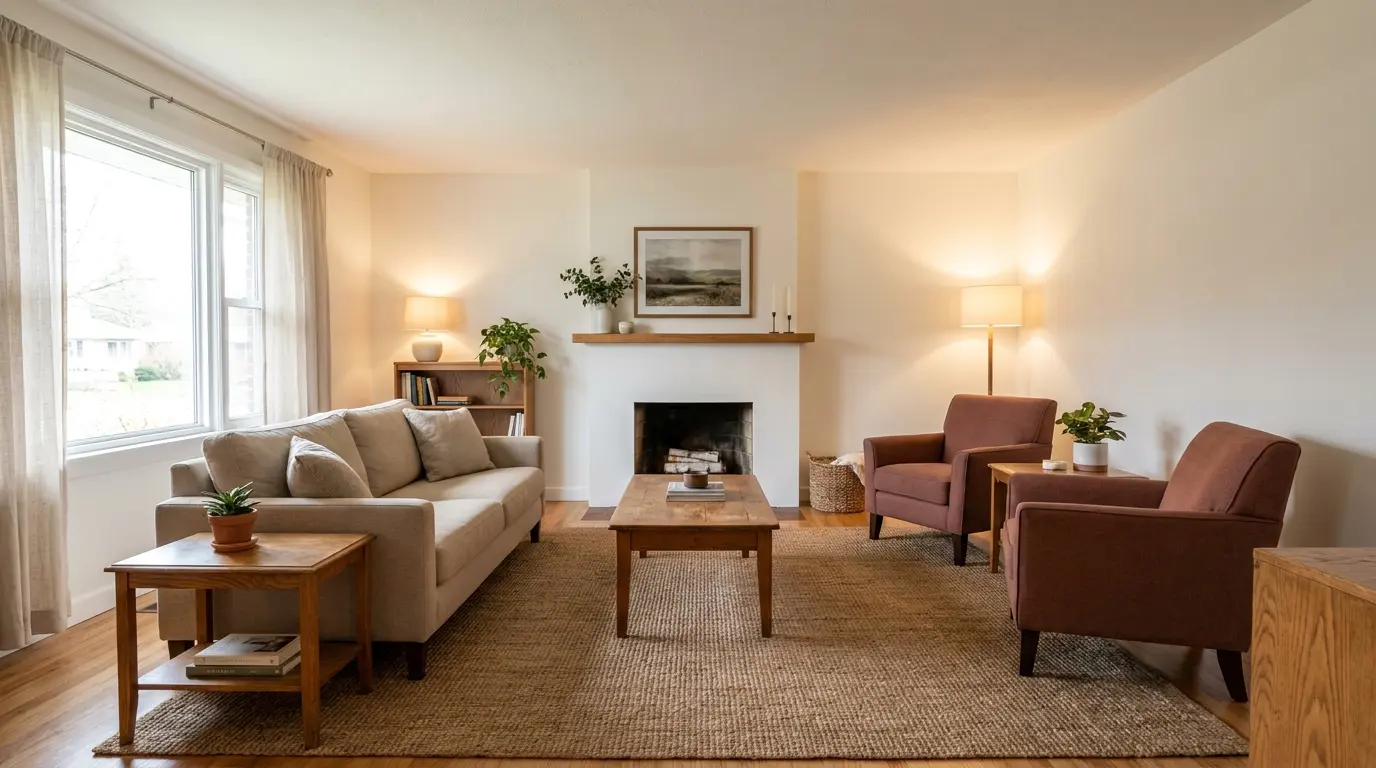
You don’t need new furniture to fix a layout. Pull everything away from the walls slightly and angle your seating toward one clear anchor: your TV, a fireplace, a large window.
Furniture pushed flat against every wall makes a room feel like a waiting room. Even a few inches off the wall and a deliberate orientation makes an immediate difference.
4. Layer a Throw Diagonally over One Sofa Arm
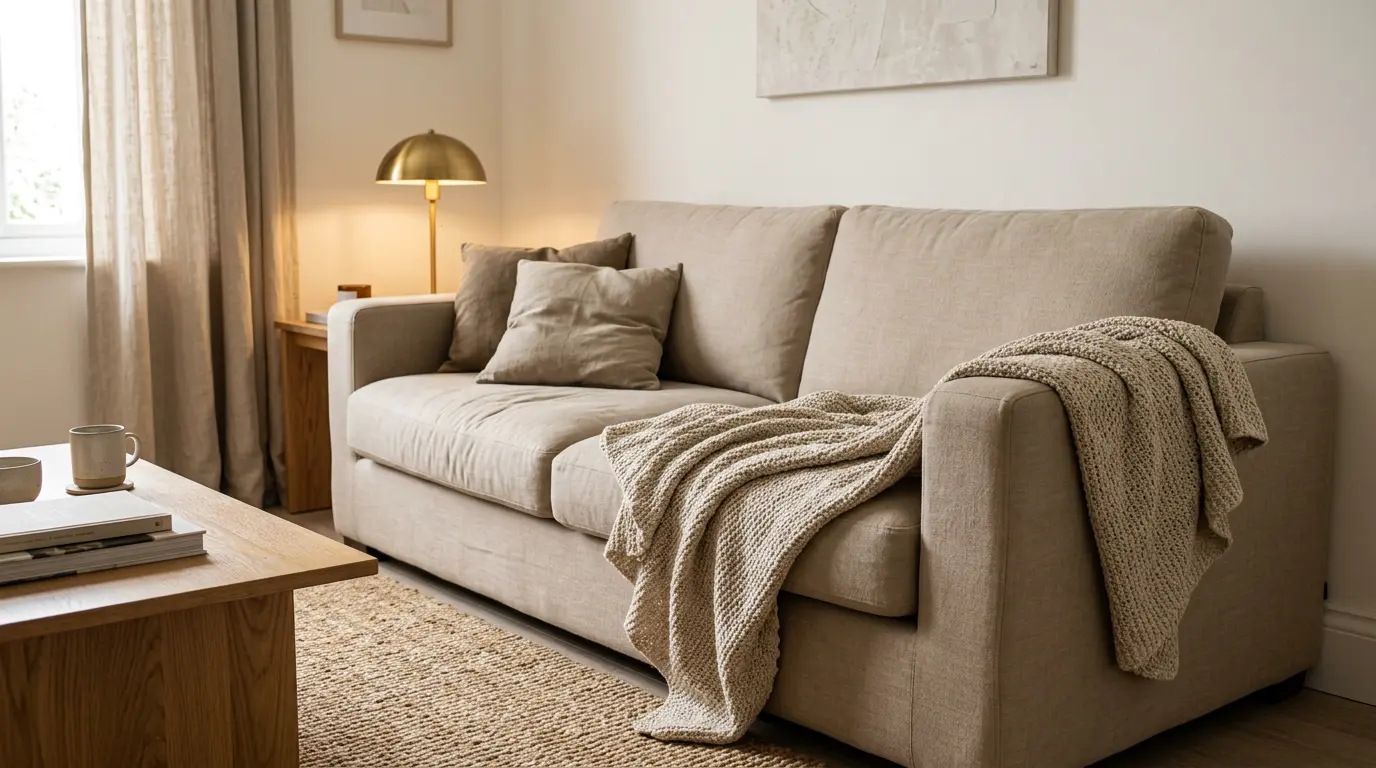
Not folded neatly. Not draped symmetrically across the back. Diagonally over one arm, slightly casual, like someone just got up.
It sounds small, but a throw styled this way adds texture and warmth in a way that a perfectly folded one never does. Chunky knit or linen works best.
5. Add a Tray to Your Coffee Table
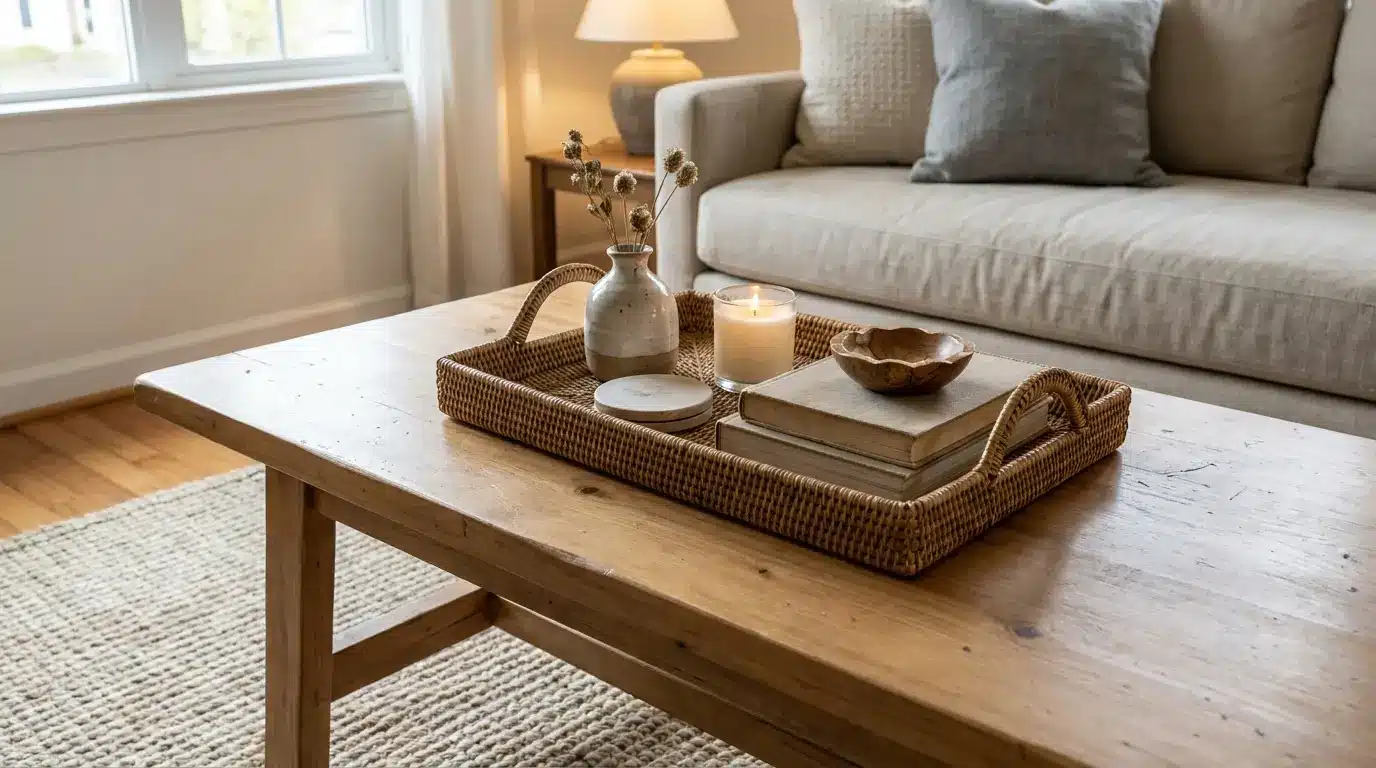
If your coffee table currently has a few random objects scattered across it, a tray fixes it instantly. Group those objects inside the tray and the surface goes from cluttered to curated.
A tray creates a contained zone that tells the eye “this is intentional.” Woven, wooden, or lacquered all work pick whichever fits your room’s texture mix.
A tray in the 12×16 inch range usually holds a candle, a small stack of books, and one object of interest without crowding the surface.
6. Swap a Gallery of Small Frames for One Large Piece
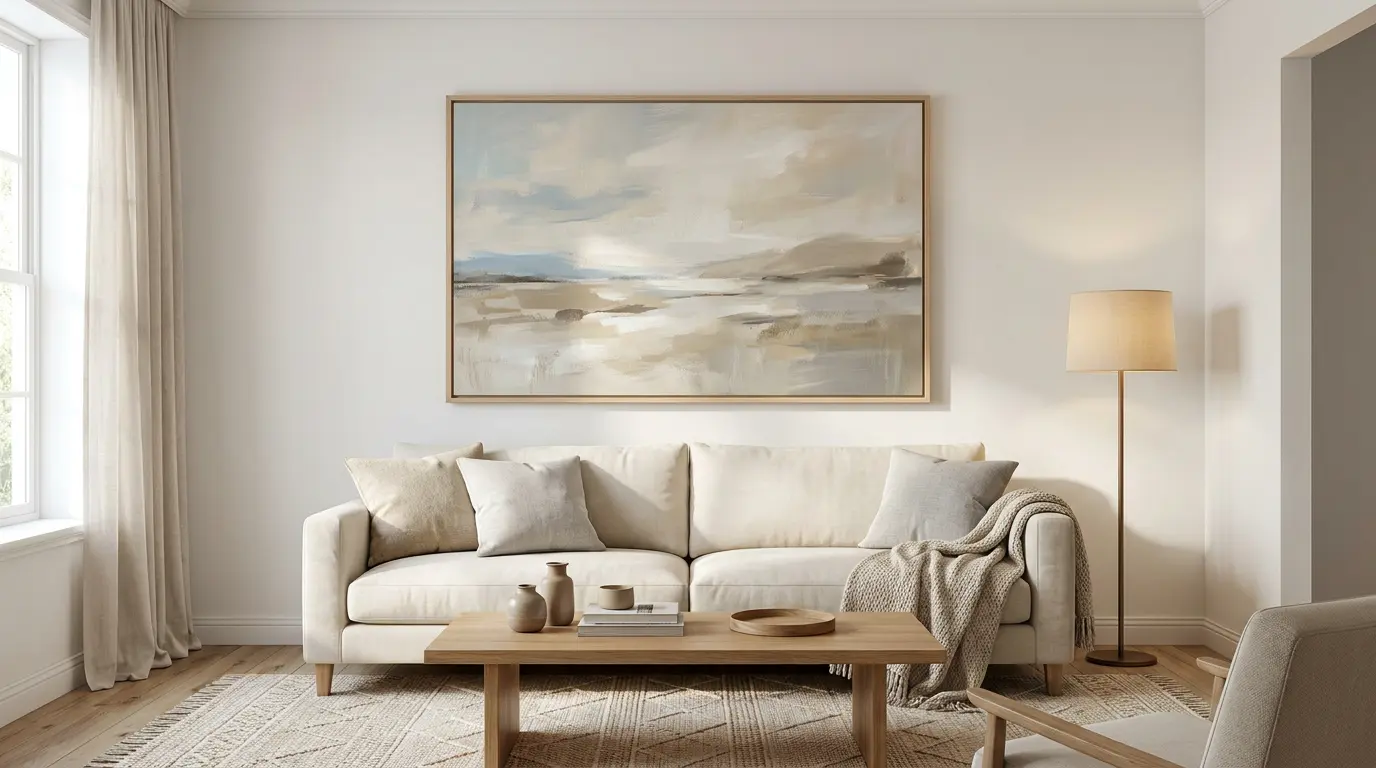
If you have several small frames clustered on a wall and the arrangement never quite looks right, take them down and replace them with a single large piece of art or a large mirror.
The same logic applies over a bed, too, where a well-placed mirror can either make a small room feel bigger or work against it depending on placement.
One oversized piece almost always reads better than five small ones fighting for the same wall. Scale is the thing most people underestimate in art choices.
7. Add One Black Accent Anywhere in the Room
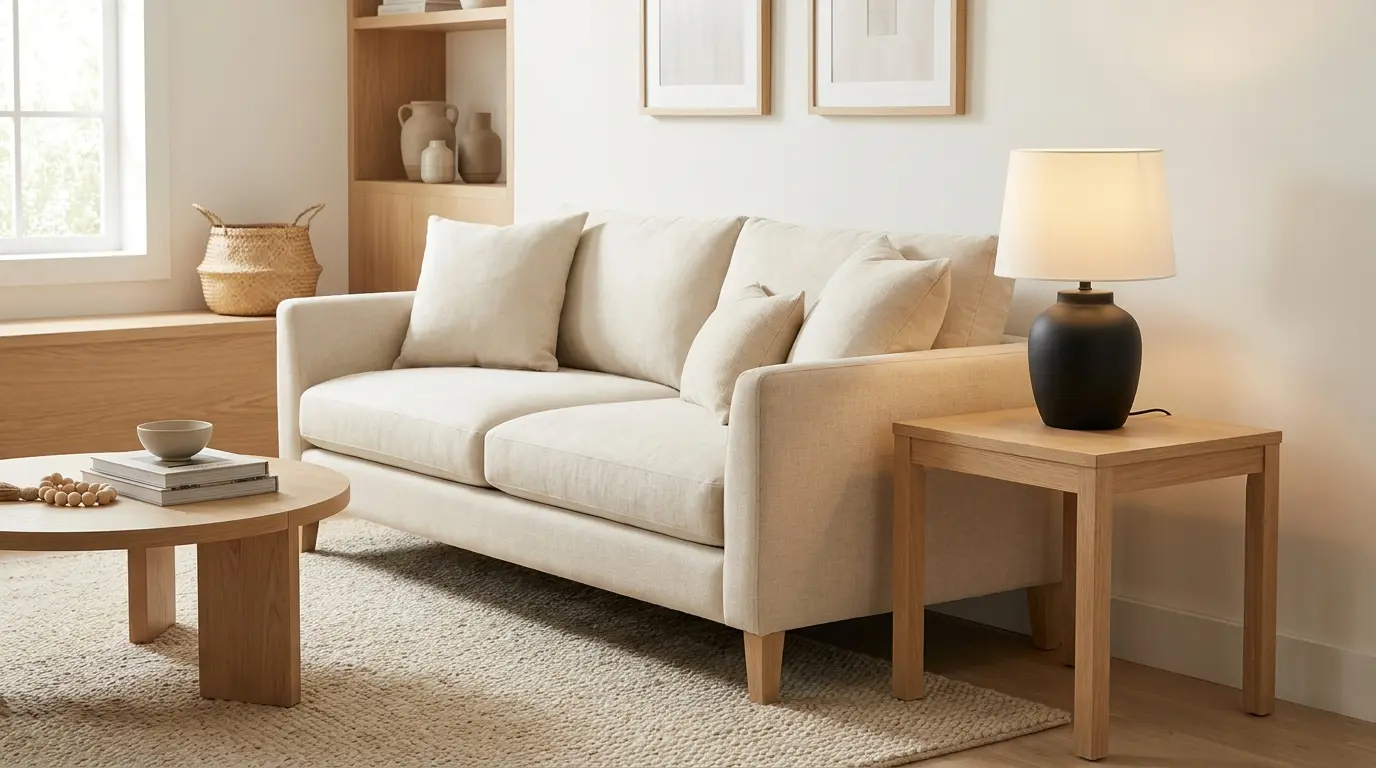
A matte black lamp base. A black picture frame. A dark throw pillow. It doesn’t need to be large or obvious. Black grounds every other color around it and makes the whole palette look more deliberate.
For a more dramatic take on the same principle, this look at white walls paired with bold black trim shows how far the contrast can be pushed when you want it to be the statement rather than a small accent.
Interior designers use this trick constantly, and it works in every style of room, from minimal to maximalist.
8. Replace One Matching Pillow Set with Two Different Textures
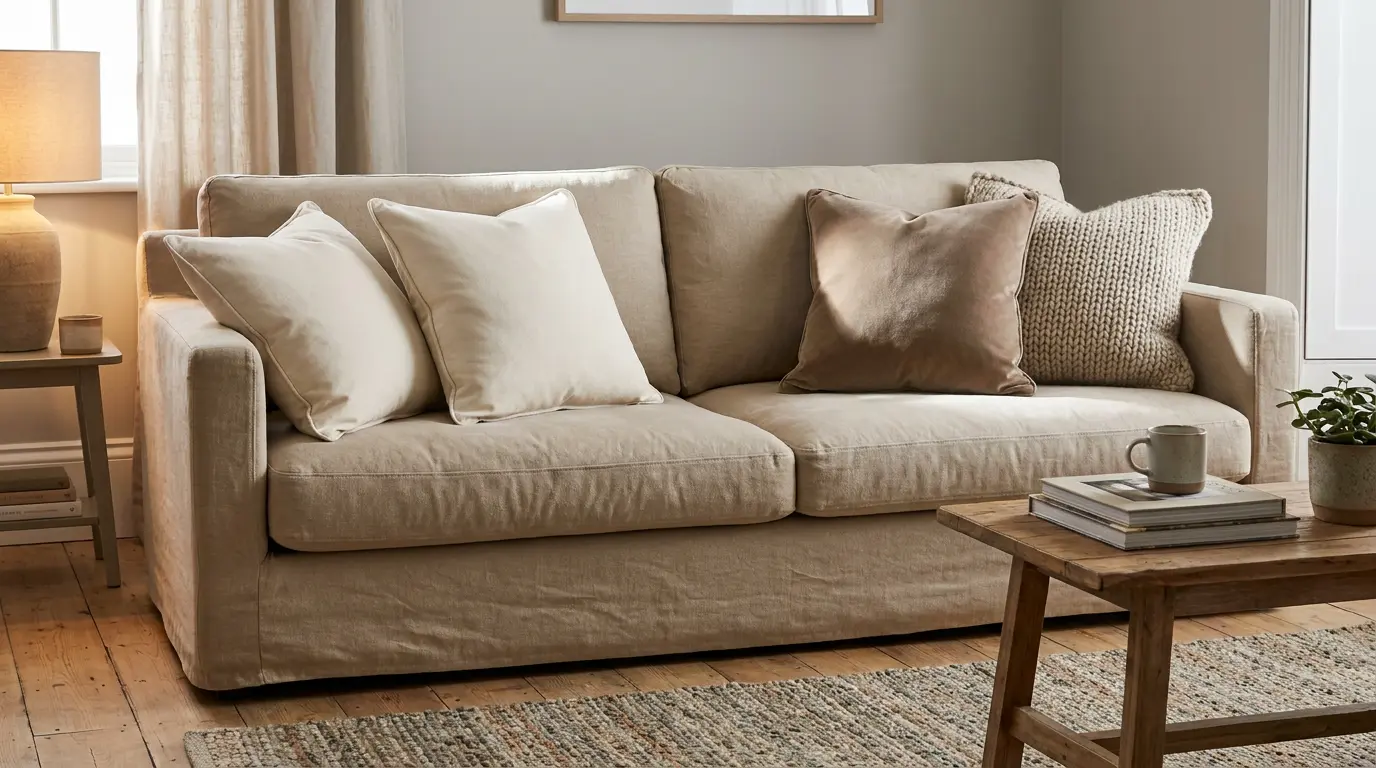
If your sofa currently has a set of four identical throw pillows, pull two of them off and replace them with something in a different texture or tone.
A velvet pillow next to a linen one. A chunky knit next to a smooth cotton. The contrast is what makes a sofa look styled rather than straight off the shop floor.
9. Move a Lamp from a Bright Spot to a Dark Corner
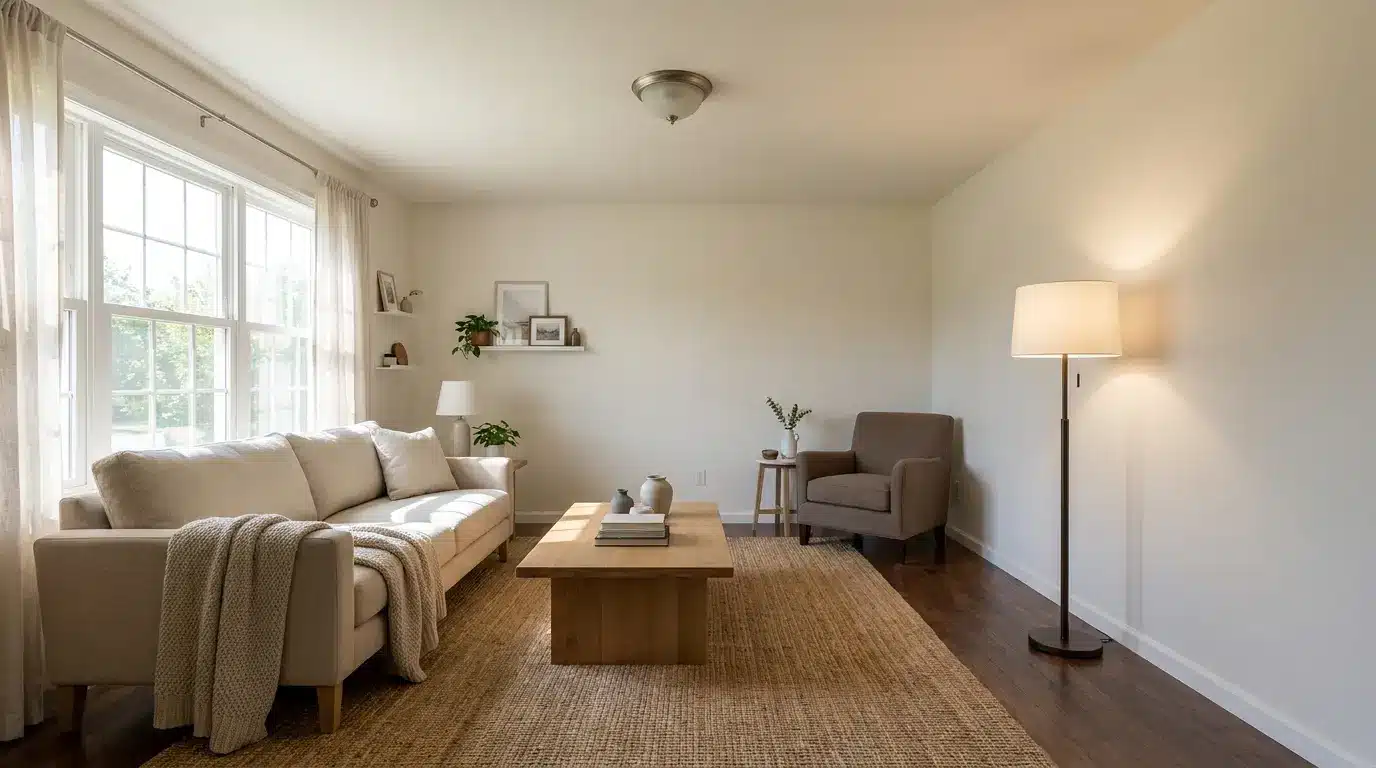
Most people put lamps where there’s already decent light. That’s backward.
A lamp’s job is to fill the dark areas of the room the corners, the wall stretches that overhead light doesn’t reach.
Pick up any lamp in your room that sits next to a window or under a ceiling light and move it to the darkest corner instead. The room will immediately feel more balanced.
Common Mistakes That Make a Living Room Feel Off
Even when you follow the steps, a few things slip through. These are the ones worth catching early.
- Rug that’s too small: Breaks the seating apart; everything floats. Fix: When unsure on sizing, always go bigger.
- Matching furniture sets: Room reads like a display, not a home. Fix: Share scale and repeat one element across pieces.
- One overhead light source: Flat light washes out even the best furniture. Fix: Add at least two more sources at different heights.
- Too many small accessories: Five small objects read as clutter. Fix: Swap for one or two larger statement pieces instead.
- Skipping the sequence: Every later decision is made without the right foundation. Fix: Start with a focal point, build outward from there.
Conclusion
Now that you know how to decorate a living room, the process should feel less random and more manageable.
The best rooms usually start with strong basics: a clear focal point, a smart layout, the right rug size, mixed furniture, warm texture, and layered lighting.
I would not rush to buy every piece at once. Live with the room, test small changes, and let your habits guide the final details. A living room should look good, but it should also feel easy to use every day.
Which decorating step feels hardest for your space right now? Tell us, share with us in the comments below.
Frequently Asked Questions
What is the 3-5-7 rule in decorating?
The 3-5-7 rule means arranging decor in odd-numbered groups. Odd numbers feel more natural and livelier to the eye than even ones. You group objects in threes, fives, or sevens. Mix their heights and sizes so the cluster looks balanced, not stiff or perfectly symmetrical.
How big should a living room rug be?
Big enough that at least the front legs of every seat rest on it, and ideally all four. A too-small rug is the most common decorating mistake, and it makes the space feel disconnected. When you’re unsure, size up rather than down. That way the rug anchors the whole seating area.
How do you decorate a living room on a budget?
Get the foundation right first. One large rug and a smart layout do more than many small buys. Add cheap impact through pillows, throws, thrifted accents, and plants.
A $150 to $200 rug and a $40 can of paint usually move the needle more than a single $1,200 statement sofa.
Often, just rearranging what you own around a clear focal point transforms the room for free.
How many light sources should a living room have?
Aim for at least three, covering ambient, task, and accent light instead of one overhead fixture. Sources at different heights create a warm, layered glow and let you shift the mood. Keep the bulb color consistent across them so the room feels cohesive, not disjointed.