

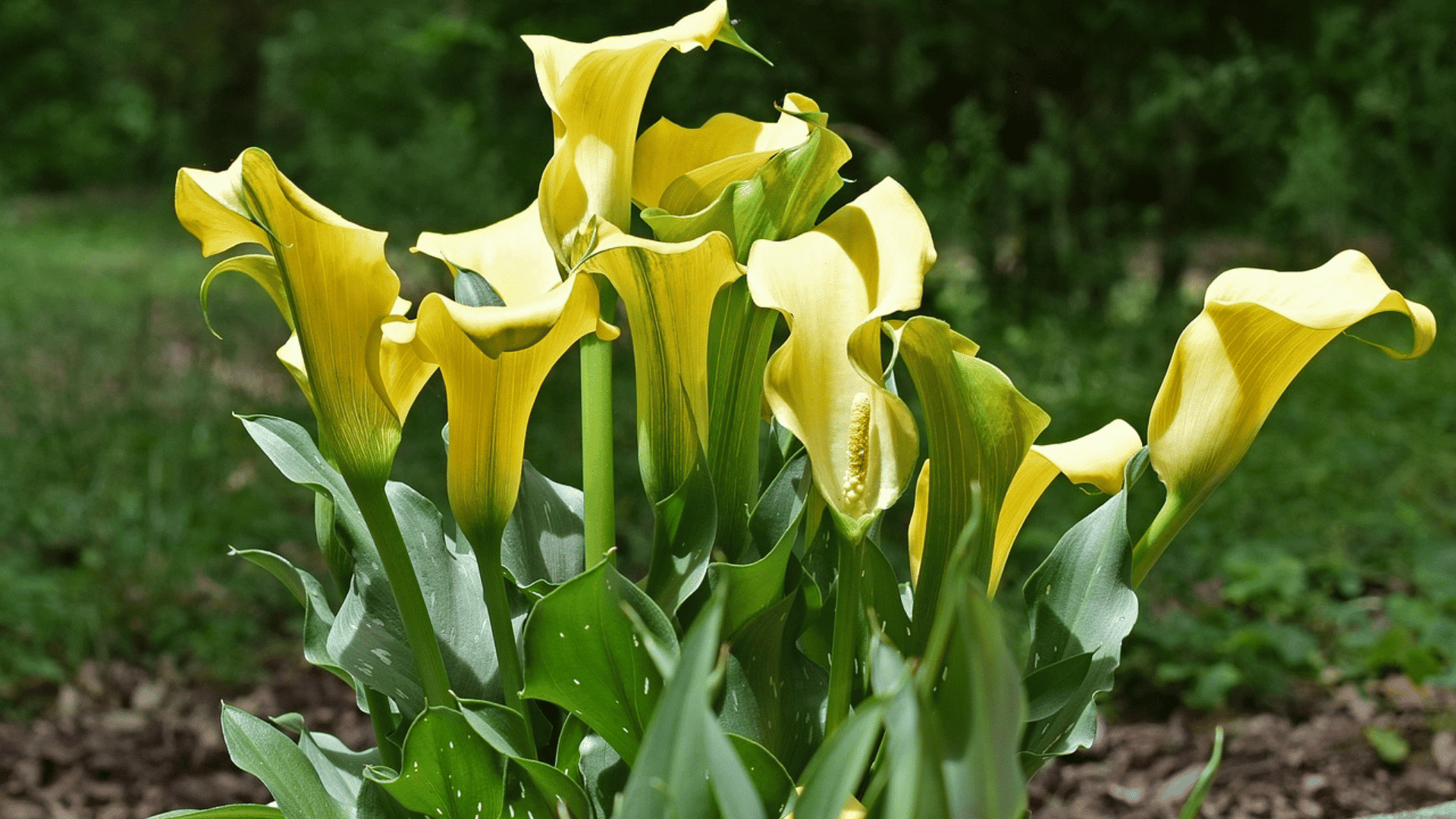
Calla lily care often confuses gardeners at first because the plant looks delicate but follows a clear seasonal rhythm once its needs are understood.
With steady watering, bright indirect light, and well-draining soil, it develops strong roots and produces reliable blooms.
These plants grow from rhizomes that shift between active growth and rest phases depending on temperature and moisture levels.
They adapt well to both containers and garden beds when placed in suitable conditions.
Learning these basic requirements helps support healthy foliage, stronger root systems, and consistent flower production across different climates, spaces, and growing seasons throughout the year.
Quick Answer: How to Care for a Calla Lily?
Calla lily care involves keeping soil evenly moist without waterlogging, placing the plant in bright indirect light, and using well-draining soil to support healthy rhizomes.
Maintain moderate temperatures for steady growth and reduce watering during dormancy. Feed lightly during active growth to encourage better blooms.
In warm regions, plants regrow each year, whereas in colder areas, rhizomes need to be lifted and stored before frost.
Proper care ensures strong leaves, healthy roots, and consistent seasonal flowering in containers and gardens.
Ideal Environment Setup for Calla Lily Care
Healthy growth depends on stable light, soil, temperature, and surrounding conditions that support strong roots and steady flowering.
- Light Conditions for Strong Plant Growth: Bright indirect light supports steady leaf and flower development. Too much direct heat reduces flower quality.
- Soil Type and Drainage Needs: Loose soil structure helps roots expand easily. Good drainage prevents root damage. Organic matter improves nutrient availability.
- Temperature Requirements for Healthy Growth: Moderate warmth supports active growth. Cold conditions slow down development.
- Air Circulation Needs: Good airflow around the plant reduces fungal growth and helps keep foliage healthy in humid conditions.
- Humidity Balance: Moderate humidity supports leaf freshness, while overly dry air can slow down growth and affect bloom quality.
Key Calla Lily Care Practices for Healthy Growth
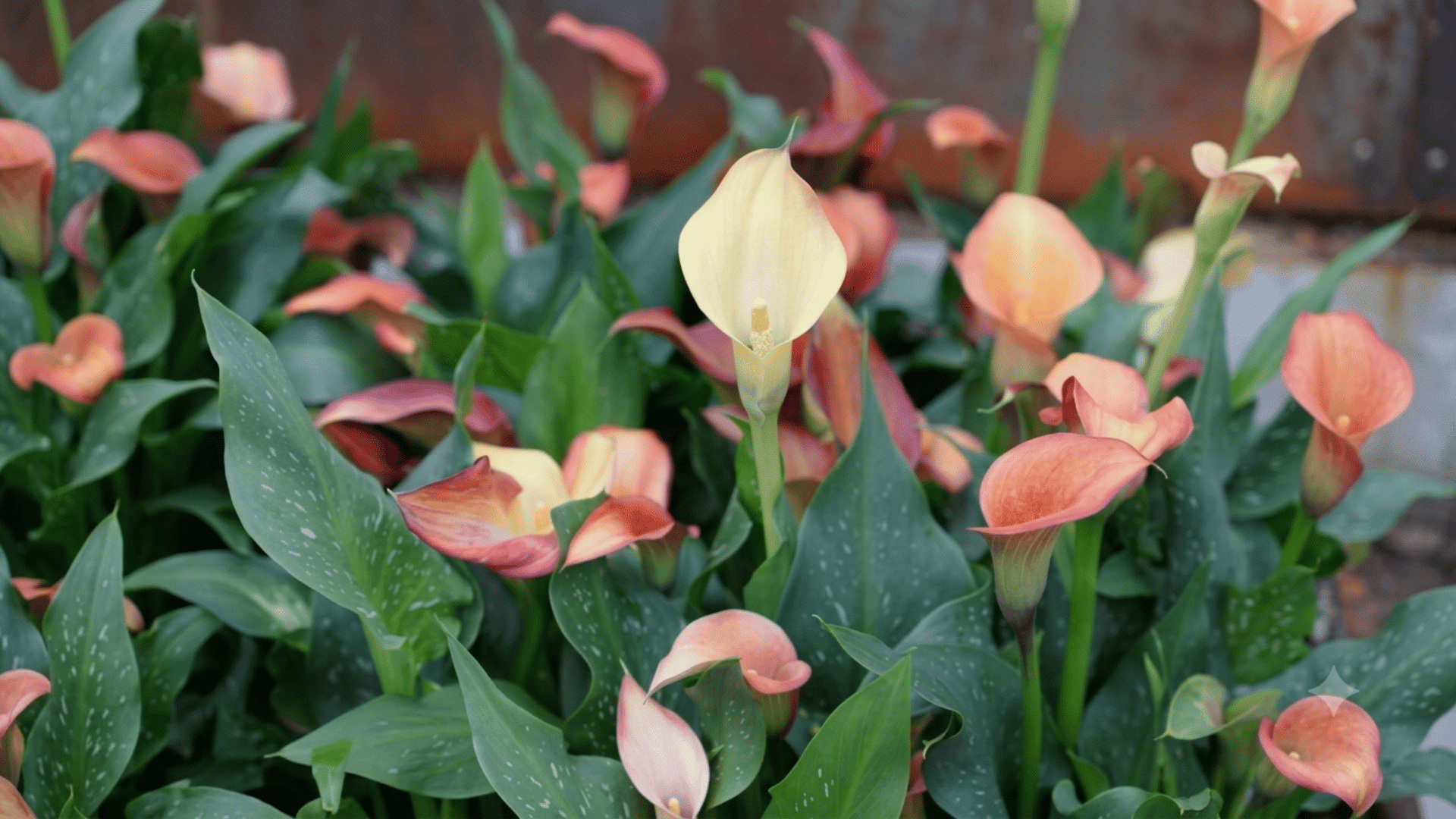
Calla lilies grow best when planting, feeding, maintenance, indoor care, and outdoor conditions are managed with consistent attention to soil, light, and moisture balance.
1. Planting Calla Lily Rhizomes Correctly
Plant calla lily rhizomes in spring, when the soil warms, to support active growth and strong root development. Place them at a shallow depth so shoots can emerge easily.
Without resistance, maintain spacing between rhizomes to improve airflow and reduce disease risk.
Use loose, well-draining soil to prevent water accumulation.
After planting, water lightly to settle the soil while avoiding oversaturation that can slow early development and weaken root establishment during the initial growth stage.
2. Fertilizing for Better Blooms
Balanced fertilizing supports steady growth and improves flower production in calla lilies during active development stages. Apply nutrients when leaves and stems are forming to strengthen.
The plant’s overall structure. Use mild fertilizer to avoid stress on roots and foliage.
Avoid feeding during dormancy since rhizomes are inactive and cannot absorb nutrients.
Overfeeding can reduce bloom quality, while controlled feeding improves stem strength, leaf health, and consistent flowering performance throughout the growing season.
3. Routine Maintenance Practices
Regular maintenance supports healthy growth and reduces issues related to pests, soil imbalance, and plant stress. Remove dried leaves to maintain cleanliness.
Improve airflow near the base. Check soil weekly to ensure proper moisture levels without waterlogging.
Clear debris from the planting area to reduce the risk of fungal disease.
And pest activity. Monitor plants for early signs of stress to enable quick corrective action that supports stable growth, stronger foliage, and better flowering across seasons.
4. Choosing the Right Pot and Placement
Select containers with drainage holes to prevent excess water accumulation and root damage over time. Place plants near bright natural light sources to support steady growth and flower formation.
Avoid dark corners where limited light weakens plant development and reduces blooming potential. Ensure sufficient airflow around foliage to minimize humidity buildup.
Keep pots on stable surfaces to prevent tipping and root disturbance during watering and routine indoor plant care activities.
5. Managing Indoor Watering Conditions
Indoor watering requires careful balance, as soil retains moisture longer, increasing the risk of overwatering. Test the soil before watering to ensure the top layer has begun to dry slightly.
Prevent excess moisture buildup that can lead to root rot and slow plant growth.
Adjust watering frequency based on seasonal temperature changes and indoor conditions.
Ensure proper drainage so excess water flows out easily, keeping roots oxygenated and supporting long-term plant health and stability.
6. Selecting the Right Garden Location
Choose partially shaded garden areas that protect calla lilies from harsh afternoon sun while providing sufficient light for steady growth.
Avoid low-lying zones where water collects, as it can damage rhizomes. Raised beds improve drainage and help maintain balanced soil conditions.
Proper site selection supports. Stronger root systems, healthier foliage, and consistent flowering performance.
A well-prepared garden location ensures better plant adaptation across changing weather and seasonal conditions.
What Reddit Users Say on Calla Lily Overwintering Care?
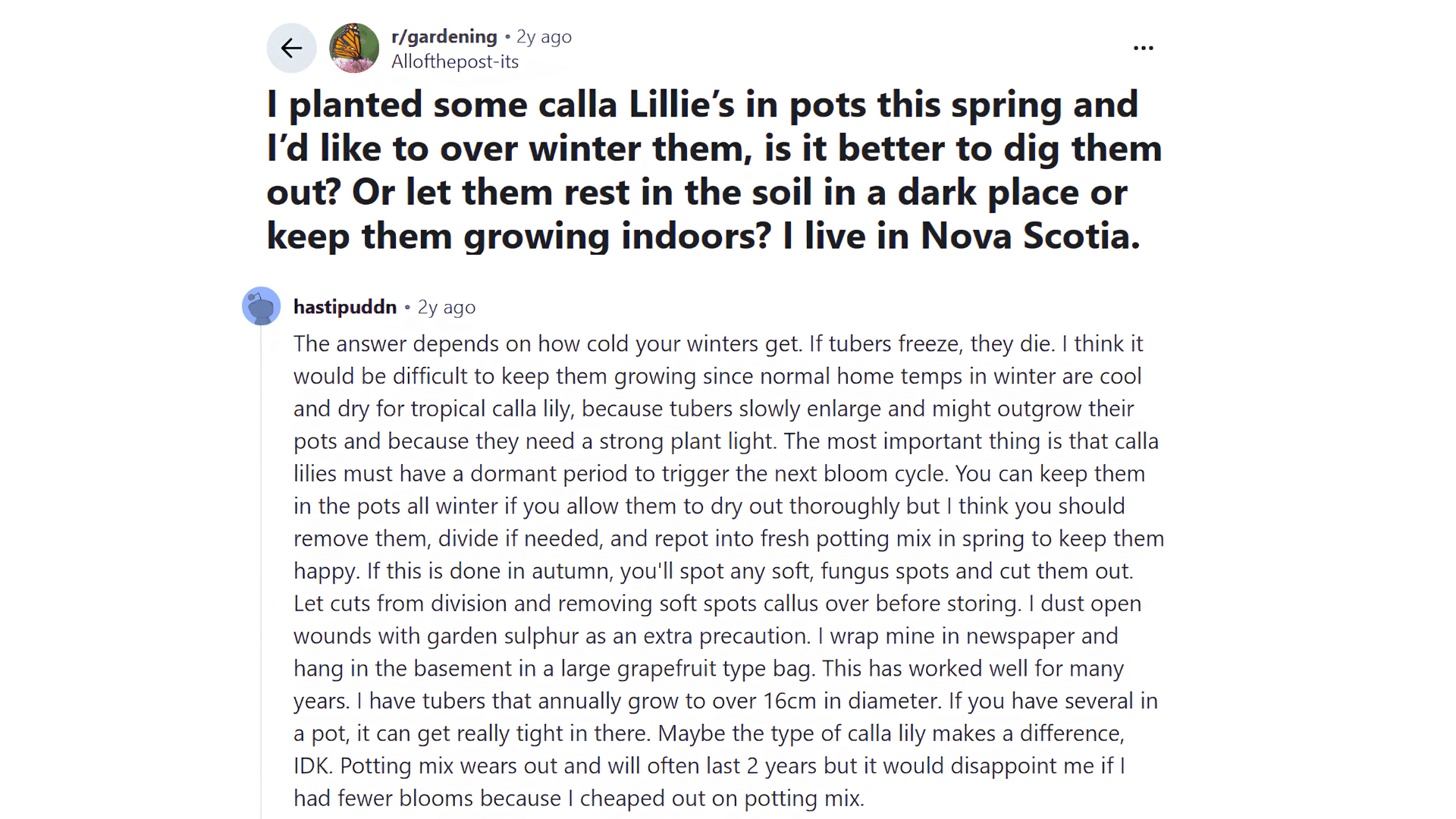
Reddit discussion on calla lily care shows how growers handle seasonal changes and overwintering challenges across different climates.
A gardener from Nova Scotia asked whether potted calla lilies should be dug up, left dormant in soil, or grown indoors during winter, highlighting common confusion about plant survival.
Community feedback suggests that calla lilies are naturally perennial, but their growth varies by climate.
In colder regions, freezing temperatures can damage rhizomes, so lifting and storing them or keeping them indoors becomes necessary.
Some gardeners suggest controlled dormancy in cool, dry storage, while others report indoor flowering when conditions remain stable, confirming flexible care approaches.
Calla Lily Flowering Care Instructions
Calla lilies produce blooms when growing conditions remain stable, and proper care during and after flowering improves plant strength and future bloom cycles.
| Care Stage | Key Point | Explanation |
|---|---|---|
| Flowering period | Stable warm-season growth | Flowers appear when temperatures stay warm and consistent without sudden changes. |
| Flowering timing | Climate and planting impact | Blooming depends on when rhizomes are planted and local weather conditions. |
| Light support | Consistent light exposure | Steady indirect light helps strengthen buds and improves flower formation. |
| Nutrition balance | Soil nutrient control | Proper feeding during growth supports healthier and longer-lasting blooms. |
| Post-bloom care | Remove spent flowers | Cutting faded blooms helps redirect plant energy back to rhizome development. |
| Leaf and recovery phase | Natural foliage fade support | Leaves should remain until they fade naturally to strengthen the next growth cycle. |
Are Calla Lilies Toxic to Pets and Children?
Yes, calla lilies are toxic to both pets and people if any part of the plant is chewed or swallowed. They contain insoluble calcium oxalate crystals, which can cause immediate irritation in the mouth and throat.
In dogs and cats, chewing calla lilies may lead to drooling, pawing at the mouth, vomiting, and difficulty swallowing.
People, especially young children, can experience similar symptoms, including a burning sensation, mouth pain, and swelling of the lips or tongue.
Severe poisoning is uncommon, but irritation can be uncomfortable and may require medical or veterinary attention.
To reduce the risk, keep calla lilies out of reach of curious pets and children. If exposure occurs or symptoms are severe, contact a healthcare provider, poison center, or veterinarian promptly.
Common Problems in Calla Lily Care
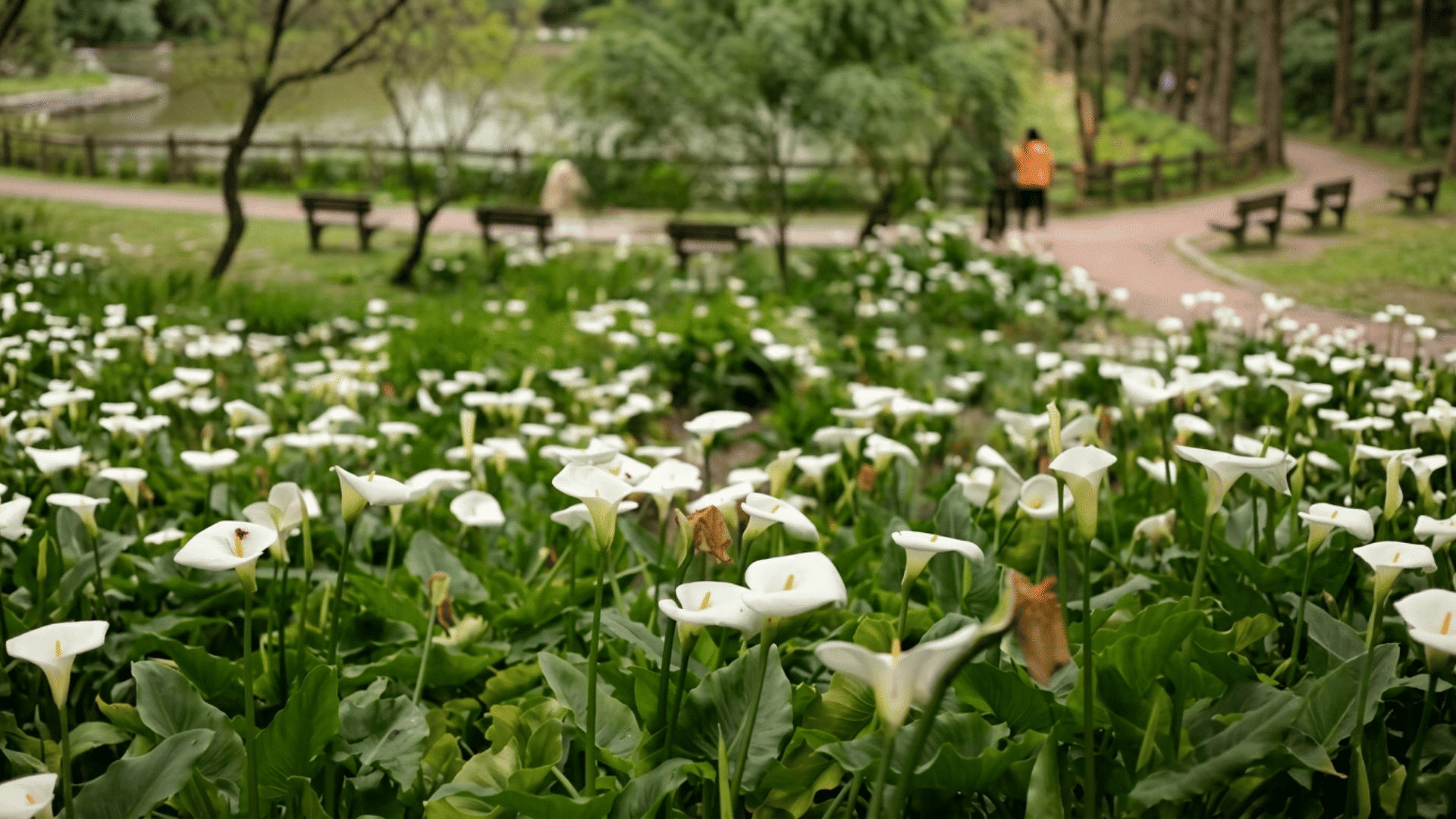
Calla lilies may face growth, flowering, and health issues due to watering, light, soil conditions, or natural seasonal changes.
- Yellowing Leaves: Caused by excess water or poor drainage that weakens roots, or it may occur naturally as leaves age and complete their life cycle.
- Weak or No Flowers: Results from insufficient light exposure or insufficient soil nutrients for proper bud formation and bloom strength.
- Root Damage Issues: They develop when soil stays overly wet or when pots and beds lack proper drainage, leading to root decay.
- Pest and Fungal Concerns: Damp soil encourages fungal growth, while small insects may appear on leaves; early treatment helps control spread.
- Dormancy Confusion: The plant may appear inactive after flowering, but rhizomes stay alive underground, storing energy for the next cycle.
- Growth Slowdown Misinterpretation: Seasonal resting phases can be mistaken for plant death, but normal growth resumes when conditions improve.
Seasonal Calla Lily Care Routine
Calla lilies follow a yearly cycle of growth, flowering, slowing, and dormancy, and each season requires specific care to keep plants healthy.
| Season Phase | Key Point | Explanation |
|---|---|---|
| Spring growth | New rhizome activity begins | Fresh shoots emerge from rhizomes as temperatures rise, making this the best time to plant or divide plants. |
| Spring planting | Ideal propagation period | Soil conditions support strong root development and early plant establishment. |
| Summer growth | Peak flowering stage | Plants show active growth, with flowers forming, and require consistent watering. |
| Summer care | Regular moisture support | Soil should stay evenly moist to maintain healthy blooms and foliage. |
| Autumn transition | Natural growth slowdown | Plant activity gradually decreases as temperatures drop. |
| Winter dormancy | Rest and protection phase | Rhizomes enter dormancy and must be protected from frost in colder regions. |
Propagation and Long-Term Calla Lily Care
Calla lily propagation supports healthy plant expansion and helps maintain strong flowering cycles over time when done with proper rhizome handling and care.
- Rhizome Division: Mature calla lily plants are propagated by dividing the rhizome into smaller sections, each containing at least one healthy growth point for new plant development.
- Planting Method: Divided rhizomes are placed in fresh, well-draining soil to reduce stress and support faster recovery after separation.
- Soil Moisture Control: After planting, the soil should be kept lightly moist to encourage root formation while preventing rot from excess water.
- Early Growth Focus: Newly propagated plants prioritize root establishment and foliage development before producing flowers.
- Establishment Period: Plants require one full growing cycle to adjust properly, with flowering often appearing in the following season.
Conclusion
Calla lily care becomes simple once you understand its growth cycle, watering needs, and seasonal behavior.
With balanced light exposure, proper soil drainage, and controlled moisture, these plants develop strong foliage and produce elegant blooms in gardens and containers.
Adjusting care during active growth and dormancy keeps rhizomes healthy and ready for the next season.
Regular attention to planting depth, feeding schedule, and maintenance improves overall flowering performance year after year.
Follow these practices consistently to support long-lasting plant health and better blooms.
Start applying these calla lily care tips today and build a fresh, vibrant floral display in your home or garden space.
Frequently Asked Questions
How Long Do Potted Calla Lilies Last?
Potted calla lilies can last several years with proper watering, dormancy care, and drainage. Healthy rhizomes and balanced conditions support long-term growth and flowering cycles.
Can Calla Lily Be Kept as a Houseplant?
Yes, calla lilies can be grown as houseplants in bright indirect light, stable temperatures, and careful watering to avoid excess moisture and root damage indoors.
Do Calla Lilies Grow Better in Pots or in the Ground?
Calla lilies grow well in pots and ground. Pots allow control of moisture and temperature, while ground planting supports stronger growth in suitable conditions.
Do Calla Lilies Come Back Every Year?
Calla lilies return yearly in warm climates where rhizomes survive underground. In colder regions, rhizomes must be lifted, stored, and replanted for regrowth next season.