

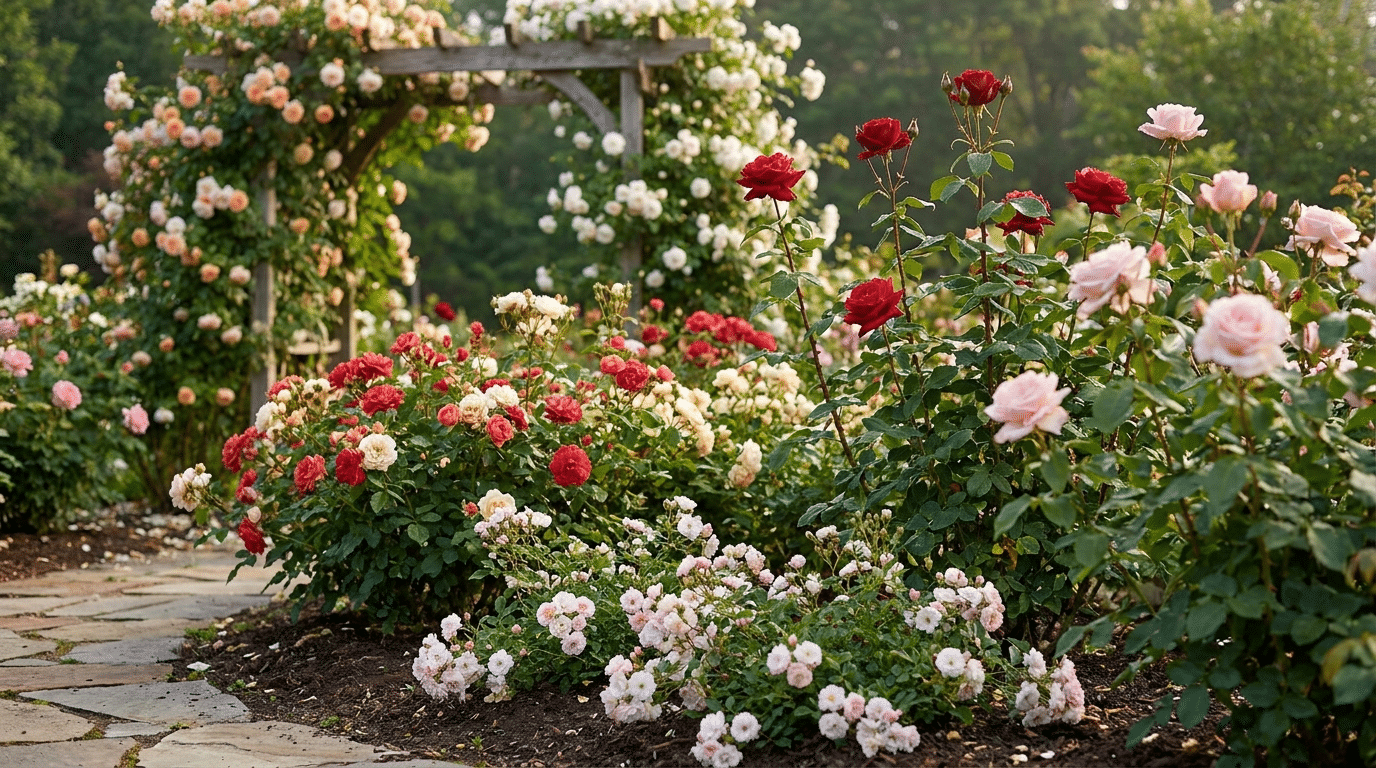
I used to think every rose was pretty much the same until I saw how differently they grew in real gardens.
Some filled fences with flowers, some stayed small in pots, and others produced perfect blooms for cutting. That made me realize that choosing the right rose starts with knowing its type.
The different types of roses each have their own growing habit, flowering pattern, fragrance, and care needs.
Once you understand those differences, picking the right one becomes much easier. A bit of knowledge before planting can help you enjoy healthier plants and more beautiful blooms for years to come.
Understanding the Three Categories of Roses
It’s simpler than it looks, I promise. Every rose belongs to one of three main categories: Wild, Old Garden, or Modern. And no, that has nothing to do with color or size. It’s all about breeding history.
Wild roses grow naturally, without human breeding.
Old Garden roses are the older ones people have been growing for centuries.
Modern roses are the newer, bred kinds. That’s really it.
Now, here’s one thing that saves a lot of confusion. “Type” and “variety” aren’t the same. A type is a whole group of roses that grow in a similar way, like Hybrid Tea or Floribunda.
A variety is one specific plant with its own name inside that group. So the type tells you how a rose actually grows. The variety name alone won’t. Once you know the type, you know what you’re getting.
Different Types of Roses to Know
These rose types span all three parent categories: Wild, Old Garden, and Modern, and each one has something genuinely distinct to offer. Knowing what separates them makes every planting decision easier.
1. Hybrid Tea Roses
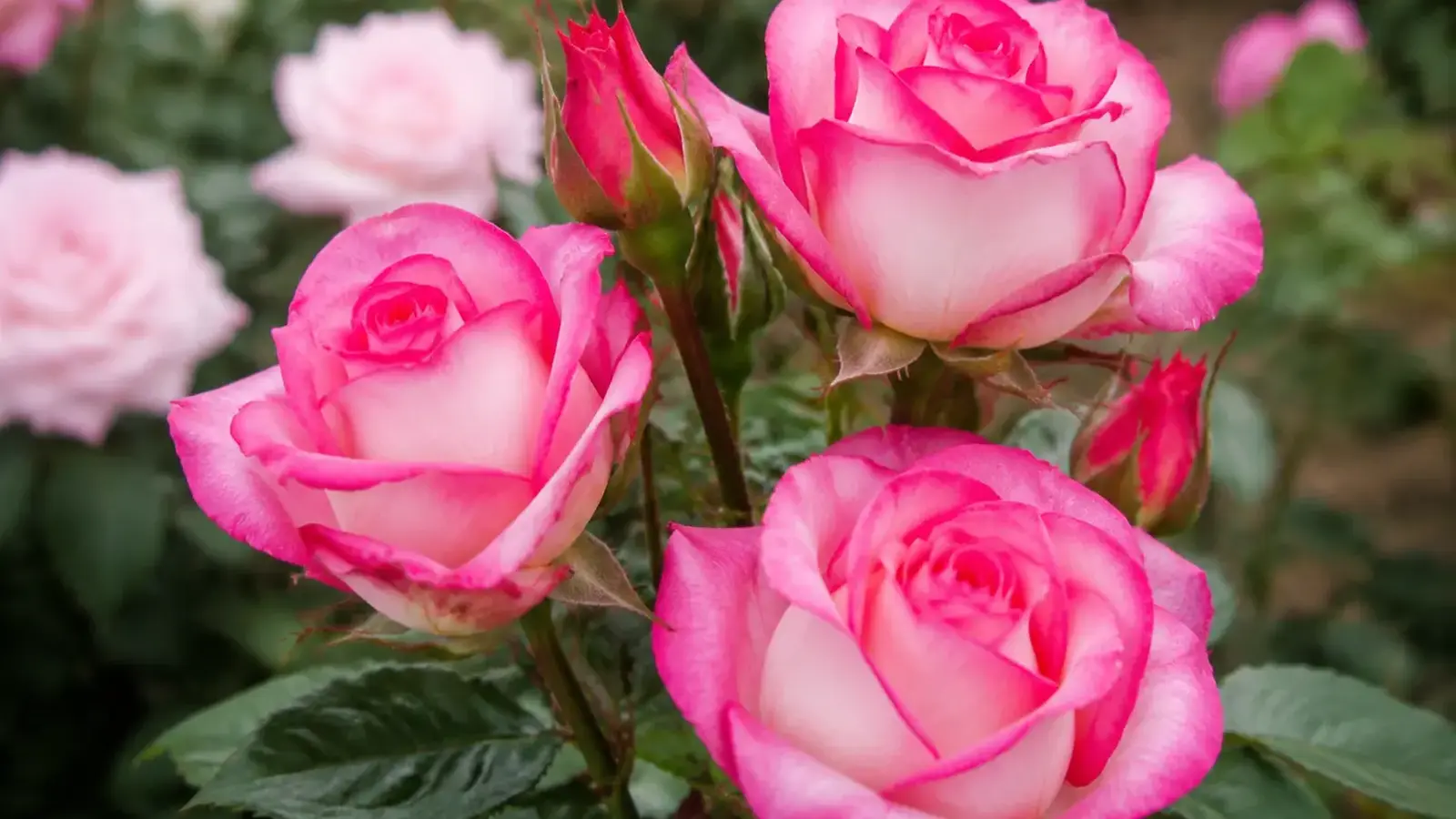
You already know this one, even if the name is new to you. It’s the classic florist rose, one flawless bloom sitting high on each long stem, made for cutting and showing off.
It grows tall and upright, keeps flowering from summer into autumn, and comes in just about every color you can name.
I’ll level with you, though: it’s the fussiest rose here. It wants regular feeding, careful pruning, winter protection in cold spots, and a close watch for black spot, but when it’s happy? Nothing else touches it.
2. Floribunda Roses
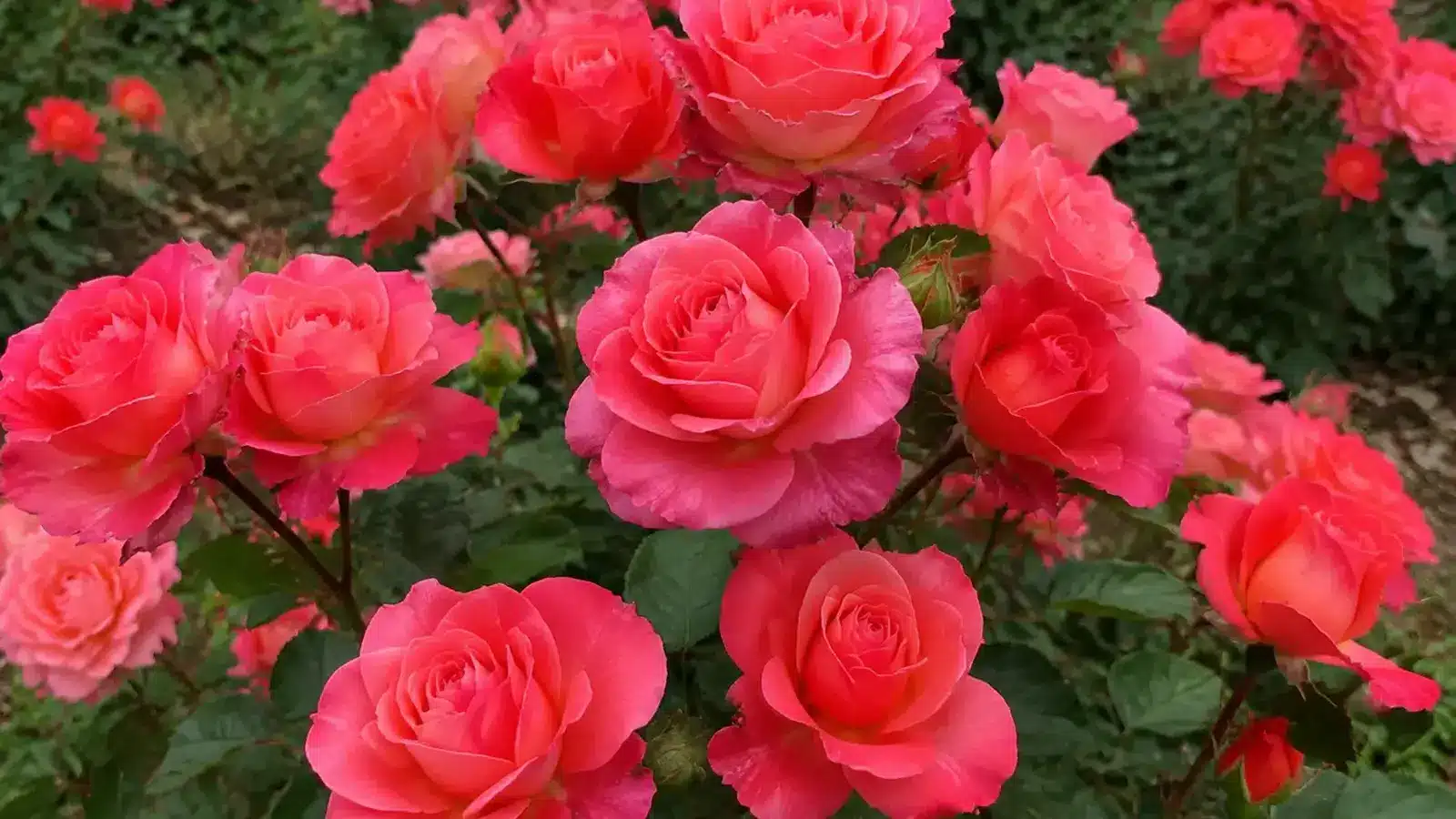
If the Hybrid Tea gives you one perfect flower, the Floribunda hands you a whole bouquet at once.
It came from crossing Hybrid Teas with tough little Polyanthas, and the blooms are smaller, but they just keep coming, late spring right through to frost. The plant stays low, bushy, and holds itself up without help.
Honestly, this is where I’d tell you to start. I’ve forgotten to feed mine and pruned them all wrong, and they kept flowering anyway; it forgives a lot.
3. Grandiflora Roses
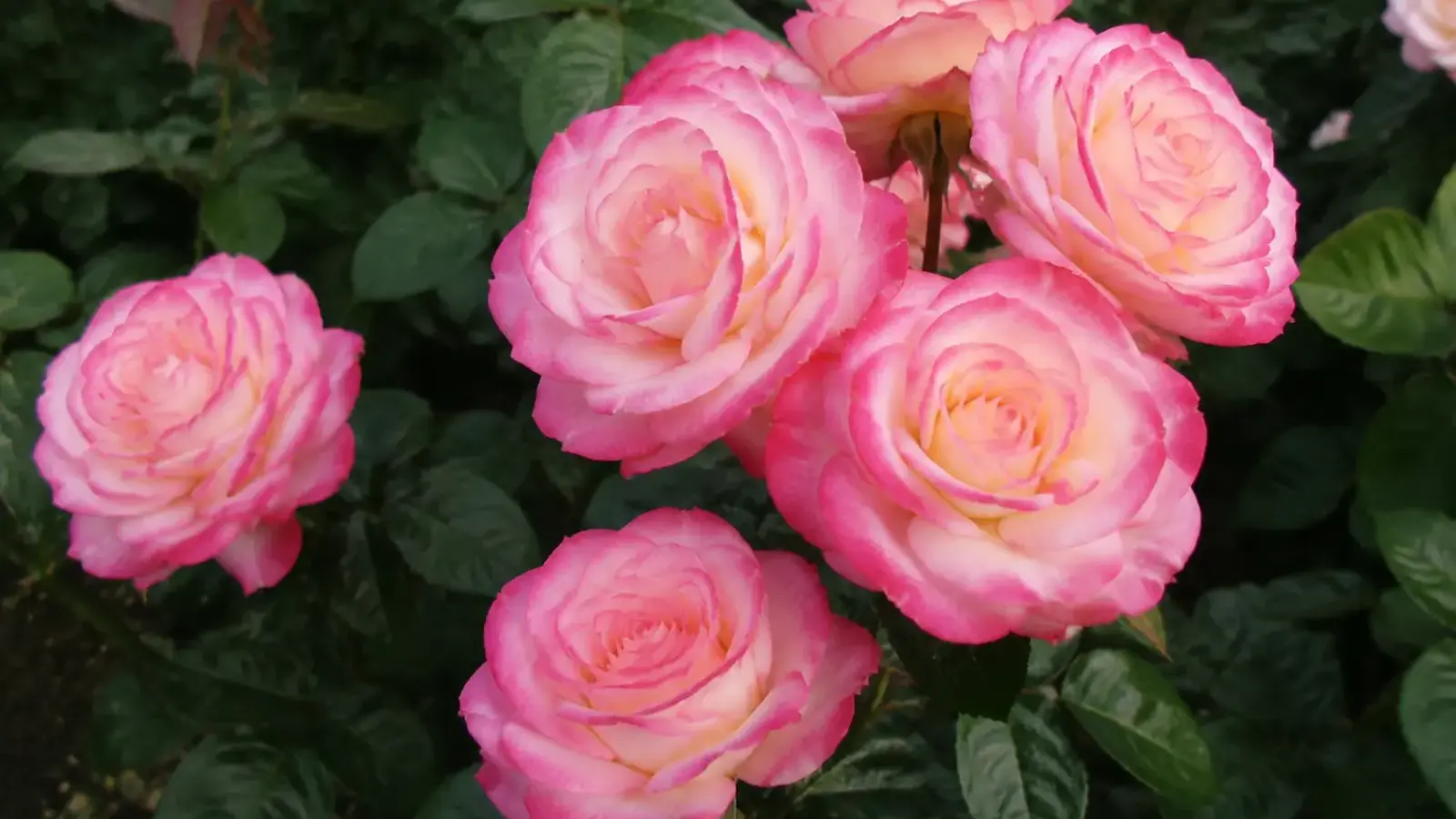
Picture the best of the last two roses stacked into one taller plant. You get that beautiful individual Hybrid Tea bloom, carried in little Floribunda-style clusters, on a plant that can shoot past six feet and lift the whole show above your eye line.
The Grandiflora class was established after the introduction of ‘Queen Elizabeth’ in 1954 because it didn’t fit neatly into any existing category, and it’s still the smallest modern rose group.
Tuck it at the back of a border where the height earns its keep. Nothing else brings all three together.
4. Climbing Roses
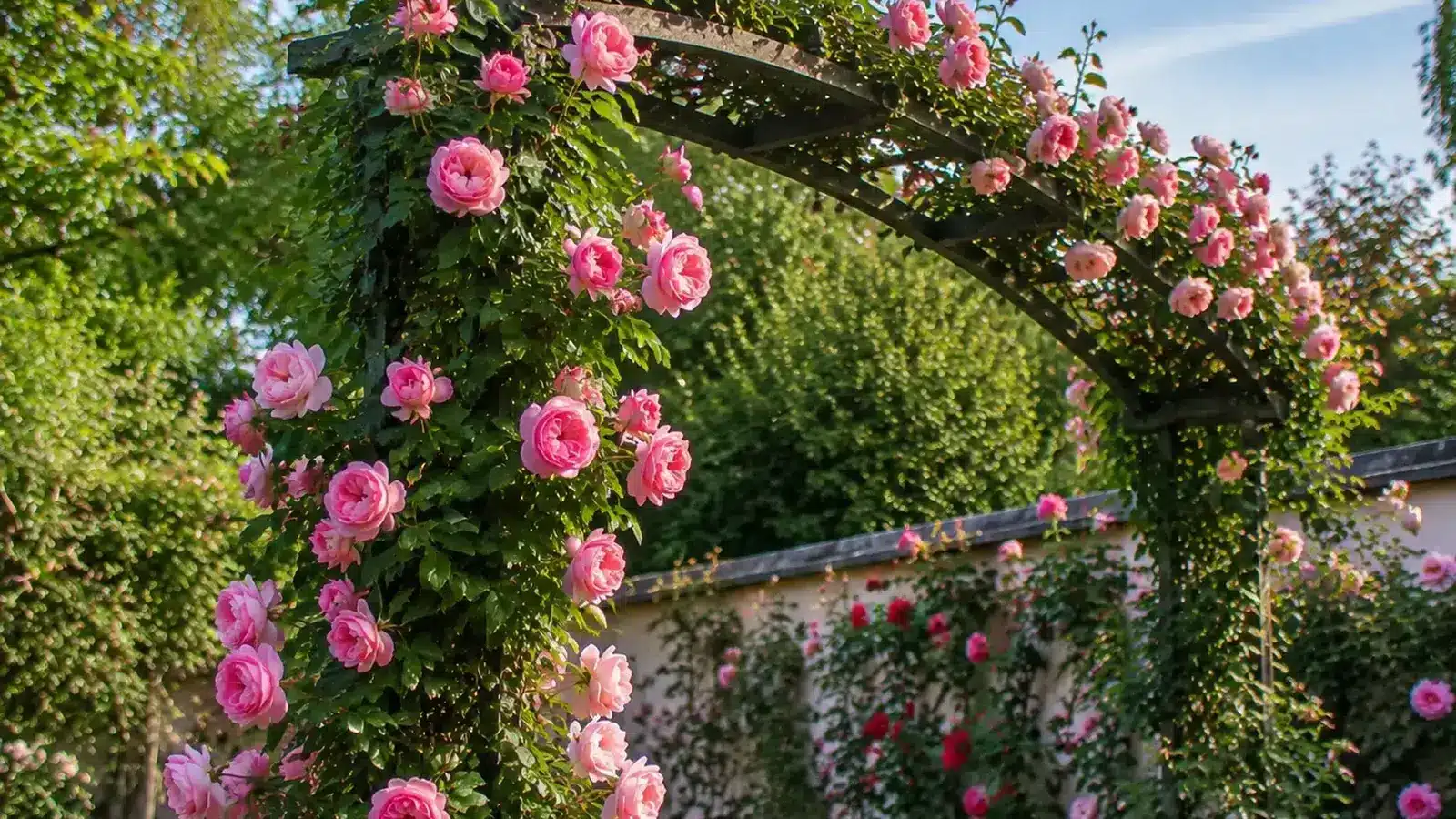
A well-trained Climber can turn a bare wall or a tired fence into the best thing you own. The long, arching canes flower all along their length once you’ve got them in place.
Here’s the catch most people miss, though: they don’t actually cling on their own. Every stem needs tying to a support, and that part’s on you.
One trick I swear by, train the canes sideways instead of straight up and you’ll get far more blooms. And check the label, since some flower once and others repeat.
5. Rambling Roses
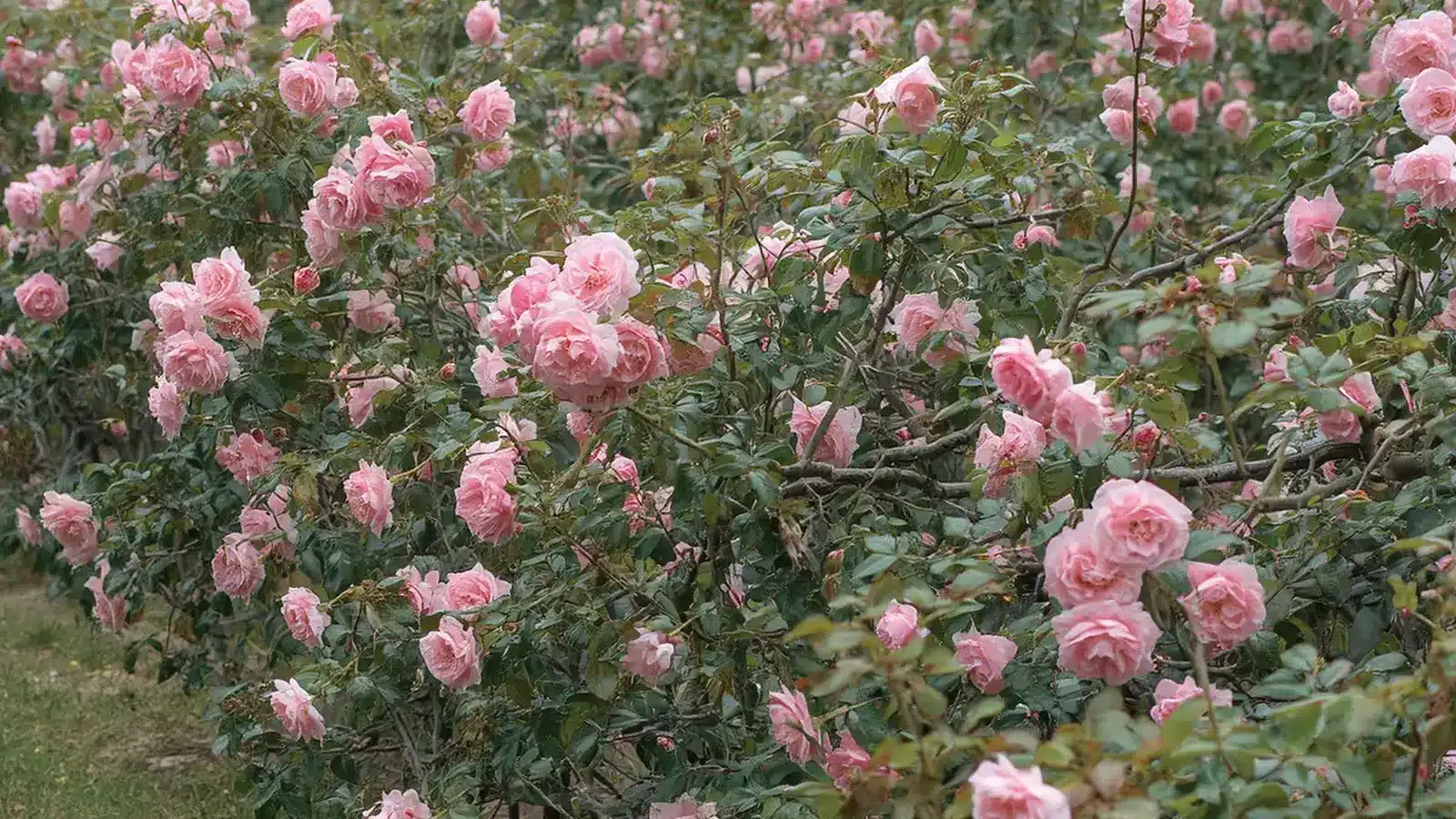
Take everything a Climber does and turn the volume all the way up. That’s a Rambler. It’s wilder, more sprawling, and it usually flowers just once in early summer, but what a once, hundreds of small blooms tumbling over whatever you’ve given it.
Save it for big pergolas, old trees, or long walls. In a small garden it’ll take over, trust me, I’ve watched one swallow a fence in a single season. And since it blooms on old wood, prune it right after it flowers.
6. Shrub Roses
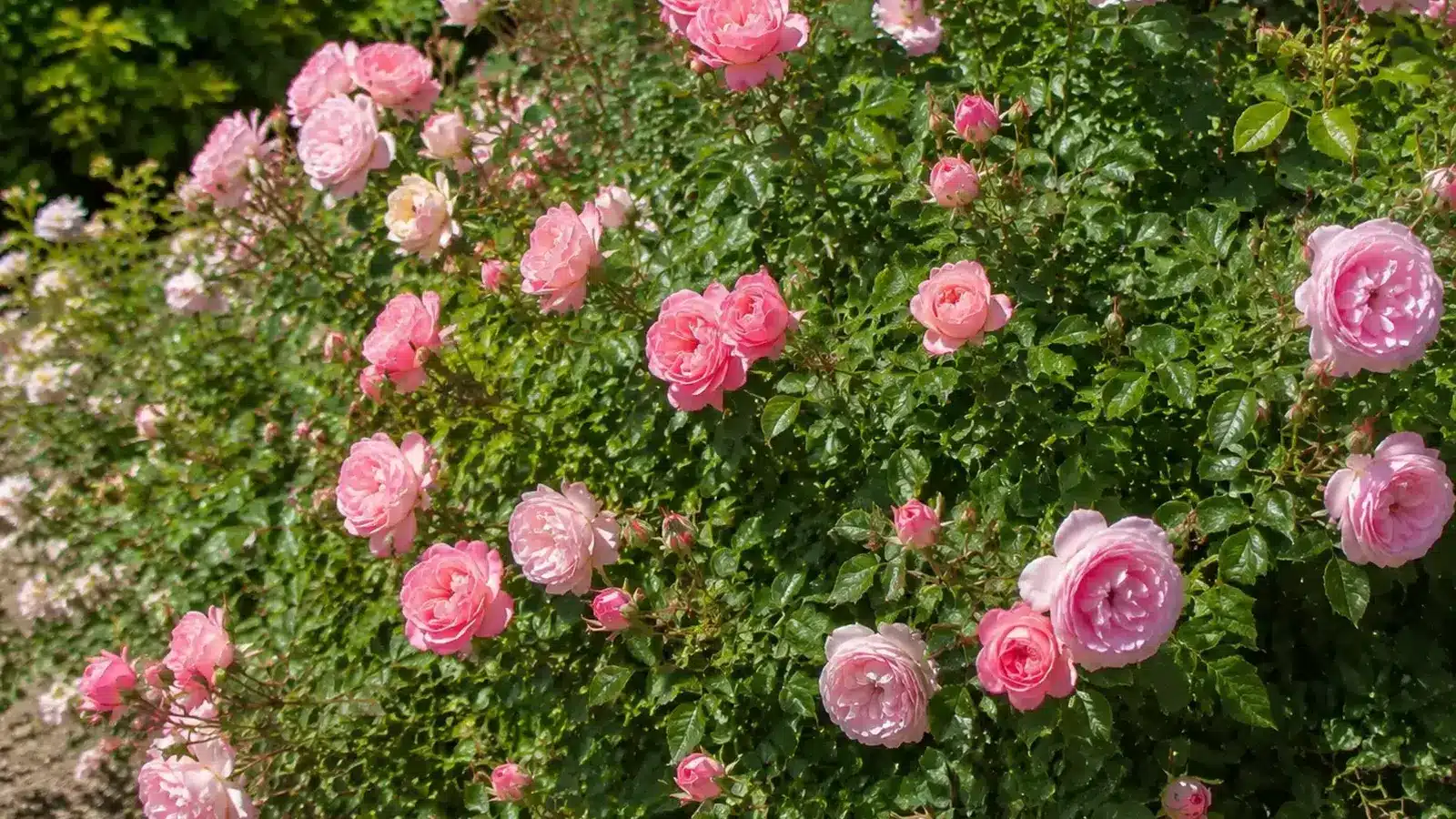
This is the big catch-all group, and that’s kind of the charm. It includes many David Austin English Roses, sprawling landscape types, and hardy varieties bred to shrug off bad weather and keep going.
What ties them together is toughness; they’re hardier and far more disease-resistant than Hybrid Teas, and plenty of them rebloom all season while asking almost nothing of you.
Just do one thing. Learn the actual variety you’re buying, because “shrub rose” alone won’t tell you much. Some of the very best live here.
7. Miniature Roses
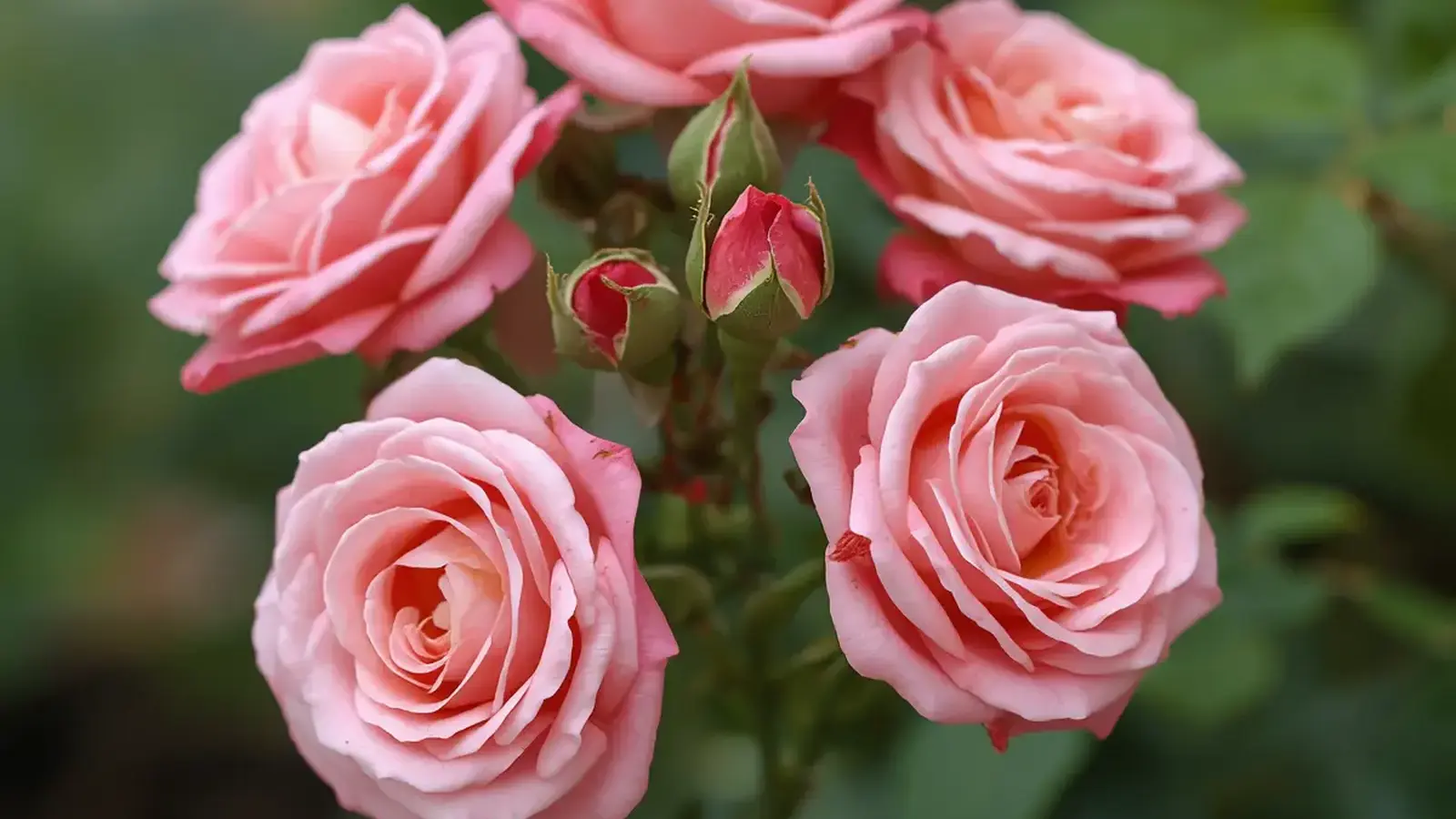
Let’s clear something up, because people get this wrong. Miniatures aren’t cheap little knockoffs; they’re full roses shrunk down, usually six to twenty-four inches tall.
A Miniature Hybrid Tea has the same high-centered bloom and upright posture as its full-size cousin, just pocket-sized. They’re perfect for pots, window boxes, and tiny patios, and many flower heavily all season.
Many modern rose types also have miniature versions, so the choice is wider than you’d think. That upright, tidy growth is what sets them apart from groundcover roses.
8. Groundcover Roses
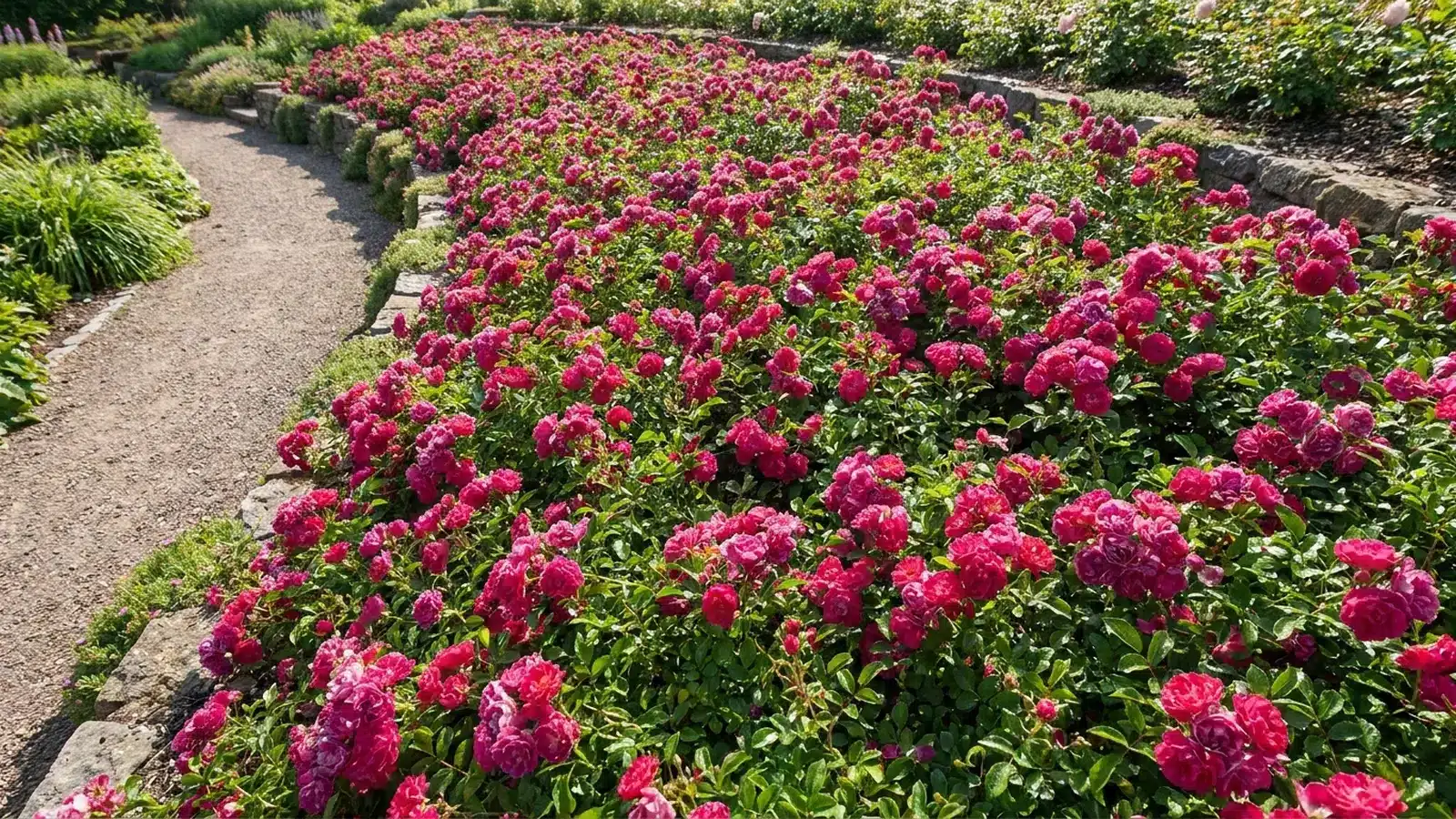
These solve a totally different problem. They don’t climb up; they spread out, trailing low across the soil and smothering weeds as they go. Think slopes, path edges, or a big open bed you want carpeted in color without much effort.
If you’ve decided you don’t have a green thumb, no shame in that; these are among the toughest, lowest-fuss roses you can grow.
They offer strong disease resistance, loads of repeat blooms, and need very little pruning. When you want coverage over height, nothing beats them.
9. Polyantha Roses
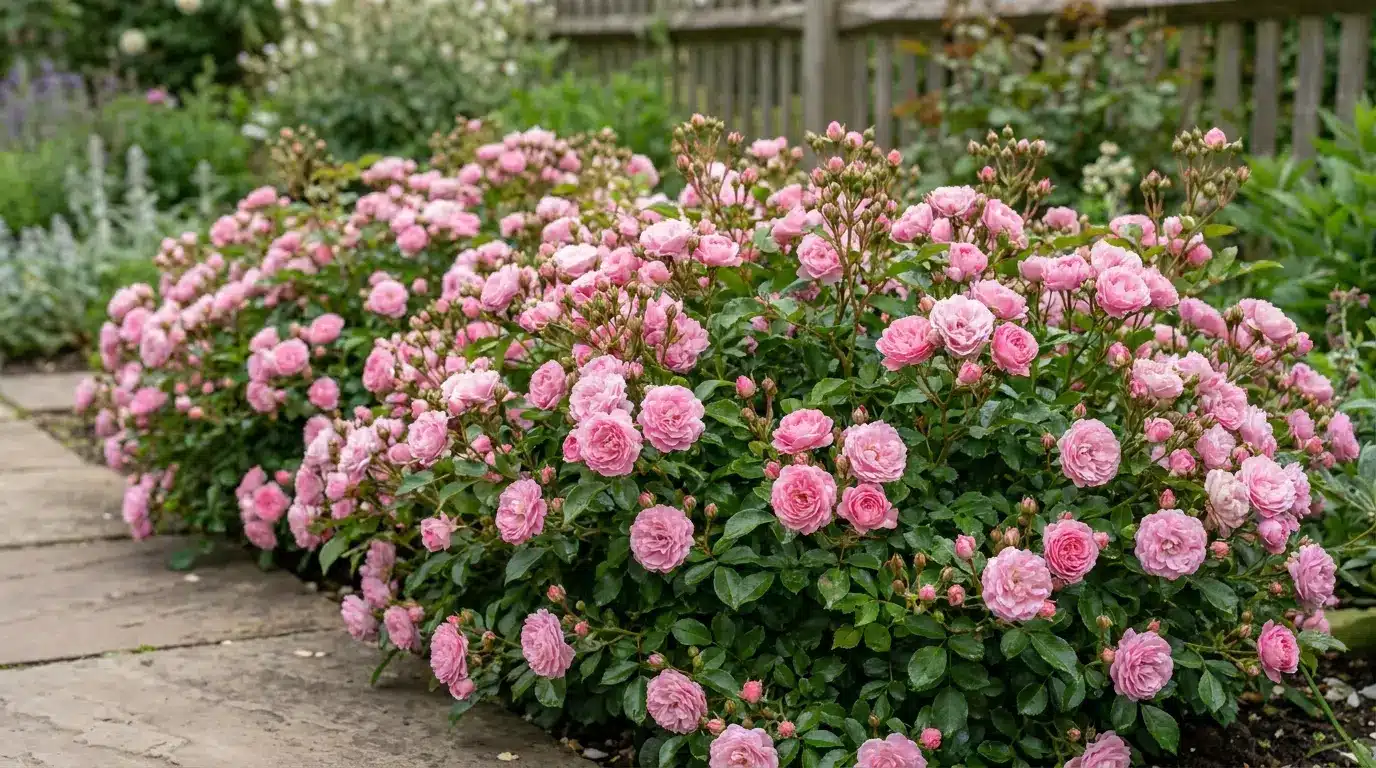
Polyanthas came first and actually inspired the Floribunda, then quietly got overshadowed by it, but they never went anywhere, and they shouldn’t.
They pump out small flowers in dense, crowded clusters on neat little plants, blooming with a kind of stubborn consistency from spring to frost. They’re hardy and low fuss too.
For a tight border, a low edge, or a container, they give you something the bigger roses can’t, which is steady, generous color from a plant that stays exactly where you put it.
10. Gallica Roses
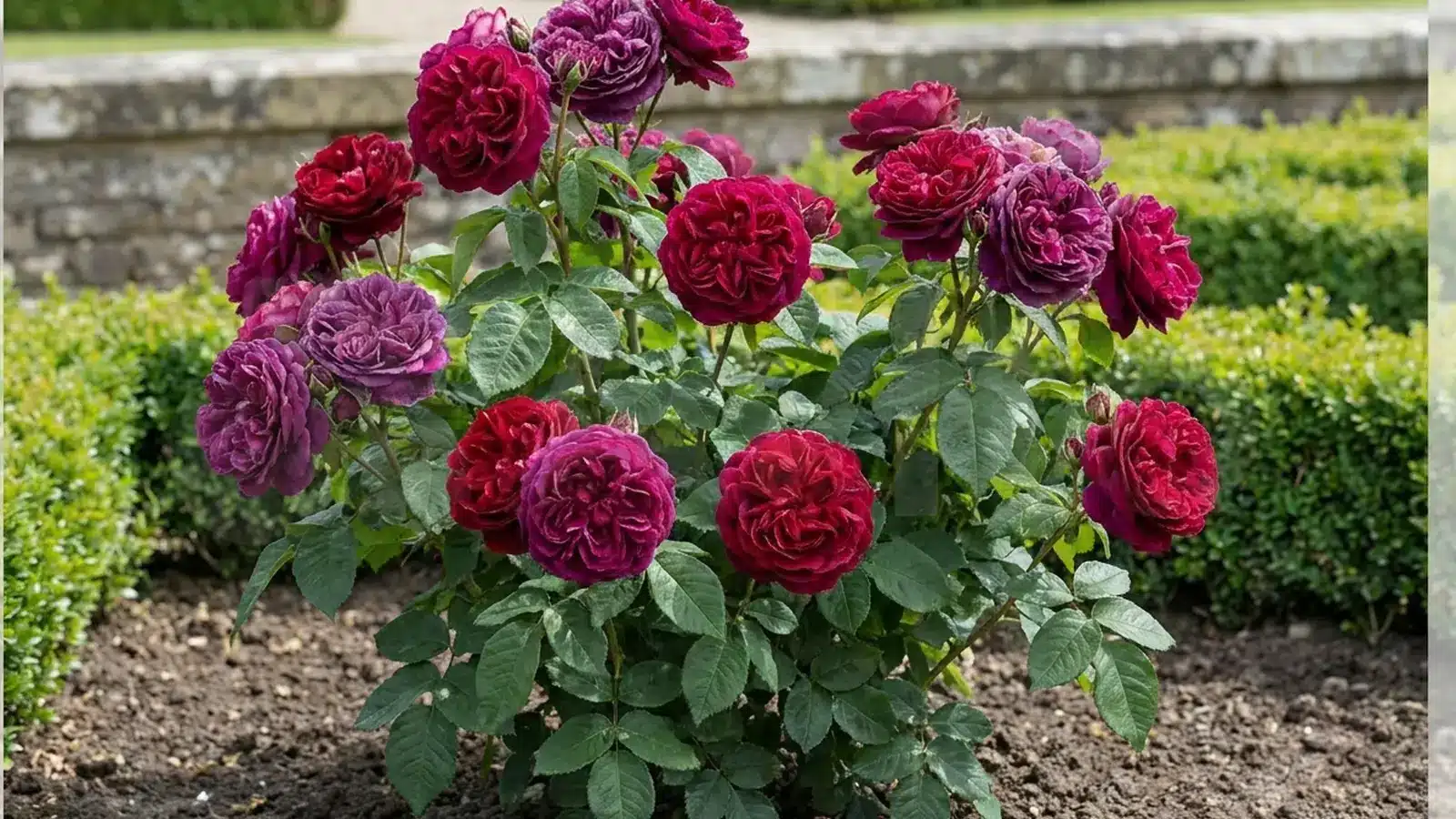
Now we’re going back in time. Gallicas are ancient and tough, with blooms in deep crimson, purple, and pinks so rich they almost look painted, plus a fragrance that lingers even after the petals dry.
The plants stay compact and upright, rarely over four feet, and they’re wonderfully forgiving, tolerating part shade and adapting to a range of well-drained soils with relatively little care. Most flower once in summer.
If you’re curious about Old Garden roses but nervous they’ll be needy, start here. This is the easy one.
11. Damask Roses
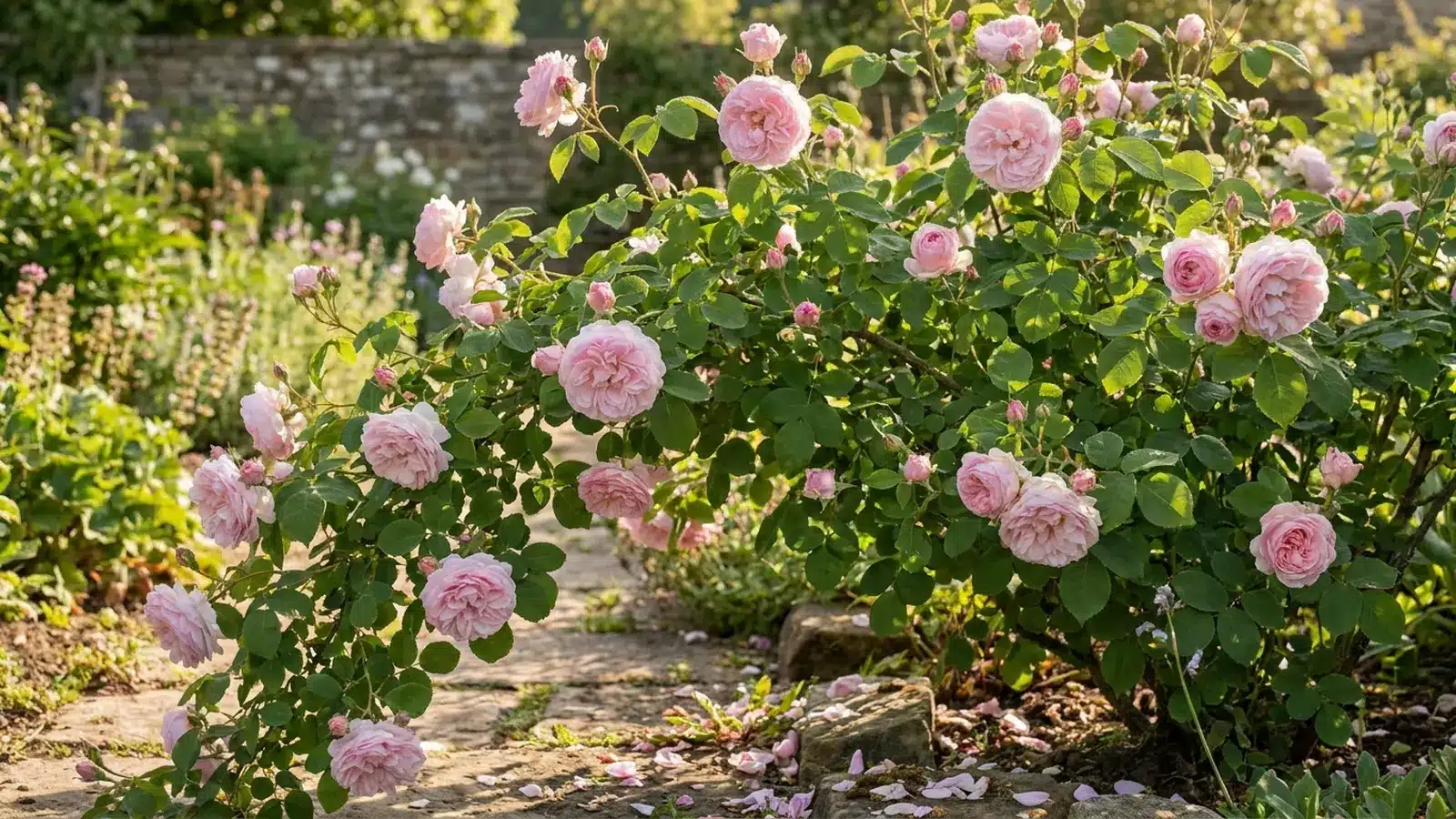
If scent is the whole reason you want roses, this is your rose. Damasks are the main source of attar of roses, the oil behind serious perfumery, and their richly fragrant blooms can fill the surrounding garden with scent when in full bloom. It sounds like a stretch until you stand next to one.
The habit is loose and informal, and there are two groups worth knowing: once-blooming summer Damasks, and Autumn Damasks that give you a second flush later. Blooming twice was a genuine marvel in its day.
12. Alba Roses
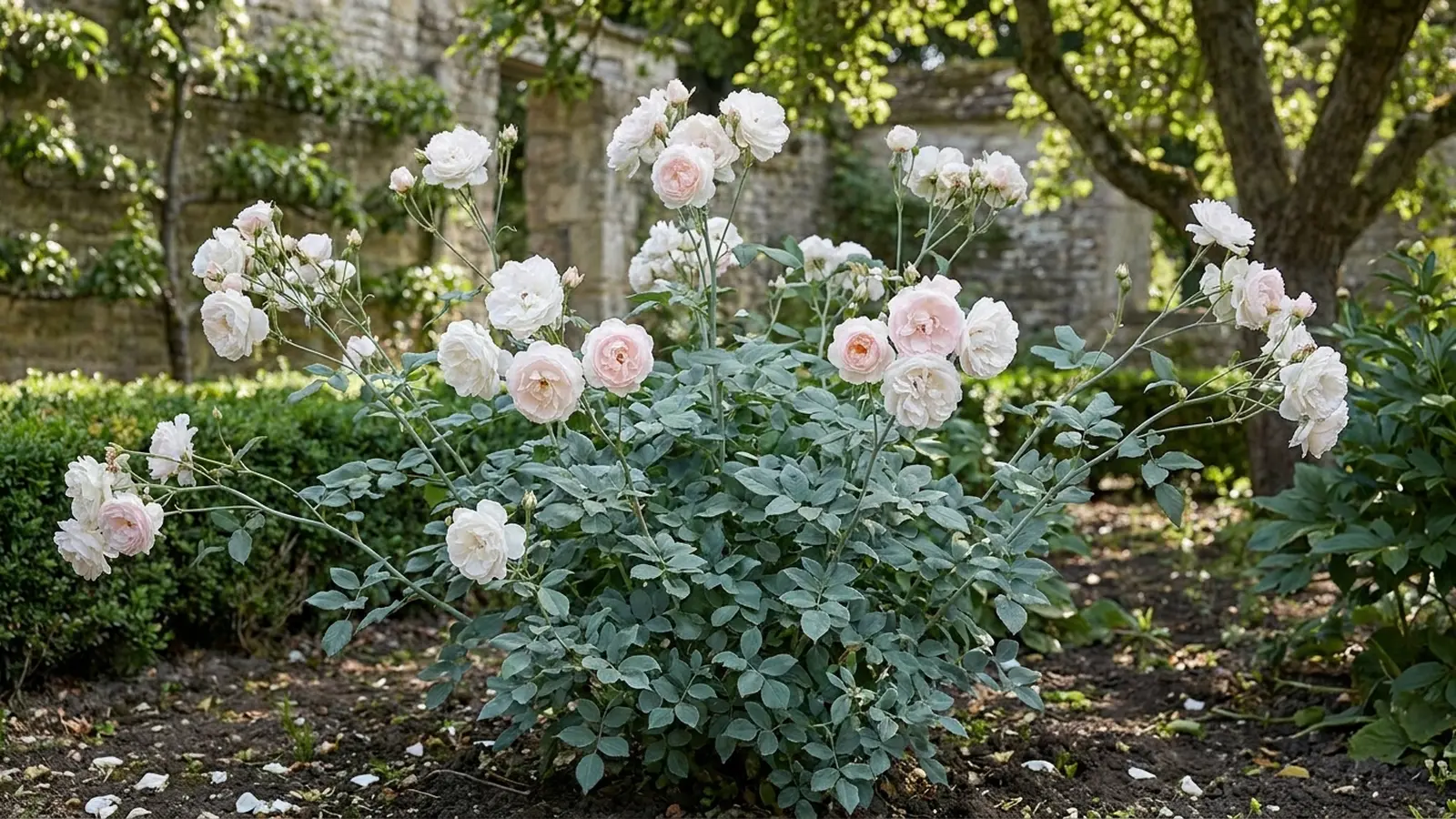
Albas are the quiet, composed ones. Soft whites and blush pinks on long stems, set against cool grey-green leaves, with a light, easy fragrance in early summer.
They usually bloom just once. But here’s what makes them special: they’re among the most cold-hardy and shade-tolerant rose classes, coping well with conditions that challenge many other roses.
Got that awkward half-shaded corner you’ve basically given up on? This might be the plant for it. With two thousand years of growing behind them, they’ve clearly earned their spot.
13. Centifolia Roses
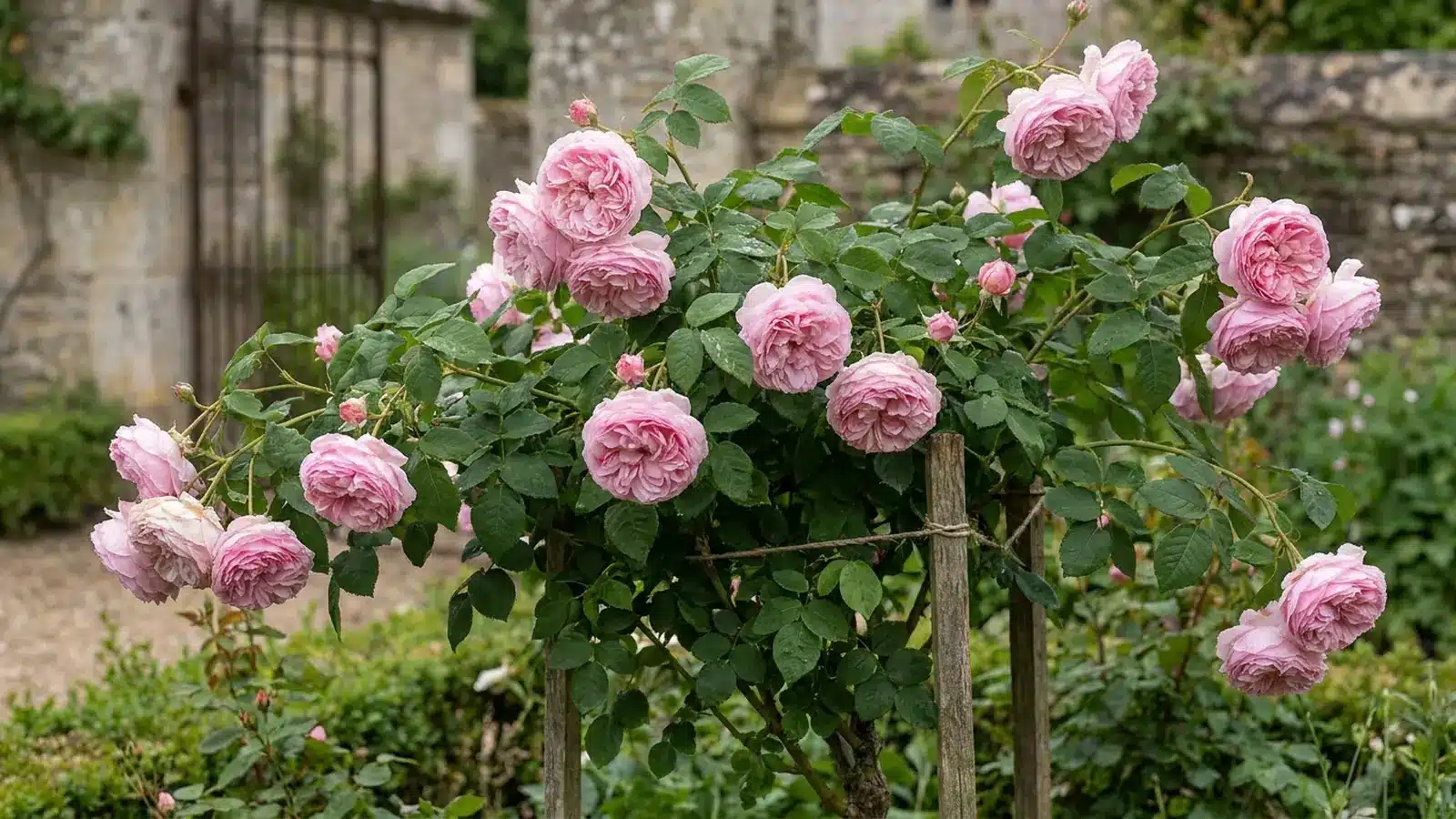
Centifolia means “a hundred petals,” and honestly, every bloom seems out to prove it. The flowers are dense, round, cabbage-like, richly scented, and so full they nod on their arching stems.
These are the roses you see spilling out of old Dutch paintings, and they still give you that lush, overflowing look today. One heads-up: the plant needs a bit of support, or those heavy blooms will pull the stems right down.
You grow this one for beauty and scent, plain and simple, and it delivers.
14. Moss Roses
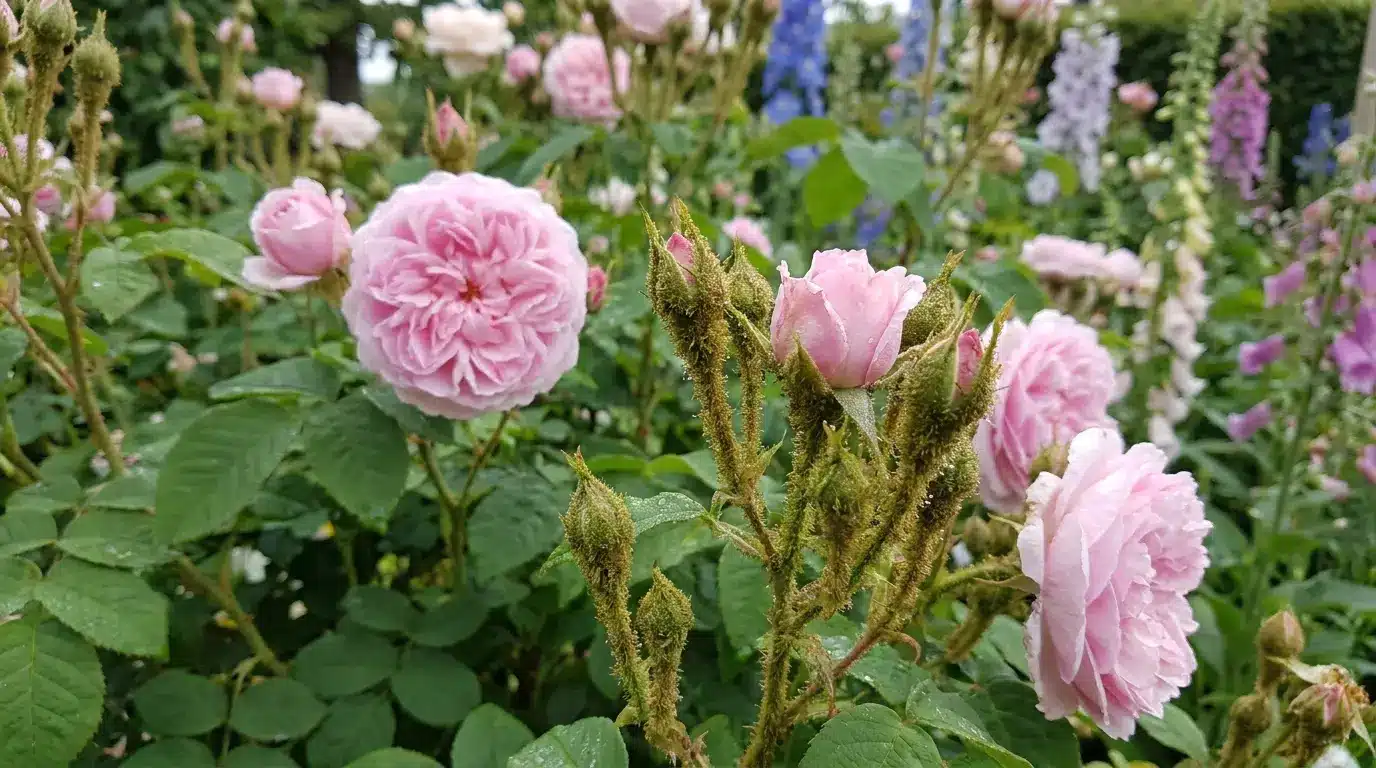
Moss roses catch people off guard, and I love that about them. The flowers look a lot like a Centifolia, dense, fragrant, packed with petals, but the real personality shows up before they even open.
The stems and buds are wrapped in a soft, sticky, mossy fuzz that’s even faintly scented when you brush it.
Most bloom once in summer. Run a finger along a bud sometime, and you’ll get it, because that odd little texture is half the reason people grow them at all.
15. Wild (Species) Roses
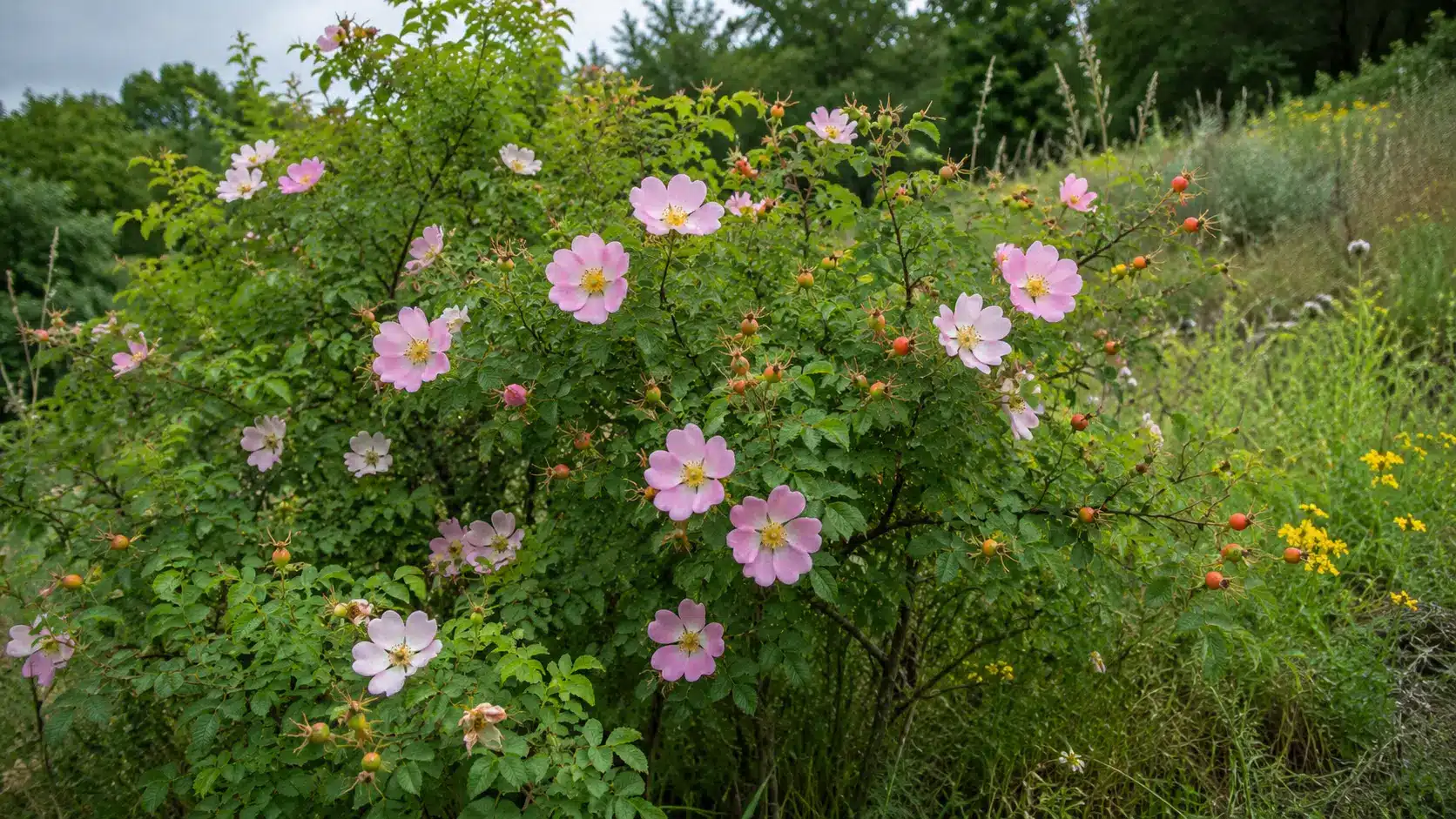
Here’s where the whole story begins. Wild roses are the originals, unbred, growing exactly as nature made them.
Simple five-petaled flowers open in a single flush in late spring, and then come the hips, big and colorful, glowing into winter, feeding birds and insects, and packed with vitamin C to boot.
Sit with this for a second: every rose on this list traces its family tree back here. All that modern hardiness and disease resistance started with these. Self-sufficient, wildlife-friendly, and quietly lovely.
Which of These Types is Right for Your Garden?
Choosing the right rose is easier when you start with your goal. Whether you want cut flowers, a fragrant garden, or a rose for a specific purpose, use this table to find the best match.
| If You Want… | Choose This Rose Type | Why It Works |
|---|---|---|
| Cut flowers | Hybrid Tea | Large blooms on long stems, ideal for bouquets. |
| Continuous blooms | Floribunda | Flowers in clusters from late spring to frost. |
| Strong fragrance | Damask or Gallica | Richly scented blooms, especially Damasks. |
| Cover a wall or fence | Climbing Rose | Grows vertically with support and repeat blooms. |
| Cover a pergola or large structure | Rambling Rose | Vigorous growth with masses of seasonal flowers. |
| Low-maintenance planting | Shrub Rose | Hardy, disease-resistant, and easy to grow. |
| Containers or small spaces | Miniature Rose | Compact size with full-sized rose blooms. |
| Ground cover | Groundcover Rose | Spreads low to cover soil with minimal care. |
| A classic Old Garden style | Gallica, Alba, or Centifolia | Historic roses with beautiful, fragrant blooms. |
Start by choosing the rose type that best matches your needs. Then compare individual varieties within that group to find one that suits your climate, available space, and preferred flower color.
Mistakes to Avoid When Choosing Different Types of Roses
Choosing the right rose is about more than picking your favorite flower. A bit of planning before you buy can save time, money, and disappointment later. Keep these simple points in mind when comparing different types of roses.
- Don’t Choose Based on Looks Alone: A beautiful bloom is important, but also check the plant’s size, growth habit, and care needs before buying.
- Check the Mature Size: Some roses stay compact, while others grow several feet tall or spread widely. Make sure the plant has enough room to grow.
- Know the Flowering Habit: Some roses bloom only once a year, while others flower repeatedly from late spring until frost. Pick one that matches your expectations.
- Match the Rose to Your Climate: Some rose types handle cold, heat, or partial shade better than others. Choosing a suitable type gives your plant a better chance to grow well.
- Think About Maintenance: Hybrid Tea roses usually need more care than Shrub or Groundcover roses. Choose a type that fits the amount of time you can spend caring for it.
Keeping these points in mind makes it much easier to choose a rose you’ll enjoy for years. Once you match the right type to your garden, you’ll be more likely to grow healthy plants with plenty of beautiful blooms.
Conclusion
The different types of roses offer something for every garden, from compact plants for containers to climbers that cover walls and pergolas with flowers.
Choosing the right type is often more important than choosing the prettiest bloom because it affects how well the plant grows in your space.
I hope these comparisons make it easier to find a rose that suits your climate, garden size, and gardening style. Once you match the right rose to the right place, it has a much better chance of thriving.
If you have a favorite rose type or a question, share it in the comments below.
Frequently Asked Questions
What are the most common types of roses?
Hybrid Tea, Floribunda, and Climbing roses are among the most popular rose types for home gardens. Hybrid Tea roses are widely used for cut flowers, Floribundas are a favorite for colorful garden borders, and Climbing roses remain a popular choice for covering walls, fences, and pergolas.
What is the difference between a Rambling rose and a Climbing rose?
Climbing roses produce large blooms on long canes, and many repeat-flower through the season. Ramblers are more vigorous, typically once-blooming, and produce large clusters of smaller flowers. Ramblers suit large structures like pergolas and mature trees. Climbers are better suited to walls and fences where controlled, repeat color matters.
Which rose type is best for beginners?
Floribundas and modern Shrub roses are the most forgiving starting points. Both rebloom continuously, resist disease better than Hybrid Teas, and don’t require specialist pruning or winter care. Groundcover roses are also a strong beginner option for low-maintenance situations.
Which rose types have the strongest fragrance?
Damask roses produce the most intense fragrance of any class and are the primary source of commercial rose oil. Gallica and Centifolia roses are also strongly scented. Among Modern types, many David Austin English Roses classified as Shrub roses are bred specifically for fragrance comparable to Old Garden classes.