

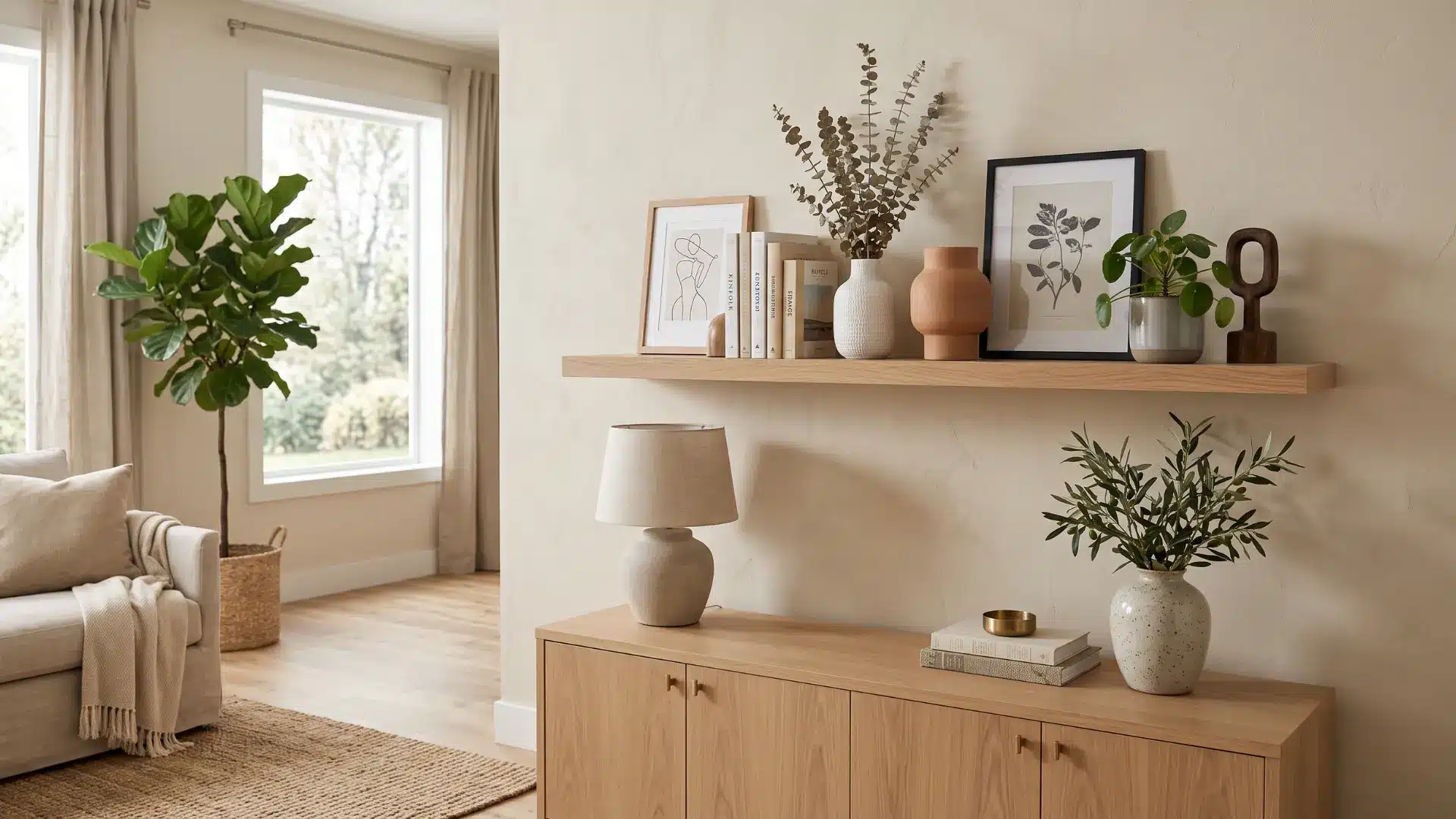
| Room Type | Any room with wall shelves, floating shelves, or a bookcase |
| Style | Adaptable, works in modern, traditional, and eclectic rooms |
| Budget | $0 to $150 using items you already own |
| Room Size | Any, including small apartments and rentals |
| Best For | Renters and homeowners who want a quick, low cost refresh |
| Avoid If | You need the shelf for heavy duty storage more than display |
The best shelf decor ideas almost never come from adding more objects. They come from removing enough of them that the pieces you keep can actually be seen.
I’ve styled hundreds of shelves for clients, and the ones that look cluttered are rarely a taste problem. They’re a density problem.
When I walk into a room and a shelf feels wrong, my first move used to be swapping pieces. I’d trade the candle for a different one, move the plant, rearrange the frames. That almost never fixed it.
The objects weren’t the issue. There were simply too many competing pieces fighting for the same amount of space.
Why Shelves Feel Cluttered Before You Even Add Anything
Too many items in similar sizes and colors create visual noise. Even pieces you genuinely love can lose their impact once they’re packed together without breathing room around them.
This is the same density problem I run into when I help clients rework a full modern eclectic interior design scheme, where one shelf pulling too much visual weight can throw off the entire room.
My starting point on every shelf is the same: clear it completely.
A blank shelf gives you an honest read on the space you have and forces you to decide what actually earns a spot back on it, instead of defaulting to everything that was already there.
How to Decorate With Wall Shelves Using Layout, Scale, and Color
Before anything goes back on the shelf, I work through four things in order. Skipping any one of them is usually why a “finished” shelf still feels off a week later.
- Layout first. Decide whether the shelf is a focal point or a supporting piece in the room. That changes how much visual weight it should carry. It’s the same question I ask when working through layout ideas rectangular rooms present, since a shelf that competes with the room’s main sightline rarely reads as intentional
- Scale next. Measure the shelf depth and height before buying or placing anything. A vase that looks small in a store can dominate a 10-inch deep shelf.
- Height and texture third. Mix tall, medium, and short objects, and combine at least two materials, such as wood with ceramic or glass with woven fiber.
- Color last. Repeat one color or finish at two or three points across the shelf so your eye reads it as one arrangement, not scattered objects.
| Tip: When a shelf still feels flat after styling, check the depth first. Objects placed flush against the back wall read as storage. Pull two or three pieces forward by a few inches so the shelf has a visible foreground and background. |
Shelf Decor Ideas Worth Copying
Once the shelf is cleared and you’ve thought through layout and scale, these are the arrangements I come back to most often with clients.
1. The Color Coded Bookshelf
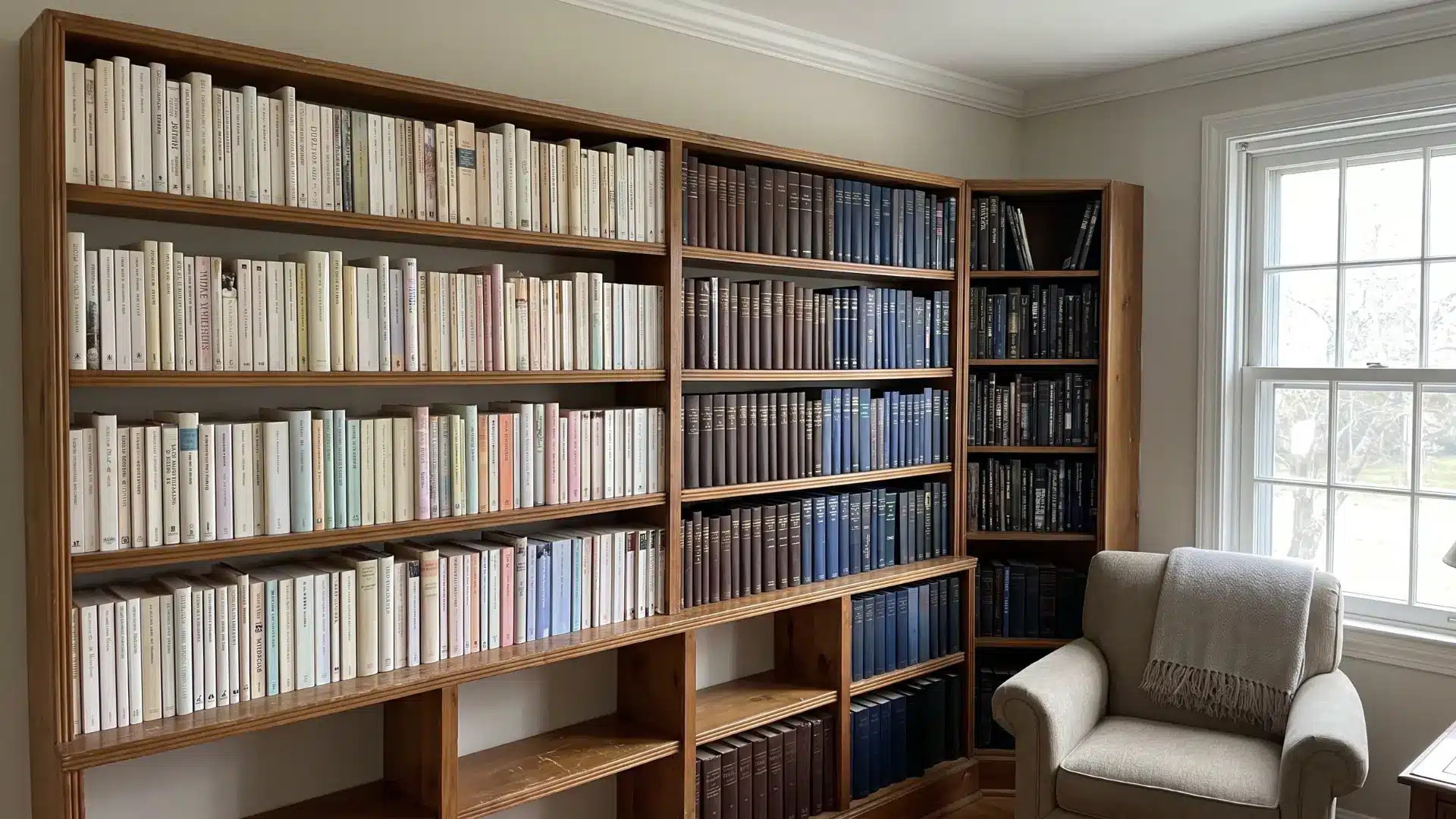
Arrange books by spine color, moving from lightest to darkest or grouped by hue, so the shelf reads like a painted gradient rather than a row of titles.
Mixing paperbacks and hardcovers adds texture that color alone can’t create. This works especially well in a kid’s room, where it instantly becomes the space’s focal point
2. The Botanical Corner
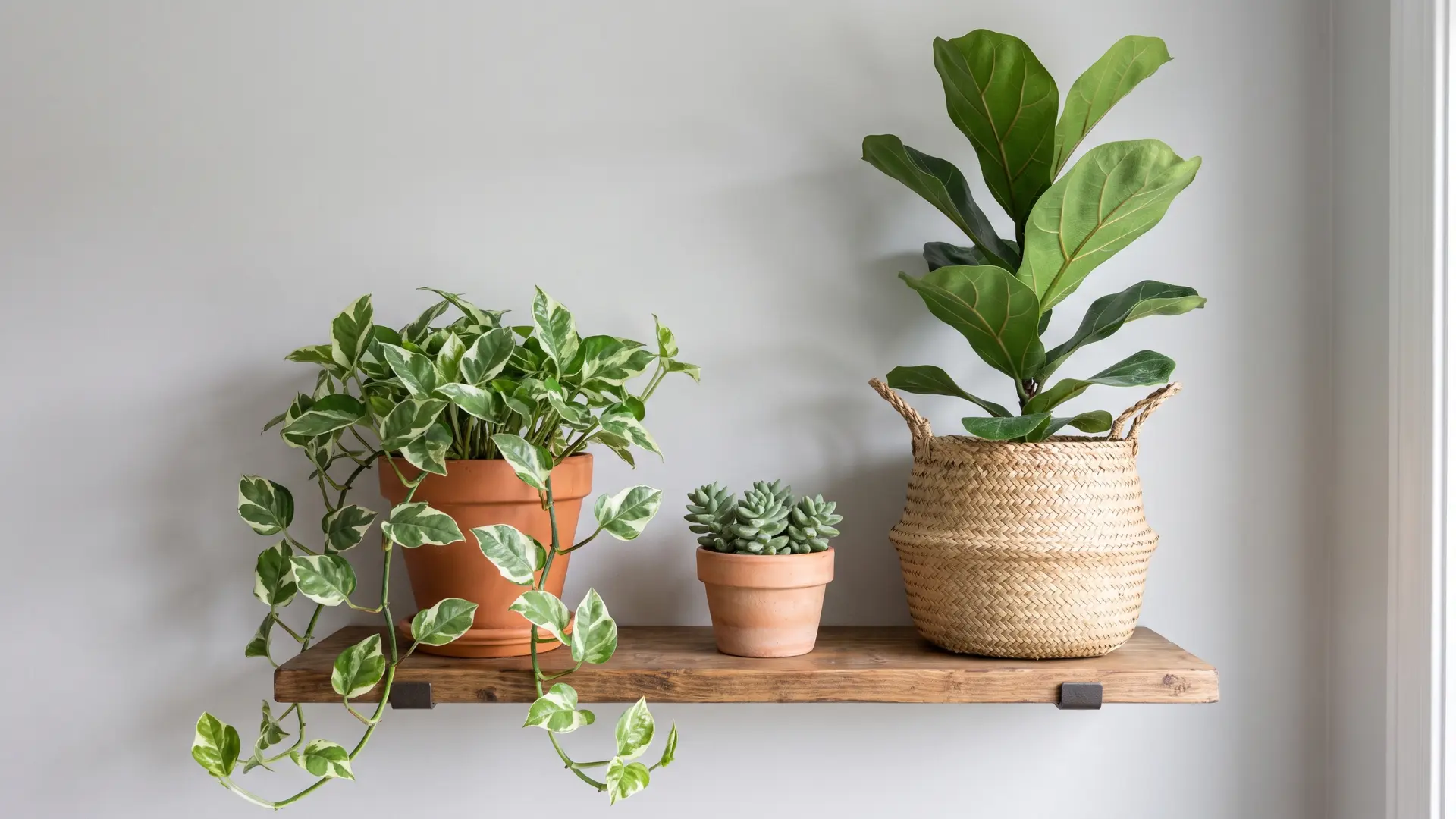
Dedicate one shelf entirely to plants: no books, no frames, just greenery. Mix a trailing pothos, a small succulent, and one taller plant like a fiddle leaf fig for varied height and depth.
I use the same trailing-and-tiered approach for bay window decor when greenery needs to soften a hard architectural line
Woven planters tie the grouping together, keeping the look natural and lived-in rather than staged or overly curated.
3. The Gallery Lean
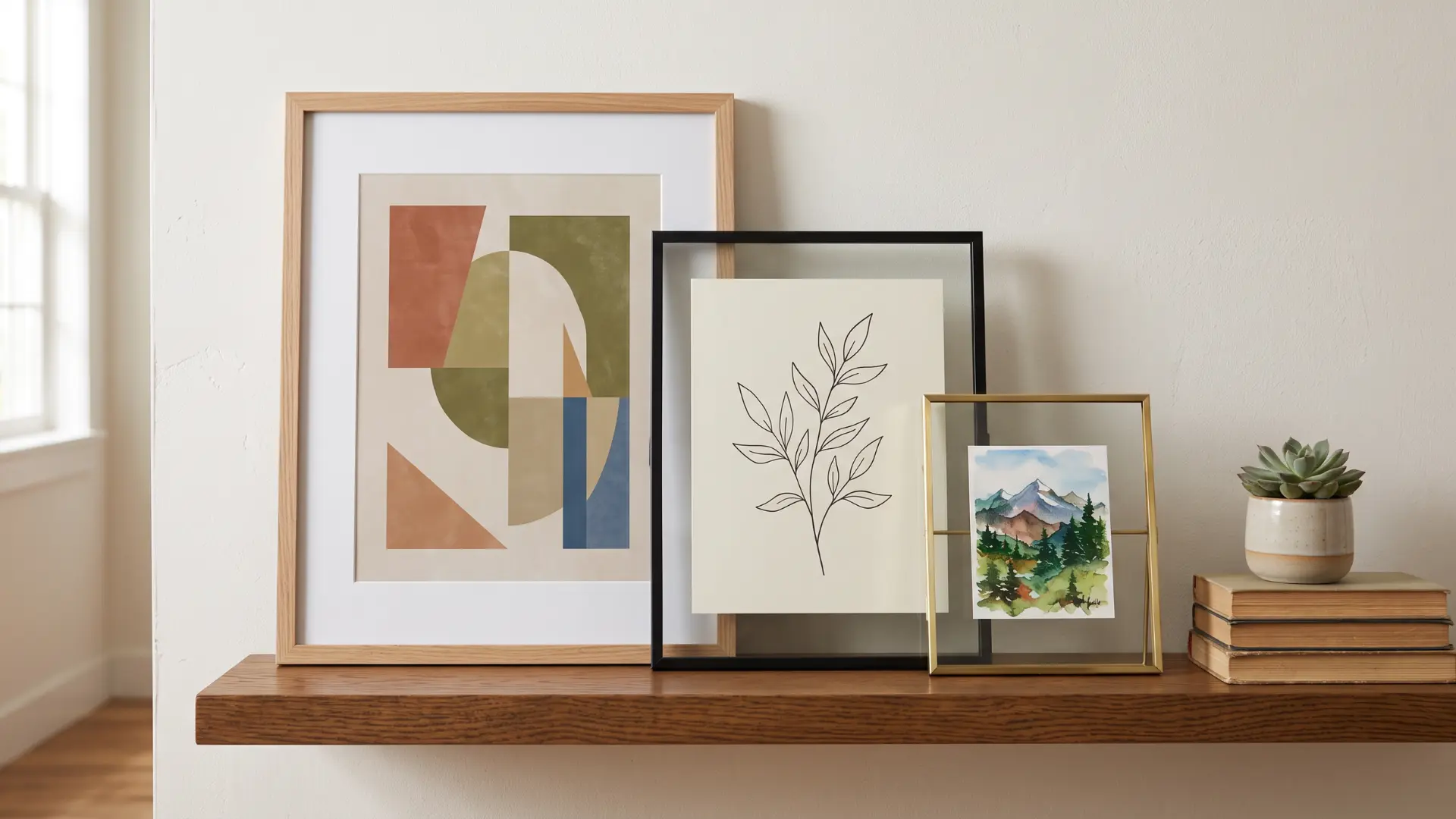
Lean two or three framed prints against the wall instead of hanging them, letting smaller frames overlap slightly in front of larger ones.
This creates a relaxed, layered look and makes seasonal art swaps effortless: no nails, no patching, just prop the new piece against the last one.
4. The Curated Photo Cluster
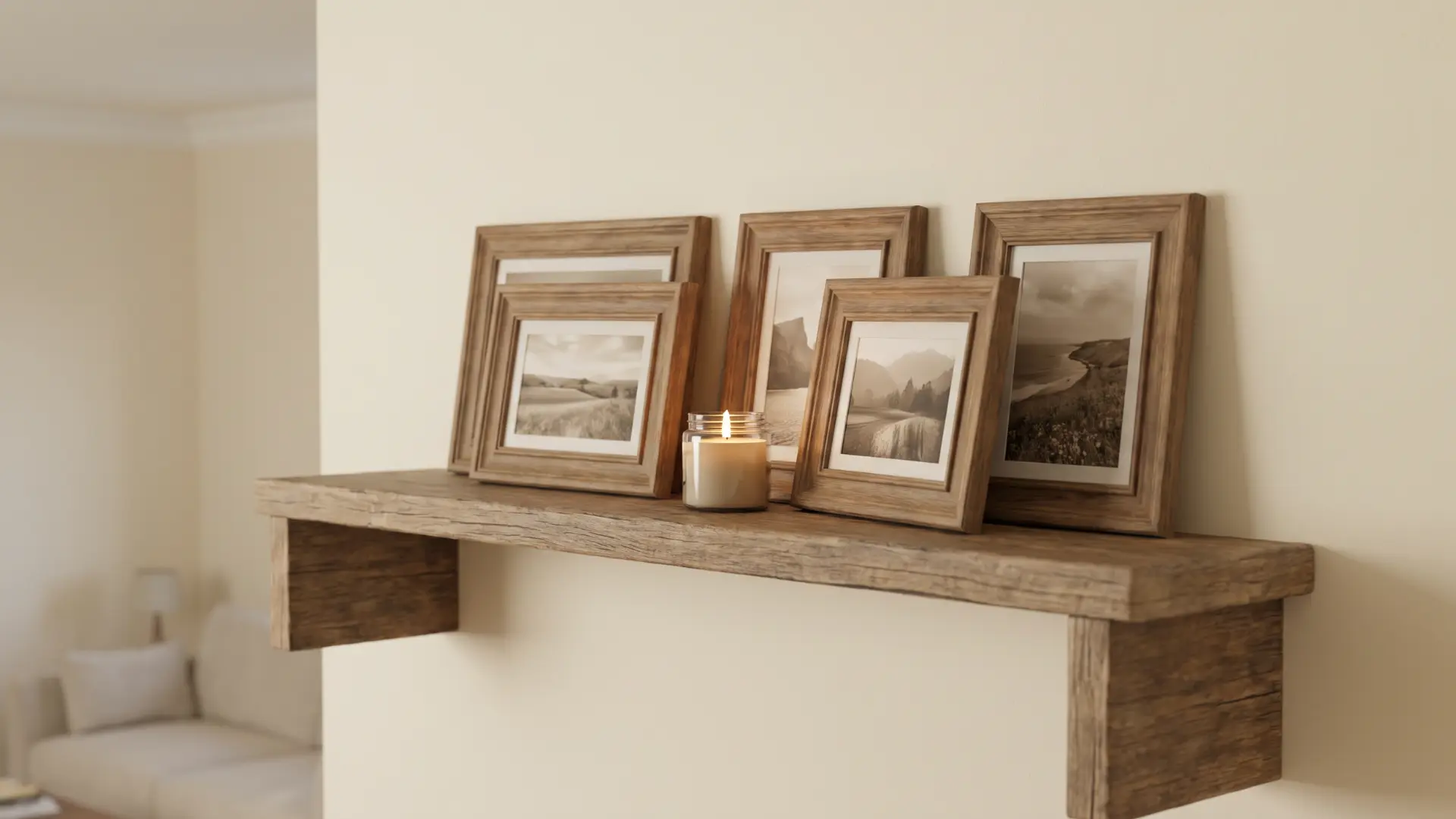
Choose three to five frames in matching color or material, then cluster them tightly on one section of the shelf rather than spreading photos across the whole thing.
Add a single small object, like a candle, nearby to break up the wall of faces and give the eye somewhere else to rest.
5. The Vintage Find Showcase
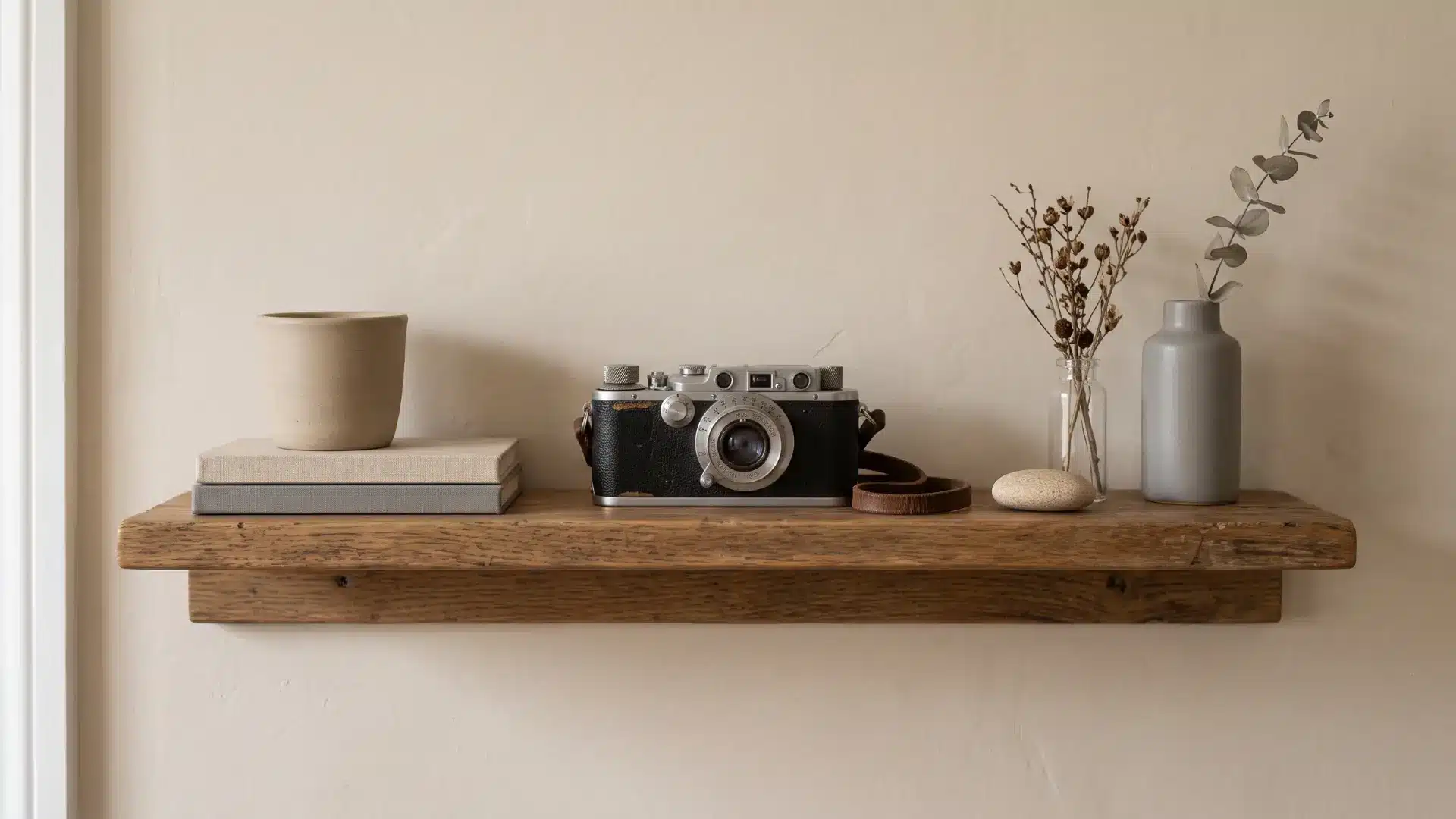
Build the shelf around one secondhand piece with real character, an old camera, a chipped ceramic vase, a decades-old tin box. Keep everything else neutral, low-profile, and quiet so nothing competes.
The vintage piece should be the first, and most memorable, thing anyone notices on the shelf.
6. The Sculptural Object Display
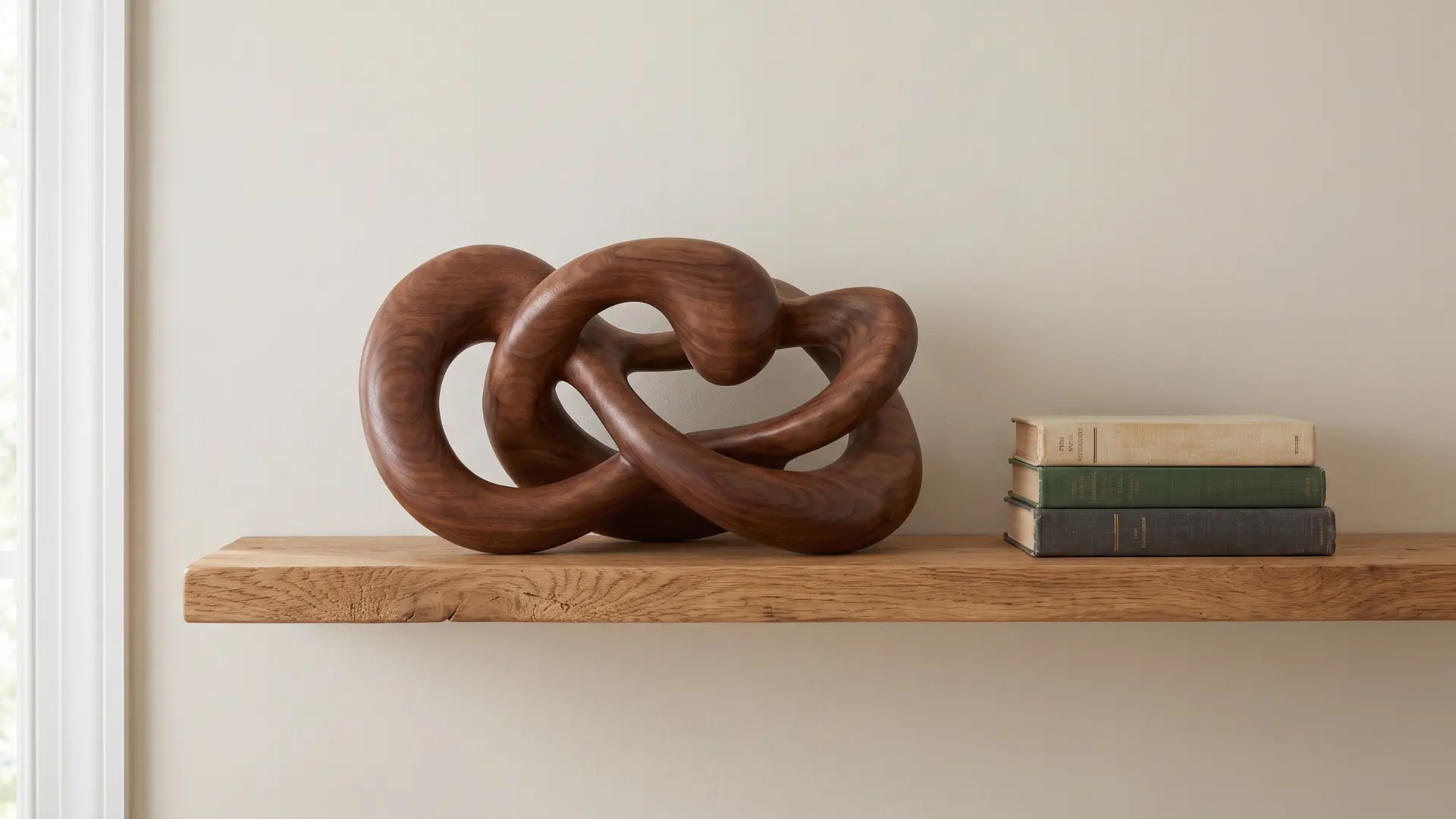
Let one abstract sculpture or carved wood object anchor the shelf as the modern counterpart to a vintage showcase.
Pair it with something calm and understated, like a short stack of books. Everything else stays minimal; the goal is a single striking shape that draws the eye and holds it.
7. The Hidden Storage Basket Shelf
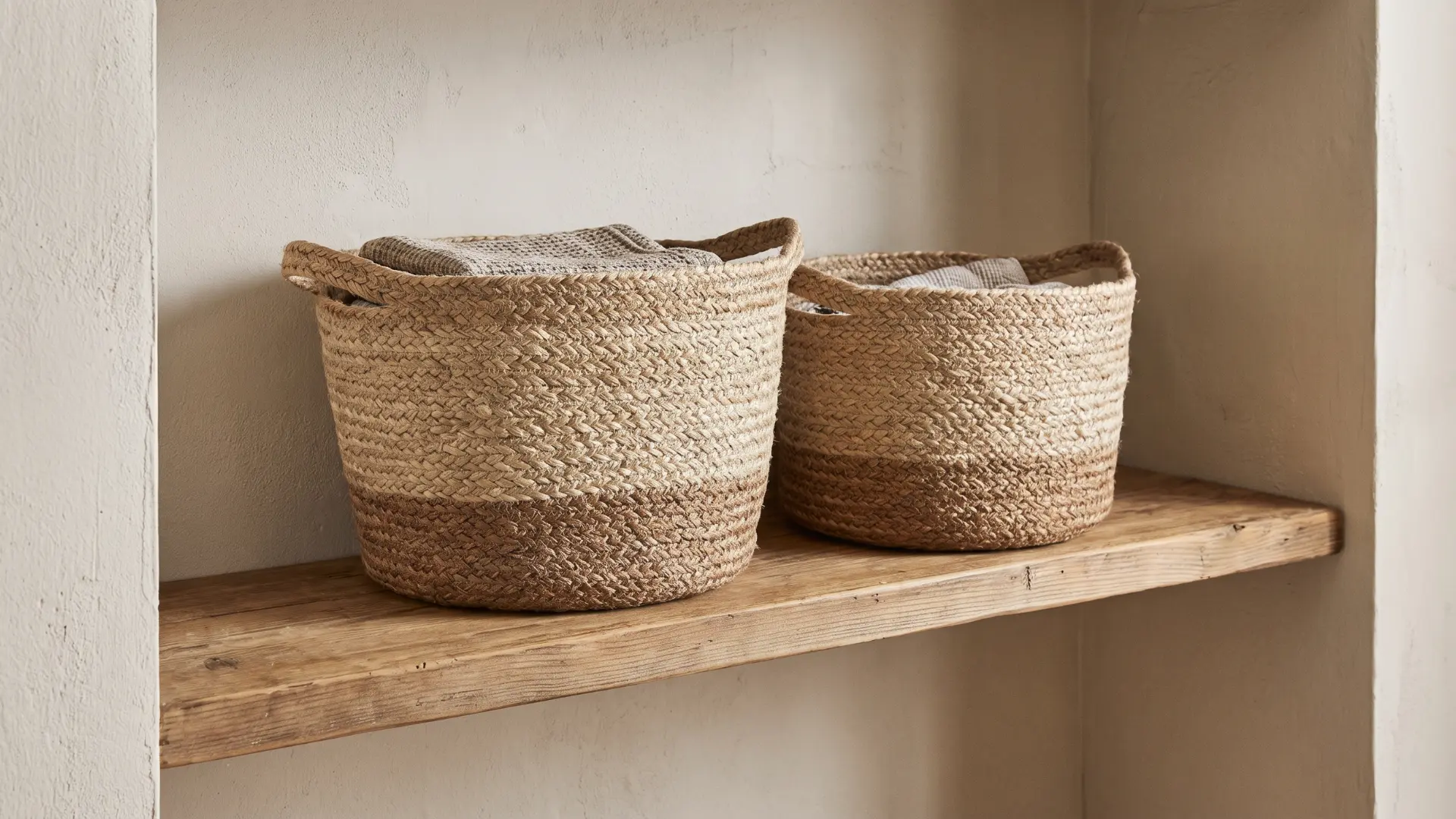
Solve the everyday clutter of chargers and mail with one or two woven baskets on a lower shelf.
Sticking to just two keeps the display from tipping into storage overload, and natural fiber tones stay cohesive with wood shelving, practical function dressed up to look intentional and decorative.
8. The Catch All Tray Vignette
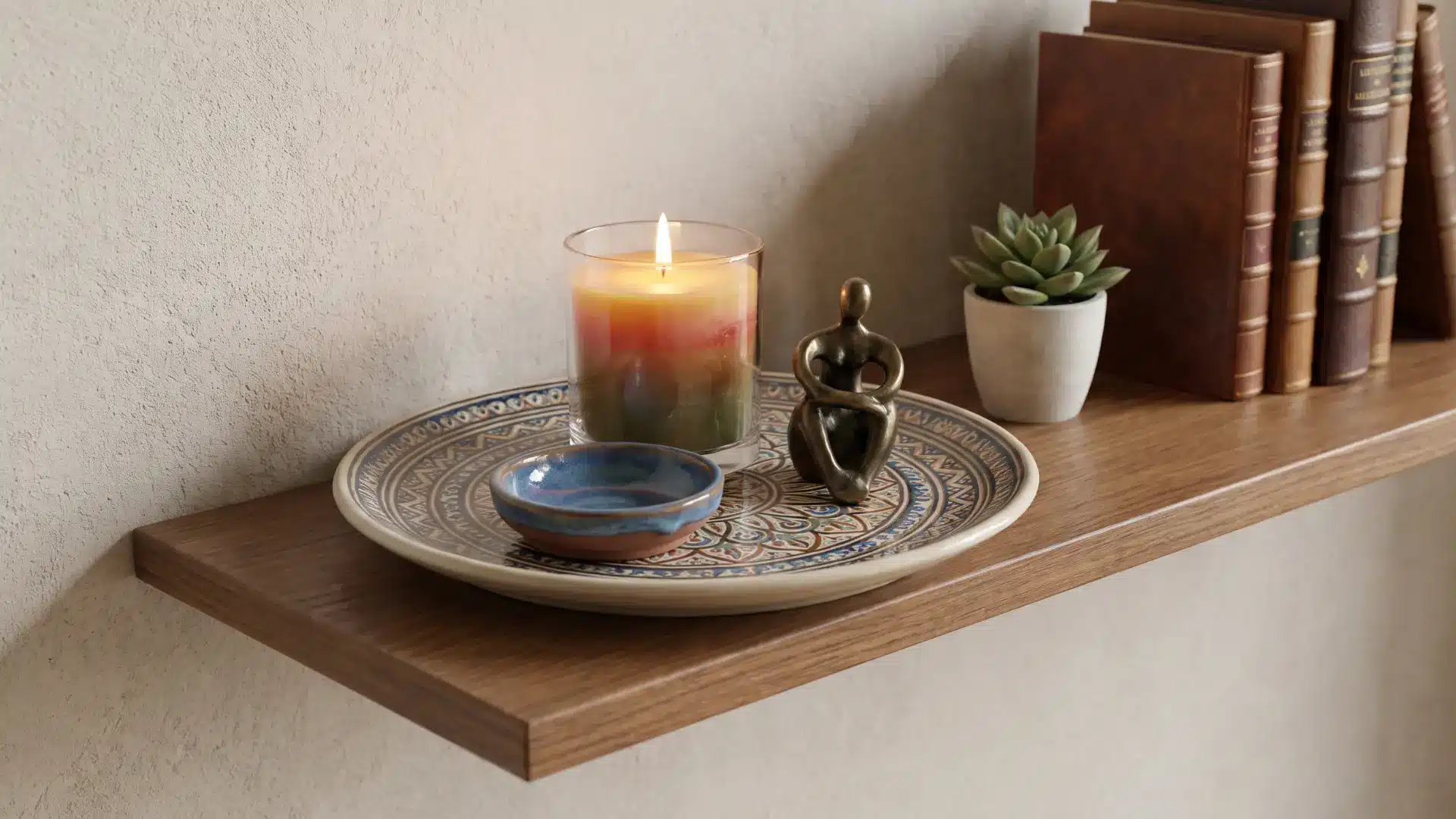
Small, scattered objects tend to look accidental, so group a candle, a small dish, and a mini sculpture together on one tray.
The tray creates a visual boundary that does the organizing automatically, so the arrangement reads as one deliberate grouping rather than three unrelated items placed side by side.
9. The Book and Object Pedestal
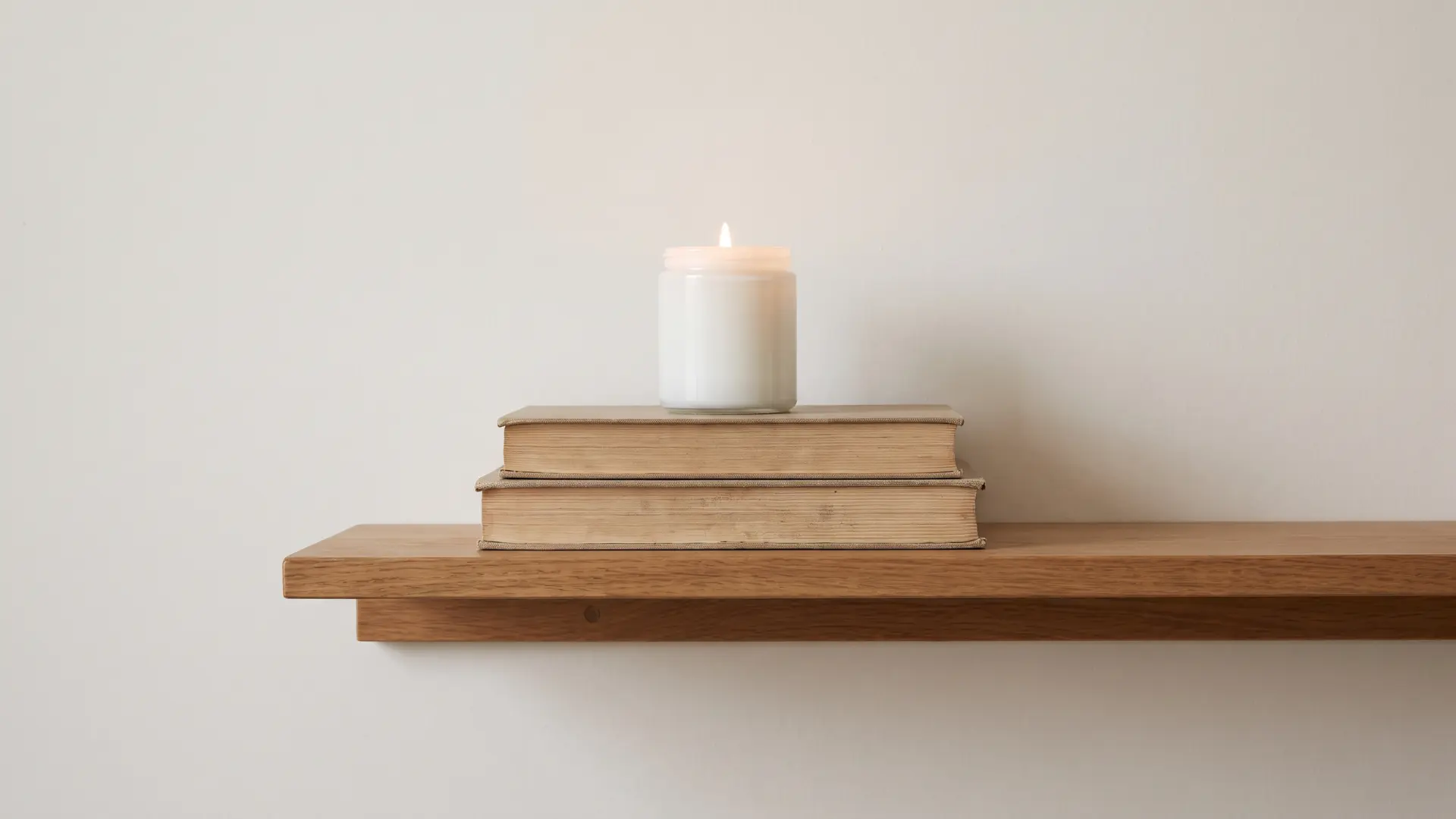
Stack two or three books flat, then top them with something small, a candle, mini vase, or figurine.
The books add height and give the topper a reason to stand out and catch the eye. It’s a simple trick for instantly fixing a shelf that feels visually flat or one-dimensional.
10. The Monochrome Vessel Grouping
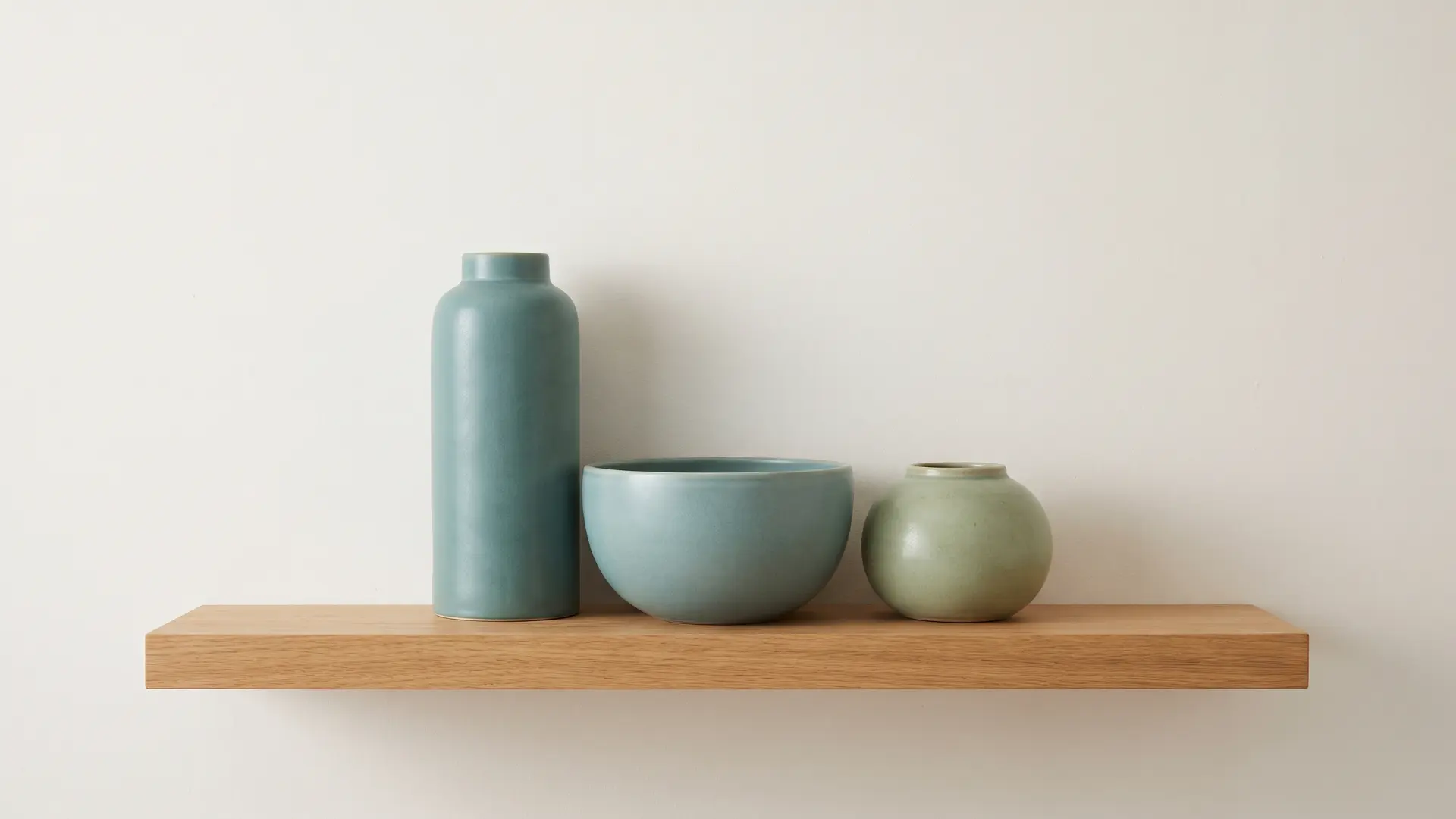
Cluster three vases or bowls in the same color family but different shapes and sizes.
This works especially well in neutral or all-white rooms, where varied silhouettes create visual interest without needing color to carry the arrangement, like a small, intentional gallery display using pieces you already own.
11. The Brass and Wood Accent Shelf
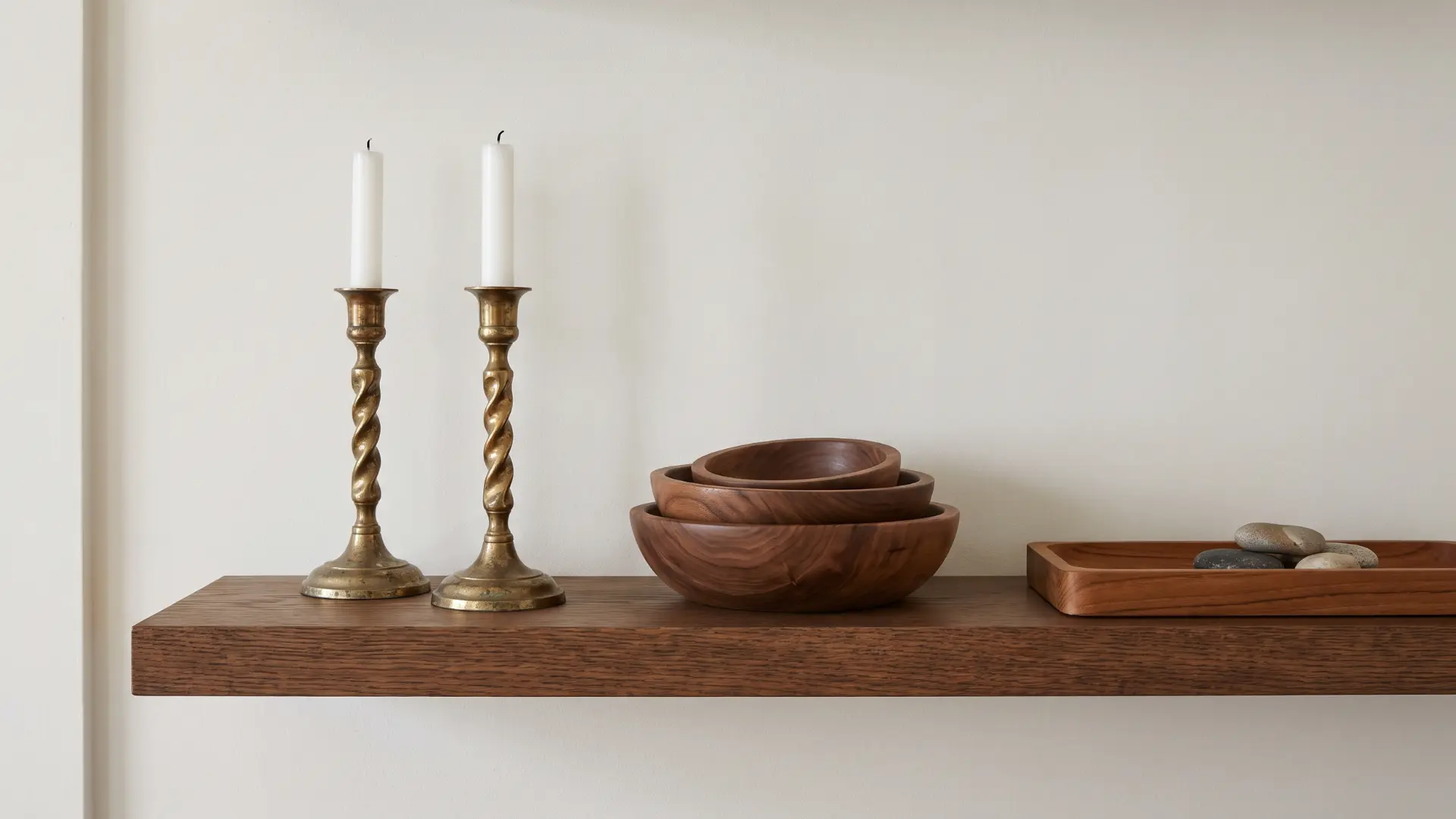
Pair brass candlesticks or bookends with wood bowls or trays for instant warmth without relying on bold color.
Metal and wood together create an elevated feel on their own, and the combination is versatile enough to work in traditional, transitional, and modern rooms alike, tying the shelf together effortlessly.
12. The Seasonal Rotation Shelf
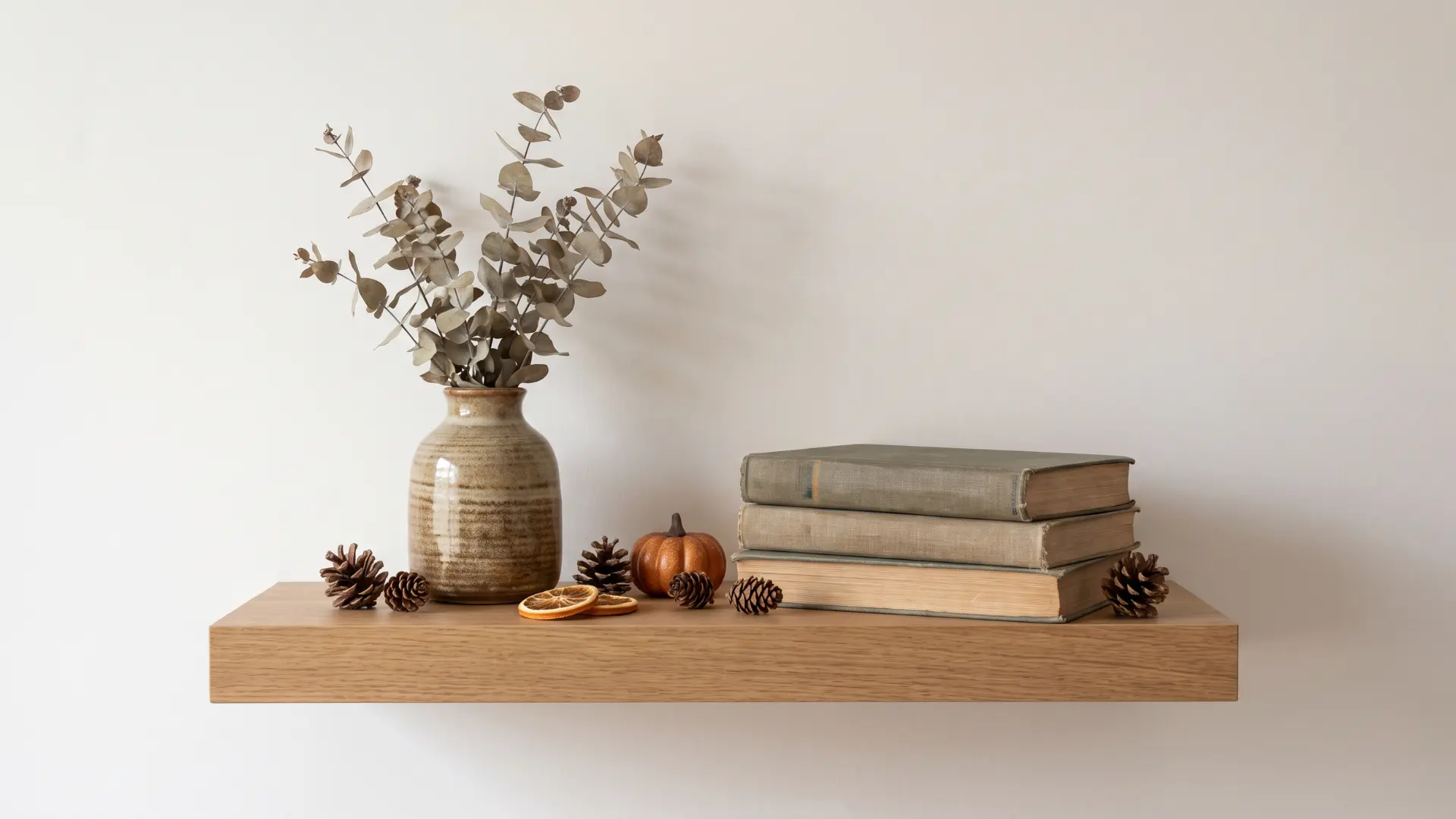
Keep two anchor items, a vase and a stack of books, in place year-round, then rotate two or three smaller accent pieces by season: pinecones in fall, ornaments in winter.
This keeps the shelf feeling fresh and current without requiring a full restyle every few months.
13. The Floating Shelf Duo
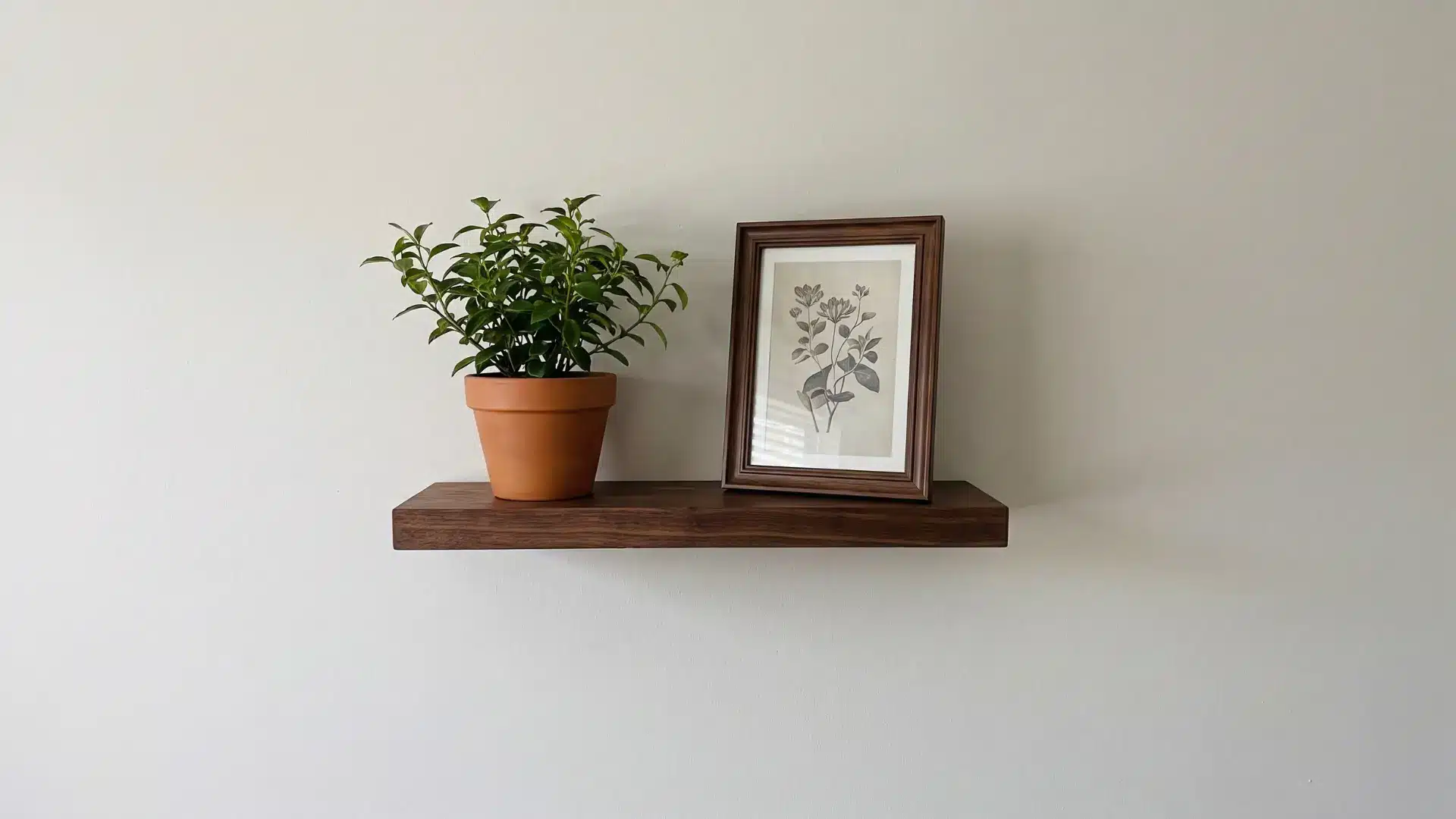
Floating shelves lack the depth for a full arrangement, so two items is usually the right number.
Try one plant paired with a framed print, or a candle alongside a short stack of books; anything more quickly crowds the shelf, given its shallow, narrow footprint.
14. The Collector’s Shelf
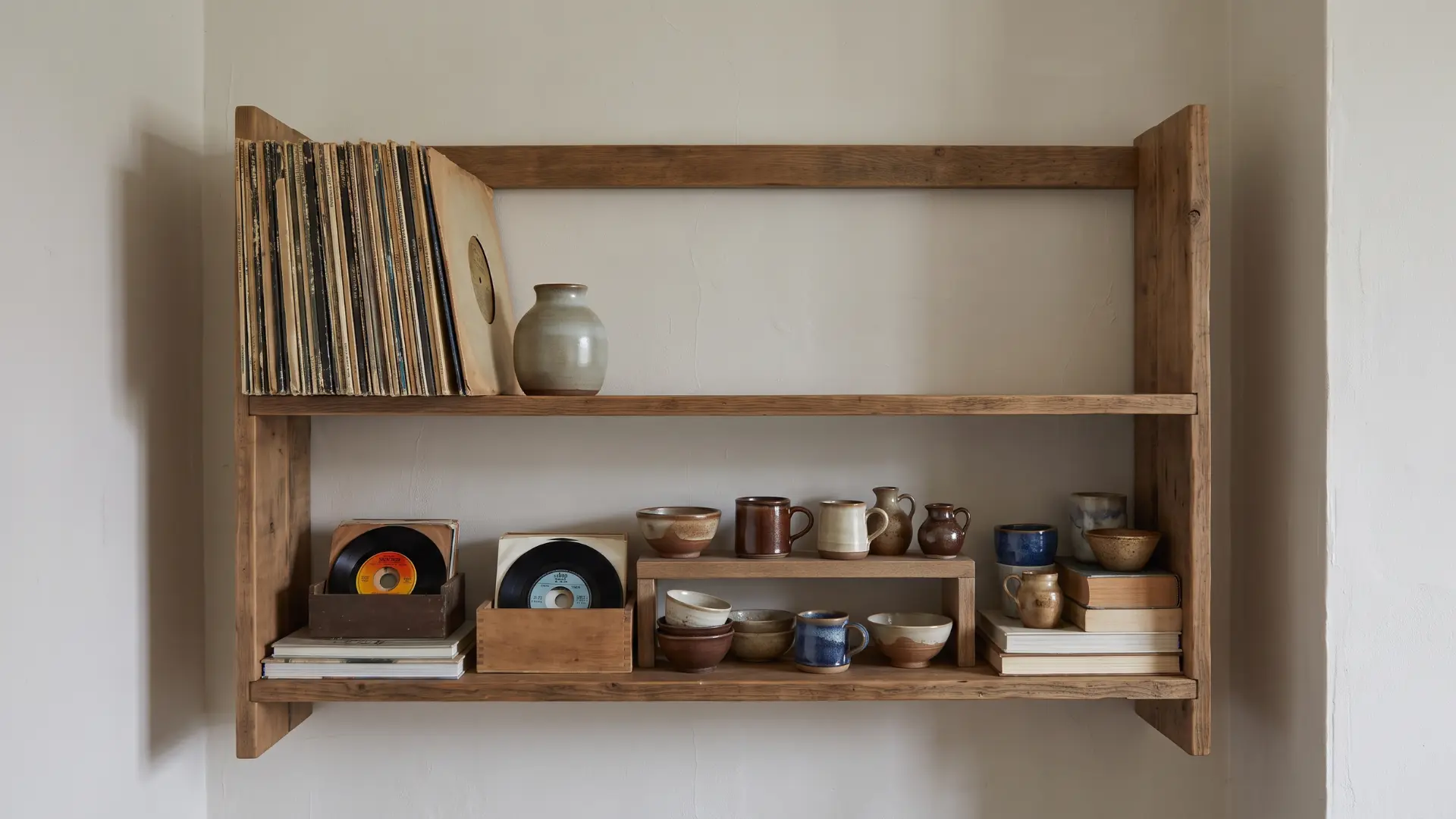
Give a personal collection- vinyl records, pottery, travel souvenirs- its own dedicated shelf.
Arrange pieces at varying heights rather than lining them up flat to create rhythm and movement. It’s one of the simplest ways to make a shelf feel personal and specific rather than generic.
15. The Negative Space Minimalist Shelf
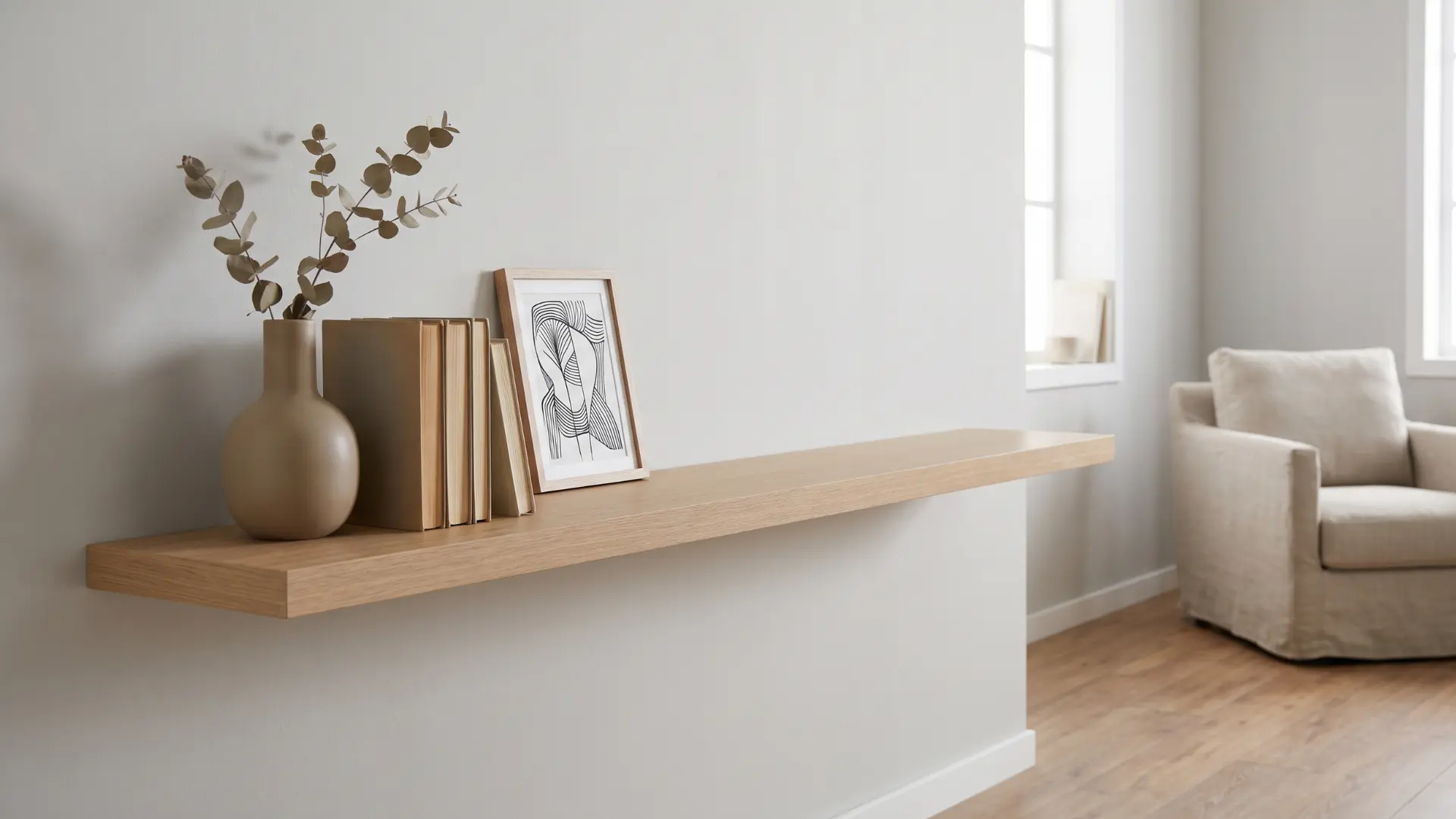
Some shelves work best nearly empty: one vase, one short stack of books, one small art piece, with the rest left open on purpose.
The empty space carries as much visual weight as the objects themselves, making this approach ideal for modern and Scandinavian-style interiors.
Budget Friendly vs. Splurge Shelf Styling
You don’t need a large budget to make any of these ideas work. The difference between a $20 version and a $150 version usually comes down to materials, not the concept itself.
| Idea | Budget Version | Splurge Version |
| Botanical Corner | Faux plants in thrifted pots | Live plants in a hand thrown ceramic or woven planter |
| Monochrome Vessel Grouping | Secondhand vases painted one color | Matched ceramic vessels from one collection |
| Brass and Wood Accent | Thrifted brass candlesticks and a wood cutting board as a tray | Solid brass hardware paired with a solid wood bowl |
Common Shelf Styling Mistakes
Most small styling issues come down to a handful of placement choices rather than the objects themselves.
| Shelf Mistake | What It Removes | Why It Looks Off | Simple Fix |
|---|---|---|---|
| Keeping all objects at the same height | Rhythm and movement | The shelf reads as flat because there’s no height change for the eye to follow | Mix tall, medium, and short pieces to create a natural flow |
| Using too many unrelated colors | Cohesion | Colors without repetition make each item compete for attention | Repeat one color, material, or finish at two or three points |
| Pushing every object against the back wall | Depth and dimension | The arrangement looks like storage with no foreground or background separation | Pull a few pieces forward to create layers and visual space |
Fixing the right issue can change an entire shelf without replacing a single object. If your shelf still feels off after trying these fixes, go back to the density step. In my experience, the issue almost always comes back to too much on too little space.
Conclusion
The Best Shelf Decor Ideas Are Not About Finding the Perfect Objects. I’ve Found that A Well-Styled Shelf Comes Down to Placing Each Piece with Intention and Knowing What Role It Plays in The Overall Arrangement.
I Always Start with Less than I Think I Need. I Build Around One Anchor Piece, Leave Enough Space for The Shelf to Breathe, and Repeat a Material or Color to Create a Visual Connection.
The Shelves that Catch My Attention Are Rarely Filled with Expensive Decor. They work because every object feels considered and placed for A Reason.
If Your Shelf Still Feels Off After Trying These Changes, I’d Return to The Second Step. In My Experience, the issue is usually density. Remove Something, Step Back, and Look Again.
Frequently Asked Questions
What Is the Rule of Thumb for Decorating Shelves?
Arrange Items in Odd-Numbered Groupings, Typically Threes, and Vary Height, Texture, and Scale Within Each Group. A Tall Object Next to A Short Stack Next to A Round Vessel Gives the Eye a Natural Path. Even One Group Done This Way Looks More Deliberate than Five Matching Items in A Row.
How Do You Style Open Shelves without Making Them Look Cluttered?
Keep Item Count Low and Leave at Least 20–30% of Each Shelf as Space; group by Visual Weight, Not Category. Repeat One Color or Material Across Multiple Shelves so The Eye Reads the Whole Unit as One Thing, Not a Row of Objects Placed Near Each Other.
What Are the Best Items to Put on Shelves for A Simple, Modern Look?
A Few Books Stacked Horizontally, One Plant or Vessel, and One Object with An Interesting Silhouette. That Combination Covers Texture, Height, and Shape without Fighting Itself. Keep to Two or Three Colors Across the Whole Shelf, and It Won’t Read as Busy.
Can You Mix Decorative and Functional Items on The Same Shelf?
Yes, and it usually looks better than keeping them separate. A row of books broken by a small plant and a candle reads more naturally than a shelf of purely decorative objects; functional items need to be placed as deliberately as decorative ones. A basket shoved in sideways undoes everything around it.