

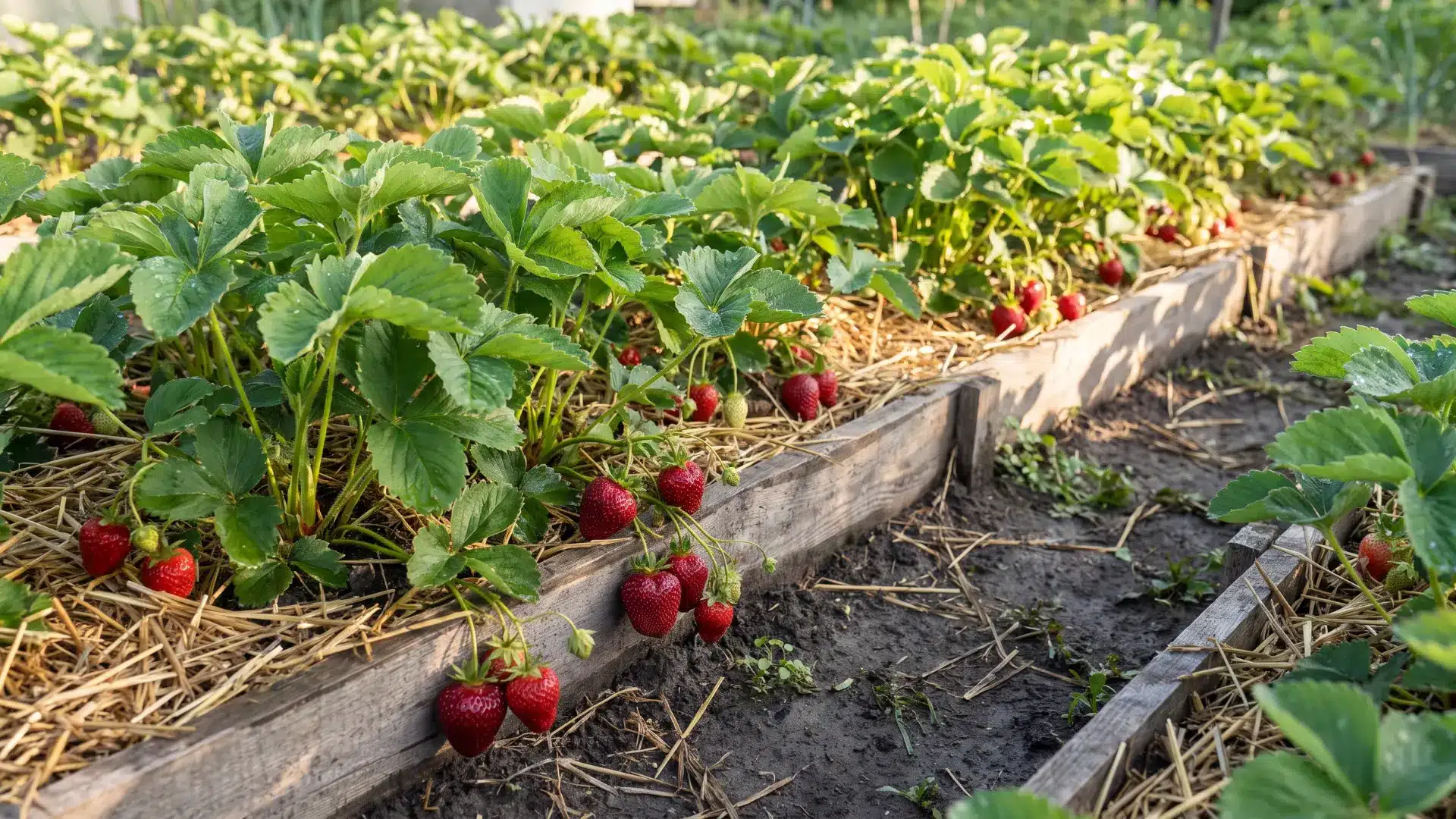
Growing strawberries can seem simple at first. However, incorrect planting depth, crowded runners, poor watering, or excessive fertilizer can leave plants with plenty of leaves and very little fruit.
I have found that a successful strawberry patch starts with decisions made before planting. The variety, location, soil, and spacing all affect future harvests.
Learning how to grow strawberries requires a clear planting and care routine. The steps below explain how to select plants, prepare the growing area, plant each crown, manage runners, protect the fruit, and maintain a productive backyard strawberry garden.
What Strawberry Plants Need to Produce Fruit
Strawberries need at least six hours of direct sunlight each day, though eight or more hours usually supports better flowering and fruit production. Plants also need loose soil that drains after rain or watering.
Constantly wet roots may rot, while dry soil can cause small or misshapen berries. Other fruiting garden plants share this same trade-off; the full sun requirements for rhubarb, for instance, follow a nearly identical logic around light and drainage.
A soil pH between 5.5 and 6.8 suits most strawberry varieties. Good airflow helps leaves dry after rain and may reduce fungal problems. Space around each plant is just as important once runners begin forming.
Consistent care matters more than occasional heavy feeding. Regular watering, clean mulch, and frequent plant checks support steady growth without forcing excessive leaf production.
Choose the Right Strawberry Type
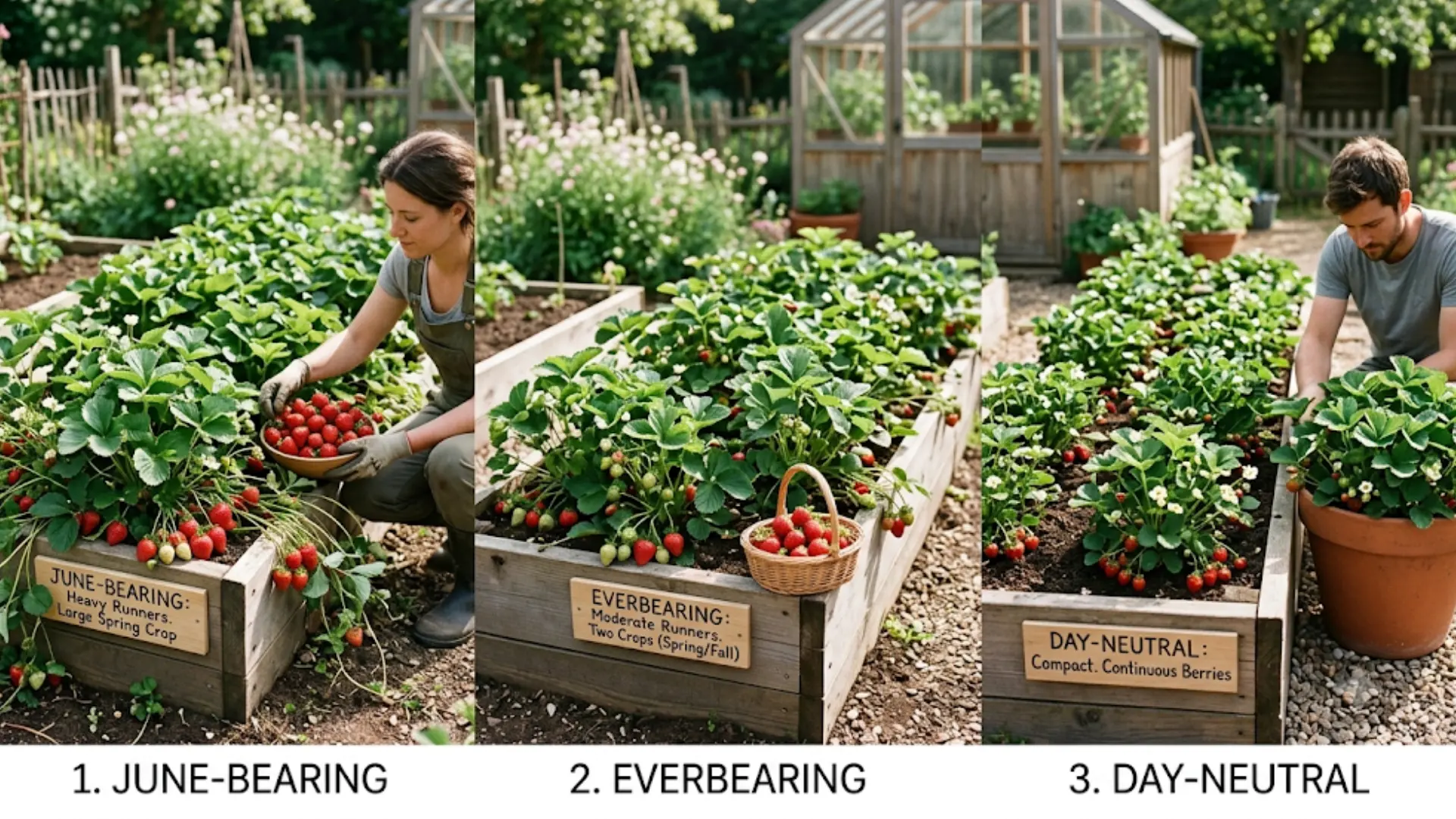
Strawberry plants fall into three main groups. Each type has a different harvest schedule, so the right choice depends on how often you want fruit and how much growing space is available.
1. June-Bearing Strawberries
June-bearing strawberries produce one main crop over several weeks, usually during late spring or early summer. The exact harvest month depends on the local climate.
These plants commonly produce many runners and can fill an open bed quickly. They are a practical choice when you want a concentrated harvest for jam, freezing, baking, or sharing. Their short fruiting period means there may be plenty of berries at once, followed by little or no fruit later in the season.
2. Everbearing Strawberries
Everbearing strawberries commonly provide two main crops. One appears in late spring or early summer, while another develops near the start of fall.
Each crop may be smaller than a June-bearing harvest, but the separate fruiting periods make fresh berries available more than once. Runner production varies by variety, so check the plant label before deciding how much space each plant needs.
3. Day-Neutral Strawberries
Day-neutral strawberries can flower and produce fruit repeatedly while temperatures remain moderate. Production may slow during very hot weather and resume when conditions become cooler.
These plants generally form fewer runners than June-bearing varieties. Their compact growth makes them useful for containers, hanging baskets, and small beds.
Here is a quick comparison of the three main types:
| Strawberry Type | Harvest Pattern | Runner Growth | Suitable Use |
|---|---|---|---|
| June-bearing | One large seasonal crop | Heavy | Preserving and large harvests |
| Everbearing | Two smaller crops | Moderate | Spring and fall fruit |
| Day-neutral | Repeated small crops | Low to moderate | Containers and regular picking |
Local garden centers often stock varieties suited to nearby conditions. Check expected runner growth, disease resistance, and recommended growing zones before buying.
How to Grow Strawberries From Seeds and Plants
Each step affects the next stage of plant growth. Complete the setup carefully before moving on to routine watering, feeding, and pest control.
Tools and Materials Needed
Gather the supplies before preparing the growing area. This saves time and helps protect bare roots from drying while holes are being prepared.
| Tool or Material | Purpose |
|---|---|
| Ripe strawberries | Provides seeds for planting |
| Strawberry seedlings or plants | Used for transplanting and propagation |
| Transparent container with lid | Maintains humidity during seed germination |
| Small nursery pots | Holds young seedlings and runner plantlets |
| Large pot or plastic bottle | Supports mature strawberry plants |
| Waxed paper | Prevents drying strawberry slices from sticking |
| Blender | Separates seeds from strawberry pulp |
| Clean water | Rinses seeds and waters plants |
| Knife | Cuts strawberries into thin slices |
| Clean pruning tool | Removes dead roots and separates runners |
| Compost | Supplies nutrients and supports root growth |
| Vermicompost | Adds nutrients to the growing mixture |
| Garden soil | Forms the main planting medium |
| Fine wood chips | Improves the seed-starting mixture |
| Small sticks and dry leaves | Creates the lower organic layer and surface mulch |
| Clear cup or glass | Protects transplanted seedlings from dehydration |
Keep the tools close to the planting area so bare-root plants can be transferred into the soil without a long delay.
1. Choose and Prepare the Growing Area
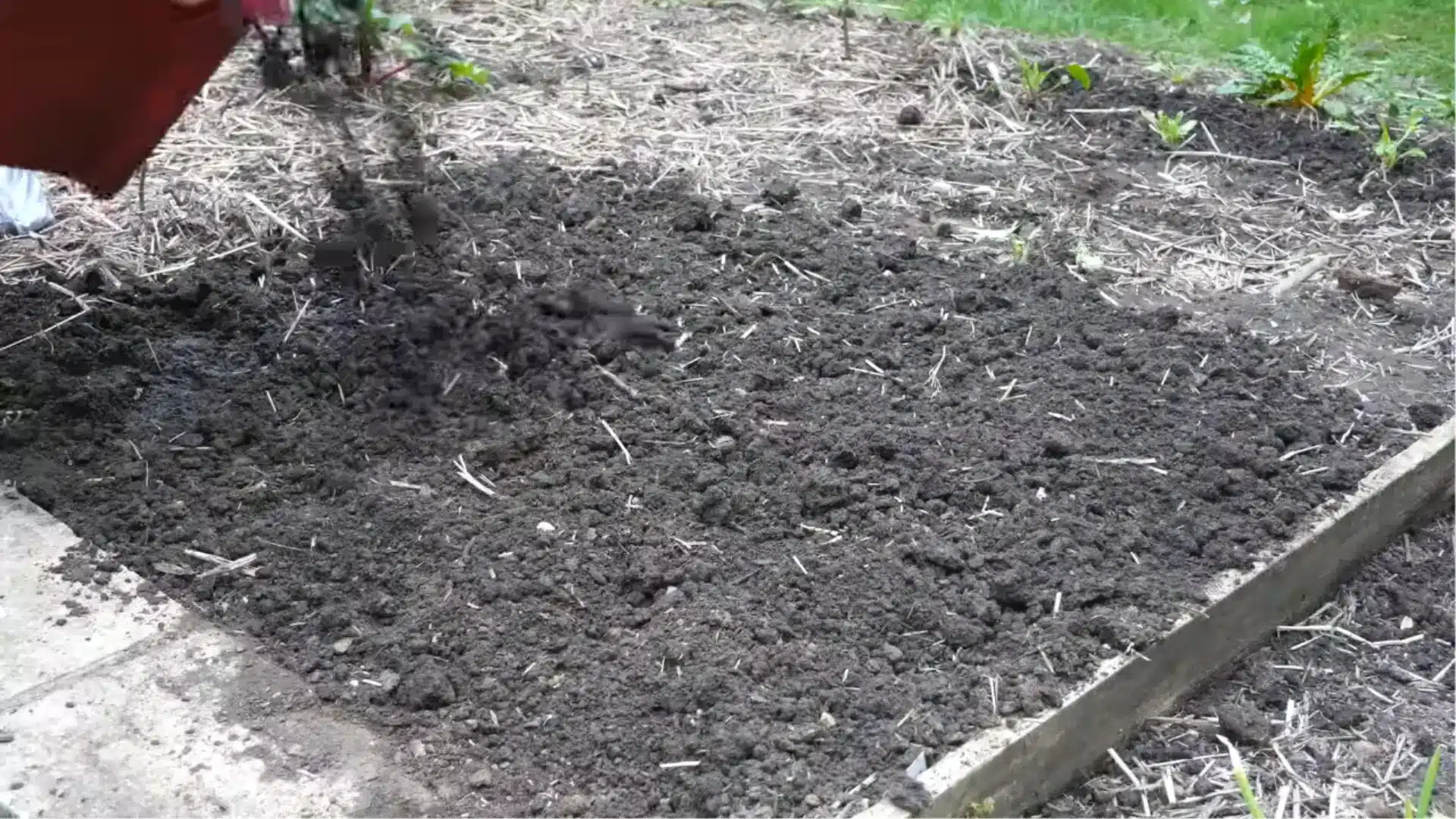
Select a sunny, sheltered location with fertile soil that drains well. Avoid low areas where standing water or frost may damage the roots. Loosen the ground with a garden fork, then mix in compost or well-rotted manure. Knowing the difference between garden soil basics and bagged potting mixes helps you pick the right amendment for an in-ground bed versus a container.
Apply organic fertilizer according to its label. Avoid ground recently used for tomatoes, potatoes, or chrysanthemums. Containers, hanging baskets, and vertical towers are practical choices when garden space is limited.
2. Prepare the Strawberry Plants
Select healthy strawberry plants with firm crowns, strong roots, and no visible signs of disease or damage. Potted plants already have established root systems and can handle a broader planting window.
Before planting bare-root strawberries, soak their roots in water for about one hour. Trim only damaged or unusually long roots with clean scissors. Keep the prepared plants shaded and moist until each one is placed in its planting hole.
3. Space and Plant the Strawberries
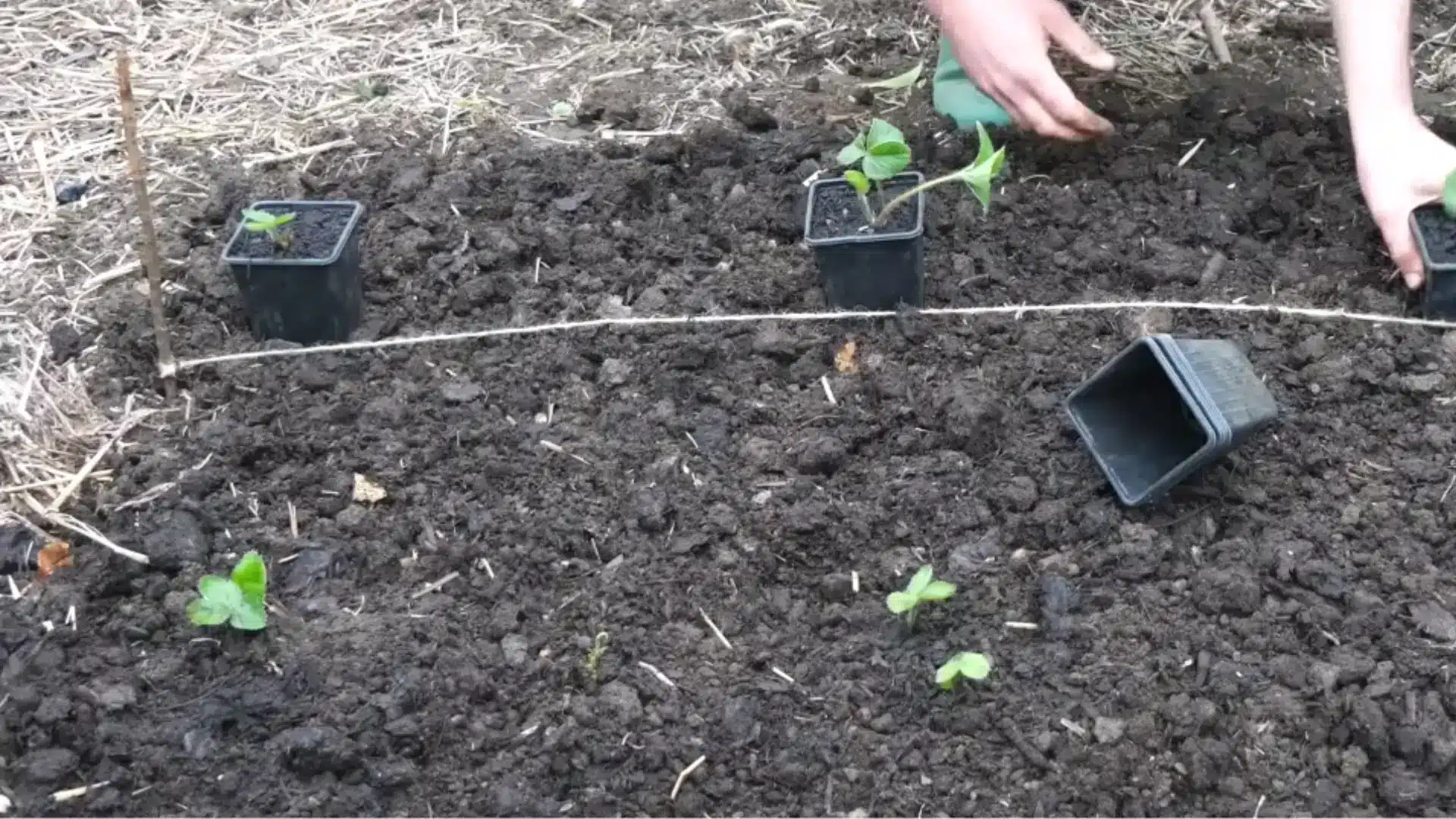
Mark straight rows with a string line and space strawberry plants about 20 inches apart. Dig each hole wide enough for the roots to spread without bending upward.
Set the crown level with the soil surface, since deep planting may cause rot and shallow planting can expose roots. Return the soil, press it gently around the plant, and water thoroughly. Keep potted strawberries at the same depth as their original containers.
4. Water, Feed, and Mulch the Plants
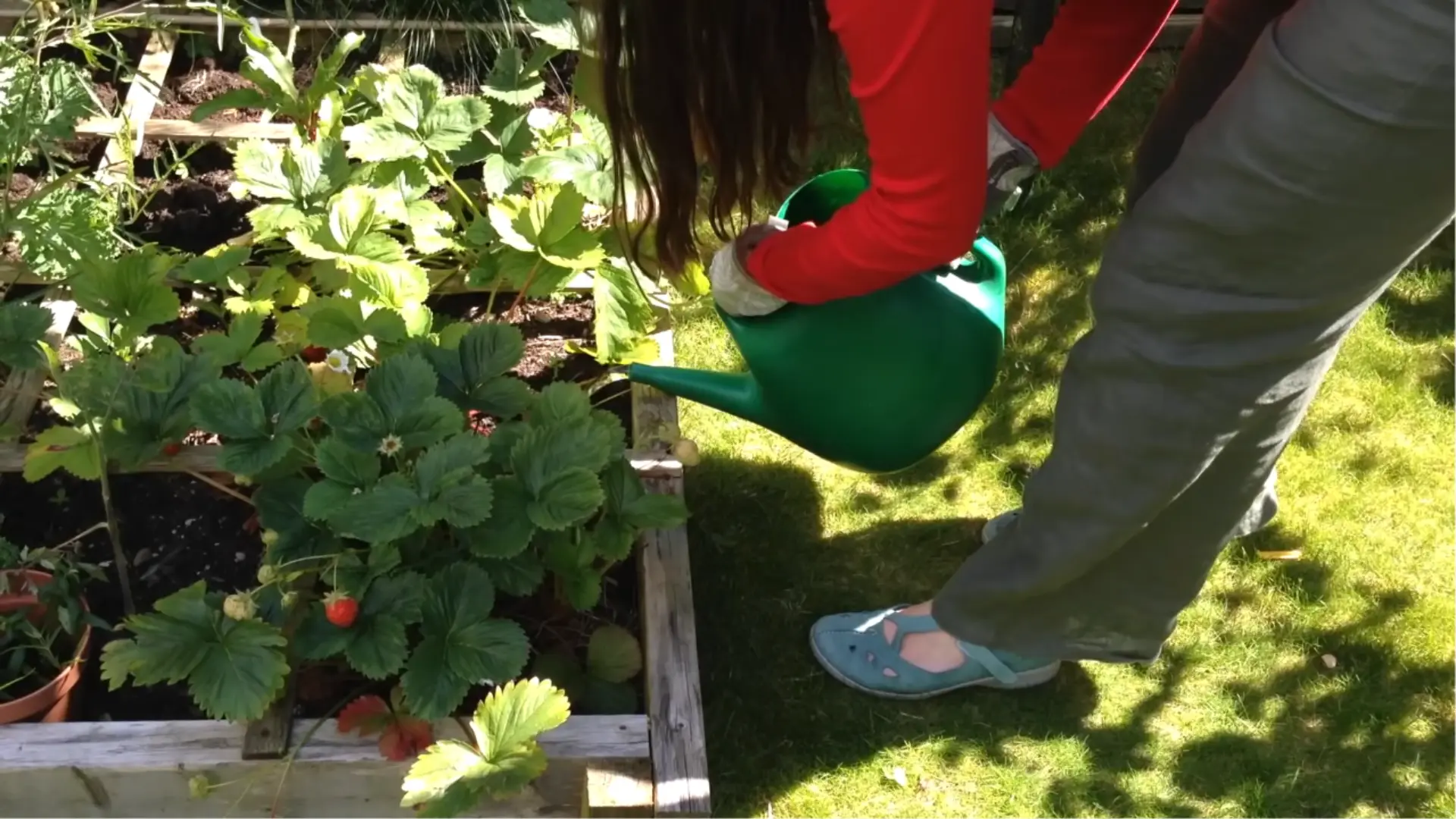
Water strawberries thoroughly after planting and direct moisture toward the soil instead of the leaves. Continue watering regularly, especially during warm weather or when growing plants in containers.
Apply organic fertilizer carefully each spring without disturbing the shallow roots. Feed container plants with a high-potassium liquid fertilizer after flowers appear, following label directions. Place clean straw beneath developing fruit to retain moisture, control weeds, and keep berries away from damp soil.
5. Manage Runners and Protect the Crop
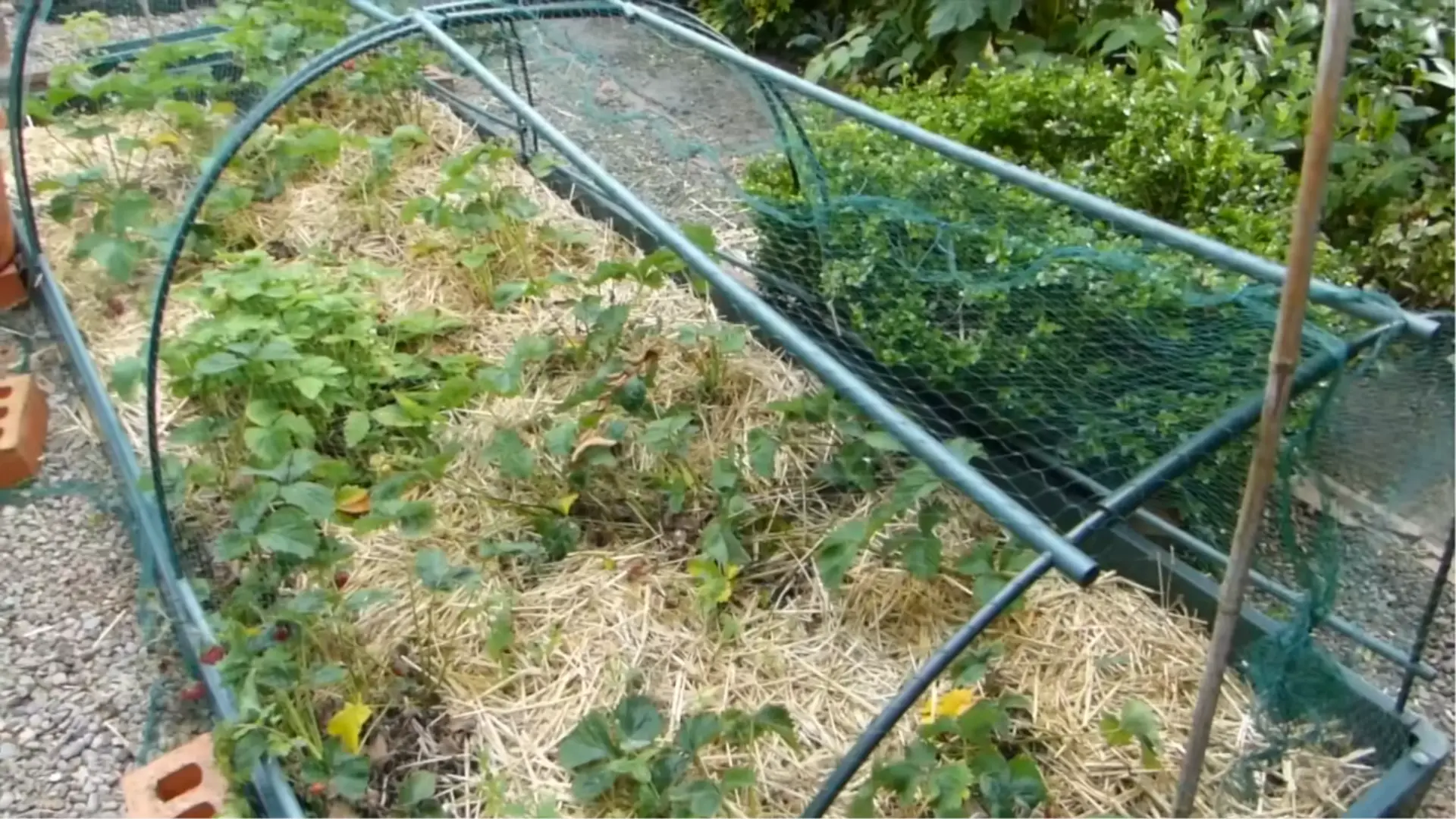
Runners are trailing stems that form new plants away from the parent crown. Remove unwanted runners during the first year so young plants can direct more energy toward root growth.
In later seasons, pin selected runner nodes into moist soil and separate them after roots develop. Cover ripening strawberries with secure bird netting. Use garden fleece when frost threatens and suitable slug controls if pests begin damaging leaves or developing fruit.
6. Harvest and Maintain the Strawberry Bed
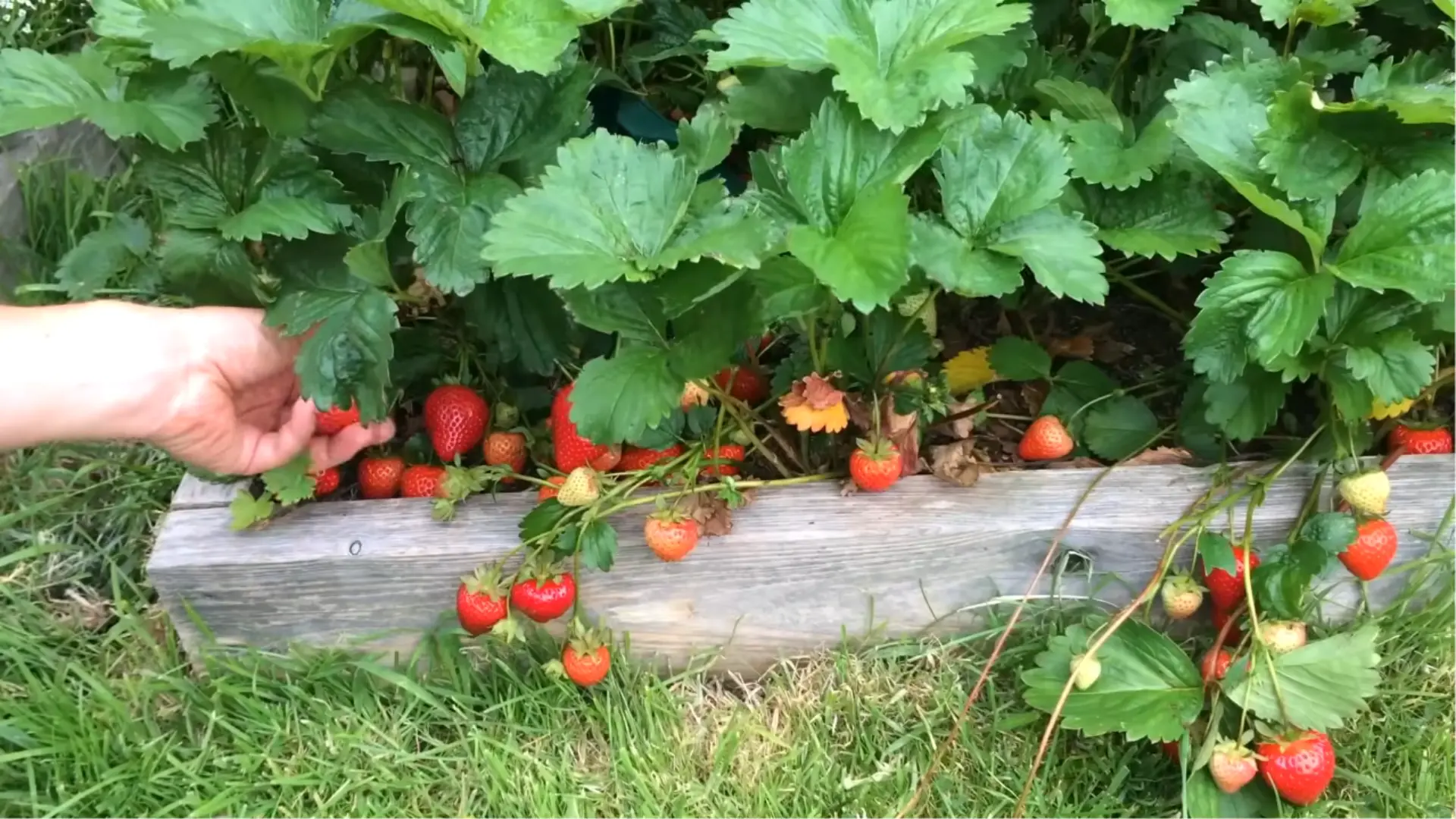
Pick strawberries after the whole fruit reaches its ripe color. Hold the stem or use clean scissors to avoid damaging nearby leaves, flowers, and unripe berries. Collect fruit during dry weather and eat or refrigerate it soon after picking.
At the season’s end, remove weeds, damaged leaves, and old straw while protecting fresh central growth. Replace declining plants after about three productive seasons and place young replacements in clean soil.
For a complete walkthrough of the process, check out the video tutorial below:
How to Grow Strawberries in Containers
Growing strawberries in pots works well for small spaces, but container size, drainage, sunlight, watering, and winter care directly affect plant health.
- Choose the Container: Select a pot with several drainage holes. A container measuring 8 to 12 inches across can usually support one strawberry plant.
- Maintain Plant Spacing: Use larger troughs for several plants. Vertical towers hold more strawberries, though upper sections may dry faster than lower planting pockets.
- Add Potting Mix: Fill each container with fresh, well-draining potting mix. Avoid heavy garden soil because it may become compacted and block drainage.
- Position the Crown: Keep the strawberry crown level with the potting mix. Water thoroughly after planting and allow excess moisture to drain completely.
- Manage Light and Water: Rotate containers when sunlight reaches only one side. Check the soil frequently because pots dry quickly during warm or windy weather.
- Feed Flowering Plants: Apply a suitable liquid fertilizer after flowers appear, following the product directions to avoid excessive leafy growth and limited fruiting.
- Provide Winter Protection: Move dormant pots to a sheltered location or insulate them because container-grown roots receive less protection from freezing temperatures.
Proper drainage, steady watering, balanced feeding, and seasonal protection help container-grown strawberry plants remain healthy and produce fruit within limited growing spaces.
How to Maintain the Strawberry Bed After Harvest
Remove old straw, weeds, rotten fruit, and badly damaged leaves after the main harvest. Leave the healthy central crown and fresh growth intact.
Thin crowded June-bearing rows so the remaining plants have enough space. Remove weak plants and runners growing outside the planned row.
Continue watering during dry weather. Strawberry plants form roots and future flower buds after fruit production ends.
Replace mulch before winter in cold regions. Apply clean straw after the plants enter dormancy, then pull part of it away when new spring growth appears.
Strawberry plants may remain productive for several years, but yields often fall as crowns age and beds become crowded. Root strong runners and use them to replace old plants every three or four years.
Common Strawberry Growing Problems
The table below connects common symptoms with likely growing mistakes and practical corrections.
| Problem | Possible Cause | What to Do |
|---|---|---|
| Plants have leaves but no berries | Too much nitrogen, low light or young plants | Reduce feeding and check sunlight |
| Berries remain small | Crowding, heat or uneven watering | Thin plants and maintain steady moisture |
| Fruit rots before ripening | Wet soil, poor airflow or dirty mulch | Remove damaged fruit and replace wet mulch |
| Flowers fall without forming fruit | Frost, heat or poor pollination | Protect flowers and allow insects to reach them |
| Leaves develop brown spots | Disease or regularly wet foliage | Remove affected leaves and water at soil level |
| New plants collapse | Buried crowns or waterlogged soil | Correct the planting depth and drainage |
| Birds eat ripening berries | Protection was added too late | Install supported netting before fruit changes color |
| Slugs damage low fruit | Damp hiding places near the bed | Clear debris and use suitable slug controls |
Avoid making several major care changes at once. Correct the clearest problem first, then monitor new leaves, flowers, and fruit.
Growing a Productive Strawberry Patch
Knowing how to grow strawberries means handling each stage in the right order. Plant selection, soil preparation, crown depth, spacing, watering, and runner control all affect the final crop.
I have found that planting depth and runner management cause many avoidable problems. Small corrections made early are easier than repairing an overcrowded or unhealthy bed later.
I suggest beginning with a small backyard strawberry garden and keeping notes about flowering, watering, and harvest dates.
Replace aging plants with strong-rooted runners, keep the mulch clean, and inspect the crop regularly. Consistent care gives strawberry plants the best chance to produce healthy fruit each season.
Frequently Asked Questions
What month should I plant strawberries?
Plant strawberries in early spring after the ground becomes workable. Autumn planting suits mild climates when plants have several weeks to establish before the first hard frost.
How long does it take for strawberry plants to produce fruit?
Day-neutral and everbearing plants may produce a light crop within 60 to 90 days. June-bearing plants often produce their main harvest during the season after planting.
Are strawberries better in pots or in the ground?
Garden beds provide more root space and hold moisture longer. Pots suit patios and small spaces but need closer watering, feeding, drainage, and winter protection.
Can strawberries grow in partial shade?
Plants can survive with limited sun, but fruit production usually falls. Aim for at least six hours of direct sunlight and choose the brightest available location.
Can I grow strawberries from store-bought fruit?
Seeds from store-bought berries may germinate, but the resulting plants may not match the original fruit. Starting with young plants or bare roots is faster and more reliable.
How many strawberry plants should I start with?
Five to ten plants are manageable for a beginner. This number provides enough plants for learning about spacing, watering, runners, pests, and harvesting without creating excessive maintenance.