

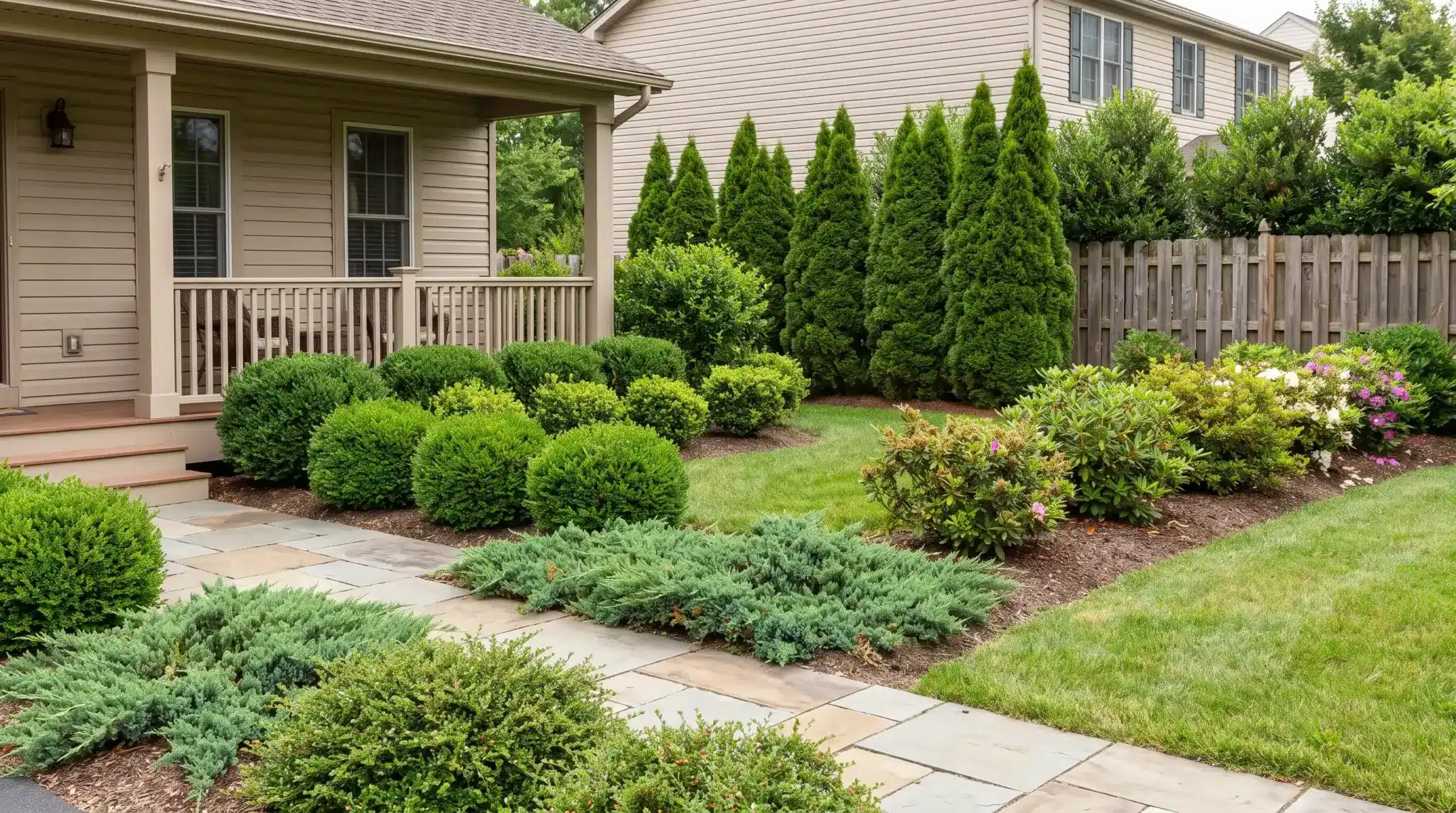
Evergreen bushes look small and manageable in a nursery pot, right up until the one you planted three years ago swallows your porch steps. I see this happen constantly.
You pick a shrub based on how it looks today, not how wide it gets in five years, then spend every summer fighting it back with shears. You don’t have to guess.
Once you know your USDA zone, your actual sunlight hours, and how much width you can spare, choosing the right shrub gets a lot easier.
Here’s what separates a bush that thrives for decades from one you’ll be ripping out, plus fifteen solid options to plant this season
Types of Evergreen Bushes at a Glance
I get the same question from clients every spring: which evergreen bushes actually stay the size they’re supposed to.
The short answer is that types of evergreen bushes range from six inch groundcover junipers to fifteen foot yew hedges, and the right one depends on your USDA zone, your sunlight, and how much width you can actually give it.
The comparison below covers the fifteen shrubs I plant most often, sorted by the details that matter before you dig a hole.
| Bush | USDA Zones | Sunlight | Mature Size | Maintenance |
| Boxwood | 5 to 9 | Full sun to partial shade | 1 to 20 ft | Moderate |
| Arborvitae | 2 to 8 | Full sun | 1 to 30 ft | Low |
| Juniper | 3 to 9 | Full sun | 0.5 to 20 ft | Low |
| Holly | 5 to 9 | Full sun to partial shade | 2 to 30 ft | Low to moderate |
| Evergreen azalea and rhododendron | 5 to 9 | Partial shade | 1 to 15 ft | Moderate |
| False cypress | 4 to 8 | Full sun to partial shade | 2 to 20 ft | Moderate |
| Mountain laurel | 4 to 9 | Partial shade | 5 to 15 ft | Moderate |
| Inkberry holly | 4 to 9 | Full sun to partial shade | 3 to 8 ft | Low |
| Yew | 4 to 7 | Full sun to full shade | 2 to 20 ft | Moderate |
| Dwarf mugo pine | 2 to 7 | Full sun | 2 to 10 ft | Low |
| Japanese pieris | 5 to 8 | Partial shade | 4 to 10 ft | Moderate |
| Leucothoe | 5 to 8 | Partial to full shade | 2 to 6 ft | Moderate |
| Oregon grape | 5 to 8 | Partial to full shade | 3 to 10 ft | Low |
| Wax myrtle | 7 to 9 | Full sun | 6 to 20 ft | Low |
| Gardenia | 7 to 11, cultivar dependent | Full sun to partial shade | 3 to 8 ft | High |
| Note: Your USDA hardiness zone tells you the coldest winter temperatures a plant is expected to survive. Check your zone against the ranges above before buying, since a shrub rated for zone 7 can suffer serious dieback if you’re gardening in zone 5. |
What Is an Evergreen Bush?
An evergreen bush is a woody, multi stemmed shrub that keeps functional foliage through all four seasons instead of dropping it in one flush like a deciduous plant. It still sheds older leaves or needles, just gradually, a few at a time, so the plant never looks bare.
Foliage texture varies a lot between species: junipers and arborvitae carry fine needles or flattened scales, while hollies and boxwood have broad, glossy leaves that catch light differently in a landscape bed.
In twenty years of designing planting beds, I’ve found the plants that hold up best are the ones matched to their site from day one rather than picked because they looked full in a one gallon pot. A shrub rated for 3 feet of mature width that gets planted 18 inches from a foundation will need constant shearing by year four.
The same principle held true on a front yard renovation I walked a client through last spring, where swapping two oversized junipers for right sized inkberry holly solved a foundation crowding problem that pruning alone never would have fixed.
Types of Evergreen Bushes for Every Yard
These are the evergreen bushes I recommend most often for US home landscapes, along with the growing details that actually predict how each one will perform.
1. Boxwood (Buxus spp.)
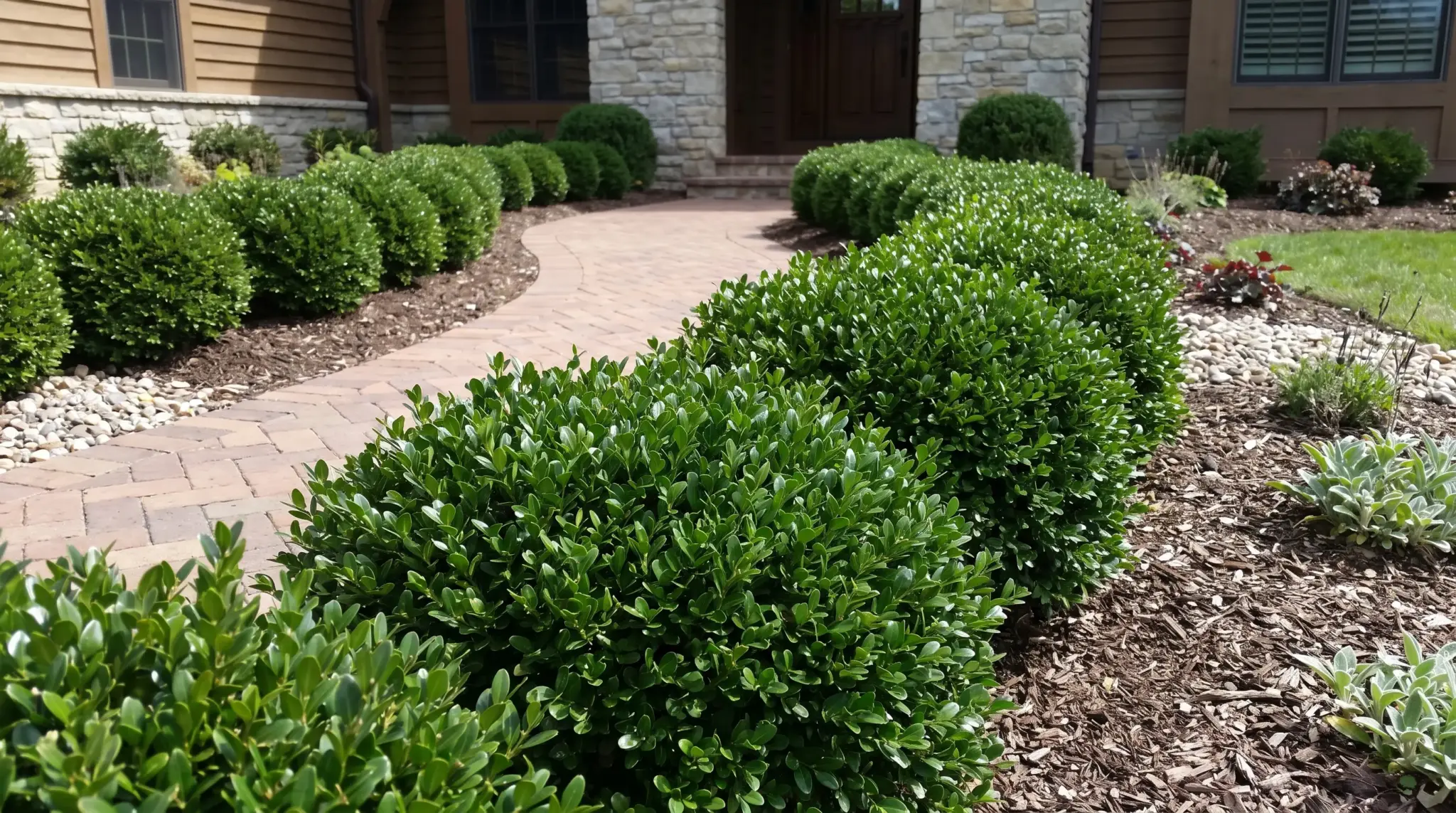
Boxwood has small, dense leaves that take shearing well, which is why it shows up in nearly every formal entryway, low hedge design, and driveway border planting I’ve drawn. It needs well drained soil and some shelter from harsh winter wind, since dry winter air combined with frozen roots is what causes the bronzing gardeners often mistake for disease.
Ask your nursery specifically about boxwood blight resistant cultivars; the fungus spreads fast in crowded, wet plantings and has wiped out entire hedge rows in the mid Atlantic region.
Mature size: 1 to 20 ft tall and wide, depending on cultivar
USDA zones: 5 to 9
Bloom time: Small, inconspicuous flowers in spring
2. Arborvitae (Thuja spp.)
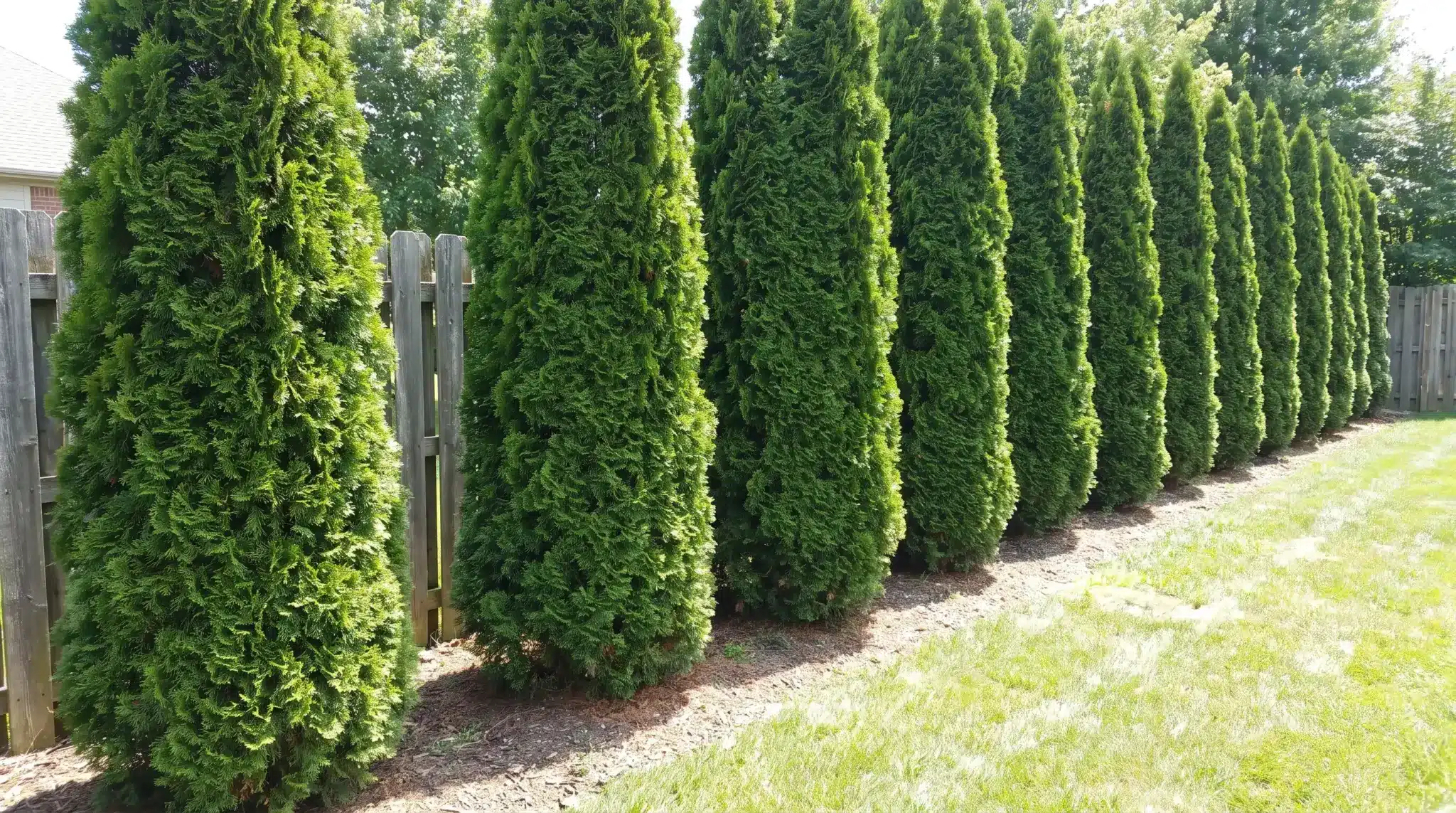
Arborvitae’s flat, soft foliage comes in rounded, narrow, and full size tree forms, and the upright cultivars are what most homeowners picture when they say “privacy screen.” Some varieties top 20 feet, so confirm the mature height on the plant tag rather than the growth you see at the nursery.
If deer are a regular problem on your property, budget for repellent or fencing during the first two winters, since young arborvitae is one of their preferred browse plants.
Mature size: 1 to 30 ft tall, 2 to 15 ft wide
USDA zones: 2 to 8
Bloom time: No showy flowers; small cones follow spring pollination
3. Juniper (Juniperus spp.)
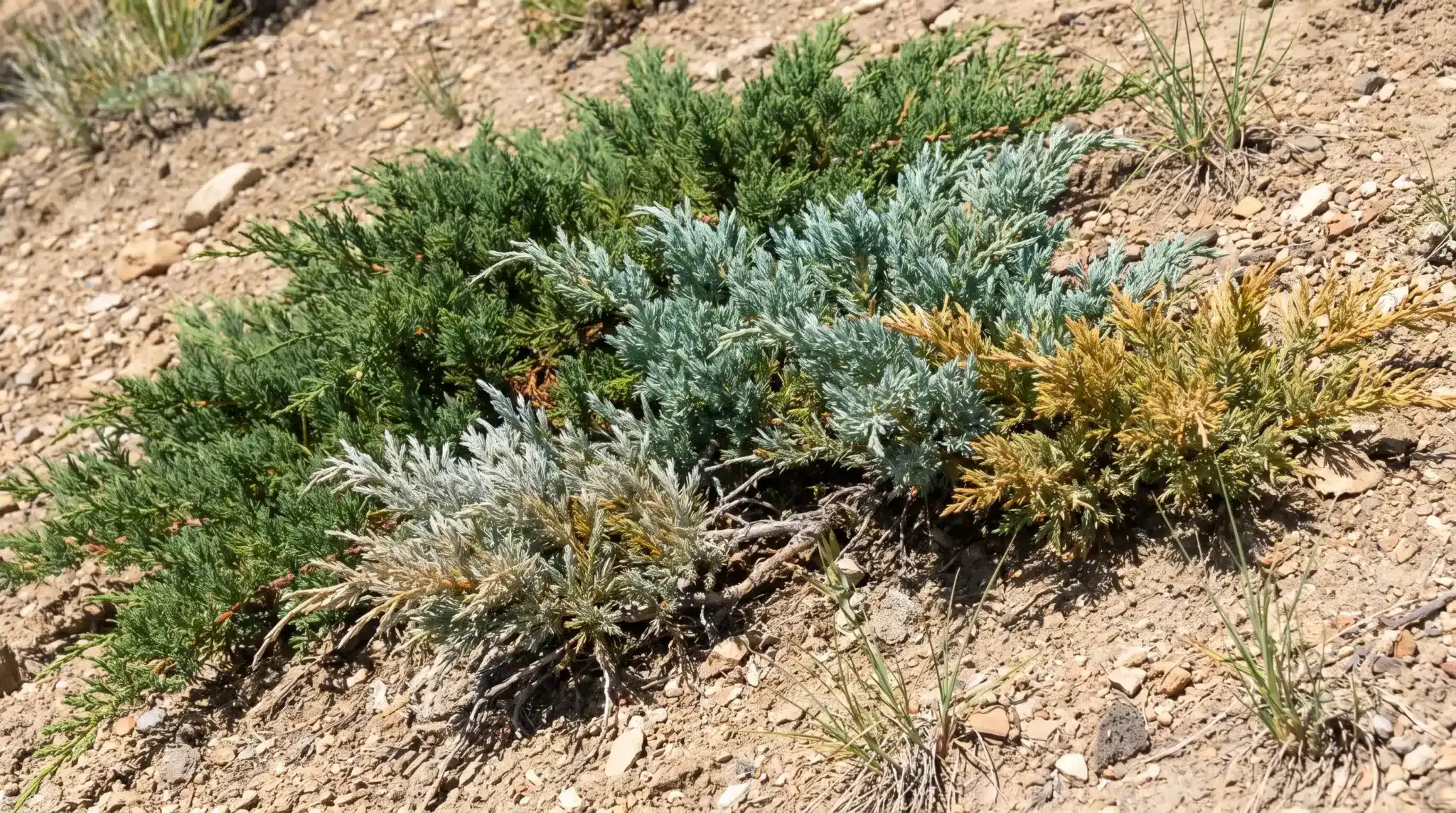
Juniper thrives in full sun and fast draining soil, and it comes in low spreading, rounded, and upright forms in green, blue green, silver, or gold.
Established plants shrug off heat and drought better than almost any other shrub on this list, but they decline quickly in heavy shade or anywhere water collects around the roots for more than a day or two.
Mature size: 6 in to 20 ft tall, 1 to 15 ft wide
USDA zones: 3 to 9
Bloom time: No true flowers; small cones follow spring pollination
4. Holly (Ilex spp.)
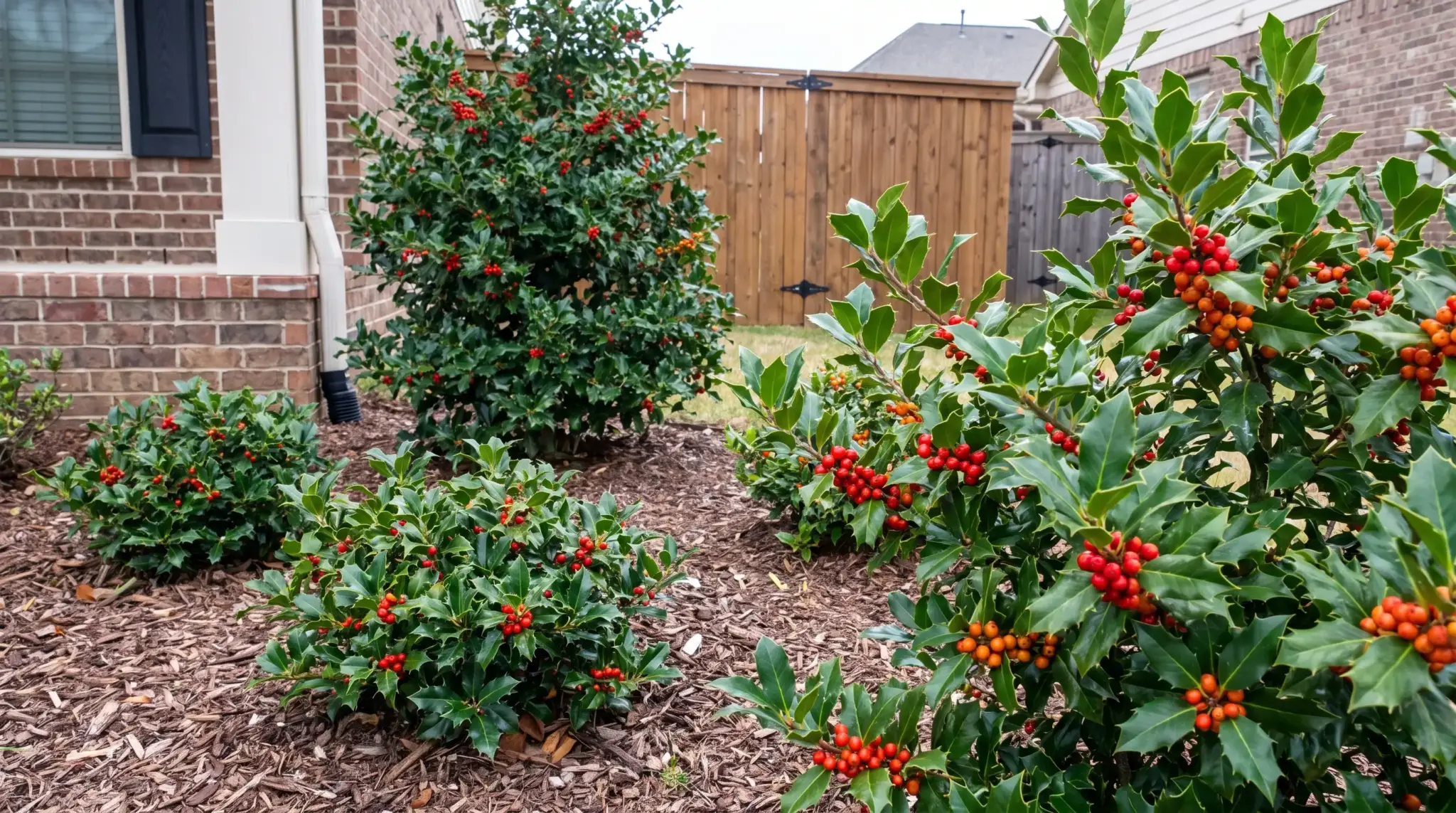
Holly’s glossy leaves and, on female plants, bright winter berries make it a strong pick for anything from a 3 foot foundation planting to a 25 foot privacy screen.
If you want berries, check the tag: many female hollies need a male plant within 40 to 50 feet to pollinate, and skipping that step is the most common reason gardeners end up disappointed by a berryless holly.
Mature size: 2 to 30 ft tall and wide
USDA zones: 5 to 9
Bloom time: Small flowers, late spring to early summer
5. Evergreen Azalea and Rhododendron
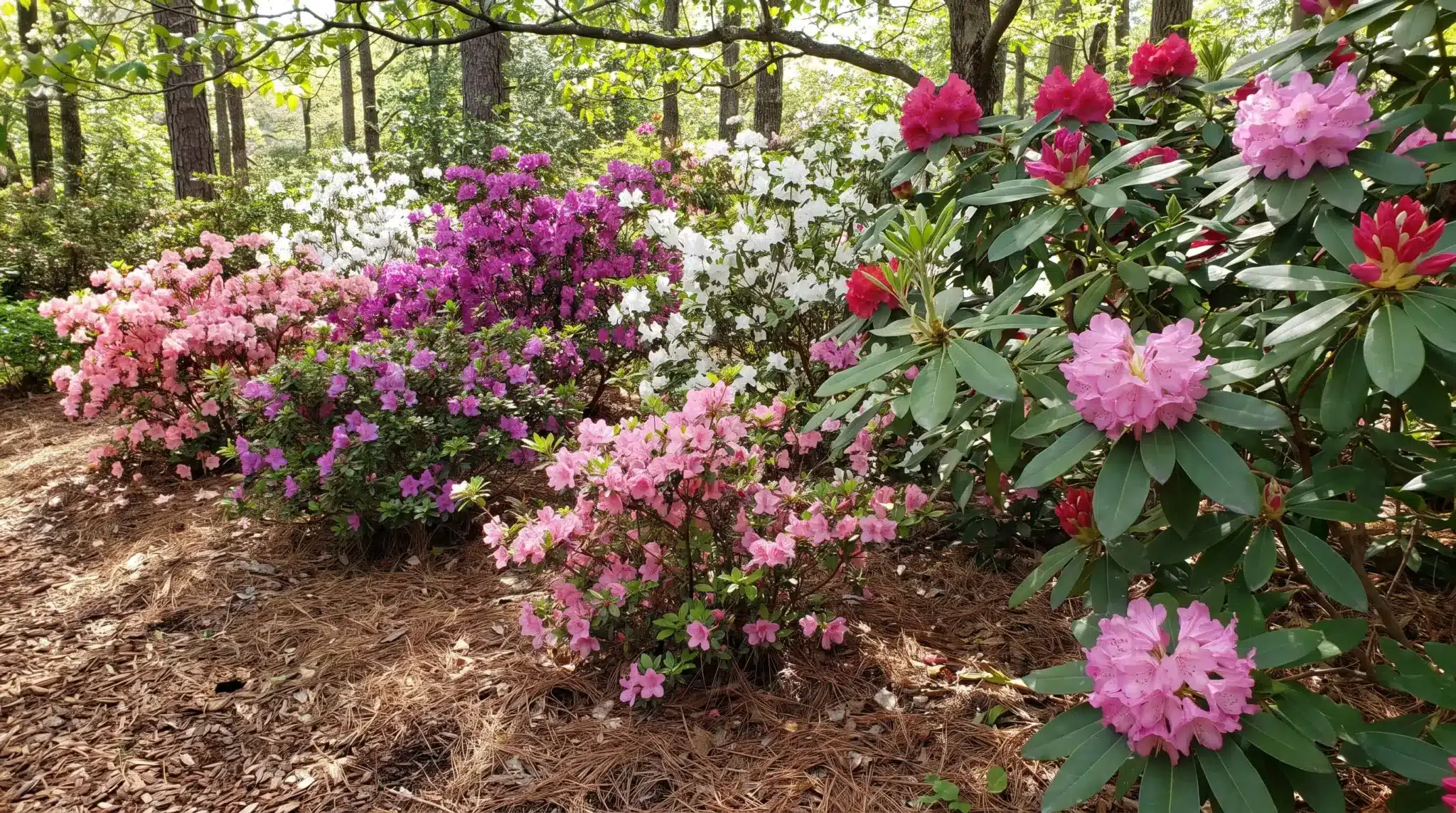
Evergreen azaleas and rhododendrons earn their spot in partly shaded beds with a real spring flower show, but they need acidic, well drained soil and consistent moisture to perform. Their roots sit shallow and dry out fast, so a 2 to 3 inch mulch layer isn’t optional here the way it might be for juniper.
Keep the root ball’s top edge level with, or just above, the surrounding soil grade; planting too deep is the single biggest killer of new azaleas I see in client yards.
Mature size: 1 to 15 ft tall and wide
USDA zones: 5 to 9
Bloom time: Mid spring peak; some varieties repeat into July or late summer
6. False Cypress (Chamaecyparis spp.)
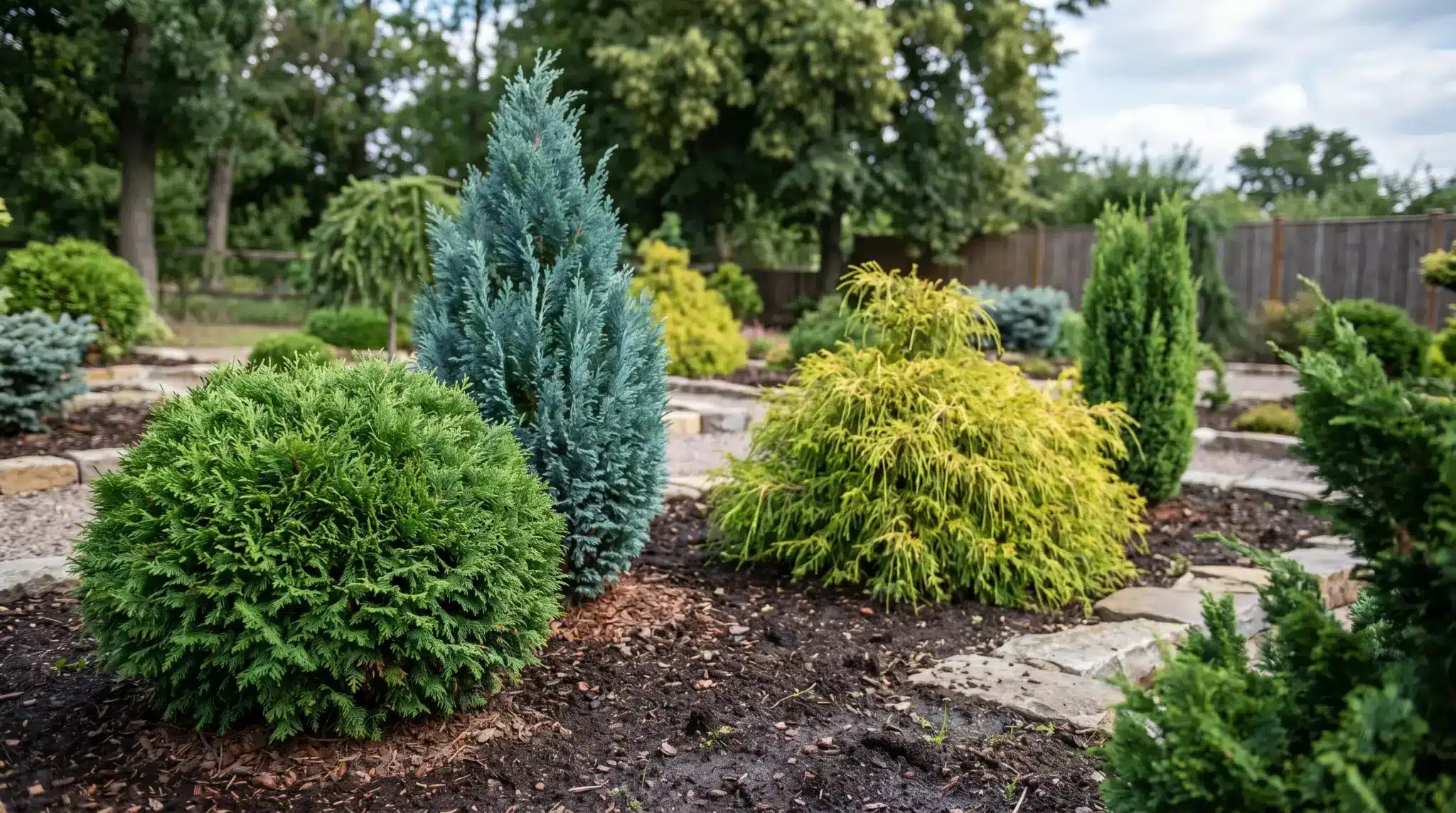
False cypress offers soft green, blue, or gold foliage in forms ranging from tight rounded shrubs to narrow 20 foot screening plants. Match the cultivar’s mature size carefully here, since the spread between varieties is unusually wide.
Give it moist, well drained soil; standing water around the roots for even a few days will cause needle browning that doesn’t recover.
Mature size: 2 to 20 ft tall, 2 to 10 ft wide for common shrub forms
USDA zones: 4 to 8
Bloom time: No showy flowers; small cones follow spring pollination
7. Mountain Laurel (Kalmia latifolia)
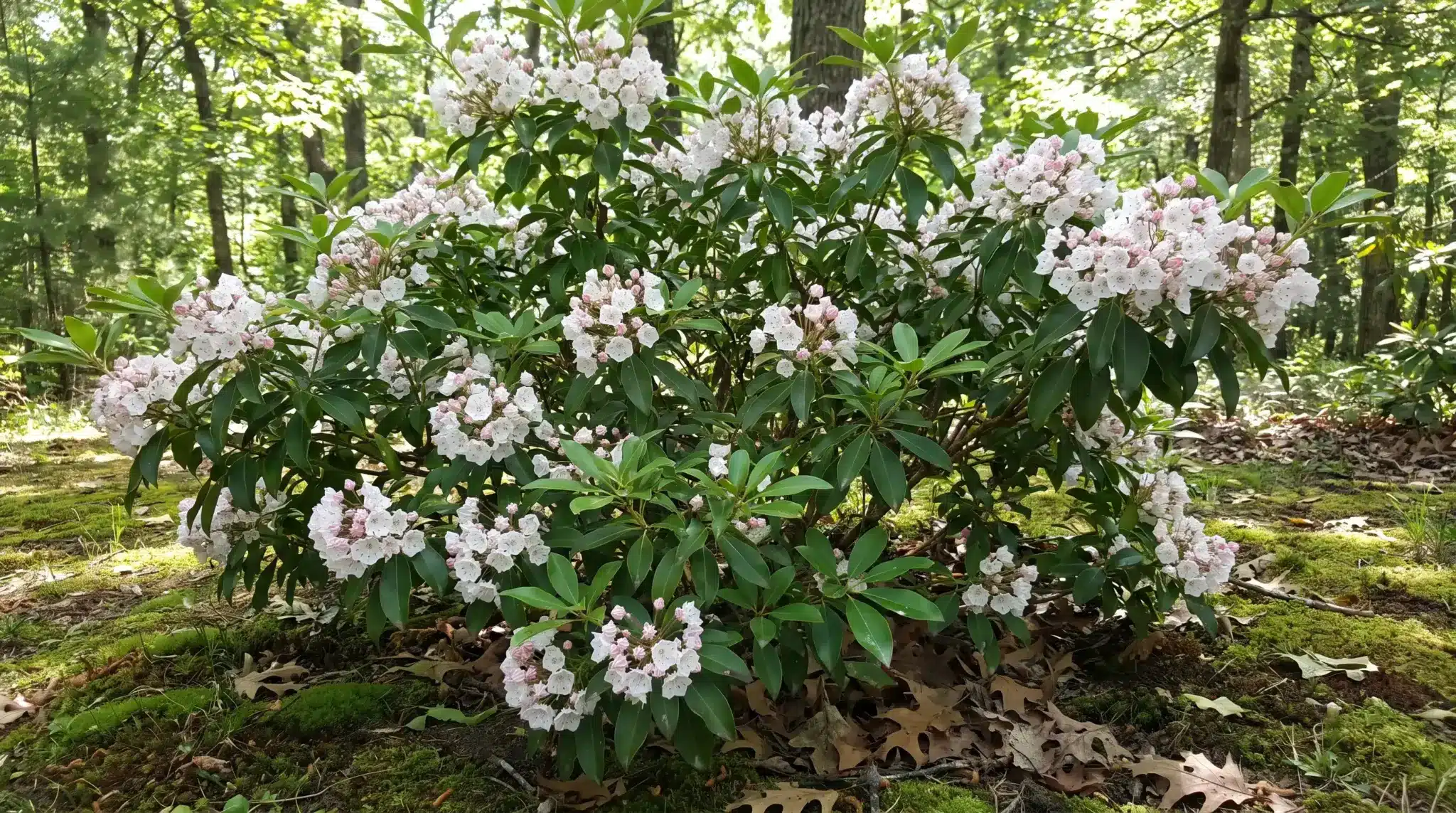
Mountain laurel, native to the eastern US, produces cup shaped spring flowers and thrives in acidic, well drained soil with partial shade.
Every part of this plant is toxic if eaten by people, pets, or livestock, so keep it well away from areas where children, dogs, or grazing animals spend unsupervised time.
Mature size: 5 to 15 ft tall and wide
USDA zones: 4 to 9
Bloom time: Late spring to early summer
8. Inkberry Holly (Ilex glabra)
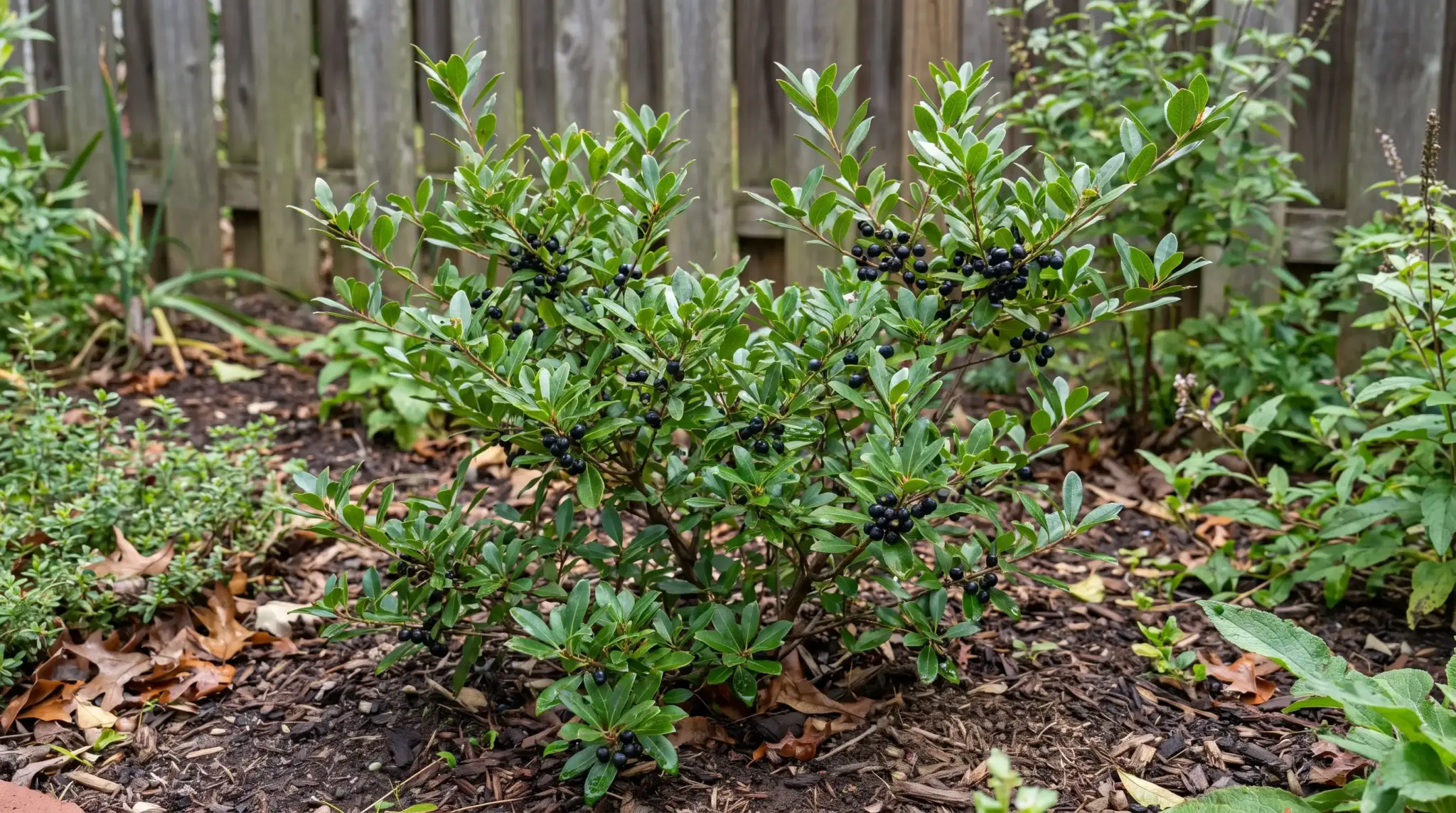
Inkberry holly is a North American native with small leaves, dark berries, and a naturally tidy shape that makes it my go to substitute where a client wants the boxwood look without the blight risk.
It handles full sun, partial shade, and wetter soil than most evergreens on this list, though heavy shade will thin out the lower branches over time.
Mature size: 3 to 8 ft tall and wide
USDA zones: 4 to 9
Bloom time: Small white flowers, late spring to early summer
9. Yew (Taxus spp.)
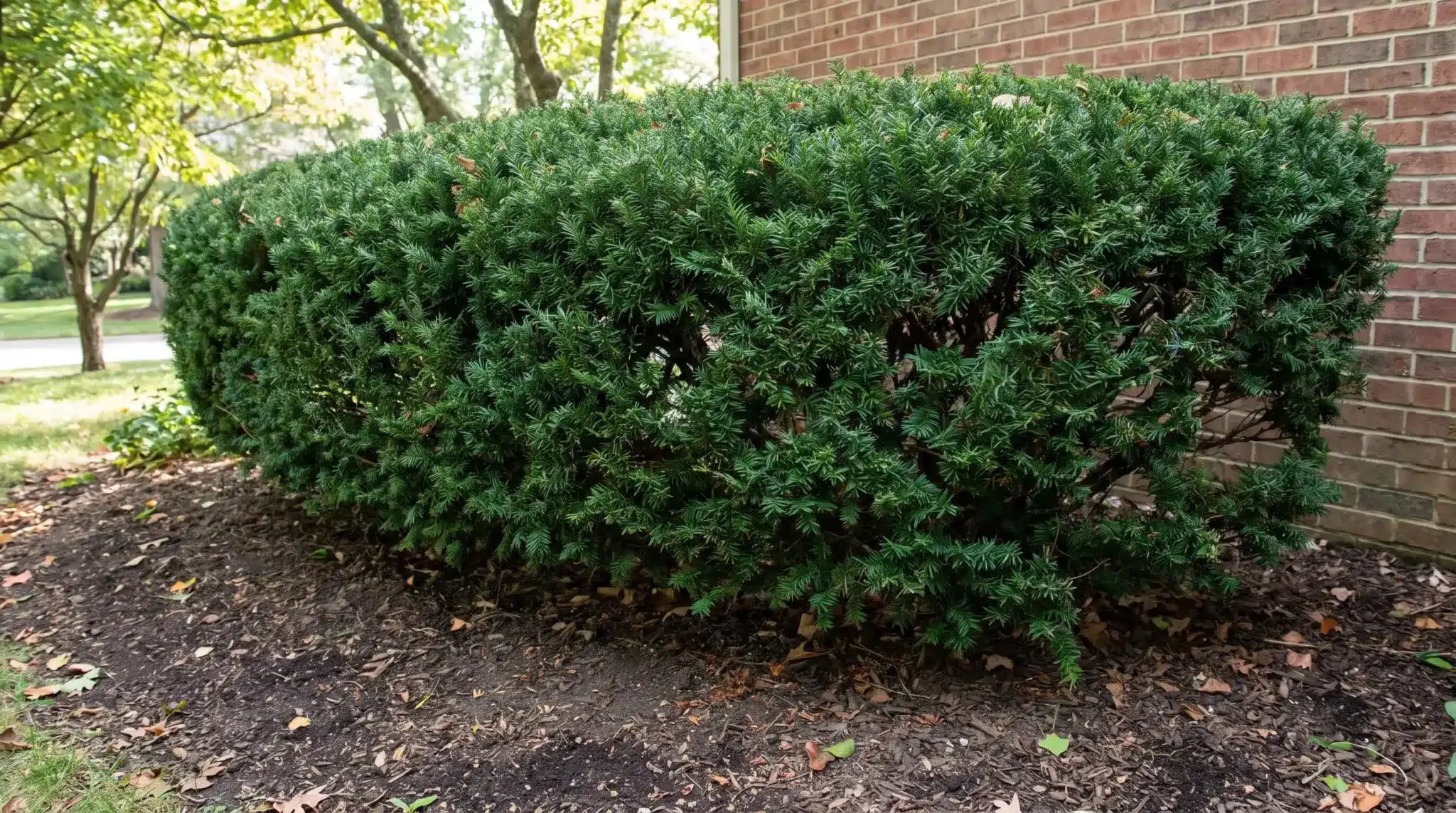
Yew’s dark needles and dense growth tolerate both heavy pruning and real shade, which is why it still works in hedges and foundation beds that get only a few hours of sun.
Well drained soil is essential; wet roots are the most common cause of yew decline. Like mountain laurel, most parts of the yew plant are toxic if ingested, so site it carefully around children and pets.
Mature size: 2 to 20 ft tall, 3 to 15 ft wide
USDA zones: 4 to 7
Bloom time: Inconspicuous reproductive structures in early spring
10. Dwarf Mugo Pine (Pinus mugo)
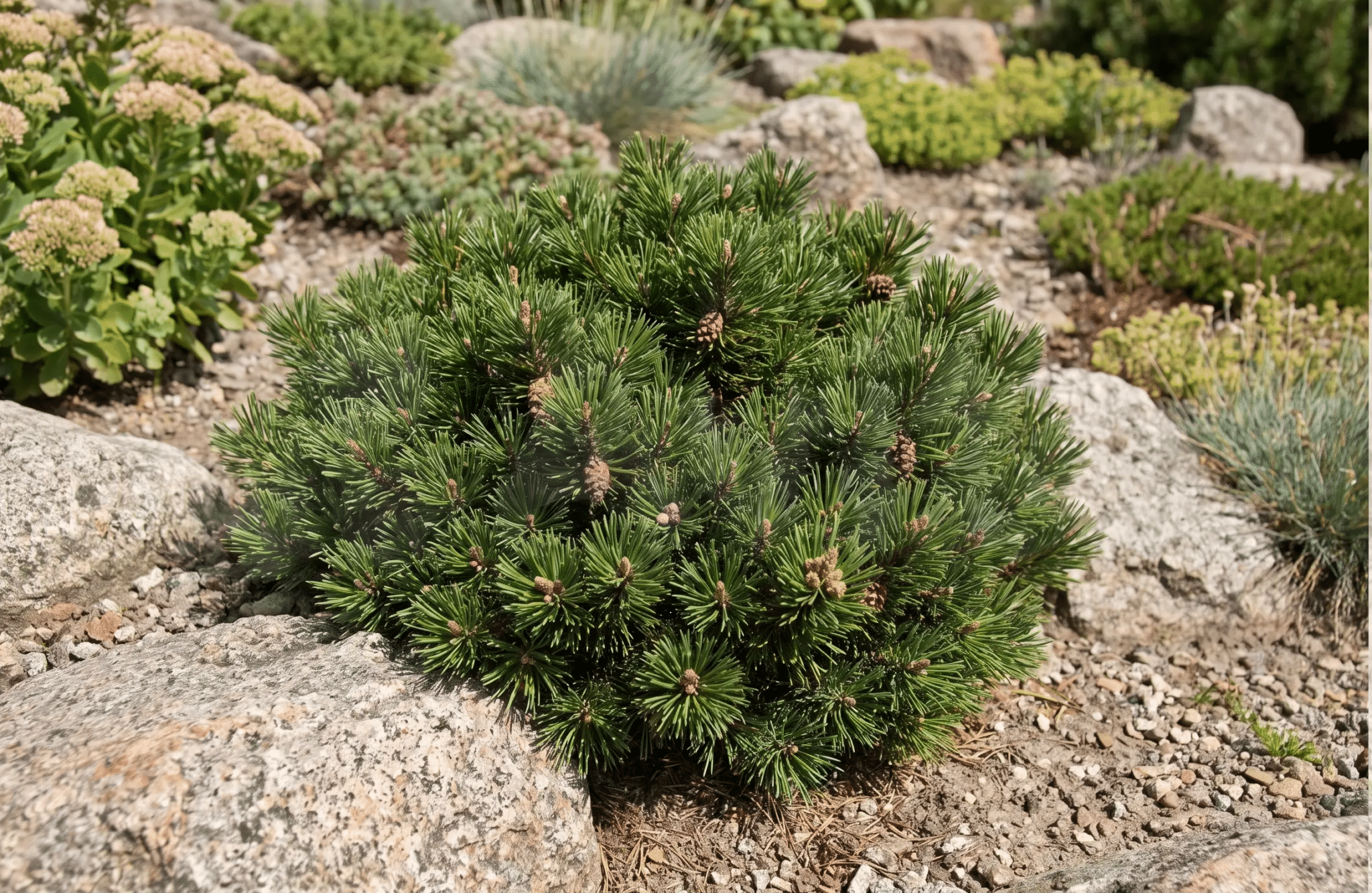
Dwarf mugo pine’s dense green needles and low, rounded form suit sunny foundation beds, borders, and rock gardens.
It tolerates cold winters well once established, but confirm the specific cultivar’s mature spread before planting, since “dwarf” mugo pines can still reach 10 feet wide at full maturity.
Mature size: 2 to 10 ft tall, 3 to 15 ft wide
USDA zones: 2 to 7
Bloom time: No flowers; cones follow spring pollination
11. Japanese Pieris (Pieris japonica)
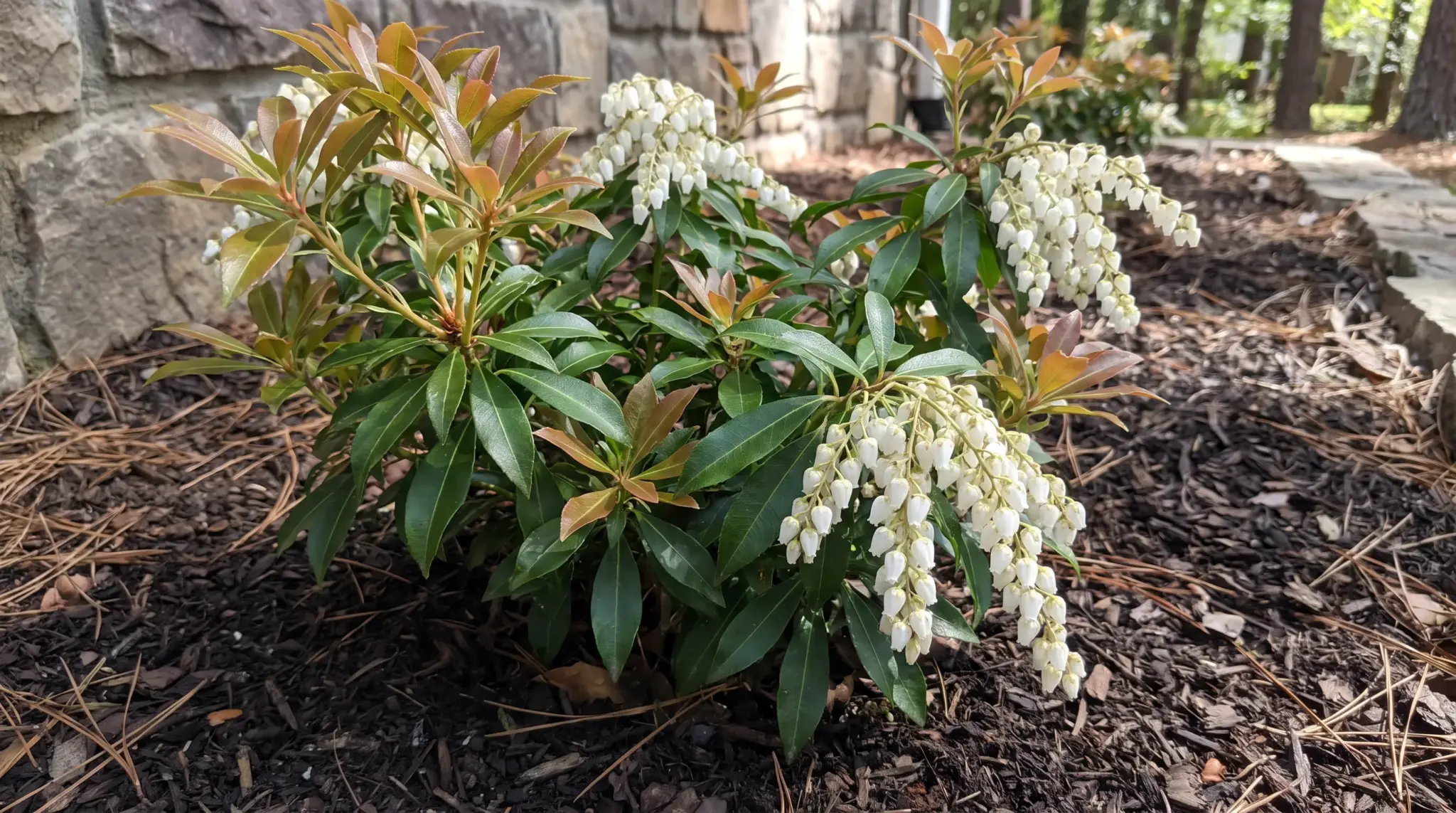
Japanese pieris offers glossy leaves, hanging clusters of late winter flowers, and colorful new growth that performs well in partly shaded, woodland style beds.
It needs acidic, well drained soil and protection from strong afternoon sun. This plant is toxic if eaten, so plan its placement the same way you would mountain laurel or yew.
Mature size: 4 to 10 ft tall, 3 to 8 ft wide
USDA zones: 5 to 8
Bloom time: Late winter through early spring
12. Leucothoe (Leucothoe spp.)
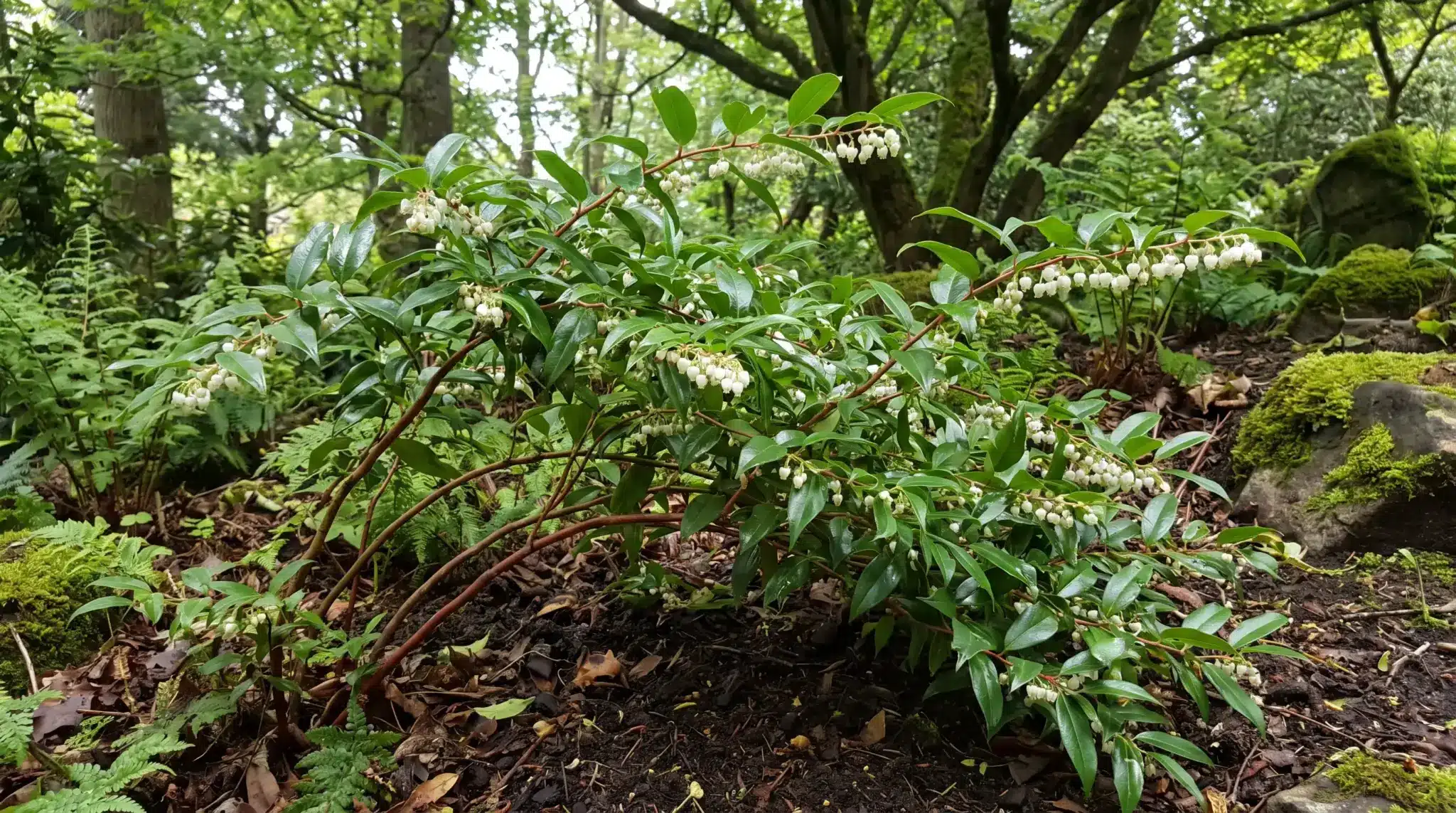
Leucothoe’s arching branches and glossy leaves, which often shift color in cold months, make it a strong pick for shaded borders where you want movement rather than a stiff, sheared shape.
It prefers acidic, moist, well drained soil, and it needs protection from drying wind and intense afternoon sun.
Mature size: 2 to 6 ft tall, 3 to 6 ft wide
USDA zones: 5 to 8
Bloom time: Mid spring to early summer
13. Oregon Grape (Mahonia aquifolium)
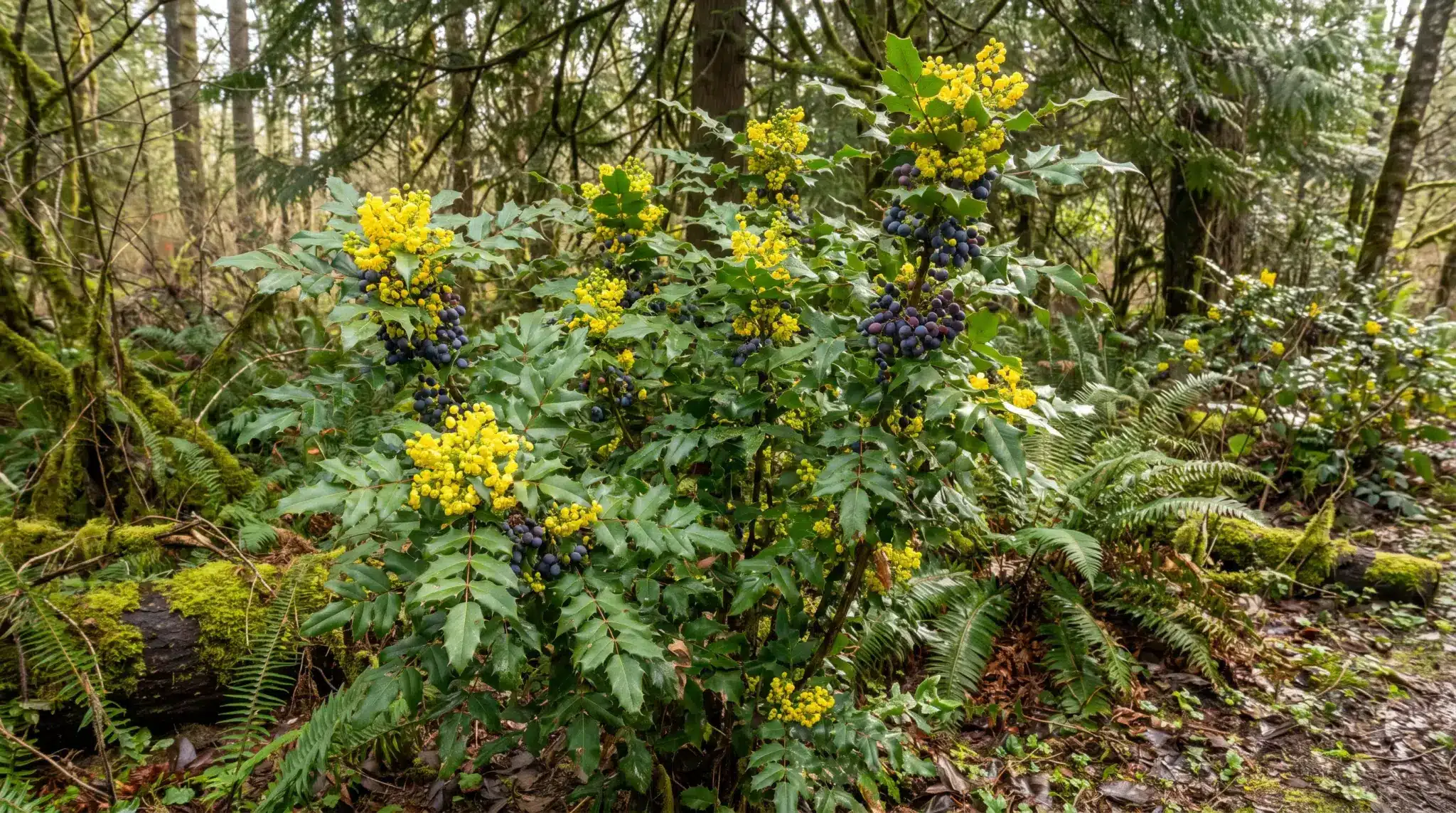
Oregon grape brings spiny, holly like evergreen leaves, bright yellow spring flowers, and dark berries to shaded borders and woodland edges.
It’s native to western North America and, according to Oregon State University’s Landscape Plants database, reliably hardy down to zone 5. Choose the species or cultivar suited to your region, since cold tolerance varies noticeably across Oregon grape varieties.
Mature size: 3 to 10 ft tall and wide
USDA zones: 5 to 8
Bloom time: Late winter through spring
14. Wax Myrtle (Morella cerifera)
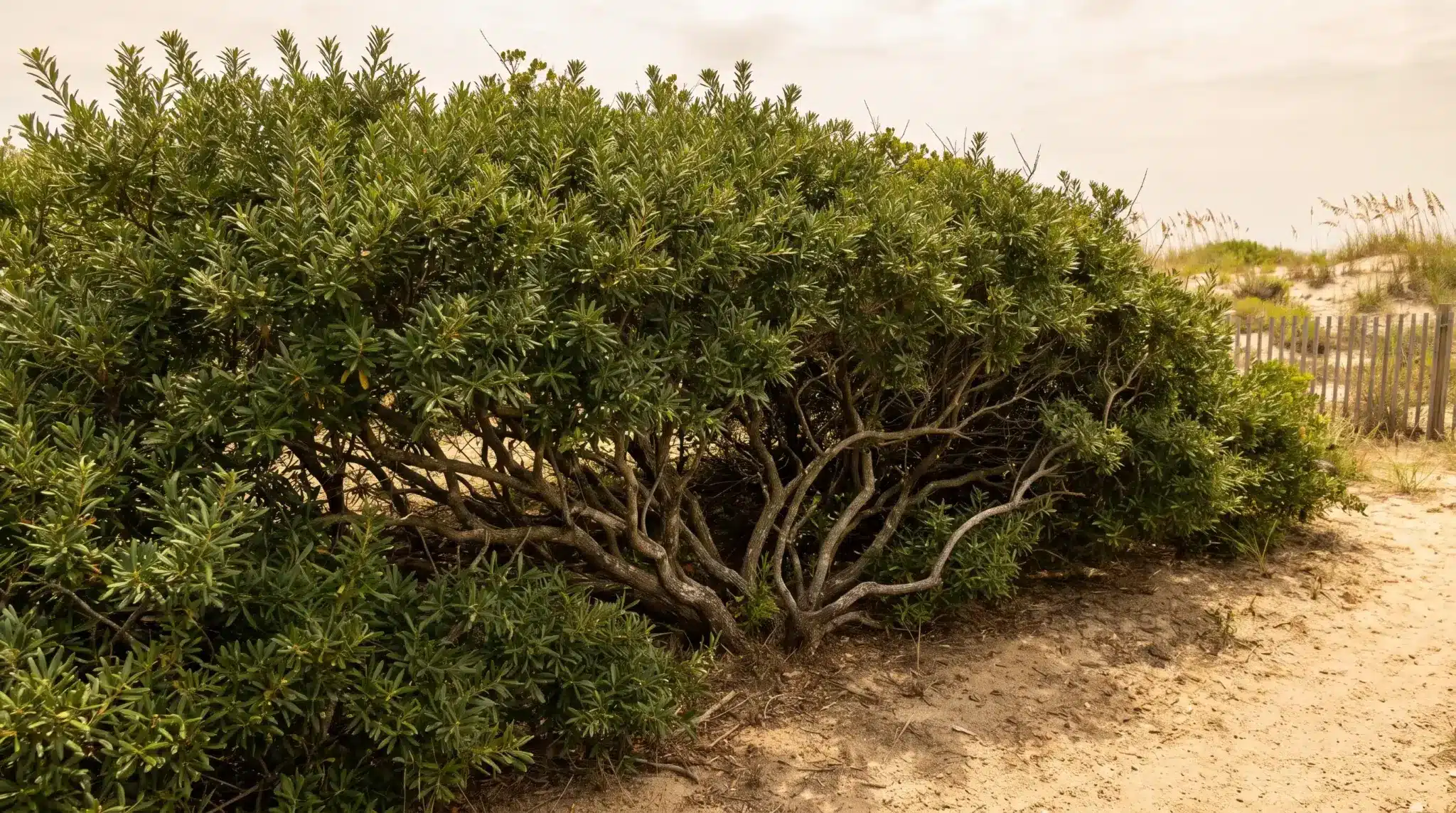
Wax myrtle’s narrow, fragrant leaves and dense branching work well for informal hedges and screens in the warmer parts of the US. Once established, it handles heat, coastal salt spray, and dry spells better than most broadleaf evergreens on this list.
Give the larger cultivars a full 10 to 15 feet of mature width; it’s one of the fastest growing shrubs here and quickly outgrows tight foundation beds.
Mature size: 6 to 20 ft tall, 6 to 15 ft wide
USDA zones: 7 to 9
Bloom time: Small, inconspicuous flowers in spring
15. Gardenia (Gardenia jasminoides)
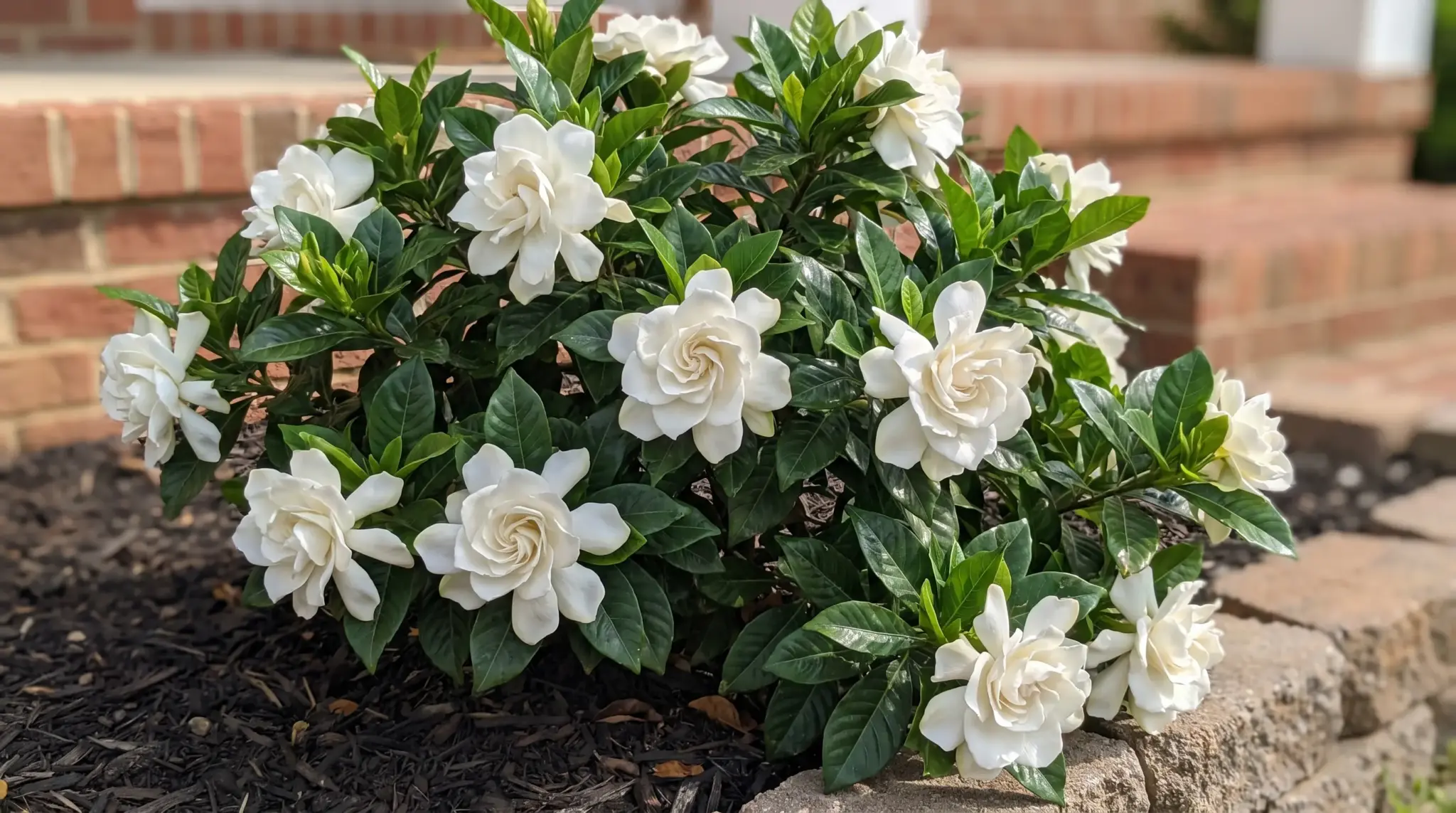
Gardenia’s glossy leaves and intensely fragrant white flowers suit foundation beds, borders, and containers in warm climates, and it’s the highest maintenance shrub on this list by a clear margin.
It needs acidic, well drained soil with steady moisture and consistent humidity; a cold snap below its hardiness range can set the whole plant back for a full season, so confirm your variety’s rating before you commit.
Mature size: 3 to 8 ft tall and wide
USDA zones: 7 to 11, cultivar dependent
Bloom time: Late spring through summer, with repeat flowering in warm climates
| Pet and Child Safety Note: Mountain laurel, yew, and Japanese pieris are toxic if eaten by people, pets, and livestock. The ASPCA lists all three as toxic to dogs, cats, and horses. Site these shrubs away from areas where children or animals spend unsupervised time, and remove pruned clippings from the yard rather than leaving them where pets can chew on them. |
Once you’ve narrowed the list by zone and toxicity, the next filter is simply what job the shrub needs to do in your yard.
Best Evergreen Bushes by Yard Use
| Yard Need | Good Options | Why They Fit |
| Privacy screening | Arborvitae, holly, wax myrtle | Taller forms build dense, year round visual screening |
| Foundation beds | Boxwood, inkberry holly, Japanese pieris | Compact cultivars fit tight spaces near a home’s exterior |
| Sunny, dry areas | Juniper, dwarf mugo pine | Both prefer sharp drainage and tolerate drought once established |
| Partial shade | Rhododendron, mountain laurel, leucothoe | These shrubs decline in intense afternoon sun |
| Low hedges | Boxwood, inkberry holly, yew | Dense branching responds well to planned, regular shearing |
| Flowering evergreens | Gardenia, Japanese pieris, rhododendron | Seasonal flowers add interest without sacrificing year round foliage |
| Natural borders | Oregon grape, mountain laurel, leucothoe | Their looser forms suit informal planting styles |
A farmhouse style property calls for a looser arrangement than a formal foundation bed, mixing evergreen structure with cottage style perennials rather than a single clipped line. I used that same layered approach on a farmhouse yard redesign last year, pairing wax myrtle at the back of the bed with lower, seasonal color up front.
How to Choose the Right Evergreen Bush for Your Yard
Buying a shrub based on the size of its nursery pot is the single most common mistake I see. A boxwood in a 3 gallon container tells you almost nothing about how it will look, or how much room it will need, in eight years. Work through these checks before you settle on a variety.
- Confirm your USDA zone. Use the plant tag to verify the shrub tolerates your area’s typical winter lows. Local wind exposure, road salt, reflected heat off pavement, and heavy snow load all matter beyond the zone number alone.
- Measure your actual sunlight. Full sun means at least 6 hours of direct light. Partial shade generally falls between 3 and 6 hours. Watch the planting spot at different times of day, since morning and afternoon sun affect plants differently.
- Check mature size before you dig. Measure the distance from windows, walls, walkways, fences, and neighboring plants, and base spacing on the shrub’s mature width, not its container size.
- Leave real growing room. If a shrub reaches 6 feet wide at maturity, plant it roughly 3 feet from a wall so the branches can fill out without constant cutting.
- Test your soil’s drainage. Dig a hole about 12 inches deep, fill it with water, let it drain fully, then refill it. If the second fill takes longer than 4 to 6 hours to drain, you have a drainage problem to solve before planting.
- Check soil pH. Azaleas, rhododendrons, mountain laurel, and inkberry holly all prefer acidic soil. A simple soil test kit or a sample sent to your local extension office gives a far more reliable reading than guessing.
If you’re mapping out a full bed rather than a single plant, define the bed edges and walkway clearance before you start buying, since reworking a border after planting means digging everything back up.
| Tip: I always tell clients to solve the zone and drainage questions before falling in love with a specific cultivar. A gorgeous variety in the wrong zone or a poorly drained bed will struggle no matter how well you care for it afterward. |
Preparing Your Soil Before Planting
Most evergreen bushes fail in the first two years because of soil, not neglect.
Before planting, dig your test hole to confirm drainage, as described above, and correct any standing water problem with raised beds or a French drain rather than fighting it every season.
For acid loving shrubs like azaleas, rhododendrons, and mountain laurel, work 2 to 3 inches of compost or peat moss into the top 8 to 10 inches of soil to lower pH gradually; sulfur amendments can push pH down faster if a soil test shows you’re starting above 6.5.
Avoid working wet clay soil, since compacting it while damp destroys the pore structure roots need to breathe. The same composting habits behind eco-friendly garden care apply directly to shrub beds, so building your own compost is worth the effort even if you only use it here.
Planting Evergreen Bushes the Right Way
Dig the planting hole two to three times as wide as the root ball, but no deeper than the root ball itself; planting too deep suffocates roots and is one of the most common reasons a new shrub declines within its first year.
Set the top of the root ball level with, or slightly above, the surrounding soil grade, then backfill with the native soil you removed rather than replacing it entirely with amended soil, which can create a “bathtub” effect that traps water. Water deeply right after planting to settle the soil around the roots and eliminate air pockets.
Space plants according to their mature width, not their current size. For a hedge, subtract about 20 percent from the mature width to get planting distance so the row fills in without leaving gaps, but confirm this against the specific cultivar’s tag since spacing needs vary.
Early fall, roughly six to eight weeks before your ground typically freezes, is generally the best planting window because it gives roots time to establish before winter dormancy and before next summer’s heat stress.
Seasonal Care Calendar for Evergreen Bushes
| Season | Care Tasks |
| Spring | Prune dead or winter damaged wood before new growth starts; refresh mulch to 2 to 3 inches; check soil pH for acid loving varieties |
| Summer | Water deeply when the top 2 inches of soil are dry, especially for shrubs planted within the past year; watch for pests during active growth |
| Fall | Plant new shrubs 6 to 8 weeks before your first hard frost; water deeply before the ground freezes if the season has been dry |
| Winter | Install a burlap screen for exposed plants in windy sites; avoid heavy pruning, which can stimulate tender new growth that winter will damage |
Mulch does double duty across every season on this calendar, holding moisture in summer and insulating roots in winter, so choosing the right material matters.
Weighing organic and inorganic mulch options against cost and longevity before buying in bulk saves a wasted trip back to the nursery. Keep whatever mulch you choose pulled back several inches from the stems, since mulch piled against bark traps moisture and invites rot.
Preventing Pests and Diseases
Most evergreen bush problems trace back to two causes: crowded, poorly ventilated plantings and stressed roots. Boxwood blight spreads fastest in dense, wet plantings, so choose resistant cultivars and space plants for airflow.
Bagworms target arborvitae and juniper in mid to late summer; handpicking the small, cone shaped bags before eggs hatch in spring is more effective than spraying an established infestation. Scale insects and leaf miner show up on holly as small bumps or tunneling on leaves and usually respond to horticultural oil applied during the dormant season.
Azaleas and rhododendrons planted in soggy soil are prone to root rot, which is far easier to prevent through drainage than to treat once symptoms appear. In deer heavy areas, arborvitae and yew are the two most likely targets, so plan on repellent sprays or fencing through at least the first two winters after planting.
Companion Plants for Evergreen Bushes
Evergreen bushes work best as structure plants, with seasonal color layered around them rather than competing with them.
Spring bulbs like daffodils planted at the base of deciduous adjacent beds bring color before most evergreens do anything visually interesting.
Hostas and ferns pair well in front of shade tolerant shrubs like leucothoe and mountain laurel, since they share the same moisture and light needs.
For a more relaxed, layered look rather than a single clipped hedge line, mix in shrubs of varying heights along a boxwood or arborvitae border instead of relying on one species to do all the work.
Common Mistakes to Avoid When Growing Evergreen Bushes
- Ignoring mature size. A shrub that looks small in a nursery pot can outgrow its space within 3 to 5 years, crowding windows and walkways.
- Planting too close to the foundation. Give shrubs their full mature width in clearance, or expect years of hard pruning to keep them in bounds.
- Skipping the soil pH test. Acid loving shrubs planted in alkaline soil develop yellowing leaves and weak growth no matter how well you water them.
- Planting the root ball too deep. This is one of the top causes of new shrub failure, and it’s entirely preventable by keeping the root flare level with the soil surface.
- Heavy pruning in late summer or fall. This stimulates tender new growth that has no time to harden off before winter cold arrives.
- Choosing based on looks alone. A shrub matched to your zone, sunlight, and soil will outperform a prettier plant that fights its site every season.
Most of these mistakes show up as the same handful of questions from homeowners each spring, so here are the ones I hear most often.
Final Verdict
Choosing evergreen bushes gets a lot less stressful once you stop guessing and start checking the numbers that matter.
You now know how to match zone, sunlight, and width to your yard, why soil prep and planting depth matter, and which types are toxic around kids and pets. That’s the checklist I use, and it saves you years of pruning battles and wasted nursery trips.
Pick two or three shrubs from this list that fit your zone, test your soil this weekend, and plant in early fall for the best start. Tried one of these in your own yard? Tell me how it’s doing, or check out my other gardening guides next.
Frequently Asked Questions
What Is an Evergreen Bush Called?
An evergreen bush is commonly called an evergreen shrub. It is a woody, multi-stemmed plant that keeps functional foliage throughout the year instead of becoming completely bare each winter season.
What Are the Best Low-Maintenance Evergreen Bushes?
Juniper, dwarf arborvitae, inkberry holly, and compact boxwood can require little care when matched with suitable soil and sunlight. Mature size and local climate still greatly affect their maintenance needs.
How Far Apart Should Evergreen Bushes Be Planted?
Check each plant’s mature width and space shrubs so their branches can meet without heavy crowding. Privacy screens may sit closer, but adequate airflow helps limit pests and fungal diseases.
Do Evergreen Bushes Stay Green All Year?
Most evergreen bushes keep visible foliage year-round, but they still shed older leaves or needles gradually. Some also turn bronze, purple, or brownish during winter without being unhealthy or dead.