

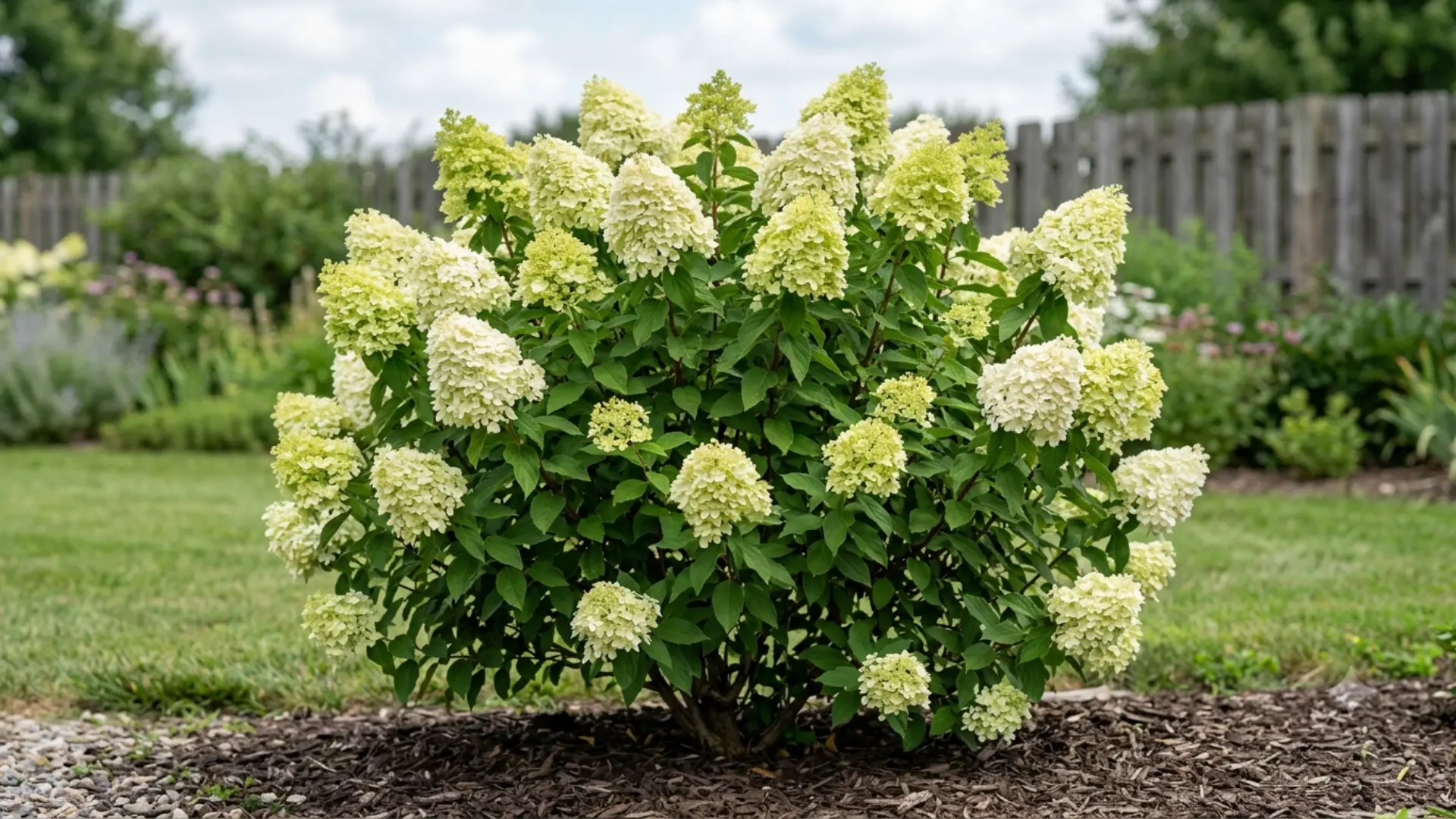
A Little Lime hydrangea can look small when you bring it home, but that nursery pot does not show how much space it will need later.
This compact shrub is easier to place than larger panicle hydrangeas, but it still grows wide enough to crowd paths, windows, or nearby plants if you guess wrong.
Little Lime hydrangea size depends on more than the label. Sun, pruning, age, soil, and spacing all change how full the plant becomes.
I will explain its mature height and width, what affects growth, and how to keep it shaped without fighting it every year. First, let us look at how big it actually gets.
How Big Does a Little Lime Hydrangea Get?
Little Lime hydrangeas mature at about 3 to 5 feet tall and 3 to 5 feet wide.
That compact size is one of the main reasons people choose it over larger panicle hydrangeas. The final size is not completely fixed, though.
A plant that gets strong light, plenty of room, and lighter pruning can grow toward the upper end of the range, while harder pruning keeps it tighter.
Its size makes it easier to fit into foundation beds, mixed borders, and larger containers. Once established, it can add roughly 12 inches of growth in a season under good conditions.
Young plants often move more slowly during the first year or two while the roots become established.
Its flower clusters can reach several inches long at peak bloom, which makes the shrub feel fuller even when the overall height stays compact.
Compared with full-size panicle hydrangeas, which commonly grow to 6 to 8 feet tall and wide, Little Lime takes up considerably less room without losing the large flower heads people usually want from this group.
Why Do Some Little Lime Hydrangeas Grow Bigger or Stay Smaller?
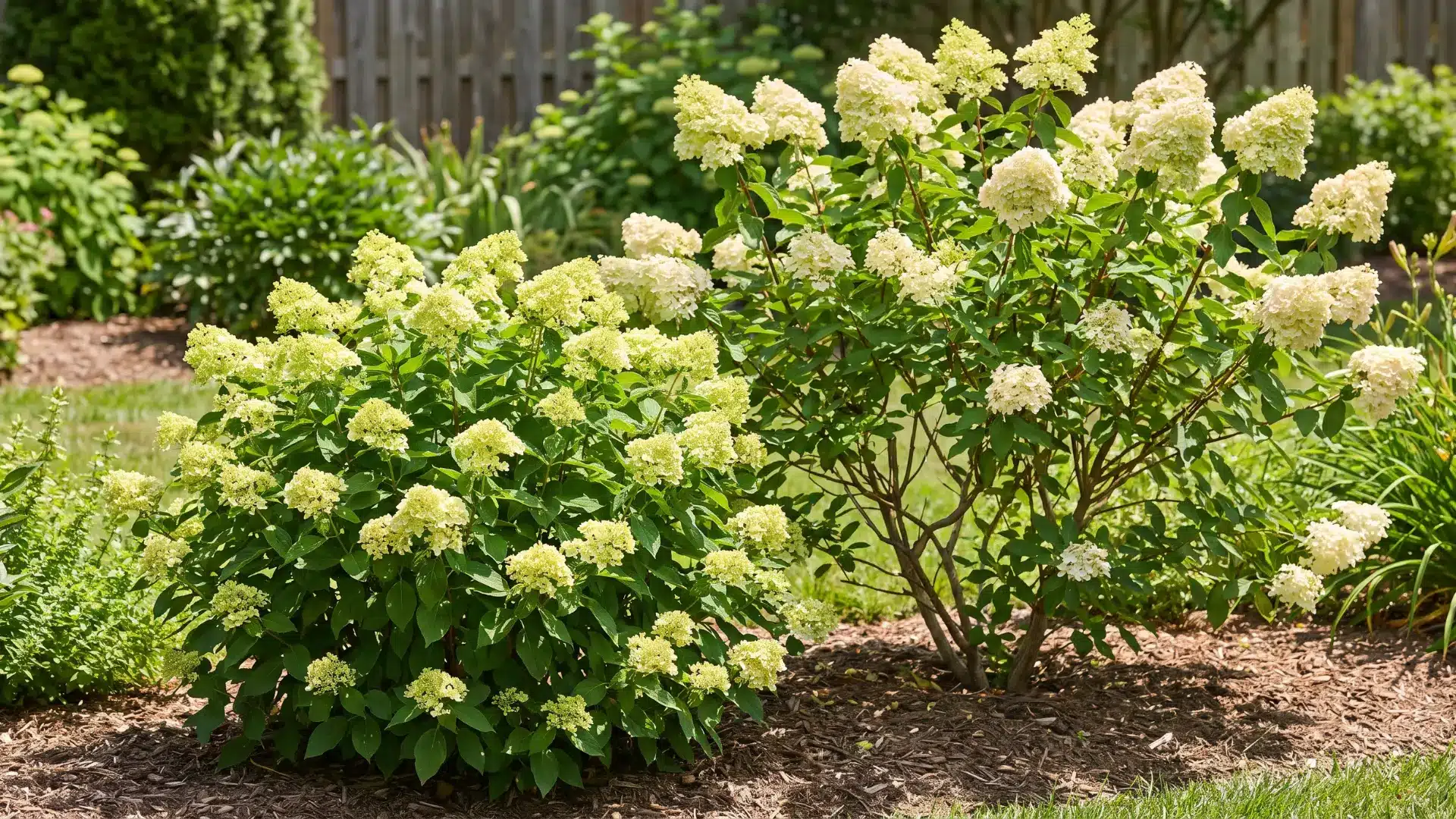
Little Lime blooms on new wood, meaning the flowers develop on stems produced during the current growing season, according to the University of Minnesota Extension.
That gives you much more flexibility with pruning than you have with shrubs that bloom on older stems.
Cut the plant back harder in late winter or early spring, and it has to rebuild more of its height during the season. The result is usually a shorter, denser shrub with stronger new growth.
Prune lightly, and more of the existing framework remains in place. Over several seasons, that can push the plant closer to its full mature height and width.
I’ve seen gardeners think their Little Lime was unusually small when the real difference was how much they removed each year.
Their neighbor’s plant looked completely different simply because it was barely pruned. Age matters too.
A first-year plant will not look anything like a mature five-year shrub. Give it several growing seasons before deciding that it is staying smaller than expected.
Under especially favorable conditions, Little Lime can occasionally push beyond its usual range. Strong sun, fertile soil, mature roots, and minimal pruning can all encourage a larger shrub.
What Affects Little Lime Hydrangea Size?
Sunlight, climate, spacing, and airflow each shape how full and dense a Little Lime hydrangea grows, as summarized below.
| Factor | Best Condition | Effect on Size | If Conditions Are Poor |
|---|---|---|---|
| Sun exposure | At least 4 hours of direct sun | Supports fuller growth and stronger flowering | Too little light can produce thinner, slower growth |
| Growing zone | USDA Zones 3 to 8 | Climate affects how much growth survives and returns | Harsh winters may reduce top growth |
| Plant spacing | About 3 to 5 feet apart | Gives the shrub room to reach its natural width | Crowding can restrict spread and reduce airflow |
| Airflow | Open space around the plant | Supports healthy foliage and even growth | Poor airflow can increase disease pressure |
Sunlight has one of the most noticeable effects. Plants in brighter locations usually grow more densely, while shaded plants can become thinner and less compact.
Spacing matters just as much once the shrub matures, and it is the same principle behind most of the cottage garden shrub spacing advice for flowering borders.
A plant that looks tiny at planting time can easily fill several feet of width after a few seasons, so planning for the mature spread saves trouble later.
How Does Little Lime Compare in Size to Other Varieties?
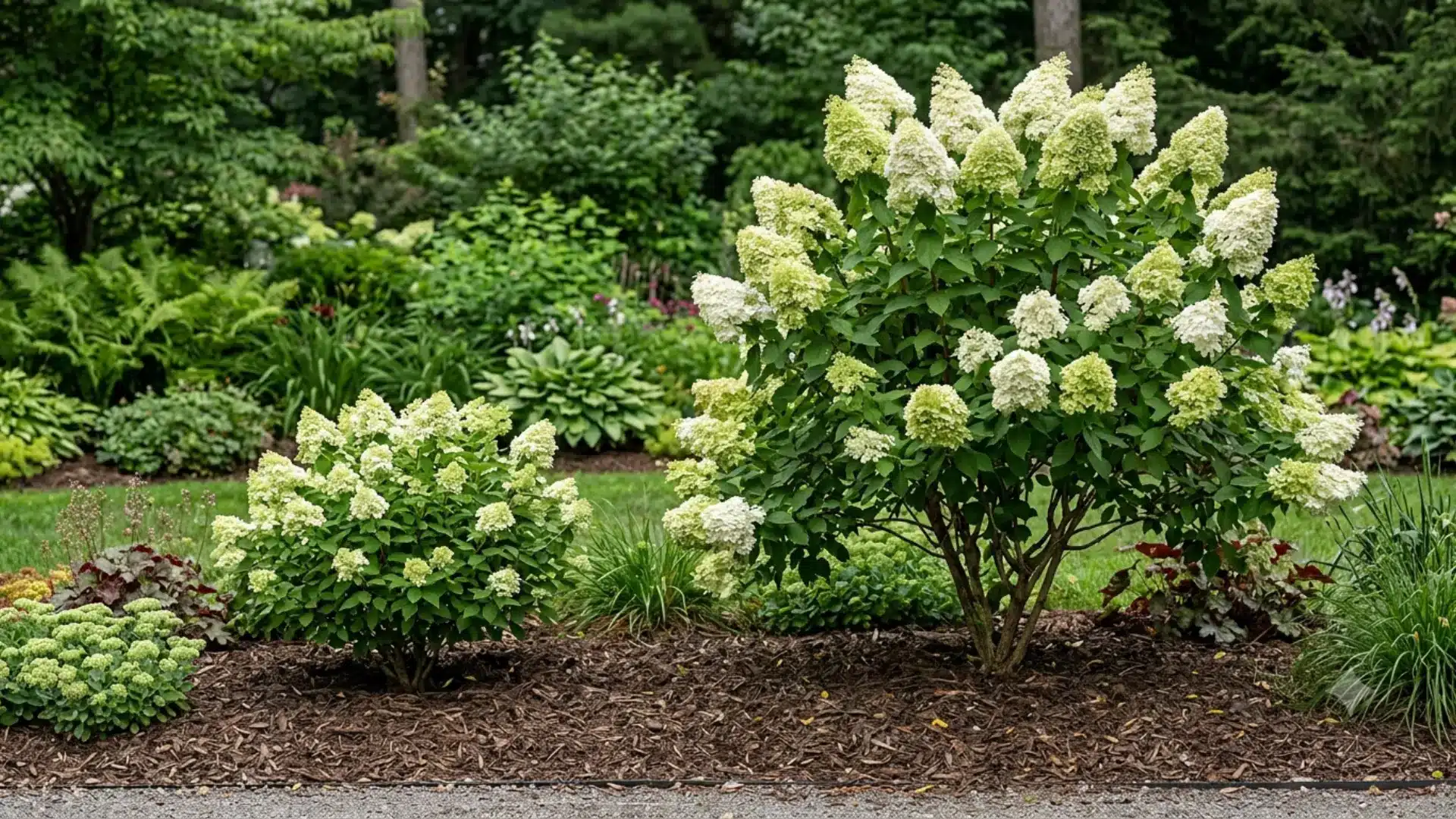
Here is how Little Lime stacks up against its closest relatives.
|
Variety |
Typical Mature Size | Main Difference |
|---|---|---|
| Little Lime | 3 to 5 feet tall and wide | Compact habit |
| Limelight | About 6 to 8 feet tall and wide | Much larger overall |
| Little Lime Punch | Similar to Little Lime | Different bloom color progression |
If you are planting near a walkway, window, or foundation, Little Lime is usually easier to fit. Limelight needs considerably more room once mature.
I’ve found mature size is one of the quickest ways to separate similar hydrangeas at a garden center. The flower shape may look familiar, but the final footprint can be very different.
Where Does Little Lime Fit Best in the Landscape?
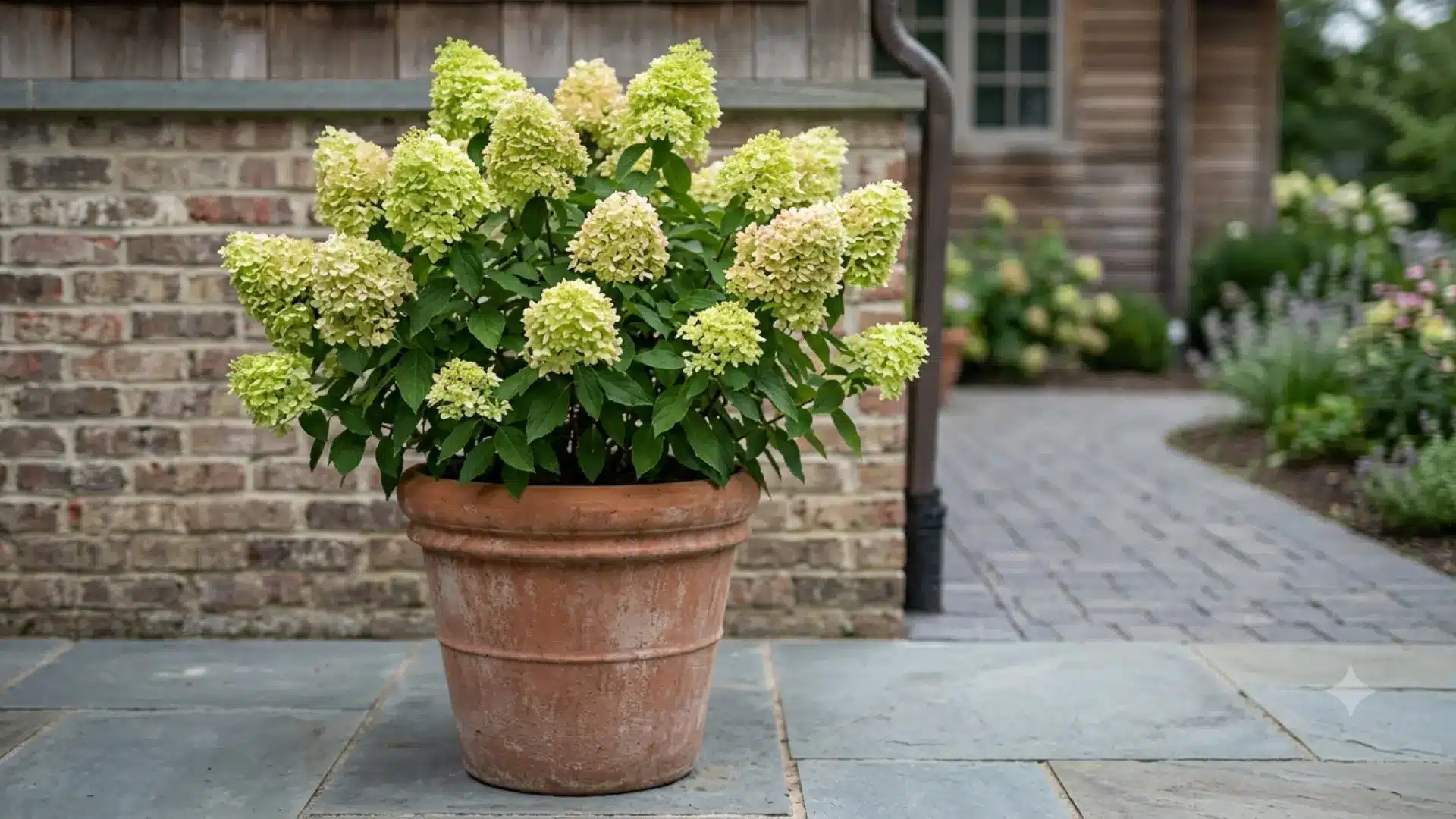
Little Lime works well anywhere you want panicle hydrangea flowers without giving up 6 to 8 feet of space, especially when it is part of a wider garden layout with enough room for mature shrubs.
- Foundation beds: Its 3 to 5 foot size works well below many windows and along house walls without overwhelming the space. Leave enough clearance so mature branches are not pressed against siding or trim.
- Walkways and borders: The compact habit makes it easier to use along paths and garden edges, especially where planting beds meet concrete patio borders.
- Low hedges: Several plants spaced properly can create a continuous flowering border without becoming as tall or bulky as full-size panicle hydrangeas. Keep spacing even so each shrub can fill out naturally.
- Large containers: Restricted root space often keeps the plant toward the smaller end of its natural size range, which makes Little Lime a practical choice for patios, entrances, and other tighter areas.
The main mistake is planting according to the nursery pot instead of the mature width. A small young shrub can still spread several feet once established.
Signs Your Little Lime Hydrangea Has Outgrown Its Spot
Even a compact shrub like Little Lime can run out of room, and catching it early makes the fix much easier.
- Watch for weak new growth: Thin, short stems at the tips of an otherwise mature plant often mean the roots are competing with a fence, wall, or neighboring shrub for space.
- Check for reduced blooming: A Little Lime that once flowered heavily but now produces fewer, smaller clusters may be crowded rather than simply aging.
- Look for surface roots: Roots pushing up at the soil line or circling the inside of a container are a clear sign the plant needs more space.
- Notice branch dieback on one side: Shade from a neighboring plant that has grown into the space can thin out the side of the shrub facing it.
If you spot two or more of these signs, transplant the shrub during dormancy in late fall or early spring, and give it the full 5-foot spread it may eventually need.
Can You Control Little Lime Hydrangea Size With Pruning?
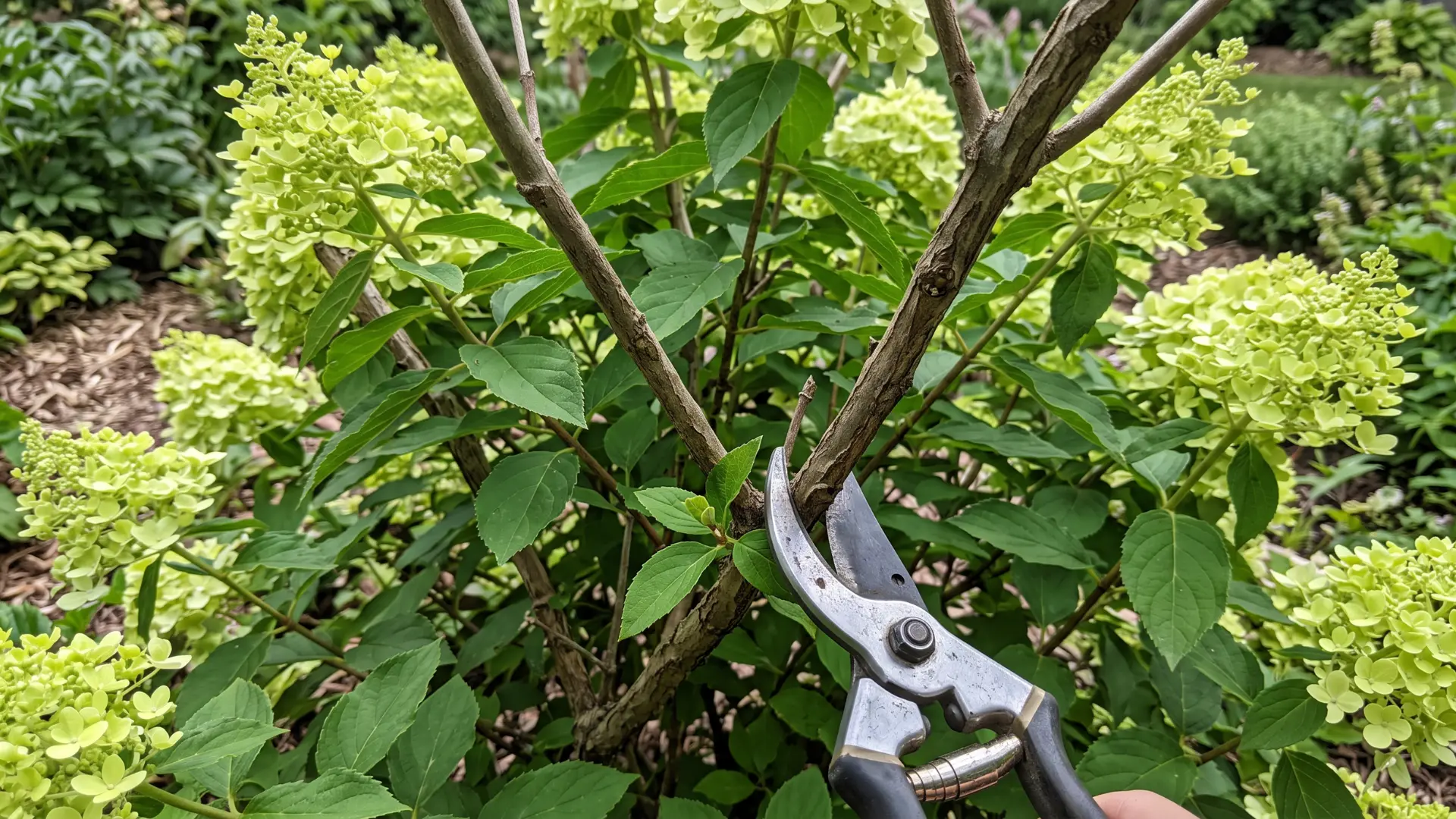
Yes. Because Little Lime flowers on new wood, pruning gives you meaningful control over its height, density, and overall shape without sacrificing the season’s blooms.
For a Smaller Plant: Cut stems back more heavily in late winter or early spring. This encourages compact regrowth and helps keep the shrub closer to the lower end of its mature size.
For a Fuller Mature Size: Prune lightly by removing dead, weak, or crossing stems while leaving most of the established framework intact so the shrub can continue gaining height and width.
For Better Shape: Focus on removing awkward growth and balancing the structure rather than repeatedly cutting every stem to the same height, which can leave the shrub looking overly uniform.
I prefer using pruning to guide Little Lime’s natural shape rather than constantly forcing it smaller. If annual cutting feels excessive, the planting space may simply be too tight.
Conclusion
Little Lime hydrangea size is easier to manage when you plan for the full 3 to 5 foot shape from the start.
A young shrub may look small in the nursery pot, but good sunlight, open spacing, and light pruning can help it fill out faster than expected.
I would give it room first, then use pruning to shape the plant instead of forcing it into a tight spot every year. If your shrub blooms less, grows weak stems, or starts crowding nearby plants, it may need more space.
Check your planting area now and decide whether your Little Lime has enough room to mature properly.
Frequently Asked Questions
Do Little Lime hydrangeas like sun or shade?
Little Lime does best in part sun to full sun. Aim for at least 4 hours of direct light daily. More sun means denser growth and better blooms. In hot southern climates, afternoon shade helps prevent stress. Too little sun leads to leggy, sparse plants. They won’t reach their full size potential.
What is the difference between Limelight and Little Lime hydrangea size?
Little Lime is a dwarf cultivar bred from Limelight. It stays around 3 to 5 feet tall and wide. Limelight grows considerably larger. If you want the same lime-green blooms in a smaller footprint, Little Lime fits foundation plantings, borders, and containers better.
How long does it take for a Little Lime hydrangea to reach full size?
Little Lime grows up to 12 inches a year once established. It typically reaches its mature 3 to 5 foot size within 3 to 5 growing seasons. Young plants look much smaller in their first two years. That’s normal, not a sign of poor care.
Can you keep a Little Lime hydrangea smaller with pruning?
Yes. Little Lime blooms on new wood, so hard pruning in late winter won’t cost you flowers. Prune each year aggressively, and you can keep it compact at 3 feet. Prune lightly, and it will grow toward the fuller 5 to 6 foot end of its range.