

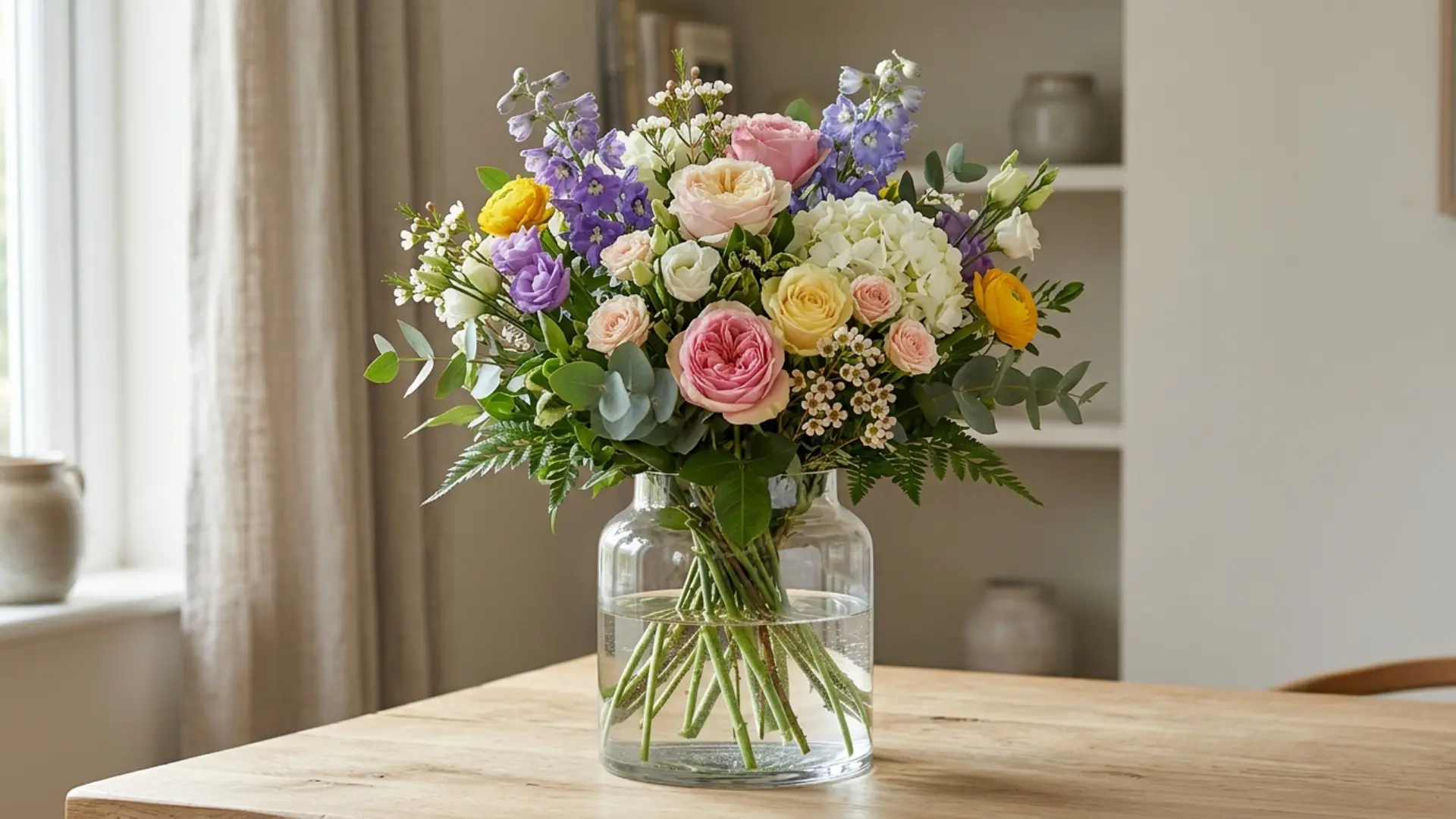
A fresh bouquet rarely dies from age alone; most wilt early because of small, invisible mistakes made in the first few minutes after they’re cut.
Bacteria multiply in vase water faster than most people realize, and a single dying bloom can quietly speed up the decline of everything around it.
Learning how to make flowers last longer isn’t about one trick; it’s about understanding the handful of factors working against your bouquet at once, from stem cuts to nearby fruit bowls.
Ahead, you’ll get a complete routine covering setup, daily care, hidden environmental threats, and a straightforward verdict on which popular home remedies are worth trying.
It starts with what happens before the flowers ever touch water.
How Do You Prepare Flowers Before Putting Them in a Vase?
Three things decide how long your bouquet lasts before it even reaches the vase. A clean vase, a sharp angled cut, and stripped lower leaves. Skip any of these, and you’re fighting a losing battle from day one.
Cut each stem at a 45-degree angle. This gives the stem more surface area to pull in water. It also stops the stem from sitting flat against the vase floor, which blocks water intake fast.
Woody stems need extra work. Hydrangeas and lilacs do better with a deeper diagonal cut, or a small split up the stem.
That split helps water reach the flower head, especially on thick, fibrous stems. Soft stems don’t need that step. One clean angled cut is enough.
If some of your bouquet came from your own backyard, planning a cut flower garden layout ahead of time makes harvesting for a vase far less fiddly than cutting on the fly.
Here’s where most people go wrong: they grab kitchen scissors instead of a sharp knife. Scissors squeeze the stem as they cut.
That crushes the tissue inside, the same tissue the stem uses to pull water up. The flower is already struggling before it’s even in the vase.
Once your stems are cut and your vase is clean, the real work starts. Keeping that water fresh is what actually keeps the bouquet alive.
How to Make Flowers Last Longer: Tips and Tricks
These small habits decide how long your flowers last. Each one does something specific, and skipping any of them undoes the rest.
1. Start with a Spotless Vase
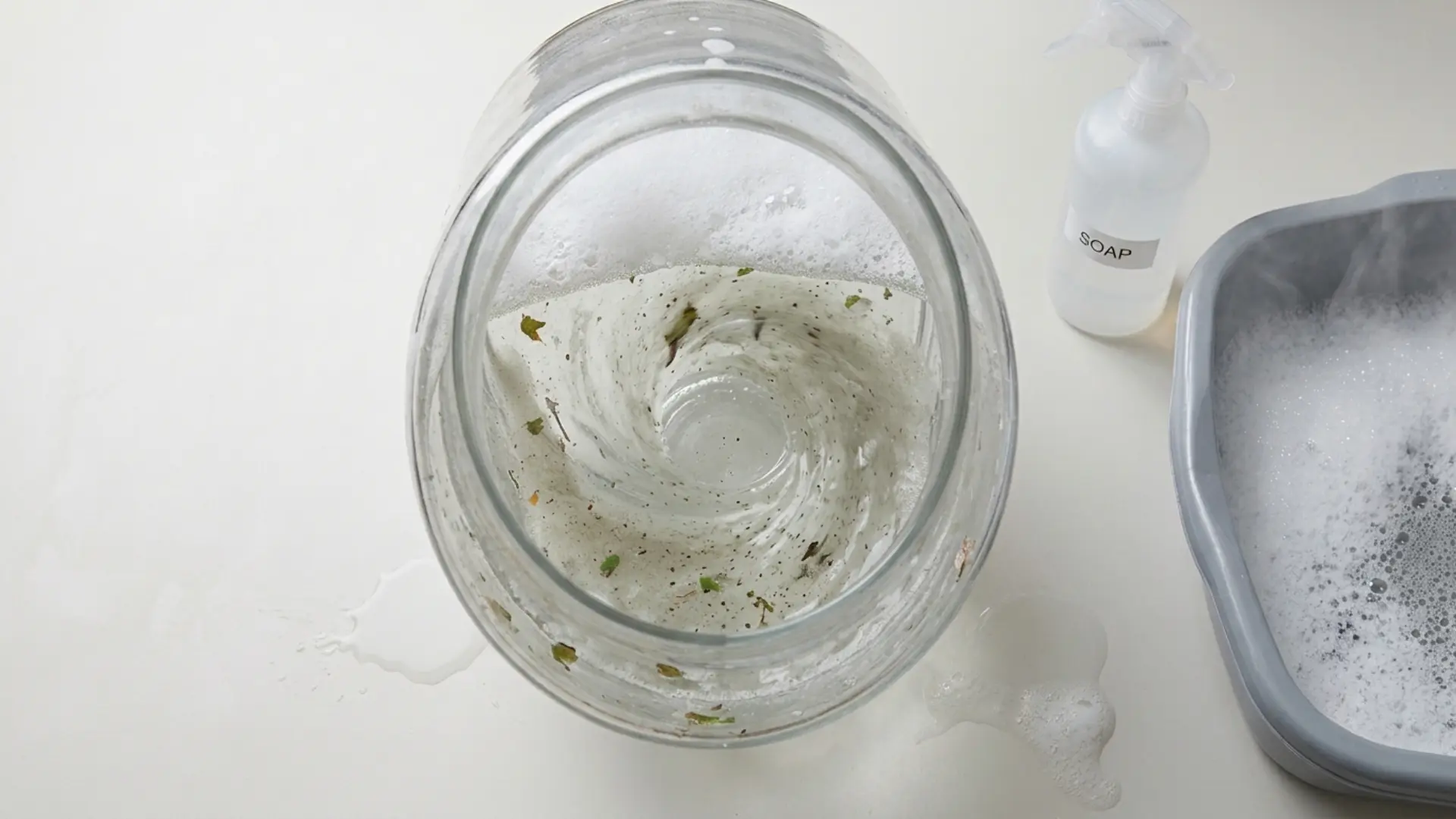
Bacteria multiply fast in vase residue you can’t even see, and that buildup shortens vase life before flowers go in. Hot, soapy water breaks down the film plain rinsing misses. Skip it, and every other step has to work twice as hard.
2. Cut Stems at a 45-Degree Angle
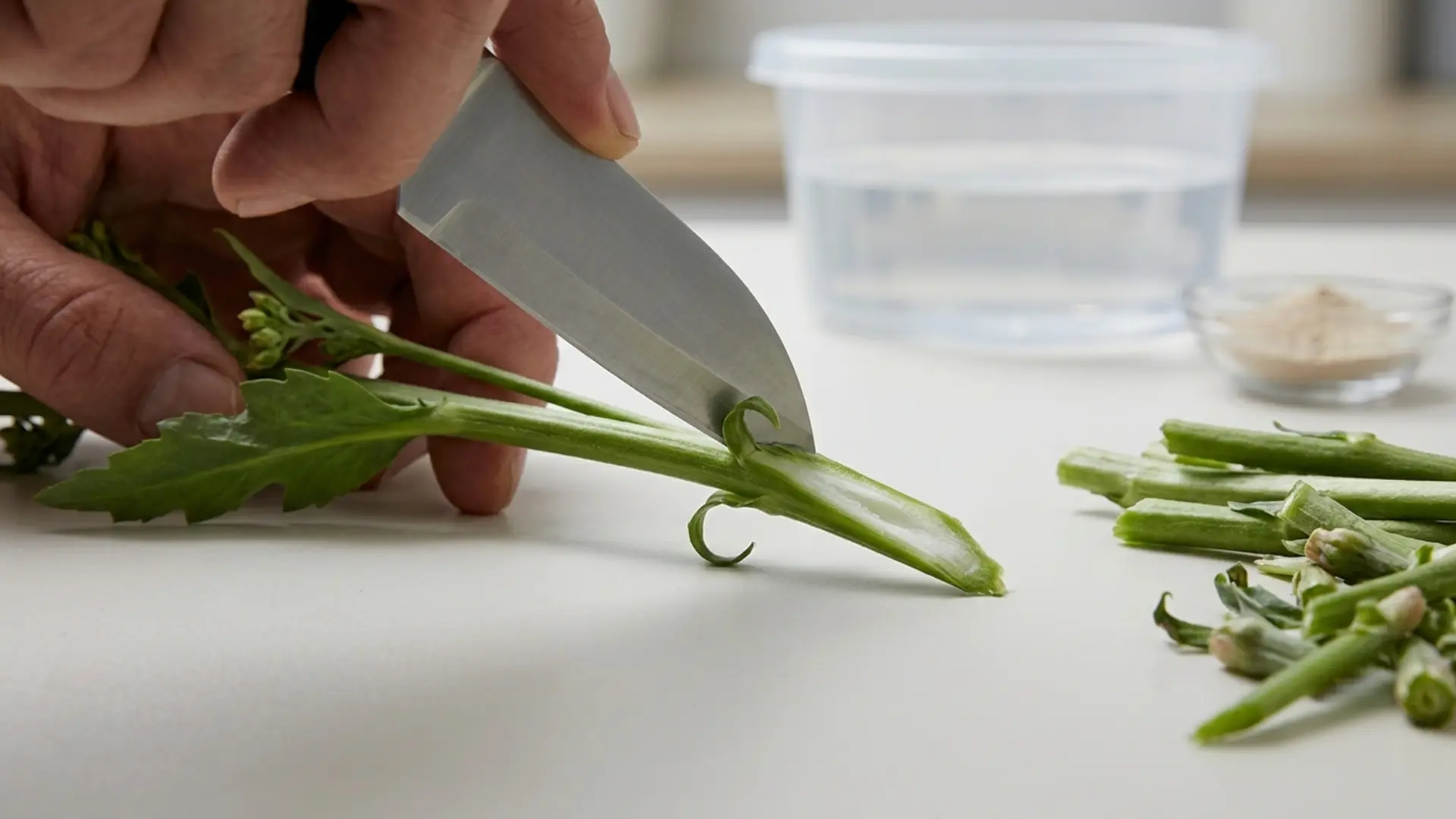
A slanted cut opens more surface area for water to enter and stops the stem from sitting flat against the vase floor. That angle matters most in the first hour after cutting, when the stem drinks fastest and needs the clearest path.
3. Use a Sharp Knife, Not Scissors
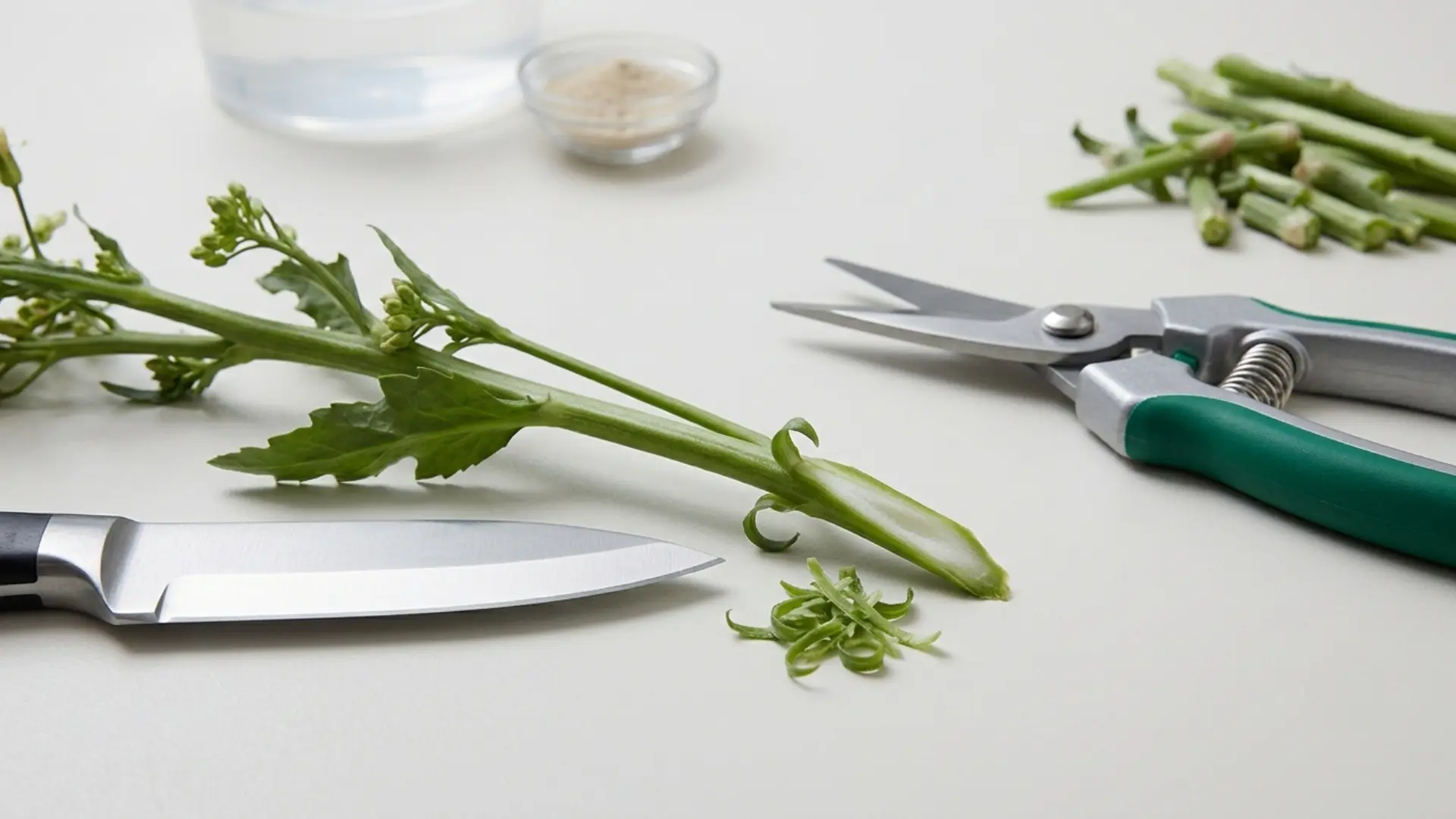
Scissors squeeze the stem as they cut, crushing the tissue the flower needs to pull water upward. A sharp knife slices clean through instead, leaving that tissue open and ready to drink the moment it hits water.
4. Strip Leaves Below the Waterline
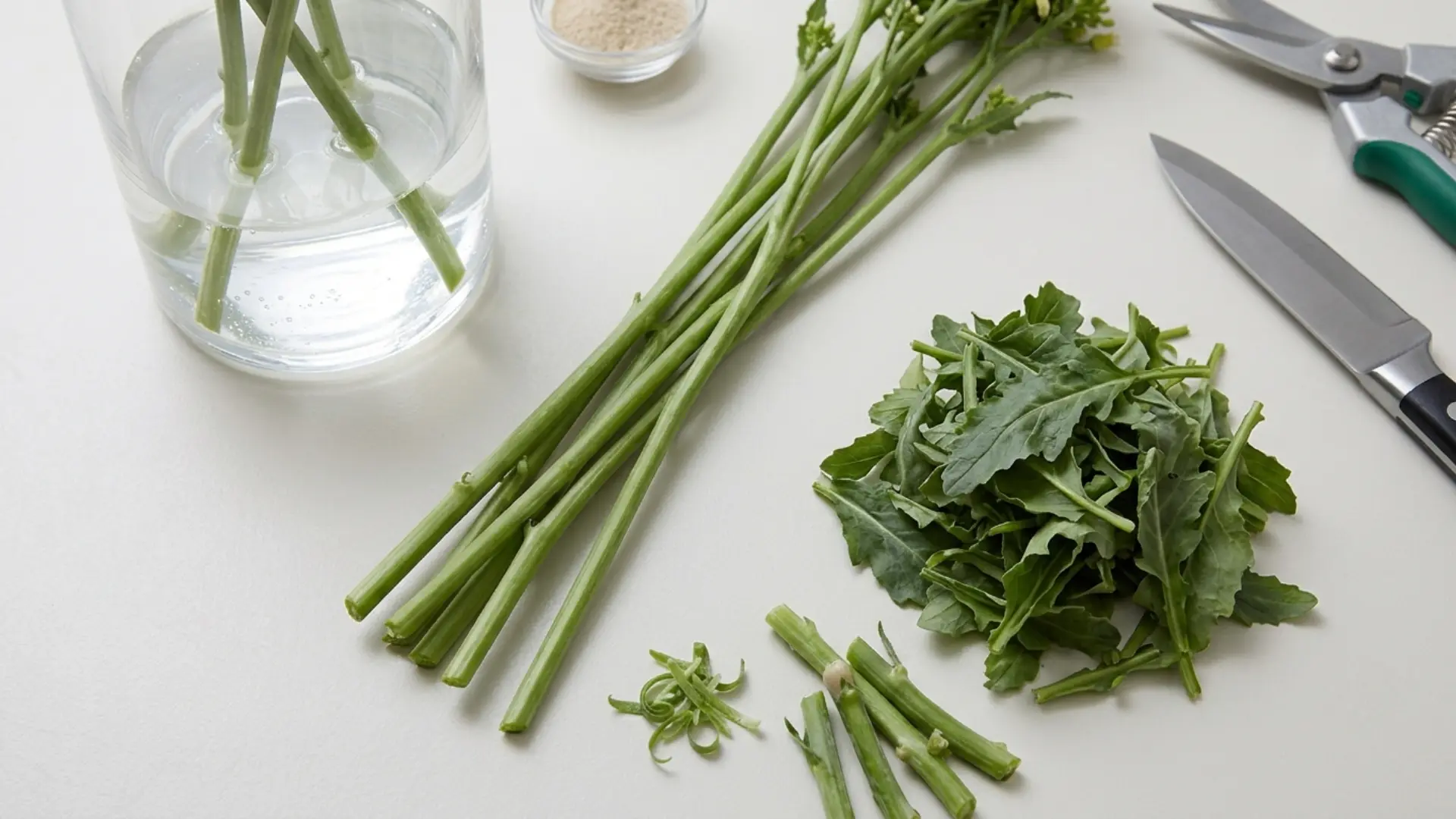
Submerged leaves rot within a day or two, and that rot feeds bacteria that clog the stem from the inside. Strip anything that would sit underwater before arranging, not after. Waiting even a day gives the rot a head start.
5. Use the Flower Food Packet
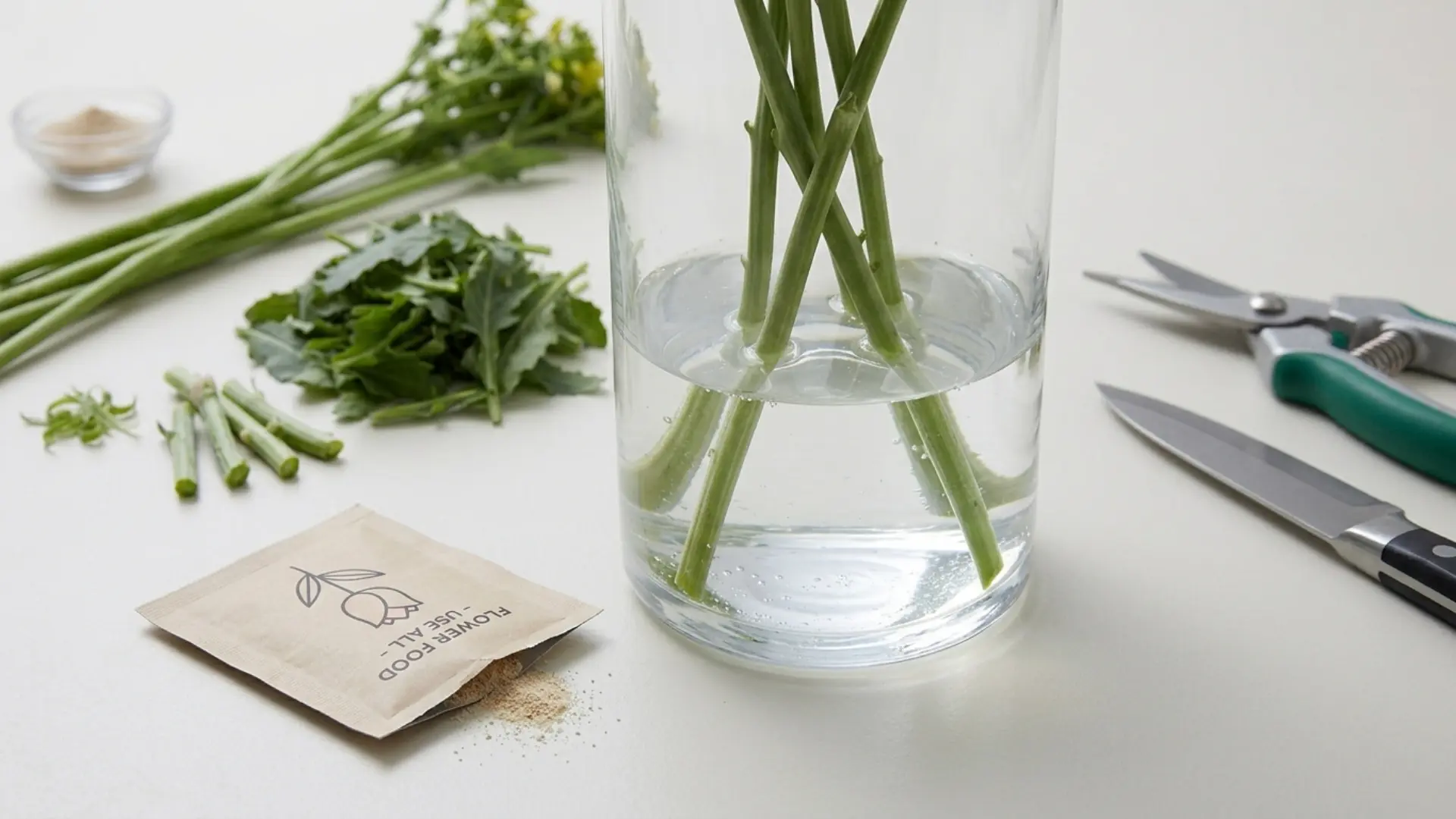
The packet does three jobs at once: it feeds the flower, balances the water’s pH, and slows bacterial growth. No single home remedy covers all three. That’s why store-bought food outperforms sugar, vinegar, or bleach used alone.
6. Change the Water Every 2 to 3 Days
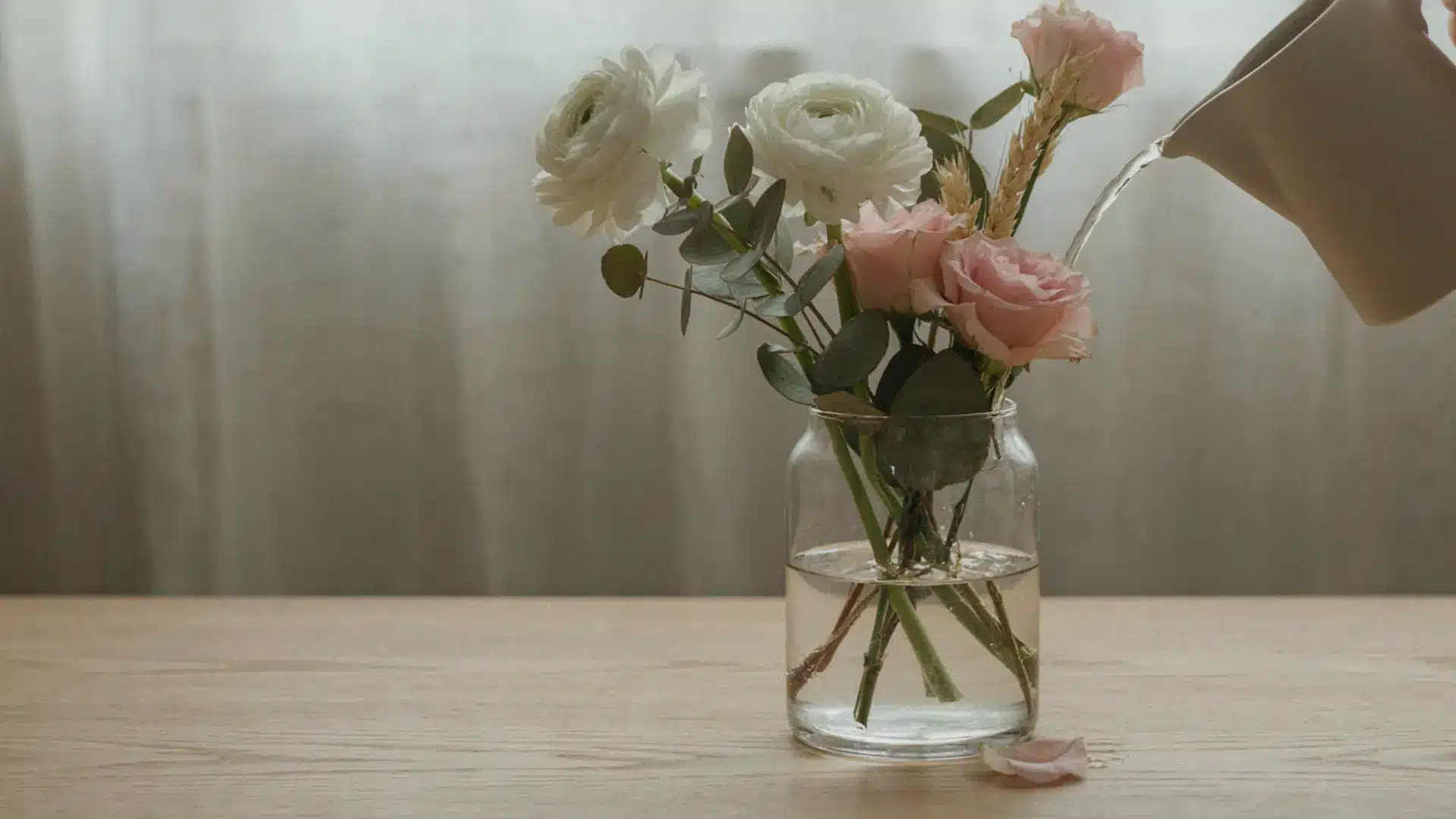
Still water breeds bacteria fast, and that bacteria blocks the stem before you notice any visible wilting. Dump the old water completely, rinse the vase, and refill with fresh water.
Topping it off adds clean water to dirty.
Warm rooms speed this up, so a summer windowsill may call for a change every day instead of every few, while a cool room can usually stretch closer to the three-day mark.
7. Re-Cut the Stems Every Few Days
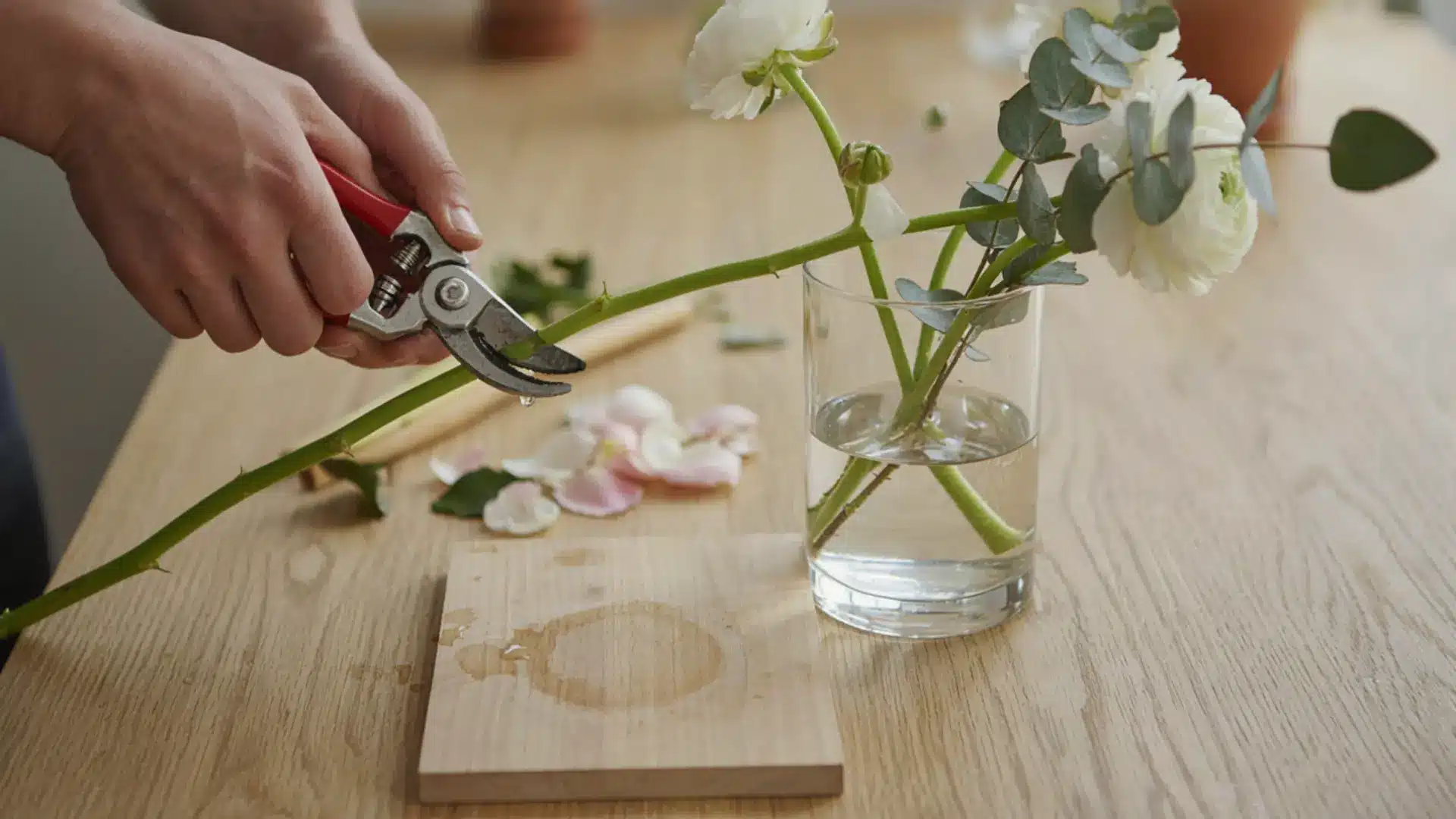
Stems seal shut underwater within a couple of days, even with clean water and a good original cut. A fresh angled cut every few days reopens that pathway. Skip it, and the flower stops drinking no matter what else you do.
8. Remove Wilting Blooms Immediately
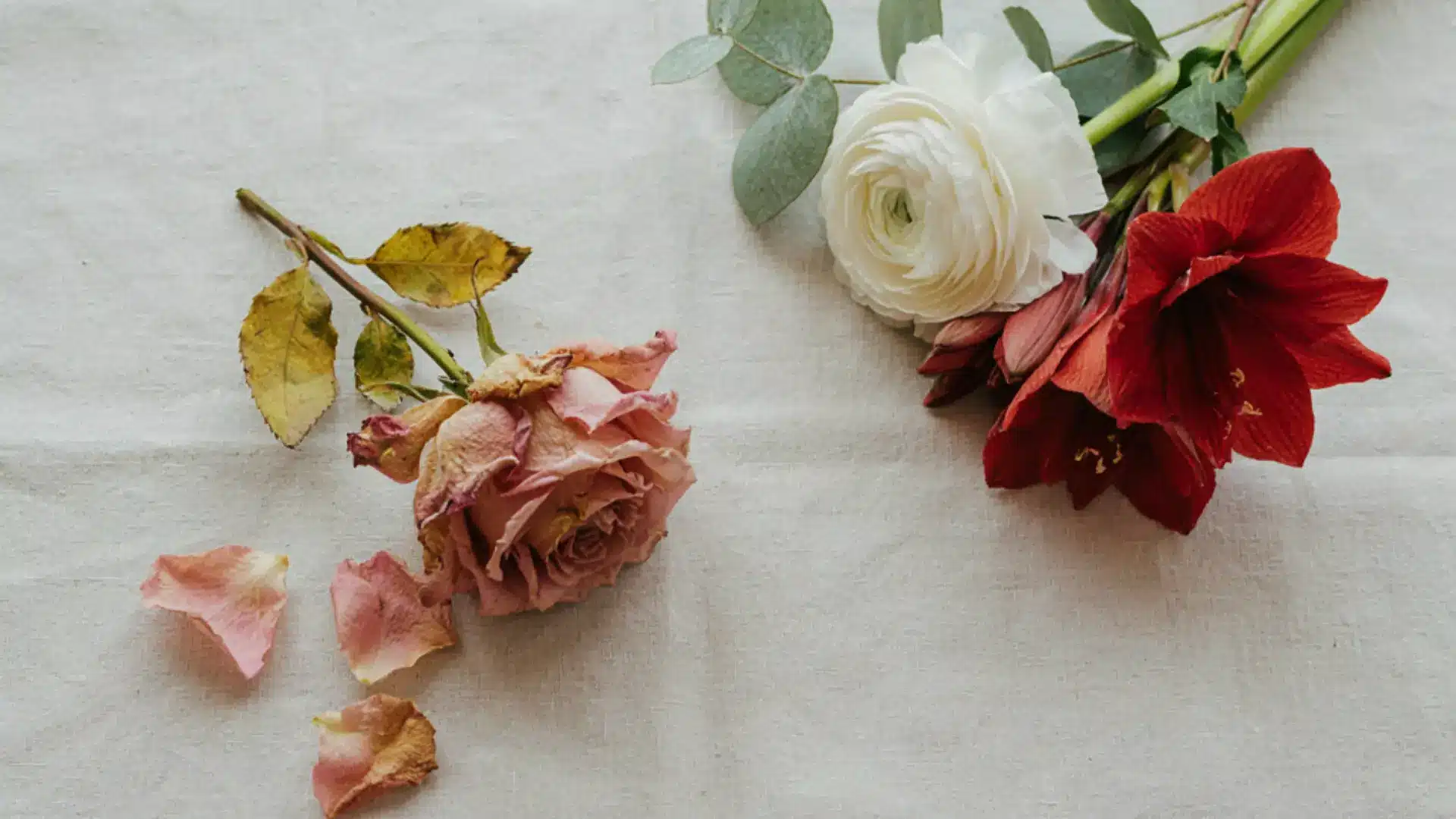
One dying flower releases bacteria and gas that speed up decline in every bloom sitting next to it. Pull it the moment you notice drooping or yellowing. Waiting even a day drags the whole arrangement down with it.
9. Keep the Arrangement Away from Heat and Sun
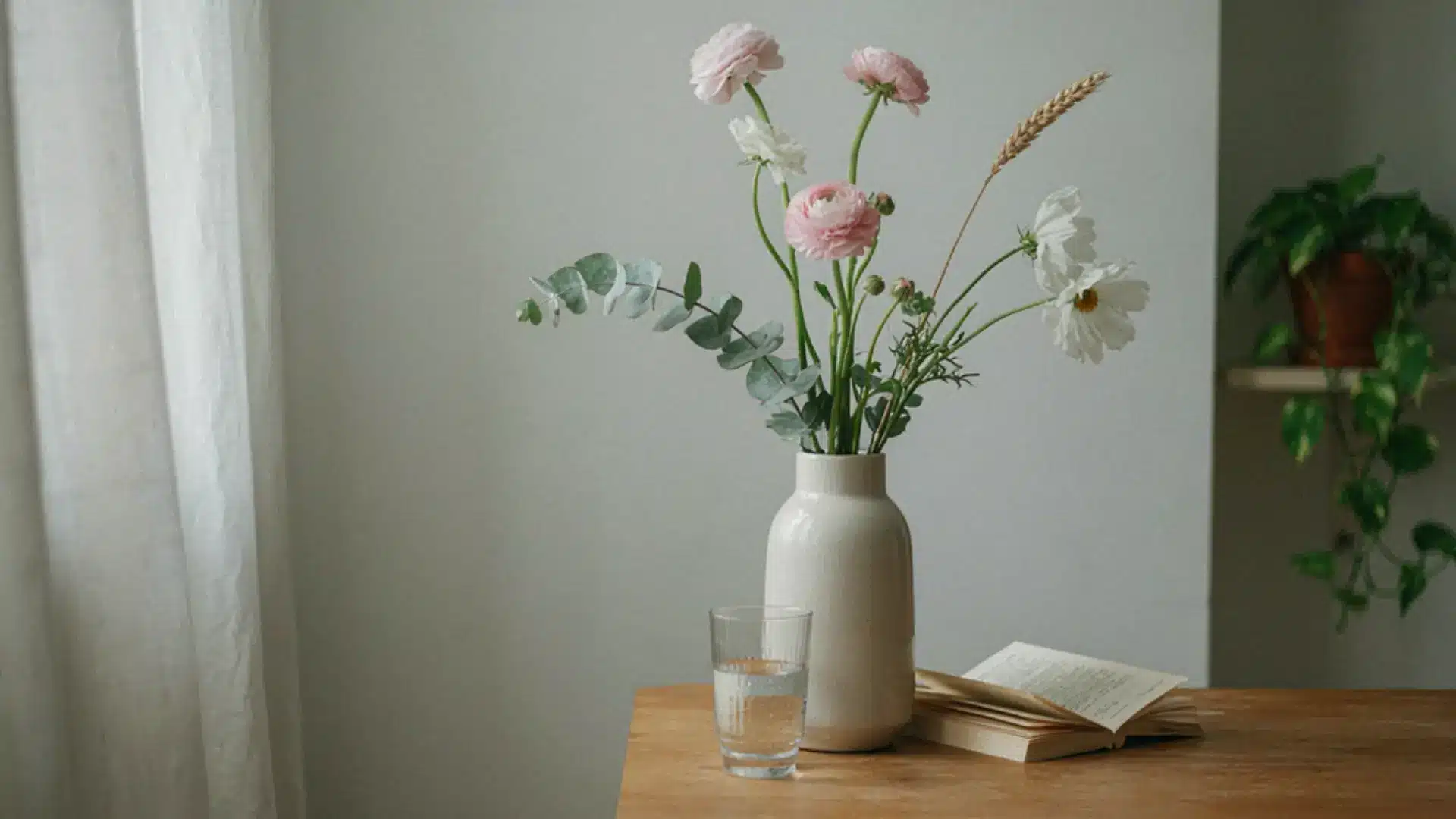
Heat and direct sun push flowers to lose water faster than their stems can absorb it. That same warmth also speeds up natural aging so that a sunny windowsill can cut vase life short fast.
10. Keep Flowers Away from Ripening Fruit
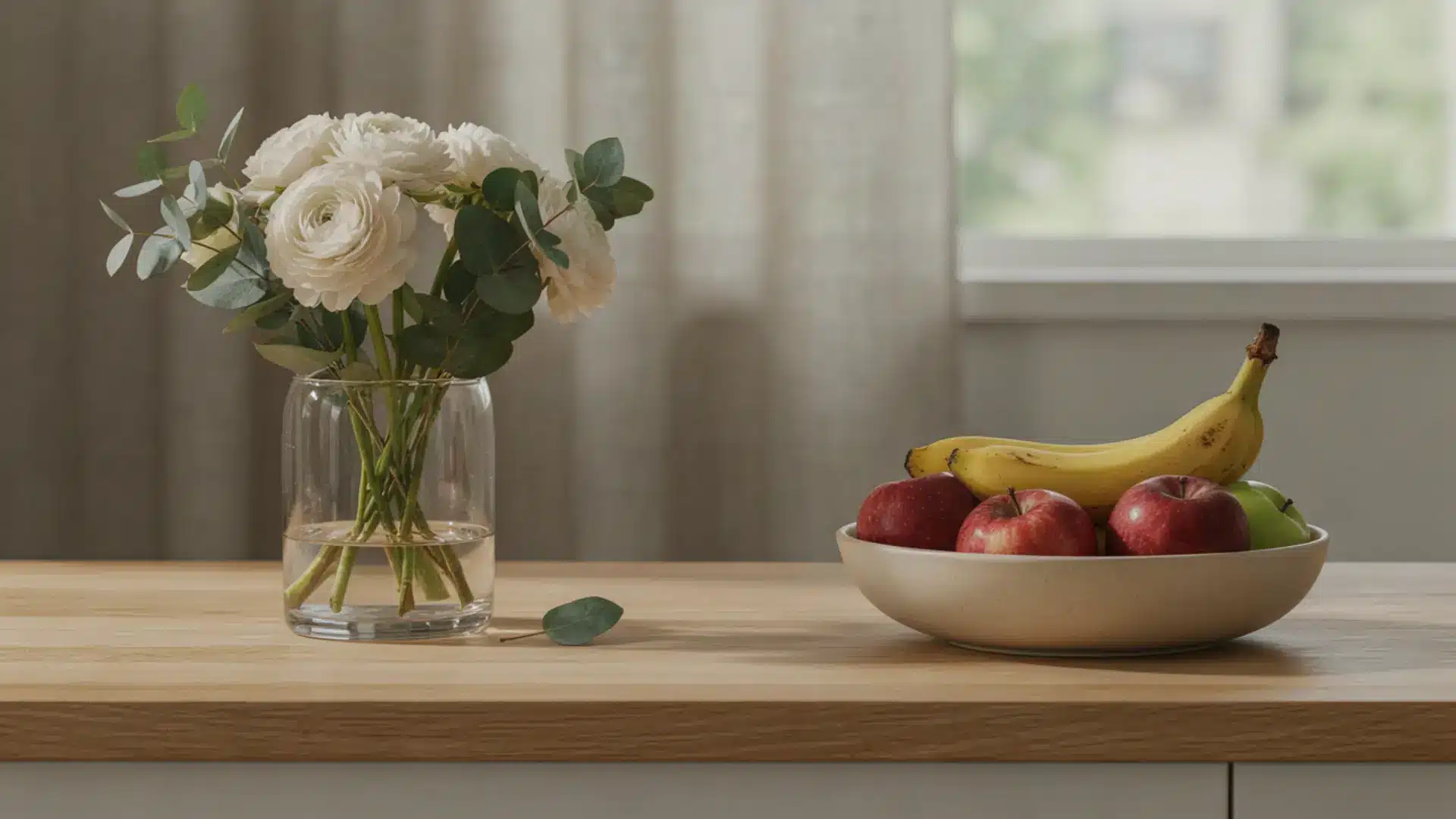
Bananas and apples release a gas as they ripen, and that gas speeds up wilting in anything nearby.
The University of Minnesota Extension specifically warns against storing flowers and fruit together, since apples give off ethylene gas that accelerates flower aging.
Most people never connect the fruit bowl to their flowers. Moving the vase across the room makes a real difference.
11. Condition New Stems Before Arranging
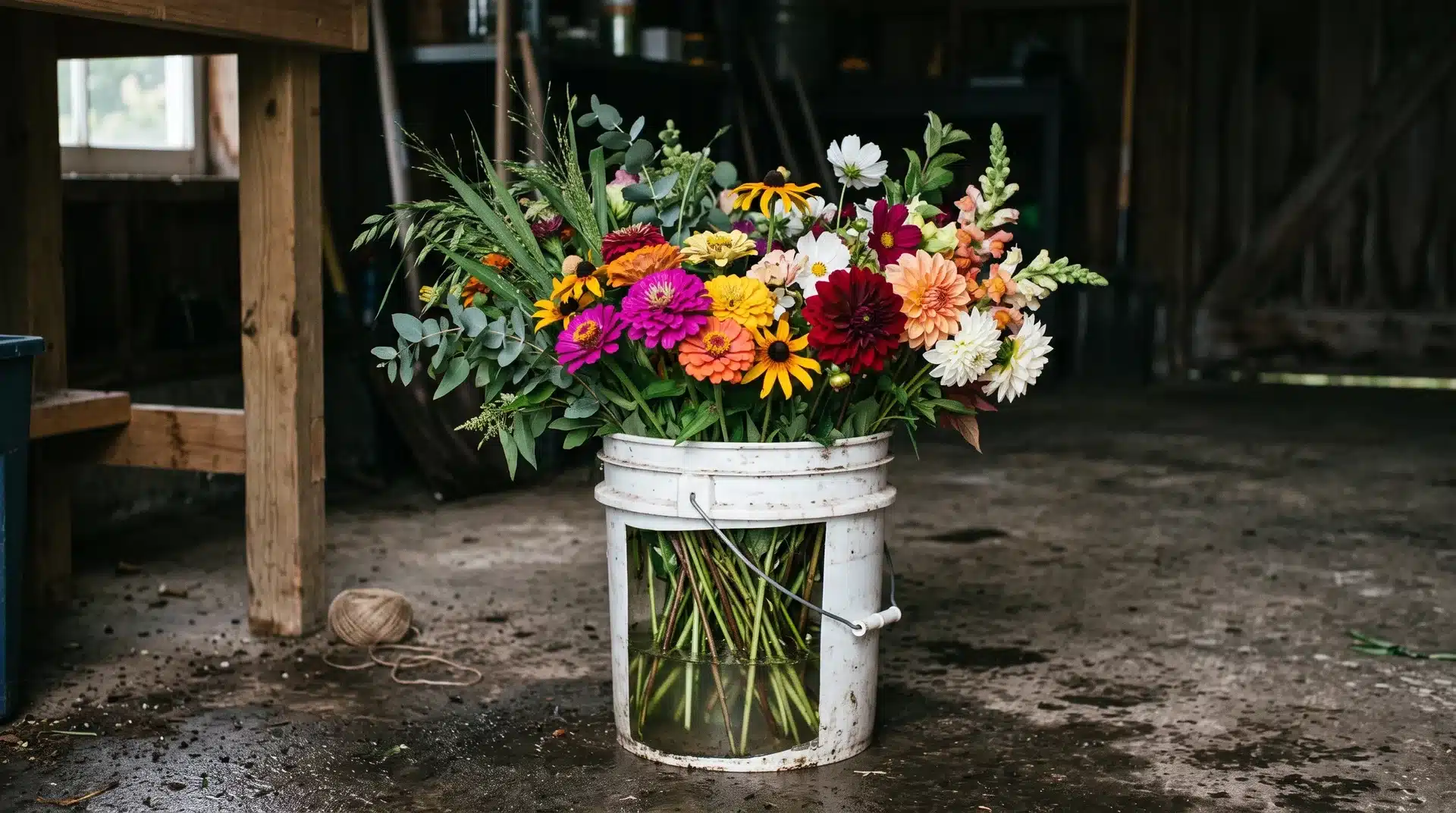
If there is time before building the final arrangement, condition the stems first.
After cutting and stripping the leaves, stand the stems in a bucket of water in a cool, dark spot for a few hours, or overnight if possible.
This lets each stem fully rehydrate before it has to compete for water inside a crowded vase, and arrangements built from conditioned stems tend to hold their shape and color longer once they are on display.
Get these right, and your flowers will outlast almost anything sitting on a windowsill or kitchen counter.
Do Home Remedies Like Sugar, Vinegar, or Pennies Actually Work?
Some of these tricks hold up. Others don’t, and it comes down to which job they’re actually doing.
- Sugar feeds the flower, same as the sugar in store-bought flower food. But sugar alone also feeds bacteria, which can cloud the water faster than it helps the bloom. A study published in Frontiers in Plant Science on cut carnations found that sucrose on its own promoted bacterial buildup at the stem base and actually shortened vase life compared to plain water.
- Vinegar is mildly acidic, so it helps balance pH the way an acidifier should. It doesn’t feed the flower or fight bacteria on its own.
- Pennies only work if they’re old enough to be mostly copper. Copper has mild antibacterial properties, but most coins today are zinc with a thin copper coating, so they don’t do much. The U.S. Mint’s coin specifications confirm that modern pennies are copper-plated zinc, not solid copper, which is why newer coins add little to the vase.
- Bleach, in a tiny amount, controls bacteria the way a biocide should; too much damages the stem instead of protecting it.
None of these cover all three jobs on their own. If you want a shortcut that actually works, pair sugar with a splash of vinegar and a drop of bleach. Or use the flower food packet. It already does all three.
How Do You Keep Flowers Fresh Once They’re in the Vase?
Keeping cut flowers fresh is mostly about consistent care, not just what you add to the water. Use this simple routine first, then consider additives that can support longer-lasting blooms.
| Care Step / Additive | What to Do | Why It Matters | Priority |
|---|---|---|---|
| Change the water | Replace the water every 2 to 3 days. Empty the vase, rinse it, and refill with fresh water. | Bacteria build up in still water and can clog the stems, making it harder for flowers to absorb water. | Essential |
| Re-cut the stems | Trim the stems each time you change the water. | Stem ends can seal over after a couple of days. A fresh cut reopens the pathway so the flower can keep drinking. | Essential |
| Remove dying flowers | Take out wilting or dead blooms as soon as you notice them. | Dying flowers can release bacteria and gases that speed up the decline of nearby blooms. | Essential |
| Use flower food | Add commercial flower food if available. | It handles three needs at once: sugar feeds the flower, acidifier balances water pH, and biocide limits bacteria. | Optional but effective |
| Evaluate home remedies | Check what the remedy actually does before adding it to the vase. | A useful additive should feed the flower, balance the water, and control bacteria. If it only handles one, it is doing only part of the job. | Optional |
A clean vase, fresh water, trimmed stems, and removed wilted blooms create the right foundation. Any additive should support these basics, not replace them.
What Kills Cut Flowers Faster Without You Realizing It?
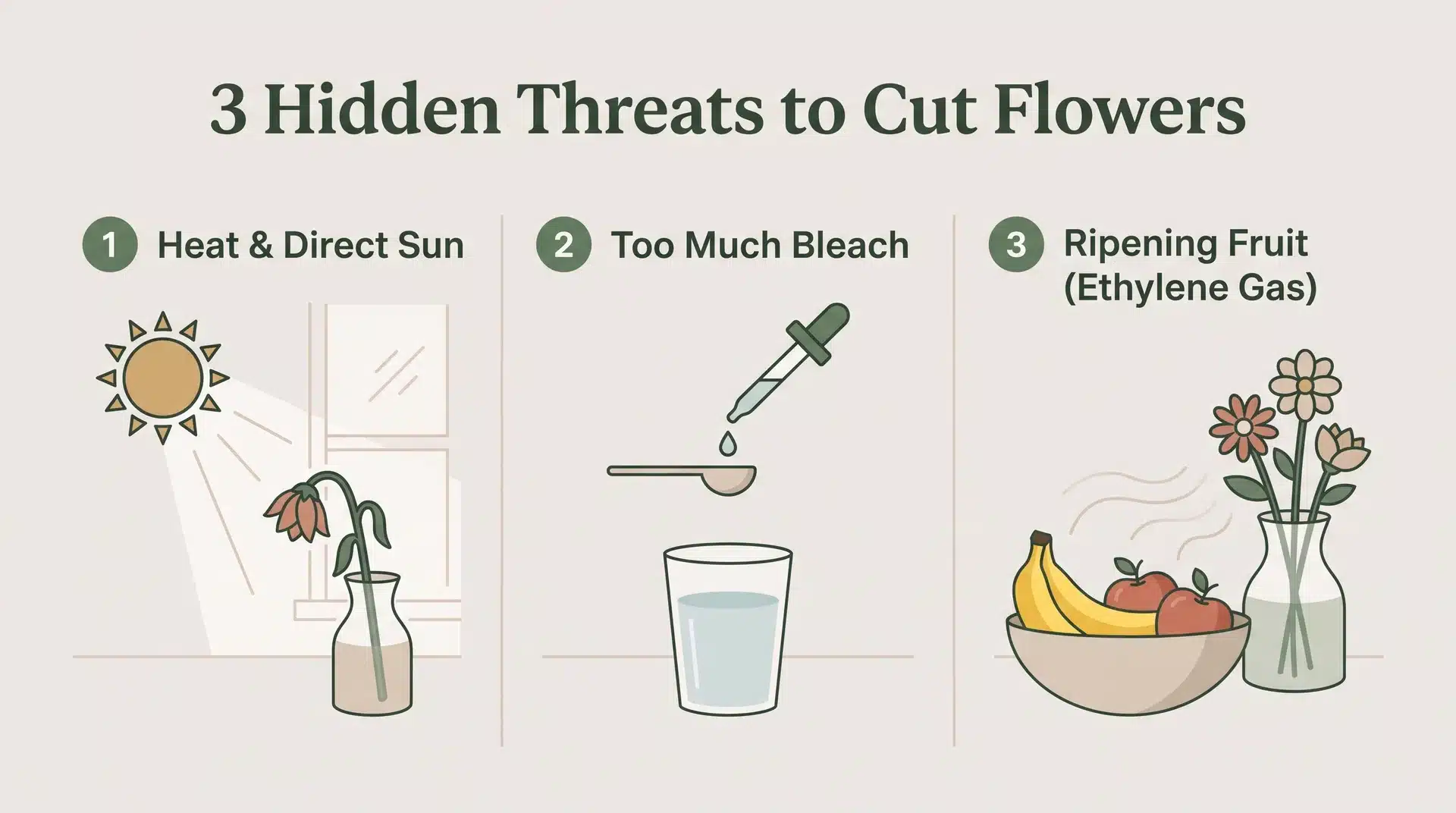
You can do everything right with the water and stems and still lose your flowers early. Placement is a separate lever, and it matters just as much.
Heat speeds everything up. Direct sun, a warm windowsill, or sitting near a heating vent pushes flowers to lose water faster than they can absorb it.
That same heat also speeds up the flower’s natural aging process. It wilts on a shorter timeline than it should.
A small amount helps control bacteria, but the working amount is closer to one-quarter teaspoon per quart of water, per common floral-preservative recipes published by Purdue University’s Cooperative Extension Service.
A splash more than that can damage the stem instead of protecting it, so the line between helpful and harmful is thinner than people assume.
Also, keep your bouquet away from the fruit bowl. It’s a small change that makes a real difference.
How Do You Know Your Flower Care Routine is Actually Working?
A few visible signs tell you if your routine is doing its job. You’ll usually see them within the first day or two. Watch the water level. If it’s dropping noticeably, the stems are drinking the way they should.
Healthy blooms also stay upright. The neck doesn’t droop, and the petals hold their shape. Not every flower ages the same way, so don’t panic at the first sign of change.
- Tulips keep growing slightly after being cut, so some bending is normal, not a sign of decline. The University of Maryland Extension notes that tulips can continue growing up to six inches after they go into a vase.
- Hydrangeas wilt fast if underwater, then bounce back once they’re rehydrated.
Both of these can look like trouble when they’re really just how that flower behaves. Cloudy or smelly water within a day of changing it is a real warning sign. It means bacteria are building back up faster than normal.
That’s not a reason to give up on the routine. It’s a sign to tighten it, with a cleaner vase or a fresh cut.
Conclusion
Keeping a bouquet alive comes down to consistency, not luck. A clean cut, fresh water, and the right placement do more than any single miracle remedy.
What often gets overlooked is that vase life isn’t just about what you add to the water.
It’s also about removing threats like bacteria, ethylene gas, and neglected wilting blooms before they affect the rest of the bouquet.
If you’re learning how to make flowers last longer, this combined approach can make a noticeable difference within days, not just in how long the flowers survive, but in how fresh they look throughout their vase life.
Ready to put this into practice? Grab a sharp knife, clear a spot away from sunlight and fruit, and give your next bouquet the fresh start it needs.
Frequently Asked Questions
Does adding vinegar to water help flowers last longer?
Vinegar is mildly acidic, so it helps balance the water’s pH. That’s one of the three jobs flower food does. On its own, it doesn’t feed the flowers or stop bacteria. Pair it with a little sugar, and it works better than using it alone.
Does adding sugar to the water help flowers last longer?
Sugar feeds the flower, the same way store-bought flower food does. That part genuinely helps. But sugar also feeds bacteria just as easily. Without something to balance the pH or fight bacteria, plain sugar water can cloud up fast and do more harm than good.
Does putting pennies in the vase help flowers last longer?
Old copper pennies release trace amounts of copper, which fights bacteria. That’s why the trick started in the first place. Modern pennies are mostly zinc with a thin copper coating. They don’t release enough copper to make a real difference, so this one rarely works today.
How much bleach should you add to flower water?
A small amount of bleach controls bacteria in the vase. About one-eighth of a teaspoon per quart of water is enough. Any more than that can damage the stems and petals instead of protecting them. Measure it. Don’t eyeball it.