

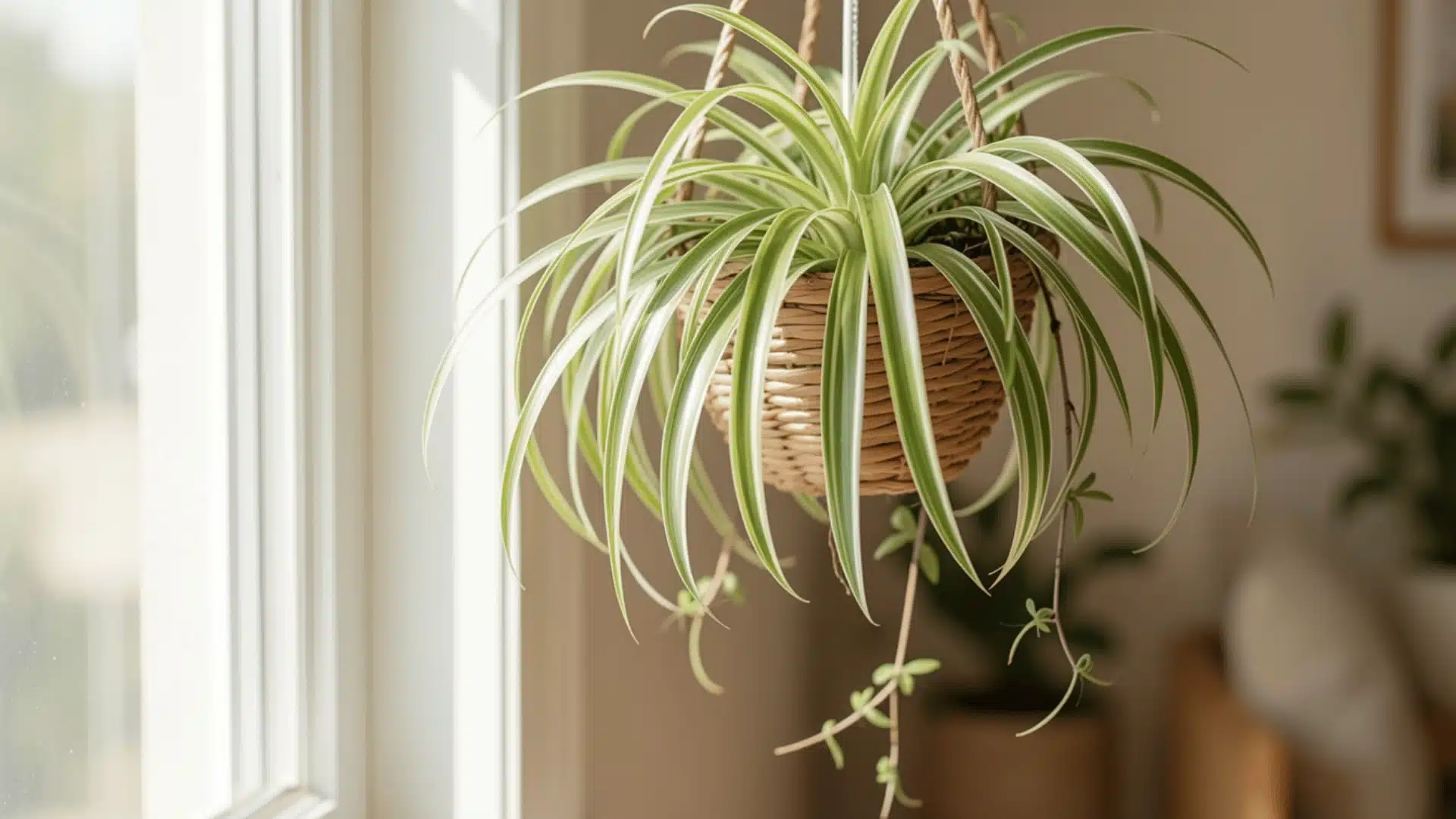
Spider plants look easy to care for, but brown tips, drooping leaves, or slow growth can make you question what you’re doing wrong. I know how frustrating that feels when you’re trying to keep a simple houseplant healthy.
Good spider plant care comes down to a few basics: the right light, proper watering, well-draining soil, balanced feeding, and knowing when to repot or propagate. You also need to understand what common leaf changes are telling you.
Here, you’ll learn how to build a simple care routine, fix common problems, and adjust your approach as the seasons change so your plant stays healthy without constant guesswork.
Spider Plant Care at a Glance
Spider plants are forgiving, but their needs can shift with the season and growing environment. Use this quick reference to understand the basic conditions that support healthy growth.
| Care Factor | Spider Plant Requirement |
|---|---|
| Botanical Name | Chlorophytum comosum |
| Light | Bright, indirect light |
| Water | Water after the upper soil begins drying |
| Soil | Loose, well-draining potting mix |
| Temperature | About 60 to 80°F |
| Humidity | Average indoor humidity |
| Fertilizer | Light feeding during active growth |
| Propagation | Spiderettes or plant division |
| Repotting | When roots become noticeably crowded |
| Pet Safety | Generally considered non-toxic to cats and dogs |
These are useful starting points, not rigid rules. Your plant’s location, container, season, and growth rate can change how often you need to do individual care tasks, much like the broader principles behind general indoor plant upkeep.
Best Light for Spider Plants
Spider plants perform best in bright, indirect light. An east-facing window often works well, while plants near south- or west-facing windows may need some distance or filtered light.
Bright conditions encourage stronger foliage and can help variegated varieties maintain their lighter stripes.
Strong afternoon sunlight is different. Intense rays passing through a window can scorch the foliage, leaving dry, pale, or brown patches.
Spider plants tolerate lower-light rooms, but tolerance does not mean ideal growth. You may notice slower development, greener variegated leaves, weaker growth, or fewer runners and spiderettes.
If your plant looks pale or growth has slowed, gradually move it closer to a brighter source of indirect light. Avoid suddenly transferring a plant from a dark location into several hours of strong direct sun.
Watering and Water Quality for Spider Plants
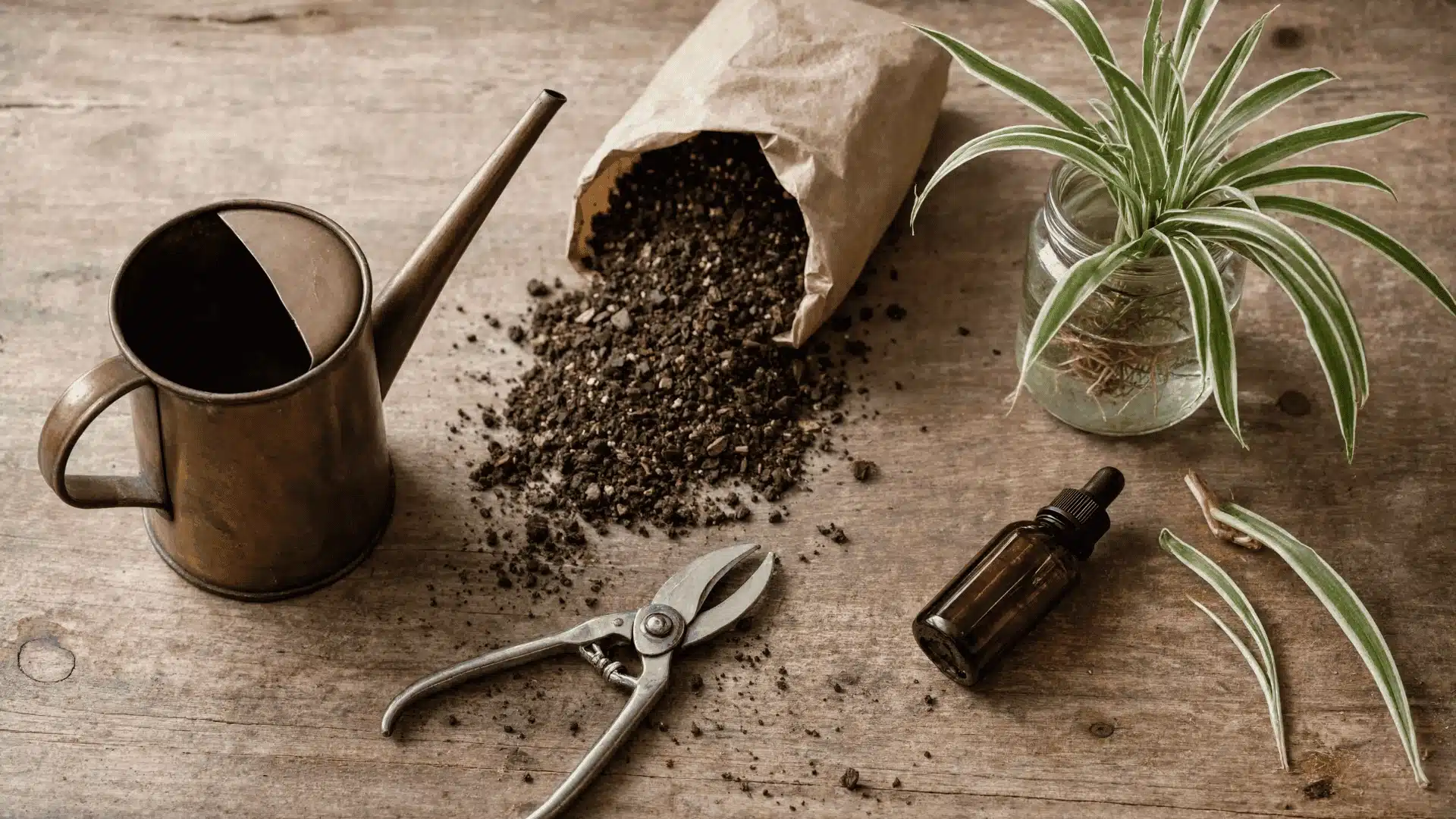
There is no universal weekly watering schedule for spider plants.
Instead, check the soil before reaching for the watering can. When the top inch of soil feels dry, water thoroughly until excess moisture flows through the drainage holes. Empty collected water from the saucer afterward.
How quickly the soil dries depends on several factors:
- Light exposure
- Room temperature
- Pot size
- Soil composition
- Humidity
- Plant size
- Season
A plant growing beside a bright summer window may use water much faster than the same plant during winter.
Avoid keeping the soil continuously wet. Spider plants have thick roots that store moisture, so prolonged saturation can eventually damage the root system.
Water quality can also influence the appearance of the foliage. Some spider plants develop repeated brown tips when minerals or fertilizer salts accumulate.
If browning continues even though your watering routine is reasonable, you can try filtered, distilled, or rainwater. Periodically flushing the potting mix with clean water may also help remove accumulated salts.
A few brown tips are mainly cosmetic when the rest of the plant remains healthy, so don’t assume every browned edge signals a serious problem.
Soil, Pot, and Repotting Requirements
Spider plants need a growing medium that retains some moisture while allowing excess water to escape.
A standard indoor potting mix usually works well. If it feels dense or remains wet for many days, adding perlite or another aerating material can improve airflow and drainage.
Avoid filling indoor containers with heavy garden soil. Because soil types affect texture and structure, garden soil can compact around the roots and make it difficult for water and air to move through the pot.
Your container should also have drainage holes.
Plastic pots retain moisture longer, which can help in hot or dry rooms. Terracotta dries faster and may suit people who tend to water frequently. Neither material is automatically better, so choose according to your environment and watering habits.
When to Repot
Spider plants naturally develop thick, fleshy roots and can tolerate being somewhat crowded.
You do not need to repot the moment you see a root near a drainage hole. Consider moving the plant when several signs appear together:
- Roots heavily fill the container.
- The root ball begins pushing upward.
- Soil starts drying unusually fast.
- Water passes through immediately.
- Growth slows despite suitable care.
- The plant becomes unstable in its pot.
Choose a new container only slightly wider than the existing one. An oversized pot holds more unused wet soil around the roots and can increase the risk of moisture problems. Following solid repotting techniques for houseplants can help minimize stress on the roots during the move.
Spring and early summer are convenient times to repot healthy plants because active growth makes adjustment easier.
Temperature and Humidity Needs
Normal indoor conditions are usually comfortable for spider plants.
Temperatures around 60 to 80°F generally work well. Brief fluctuations are normally manageable, but prolonged exposure to cold or extreme heat can damage the foliage.
Keep your plant away from:
- Cold winter drafts
- Frequently opened exterior doors
- Strong air-conditioning vents
- Direct heating vents
- Extremely hot windows
Average household humidity is usually enough.
If leaf edges regularly become dry during winter or particularly dry weather, slightly higher room humidity may help. However, spider plants do not require the consistently high humidity levels associated with many tropical houseplants.
Focus first on proper watering and protecting the plant from harsh heating or cooling airflow before assuming low humidity is the main problem.
How to Fertilize Spider Plants
Spider plants benefit from feeding during active growth, but more fertilizer does not mean faster or healthier growth.
During spring and summer, use a balanced houseplant fertilizer according to its label directions. A diluted application can also work because spider plants may react to excessive fertilizer salts.
As growth slows during fall and winter, reduce feeding.
Possible signs of fertilizer buildup include:
- Brown leaf tips
- Dry leaf margins
- White deposits on the soil
- Crust around the container
- Root stress
If a plant is struggling, do not immediately add more fertilizer.
Check light, soil moisture, drainage, and root health first. Feeding a stressed plant can make the problem worse if nutrition isn’t the underlying cause.
How to Prune a Spider Plant
Spider plants require little pruning, but occasional trimming keeps old or damaged growth from making the plant look untidy.
Use clean scissors to remove leaves that are completely yellow, brown, or badly damaged. Cut unwanted leaves near the base without damaging healthy growth around them.
You can also trim brown tips for appearance. Follow the pointed shape of the leaf instead of cutting straight across if you want the trimmed area to look more natural.
Old flower stems and dried runners can be removed once they are no longer producing useful growth.
Avoid cutting large amounts of healthy green foliage unnecessarily.
Most importantly, remember that pruning removes visible damage but does not correct its cause. If new leaves repeatedly develop brown tips or discoloration, review watering, light, fertilizer, and soil conditions.
How to Propagate Spider Plant Babies
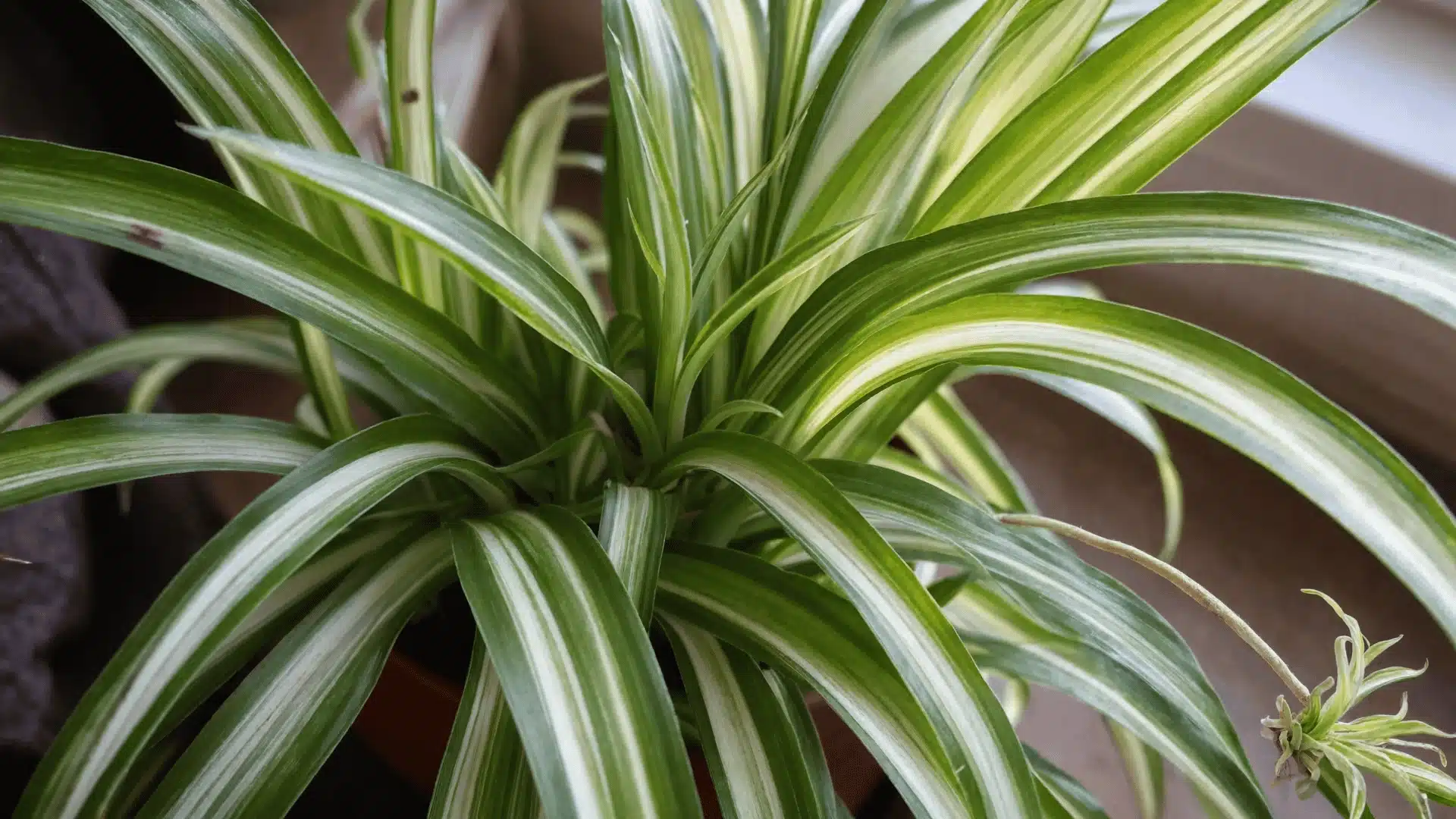
One of the easiest ways to multiply a spider plant is through the small plantlets, or spiderettes, that develop along its runners. Wait until a spiderette has several leaves and visible root bumps before separating it.
1. Propagate Spiderettes in Water
Cut the plantlet from the parent runner and place only its developing root area in water.
Keep the foliage above the waterline.
Once a small root system forms, move the plantlet into lightly moist potting soil. Avoid leaving it in water longer than necessary because water-grown roots eventually need to adapt to soil.
2. Propagate Spiderettes in Soil
You can skip water propagation and place the plantlet directly into a small container of moist potting mix.
Another option is to keep it attached to the parent plant while rooting.
Once the spiderette becomes anchored and resists a gentle tug, cut the runner connecting it to the parent.
3. Divide a Mature Spider Plant
You can also divide large, crowded plants.
Remove the plant from its pot and gently separate the root mass into sections. Each division should have both healthy foliage and roots.
Place the sections into individual pots and keep the soil lightly moist while the roots adjust.
Common Spider Plant Problems and Fixes
Spider plants often show stress through their foliage. Looking at the leaf color, soil moisture, and root condition together can help you identify the likely cause.
| Problem | Common Causes | What to Do |
|---|---|---|
| Brown Leaf Tips | Fertilizer salts, inconsistent watering, dry conditions, or minerals in water | Review watering and fertilizer use. Try filtered or distilled water if browning repeatedly returns. |
| Yellow Leaves | Excess moisture, poor drainage, low light, or natural aging | Check how long the soil stays wet and make sure the container drains freely. |
| Drooping Leaves | Dry soil, excess moisture, heat, or crowded roots | Check the soil before watering and inspect the roots if drooping continues. |
| Pale or Faded Growth | Insufficient light or possible nutrient problems | Provide brighter indirect light and assess root health before increasing fertilizer. |
| Curling Leaves | Moisture stress, heat, or root problems | Determine whether the soil is too dry or remains wet for too long, then adjust accordingly. |
| Root Rot | Prolonged wet soil and poor aeration | Remove damaged roots, replace saturated soil, and improve drainage and watering habits. |
Most problems improve once you correct the underlying growing conditions. Change one factor at a time so you can see what actually helps rather than altering the entire routine at once.
Why Spider Plants Stop Producing Babies
A spider plant without spiderettes is not necessarily unhealthy.
Young plants may simply need more time before they start sending out flowering stems and runners. Light also matters, and plants kept in very dim spaces may produce fewer babies.
Other possible factors include:
- Plant maturity
- Seasonal growth changes
- Recent repotting
- Excessive fertilizer
- Overall growing conditions
Give the plant stable conditions before making several changes.
Adding extra fertilizer specifically to force spiderette production is unlikely to solve the problem and may contribute to salt buildup.
If the foliage is healthy and new growth continues appearing, patience may be all the plant needs.
Common Spider Plant Pests
Spider plants do not attract large numbers of pests, but common indoor insects can still appear.
- Spider mites may leave pale stippling or fine webbing on the leaves.
- Mealybugs often look like small cottony clusters around leaf bases and protected areas.
- Aphids tend to gather around softer new growth, while scale insects can resemble small raised bumps attached to the leaves or stems.
Inspect both sides of the foliage and the center of the plant when checking for pests.
If you find an infestation, isolate the affected plant from your other houseplants. Clean the foliage and use an appropriate houseplant pest treatment according to its directions.
Check nearby plants as well because indoor pests can spread between containers before the infestation becomes obvious.
Seasonal and Indoor vs. Outdoor Spider Plant Care
Spider plant needs shift with temperature, daylight, and location. Adjusting watering, feeding, and placement through the year helps prevent stress and uneven growth.
| Season or Location | Care Adjustments |
|---|---|
| Spring and Summer | Water more often as soil dries faster, feed lightly, propagate spiderettes, and repot crowded plants when needed. |
| Fall and Winter | Reduce watering and fertilizer, protect the plant from cold drafts, and move it closer to brighter indirect light if growth slows. |
| Outdoor Care | Place the plant in bright shade or gentle morning sun. Avoid harsh afternoon sunlight and monitor soil after heat, wind, or heavy rain. |
| Moving Back Indoors | Check the leaves, pot, and soil for insects before bringing the plant inside to avoid spreading pests to other houseplants. |
Seasonal care works best when you respond to actual growing conditions. Avoid using the same watering and feeding routine throughout the entire year.
Practical Lessons From Spider Plant Owners
Real-world plant care is rarely as exact as a watering calendar suggests.
In one Reddit discussion included in the source material, growers repeatedly recommended checking the soil and observing how the individual plant reacts. They noted that light, season, plant age, and room conditions can all influence how frequently watering is needed.
A few practical lessons stand out:
- Bright indirect light is usually reliable: Better light can support stronger growth, but prolonged harsh sunlight may damage leaves.
- Watering should respond to the soil: A bright, warm plant may dry faster than one kept in lower light.
- Brown tips can be cosmetic: Mineral buildup may contribute, but a few damaged tips do not automatically mean the entire plant is unhealthy.
- Constantly wet soil is risky: Thick spider plant roots can store moisture, so frequent watering is not always helpful.
- Slightly crowded roots are usually manageable: Visible roots alone do not mean the plant urgently needs a larger pot.
- One change at a time works better: Changing water, light, soil, fertilizer, and location together makes troubleshooting much harder.
The practical lesson is simple: watch the plant rather than treating every care recommendation as a fixed rule.
Keep Your Spider Plant Healthy Long Term
Keeping a spider plant healthy is mostly about noticing small changes instead of following a rigid routine. I find that light, soil moisture, drainage, feeding, and root space tell you far more than a fixed schedule ever can.
With consistent spider plant care, you can prevent many common problems, handle brown or yellow leaves early, and know when your plant needs repotting, pruning, or propagation. Seasonal adjustments also help you avoid overwatering or overfeeding when growth slows.
Use these tips as a practical routine, then watch how your own plant responds. If you’ve learned a useful spider plant trick from experience, share it or try these care steps with your plant today.
Frequently Asked Questions
Can spider plants grow in bathrooms?
Yes, as long as the bathroom receives enough natural light or suitable supplemental light. Higher humidity may suit the plant, but humidity cannot compensate for a room that is consistently too dark.
How can I make my spider plant look fuller?
Provide good indirect light and consistent care. You can also root several spiderettes and plant them together in the same container, which can create a denser appearance more quickly.
How long can spider plants live?
With suitable growing conditions, spider plants can remain productive houseplants for many years. Mature plants can also be divided or propagated, allowing new plants to continue growing from the original.
Should I cut spider plant babies off?
You can leave healthy spiderettes attached or remove them for propagation. Cutting them mainly depends on plant size, appearance, and whether you want to produce additional plants.
Do spider plants need misting?
Regular misting is generally not essential when the plant is growing in normal household humidity. Consistent soil moisture, suitable light, and protection from very dry heating or cooling airflow are more important.