

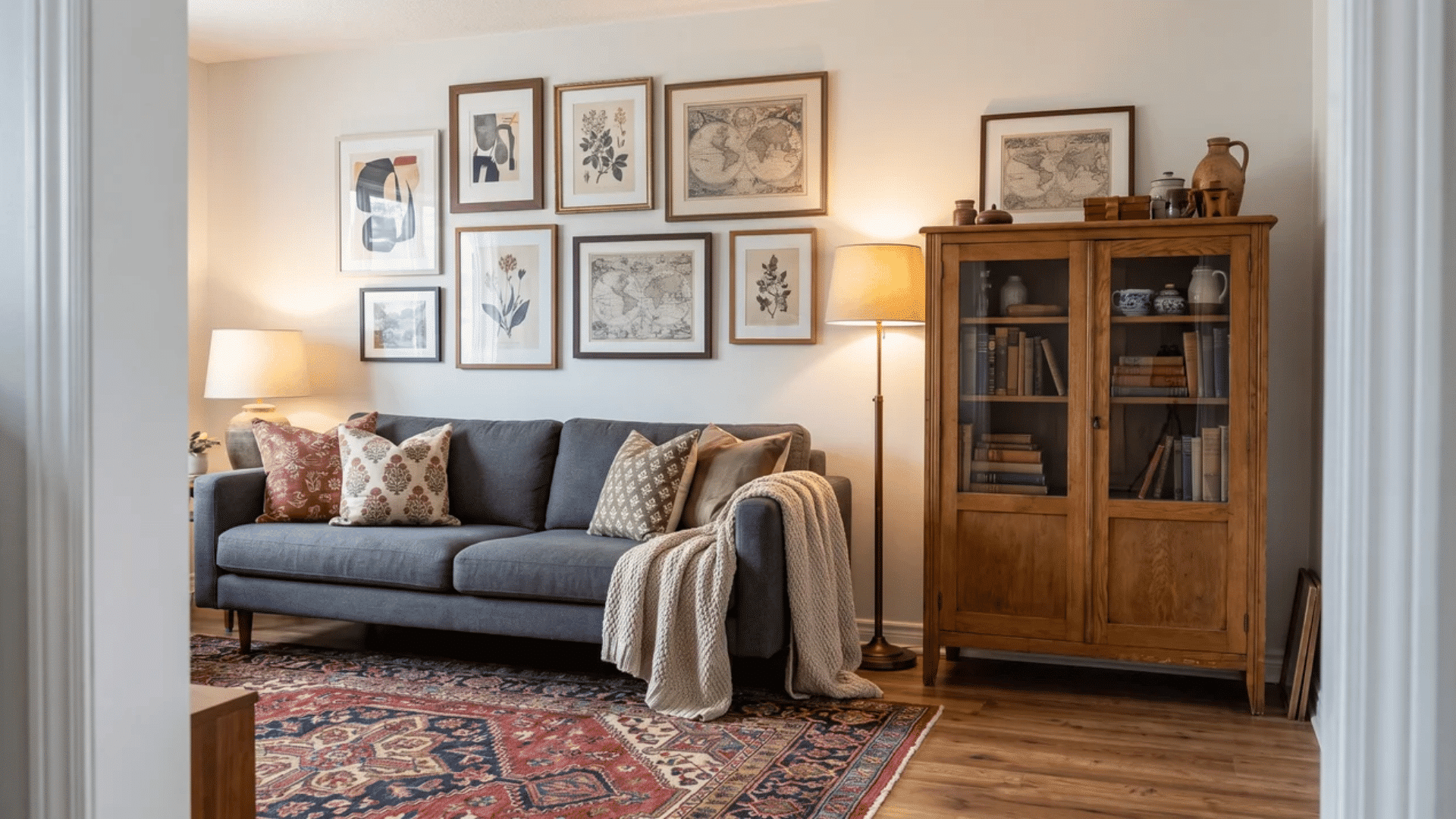
Mixing styles sounds easy until the room starts feeling busy instead of intentional. You may love vintage furniture, modern finishes, bold patterns, and collected decor, but bringing them together without creating clutter takes restraint.
I find that eclectic interior design works best when every piece has a clear role and at least one visual connection to the rest of the space. That could be a repeated color, balanced scale, shared material, or one strong focal point.
Here, you’ll learn how to mix old and new pieces, layer textures and patterns, style different rooms, avoid common mistakes, and create a home that feels personal without looking random.
Core Elements of Eclectic Interior Design
Every eclectic interior design draws from the same four ingredients, no matter which era it leans on.
| Element | What It Means |
|---|---|
| Mix Old and New Furniture | Pair one older piece with one newer piece instead of filling a room with all of one era. Match seat heights so the pairing looks planned, not accidental. |
| Layer Different Textures | Combine wood, metal, and fabric finishes to add depth, even with a simple color palette. A rough throw next to a smooth metal table does more work than another matching cushion. |
| Play With Pattern at Different Scales | Mix a large pattern with a smaller one instead of repeating the same size everywhere. One shared color pulled through both keeps the scales feeling connected. |
| Display Personal Collections | Group travel finds, books, or family pieces instead of buying a matching decor set. Grouped items read as a collection. Scattered items just read as clutter. |
Get these four right, and the room already has a foundation. Once you’re comfortable using texture thoughtfully, everything else is refinement.
Modern Eclectic Living Room Ideas
The living room usually shows eclectic style first, since it holds the most furniture and the most visible wall space. This section covers ideas and tips for getting it right.
1. Pair an Older Cabinet with a Newer Sofa
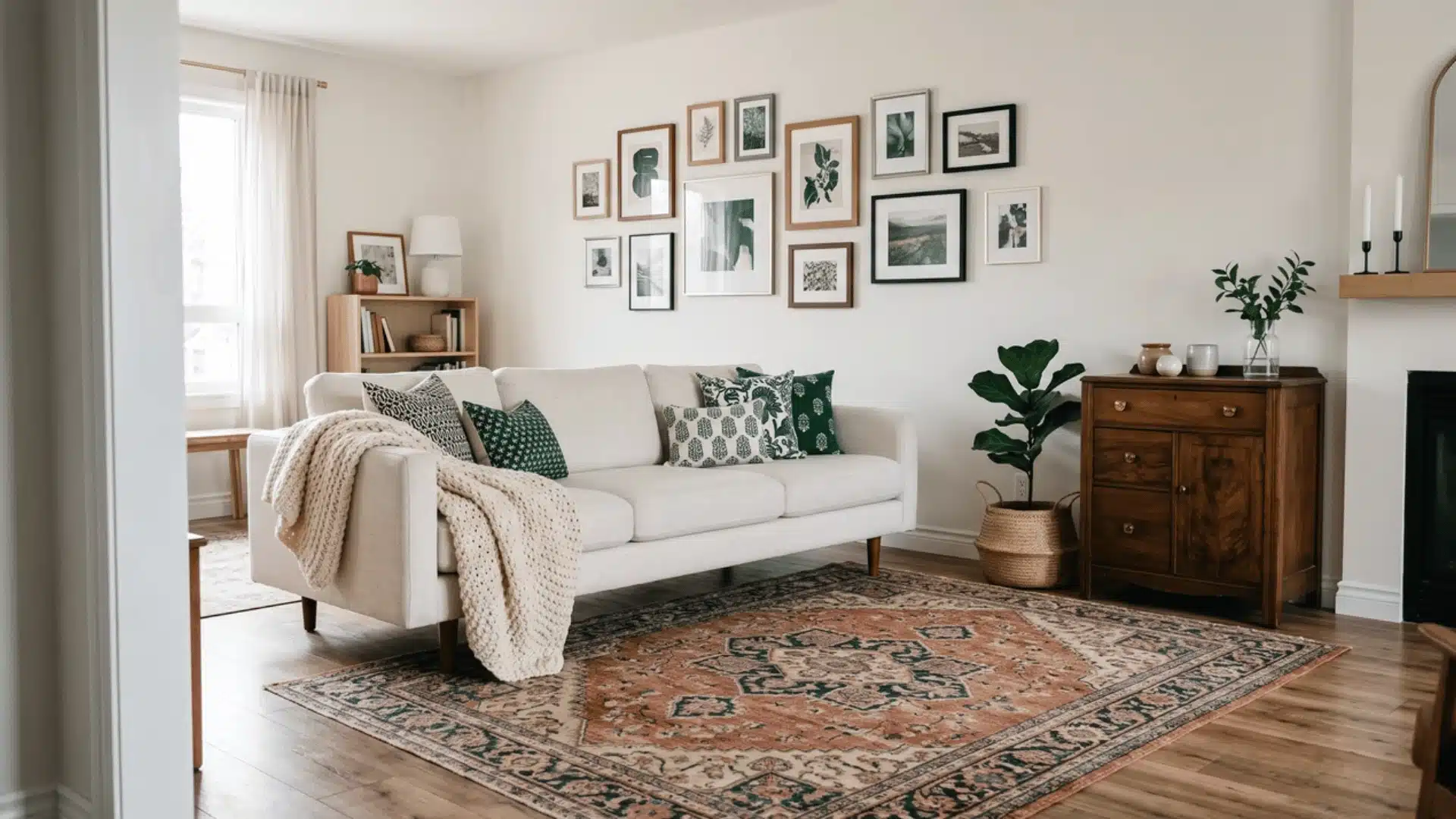
A clean-lined modern sofa can sit comfortably beside a vintage or antique cabinet without looking mismatched. The contrast reads as intentional, not accidental.
Check the height, width, and bulk of each piece before placing them together. Similar proportions help two different eras share space comfortably in the room.
2. Build a Gallery Wall from Mixed Frames
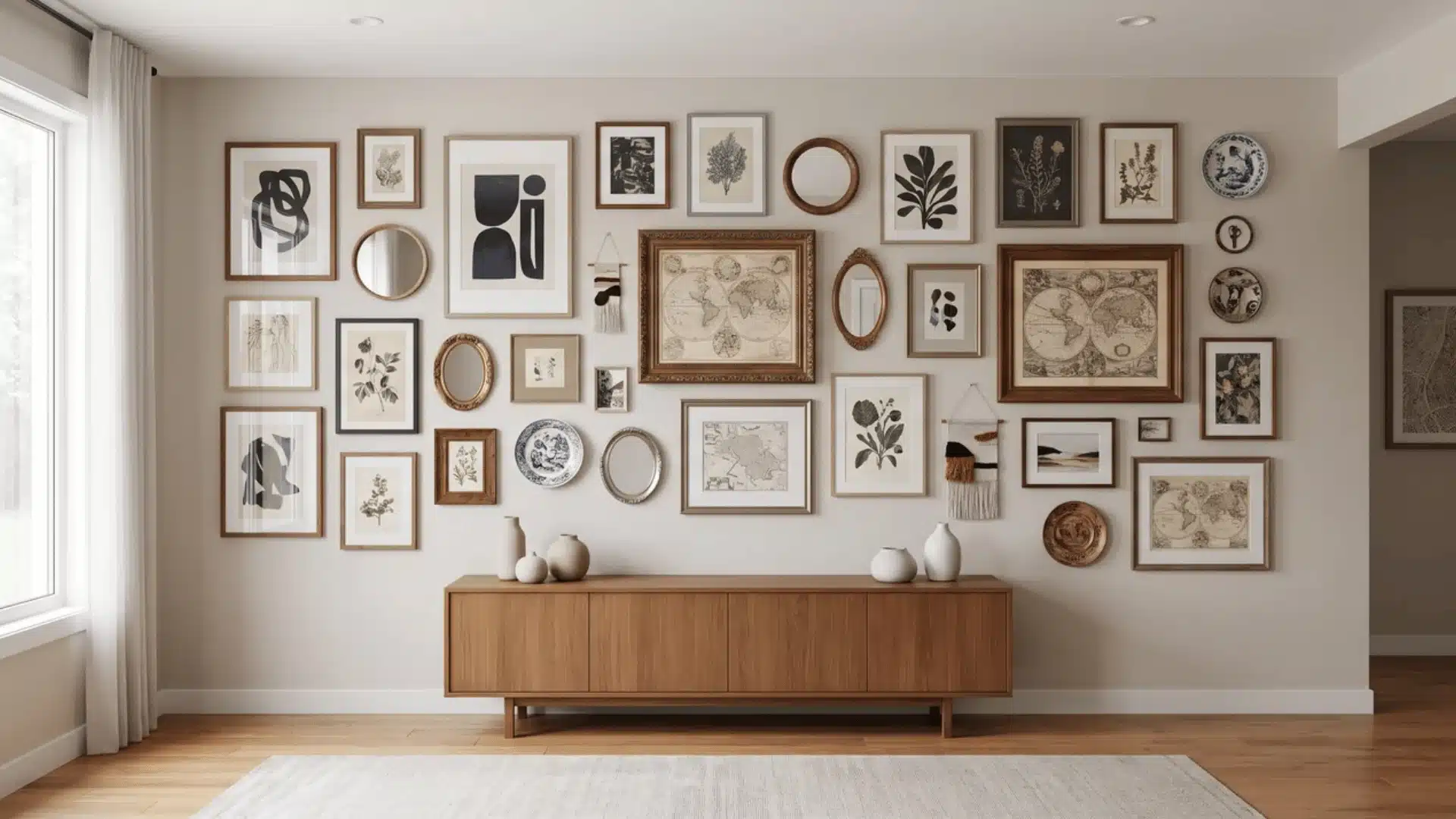
Group art, mirrors, and small objects using different frame styles and sizes on one shared wall. The variety itself becomes the room’s visual focus.
Keep the spacing between each frame consistent, even though the frames vary in size and shape. Even spacing keeps the wall feeling planned, not scattered.
3. Layer Rugs and Throws Over Wood or Metal Furniture
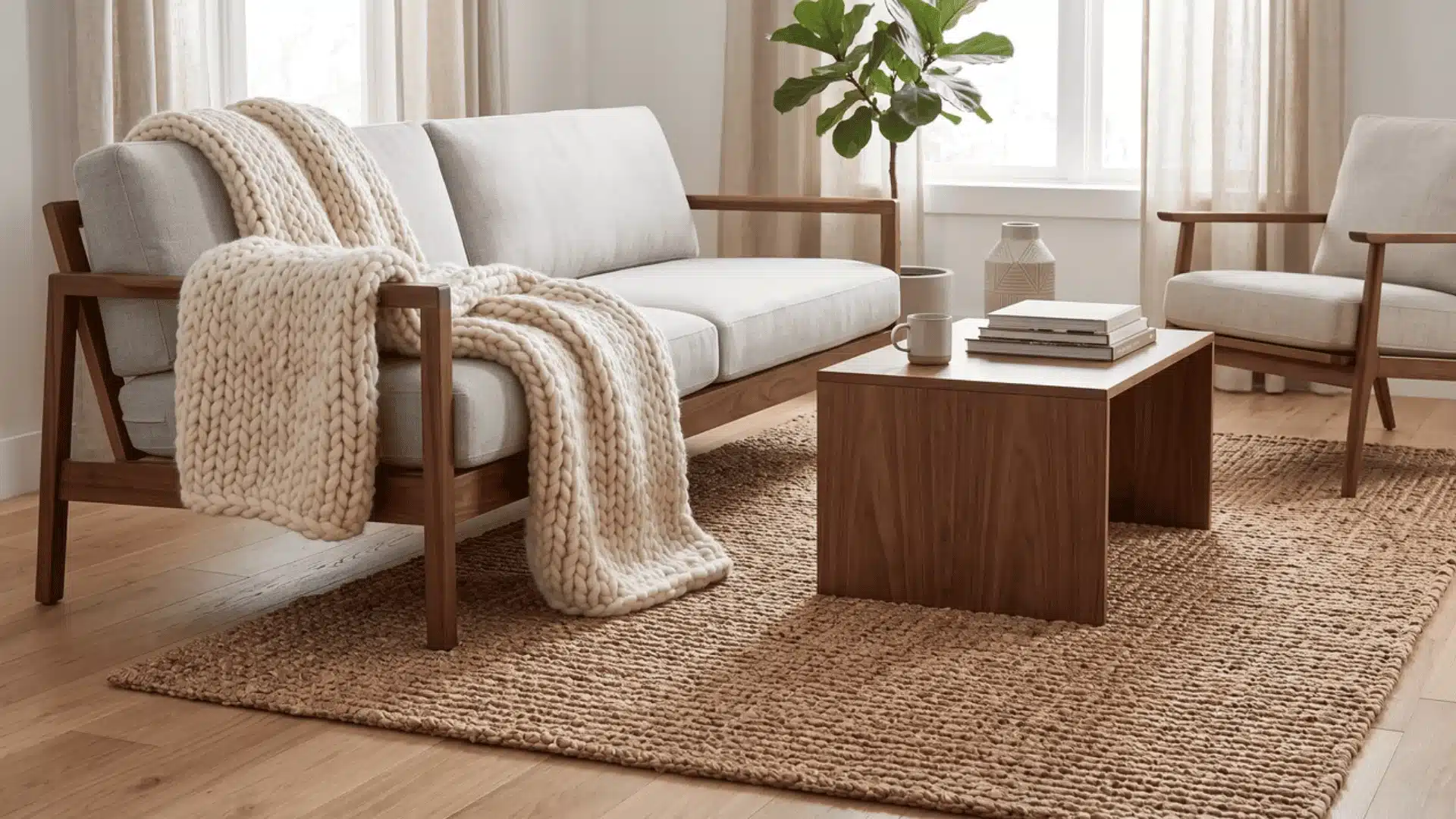
Place a textured rug beneath furniture with clean wood or metal frames. The contrast between rough and smooth surfaces adds depth to the room.
A soft pillow and textured rug can also soften a smooth leather sofa. Each material stays noticeable without demanding all the attention.
4. Mix a Large Rug Pattern with Smaller Printed Cushions
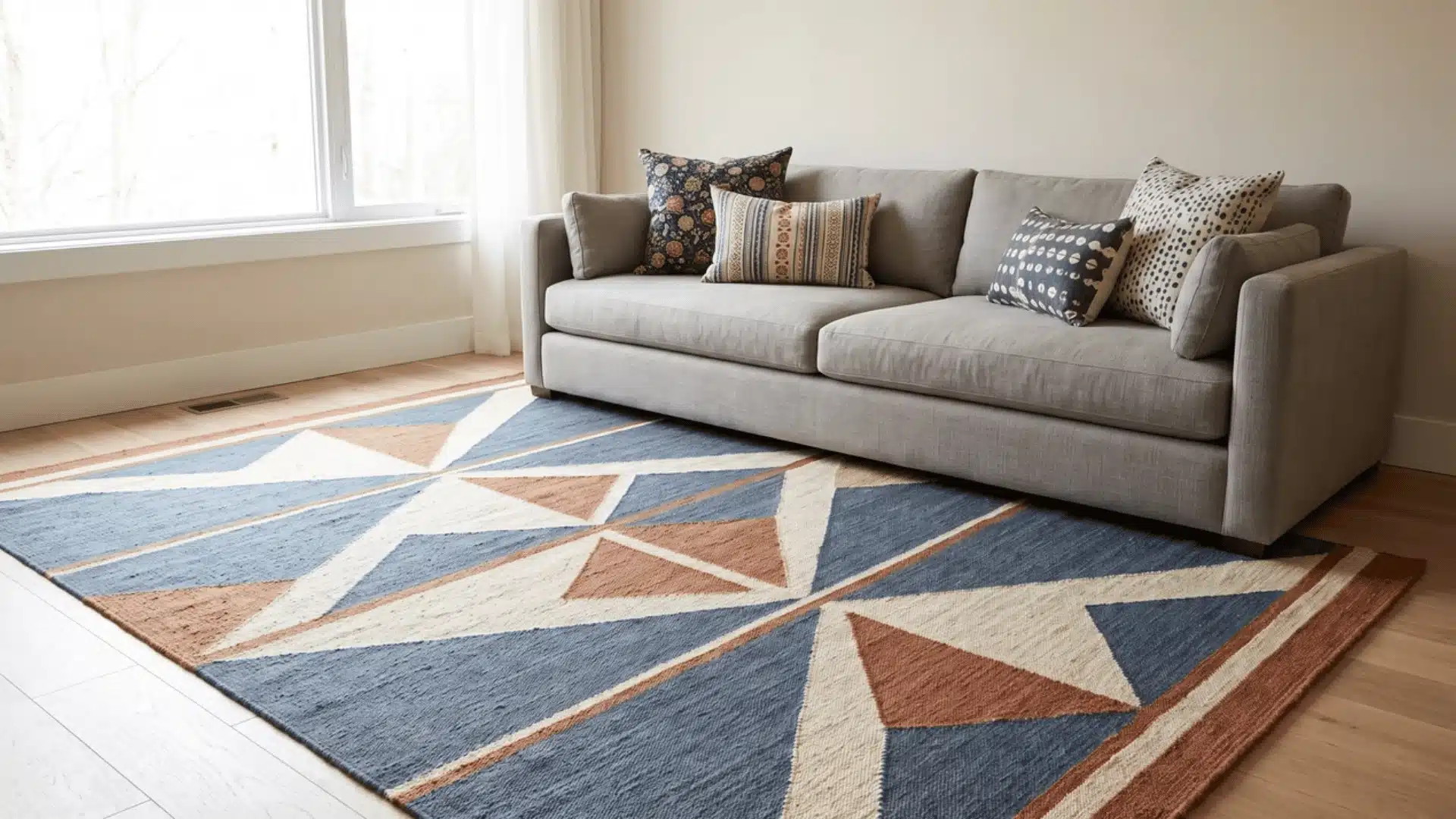
Start with one large-scale pattern, like a bold geometric or floral rug, as the room’s pattern base. Smaller prints layer on top of that foundation.
Add printed cushions or a compact patterned chair once the rug pattern is already in place. Different scales let each print stay visible on its own.
5. Group Collected Objects on a Shelf or Console
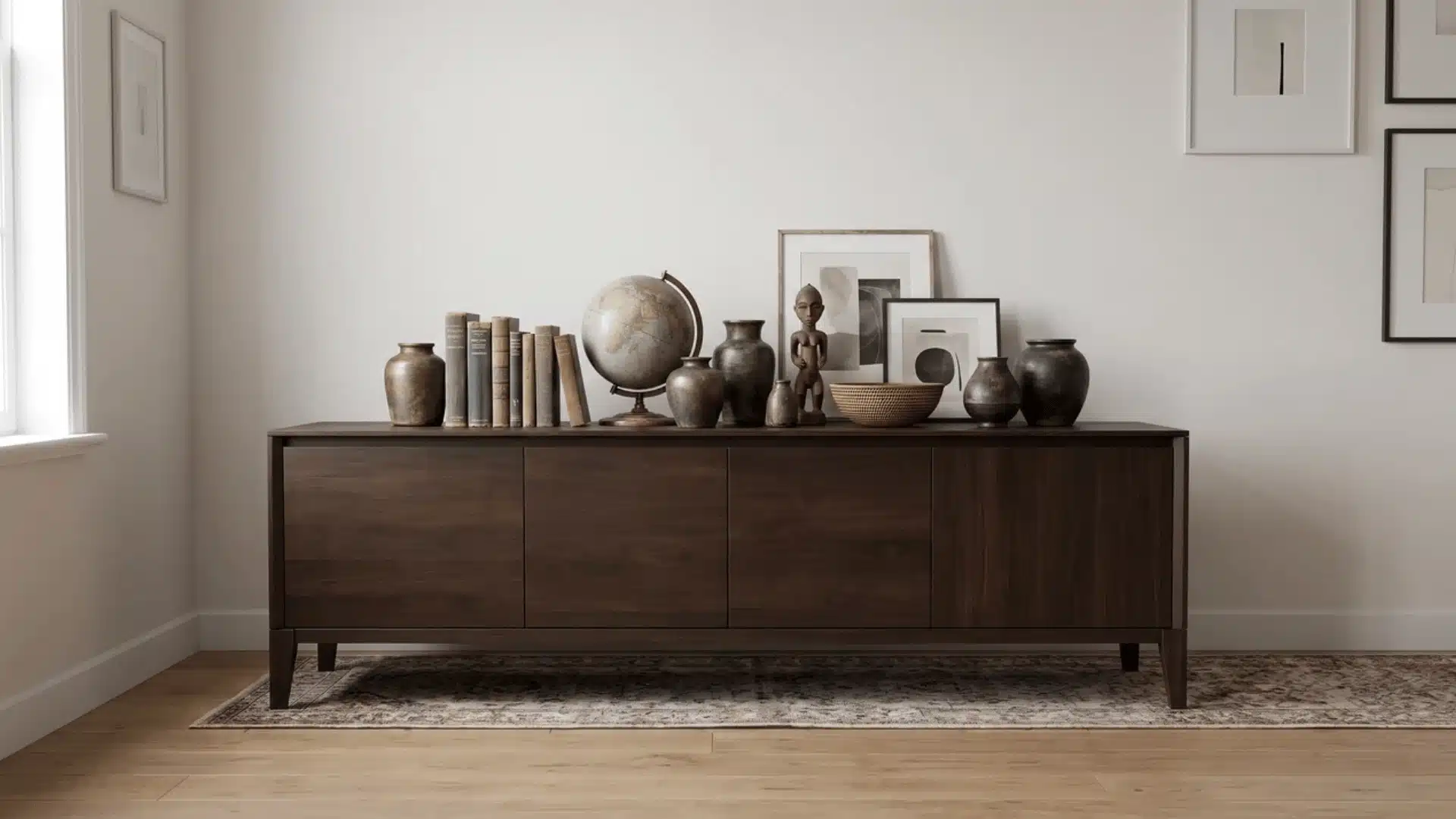
Place travel finds, books, or family pieces together on one console instead of scattering them around. Grouped items read as a collection, not clutter.
Choose objects that share one link, like a similar material or color, before grouping them. That shared link makes the group feel intentional and considered, and a little practice with styling a shelf display makes it easier to repeat the look throughout the house.
Eclectic Bedroom Ideas
The bedroom carries eclectic style differently than the living room, since fewer surfaces need to do more visual work.
6. Pair a Vintage Nightstand with a Modern Bed Frame
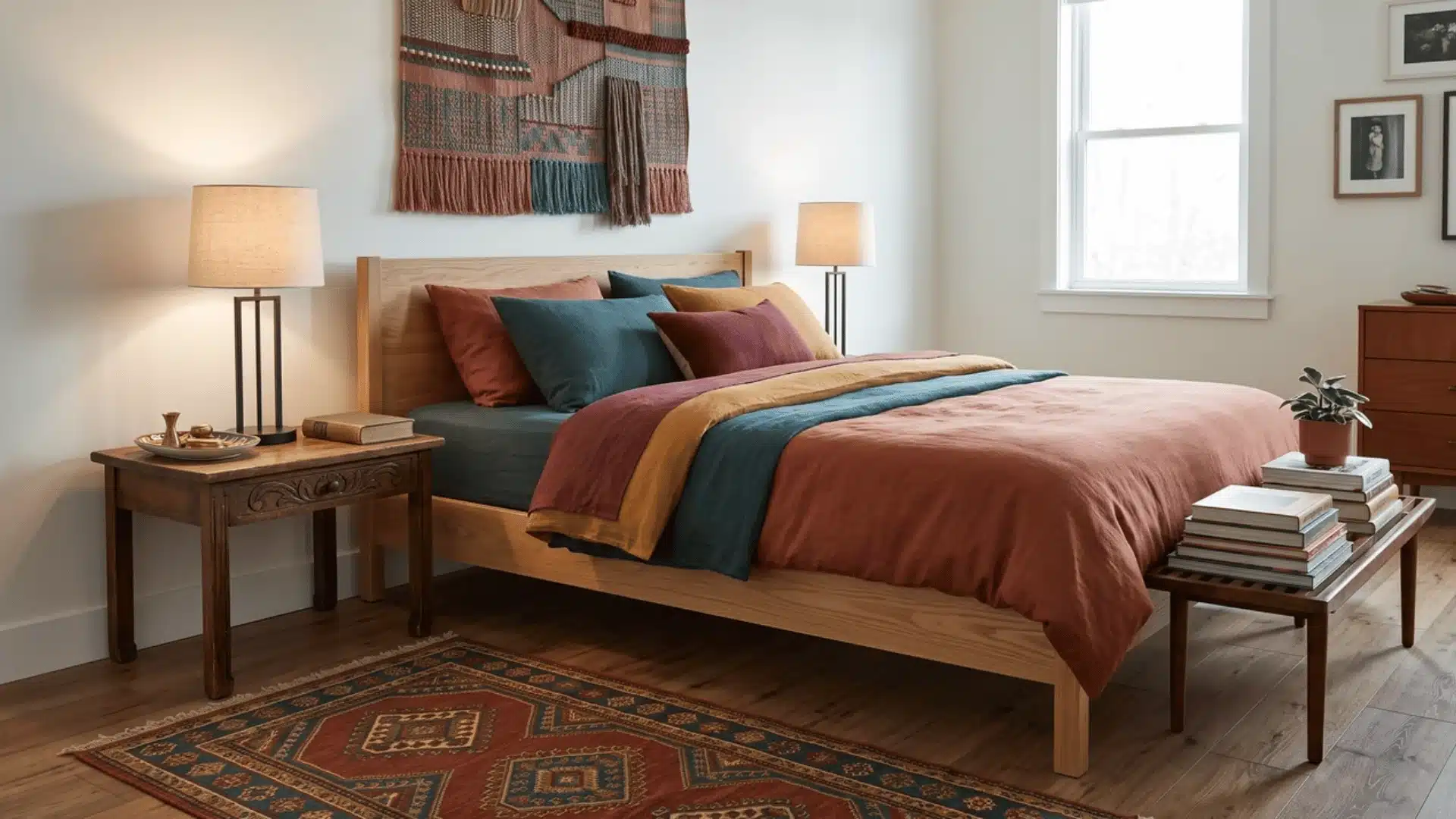
A simple, clean-lined platform bed frame can sit next to an older wood or painted nightstand without clashing. The contrast feels deliberate rather than mismatched.
Check that the nightstand height lines up reasonably with the mattress height once the bed is made. A mismatch in height breaks the pairing visually.
7. Layer Bedding in Different Textures
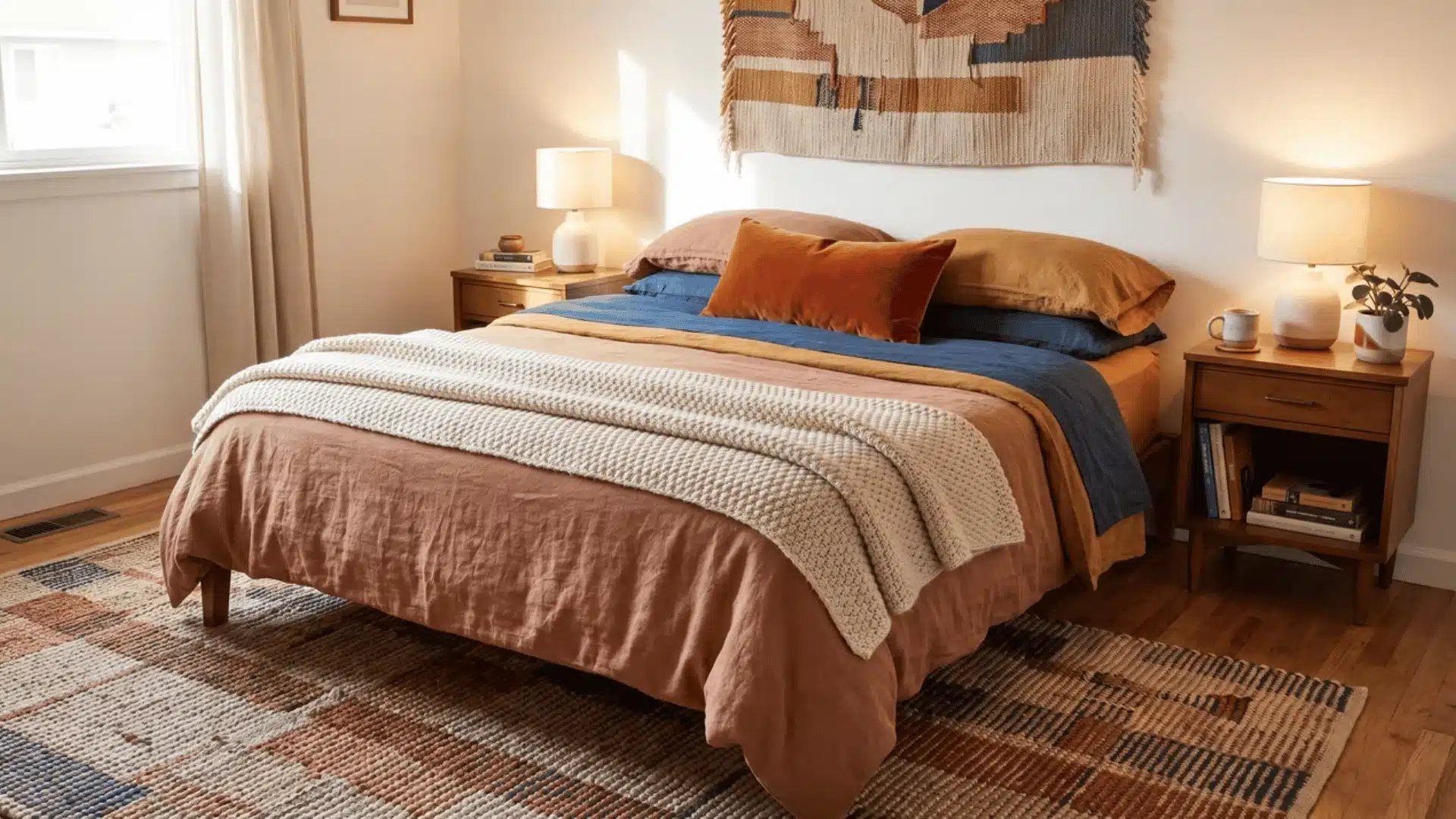
Combine linen sheets, a wool or knit blanket, and one velvet lumbar pillow across the bed. Each material adds a different tactile layer to the space.
Keep the color palette simple while the textures do the visual work instead of competing patterns. Texture alone can carry interest without adding more color, and mixing bedding layers well is often the fastest way to test the idea before committing to a full room redesign.
8. Display Travel Keepsakes on a Nightstand Tray
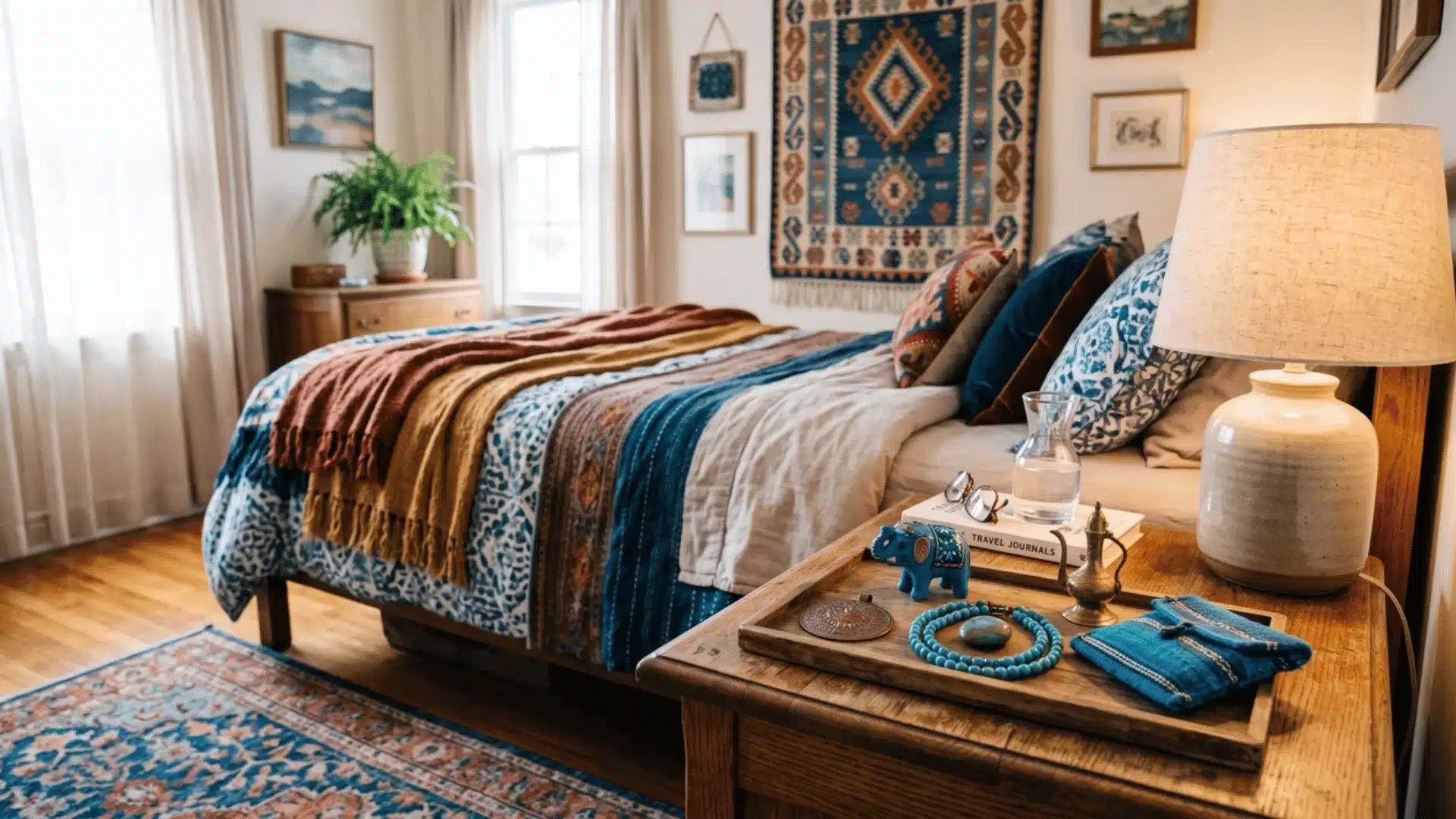
Place a small tray on the nightstand and group a few travel finds or keepsakes on it. The tray keeps the display contained and tidy.
Choose pieces that share one connection, like a trip or a color, before grouping them together. That shared thread makes the small display feel intentional, not random.
9. Mix a Patterned Headboard with Solid Bedding
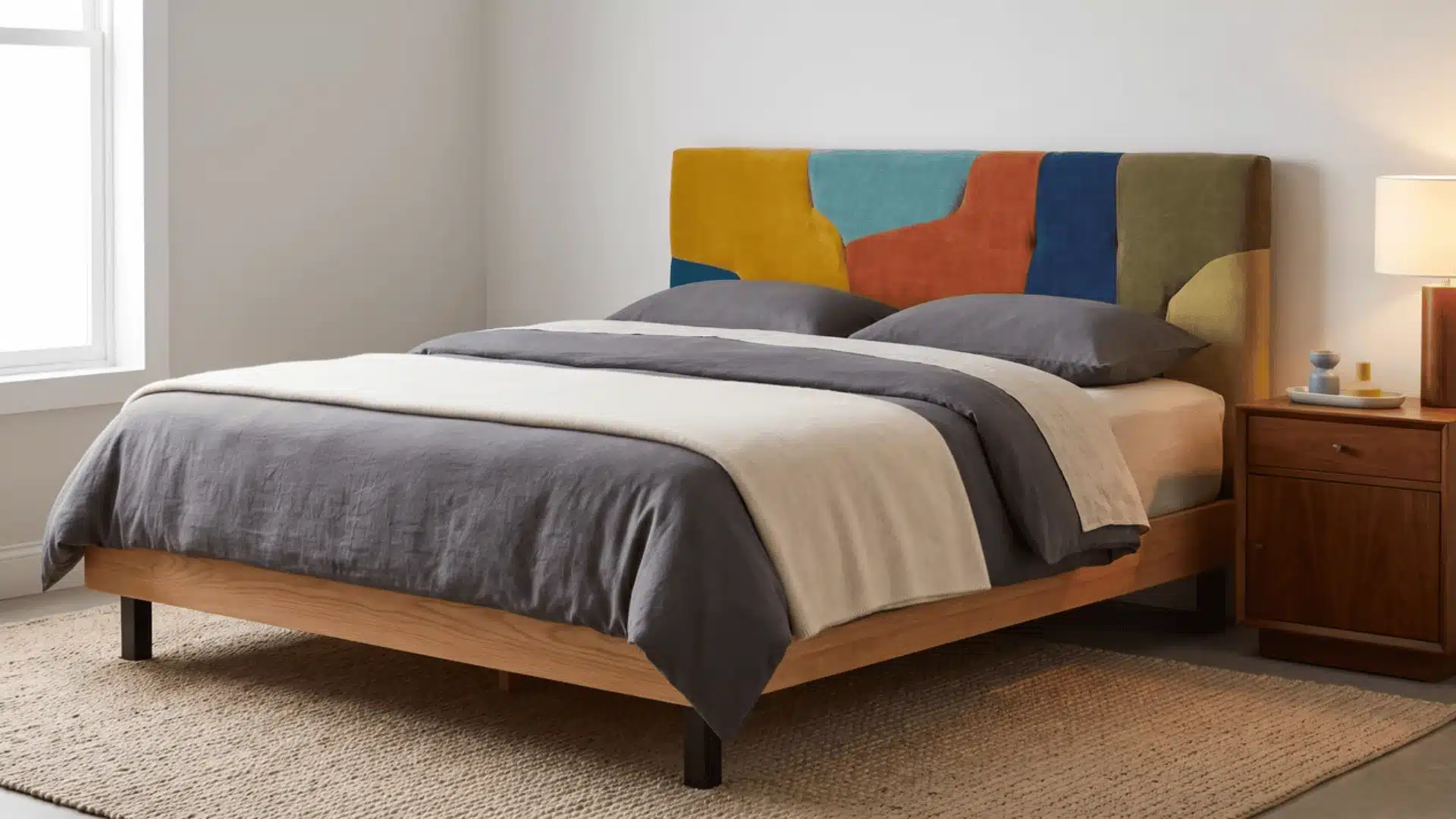
A bold patterned or upholstered headboard works as the room’s one statement piece against otherwise solid bedding. The pattern gets full attention without competition.
Keep sheets, blankets, and pillowcases in solid, neutral tones once the headboard carries the pattern. Adding more pattern nearby would compete with the headboard.
10. Hang a Woven Textile Above the Bed
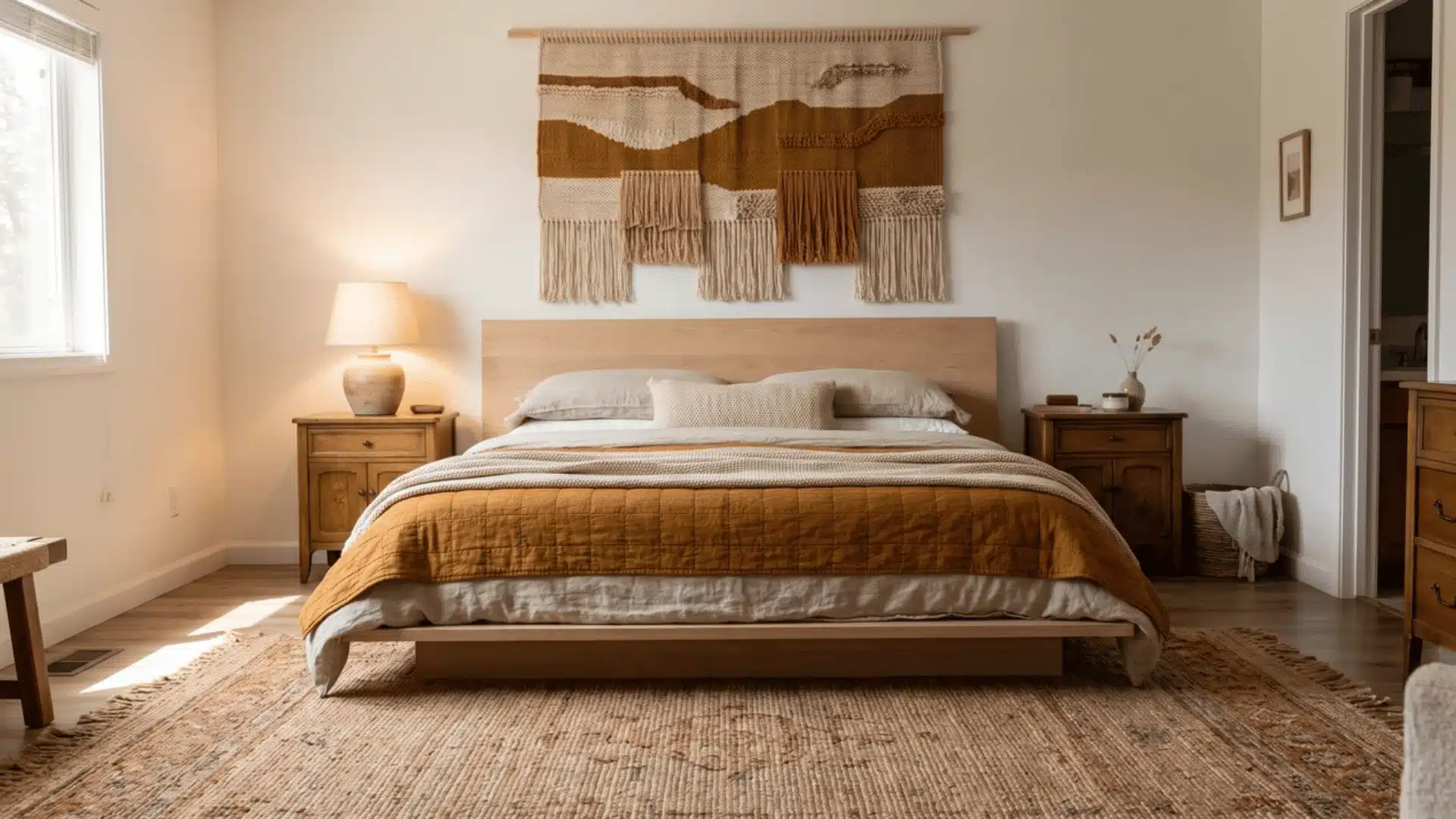
A woven wall hanging or textile panel above the headboard adds texture and a global reference point. It fills wall space without needing framed art.
Choose one with a color already present elsewhere in the room, like the bedding or a rug. That link ties the new piece back into the space.
Eclectic Kitchen Design Ideas
The kitchen carries eclectic style through function first, since every surface still needs to work for cooking.
11. Mix Open Wood Shelving with Sleek Modern Cabinets
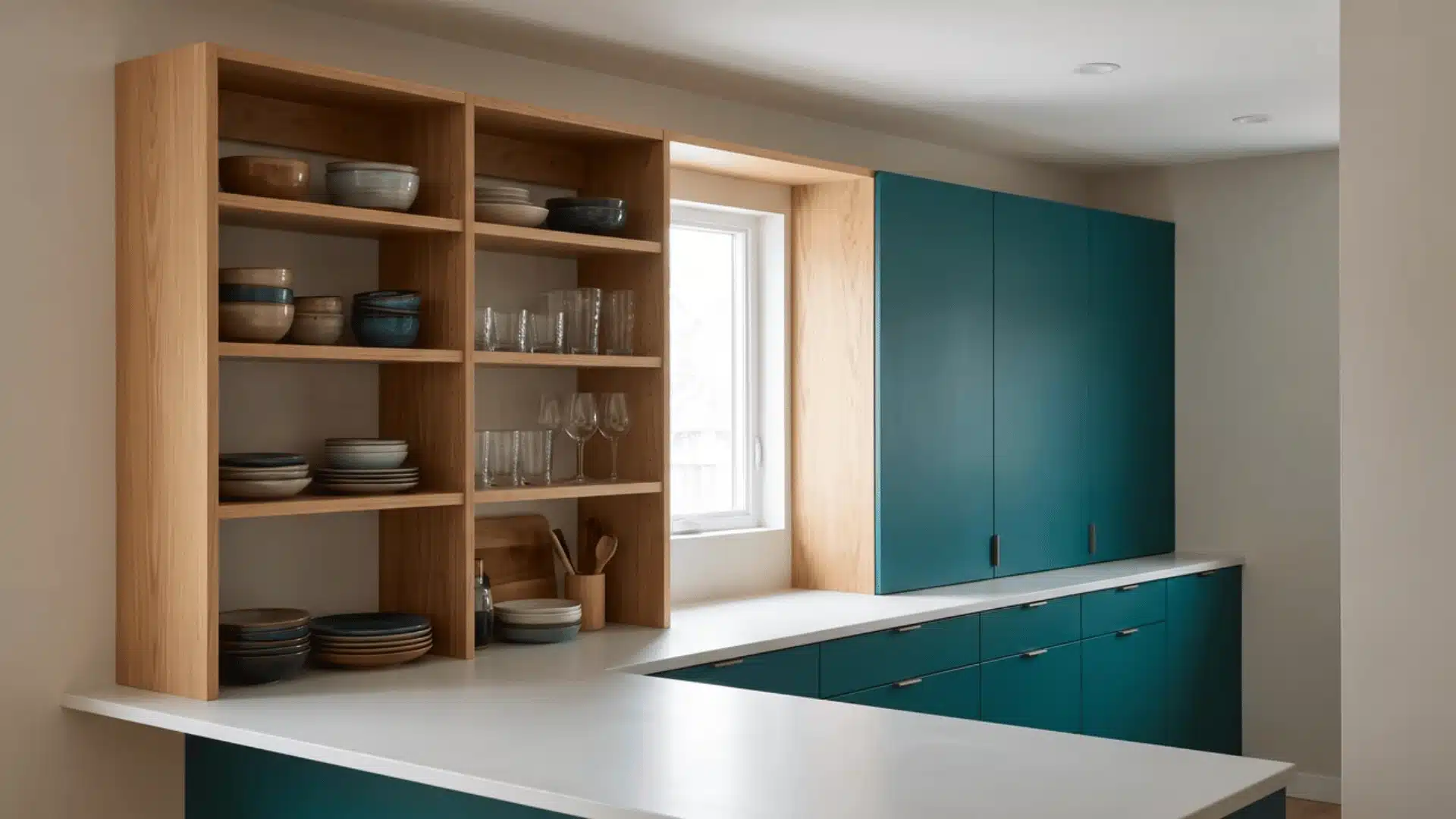
Open wood shelving next to flat-front modern cabinets creates the same old-meets-new contrast eclectic design relies on elsewhere. The wood grain softens the cabinetry’s clean lines.
Use the open shelving for everyday dishes or glassware, so the display stays functional, not just decorative. A kitchen still needs to work first.
12. Display Collected Ceramics and Mugs on Open Shelving
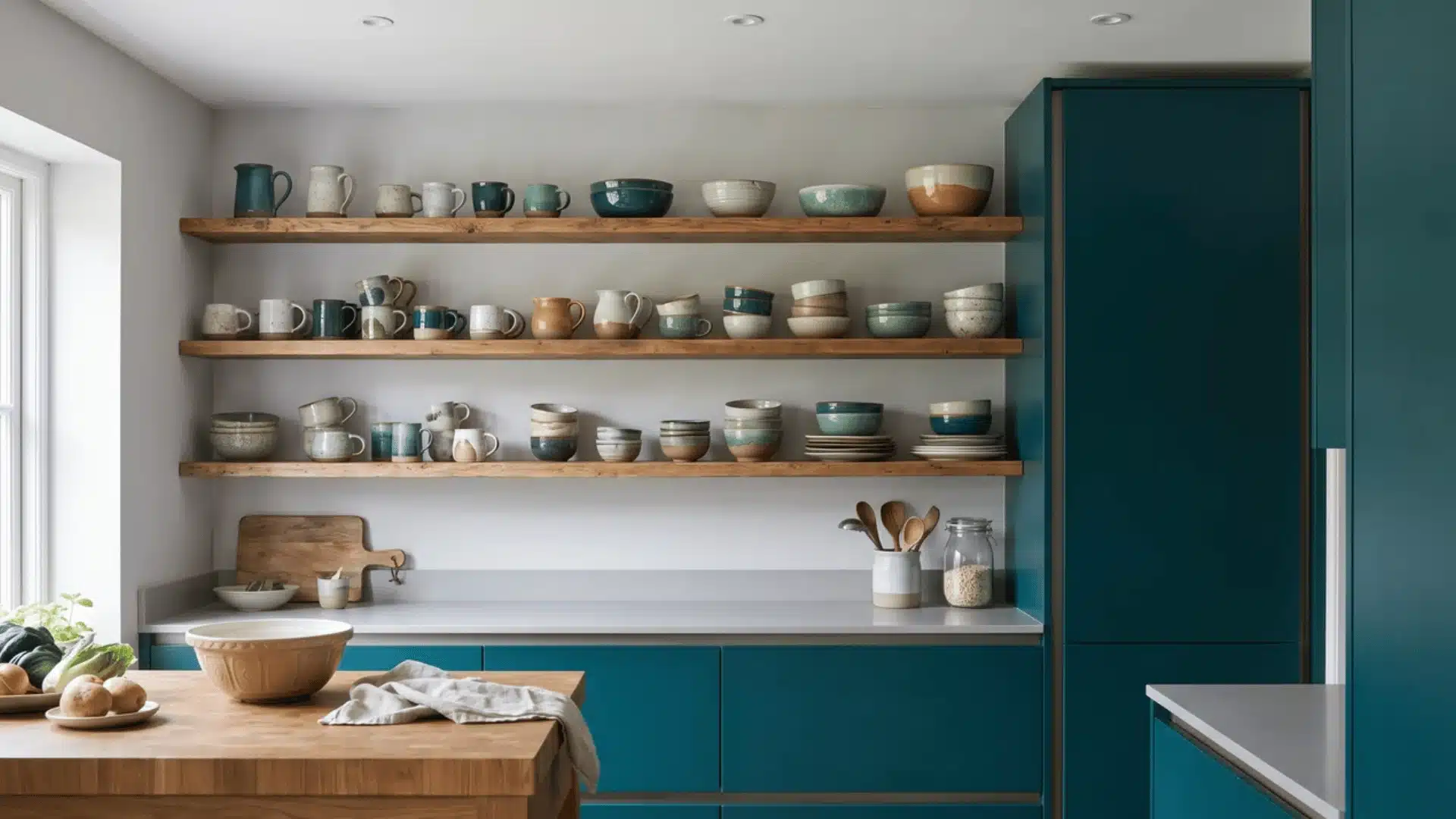
Group mismatched ceramics, mugs, or bowls collected over time on one open shelf instead of matching sets. The variety becomes part of the kitchen’s character.
Choose pieces that share a color or glaze finish, even if their shapes differ from each other. That shared thread keeps the display looking chosen, not random.
13. Pair a Patterned Tile Backsplash with Plain Countertops
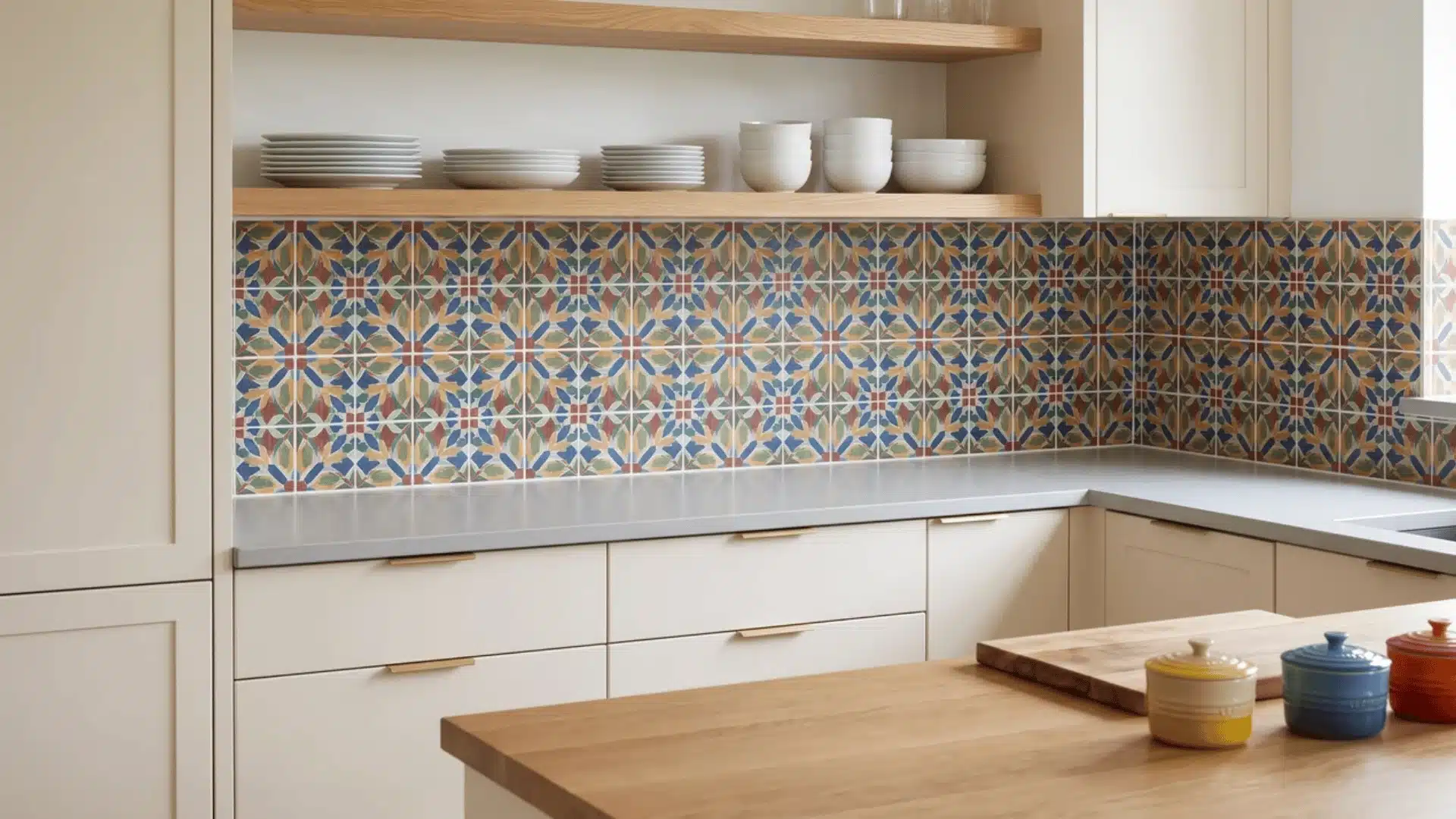
A bold patterned tile backsplash, like Moroccan or geometric designs, works best against a plain, solid-color countertop. The pattern gets full attention without competition below it.
Keep countertop and cabinet colors neutral once the backsplash carries the pattern for the room. Adding more pattern nearby would compete with the tile itself.
14. Hang Copper Pots or Woven Baskets
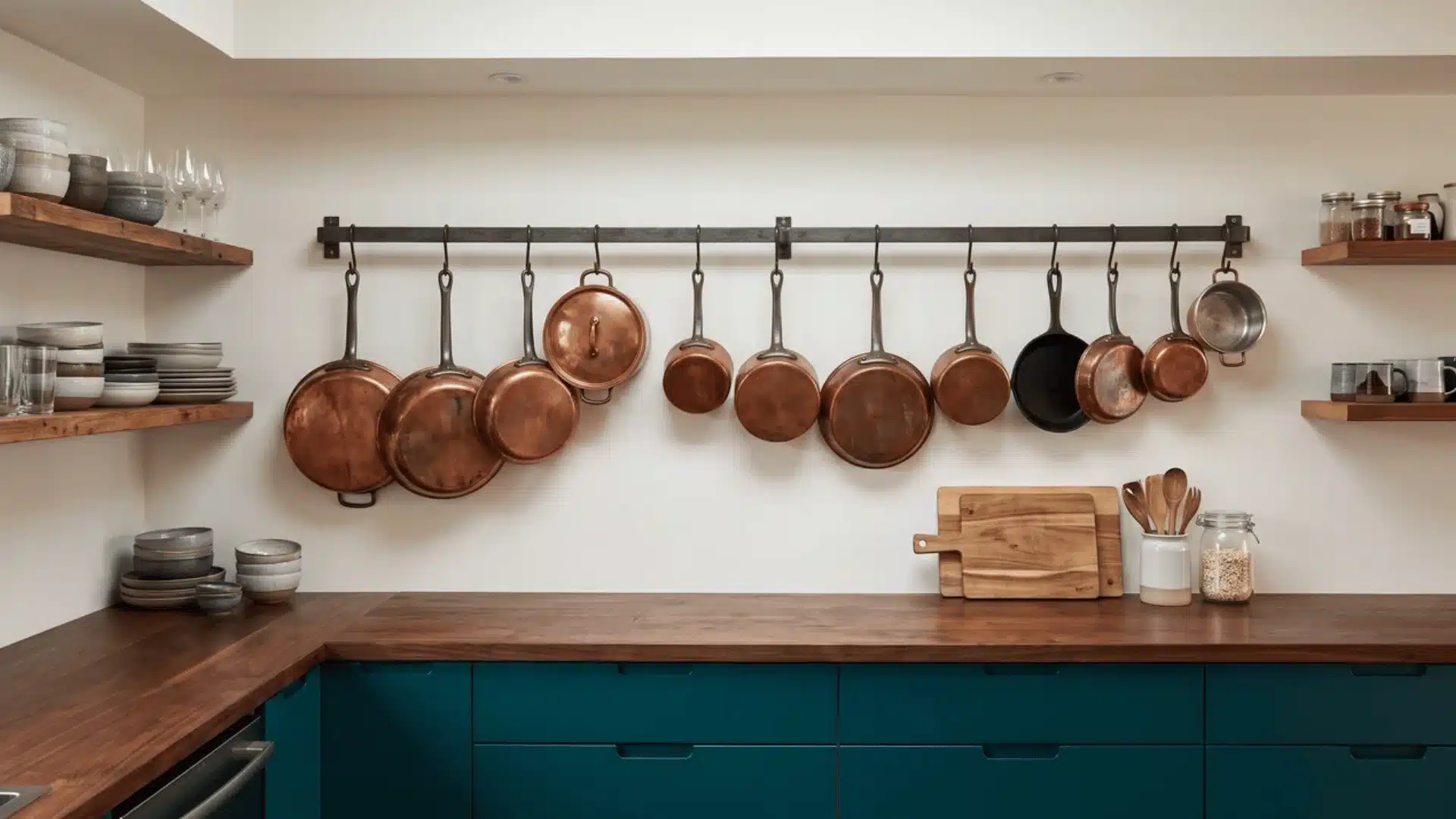
A hanging rack of copper pots or woven baskets turns everyday cookware into part of the room’s decor. The unexpected display adds texture and warmth.
Group similar items together by size or material, rather than hanging pieces at random across the rack. That grouping keeps the display looking planned.
15. Add a Vintage Runner Rug Near the Sink or Stove
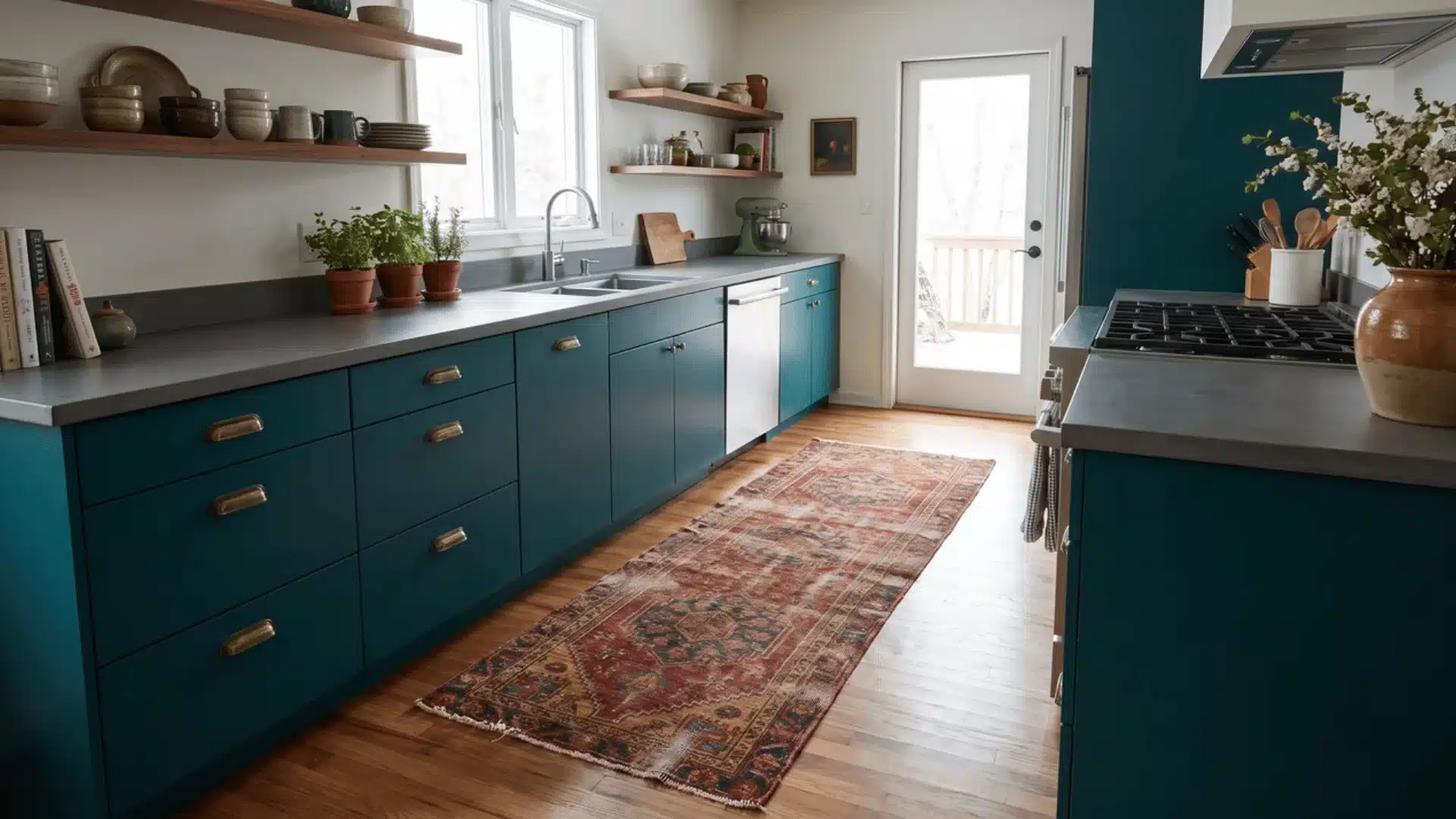
A vintage or antique-style runner rug near the sink or stove brings in warmth and pattern underfoot. It softens an otherwise hard-surfaced kitchen floor.
Pick a runner with a color that echoes something else in the kitchen, like the backsplash or cabinet hardware. That link ties the piece into the room.
Eclectic Design Ideas for the Bathroom
The bathroom carries eclectic style in a much smaller footprint, so a few bold choices do more work here.
16. Wallpaper the Ceiling Instead of a Wall
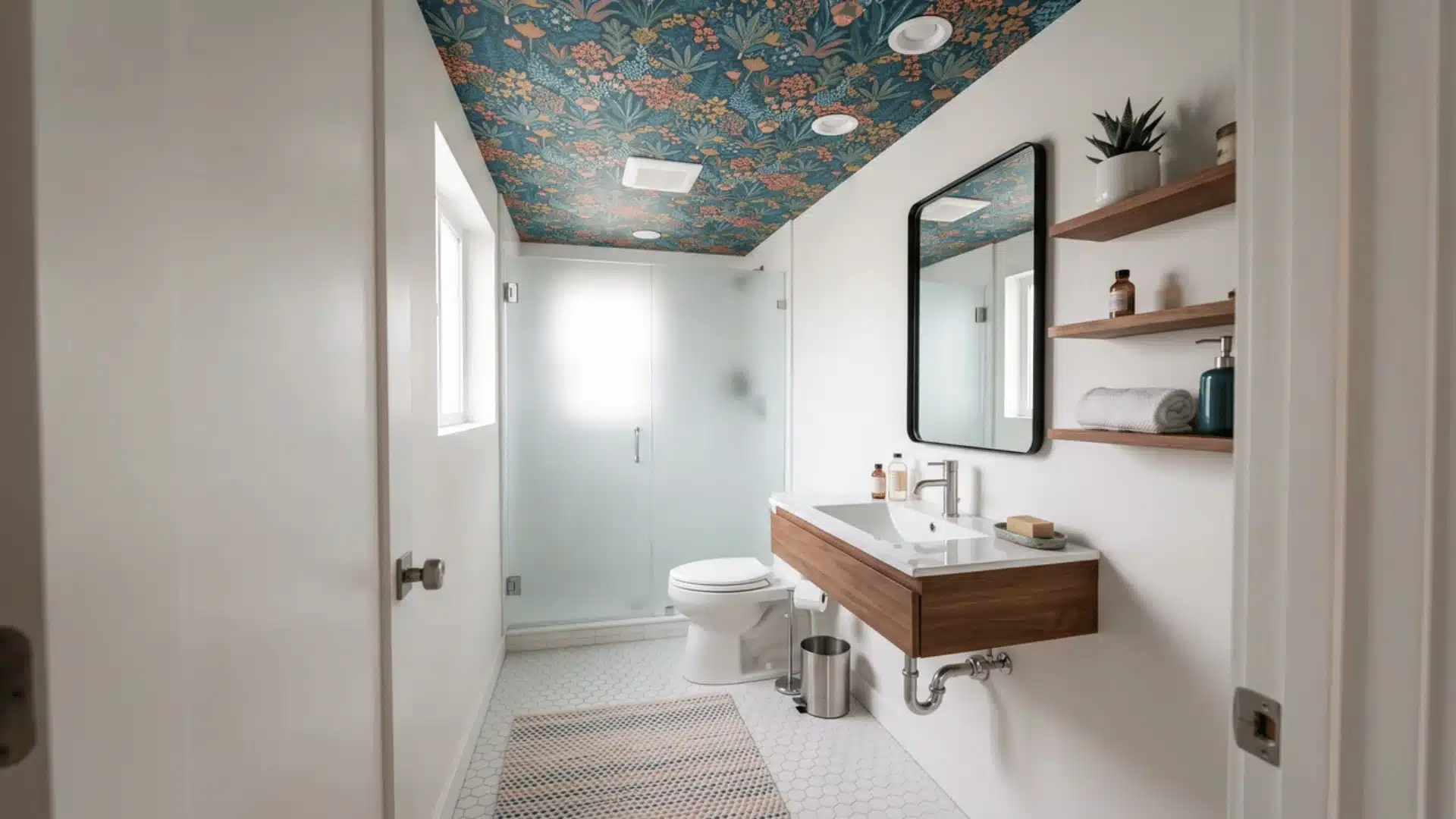
A patterned or bold-colored wallpaper on the ceiling adds a genuine surprise element without crowding the room’s limited wall space. It draws the eye upward.
This works especially well in a small bathroom, where wall space is already needed for a mirror or storage. The ceiling stays open for pattern instead.
Choose a wallpaper rated for humidity, since bathrooms carry more moisture than other rooms in the house.
17. Pair a Vintage Mirror with a Modern Vanity
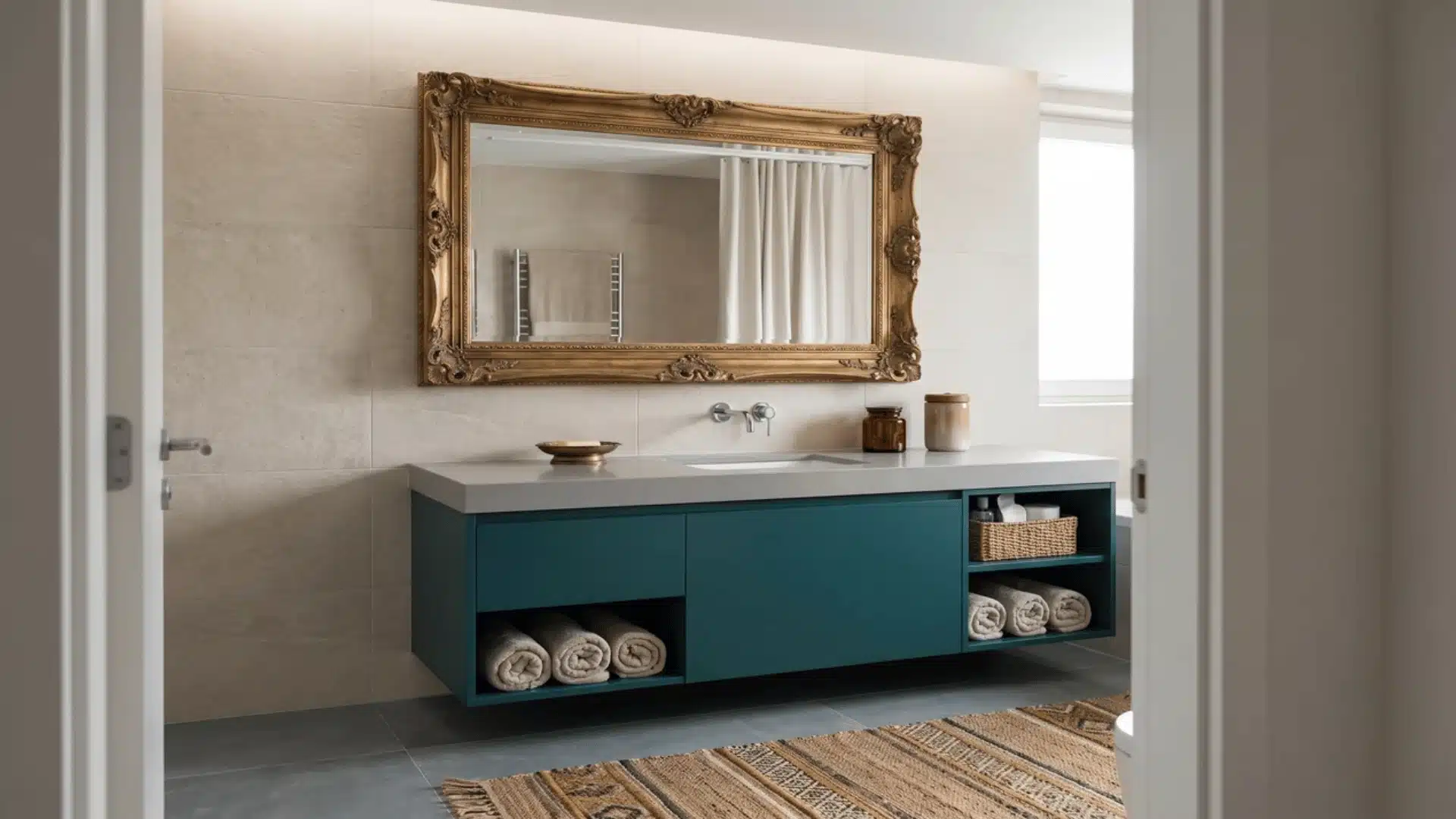
An ornate or antique-framed mirror above a clean-lined modern vanity creates contrast in a space with few furniture pieces. The mirror becomes the room’s focal point.
Check that the mirror’s size is proportional to the vanity beneath it before mounting it permanently. A mirror too small or too large breaks the pairing.
18. Add a Humidity-Tolerant Plant Near the Window
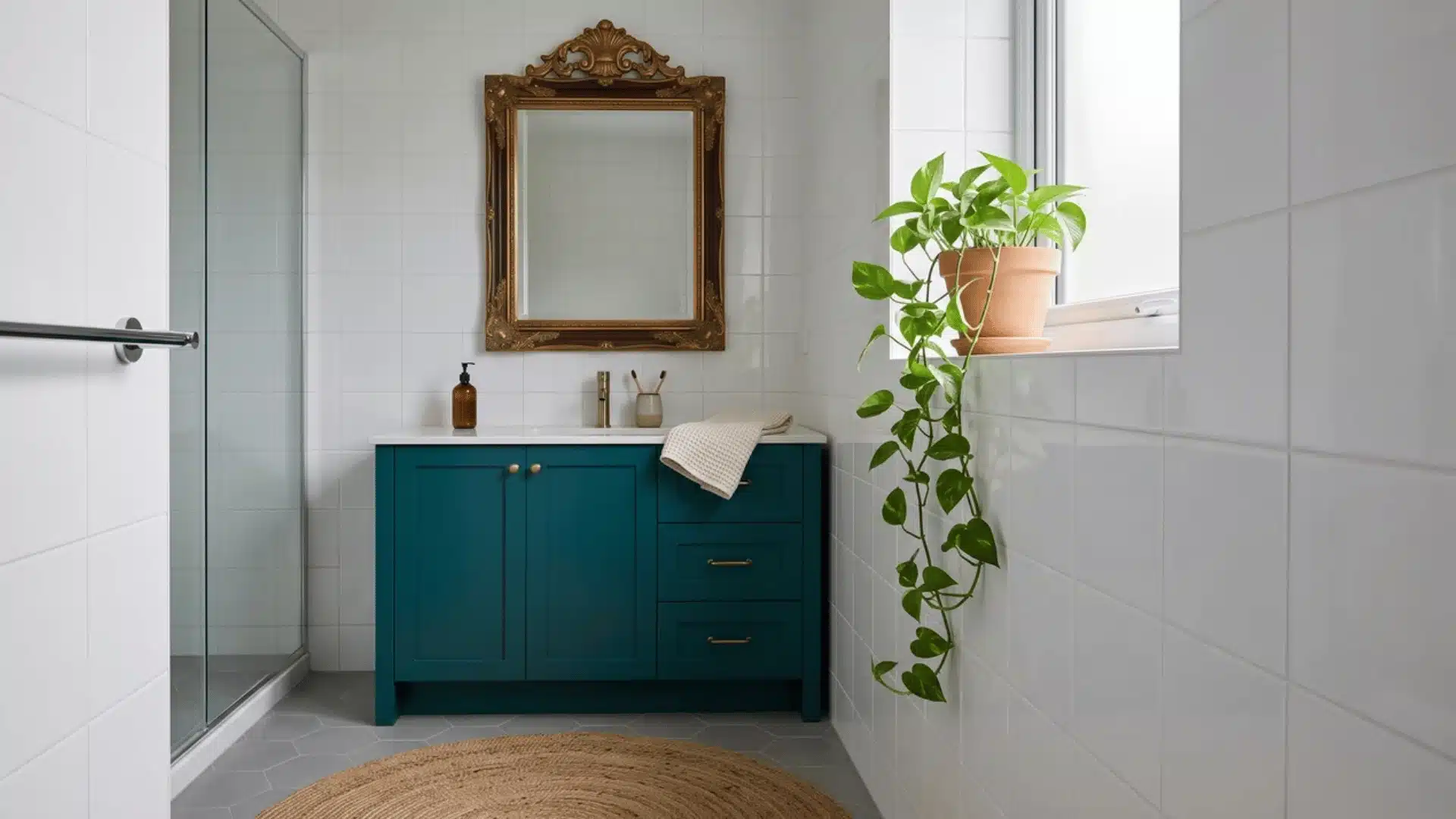
A small trailing plant, like a pothos or fern, brings a natural grounding element into a space with mostly hard, glossy surfaces. It softens the room.
Choose a plant known to tolerate humidity and lower light, since most bathrooms have limited natural light. Not every plant survives that environment well.
19. Mix Patterned Tile with Plain Fixtures
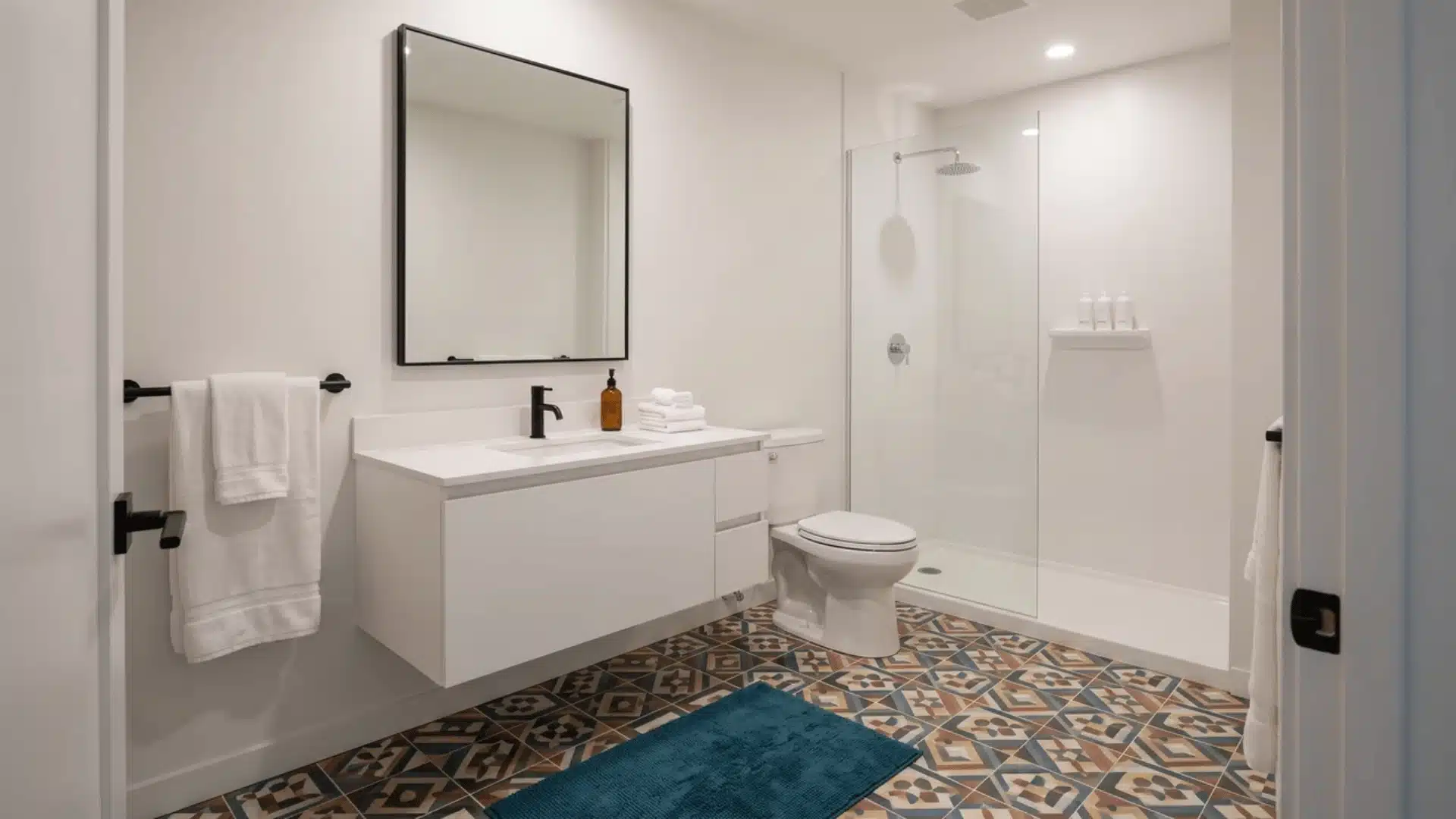
A bold patterned floor or accent tile works best against plain white or neutral fixtures and hardware. The tile carries the pattern without competition elsewhere.
Keep towels, bath mats, and other soft textiles in solid, neutral tones once the tile carries pattern. Adding more pattern nearby would compete with the floor.
20. Display a Small Curated Object Grouping on the Counter
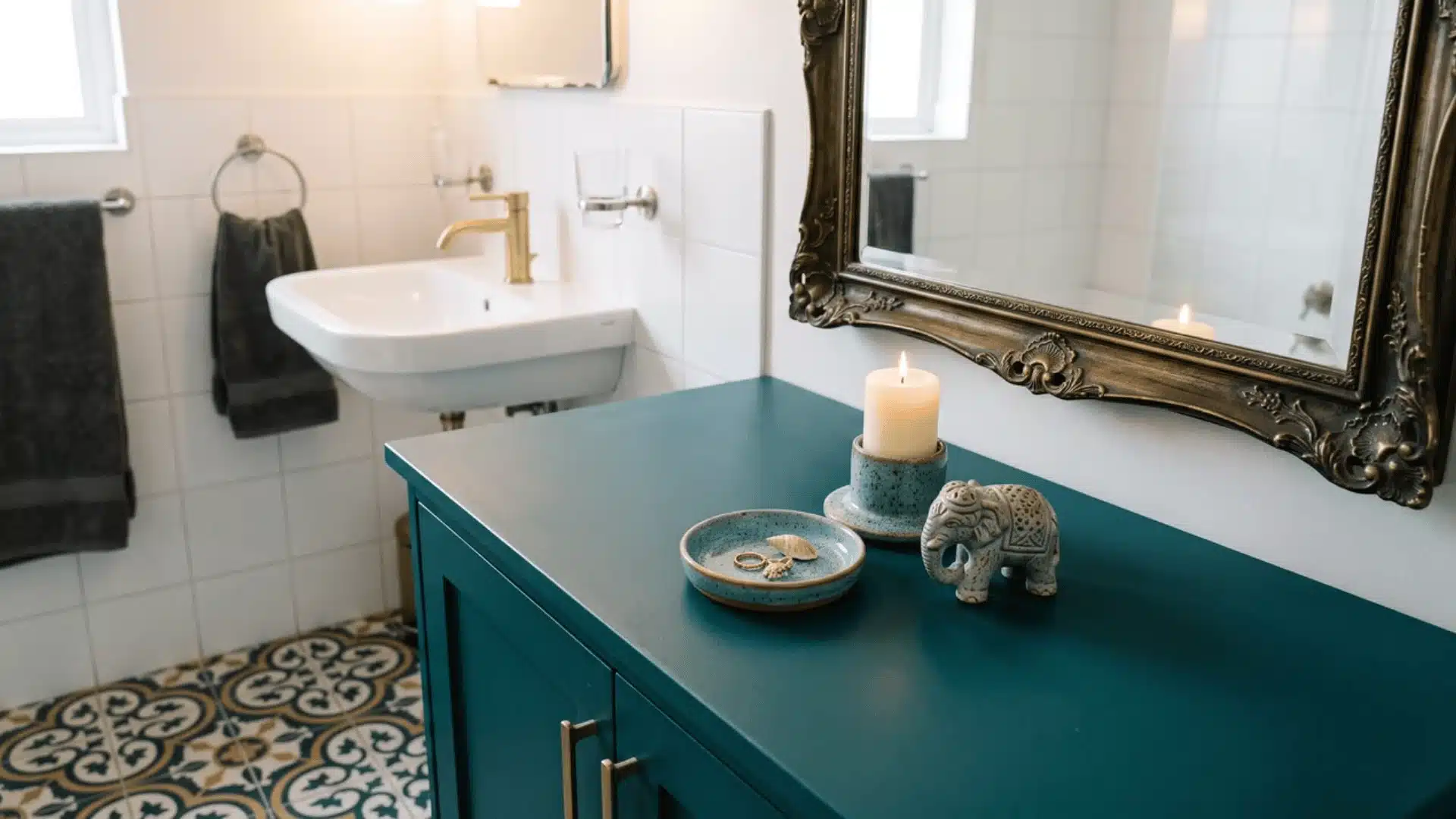
Group a few meaningful objects, like a small dish, a candle, and one travel find, on the counter. The grouping adds personality to a functional space.
Choose pieces that share a color or material link, even if their shapes and origins differ from each other. That link keeps the grouping intentional.
Eclectic Design Ideas for the Entryway
The entryway sets the tone before a guest sees any other room, so it carries more visual weight than its size suggests.
21. Anchor the Space with a Vintage Rug
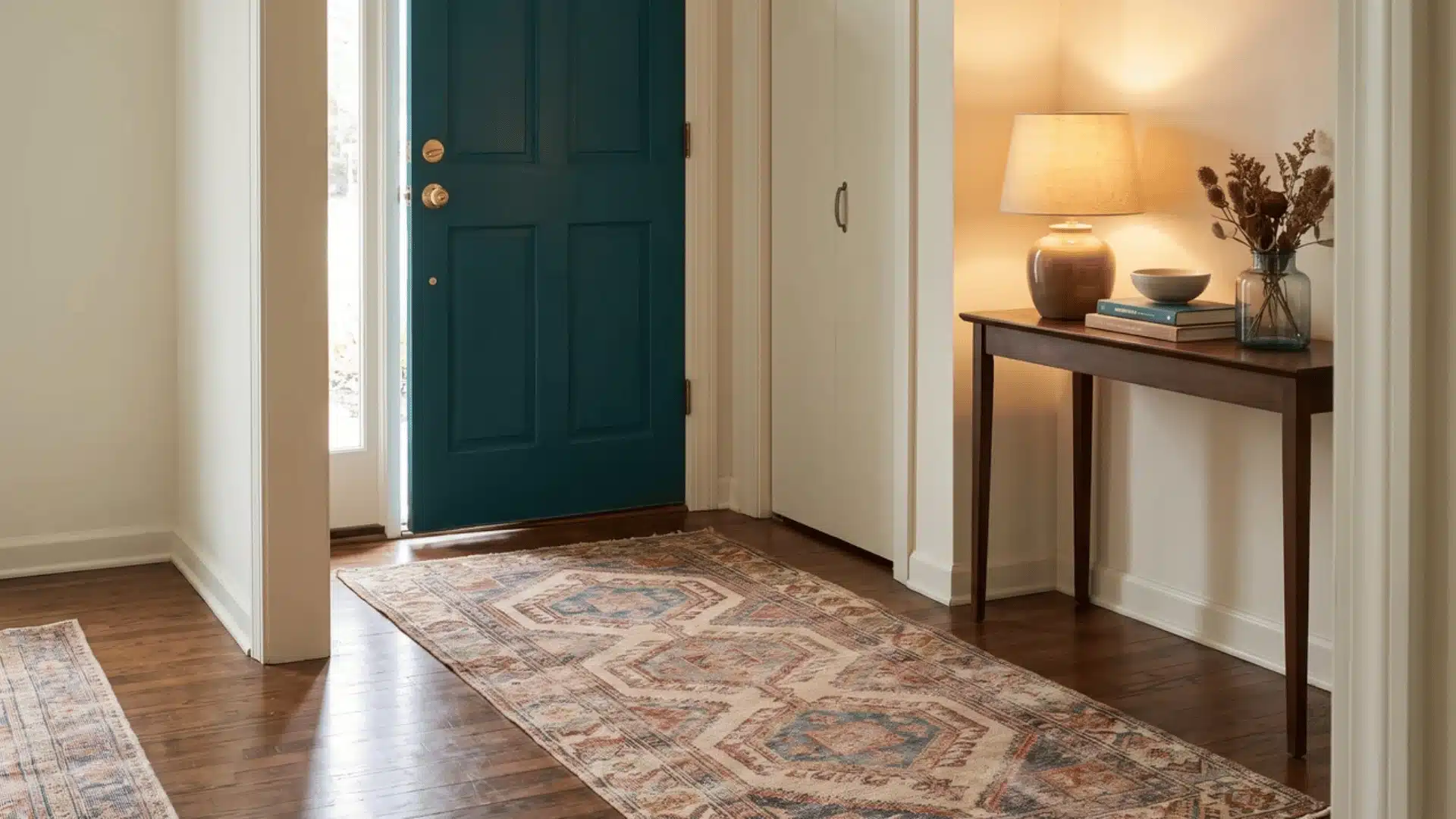
A worn or antique-style rug just inside the door grounds the entryway and adds warmth to a space that often has hard flooring. It softens the entrance.
Pick a rug size that fits the space without blocking the door’s swing or a nearby closet. Function still matters more than pattern here.
22. Build a Small Gallery Wall Above a Console Table
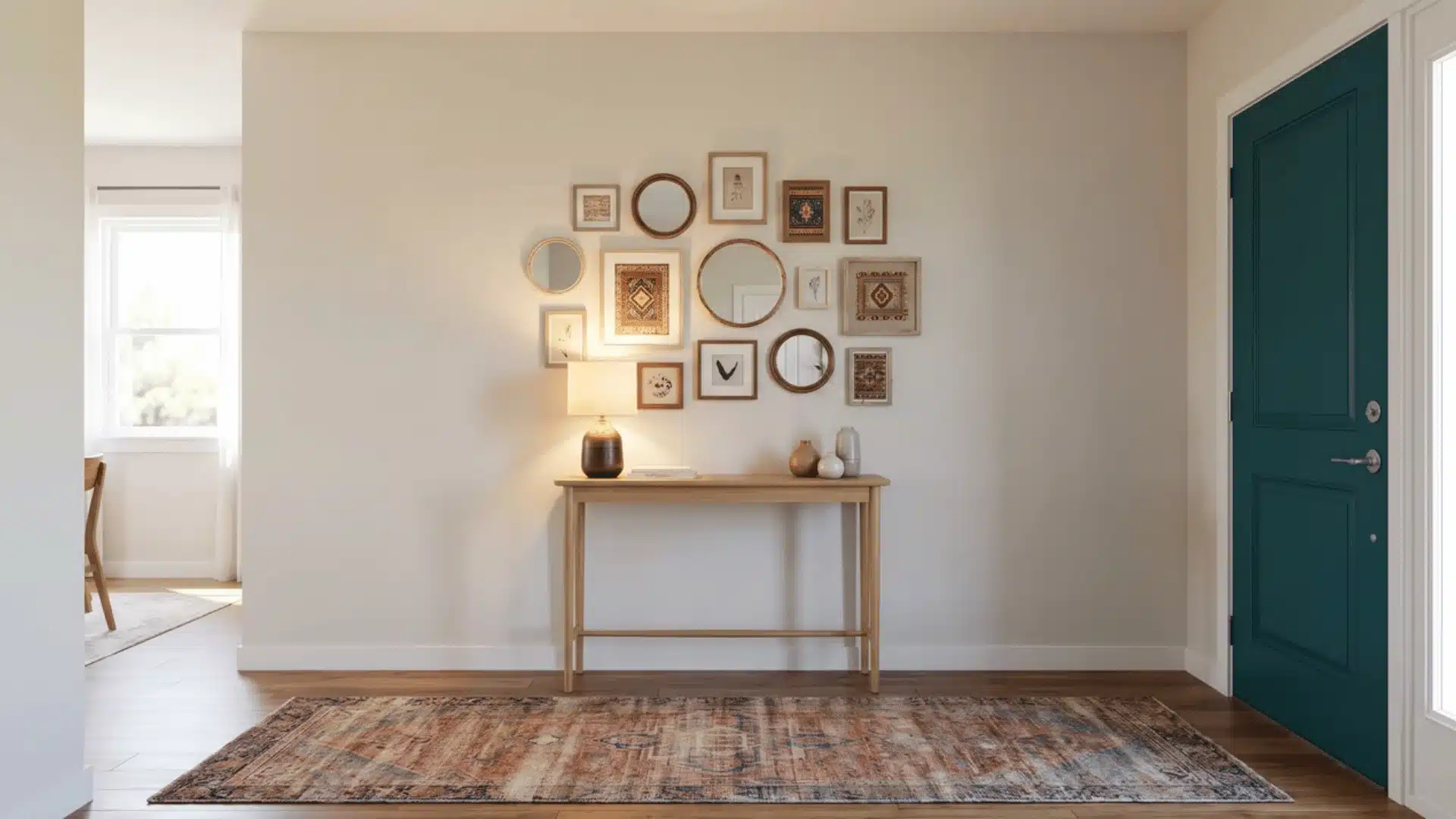
A cluster of mixed frames, mirrors, or small art pieces above a console table gives the entryway a personal focal point immediately. Guests see it first.
Keep the grouping compact, since entryways rarely have much wall space to spare compared to a living room. A tighter cluster reads as intentional, not crowded.
23. Display Travel Finds in a Small Rotating Vignette
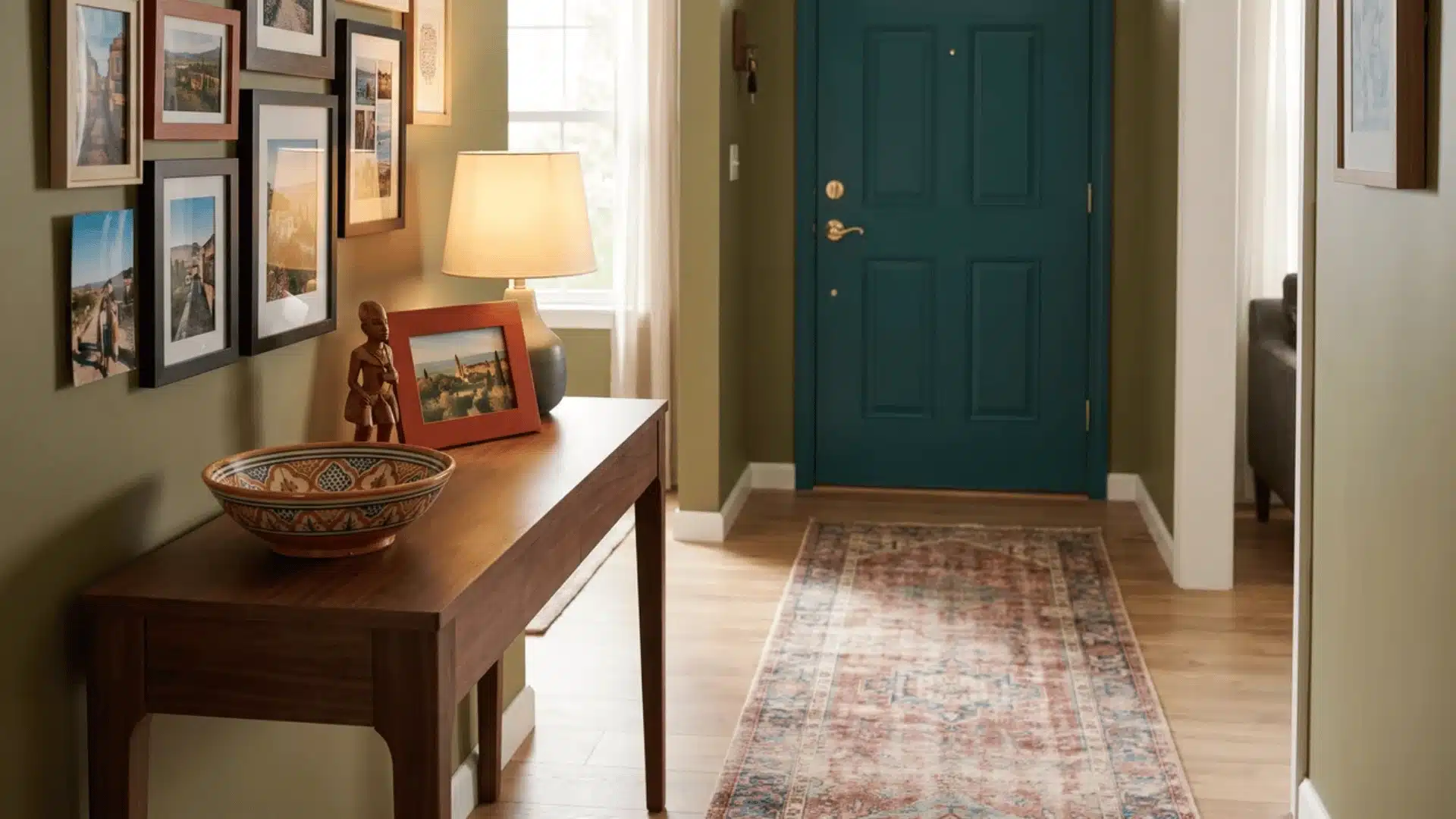
A console table or shelf can hold two or three travel finds, like a bowl, a small sculpture, or a framed photo. The grouping tells a story.
Choose pieces that share a color or material, even if their origins differ, so the small display feels planned. Random pairing reads as clutter instead.
Because entryway space is limited, rotating these pieces occasionally keeps the display feeling current rather than static.
24. Mix an Antique Bench with Modern Hooks or Storage
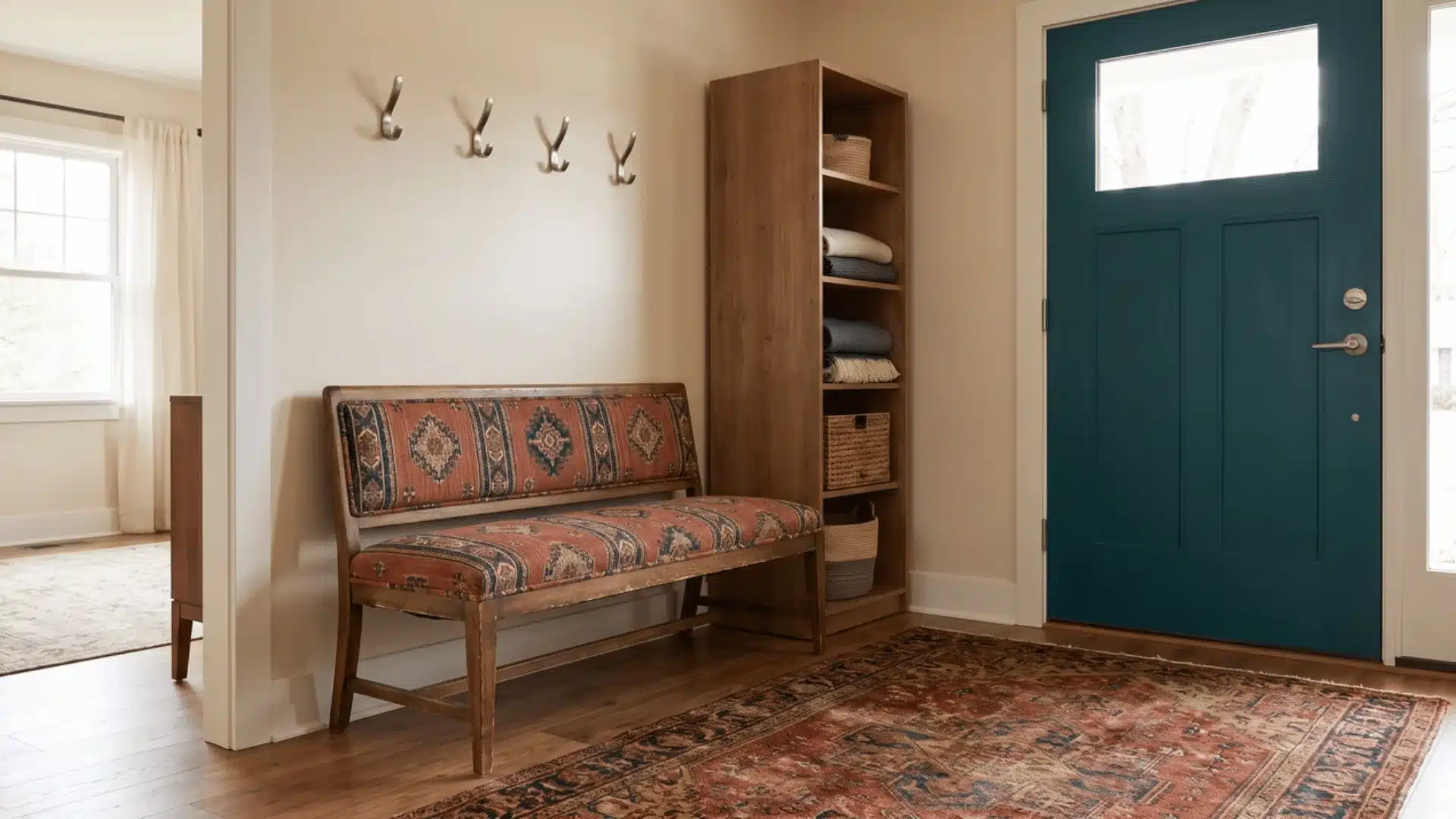
A vintage wood or upholstered bench near the door pairs well with sleek, modern wall hooks or a slim storage unit. The contrast works in a functional space.
Check that the bench height works comfortably for sitting to remove shoes, not just for looks. Function matters as much as the visual contrast here.
25. Use an Unexpected Object as a Catchall
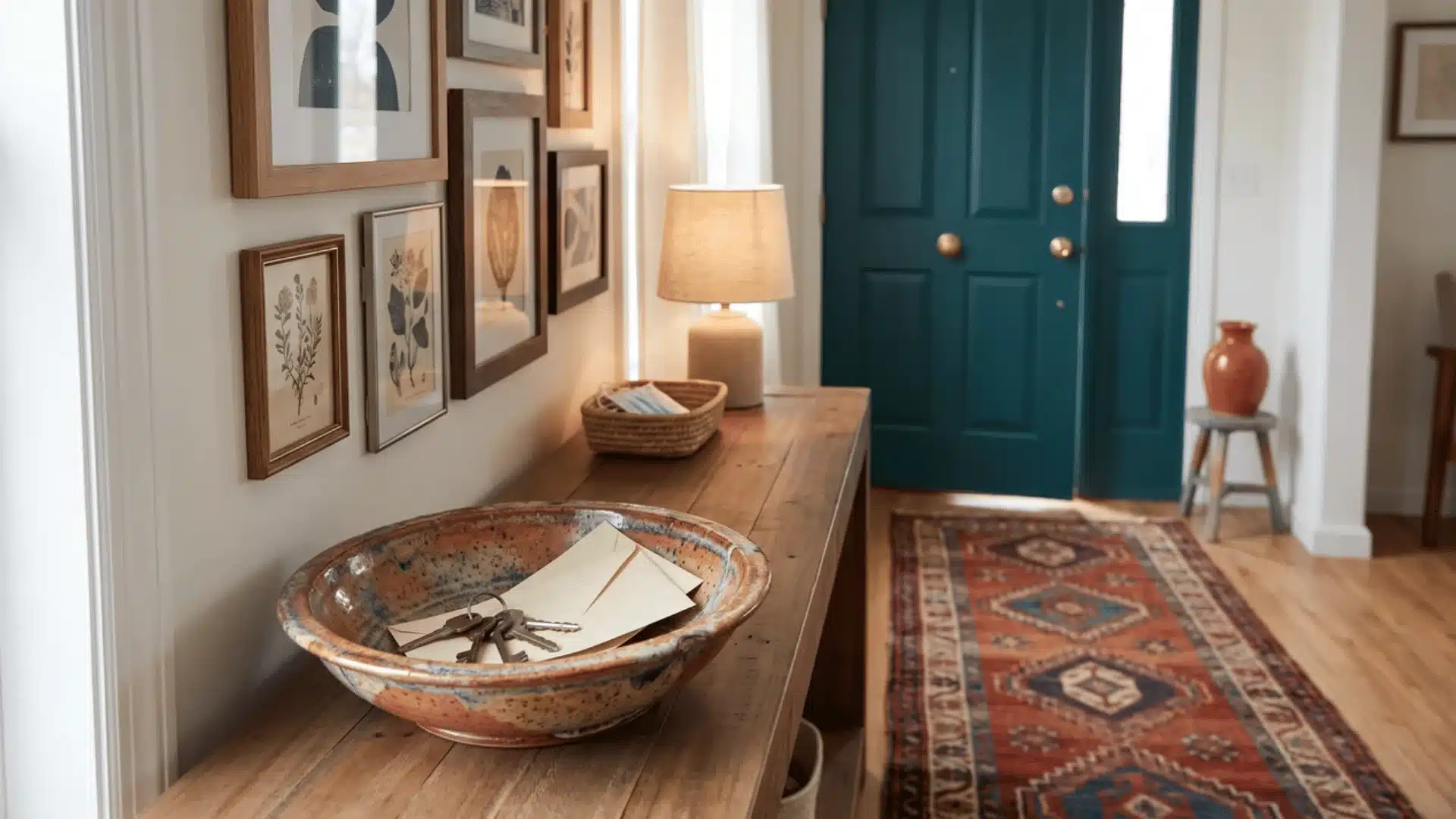
A vintage bowl, a small trunk, or a decorative tray can hold keys, mail, or loose items instead of a standard catchall dish. The swap adds character.
Choose something with enough depth or a rim to actually contain small items, not just a flat decorative surface. Function should not lose out to style.
Tips for an Eclectic Home
Every room raises its own risks, but only a few tips matter enough to repeat here.
- Match visual weight, not just style, when pairing furniture. Check height, width, and bulk before placing an older piece next to a newer one. A shared color or material makes the pairing read as planned.
- Light every room at more than one height. Ceiling light alone flattens texture across mixed materials. Table and floor lamps reveal detail that overhead light misses, especially once daylight fades.
- Tell wear apart from damage before keeping a vintage piece. Scratches and softened edges add character. Loose joints or stained fabric are functional problems and need repair before the piece earns its place.
- Check materials against the room’s real conditions. A rug near a kitchen sink or wallpaper in a bathroom needs to handle moisture or spills. Pick materials built for the room, not just the look.
Mistakes That Make Eclectic Design Look Cheap
Eclectic interiors can quickly feel messy or inexpensive when you ignore key design principles. These common mistakes can weaken an otherwise thoughtful, collected-looking room.
| Mistake | Why It Makes the Room Look Cheap |
|---|---|
| Buying matched furniture sets | A complete living room or bedroom set feels overly coordinated. Eclectic design works better when furniture pieces come from different sources, periods, and styles. |
| Skipping an anchor color | Without a repeated color connecting furniture, textiles, and decor, the room can feel random. One consistent shade helps unrelated pieces feel intentionally connected. |
| Creating multiple focal points | Several equally bold features compete for attention. Choose one dominant element, such as a patterned rug, artwork, or statement light, and let other pieces support it. |
| Choosing appearance over function | Attractive furniture or decor still needs to work comfortably. An uncomfortable vintage chair or cluttered display can make even a carefully styled room feel impractical. |
Avoiding these mistakes gives eclectic rooms more structure and purpose. The goal is not perfect coordination, but a balanced mix that feels collected rather than accidental.
Bringing Your Eclectic Interior Together
A successful eclectic space is not about filling a room with as many different styles as possible. It is about choosing contrast carefully and giving every piece a reason to belong.
I think eclectic interior design becomes much easier when you repeat an anchor color, balance visual weight, control patterns, and keep function in mind.
You can mix vintage furniture with modern pieces, layer textures, display meaningful collections, and still keep the room calm and usable.
The biggest improvement often comes from editing, not adding more decor. Start with one room, make one thoughtful change, and see how the space responds. Then try these ideas and share which combination works best for you.
Frequently Asked Questions
Is eclectic design hard to pull off?
It takes more restraint than most people expect, but it doesn’t require special training. A repeated anchor color and one lead style handle most of the work.
What’s the easiest way to start decorating in a room?
\Start with one piece already owned and meaningful, then build the color and style choices around it. Buying everything new at once usually backfires.
How many different styles can one room mix?
Three or more distinct styles is generally what separates true eclectic design from a simple two-style pairing, as long as balance and scale still hold the room together.
Does eclectic style work in small spaces?
It works well in small rooms, but with fewer bold choices at once. A bathroom or entryway usually needs one standout element rather than several competing ones.