

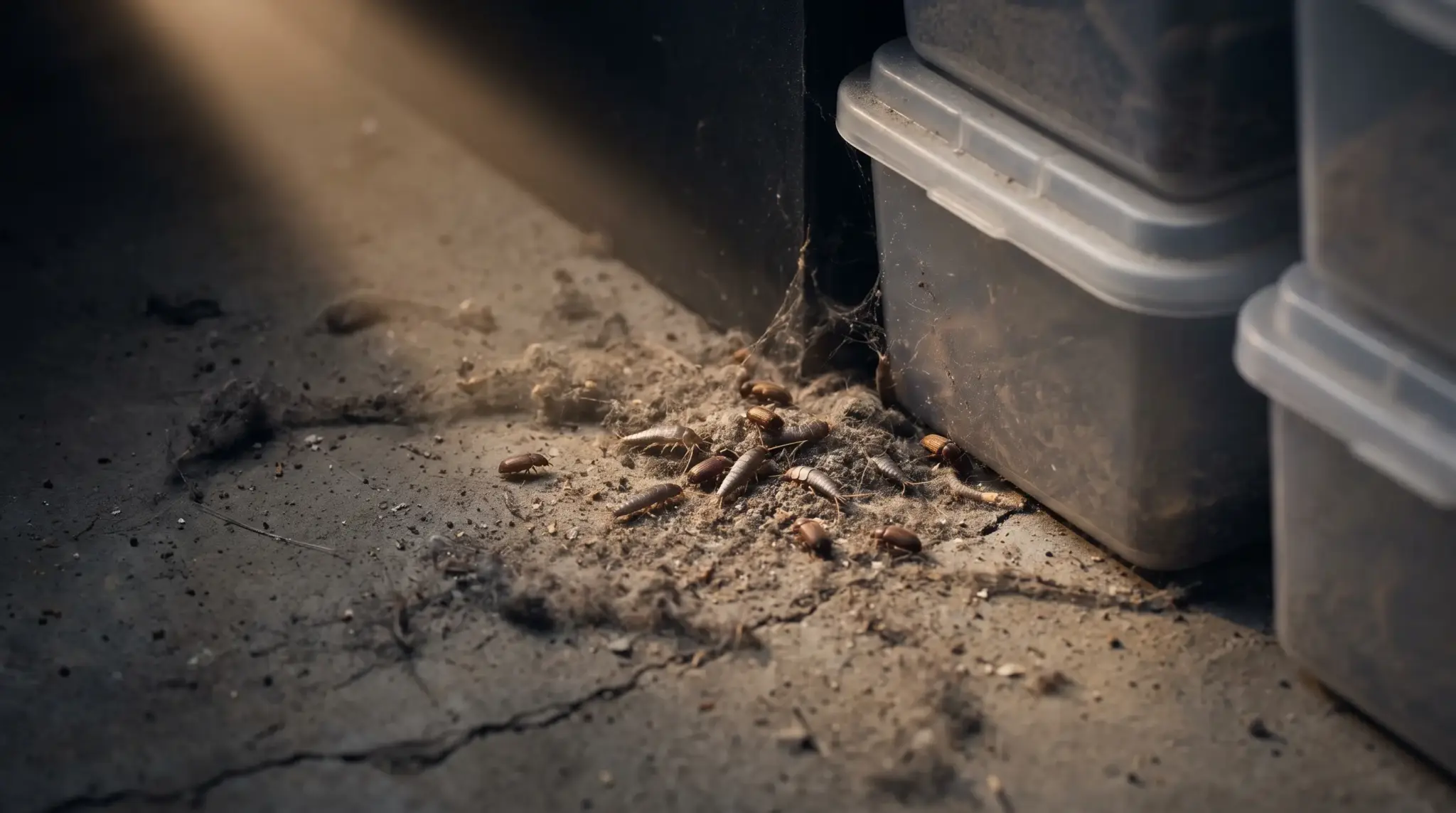
Every home has a few spots that rarely get touched. The back corner of a hall closet, the space beneath a guest bed, the far shelf of a basement storage room.
These places are easy to forget about precisely because they demand so little attention, and that same quality is exactly what makes them appealing to small insects.
Tiny bugs are not drawn to dark corners out of any particular preference for the dark itself. They are drawn to what darkness usually means: stillness, stable humidity, and a low chance of being disturbed.
Recognizing why these areas attract insects, rather than simply reacting when one turns up, gives homeowners a much better shot at keeping their homes free of the small, persistent pests that tend to gather in places nobody thinks to check.
What Makes Dark, Undisturbed Spaces So Appealing
Insects generally avoid bright, active areas of a home for the same reasons they avoid open fields during the day. Exposure brings risk, whether from predators, temperature swings, or simple physical disturbance.
A closet that gets opened once a week offers far more stability than a kitchen counter that gets wiped down daily, and that stability matters more to a small insect than most homeowners realize.
Moisture plays an equally important role. Basements, storage rooms, and enclosed cabinet corners tend to hold humidity longer than well-ventilated living spaces, since airflow in these areas is often limited by design.
Many small insects, including silverfish and certain beetles, require consistently damp conditions to survive, which makes a humid, undisturbed closet or basement corner a far more hospitable environment than a bright, dry room elsewhere in the house.
Dust and organic debris accumulate more heavily in these same spaces, simply because they are cleaned less frequently.
That buildup provides both food and shelter for several types of small insects, turning a neglected corner into a self-sustaining environment that can persist for months without ever being noticed.
The Small Pests Most Likely to Appear in These Areas
Homeowners searching for information on 5 types of tiny bugs found in your homes darkest corners are usually trying to identify something they just spotted scurrying across a closet floor or hiding beneath a stack of stored linens. Several species show up in these conditions consistently enough to be considered common culprits.
Silverfish are among the most frequently encountered, favoring damp, dark spaces and feeding on paper, glue, and fabric fibers, which makes stored boxes and closets particularly attractive to them.
Booklice, despite their name, are not true lice and instead feed on mold and mildew, often appearing in areas with slightly elevated humidity, such as basements or spaces behind furniture pushed against exterior walls.
Carpet beetles and their larvae feed on natural fibers, including wool, fur, and feathers, which draws them toward stored clothing and bedding tucked away in closets.
Psocids more broadly thrive wherever mold growth provides a steady food source, often in spaces with poor airflow.
Spiders, while not insects themselves, frequently take up residence in these same undisturbed corners simply because the insects listed above provide a reliable food source nearby.
Recognizing these 5 types of tiny bugs found in your homes darkest corners as a group, rather than isolated individual encounters, helps homeowners understand that a single sighting often points to broader conditions, moisture, dust, and lack of disturbance, that are supporting more than just the one insect spotted.
How Stored Items Contribute to the Problem
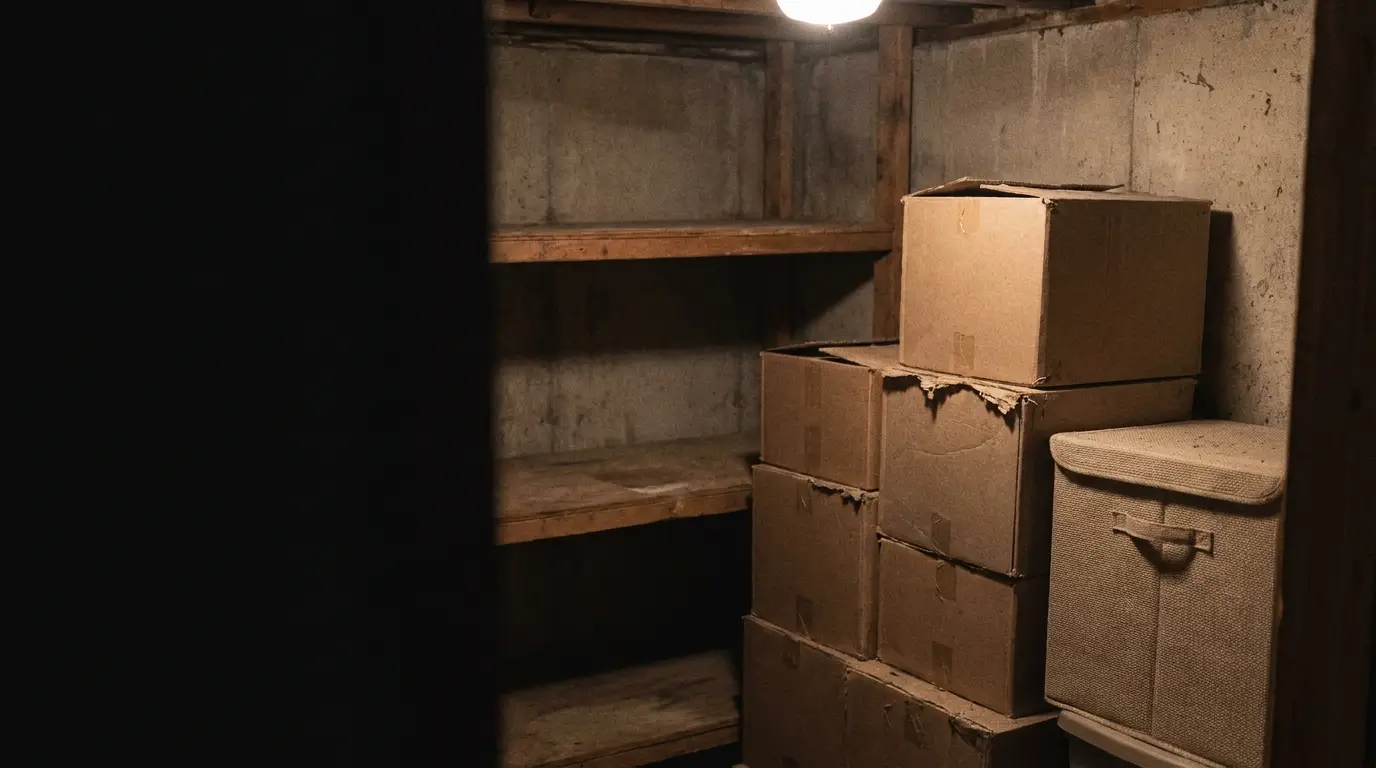
Cardboard boxes, fabric storage bins, and stacks of old linens all provide exactly the kind of organic material several of these insects rely on.
Silverfish in particular are drawn to the glue and cellulose found in cardboard, and a box left untouched for a year or more in a damp basement corner offers both food and shelter in a single package.
Carpet beetles pursue a similar strategy with stored wool sweaters, old blankets, or unused pillows, feeding on natural fibers that go unnoticed until visible damage appears.
The longer stored items go without being handled or inspected, the more likely they are to accumulate the dust and moisture that make them attractive to these pests.
A storage container opened only during a seasonal changeover offers plenty of time for insects to settle in and establish themselves before anyone notices.
A few habits reduce this risk significantly:
- Inspect stored boxes, bins, and fabric items at least twice a year, checking for shed insect casings, small holes, or a musty smell
- Store fabrics and paper goods in sealed plastic containers rather than open cardboard boxes
- Rotate stored items periodically so nothing sits completely undisturbed for more than a few months
- Avoid stacking storage directly on basement or closet floors, where moisture tends to collect
These small efforts interrupt the exact conditions, prolonged stillness and unchecked moisture, that allow small insect populations to grow unnoticed.
Improving Airflow to Reduce Humidity in Problem Areas
Since humidity plays such a central role in attracting these pests, improving airflow in closets, basements, and storage rooms addresses much of the underlying problem rather than just the visible symptoms.
Closets benefit from occasional ventilation, whether by leaving doors open periodically or installing louvered doors that allow for passive airflow even when closed.
Basements often require more deliberate intervention, such as a dehumidifier or improved exterior drainage, particularly in homes where the basement has a history of dampness or previous water intrusion.
Storage rooms without windows or dedicated ventilation are especially prone to trapped humidity, and adding even a small fan or vent can meaningfully reduce the moisture level over time.
Homes with central HVAC systems sometimes benefit from ensuring that supply or return vents reach these peripheral spaces, since rooms left entirely outside the conditioned airflow tend to run more humid than the rest of the house.
Cleaning Hidden Corners on a Regular Schedule
Clutter reduction and consistent cleaning matter as much as ventilation when it comes to keeping these areas unattractive to small insects.
Vacuuming beneath furniture, wiping down cabinet corners, and clearing dust from closet shelves on a regular schedule removes the organic debris that many of these pests depend on for food.
Spaces beneath beds and behind large furniture pieces deserve particular attention, since they are easy to overlook during routine cleaning yet accumulate dust and debris just as quickly as more visible areas.
Setting a seasonal reminder to address these specific spots, rather than relying on them to come up naturally during general housecleaning, tends to produce far more consistent results.
A closet or basement corner that gets attention four times a year is considerably less hospitable to small insects than one that goes untouched for months at a stretch.
End Note
Tiny bugs gather in dark, undisturbed corners because those spaces quietly provide everything they need: stable humidity, minimal disturbance, and a steady supply of dust or organic material to feed on.
Closets, cabinet corners, basements, and the space beneath furniture all meet these conditions more often than homeowners realize, which is why small insect populations can persist there for months without being noticed.
Improving airflow, reducing clutter, cleaning hidden corners regularly, and inspecting stored items on a consistent schedule all work together to remove the exact conditions these pests depend on, keeping even the most overlooked parts of a home considerably less inviting to them.