

Most people think of household dust as little more than a cosmetic annoyance—something to swipe off the coffee table before company arrives. But dust is actually a mix of biological and environmental material: pollen, pet dander, mold spores, dust-mite debris, and whatever particles get tracked in from outside. Keeping it under control isn’t about finding one magic product or scheduling an occasional deep clean. It comes down to consistency—prevention, regular cleaning, decent ventilation, and keeping moisture in check all working together. A good vacuum will certainly help pull settled dust out of carpets and upholstery, but it’s really just one piece of a larger indoor-air-quality puzzle, not a fix-all.
Why Household Dust Matters
What Dust Can Contain
Indoor dust is almost never “just dirt.” It’s typically a blend of skin flakes, pollen that drifted in through an open window, pet dander, mold spores, dust-mite particles, and soil carried in on the bottom of shoes. What ends up in your home’s dust varies quite a bit from one house to the next, depending on things like whether you have pets, what kind of furnishings you own, local outdoor air conditions, humidity, and how well the place is ventilated.
Who May Be More Sensitive
Those with asthma, allergies, or other respiratory issues—along with young kids and older adults—tend to be more affected by airborne particles than most people. Interestingly, the act of cleaning can actually stir up settled dust temporarily, so reducing dust in the long run is more of a gradual shift than an overnight fix. The U.S. Environmental Protection Agency notes that managing indoor air quality means addressing both where contaminants come from and how air circulates through a space.
Start With Prevention: Stop Dust at the Door
A surprising amount of indoor dust actually starts outside. Soil, pollen, and other particles hitch a ride in on shoes, clothing, bags, and even pets. A few simple source control habits can cut down on the dust load before it ever has a chance to settle:
- Place doormats at exterior entrances.
- Remove shoes indoors where practical.
- Clean entryways regularly.
- Wipe pets’ paws after outdoor time.
- Minimize unnecessary opening of doors and windows during high-pollen periods.
Take a household that noticed dust piling up almost exclusively near the front entryway, while the rest of the house stayed relatively clean. Instead of upping the cleaning frequency everywhere, they simply added a doormat and started a no-shoes-indoors rule—and that alone noticeably cut down on how often they needed to clean the rest of the home. It’s a good example of a broader principle: stopping dust before it enters is usually far more efficient than chasing it around after the fact.
Build a Practical Cleaning Routine
Clean From High Surfaces to Low Surfaces
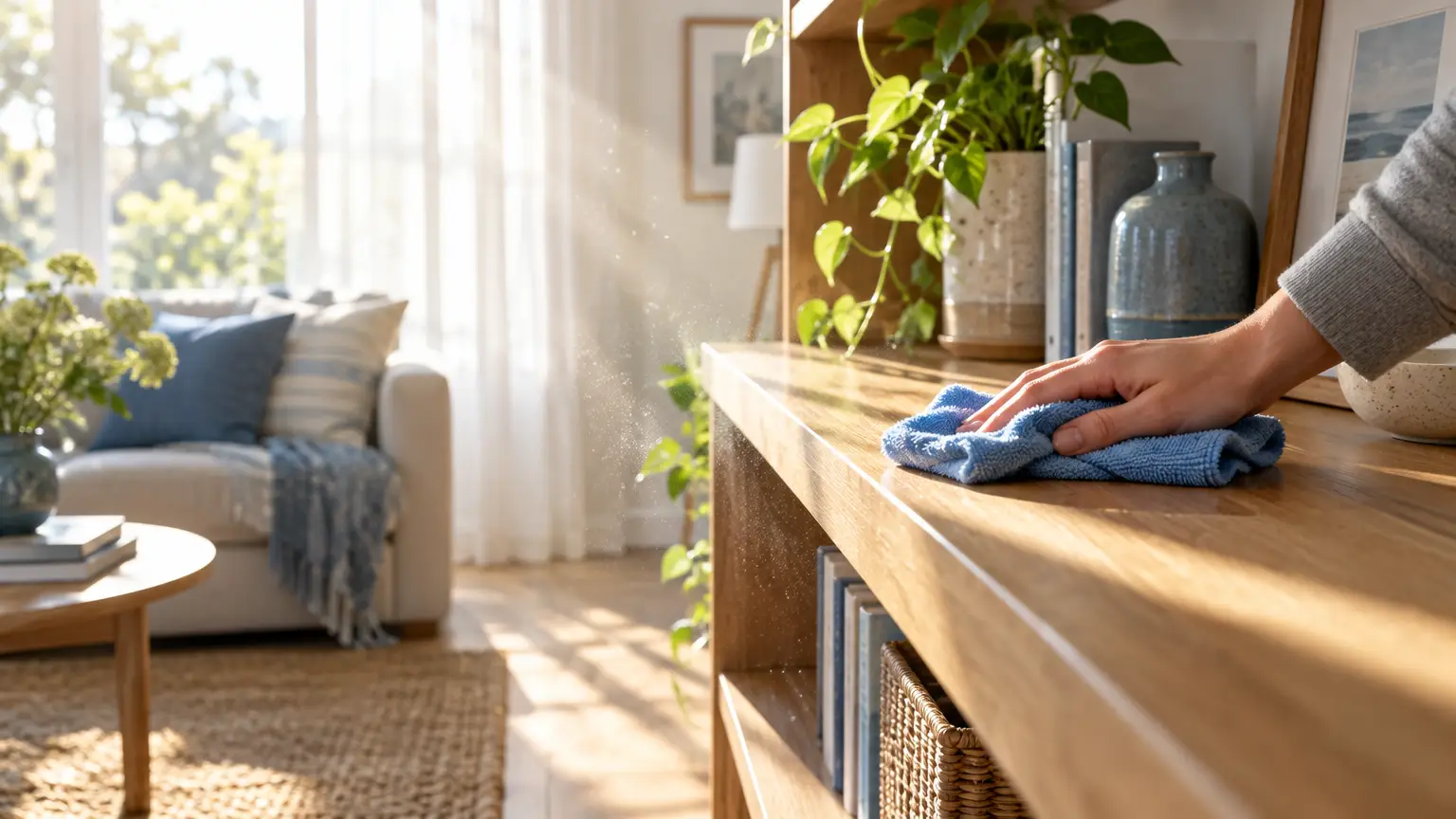
Working from the top of a room down keeps dust from resettling on spots you’ve already cleaned. That means tackling shelves, ceiling fans, blinds, and baseboards first, then moving on to furniture and floors. Damp dusting—wiping surfaces with a slightly moistened microfiber cloth—tends to work better than dry dusting, which often just scatters particles into the air instead of actually capturing them.
Match the Method to the Surface
- Hard surfaces: A damp cloth or mop typically works well.
- Carpets and rugs: Clean regularly, with extra attention to high-traffic zones.
- Upholstery: Follow manufacturer care instructions and remove loose debris often.
- Bedding and fabrics: Launder according to care labels, particularly in bedrooms.
It’s also worth going easy on fragranced sprays and other cleaning chemicals, especially in rooms that don’t get much airflow.
Create a Frequency Plan
| Frequency |
Tasks |
|---|---|
|
Daily or as needed |
Spot-clean spills and entryway debris |
| Weekly |
Floors, carpets, furniture, bedding |
| Periodically |
Curtains, blinds, vents, storage areas |
Key takeaway: Staying on top of high-use areas with regular, focused cleaning beats trying to deep-clean the entire house once in a while.
Use Floor-Care Equipment Correctly
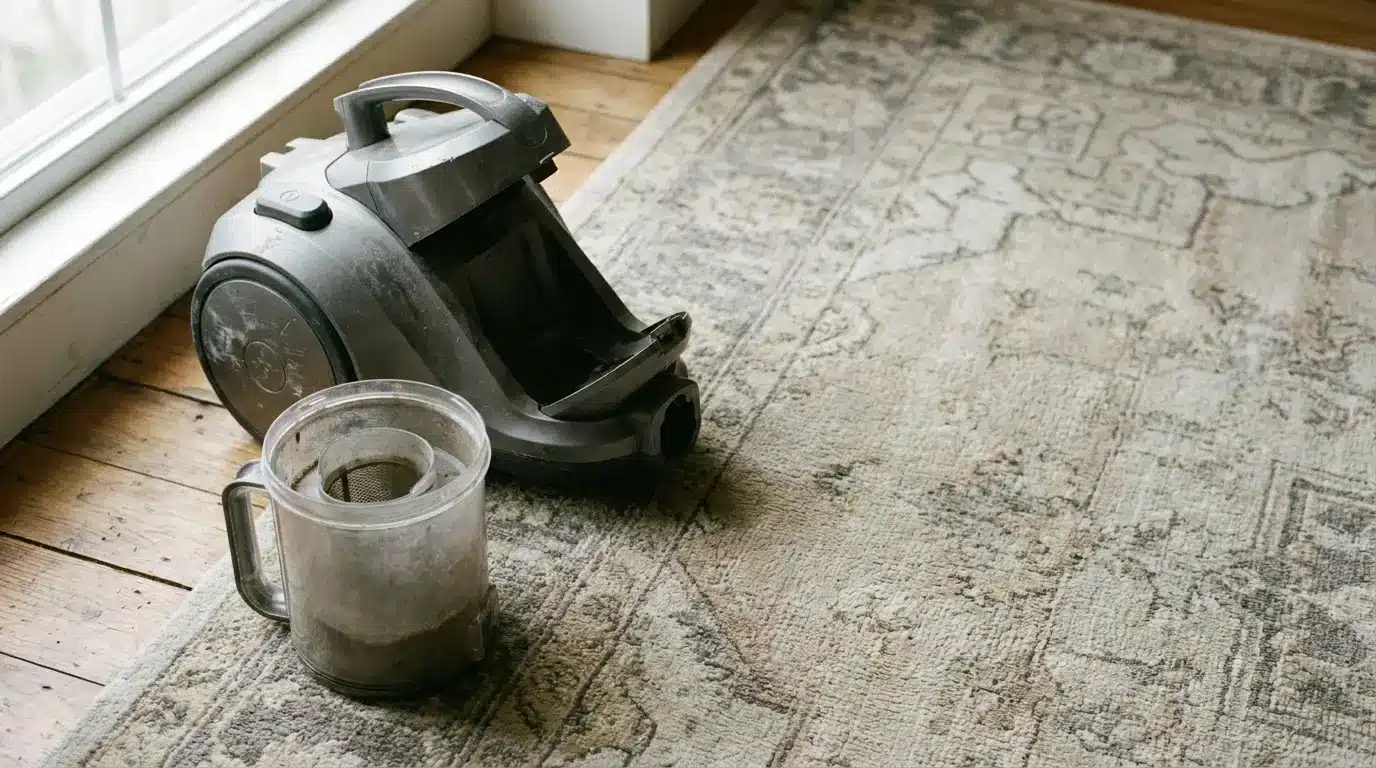
Floor-care equipment is great for lifting settled dust, but it can also kick fine particles back into the air while you’re using it. Sticking to the manufacturer’s instructions, keeping filters clean or replaced as needed, and emptying dust containers carefully all help minimize that effect. Taking your time while cleaning floors—rather than rushing back and forth over the same spot—usually picks up more debris with less of it ending up airborne again.
HEPA filtration—short for high-efficiency particulate air filtration—describes a filter standard designed to trap a high percentage of fine particles. It’s a genuinely useful feature in the right equipment, but it won’t turn a home completely allergen-free, and how well it performs depends on the specific product and how it’s maintained. People with asthma or allergies might find it helpful to step out of the room during particularly dust-heavy chores, or let someone else in the household handle them instead.
Control Moisture and Ventilation
Why Moisture Management Matters
Lingering dampness is an open invitation for mold, which only adds to indoor-air-quality problems. Practical moisture management steps include fixing leaks as soon as they’re noticed, drying out wet materials completely, and making sure bathrooms and kitchens get proper ventilation. If you’re seeing visible mold, recurring condensation, or water damage—particularly over large areas or in a household with sensitive occupants—it may be time to bring in a professional.
Improve Air Movement Safely
Exhaust fans that vent outdoors in kitchens and bathrooms go a long way toward cutting down trapped moisture and lingering odors. Think of ventilation as a complement to cleaning and prevention rather than a stand-in for either. Air purifiers and fans certainly have their place, but they’re not a cure-all for dust or allergen concerns.
Common Mistakes to Avoid
- Dry-dusting surfaces, which stirs particles into the air rather than removing them.
- Overlooking entryways, upholstery, mattresses, blinds, and baseboards.
- Cleaning only visible floors while ignoring fabrics and high surfaces.
- Neglecting filter maintenance or emptying equipment carelessly.
- Overusing sprays or mixing cleaning chemicals.
- Treating cleaning as a substitute for fixing leaks or addressing mold.
- Drawing health conclusions from anecdotal results rather than established guidance.
A Simple, Adaptable Household Plan
A workable routine might look like tending to entryways several times a week, cleaning floors and upholstered furniture weekly, washing bedding on a regular schedule, and drying out any damp areas right away. Focusing your efforts on the rooms where people actually spend their time—bedrooms, living areas—tends to produce the most noticeable payoff. And if allergy or asthma symptoms keep popping up despite your best efforts, it’s worth talking to a qualified healthcare professional rather than assuming a different cleaning routine will solve it.
When to seek professional help: Recurring mold growth, water damage that won’t go away, or respiratory symptoms that don’t improve even with a solid cleaning routine are all good reasons to get a professional opinion.
A Cleaner Home Through Consistent Habits
At its core, cutting down on household dust comes down to a handful of habits that reinforce each other: limiting what gets tracked in, sticking to damp-cleaning methods, keeping up with floors and fabrics, maintaining your equipment properly, and staying on top of moisture and airflow. Rather than chasing the impossible goal of a completely dust-free home, it makes more sense—and works better in practice—to figure out the two spots where dust builds up most in your household and build a steady, manageable routine around those.