

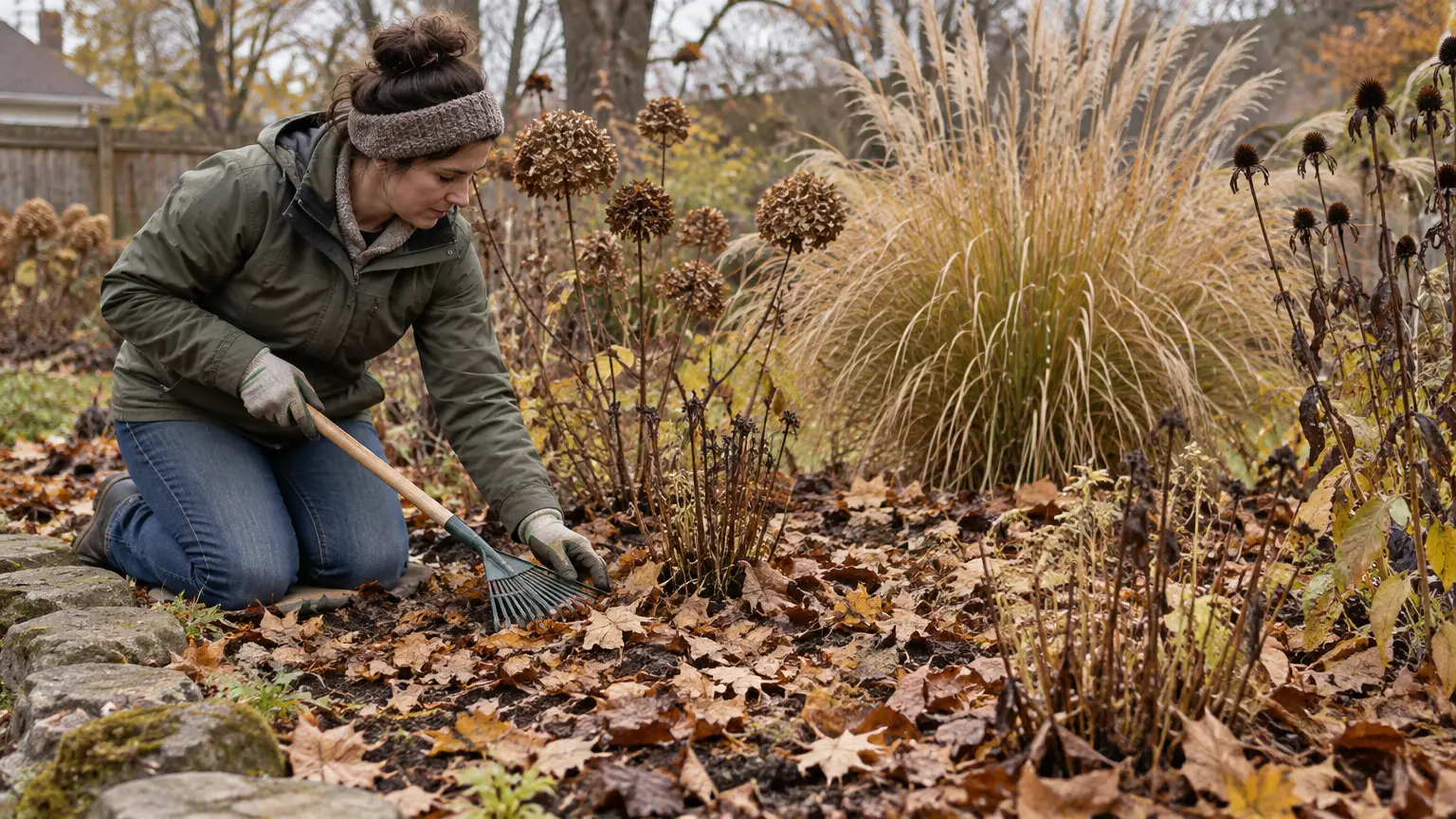
Fall garden cleanup can protect plants and prepare a yard for winter, but doing too much can be as troublesome as doing nothing. Cutting back every stem, removing every leaf and fertilizing everything before the first freeze may create a tidy landscape while interfering with natural plant cycles.
A better fall routine is selective. Some plants benefit from cleanup, diseased material should generally be removed, and vulnerable plants may need protection from winter weather. Other parts of the garden are better left alone until spring.
Removing Every Fallen Leaf
Leaves do not automatically become garden waste when they hit the ground. A moderate layer of shredded leaves can add organic material to garden beds and help insulate soil as temperatures fall. Leaves can also provide habitat for insects and other small organisms that are part of the garden ecosystem.
That does not mean homeowners should ignore a lawn buried beneath a thick, wet mat. Dense leaves can block light and air from turf, so rake, mulch or redistribute them rather than allowing heavy piles to remain. Diseased leaves may also need to be removed instead of reused around susceptible plants.
Where leaves fall matters. Those covering sidewalks, storm drains and hard surfaces should be cleared, while healthy leaves in appropriate garden areas can often be put to work rather than bagged immediately.
Pruning at the Wrong Time
Fall can feel like the natural moment to cut shrubs and trees into shape, but extensive pruning is not appropriate for every plant. Some spring-flowering shrubs develop their flower buds on older growth, so cutting branches at the wrong time can remove much of the following season’s display.
Learning how to prune a particular species includes knowing when to make the cut, not simply where. Dead, damaged or hazardous branches may require attention, but major shaping can often wait for the season recommended for that specific plant.
Technique matters as well. Avoid removing branches simply to make every plant look uniformly neat before winter. If a tree requires substantial work, especially around structures or utility lines, an appropriately qualified tree professional can assess what actually needs to be done.
Ignoring Young Trees
Newly planted trees still need attention after summer ends. Roots continue to need adequate moisture until the ground freezes, particularly when autumn conditions are dry. Assuming cooler weather automatically eliminates watering needs can leave a recently planted tree heading into winter under stress.
Tree selection also influences what the fall workload looks like in future years. Fast growing trees are great because they can establish height and landscape presence relatively quickly, but growth rate should never be the only consideration. Mature dimensions, branch structure, local climate, soil and available space all matter when deciding what belongs in a yard.
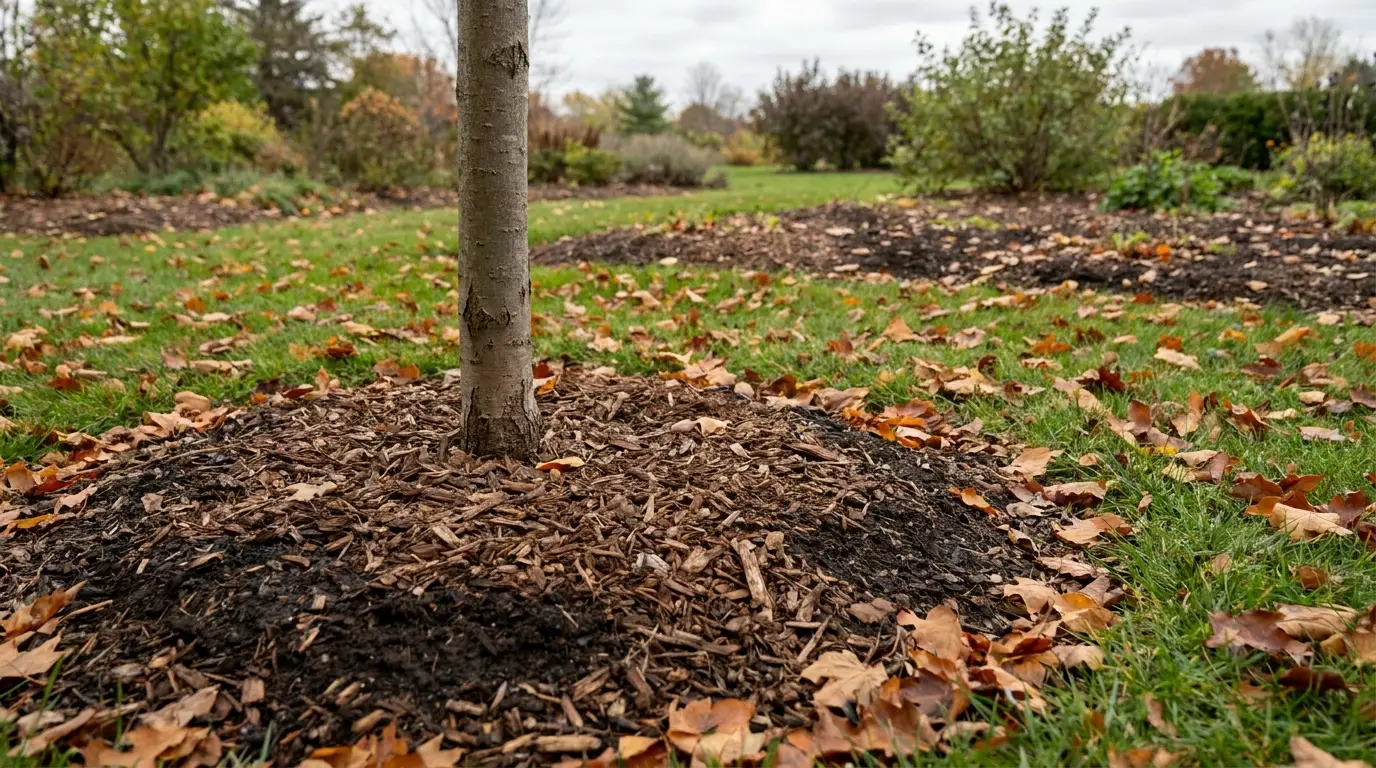
Young trunks may also need protection in locations where animals or winter conditions pose a problem. Mulch can help moderate soil conditions around the root area, but piling it against the trunk can hold excess moisture where it is not wanted. Keep mulch spread around the tree rather than shaped into a mound against the bark.
Cutting Everything to Ground
Many perennials turn brown or ragged after frost, tempting gardeners to cut the entire landscape down immediately. Some plants can certainly be cleaned up in fall, especially when foliage shows signs of disease. Healthy stems and seed heads, however, may provide winter interest, food for birds or shelter for beneficial insects.
Leaving selected plants standing can also make a winter garden more visually interesting. Ornamental grasses and sturdy seed heads add structure after flowers disappear, particularly once frost or snow settles over them.
Plant health should guide the decision. Remove material that could contribute to recurring disease problems, but do not assume brown automatically means useless. Spring cleanup can handle much of what remains after winter.
Fertilizing Too Late
Late-season feeding is another area where good intentions can go sideways. Plants naturally respond to seasonal changes, and encouraging tender new growth at an inappropriate time may leave that growth vulnerable to cold weather.
Fertilizer should be based on the needs of the plant and soil rather than applied automatically because the gardening season is ending. Established landscape plants may not need routine fall fertilization at all. When soil fertility is in question, a soil test provides better guidance than guessing from appearance.
Fall cleanup works best when it prepares a garden for winter without stripping away everything nature leaves behind. Remove genuine problems, protect vulnerable plants and resist the urge to make every bed spotless. A garden can look slightly untidy in November and still emerge healthier in spring.