

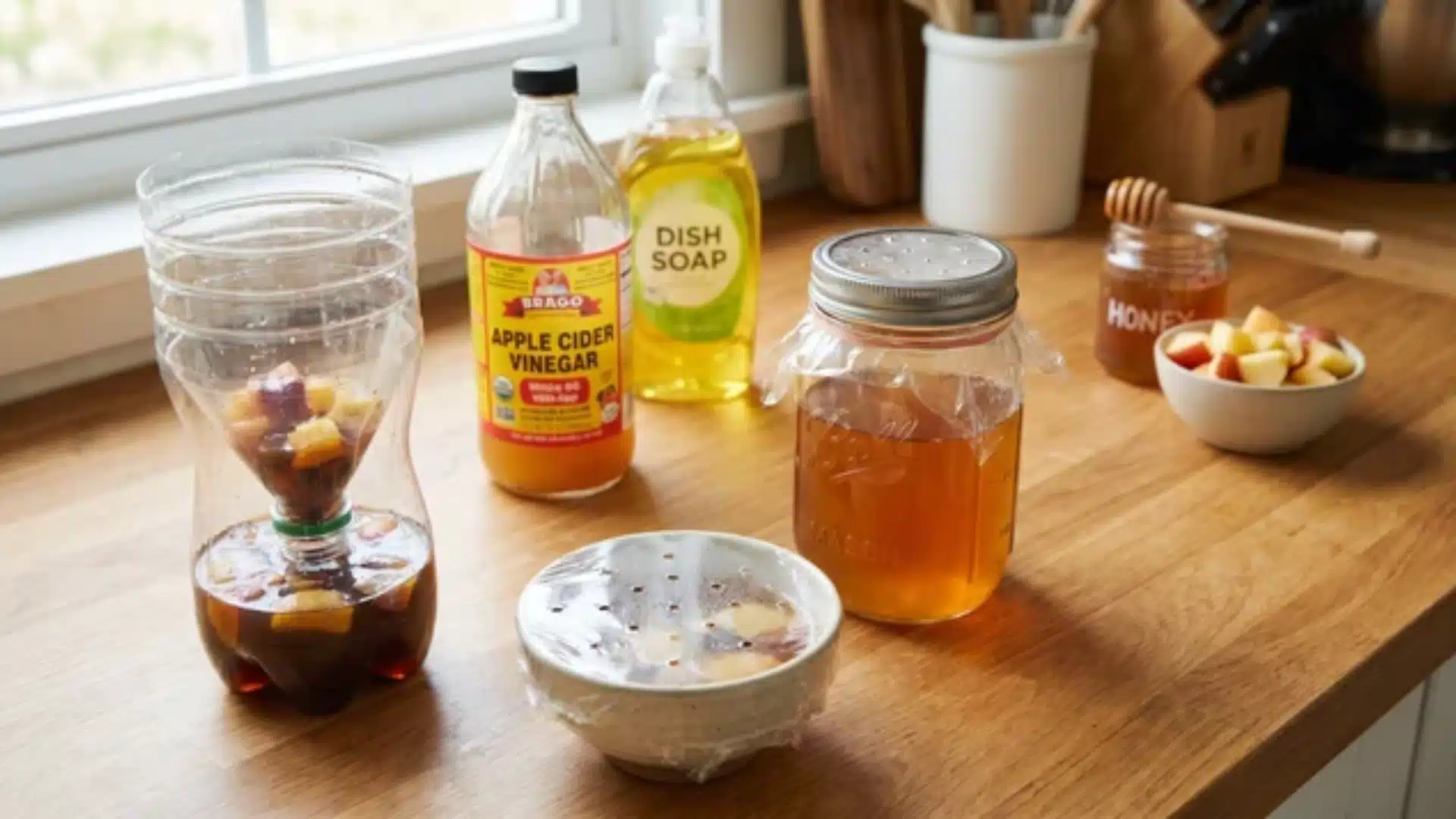
A DIY fly trap becomes useful when flies keep returning even after cleaning the kitchen and clearing waste around common food areas. They hover near drains, bins, and fruit bowls without warning.
Different flies behave differently, so results depend on matching the trap setup with the right bait and container. Houseflies and fruit flies respond to completely different attractants.
Let’s start with the first thing you need to know.
Which Fly Are You Dealing With?
The type of fly you’re dealing with determines everything: the container design, the bait, and where you place it. Get that wrong, and the trap won’t work no matter how well you build it.
Houseflies and fruit flies aren’t just different sizes. They’re drawn to completely different things.
- Houseflies are attracted to rotting meat, fish, and decay.
- Fruit flies respond to fermentation, vinegar, overripe fruit, and alcohol.
A trap built for one won’t attract the other.
The easiest way to tell them apart is to look at these areas:
- Fruit flies hover near drains, fruit bowls, and compost.
- Houseflies come in from outside and tend to cluster near garbage, pet areas, or raw food.
Start with figuring that out first, and everything else becomes much easier after that.
How to Make the Bottle Funnel Trap? (Best for Houseflies and Outdoor Use)
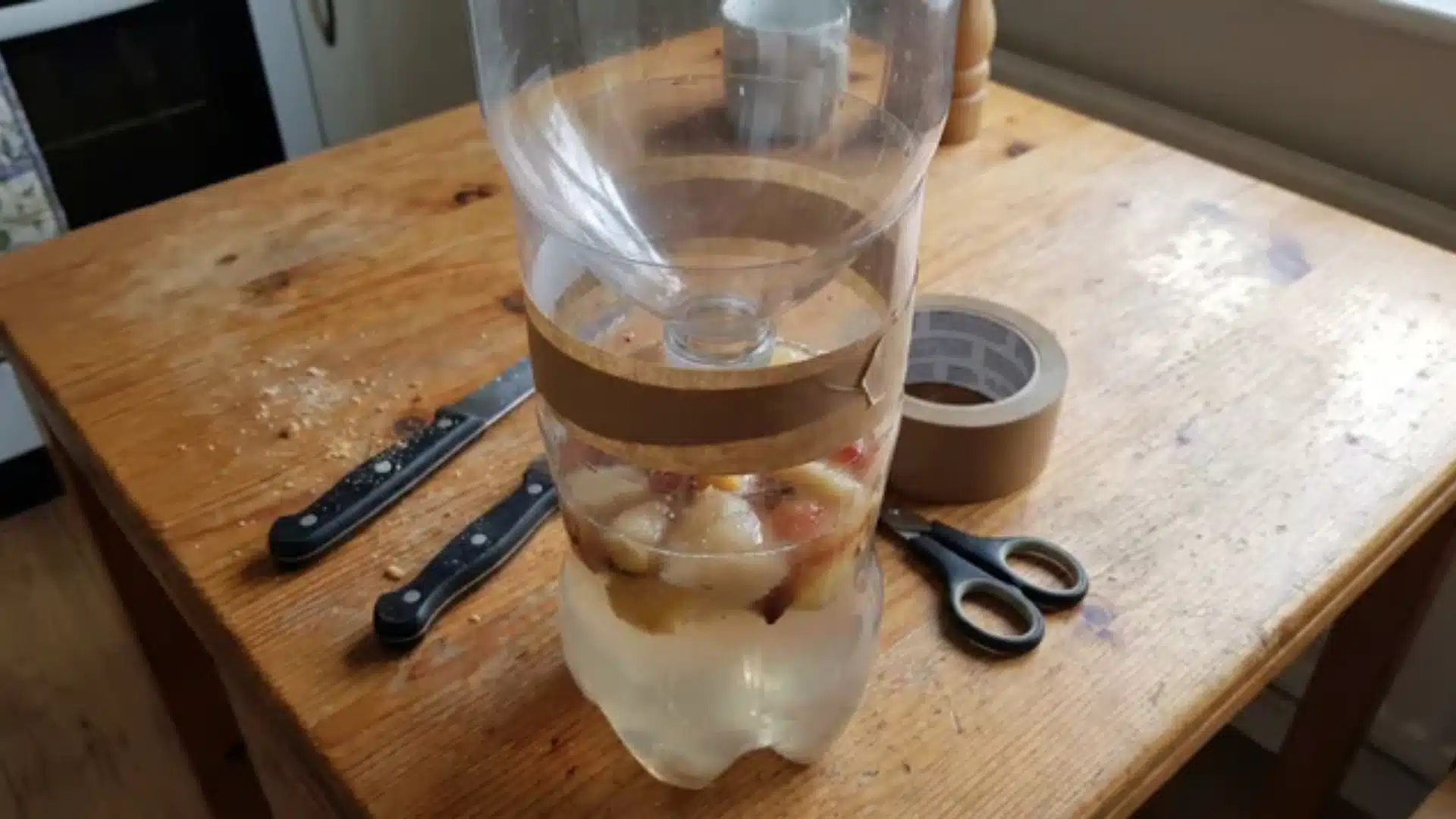
The bottle funnel trap is the most effective DIY fly trap for houseflies. It works because of one simple design principle: flies can get in, but they can’t get back out. Here’s how to build it and bait it correctly.
Supplies You Need
- One empty 2-liter plastic bottle
- Scissors or a utility knife
- Tape (duct tape holds best)
- Bait (more on this below)
Step-By-Step Build
Step 1: Cut the bottle roughly one-third of the way down from the top, just below where it starts to narrow into the neck.
Step 2: Fill the bottom section with your bait and about an inch of water.
Step 3: Remove the bottle cap. Flip the top section upside down and press it into the bottom like a funnel.
Step 4: Tape the seam where the two pieces meet. No gaps. Flies will find them.
The funnel shape is what makes this work. Flies follow the scent upward through the narrow opening. Once inside, they don’t navigate back down toward a small hole; they fly upward toward the light and hit the bottle walls instead.
Bait that Actually Works
Many people use sugar water. It’s fine as a last resort, but it’s not the best option for houseflies.
Houseflies are drawn to rot, not sweetness.
Meat scraps, fish heads, or even a spoonful of cat food will significantly outperform sugar water. The worse it smells to you, the better it works.
If you can’t use protein bait indoors, near a seating area, or anywhere smell is a problem, use a mix of water, sugar, and a splash of vinegar. It won’t perform as well, but it will catch flies.
A few things that kill results fast:
- Bait that dries out before flies find the trap
- Gaps in the tape seal that let flies escape
Hang it in the shade, close to where flies are active, and refresh the bait every three to four days.
How to Make the Vinegar Trap? (Best for Fruit Flies and Indoor Use)
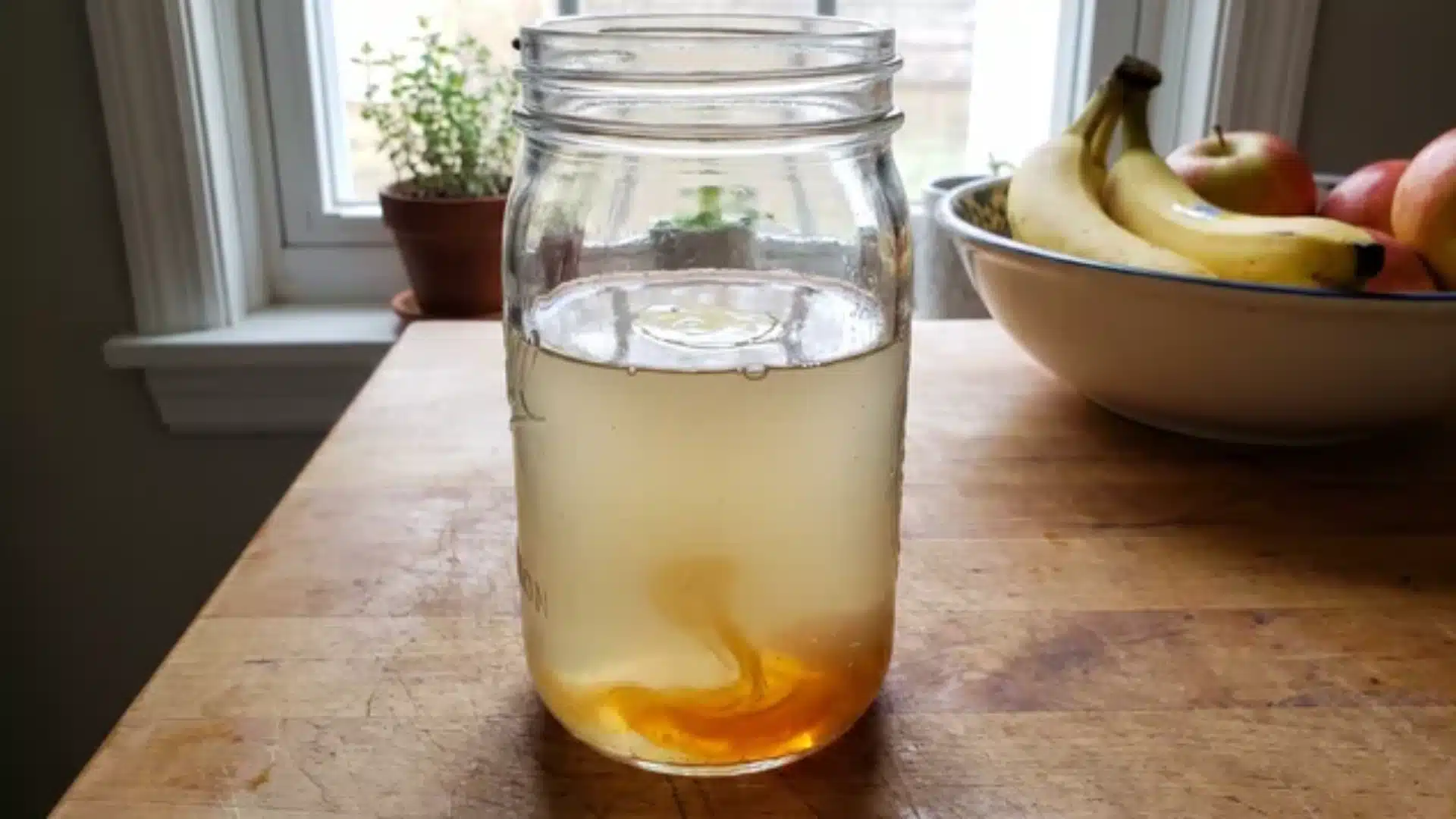
The vinegar trap is the go-to homemade fly trap for fruit flies. It’s faster to build than the bottle trap and works better indoors. The key is understanding why each ingredient is there; skip one, and the trap stops working properly.
Supplies You Need
- A mason jar or shallow bowl
- Apple cider vinegar
- Liquid dish soap
- Honey (optional but effective)
Step-By-Step Build
This trap works on a simple two-part principle: draw them in with scent, kill them on contact with the liquid surface.
Step 1: Pour apple cider vinegar into your jar to a depth of about 1 inch.
Step 2: Add two to three drops of dish soap. Don’t skip this.
Step 3: Add a small squeeze of honey if you have it.
Step 4: Microwave the jar for 15 to 20 seconds, then place it uncovered near the infestation.
Each ingredient is doing a specific job, and none of them is interchangeable.
The vinegar is the attractant. Fruit flies are wired to follow the scent of fermentation; apple cider vinegar closely mimics overripe fruit, reliably drawing them in.
The dish soap is what actually kills them. Without it, fruit flies land on the liquid surface and walk away. The soap breaks surface tension. They sink.
The microwaving step gets skipped more than any other. It volatilizes the acetic acid in the vinegar, significantly increasing the scent radius. Fifteen seconds is all it takes.
Where You Put the Trap Matters as Much as How You Build It
Set it within two to three feet of where flies are active: near the fruit bowl, beside the compost bin, or next to the drain. Across the room is too far.
The liquid loses potency after 48 to 72 hours as the vinegar smell flattens. When catches slow down, it’s usually not the design; it’s a flat trap that needs refreshing. Pour it out, rinse the jar, and start fresh.
One trap handles a mild infestation. For anything heavier, place two or three around the kitchen at the same time.
Why Your Trap isn’t Catching Flies and How to Fix It
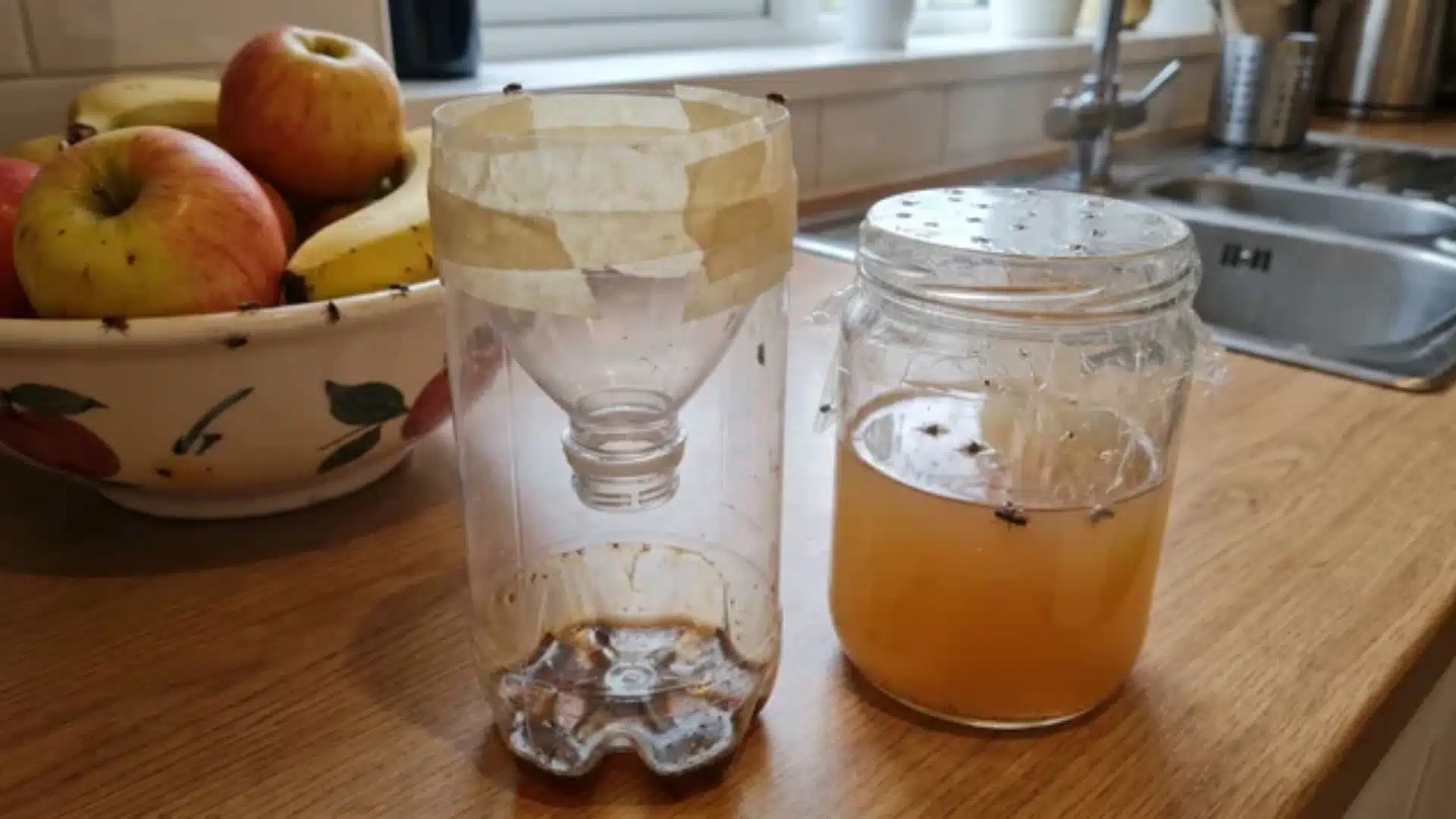
A homemade fly trap can still underperform, but it’s rarely the design. It usually comes down to a few small issues that are easy to fix.
- Wrong bait: If the bait doesn’t match the fly type, the trap fails. Vinegar works for fruit flies, while houseflies respond to rotting protein like meat or fish.
- Bad placement: Flies stay close to food and breeding spots. Keep the trap within two to three feet of where activity is visible.
- Old bait: Scent fades fast. Vinegar loses strength in 48–72 hours, and protein bait dries out, making it far less effective. Refresh it regularly.
- Loose seal: Even small gaps in a bottle trap let flies escape. Check the tape seam carefully and seal every edge tightly.
Fixing a homemade fly trap usually comes down to small details like bait, placement, freshness, or sealing, and correcting them quickly brings results back fast.
Wrapping Up
Understanding how houseflies and fruit flies respond differently helps improve every setup. Matching scent sources and keeping traps fresh makes a noticeable difference in performance.
Results usually improve after adjusting just one factor, often placement or bait freshness. That small shift can change how quickly flies are reduced in the space.
Once the setup starts working, it becomes easier to manage future infestations with simple resets. Try building your homemade fly trap today and apply these fixes immediately.
Frequently Asked Questions
What is the best homemade fly trap?
It depends on the fly. For houseflies outdoors, the 2-liter bottle funnel trap with protein bait, meat scraps, fish, or cat food is the most effective homemade fly trap you can build. For fruit flies indoors, a mason jar with apple cider vinegar and dish soap catches more reliably than any covered design. Match the trap to the fly first.
What liquid attracts and kills flies best?
For fruit flies, use apple cider vinegar with two to three drops of dish soap. The vinegar draws them in, and the soap ensures they can’t escape. For houseflies, no liquid outperforms rot-based bait; water mixed with meat scraps or fish produces the compounds that actually pull them in.
Will Dawn dish soap and vinegar kill flies?
Yes, for fruit flies. The vinegar attracts them, and the dish soap breaks the surface tension, so they drown on contact. Without the soap, many fruit flies land, find nothing to grip, and leave. The brand doesn’t; liquid soap and dish soap do the same job.
How do I get rid of flies faster once a trap is set?
Place your homemade fly trap within two to three feet of the active infestation, not just nearby. Warm the bait slightly before setting it to boost scent dispersal. Replace the liquid every 48 to 72 hours. If the infestation is heavy, run two or three traps at once rather than relying on a single trap.