

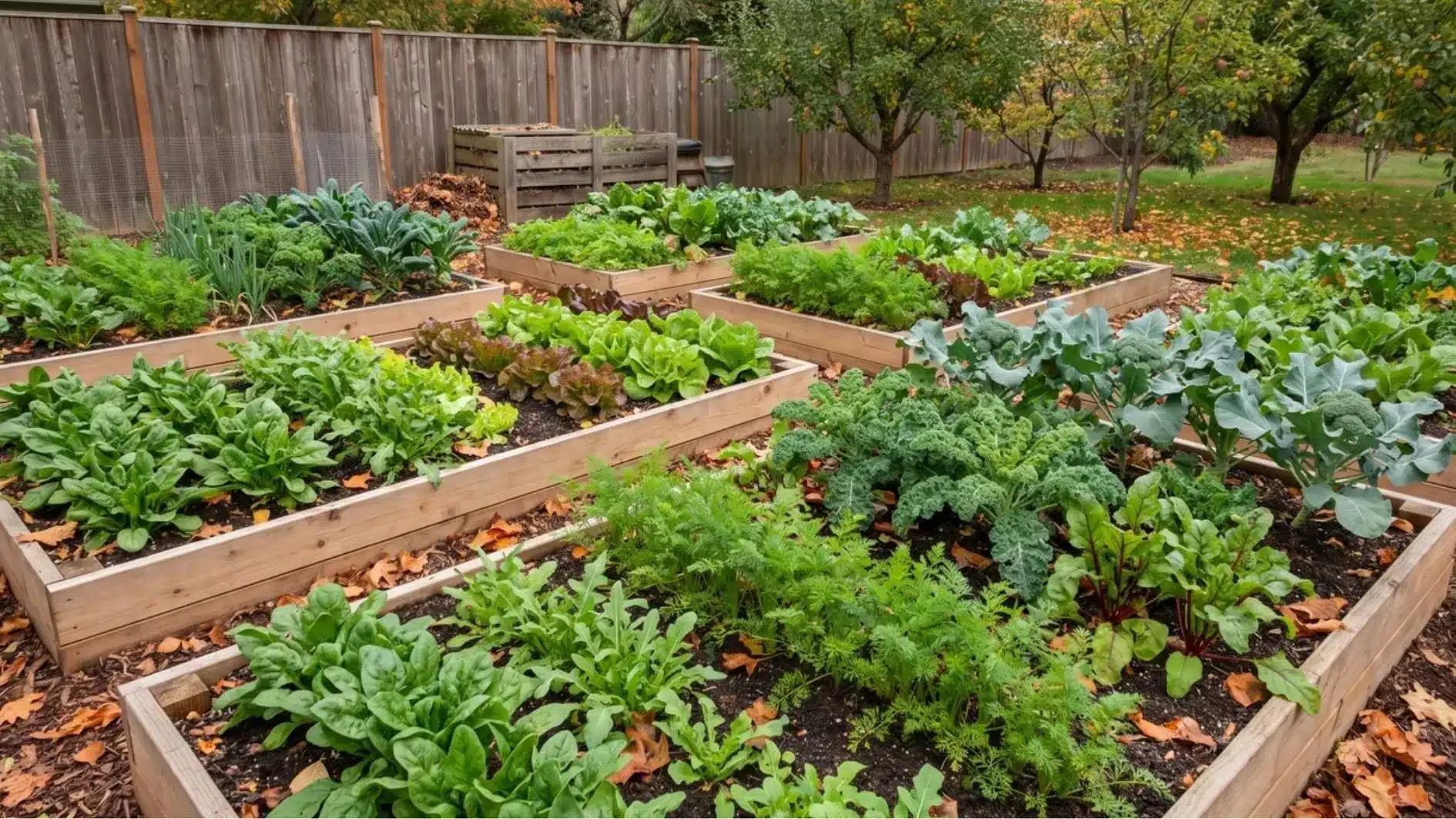
The biggest fall gardening mistake has nothing to do with what you plant. It is when you plant it, and most gardeners get it wrong by weeks.
Waiting until September to start fall crops is like planting tomatoes in July and expecting a full summer harvest. The math simply does not work.
This guide covers timing, crop choices, frost protection, and succession planting for harvests beyond the first freeze. By the end, you’ll have a clear plan for a fall garden that produces well into October.
When Do You Actually Start Fall Crops?
Most people start their fall garden too late, and the season is over before it begins.
Start with your area’s first average frost date. Count back the seed packet’s “Days to Maturity” and add a 14-day buffer. That final date is your planting deadline.
The 14-day buffer exists because fall growing conditions work against the numbers on your seed packet. Those figures are calibrated for spring, with warming soil and lengthening days.
Fall runs in the opposite direction, and shorter daylight hours slow growth as the season progresses.
How to Calculate Your Fall Crop Deadline
A concrete example helps here. Say your first frost date is October 15 and you want to grow broccoli, which takes about 80 days to maturity.
Count back 80 days, and you land around July 27. Subtract the 14-day buffer, and your planting deadline is around July 13. Not August. Not September. July.
For most fall crops in most of the country, that math puts the start date somewhere between late July and mid-August.
The gardeners who get consistent fall harvests are the ones planting seeds when it still feels like the height of summer. With your window locked in, the next question is which crops actually belong in it.
The Best Fall Crops to Plant by Family
Cool weather does not only just suit these crops. For many of them, it is the only condition under which they perform at their best.
Fall crops divide cleanly into four families, each with a different relationship to frost, a different flavor profile, and different timing requirements. Understanding the family logic tells you more than any flat crop list ever could.
Leafy Greens: Spinach, Arugula, Lettuce, and Swiss Chard
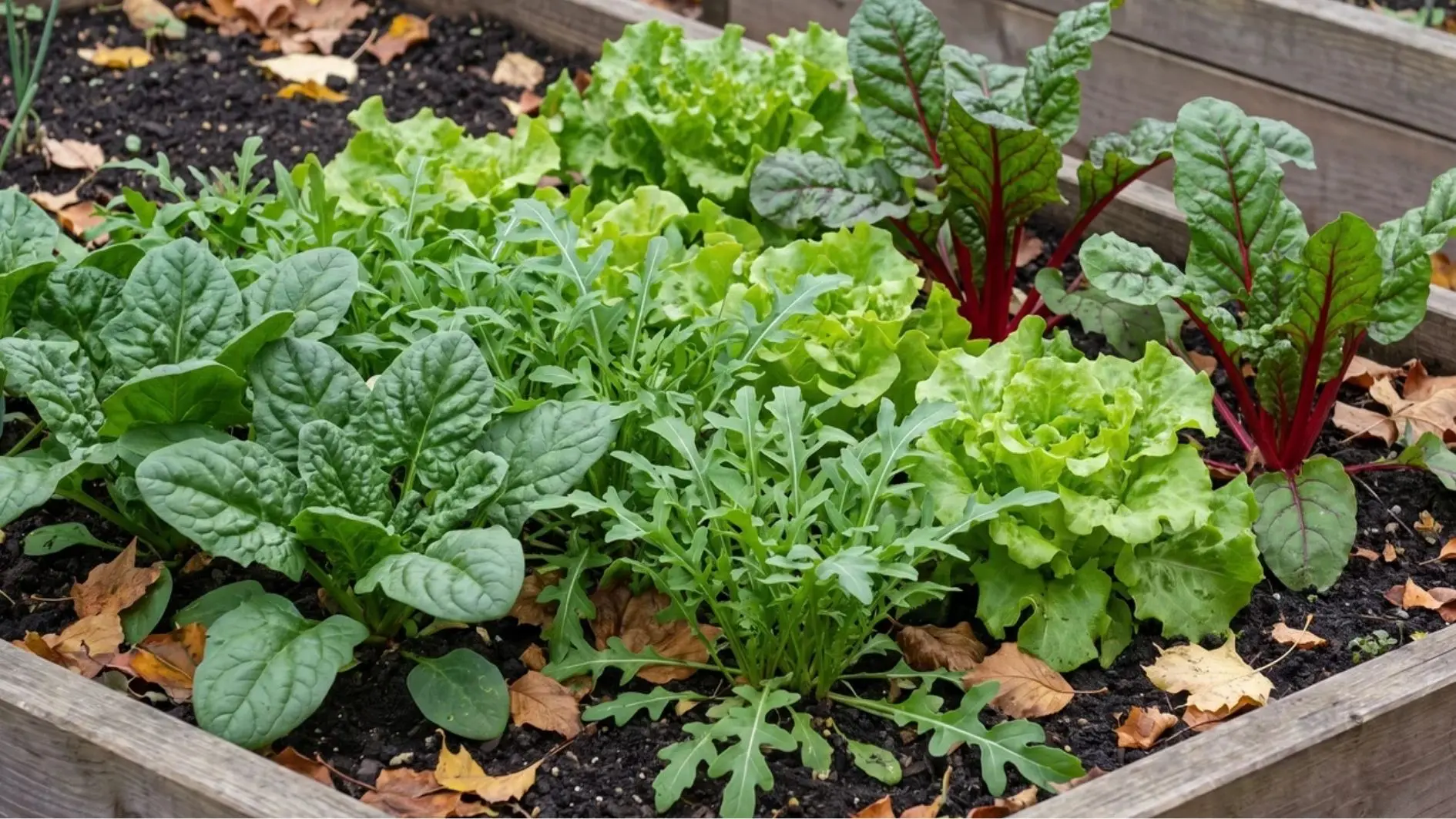
Leafy greens are the most forgiving entry point into fall gardening, but forgiving does not mean foolproof.
These crops bolt in heat and recover in cool weather. Bolting sends energy into seed production instead of leaf growth, and fall temperatures cut that trigger entirely.
Spinach germinates best between 45 and 70°F, making it one of the few crops that genuinely prefers fall conditions over spring. Direct sow it four to six weeks before your first frost date.
Arugula reaches harvest in as little as 21 days from seed. It handles light frosts without protection and develops a sharper, more complex flavor as temperatures drop. Plant it every two weeks for continuous production.
Lettuce handles temperatures down to about 28°F before cell damage sets in. A simple row cover adds 4 to 6 degrees of warmth and buys several extra weeks of harvest past that threshold.
Swiss chard tolerates temperatures down to around 25°F and keeps producing through light frosts that would stop lettuce entirely. Start it about six weeks before your frost date for the strongest plants.
Brassicas: Broccoli, Cabbage, Cauliflower, Kale, and Brussels Sprouts
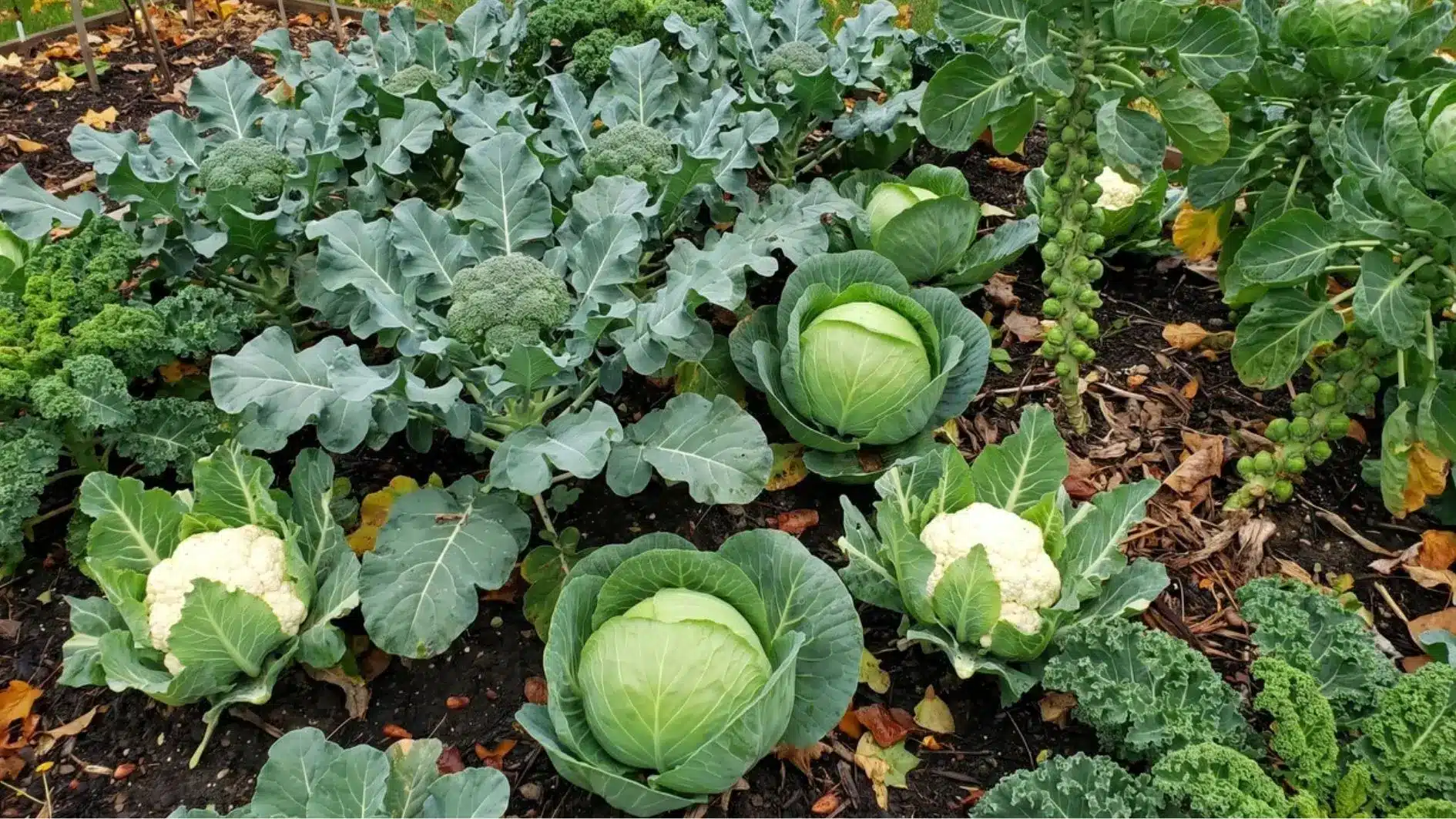
Brassicas are the backbone of a serious fall garden and the most punishing crop family when timing goes wrong.
The entire family needs sustained cool temperatures during head development. Broccoli maturing in warm weather produces loose, bitter, prematurely flowering heads. The same plant in 50°F fall temperatures produces tight, sweet heads worth eating.
Brussels sprouts need 90 to 110 days to maturity. A gardener with an October 15 frost date needs transplants in the ground by late July. Starting from seed pushes that deadline into late June.
Broccoli and cabbage are more forgiving at 60 to 80 days, but a common mistake is sowing them in late August and expecting proper head formation before freeze. It rarely happens.
Cauliflower is the most temperature-sensitive of the group. Any stretch of warm days during curd development produces a loose, discolored head. Build extra buffer time into your cauliflower schedule.
Root Vegetables: Carrots, Beets, Radishes, and Turnips
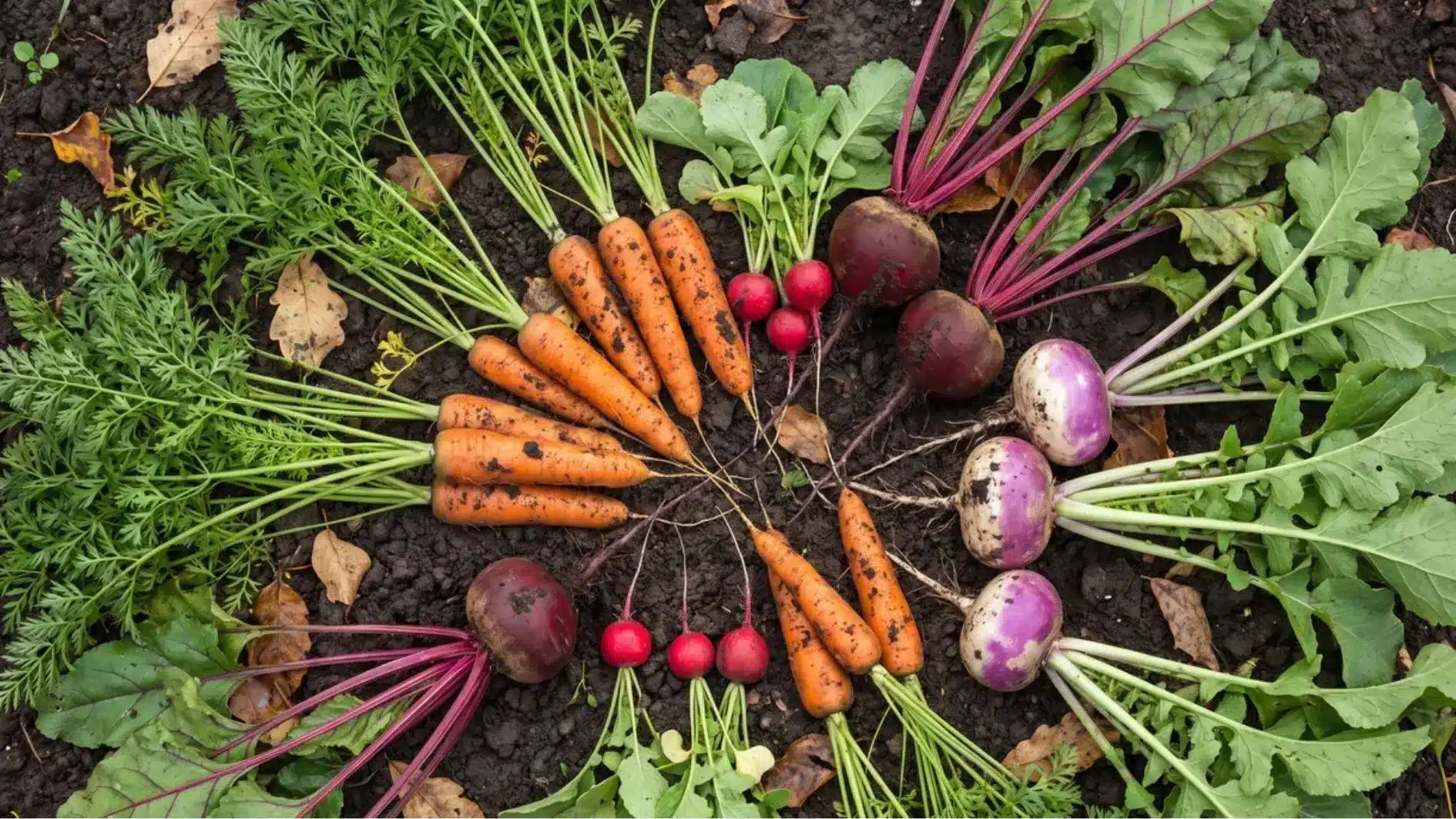
Root vegetables are where fall gardening gets genuinely interesting, and where the “sweeter after frost” claim finally gets a real explanation.
When soil temperatures drop below about 50°F, root vegetables convert stored starches into simple sugars. The biological reason is survival: sugars lower the freezing point of cell fluid, functioning as natural antifreeze. The flavor improvement is a survival response, not gardening folklore.
Carrots pulled in September taste fine. The same carrot left in the ground through October, past two or three nights below freezing, tastes noticeably sweeter and more complex. Many growers leave carrots in the ground through early winter, pulling them as needed.
Parsnips develop their best flavor after multiple hard frosts and are often sweetest when harvested in late November or December. Do not rush them.
Radishes mature in 22 to 30 days, making them the fastest crop in the fall garden. Sow a short row every two weeks from late August through late September for continuous fresh harvests until hard frost.
Beets offer a double harvest. The greens are edible at any stage, giving you leafy production early and root production at maturity around 55 to 70 days. Direct sow about 10 weeks before your frost date.
Hardy Greens: Kale, Collards, and Mustard Greens
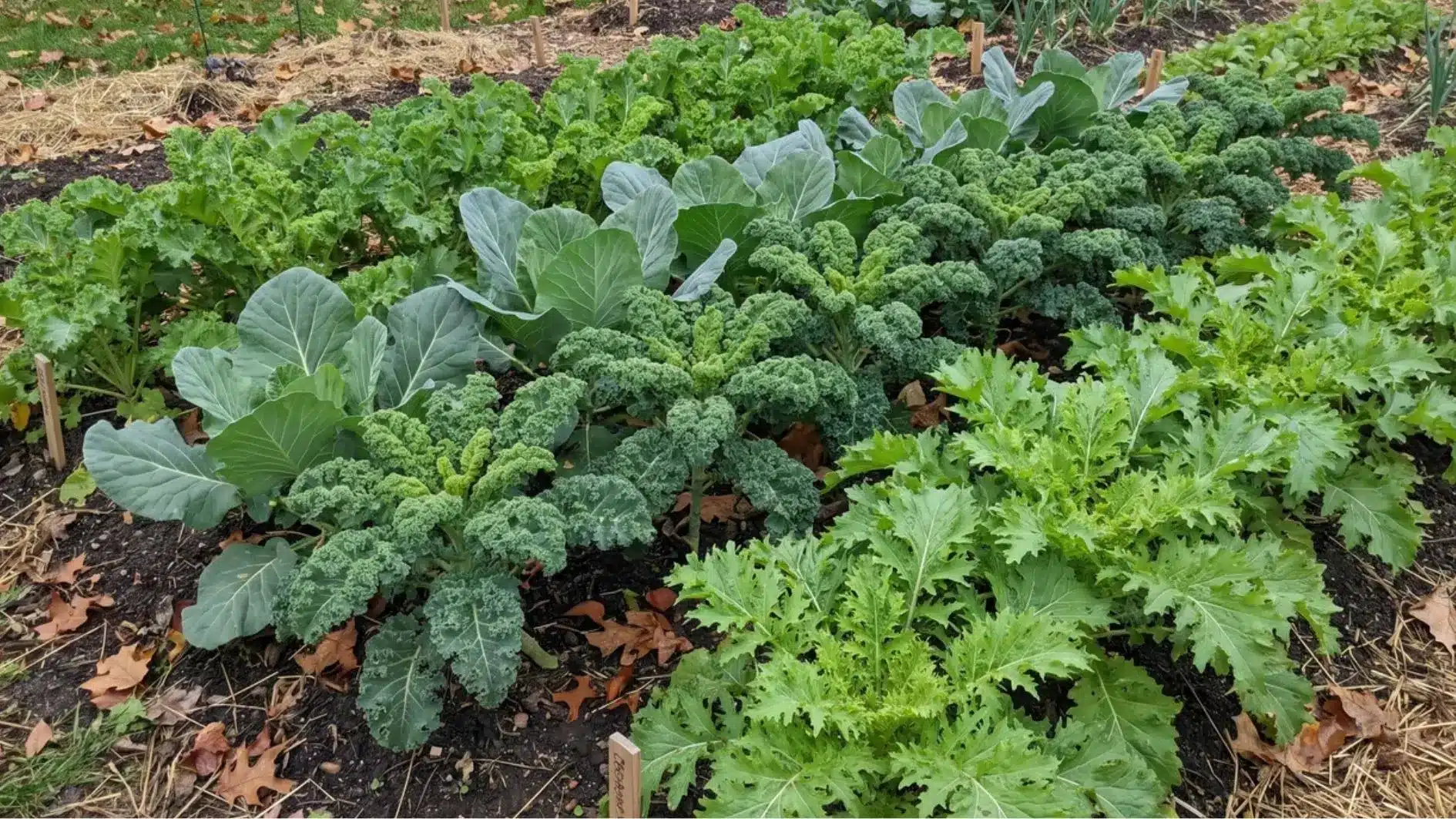
Hardy greens are the last crops standing in a fall garden, and in many zones they keep producing straight through winter.
Kale harvested before a frost can be slightly bitter and tough. The same plant harvested after two or three nights below freezing is noticeably sweeter and more tender. Gardeners who dislike kale have often only eaten it in summer.
Collards tolerate temperatures as low as 20°F without protection in most varieties. They keep producing new leaves as long as temperatures stay above about 15°F. Start them 8 to 10 weeks before your frost date.
Mustard greens mature in around 40 to 50 days and add a peppery heat that intensifies with cold. They are one of the most underused crops in the fall garden.
What makes this family valuable is not just cold tolerance. It is that these crops keep producing through conditions that shut down everything else.
How to Time Your Fall Garden for a Continuous Harvest
Planting everything at once is the fastest way to eat well for one week and nothing for the next six. Succession planting solves this:
Sow a short row every two to three weeks rather than an entire bed on a single date. Maturity dates stagger, and harvests keep coming instead of peaking all at once.
The key distinction: Fall succession works differently from spring. The window is closing, not opening, so later sowings need faster-maturing varieties than earlier ones.
Here is how to build a simple fall succession schedule:
- Start early: Slow crops like Brussels sprouts and broccoli go in first, 10 to 14 weeks before frost
- Mid-season: Beets, carrots, and Swiss chard follow two to three weeks later
- Late sowings: Radishes at 22 days, arugula at 21 days, and spinach at 40 days are the only viable options once the window tightens
The common mistake is treating every sowing the same. Planting a 75-day cabbage in late September in Zone 6 is not succession planting; it’s a crop already fighting the calendar.
I’ve seen this happen often as gardeners focus on dates and forget that variety choice determines whether a crop can finish.
Tools and Varieties That Extend the Fall Season
The fix is to change varieties as the season progresses. Use shorter-season crops and cold-tolerant varieties for late sowings to improve your chances of harvesting before winter.
One tool I always keep in mind for extending the season is floating row cover. A single layer can add 4–6 degrees of frost protection and extend harvests two to three weeks beyond your normal frost date.
With the right crops, staggered sowing dates, and a row cover ready when temperatures drop, a fall garden can keep producing much longer than most people expect.
How to Protect Fall Crops from Early Frost
One early freeze does not have to end your fall garden if you are prepared for it.
- Know your threshold: Most fall crops handle light frost at 28 to 32°F without any intervention. The crops that need protection are lettuce, Swiss chard, and any brassica still heading up when temperatures drop unexpectedly.
- Your fastest option: A floating row cover draped directly over plants adds 4 to 6 degrees of warmth overnight. No frames, no setup, just unroll it and weigh down the edges with soil or rocks before sundown.
- For container crops: Move pots against a south-facing wall or into an unheated garage overnight. Even a few feet of wind protection makes a measurable difference when temperatures are borderline.
- The cold frame advantage: A simple cold frame built from an old window and four boards extends your harvest window by four to six weeks beyond what row covers alone can offer. It is worth building one if fall gardening is a regular part of your season.
One prepared gardener with a roll of row cover and a weather app harvests weeks longer than a gardener with better seeds and no frost plan.
Wrapping Up
Fall gardening rewards the gardeners who plan in July, not the ones who start thinking about it in September, because timing is the one variable that decides everything else.
The crops, the succession schedule, and the frost protection all connect back to one number: your first frost date, and every planting decision you make should build outward from it.
A fall garden does not ask for much beyond the right varieties, a staggered sowing plan, and a roll of row cover to handle the nights that drop faster than the forecast suggested.
Start earlier than feels necessary, plant more than you think you need, and let the cold do the flavor work for you, because fall delivers far more than most gardeners expect from it.
Frequently Asked Questions
When Should I Start Fall Crops?
Count backward from your area’s first average frost date using the days-to-maturity number on your seed packet, then add 14 days as a buffer. For most fall crops, that puts the start date in late July or August. Waiting until September is the most common reason fall gardens underperform or fail to mature before freeze.
What Vegetables Are Good to Plant in The Fall?
The most reliable fall crops are leafy greens like spinach and arugula, brassicas like broccoli, kale, and cabbage, and root vegetables like carrots, beets, and radishes. Hardy greens including kale and collards are the most cold-tolerant and can survive light frosts with no intervention at all.
What Crops Can I Grow in October?
In most zones, October planting is limited to cold-hardy greens like spinach, kale, arugula, and mâche, which can germinate and grow slowly in cool soil. Root vegetables started earlier will still be maturing underground. In zones 8 and warmer, a broader range of brassicas and greens remain plantable through October.
Do Fall Crops Really Taste Better After a Frost?
Root vegetables like carrots, beets, and parsnips genuinely do taste sweeter after cold exposure. When soil temperatures drop, these plants convert stored starches into sugars as a biological cold-tolerance response. The effect is real and measurable, not gardening folklore. Kale and other hardy greens go through a similar process when exposed to freezing temperatures.