

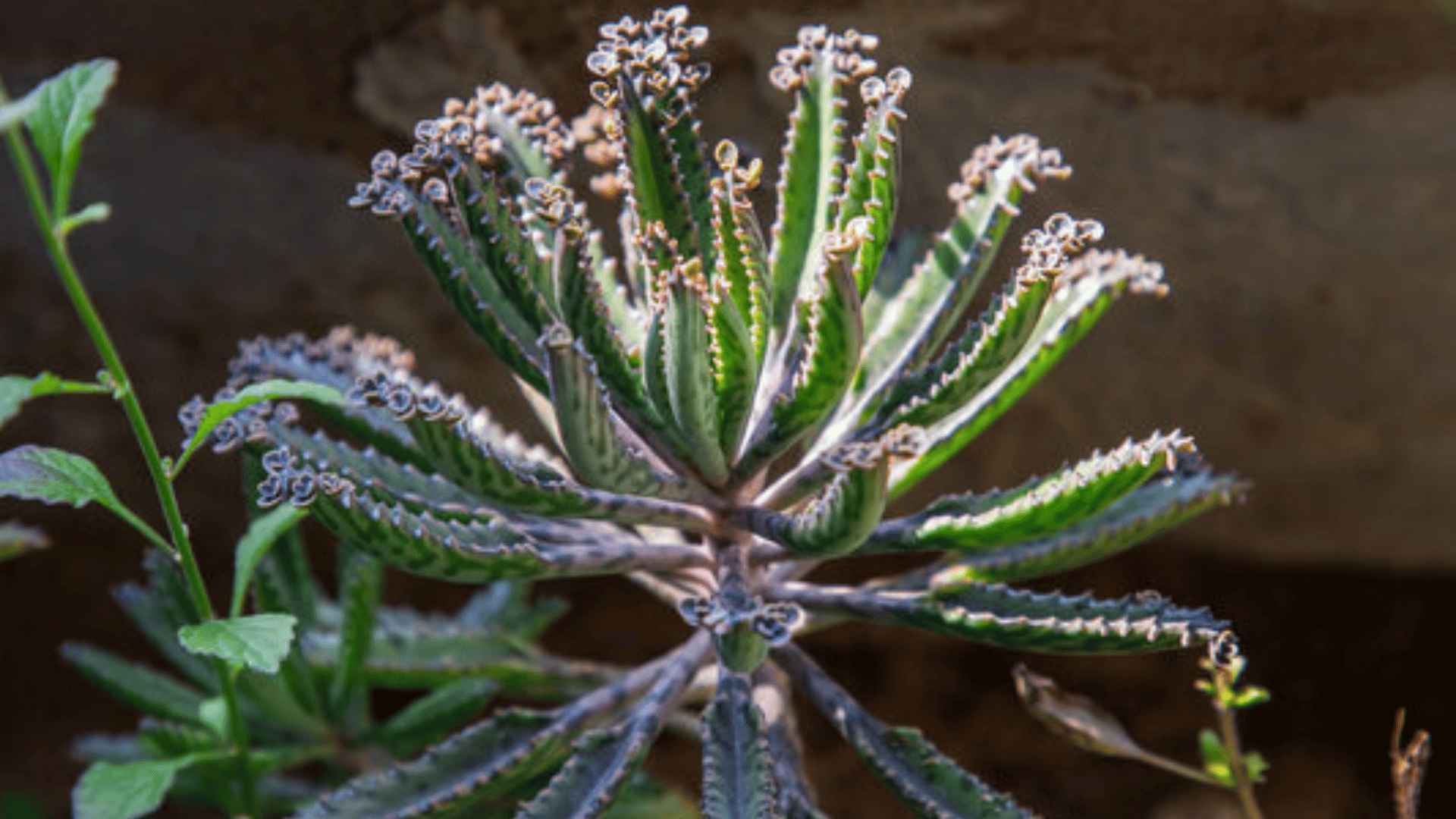
If you’re looking for a unique succulent that’s easy to grow, the mother-of-millions plant is worth learning about. I know it can be confusing to tell it apart from similar plants or figure out the best way to care for it.
I’ll explain how to identify the plant, its scientific and common names, the growing conditions it prefers, and how often it needs water.
You’ll also learn how to propagate it, keep its fast-growing plantlets under control, and solve common care problems.
By the end of this article, you’ll have the practical tips you need to grow a healthy Mother of Millions while preventing it from spreading where you don’t want it.
What Is the Mother of Millions Plant?
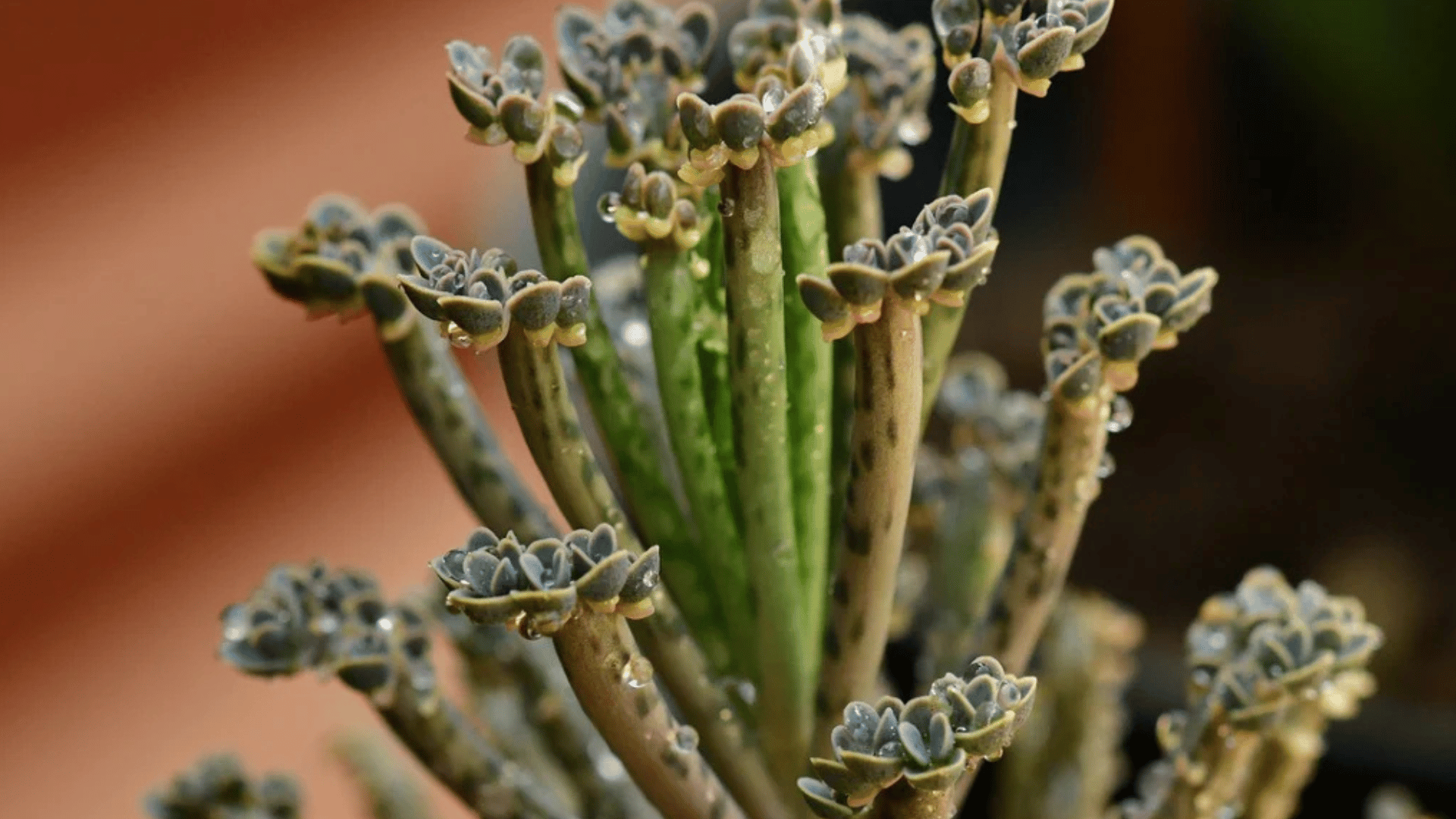
The mother-of-millions plant is a succulent that reproduces by producing tiny plantlets along its leaves, allowing it to multiply with very little effort.
Native to Madagascar, it belongs to a group of drought-tolerant plants that store water in their thick leaves and stems.
Its upright growth, narrow leaves, and ability to produce hundreds of baby plants make it easy to recognize. Many gardeners grow it indoors as a houseplant or outdoors in warm climates because it needs little maintenance once established.
It thrives in bright light, well-draining soil, and infrequent watering.
While its unique growth habit makes it an interesting ornamental plant, regular care is important to keep its rapid spread under control and maintain healthy growth.
Scientific Name, Plant Family, and Common Names
The botanical classification and common names of the mother-of-millions plant make it easier to identify and distinguish it from similar succulents.
| Feature | Details |
|---|---|
| Scientific Name | Kalanchoe delagoensis |
| Botanical Synonym | Bryophyllum delagoense |
| Plant Family | Crassulaceae |
| Plant Type | Succulent perennial |
| Native Range | Madagascar |
| USDA Hardiness Zones | 9–11 |
| Most Common Name | Mother of Millions |
| Other Common Names | Chandelier Plant, Alligator Plant* |
| Often Confused With | Mother of Thousands (Kalanchoe daigremontiana), a related but different species |
Why Is It Called Mother of Millions?
The name “Mother of Millions” reflects the plant’s remarkable ability to reproduce with very little effort. Instead of relying mainly on seeds, it produces tiny plantlets that can develop into new plants almost anywhere they land.
- Plantlets form on the leaves: Tiny baby plants develop along the edges or tips of the leaves while still attached to the parent plant. Each one is ready to grow after it separates.
- They fall naturally: as the plantlets mature, they detach and drop onto the soil. In suitable conditions, they begin growing without any assistance.
- Roots develop quickly: Once on the ground, the plantlets produce roots in well-draining soil. This helps them establish themselves quickly.
- New plants grow easily: Each rooted plantlet becomes an independent plant that continues producing more plantlets. A single mature plant can create hundreds of offspring.
- Rapid spread gives it its name: Because new plantlets are produced continuously, the plant spreads quickly if left unmanaged. This is why it is known as the mother of millions.
How to Identify the Mother of Millions?
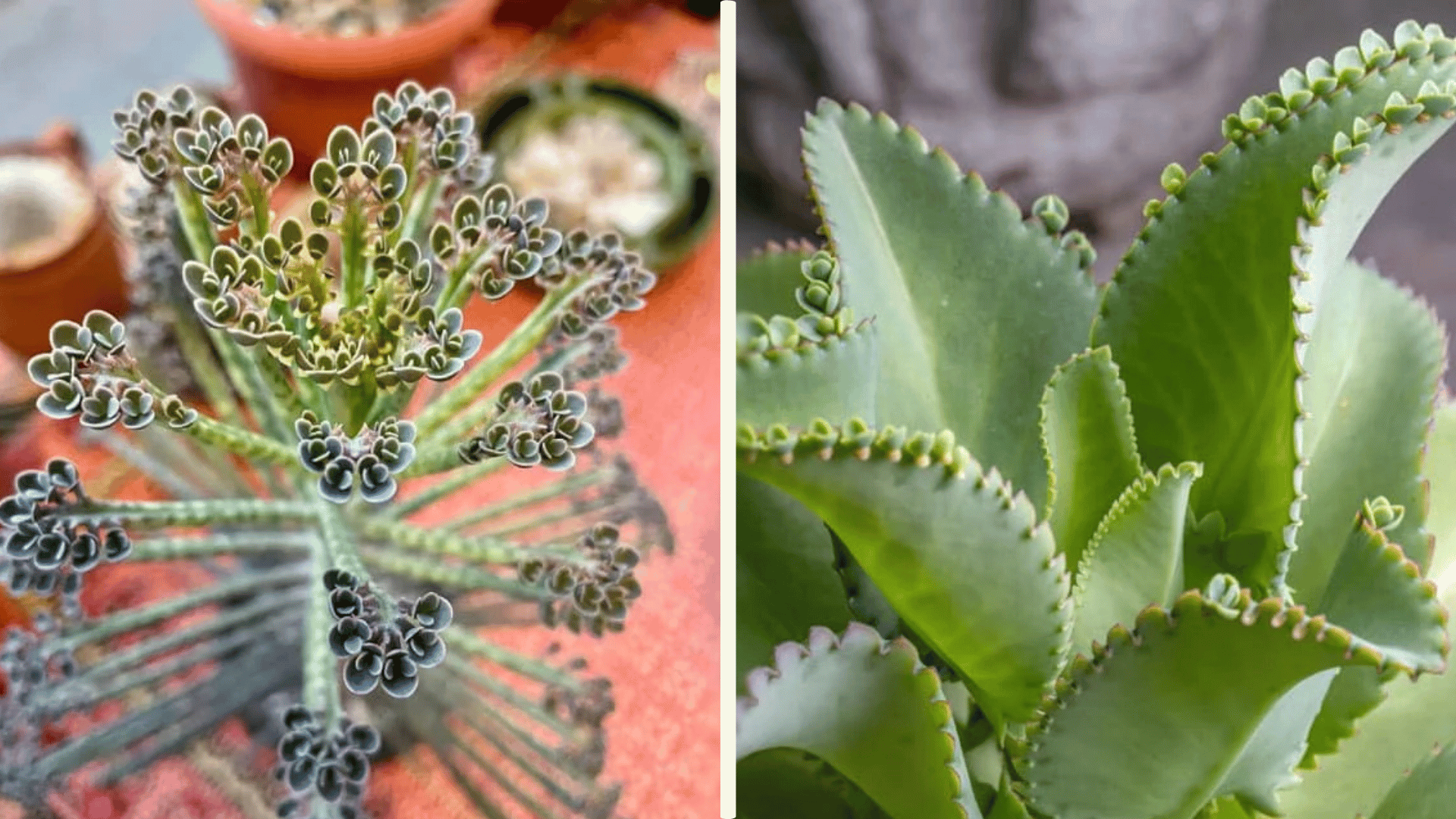
The mother-of-millions plant is easy to recognize once you know its key identifying features. Its long, narrow leaves, upright stems, and tiny plantlets make it easy to tell apart from most other succulents.
1. Leaves and Plantlets
The leaves are the easiest way to identify the mother-of-pearl plant. They are long, narrow, and slightly tube-shaped with a thick, fleshy texture that stores water.
Their color is usually grayish green and may develop purple or brown spots in bright sunlight.
Tiny plantlets grow mainly near the tips or upper edges of the leaves. As they mature, they detach naturally, fall onto the soil, and quickly develop roots.
This constant production of plantlets is the plant’s most distinctive identifying feature.
2. Stem, Height, and Growth Habit
Mother of Millions grows on a tall, upright stem that gives it a slender, vertical appearance.
Under ideal conditions, it typically reaches 2 to 4 feet (60 to 120 cm) in height, although potted plants often remain smaller.
The narrow leaves grow in pairs or small whorls along the stem, creating an open growth habit.
It grows quickly in warm, sunny conditions and produces new leaves throughout the growing season. Older plants may develop a few side shoots after flowering or pruning.
3. Flowers and Blooming Season
Mature mother-of-millions plants produce clusters of hanging, tubular flowers that appear on tall flower stalks above the leaves.
The blooms are usually pink, orange, reddish-orange, or coral, depending on the growing conditions.
Flowering most often occurs during late winter or early spring, especially in warm outdoor climates with plenty of sunlight.
Indoor plants bloom less frequently because of lower light levels.
How Does It Differ from the Mother of Thousands?
Although the two plants belong to the same genus, several features make them easy to tell apart once you know what to look for.
- Leaf shape: Mother of millions has long, narrow, almost cylindrical leaves, while mother of thousands has broad, triangular leaves.
- Leaf color: Mother of millions is usually grayish green with purple or brown spots in bright sunlight. Mother of thousands is generally green to gray-green and may also develop purple markings.
- Plantlet location: Mother-of-millions produces plantlets mainly near the tips or upper edges of the leaves. Mother of thousands forms plantlets along nearly the entire leaf margin.
- Growth habit: Mother of Millions grows taller with a slender, upright form. Mother of thousands has a shorter, fuller, and bushier appearance.
- Typical height: Mother of millions usually reaches2–4 feet (60–120 cm), while mother of thousands typically grows 1–3 feet (30–90 cm) tall.
- Stem: Mother of millions has a slender, upright stem, whereas Mother of thousands has a thicker stem with more closely spaced leaves.
- Flowers: Both plants produce hanging, tubular flowers, but mother of millions commonly blooms in shades of pink, coral, orange, or reddish-orange, while mother of thousands usually has pink, grayish-pink, or other.
- Main method of reproduction: Both reproduce through plantlets, but Mother of Millions produces them mostly near the leaf tips, while Mother of Thousands develops them all along the leaf edges.
Best Growing Conditions for Mother of Millions
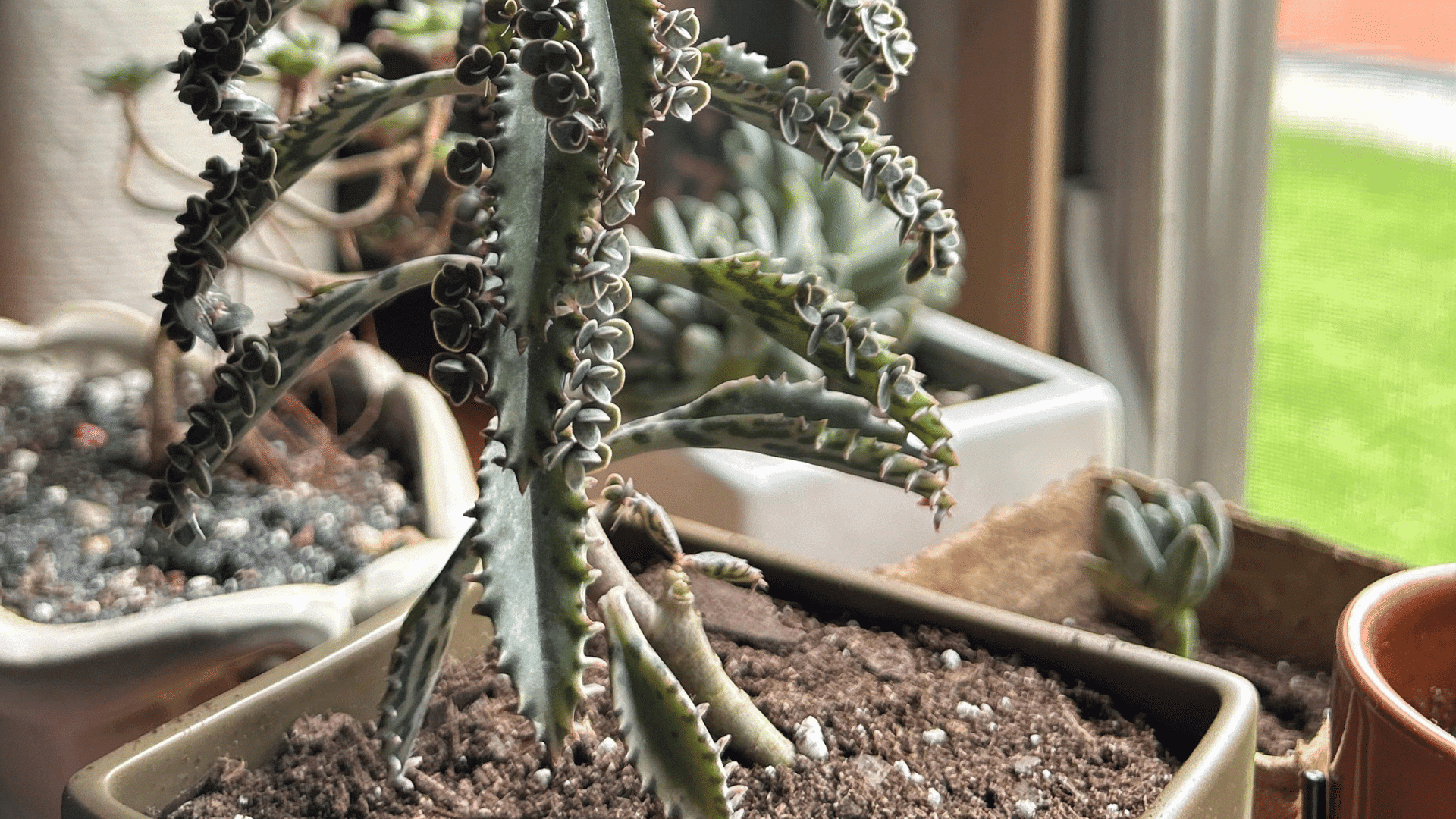
Mother of Millions is a hardy succulent that requires very little attention once its basic needs are met. Since this plant stores water in its leaves, it is much more tolerant of dry conditions than overly wet soil.
1. Light Requirements
Mother of Millions grows best in bright, direct sunlight for at least 6 hours each day. Plenty of light encourages compact growth, healthy leaves, and vibrant markings.
In very hot climates, light afternoon shade can help prevent leaf scorch.
When grown indoors, place the plant near a south-facing or west-facing window. If natural light is limited, use a grow light to support healthy growth.
Too little light can cause stretched stems, smaller leaves, and a weaker overall appearance.
2. Soil and Potting Mix
Mother of Millions needs well-draining soil to keep its roots healthy. A commercial cactus or succulent potting mix is the best choice because it dries faster than regular potting soil.
You can also improve drainage by mixing standard potting soil with coarse sand, perlite, or pumice.
The soil should feel loose rather than compact. Avoid heavy garden soil or moisture-retaining mixes, as they can hold excess water and increase the risk of root rot.
3. Temperature and Humidity
Mother of Millions grows best in temperatures between 65°F and 85°F (18°C and 29°C).
It is not frost-tolerant, so protect it from temperatures below 32°F (0°C) by moving container plants indoors or covering outdoor plants.
The plant adapts well to average indoor humidity and also grows successfully in dry climates.
Good air circulation helps keep the leaves dry and reduces the chance of fungal problems, especially in humid conditions.
4. Choosing the Right Pot
Choose a pot withdrainage holes so excess water can escape after watering.
Terracotta pots are a popular choice because they allow moisture to evaporate more quickly, helping the soil dry faster.
Plastic and glazed ceramic pots also work well but may require less frequent watering.
Select a container that is only slightly larger than the root ball to avoid excess water in the soil. Repot the plant into the next pot size as it grows to support healthy root development.
How to Care for Mother of Millions?
Mother of Millions is a low-maintenance succulent that grows well with the right balance of light, water, and routine care.
| Care Aspect | What to Do |
|---|---|
| Watering Schedule | Water only when the top 1–2 inches (2.5–5 cm) of soil are dry. Water thoroughly until excess drains from the pot, then allow the soil to dry before watering again. Reduce watering during fall and winter when growth slows. |
| Fertilizing Tips | Feed once every 4–6 weeks during spring and summer with a diluted, balanced fertilizer or one formulated for cacti and succulents. Avoid fertilizing during winter, as the plant enters a slower growth period. |
| Pruning and Maintenance | Remove dead or damaged leaves, trim leggy stems to maintain a compact shape, and remove unwanted plantlets if you want to limit spreading. Check the leaves regularly for pests such as mealybugs and aphids. |
| Repotting Your Plant | Repot every 2–3 years or when the roots outgrow the container. Use a pot that is only slightly larger than the current one and fill it with a well-draining succulent potting mix. Wait a day or two before watering after repotting. |
How to Adjust Watering for Mother of Millions Through the Seasons?
Mother of Millions needs more water during its active growing season and much less when growth slows. The best way to water it is to check the soil rather than follow a fixed schedule.
During spring and summer, Mother of Millions grows more actively, causing the soil to dry out faster.
A deep watering every one to two weeks is often enough, though the exact timing depends on sunlight, temperature, humidity, and the type of pot.
As fall and winter arrive, the plant enters a slower growth phase and usually needs water only every three to four weeks. Before watering, insert your finger about 2 inches into the soil.
If it feels dry, water thoroughly until excess moisture drains from the bottom.
Avoid keeping the soil constantly wet, as excessive moisture can cause root rot and weaken the plant over time.
How to Propagate Mother of Millions?
Propagating the mother-of-millions plant is simple because it naturally produces tiny plantlets that are ready to grow into new plants.
- Grow from leaf plantlets: Let mature plantlets fall naturally or remove them gently by hand. Place them on well-draining succulent soil without burying them deeply, and they will begin rooting.
- Propagate from stem cuttings: Cut a healthy stem with clean shears and let it dry for 1–2 days. Plant the callused end in a cactus or succulent mix and water lightly until roots form.
- Choose the right time: Propagate during spring or summer when the plant is actively growing. Warm temperatures and bright light help roots develop more quickly.
- Use the right growing conditions: Keep new plants in bright, indirect light with a well-draining potting mix. Water sparingly until the roots are established.
- Avoid overwatering: Allow the soil to dry slightly between waterings. Too much moisture can cause young plantlets and cuttings to rot.
- Use healthy propagation material: Select healthy plantlets or disease-free stems for the best results. Damaged material is less likely to root well.
- Do not bury plantlets too deeply: Place plantlets on the soil surface or press them in lightly. Deep planting can slow rooting and increase the risk of rot.
- Provide enough light: Keep new plants in bright light, but protect them from strong afternoon sun until they are fully rooted.
Growing Mother of Millions Indoors vs Outdoors
Mother of Millions can be grown successfully indoors or outdoors when its basic growing needs are met. Indoor plants are easier to manage, while outdoor plants often grow larger and produce more plantlets.
| Feature | Growing Indoors | Growing Outdoors |
|---|---|---|
| Light Requirements | Place near a bright, sunny window where the plant receives at least 6 hours of sunlight each day. | Grow in full sun to partial shade, depending on the intensity of the local climate. |
| Temperature | Keep between 65°F and 80°F (18°C to 27°C) and protect from cold drafts and frost. | Thrives in warm, frost-free climates and performs best in USDA Zones 9–11. |
| Watering Needs | Water only after the soil has dried completely. Indoor plants usually require less frequent watering. | Water during long dry periods, allowing the soil to dry between waterings to prevent root rot. |
| Growth Rate | Growth is generally slower because of limited space and lower light levels. | Plants grow faster with more sunlight, warmer temperatures, and open growing space. |
| Maintenance | Easier to monitor for pests, control plantlets, and manage the plant’s size in containers. | Requires regular removal of fallen plantlets to prevent unwanted spreading in the garden. |
| Best Growing Location | Homes, apartments, offices, and other bright indoor spaces. | Garden beds, rock gardens, patios, and containers in warm outdoor environments. |
| Main Advantage | Better control over growing conditions and easier year-round maintenance. | Stronger growth, larger plants, and more frequent flowering in suitable climates. |
Is Mother of Millions Safe to Grow?
Mother of Millions is safe to grow in homes and gardens, but it should be handled with a few important precautions.
The plant contains compounds that aretoxic if ingested, making it unsafe for pets such as cats and dogs, as well as for livestock such as cattle and sheep.
It is best to keep the plant in a location where children and animals cannot easily access it.
Another important point is its rapid spread through the many plantlets it produces. In warm climates, these plantlets can take root quickly and become invasive if left unchecked.
Growing it in containers and removing unwanted plantlets helps control its spread responsibly.
Common Problems and Their Solutions
Even with proper care, the mother-of-millions plant can occasionally develop growth problems. Most issues are caused by incorrect watering, poor lighting, or unsuitable growing conditions rather than serious diseases.
| Problem | Likely Cause | How to Fix It |
|---|---|---|
| Yellow or Drooping Leaves | Overwatering, poor drainage, or lack of sunlight | Allow the soil to dry before watering again, improve drainage, and move the plant to a brighter location. |
| Root Rot From Overwatering | Soil stays wet for too long, or the pot has poor drainage | Remove damaged roots, repot in fresh, well-draining soil, and reduce watering frequency. |
| Leggy or Weak Growth | Not enough sunlight | Move the plant to a brighter location with at least six hours of sunlight and prune stretched stems if needed. |
| Mealybugs | Sap-sucking insects hiding in leaf joints | Remove pests with cotton swabs dipped in rubbing alcohol or use insecticidal soap. |
| Aphids | Soft-bodied insects feeding on new growth | Wash them off with water, or treat them with insecticidal soap if the infestation persists. |
| Scale Insects | Small insects attached to stems and leaves | Gently scrape them off and treat the plant with horticultural oil if necessary. |
| Leaf Spots | Excess moisture or poor air circulation | Remove affected leaves, avoid wetting the foliage, and improve airflow around the plant. |
Conclusion
Mother of Millions is a unique succulent that is easy to grow once you understand its basic needs.
By learning how to identify it, tell it apart from similar species, and provide the right light, water, and care, you can keep it healthy for years.
Proper propagation and the avoidance of common mistakes support healthy growth and prevent problems.
If you were wondering whether this is the right plant for your home or garden, you now have the knowledge to grow and care for it with confidence.
For more practical plant care guides and gardening tips, browse our latest articles and keep your plants thriving year-round.
Frequently Asked Questions
Why Do the Leaves of Mother of Millions Turn Red?
Leaves may develop red or purple tones when exposed to strong sunlight, cool temperatures, or mild environmental stress, which is often a normal response.
Is the Mother-Of-Millions Plant Illegal to Grow?
It is generally legal to grow, but some regions classify it as an invasive or noxious weed and may restrict its sale, transport, or outdoor cultivation.
Can the Mother-of-Millions Plant Grow from Seeds?
Yes, it can produce seeds after flowering, but most gardeners propagate it from plantlets because they grow faster and are much easier to establish.