

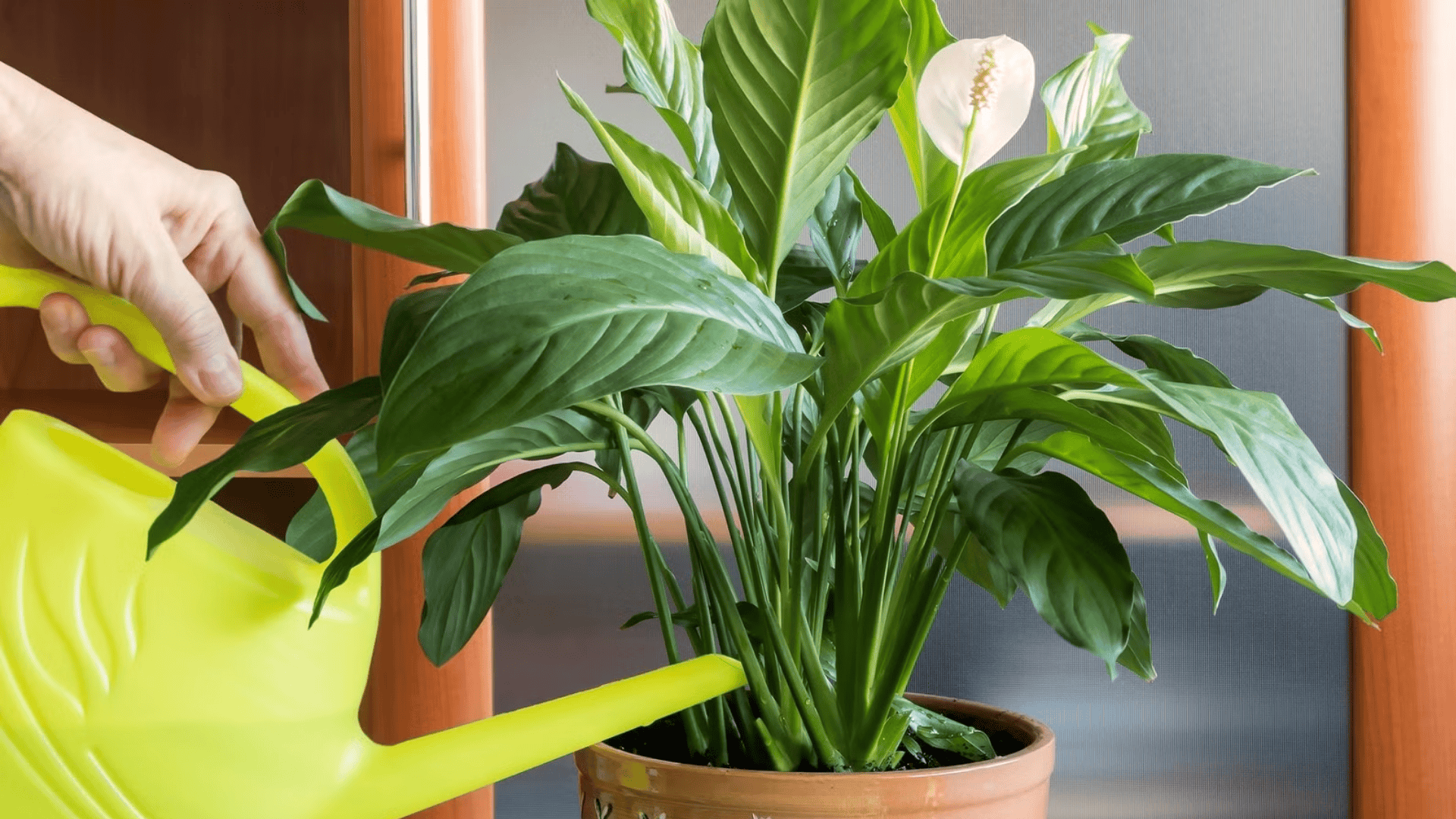
Growing and caring for a peace lily as a beginner is a simple way to bring a calm, tropical feel into your space.
I like peace lilies because they look beautiful without needing constant attention, which makes them great for homes and offices.
The white flowers stand out against dark green leaves, and the plant stays neat as it grows.
In this article, I explained how to care for a peace lily step by step. You will learn why leaves turn yellow, what causes wilting, and how light and watering affect growth.
I have also covered basic care habits that help the plant stay healthy for years.
If you are worried about making mistakes, you are not alone. Many plant owners deal with drooping or yellow leaves at some point.
The good news is that most peace lily problems are easy to fix with simple care changes you can start today.
About the Peace Lily
A peace lily is a popular indoor plant known for its dark green leaves and white flower-like blooms. It grows well indoors because it adjusts easily to low light and normal room temperatures.
This makes it a good choice for homes, offices, and beginner plant owners.
Peace lilies do not need constant attention, but they do respond quickly to care changes. One helpful feature is how clearly the plant shows stress.
Drooping leaves often mean it needs water, while yellow leaves can point to overwatering or light issues.
These visible signs help beginners learn what the plant needs without guessing.
Peace lilies also stay neat as they grow and do not spread quickly. With basic care, they can live for years and bloom more than once.
This clear feedback and simple care routine make peace lilies easy to understand and manage.
Key Specifications to Know
These details will help you understand what a peace lily needs and where it fits best indoors. Use this quick overview to plan care and placement.
- Common Name: Peace lily
- Botanical Name: Spathiphyllum
- Plant Type: Tropical evergreen houseplant
- Light Needs: Bright, indirect light; tolerates low light
- Watering Style: Likes evenly moist soil but not soggy
- Mature Size Indoors: About 1 to 4 feet tall
- Soil Type: Well-draining indoor potting mix
- Pet Safety: Toxic to cats and dogs
Why Peace Lily Leaves Turn Yellow or Wilt?
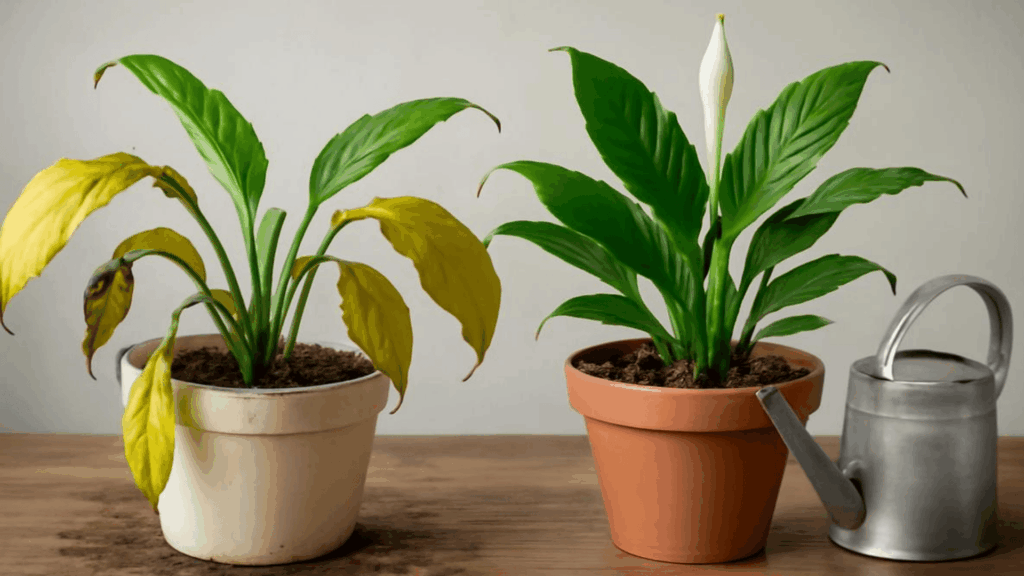
Leaf changes are often the plant’s way of reacting to care habits and its surroundings. Small issues with water, light, or placement can show up quickly through the leaves.
1. Overwatering
Overwatering is the most common reason peace lily leaves turn yellow or wilt. When soil stays wet, roots cannot breathe and begin to weaken.
This limits how much water and nutrients the plant can absorb. Leaves may droop, turn soft, or fade to yellow over time.
Watering on a schedule instead of checking the soil often causes this problem.
Always feel the top inch of soil first. If it feels damp, wait. Giving the roots time to dry slightly helps restore balance and leaf strength.
2. Underwatering
Underwatering can also cause peace lily leaves to droop or turn yellow. When the plant does not get enough water, it loses pressure inside the leaves.
This causes them to hang down and look tired. Dry soil pulls moisture away from roots, slowing growth and stressing the plant.
Many people wait too long to water after seeing early drooping. Check soil dryness regularly.
When the top inch feels dry, water deeply. Consistent watering keeps leaves firm and prevents repeated stress damage over long periods.
3. Low Light
Low light can lead to yellowing or wilting leaves over time. Peace lilies survive in low light, but they grow best with bright, indirect light.
When light is too weak, the plant cannot make enough energy to support healthy leaves.
Growth slows, and older leaves may turn yellow first. Wilting can also happen because water use drops in low light. Move the plant closer to a window with filtered light.
Better light helps leaves stay upright, green, and strong for healthier indoor plant growth.
4. Temperature Changes
Sudden temperature changes can stress peace lilies and cause wilting or yellow leaves. Cold drafts, heat vents, or open windows affect leaf health quickly.
Temperatures outside the comfort range slow water movement inside the plant.
This makes leaves droop even when the soil moisture seems fine. Repeated stress can weaken roots and reduce growth. Keep peace lilies in steady indoor temperatures.
Avoid doors, vents, and heaters. Stable conditions help the plant recover and keep leaves healthy over time.
5. Poor Drainage
Poor drainage often causes yellow or wilting leaves by keeping the roots too wet. When water cannot escape, soil stays soggy, and roots begin to rot.
Damaged roots cannot supply leaves with water or nutrients. This leads to drooping, soft leaves, and slow recovery.
Pots without drainage holes increase this risk. Always use containers with holes and well-draining soil.
Improving drainage keeps roots healthy and supports steady leaf growth by preventing long-term moisture buildup in the pot.
How to Fix Drooping or Yellow Leaves?
Start by checking the soil moisture, since water issues cause most leaf problems. Push your finger about an inch into the soil. If it feels wet, stop watering and let it dry.
If it feels dry, water slowly until excess drains out. Next, check the pot. Drainage holes are important because trapped water damages roots.
Move the plant to bright, indirect light to help it recover, but avoid direct sun.
Adjust watering so the soil stays lightly moist, not soggy. Trim yellow or soft leaves near the base to reduce stress and help the plant focus on new growth. Do not expect instant results.
Peace lilies need time to respond to changes. Keep the care steady and avoid moving the plant often.
With patience and simple adjustments, healthy green leaves usually return.
How to Care for a Peace Lily the Right Way?
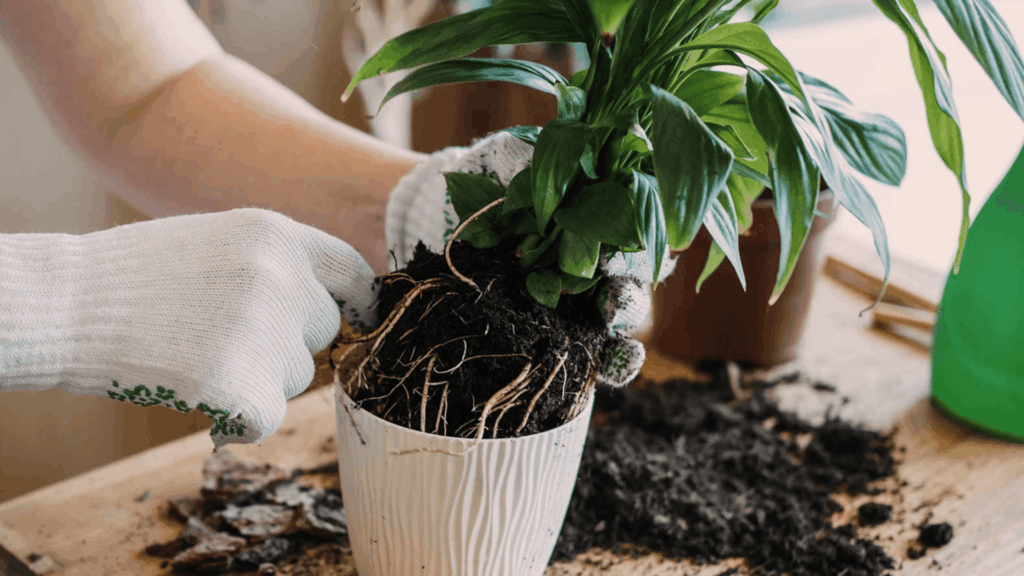
Peace lilies stay healthy when their basic needs are met in a steady way. Simple care habits help prevent stress and keep growth balanced over time.
1. Light Requirements for Peace Lilies
Peace lilies grow best in bright, indirect light. This type of light helps support leaf color and flower growth without causing damage.
They can handle low light, but growth may slow, and blooms may stop.
Direct sunlight can burn the leaves and cause brown spots. A spot near a window with filtered light works well. If leaves start fading or leaning, the light may be too low.
Adjust placement slowly to avoid shock and give the plant time to settle.
2. How Often to Water a Peace Lily
Watering correctly is key to keeping peace lilies healthy. The soil should stay lightly moist but never soggy.
Always check the top inch of soil before watering. If it feels dry, it is time to water.
If it feels damp, wait a few days. Overwatering causes yellow leaves and root stress, while underwatering leads to drooping. Water thoroughly until excess drains out.
Consistent checks work better than fixed schedules and help avoid common mistakes.
3. Choosing the Best Soil and Pot
Peace lilies need soil that drains well while holding some moisture. A standard indoor potting mix with added drainage works well.
Avoid heavy soil that stays wet for long periods. The pot should always have drainage holes so extra water can escape.
Without proper drainage, roots may rot, and leaves may turn yellow.
Choose a pot that fits the root ball closely. A slightly snug pot helps control moisture and supports steady, healthy growth indoors.
4. Simple Peace Lily Care Routine to Follow
Peace lilies do best with a simple routine. Keep them in a stable spot and avoid moving them often.
Check soil moisture once or twice a week and water only when needed. Wipe leaves occasionally to remove dust and help light absorption.
Avoid frequent fertilizing, as peace lilies do not need heavy feeding.
Watch for early signs of stress, like drooping or yellow leaves. Small, steady care steps prevent bigger problems later.
5. Best Indoor Temperature Range
Peace lilies prefer warm, steady indoor temperatures. They grow best between 65°F and 80°F.
Cold drafts, open windows, or heat vents can stress the plant and cause wilting. Temperatures below 55°F may slow growth and damage leaves.
Keep the plant away from sudden temperature changes. Normal room conditions usually work well.
If the space feels comfortable to you, it is likely suitable for a peace lily to grow without added effort.
6. Ideal Humidity Levels
Peace lilies enjoy moderate humidity but adjust well to normal indoor air. Average household humidity is usually enough.
Very dry air may cause brown leaf tips, especially in winter.
Placing the plant away from heaters helps reduce this issue. Misting is not required and can sometimes lead to leaf problems if moisture sits too long.
Good airflow and steady watering matter more than high humidity for keeping leaves healthy and balanced indoors.
7. Fertilizing a Peace Lily Safely
Peace lilies need light feeding to stay healthy. Too much fertilizer can cause leaf damage and weak growth.
Use a balanced houseplant fertilizer diluted to half strength. Feed once every two to three months during spring and summer.
Skip fertilizing in fall and winter when growth slows.
Always water the plant before feeding to protect the roots. Gentle feeding supports steady growth without stressing the plant or causing long-term issues.
Signs Your Peace Lily Is Unhealthy
Small changes in leaves or growth often appear before serious damage starts. Noticing these signs early helps you adjust care before problems get worse.
- Soft or mushy leaves: Often linked to overwatering or poor drainage
- Brown leaf tips: Common in dry air or from inconsistent watering
- Yellow leaves: Usually caused by overwatering, low light, or stress
- Drooping leaves: Can signal thirst, root issues, or sudden temperature changes
- Slow or no growth: May point to low light, cold conditions, or lack of nutrients
- Dark spots on leaves: Sometimes caused by excess moisture or fungal issues
Catching these signs early makes it easier to correct watering, light, or placement, and helps the plant recover faster.
What Plant Owners Say About Peace Lily Care?

Many plant owners on Reddit share similar experiences when caring for peace lilies, especially as beginners. A common theme is that wilting often comes from watering habits, not a dying plant.
Readers suggest checking the soil instead of watering on a schedule, since peace lilies clearly droop when they need water.
Several users mention that overwatering caused more damage than underwatering early on.
Others point out that bright, indirect light helps the plant recover faster, while direct sun leads to burned leaves.
One frequent tip is to avoid misting, as it does not improve humidity much and can cause leaf issues. Some users also suggest using pots with good drainage and letting the top inch of soil dry before watering again.
Many owners say their plants improved once they stopped overcorrecting.
The overall advice is simple: watch the plant, adjust slowly, and let it guide your care choices.
Peace Lily Care Tips for Beginners
These simple habits make care easier and help reduce common mistakes. Following a steady routine keeps the plant healthy without extra effort.
- Water only when the top inch of soil feels dry
- Use pots with drainage holes to prevent root problems
- Place the plant in bright, indirect light
- Avoid direct sunlight to protect the leaves
- Keep the plant away from drafts and heat vents
- Trim yellow or damaged leaves to support new growth
- Skip frequent fertilizing and feed lightly during growth months
- Check the plant weekly for early signs of stress
Conclusion
Caring for a peace lily does not need to feel stressful or overwhelming. Once you understand what the plant needs, most care decisions become simple and familiar.
Small changes in watering, light, or placement often make a big difference over time.
It is normal to make a few mistakes, especially at the start. What matters most is paying attention and adjusting as you go.
Peace lilies respond clearly, which helps you learn with confidence. With steady care and a little patience, the plant usually rewards you with healthy leaves and lasting growth.
There is no need to rush or aim for perfection. Take it one step at a time and let the plant guide you.
Have you grown a peace lily before? Share what worked for you, what you struggled with, or any tips you have in the comments below.