

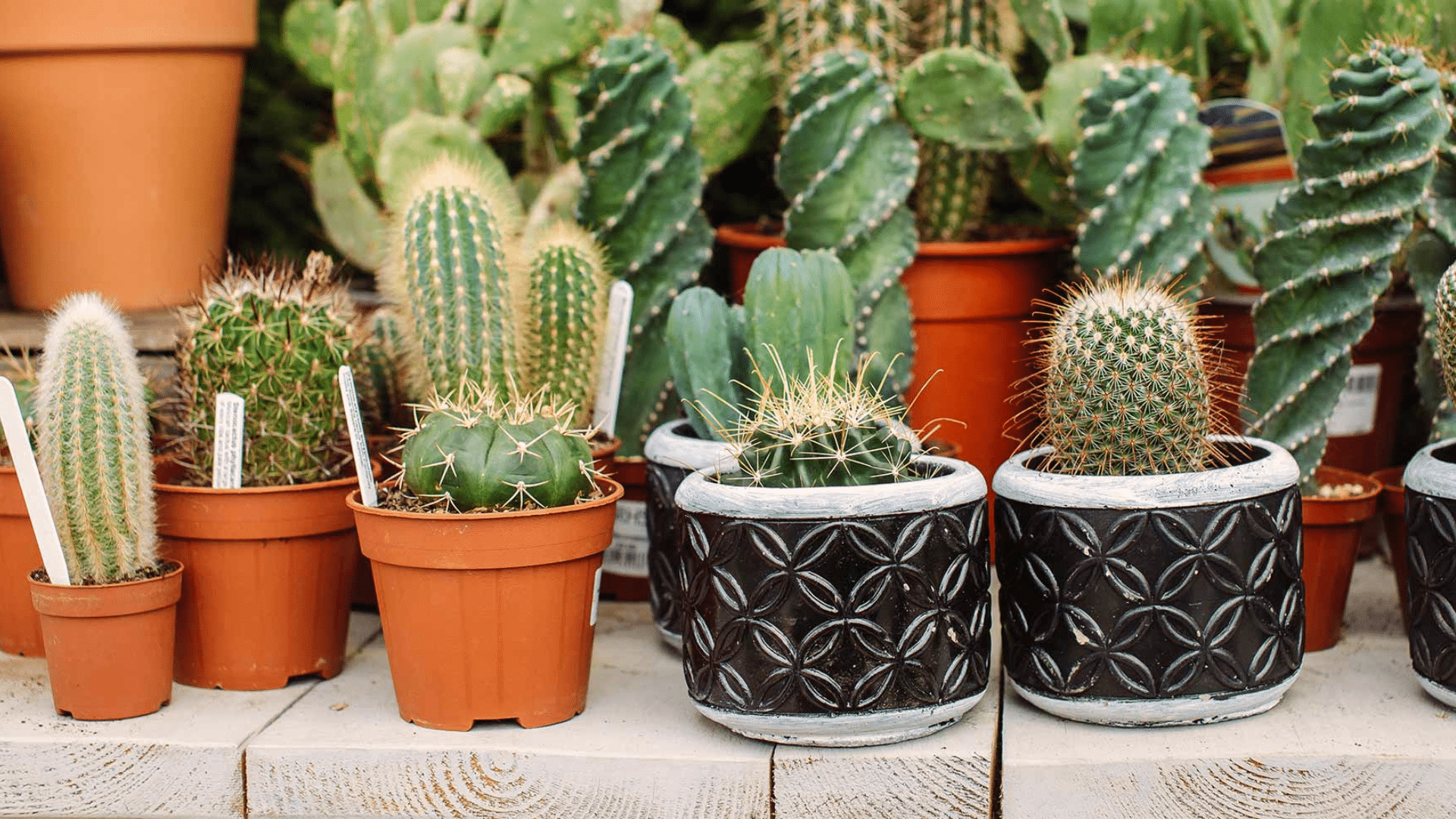
Most people buy a cactus thinking it will take care of itself. I thought the same and assumed less attention meant fewer problems.
It sounds reasonable, but it does not always work indoors. I faced this with my first cactus by a window.
Small care mistakes are easy to make, but once I learned the basics, care became simple.
Taking care of a cactus at home seems simple, but small mistakes can add up fast. Many people love cacti because they look great indoors and need very little daily care.
Still, they do best when you get a few basics right. In this guide, I shared the basics that matter.
You’ll learn how water, light, soil, and pot choice affect your cactus, so you can keep it healthy with less effort.
Cactus Plant Overview
A cactus is a plant that grows well in dry conditions and does not need frequent watering. It is designed to store moisture so it can survive long periods without water.
The thick, fleshy stem holds this stored water and keeps the plant firm and healthy.
Instead of regular leaves, most cacti have small spines. These spines help reduce water loss and protect the plant from damage.
Many people choose cacti as indoor plants because they stay small, grow slowly, and adapt easily to indoor spaces.
They do not need constant care or attention. Common indoor cactus types include small barrel cacti, bunny ear cactus, and holiday cactus.
These varieties are easy to manage and fit well on desks, shelves, or windowsills.
Key Cactus Specifications
- Growth rate: Slow and steady over time
- Size range: Usually small to medium for indoor types
- Root system: Shallow roots that spread widely
- Lifespan: Can live for many years with basic care
- Maintenance level: Low compared to most houseplants
How to Care for a Cactus?
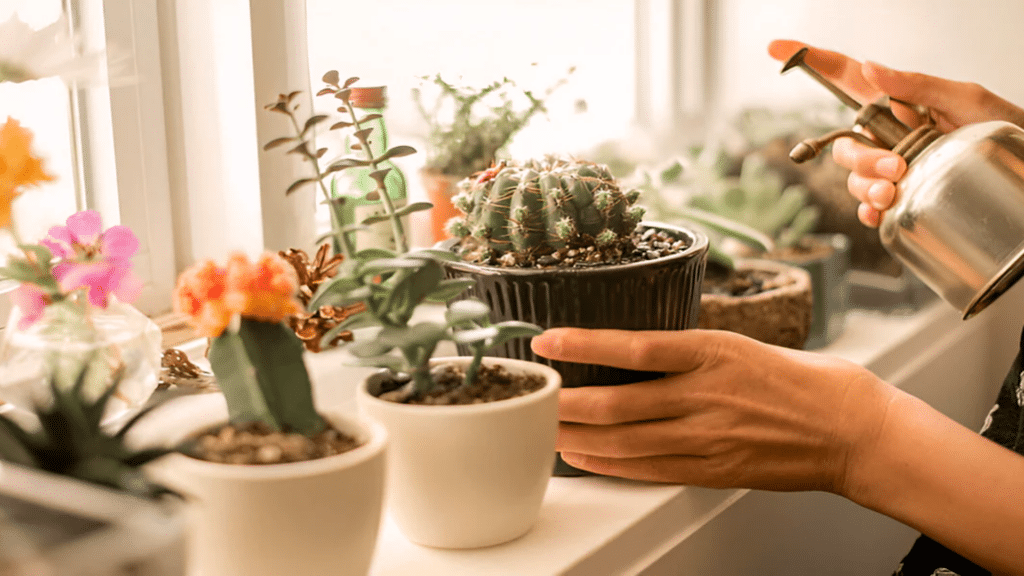
Cactus care works best when you focus on a few key basics. Understanding these needs makes daily care easier and more consistent.
1. Water Needs for Cactus
Watering is the most common area where mistakes happen with cacti. These plants do not need frequent watering because they store moisture in their stems.
I always check the soil first and wait until it is fully dry before watering again.
Too much water can cause root rot, which is hard to fix once it starts. During warmer months, watering may be needed a bit more often.
In colder months, the plant rests and needs much less water. A slow, deep soak works better than light, frequent splashes.
2. Sunlight Requirements
Sunlight plays a big role in how a cactus grows and stays firm over time. Most cacti need bright light for several hours each day to remain healthy indoors.
I place mine near a window where it gets steady light without harsh afternoon heat.
Too little light can cause the cactus to stretch and lose its shape.
Too much direct sun can leave burn marks on the surface. A balanced spot helps the cactus keep its color, stay compact, and grow at a steady pace.
3. Soil Basics for Cactus
Cactus soil must drain quickly and never stay wet for long periods. Regular potting soil holds too much moisture and can damage the roots.
I use a cactus mix that allows water to pass through easily and dry out fast.
This keeps air moving around the roots and prevents soggy conditions. Good soil supports steady growth and lowers the risk of rot.
Soil choice may seem small, but it plays a big role in how well the cactus handles watering.
4. Choosing the Right Pot
The pot plays an important role in controlling moisture and supporting healthy roots.
A cactus pot should always have at least one drainage hole at the bottom to let excess water escape. I prefer clay pots because they dry out faster than plastic ones and reduce moisture buildup.
The pot size should match the cactus and not leave too much empty soil around it.
A pot that is too large can trap excess water. Choosing the right pot helps manage moisture and keeps the cactus stable as it grows.
5. Indoor Temperature and Air Flow
Cacti prefer steady indoor temperatures and do not respond well to sudden changes.
I keep mine in a room that stays warm and avoid placing it near air vents or drafty windows. Cold air and quick temperature drops can stress the plant and slow its growth.
Good air flow helps prevent moisture from building up around the soil and stem.
While cacti do not need high humidity, fresh air supports overall health and lowers the risk of mold or pests over time.
6. Seasonal Care and Growth Changes
Cactus care changes slightly as the seasons shift. During spring and summer, the plant grows more actively and uses more water and light.
I water a bit more often and make sure it gets enough sunlight.
In fall and winter, growth slows down, and the cactus needs less attention overall. I reduce watering and avoid moving the plant during colder months. This rest period is normal and important.
Understanding seasonal changes makes care easier and helps prevent common problems.
Top Care Tips to Keep Your Cactus Happy
Small habits can make a noticeable difference over time. These simple actions help maintain steady growth and prevent common issues.
- Rotate the cactus every few weeks so all sides receive even light
- Wipe dust off the surface gently to help the plant absorb light better
- Check soil dryness before watering instead of following a set schedule
- Reduce watering during fall and winter when growth slows
- Keep the plant away from cold drafts and heating vents
- Use pots with drainage holes to avoid water buildup
- Avoid moving the cactus often, as sudden changes can cause stress
Factors to Consider when Choosing a Type of Cactus
Choosing the right cactus starts with understanding your home setup. Your space and light conditions play a big role in long-term success.
1. Indoor Space and Light Availability
Before choosing a cactus, I always look at where it will sit indoors.
Some cacti stay small and fit well on shelves or desks, while others grow taller and need floor space.
Light matters just as much as space. Bright rooms with sunny windows support most cactus types, but low-light areas limit your options.
Matching the cactus to your available light helps prevent weak growth and stress. A good fit makes care easier and keeps the plant healthy long term.
2. Beginner-Friendly Cactus Types
Not all cacti need the same level of care, which is why I suggest starting with easy types.
Small barrel cacti, bunny ear cactus, and holiday cactus adapt well to indoor settings. These varieties grow slowly and forgive small mistakes.
They do not need constant attention and handle indoor light better than delicate types.
Choosing a beginner-friendly cactus builds confidence and lowers the risk of early problems. It also helps you learn basic care without feeling overwhelmed.
3. Growth Rate and Care Needs
Cactus size and growth speed affect how much care the plant needs over time. Some cacti stay compact for years, while others slowly grow taller and wider.
I consider how large the cactus may become and whether I can support that growth.
Slow-growing cacti usually need less repotting and maintenance. Fast-growing types may need more space and attention.
Understanding these differences helps you choose a cactus that fits your home and routine.
Signs Your Cactus Is Not Healthy
Small changes in appearance often point to care issues. Noticing these signs early makes it easier to correct the problem.
- Soft or mushy spots usually mean overwatering; let the soil dry fully before watering again
- Yellow or pale color can signal too much water or poor drainage; check soil and pot holes
- Wrinkled or shriveled skin often points to underwatering; increase watering slightly
- Stretching or leaning growth suggests low light; move the cactus to a brighter spot
- Dark spots near the base may indicate root rot; remove from wet soil and trim damaged roots
- Slow or no growth can be normal in winter; reduce watering and avoid extra care
Conclusion
Caring for a cactus at home is simple once you understand the basics. Paying attention to watering habits, giving the right amount of light, using well-draining soil, and choosing a proper pot can make a real difference.
Small adjustments often lead to healthier growth and fewer problems over time.
If you have ever felt unsure about cactus care, this guide is meant to make things clearer and easier.
You do not need special tools or advanced skills to get it right. Start with one or two tips and build from there. Every cactus owner learns through experience.
I would love to hear how your cactus is doing, so share your experience or questions in the comments below.