


Mosquito bites can quickly ruin a quiet evening at home. Many store-bought sprays contain strong chemicals and heavy scents that not everyone wants to use.
But simple ingredients found in the kitchen or garden can often be turned into a practical mosquito-repellent home remedy.
These options are usually affordable and easy to prepare. They also allow better control over what goes on the skin and around living spaces.
This guide explains how natural ingredients can be used to create homemade mosquito repellents that are simple, safe, and suitable for daily use indoors and outdoors.
Why Choose a Homemade Mosquito Repellent?
Mosquitoes are more than just annoying. They can carry diseases and leave behind itchy bites that last for days.
Many commercial sprays work well, but they often contain synthetic chemicals. These formulas may have a strong smell or feel harsh on the skin.
A homemade mosquito repellent offers another option. It allows full control over the ingredients. Natural items from the pantry or garden can be used to make a simple mosquito-repellent home remedy.
These blends are usually affordable and easy to prepare. They can also be adjusted based on skin sensitivity or scent preference.
Homemade options may not last as long as chemical sprays, but they can still reduce mosquito activity when used correctly and reapplied as needed.
How Natural Ingredients Repel Mosquitoes
Mosquitoes are attracted to body heat, carbon dioxide, and certain body odors. Strong plant scents can interfere with their ability to detect humans. Many herbs and oils contain natural compounds that mosquitoes avoid.
For example:
- Citronella contains citronellal, which masks human scent.
- Lavender contains linalool, which is known for repelling insects.
- Eucalyptus contains cineole, which mosquitoes dislike.
- Garlic releases sulfur compounds that insects avoid.
These natural elements do not kill mosquitoes. Instead, they create a scent barrier that helps reduce bites.
Essential Oils That Help Repel Mosquitoes
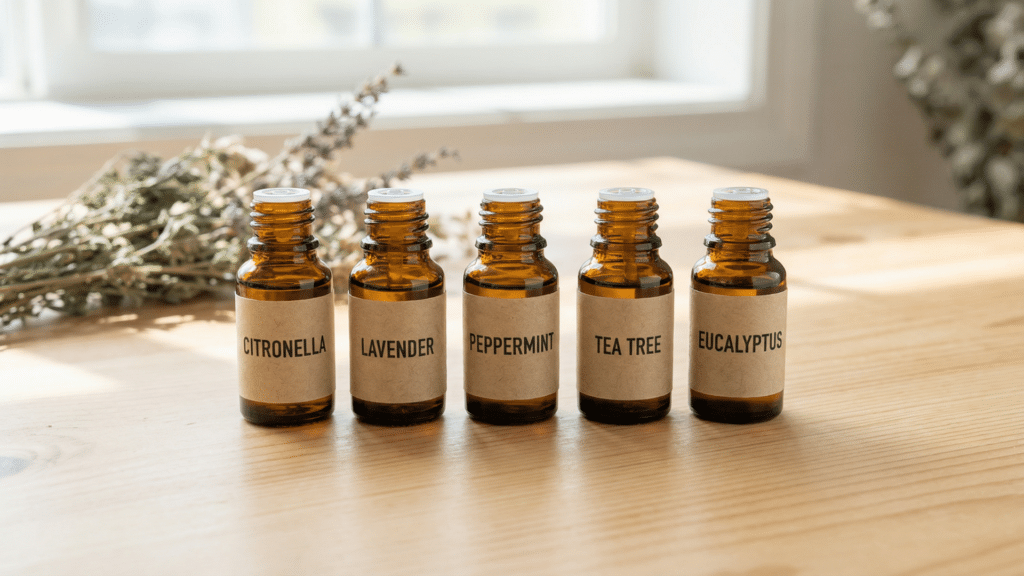
Essential oils contain strong plant compounds that mosquitoes tend to avoid. When properly diluted, they can be used in sprays, lotions, or diffusers as part of a mosquito-repellent home remedy.
| Essential Oil | Key Active Compounds | How It Helps Repel Mosquitoes | Best Way to Use | Notes |
|---|---|---|---|---|
| Citronella Oil | Citronellal, Geraniol | Masks human scent and confuses mosquito receptors | Outdoor sprays, candles | Reapply often for best results |
| Lemon Eucalyptus Oil | PMD (para-menthane-3,8-diol) | Strong scent that repels mosquitoes effectively | Diluted skin spray | Always dilute before applying to the skin |
| Lavender Oil | Linalool, Linalyl acetate | Reduces mosquito attraction and has a calming scent | Skin sprays, lotions | Gentle scent, suitable for evening use |
| Peppermint Oil | Menthol | Strong cooling scent that insects avoid | Diluted spray or oil blend | May cause skin irritation if not diluted |
| Tea Tree Oil | Terpinen-4-ol | Acts as a mild insect repellent and antiseptic | Mixed with carrier oil | Avoid high concentrations |
| Eucalyptus Oil | Cineole | Sharp scent that discourages mosquito activity | Spray blends | Do not use undiluted on the skin |
| Geranium Oil | Geraniol | Helps reduce mosquito landing | Lotion or spray | Often blended with citronella |
| Clove Oil | Eugenol | Strong aroma that deters insects | Outdoor spray | Use carefully; strong on skin |
DIY Mosquito Repellent Spray Recipes
Spray repellents are one of the easiest ways to protect skin and clothing from mosquitoes. They are simple to make, easy to carry, and quick to apply. Below are detailed recipes with clear measurements, mixing steps, and usage tips.
1. Lemon Eucalyptus Mosquito Spray
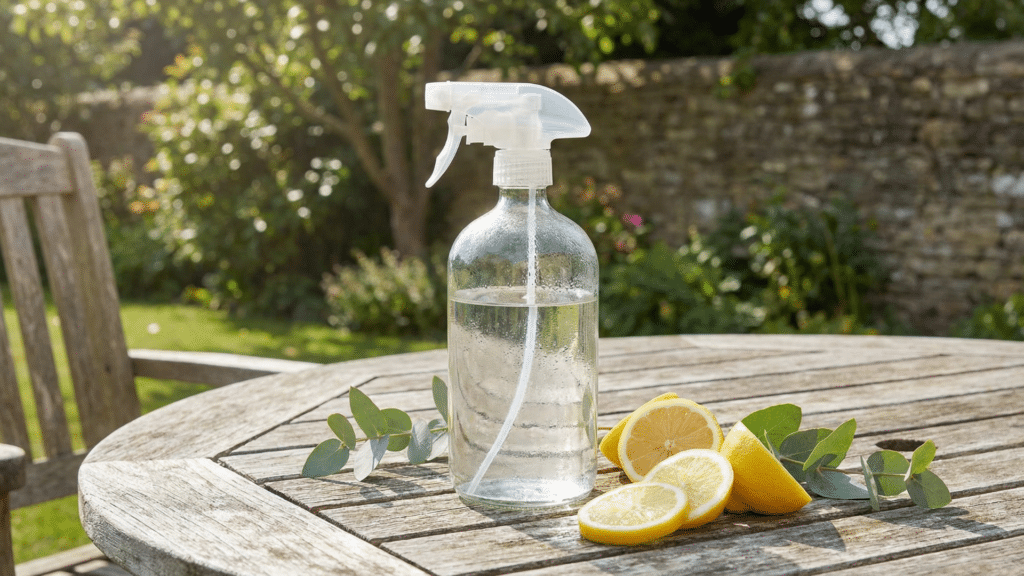
Lemon eucalyptus oil is widely used in natural insect repellents because of its strong scent.
Ingredients:
- 1 cup distilled water
- 1 tablespoon witch hazel or vodka (helps blend oil and water)
- 15–20 drops lemon eucalyptus essential oil
Instructions:
- Pour distilled water into a clean spray bottle.
- Add witch hazel or vodka.
- Add essential oil drops.
- Close the bottle tightly and shake well for 20–30 seconds.
How to Use:
- Spray lightly on exposed skin and clothing.
- Avoid contact with the eyes and mouth.
- Reapply every 2–3 hours outdoors.
Why It Works: The strong citrus scent helps mask body odors that attract mosquitoes.
2. Citronella and Lavender Blend Spray
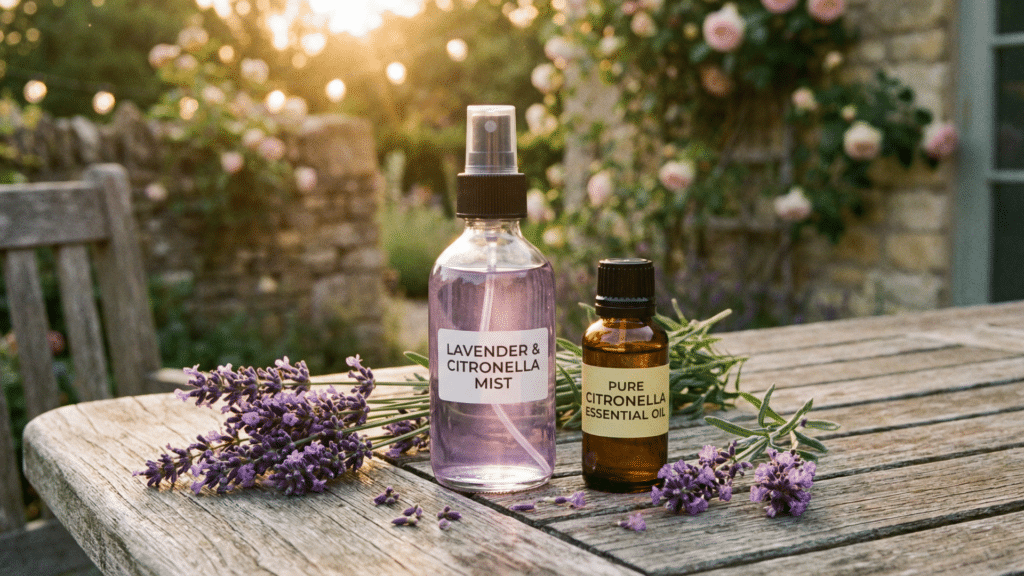
This blend combines two well-known natural repellents.
Ingredients:
- 1 cup distilled water
- 1 tablespoon witch hazel
- 10 drops citronella oil
- 10 drops lavender oil
Instructions:
- Add all ingredients to a spray bottle.
- Shake thoroughly before each use.
How to Use:
- Spray on arms, legs, and clothing.
- Suitable for outdoor gatherings and garden use.
- Reapply as needed.
Extra Tip: Store in a cool, dark place to keep oils fresh.
3. Apple Cider Vinegar Mosquito Spray
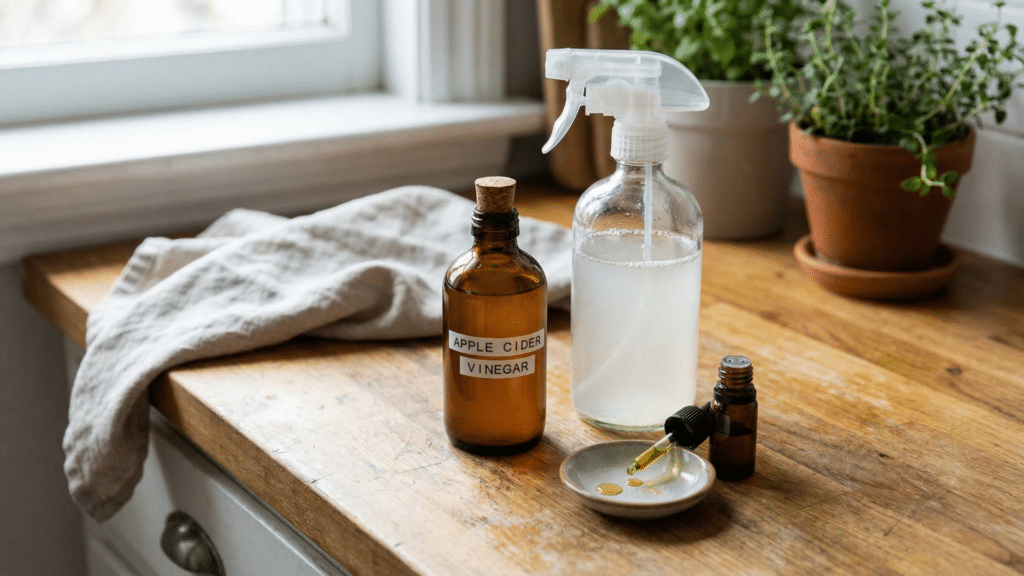
Vinegar helps strengthen the scent barrier.
Ingredients:
- ½ cup apple cider vinegar
- ½ cup distilled water
- 15 drops citronella or peppermint oil
Instructions:
- Mix vinegar and water first.
- Add essential oils.
- Shake well.
How to Use:
- Spray lightly on clothing and exposed skin.
- The vinegar smell fades after drying.
Note: Avoid applying to sensitive or broken skin.
4. Herbal Garden Infusion Spray

This version uses fresh herbs instead of essential oils.
Ingredients:
- 1 cup boiling water
- 2 tablespoons fresh mint leaves
- 2 tablespoons fresh rosemary
- 1 tablespoon fresh basil
Instructions:
- Pour boiling water over the herbs.
- Cover and let steep for 30 minutes.
- Strain into a spray bottle.
- Allow to cool completely before use.
How to Use:
- Spray around patios, doorways, and outdoor furniture.
- Safe for indoor air use.
Shelf Life: Use within 1 week; store in the refrigerator.
5. Peppermint and Tea Tree Spray
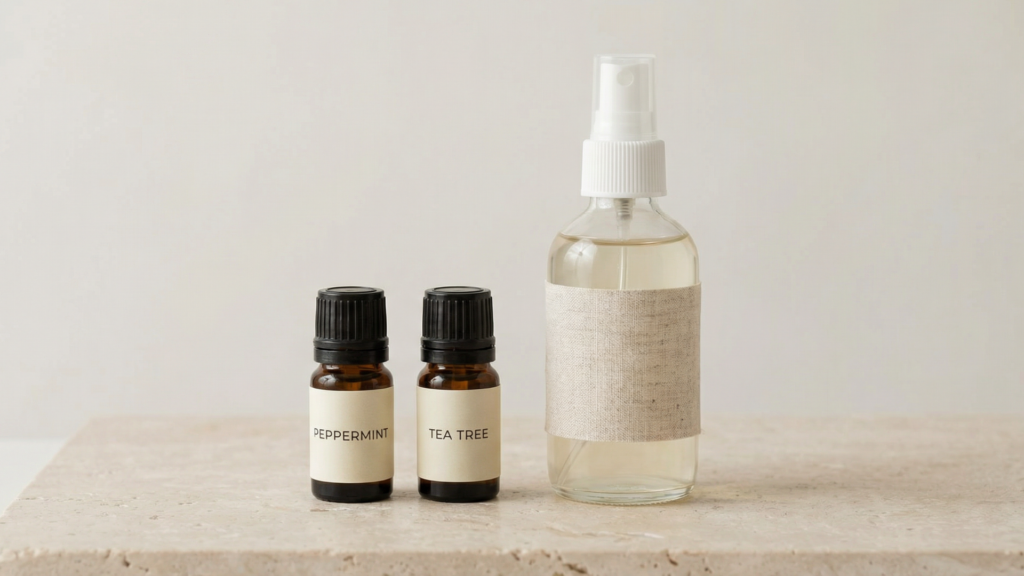
This blend has a strong scent that mosquitoes tend to avoid.
Ingredients:
- 1 cup distilled water
- 1 tablespoon witch hazel
- 10 drops peppermint oil
- 5 drops of tea tree oil
Instructions:
- Combine water and witch hazel.
- Add essential oils.
- Shake well before each use.
How to Use:
- Spray lightly on exposed skin.
- Avoid sensitive areas.
Warning: Peppermint oil can feel cooling on the skin. Do a patch test first.
6. Coconut Oil and Water Mist (Mild Option)
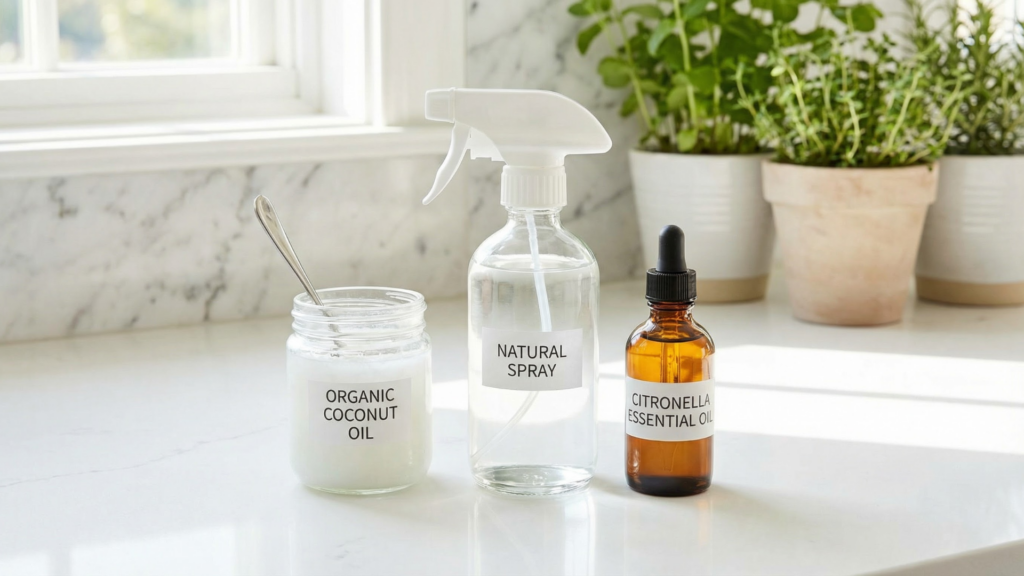
This is a lighter formula for short outdoor exposure.
Ingredients:
- 1 cup warm distilled water
- 1 teaspoon liquid coconut oil
- 10 drops citronella oil
Instructions:
- Mix warm water and coconut oil.
- Add essential oil.
- Shake well before spraying.
How to Use:
- Spray on arms and legs.
- Reapply often.
This works best for mild mosquito activity.
How to Store Your Spray Properly

Proper storage is important if a DIY mosquito repellent is going to stay effective and safe to use. Natural ingredients can lose strength over time, especially when exposed to heat, light, or air. Storing the spray correctly helps preserve its scent, stability, and repellent ability.
- Use dark glass bottles when possible. Amber or cobalt bottles protect essential oils from light damage.
- Keep away from direct sunlight. Store in a cool, dry place such as a cabinet or drawer.
- Shake every use before. Natural oils and water can separate over time.
- Label the bottle with the date. This helps track freshness and avoid using expired mixtures.
- Discard if the smell changes or the mixture separates permanently. A sour or unusual odor is a sign that it should not be used.
Water-based sprays usually last 1–2 weeks. Oil-heavy blends may last up to one month when stored properly.
How Long Do Homemade Repellents Last?
Homemade mosquito repellents provide short-term protection because natural ingredients evaporate faster than chemical formulas.
Most water-based sprays last 1 to 3 hours on skin. Sweating, heat, and wind can further reduce this time. Reapplication every two hours is usually needed outdoors.
When applied to clothing, a mosquito-repellent home remedy may last 2 to 4 hours because fabric retains the scent longer than skin. Oil-based blends, such as those mixed with coconut oil, may last slightly longer because they evaporate more slowly.
For best results, reapply regularly and combine with protective clothing or candles.
Are Homemade Mosquito Repellents Safe for Children?
Caution is important when using essential oils on children. Some oils are too strong for young skin.
Safer options include:
- Very diluted lavender oil
- Herbal infusions instead of strong oils
- Protective clothing is the main defense
Always consult a healthcare provider before applying essential oils to infants.
Final Thoughts
Homemade solutions can offer a balanced approach to mosquito control without relying heavily on synthetic sprays.
Using natural ingredients allows greater awareness of what is applied to the skin and released into the air. Preparation is simple, but consistency matters.
Results improve when formulas are mixed carefully and used at the right time of day, especially during peak mosquito activity. No single method guarantees full protection, so combining strategies strengthens overall defense.
Small adjustments in routine can make outdoor time more comfortable. Start with one recipe from this guide, test it carefully, and refine it to suit your environment and comfort level.
Frequently Asked Questions
Do Natural Repellents Really Work?
They can reduce bites, especially during periods of low mosquito activity. Results vary depending on ingredients and environment.
Can Vinegar Alone Repel Mosquitoes?
Vinegar alone is not very effective. It works better when combined with essential oils.
Is Coconut Oil Enough?
Coconut oil may provide mild protection, but it is more effective when combined with citronella or eucalyptus oil.