

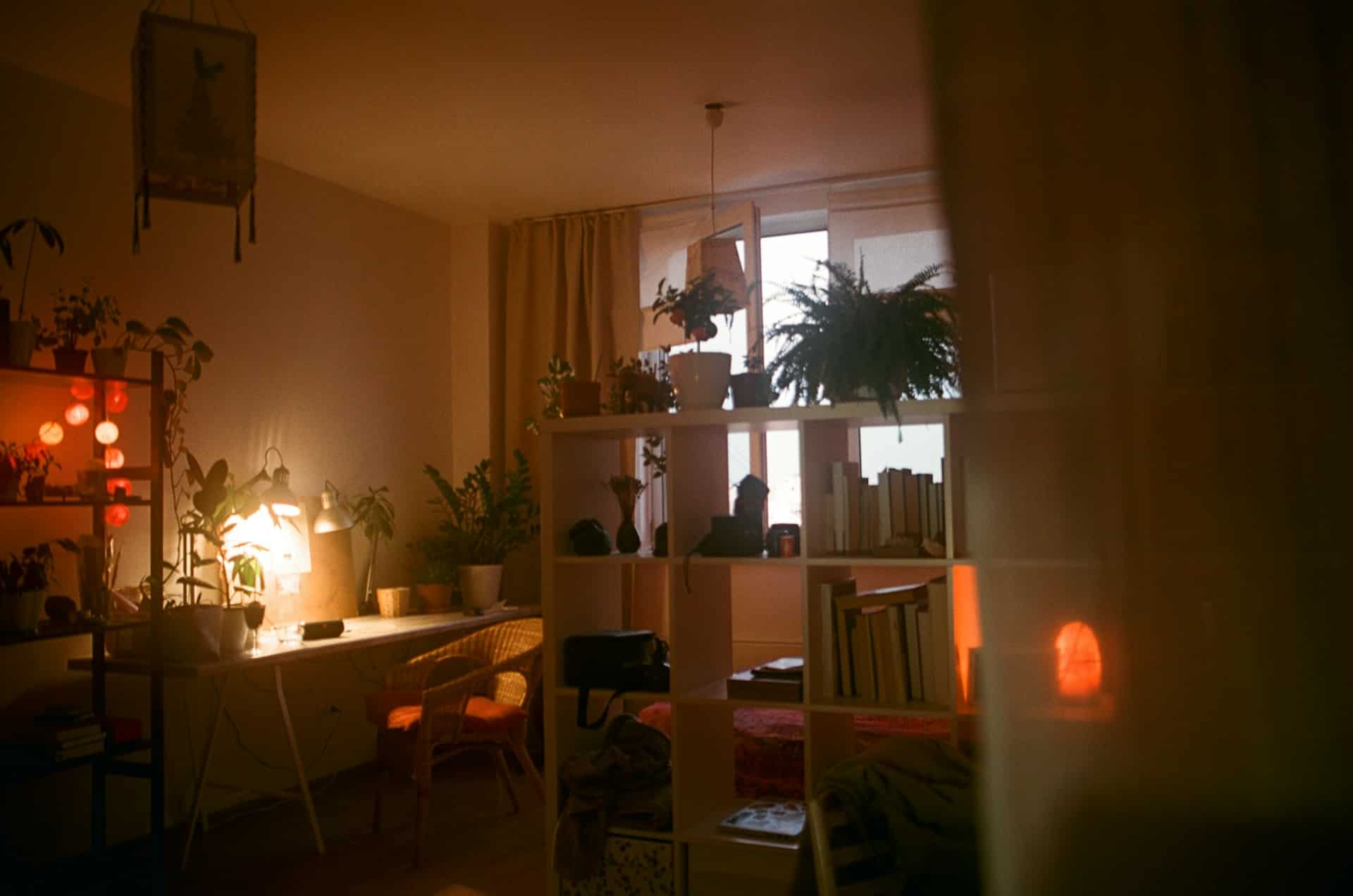
Has it ever happened to you that you went to the store and bought the color you wanted, and then when you’ve finally painted the room, and the paint on the walls has dried, you looked at it and thought, “Hey… wait… this isn’t the color I picked. What’s going on?”
Well, good news, you aren’t alone in this one.
This has happened to A LOT of people. And this has to do with the fact that color in itself isn’t all there is. There’s also the light (more precisely, the temperature of the light) that reflects off the paint.
So, in a way, the shade of the color you’ve picked will depend on the light.
And this isn’t just the temperature of the incandescent or LED bulb you’re using. It’s also the time of the day that makes a massive difference in how color looks. Plus, the shadows also play a role in all this.
Once you realize how lighting and color work together, decorating becomes much easier and much more intentional.
Why Colors Look Different Throughout the Day
Light has a specific temperature to it, which can be measured in units called Kelvin (K).
- Warm (yellow) light (2700K-3000K).
- Neutral (yellowish) light (3500K-4000K).
- Cool/cold (white) light (5000K).
- Cold (white-blueish) light (6000K).
That means your soft gray walls might look cozy at night but slightly blue during the day. It’s physics.
That’s why testing paint samples in your actual space, under your lighting, can make such a difference.
How Color and Lighting Affect Your Mood
You might think that color psychology is just some buzzword designers use, but it’s not; color psychology is very real.
While everyone responds differently, certain patterns are consistent. The lighting in the room adds to the psychological effects. Usually, warm colors and warm lighting add to a sense of comfort. This is why most places use those combinations to elicit a sense of comfort and encourage their customers to stay longer, such as restaurants or shops.
In living rooms and bedrooms, this pairing creates a sense of calm. It softens shadows and makes everything feel just a little more welcoming.
A cleaner color like white or blue works well in kitchens and home offices where you want to feel alert and productive.
Flexibility in Colors
Deep navy, emerald green, or burgundy can look dramatic and luxurious depending on the lighting.
The trick is flexibility.
Dimmable lights or adjustable bulbs allow you to soften bold colors in the evening and brighten them during the day. Essentially, it gives you control over the mood. And mood is important, as it affects all parts of our daily lives.
For example, your sleep. You see, most people don’t think about the fact that lighting affects their body’s internal clock.
Using bright lights to signal to your brain that it’s daytime may be helpful while working, but not when you’re trying to sleep. For that, warmer lights probably help more, as they signal to your body that it’s time to relax.
If your bedroom feels off and you are not getting enough rest, perhaps there is an issue with the lighting, and adjusting or experimenting with it can provide positive effects.
Pick Lighting Based on How You Use the Room
Instead of asking what color fits, perhaps it’s better to focus on the mood that you’re trying to achieve.
So, the question you should be asking yourself is – What do I want from my house?
The Living Room
This space is often used for relaxing, watching TV, or hosting friends. Soft, warm lighting with dimmers works best. It keeps the room flexible and comfortable.
Kitchen
You need clear visibility here. You’re working with ingredients, you’re working with (potentially) dangerous objects such as knives. Neutral lighting here is best. Plus, you want the colors of ingredients to look natural and white, cool light will show the colors as you’d see them out in the sun.
Bedroom
This is your place of rest. Warm, gentle lighting helps you relax and will help you get better-quality sleep.
Home Office
Your home office is your place of work. It’s the place where you’re the earner. This means two things: you want energy, and you want focus.
Brighter/cooler lights help you concentrate better by making you more alert. This way, you’re maximizing your productivity output.
Why This Matters in Real Estate
Good lighting doesn’t just make your home feel nice; it can help sell it faster and for more.
It can upgrade its appearance and, by extension, its value.
Just imagine someone walking into the house for the first time. They’ll know whether they like the place or not in a few seconds. That’s it. So, if you present them with a room that feels both bright and open, the potential buyer will perceive it as larger (bigger than it really is).
If you show them a kitchen that’s lit well, they’ll imagine themselves working there and preparing a dish. If they like what they imagine, they’ll like the kitchen.
If they see the bedroom that has soft, warm lighting, they’ll see it as very comfortable, a place where they can get all cozy and relaxed, where they can get proper top-quality sleep.
No one is consciously thinking about bulb temperatures or color psychology, but their subconscious is. They notice how it makes them feel, whether they are aware of it or not.
Whether you’re buying your home in Japan, France, or Texas, the rules are the same. Value is value.
If you’re getting a home ready to list or if you want to get a DSCR mortgage in Texas, especially in such competitive markets, simple lighting updates can go a long way. But not every state will provide you with the same chances of getting financed. In Texas, where the loan approval is based largely on the property’s projected rental income (not so much on personal income), it’s easier to get them.
But states like California might require lenders to have stronger cash flow metrics in order to get greenlit, which could pose as a roadblock. So, check before you make any serious moves.
Conclusion
Color is powerful. Lighting is powerful. United, they’re stronger.
One works in tandem with the other. The potential is there.
It’s about using them intentionally because, in the end, they make us and those close to us feel better. And when we feel better, life is better.