

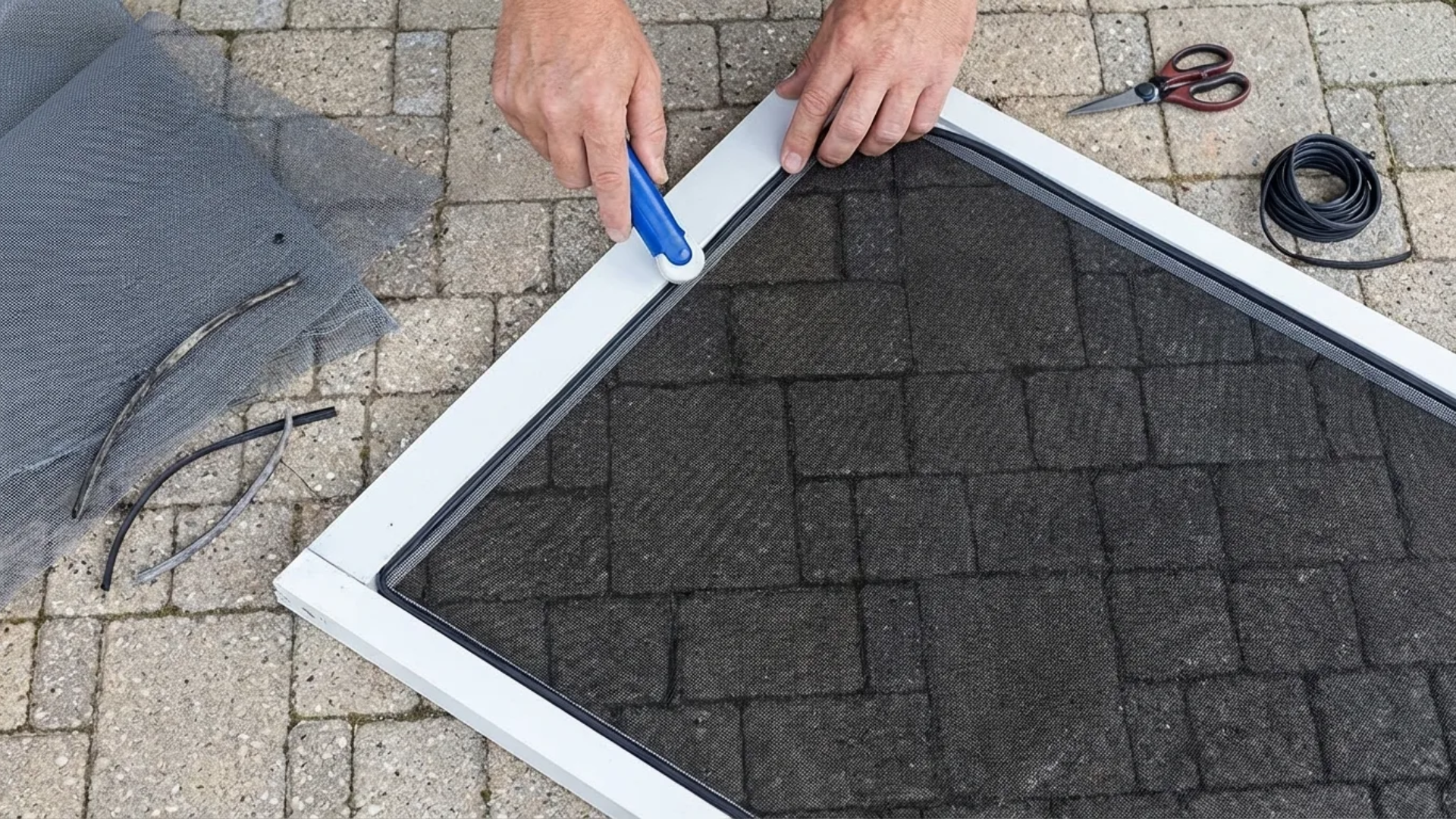
I’ve dealt with torn screen doors more times than I can count. Pets push through them, kids lean on them, and sometimes the mesh simply wears out.
A damaged screen can quickly let insects, dust, and debris into your home, making the problem hard to ignore.
Many people assume the whole door needs to be replaced, but that is rarely the case.
Learning how to repair a screen door with simple tools can save both time and money. In most cases, the fix requires only replacing the screen mesh and properly securing it in the frame.
In this guide, you will learn how to repair a screen door step by step in an easy way.
With the right steps and a little time, you can fix it at home and get it working properly again.
Why Do Screen Doors Get Damaged?
Screen doors are designed for daily use, but they can still be damaged over time. One common cause is regular wear.
When a door is opened and closed many times a day, the screen mesh slowly weakens.
Small tears can form, especially around the edges where the mesh is held by the spline. Pets and children are another frequent reason for damage.
Dogs and cats often push against the screen, while kids may lean on it or bump into it while playing.
Even a little pressure can stretch or rip the mesh. The weather also plays a role.
Strong wind, heavy rain, and long exposure to sunlight can make the screen brittle. Over time, the material becomes weaker and more prone to tearing.
Accidental bumps from furniture, tools, or moving items through the doorway can also damage the mesh or bend the frame.
Tools Needed to Repair a Screen Door
Repairing a screen door does not require many special tools. Most of the items are simple hand tools that are easy to find at home or at a local hardware store.
- Replacement screen mesh
- Screen spline
- Spline roller tool
- Needle-nose pliers
- Small pick or flat tool
- Screwdriver
- Utility knife
- Measuring tape
- Broomstick
How to Repair a Screen Door at Home?
A torn screen door mesh can let insects and dust enter your home. With a few simple tools and a little time, you can repair the mesh and make the door look new again.
Step 1: Prepare the Screen Door and Remove the Old Mesh
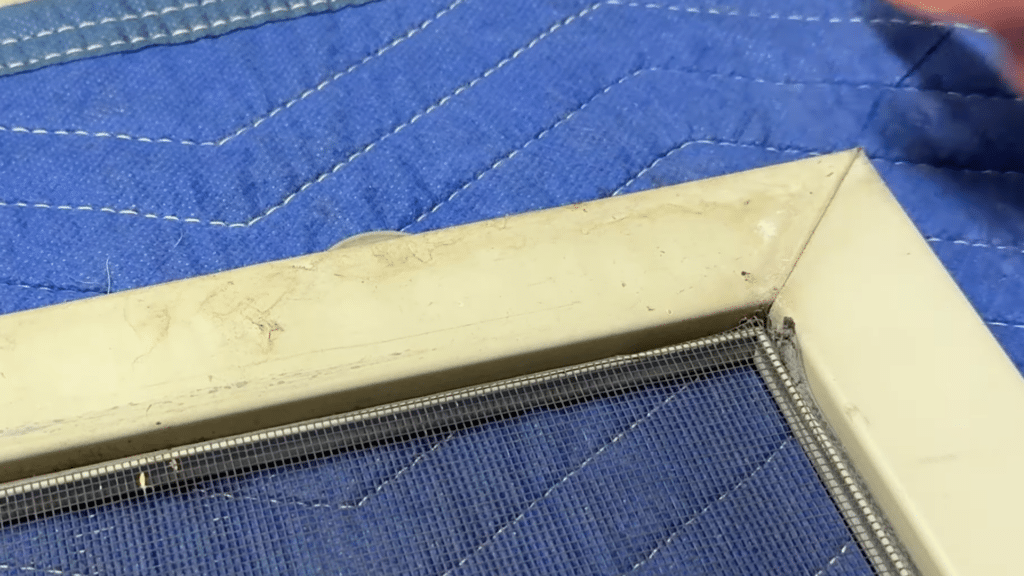
Place the screen door on a flat surface, such as the floor, so the frame stays stable while you work.
This position lets you apply steady pressure without bending the door.
Use a pick tool or needle-nose pliers to pull out the rubber spline that holds the screen in place. Once the spline is removed, lift out the torn mesh from the frame.
Removing the damaged screen completely clears the channel so the new mesh can be installed smoothly and securely.
Step 2: Remove the Handle and Clear the Frame
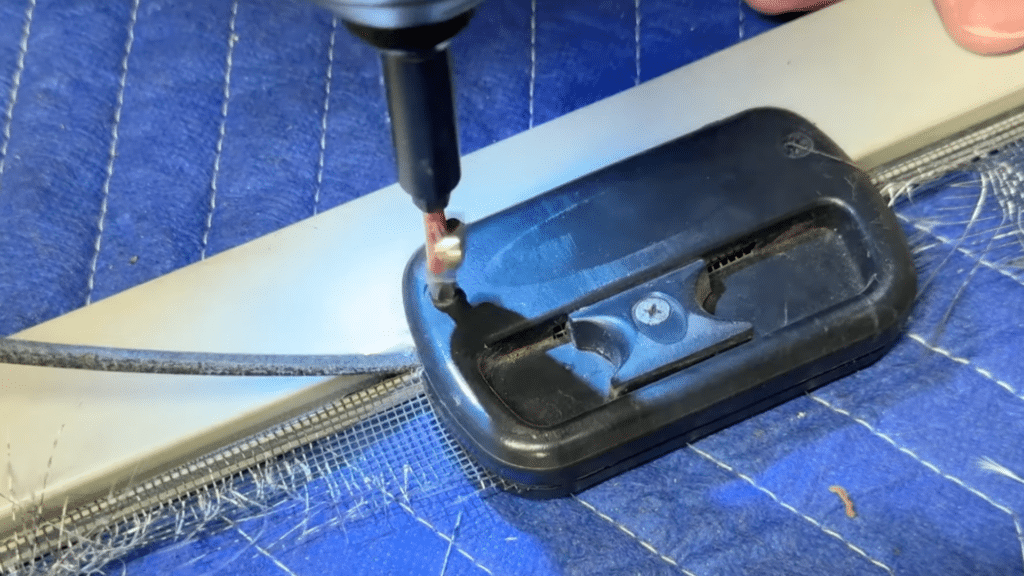
If your screen door has a handle attached, remove it before installing the new mesh. Use a screwdriver to loosen the screws and slide off the handle parts.
Taking the handle off provides full access to the frame and prevents the mesh from getting caught on hardware while you work.
Keep the screws and small parts together so they are easy to reinstall later.
A clear frame makes the installation process easier and helps the new screen fit evenly across the door.
Step 3: Lay the New Screen Mesh and Secure the Top
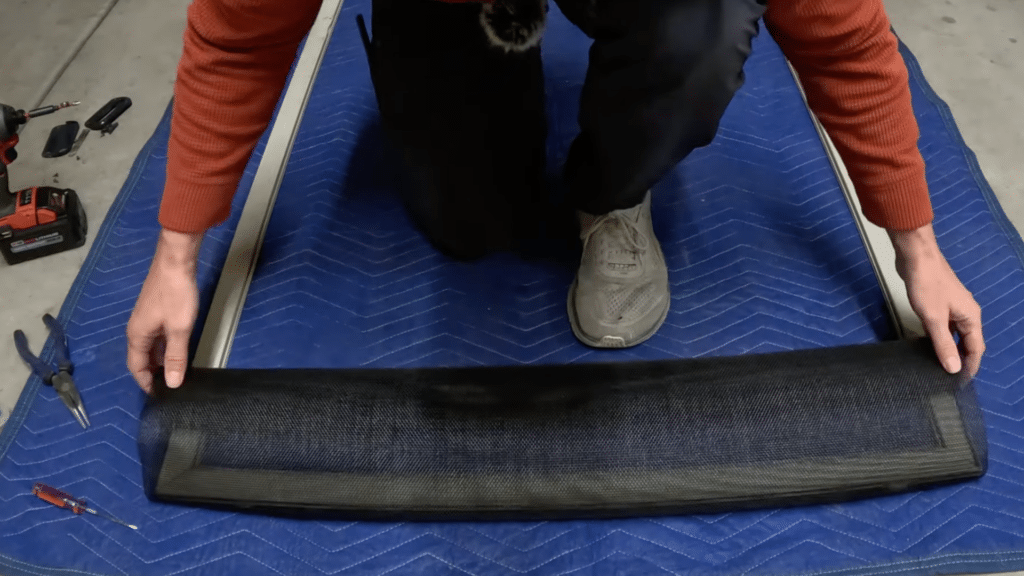
Unroll the new screen mesh over the door frame so it fully covers the opening.
Position the roll so it feeds smoothly across the frame instead of curling back.
Leave extra mesh hanging over the edges because it will be trimmed later. Place the spline along the top groove and use a spline roller to press it into the channel.
Work slowly with short strokes so the mesh stays straight and doesn’t tear while the spline locks it into place.
Step 4: Pull the Mesh Tight and Secure the Sides
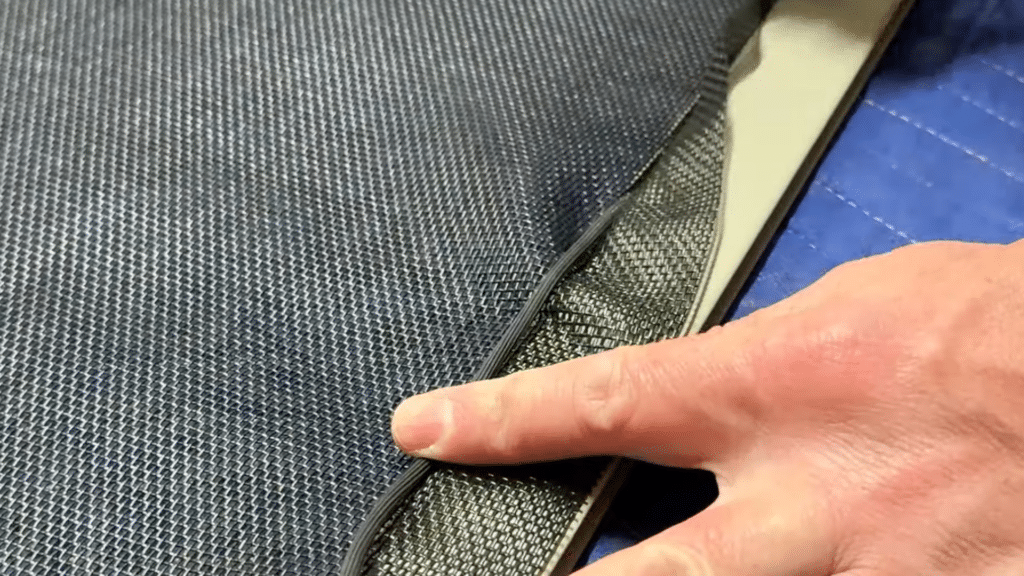
Pull the mesh toward the bottom of the door to remove wrinkles and keep the screen tight.
A broomstick with double-sided tape is used to hold the mesh stretched while the door rests on top. Once the screen is tight, begin rolling the spline down both sides using the spline tool.
Work gradually and keep checking the tension.
If the mesh bunches up, pull it tight again before continuing so the screen remains smooth across the frame.
Step 5: Finish the Bottom Edge, Trim Mesh, and Reinstall Handle
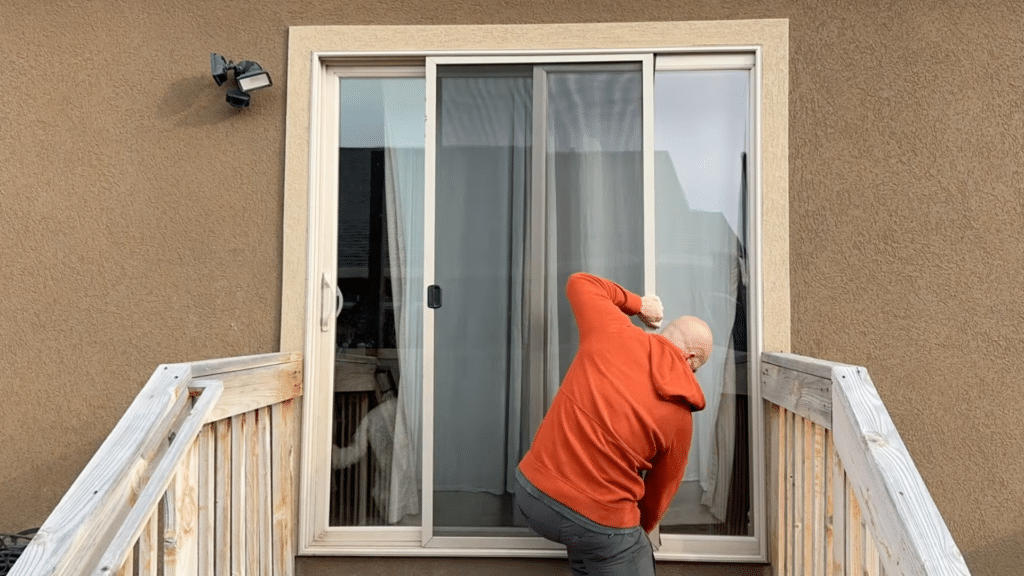
After the sides are secure, roll the spline into the bottom groove to lock the screen firmly in place.
Once all the spline is installed, use a sharp utility knife to trim away the extra mesh around the edges.
Move slowly along the frame to create clean cuts, especially around the corners. Finally, reinstall the door handle by aligning it with the screw holes and tightening the screws.
Your screen door repair is now complete and ready to use again
This tutorial is based on a helpful video by U Can Build This. You can check out the original video on their YouTube channel here or watch it below.
When to Repair a Screen Door Instead of Replacing It?
Small issues do not always mean you need a new door. I look at the damage first and decide if a quick fix can solve it.
- Minor tears or holes: If the mesh has small cuts or a few holes, I can patch or replace just the screen. The frame stays fine, so no need for a full replacement.
- Loose or worn-out spline: When the rubber spline comes out or feels loose, I simply press in a new one. This holds the screen tight again without changing the door.
- Bent but usable frame: If the frame has slight bends, I can gently fix or adjust it. As long as it still fits the doorway, the repair works well.
- Old or faded mesh: A worn or faded screen does not mean the door is bad. I just replaced the mesh to make it look and work better again.
- Door still opens and closes well: If the door moves smoothly and the hinges are fine, I focus only on fixing the screen instead of replacing the whole unit.
- Small corner damage: If only one corner is damaged, I can repair that part instead of buying a new door. This saves both time and money.
What Reddit Users Say About Repairing Screen Doors?
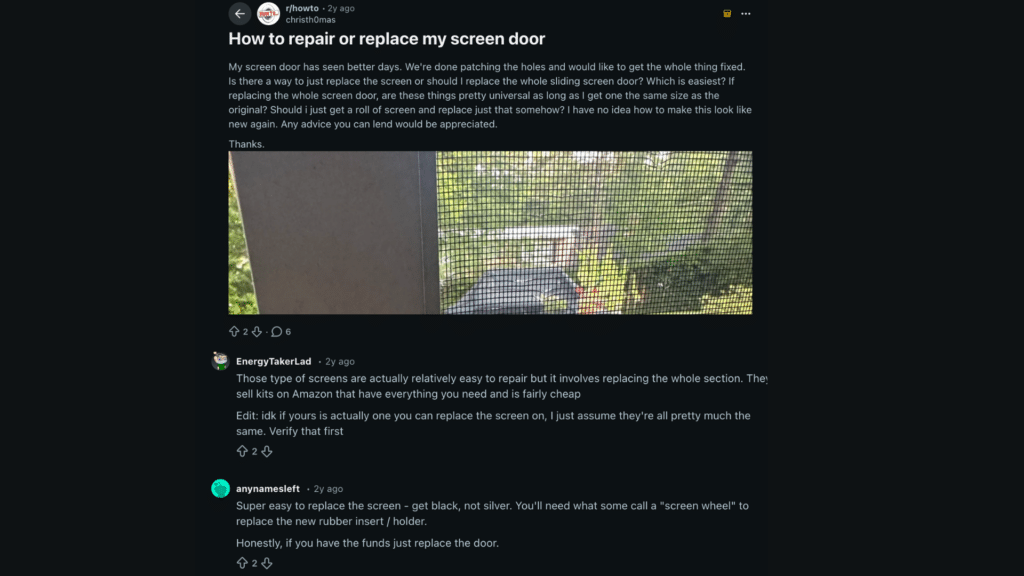
A Reddit user shared that their screen door was badly worn, with multiple holes, and that patching was no longer helping.
They were unsure whether to replace just the mesh or the entire sliding screen door.
They also asked whether screen doors are standard sizes and whether a roll of screen would be enough to fix them.
Most replies suggested that replacing the mesh is usually simple, affordable, and can be done with basic tools or a repair kit.
Some users recommended checking if the frame is still in good condition before deciding. Others mentioned that if the door looks too worn, a full replacement may be a better option.
Many also advised watching videos or asking at a hardware store to understand the process before starting
Common Reasons Screen Doors Get Damaged
Screen doors go through daily use, so damage over time is quite common. Knowing the main causes can help you prevent future issues and keep your screen in good shape.
- Daily Wear and Tear: Opening and closing the door repeatedly can weaken the mesh. Over time, this leads to small tears, especially near the edges.
- Pets Pushing or Scratching: Dogs and cats often push or scratch at the screen to get outside. Their claws can easily rip or stretch the mesh.
- Weather Exposure: Sunlight, rain, and wind can make the screen material brittle. This makes it easier for the mesh to tear.
- Accidental Impact: Carrying furniture or tools through the door can cause bumps. These impacts can tear the mesh or bend the frame.
- Loose or Worn-Out Spline: The rubber spline can loosen or wear out over time. When this happens, the mesh may sag or come out of the frame.
- Poor Installation or Old Material: If the screen was not installed tightly, it may loosen quickly. Older mesh also becomes weak and more likely to tear.
Conclusion
Fixing a torn screen door might seem like a small task, but it can make a big difference in your home.
A clean, tight screen keeps bugs out, lets fresh air in, and makes your space feel more comfortable.
The best part is that you don’t need special skills or expensive tools to get it done. With a little time and patience, you can handle the repair yourself and save money.
As you’ve seen, most screen door issues come down to simple fixes like replacing the mesh or tightening it properly.
Once you try it, you’ll likely find it easier than expected. Now I’d like to hear it from you.
Have you repaired a screen door before, or are you planning to try it soon? Share your experience, tips, or questions in the comments below.