

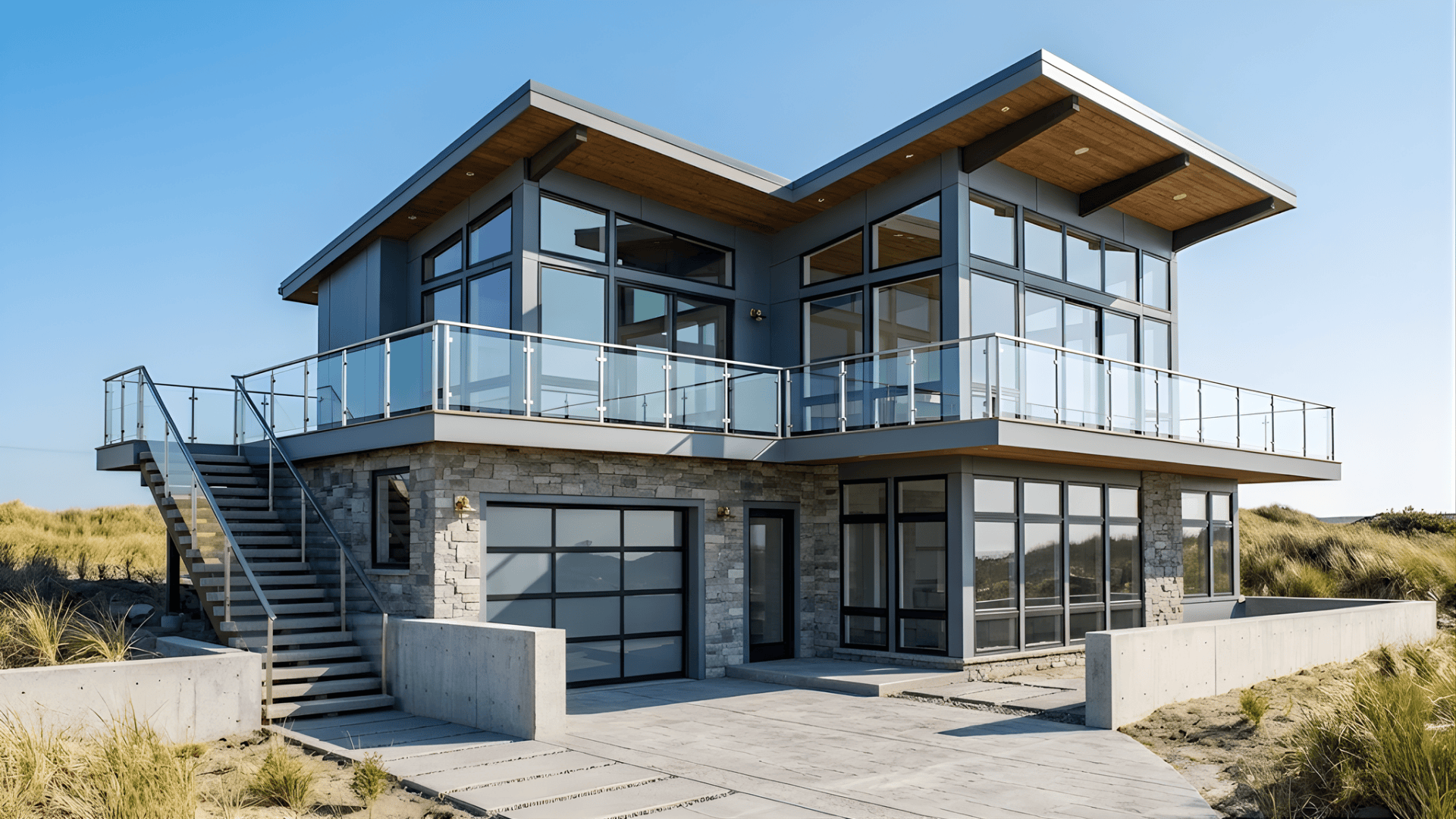
When it comes to selecting a roof for your home, there’s a lot to consider.
From the classic gable roof to the sleek butterfly roof, there are many types of roofs to choose from, each offering different benefits and looks.
In this blog, I’ll guide you through the popular roof types to help you understand the options available.
I’ll also cover important topics such as choosing the best roof for your climate, roof maintenance tips, common issues, and how roof design can affect your home’s energy efficiency.
By the end, you’ll have all the information you need to make an informed decision about your roof.
Let’s dive in and see the world of roofs!
Why do Type of Roof matter?
The type of roof you choose is more important than you might think. It affects everything from how your home looks to how well it handles the weather.
Different roofs are better suited for different climates and home styles.
For example, a gable roof works well in areas with heavy rain because it helps water drain off easily, while flat roofs can be more affordable but require good drainage.
The right roof can also make your home more energy-efficient and improve its overall curb appeal. Choosing the right roof type is about ensuring your home stays comfortable and protected, and looks great.
Most Popular Types of Roof
Planning which kind of roof suits your personality and style is a foundation for your dream house build. The list provided will help you achieve your dream house.
1. Gable Roof: A Commonly Used Type of Roof for Flexibility
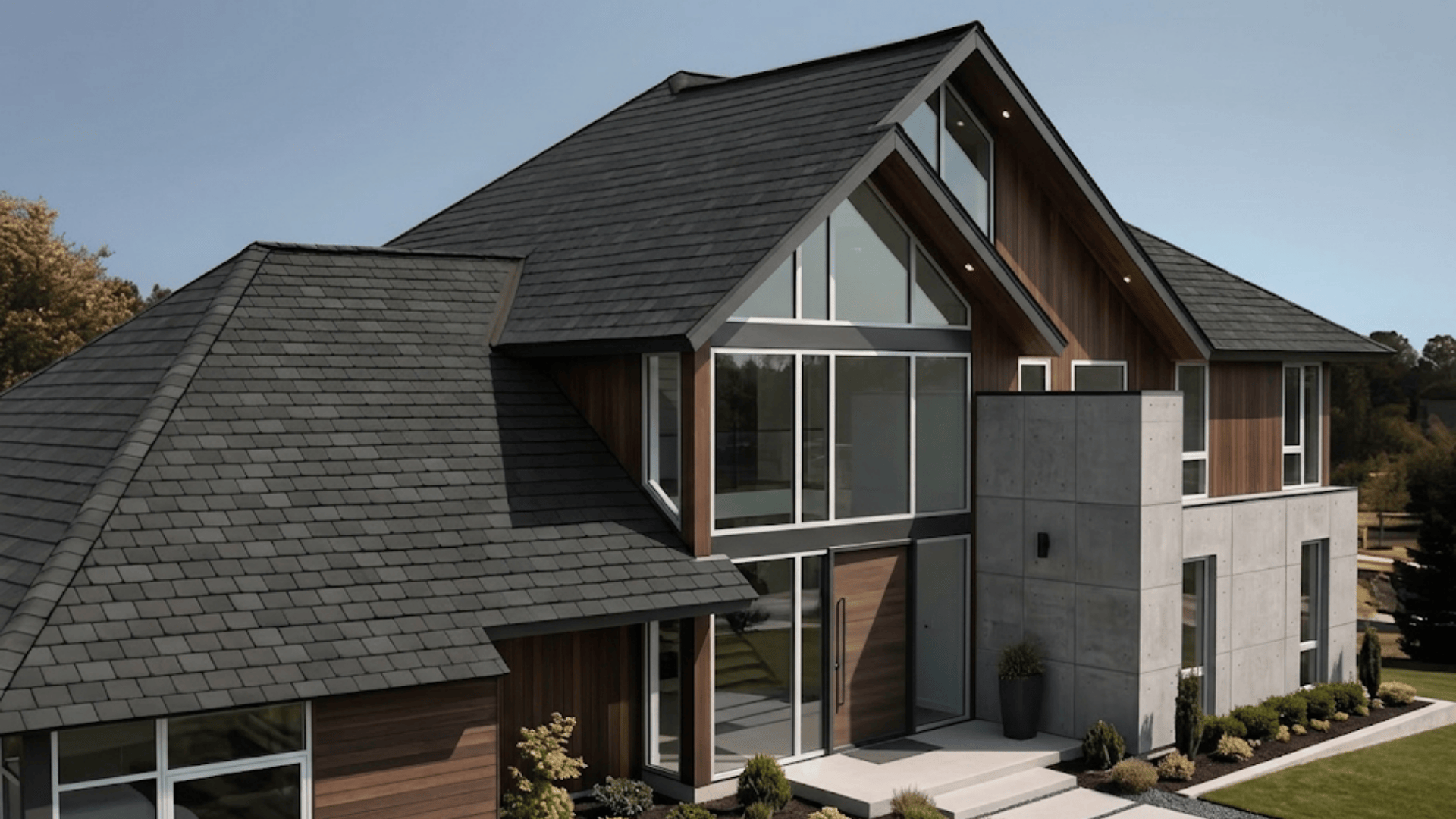
A gable roof is one of the most common roof designs, characterized by two sloping sides that meet at a ridge, forming a triangular shape.
This simple design provides great water runoff and is often seen in traditional and modern homes.
You may have seen gable roofs in homes across suburban areas, especially in temperate climates, where they provide great water drainage.
Gable roofs are ideal for places with heavy rain or snow, as the slopes help with quick water runoff.
Features:
- Two sloping sides meeting at a ridge
- Overhanging eaves for extra protection
- Ideal for attic space or vaulted ceilings
- Simple, cost-effective design
| Pros | Cons |
|---|---|
| Easy to build and cost-effective | Can be prone to wind damage |
| Provides extra space in the attic | Needs good ventilation to avoid moisture buildup |
| Effective drainage during rain | Snow can accumulate on steeper slopes |
2. Hip Roof: A Stable and Durable Type of Roof for All Climates
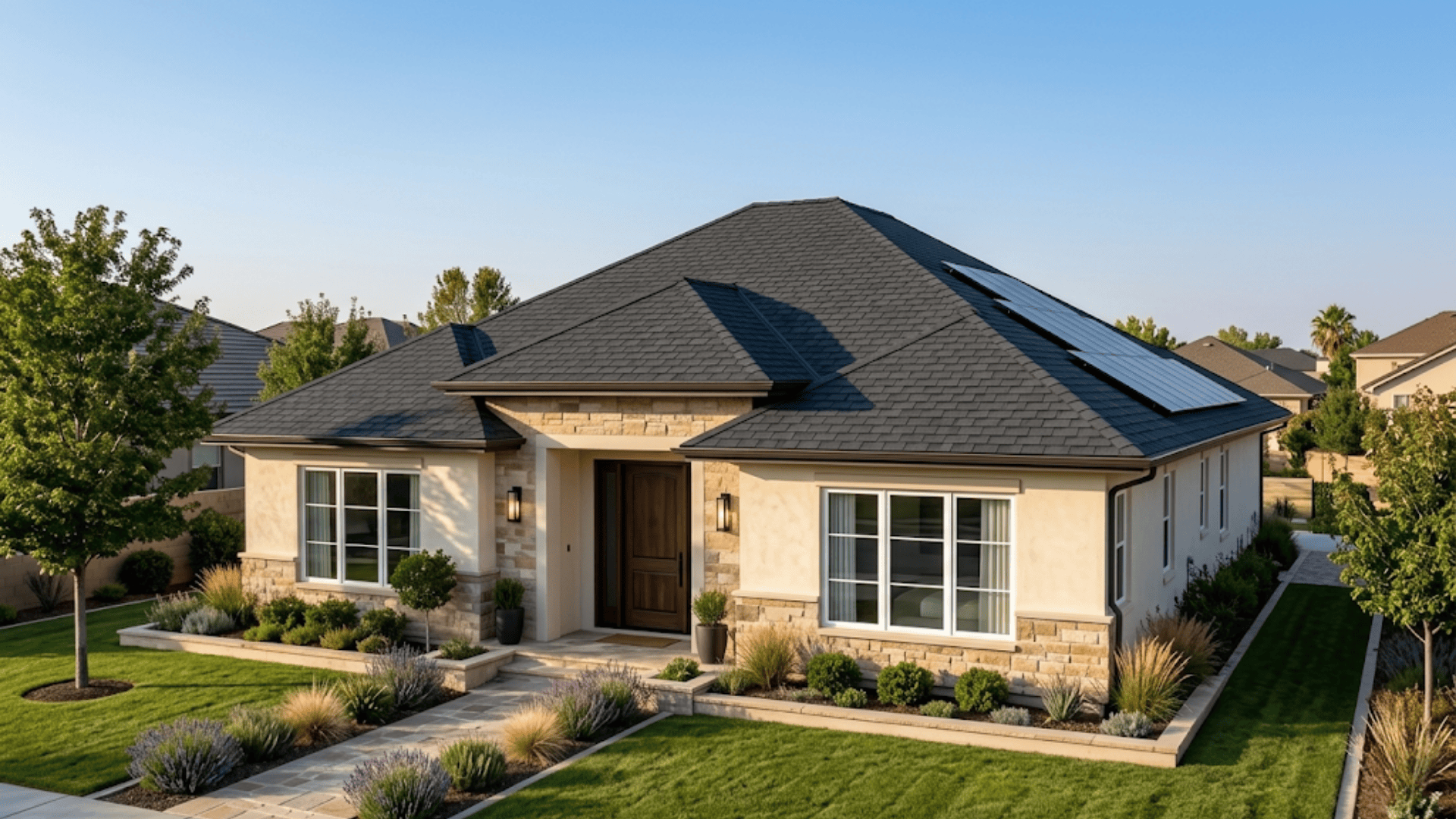
A hip roof features slopes on all four sides, with each side sloping downward to the walls.
You may see hip roofs in areas with high winds, such as coastal or mountainous regions, because of their aerodynamic shape.
Hip roofs are more complex than gable roofs but offer superior stability and are great for shedding rain and snow. This roof type is often used in both residential and commercial properties due to its reliable performance.
Features:
- Four sloped sides for better stability
- Symmetrical design for wind resistance
- Provides extra space for attic or upper rooms
- Effective water and snow runoff
| Pros | Cons |
|---|---|
| Excellent stability in high winds | More complex and expensive to build |
| Good for shedding rain and snow | Less attic space than gable roofs |
| Aesthetic appeal for many home styles | Requires more materials to construct |
3. Mansard Roof: A Unique Type of Roof with French Influence
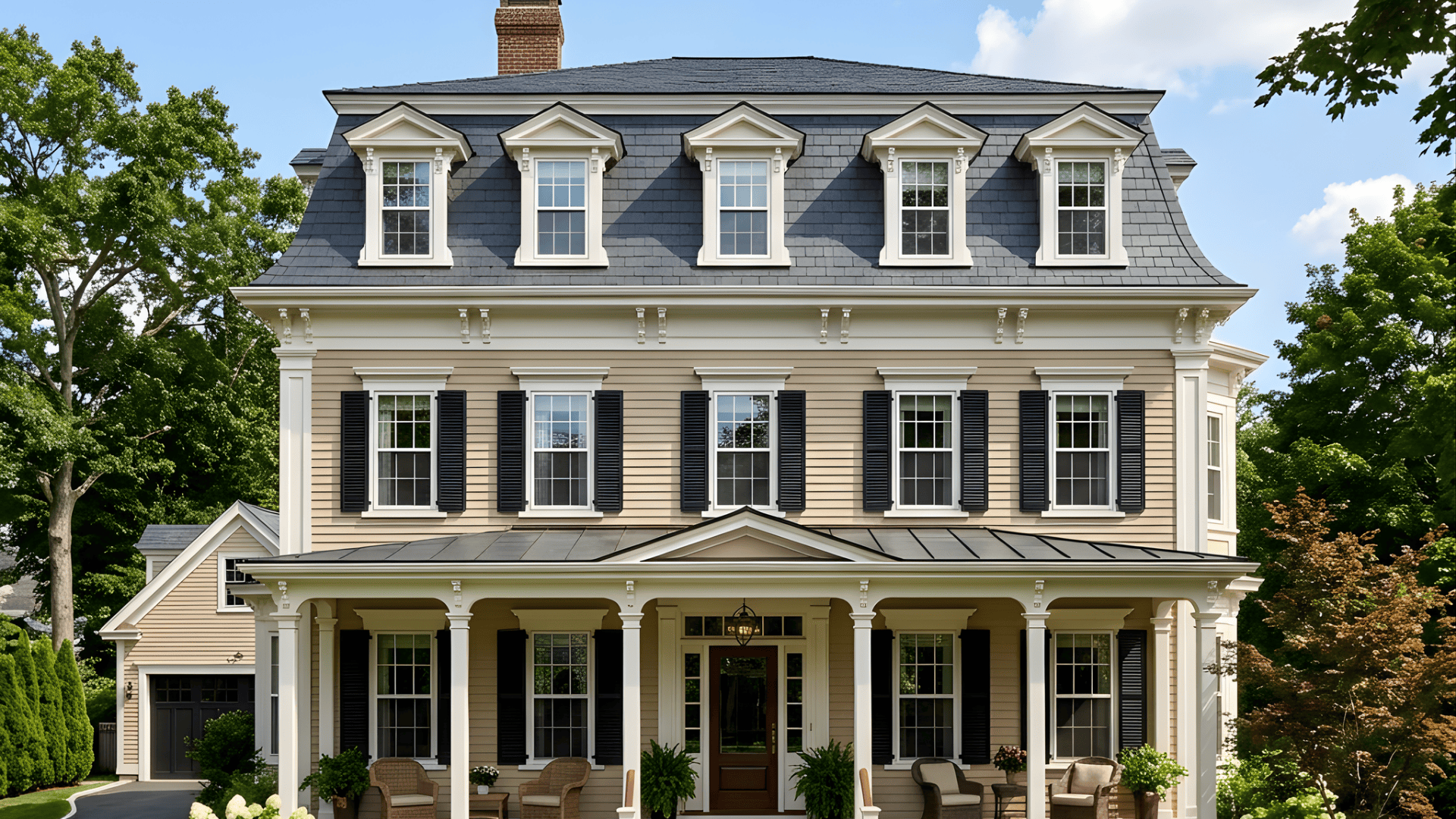
A mansard roof has two slopes on each of its four sides, with the lower slope being much steeper than the upper. This design is great for increasing usable space in the upper floor or attic.
You may see mansard roofs in regions with French colonial influence, such as in parts of New Orleans or along the East Coast of the United States.
Mansard roofs offer additional living space by utilizing the steep lower slope for full-use upper levels.
Features:
- Two slopes on each side, with the lower being steeper
- Often used in French architecture
- Adds extra living space in the attic
- Elegant and sophisticated appearance
| Pros | Cons |
|---|---|
| Maximizes upper-level space | More expensive to build and maintain |
| Ideal for adding extra floors | Steep slopes may complicate roofing installation |
| Aesthetic and elegant appeal | Requires careful maintenance to prevent leaks |
4. Flat Roofs: A Modern Type of Roof with Practical Benefits
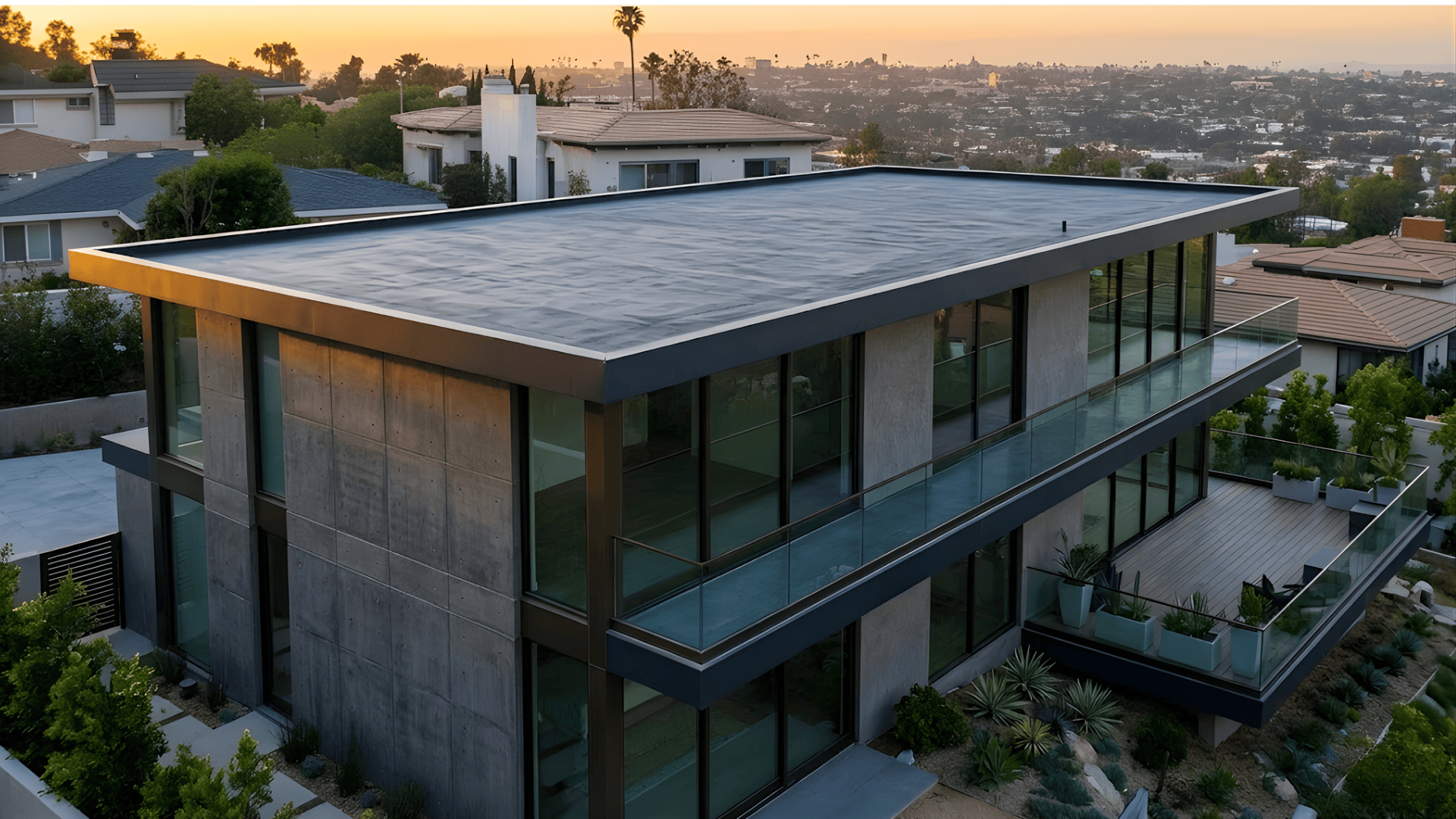
Flat roofs are nearly horizontal roofs commonly used in modern homes and commercial buildings.
You might find flat roofs in urban areas, especially in cities like New York or Los Angeles, where they provide usable rooftop space for gardens, solar panels, or even outdoor seating areas.
While flat roofs are ideal for maximizing a home’s usable space, they require proper drainage to prevent water pooling, especially in rainy climates.
Though they are less expensive to install, they require more frequent maintenance.
Features:
- Nearly horizontal design
- Provides extra space for gardens or solar panels
- Common in modern homes and commercial buildings
- Simple and cost-effective design
| Pros | Cons |
|---|---|
| Simple and cost-effective | Water drainage issues in heavy rainfall |
| Provides additional space for decks or gardens | Prone to leaks if not properly maintained |
| Modern and aesthetic look | Can be challenging to insulate |
5. Shed Roof: A Minimalistic Type Roof for Contemporary Homes
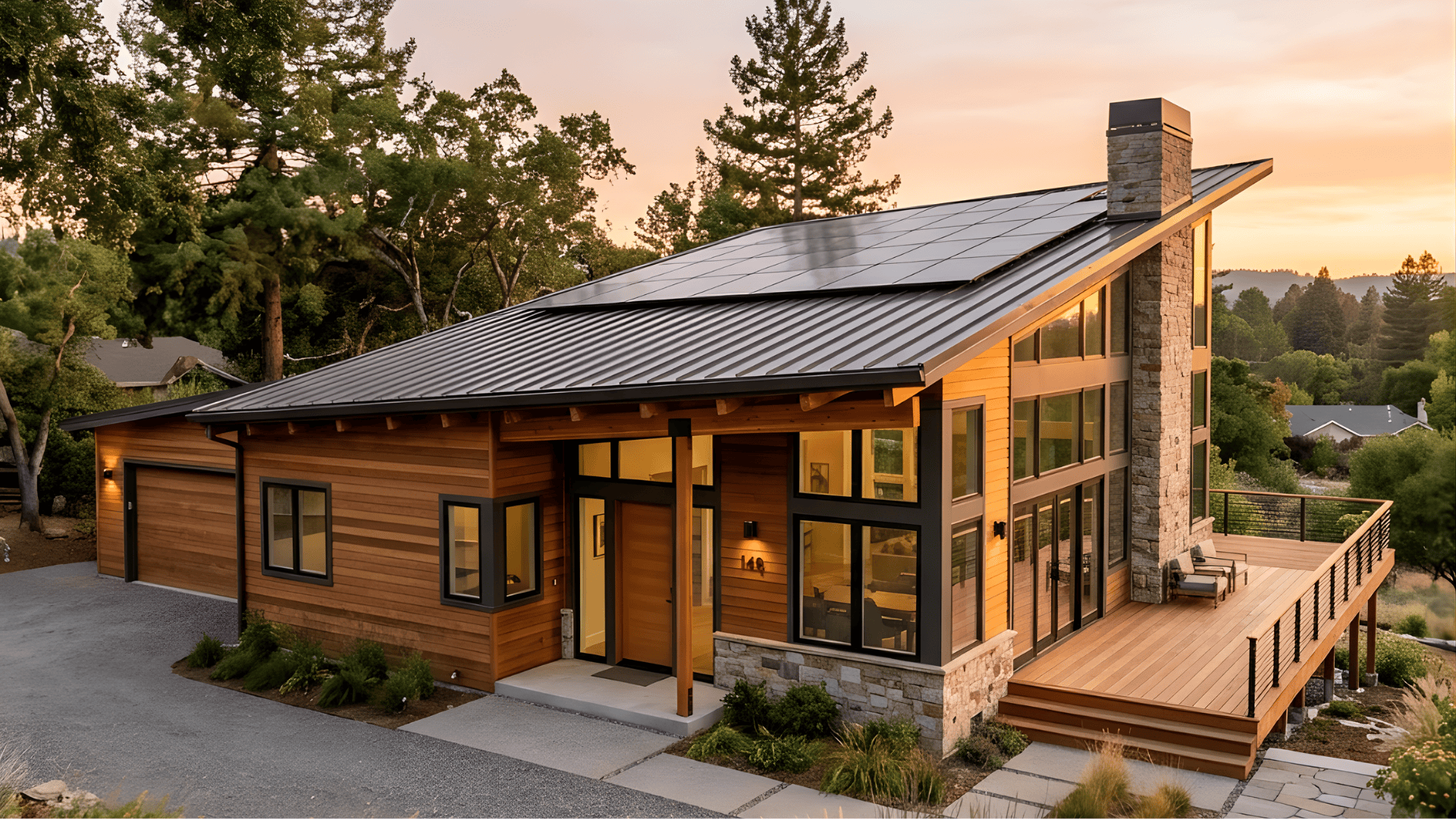
A shed roof is a single, sloping roof that’s commonly seen in minimalist and modern homes. It’s usually simpler and more affordable to build than other roof types.
You may notice this roof type in industrial areas or contemporary homes where a clean, simple design is valued. Shed roofs are especially popular in areas with mild climates where heavy snow or rain is not a concern.
The single slope allows for easy water drainage, and its low profile makes it a great option for small homes or home extensions.
While not as common as gable or hip roofs, it provides a stylish, functional alternative.
Features:
- Single sloping plane
- Great for contemporary or industrial designs
- Provides a clean, simple appearance
- Simple and cost-effective to construct
| Pros | Cons |
|---|---|
| Cost-effective and simple to build | Less traditional appeal |
| Excellent for modern designs | Can create uneven heat distribution in extreme climates |
| Ideal for home extensions or additions | Requires proper drainage to avoid water accumulation |
6. Gambrel Roof: A Traditional Type of Roof with Iconic Appeal
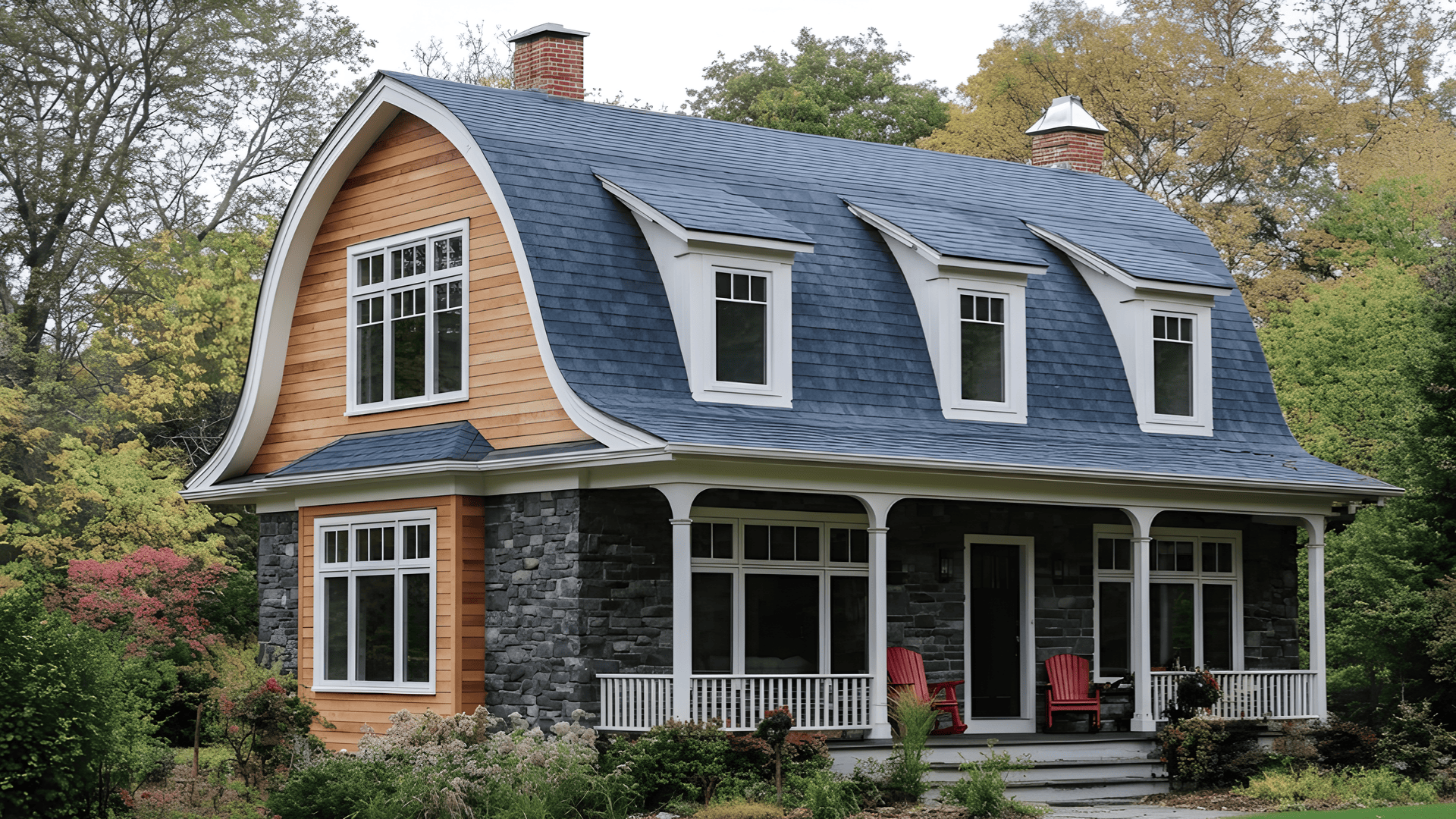
A gambrel roof features two slopes on each side, with the lower slope being much steeper than the upper. It’s often seen on barns and traditional homes, especially in rural areas.
You may see gambrel roofs in the countryside or in old farmhouses, where they allow for maximum use of upper-level space while keeping the roof design simple and functional.
The gambrel roof is known for its classic, charming aesthetic and is perfect for homes that need ample storage space in the attic.
Features:
- Two slopes, with the lower being steeper
- Maximizes headspace in the upper floor
- Often used in barns or traditional homes
- Classic and charming appearance
| Pros | Cons |
|---|---|
| Provides extra upper-level space | More complex to build than simple gable roofs |
| Aesthetic and timeless appeal | Can be difficult to maintain |
| Excellent drainage from steep slopes | Less effective in heavy snow areas |
7. Bonnet Roof: A Stylish Type of Roof for Added Function
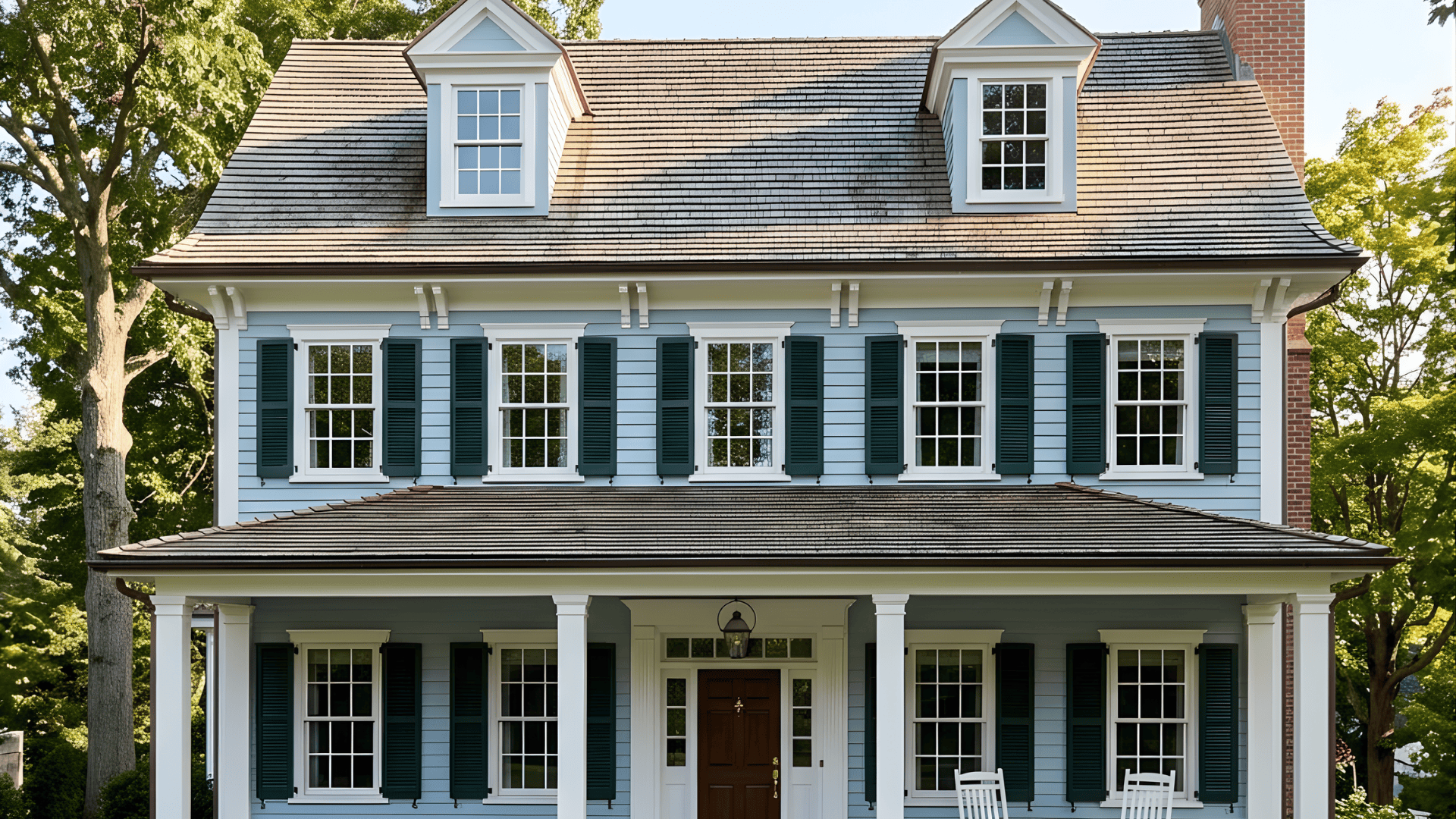
A bonnet roof is similar to the hip roof, but it has a lower, overhanging section that creates additional protection for the walls and windows. It’s often seen in colonial-style homes or buildings with a classic look.
You may notice bonnet roofs in coastal or suburban homes, where the extra eave offers protection from the sun and rain.
This design is both functional and stylish, adding a unique charm to the home’s exterior while keeping the interior safe from harsh weather.
Features:
- Sloping roof with overhanging eaves
- Provides extra protection for the walls
- Classic design with aesthetic appeal
- Increases natural light in upper floors
| Pros | Cons |
|---|---|
| Provides extra shelter from the weather | More complex and expensive to build |
| Increases natural light in upper floors | Requires regular maintenance |
| Aesthetically pleasing | Can be prone to wind damage in certain areas |
8. Skillion Roof: A Simple and Cost-effective Type of Roof
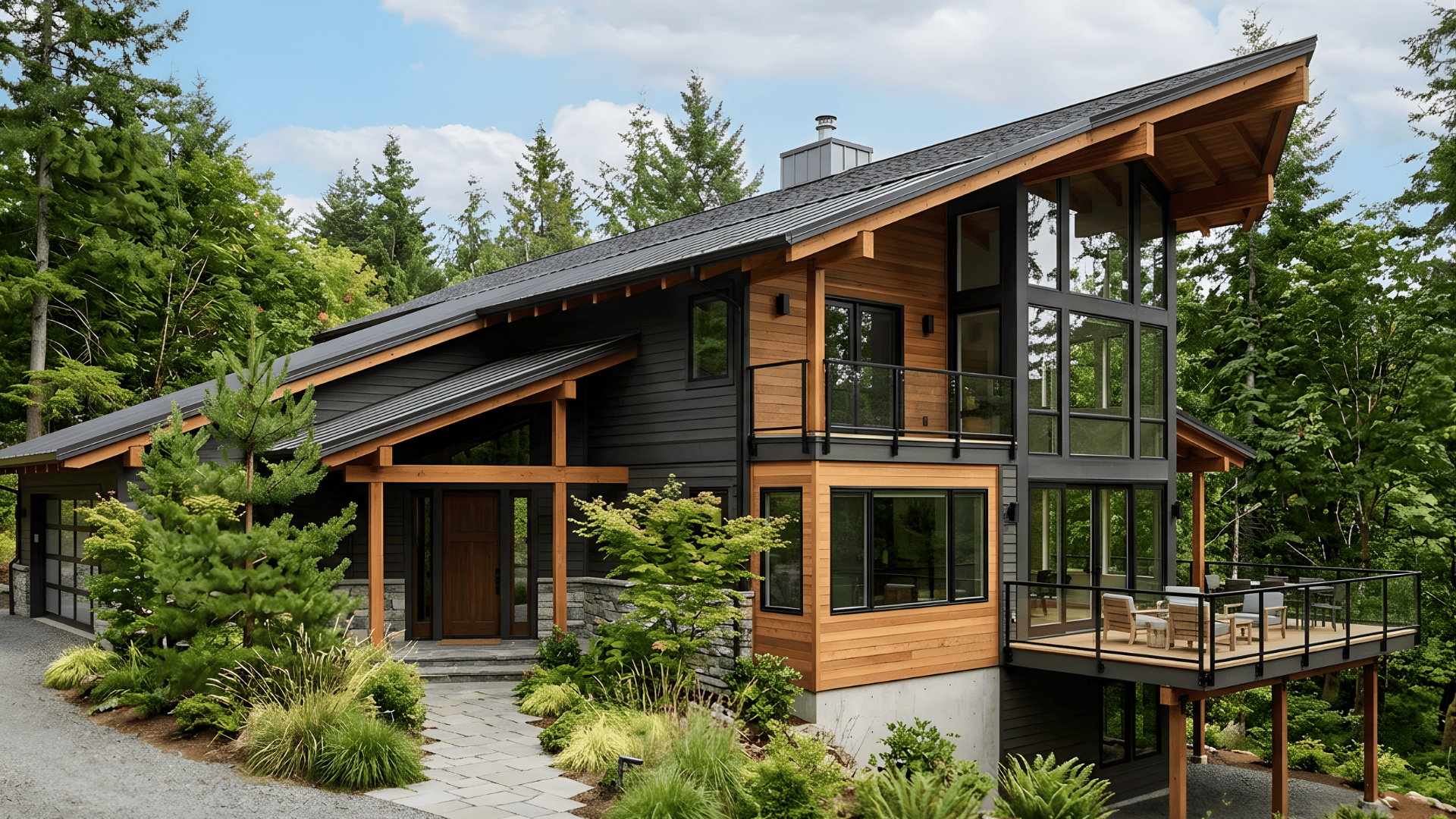
A skillion roof, also known as a lean-to roof, is a single-sloped roof commonly seen on sheds or modern homes. Its simplicity makes it easy to construct and maintain.
You might see skillion roofs in minimalist or industrial-style homes, where clean lines and functionality are prioritized.
It’s an affordable roofing option, especially for small homes or extensions, but it requires proper drainage to prevent water from pooling.
Features:
- One sloping plane
- Often used in smaller or contemporary buildings
- Provides a minimalist, modern look
- Simple and cost-effective construction
| Pros | Cons |
|---|---|
| Simple and inexpensive to build | Limited attic space |
| Perfect for modern or small homes | Water drainage can be an issue |
| Sleek, minimalistic appearance | Needs proper insulation |
9. Butterfly Roof: A Bold Type of Roof for Modern Designs
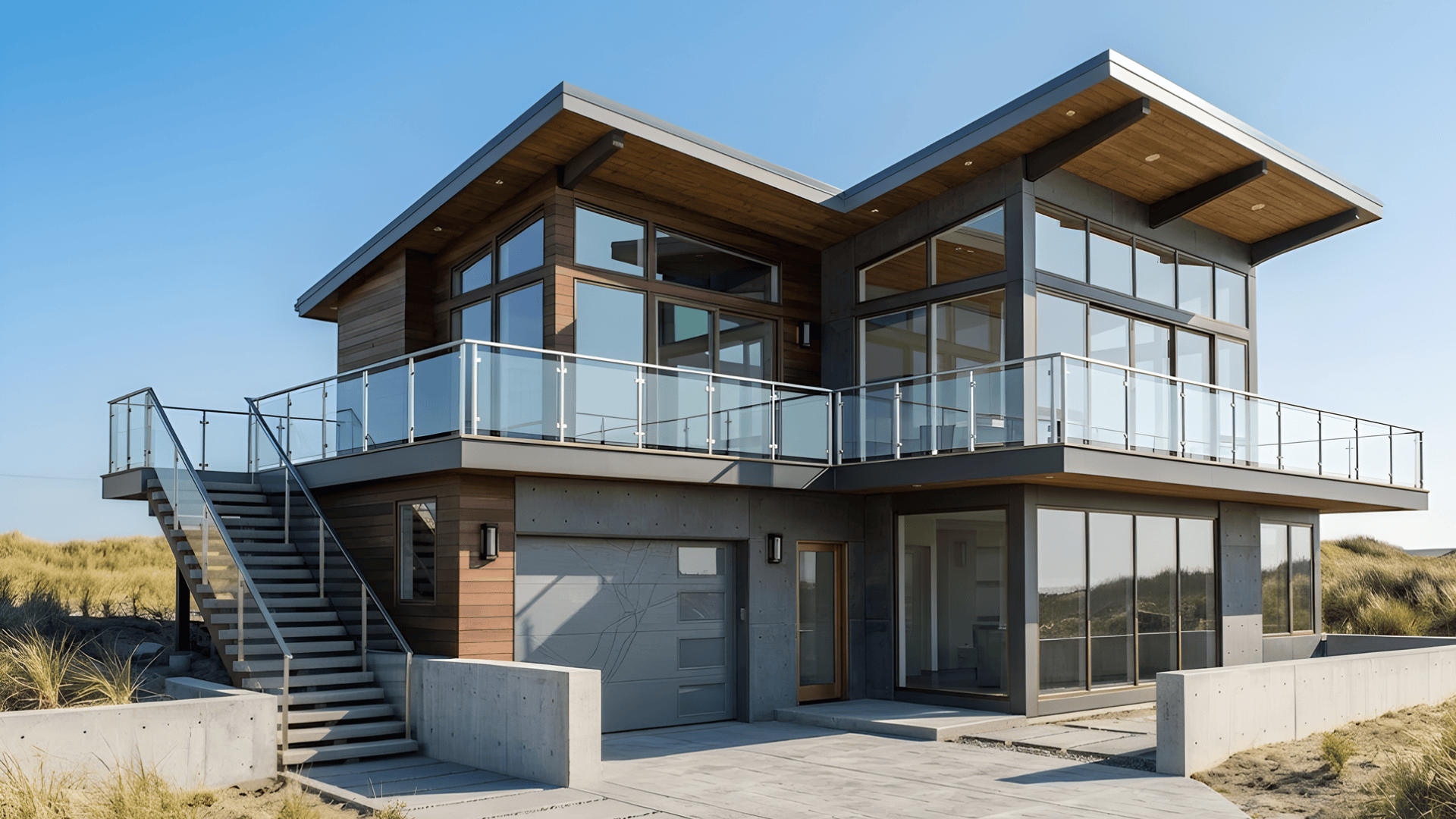
The butterfly roof features two sloping sides that meet at a valley in the center. This distinctive design is often used in modern architecture and is a striking feature in homes that prioritize sleek, contemporary aesthetics.
You may see butterfly roofs in eco-friendly homes or in homes designed to maximize natural light. The shape allows for larger windows in the valley, providing excellent views and bringing in more daylight.
This roof type is perfect for modern designs that aim to stand out and make a statement.
Features:
- Two sloping sides that meet in a valley
- Often used in modern, sustainable homes
- Allows for large windows and natural light
- Provides a unique and bold appearance
| Pros | Cons |
|---|---|
| Aesthetic and unique design | More difficult and expensive to build |
| Great for modern, sustainable homes | Poor drainage if not built correctly |
| Offers high ceilings and natural light | Needs regular maintenance |
10. Thatched Roof: An Eco-friendly Type of Roof with Natural Beauty
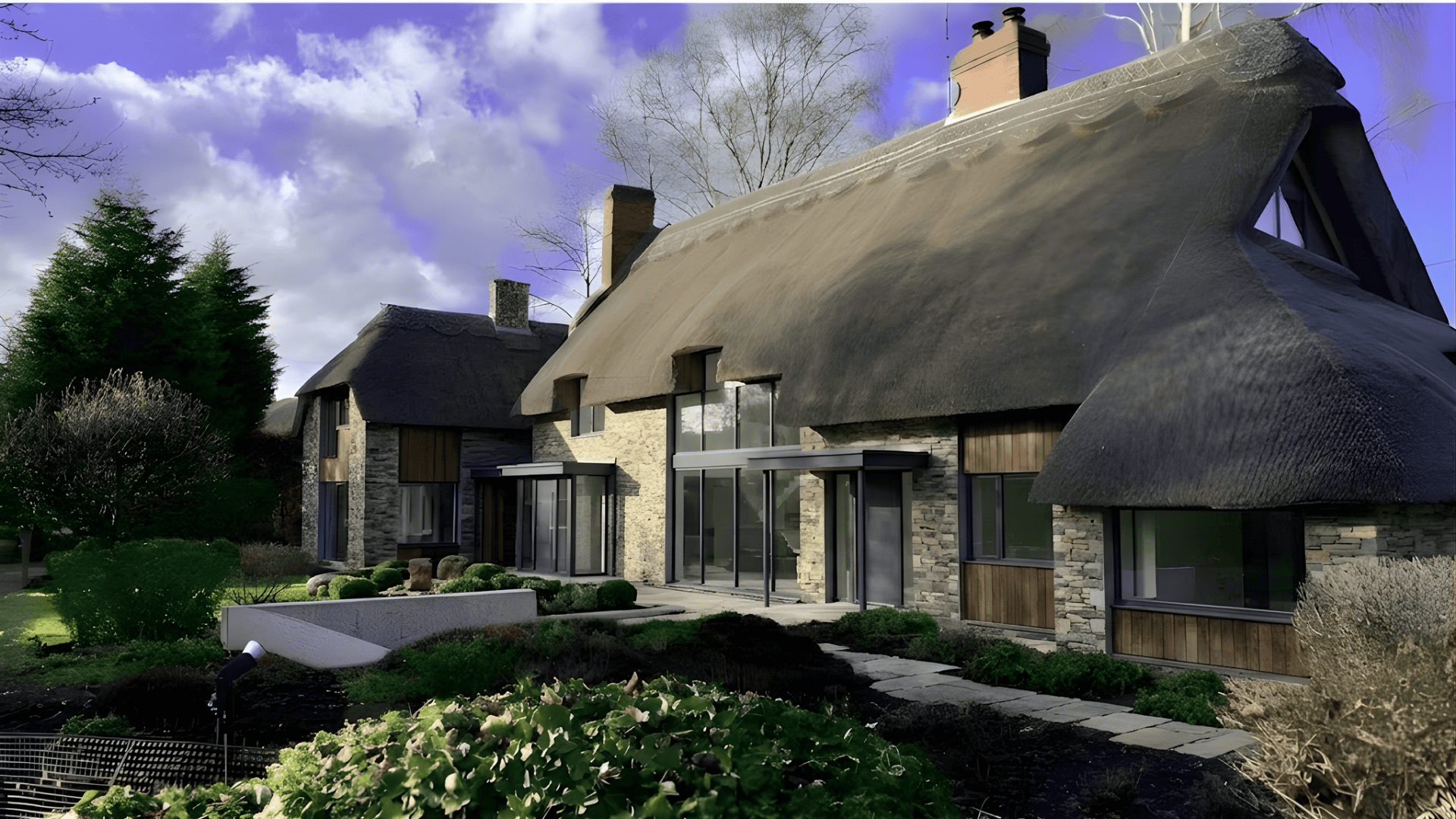
A thatched roof is made from natural materials such as straw, reed, or grass. It’s one of the oldest roofing types and is still used today in eco-friendly homes, providing insulation and a rustic look.
You may see thatched roofs in rural or countryside homes, especially in regions where natural materials are abundant.
This roof type is ideal for creating a charming, rustic appearance but requires regular maintenance to remain intact and functional.
Features:
- Made from renewable, natural materials like straw or reed
- Excellent for insulation and energy efficiency
- Common in rural or traditional-style homes
- Adds a rustic and natural aesthetic
| Pros | Cons |
|---|---|
| Sustainable and eco-friendly | Expensive to install and maintain |
| Excellent natural insulation | Prone to pests and decay if not properly maintained |
| Rustic and charming look | Requires regular upkeep |
11. Dormer Roof: A Functional Type of Roof for Maximizing Space
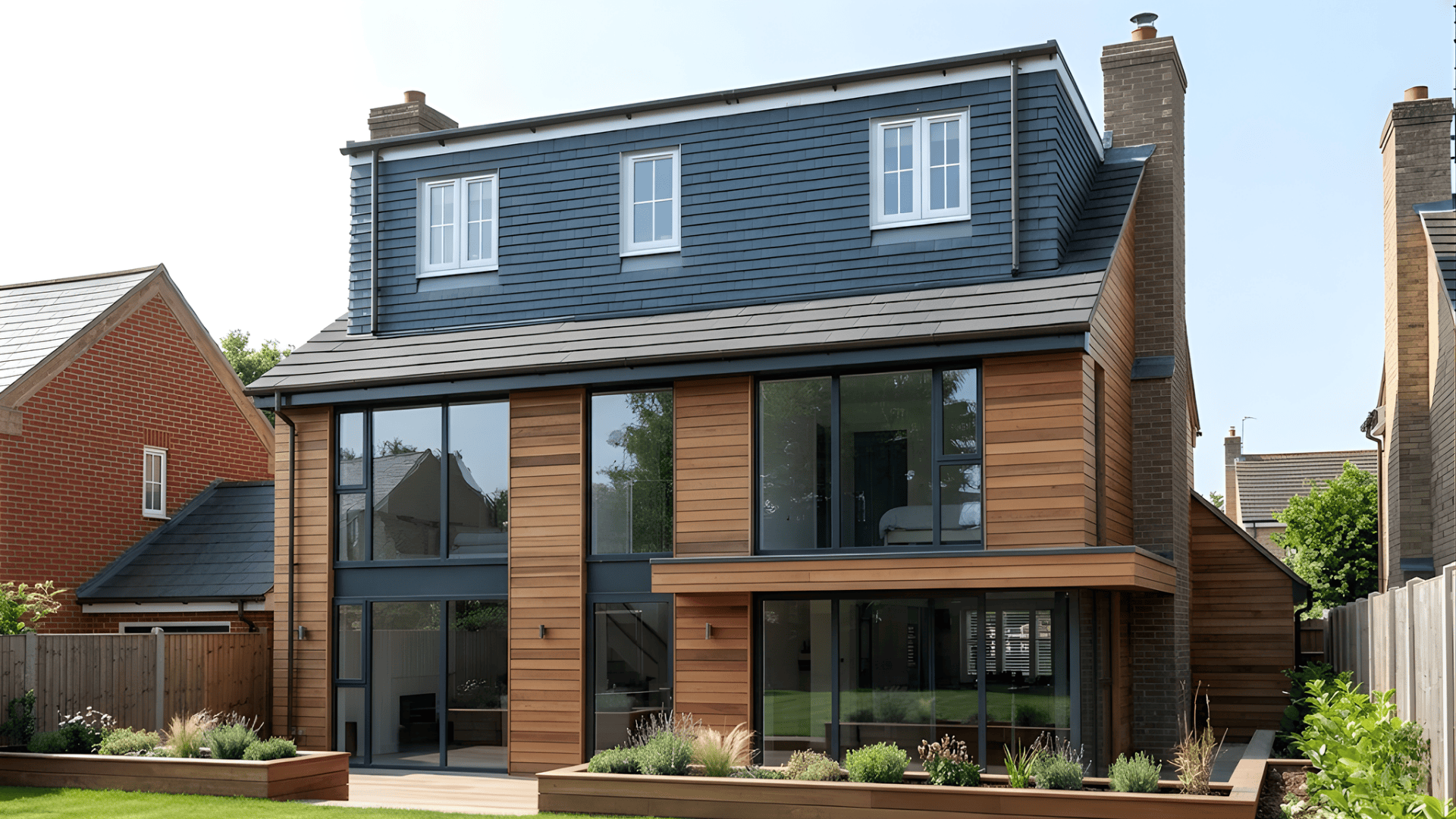
A dormer roof is typically used in homes with attics, where the roof is extended to create additional headspace and windows for extra light. It’s often seen in older or cottage-style homes.
You may see dormer roofs in areas with steep roofs, such as New England or the UK, where extra living space is needed in the upper floors.
Dormer roofs allow homeowners to convert the attic into a usable space, such as a bedroom or storage area, while also providing ample natural light.
Features:
- Adds space and headroom to the attic
- Includes windows for better light and ventilation
- Common in homes with steep roofs
- Helps with maximizing vertical space
| Pros | Cons |
|---|---|
| Adds extra space and light | Can be expensive to add or modify |
| Ideal for attics or upper floors | May reduce roof durability if not constructed properly |
| Aesthetic appeal for traditional homes | Prone to leaks in poorly maintained areas |
12. Saltbox Roof: A Historic Type of Roof with Unique Appeal
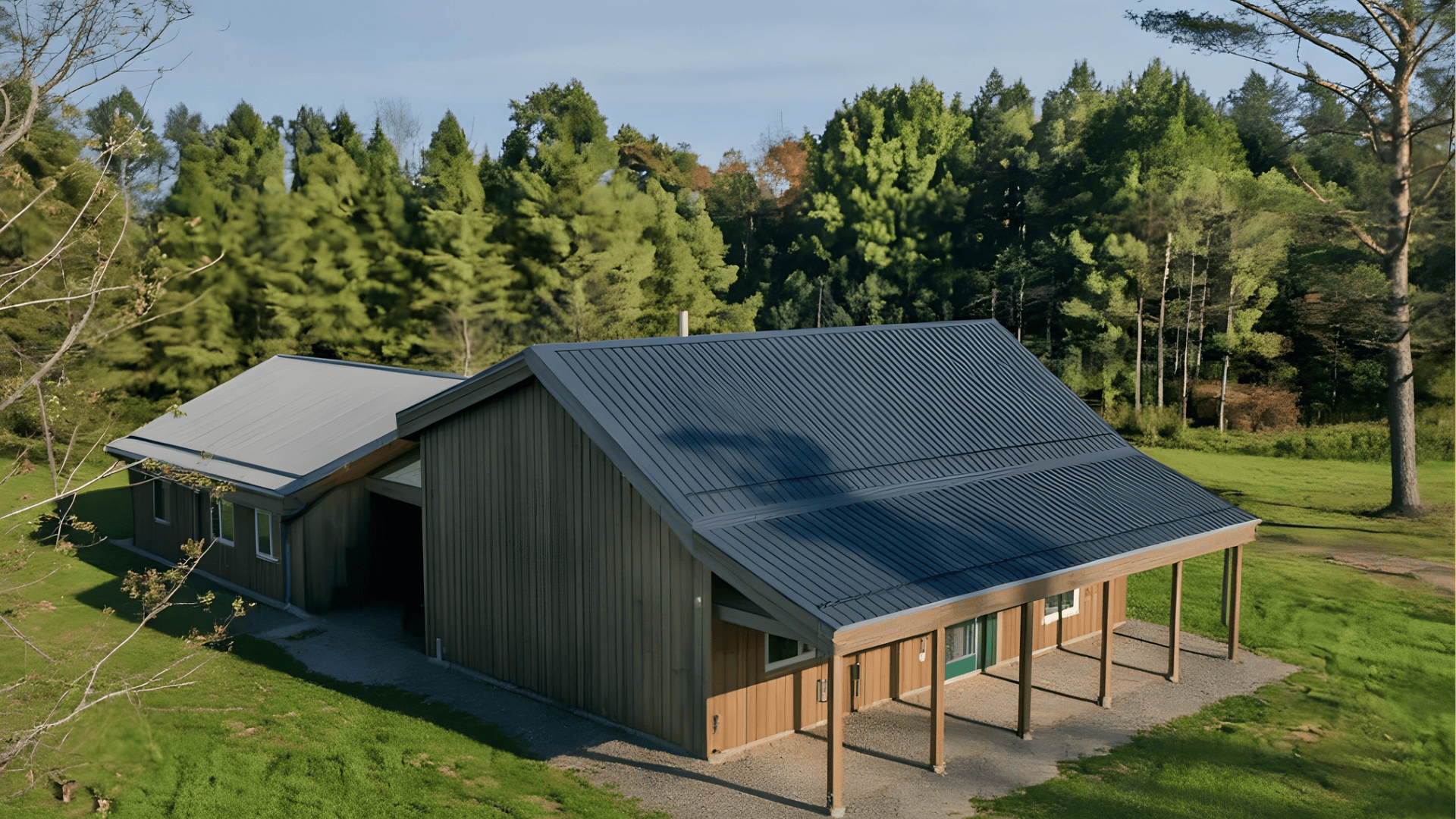
A saltbox roof features a long, sloping side and a shorter opposite side. This asymmetrical design originated in colonial times and is known for its historic, charming appeal.
You may see saltbox roofs in historic homes, especially in the northeastern United States, where they offer both aesthetic appeal and functional benefits.
The design was originally created to allow for more space on one side of the house, providing practical room for a larger living area.
Features:
- Asymmetrical roof with a longer slope on one side
- Common in colonial and New England homes
- Often used to create additional upper-floor space
- Provides a unique, historic aesthetic
| Pros | Cons |
|---|---|
| Historic and charming appearance | More difficult to construct than simpler designs |
| Provides additional upper-level space | Can be more expensive to maintain |
| Excellent for adding space in small homes | Requires a lot of attention to prevent leaks |
13. Curved Roofs: An Artistic Type of Roof for Creative Looks
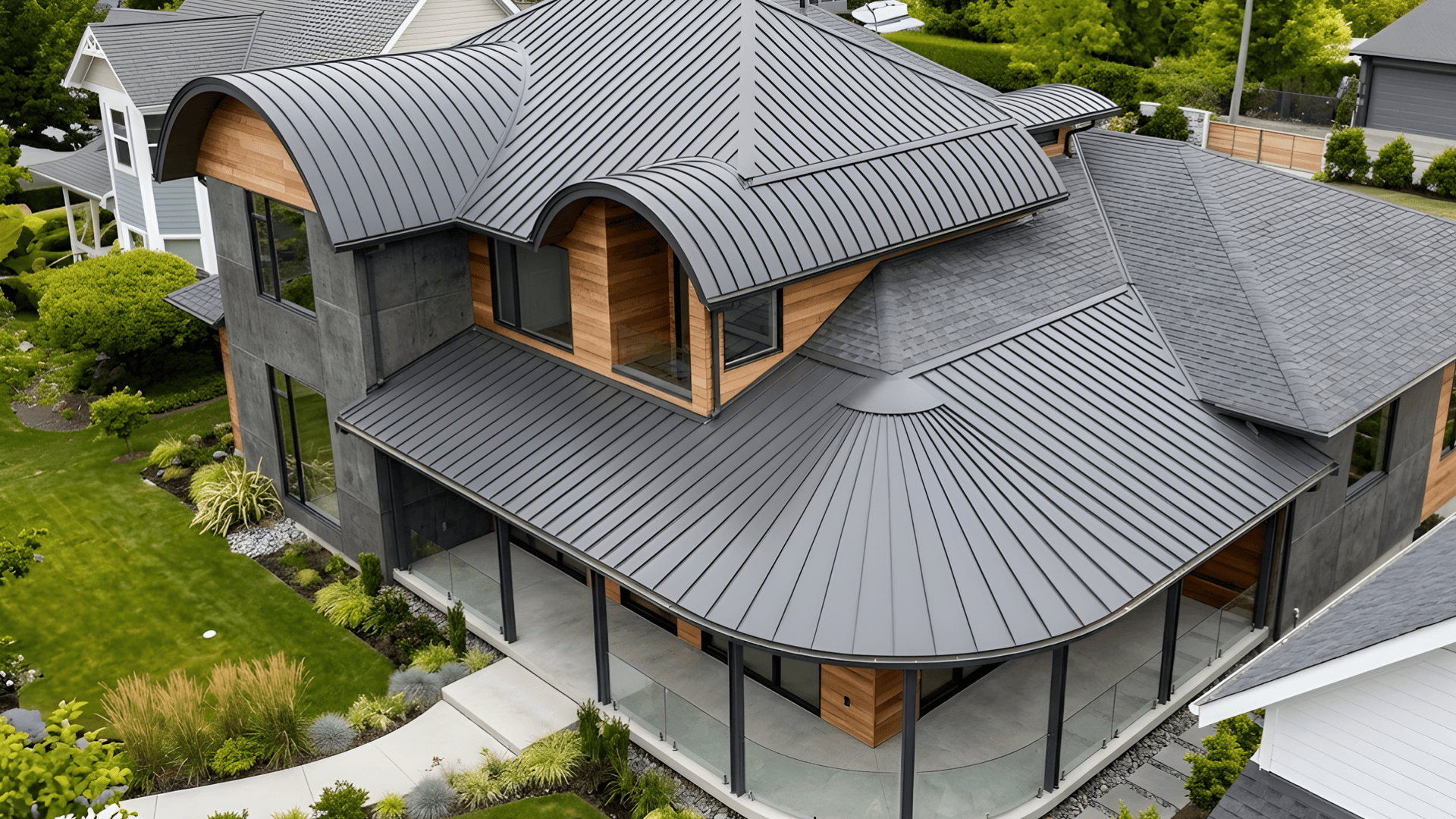
Curved roofs are a modern design element where the roof has a smooth, continuous curve. This type of roof is often seen in modern or avant-garde architecture, offering a futuristic and artistic touch.
You may find curved roofs in unique buildings such as art galleries or eco-friendly homes designed for energy efficiency.
This roof type allows for a dynamic, creative structure that adds visual appeal, though it may require custom engineering to build properly.
Features:
- Smooth, continuous curve
- Often used in modern and futuristic designs
- Provides a unique, artistic look
- Ideal for buildings with a creative or artistic design
| Pros | Cons |
|---|---|
| Unique and eye-catching | Complex and expensive to build |
| Great for modern designs | Difficult to insulate properly |
| Smooth and smooth appearance | May require special materials |
14. M-Shape Roof: A Unique Roof Type with a Modern Twist
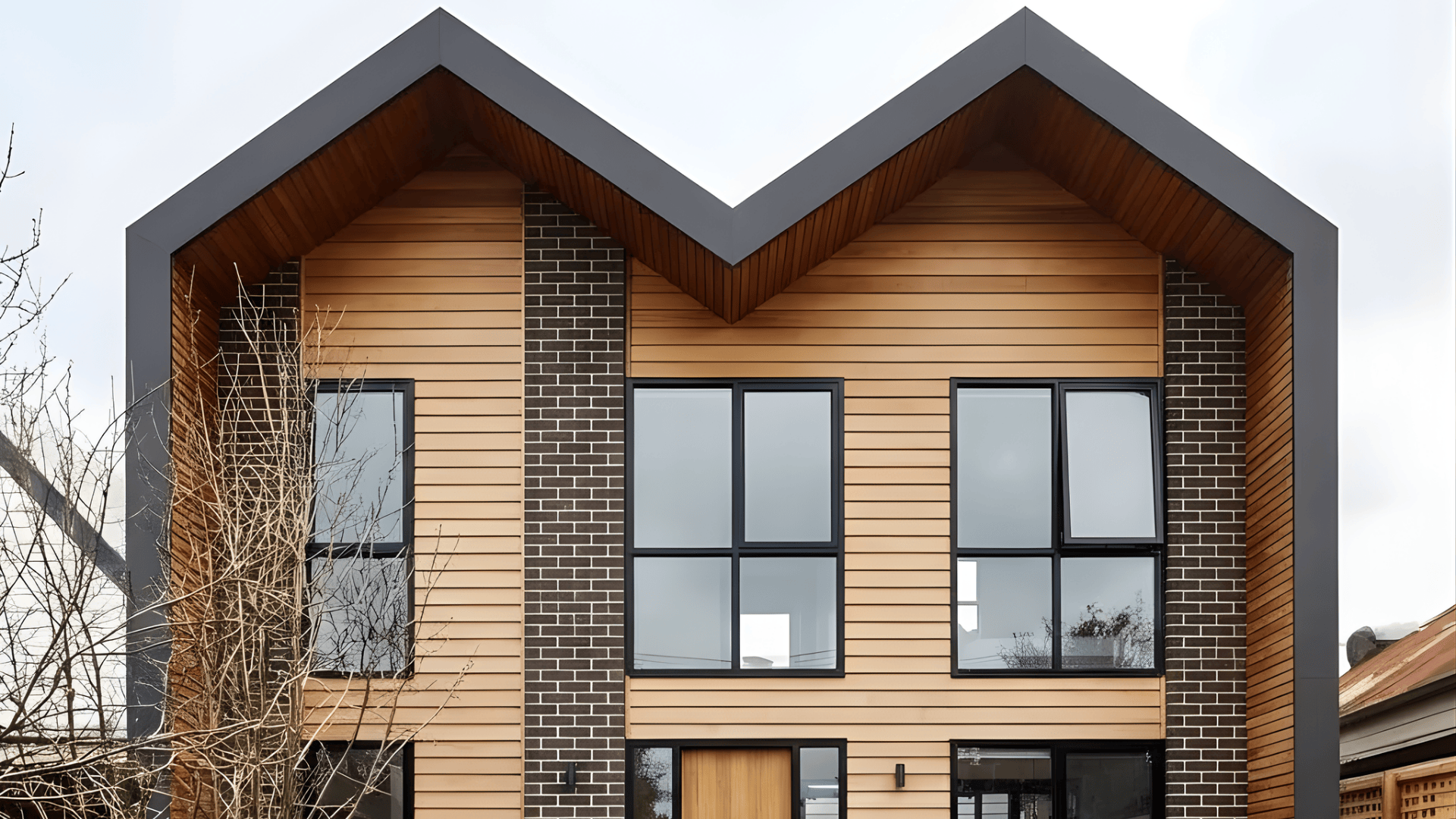
An M-shape roof has a double-sloped design that creates an M-shape. It’s often used in modern homes, providing both functionality and aesthetic appeal.
You may see M-shaped roofs in urban areas, where the design provides extra living space and adds an interesting visual element.
This roof type combines the benefits of a gable roof with the unique look of the “M” shape, making it a great choice for homeowners who want something a bit different.
Features:
- Two peaks that create an M shape
- Ideal for modern homes
- Offers ample attic or upper-level space
- Unique visual appearance
| Pros | Cons |
|---|---|
| Modern and unique design | More expensive to build |
| Provides extra headspace | Can be complex to maintain |
| Adds aesthetic value | Requires good drainage solutions |
15. Octagonal Roof: A Unique Type of Roof for Creative Homes
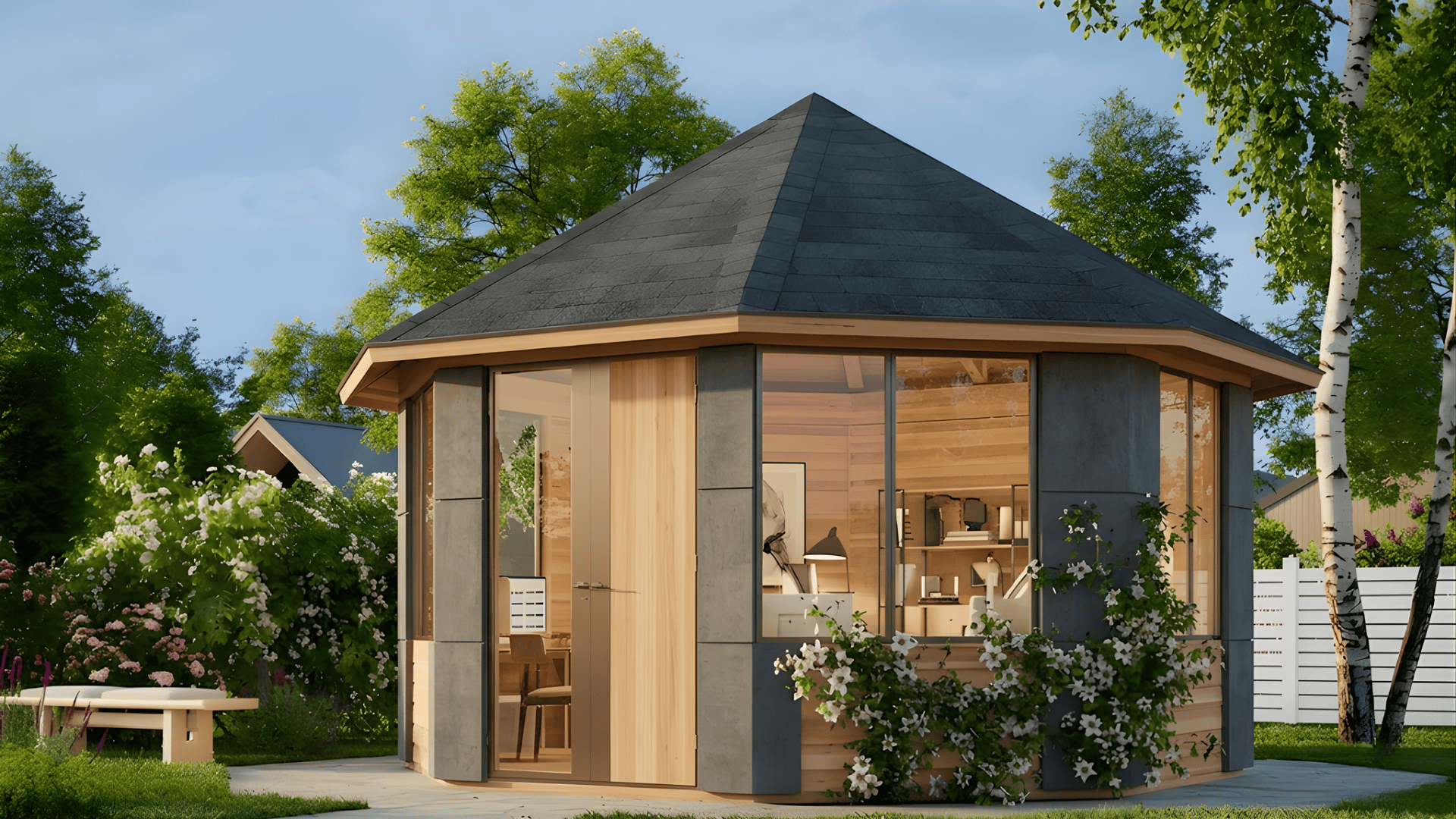
An octagonal roof has eight sides, creating a symmetrical and unique shape. This design is often used in small or distinctive structures, such as garden pavilions, gazebos, and some homes.
You may see octagonal roofs in unique architectural designs, which provide both visual impact and ample interior space.
While uncommon in large homes, the octagonal roof is ideal for small, creative structures, offering a 360-degree view.
Features:
- Eight sides create a symmetrical design
- Often used in small or unique structures
- Provides excellent visual appeal
- Maximizes space in small structures
| Pros | Cons |
|---|---|
| Unique and creative design | Complex and costly to build |
| Great for visual appeal | Limited practicality for large homes |
| Maximizes space in small structures | May require special roofing materials |
Common Roof Problems and How to Prevent Them
Roofs are designed to protect your home, but over time, they can experience various issues. Understanding the common roof problems and knowing how to prevent them can help you extend the life of your roof.
1. Leaks and Water Damage: Leaks can occur due to broken shingles, damaged flashing, or poor sealing around vents and chimneys. Water damage can lead to mold growth and structural issues.
Prevention: Regularly inspect your roof for damaged or missing shingles, ensure flashing is sealed properly, and clean gutters to avoid water buildup.
2. Clogged Gutters: Clogged gutters prevent water from flowing off the roof, causing water to back up and potentially damage your roof or walls.
Prevention: Clean gutters at least twice a year and trim overhanging branches to prevent debris buildup.
3. Ponding Water on Flat Roofs: Flat roofs are more prone to ponding water, which can cause leaks and even roof collapse if left untreated.
Prevention: Ensure proper drainage is installed and inspect flat roofs regularly to avoid water pooling.
4. Damaged or Missing Shingles: High winds, hail, or aging can damage or lift shingles, leading to leaks and exposure of the underlayment.
Prevention: Check shingles regularly for damage and replace any that are cracked, curled, or missing.
5. Poor Ventilation: Without proper ventilation, heat and moisture can build up in your attic, leading to mold growth and premature wear on the roof.
Prevention: Install attic vents to allow proper airflow and check insulation to prevent heat buildup.
6. Algae and Moss Growth: Algae and moss can grow on roofs in areas with excess moisture or shade, which can degrade roofing materials over time.
Prevention: Install zinc or copper strips along the roof’s ridge to prevent algae and moss growth, and regularly clean the roof.
By being aware of these common roof problems and performing regular maintenance, you can protect your home from roof damage and ensure your roof lasts for many years.
Final Thoughts
The roof above your home does far more than just protect you from the elements; it contributes to the overall comfort, energy efficiency, and aesthetic appeal of your living space.
Knowing the different roof types and their unique benefits, you’re now better positioned to make an informed decision that suits both your home and your budget.
Regular maintenance is key to ensuring your roof lasts for many years and continues to perform at its best.
I’d love to hear from you! Have you recently chosen a roof for your home, or dealt with any roof problems? What worked for you, or what challenges did you face?
Share your thoughts and experiences in the comments below; your insights might just help others in the same situation!