

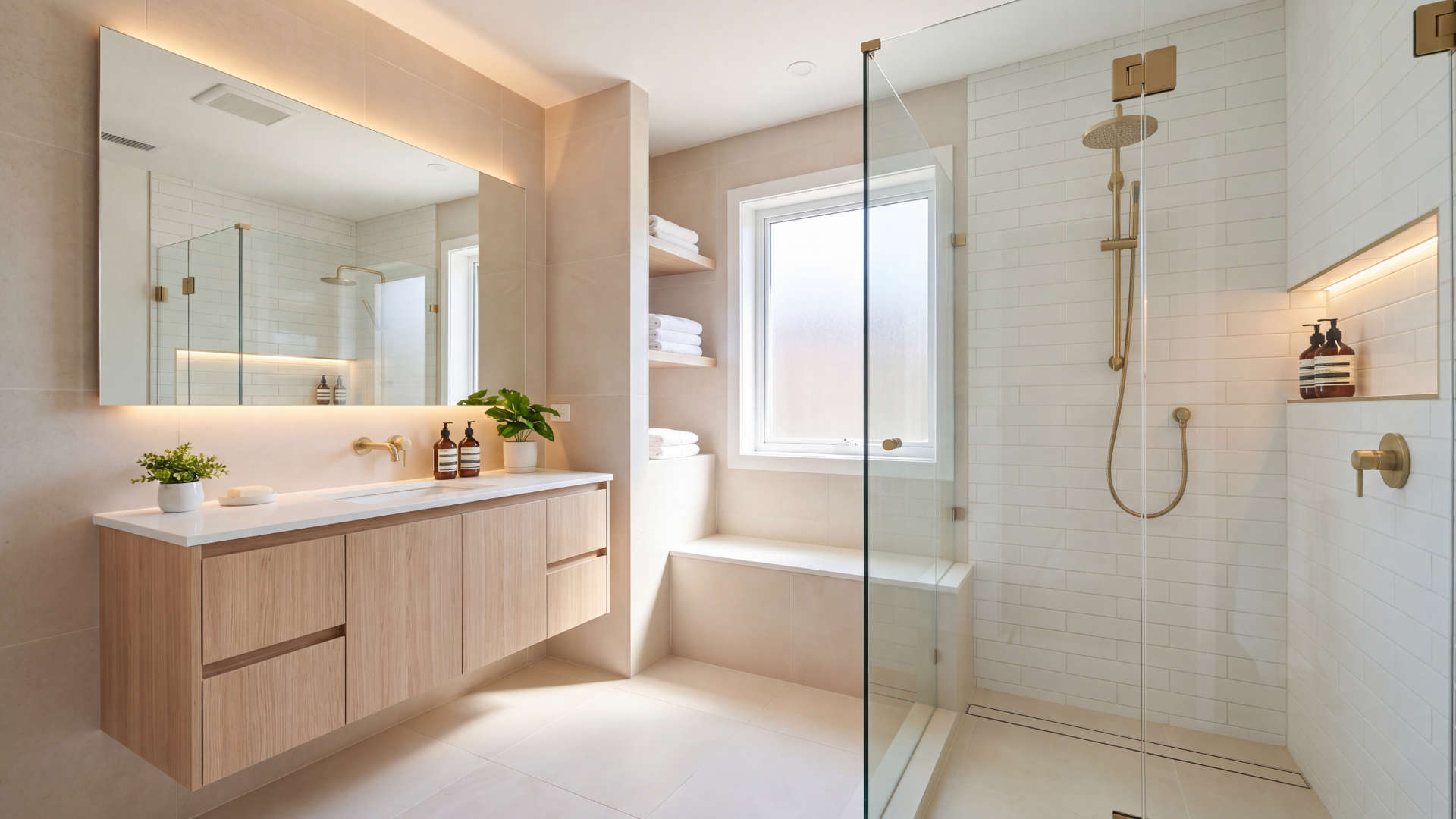
A small bathroom can feel tight, dark, and uncomfortable, especially when too many items fill the space. Limited storage, poor lighting, and bulky fixtures make the room feel even smaller than it really is.
The good news is that you do not need a full remodel or a large budget to fix it. Simple changes like better lighting, lighter paint colors, large mirrors, and less clutter can completely change how the room feels.
This guide covers practical strategies that work in real bathrooms. Some cost nothing. Others take a weekend. All of them make a visible difference.
How Can Light Colors Make a Small Bathroom Look Bigger?
Light colors make small bathrooms feel bigger because they reflect light evenly, reducing harsh shadows that define edges and make the brain perceive less enclosed space.
Dark colors absorb light and create surface contrast, making edges more visible. Your eye quickly finds the room’s boundaries, making the entire space feel noticeably smaller.
Natural light enters from one direction, brightening one wall more than others. Light colors on all four walls soften that contrast and spread brightness more evenly throughout.
Windowless bathrooms depend entirely on artificial light, making color choice critical. A flat white reflects more light back into the room than any additional fixture can provide.
The difference between open and cold often comes down to finish. Warm cream or soft gray with an eggshell finish reflects light gently, adding depth without feeling clinical.
Smart Ways to Open Up Space
These work across different bathroom layouts, budgets, and skill levels. Start with the ones that cost nothing, then build from there.
1. Use Light Colors
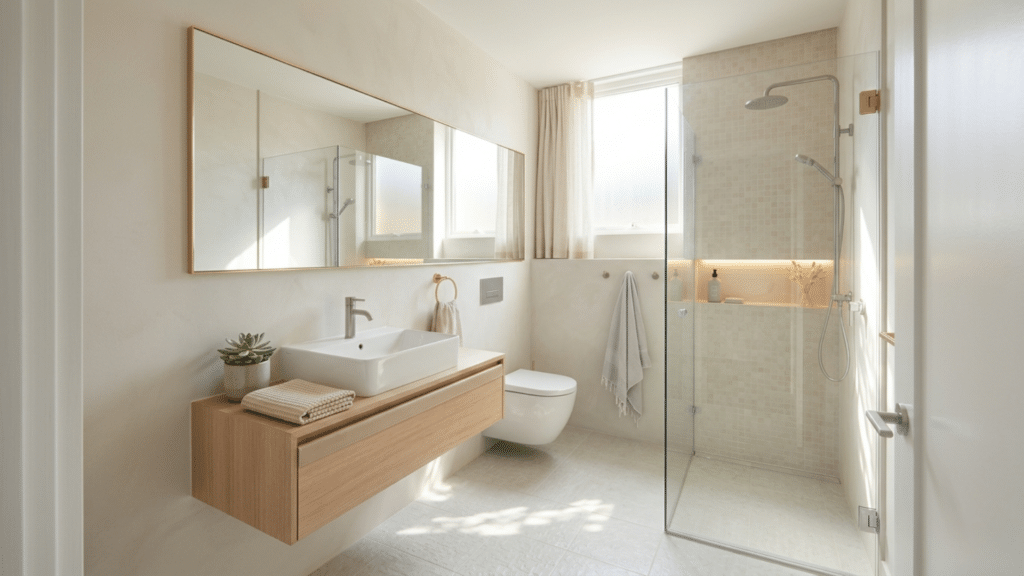
Light colors reflect both natural and artificial light around the room, visually pushing walls outward. Soft whites, creams, and pastels make even the tightest spaces feel open.
Avoid stark pure white, it reads clinical rather than open. Warm off-whites and soft grays deliver the same brightness with a far more inviting atmosphere.
- Paint Choice → Paint walls ivory, warm white, or soft gray
- Ceiling Contrast → Keep the ceiling one shade lighter than the walls
- Finish Selection → Choose matte or eggshell finishes to reduce glare
2. Add Large Mirrors
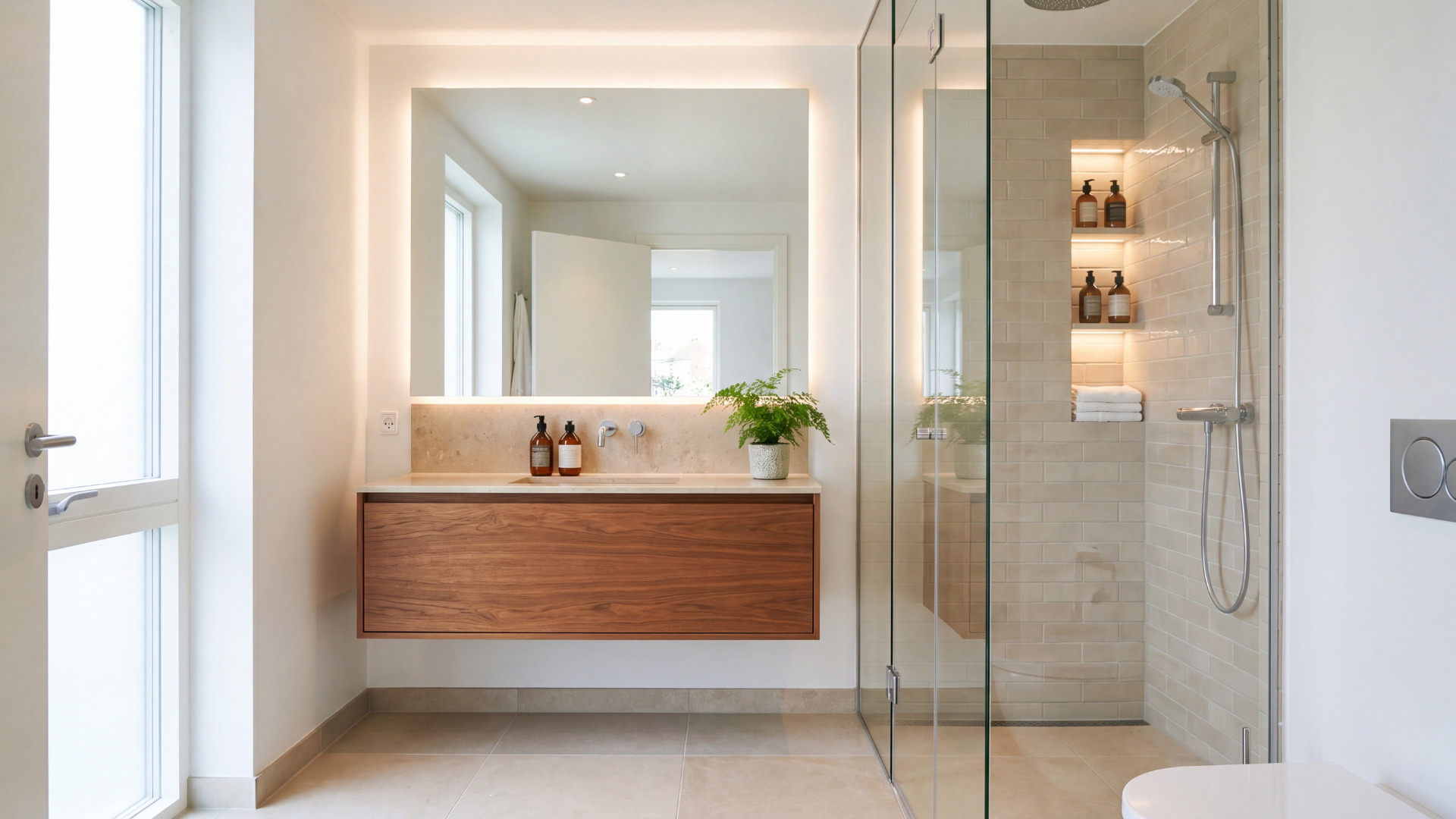
A large mirror opposite a window doubles visible light instantly and creates the illusion of a second room beyond the wall. The effect is dramatic and immediate.
Frameless or slim-framed mirrors blend into walls without adding visual weight. Always check what the mirror will reflect, doubling a cluttered wall defeats the purpose entirely.
- Position mirrors directly opposite a window or light source
- Choose frameless or slim metal frames for a seamless look
- Use mirrored cabinet doors to combine storage with reflection
3. Remove Clutter
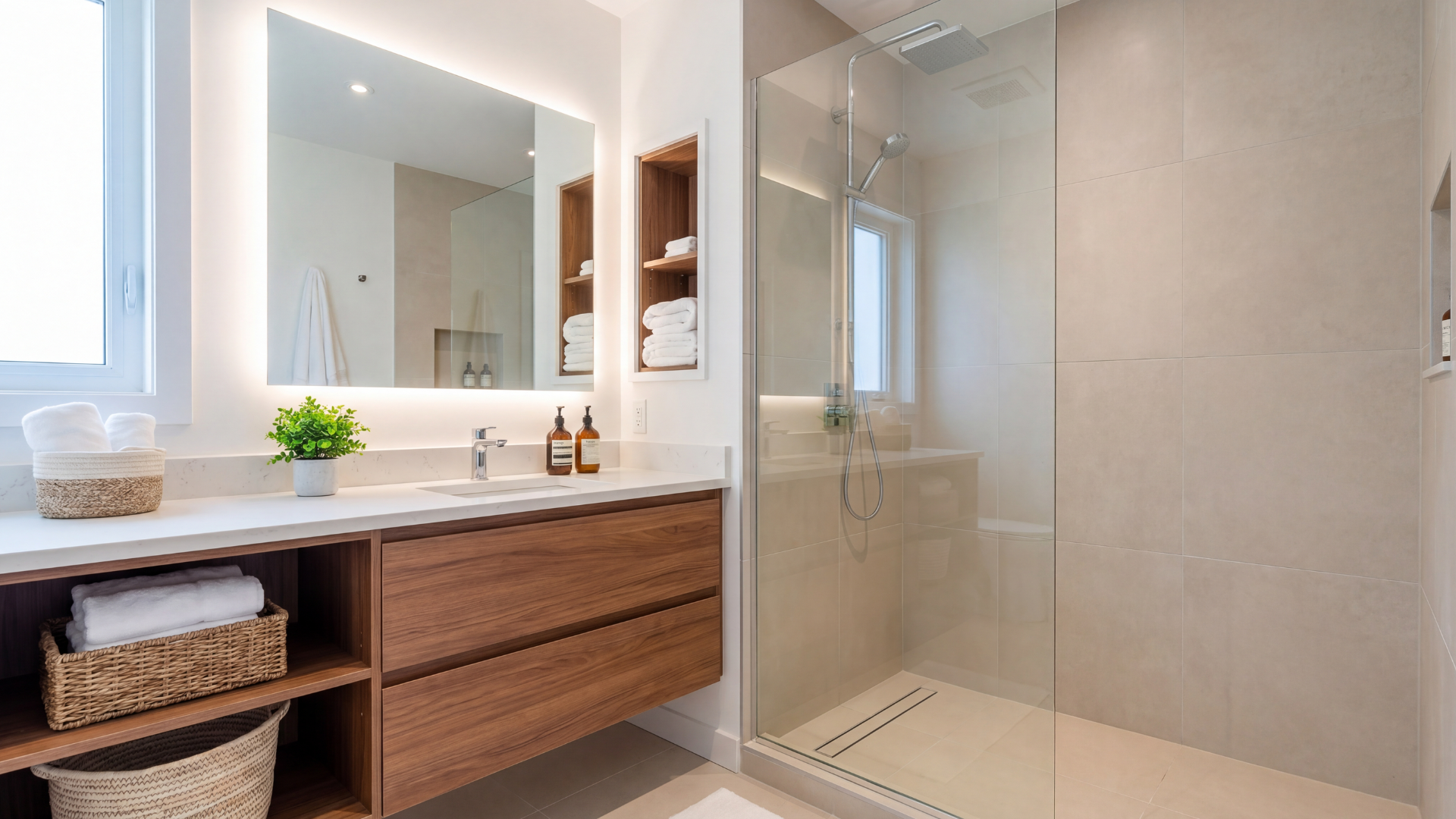
Every item competing for eye space makes a small bathroom feel chaotic and cramped. Clearing surfaces costs nothing, yet delivers an immediate, visible sense of room.
✓ Daily Discipline: Keep only daily-use items on the countertop
✓ Dedicated Homes: Assign every product a dedicated drawer or cabinet home
✓ Monthly Reset: Declutter once a month to prevent gradual accumulation
The initial clear-out is easy, preventing drift over weeks is the real challenge. Returning items immediately after use keeps surfaces clear without turning it into a daily chore.
A clutter-free bathroom isn’t about owning less, it’s about putting things where they belong. That habit alone changes how the whole room feels.
4. Use Glass Shower Doors
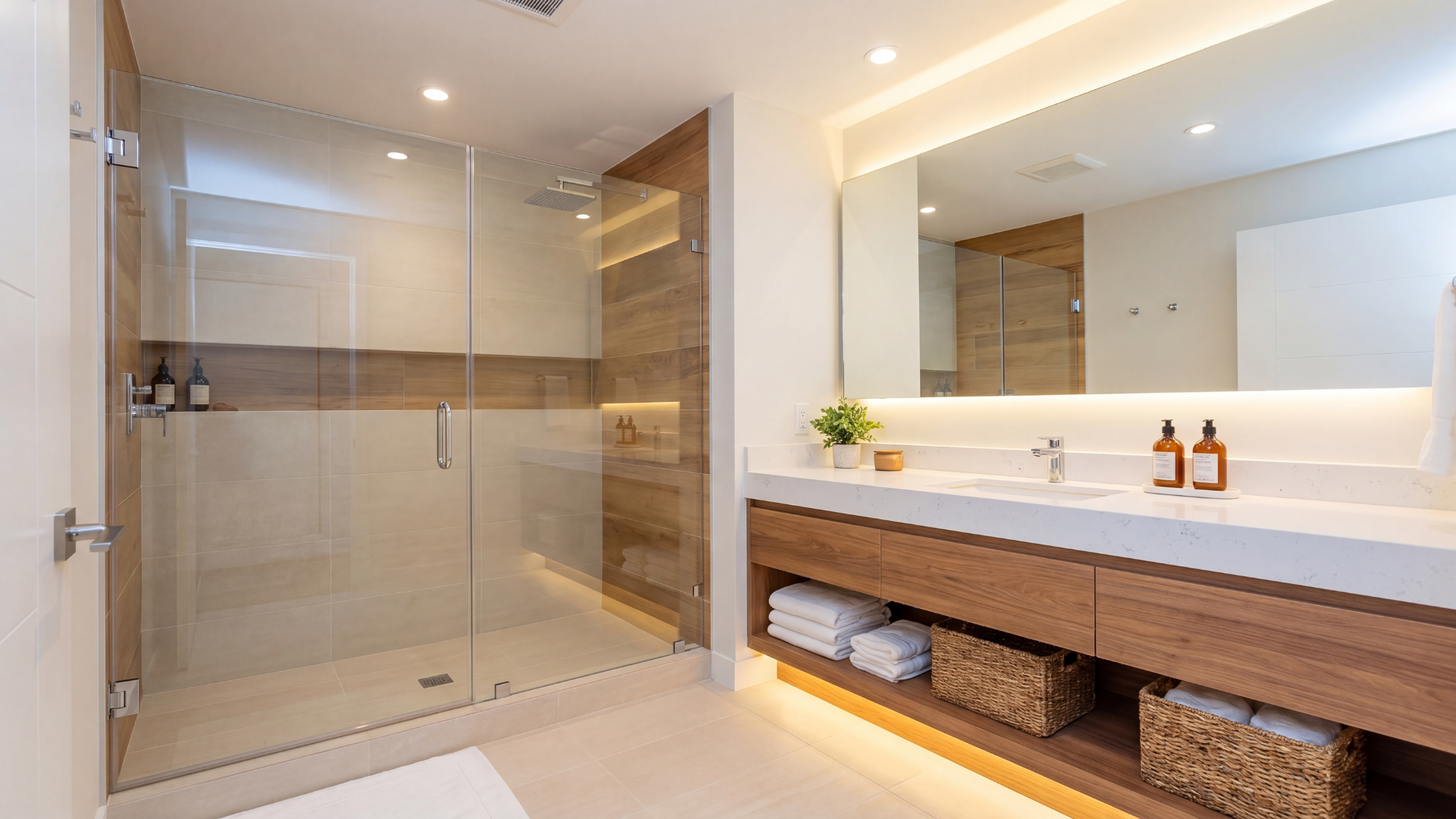
A shower curtain draws a hard visual line across the bathroom, cutting the space in half. Clear glass doors remove that barrier and let the eye travel freely.
Frameless glass creates the cleanest, most seamless effect. Choose clear over frosted for maximum openness, and squeegee after every shower to keep glass streak-free.
- Opt for fully frameless glass for the cleanest visual effect
- Squeegee after each shower to prevent water marks building up
- Consider sliding panels where swing clearance is limited
5. Improve Lighting
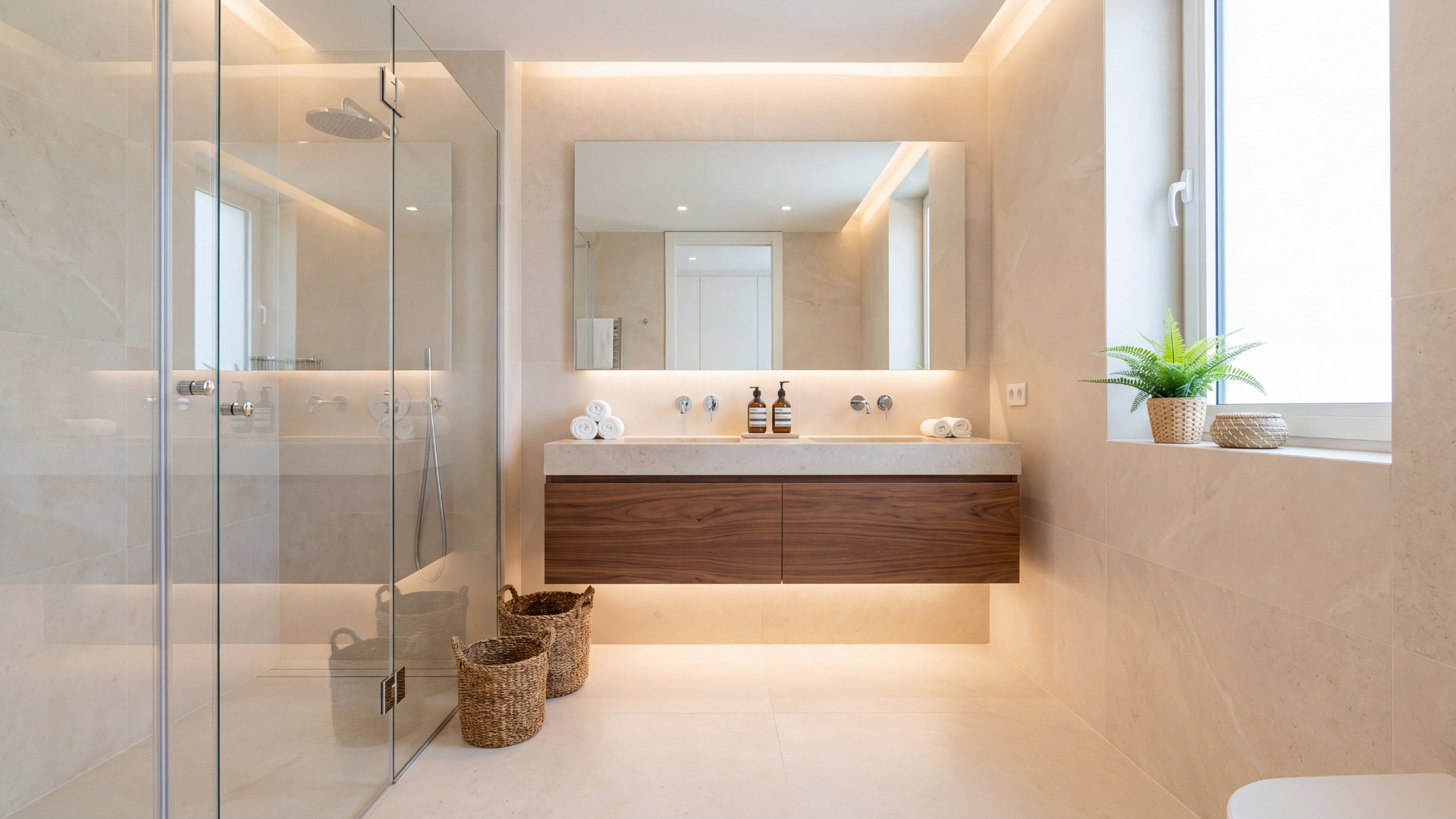
Lighting is one of the most overlooked tools in a small bathroom. The right setup eliminates shadows, softens edges, and makes the same four walls feel noticeably further apart without touching a single tile.
Start with side-mounted vanity lights, switch to warm white LEDs, and add a dimmer. Three small changes and the room stops feeling tight and starts feeling considered.
6. Choose Large Tiles
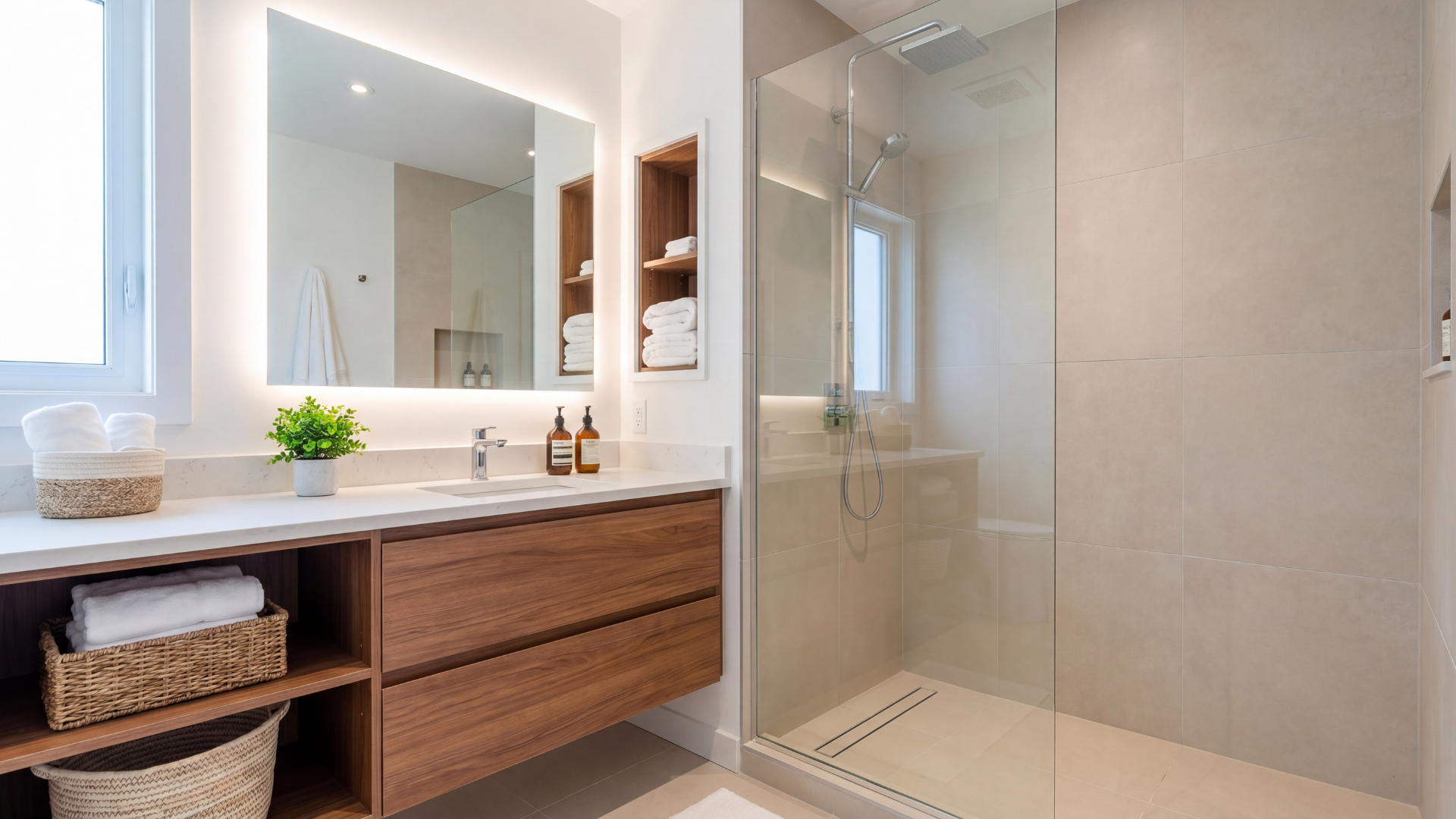
Every grout line interrupts the eye, dividing floors and walls into small sections that read as cramped. Large-format tiles let the eye glide smoothly across surfaces, making the room feel open.
- Tile Size: Choose tiles at least 12×24 inches for small bathrooms
- Grout Match: Match grout color closely to tile to minimize visual contrast
- Surface Continuity: Run the same tile on both the floor and walls for continuity
Direction matters too; horizontal layouts widen narrow rooms, while vertical layouts raise low ceilings. Match grout color closely to tile color to amplify the seamless, expansive effect throughout.
Fewer lines mean fewer interruptions. When the eye moves freely across a surface without stopping, the room simply feels bigger, no renovation required, just smarter choices.
7. Install Floating Vanity
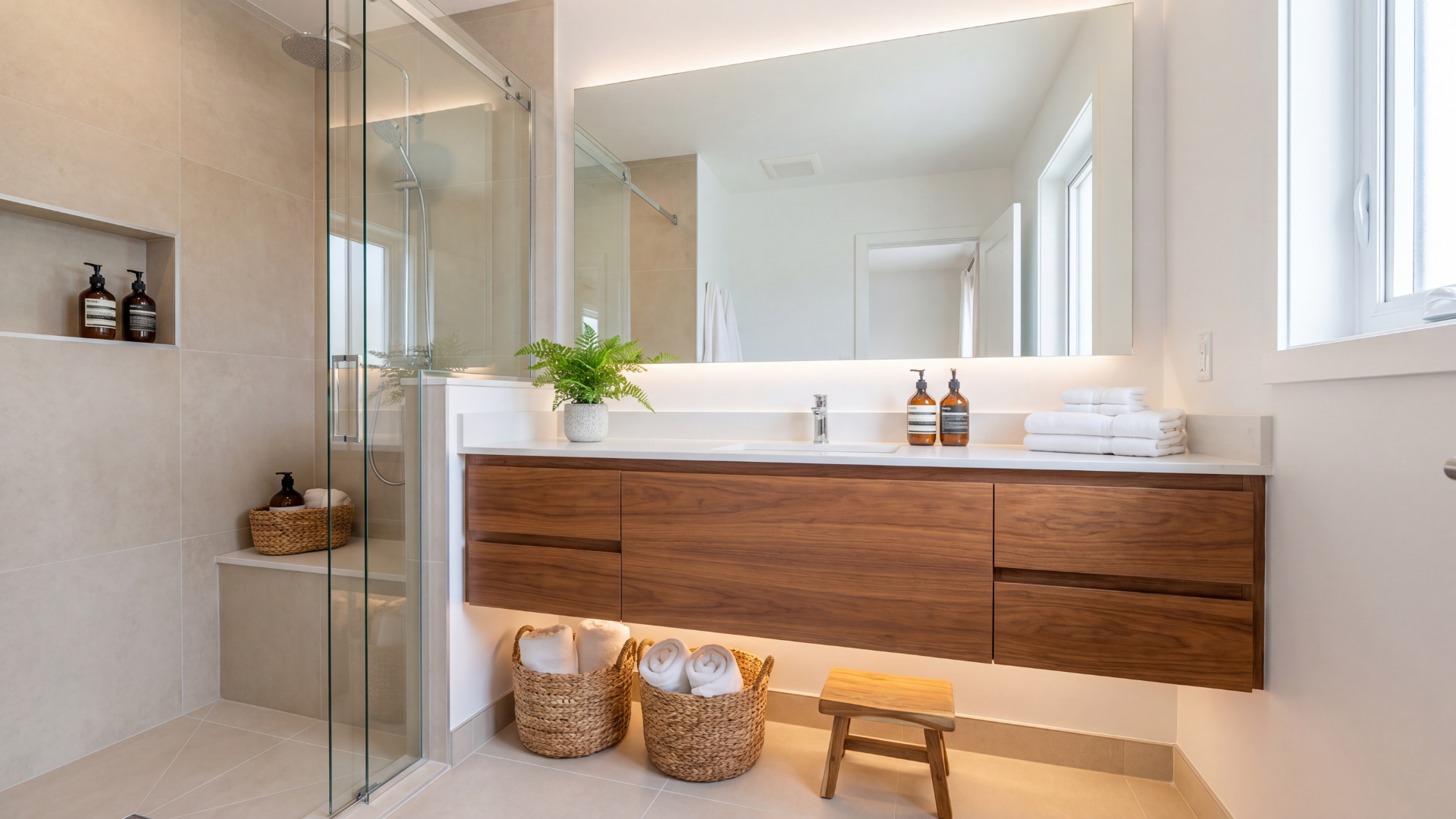
A floor-mounted vanity hides the floor beneath it, making the room feel shorter and smaller. A floating vanity reveals the full floor from wall to wall, reading as genuine openness.
Mount it 15–20 inches from the floor for the strongest visual effect. This height exposes enough floor to create a clear sense of lift and breathing room throughout the bathroom.
LED strip lights installed underneath add a dramatic floating glow that deepens the illusion further. That soft underlighting also doubles as subtle ambient light during nighttime visits. Choose a compact 16–18 inch depth to preserve movement space
8. Use Vertical Storage
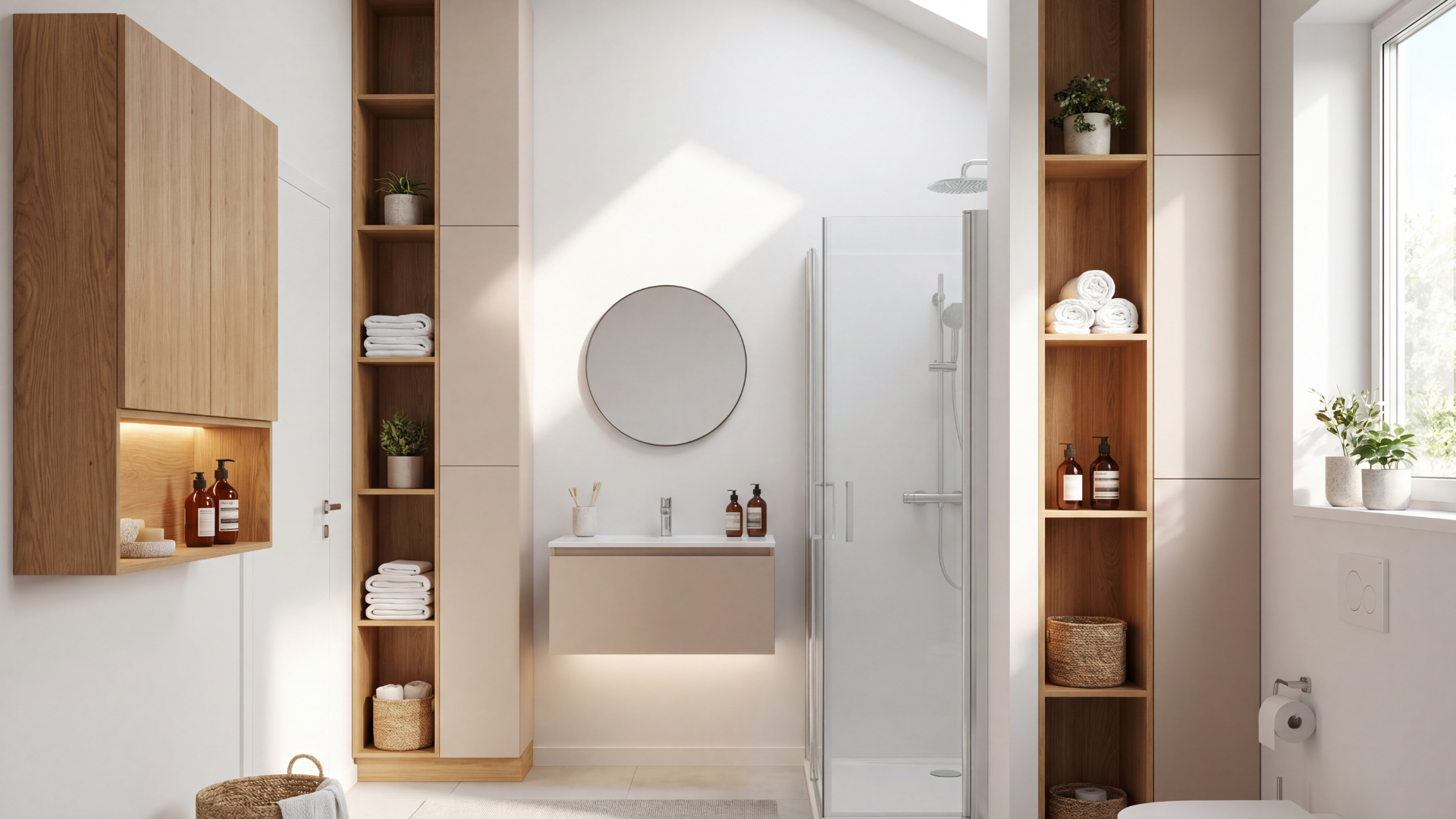
Most bathrooms waste the vertical space above eye level entirely. Tall, slim shelving units draw the eye upward, making rooms feel taller while freeing up floor and counter space.
Open shelves only work when they stay organized, mismatched items create visual noise. Matching baskets at each level keep the eye moving upward rather than stopping on clutter.
- Shelf Placement: Install shelves above the toilet, often completely unused space
- Unit Selection: Choose slim, narrow-depth units to avoid crowding the room
- Visual Tidiness: Use matching containers on open shelves to maintain tidiness
9. Keep the Floor Clear
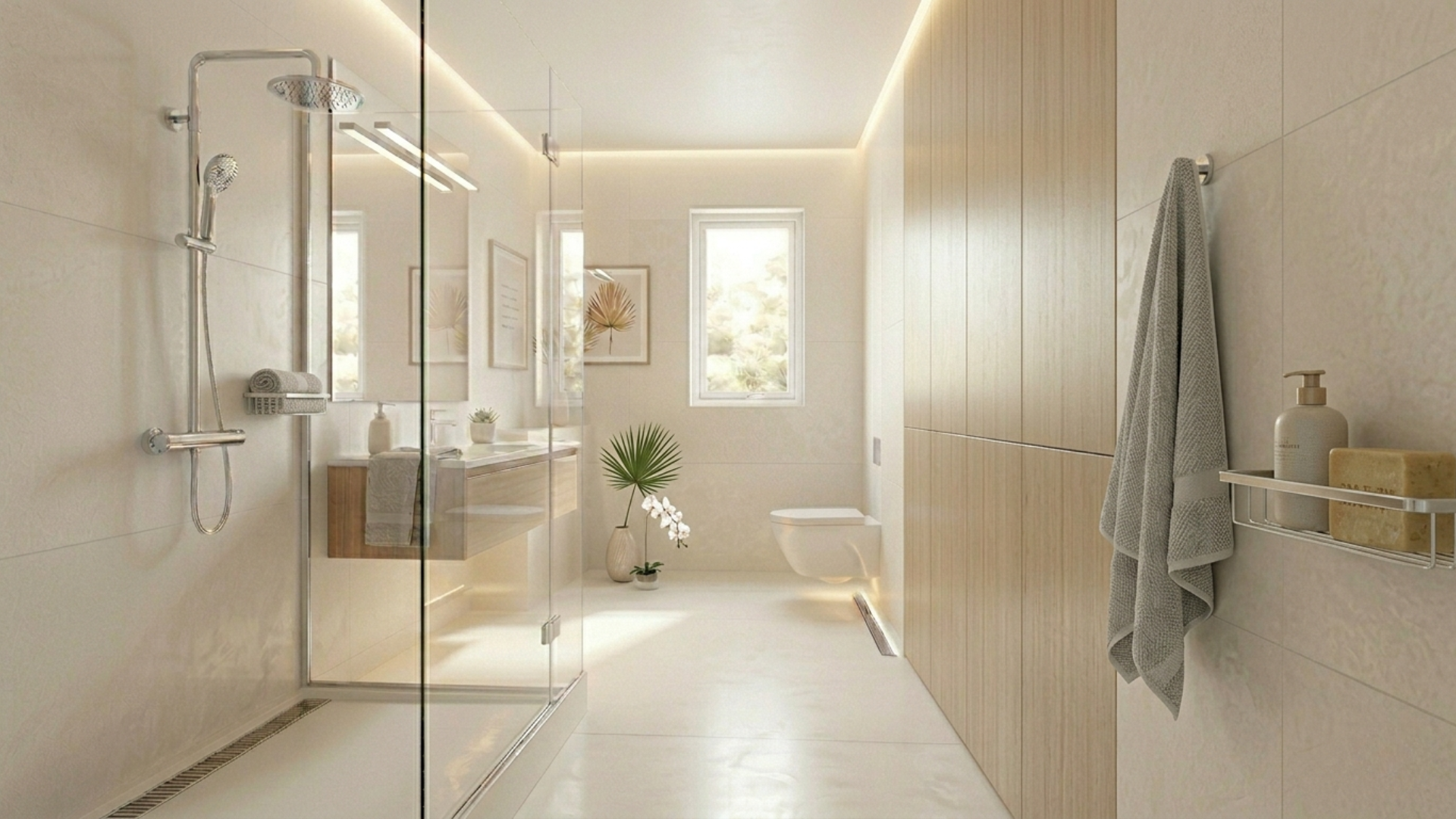
The more floor you can see, the larger the bathroom feels. Laundry baskets, large mats, and bins interrupt the visual sweep that makes a room read as genuinely spacious.
Switching to wall-mounted alternatives requires minimal effort or cost. If drilling isn’t an option, slim freestanding units with a small footprint are a practical middle ground.
- Replace freestanding bins with slim wall-mounted waste baskets
- Choose small, light-colored bath mats over large, dark ones
- Store cleaning supplies under the sink or in a wall cabinet
10. Stick to One Color Theme
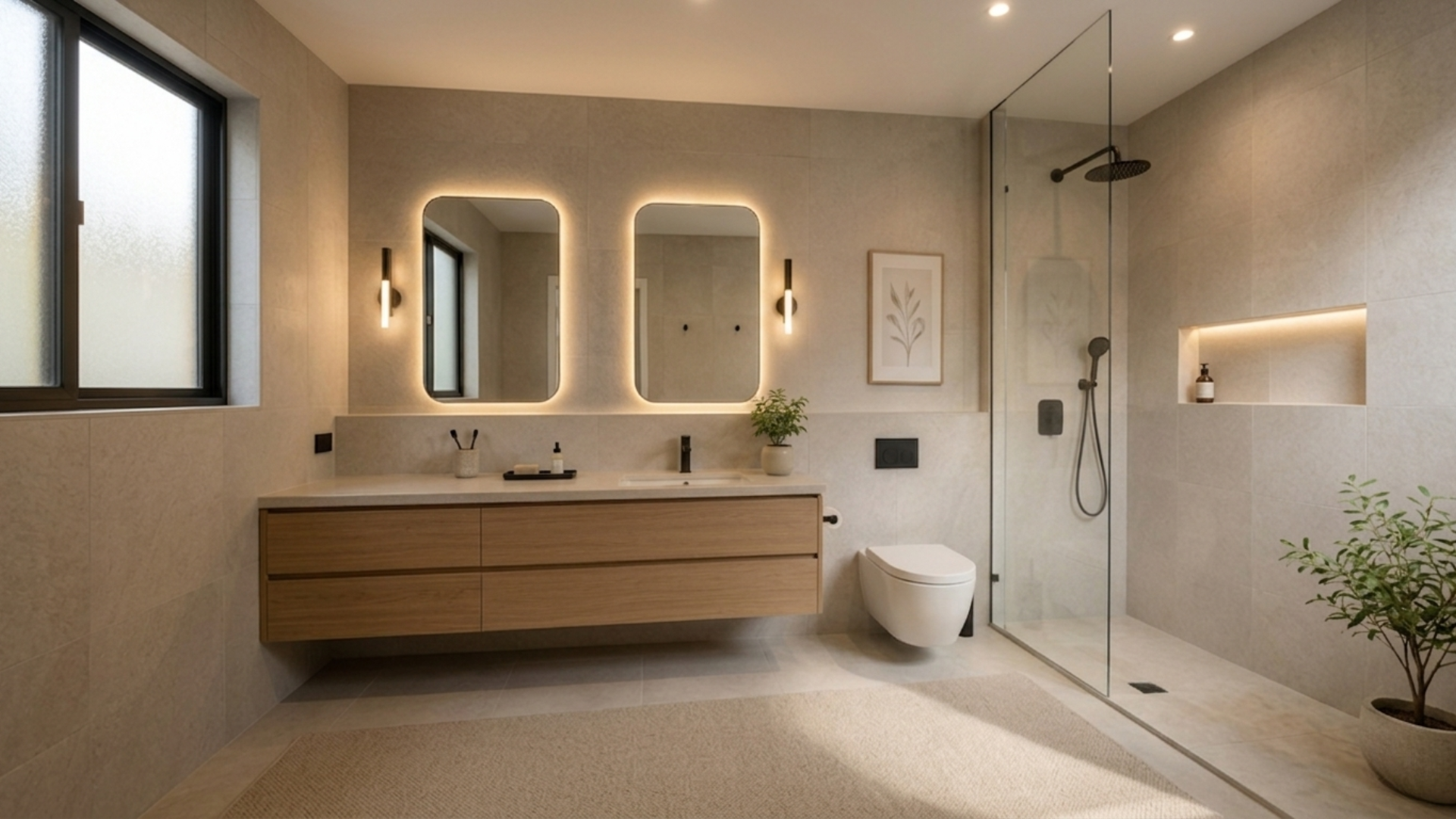
Every color change is a visual stopping point that fragments the space. A cohesive palette of one or two shades creates a seamless flow that reads as intentionally spacious.
Use texture matte walls against gloss tiles, linen towels on smooth surfaces to add visual interest without introducing new colors that interrupt the room’s continuity.
11. Use Long Curtains
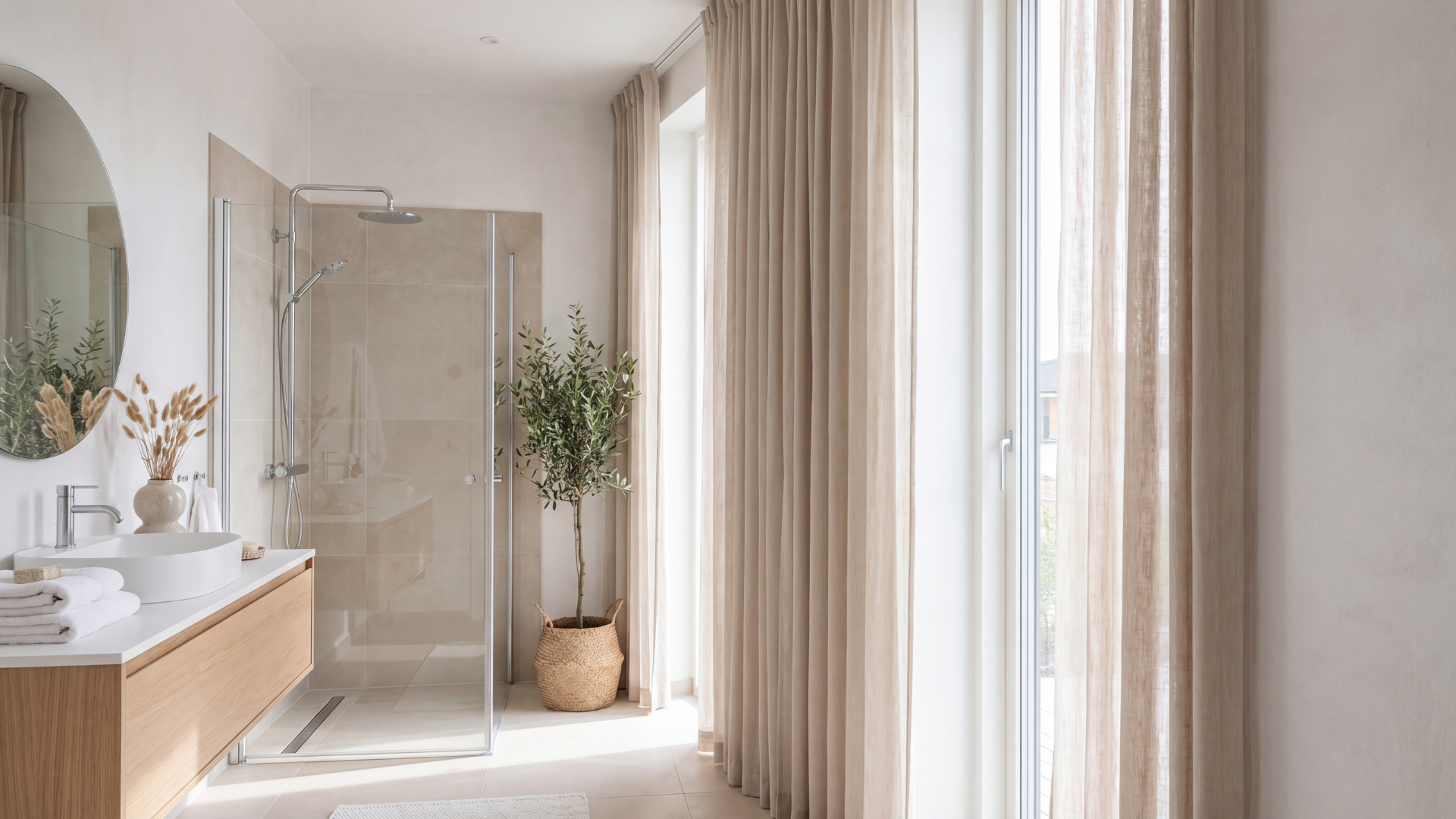
Hanging curtains close to the ceiling draws the eye upward and makes any room feel taller instantly. It is one of the cheapest visual tricks available and works the moment you put it in place.
- Mount the rod 2 to 3 inches below the ceiling
- Use sheer or lightweight fabric in white or cream
- Let curtains slightly pool on the floor
Avoid heavy or dark fabrics as they pull the eye downward and cancel the effect completely.
12. Add Open Shelves
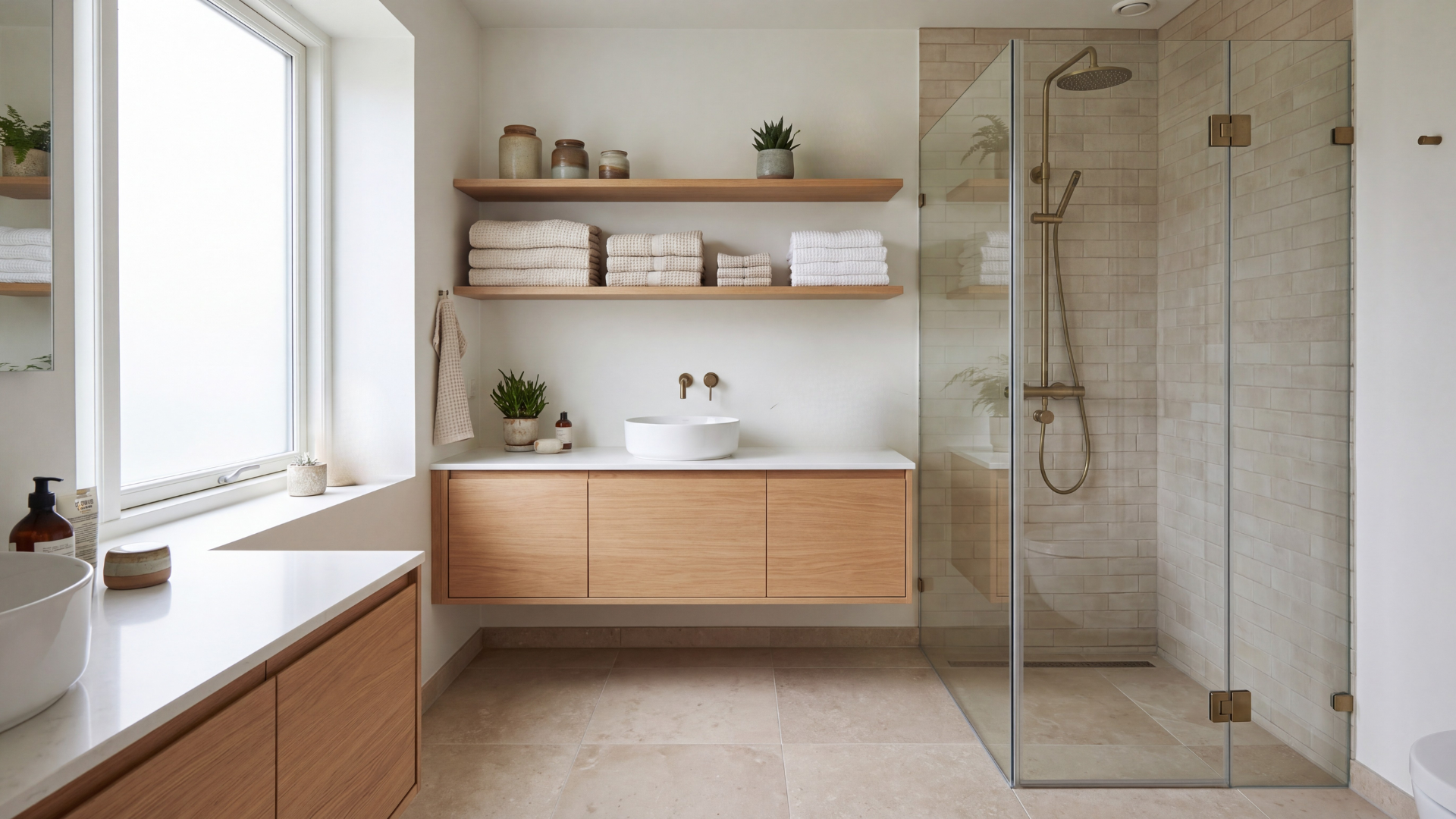
Open shelving feels lighter than solid cabinet doors because the eye passes right through it. When kept tidy, it adds personality without adding visual bulk.
- Limit each shelf to 3 to 5 items maximum
- Use matching containers for a uniform look
- Install at eye level or above to keep floors clear
If keeping them tidy feels unrealistic, a closed cabinet will serve you better.
13. Use Reflective Surfaces
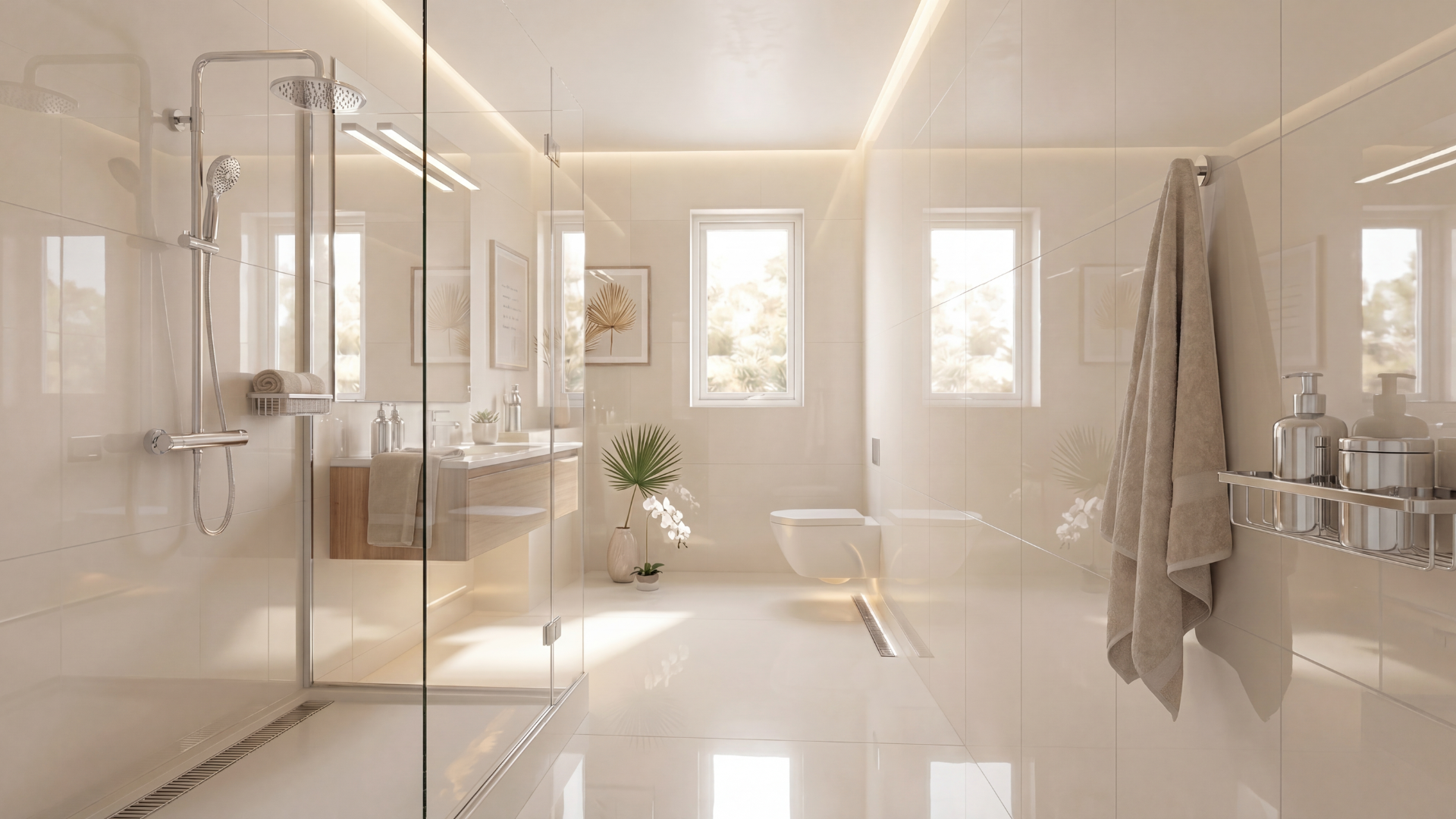
Glossy tiles and chrome fixtures bounce light into every corner of the room. You get a brighter space without touching a single wire or doing any renovation work.
Place glossy subway tiles on shower walls and use chrome or polished nickel for your fixtures. Add one metallic accent piece to push light into darker corners.
Wipe them down regularly since glossy surfaces show water spots and fingerprints fast. It is a small daily habit but it keeps the whole bathroom looking clean and polished.
14. Keep Decor Minimal
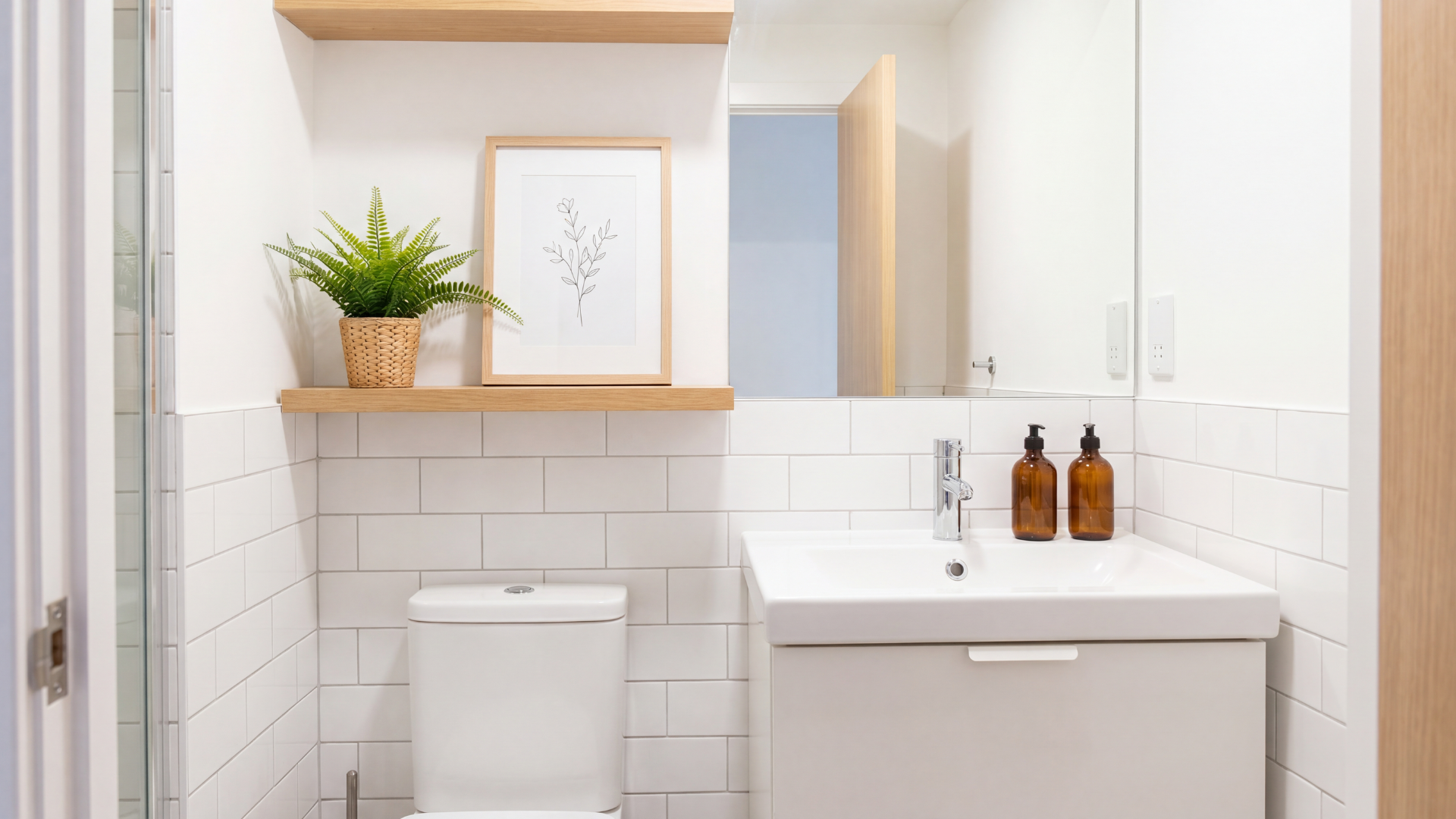
Two or three well chosen pieces create a curated look. A dozen small items just create noise. In a small bathroom every single item takes up both physical and visual space.
Pick items that do two jobs at once like a plant that also purifies air or a candle that also scents the room. Rotate seasonal pieces to keep things feeling fresh without adding permanently.
One plant and one piece of wall art is usually all you need. That is the line between a bathroom that feels designed and one that feels cluttered.
15. Use Sliding Doors
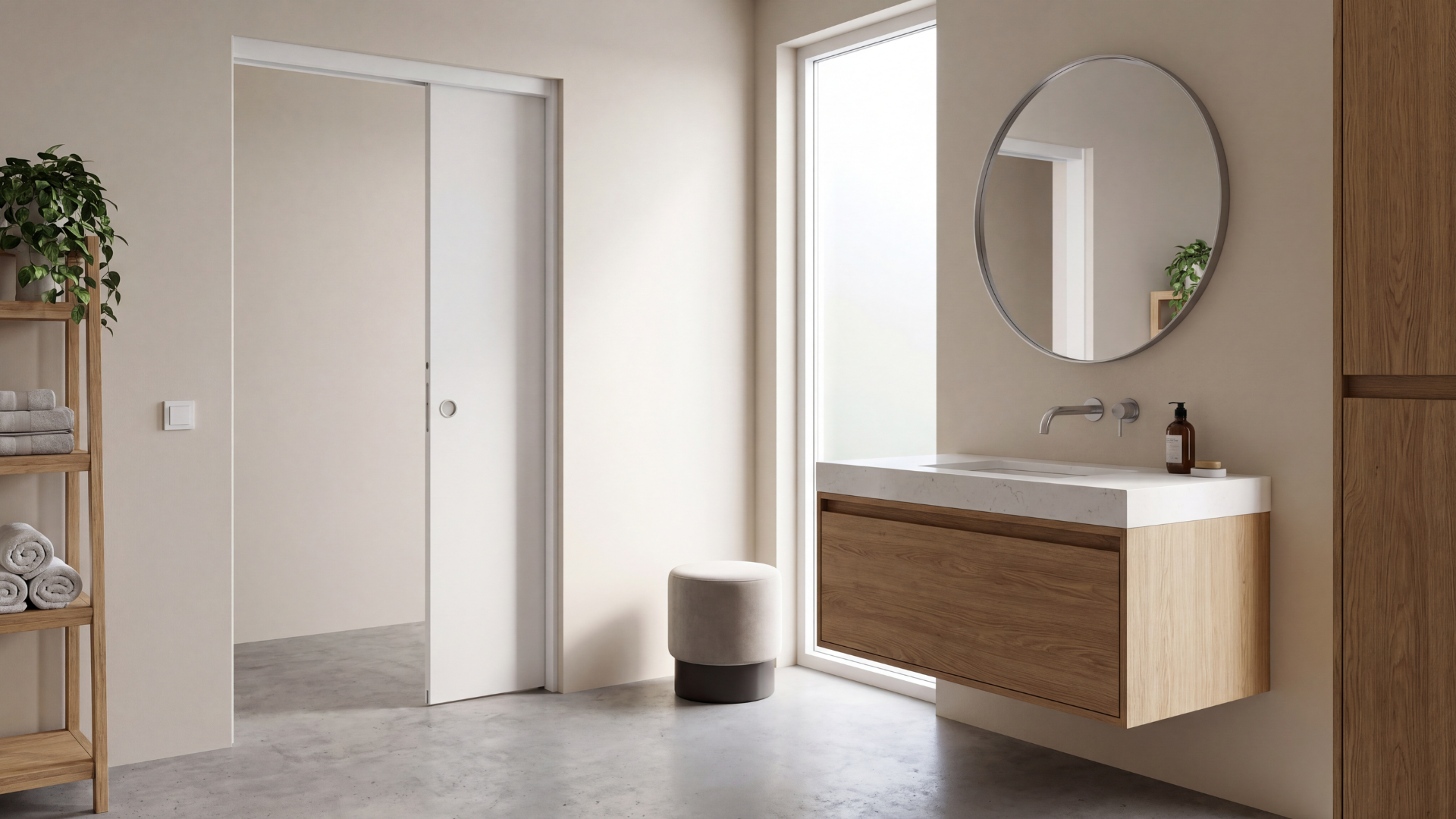
A swing door wastes the floor space it sweeps across. Sliding doors eliminate that wasted radius and recover usable space near the entrance of any narrow bathroom.
- Pocket doors slide into the wall for maximum space savings
- Barn doors slide along the wall without requiring cavity work
- Check wall cavity for pipes before committing to a pocket door
Barn-style doors are the easier option if the wall cavity is not clear.
16. Match Floor and Wall Tiles
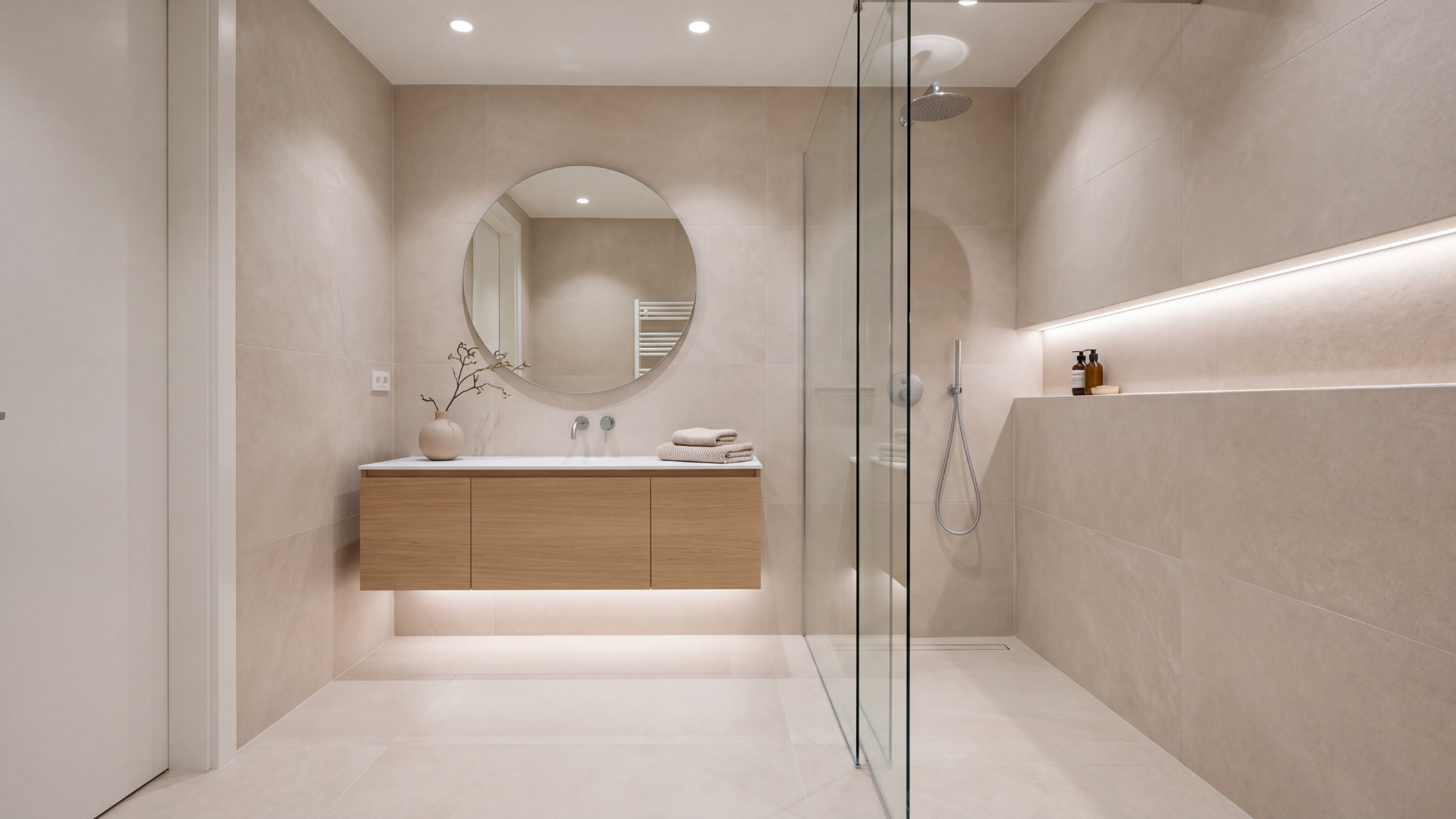
Using the same tile on floors and walls removes the visual boundary that cuts most bathrooms in half. The result feels taller and wider at the same time.
- Use identical tile on the floor and at least one wall
- Keep grout color consistent throughout for a seamless finish
- Pair matte floor tile with gloss wall tile in the same shade for subtle contrast
This prevents the look from feeling flat while keeping the visual continuity intact.
17. Add Natural Light
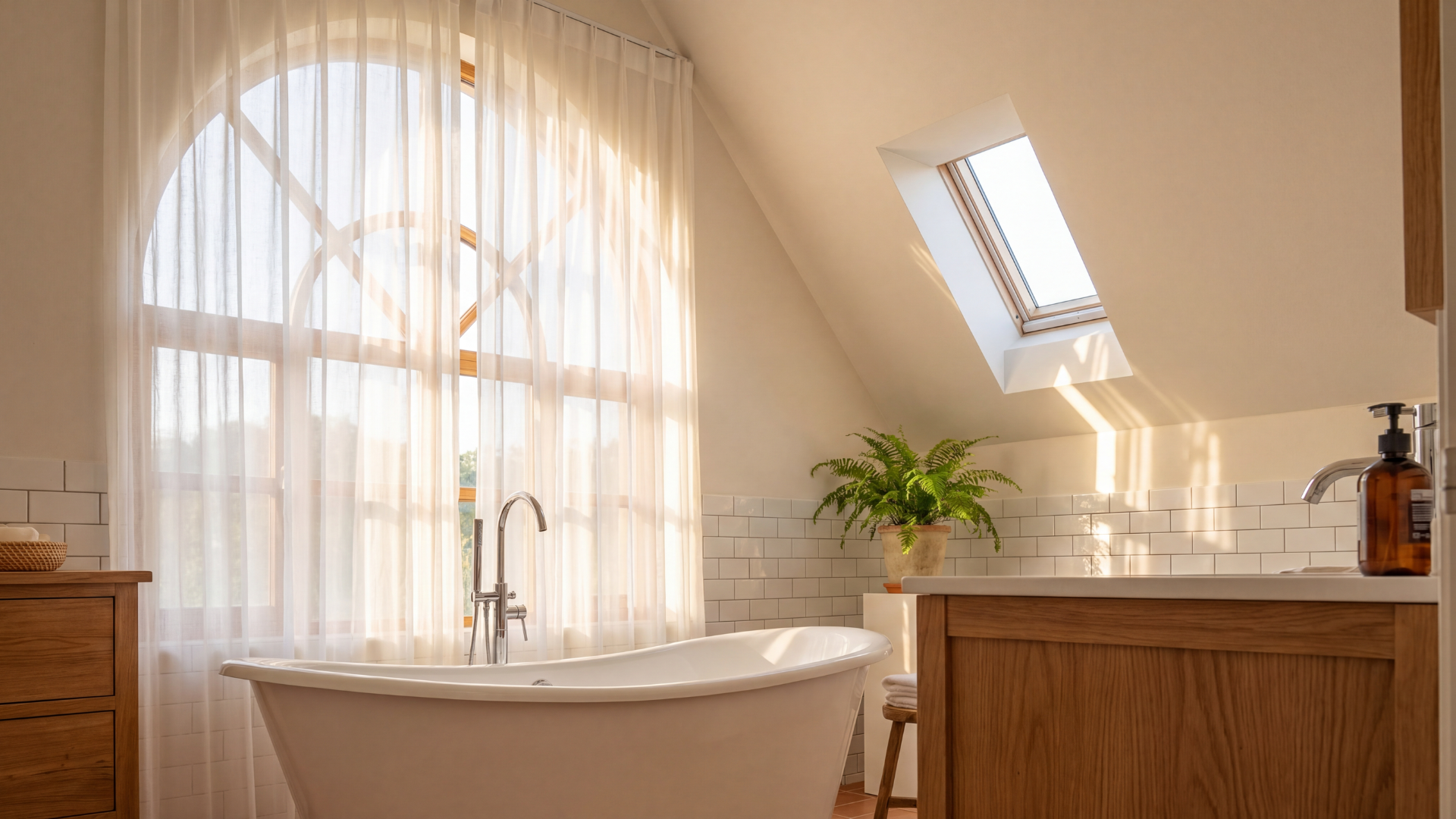
Sunlight is the simplest way to make any small bathroom feel bigger and more open. The good news is that maximizing what you already have costs very little.
Start by swapping heavy curtains for sheer fabric or frosted window film. Keep your windowsill completely clear so nothing blocks the light coming in.
If your bathroom has no window at all, a solar tube is worth looking into. It costs far less than a skylight and still brings real daylight into rooms that would otherwise rely entirely on artificial light.
18. Use Wall-Mounted Fixtures
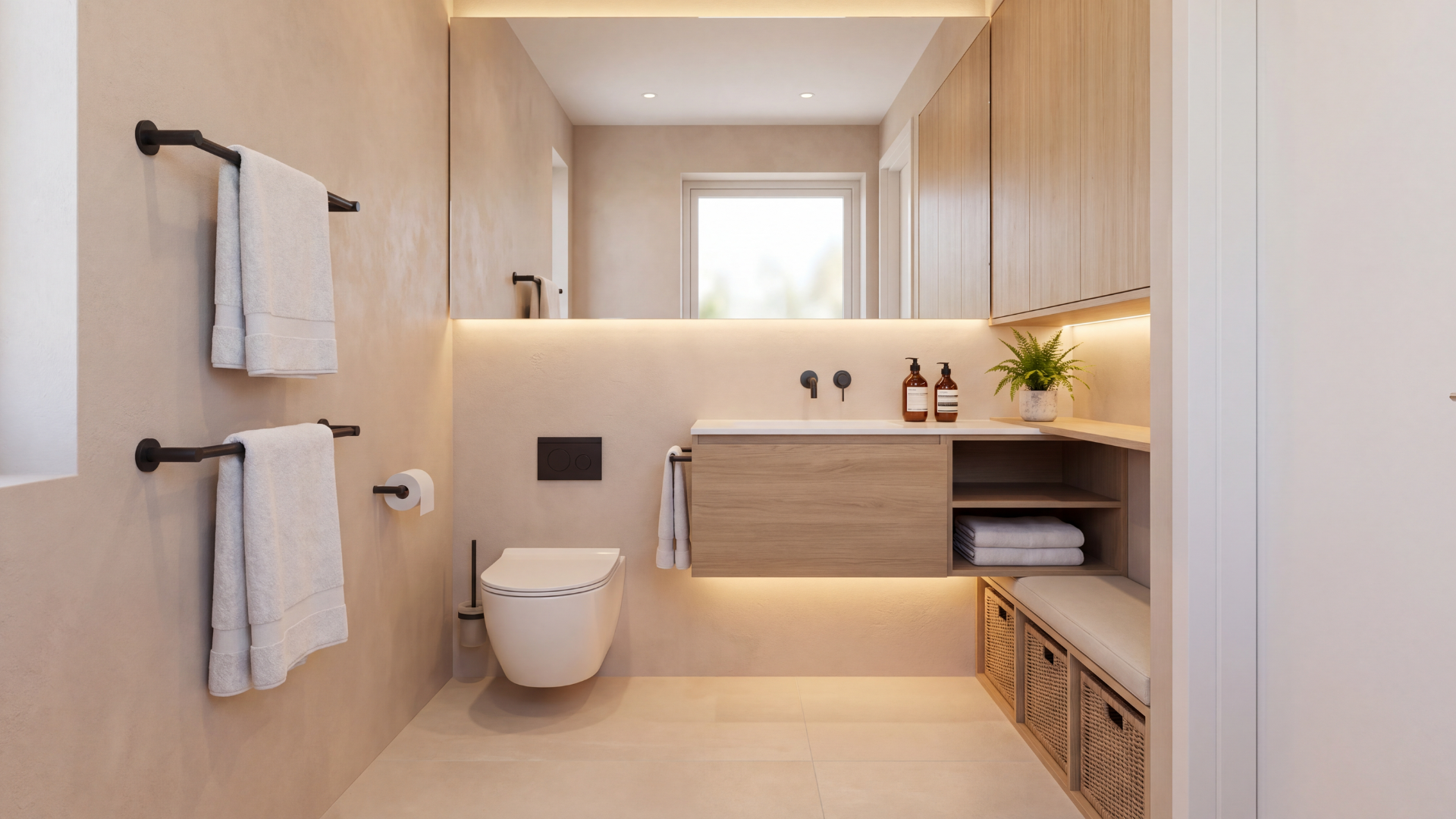
Wall-mounted toilets and floating vanities reveal the floor beneath them. That visible floor space reads as breathing room and makes narrow bathrooms feel noticeably more open.
Start with a floating vanity if a full wall-mounted toilet feels like too big a project. It delivers a very similar effect at a fraction of the cost.
Just make sure the wall is properly reinforced before any fixture goes up. Skipping that step is the most common reason wall-mounted installations fail down the line.
19. Avoid Heavy Patterns
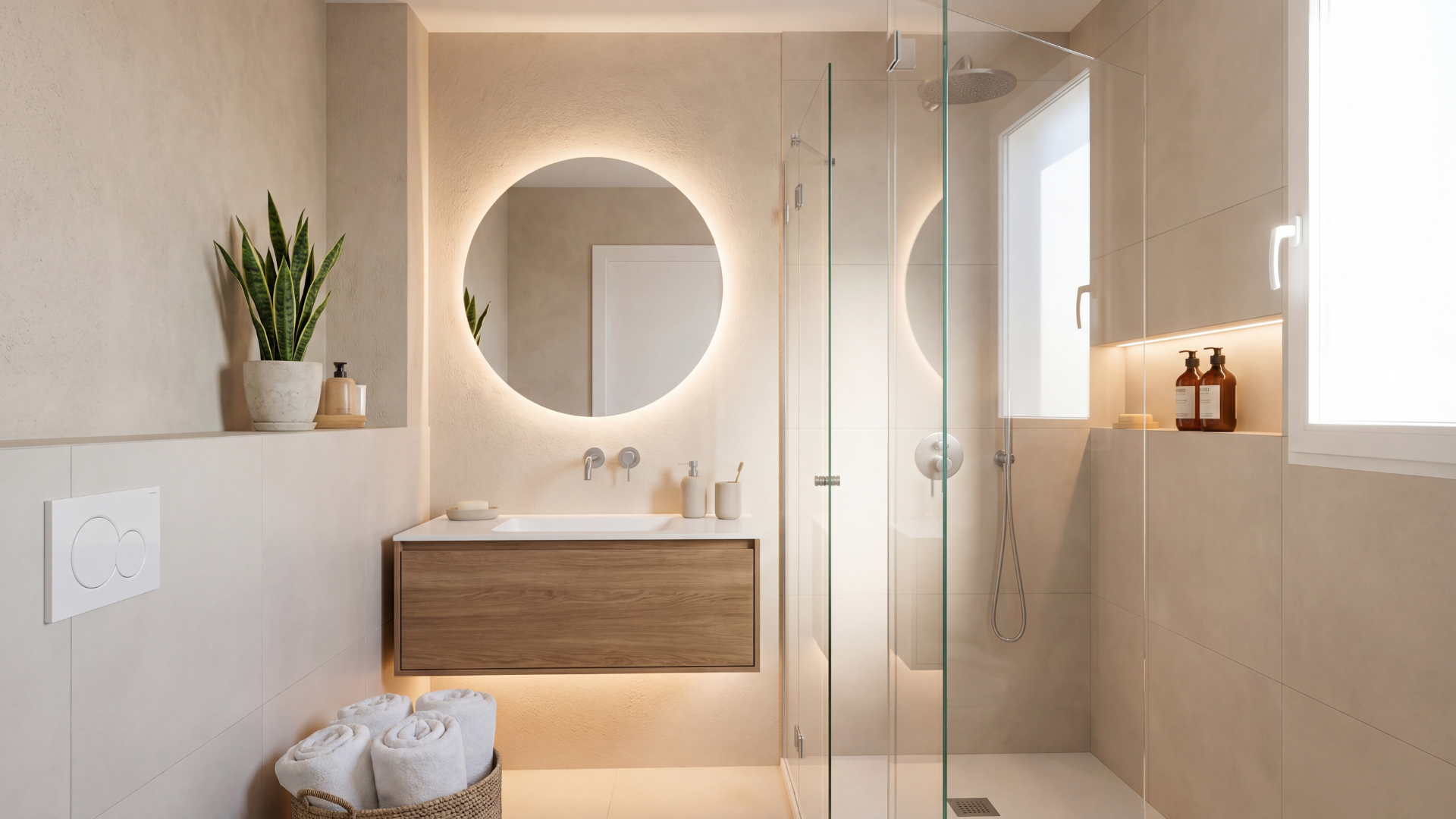
Bold patterns make the eye stop repeatedly across every surface. Uniform finishes let the eye travel freely around the room which always reads as more space.
- Choose solid or subtly textured tiles over busy patterns
- Limit any pattern to one small accent wall only
- Use patterned towels or accessories for personality instead
Accessories are the right place for pattern since you can swap them out any time without affecting the room at all.
20. Use Hidden Storage
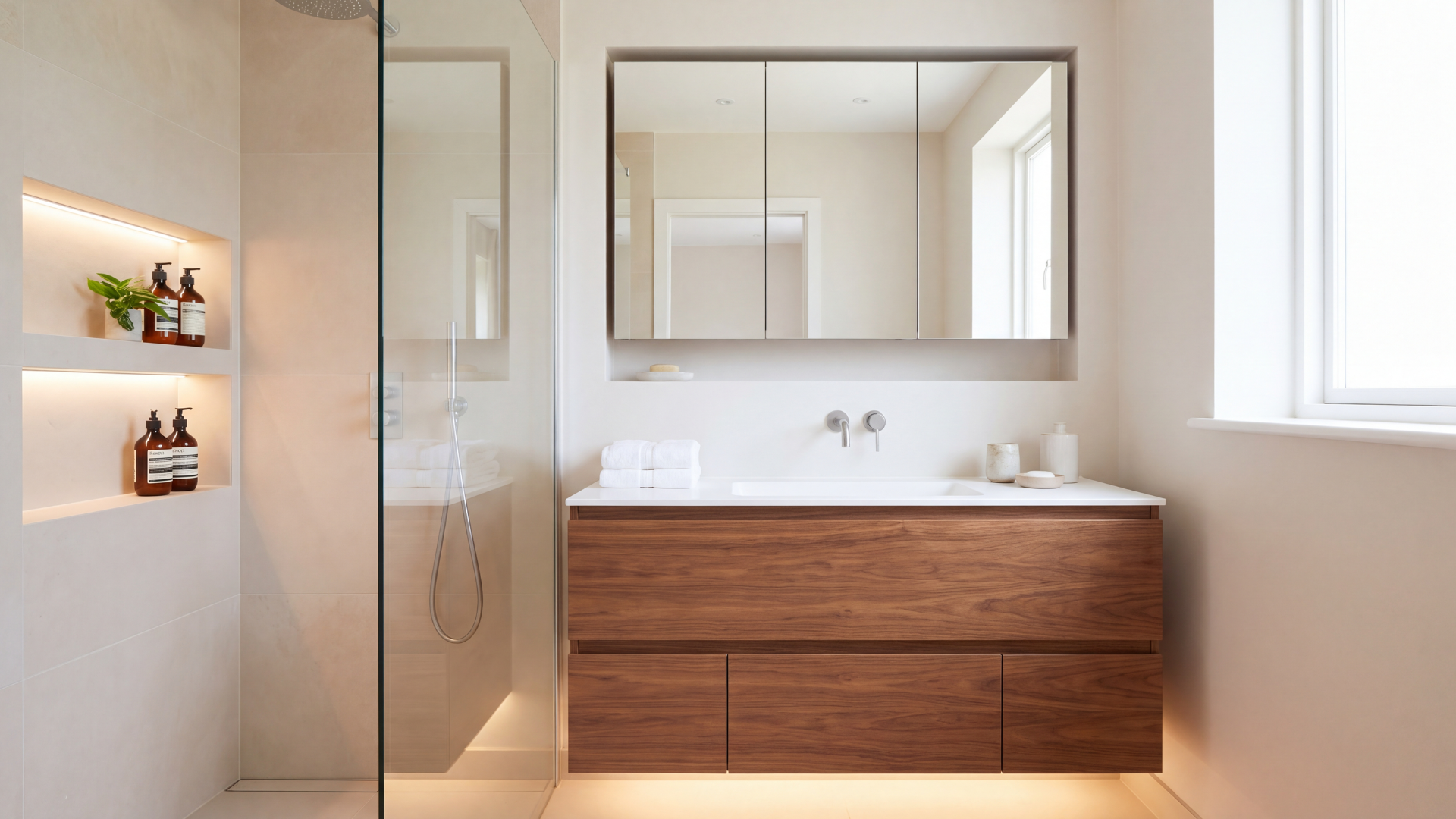
Recessed cabinets, wall niches, and toe kick drawers keep every surface clean and add storage without any visible bulk in a small bathroom.
It is the most effective storage approach because it solves the clutter problem completely without adding any physical weight or bulk to the room.
- Install a recessed medicine cabinet to add storage without pushing into your space
- Add a built in niche in shower walls for bottles and soap
- Use toe kick drawers below the vanity for hidden everyday storage
- Consider a mirror with a concealed storage cabinet built behind it
Plan all locations carefully before cutting into walls since built in options are not easily moved once they are in place and installed.
What Actually Makes a Small Bathroom Feel Bigger?
Storage and space perception are directly connected. When surfaces are clear the room feels larger regardless of actual size. Moving storage onto walls, into recesses, and behind doors is the simplest way to gain visual space without touching anything structural.
The Right Mirror Does More Than You Think
A large mirror is almost always the right call. It reflects more light, creates depth, and makes the room feel wider. Go bigger than feels comfortable as it is rarely too large.
Frameless mirrors add no visual weight. A round mirror softens sharp angles. A tall vertical mirror draws the eye upward and makes low ceilings feel higher. Mirrored cabinet doors combine storage with reflection when wall space is tight.
Good Lighting Removes the Boundaries Your Eye Sees
A single overhead bulb creates shadows in every corner, making the room feel hemmed in. Layered lighting removes those signals and softens the visual edges of the room entirely.
Warm white between 2700K and 3000K creates a relaxed open feeling. Cool white above 4000K brightens the room but feels sharp and clinical rather than spacious.
The Decor Tricks That Actually Move the Needle
The highest impact tricks remove barriers rather than add elements. Clear glass shower doors, floating vanities, and large mirrors all let the eye travel farther before hitting a stopping point.
Matching colors across towels, rugs, and accessories reduces visual stops throughout the room. A clean countertop with two intentional accents will always feel more spacious than the same surface covered with ten items.
Common Mistakes That Make Small Bathrooms Feel Smaller
Some design choices shrink the space visually before you even try to open it up. Knowing what to avoid saves you from undoing progress you have already made.
- Avoid Dark Wall Colors: Choose lighter shades to reflect light and make walls feel farther apart.
- Skip Bulky Storage Units: Opt for slim or wall-mounted storage to free up space and improve flow.
- Replace Heavy Shower Curtains: Use clear or light fabrics to let light pass and open up the room.
- Boost Lighting and Mirror Size: Add bright lights and larger mirrors to eliminate shadows and create depth.
- Limit Colors and Patterns: Stick to a tight, uniform palette to keep the room feeling open and continuous.
Conclusion
A small bathroom does not need more square footage. It just needs fewer visual stopping points and smarter choices about light, space, and what you put on display.
Every tip in this guide works toward the same goal. Clear surfaces, light colors, and open floor space all give the eye somewhere to travel without hitting a wall.
Start with the free changes first. Clear the counters, swap the shower curtain, and add a larger mirror. You will feel a real difference before spending anything on renovation work.
Frequently Asked Questions
How Can I Make a Small Bathroom Look Bigger Cheaply?
Declutter counters, swap dark curtains for clear ones, add a larger mirror, and use light paint colors for an immediate difference.
What Colors Make a Bathroom Look Bigger?
Soft white, warm cream, pale gray, and muted beige all reflect light evenly and make walls feel further apart.
Do Tiles Affect How Big a Bathroom Looks?
Yes. Large format tiles have fewer grout lines and matching floor and wall tiles removes the boundary that visually cuts bathrooms in half.
How Does Lighting Affect Bathroom Size Perception?
Layered lighting eliminates shadows that define boundaries. Warm white LEDs between 2700K and 3000K give the most open and comfortable result.