

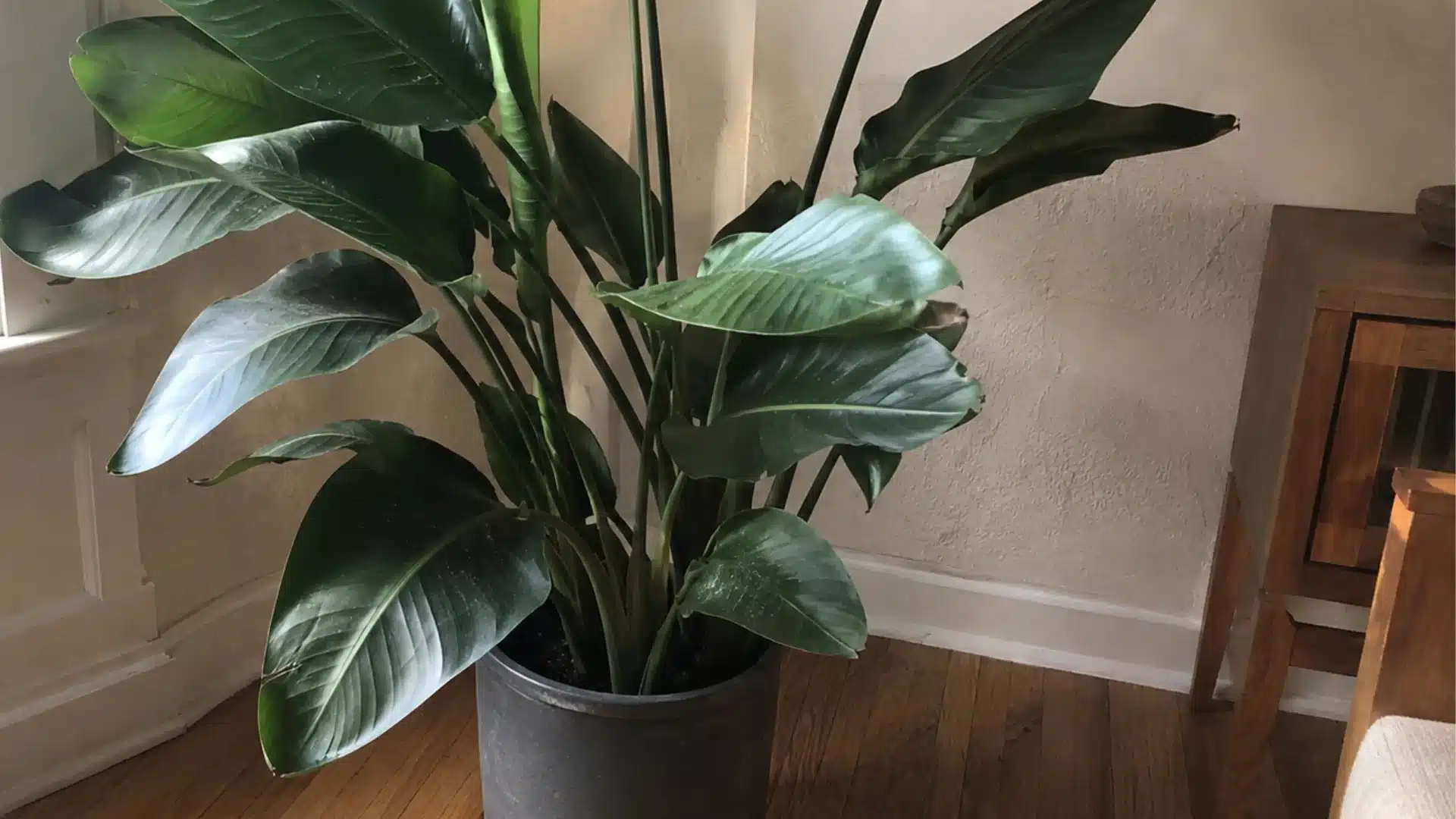
Bird of paradise plants look dramatic, but the care routine is more straightforward than the size of the leaves suggests.
In my experience, most problems start when the soil stays wet for too long.
Strong light, steady warmth, and careful watering make the biggest difference. Once those basics are right, bird of paradise plant care becomes much easier to manage without constantly adjusting the routine.
The white bird of paradise needs a little more patience because it grows larger, takes longer to mature, and may not flower indoors for years.
Once you know what this plant actually wants, the daily routine becomes much easier to read.
What Does a Bird of Paradise Need to Grow Well?
A bird of paradise grows best when light, drainage, temperature, and feeding stay consistent. Getting these conditions right first prevents many of the problems that appear later.
1. Give It Plenty of Bright Light
Bird of paradise prefers very bright light and can handle direct sun once it has adjusted to it. Indoors, a south-facing or west-facing window usually gives it the strongest exposure.
Low light often shows up as slower growth, softer stems, and leaves that lean or curl instead of holding themselves upright. If the plant has been in weaker light, introduce stronger direct sun gradually to reduce the chance of leaf scorch.
2. Use Loose, Well-Draining Soil
Choose a potting mix that drains easily instead of staying wet around the roots. A standard indoor mix with added perlite or another drainage material usually works well.
The container matters too. Use a pot with drainage holes so extra water can leave freely after watering rather than collecting at the bottom and keeping the root zone saturated.
3. Keep Temperatures Warm and Steady
Bird of paradise generally does well in indoor temperatures around 60°F to 80°F. Stable warmth supports steady leaf and root growth throughout the active season.
Keep the plant away from cold drafts, air conditioners, heating vents, and sudden temperature changes. Cooler conditions can slow growth, while cold damage can affect both leaves and roots.
4. Maintain Moderate Humidity
Average indoor humidity is usually enough, but very dry air can lead to crispy edges or curling leaves. This is especially common near heating systems during winter.
If the leaf edges repeatedly dry out, move the plant away from heat vents and consider increasing humidity slightly. Avoid keeping the soil wetter just to compensate for dry air.
Grouping plants together is one of several ways to raise humidity for houseplants, especially when your home feels dry during winter.
5. Feed During Active Growth
Feed during spring and summer when the plant is actively producing leaves. A balanced houseplant fertilizer used according to label directions is usually enough.
Reduce or stop feeding during cooler months when growth naturally slows. Extra fertilizer will not force healthy growth when light and temperature are already limiting the plant.
How to Water and Feed a Bird of Paradise?
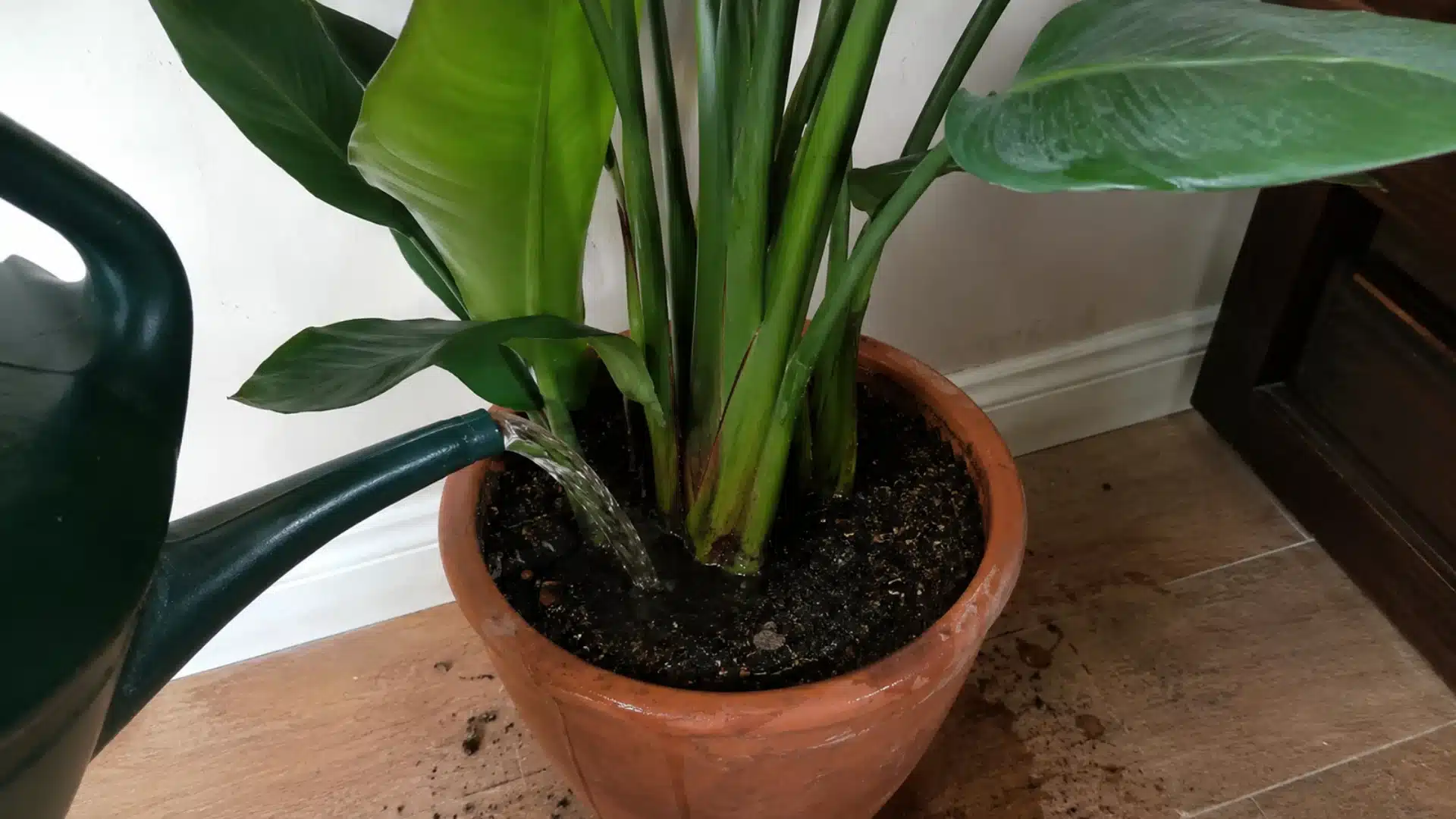
The steps below keep watering and feeding consistent from one season to the next.
- Check the Soil First: Push your finger about 2-3 inches into the soil. Water only when that layer feels dry instead of relying on how the surface looks.
- Water Thoroughly: Add water slowly until it drains from the bottom of the pot. Empty any water left in the saucer so the roots do not remain submerged.
- Check Below the Surface: The top layer can look dry while deeper soil is still damp. In more than twenty years of growing tropical plants, I have found that checking below the surface catches more problems than any fertilizer schedule ever will.
- Reduce Watering in Winter: Lower light and slower growth mean the plant uses water more slowly. Let the soil dry further between waterings during this period.
- Feed During Spring and Summer: Use a balanced liquid or slow-release fertilizer during active growth. Monthly feeding is usually enough unless the product label recommends a different schedule.
Watching the soil rather than the calendar prevents most watering problems and makes the routine easier to adjust as indoor conditions change.
What Makes White Bird of Paradise Care Different?
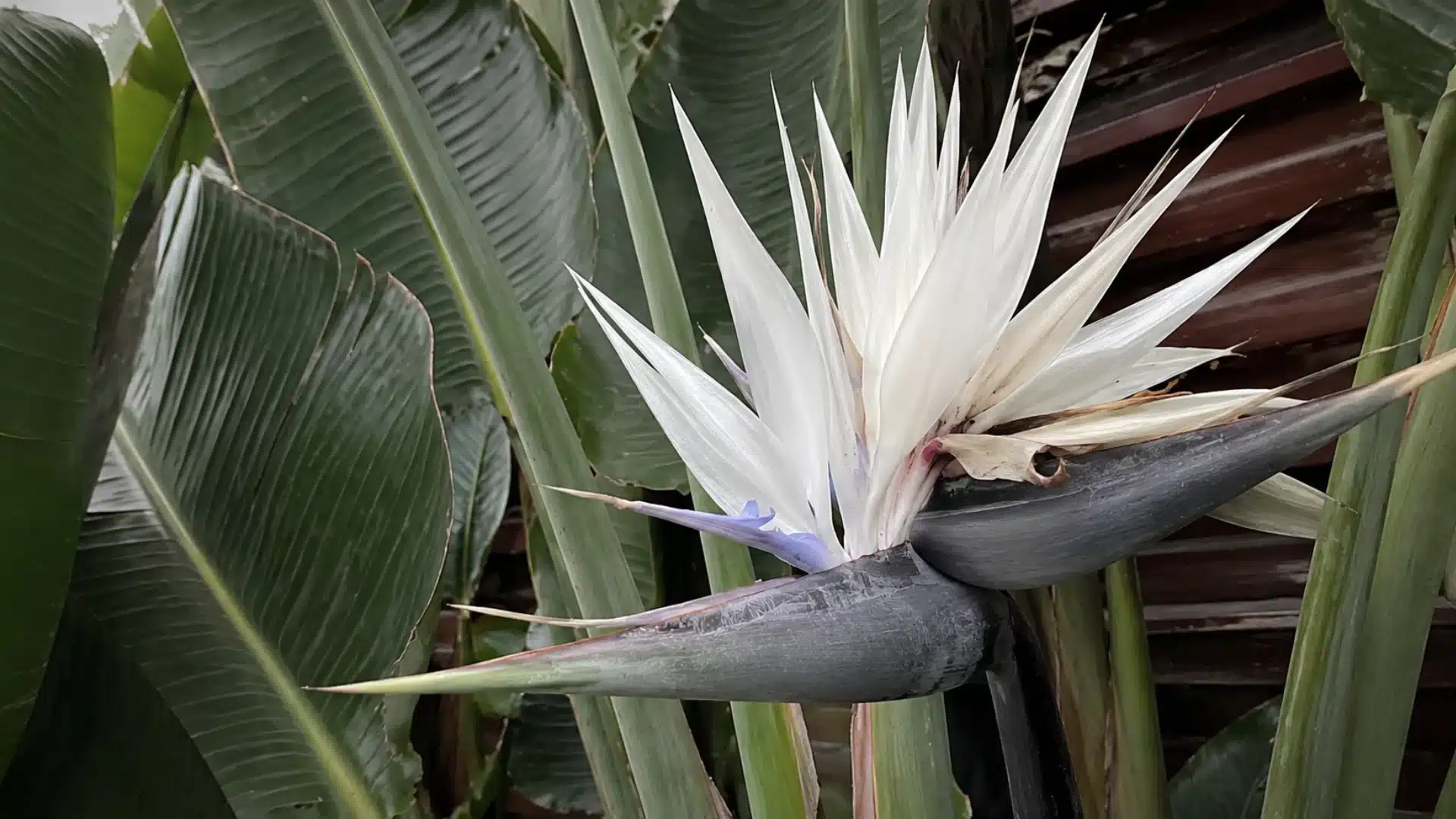
White bird of paradise, or Strelitzia nicolai, grows much larger than the smaller orange-flowering Strelitzia reginae. Like many other large indoor plants, it needs enough vertical and horizontal space as it matures.
Like many large indoor plants, it needs enough vertical and horizontal space as it matures. Indoors, it can reach six feet or more and develop very broad, banana-like leaves.
That extra size means placement becomes more important over time. A young plant may fit easily beside a window, but mature leaves need enough room to spread without constantly rubbing against walls or furniture.
Flowering is also less predictable indoors.
A healthy white bird of paradise can grow for years without producing flowers because maturity, strong light, and overall plant size all play a role.
A lack of flowers is not automatically a sign of poor care. If the plant is producing firm new leaves and steady growth, it may simply not be mature enough or receiving enough light to bloom.
Outdoor plants in warm climates usually have better flowering conditions because they receive stronger light and more room to mature. Indoors, brighter placement and enough space give the plant its best chance over time.
Common Bird of Paradise Problems and What They Mean
Here is what the most common warning signs on a bird of paradise usually mean.
- Brown, Crispy Edges: Dry indoor air, inconsistent watering, or repeated periods of very dry soil can cause brown edges. Improve consistency and keep the plant away from strong heat sources.
- Split Leaves: Splitting is normal on bird of paradise foliage. Older leaves often tear along natural lines because of movement, handling, or airflow, and the damage usually does not mean the plant is unhealthy.
- Yellow Lower Leaves: One older yellow leaf can be normal, but several yellow leaves combined with wet soil often point to overwatering. Let the pot dry further and inspect the roots if the problem continues.
- Curling Leaves: Curling can result from dry soil, excessive heat, low humidity, or insufficient light. Check moisture first, then look at placement and temperature before changing the routine.
- Slow Growth: Weak light, cool temperatures, or normal winter slowdown can reduce new growth. Increasing fertilizer will not fix a plant that is not receiving enough light.
Treating the symptom without checking the cause often creates a second problem. A curling leaf does not always mean more water, just as slow growth does not always mean more fertilizer.
How Can You Tell if Your Bird of Paradise is Healthy?
A healthy bird of paradise should produce new leaves during active growth, hold its stems upright, and maintain firm foliage without widespread yellowing or soft growth.
Older leaves may split, brown slightly around the edges, or decline over time. Those changes are not automatically signs of poor care if the rest of the plant continues producing strong new growth.
Pay more attention to patterns than individual leaves. Several yellow leaves, repeated drooping, soft stems, or soil that stays wet for long periods are more useful warning signs than one damaged leaf.
When Should You Repot a Bird of Paradise?
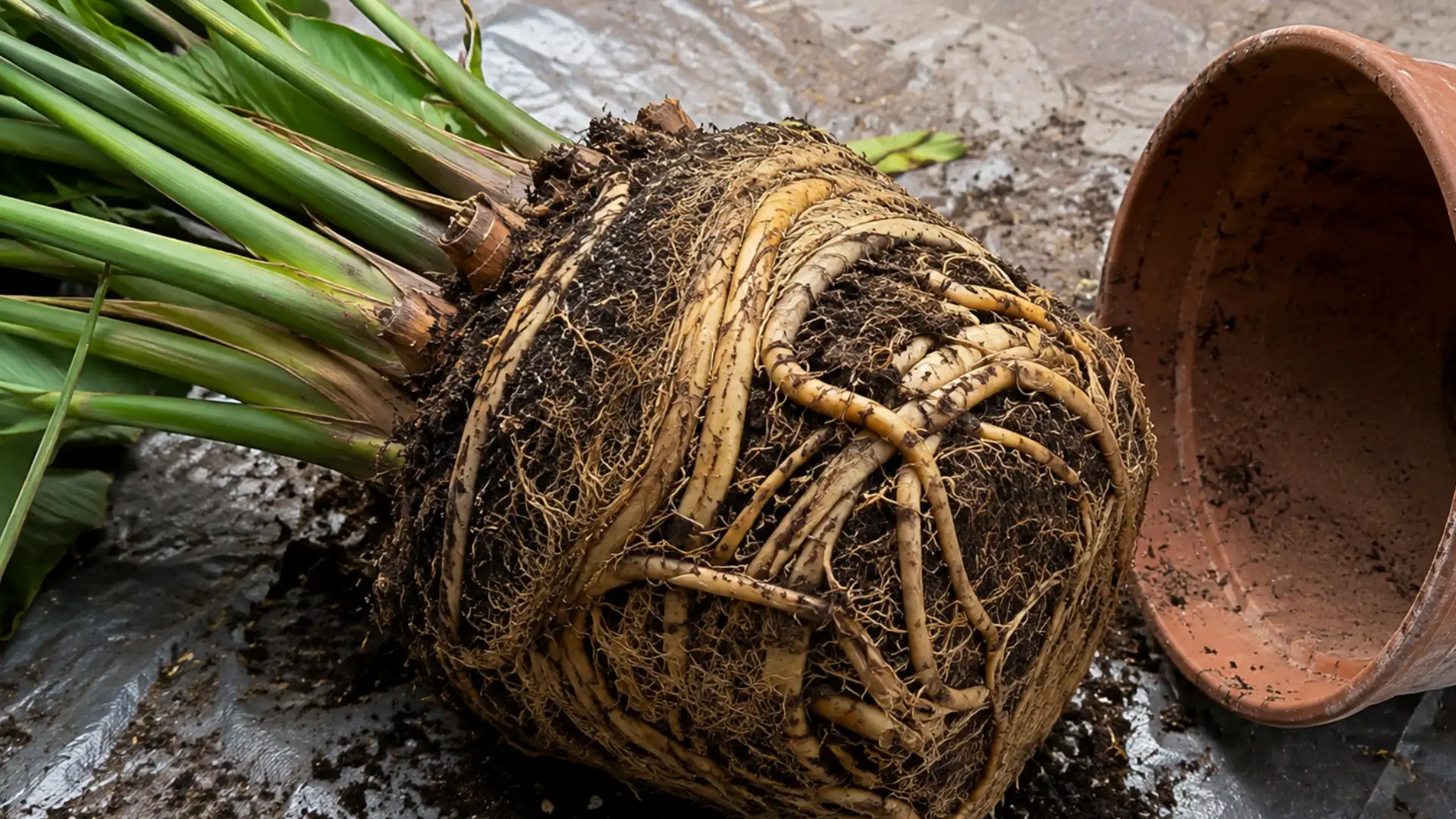
Repotting is usually necessary when the roots begin crowding the container, the soil dries unusually quickly, or the plant becomes too top-heavy for its current pot.
Roots growing through the drainage holes or circling tightly inside the container are also good signs that the plant needs more room.
For the full step-by-step process, our guide to repotting your plants walks through the key techniques.
When repotting, choose a container only about two inches wider than the current pot. Moving into a much larger container leaves more unused soil around the roots, which can stay wet longer and increase the chance of overwatering.
Keep the plant at roughly the same soil depth after repotting. Give it time to settle before changing other parts of the care routine, since some temporary adjustment after repotting is normal.
Conclusion
Bird of paradise plant care works best when you stop chasing every small leaf change and focus on the full pattern.
Bright light, loose soil, steady warmth, and careful watering do more for this plant than constant fixes. A split older leaf or a brown edge is not always a warning sign, especially if new growth is firm and upright.
White bird of paradise follows the same care rules, but it needs more space and more time before it feels settled indoors.
Keep the routine simple, watch the soil before watering, and let new leaves guide your next move.
Which bird of paradise problem are you dealing with right now? Share it in the comments below.
Frequently Asked Questions
Is a white bird of paradise hard to care for?
Not particularly. It’s a forgiving houseplant once it has bright light, well-draining soil, and a watering routine that lets the top few inches dry out. Most struggles come from too little light or inconsistent watering, not the plant being demanding. Get the setup right, and it grows reliably indoors.
Does a bird of paradise come back every year?
Yes, it’s a perennial that keeps growing year over year instead of dying back seasonally. Indoors, growth slows in winter and picks up again in spring and summer. Outdoors in warm climates, it stays evergreen and keeps expanding steadily with proper care.
Can I put my white bird of paradise outside in summer?
Yes, moving it outdoors for summer can encourage stronger growth, as long as you introduce it gradually to avoid leaf scorch from direct sun. Bring it back indoors before temperatures drop below its comfortable range. Sudden exposure to full sun after time indoors can damage the leaves quickly.
Does white bird of paradise spread?
Indoors, it grows upward and outward in size rather than spreading through runners. Outdoors in the right climate, mature clumps can slowly widen at the base over years as new stalks emerge. It’s not an aggressive spreader compared to true rhizomatous groundcover plants.