

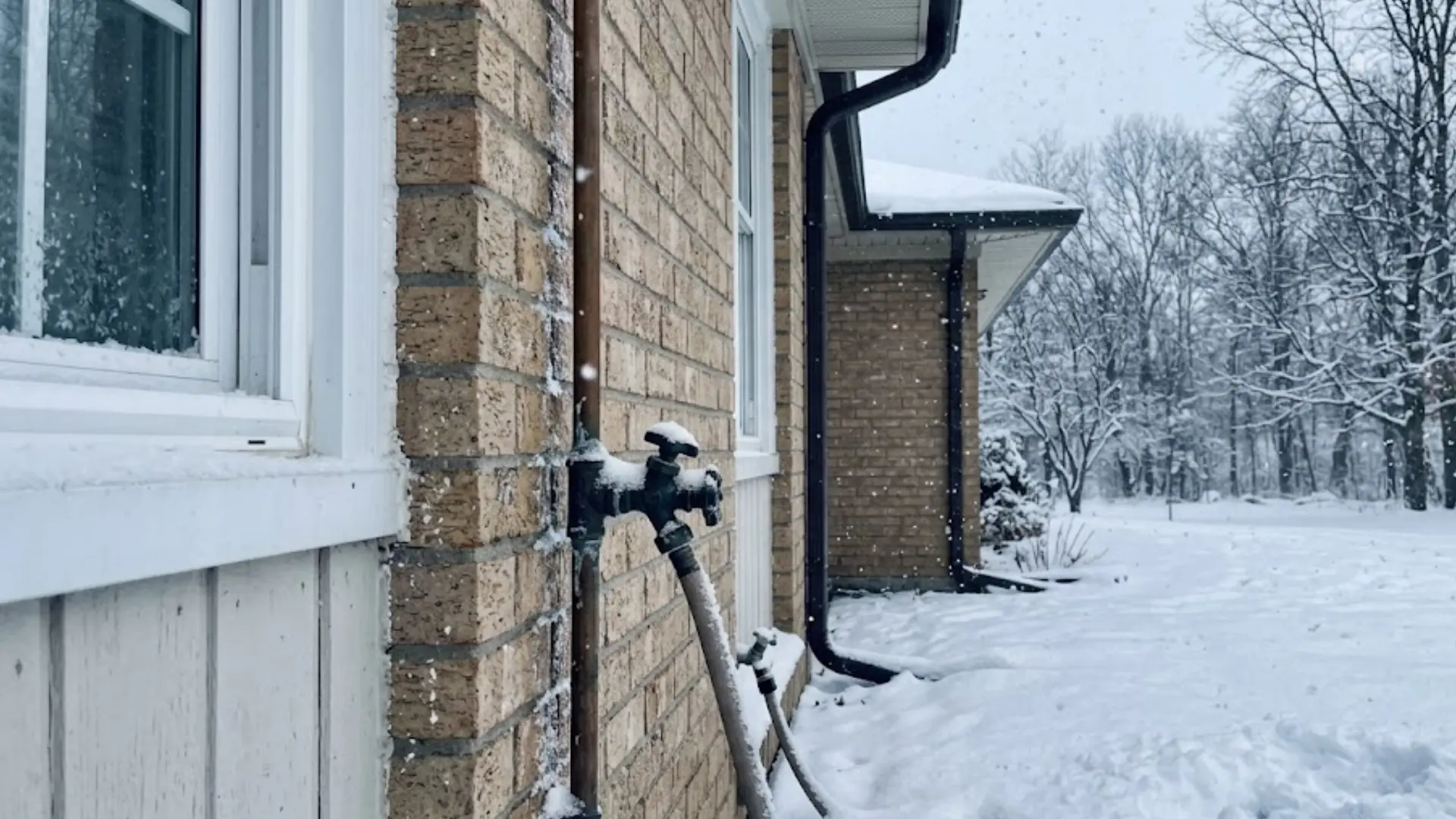
Cold weather puts extra stress on the pipes running through your home. A little planning goes a long way before temperatures drop hard.
You can protect your plumbing with a few simple habits done ahead of time. I’ll walk you through how to prevent pipes from freezing this winter.
You’ll learn which spots need attention first and why they matter most. Small fixes now save you from bigger problems once cold weather sets in.
Simple checks around your home make a real difference during winter. Warm pipes stay whole through the coldest nights. Taking care of them early keeps your home safe and dry.
What Happens Inside Your Pipes When It Freezes?
Water inside a pipe starts to freeze when it sits still, and the air around it gets cold enough. Heat slowly leaves the water until ice starts to form.
Ice takes up more space than liquid water, and that’s the key thing to understand. I remember learning this after a cold snap hit my own pipes hard.
As it expands, it pushes against the pipe walls, and that pressure is what actually causes the damage, not the ice itself. Now I always check the pipes I tend to forget about.
Some freeze faster than others based on location. Pipes in outside walls, attics, or unheated basements lose heat much quicker than pipes tucked inside warm walls.
How to Prevent Pipes From Freezing
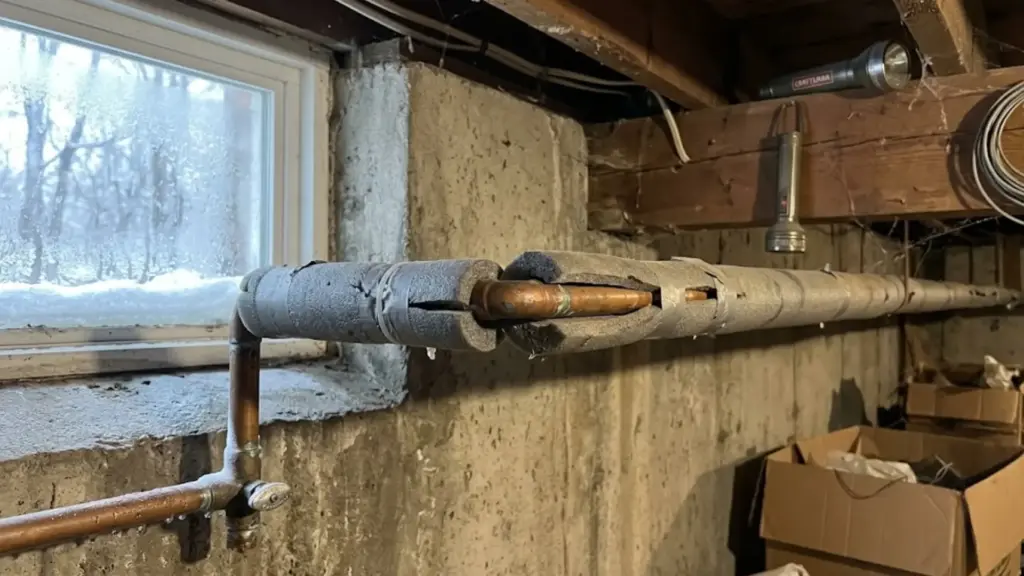
Preventing frozen pipes mainly comes down to keeping your plumbing warm and blocking out cold air. Here’s what’s worked for me and what I tell anyone dealing with cold weather at home:
1. Insulate Exposed Water Pipes
Foam pipe sleeves are an easy, affordable way to add protection. Rubber pipe insulation works well too, and fiberglass insulation can help in the right spots.
Focus first on pipes in unheated spaces, since they face the highest risk. Insulate both hot and cold water lines, since both can freeze in cold conditions.
Pay extra attention to garages, basements, attics, and crawl spaces, since these areas usually stay much colder than the rest of the house.
2. Seal Gaps That Let Cold Air In
Cold air sneaks in through small gaps you might not even notice. Check around pipe penetrations and any foundation cracks or openings nearby.
If you have an older stone foundation, repointing stone foundation joints can close up these gaps for good. Drafty windows and doors let cold air move through your home easily too.
Don’t forget openings around vents or wiring penetrations, since these are common weak spots. A bit of caulk or insulation in these areas can cut down on drafts and help keep nearby pipes warmer.
3. Use Heat Tape or Heat Cable Safely
Some exposed pipes need a little extra heat to stay safe during cold snaps. Thermostatically controlled heat cable can help with that job.
Always choose products that are specifically approved for plumbing use. Read the manufacturer’s instructions carefully before installing anything on your pipes.
Skip homemade or makeshift heating methods, since they can create more problems than they actually solve. Safe, approved products used correctly work best every time.
4. Disconnect and Drain Outdoor Hoses
Remove garden hoses from outdoor faucets before freezing weather arrives. Drain any water left inside them before storing them away for winter.
If your home has one, shut off the indoor valve that supplies your outdoor faucets. Then open the outdoor faucet to let any remaining water drain out completely.
Insulated faucet covers add another simple layer of protection for the colder months ahead of you.
5. Winterize Sprinkler and Pool Lines
Shut off the water supply to your sprinkler or pool system before winter. Drain the irrigation lines and pool plumbing completely so no water sits inside.
Always follow the manufacturer’s instructions for your specific system setup. A professional blowout service can help clear out any water hiding in the lines.
Skip antifreeze products that aren’t specifically made for this kind of home plumbing.
6. Keep Indoor Temperatures Consistent
Keep your heating system running steadily during cold-weather stretches. Avoid setting the thermostat extremely low overnight, even if you’re trying to save money.
Rooms with plumbing need to stay warm enough, too. Don’t let vulnerable areas get much colder than the rest of your house.
If you’re heading out of town during winter, keep the heat set at a safe, steady level the whole time.
7. Open Cabinets Around Plumbing
During severe cold snaps, open your kitchen and bathroom sink cabinets wide. This simple step lets warm indoor air reach the pipes tucked underneath.
Focus on sinks installed along exterior walls, since they’re more exposed to outside cold. First, move any cleaners or chemicals out of reach of kids and pets.
Think of this as an extra layer of protection, not your main defense against freezing.
8. Let Vulnerable Faucets Drip During Extreme Cold
During severe freezing conditions, let a small trickle run from vulnerable faucets in your home. Moving water is less likely to freeze solid than still water sitting in a pipe.
Focus this trick on faucets connected to plumbing you already know is at risk. This isn’t a substitute for proper insulation, just one added precaution.
Once the extreme cold passes, you can stop the dripping.
9. Protect Pipes in Garages, Attics, and Crawl Spaces
Start by figuring out which pipes run through the unheated areas of your home. Insulate any exposed sections you find running through these colder spaces.
Seal up drafts around these areas to help keep cold air out. Keep garage doors closed during freezing weather stretches whenever possible, since this also protects equipment in the garage from the cold along with your pipes.
Watch the coldest parts of your home, and consider permanent fixes if the same pipes freeze every year.
What to Do During a Hard Freeze?
Long-term prep only goes so far once a hard freeze actually hits. These are the things worth doing tonight when freezing weather is on the way:
- Keep your home heated: Avoid turning the thermostat drastically down overnight. The Red Cross recommends keeping heat at 55°F or higher if you leave home.
- Let vulnerable faucets drip: A small trickle helps protect pipes during extreme cold. Focus on faucets along exterior walls or other exposed areas.
- Open sink cabinet doors: This lets warm indoor air reach plumbing underneath. Just move cleaners out of reach of kids and pets first.
- Keep garage doors closed: This matters most when water heaters or supply lines run through the garage space.
- Keep interior doors open: This helps warm air move freely through your home, so isolated rooms don’t get too cold.
I’ve learned that a hard freeze never lasts as long as it feels like it will. Once I see temperatures climb back above freezing, I go back to my normal routine without a second thought.
How to Protect Exterior Pipes From Freezing
I’ve found that outdoor plumbing faces the cold more directly than anything inside my home. Here’s how I protect the pipes and faucets outside my house:
|
Area |
What to Do |
Why It Matters |
|---|---|---|
|
Outdoor Faucets |
Disconnect hoses and drain the faucet lines completely. |
Trapped water in hoses and faucets freezes first and can crack the fixture. |
|
Above-Ground Outdoor Pipes |
Wrap pipes in outdoor-rated insulation with a weather-resistant covering. |
Standard indoor insulation breaks down quickly when exposed to rain and snow. |
|
Pipes in Crawl Spaces |
Insulate the pipes, seal air leaks, and insulate the crawl space itself. |
Crawl spaces often sit just above freezing, so small gaps let in enough cold air to matter. |
A little outdoor prep goes a long way once temperatures drop. Taking these steps before the cold arrives can save you from costly repairs later.
How to Prevent Frozen Pipes While Away?
I’ve learned that leaving home during winter adds extra risk, since no one’s around to catch a problem early. Here’s what I handle before I head out the door:
- Keep the heat running: Never turn the heat off completely while you’re away. Set the thermostat to a safe temperature, around 55°F or higher.
- Handle outdoor water lines: Disconnect any outdoor hoses and winterize vulnerable exterior lines before you leave. This keeps trapped water from freezing.
- Know your main water shutoff: Make sure you or a trusted person knows exactly where the main shutoff valve is.
- Add water-leak and temperature sensors: These devices can alert you the moment something drops too low or water leaks.
- Have someone check the house: Ask a neighbor, friend, or family member to check in during longer trips.
A little planning before you leave can prevent a major mess when you get back. It’s a small effort that protects your home while you’re focused on your trip.
What Homeowners Say Actually Helps?
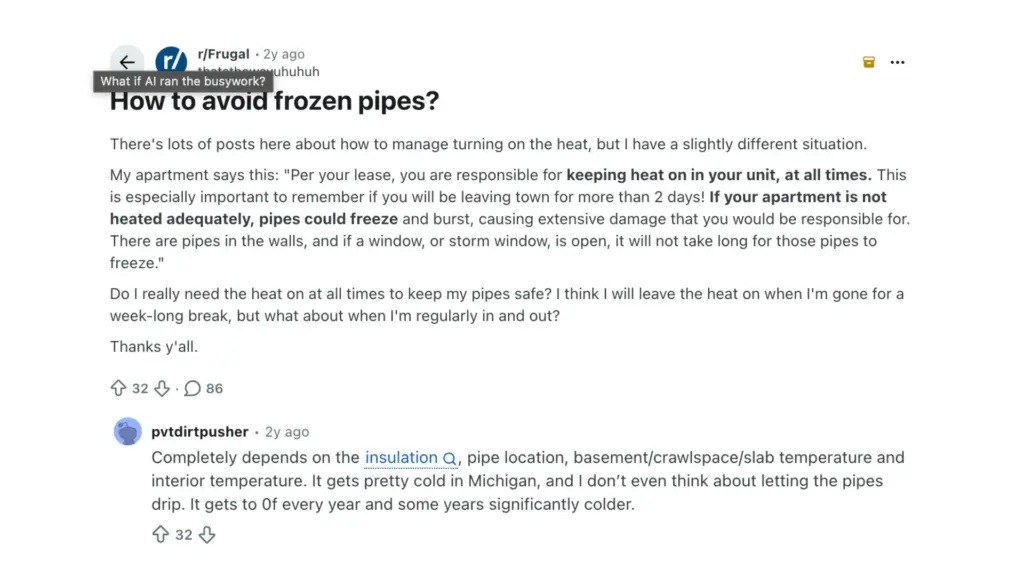
I’ve read through this Reddit thread on frugal living, and homeowners there share some solid tricks of their own. Many people say a slow drip from the faucet works better than they expected.
Others swear by keeping cabinet doors open during cold nights. A few mention insulating pipes themselves instead of paying someone else.
Some homeowners say knowing where the main shutoff valve is has saved them real money. Others point out that small, cheap fixes often matter more than expensive upgrades.
Real experience like this backs up what experts already recommend. It’s a good reminder that simple habits can prevent a lot of damage.
How to Tell If Your Pipes Are Frozen?
Catching a frozen pipe early can save you from a much bigger problem later. Here’s what to look out for around your home:
- No water coming out of a faucet, or only a small, weak trickle.
- Water pressure that suddenly feels much lower than usual.
- Frost visible on the outside of any exposed pipes.
- A pipe section that looks bulged, swollen, or oddly shaped.
- Strange sounds like banging or whistling when you turn on a faucet.
- One fixture working fine while another nearby stops working.
Keep in mind that a frozen pipe can already be damaged even before it starts leaking. If you notice any of these signs, it’s worth checking things out right away.
How to Unfreeze Pipes Safely?
Knowing how to unfreeze pipes safely can save you from a much bigger mess down the road. Here’s what to do if you think a pipe in your home has frozen:
- Step 1: Check exterior walls, crawl spaces, basements, and garages first. Also check near where the water line enters.
- Step 2: Look closely for splits, bulges, or leaking joints. Know your main shutoff, and call a plumber if the pipe bursts.
- Step 3: Open the affected faucet to relieve pressure. This lets melting water escape and shows when normal flow returns.
- Step 4: Apply gentle heat using a hair dryer, heating pad, or warm towels. Keep warming until pressure returns; the Red Cross recommends this.
- Step 5: Never use an open flame like a blowtorch or propane torch. This risks fire and can damage the pipe further.
I’ve learned that thawing a pipe takes patience, and rushing the process usually makes things worse for me. I stick to gentle, steady heat, and I always get my water flowing again safely.
When Should You Call a Plumber?
Some frozen pipe situations are best left to a professional. If the frozen section is behind a wall, you can’t reach it safely on your own. The same goes for a blockage you simply can’t locate.
Multiple frozen areas at once also call for expert help. A cracked or bulging pipe means real damage, so stop and call someone right away.
Any sign of leaking water is a clear signal to get professional help fast. If normal water flow doesn’t return after you’ve tried thawing it, don’t keep pushing.
A frozen main service line is a bigger job than any homeowner should handle. And if pipes keep freezing again and again, a plumber can find the real problem.
Frequently Asked Questions (FAQs)
How Long Does It Take for a Pipe to Freeze?
A pipe can freeze within six to eight hours in extreme cold, though timing depends on insulation, exposure, and how much water sits still inside.
Does a Frozen Pipe Always Burst?
Not always. A pipe can freeze without bursting if pressure has somewhere to go. Bursting usually happens when trapped water has no escape route.
Is Water Safe to Drink After a Pipe Thaws?
Water is usually safe once flow returns normally. If the pipe cracked or leaked during freezing, have your water tested before drinking it again.
The Bottom Line
Now you know how to prevent pipes from freezing before the next cold snap hits. I always insulate the pipes that need it and seal up drafty gaps around my home.
Keeping things steady and warm makes a real difference for me every winter. I check my outdoor faucets and drain what needs draining before winter settles in.
These small steps keep my water running and my walls dry every year. A little upkeep now saves you time and money down the road. I stay on top of these habits through the colder months ahead.
Drop a comment below and tell me what’s worked for your home this winter.