

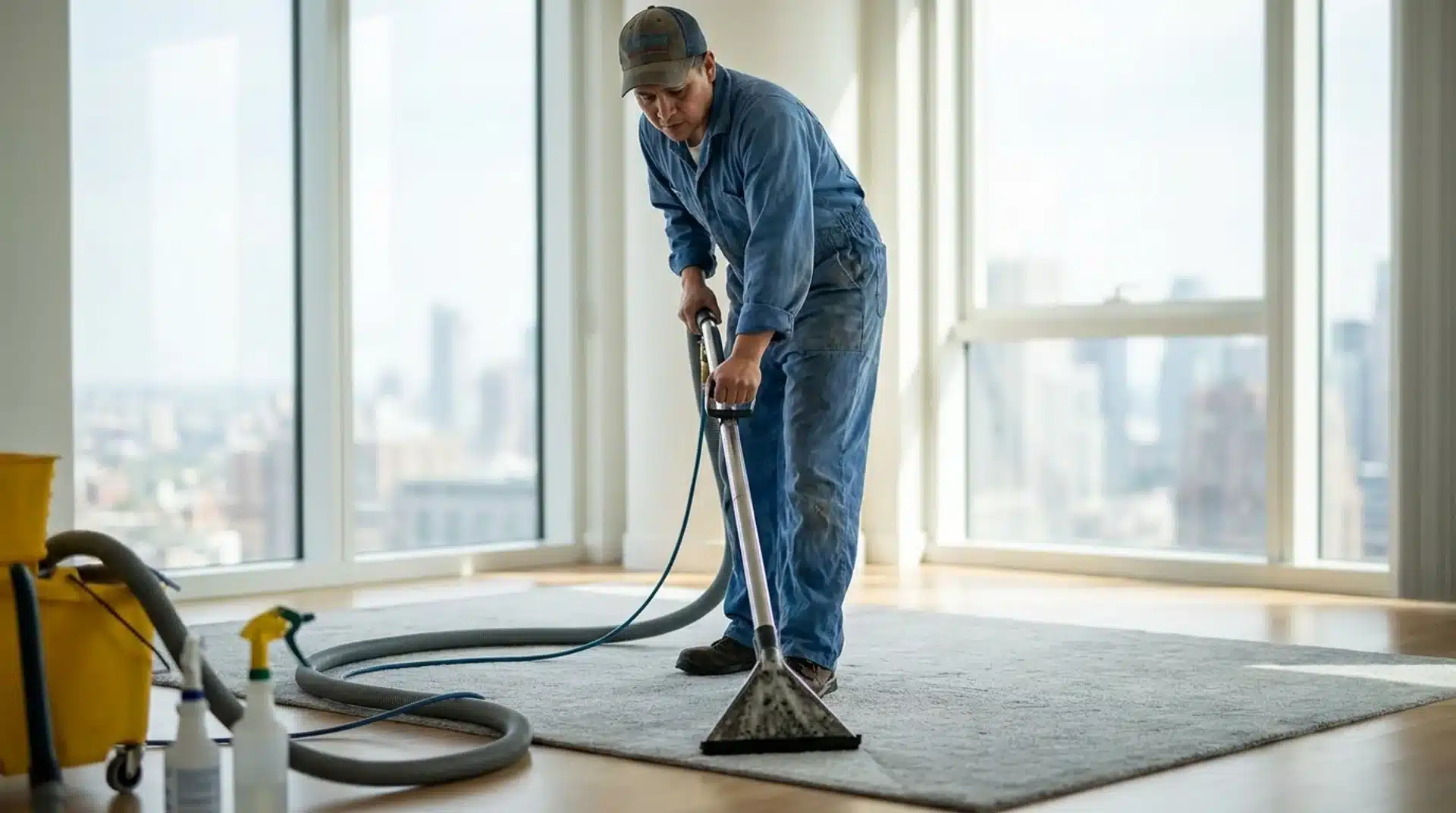
That dusty ceiling fan, greasy cabinet top, and crumb-filled couch gap are probably not part of your weekly cleaning routine.
Regular cleaning makes your home look neat, but hidden dirt still builds up in places you barely notice during busy weeks.
A deep-cleaning checklist helps you catch missed spots before dust, odors, germs, and sticky grime take over.
Before grabbing a sponge, let us first understand why deep cleaning needs a different plan than your usual weekend tidy-up.
Deep Cleaning Checklist vs. Regular Cleaning: What’s the Difference
A regular clean and a deep clean may sound similar, but they solve very different problems around the house.
| Regular Cleaning | Deep Cleaning |
|---|---|
| Done weekly or every two weeks | Done once or twice a year |
| Focuses on visible mess, like crumbs and dust | Focuses on hidden grime, like grout, coils, and vents |
| Takes an hour or two, tops | Can take a full day or more, room-by-room |
| Uses basic tools like a broom and spray cleaner | Needs extra tools like a scrub brush, degreaser, and vacuum attachments |
| Keeps the home looking tidy on the surface | Removes buildup that regular cleaning never even touches |
Knowing this difference matters more than people think, since it changes how you budget your time and which tools you actually need to buy before starting the job.
The Room-by-Room Deep Cleaning Checklist
Each room has different problem spots, so the checklist below breaks the work into simple, manageable sections.
1. Living Room and Common Areas
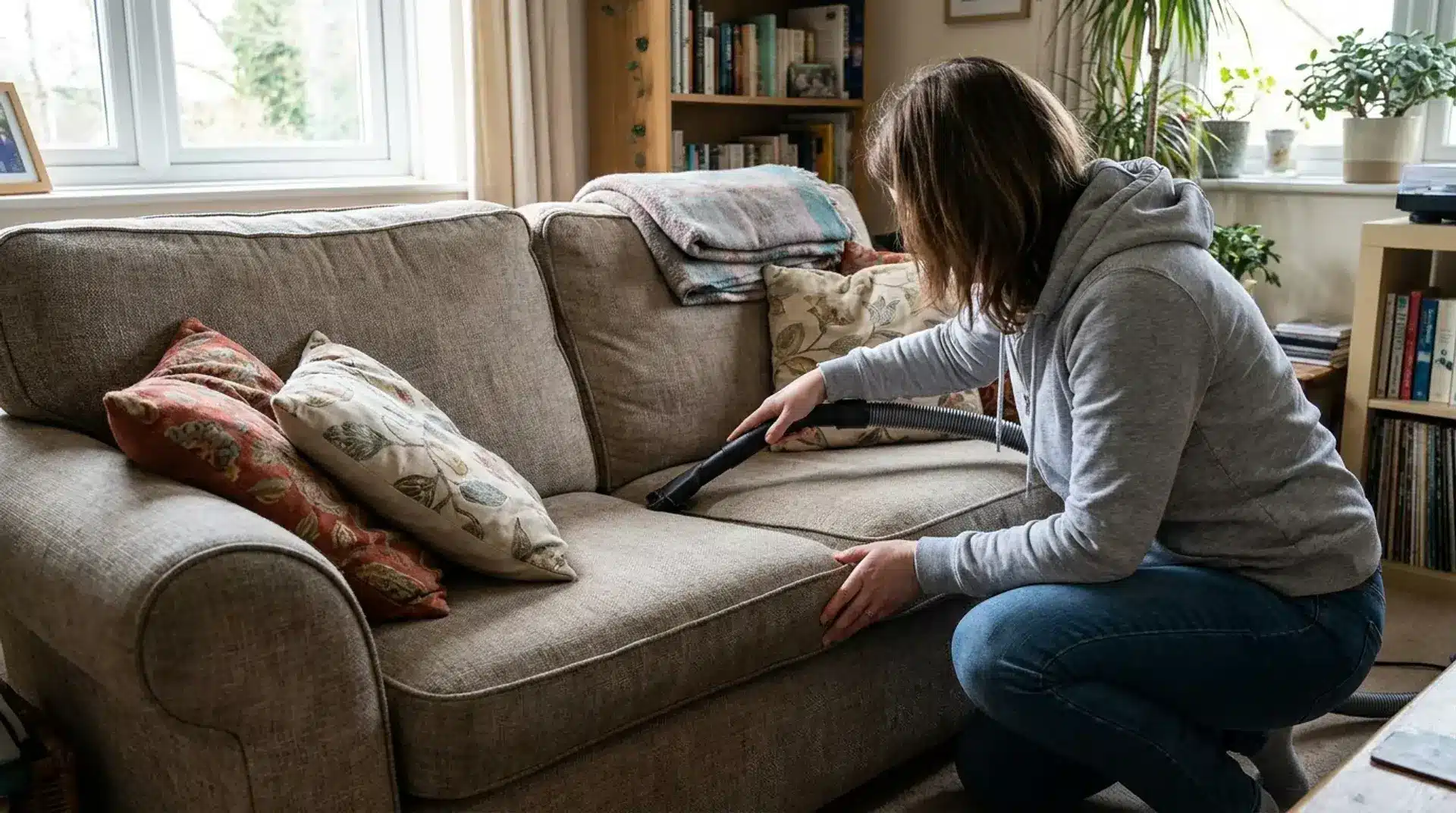
This room sees the most daily traffic, so dust and grime pile up fast in spots you barely notice.
- Dust the ceiling fan blades and light fixtures, and check your ceiling texture type before you start scrubbing.
- Wipe baseboards, door trim, and corners with a damp cloth.
- Vacuum couch cushions and crevices.
- Wipe down TV screens and remotes with a dry microfiber cloth.
- Shake out or steam clean your area rugs and carpets.
2. How to Deep Clean Kitchen
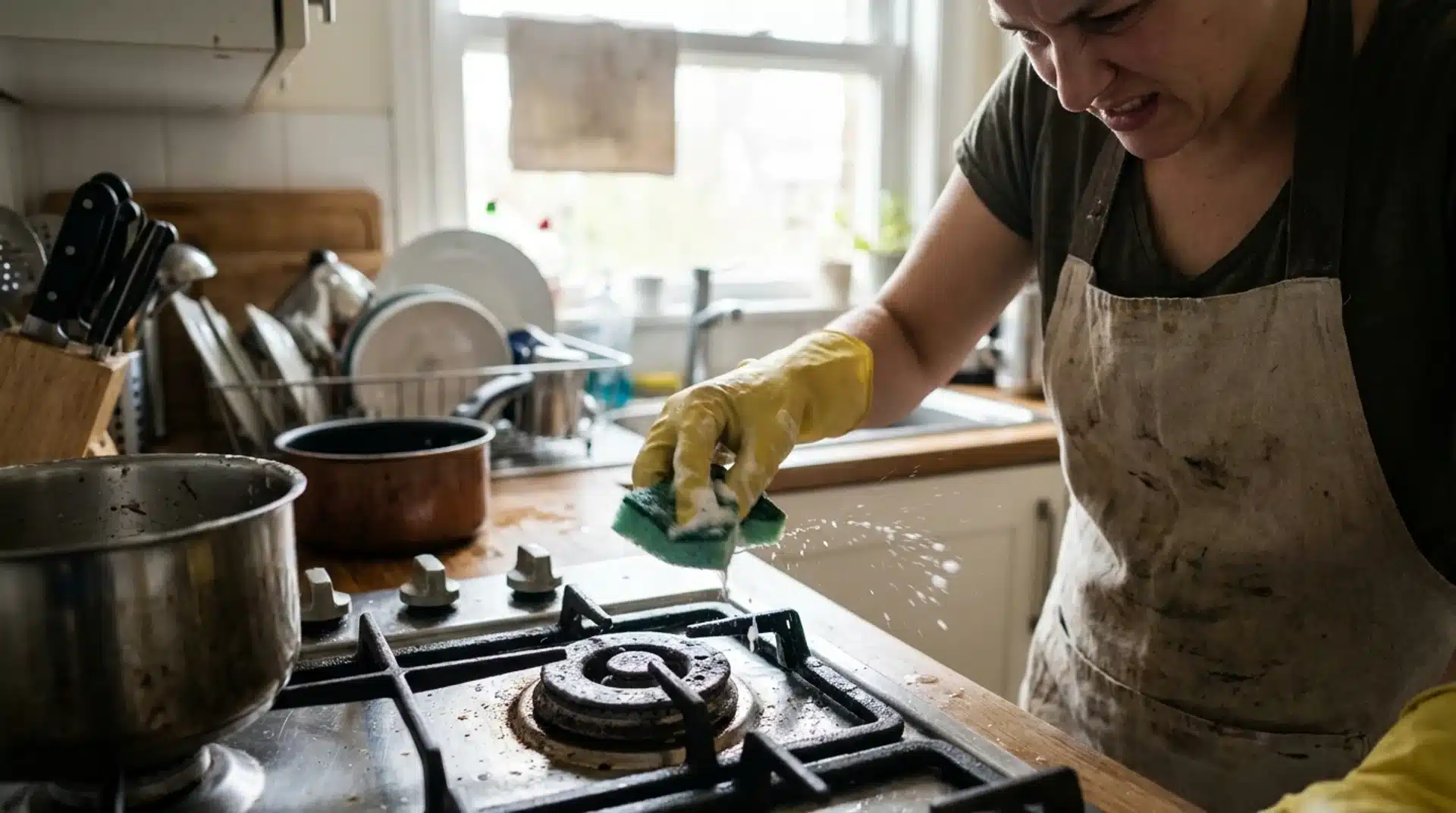
The kitchen collects grease and crumbs fast, so this room needs the most hands-on attention of the whole house.
- Pull out the fridge and vacuum the coils, since dirty coils can spike your energy bill.
- Scrub the stovetop, oven interior, and range hood filter.
- Wipe down the inside of every cabinet and toss expired pantry items.
- Clean the sink, faucet, and garbage disposal with baking soda.
- Wash the dishwasher filter and run one empty cleaning cycle.
3. Bathroom Clean & Sanitization
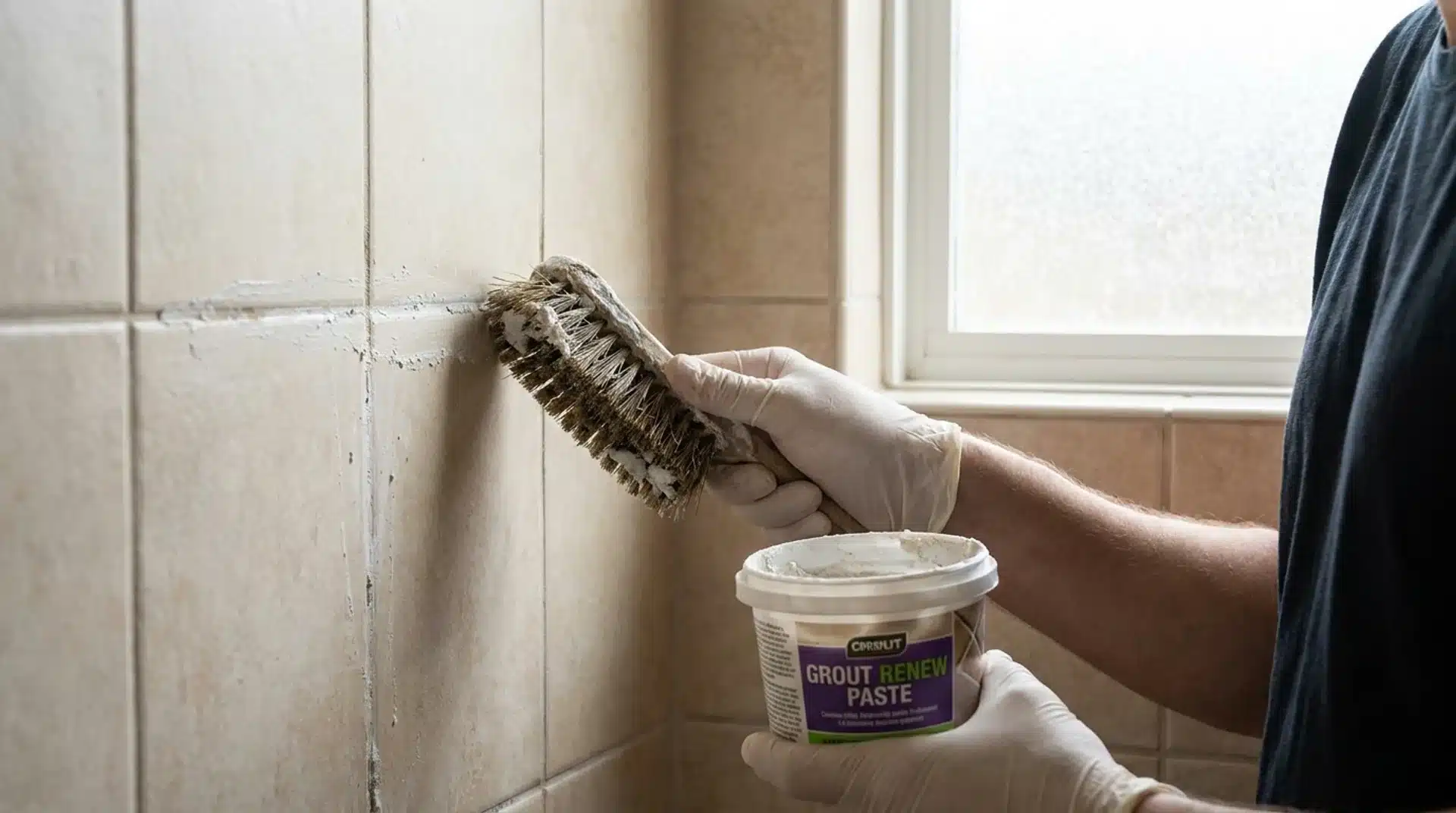
Bathrooms deal with moisture every single day, so mold and soap scum build up fast if you skip this step.
- Scrub grout lines with a stiff brush and baking soda paste.
- Descale the showerhead and faucet using plain white vinegar.
- Clean the inside of the cabinets and toss old, expired products.
- Sanitize the toilet base, hinges, and seat thoroughly.
- Wash the shower curtain and bath mat in hot water.
4. Bedrooms and Closets
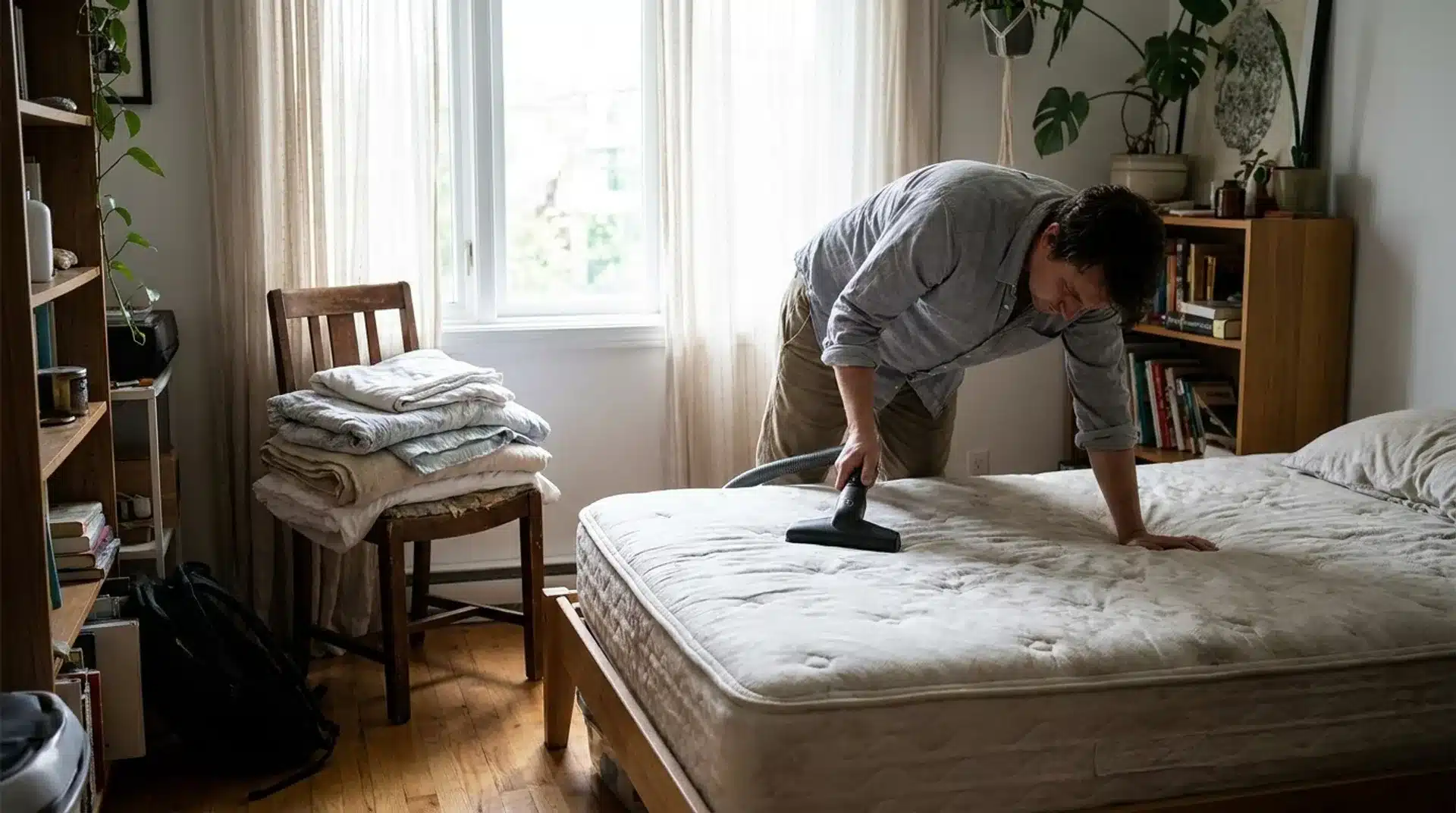
Bedrooms hide dust in bedding, closets, and corners that most people skip during a normal week.
- Vacuum the mattress, then flip or rotate it for even wear.
- Wash all bedding, pillows, and duvet covers in hot water.
- Wipe closet shelves and donate clothes you no longer wear.
- Dust baseboards and door trim, and peek at black trim wall ideas if yours needs a refresh.
- Wipe down nightstands, dressers, and mirrors with glass cleaner.
5. Laundry Room and Entryway
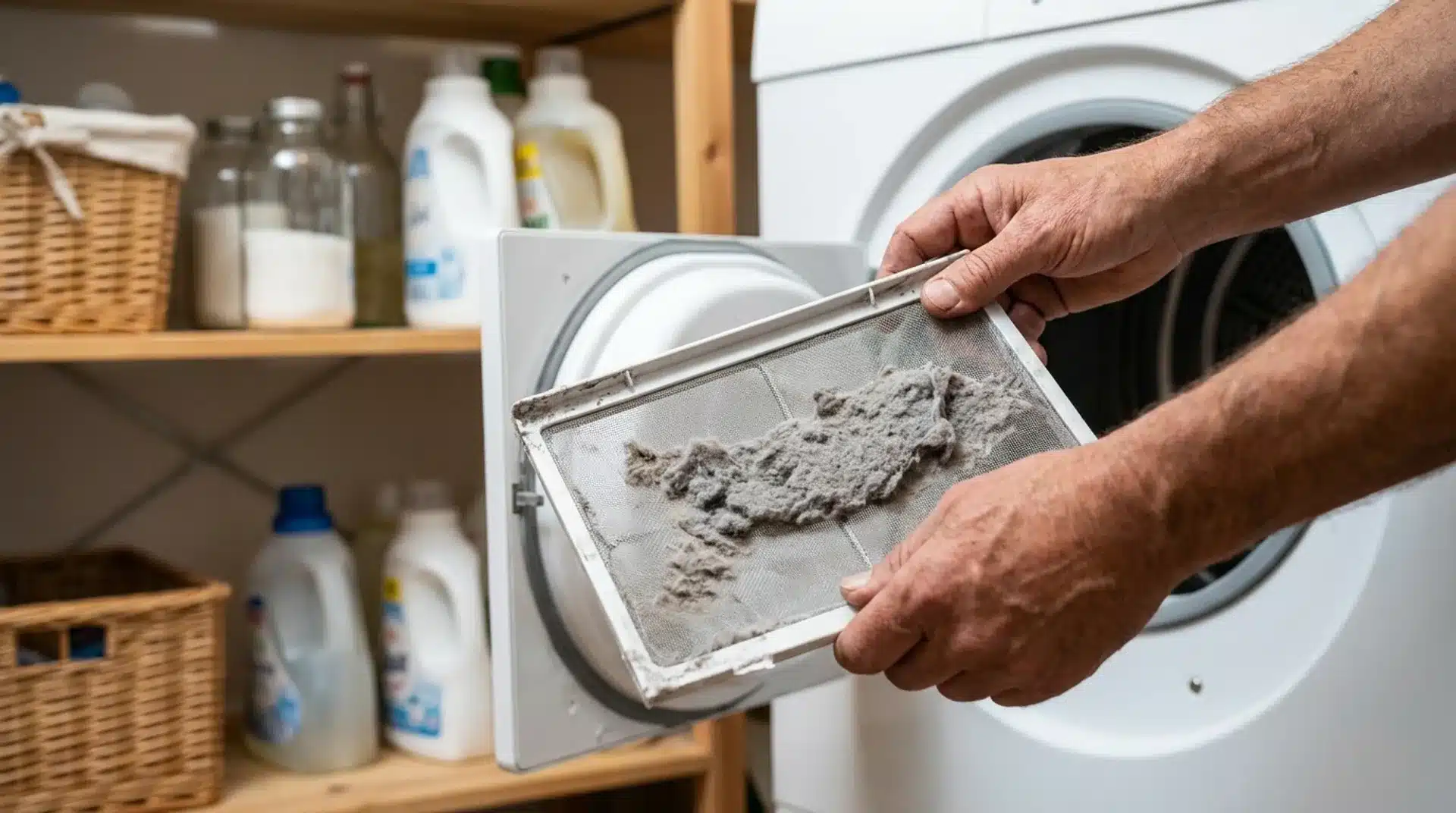
These small spaces work overtime, so lint, dust, and shoe grime build up quietly without you noticing.
- Clean the lint trap and vacuum out the dryer vent.
- Wipe the washer drum and door seal to stop mildew.
- Sweep and mop the entryway floor thoroughly.
- Wipe down shelves, hooks, and light switches near the door.
- Replace worn-out doormats before they track in more dirt.
6. Garage and Outdoor Spaces
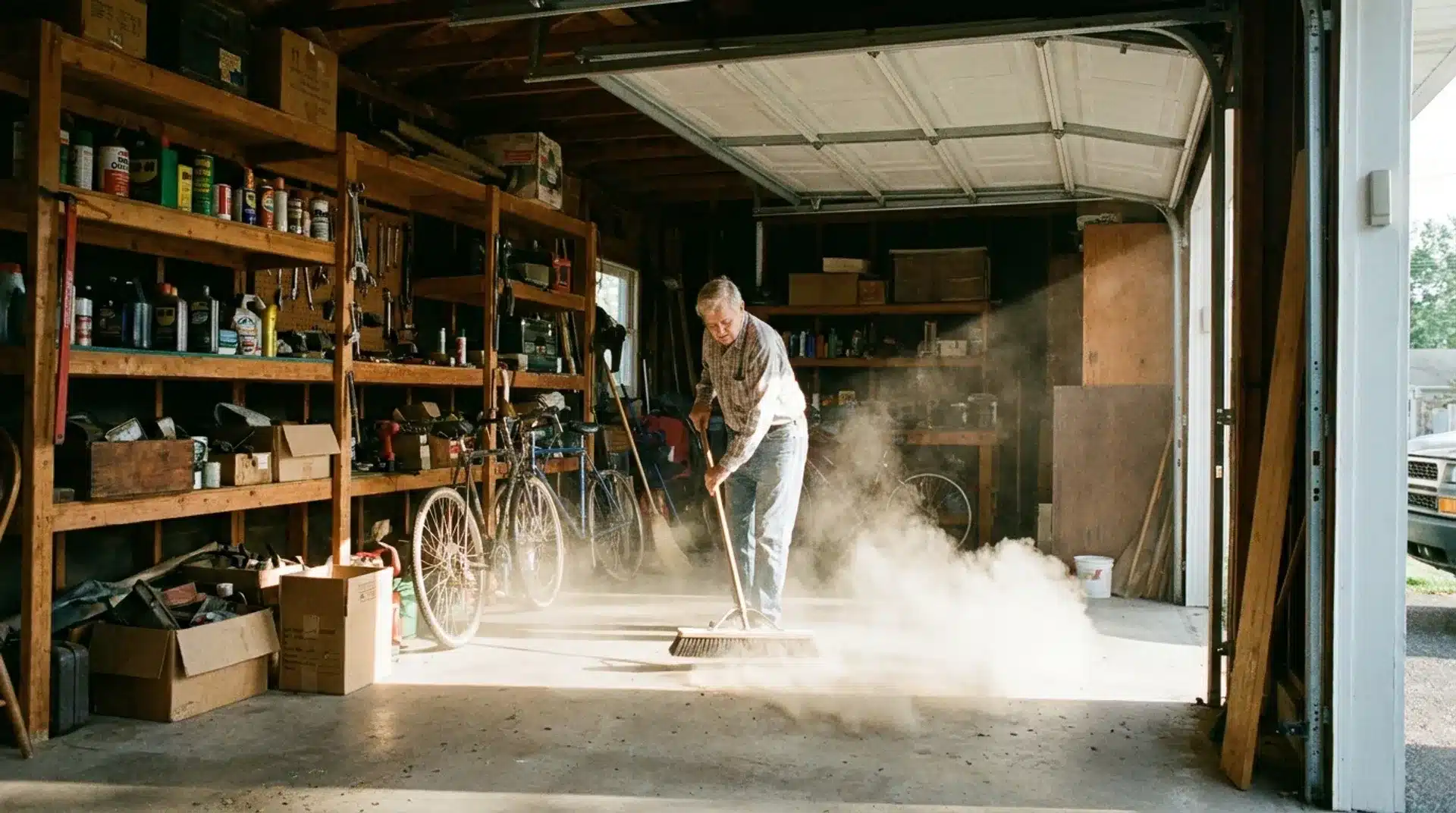
The garage collects dust, cobwebs, and clutter faster than almost any other room in your home.
- Sweep the floor and wipe down shelves and workbenches.
- Clean out gutters and downspouts before the next storm.
- Power wash the deck, patio, or porch surface.
- Wipe down outdoor furniture frames and cushions.
- Sort tools and donate items you no longer use.
Which Spots to Prioritize First If You’re Short on Time?
Most people assume the bathroom is the germiest room in the house, but that is not what the research actually shows.
A 2011 study by NSF International found that kitchens carry more bacteria than bathrooms overall, largely because sponges, sinks, and cutting boards remain damp for hours at a time.
If you are short on time this weekend, start there instead of scrubbing the toilet first.
Once the kitchen is handled, move on to high-touch spots like faucet handles, light switches, and the fridge door handle. These get touched dozens of times a day, yet they rarely get a proper deep scrub.
Save low-traffic zones like the garage or a guest room closet for last, since they collect dust more slowly and do not carry the same germ risk.
Cleaning vs. Sanitizing vs. Disinfecting: Which Do You Need
These three words get thrown around like they mean the same thing, but they really do not mean the same thing at all.
| Term | What It Does | When to Use It |
|---|---|---|
| Cleaning | Removes dirt, dust, and grime with plain soap and water | Every surface, every time, before anything else |
| Sanitizing | Lowers germ levels down to a level considered safe | Kitchen counters, cutting boards, high-touch spots |
| Disinfecting | Kills nearly all germs and viruses on a surface | After an illness, or for someone with a weak immune system |
The CDC recommends cleaning first, always, since sanitizers and disinfectants work best on surfaces that are already free of visible grime and buildup.
How Often Do You Really Need to Deep Clean?
There is no single rule that fits every household, but most homes tend to follow a similar pattern.
Most experts recommend a full deep clean once or twice a year, though your household might genuinely need it more often.
Pets, allergies, and high humidity all speed up the buildup of dust and allergens around the house.
The EPA notes that regular cleaning helps reduce dust mites and other indoor allergens, especially in bedrooms and living rooms.
- You have pets that shed indoors on a regular basis
- Someone in the house deals with allergies or asthma
- Your home sits near a construction site or dusty road
- You just moved in, or you are prepping the house to sell
What Do People Think About Deep Cleaning Checklists?
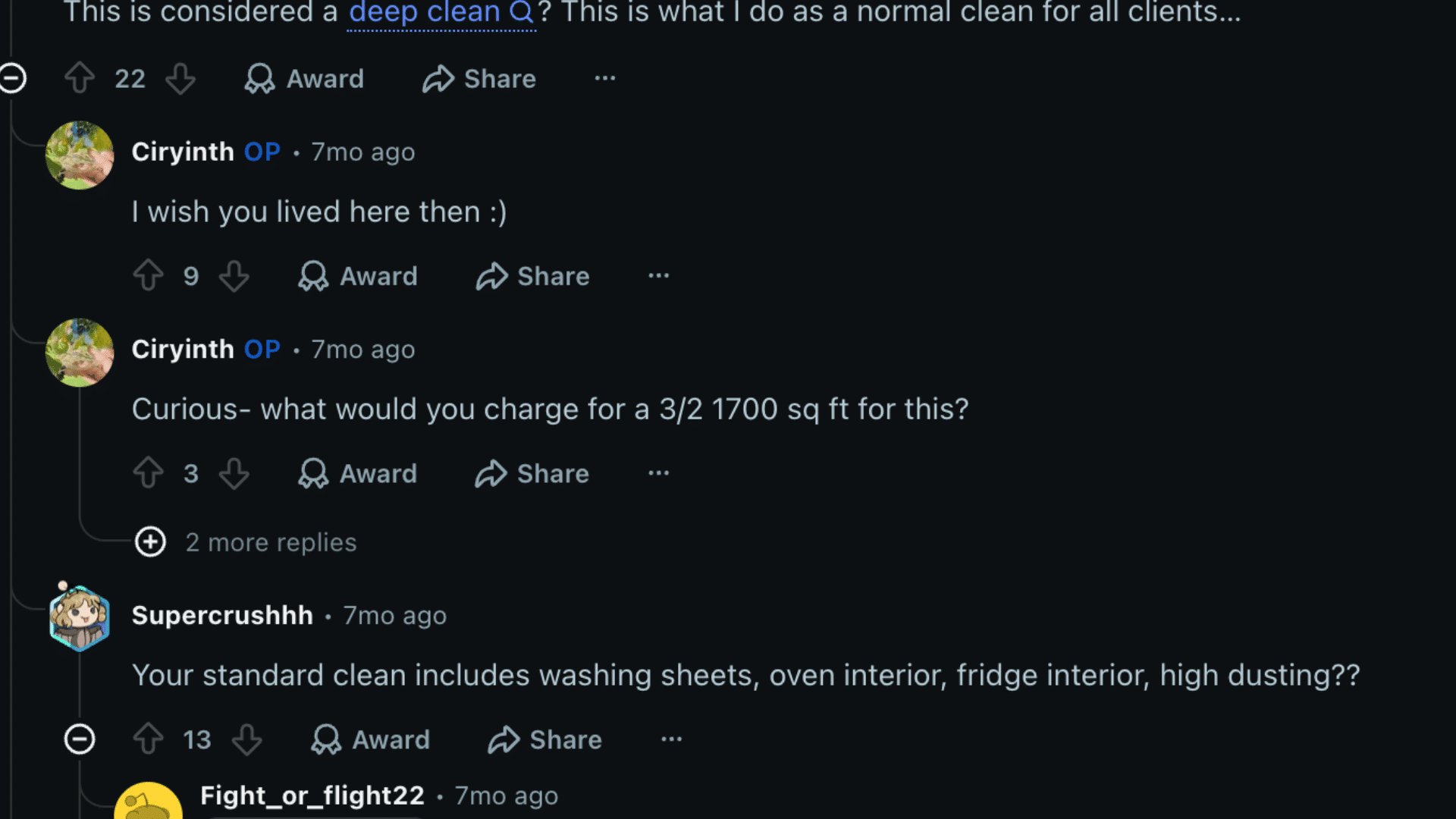
People who have hired or worked as house cleaners shared their honest take on this exact topic over on Reddit.
A homeowner on the forum shared a full checklist meant for a new cleaner and asked whether it actually counted as a real deep clean or just a regular visit.
Several commenters pointed out that most of the tasks listed, such as washing sheets and wiping down kitchen appliances, are already handled during a standard visit.
Others jumped in with pricing opinions, suggesting that a home around 1,700 square feet could reasonably cost between $200 and $460 for a proper deep clean.
One especially useful comment clearly broke down the real difference.
A regular clean usually means dusting surfaces, while a true deep clean means scrubbing baseboards, pulling out appliances, and removing built-up grime that dusting alone simply cannot touch.
That distinction lines up closely with everything covered earlier in this guide.
Conclusion
A deep-cleaning checklist works best when it helps you clean with a plan instead of rushing through every room.
You should start with the areas that most affect daily comfort, such as the kitchen, bathroom, bedroom, and high-touch surfaces.
I would not try to finish the whole house in one day, because that usually leads to skipped corners. Pick one room, clear the clutter, clean hidden areas, then move on only when that space feels done.
Your home will feel fresher if you build this habit gradually rather than waiting for dust and grime to pile up.
Frequently Asked Questions
Can You Deep Clean an Entire House in One Day?
It depends on the size of your home and how much buildup you are dealing with right now.
A one-bedroom apartment might take 4-6 hours, while a full house usually needs a whole day or spreads across a weekend.
Breaking it into rooms instead of rushing everything at once yields better results overall.
Should You Declutter Before or After a Deep Clean?
Always declutter first, no exceptions here. Cleaning around piles of stuff wastes time, and you end up missing spots completely hidden underneath them.
Clear off counters, tables, and floors before you even pick up a cleaning cloth. Once the clutter is gone, dusting, wiping, and vacuuming go a lot faster.
Is it Worth Hiring a Professional Deep Cleaner Instead of DIY?
It really comes down to your budget and how much free time you actually have. Professionals often charge between $200 and $400 for an average-sized home, and they bring tools most people do not own.
If you have the time and a solid checklist, DIY works just fine.
What is the Best Time of Year to Deep Clean?
Spring gets most of the credit, according to the Cleaning Institute, mostly because of the fresh air and longer daylight hours. But there is no rule saying you have to wait until spring rolls around.
Fall works well too, especially before the holidays bring more guests and extra mess. Pick whatever season actually fits your schedule best.