

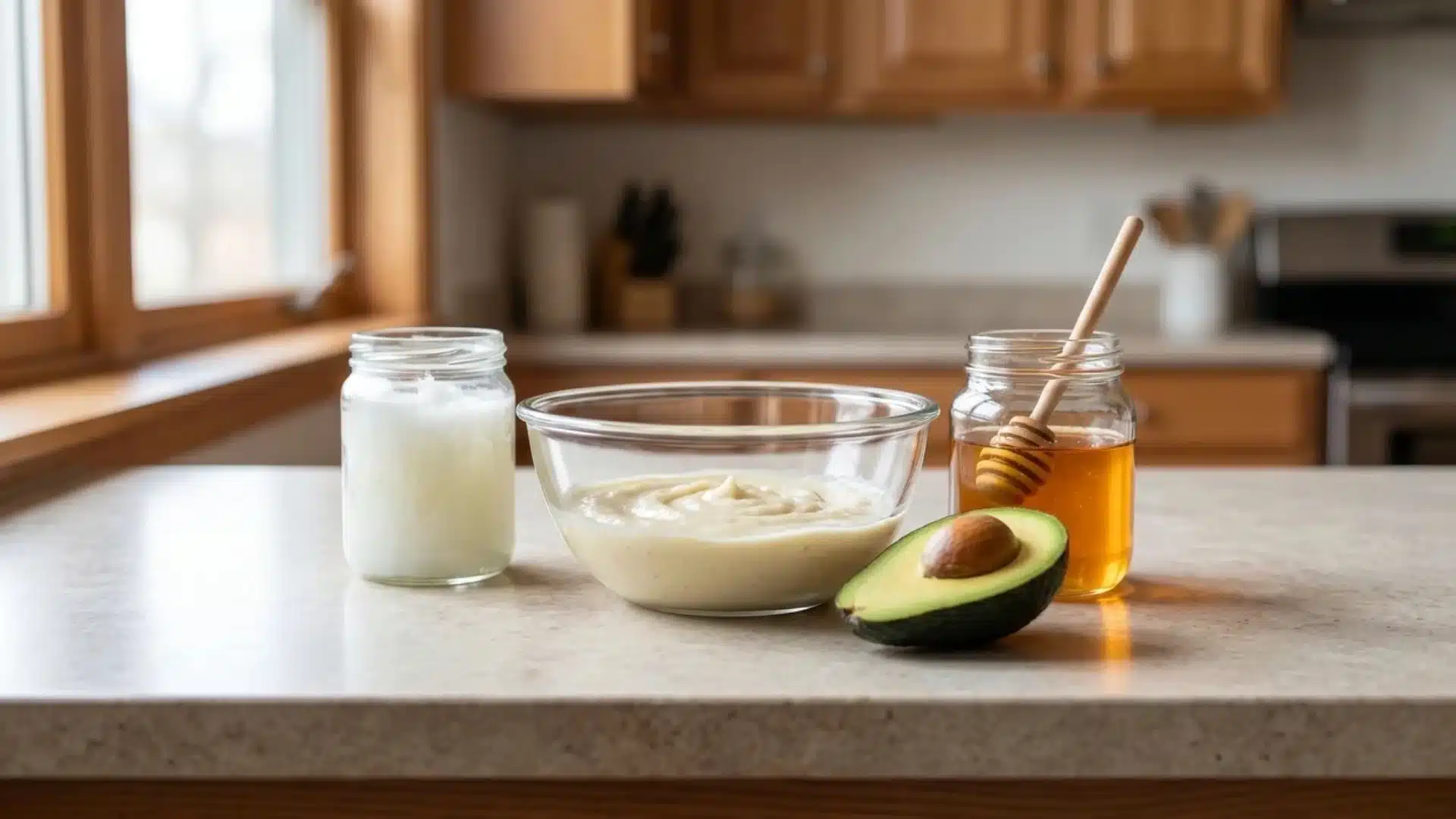
Your hair doesn’t always need a new product; sometimes it just needs the right ingredients. A DIY hair mask delivers a concentrated hit of moisture or protein using what’s already in your kitchen.
Every hair concern has a fix, whether it’s dryness, frizz, breakage, or a scalp that won’t cooperate. The trick is knowing which ingredients actually solve which problems.
Keep reading to find the recipe built for your exact hair needs and how to apply it so it genuinely works, not just for an hour.
What Does a DIY Hair Mask Actually Do?
Think of a hair mask as conditioner’s stronger cousin. It sits longer and sinks deeper.
An at-home hair mask gives your hair a short, concentrated boost of moisture or protein, using ingredients straight from your kitchen. The payoff is softer, shinier, more manageable hair.
Some ingredients penetrate the hair shaft; others coat it. Coconut oil and honey pass the cuticle, hydrate the inside, while avocado, banana, and yogurt smooth the outer layer surface layer
Moisture replenishment needs penetrating ingredients; smoothing, frizz control, and shine benefit from coating ones, and matching type to issue separates effective masks from temporary results.
Honestly, a mask won’t permanently fix split ends or major damage. What it will do is make your hair look and feel healthier, especially with regular use.
DIY Hair Mask Recipes by Hair Need
Find your hair’s biggest complaint below, then raid your kitchen. Each recipe takes five minutes to mix and uses ingredients you likely already own.
1. Coconut Oil and Honey (Dry Hair)
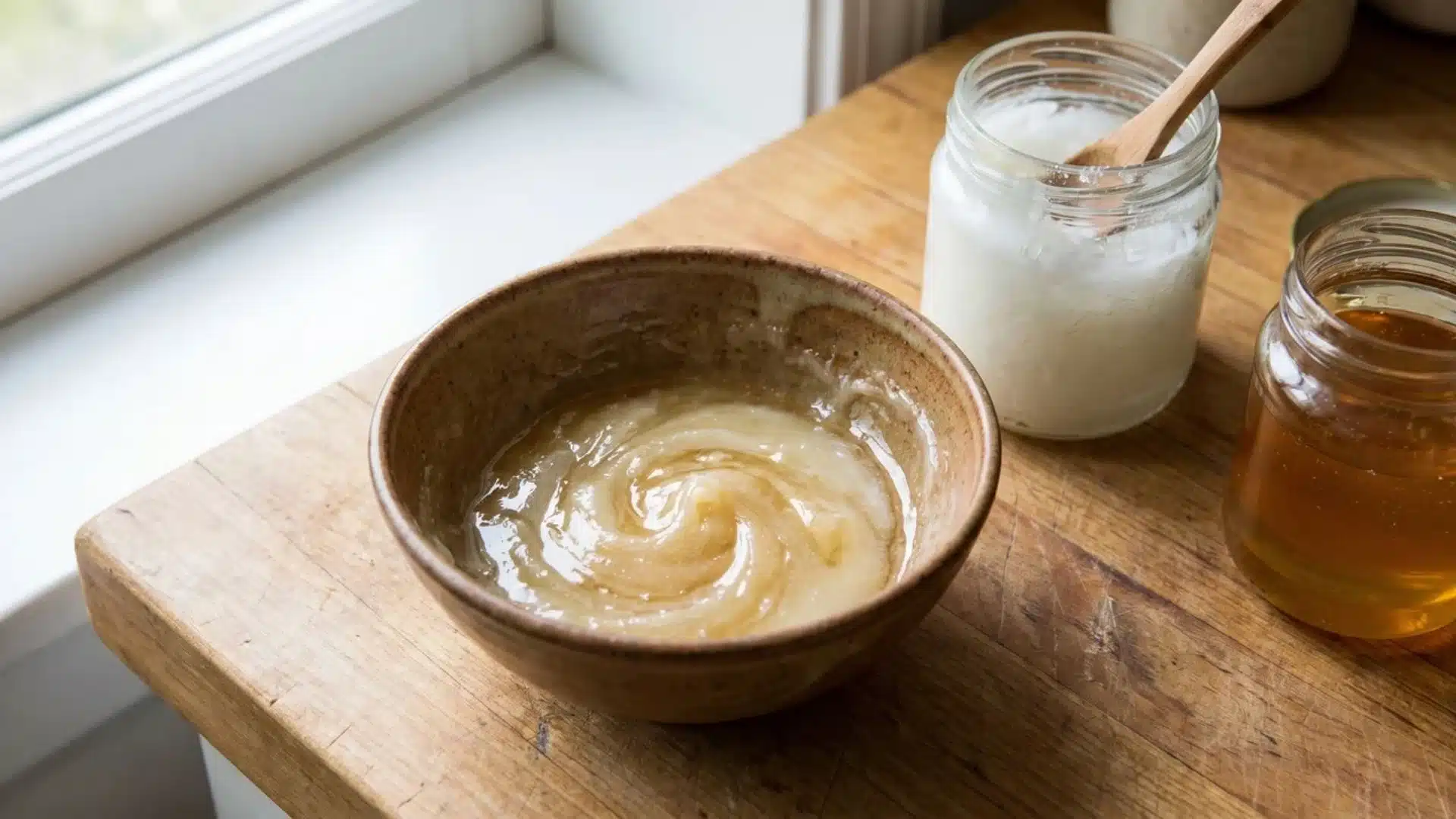
Dry hair loses moisture faster than it holds it. Coconut oil refills that loss from inside the strand, not just the surface.
Honey then acts as a seal: it pulls moisture from the air and locks it into your hair, keeping it soft past wash day.
Melt 2 tablespoons of coconut oil with 1 tablespoon of honey, leave it on for 20 minutes, then rinse.
2. Avocado and Olive Oil (Damaged Hair)
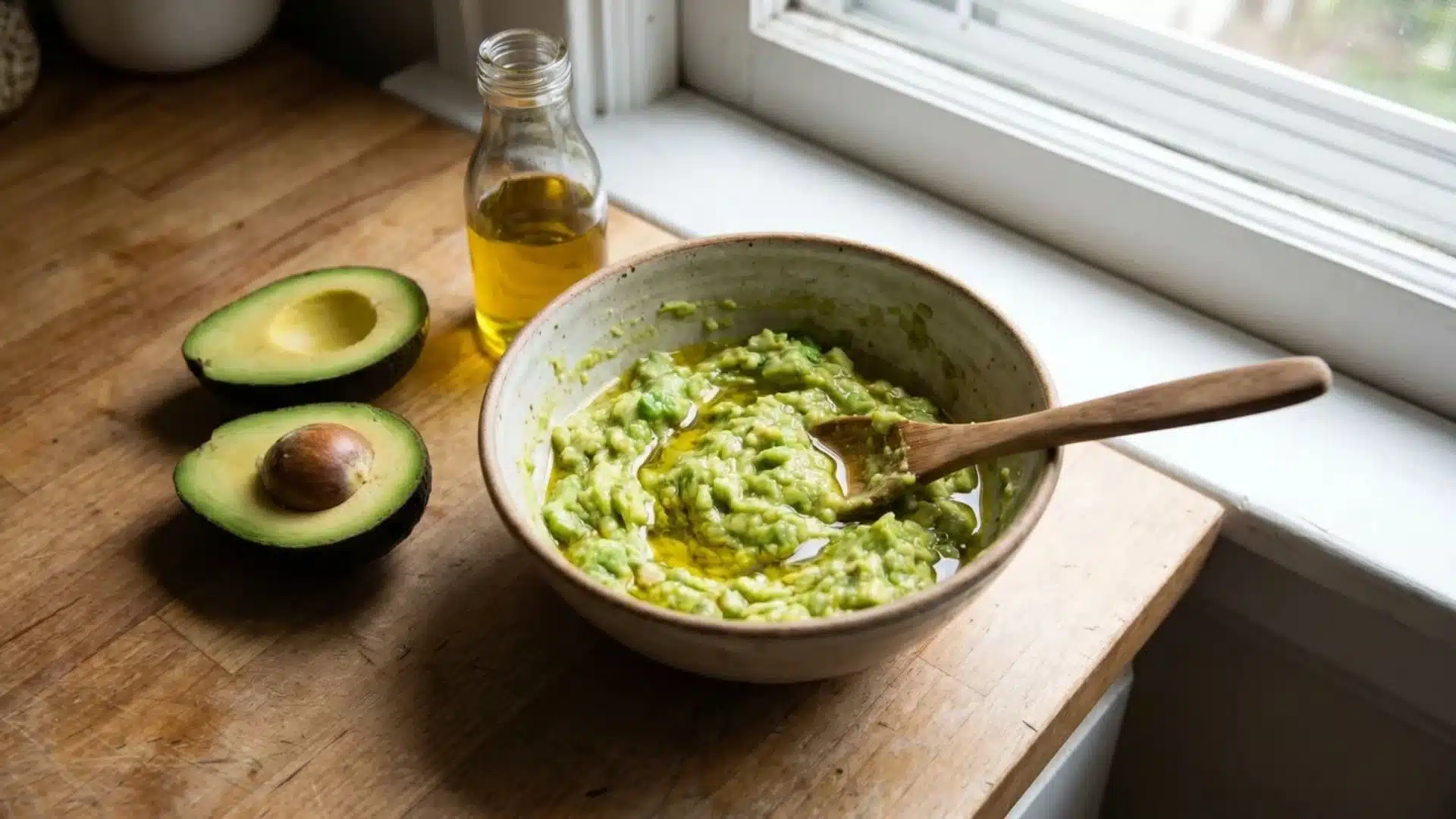
Heat tools and bleach crack your hair’s outer layer until it snaps. Avocado’s fatty acids fill those cracks where damage actually lives.
Olive oil takes it further by coating each strand and creating a barrier so the next blowout does less harm.
Mash half an avocado with 1 tablespoon olive oil, sit for 20 minutes, then wash out.
3. Banana, Yogurt, and Honey (Frizzy Hair)
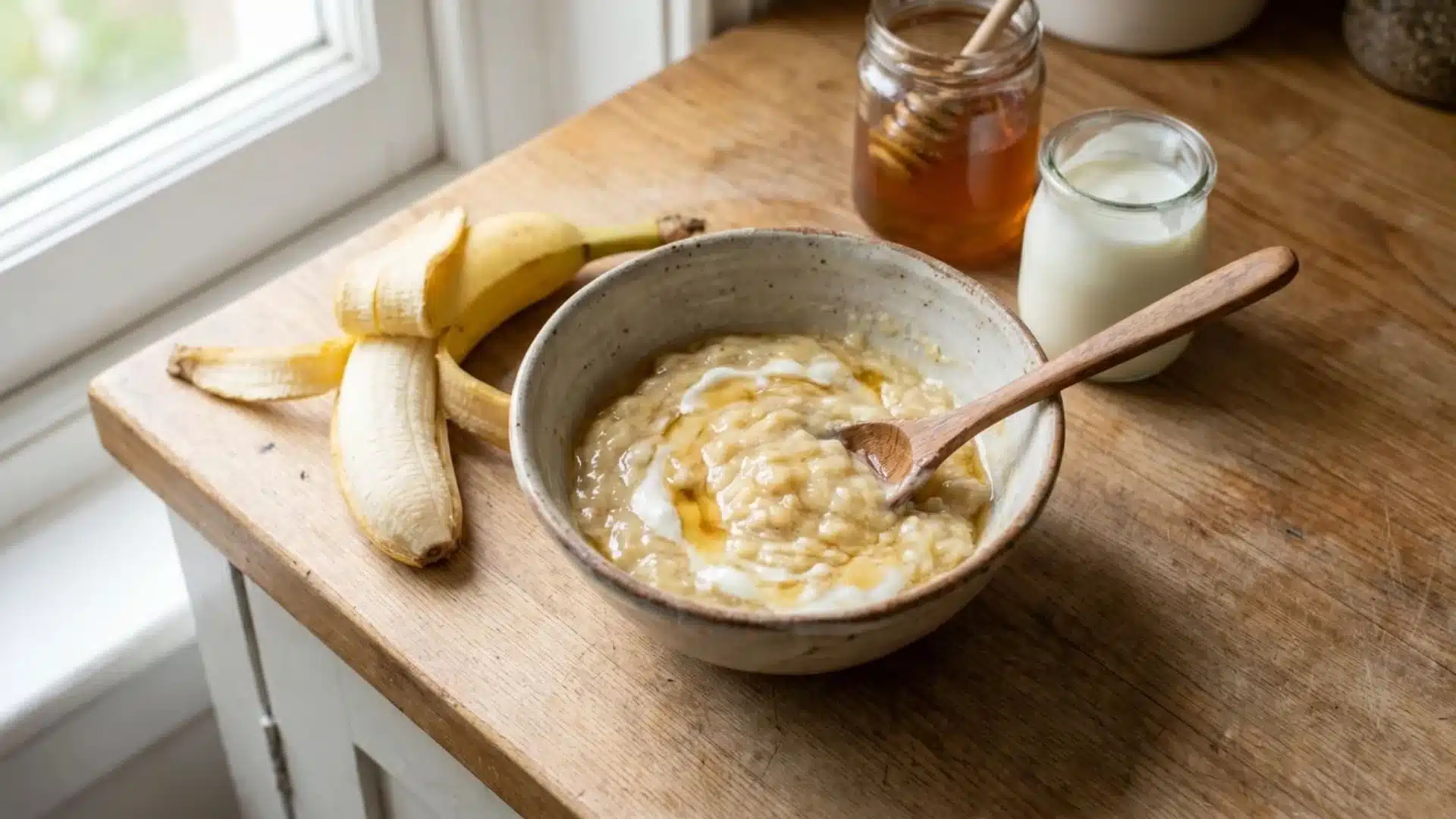
Frizz happens when the cuticle lifts and humidity rushes in. This trio works together to press that cuticle back down and keep it there.
Banana smooths, yogurt’s lactic acid conditions the surface, and honey seals everything shut, so your hair resists the weather rather than reacting to it.
Blend 1 banana with 2 tablespoons yogurt and a drizzle of honey, then rinse after 25 minutes.
4. Egg and Lemon (Oily Hair)
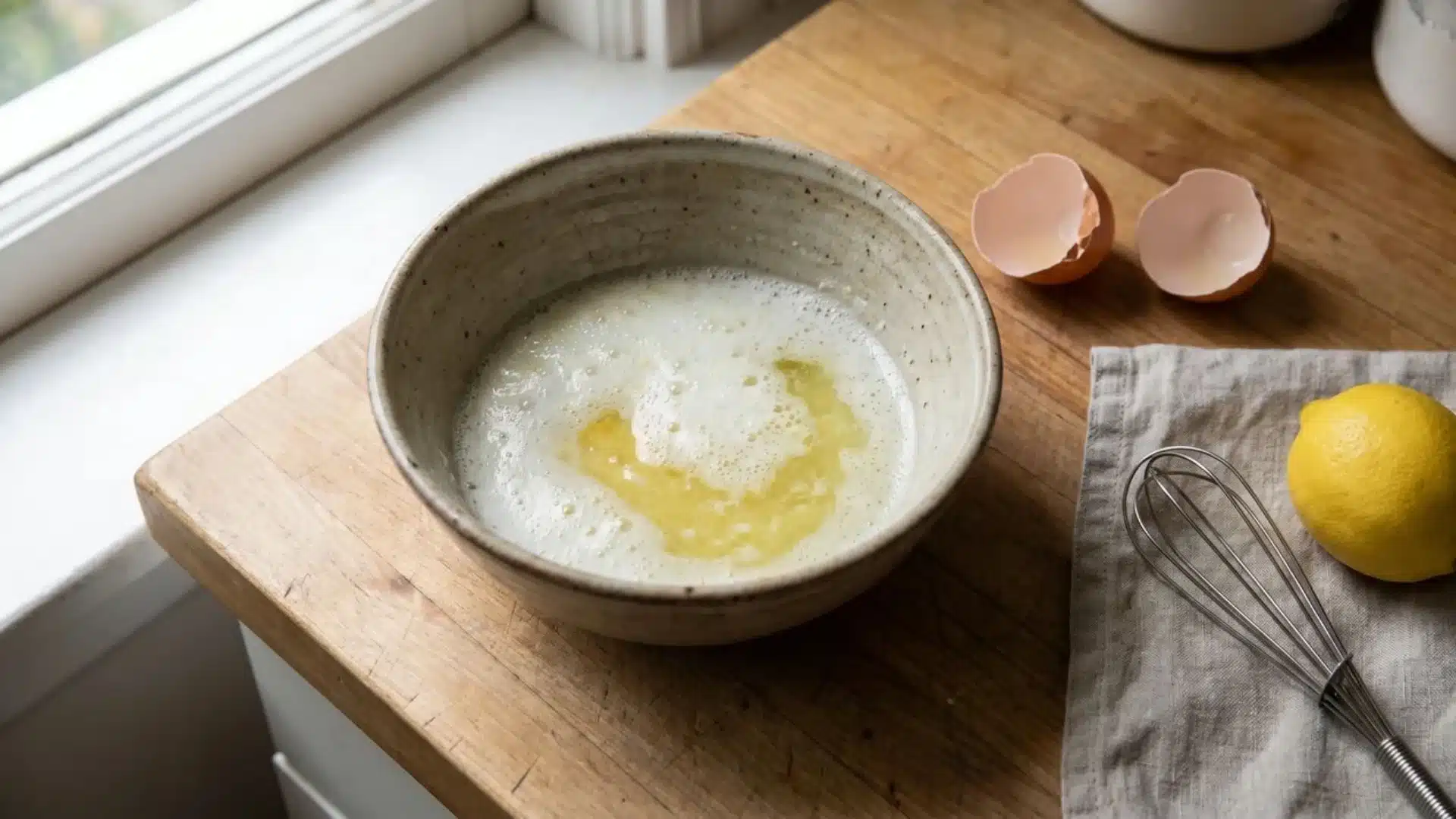
An oily scalp overproduces sebum, leaving roots greasy within a day of washing. Lemon juice cuts straight through that buildup without a fight.
The egg white backs it up with a light protein tightening effect, just enough to calm oil production without stripping your scalp dry.
Whisk 1 egg white with the juice of half a lemon, leave for 20 minutes, then wash out.
5. Egg and Olive Oil (Weak, Breaking Hair)
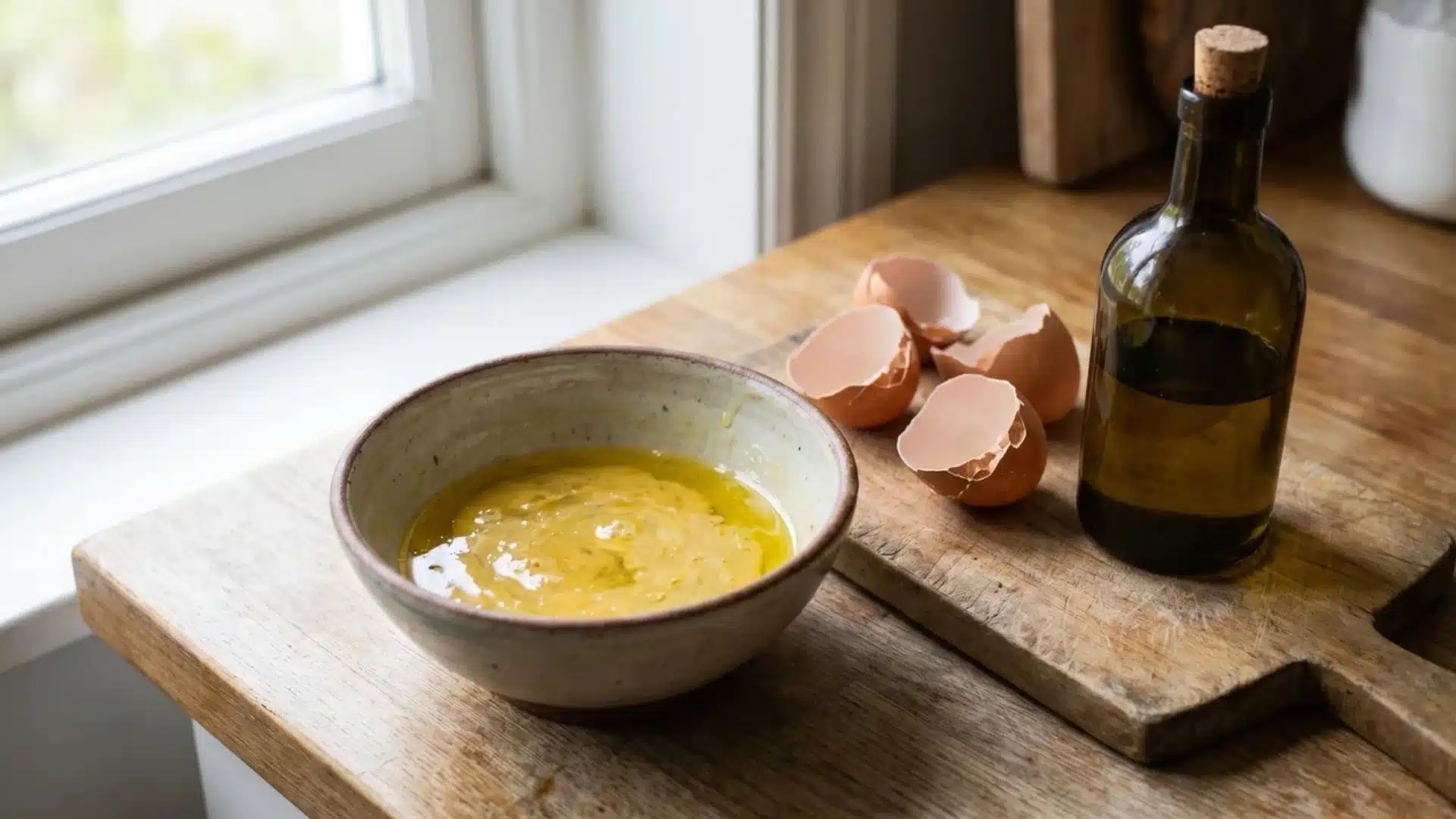
Hair that snaps mid-strand is usually protein-starved. A whole egg delivers that protein directly to the weakest points along each strand.
Olive oil adds slip, so strands bend under tension instead of breaking. Always rinse with cool water, since hot water cooks the egg in your hair and leaves residue that won’t wash out.
Beat 1 egg into 2 tablespoons olive oil, leave for 15 minutes, then rinse and cool.
6. Plain Yogurt and Honey (Dull Hair)
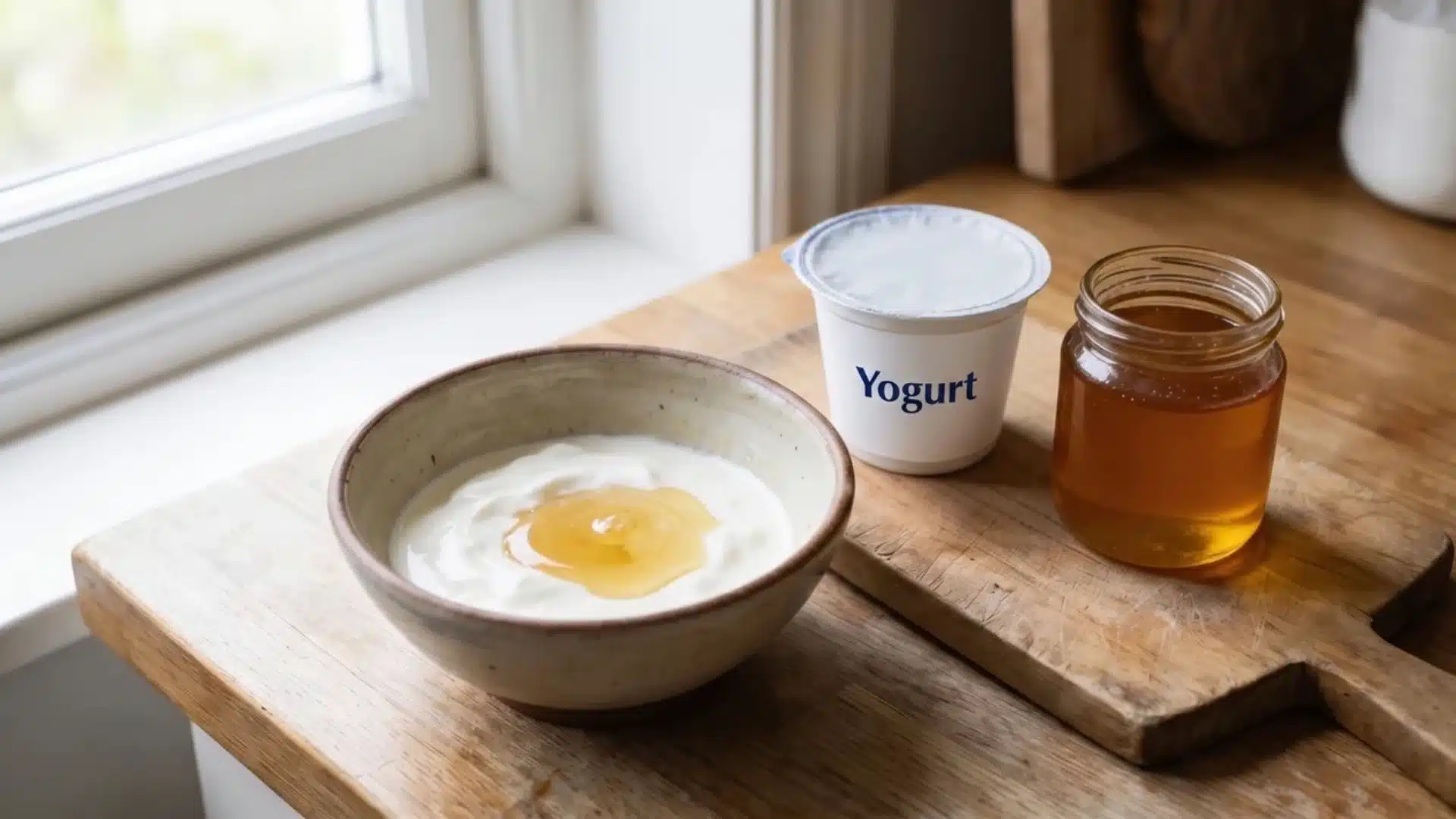
Dullness is usually a surface problem; buildup and a roughed-up cuticle stop light from bouncing off your hair. Yogurt’s lactic acid clears that film.
Once the surface is smooth, honey adds a soft sheen on top so light bounces off your hair again.
Stir 3 tablespoons yogurt with 1 tablespoon honey, let it work for 20 minutes, then rinse.
7. Aloe Vera and Coconut Oil (Itchy Scalp)
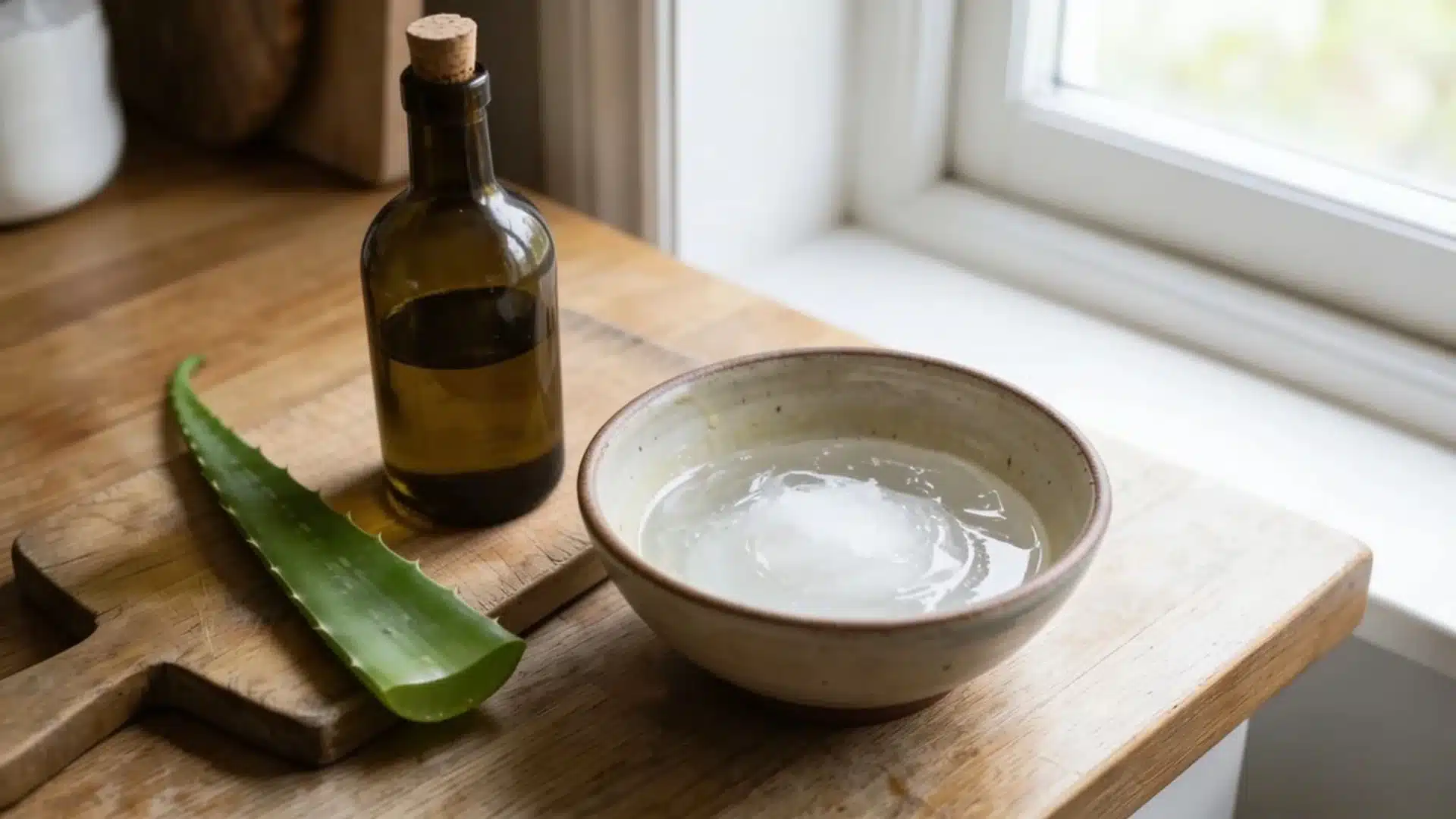
An itchy scalp is usually irritated, dry skin in need of relief. Aloe vera gets there first; it cools inflammation almost on contact.
Coconut oil helps restore your scalp’s moisture barrier, so the itch doesn’t come back an hour after rinsing.
Mix 2 tablespoons aloe gel with 1 tablespoon coconut oil, massage it in, and rinse after 20 minutes.
8. Brown Sugar and Olive Oil (Flaky Scalp)
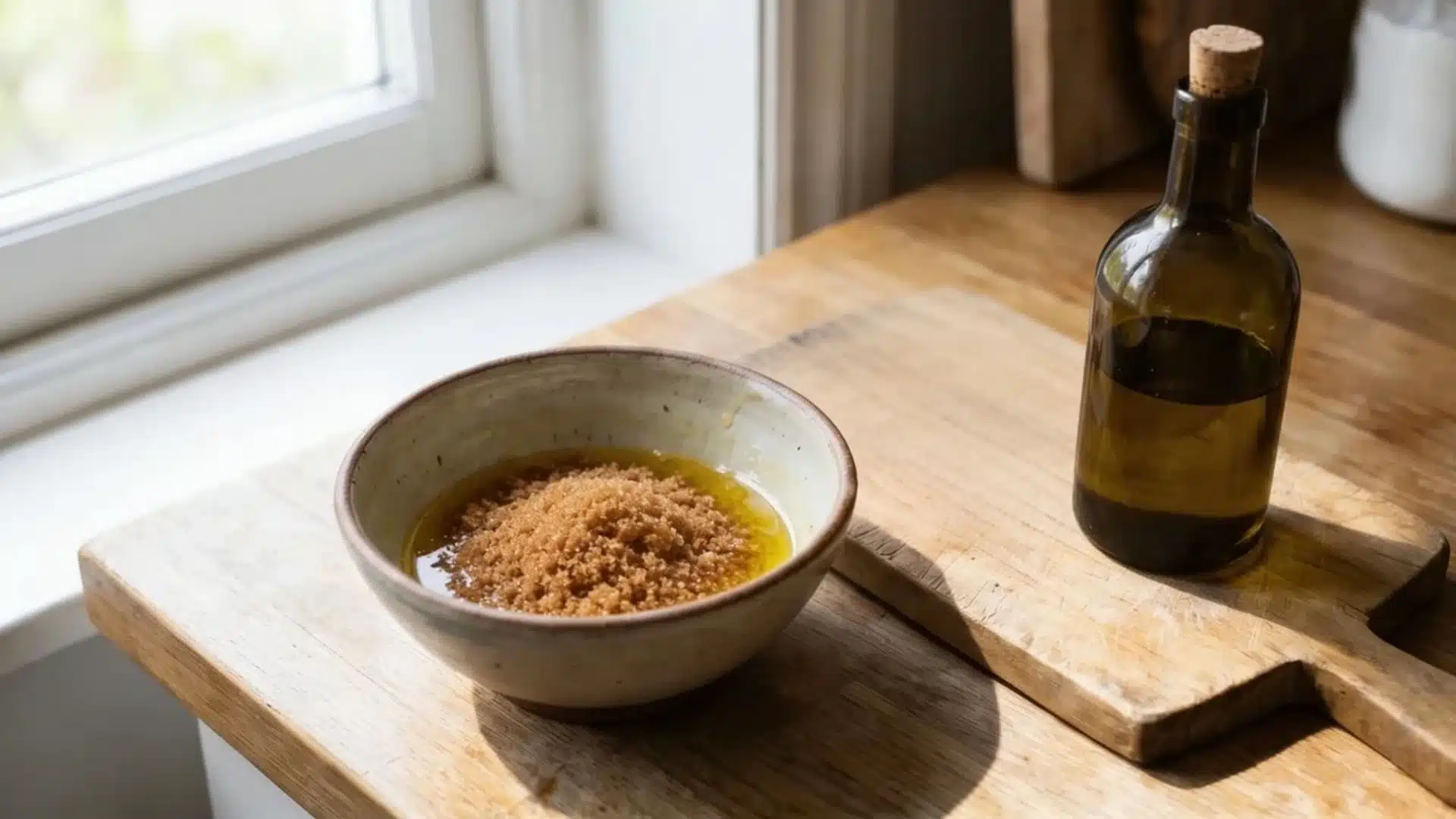
Flakes are just dead skin and product buildup that won’t budge on their own. Brown sugar dissolves slowly as you massage, physically lifting it away.
Olive oil works underneath, loosening stuck buildup and soothing the skin you just scrubbed so your scalp feels clean without feeling raw.
Mix 2 tablespoons of brown sugar with 1 tablespoon of olive oil, massage gently across your scalp, then rinse.
9. Banana and Coconut Oil (Curly Hair)
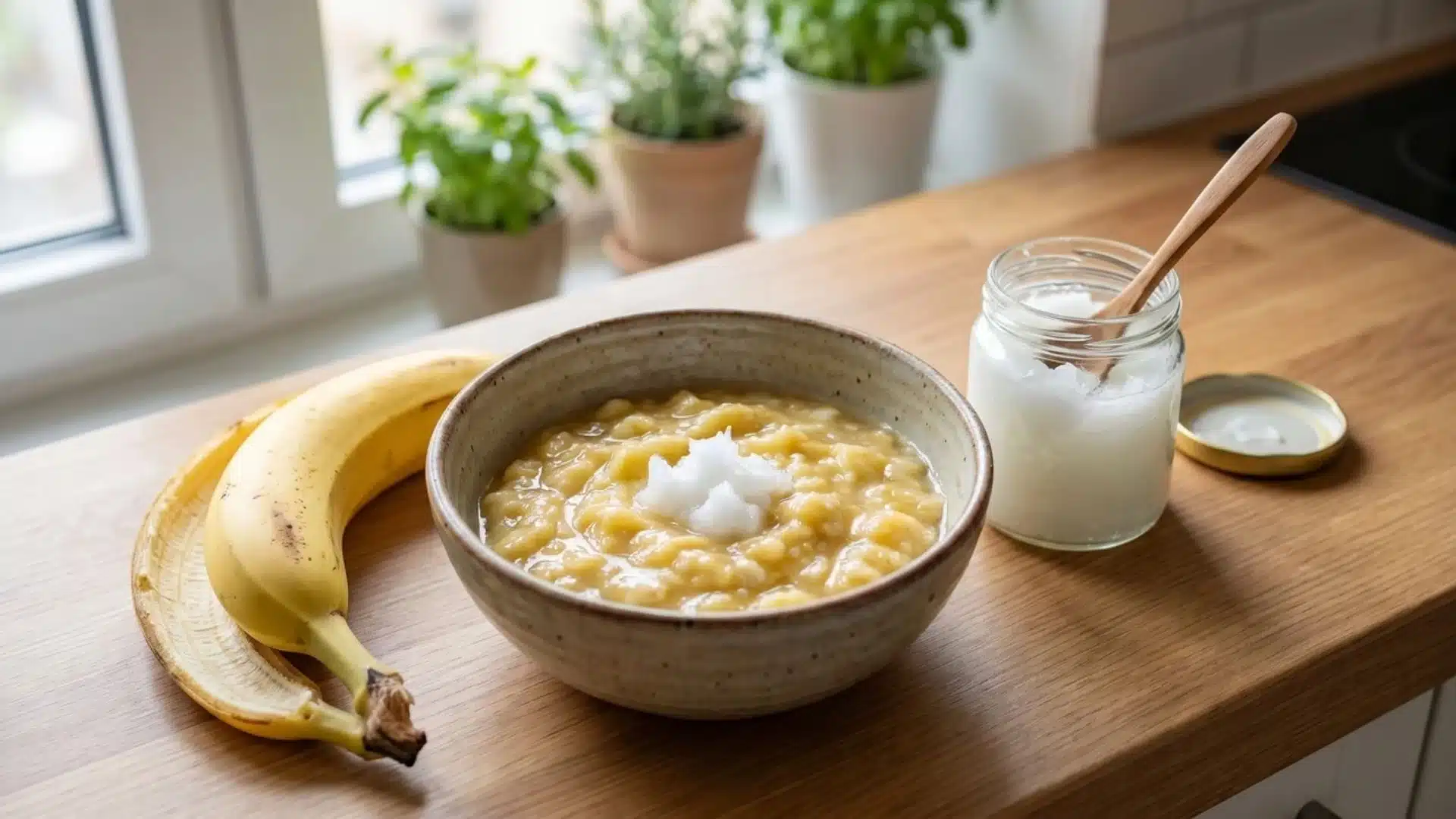
Curls run dry because their spiral shape stops natural oils from traveling down the strand. Banana brings instant softness, and the slip curls are needed for easy detangling.
Coconut oil seals each coil after the banana does its job, so your curls spring back defined instead of puffed out and frizzy.
Mash 1 banana with 1 tablespoon coconut oil, leave it on for 30 minutes, then rinse.
10. Apple Cider Vinegar Rinse (Product Buildup)
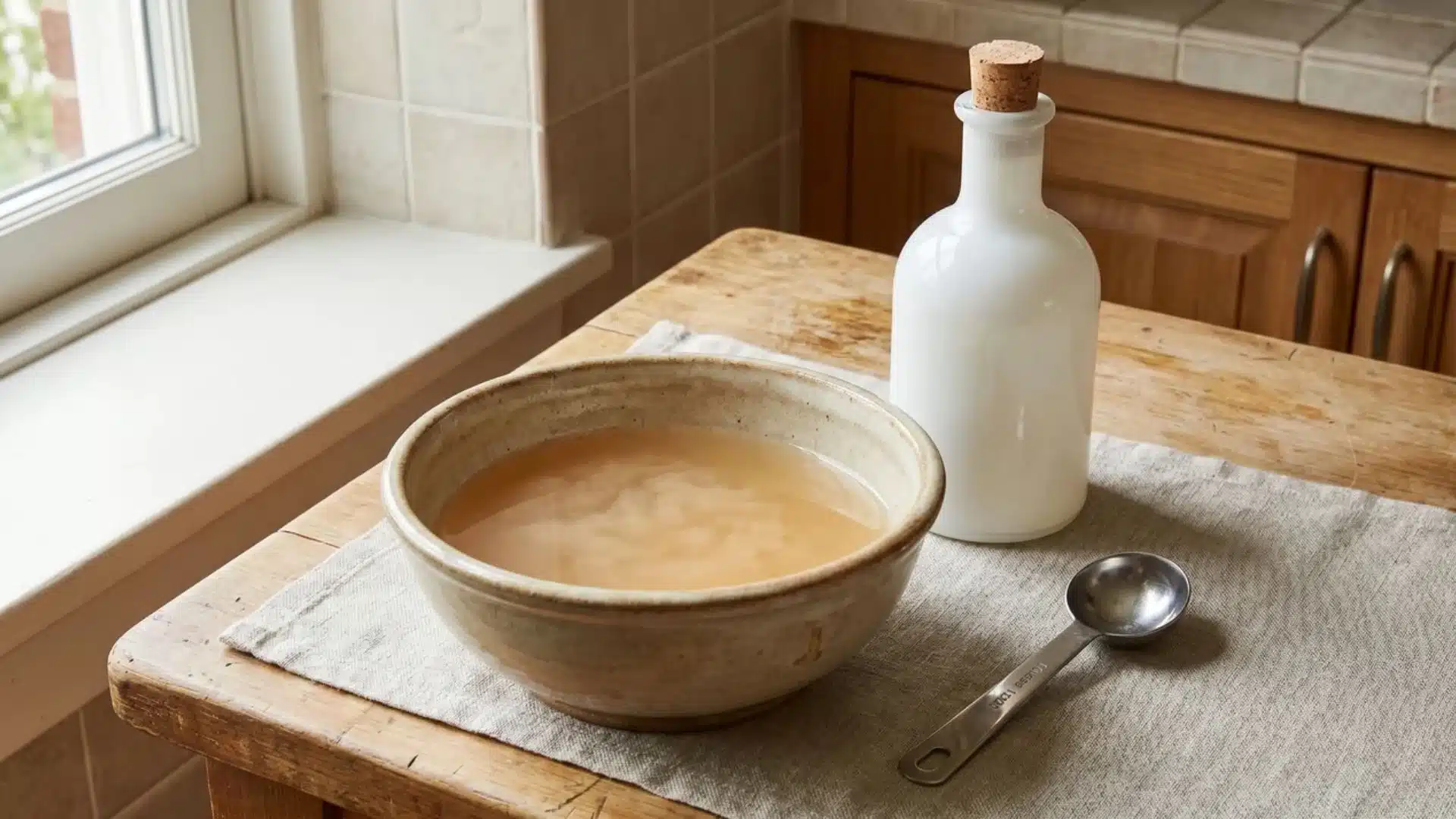
Styling products and hard water leave a film on your hair that shampooing alone never fully removes. Apple cider vinegar’s mild acidity dissolves it in minutes.
It also rebalances your scalp’s pH while it works, so hair feels lighter and looks noticeably brighter after just one use.
Dilute 2 tablespoons of vinegar in 1 cup of water, pour it through after shampooing, and rinse after 3 minutes.
11. Avocado and Banana (Dry Curls)
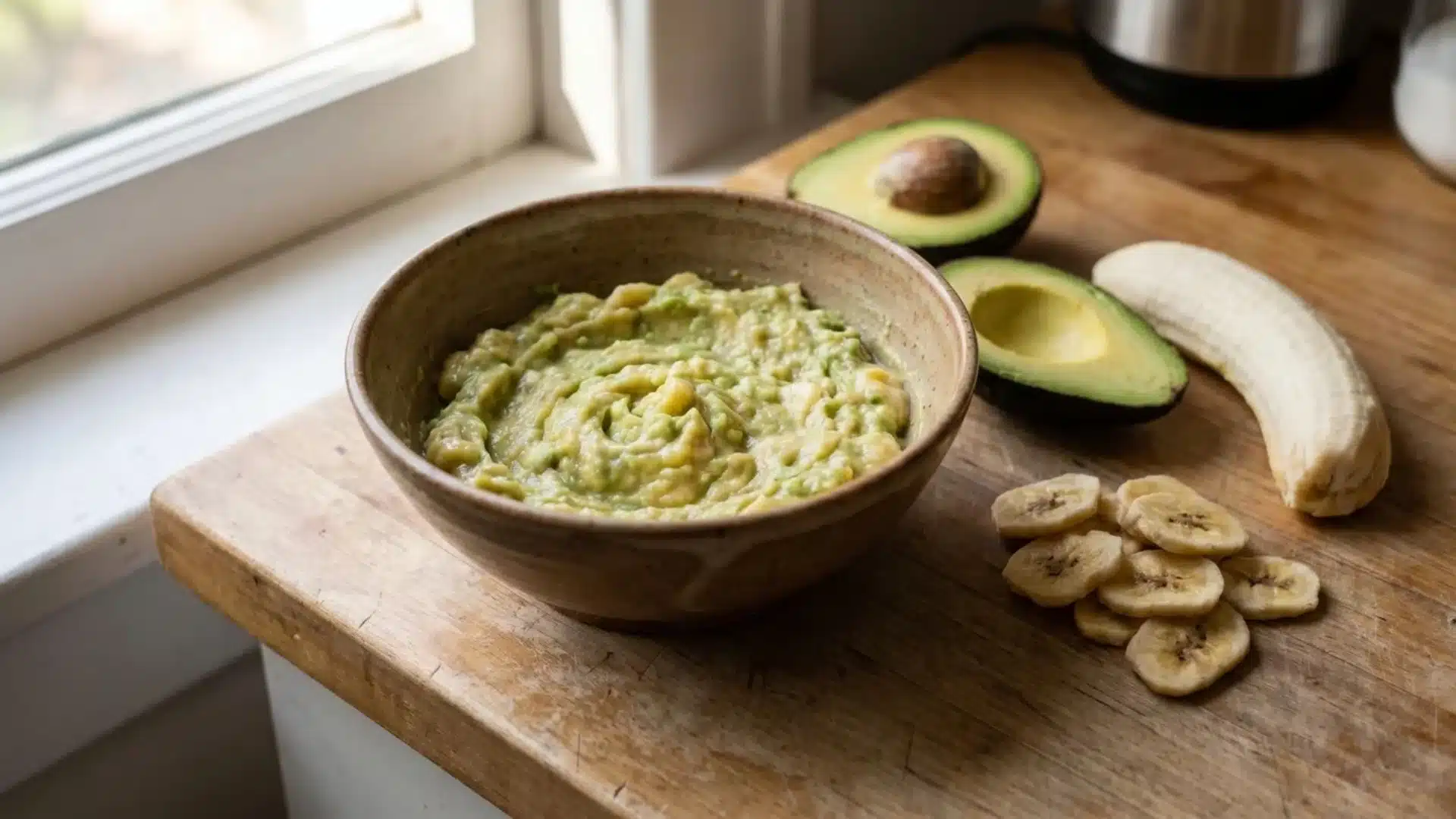
Coarse, curly hair drinks up moisture and still wants more. Avocado’s rich oils penetrate deep into the shaft, where dry curls need them most.
Banana covers the surface, smoothing and sealing what the avocado started, leaving tight curls soft, springy, and far easier to manage.
Purée half an avocado with half a banana, cover your hair, and wait 30 minutes before washing it out.
12. Egg Yolk and Honey (Thinning Hair)
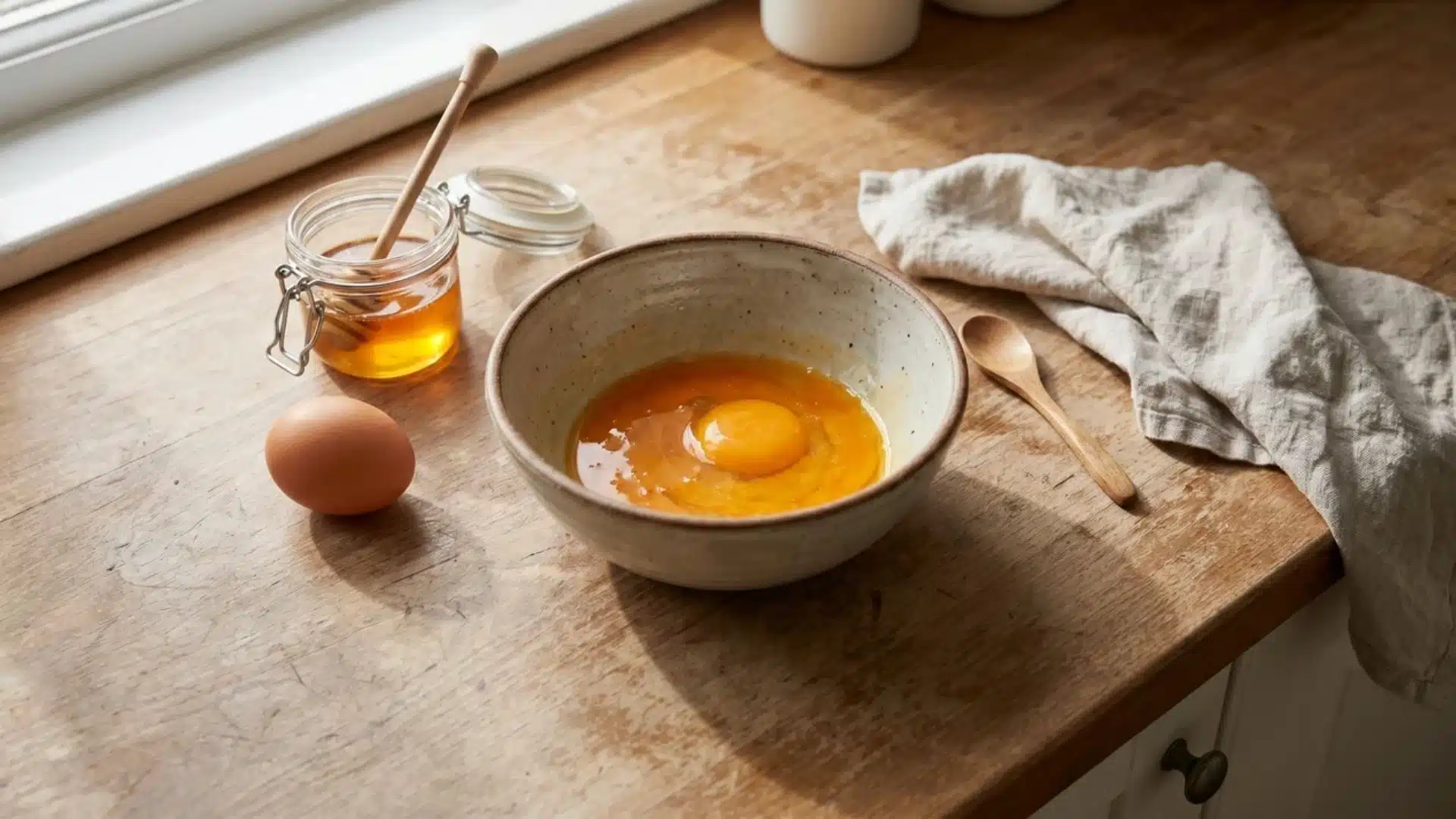
Thinning hair needs a well-fed scalp and stronger existing strands. Egg yolk delivers biotin and protein directly to the follicle environment where it counts.
Honey keeps the scalp healthy with its antibacterial properties, quietly clearing the buildup that undermines growth over time.
Whip 1 egg yolk with 1 tablespoon honey, leave for 20 minutes, then rinse with cool water; heating cooks the egg and leaves residue.
13. Coconut Milk and Honey (Color-Treated Hair)
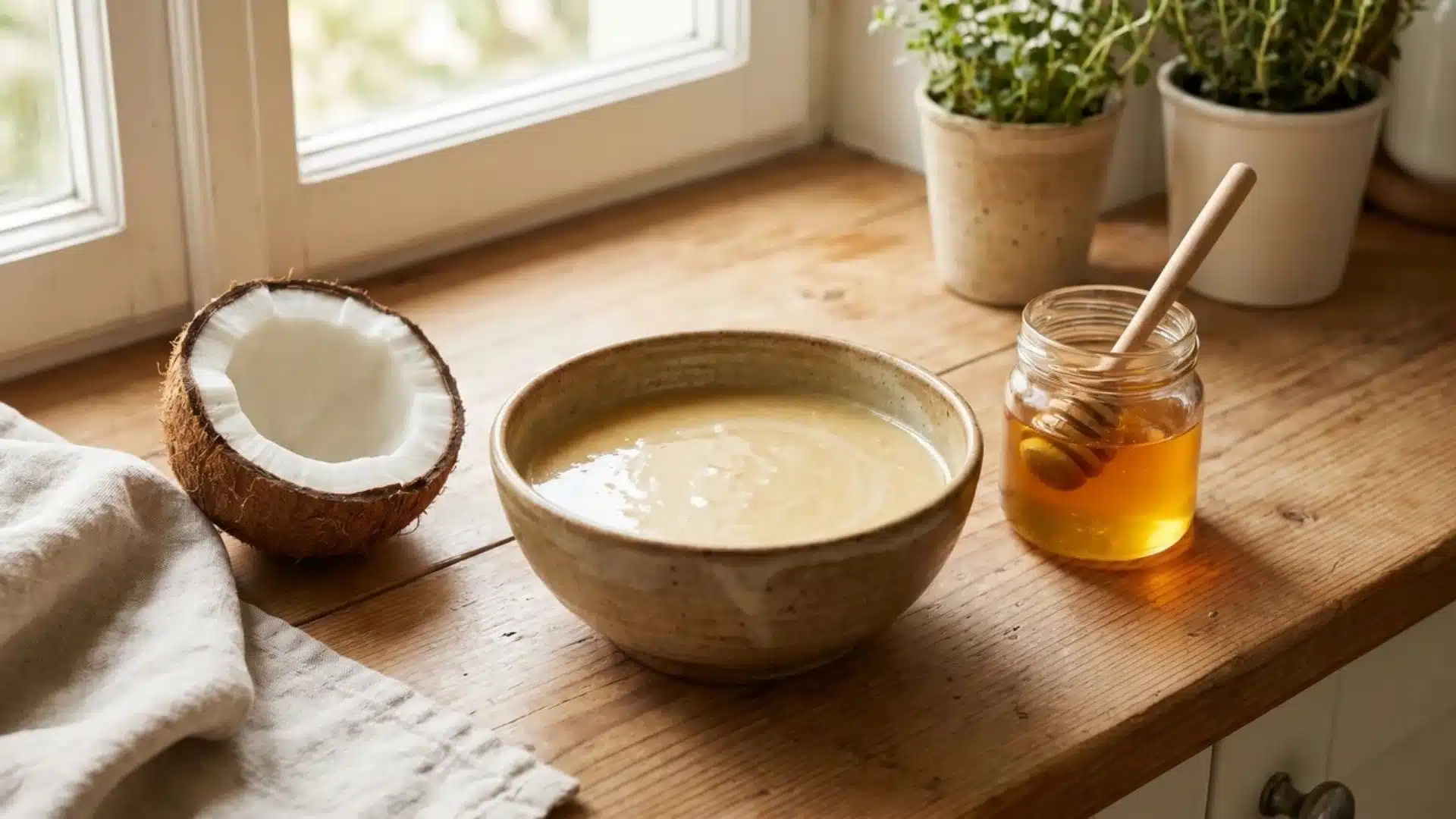
Dye leaves hair porous; it absorbs everything, including things that strip your color. Coconut milk hydrates gently without the harshness that pulls your shade out early.
Honey locks that moisture in and adds softness on top, so your color stays vivid longer, and your strands don’t feel like they’ve been through a chemical process.
Blend 3 tablespoons of coconut milk with 1 tablespoon of honey, let sit for 25 minutes, then rinse.
14. Cinnamon and Coconut Oil (Hair Growth)
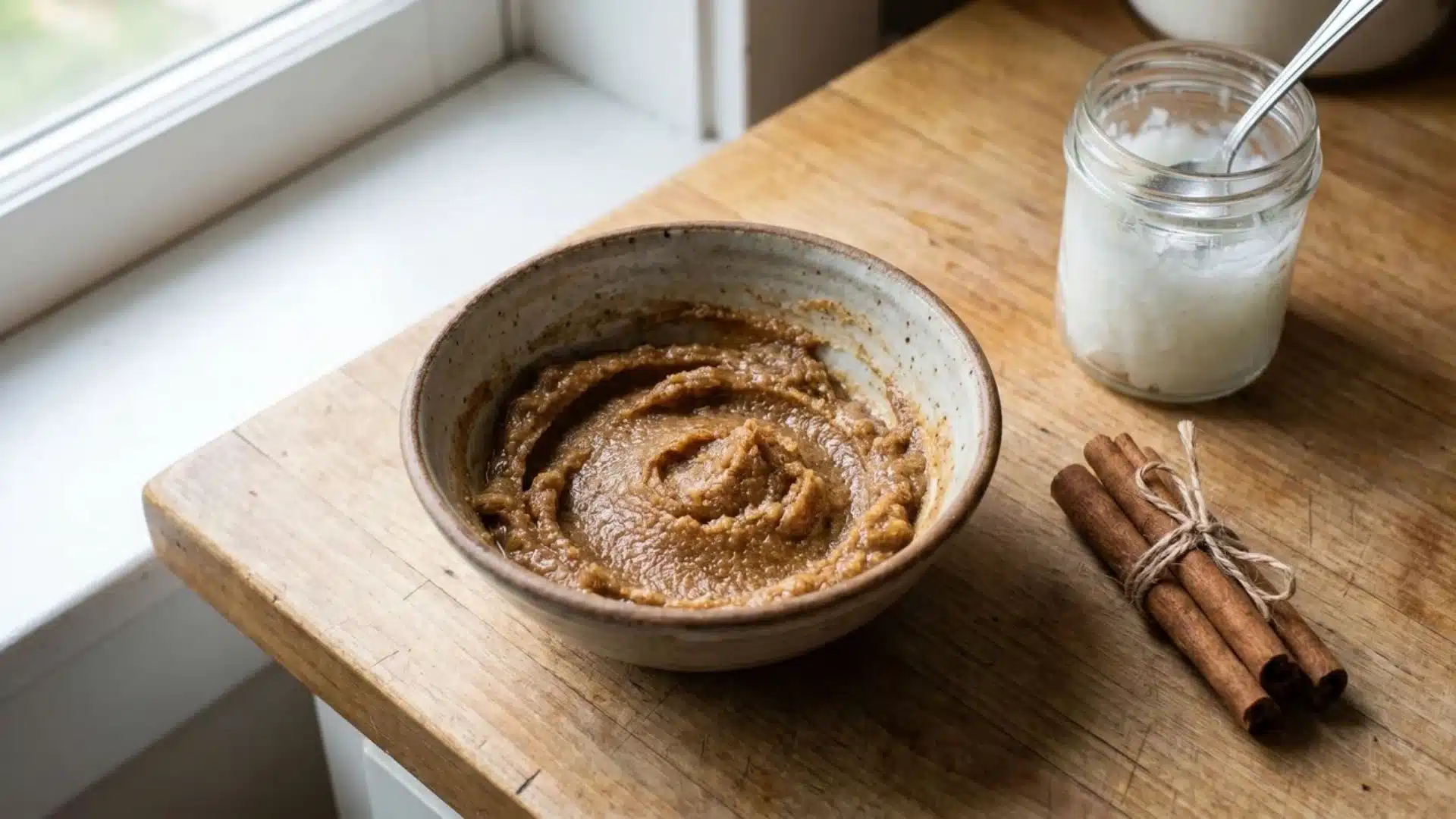
Slow growth often comes down to sluggish circulation at the scalp. Cinnamon gently warms the skin and nudges blood flow toward the follicles where growth starts.
Coconut oil carries it in and keeps the scalp conditioned throughout, so you get the stimulating effect without irritation.
Warm 1 teaspoon cinnamon in 2 tablespoons coconut oil, massage it in, and rinse after 30 minutes.
15. Strawberry and Coconut Oil (Shine)
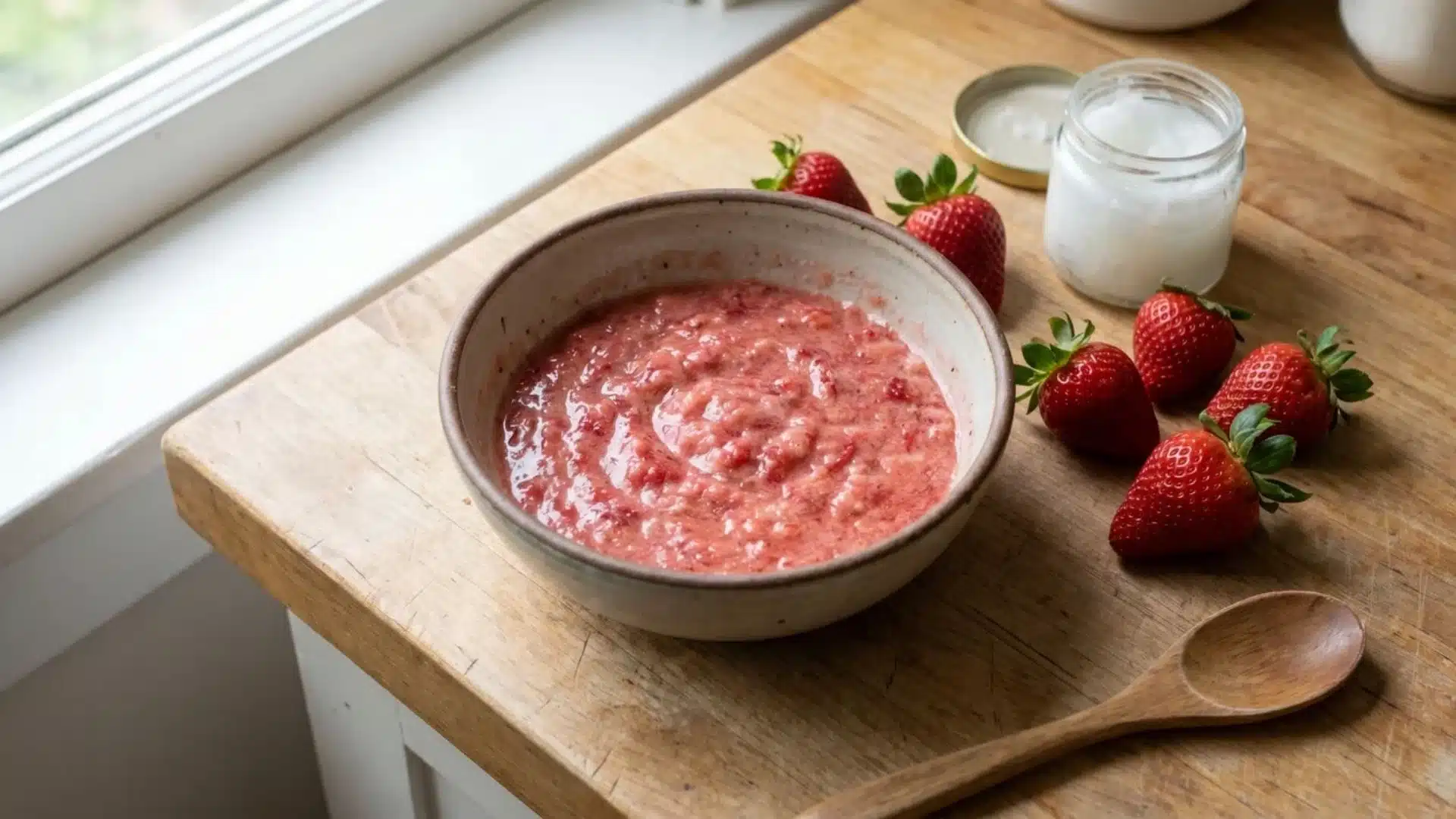
Dull hair usually has a roughened surface that scatters light rather than reflecting it. Strawberries provide vitamin C and a mild acidity that help tighten the cuticle back down.
Coconut oil adds a glassy finish once the surface is smooth, so your hair catches the light from every angle.
Mash 4 strawberries with 1 tablespoon coconut oil, leave for 15 minutes, then rinse well.
16. Oatmeal and Yogurt (Sensitive Scalp)
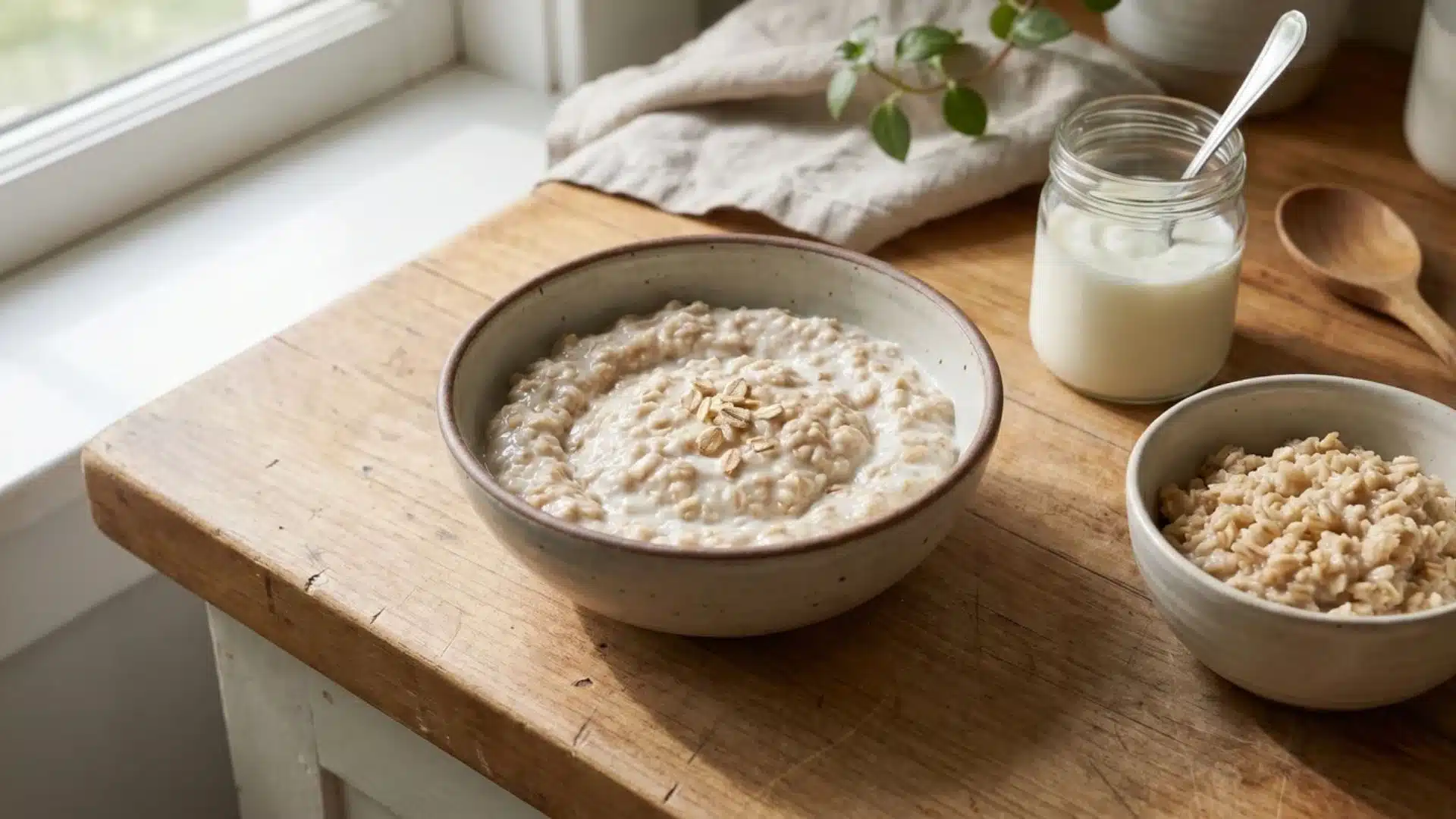
A reactive scalp doesn’t need more actives thrown at it; it needs calm. Oatmeal is one of the oldest skin soothers around and quiets redness and itch fast.
Yogurt’s lactic acid and probiotics nourish without triggering a flare, the gentlest mask on this list for good reason.
Stir 2 tablespoons cooked, cooled oatmeal into 2 tablespoons yogurt, apply to the scalp, and rinse after 20 minutes.
How to Apply a Hair Mask the Right Way?
The same mask can soften your hair or leave it greasy, and the difference comes down to technique. Get these basics right, and every recipe above works harder.
Follow these five steps for an even, mess-free application:
- Start clean and damp: Start clean and damp hair cuticles are tiny overlapping scales that lift when wet, allowing conditioning molecules in, while dry hair keeps them out naturally
- Work mid-lengths to ends first: Hair is oldest and most damaged here, so it needs the most product.
- Save the scalp for last: Only coat your roots if the recipe targets the scalp, since oils there can turn greasy fast.
- Comb it through: Use your fingers or a wide-tooth comb to spread the mask evenly across every strand.
- Cover and wait: Twist your hair up and slip on a shower cap to trap heat and boost absorption.
Pay attention to these details, and the mask will reach every strand that needs it.
How long to leave it on? Most masks do their best work in 15 to 30 minutes. Oil-based ones can stay on overnight, but skip that on fine hair, which weighs down fast.
Mistakes and Safety Tips to Know
A few simple slip-ups can turn a good mask into a bad hair day. Keep these in mind before you slather on your next batch:
- Patch test first: Dab a little on your inner arm and wait a day. Natural doesn’t mean allergy-proof, and honey, essential oils, and even some fruits can trigger a reaction.
- Go easy on protein: Ingredients like egg add strength, but too much, too often, makes hair stiff, dry, and brittle. Limit protein masks to every couple of weeks.
- Don’t over-mask: More is not better. Once a week suits most hair types, and fine or oily hair needs even less frequent washing.
Treat your hair gently, listen to how it responds, and these masks will reward you.
Conclusion
A good DIY hair mask doesn’t require expensive products or a salon appointment, just the right ingredients and a few spare minutes on a Sunday.
Every recipe here targets a specific concern, so your hair gets exactly what it’s asking for instead of a one-size treatment that half-works.
It’s worth remembering that the best results come from consistency, not quantity. Once a week, matched to your hair type, makes a real difference over time.
Pick one at-home hair recipe that speaks to your biggest hair complaint, try it this week, and let your hair show you what it’s been missing.
Frequently Asked Questions
What is the best DIY hair mask for dry hair?
A coconut oil and honey mask works best for dry hair. Coconut oil penetrates the hair shaft to restore moisture from inside, while honey seals it in. Mix 2 tablespoons of coconut oil with 1 tablespoon of honey, leave for 20 minutes, and rinse.
How often should you use a DIY hair mask?
Most hair types benefit from a hair mask once a week. Fine or oily hair needs it less; every two weeks is enough. Protein-based masks with egg should never be used more than once a week, as overuse causes brittleness.
Do at-home hair masks actually work?
Yes, when matched to the right hair concern. Penetrating ingredients like coconut oil and honey genuinely hydrate from inside the strand. Coating ingredients like avocado and banana smooth the surface. Results are real but temporary; regular use is what builds lasting improvement.
Can I leave a DIY hair mask on overnight?
Oil-based masks can be left overnight for deeper conditioning. Avoid this with fine hair, which weighs down easily. Protein masks, especially egg-based ones, should never be left on overnight, as overexposure stiffens the hair and reverses the benefits.