

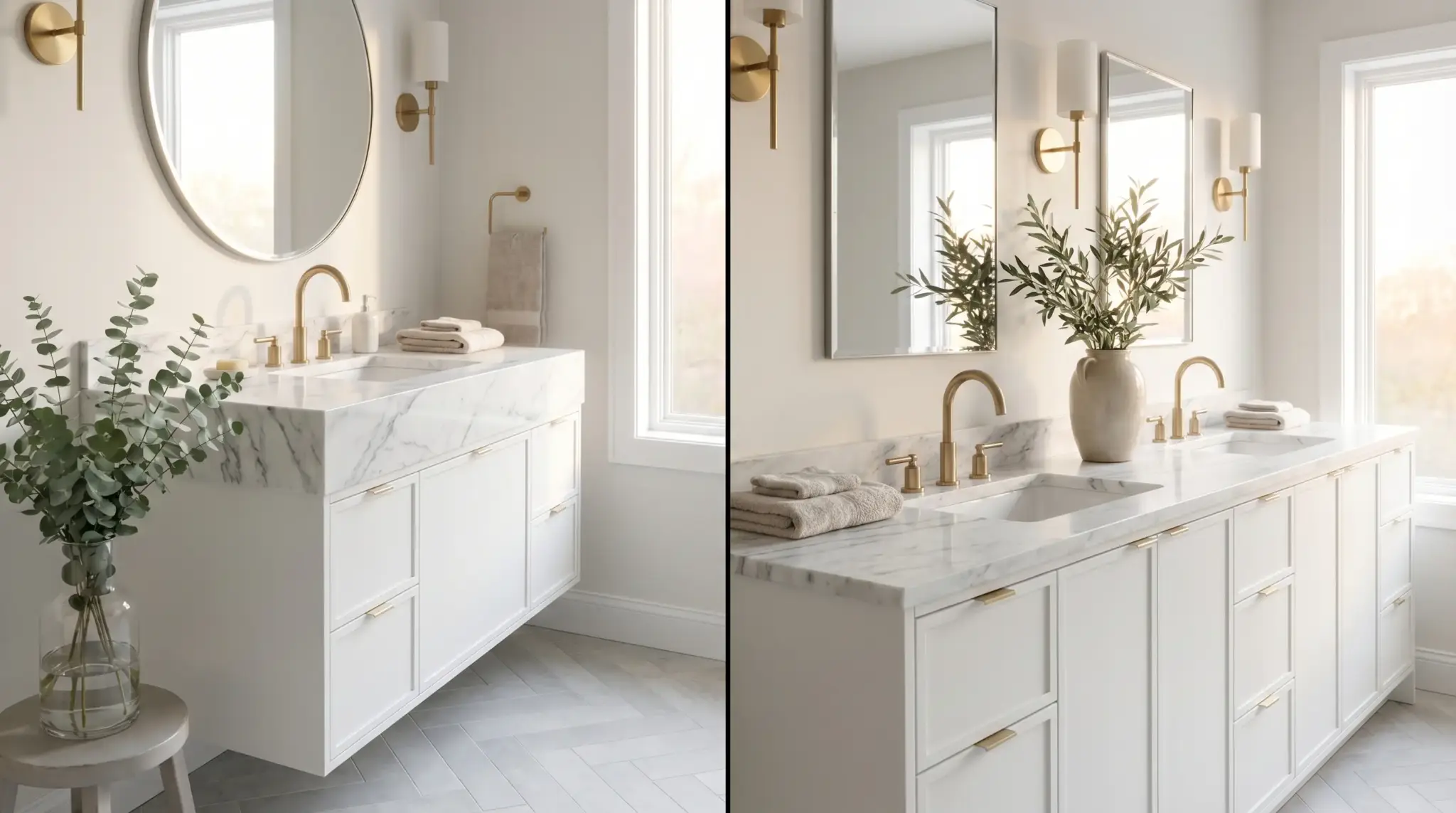
The debate over single sink vs double sink bathroom layouts has no universal answer. Space, household size, budget, and daily routines decide the right choice. This guide compares your options and helps you decide what makes sense for your home.
Single Basin Configuration
A single basin vanity has one bowl. This layout dominates guest bathrooms, powder rooms, and smaller master baths. Millions of homes use this as their default choice.
Space efficiency gives the single basin its main advantage. Because you only need to fit one bowl on the countertop, the cabinet can range from 24 to 48 inches wide and still feel comfortable. This makes single units ideal for bathrooms under 60 square feet, where every inch matters. Single basin vanities cost much less, both for the cabinet and for plumbing installation.
You only need one drain line and one set of supply lines. Another benefit you often overlook is countertop space. With only one basin, you get generous room on one or both sides for soap pumps, toothbrush holders, jewelry dishes, or decorative items. Cleaning also takes less time with one bowl, one faucet, and one set of surfaces.
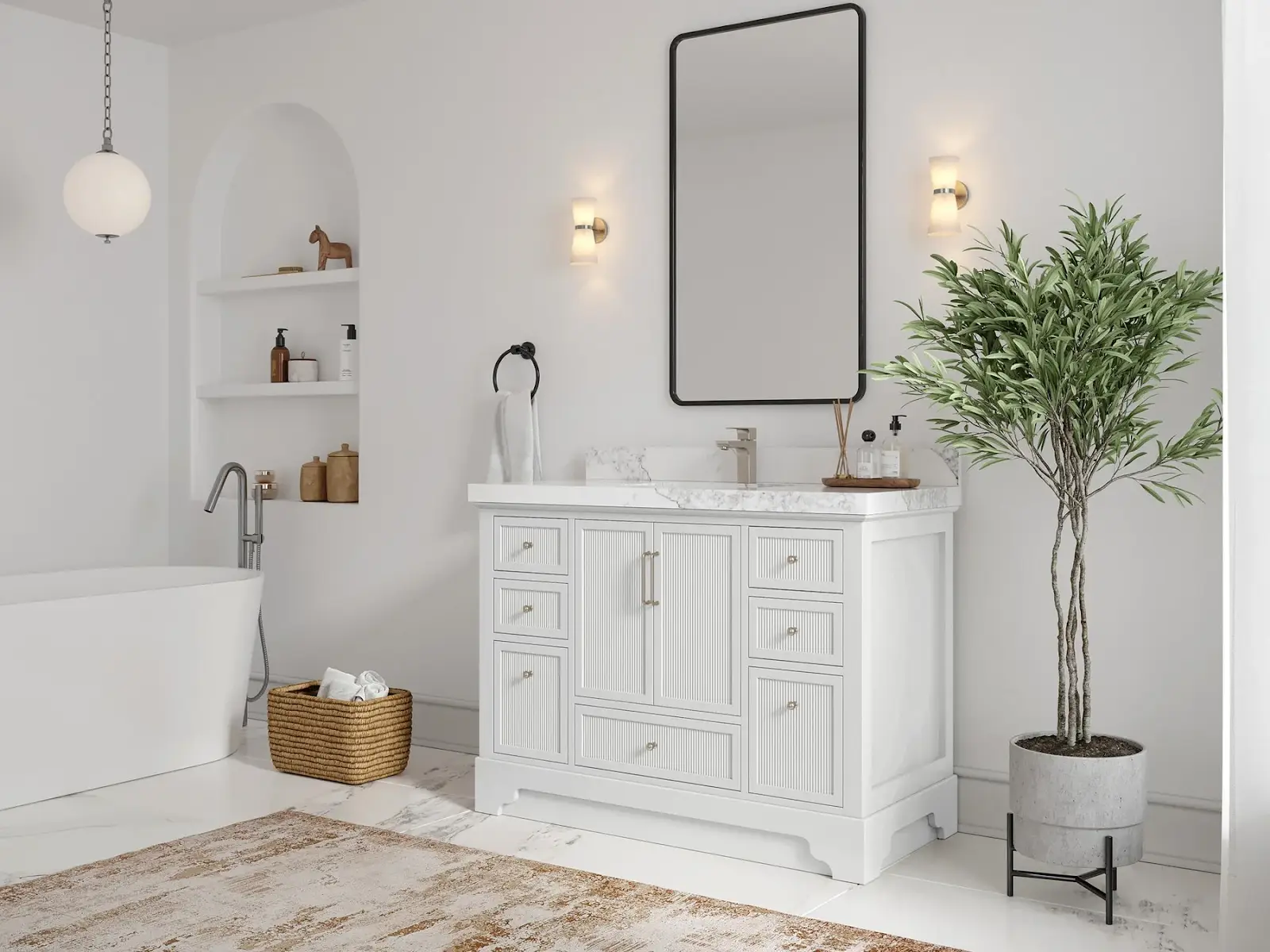
Single basin vanities have clear downsides. Two people cannot use one bowl comfortably at the same time. Morning routines become a bottleneck if the bathroom is shared. In larger homes, a single fixture in the master bathroom may reduce resale value because many buyers now expect two basins. For a small or medium space, the single configuration usually wins.
Two-Basin Configuration
A two-basin vanity features two separate bowls on one longer countertop. This layout has become standard in master bathrooms of larger homes and in luxury apartments. For many couples, it is a non-negotiable feature.
Simultaneous use gives two-basin units their biggest benefit. Two people can brush teeth, shave, or wash their faces at the same time without bumping elbows or waiting. This alone makes dual basins valuable for couples with overlapping morning schedules. Beyond functionality, a pair of bowls adds a sense of luxury and perceived value to your home. The symmetrical, balanced look of two matching basins and faucets appeals to many homeowners.
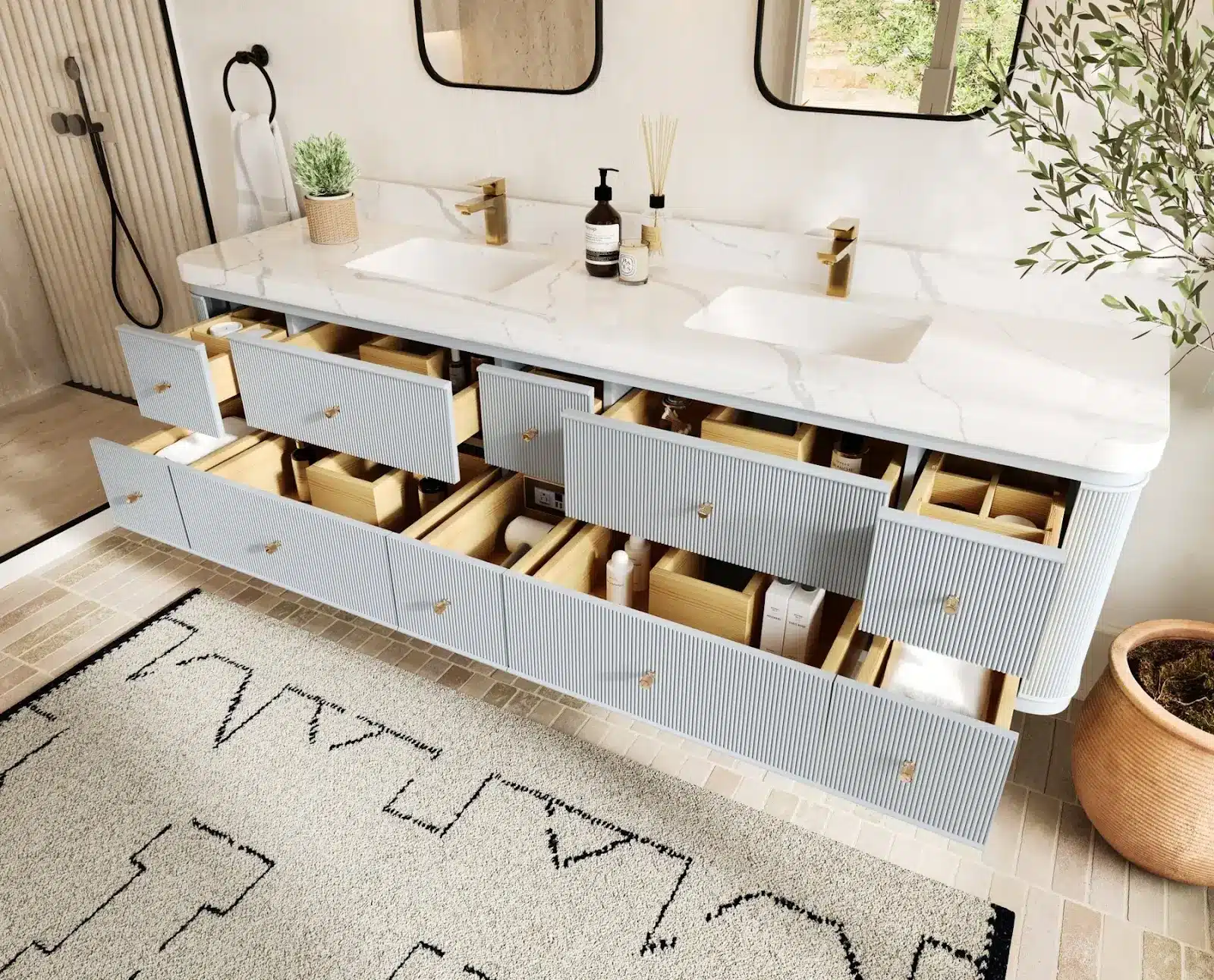
But configurations with two basins come with significant trade-offs. They require much more floor space. You need at least 48 inches of width for absolute minimum, but comfortable spacing demands 60 to 72 inches. If your bathroom is narrower than 60 inches, two bowls will feel cramped, and you will lose precious counter space. The cost runs substantially higher. The cabinet itself costs more, plus you need two basins, two faucets, and twice the plumbing work. Cleaning takes longer because you maintain two bowls and two faucets. The double sink vs single sink vanity decision ultimately depends on available width. If you have at least 60 inches and a shared bathroom routine, a two-basin layout deserves your consideration.
Space Requirements – Measure First
Before choosing between double vanity vs single, measure your bathroom carefully. This practical factor should drive your decision.
- Less than 48 inches wide – choose a single basin only. You simply have no room for two bowls, faucets, and elbow space. Do not consider a dual-basin setup here.
- 48 to 60 inches wide – two basins are technically possible but tight. Each person gets only 24 to 30 inches of personal space, which feels cramped. Most designers recommend a single fixture in this range to preserve counter space and avoid a crowded look.
- 60 to 72 inches wide – comfortable for double sinks. Each person gets 30 to 36 inches of width, which is enough for typical morning routines. This is the sweet spot for most master bathrooms. For those seeking a 72-inch vanity cabinet in a double sink configuration, Willow Bath and Vanity offers models that fit this standard width, making it easier to find a ready-to-install unit without custom ordering.
- Over 72 inches wide – side-by-side basins are ideal. You can add a central tower or extra storage between the bowls for a truly custom look.
If your bathroom falls on the smaller side, a single basin preserves counter space and avoids a cramped layout.
Budget Considerations
A single basin vanity costs 30 to 50 percent less than a comparable two-basin unit. Plumbing costs half the price because you need only one drain and one set of supply lines. Installation moves faster, and you buy only one faucet and one bowl.
A two-basin vanity has a higher base price for a wider cabinet. Two basins, two faucets, and two drains add $200 to $600 in materials alone. Plumbing labor can nearly double because the plumber runs twice the pipe.
For a tight budget, the choice is clear. Put the saved money toward better countertops, a nicer faucet, or higher quality cabinet construction. A well-built single fixture serves you better than a cheap dual-basin unit.
Resale Value and Market Expectations
Many real estate agents say master bathrooms in mid-range to luxury homes should feature two basins. However, your local market and home price point heavily influence this.
- Starter homes and townhouses – buyers expect a single basin. They prioritize price and location over two bowls.
- Mid-range suburban homes – many buyers prefer two basins in the master bathroom, but they do not demand them. A single fixture will not kill a sale if the rest of the home shows well.
- Luxury homes – buyers expect a pair of basins. A single bowl in a luxury master bathroom will hurt resale value and may turn off potential buyers.
- Condos and apartments – single basins are standard. Two-bath setups appear rarely and only in high-end penthouses.
The decision for resale matters most in the master bathroom. Guest bathrooms, powder rooms, and kids’ bathrooms should always have a single basin regardless of home price.
Final Thoughts
Three main factors determine your choice. Bathroom width should reach at least 60 inches for a comfortable two-basin layout. Household size matters, with couples having overlapping schedules benefiting the most. Your budget is critical because a dual-basin configuration costs significantly more.
For small bathrooms, guest baths, and tight budgets, choose a single basin. For large master bathrooms shared by a couple with similar morning routines, invest in a two-basin unit.
The decision has no universal right or wrong. Only your space, habits, and wallet matter. Before buying, measure carefully. Observe your morning traffic jams. Check local resale expectations. Then choose the layout that will smooth your daily routines for years to come.