

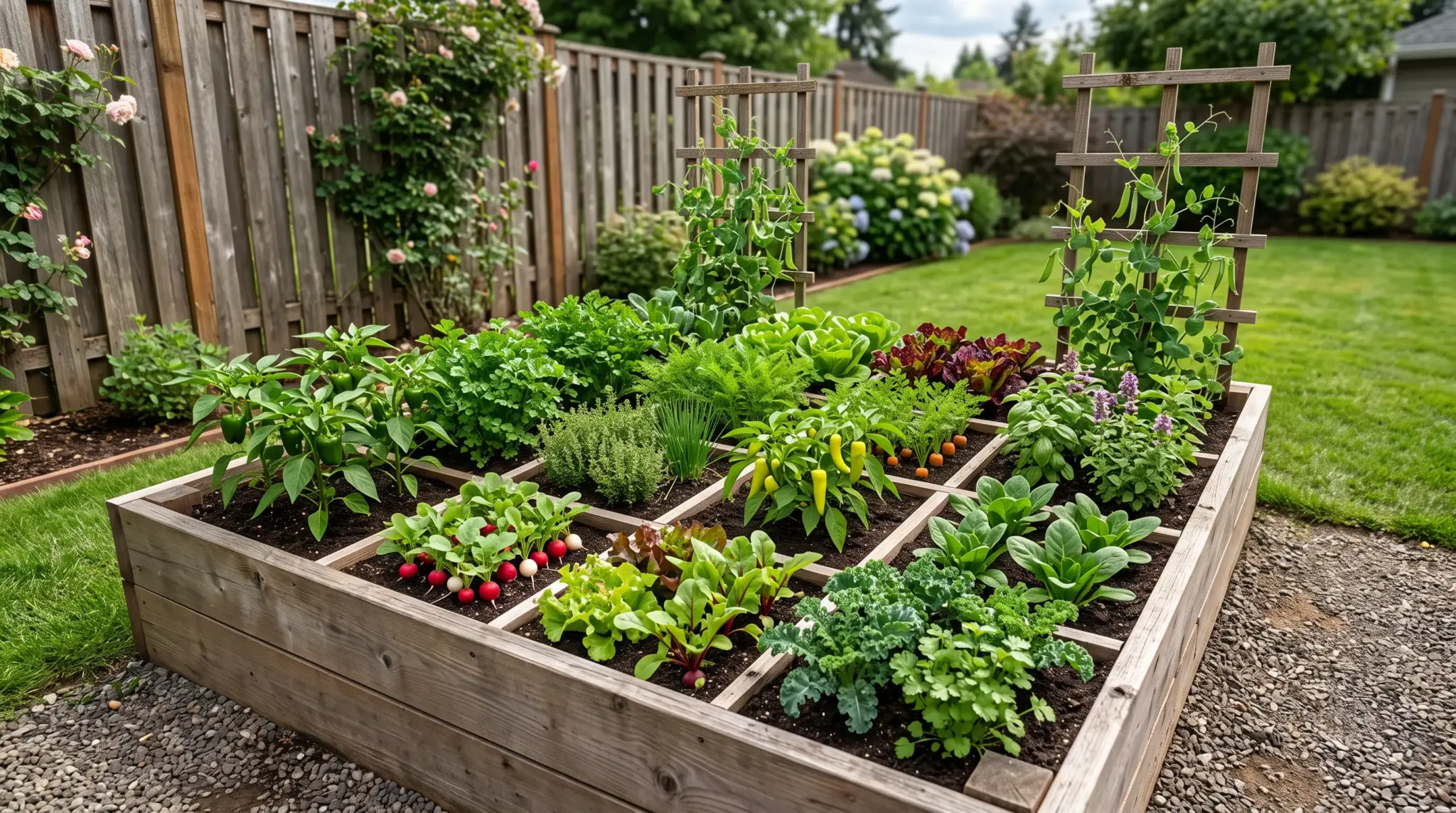
A small garden can produce more food than its size suggests. The real challenge is knowing what to plant and how much space each crop needs.
I understand how confusing seed spacing, bed layouts, and planting times can feel when you are starting out. Square foot gardening makes these decisions easier by dividing a raised bed into simple one-foot sections.
You can assign each square a crop, follow a clear spacing pattern, and use ideas from other vegetable garden layouts without relying on complicated rows.
Here, I share a planting chart, essential supplies, practical setup steps, layout tips, companion combinations, seasonal timing, and common mistakes.
By the end, you can plan and plant an organized garden with greater confidence.
Square Foot Gardening at a Glance
Square foot gardening is a space-saving method that divides a raised garden bed into equal one-foot sections. Each square holds a specific number of plants based on their mature size, allowing crops to grow closely without becoming overcrowded.
Large vegetables, such as tomatoes or peppers, may need one full square, while smaller crops, including carrots and radishes, can fit up to sixteen plants in the same area.
A visible grid keeps planting organized and makes spacing easier to follow. Most beds are four feet wide, so every square remains accessible from the sides without stepping on the soil. This method suits beginners because it simplifies planning, planting, watering, weeding, and harvesting.
The same grid system can also be adapted to larger raised-bed layouts when more growing space is available.
It also reduces wasted space and works well in small backyards, patios, and other areas where traditional garden rows are impractical or difficult to maintain.
Square Foot Garden Plant Spacing Chart
Use this chart to organize each square according to mature plant size. Adjust spacing slightly when growing unusually compact or large vegetable varieties.
| Vegetable or Herb | Plants per Square | Recommended Layout | Basic Spacing Notes |
|---|---|---|---|
| Tomatoes | 1 | Centered with vertical support | Grow one indeterminate tomato per square on a sturdy trellis; large determinate varieties may require additional space. |
| Peppers | 1 | Centered | Allow the plant to fill the square and add a small stake if needed. |
| Lettuce | 4 | 2 × 2 pattern | Suitable for full-size leaf lettuce; grow up to 16 plants when harvesting young leaves. |
| Carrots | 16 | 4 × 4 pattern | Thin seedlings carefully and choose short varieties for shallow beds. |
| Radishes | 16 | 4 × 4 pattern | Sow evenly and harvest promptly to create room for another crop. |
| Spinach | 9 | 3 × 3 pattern | Provide light shade during warm weather to delay bolting. |
| Bush Beans | 9 | 3 × 3 pattern | Keep plants evenly spaced to support airflow and easy harvesting. |
| Pole Beans | 8 | Single row along one side | Plant beside a trellis positioned along the north edge of the bed. |
| Peas | 8 | Single row along one side | Add netting or a trellis and place vines where they will not shade shorter crops. |
| Cucumbers | 2 | Single row beside a trellis | Train vines vertically to prevent them from spreading across nearby squares. |
| Onions | 9–16 | 3 × 3 or 4 × 4 pattern | Use wider spacing for bulb onions and closer spacing for green onions. |
| Basil | 1–4 | Centered or 2 × 2 pattern | Give large basil plants a full square; compact varieties can grow closer together. |
| Parsley | 4 | 2 × 2 pattern | Keep the soil consistently moist and harvest outer stems as needed. |
| Cilantro | 9 | 3 × 3 pattern | Sow small batches regularly because cilantro tends to bolt quickly. |
| Zucchini | 1 per 9 squares | Centered in a 3 × 3-square area | Use a compact bush variety or place the plant at a bed corner so leaves can extend outward. |
Treat these figures as starting points because varieties differ in size. Always check the seed packet and provide extra room for vigorous plants.
What You Need to Start a Square Foot Garden
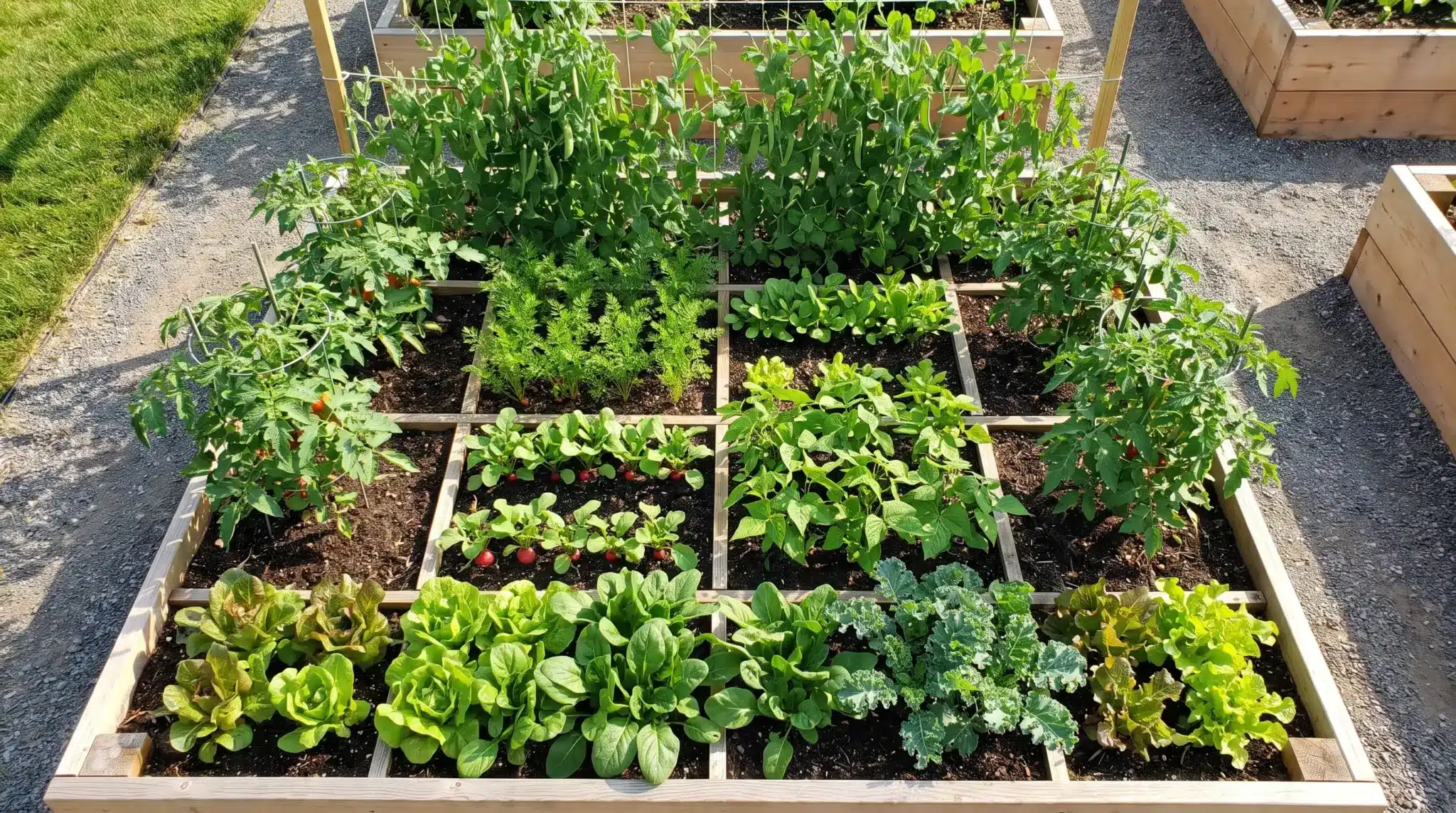
Gather the essential supplies before building or planting the bed. Choosing durable materials and healthy soil creates a more productive, manageable growing space.
- Raised bed or container: Choose a bed that is no more than four feet wide, so every square remains accessible from the edges.
- Untreated boards or bed frame: Use naturally rot-resistant, untreated wood or another garden-safe material to create a sturdy frame.
- Soil and compost blend: Fill the bed with a loose, nutrient-rich mixture that drains well while retaining enough moisture for plant roots.
- Grid materials: Divide the bed into one-foot squares using wooden strips, string, bamboo canes, or another visible and durable material.
- Seeds or seedlings: Select crops suited to the local climate, available sunlight, growing season, and mature space requirements.
- Watering tools: Use a watering can, hose attachment, soaker hose, or drip system that delivers moisture gently at soil level.
- Trellis and plant supports: Add trellises, cages, stakes, or netting for tomatoes, cucumbers, peas, pole beans, and other climbing plants.
Having every item ready simplifies setup and prevents delays. Check material dimensions, crop requirements, and bed placement before beginning construction or planting.
How to Plant a Square Foot Garden Step by Step
Follow each stage one square at a time to keep crop spacing, bed organization, planting, and watering simple and manageable.
Step 1: Select Suitable Crops and Healthy Seedlings
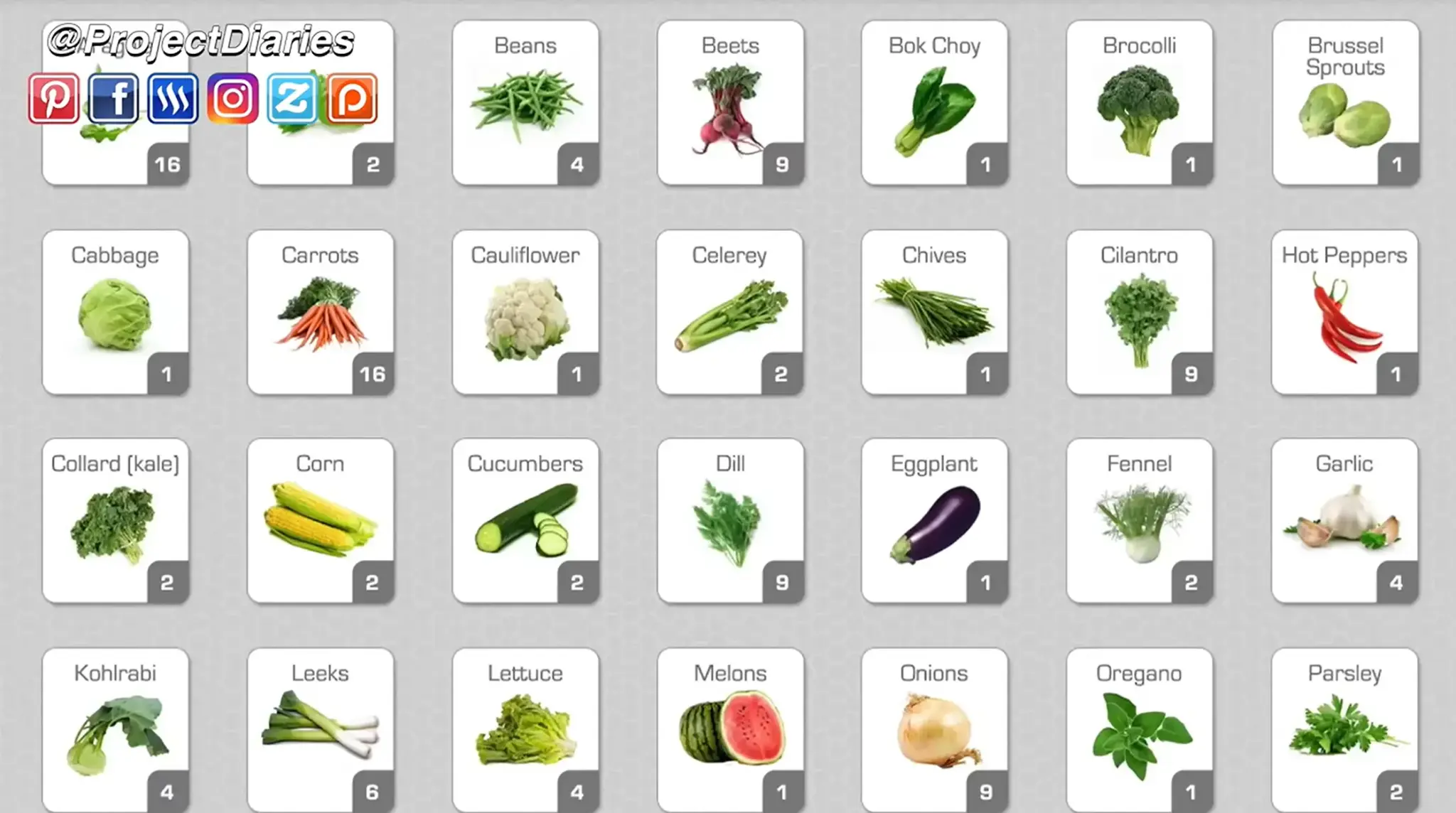
Choose productive crops suited to a compact garden, such as tomatoes, cucumbers, lettuce, peppers, herbs, and beans. Properly starting vegetable seeds can provide healthy plants at the right time for transplanting.
Sow sensitive root crops, such as beetroot, directly into the bed because transplanting can disturb their roots and reduce successful establishment.
Step 2: Prepare and Divide the Raised Bed
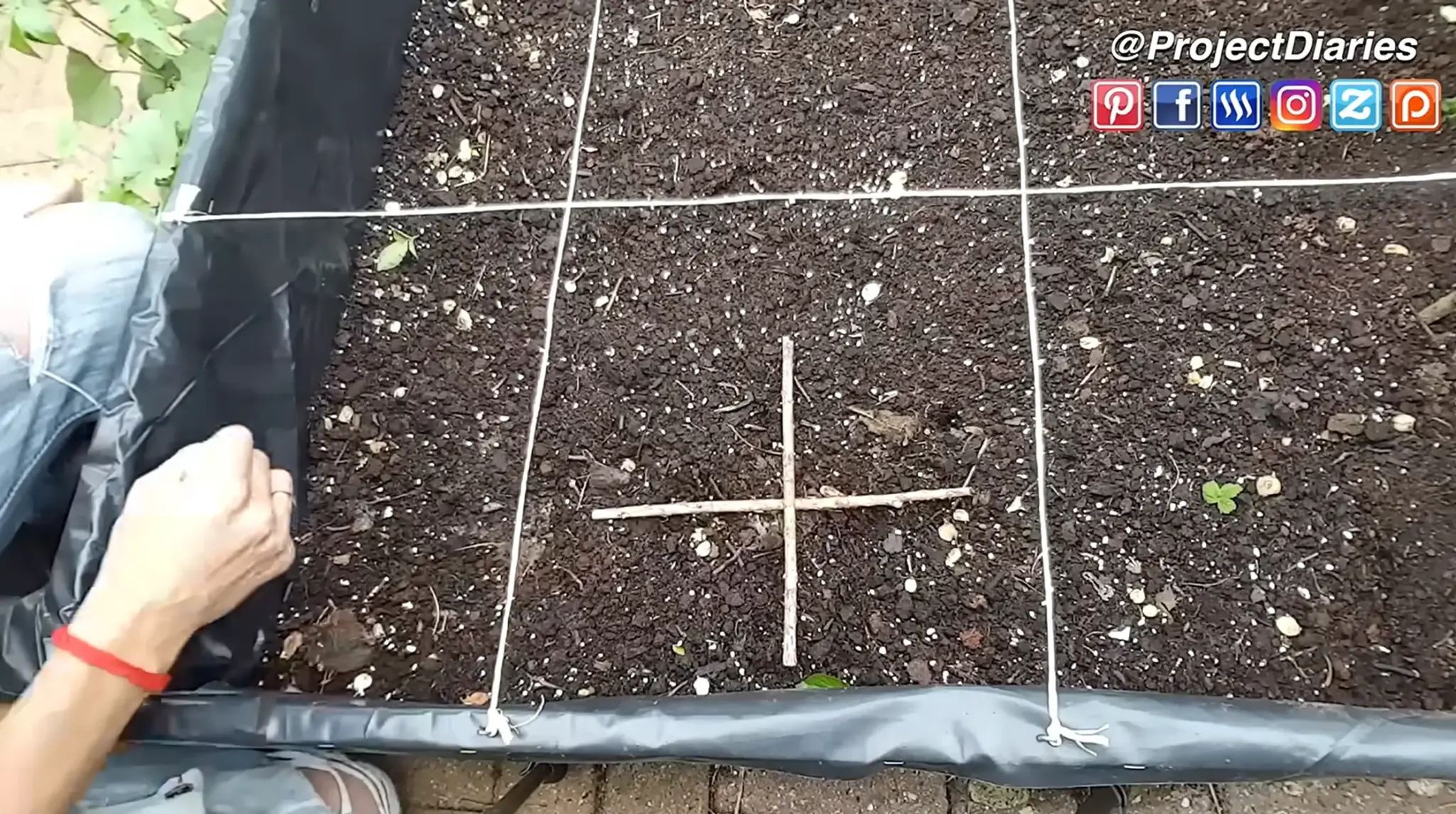
Use a bed no wider than four feet so every section remains reachable without stepping on the soil. A four-by-four-foot bed provides sixteen planting areas.
Divide its surface into 12-inch squares using string, wooden strips, or temporary sticks. For gardens used by children, reduce the bed width to approximately three feet for easier access.
Step 3: Position the Bed and Arrange Plants by Height
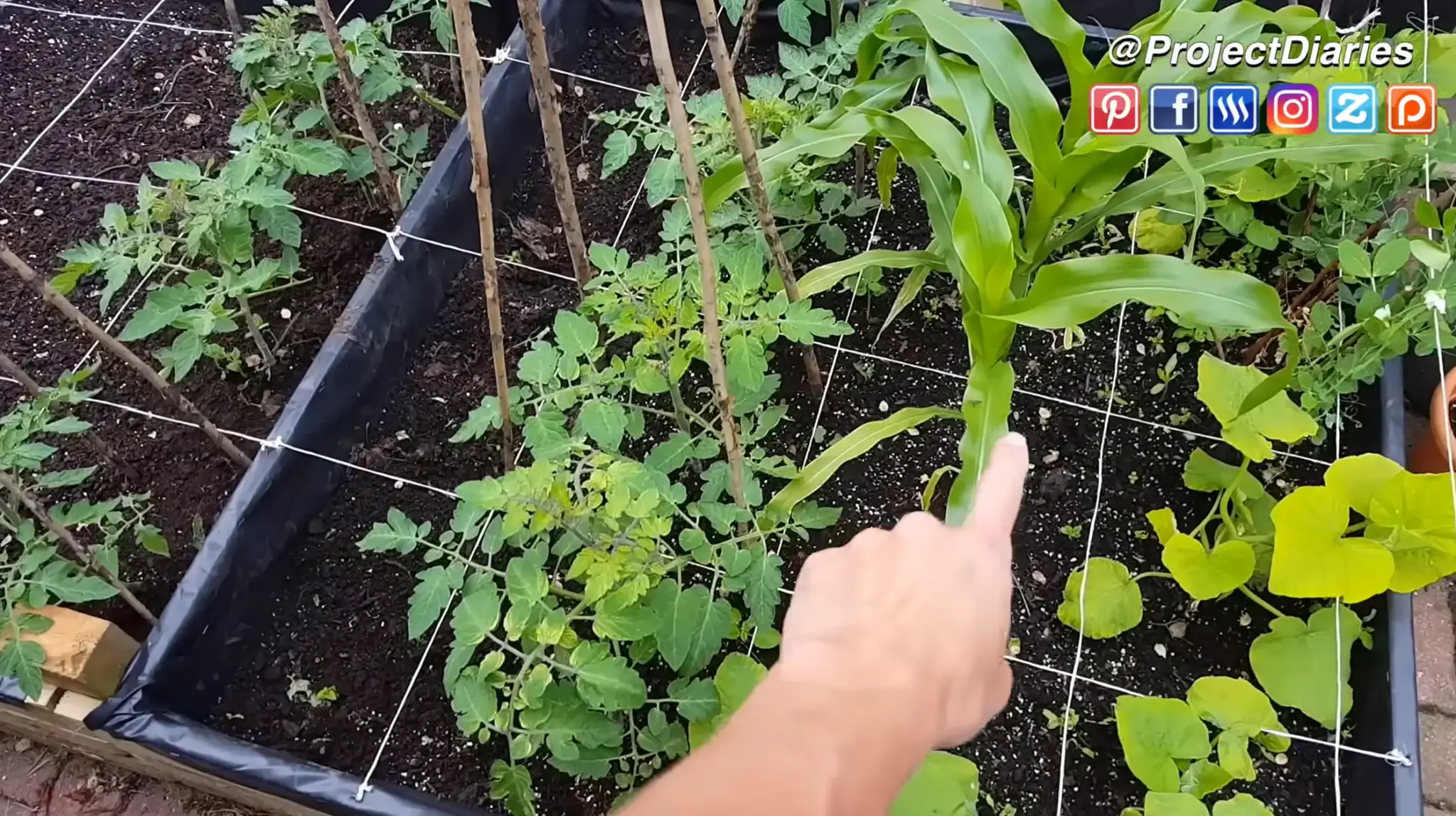
Place the bed where it receives around eight hours of sunlight daily. Install the trellis at the end farthest from the sun to prevent shading.
Grow climbing beans, peas, cucumbers, and squash beside it, followed by tomatoes, medium-height peppers, and bush beans. Keep lettuce, radishes, garlic, and herbs in the front row.
Step 4: Calculate the Correct Plants per Square
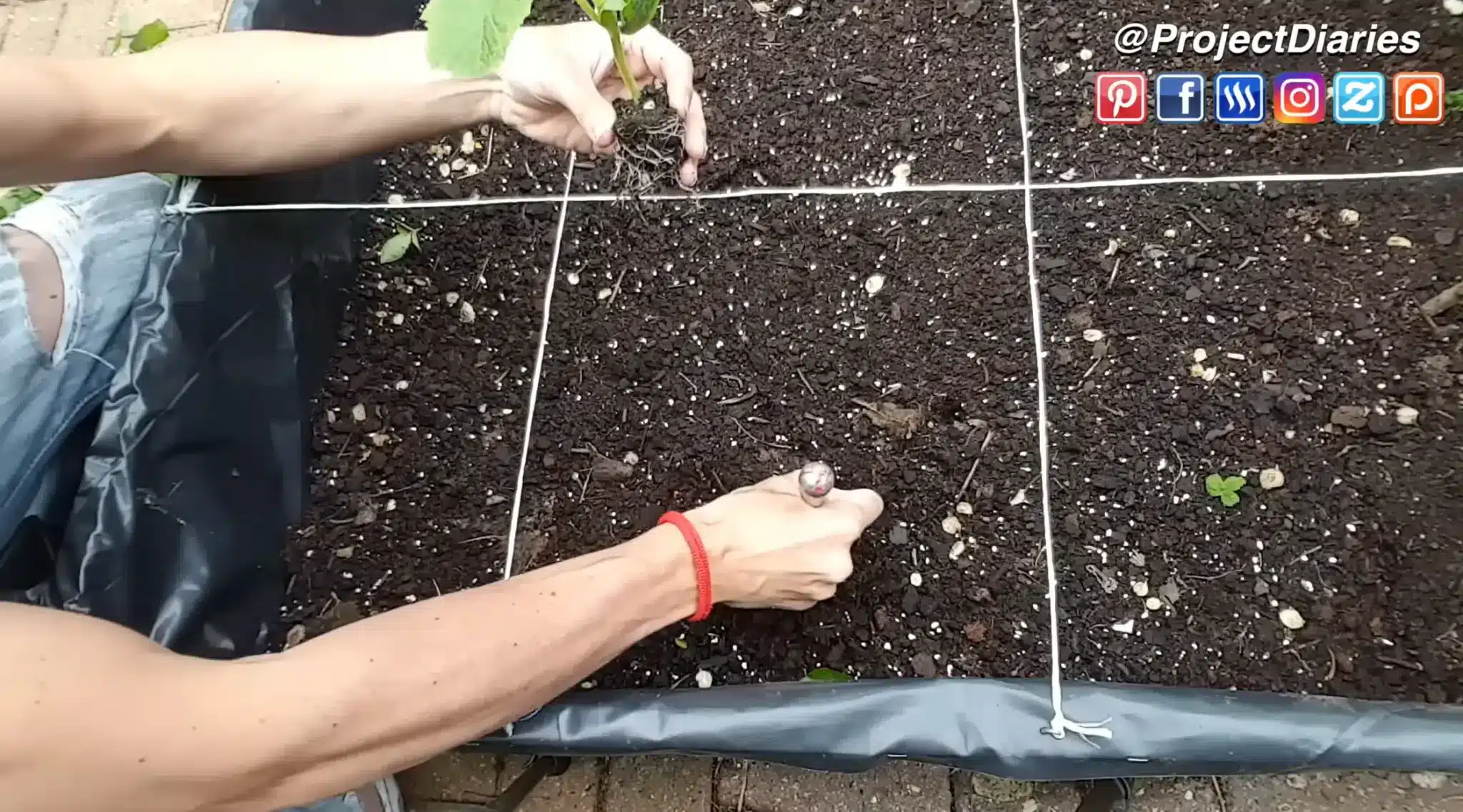
Follow crop-specific spacing instead of placing the same number of plants in every square. One square may hold one squash or eggplant, two cucumbers or celery plants, four garlic plants, eight peas, nine parsnips, or sixteen carrots.
Accurate spacing limits competition for water and nutrients while improving airflow, sunlight exposure, growth, and overall productivity.
Step 5: Transfer Seedlings and Add Companion Plants
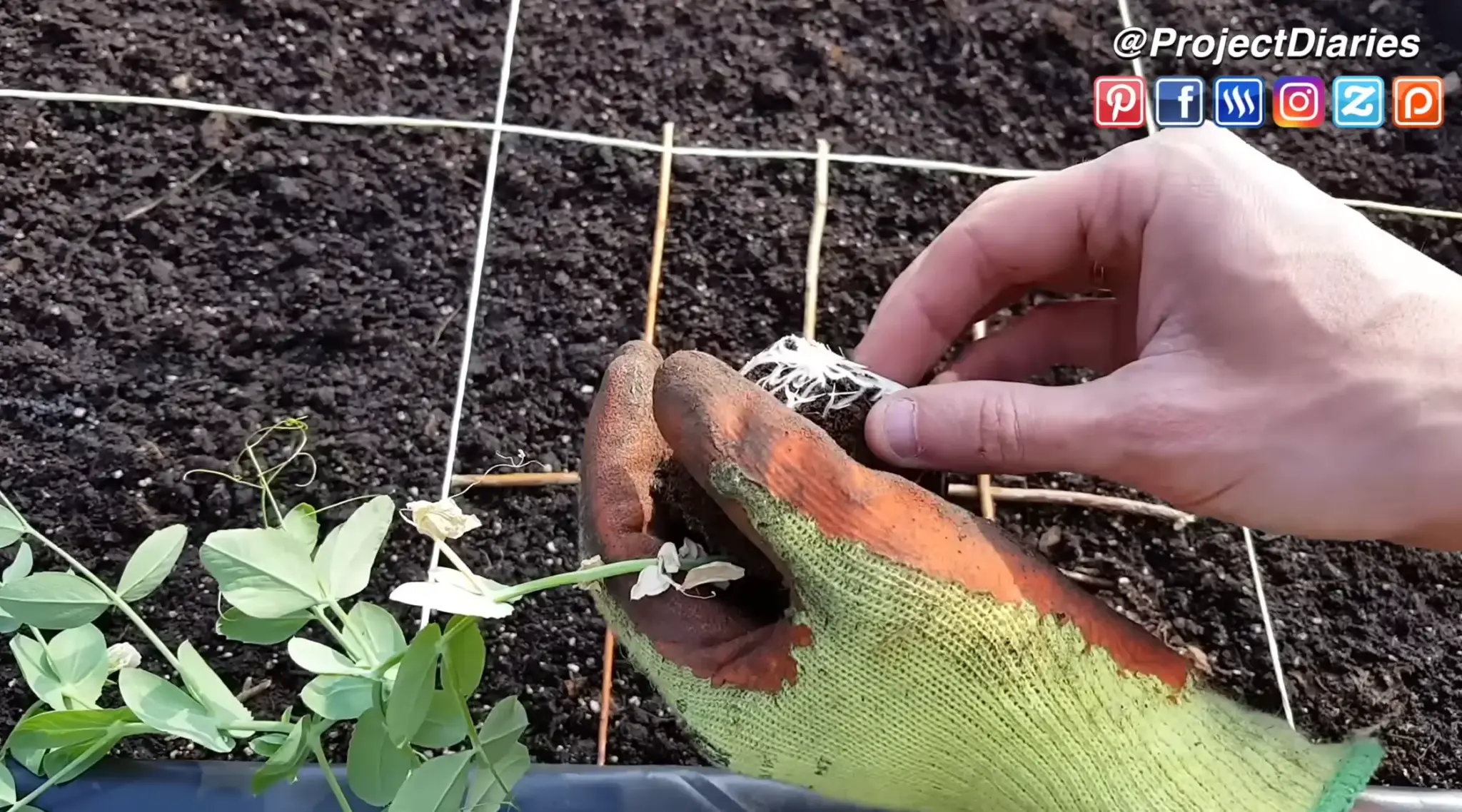
Dig each hole as deep as the seedling’s root ball and carefully remove the plant from its container. Loosen tightly bound roots, position the seedling correctly, and press the surrounding soil lightly without compacting it.
Add basil, marigolds, or nasturtiums to suitable squares while maintaining enough room for every plant’s mature size and growth habit.
Step 6: Water the Garden Thoroughly and Regularly
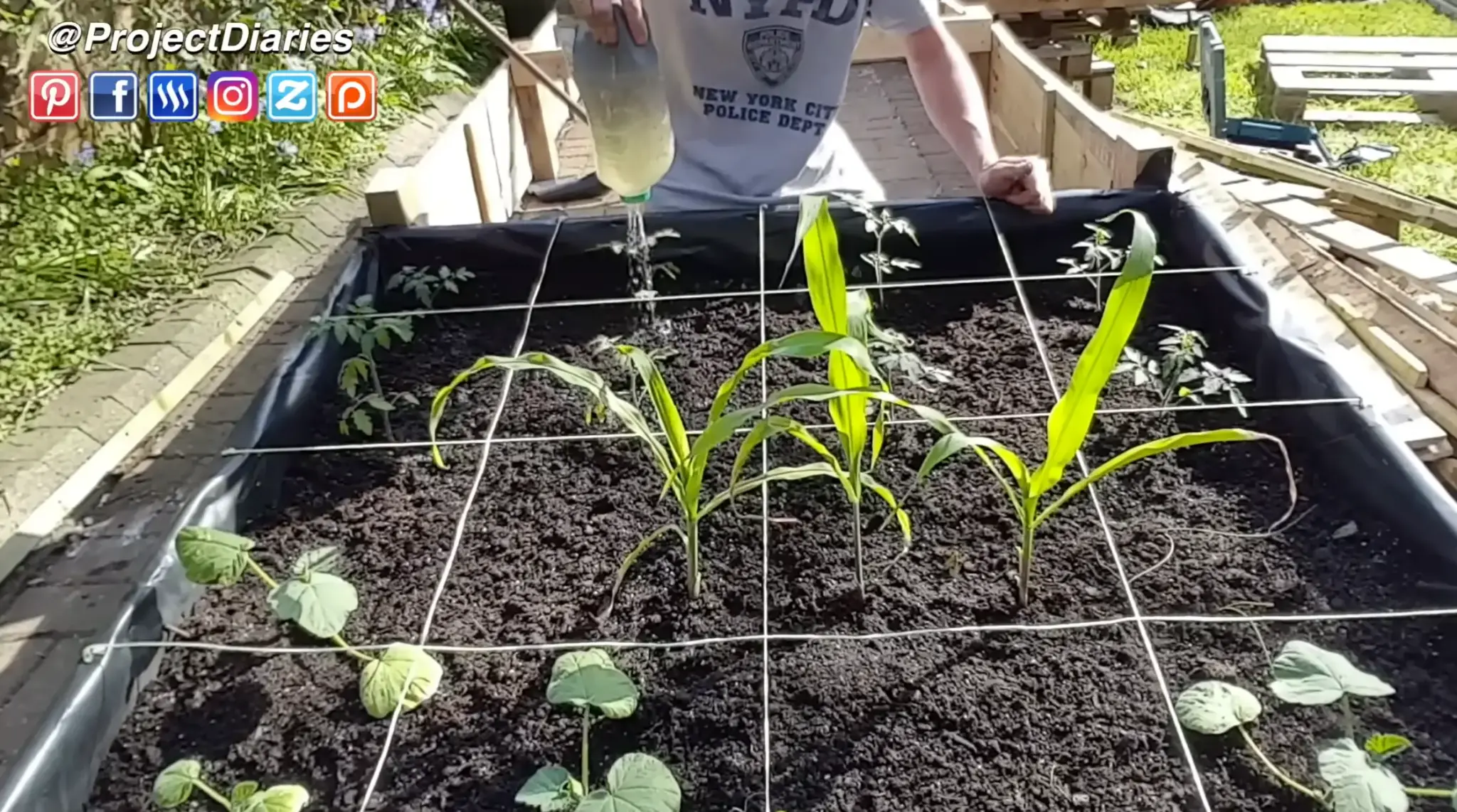
Water newly planted squares in the morning or after sunset to limit evaporation. Apply water around each plant’s base until the entire root zone becomes moist. Keep the soil evenly damp without making it waterlogged.
Slight surface drying may encourage root growth, but prolonged drought can stress vegetables and cause problems such as splitting tomatoes or reduced harvests.
For a visual demonstration of these planting steps, watch this square foot planting tutorial.
How to Plan a Square Foot Garden Layout
Plan the layout before planting so every crop receives suitable sunlight, growing space, support, and access without competing heavily with neighboring plants.
- Place tall crops on the north side: Position tomatoes, pole beans, peas, and trellised cucumbers where they will not cast excessive shade over shorter vegetables.
- Keep spreading plants near the edges: Plant zucchini, squash, and trailing herbs along outer squares so their stems and leaves can extend beyond the bed.
- Group crops by watering needs: Place vegetables requiring consistent moisture near one another, while keeping drought-tolerant herbs in sections that can remain slightly drier.
- Combine fast- and slow-growing crops: Pair quick crops, such as radishes or leaf lettuce, with slower vegetables that will need additional room later.
- Consider mature plant size: Plan according to each crop’s final width and height rather than the small size of seeds or young transplants.
- Reserve space for supports: Mark squares requiring cages, stakes, or trellises before planting to avoid damaging roots during later installation.
- Maintain easy access: Use beds no wider than four feet and leave clear paths around every side for watering, weeding, inspecting, and harvesting.
A well-planned layout prevents overcrowding and uneven shade. Record each crop’s position so harvested squares can be replanted efficiently throughout the season.
Companion Planting in a Square Foot Garden
Companion planting can organize compatible crops, but it should support practical planning rather than replace correct spacing, sunlight, airflow, and mature-size requirements.
| Plant Combination | Practical Benefit | Square Foot Planning Note |
|---|---|---|
| Tomatoes and basil | Basil uses lower growing space beneath supported tomatoes. | Give the tomato its own square and place basil where it receives enough light and airflow. |
| Carrots and lettuce | Shallow lettuce roots and deeper carrot roots use different soil levels. | Avoid crowding carrot tops, and harvest lettuce before it shades developing carrots. |
| Cucumbers and bush beans | Vertical cucumbers leave lower bed space available for compact beans. | Train cucumbers on a north-side trellis so their vines do not shade the beans. |
| Peas and radishes | Radishes mature before peas need their full growing space. | Harvest radishes early and provide a secure trellis for climbing pea vines. |
| Peppers and green onions | Upright peppers allow narrow onions to grow around the square’s edge. | Maintain airflow around pepper stems and avoid packing onions too closely. |
| Broccoli and leaf lettuce | Lettuce can use open soil while broccoli plants are still small. | Harvest lettuce before the broccoli canopy expands and blocks most sunlight. |
| Pole beans and spinach | Beans grow vertically while spinach remains low and compact. | Plant spinach where it receives morning sun without being completely shaded by mature vines. |
| Zucchini and nasturtiums | Nasturtiums add flowers around the edge without occupying central growing space. | Direct trailing nasturtiums outside the bed so they do not compete with large zucchini leaves. |
Treat companion combinations as layout options, not guaranteed pest controls. Prioritize mature plant size, root space, seasonal timing, airflow, and daily sunlight exposure.
How and When to Plant Each Square
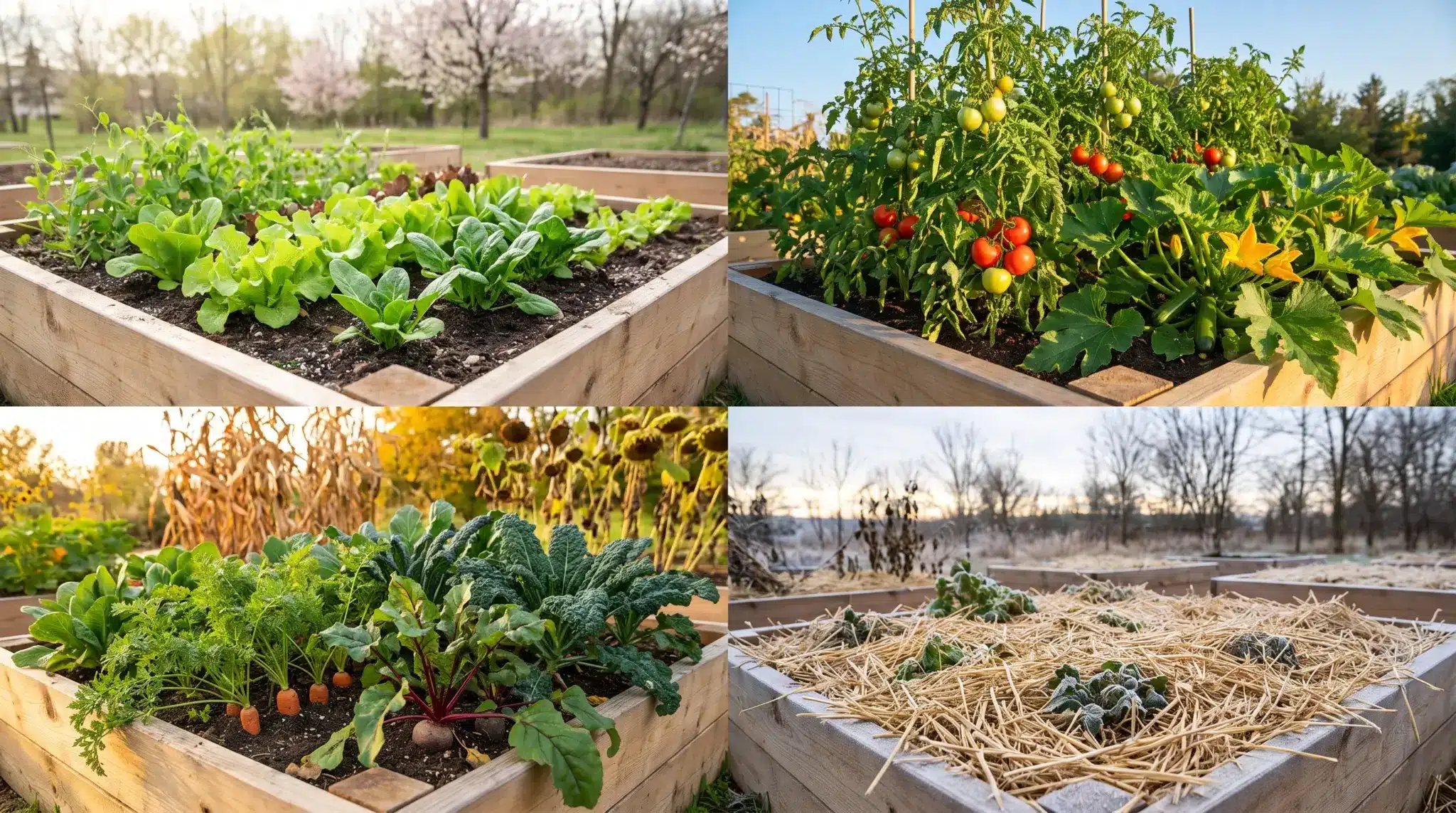
Plant each square according to the crop’s temperature needs, mature size, and recommended growing season.
Start by checking local spring and fall frost dates, since these determine when tender plants can safely enter the garden. Sow cool-season crops, including lettuce, spinach, peas, carrots, and radishes, during milder weather.
Wait until the soil warms before planting tomatoes, peppers, beans, cucumbers, and zucchini. Read each seed packet for the correct sowing depth and spacing within the square.
Direct-sow root vegetables and quick-growing crops, but use transplants for vegetables needing a longer season. Water carefully after planting and keep the soil consistently moist during germination.
For a steady harvest, sow small amounts of lettuce, radishes, spinach, beans, and herbs every two to three weeks. Record planting dates on labels or a garden plan so empty squares can be replanted promptly after harvest ends.
Common Square Foot Gardening Mistakes
Small planning errors can reduce harvests, restrict airflow, and weaken plants. Avoid these common mistakes to keep every square healthy and productive.
- Planting large crops too closely: Tomatoes, zucchini, broccoli, and other large vegetables need sufficient space for healthy roots, airflow, and leaf development.
- Ignoring mature plant size: Base spacing on the crop’s full-grown dimensions rather than the size of seeds, seedlings, or newly purchased transplants.
- Blocking sunlight with tall crops: Place tall vegetables and trellised vines along the north side so they do not shade shorter plants.
- Overcrowding vines without a trellis: Support cucumbers, peas, and pole beans vertically to prevent vines from spreading across neighboring squares.
- Using poor-quality or compacted soil: Fill the bed with a loose, nutrient-rich mixture that supports drainage, moisture retention, and healthy root growth.
- Planting every square simultaneously: Stagger sowing dates so vegetables mature gradually instead of producing more food than can be harvested at once.
- Forgetting to replenish compost: Add fresh compost after harvesting and between growing seasons to restore nutrients removed by closely planted crops.
Preventing these problems keeps the garden manageable and productive. Review spacing, soil condition, sunlight, and planting dates whenever harvested squares are prepared for new crops.
Make Every Square Count
A productive vegetable garden does not require endless rows or a large yard. With square foot gardening, you can divide a compact bed into manageable sections and give each crop the space it needs.
I recommend starting with one accessible bed, using a grid, and checking every seed packet before planting.
Place tall crops, support climbing vines, stagger harvests, and refresh the soil with compost between plantings. These habits reduce crowding, simplify maintenance, and help you use growing space wisely.
Watch how plants respond to the sunlight, soil, and weather in your area, then adjust the next layout accordingly. Try these tips in one bed this season, and share which crops grow best for you.
Frequently Asked Questions
How much does it cost to build a basic 4×4 square foot garden bed?
A simple untreated wood frame, filled with a compost-and-vermiculite soil blend, typically runs somewhere in the range of a modest weekend-project budget; most of the cost comes from soil volume rather than the frame itself, since a 4×4 bed at 12 inches deep needs about 16 cubic feet of mix.
What’s the ideal soil ratio for filling a square foot bed?
A common starting blend is roughly one-third compost, one-third peat moss or coconut coir, and one-third coarse vermiculite. This combination stays light enough for dense planting while holding consistent moisture.
Can square foot gardening be done through winter, or is it strictly a warm-season method?
Cool-hardy crops like spinach, kale, and garlic can keep squares productive into late fall and even winter in milder climates, especially with a simple cold frame or row cover placed over the grid.
Are weeds really less of a problem in a square foot garden?
Yes, dense, intentional spacing leaves very little open soil for weed seeds to establish, which is one of the main efficiency advantages of the method compared to traditional rows with wide gaps between plants.
How do I handle pests without regular rows to walk between for inspection?
Because access is limited to the outer edges, it helps to inspect plants from above and rotate which squares hold pest-prone crops each season, rather than relying on walking between rows the way you would in a traditional garden.
Is it possible to over-plant a square and stunt everyone’s growth?
Yes, packing more plants into a square than its spacing guideline allows is one of the fastest ways to reduce yields, since roots compete for the same limited soil volume and airflow drops between crowded leaves.