

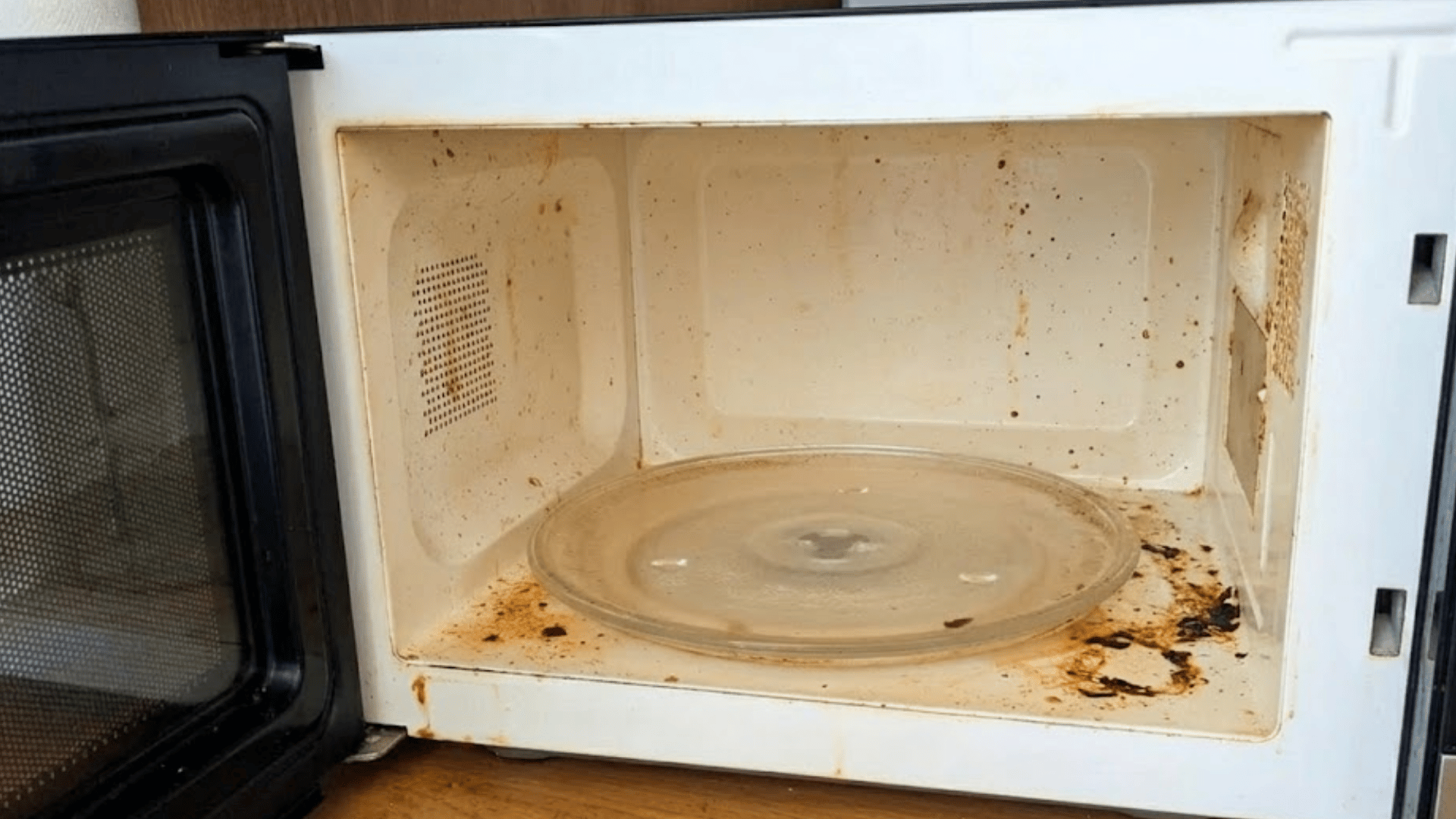
A microwave is one of the most frequently used appliances in the kitchen, but it is also one of the easiest to overlook when it comes to regular cleaning.
Knowing how to clean a microwave properly can help remove food splatters, stubborn grease, and lingering odors while keeping the appliance fresh and hygienic.
I have found that even a few minutes of routine cleaning can make a noticeable difference in both appearance and performance.
You do not need expensive products or complicated techniques to achieve a spotless microwave. Keep reading to learn simple, effective methods for tackling everyday messes, tough stains, and unwanted odors.
Quick Answer: How to Clean a Microwave?
The quickest way to clean a microwave is with a steam-cleaning method using water and either vinegar or lemon.
Fill a microwave-safe bowl with one cup of water and add two tablespoons of white vinegar or the juice and sliced halves of one lemon.
Microwave on high for three to five minutes until steam forms, then keep the door closed for two to three minutes.
The trapped steam loosens dried food residue, grease, and light stains. Wipe the interior clean with a microfiber cloth or sponge. No scrubbing needed for routine messes
Deep Microwave Cleaning for Tough Messes
When routine wiping is not enough, a deep clean helps remove stubborn grease, dried food residue, and lingering odors. The process takes about 15–20 minutes and leaves your microwave looking and smelling fresh.
- Remove the turntable and roller ring: Take out both removable parts and set them aside for washing. Allow them to cool completely before placing them in water to prevent cracking.
- Steam the interior: Fill a microwave-safe bowl with1 cup of water and 2 tablespoons of white vinegar. Microwave on high for 4–5 minutes, then let it sit for 2 minutes before opening the door.
- Wipe the interior: Use a microfiber cloth or soft sponge to wipe the ceiling, walls, and floor of the microwave. Work from top to bottom so debris falls downward and is removed during the final wipe.
- Address stubborn stains: Apply a paste made from baking soda and water to any remaining stains. Let it sit for 3–5 minutes, then wipe the area clean with a damp cloth.
- Wash removable parts: Clean the turntable and roller ring in warm, soapy water. If the owner’s manual confirms they are dishwasher-safe, place them in the dishwasher. Dry thoroughly before reinstalling.
- Clean the door and exterior: Wipe the door glass, handle, and exterior surfaces. For the control panel, apply cleaner to the cloth rather than spraying directly onto the buttons.
- Leave the door open briefly: Allow the microwave to air out for 5–10 minutes after cleaning to help moisture evaporate and reduce lingering odors.
How to Clean a Microwave: Best Homemade Methods
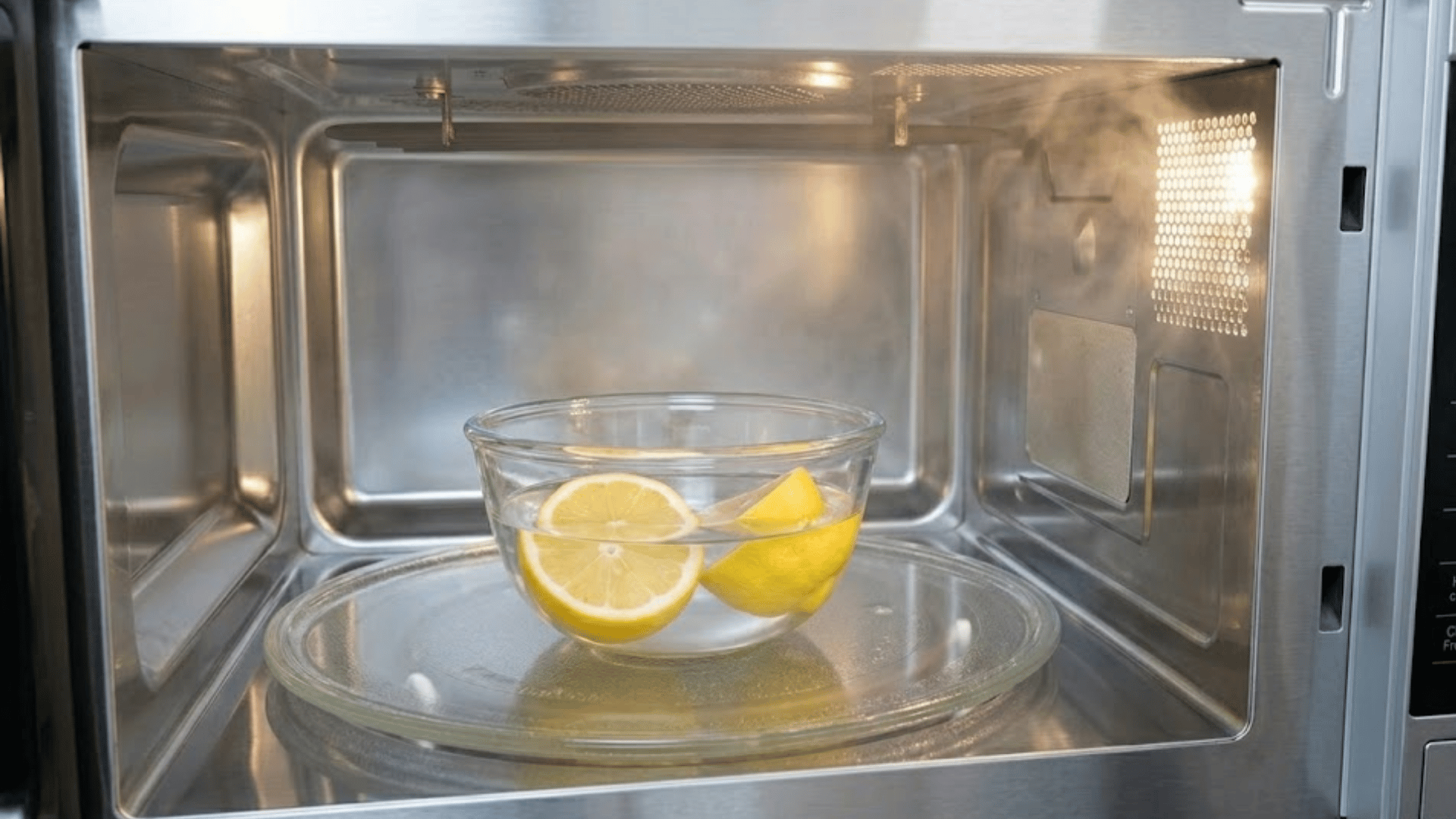
Natural cleaning solutions can remove grease, loosen food residue, and eliminate odors without relying on harsh chemicals.
1. Vinegar and Lemon Steam Cleaning Method
Vinegar and lemon are popular natural microwave cleaners because the steam they create helps loosen grease and dried food splatters.
This method requires very little effort and can freshen the appliance while making residue easier to remove.
Fill a microwave-safe bowl with water and add either vinegar or lemon slices before heating until steam develops.
- Time Needed: 5–10 minutes
- Best For: Grease buildup, food splattering, and mild odors
- Difficulty Level: Easy
2. Baking Soda for Stubborn Stains and Odor Removal
Baking soda works well when stains, burnt-on residue, or lingering odors remain after regular cleaning.
Create a thick paste by mixing baking soda with a small amount of water, then spread it over problem areas. Allow it to sit for several minutes before gently wiping it away.
It can also absorb odors when left in an open container inside the microwave.
- Time Needed: 10–15 minutes
- Best For: Tough stains, burnt residue, and odor removal
- Difficulty Level: Easy to Moderate
3. Dish Soap for Everyday Microwave Cleaning
Dish soap is a simple solution for routine microwave maintenance. A few drops mixed with warm water can help remove light grease, fingerprints, and everyday food splatters.
Use a soft sponge or microfiber cloth to clean the interior surfaces, including the turntable and door.
For sticky spots, let the solution sit briefly before wiping and rinsing away any remaining soap residue.
- Time Needed: 5 minutes
- Best For: Regular cleaning and light grease removal
- Difficulty Level: Easy
4. Steam Cleaning with Plain Water
Plain water can effectively clean a microwave when there is only light buildup.
Heating water creates steam that softens fresh food splatter, making it easier to wipe away without additional cleaning products.
Simply heat a bowl of water until steam fills the microwave, then allow it to sit briefly before cleaning the interior with a damp cloth or sponge.
- Time Needed: 5–8 minutes
- Best For: Light cleaning and routine upkeep
- Difficulty Level: Easy
Cleaning an Over-the-Range Microwave
Over-the-range microwaves require extra attention because they collect grease, cooking fumes, and dust from the stovetop below. Regular maintenance can help improve cleanliness, airflow, and overall performance.
- Clean the Bottom Panel: Wipe the underside regularly with warm, soapy water to remove grease splatters that accumulate during cooking.
- Wash the Grease Filter: Remove the metal grease filter and soak it in hot water with dish soap before scrubbing away buildup.
- Replace the Charcoal Filter When Needed: If your microwave uses a charcoal filter, replace it according to the manufacturer’s recommendations to maintain proper ventilation.
- Degrease the Vent Area: Use a damp cloth and mild cleaner to remove grease and dust from vents and surrounding surfaces.
- Prevent Future Grease Buildup: Turn on the microwave vent while cooking and clean surfaces regularly to reduce grease accumulation over time.
How to Remove Stubborn Microwave Stains?
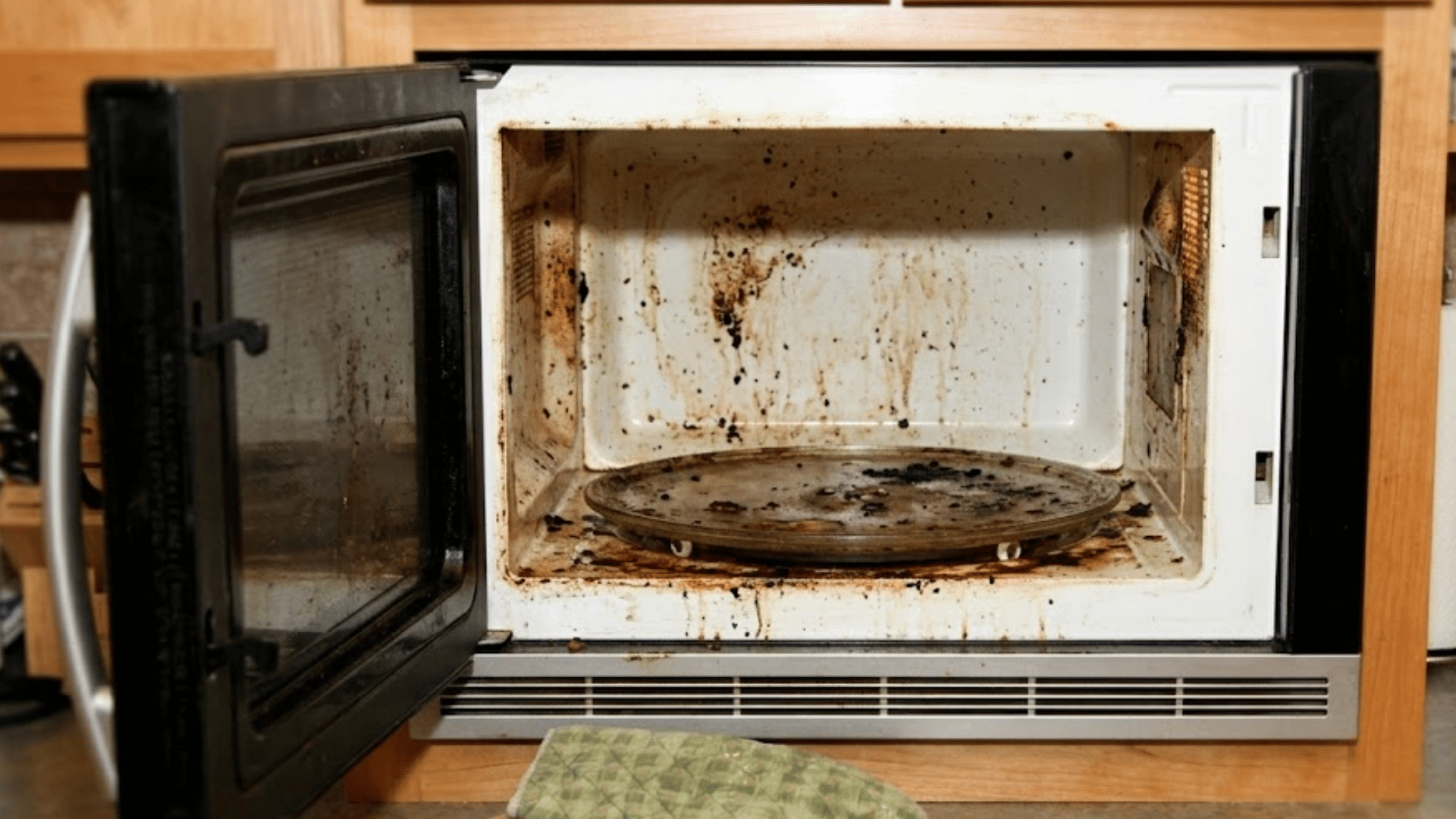
Even with regular cleaning, microwaves can develop burnt residue, stubborn stains, grease buildup, and lingering odors.
1. Removing Burnt Food Residue
Burnt food residue can become difficult to remove if it remains inside the microwave for too long. Start by steam-cleaning the interior with a bowl of water and vinegar or lemon to soften the buildup.
After the residue loosens, gently wipe the area with a soft sponge or microfiber cloth.
For stubborn spots, apply a baking soda paste and let it sit for a few minutes before wiping clean. If the residue is heavily carbonized, a second round of steaming before applying the paste improves results.
Avoid using abrasive scrubbers, which can scratch and permanently damage the interior coating
2. Getting Rid of Burnt Smells
Burnt odors can linger in a microwave even after visible residue has been removed. To eliminate unpleasant smells, steam-clean the appliance with water and lemon or vinegar, then wipe all interior surfaces thoroughly.
If the odor persists, place an open container of baking soda in the microwave for several hours or overnight to absorb lingering odors.
You can also leave a bowl of coffee grounds inside the appliance for additional odor absorption. Regular cleaning helps prevent burnt smells from becoming trapped in the interior.
3. Cleaning Heavy Grease Buildup
Heavy grease buildup is common in microwaves used frequently for reheating oily foods. Begin by steam-cleaning the interior to loosen greasy residue.
Next, wipe the surfaces with a cloth dampened in warm water and a small amount of dish soap.
Pay close attention to the ceiling, walls, and door where grease often accumulates. For stubborn areas, allow the soapy solution to sit briefly before wiping again.
Consistent cleaning prevents grease from hardening and becoming more difficult to remove over time.
4. Removing Stubborn Stains and Discoloration
Some microwave stains can remain visible even after routine cleaning, especially if food splattering has been repeatedly heated.
A baking soda paste can help lift stubborn marks without damaging the interior surface.
Apply the paste to stained areas and allow it to sit for several minutes before gently wiping it away with a damp cloth.
For light discoloration, steam cleaning may also help loosen residue contributing to the problem. Addressing stains early often prevents them from becoming permanent and harder to treat later.
5. If Odors Keep Coming Back
If unpleasant odors continue returning after cleaning, hidden food particles or grease buildup may still be present inside the microwave.
Inspect areas around the turntable, roller ring, door seals, and vents where residue can accumulate unnoticed. Perform a thorough steam cleaning and wipe every surface carefully.
Leaving an open container of baking soda inside overnight may help absorb persistent smells.
If odors persist despite repeated cleaning, check the appliance for burnt residue in hard-to-reach areas, which may require deeper maintenance.
What Do Reddit People Say About How to Clean a Microwave?
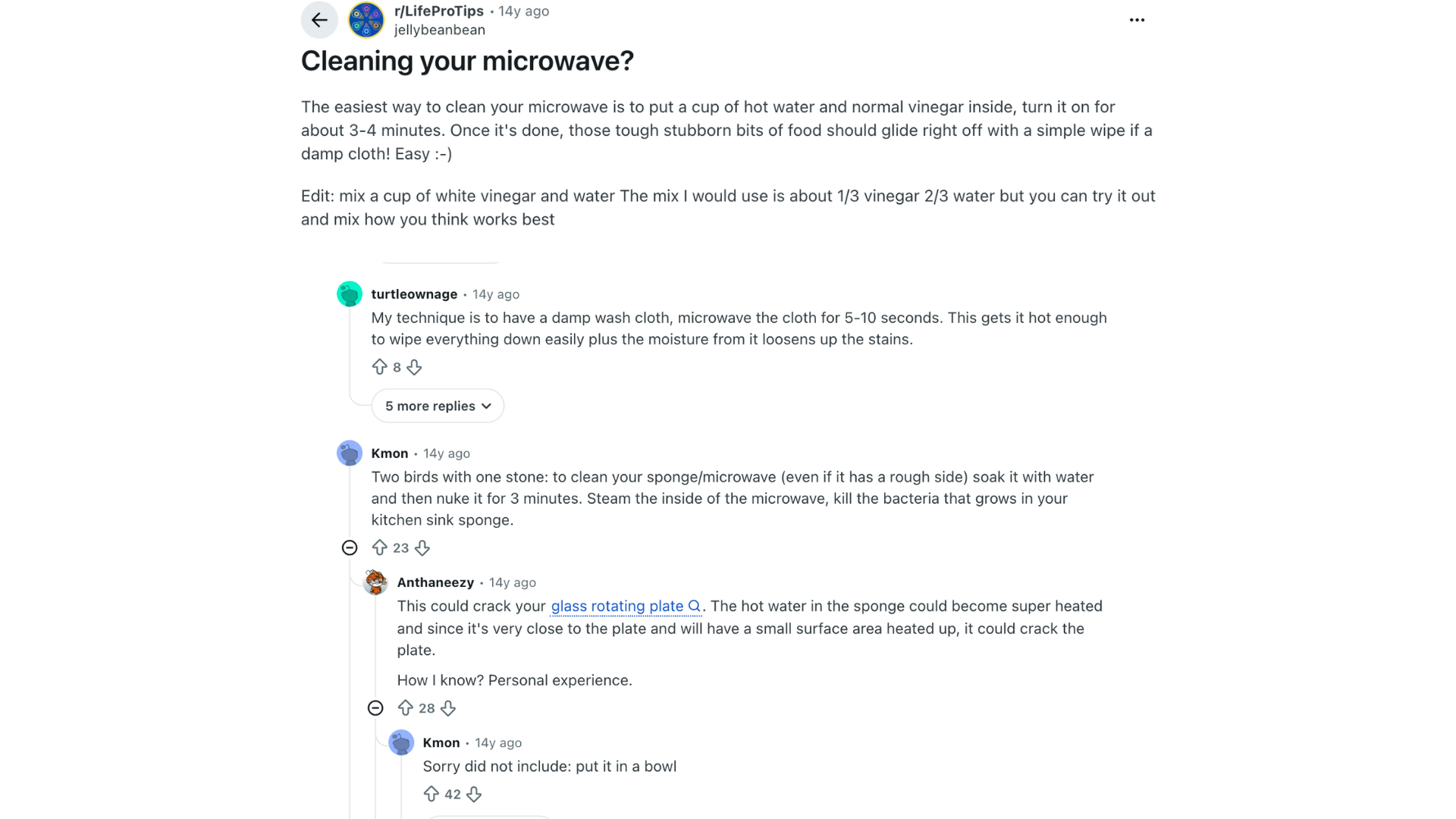
Reddit users frequently recommend using heat and moisture to speed up and simplify microwave cleaning.
A popular tip is to warm a damp washcloth for a few seconds and use it to wipe away food splatter and grease, as the moisture helps loosen dried-on residue.
Some Redditors suggest microwaving a wet sponge in water to create steam that loosens stubborn stains.
However, community members also warn against overheating sponges, noting that they can become extremely hot or even catch fire if left in the microwave for too long.
Some users additionally caution that superheated water may damage the glass turntable.
Reddit users recommend using moderate heat, adding water for steam, and handling hot items carefully.
Cleaning Microwave Doors, Handles, and Removable Parts
The microwave exterior and removable components collect fingerprints, food residue, and germs through daily use. Regular cleaning helps maintain both appearance and hygiene.
- Remove Fingerprints and Smudges: Wipe doors and exterior surfaces with a microfiber cloth dampened with warm water or a mild cleaning solution.
- Clean Control Panels Safely: Apply cleaner to a cloth rather than directly onto buttons to prevent moisture from entering electronic components.
- Keep the Glass Door Clear: Use a vinegar-water solution or glass cleaner on the exterior glass to remove streaks and food splatter.
- Sanitize High-Touch Areas: Regularly clean handles, buttons, and door edges since these surfaces are touched most frequently.
- Wash the Turntable and Roller Ring: Remove both parts and wash them with warm, soapy water to eliminate food residue and grease.
- Check Dishwasher Compatibility: Many glass turntables are dishwasher-safe, but it’s recommended to review the manufacturer’s instructions.
- Remove Stuck-On Food: Soak removable parts in warm, soapy water for several minutes, then gently scrub away stubborn residue.
Are Commercial Microwave Cleaners Worth Using?
Commercial microwave cleaners can be useful for tackling stubborn grease, burnt food residue, and stains that are difficult to remove with household ingredients.
Many products are formulated to break down heavy buildup quickly, reducing the amount of scrubbing required.
Popular options include Easy-Off Kitchen Degreaser, Method Heavy Duty Degreaser, Fantastik All-Purpose Cleaner, and Lysol Kitchen Pro Antibacterial Cleaner.
When choosing a cleaner, look for a non-abrasive formula that is safe for kitchen appliances and easy to rinse away.
Avoid products containing bleach, which can leave persistent chemical odors inside the appliance and may react with food residue.
Commercial products work best for quarterly deep cleans, while natural methods are safer for weekly cleaning.
Tips to Keep Your Microwave Clean Longer
A few simple habits can reduce food buildup, prevent odors, and minimize the need for frequent deep cleaning. Consistent maintenance makes it easier to keep your microwave looking and smelling fresh.
- Use a Microwave Cover: Covering food helps contain splattering and prevents sauces, grease, and liquids from sticking to interior surfaces.
- Wipe Up Spills Immediately: Cleaning fresh spills before they dry can prevent stubborn stains and reduce the need for scrubbing later.
- Follow a Weekly Cleaning Routine: A quick steam clean and wipe-down each week helps stop grease and residue from accumulating.
- Watch Out for Splatter-Prone Foods: Foods like pasta sauce, soups, oatmeal, and greasy leftovers are more likely to leave behind messes.
- Prevent Odors With Simple Habits: Remove food promptly, clean spills regularly, and leave the door open briefly after use to reduce trapped smells.
Microwave Cleaning and Maintenance Schedule
Regular maintenance can help prevent grease buildup, stubborn stains, and lingering odors. Following a simple cleaning schedule keeps your microwave hygienic and working efficiently.
| Frequency | Tasks |
|---|---|
| Daily | Wipe up fresh spills and food splatters, remove crumbs from the turntable, and leave the door open briefly after use to reduce moisture buildup. |
| Weekly | Steam-clean the interior, wipe the door and control panel, clean the turntable and roller ring, and check for grease or food residue. |
| Monthly | Perform a deep clean using vinegar, lemon, or baking soda, clean exterior surfaces, inspect vents, and wash grease filters on over-the-range models. |
| Every 3–6 Months | Replace charcoal filters on over-the-range models, check door seals for residue or wear, and inspect the interior coating for scratches or damage that could affect hygiene. |
Microwave Cleaning Mistakes to Avoid
Using the wrong cleaning methods can damage your microwave or make cleaning less effective. Avoid these common mistakes to keep the appliance clean and in good condition.
- Using Abrasive Scrubbers: Steel wool and rough scouring pads can scratch interior surfaces and damage protective coatings.
- Cleaning With Bleach: Strong bleach fumes can linger inside the appliance and may leave behind unwanted chemical odors.
- Spraying Cleaner Directly Into Vents: Excess liquid can seep into internal components and potentially affect the microwave’s performance.
- Ignoring Burnt Food Residue: Burnt spills can become harder to remove over time and may contribute to persistent odors.
- Using the Wrong Cleaning Tools: Sharp tools and abrasive materials can damage surfaces, making future cleaning more difficult.
- Putting a Hot Turntable in Water: Submerging a warm glass turntable in cold water can cause it to crack. Always let it cool to room temperature first.
Conclusion
Keeping your microwave clean does not have to be a time-consuming task. Regular wipe-downs, simple steam cleaning, and quick spill cleanup help prevent grease buildup, stubborn stains, and odors.
Whether you use vinegar, lemon, baking soda, or dish soap, regular cleaning is key to keeping your microwave clean.
I prefer tackling small spills as soon as they happen because it makes routine cleaning much easier and helps prevent stubborn buildup.
By following the tips and methods in this guide, you can keep your microwave looking its best and working efficiently.
Frequently Asked Questions
Can a Dirty Microwave Change the Taste of Food?
Yes, leftover food particles, grease, and lingering odors can transfer unwanted flavors to freshly heated food, affecting both taste and overall eating quality.
Why Does a Microwave Still Smell After Cleaning?
Persistent odors often result from hidden food residue, grease buildup, or burnt particles trapped around vents, door seals, or other hard-to-reach areas.
Why Does a Microwave Spark After Cleaning?
Microwave sparking after cleaning often occurs when moisture remains inside, cleaning residue is left behind, or exposed metal surfaces create electrical arcing during operation.
Why Is a Microwave Yellow Inside?
A microwave interior may turn yellow due to heat exposure, grease buildup, food splatter, or aging plastic components that discolor over time with regular use.